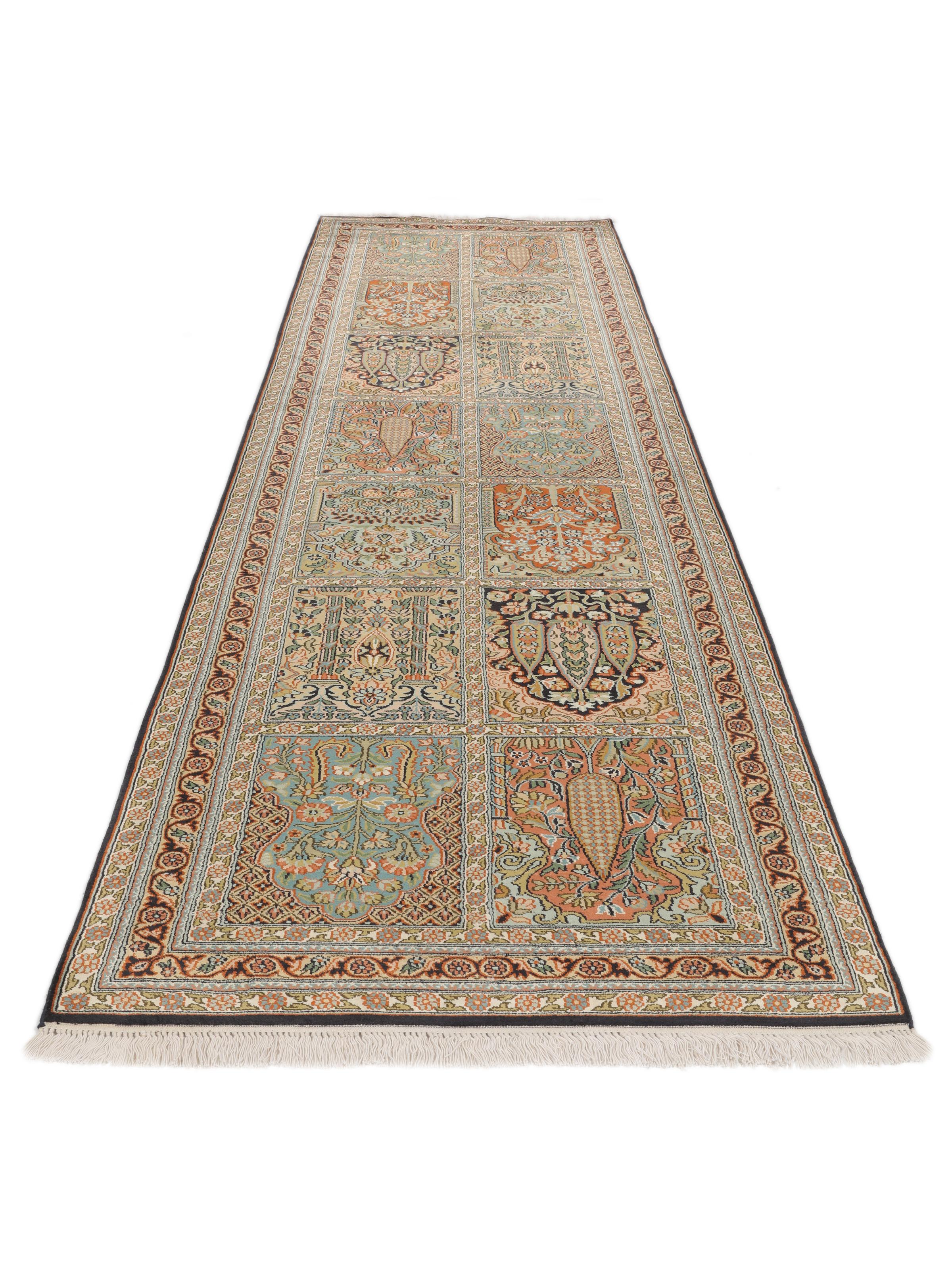
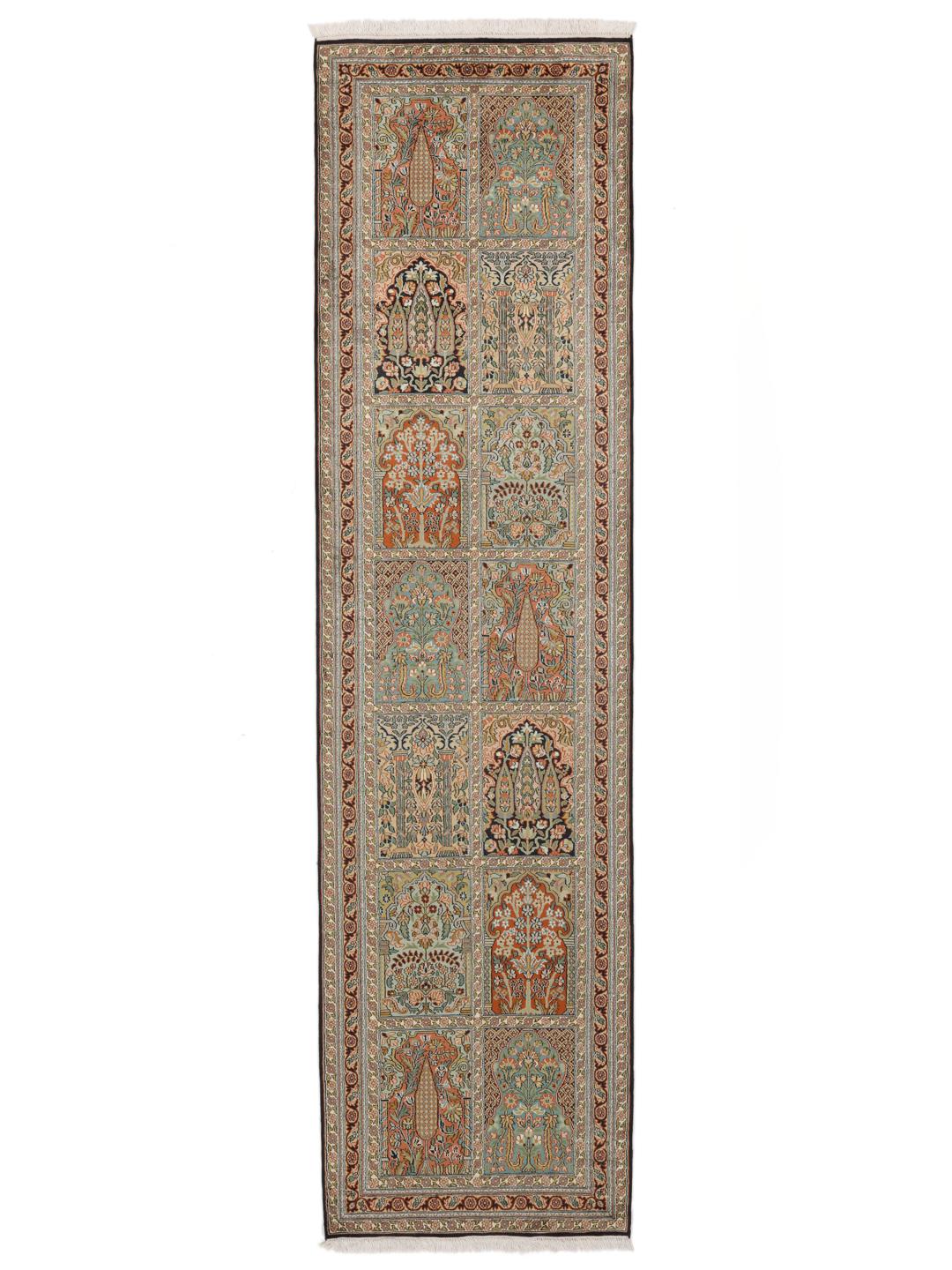
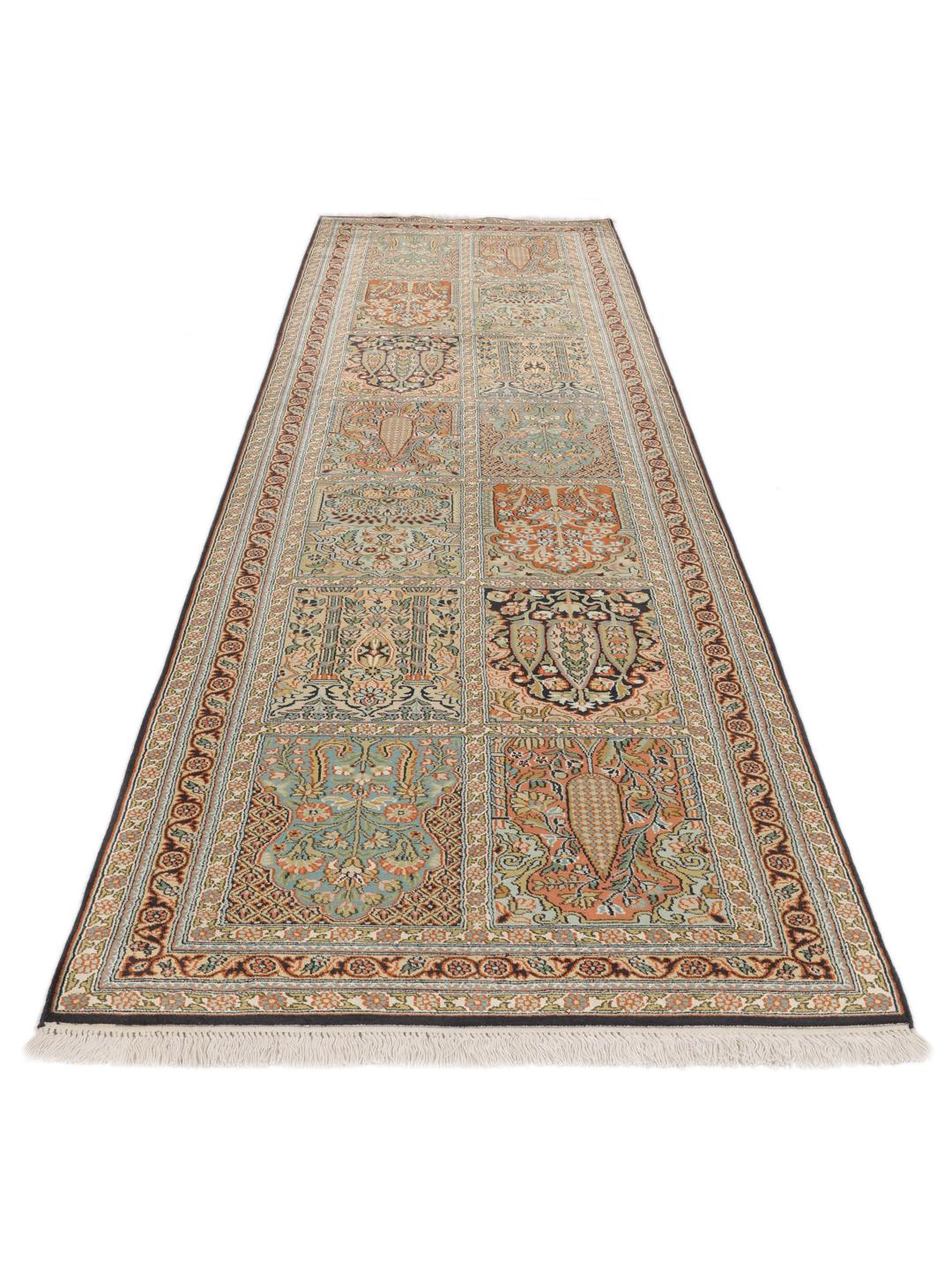
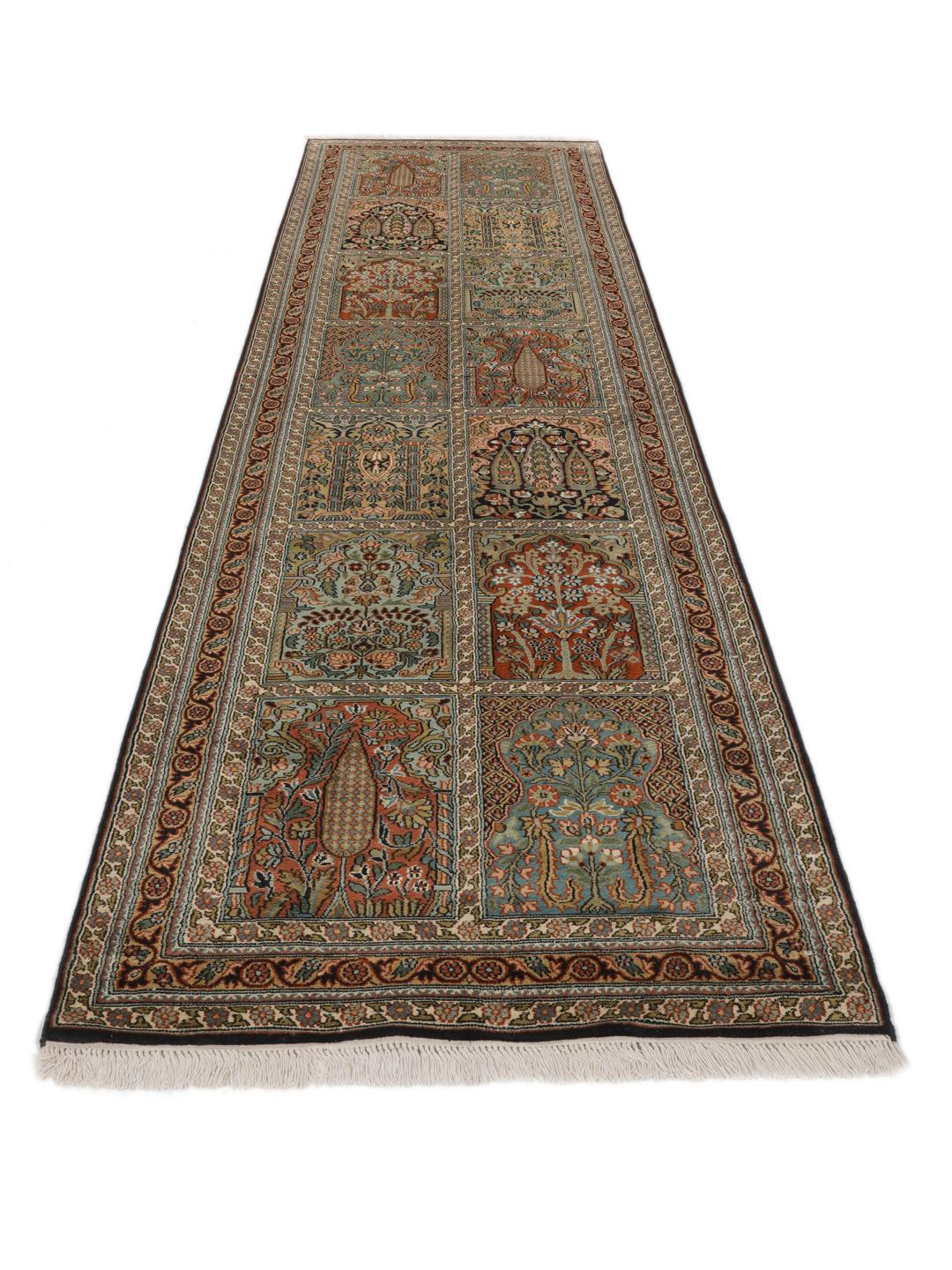
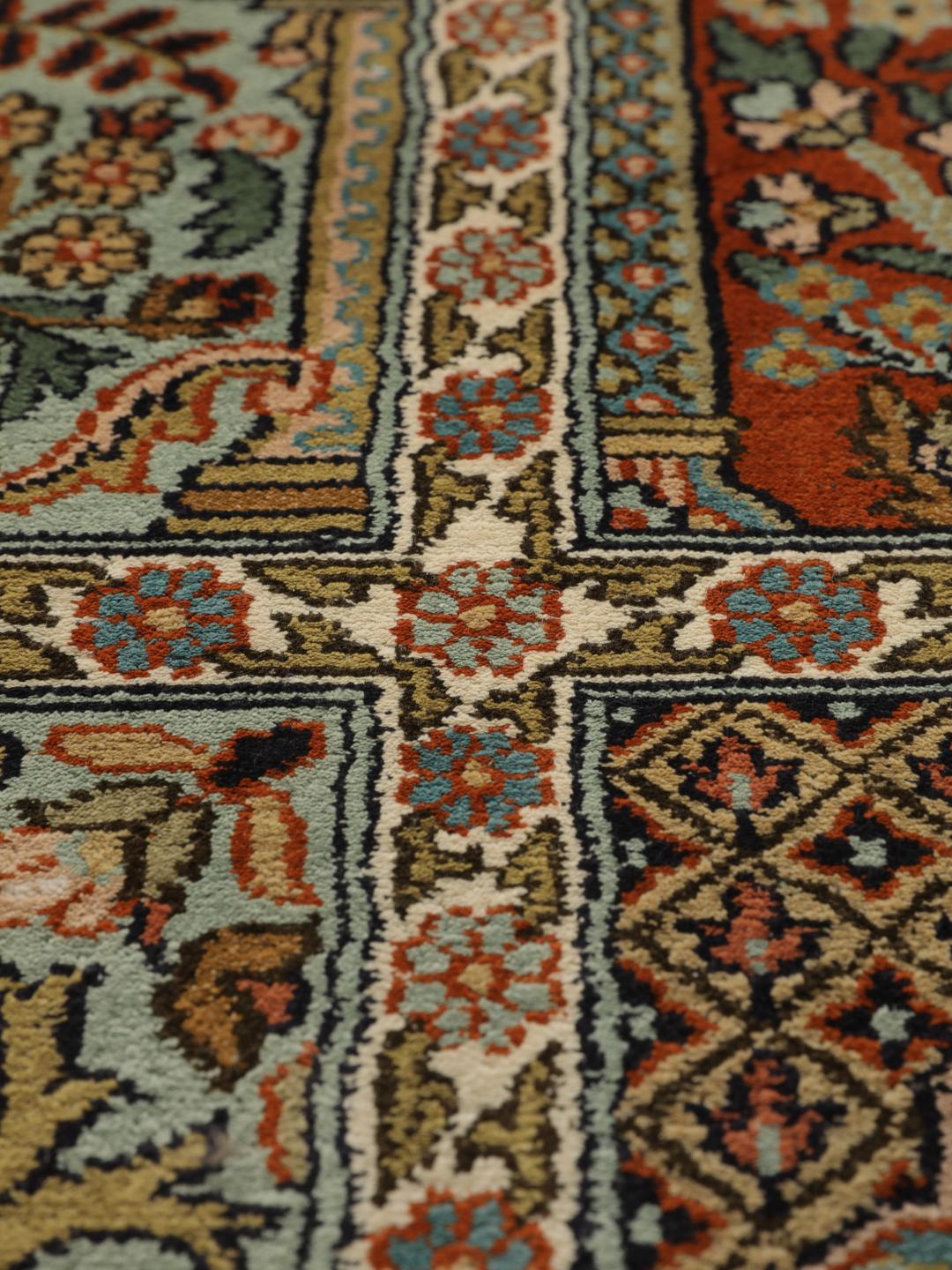
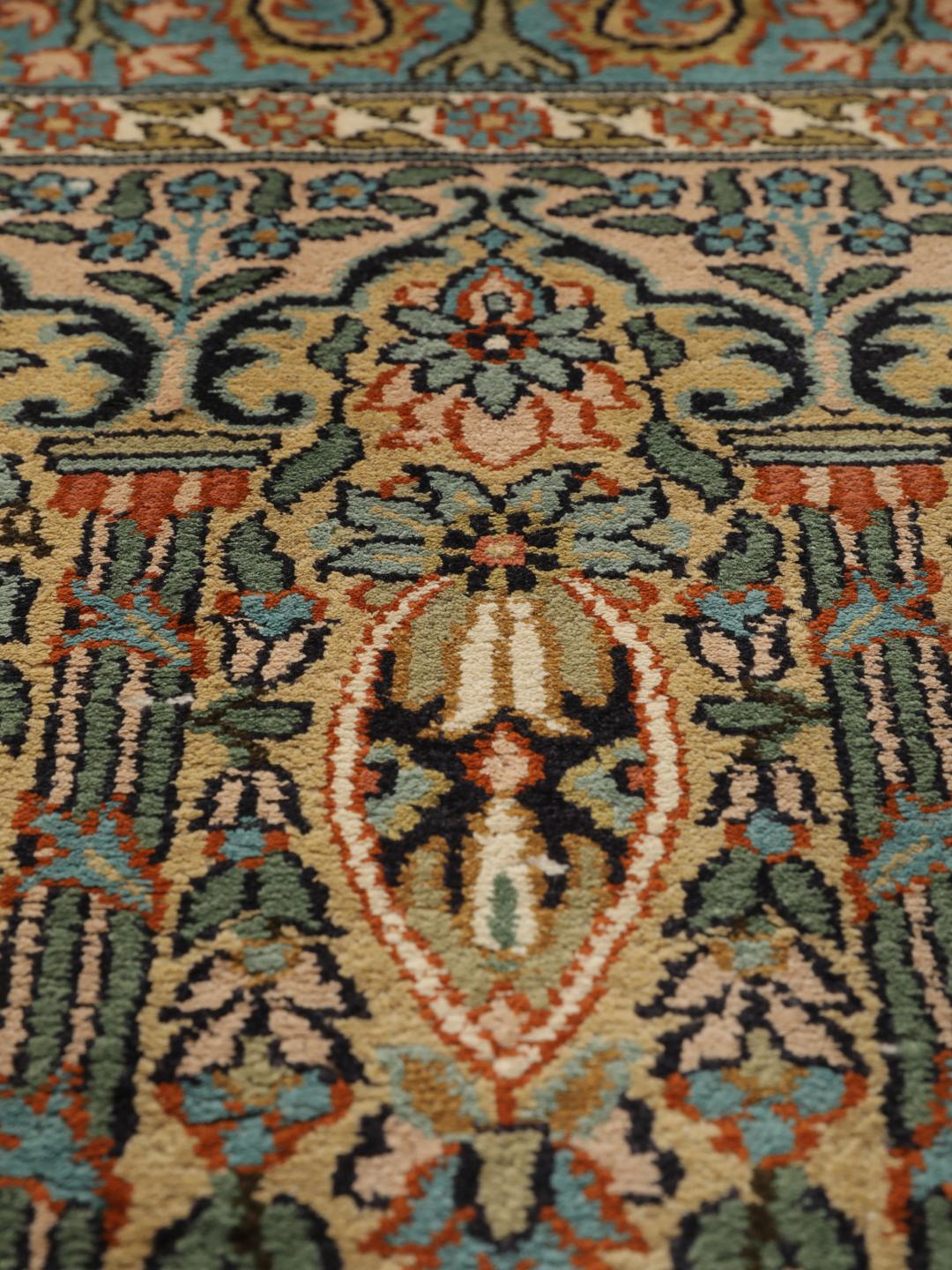
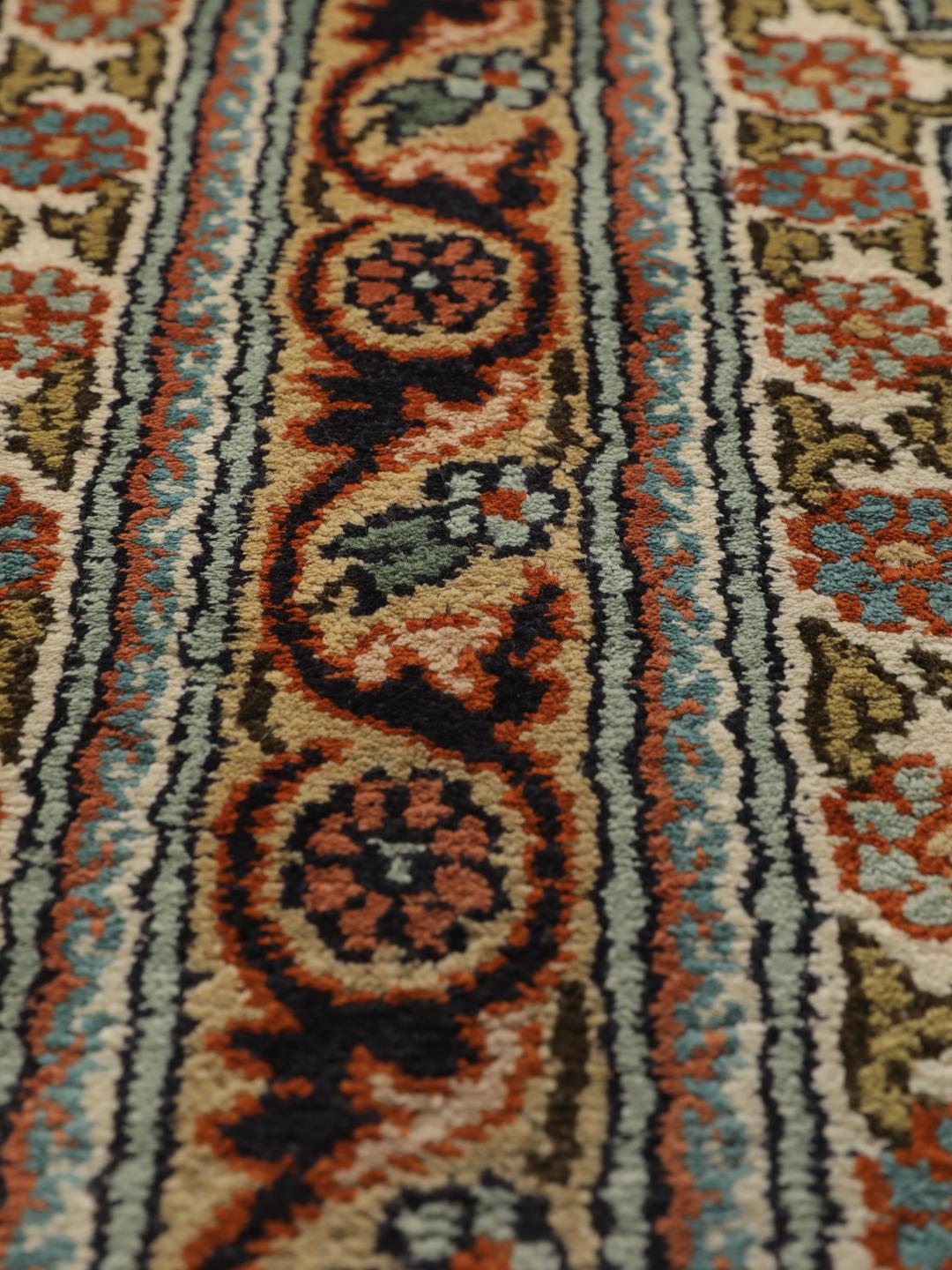
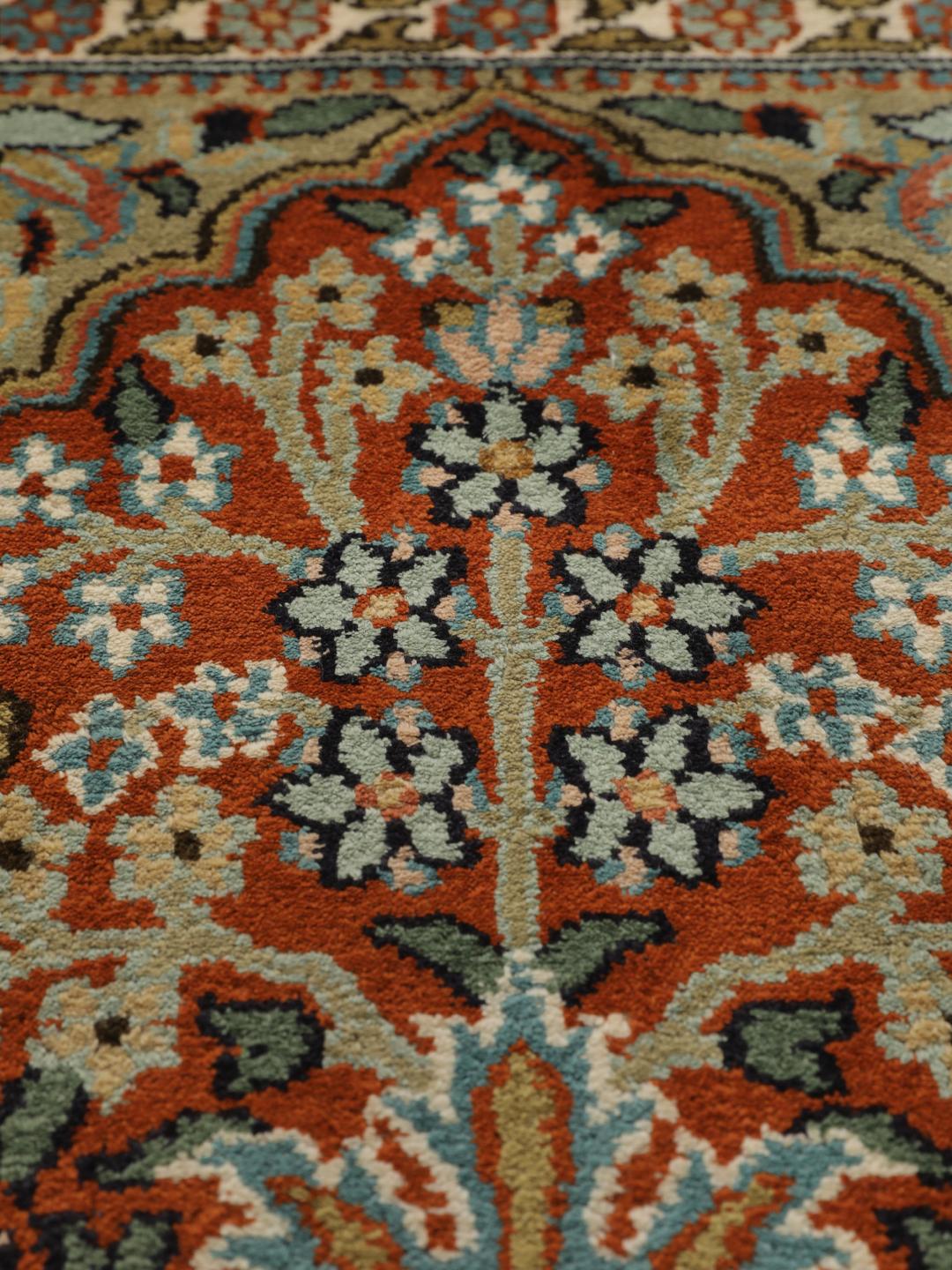
Kashmir silk rugs are renowned globally for their direct connection to the ancient traditions of the Kashmir Valley, a region where the art of weaving has been refined over centuries. While these rugs draw inspiration from the historical artistic exchanges of the Silk Road, they have evolved into a distinct Indian craft tradition. The rugs are deeply rooted in the cultural heritage of the region, where artisans have long combined local aesthetic sensibilities with influences from broader Middle Eastern design histories.
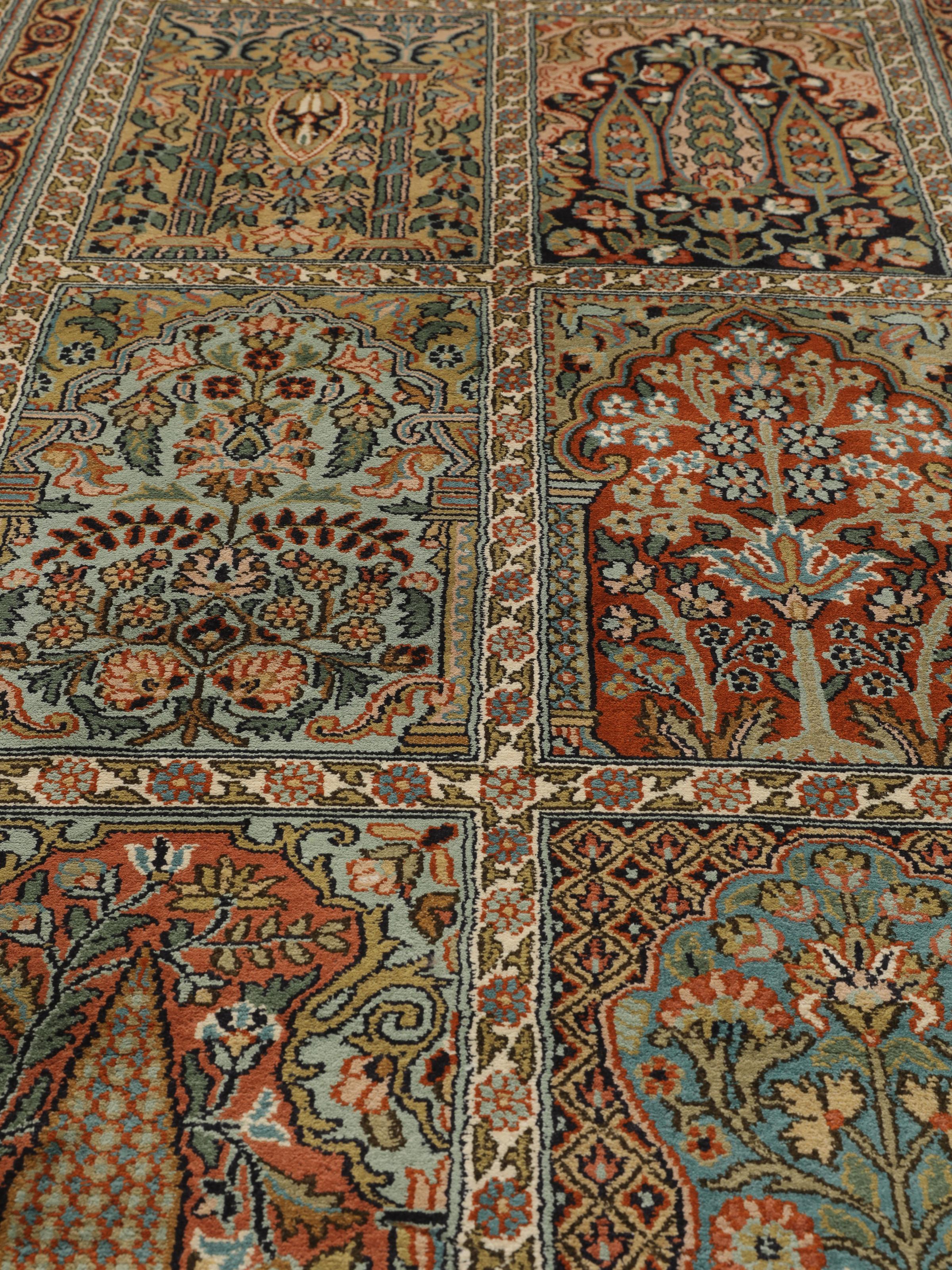
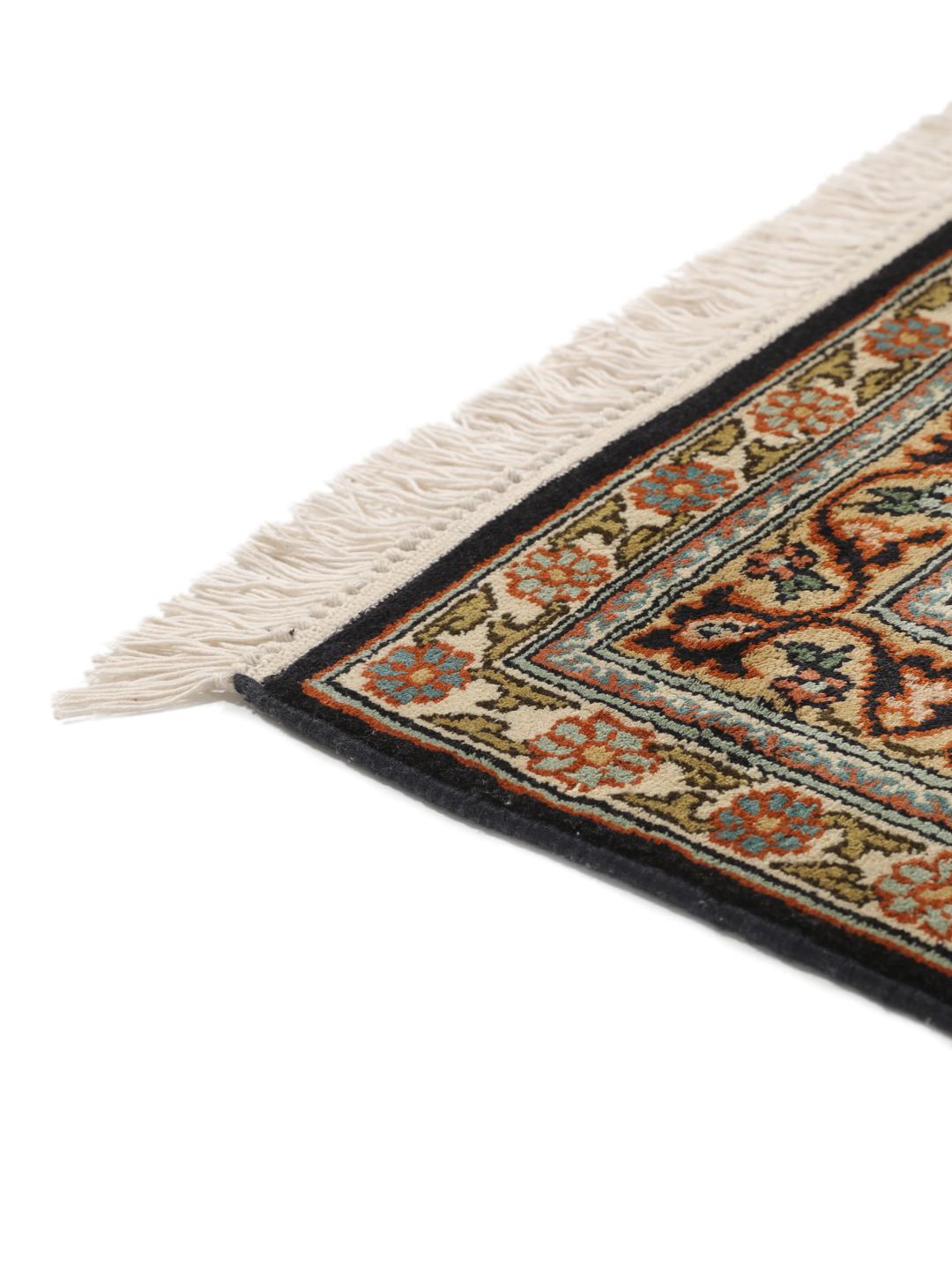
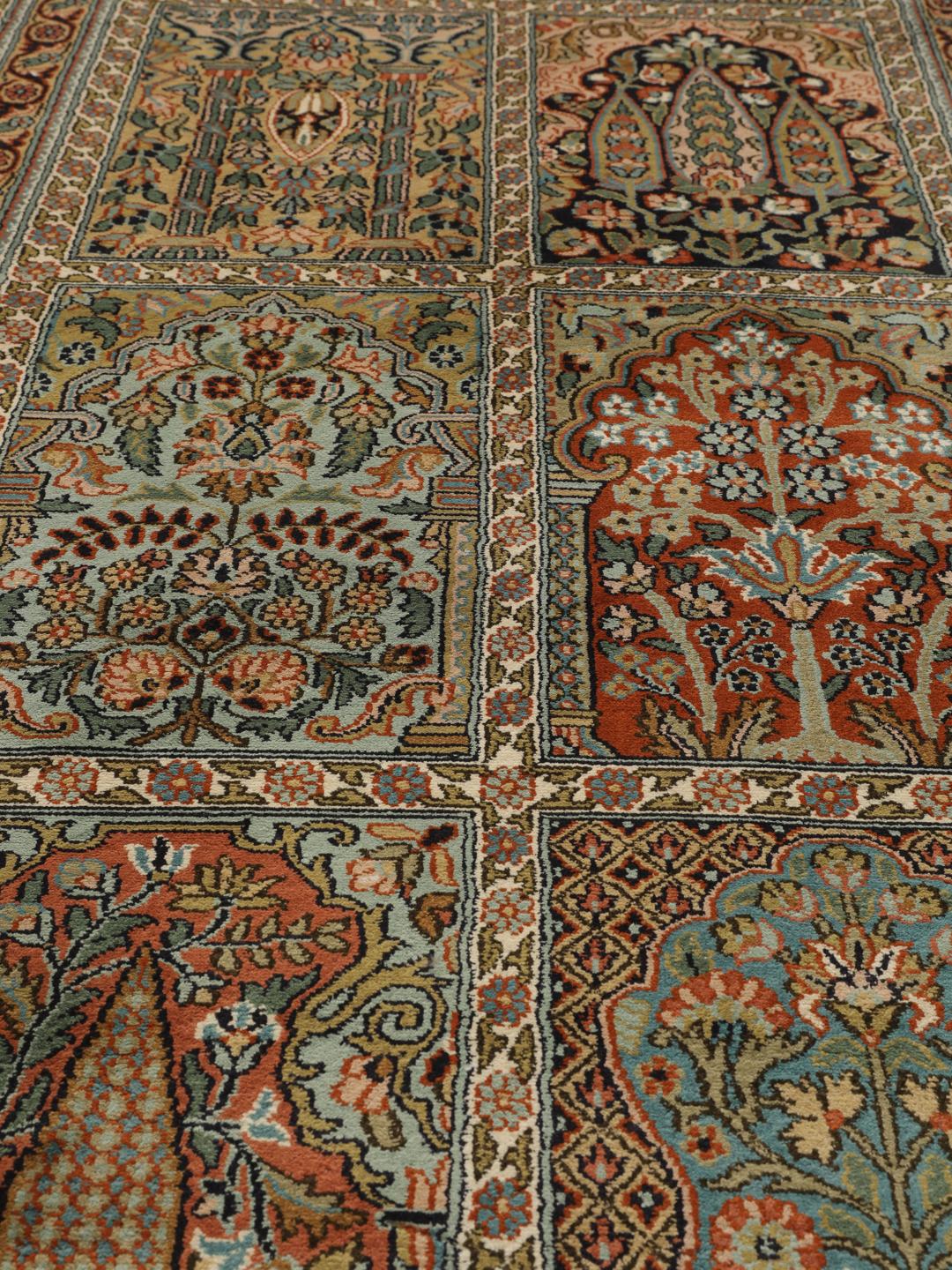
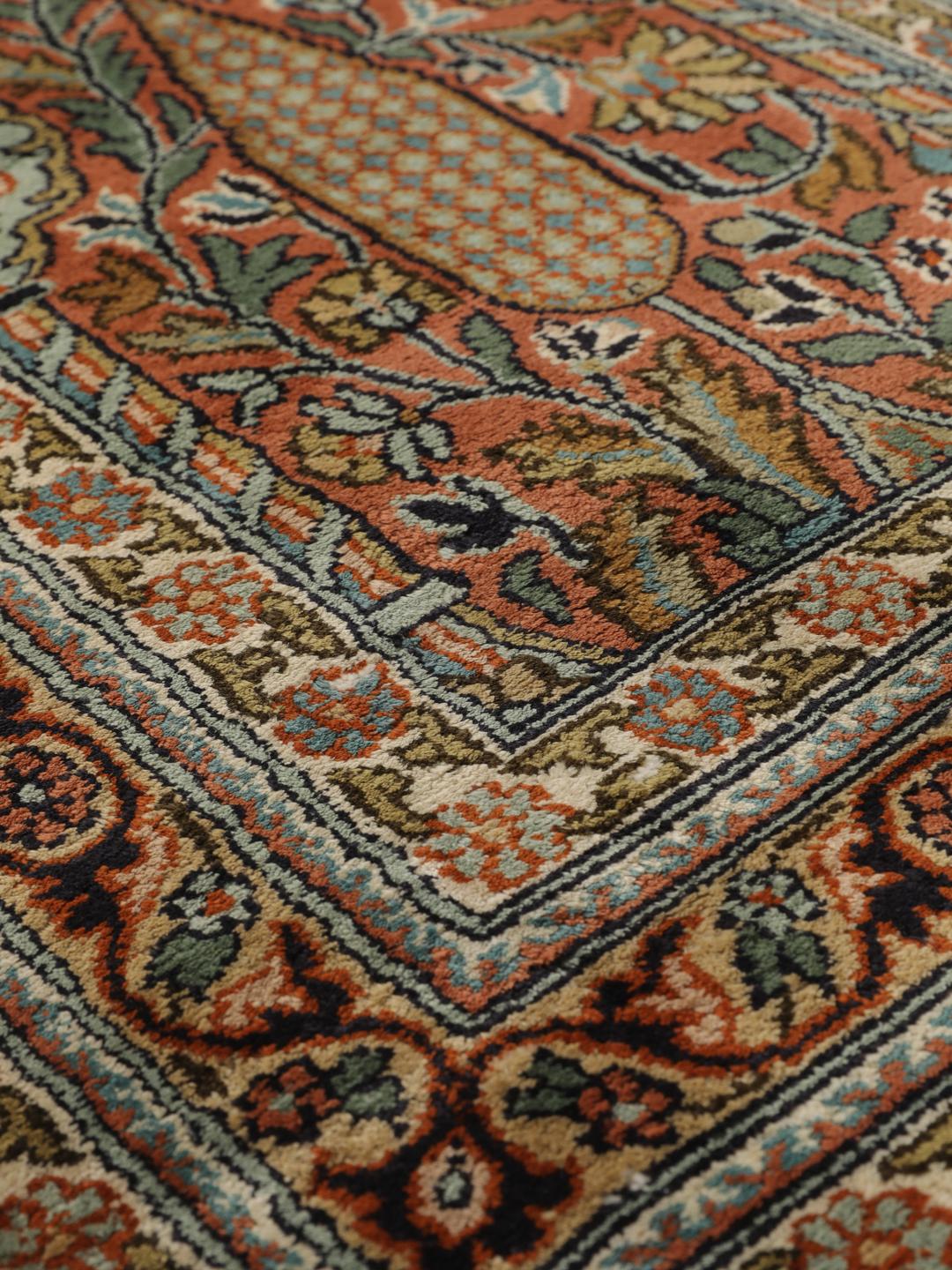
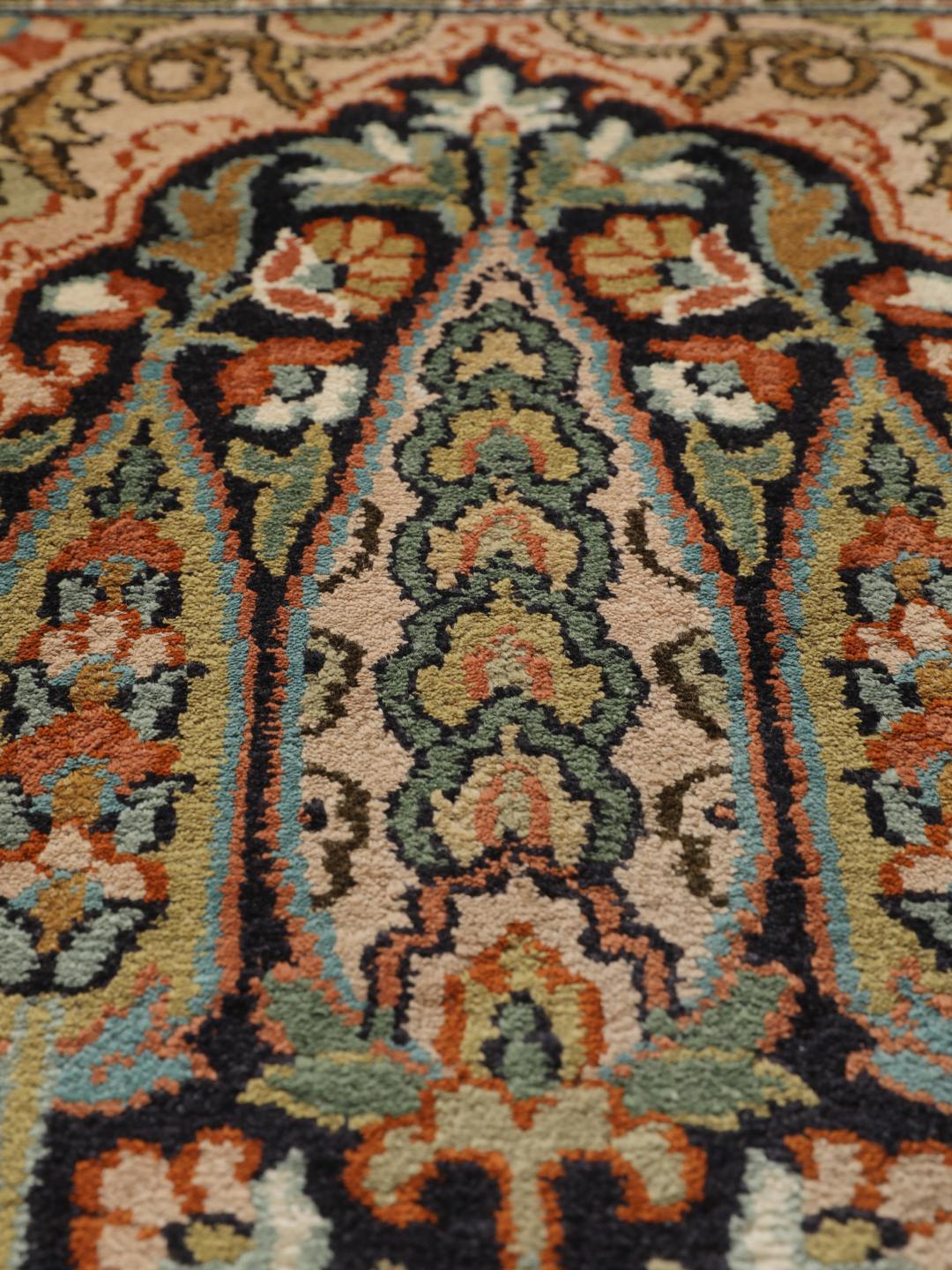
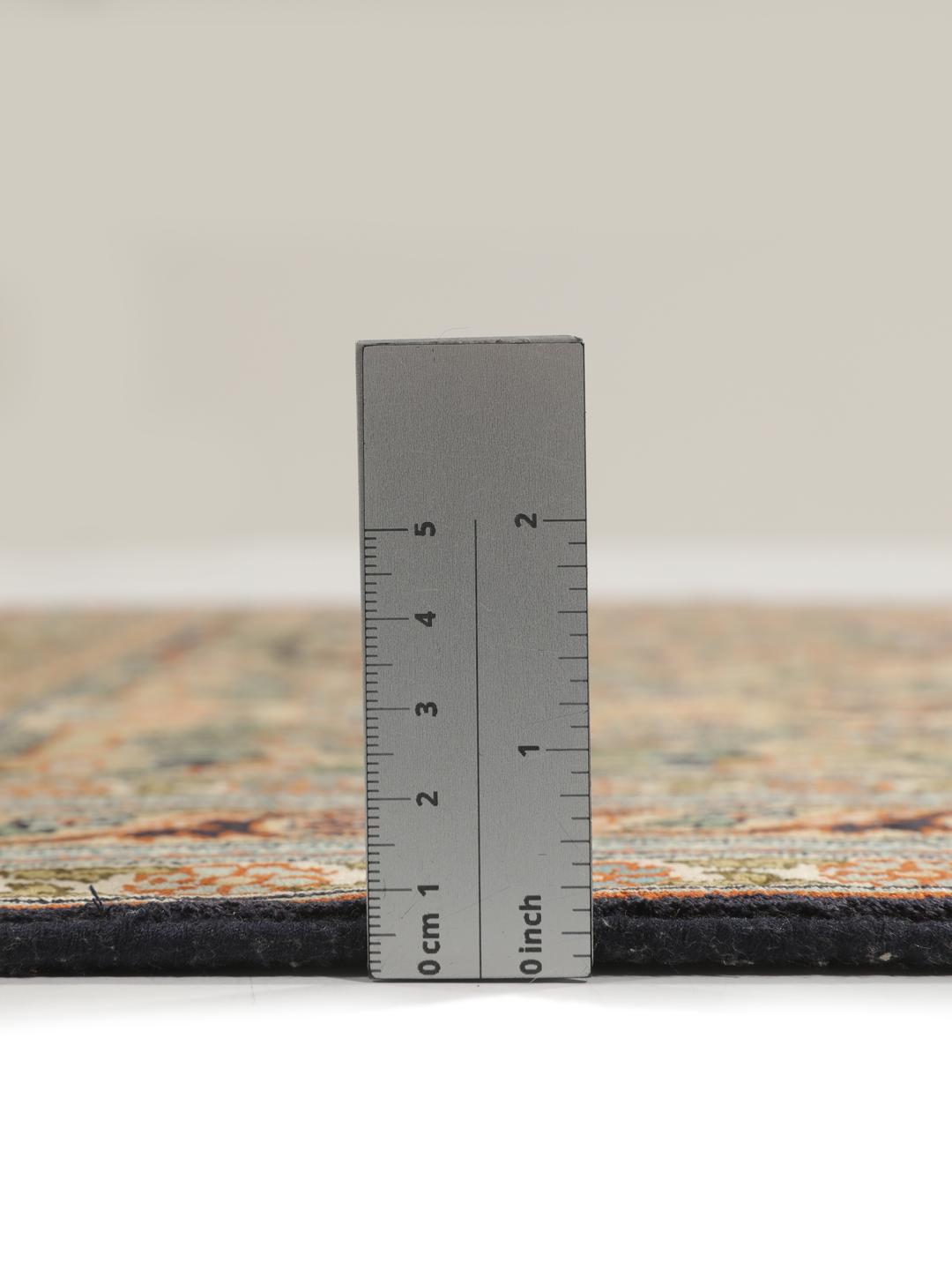
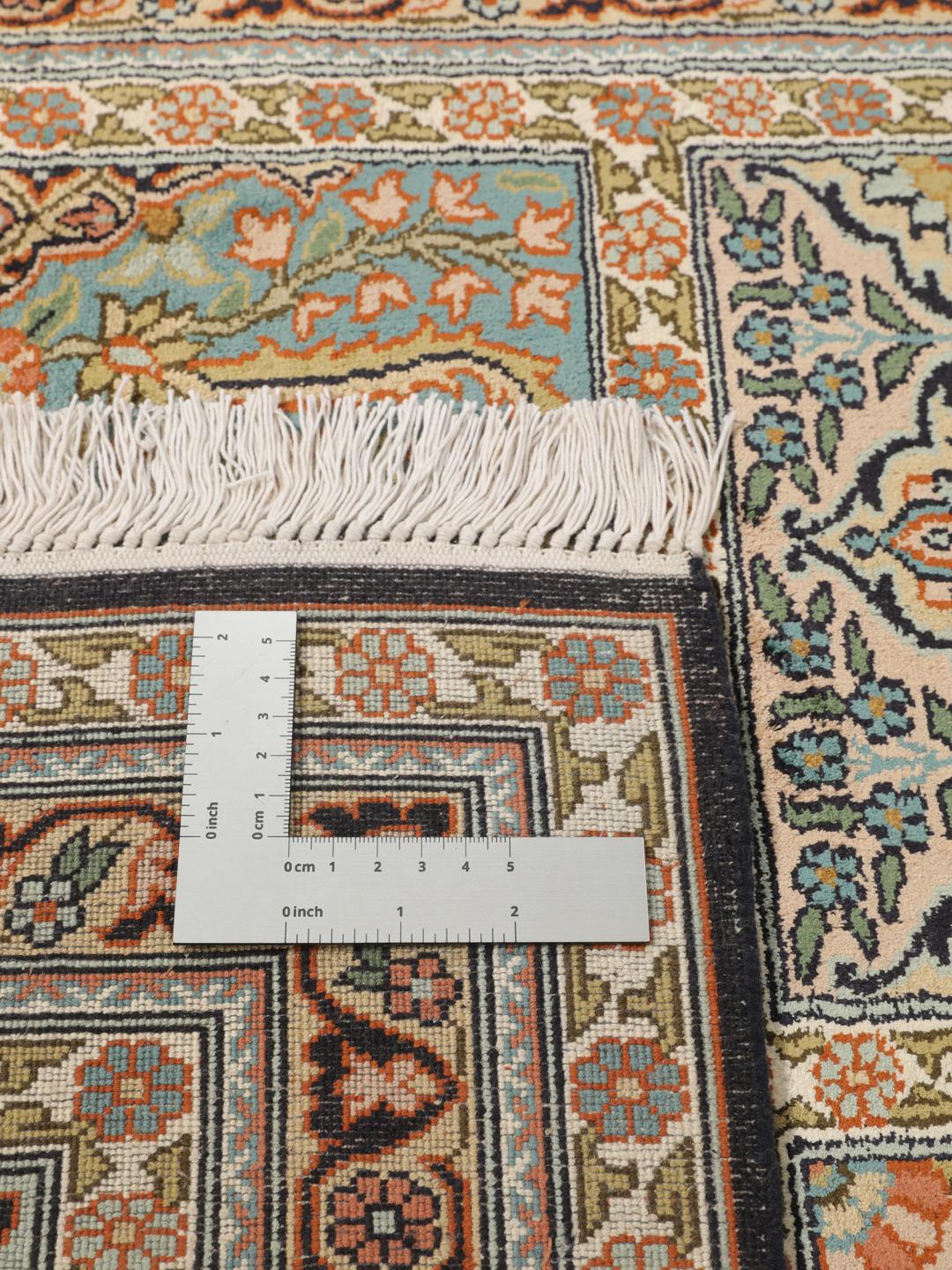
The technical mastery required to weave these rugs is substantial, often involving the use of fine silk threads to achieve incredible detail. The term 'hand-knotted' refers to the tradition where each individual thread is tied to the foundation, a process that determines the rug's longevity and the sharpness of its design. This method is what allows for the characteristic intricate floral patterns, as it enables the weaver to manage complex curves and delicate lines with a level of precision that remains the gold standard for high-end textiles.
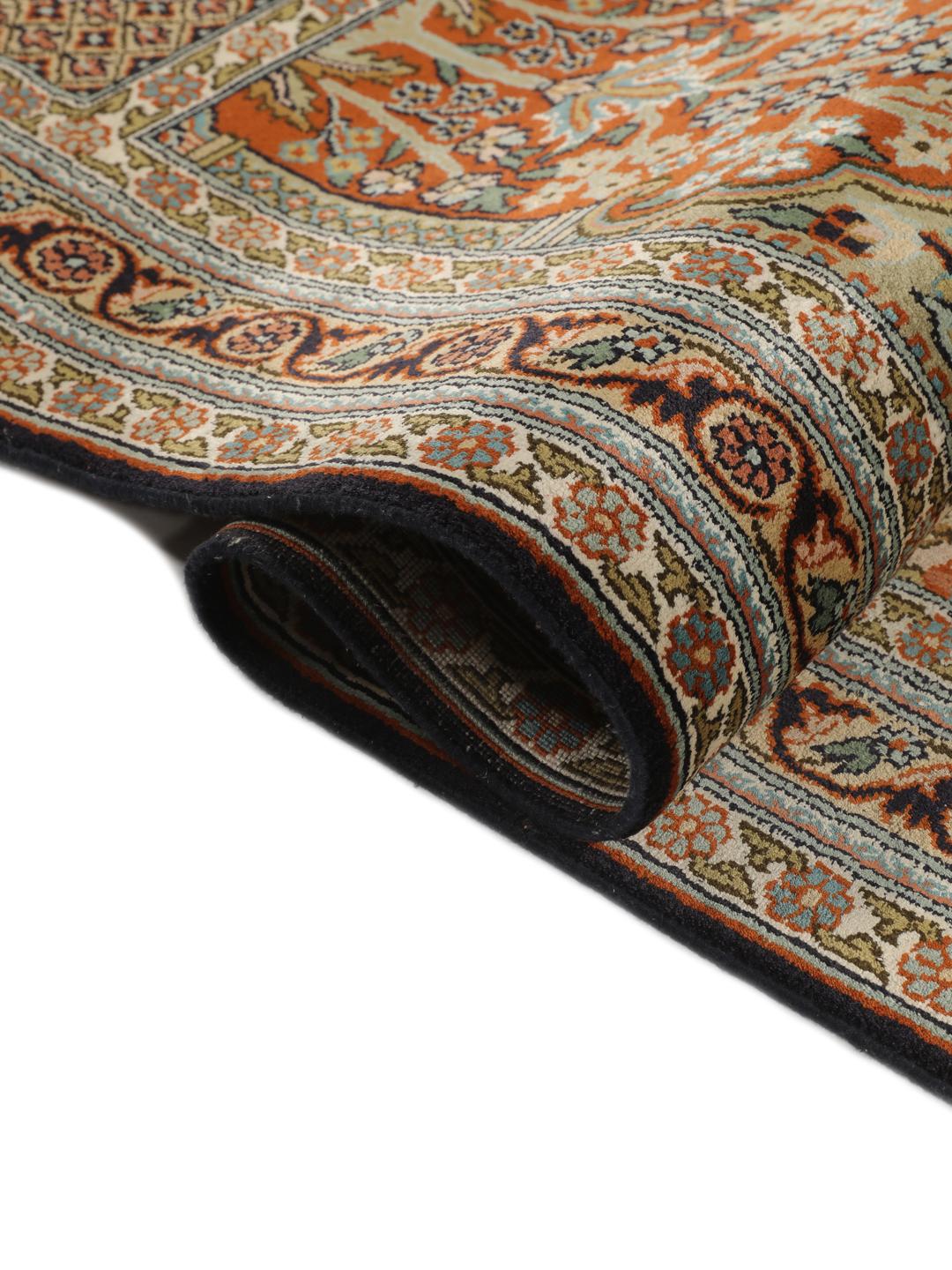
Visually, these runners are often defined by their elaborate, garden-inspired motifs, featuring intricate floral sprays, blossoms, and winding vines that evoke the natural beauty of the valley. Borders are typically formal and balanced, often echoing the complexity of the central field. What makes this particular piece distinctive is its panelled layout, a structure that adds a geometric, almost architectural quality to the traditional, flowing organic patterns often found in the Kashmir tradition.
Collecting a Kashmir silk rug is a way of preserving a legacy of immense human skill and artistic dedication. These pieces are valued not only for their immediate visual impact but for the cultural weight they carry, representing a bridge between traditional craft and the modern home. To own such a piece is to possess a tangible connection to a storied history of patience, precision, and beauty that is becoming increasingly rare in the contemporary world.