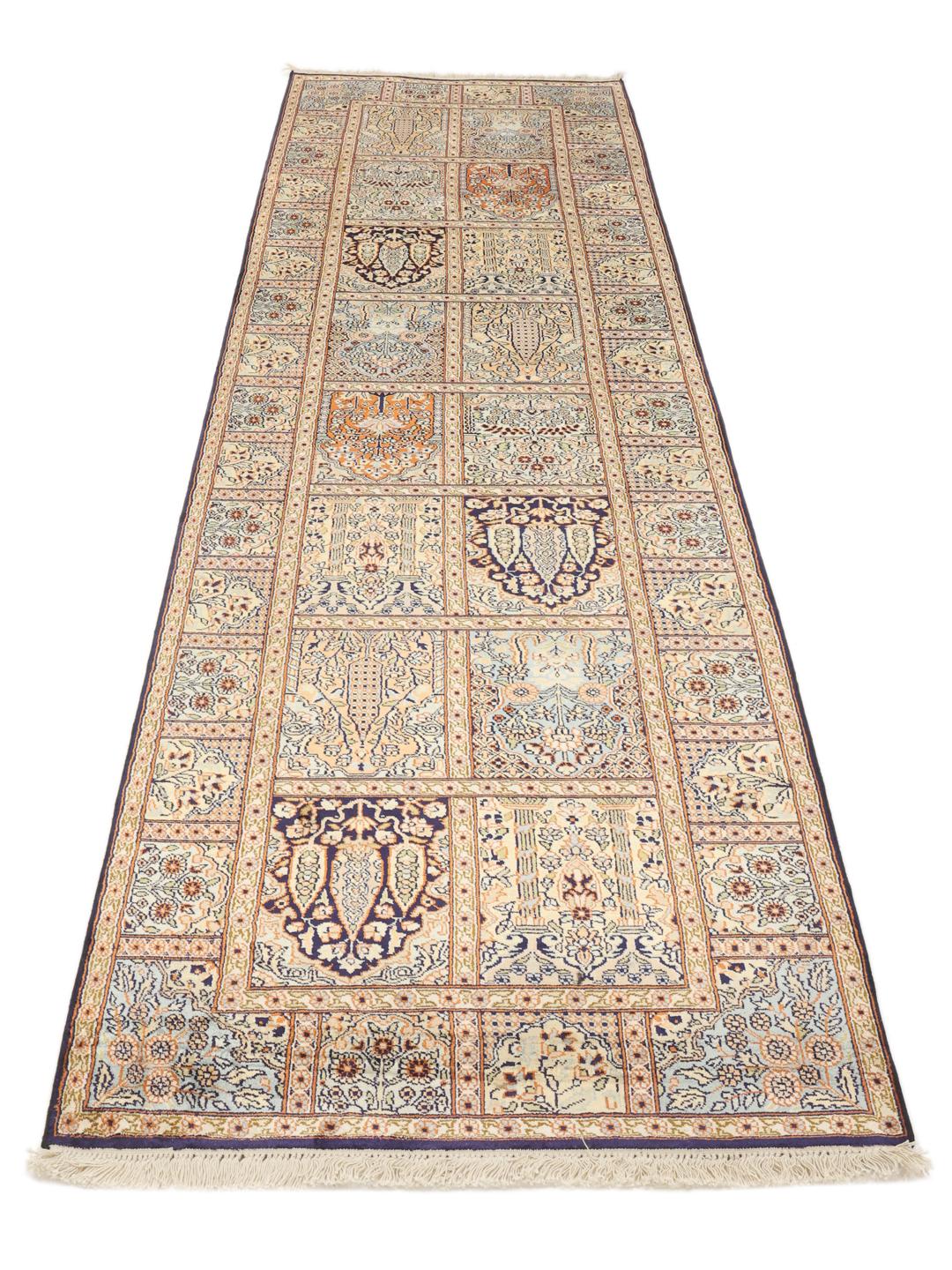
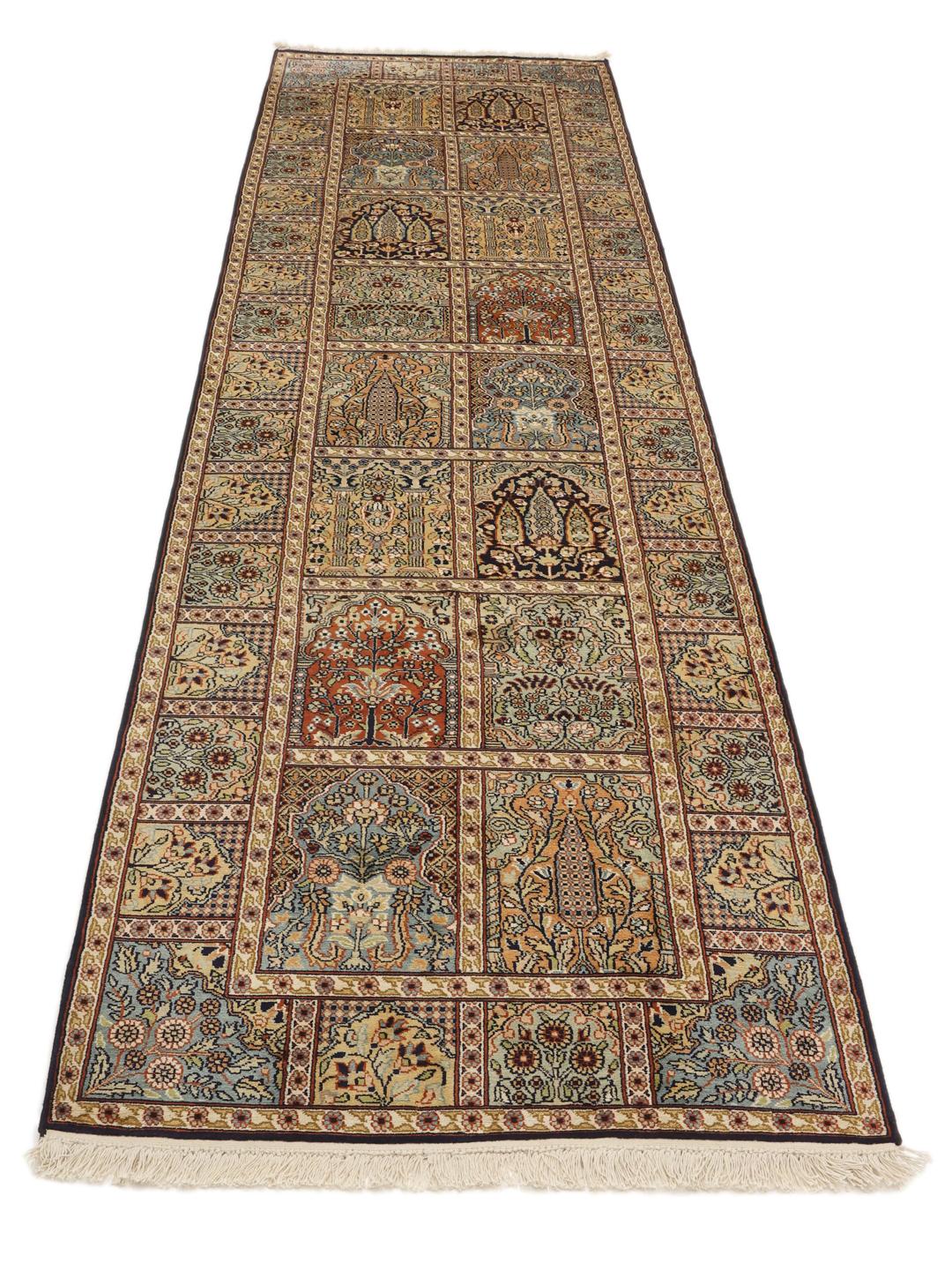
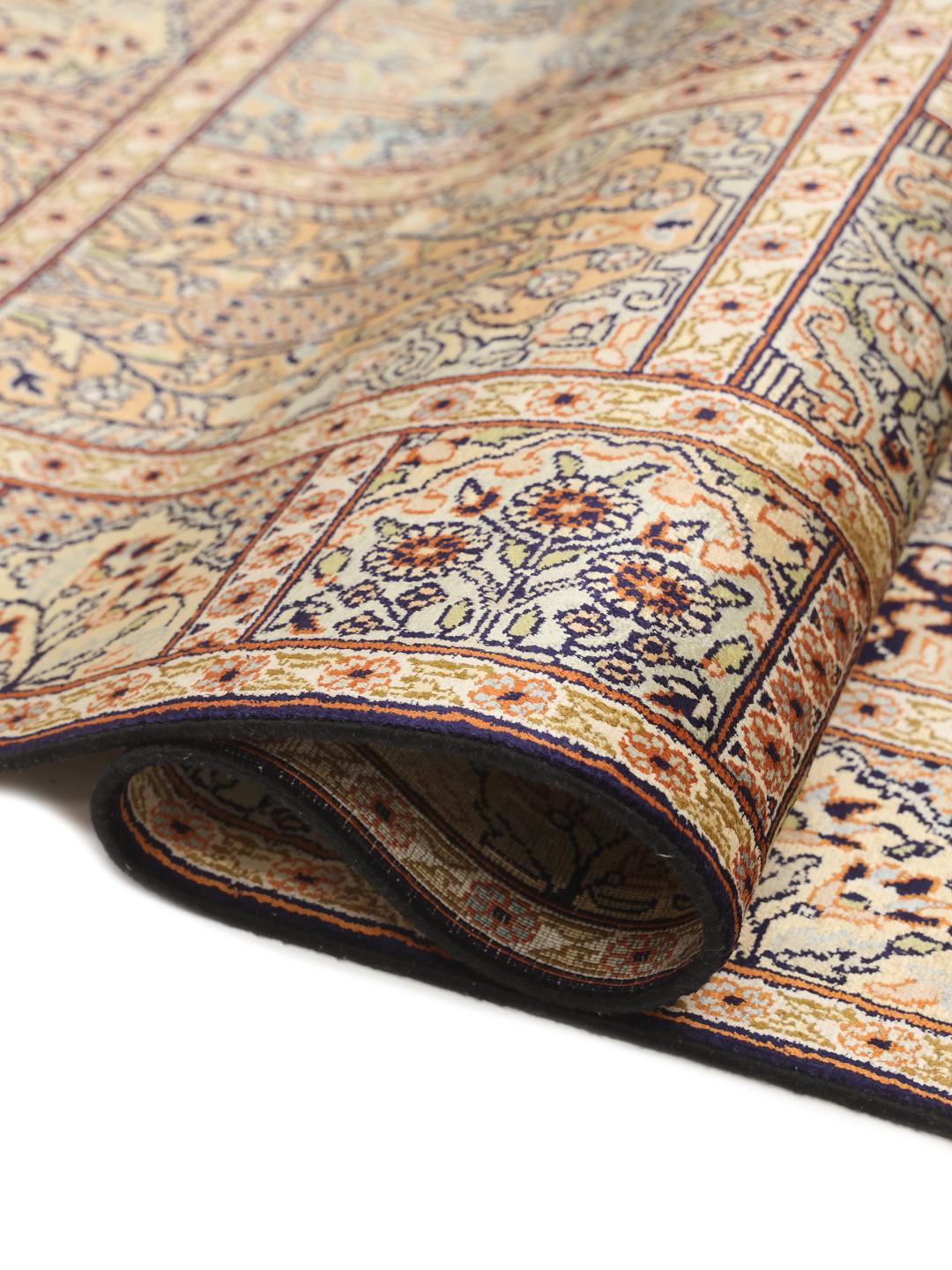
Kashmir silk rugs trace their origins back to the 15th century, when the craft was introduced to Northern India. Over the centuries, the region developed a distinct style that blends local artistic sensibilities with influences from the wider Middle Eastern textile traditions. Today, these rugs are celebrated for their fine detail and the use of high-quality silk, which allows for the creation of intricate, jewel-toned designs.
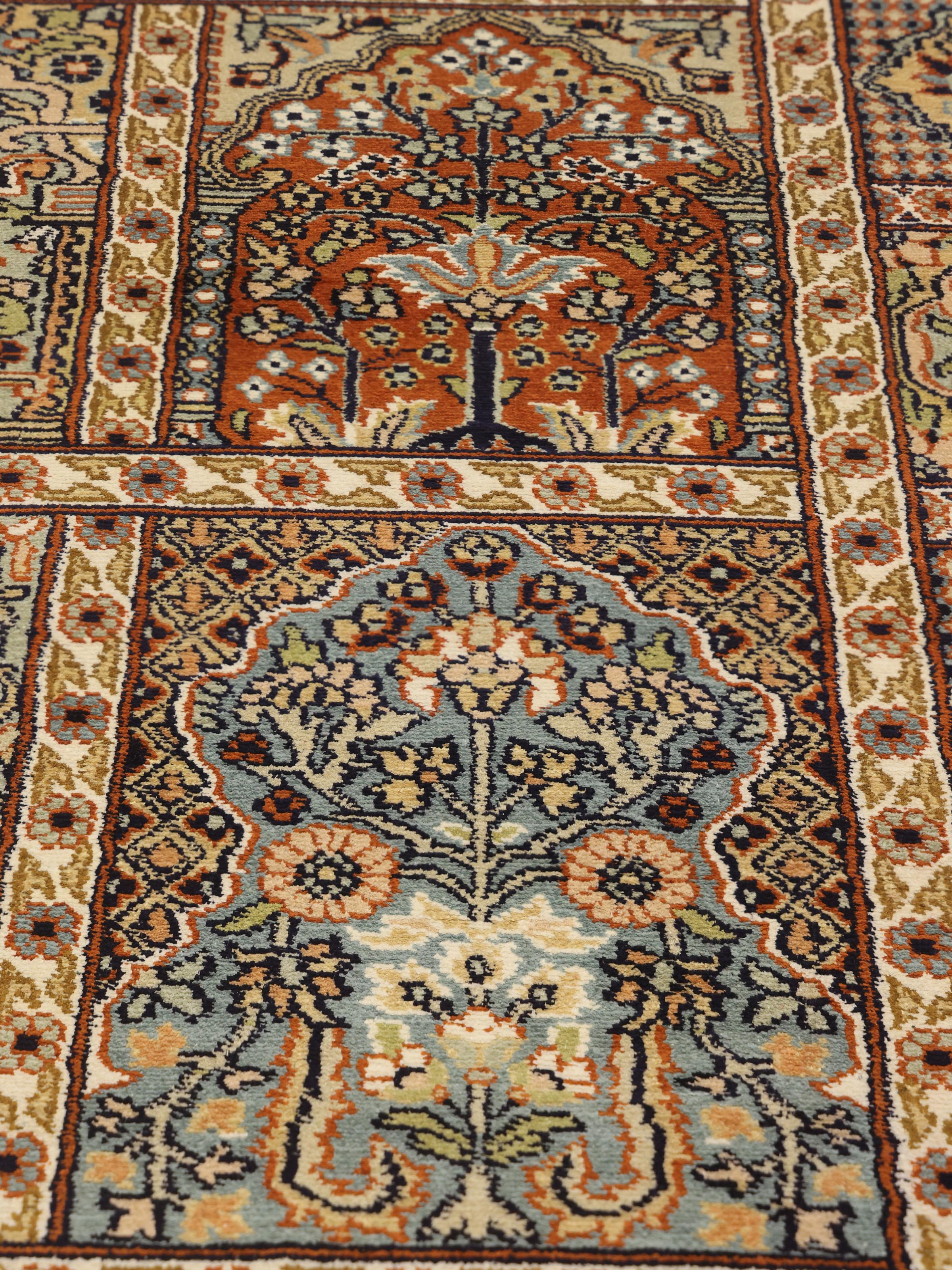
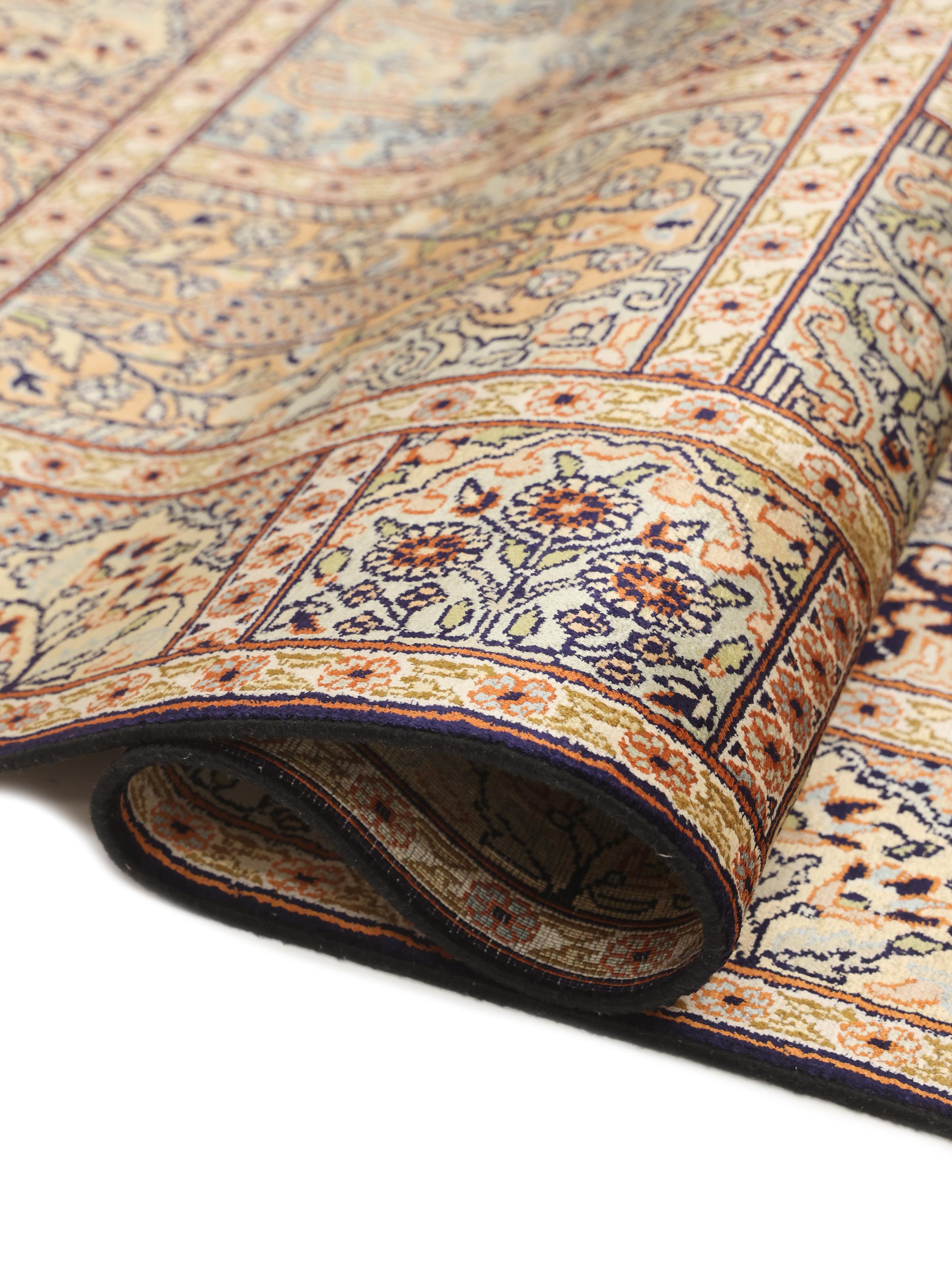
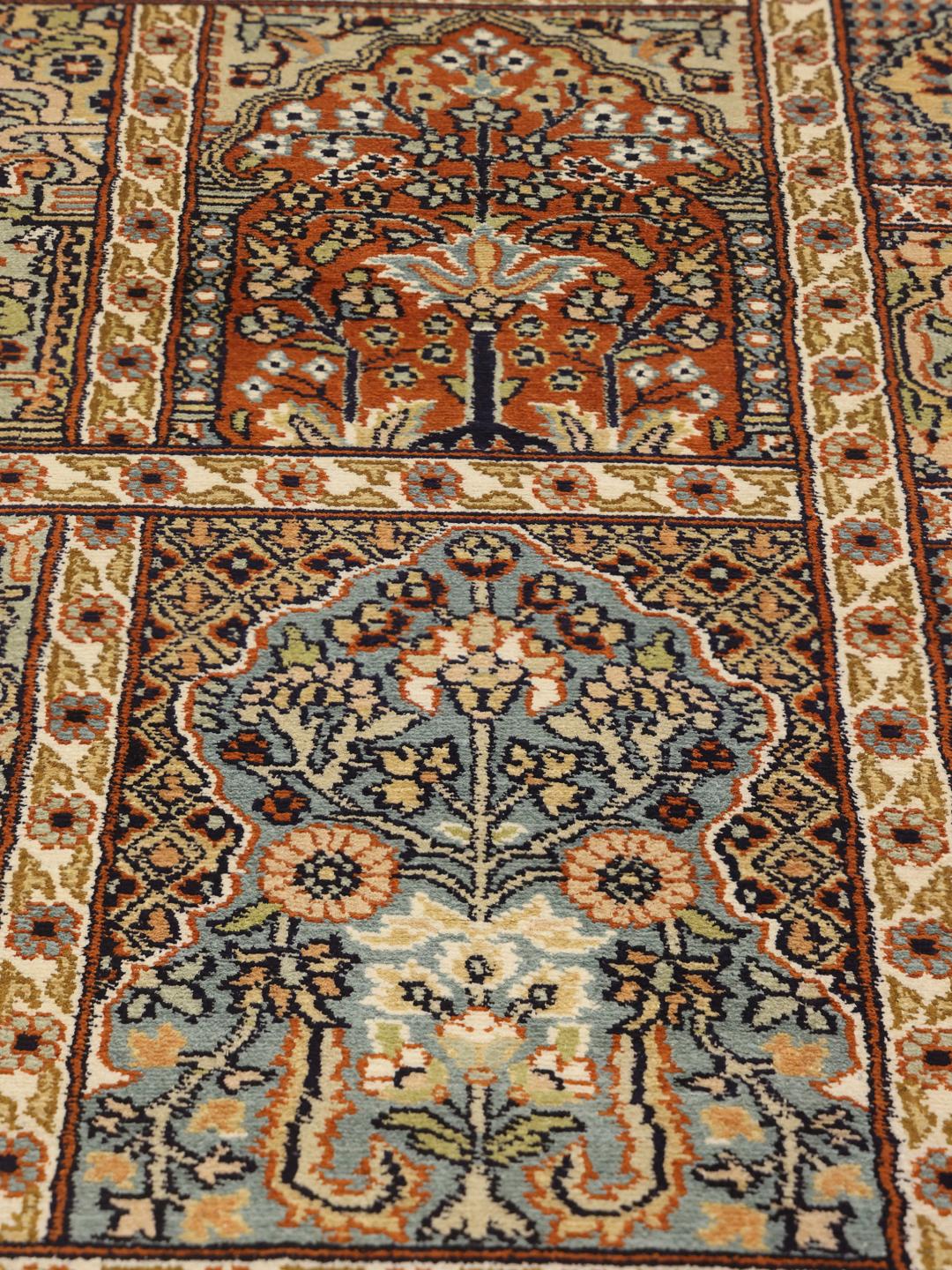
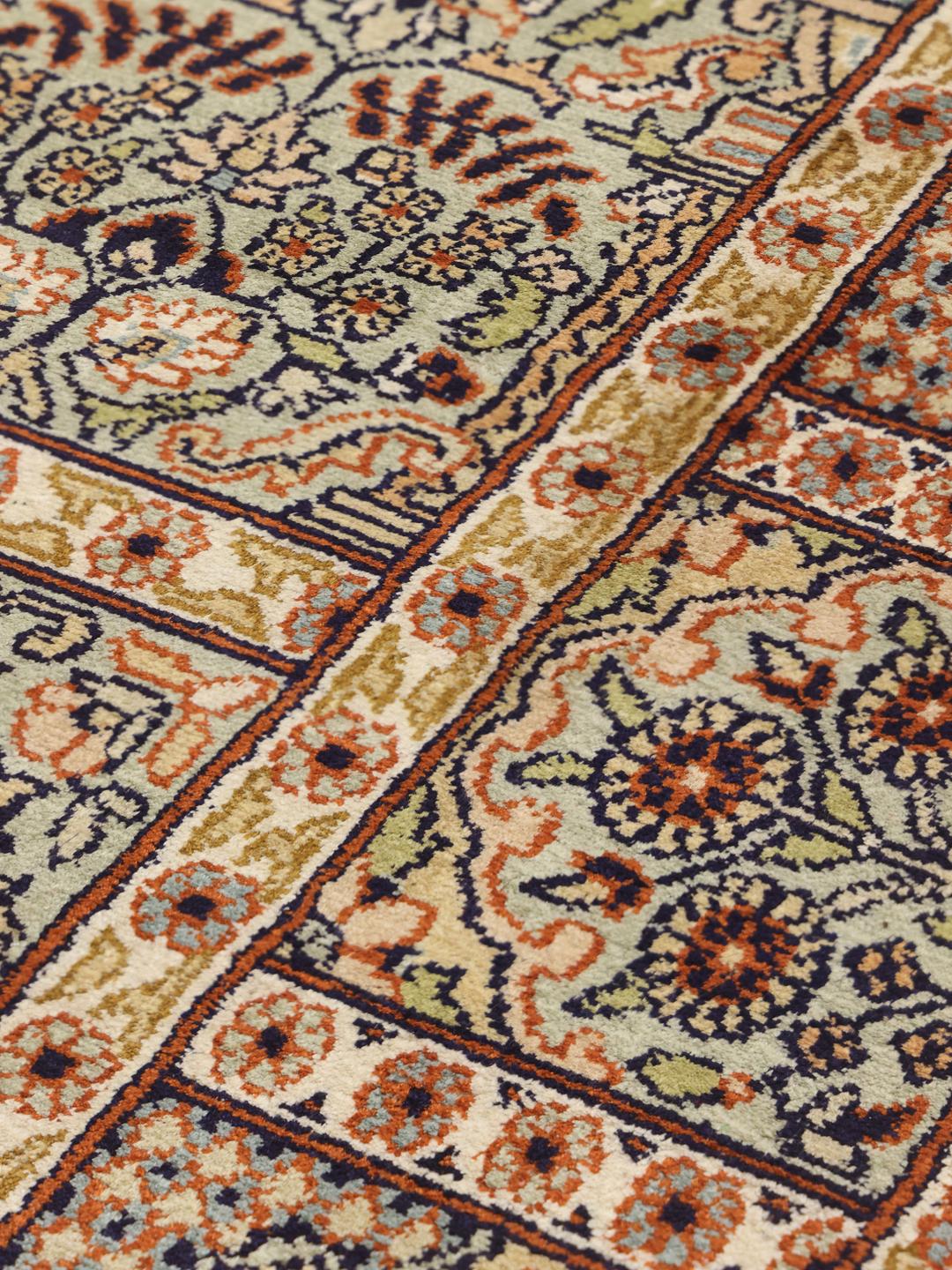
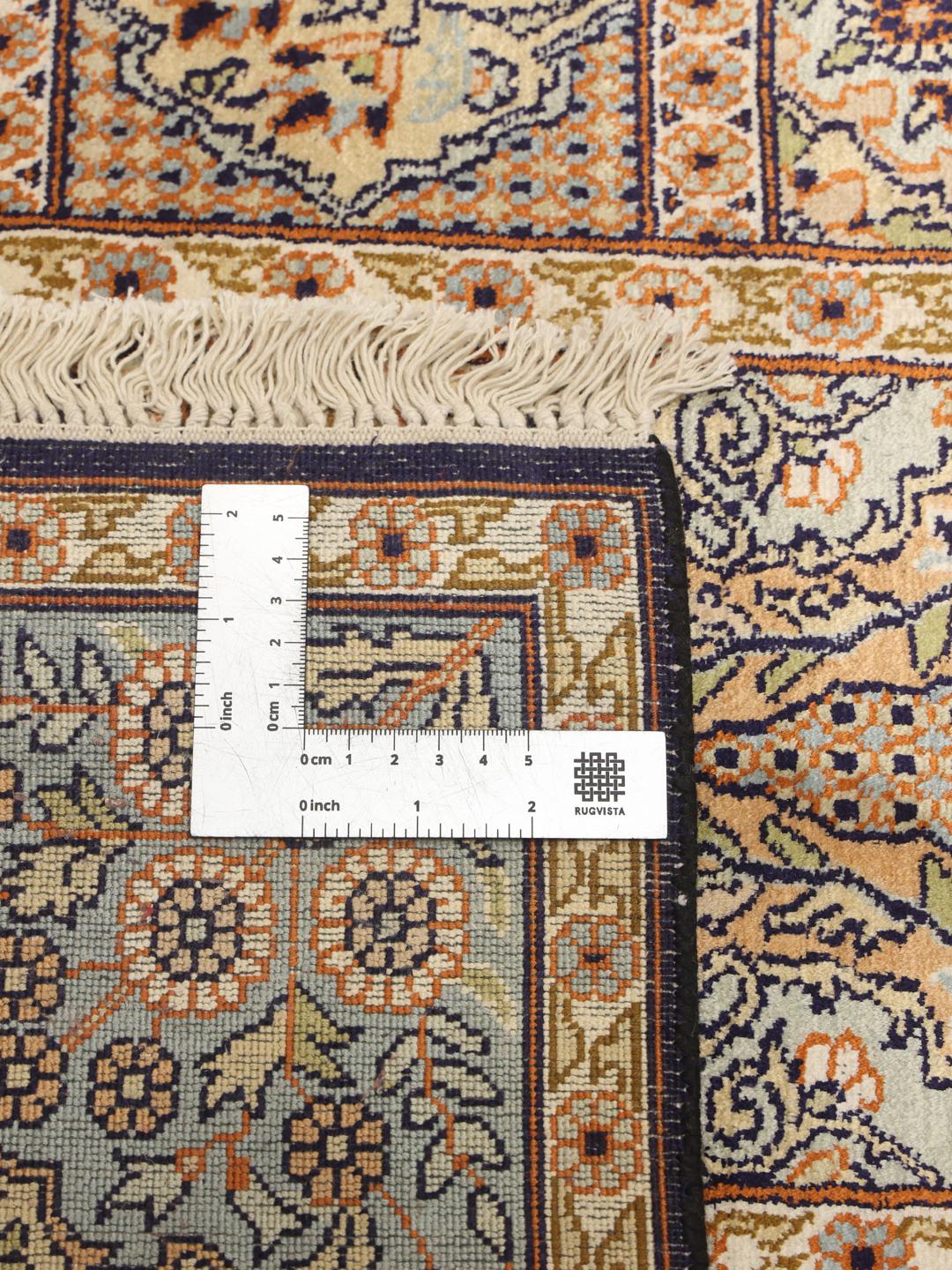
The term 'Kashmir silk' refers to a tradition of weaving that prioritises fine detail and luxurious texture. The use of pure silk is central to this, as it allows for a much finer thread than wool, enabling weavers to achieve a higher knot count. This technical advantage is what allows for the detailed panel work and ornate borders often found in these pieces, resulting in a finished product that is as much a painting as it is a floor covering.
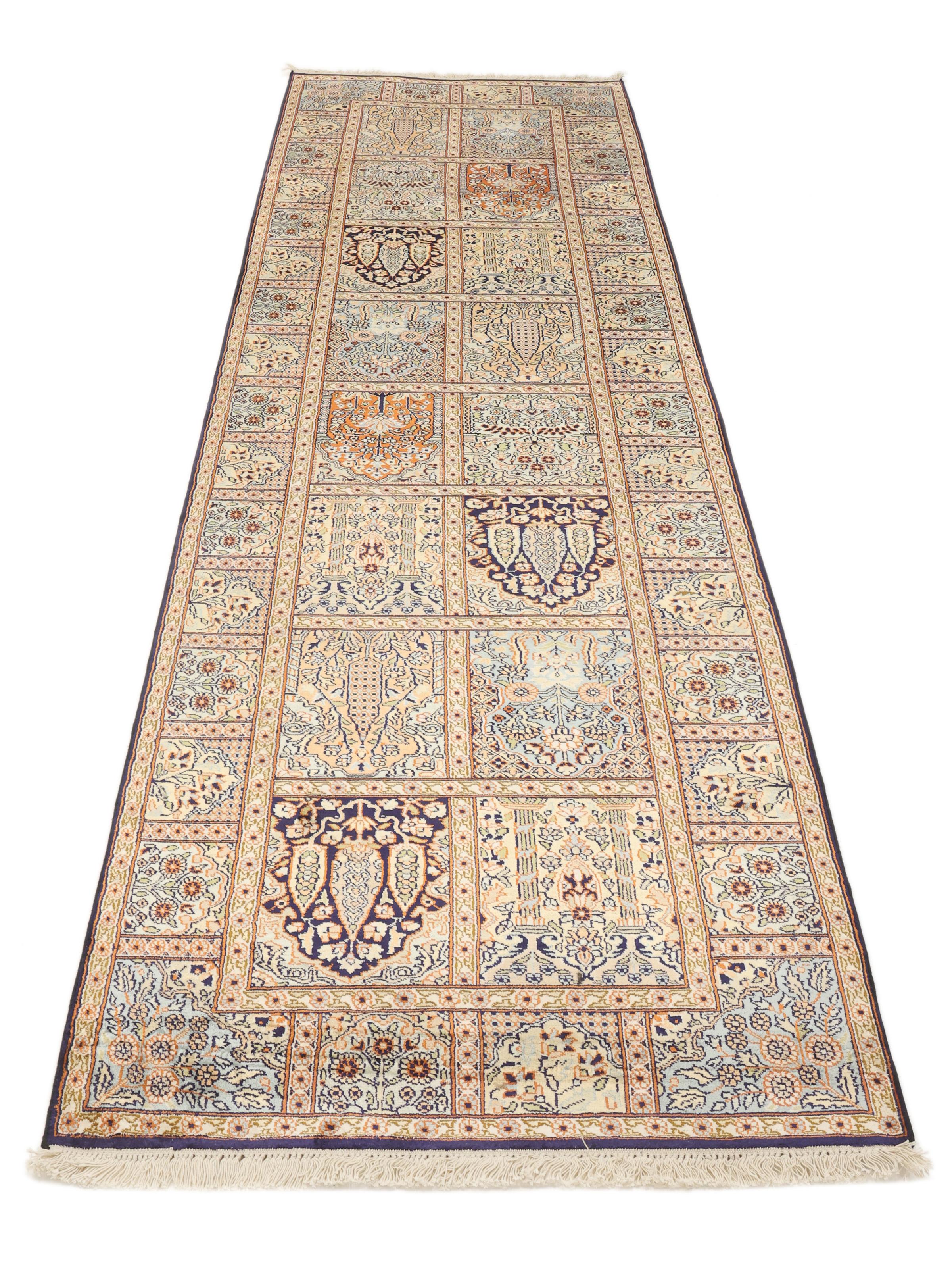
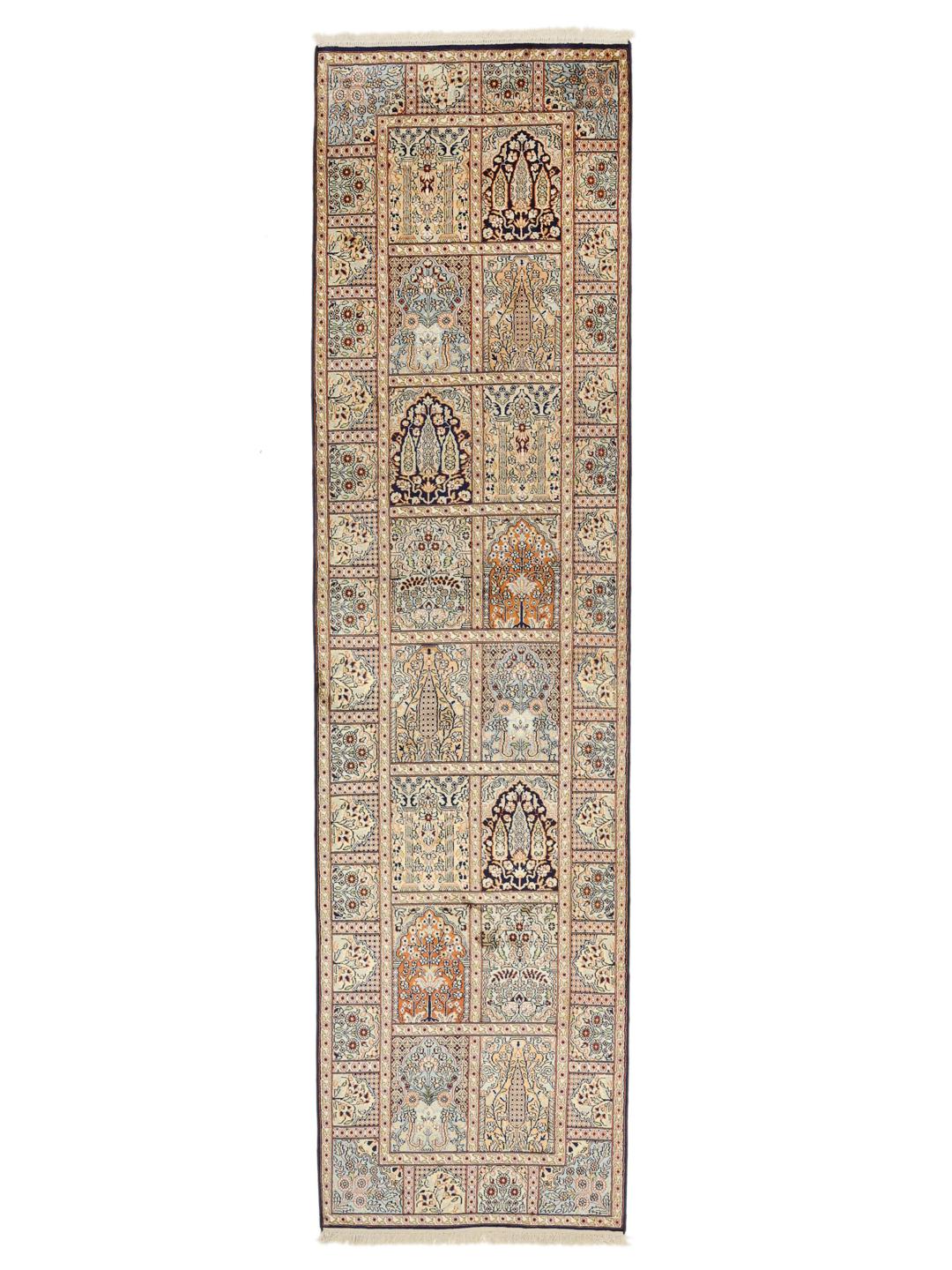
Design-wise, these rugs frequently feature motifs inspired by the lush gardens of the region. You will often see floral elements, cypress trees, and garden-inspired panels arranged in a formal, repeating order. The borders often frame the field with precision, providing a sense of balance and harmony. Each panel tells a story, often drawing on centuries-old designs that have been refined and passed down through generations of families.
Owning a Kashmir silk rug is an investment in cultural heritage and human skill. Because these pieces are made by hand, they carry the signature of the weaver and the specific artistic traditions of their home. Collectors value them for this authentic connection to the past, viewing them not just as functional items but as heirlooms that retain their beauty and value throughout the years.