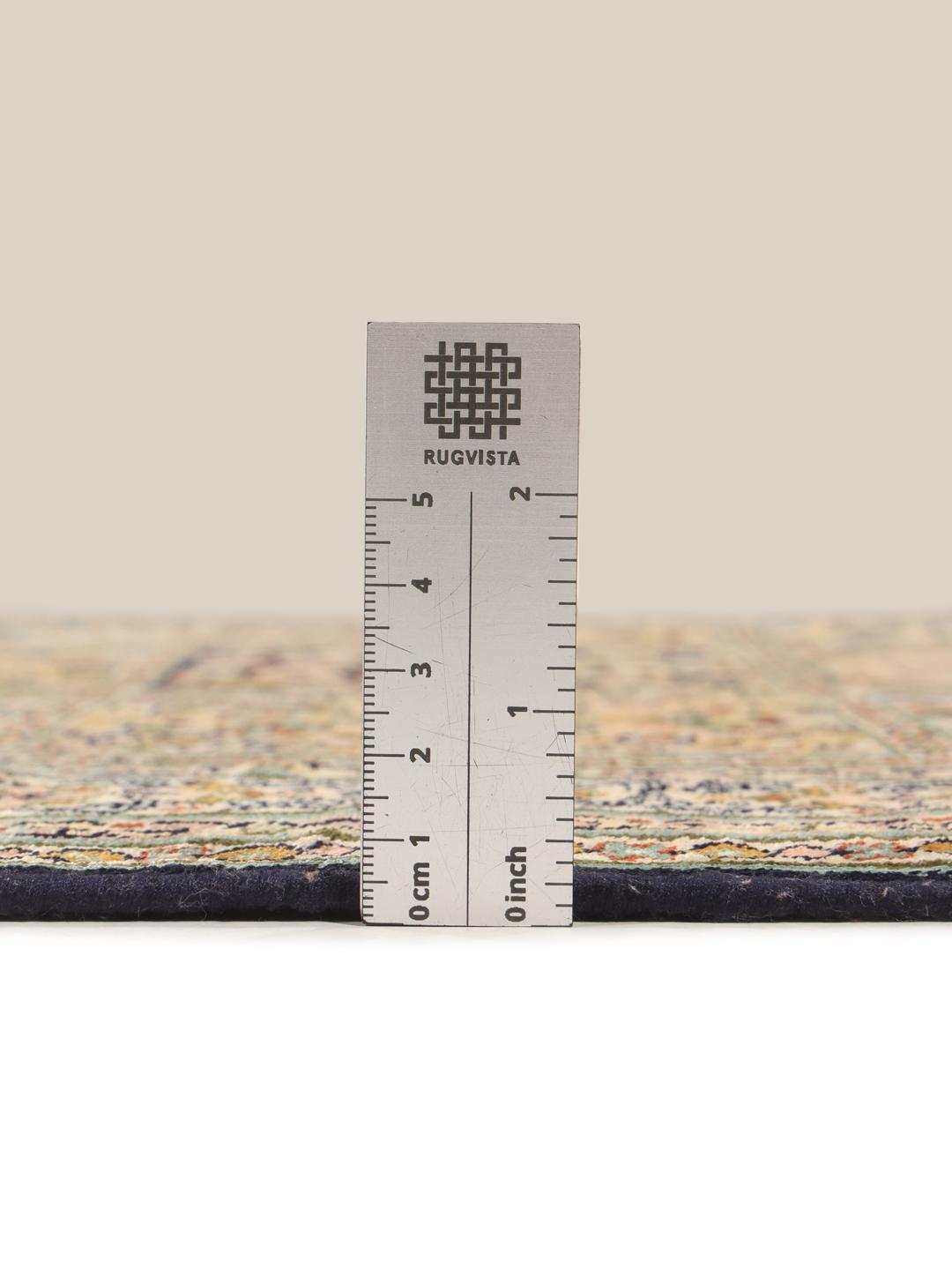
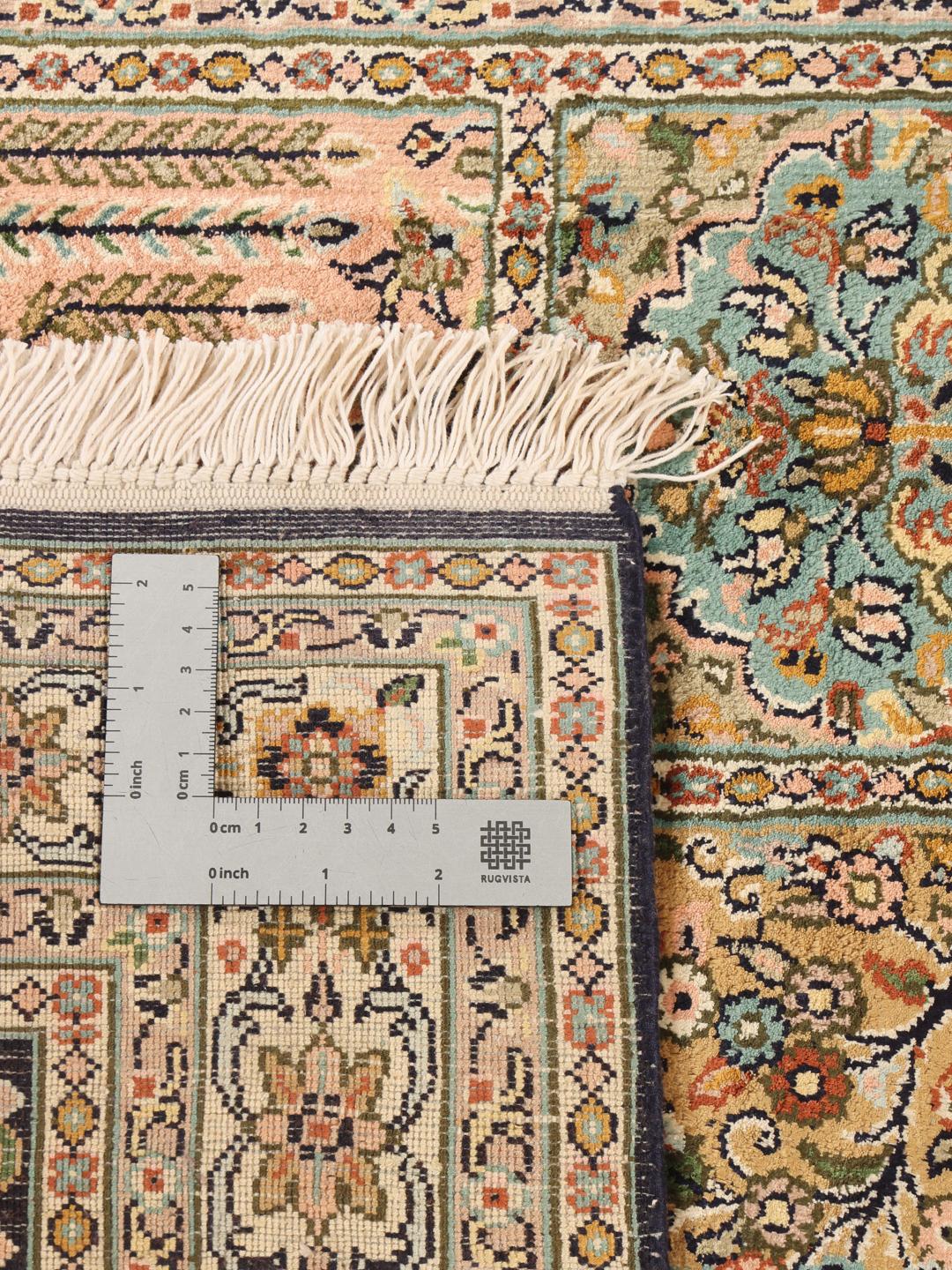
Kashmir rugs from India are celebrated for their deep historical connection to the ancient weaving traditions of the Middle East, which were introduced to the Himalayan region centuries ago. Over time, these traditions blended with local artistic sensibilities, resulting in a distinct style that is world-renowned for its refinement. The region of Kashmir, nestled in the mountains, became a hub for this craft, where the cool climate and serene environment provided the perfect setting for artisans to focus on intricate, time-consuming work.
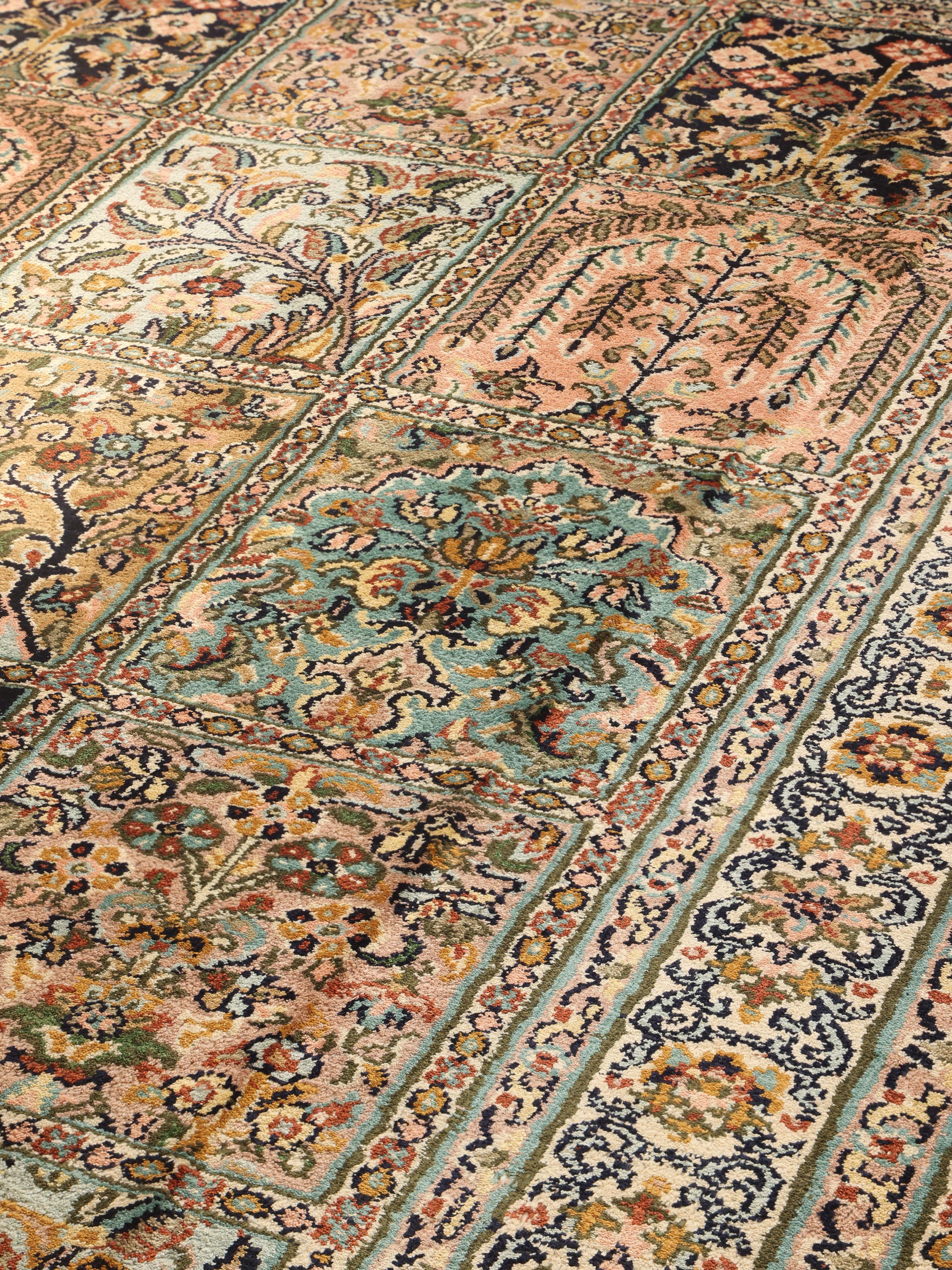
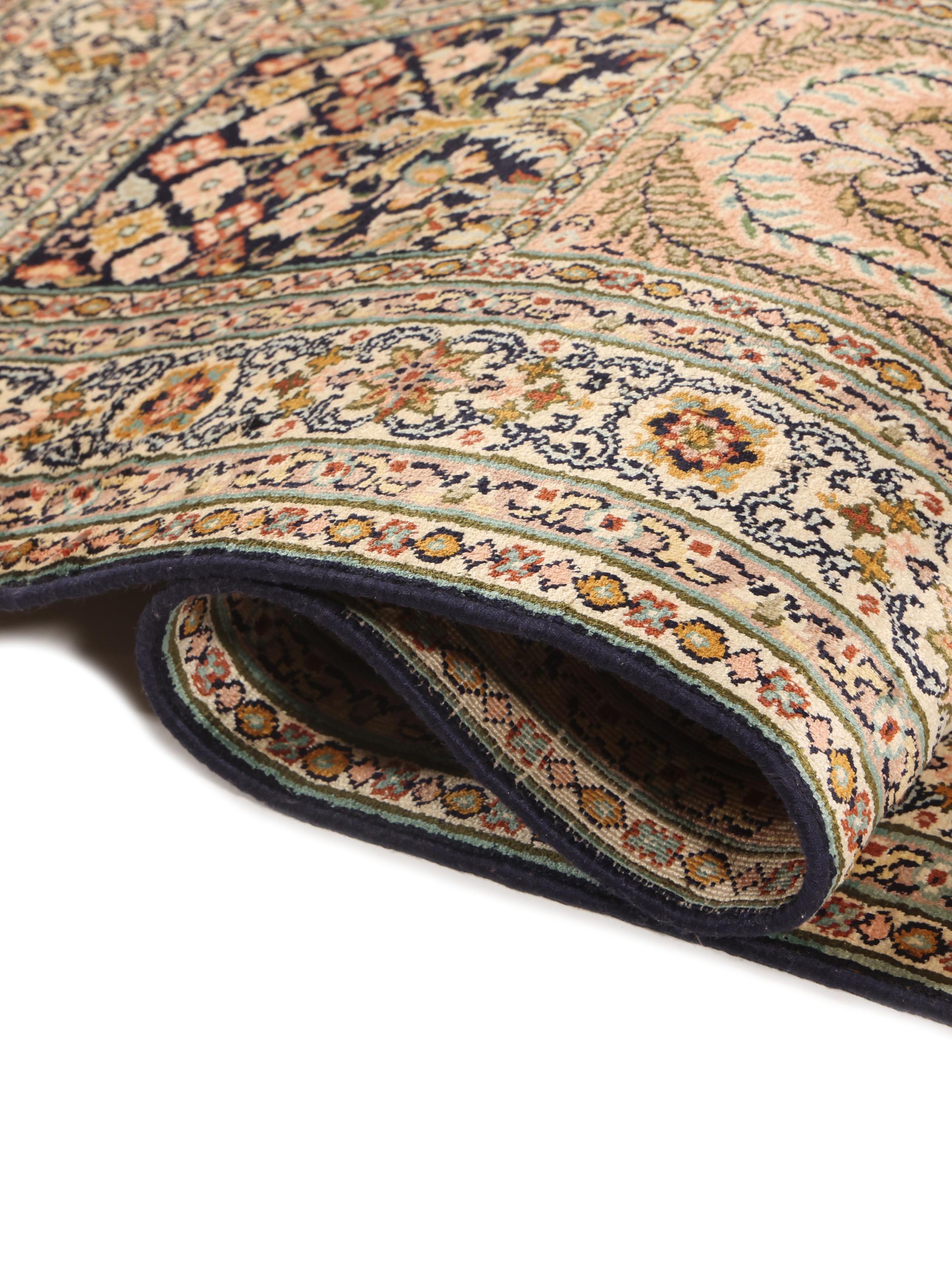
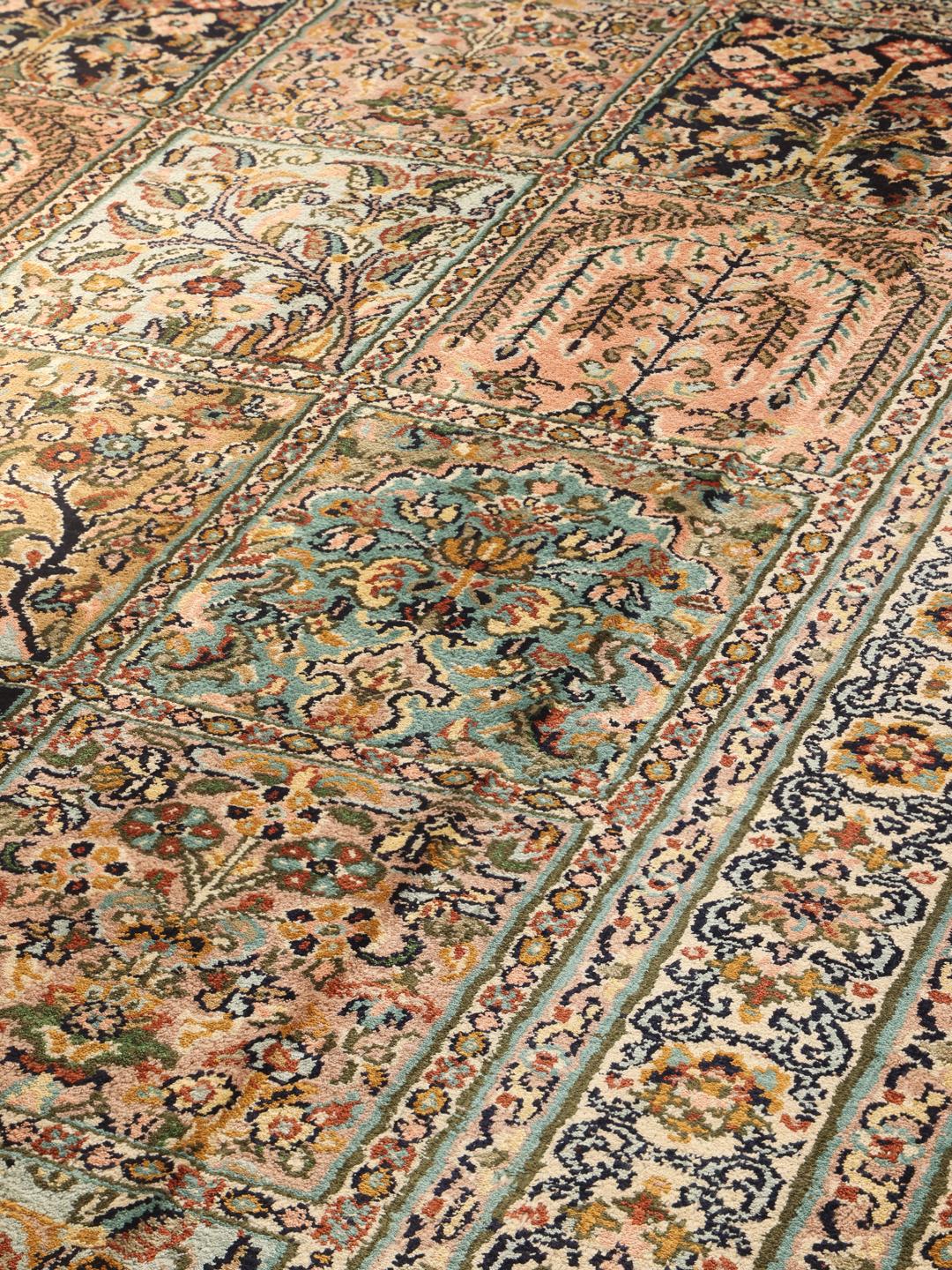
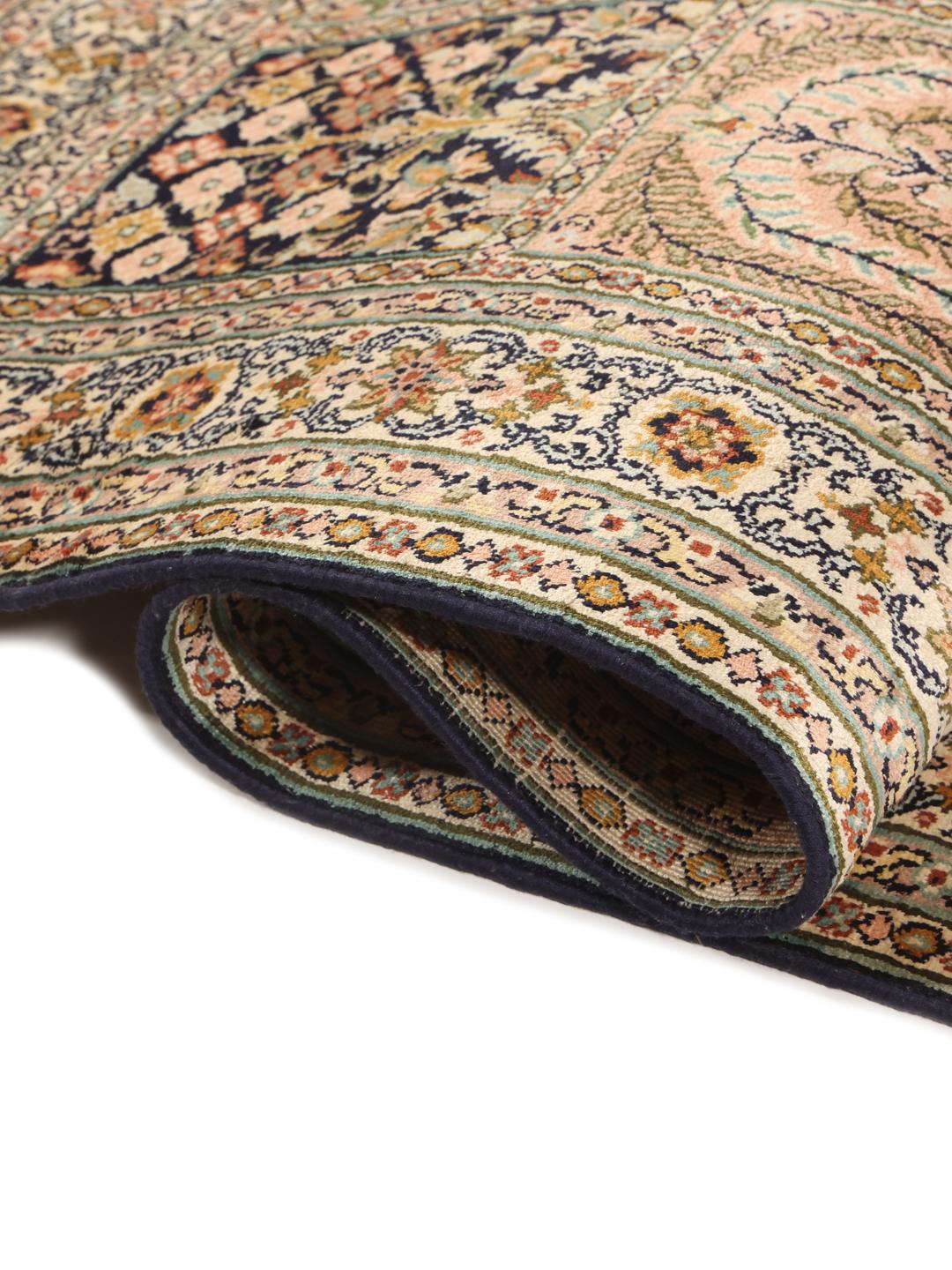
The term 'Kashmir silk' refers not just to the material, but to a specific, highly advanced style of weaving that emphasises detail and fluidity. In this tradition, the use of fine silk allows for a much higher knot density than is possible with coarser fibres. This technical choice is critical, as it enables the depiction of incredibly delicate floral motifs and complex geometric arrangements that look almost like paintings. For the owner, this means a rug with a softer, more vibrant, and more detailed appearance that captures light beautifully.
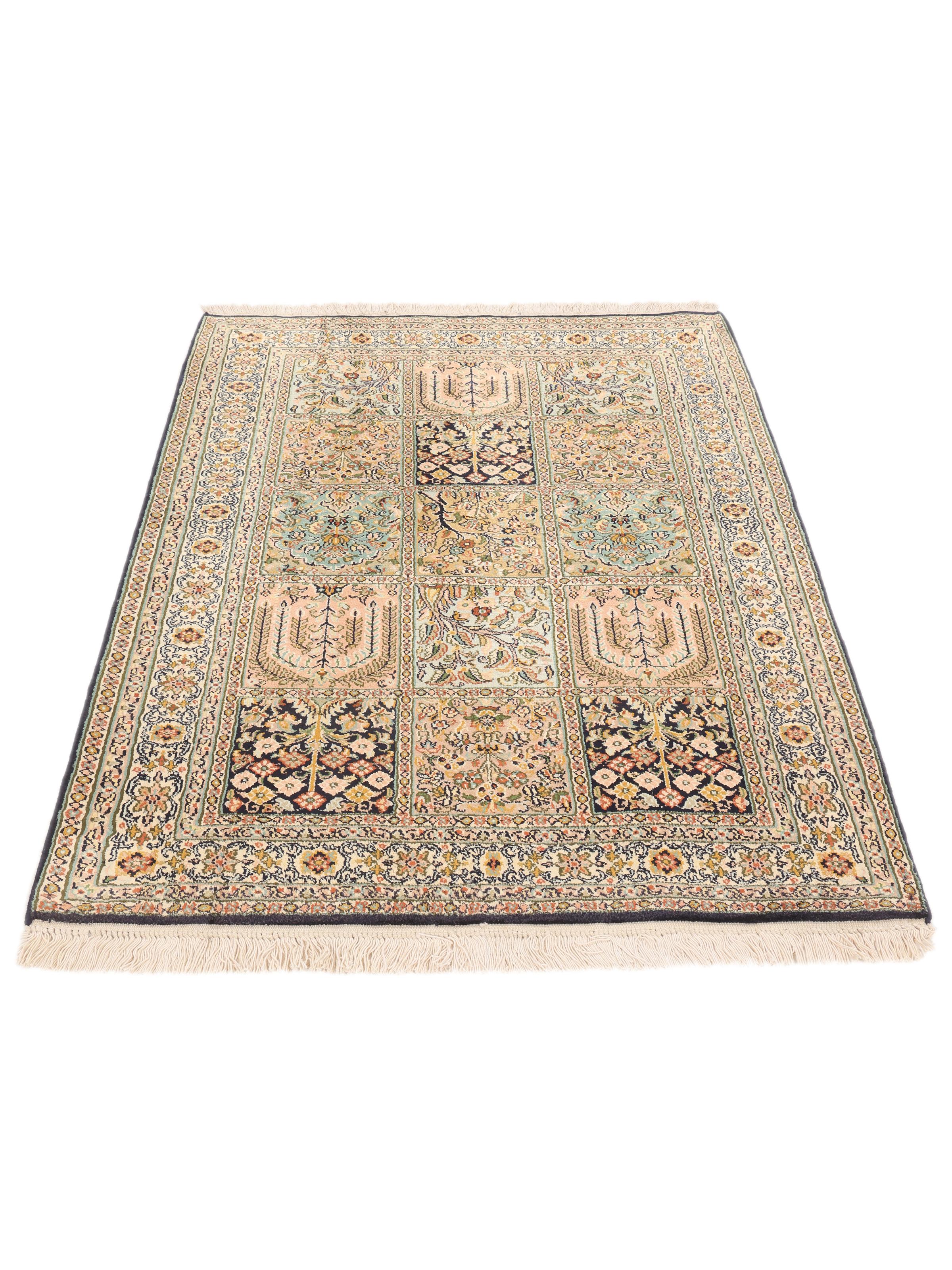
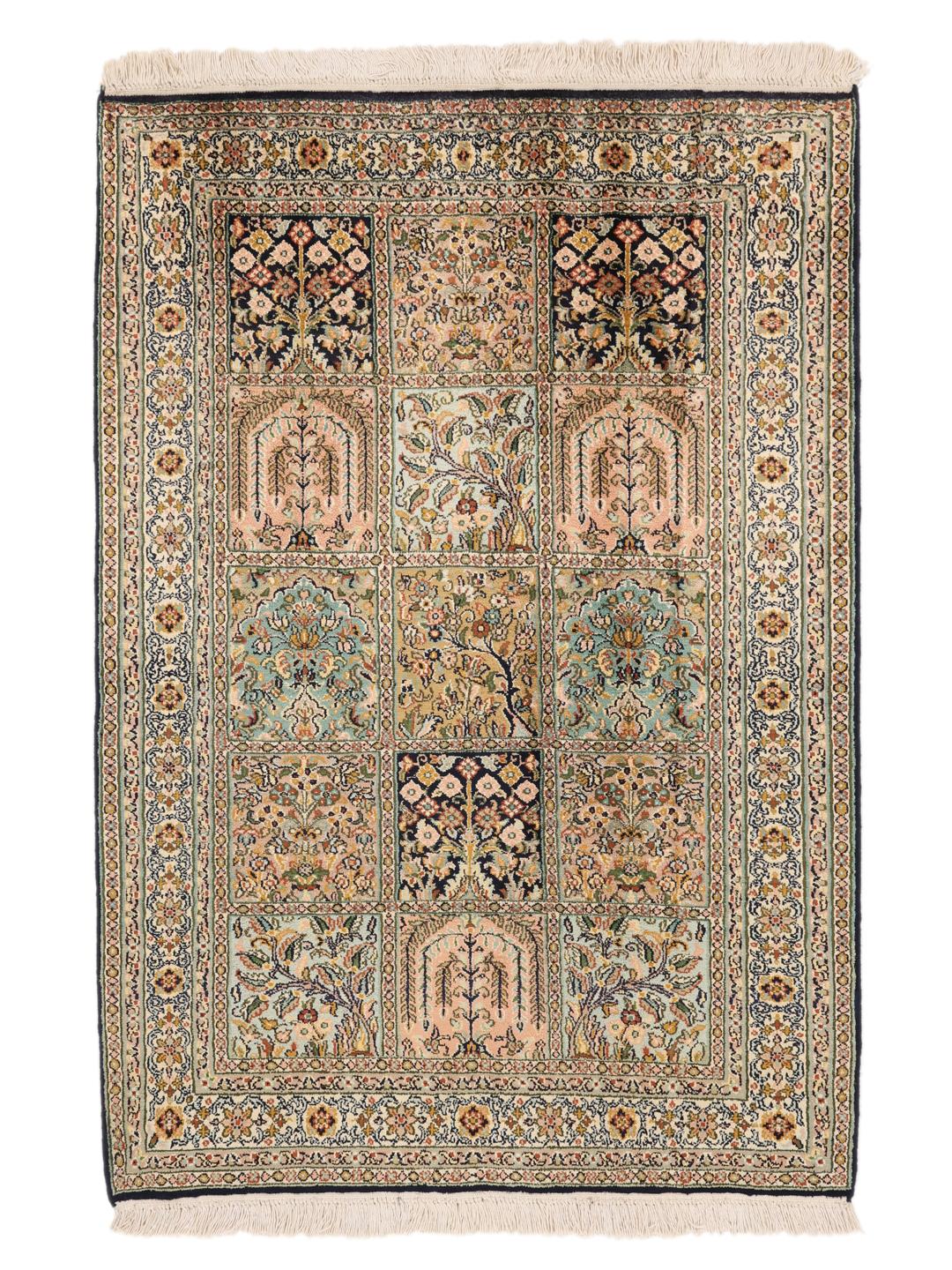
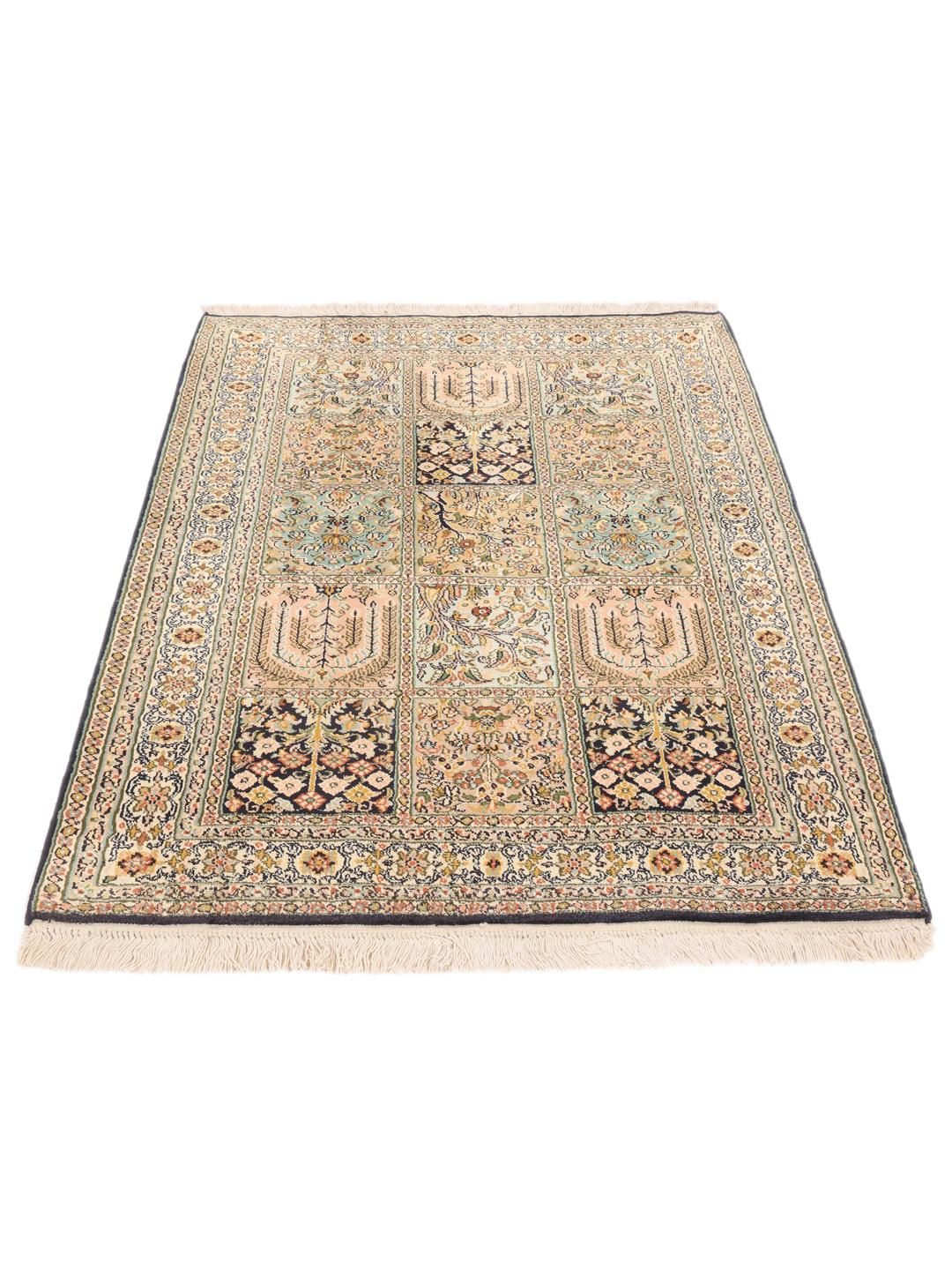
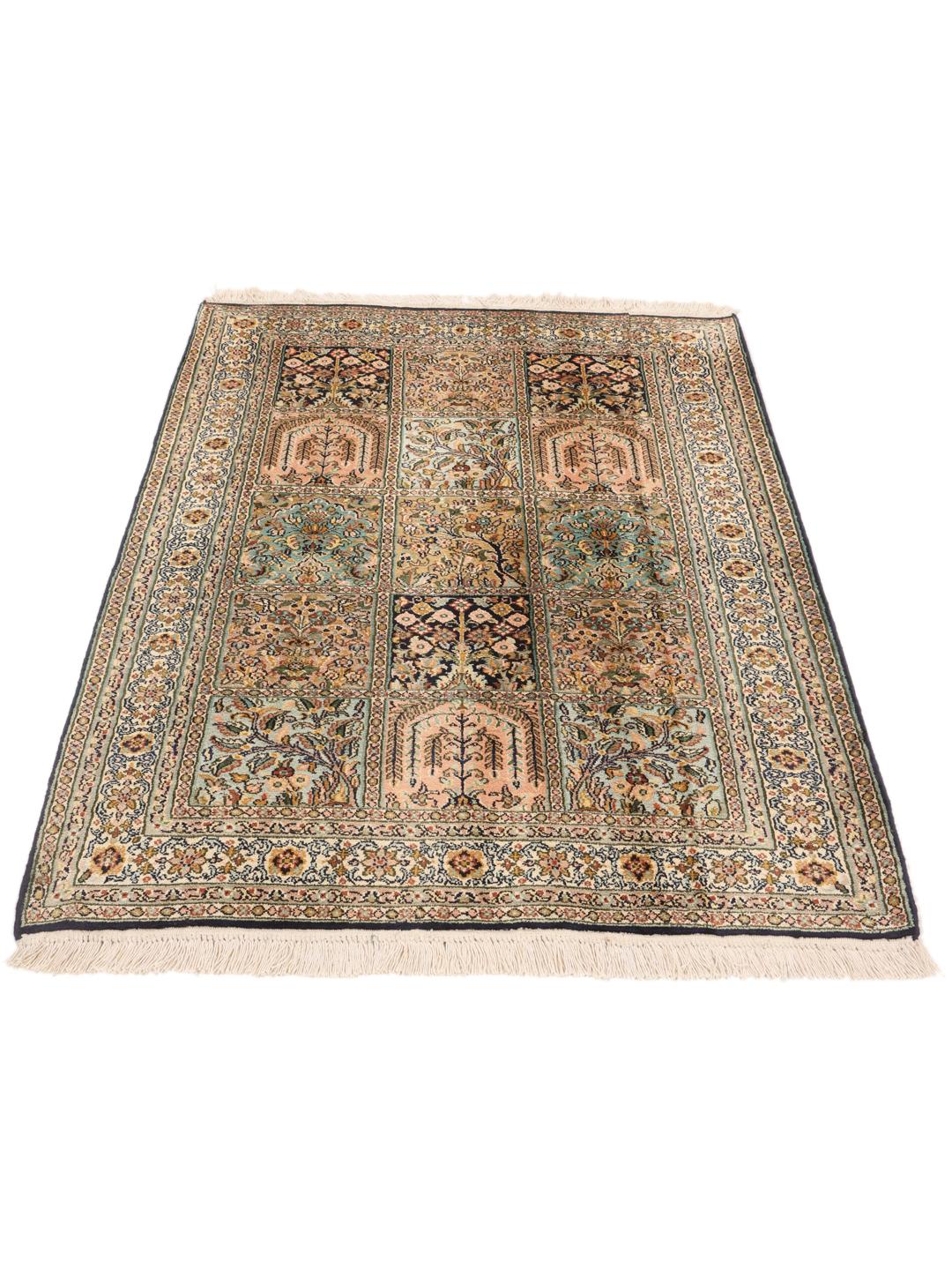
Design-wise, these rugs are famous for their rich visual language, often drawing inspiration from the natural world and the geometric precision of historical architecture. Common motifs include the 'Tree of Life', intricate floral sprays, and elegant border designs that frame the central field. This particular rug, with its grid-like structure of floral panels, is a sophisticated take on these traditional elements, offering a balanced and harmonious look that is highly prized by collectors for its orderly beauty.
Collecting a Kashmir silk rug is an investment in a living heritage. These pieces are valued for the immense human skill required to produce them and for their ability to add a sense of luxury and warmth to a space. Because each rug is the result of an individual artisan's vision and labour, owning one is a way to preserve a centuries-old craft. They are not merely floor coverings, but storied objects that carry the cultural weight and artistic history of their origin.