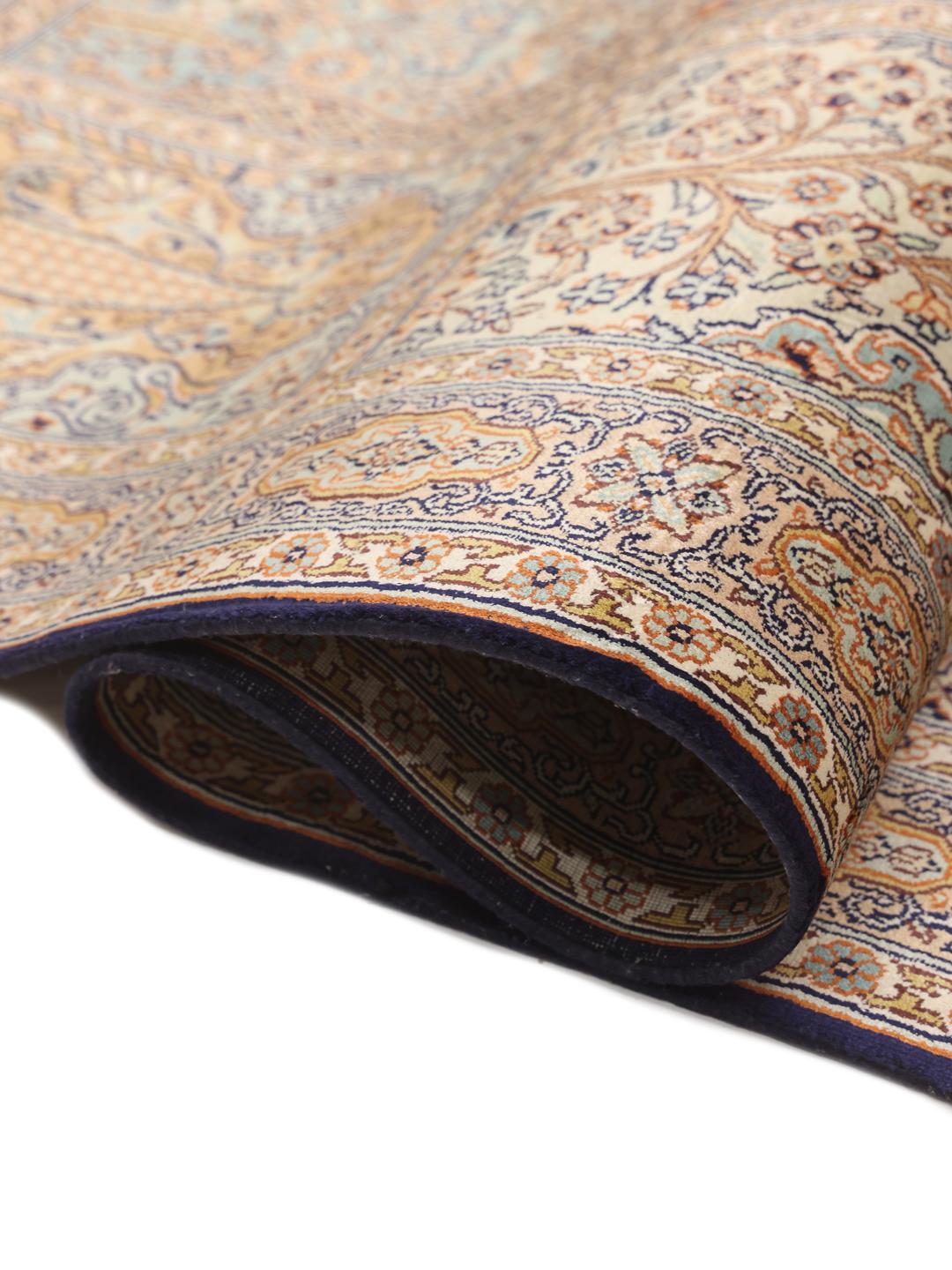
The art of silk weaving in the Kashmir region is a storied tradition that has flourished for centuries, deeply influenced by the cultural exchanges along the historic trade routes of Central Asia. Indian weavers adopted these sophisticated techniques, refining them to create rugs that are celebrated worldwide for their fine detail and luminous quality.
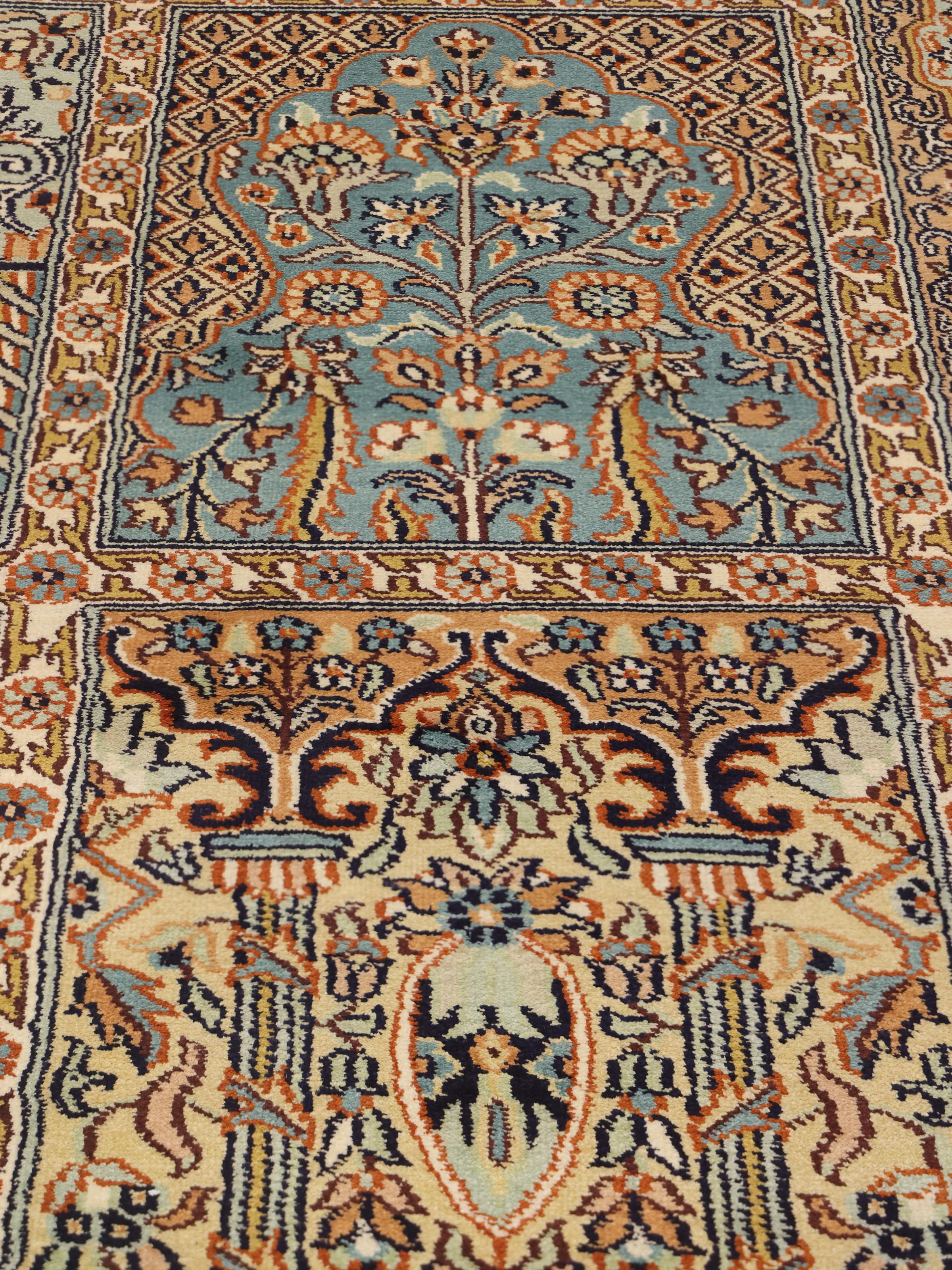
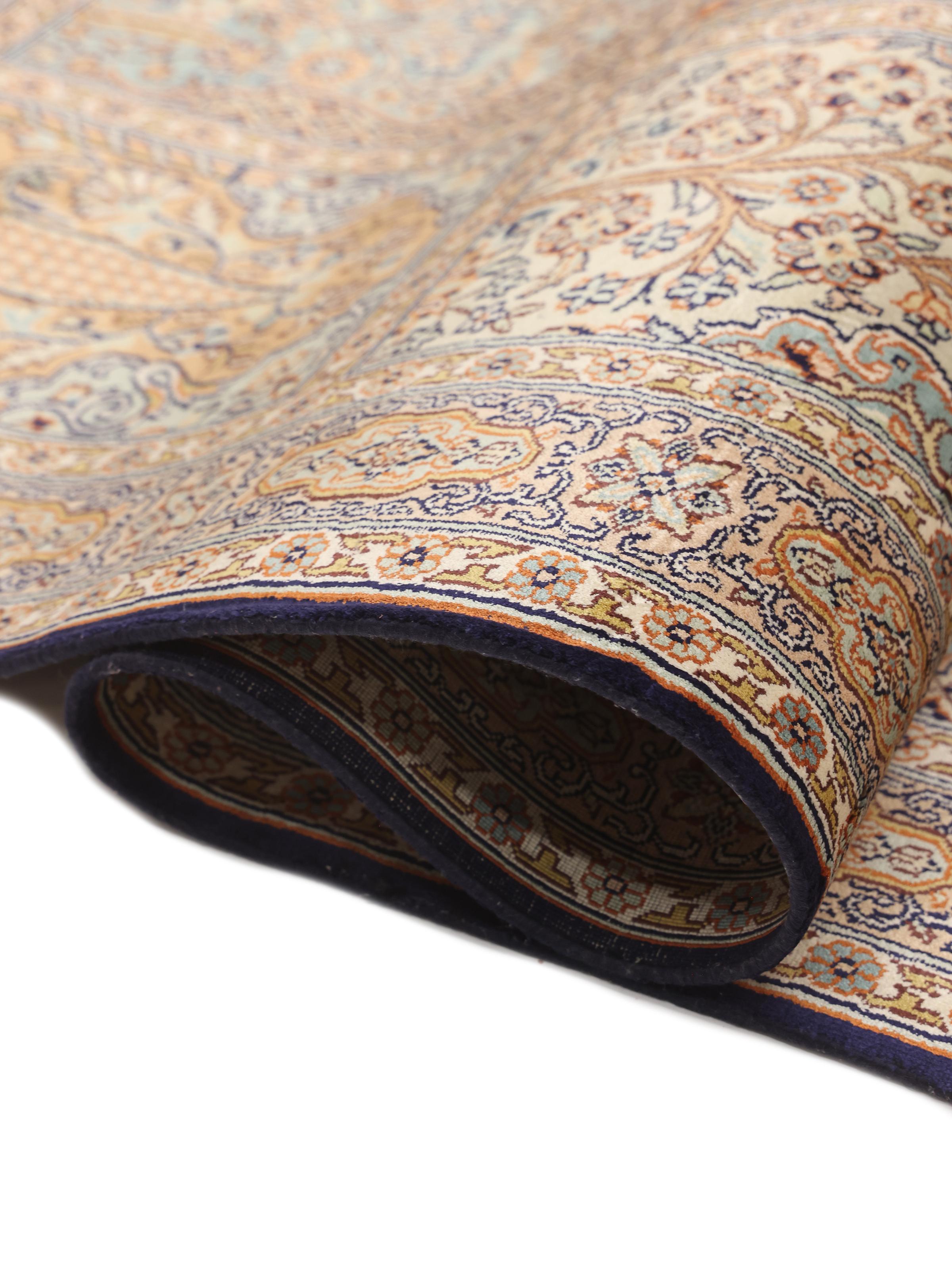
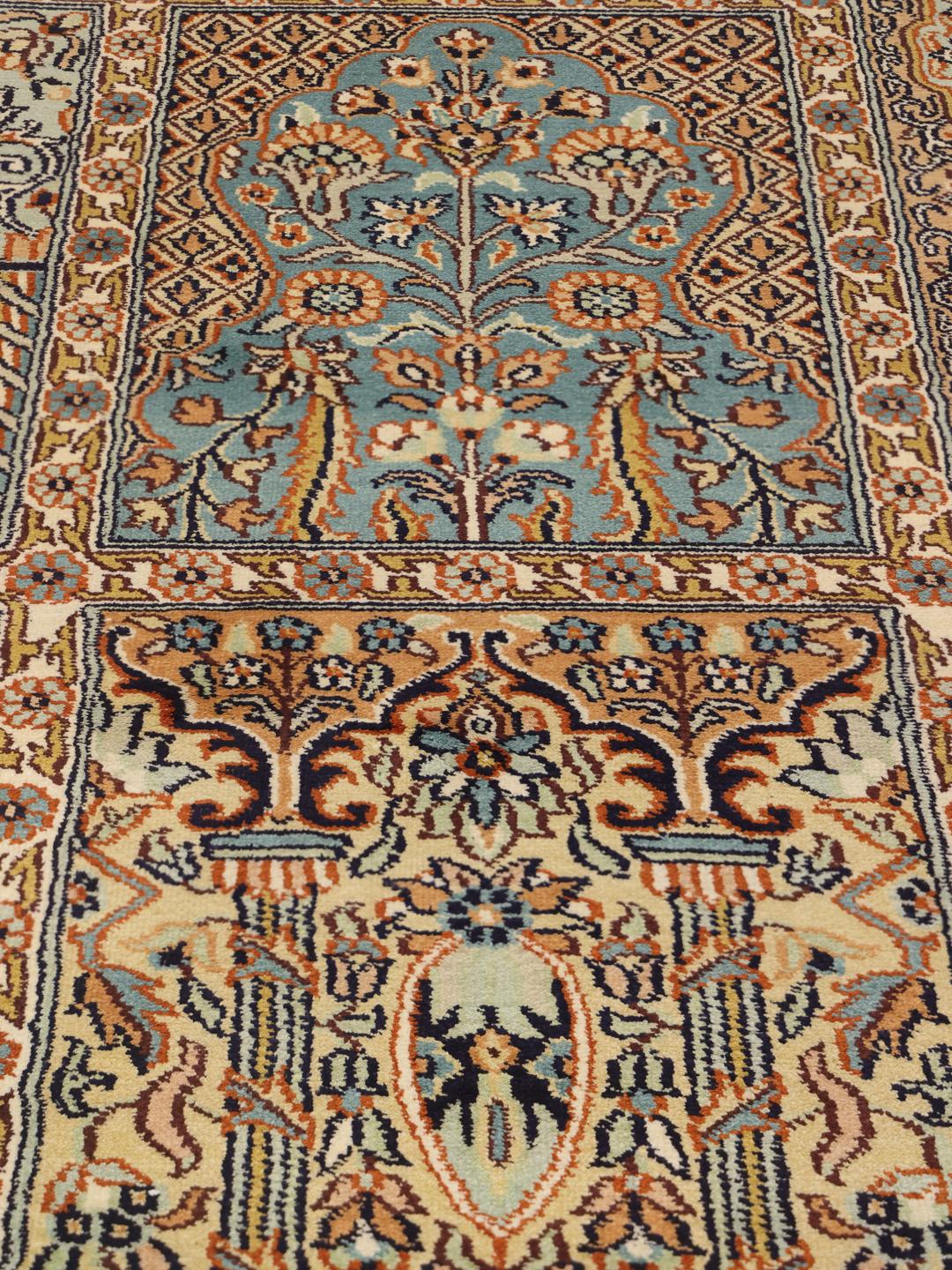
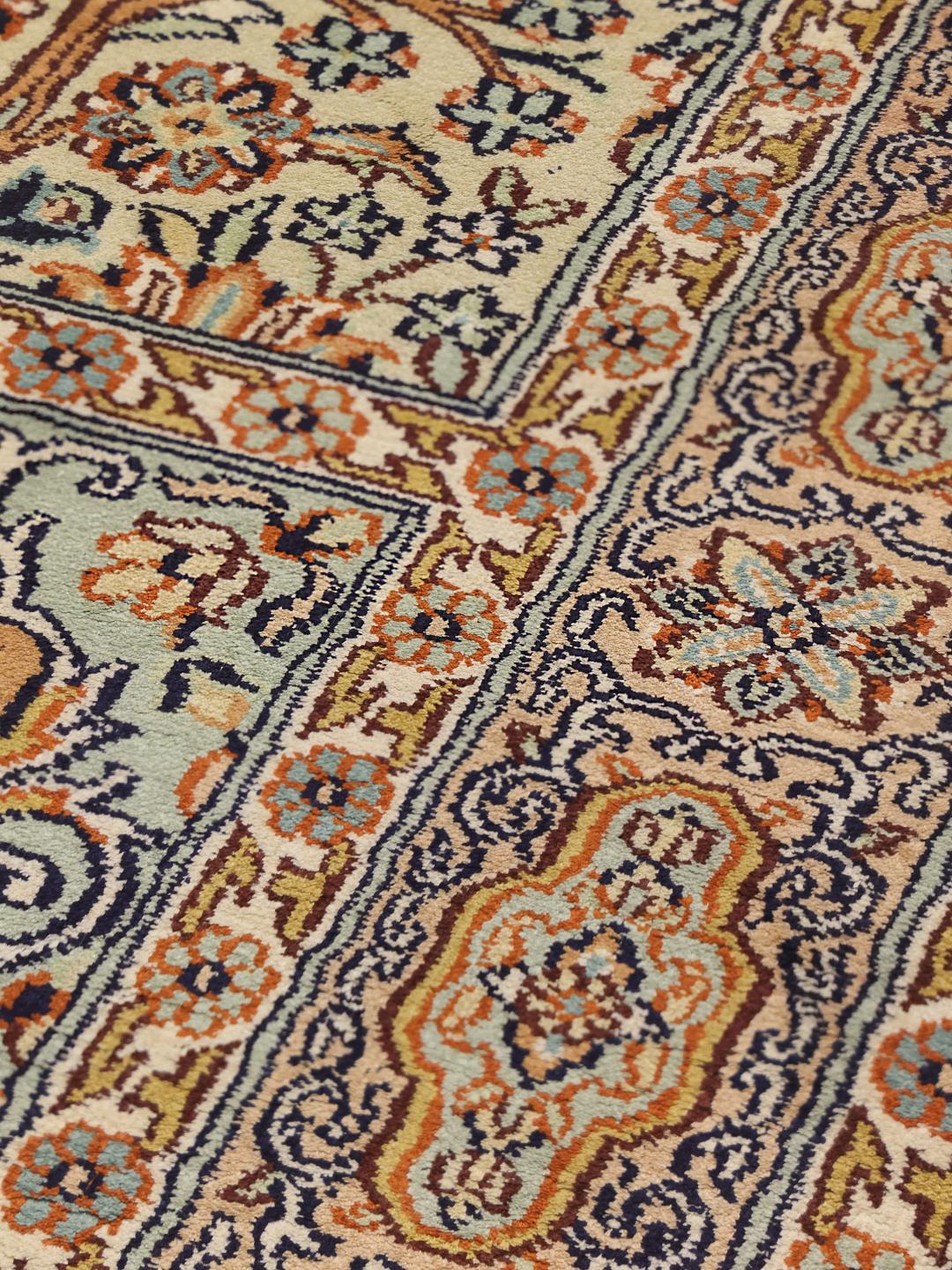
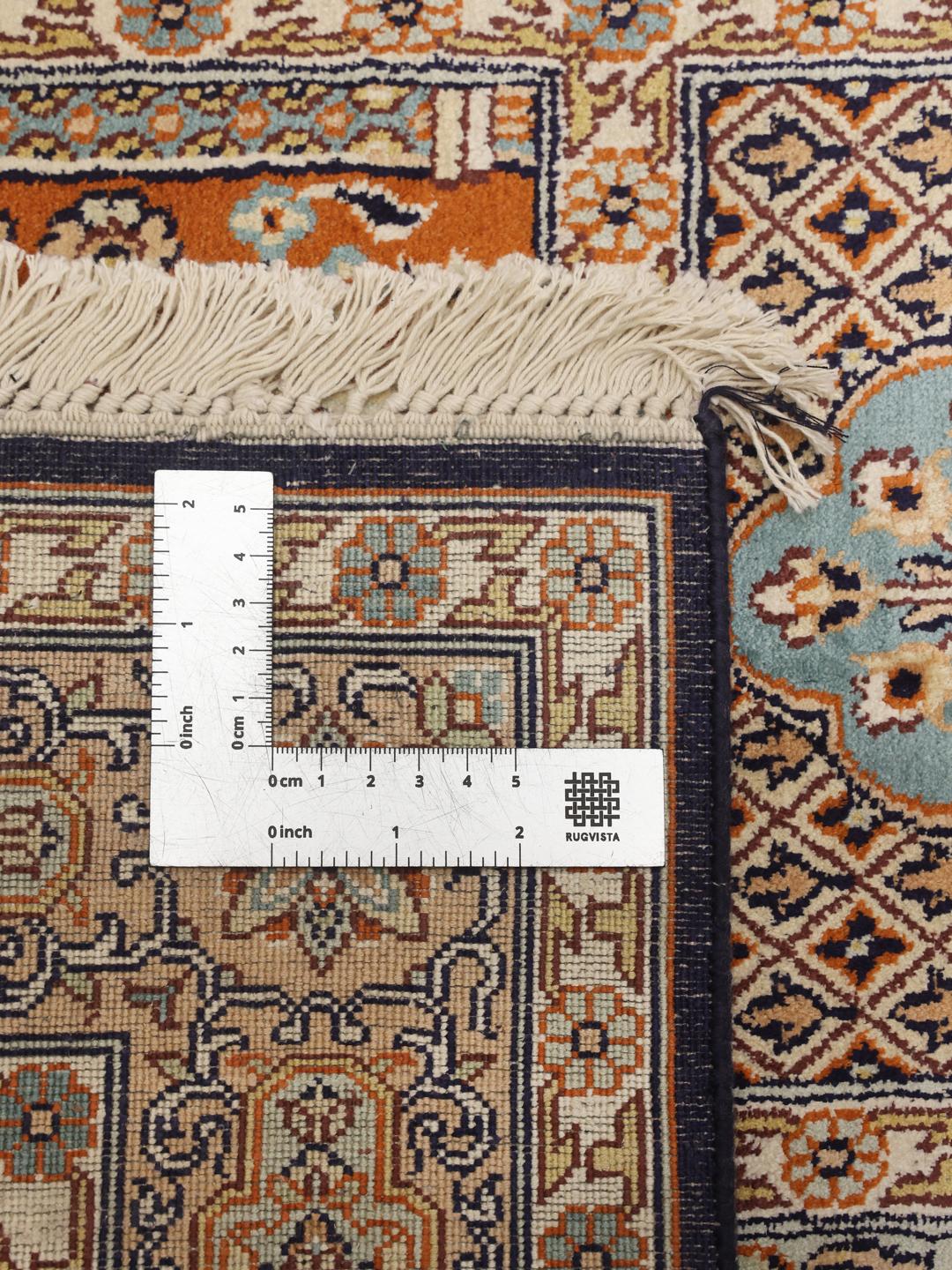
The term 'Kashmir silk' refers to a specific category of hand-knotted rugs that prioritise high knot density and intricate, often curvilinear, designs. This complexity is achieved through the use of high-quality silk, which allows for the tight, precise knots necessary to articulate delicate motifs that would be impossible to render in coarser materials.
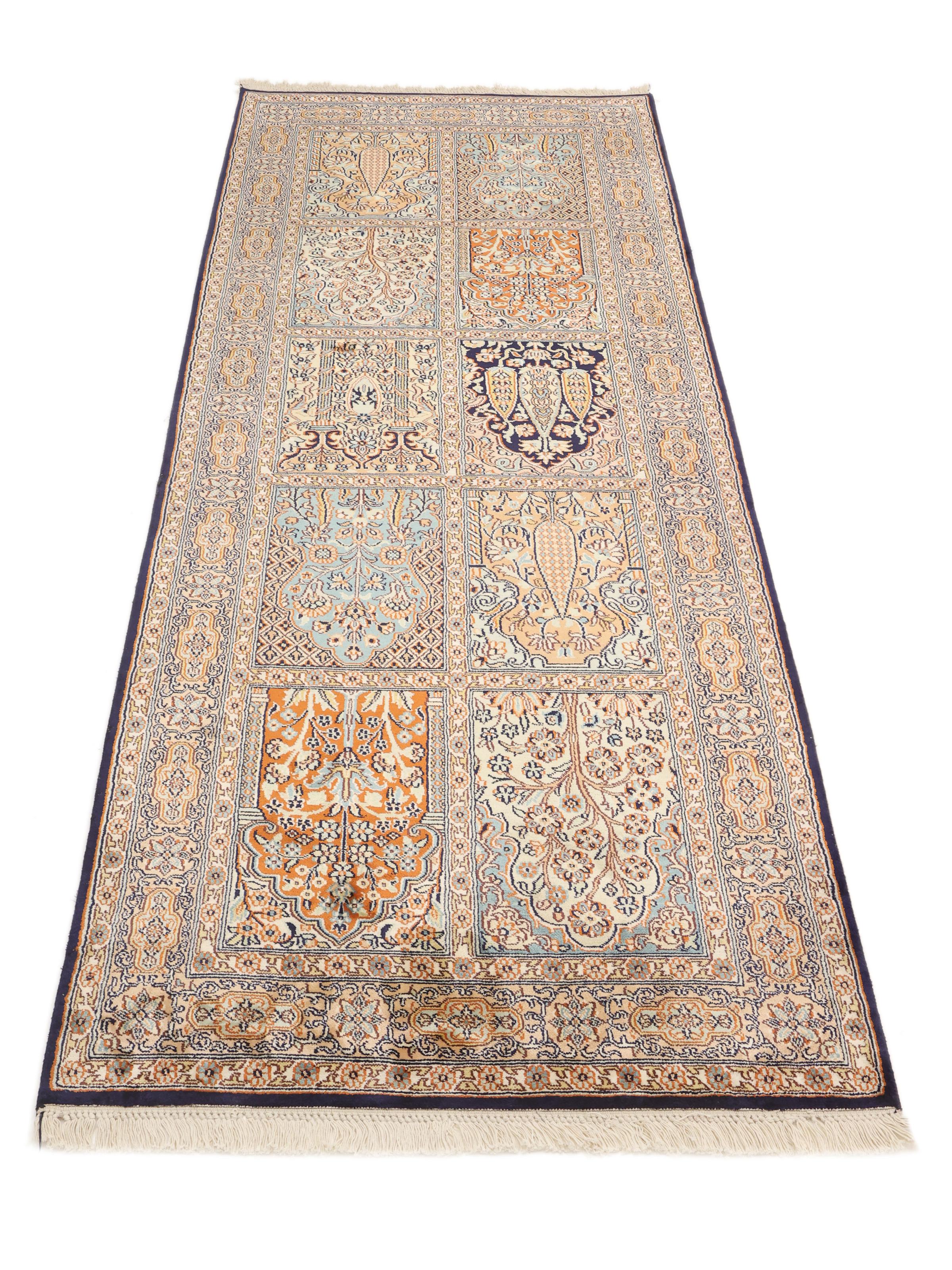
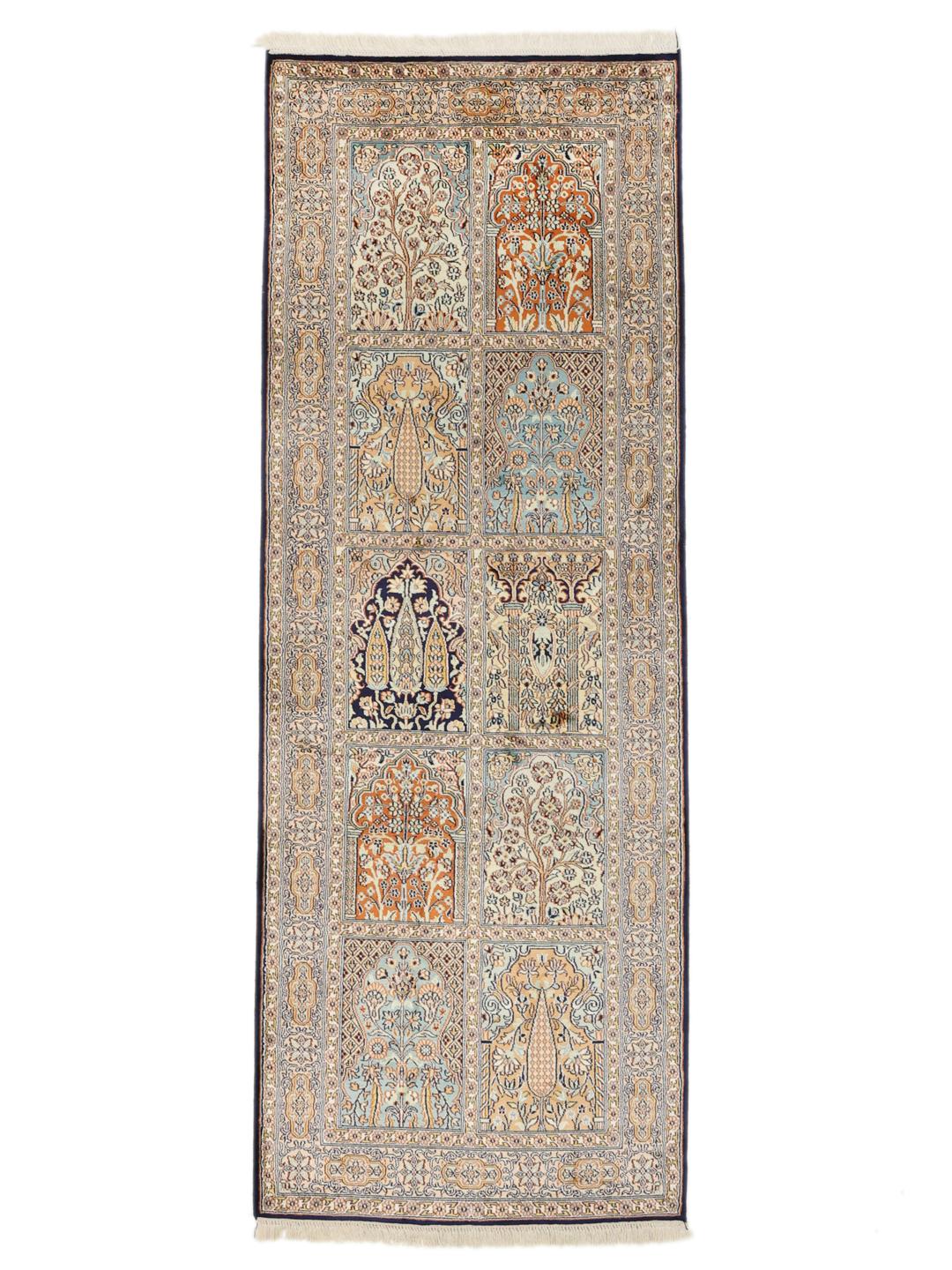
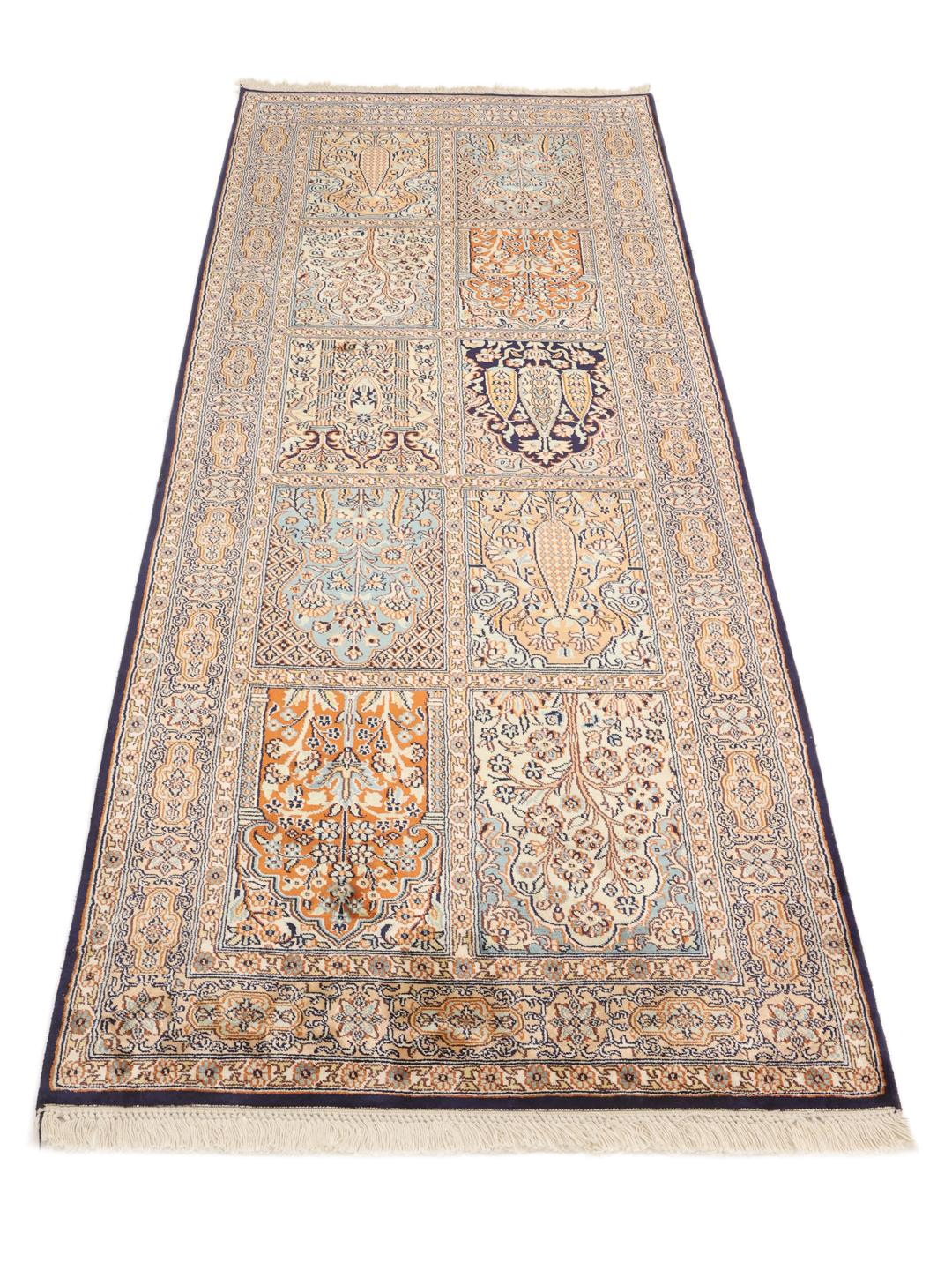
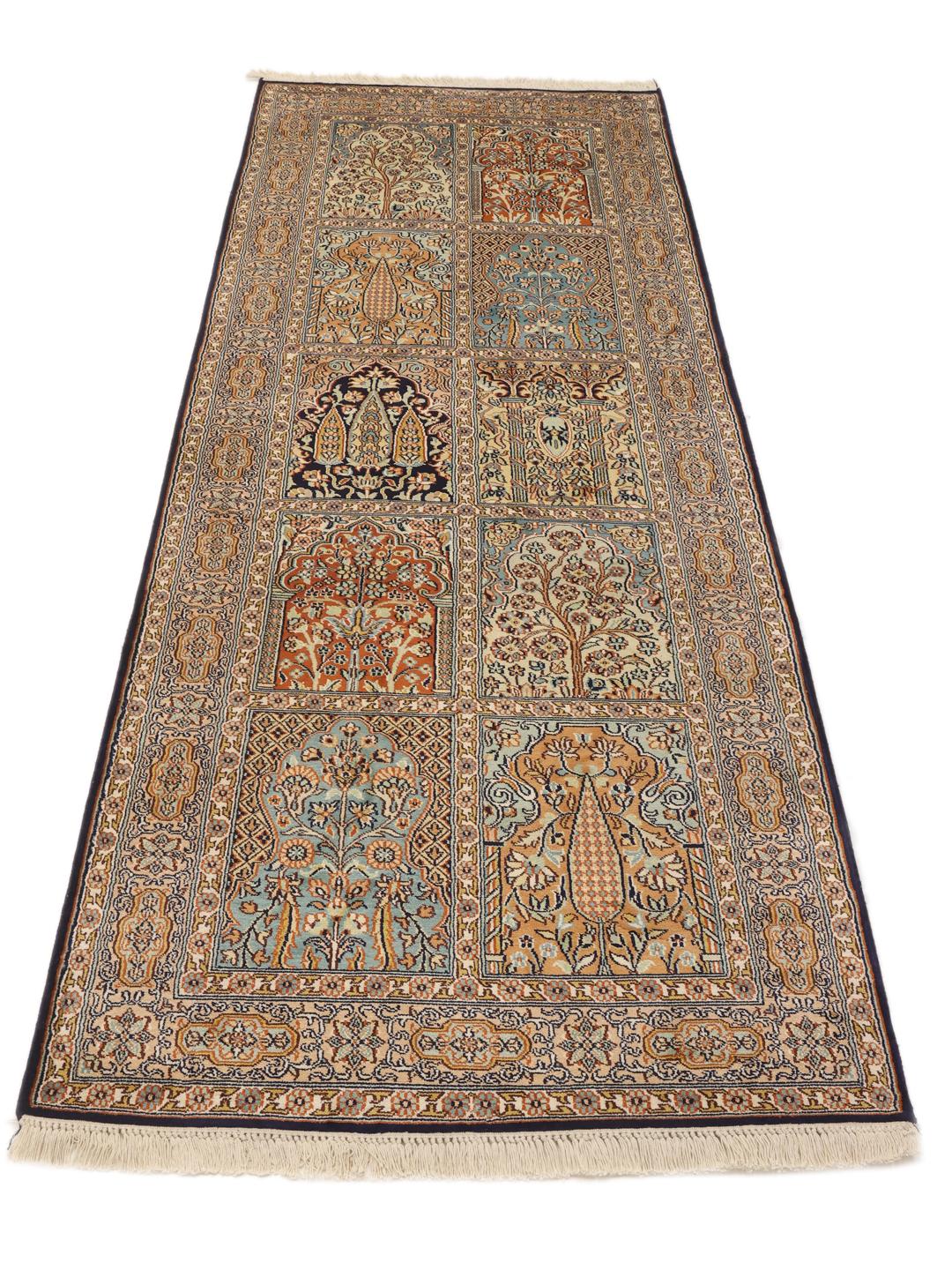
Signature design elements often include the garden motif, which is masterfully displayed in this runner through individual panels. These designs frequently draw inspiration from nature, featuring stylised trees, flowers, and vines arranged in formal, repetitive patterns. The border framing is just as significant, acting as a decorative anchor that draws the eye inward toward the central artistry.
Owning a piece from this tradition is an investment in cultural heritage and human skill. These rugs are not merely floor coverings but are highly valued by collectors for their blend of historical technique and enduring aesthetic, serving as a legacy of the patience and precision that define the finest textile arts.