Kashmir rugs are celebrated worldwide for their association with the rich artistic heritage of the Kashmir Valley in India. Historically influenced by Middle Eastern design traditions, the craft evolved to incorporate local aesthetic sensibilities, resulting in the distinctive, ornate style that defines these rugs today. The transition of these weaving techniques into the Indian subcontinent has created a unique legacy where ancient patterns meet local artisanal mastery.
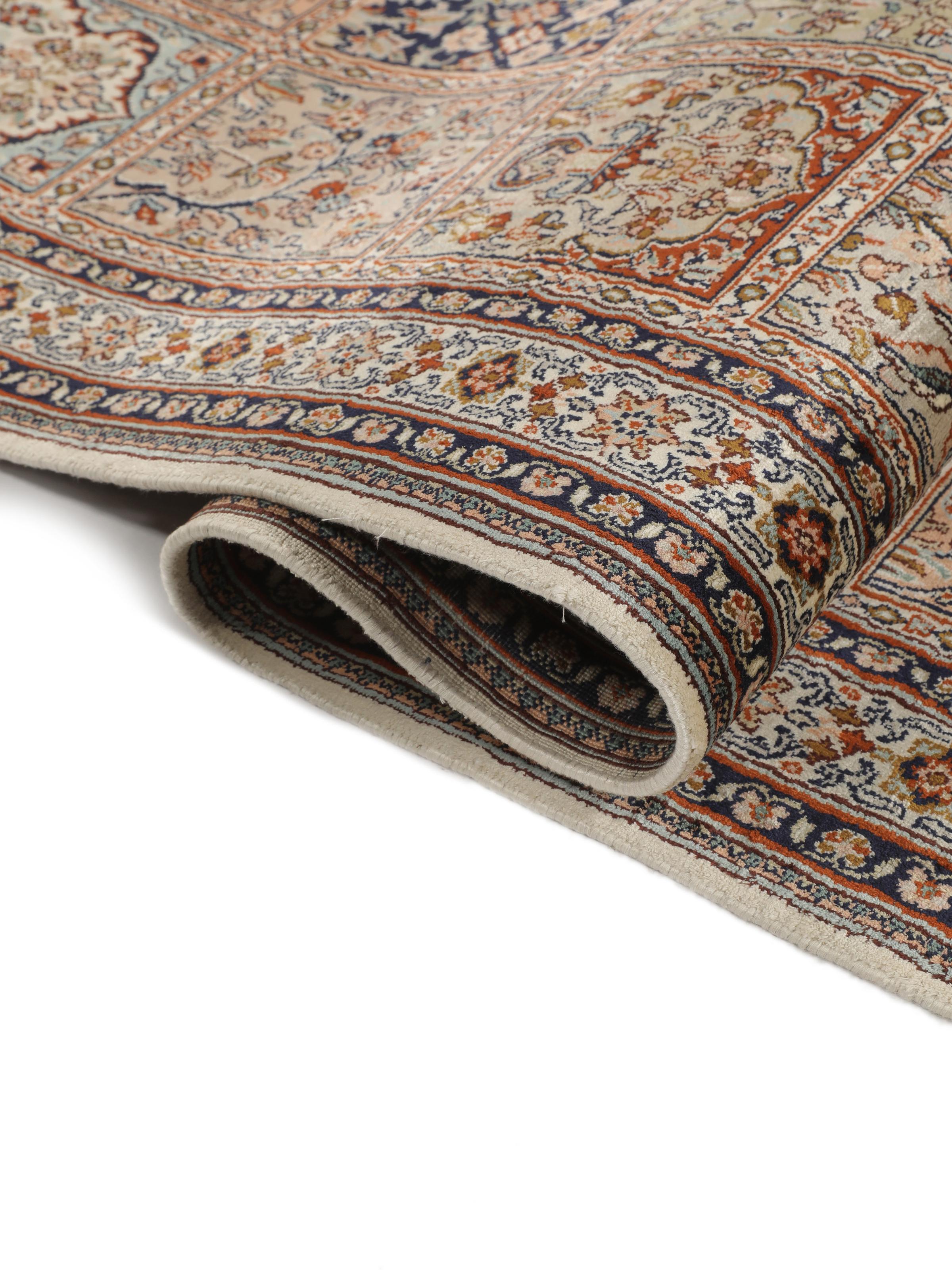
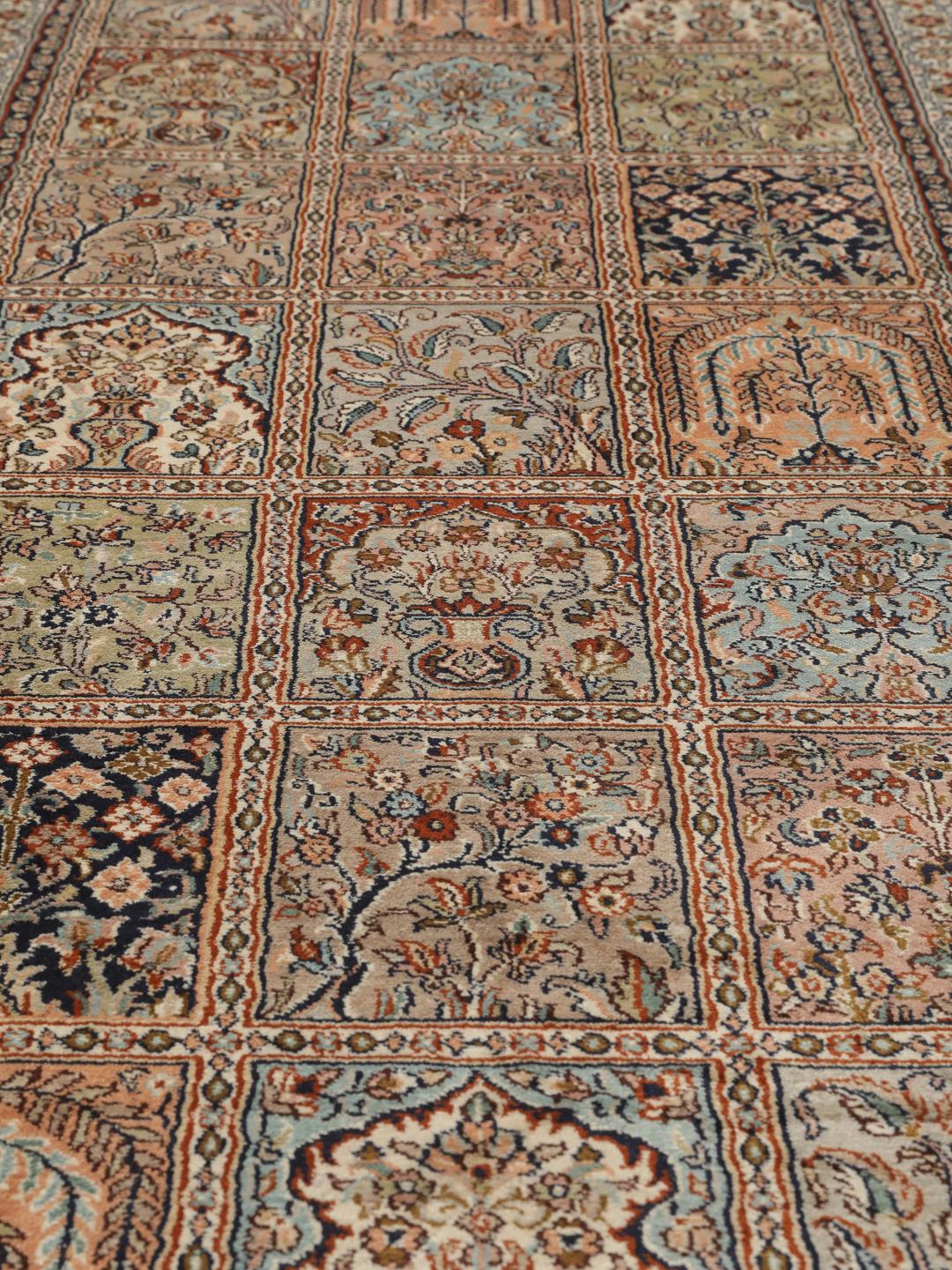
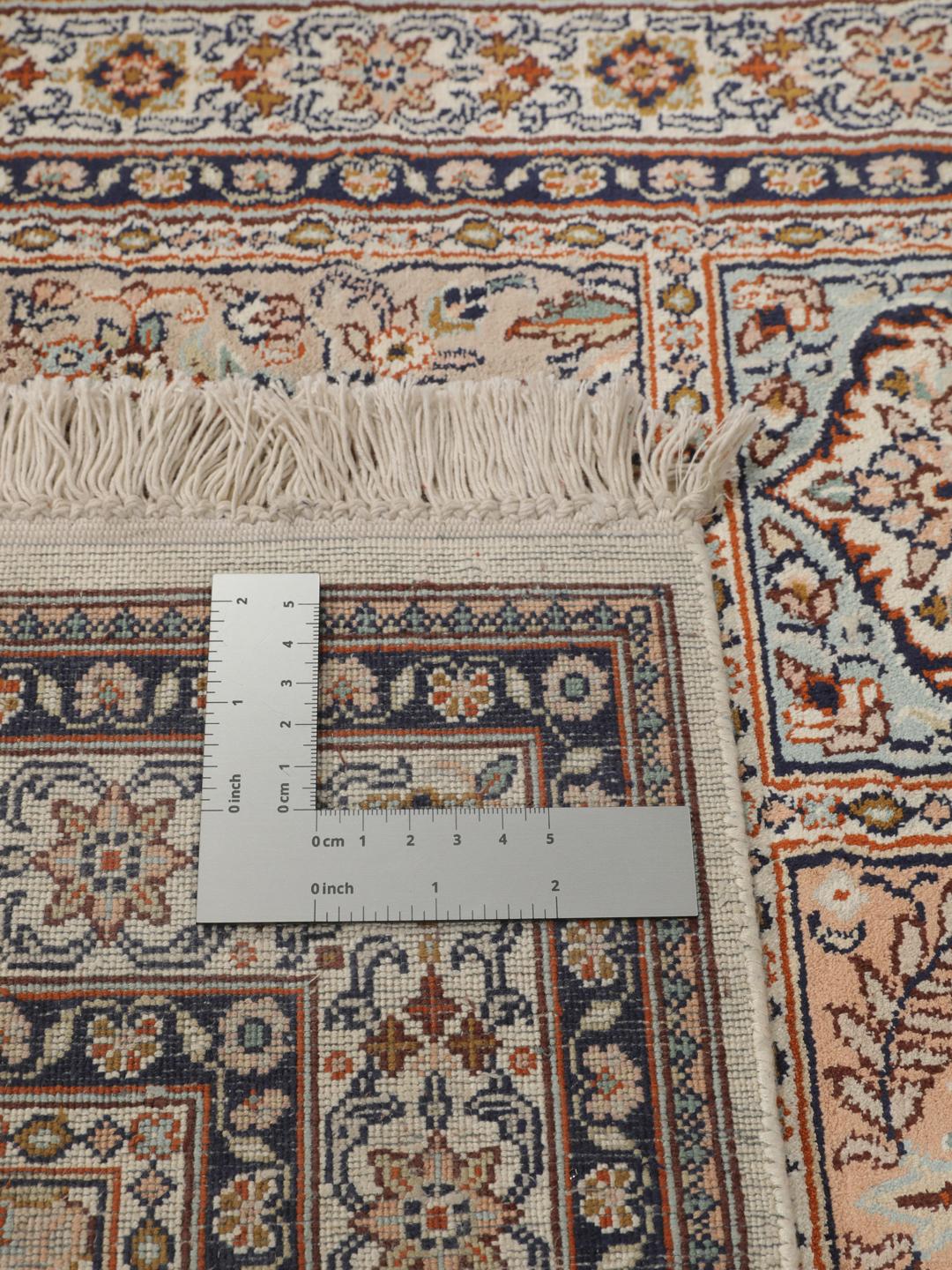
The term 'pure silk' refers to the use of high-quality silk threads for the pile, which is prized for its ability to hold vibrant dyes and its natural, luminous finish. When silk is used in a hand-knotted construction, it allows for a much higher knot density than wool, which in turn enables the creation of incredibly detailed, delicate designs. This material choice is what gives these rugs their famous soft texture and light-reflecting quality that changes as you move around the room.
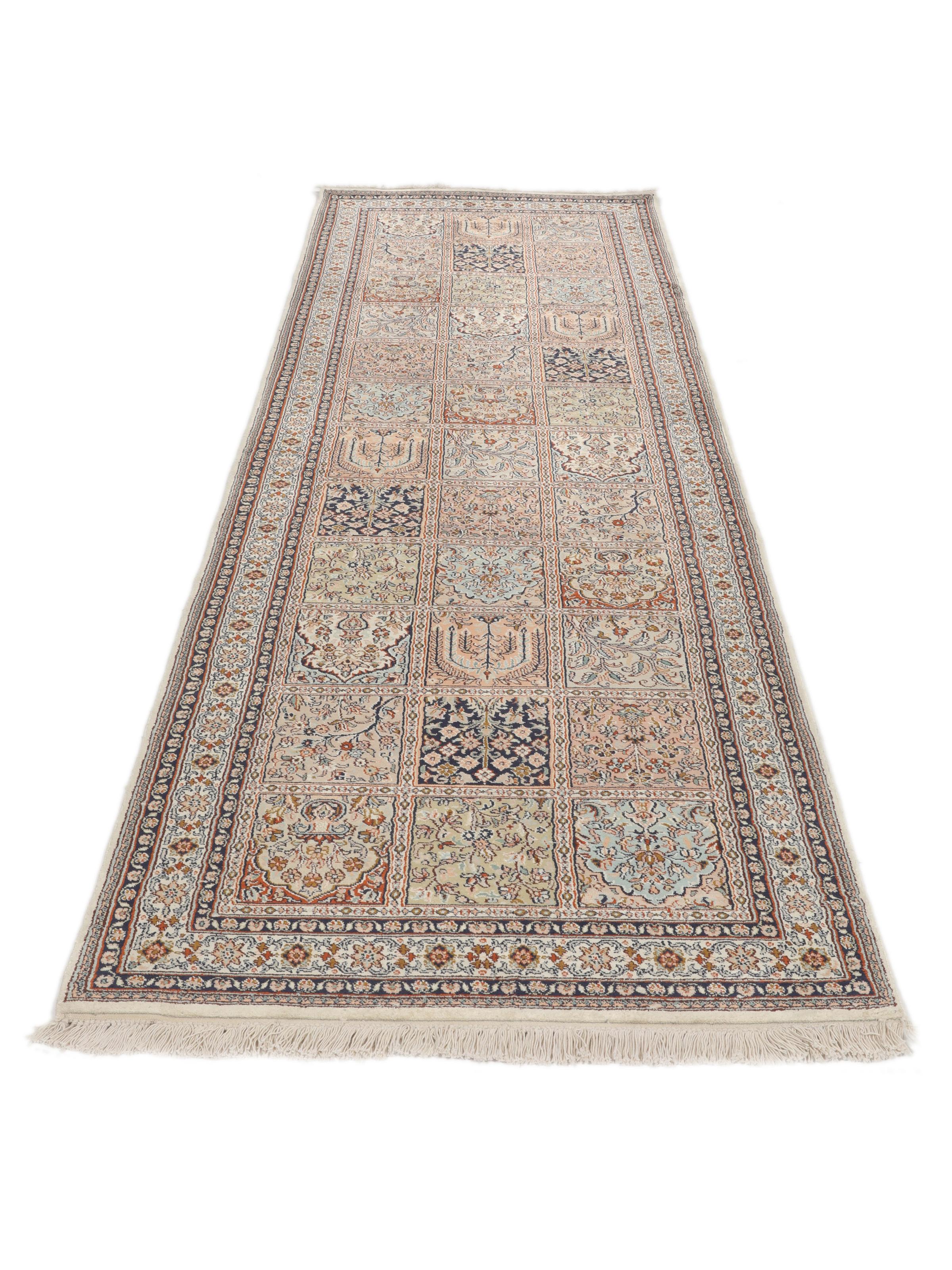
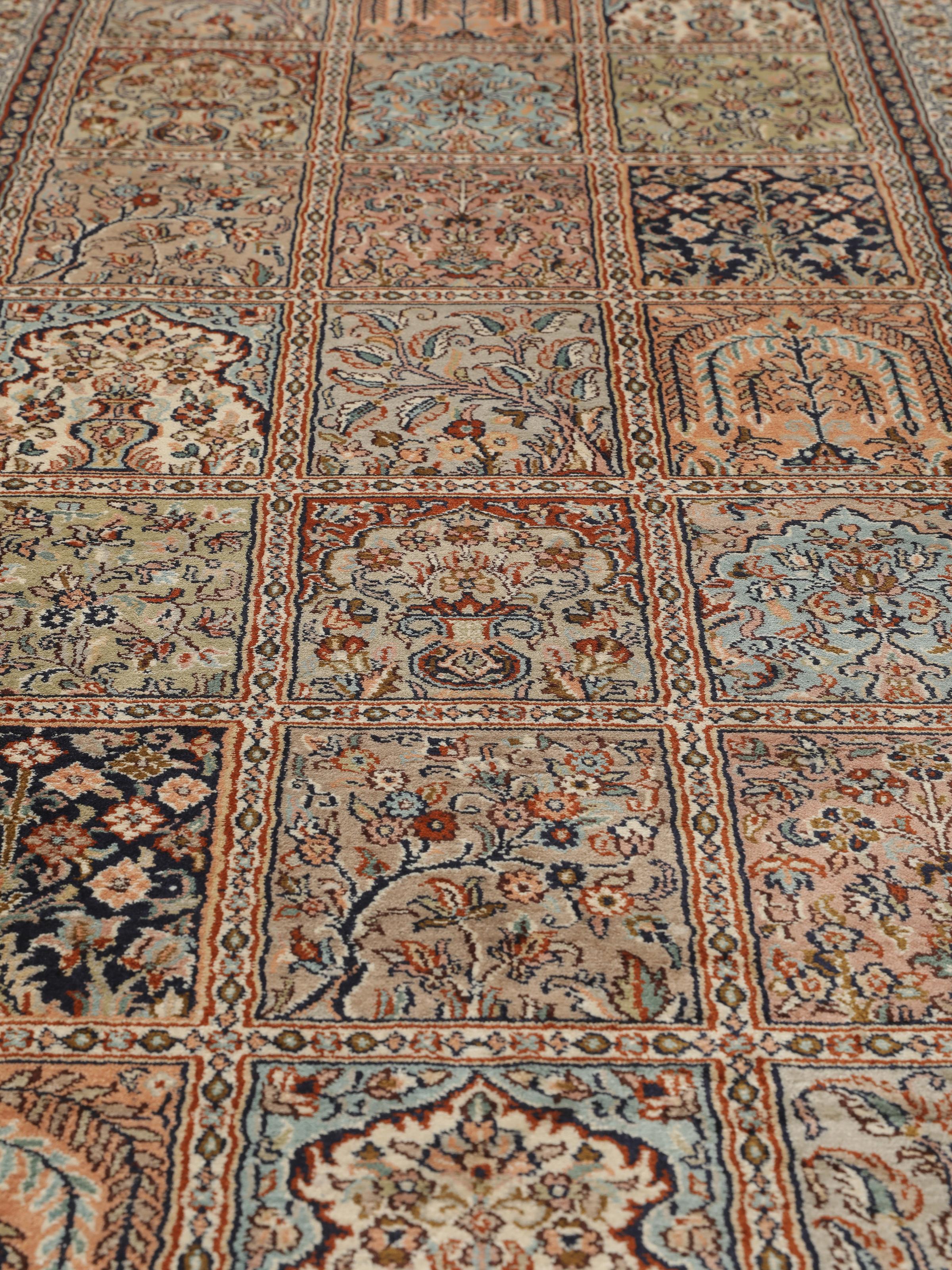
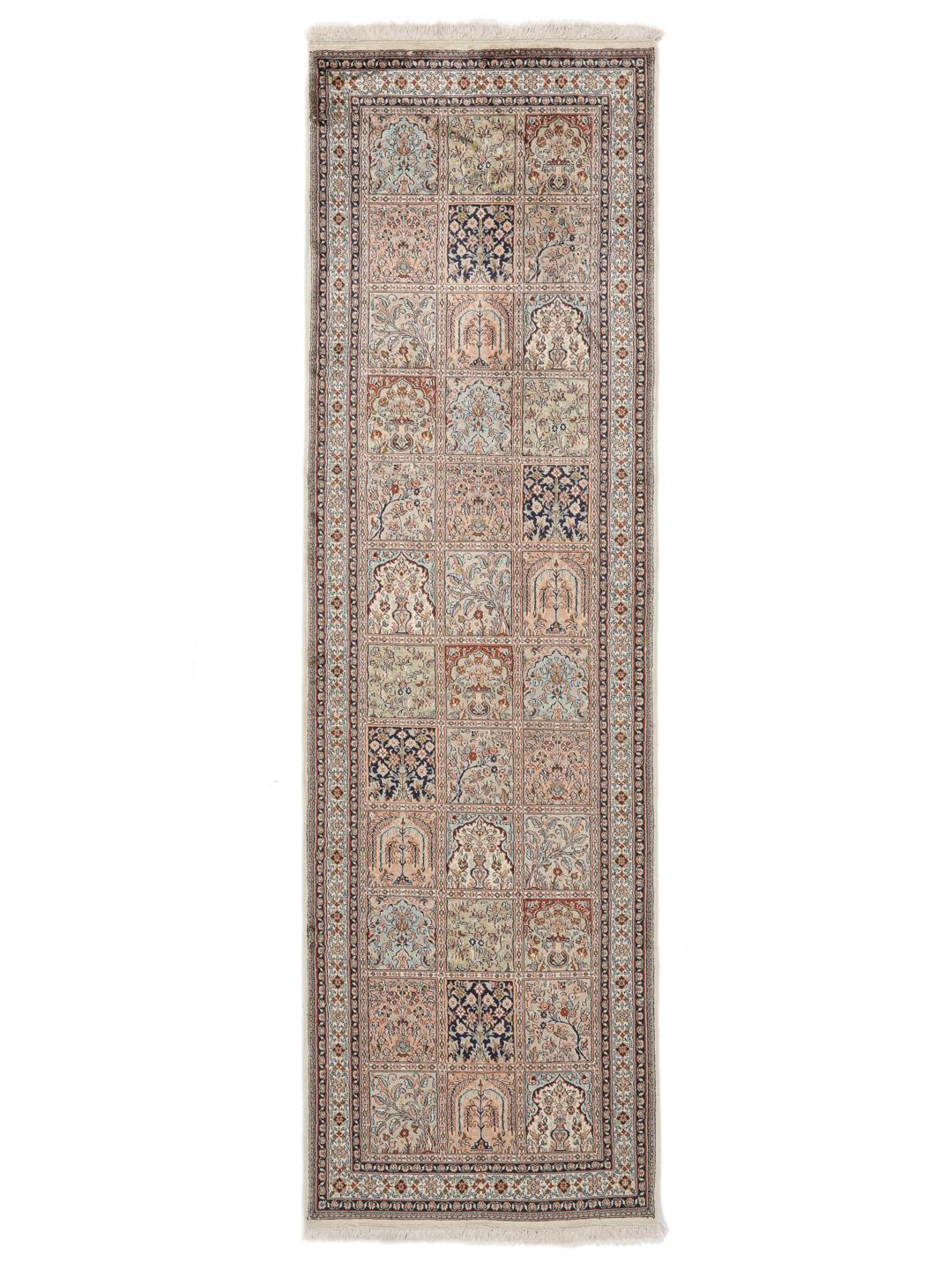
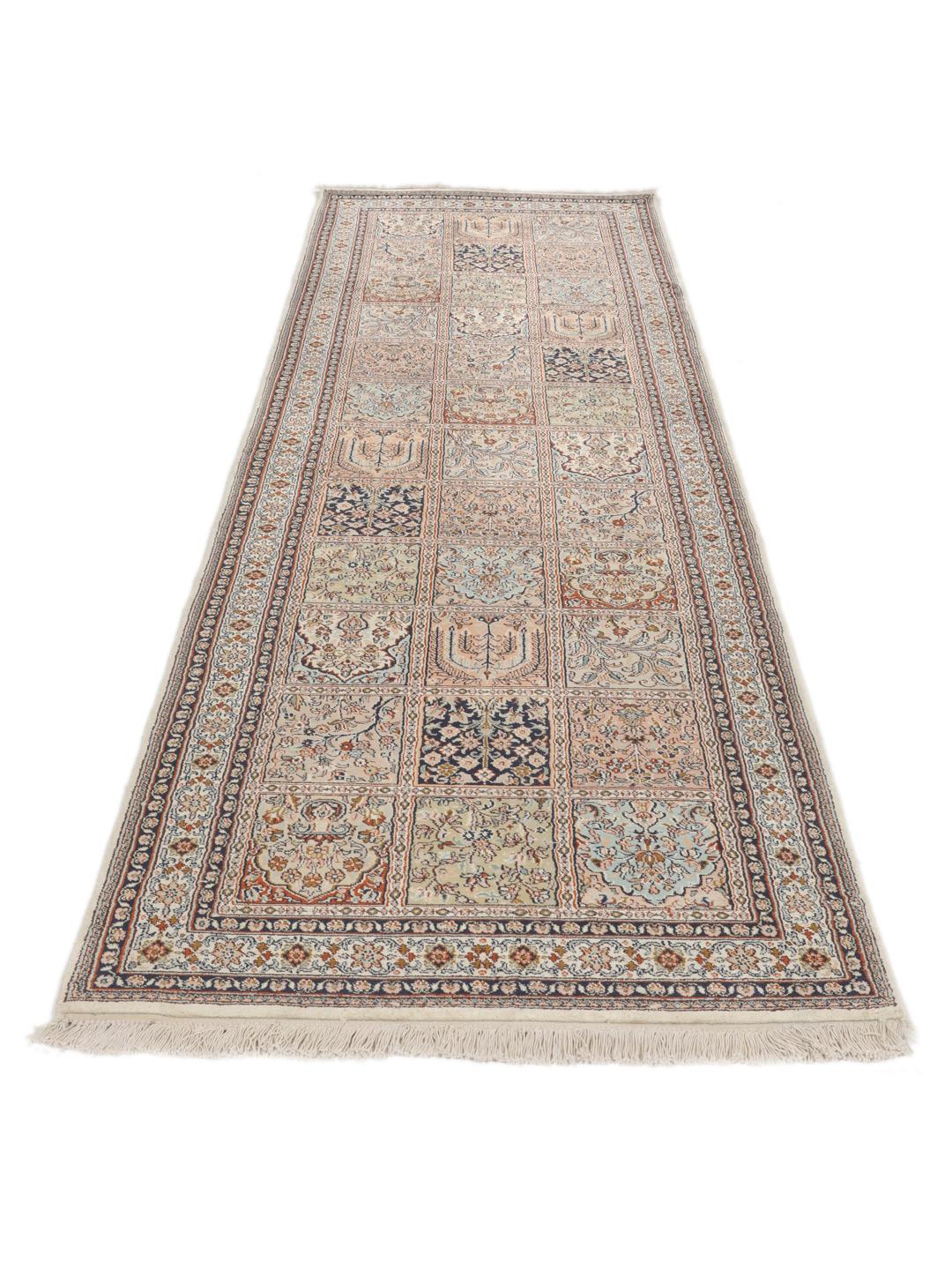
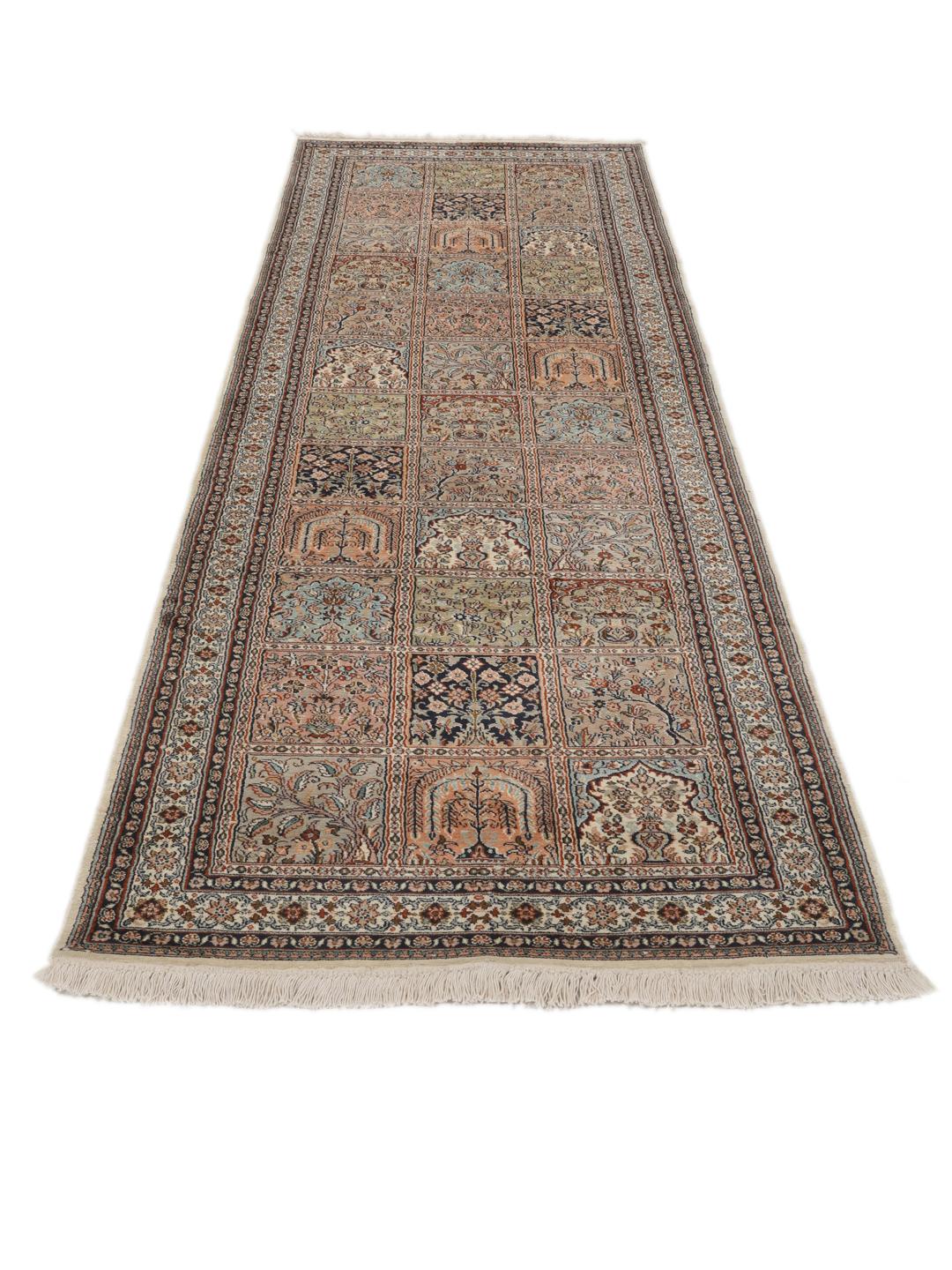
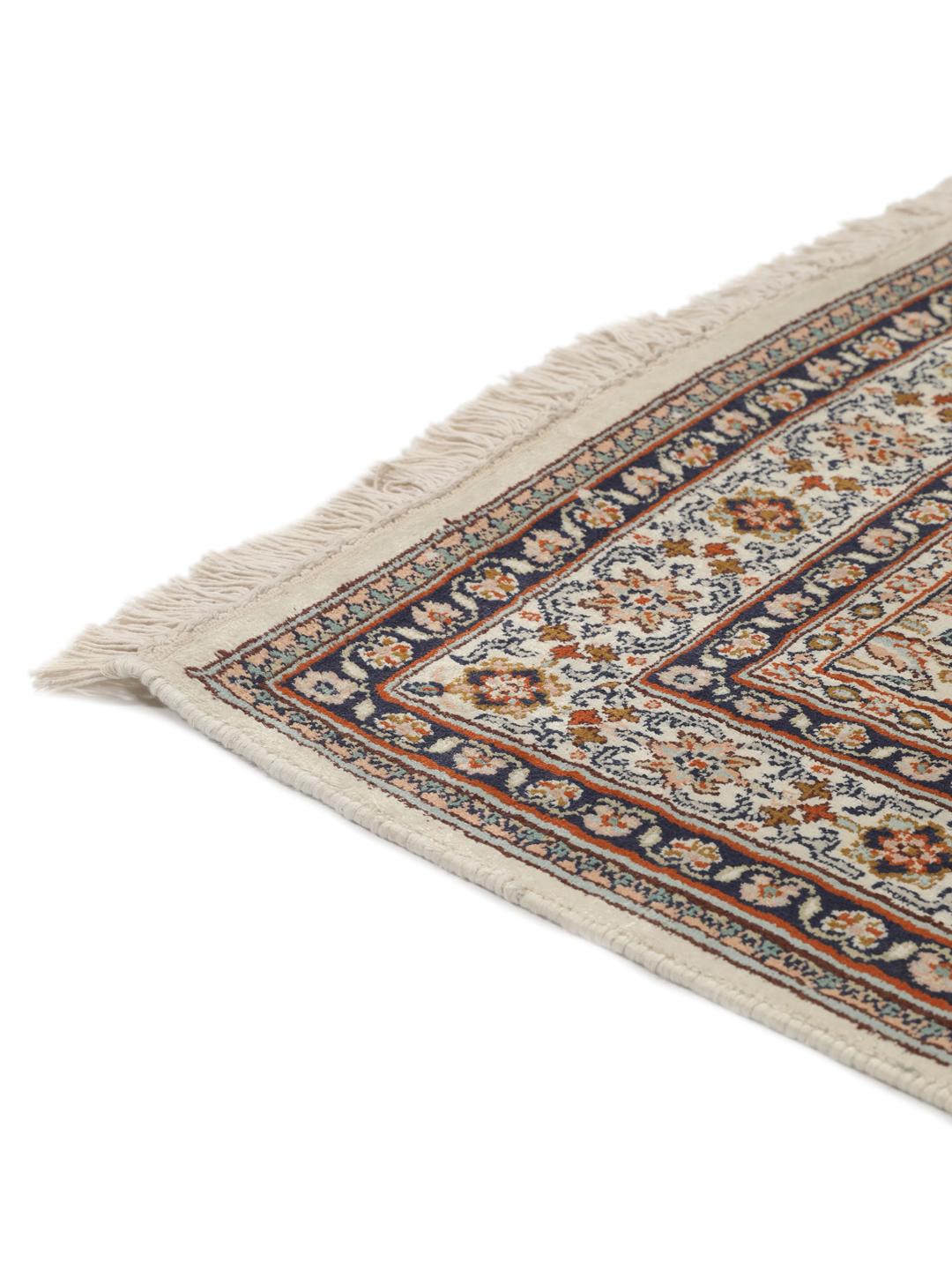
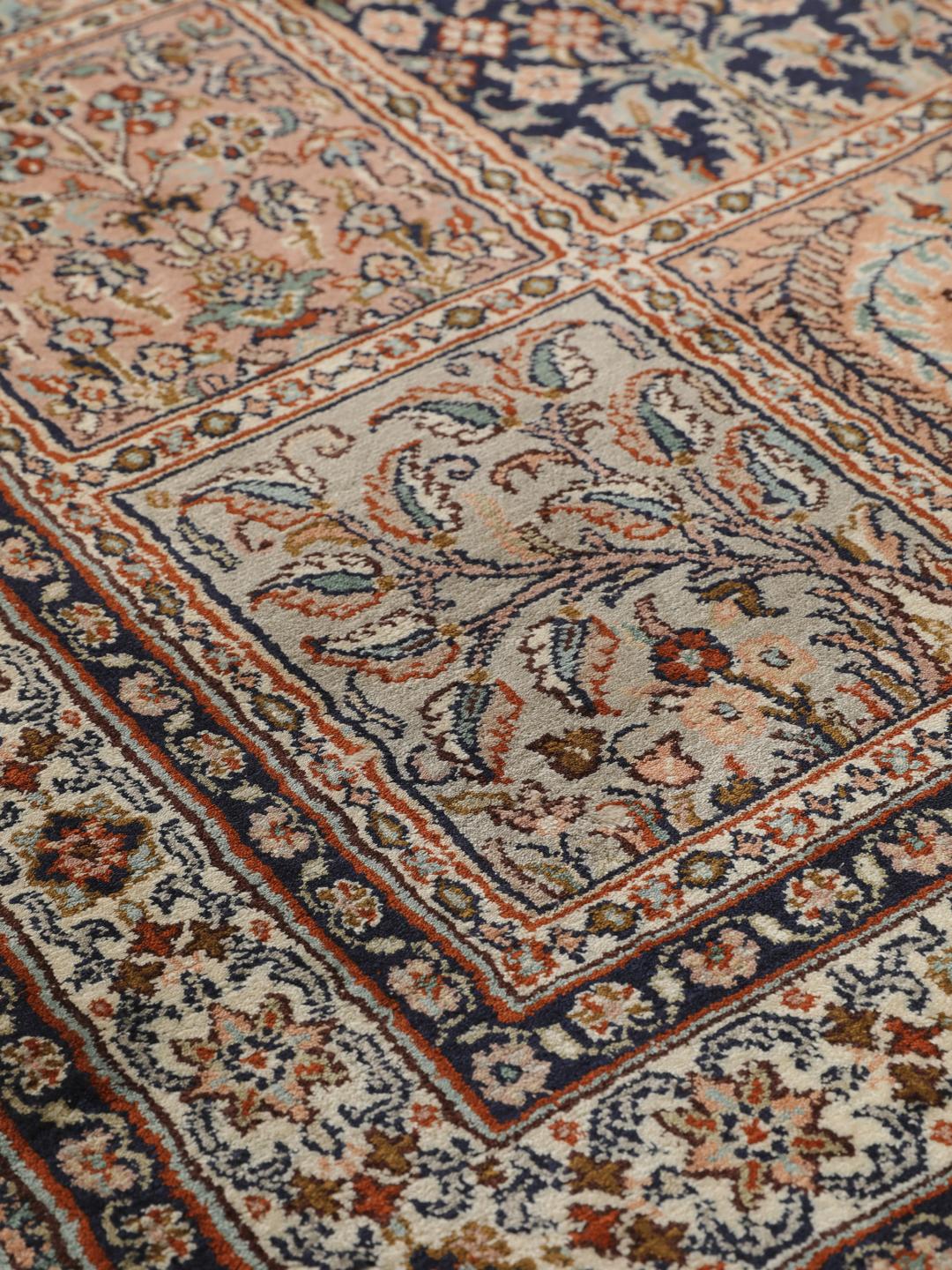
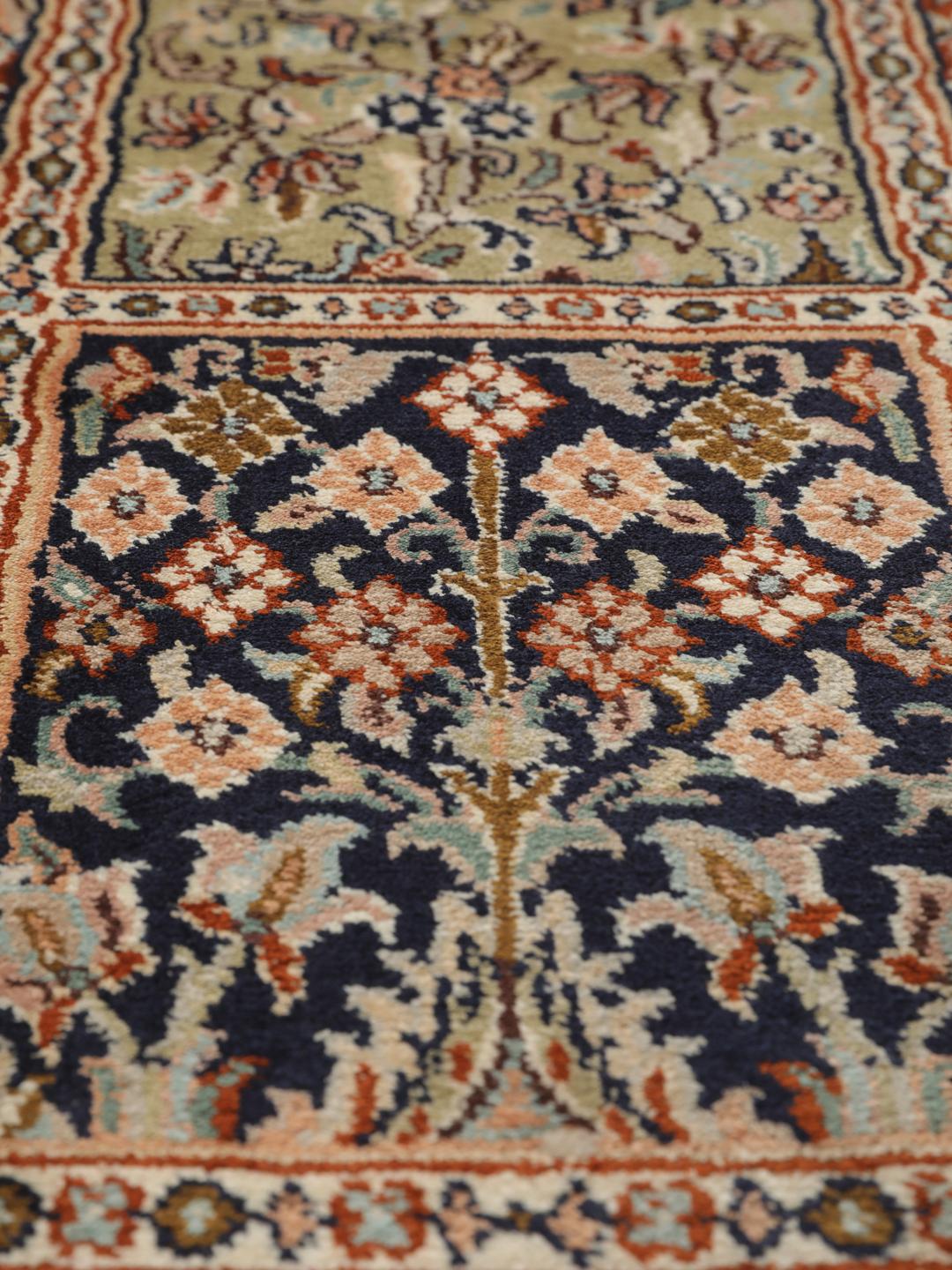
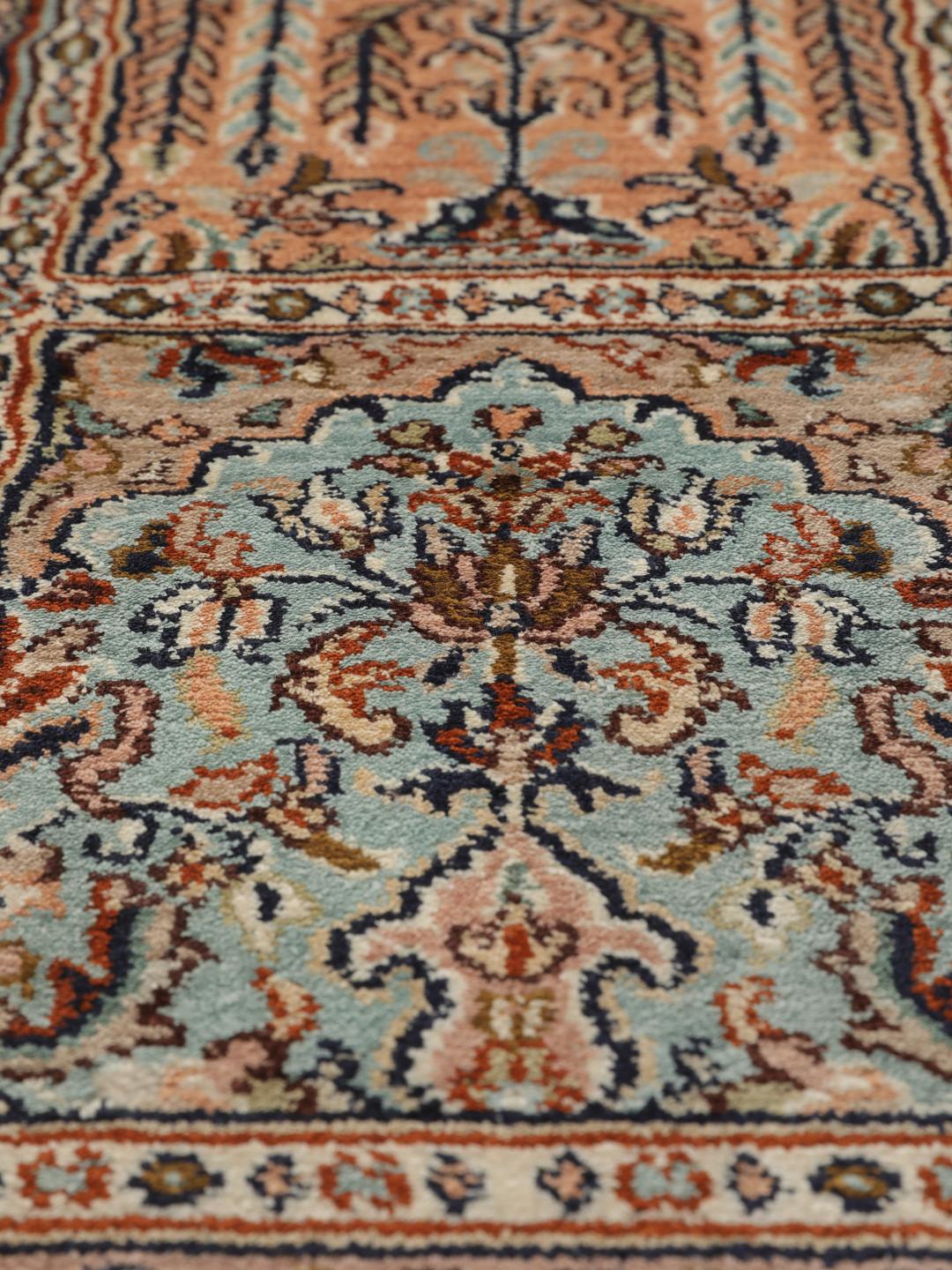
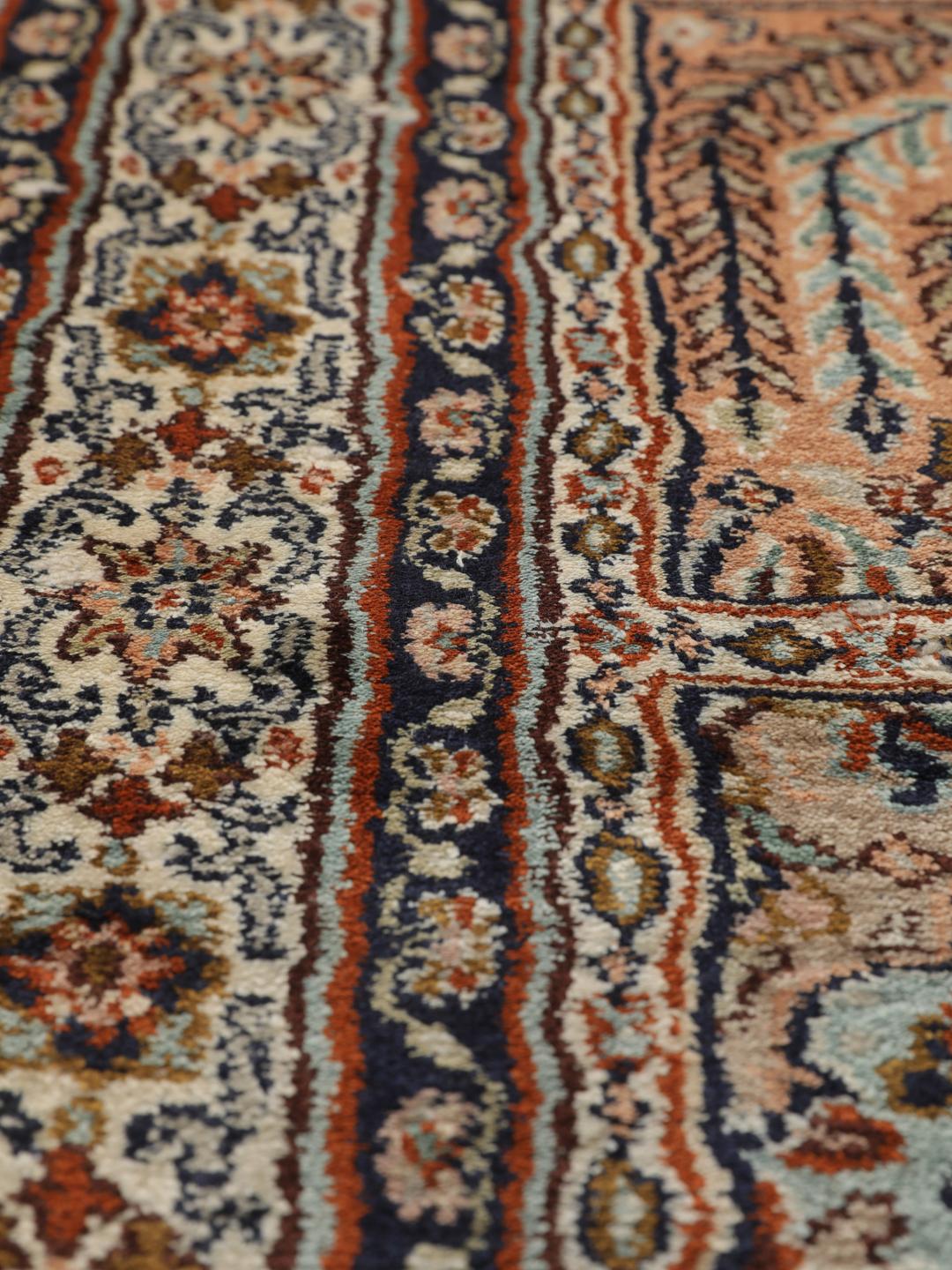
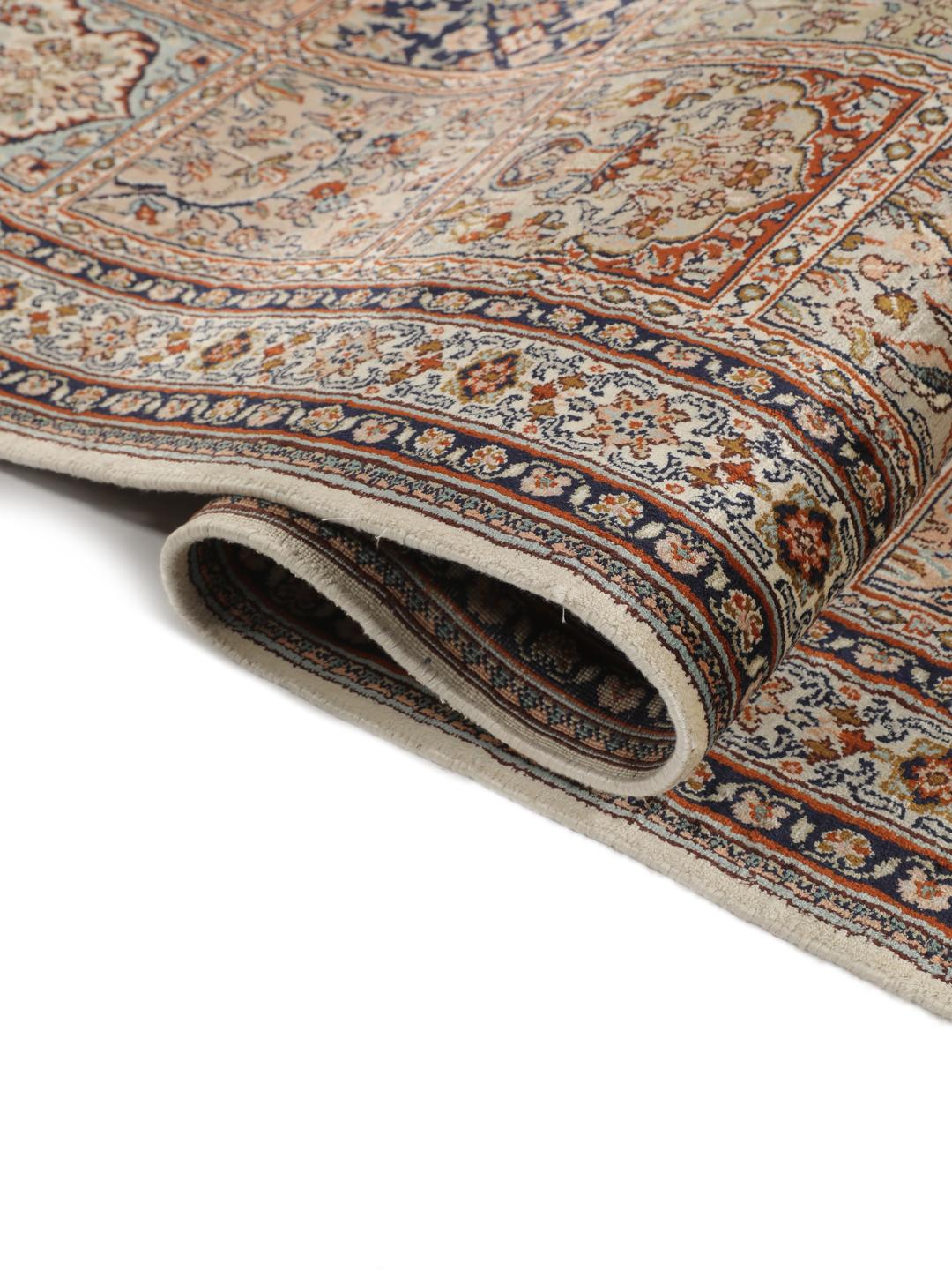
The signature design elements of Kashmir silk rugs often draw inspiration from nature, featuring intricate floral motifs, botanical vines, and complex geometric borders. These patterns are frequently organised into panels or medallions, showcasing the weaver's ability to balance symmetry with artistic flair. This specific runner features a series of detailed panels, each containing unique motifs that demonstrate the depth of the regional design vocabulary.
Collecting a Kashmir silk rug is an investment in a centuries-old tradition. These pieces are valued for their cultural weight and the incredible skill required to produce them. By choosing a hand-knotted silk runner, you are not just acquiring a floor covering, but a piece of history that represents the pinnacle of textile craft. It serves as a testament to the enduring appeal of handmade items in a modern world.