Kashmir rugs carry a rich legacy that traces back to the 15th century, when the craft was introduced to the valley by Central Asian artisans. Over the centuries, this region developed a distinct design language, blending local aesthetics with influences from the wider Middle Eastern textile traditions. Today, Kashmir is globally celebrated for its silk weaving, which remains a cornerstone of the region's cultural identity.
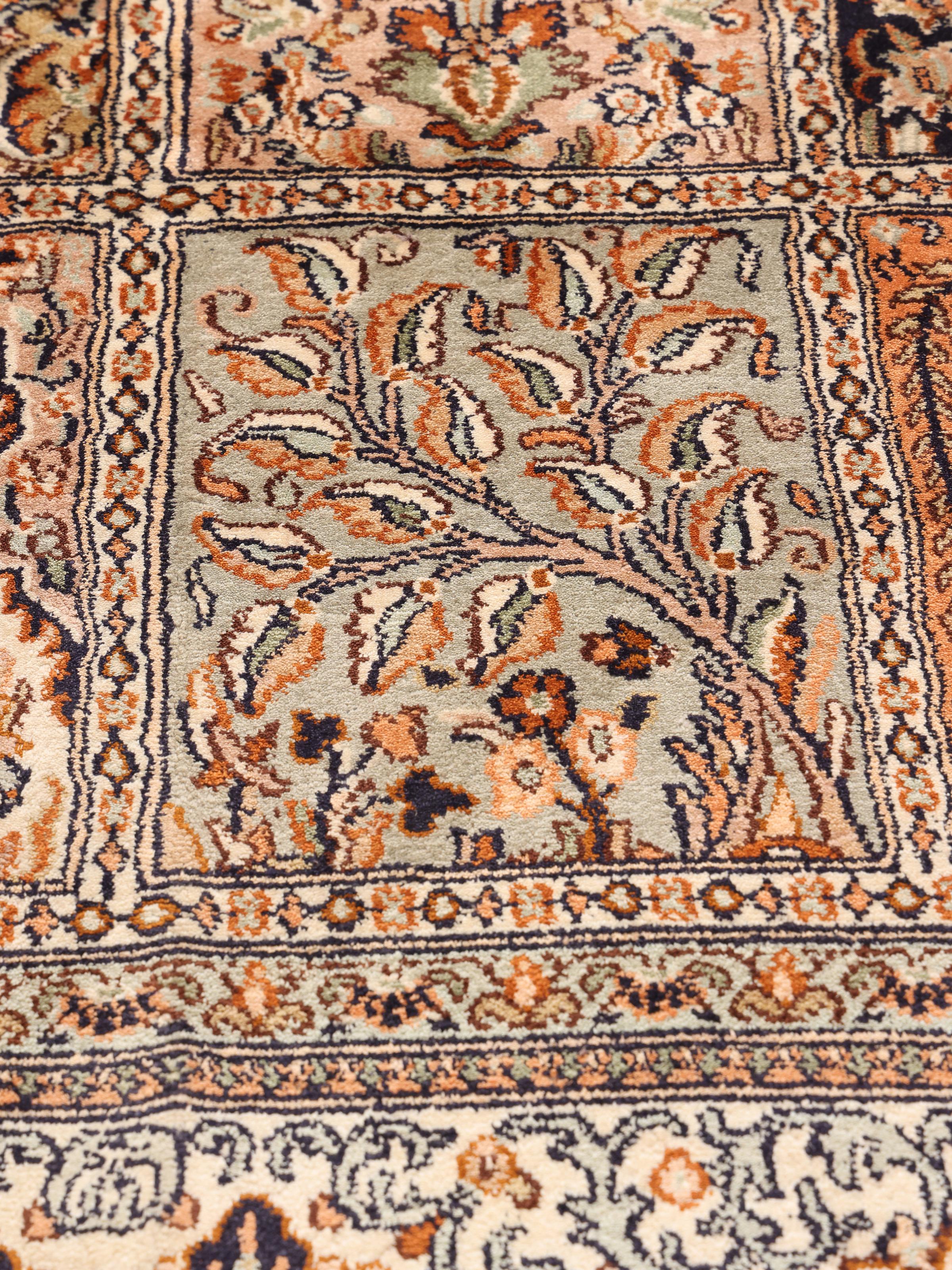
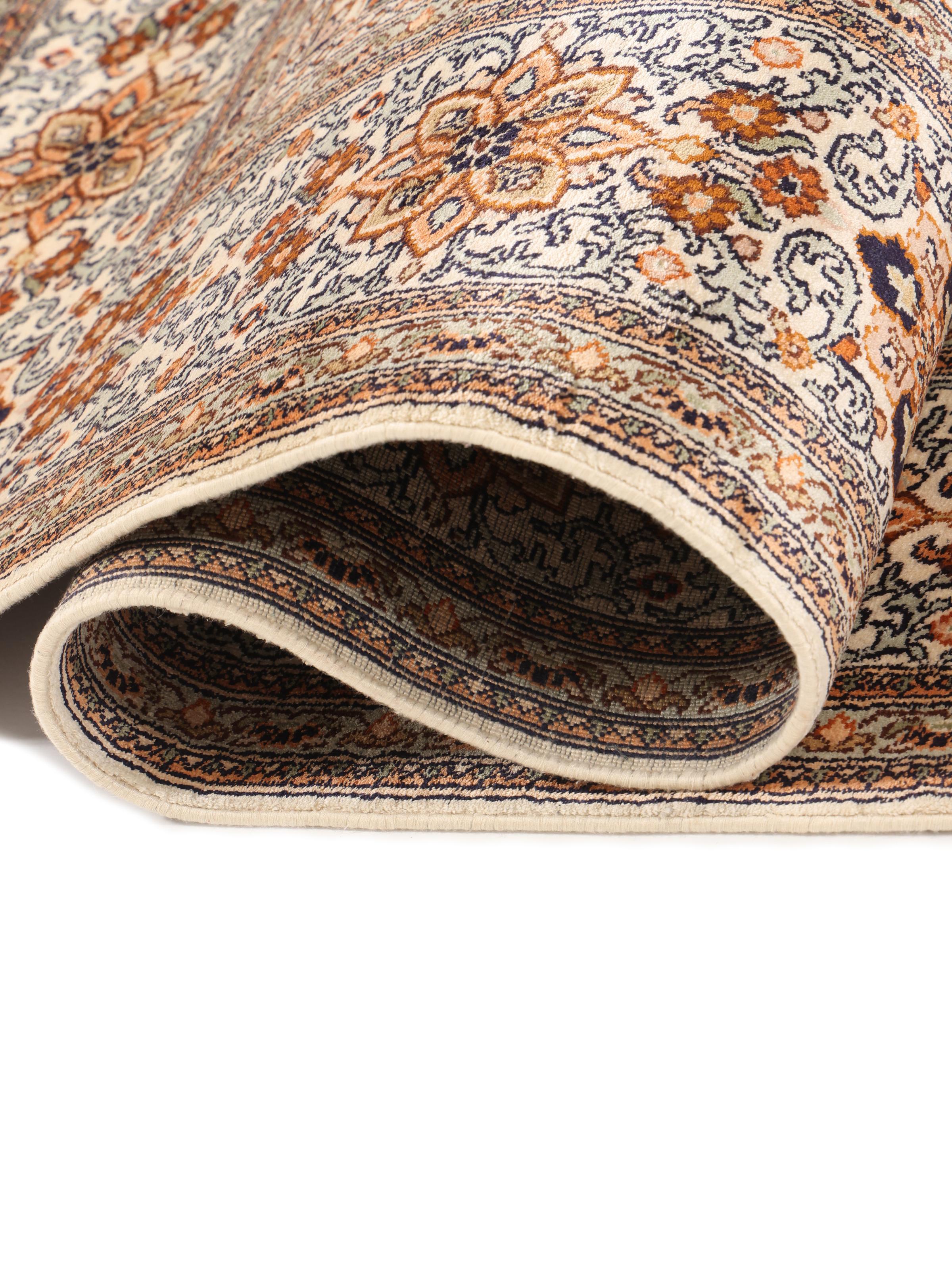
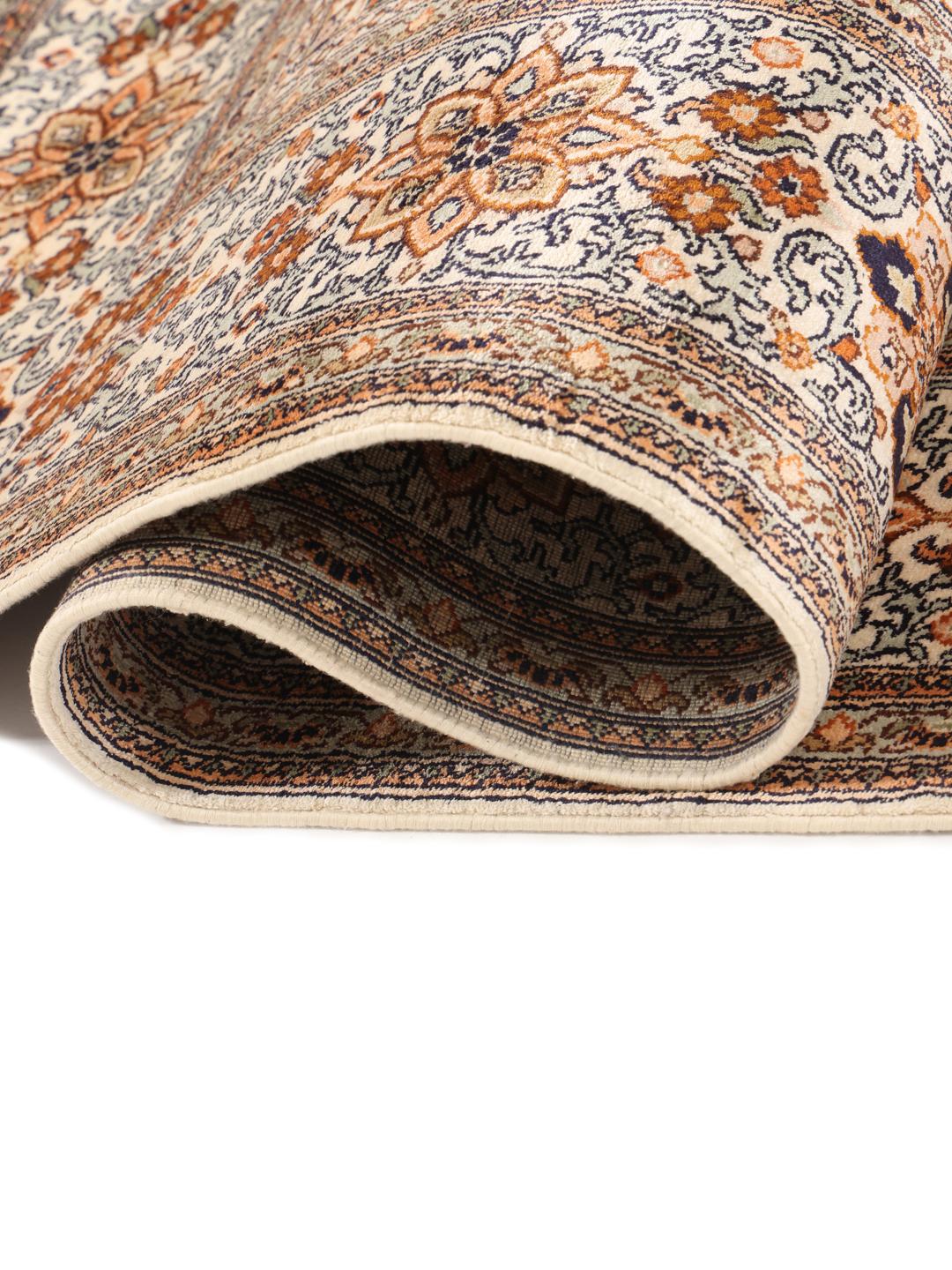
The term silk in this context refers to the use of high-quality, long-fibre threads that allow for an incredibly fine level of detail. The material is prized not only for its natural sheen but also for its ability to hold vivid dyes, which is why these rugs often feature such complex colour palettes. This material choice is what gives the rug its characteristic soft hand and elegant drape.
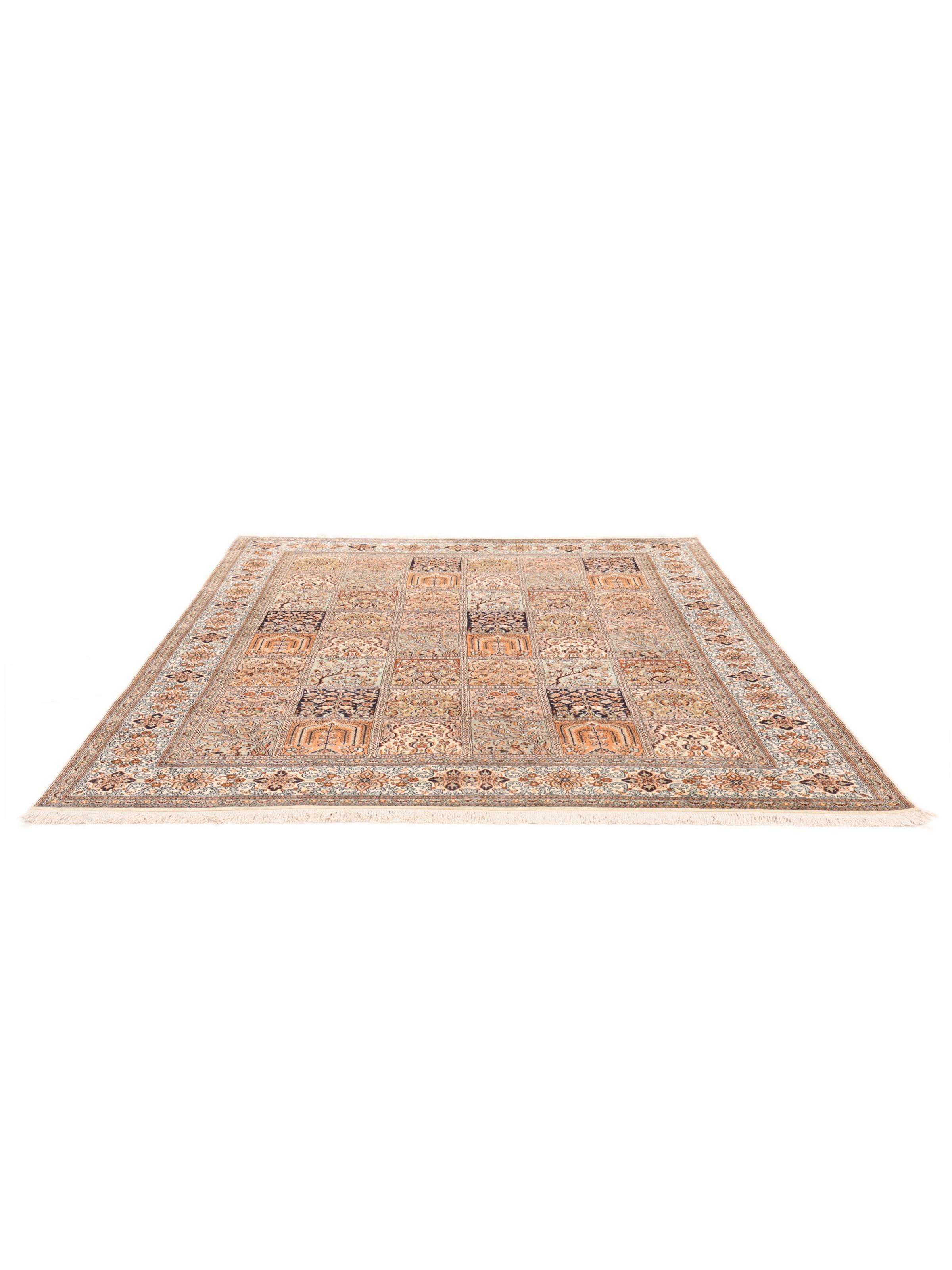
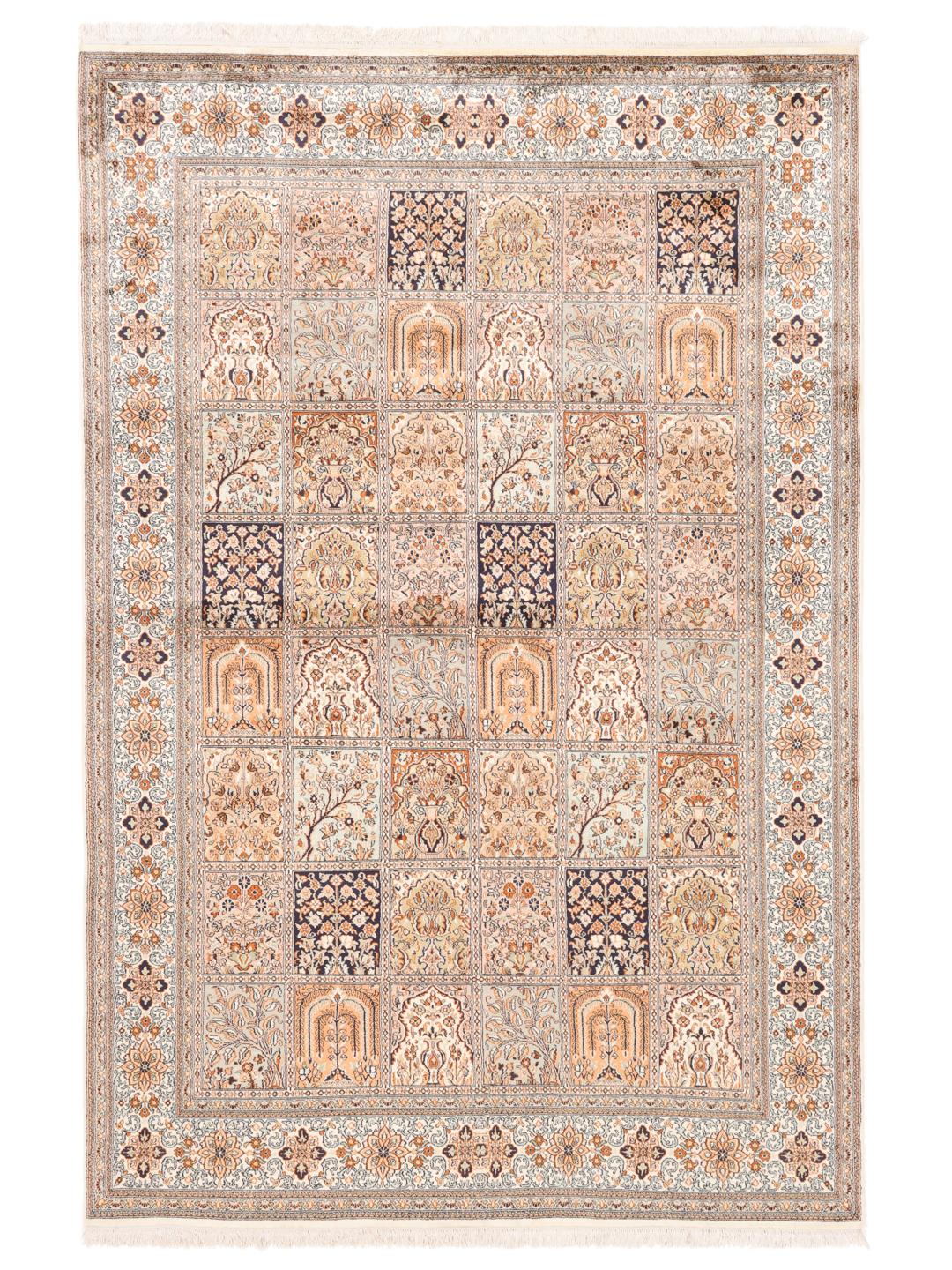
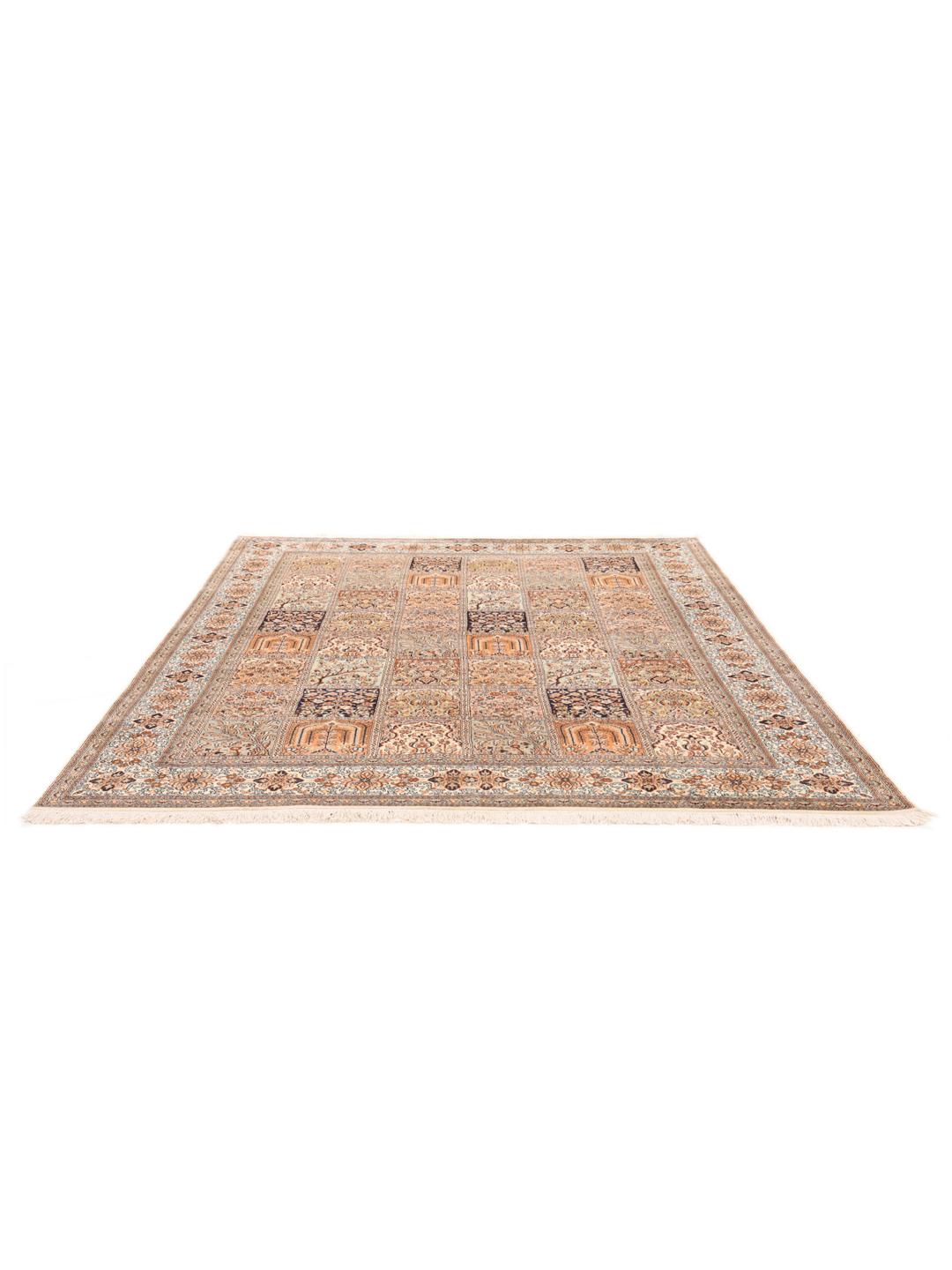
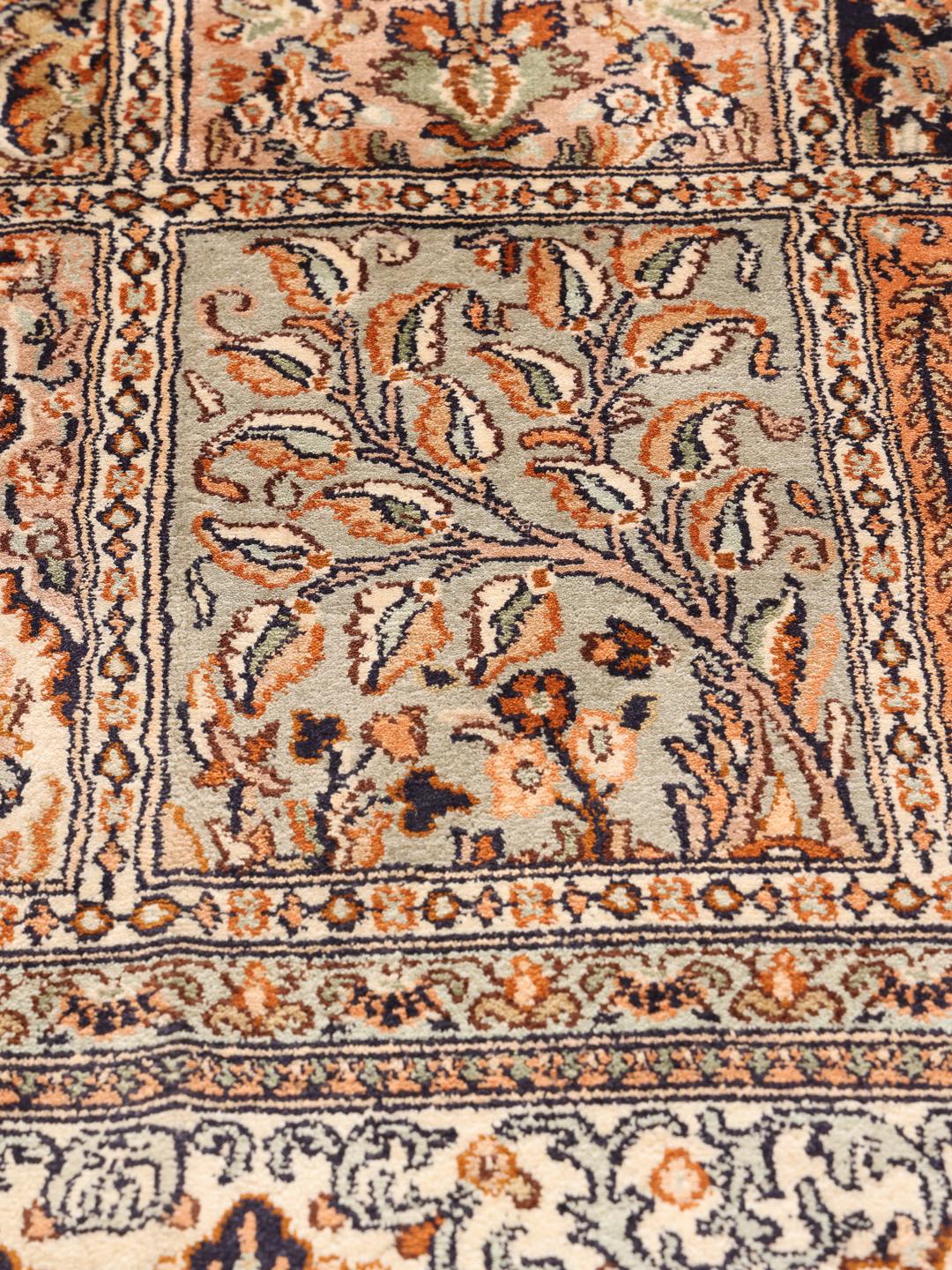
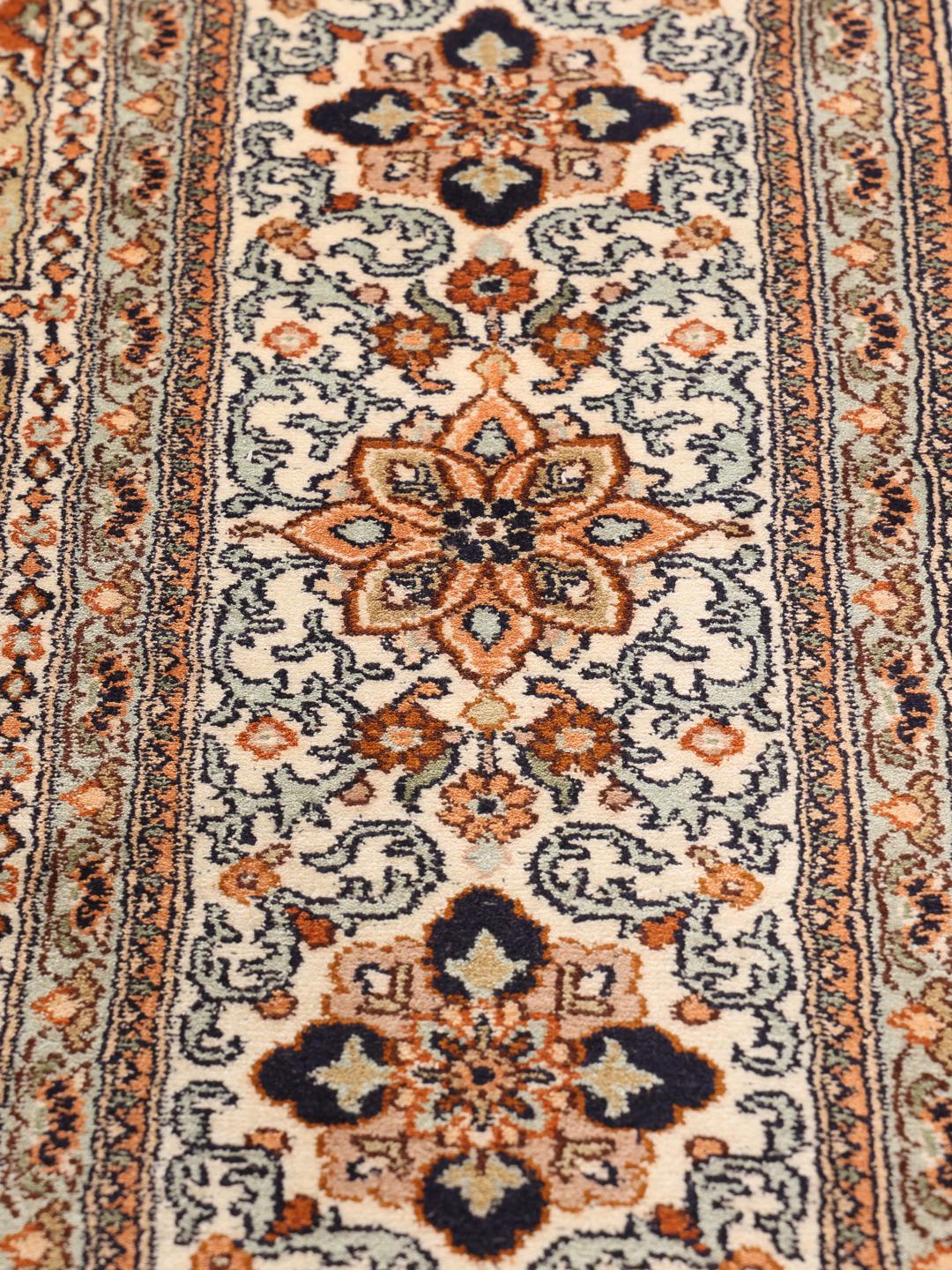
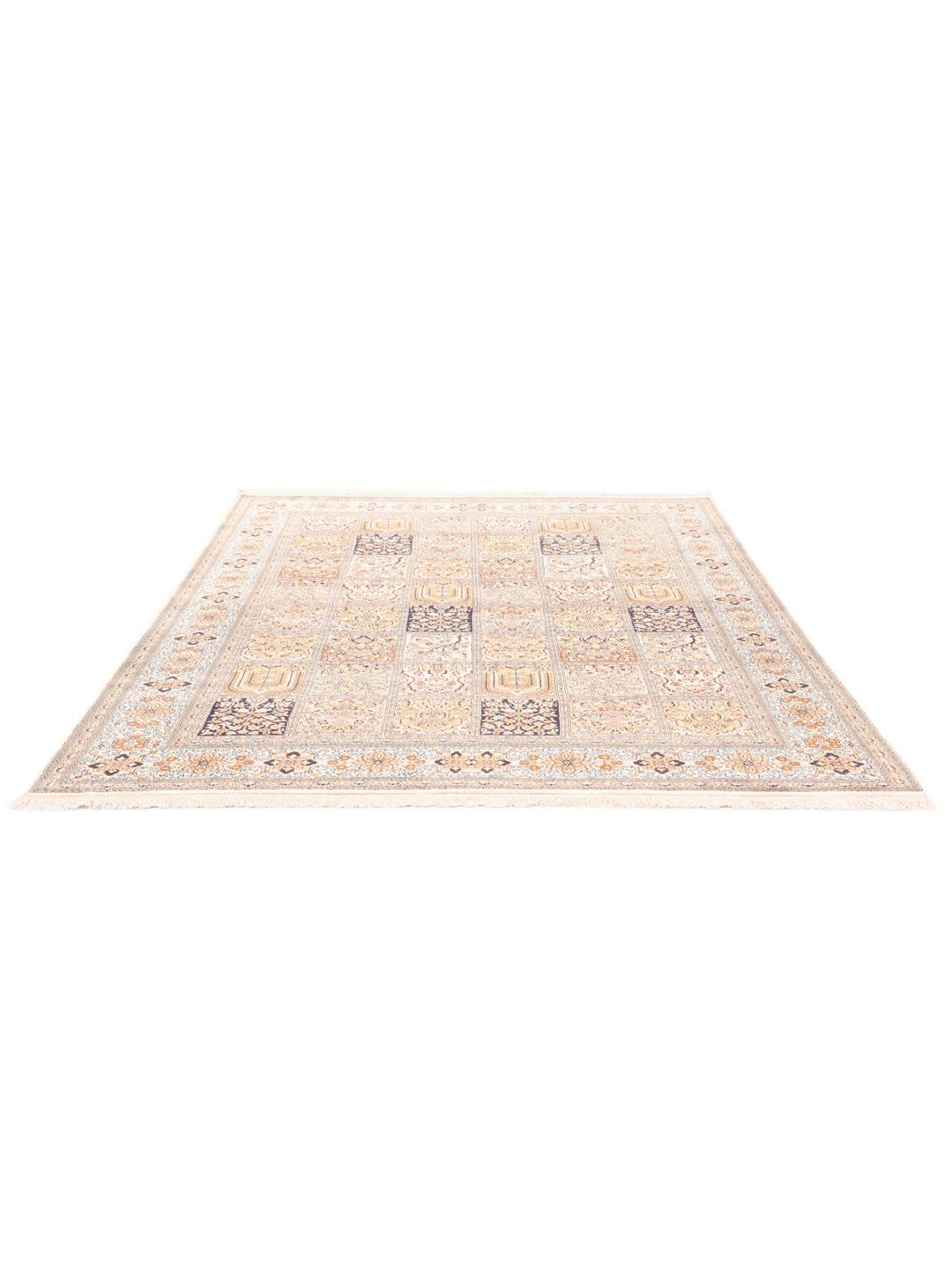
The design of this particular piece follows the tradition of the ornate grid, where the field is partitioned into smaller, distinct panels. Each panel often depicts traditional botanical motifs, such as floral sprays or stylised tree-of-life elements, which are deeply symbolic in the region's art. This structured approach to composition, enclosed by a formal decorative border, creates a sense of order and sophistication that is hallmark to the Kashmir style.
Collecting a Kashmir silk rug is an investment in a living heritage. These rugs are valued for the extreme skill required to manage such fine materials and for the artistic vision that goes into every knot. Owning one is more than a decorative choice; it is a way to preserve the history of a craft that has been passed down through generations of families, representing a standard of excellence that is increasingly rare in the modern world.