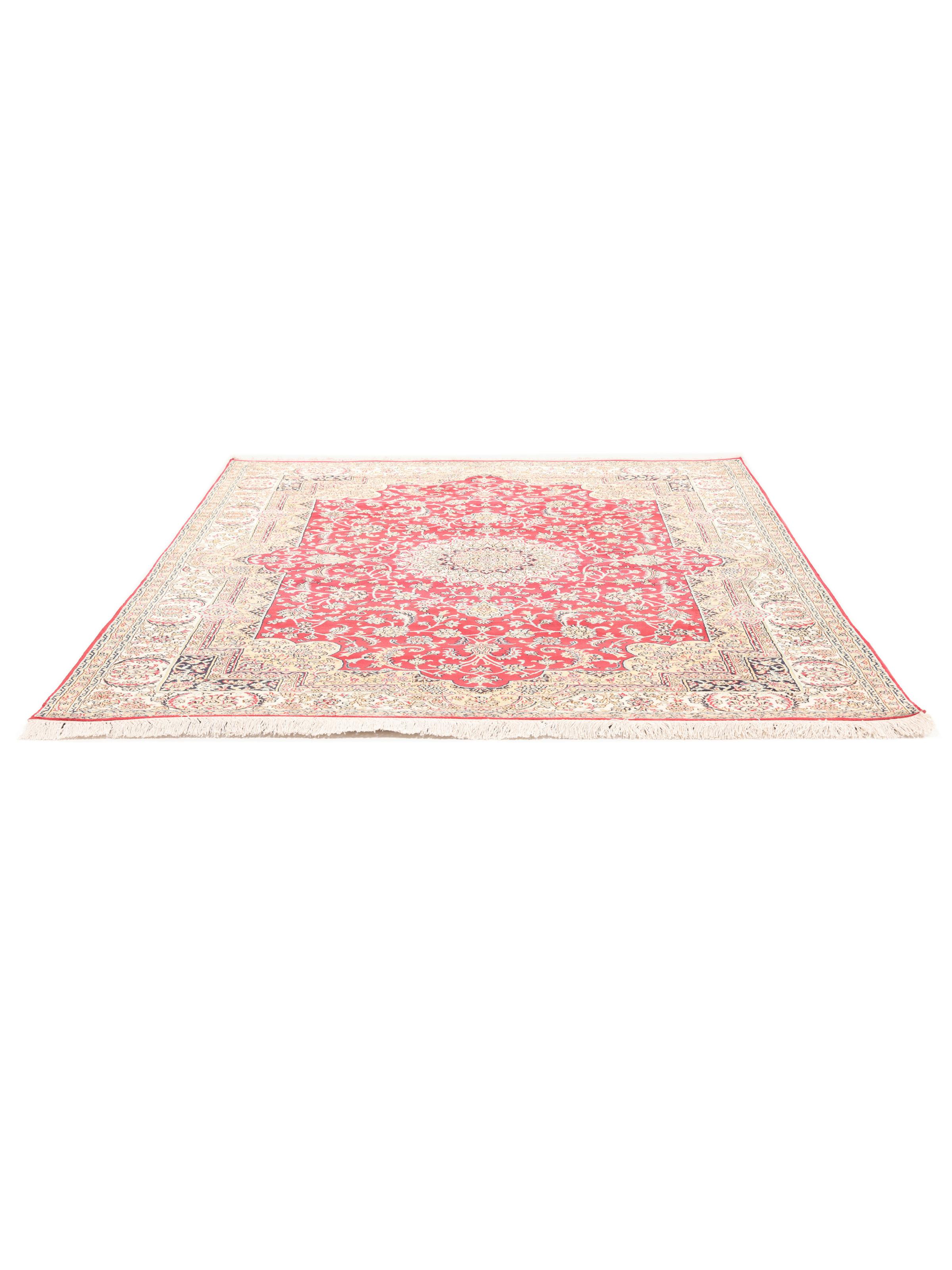
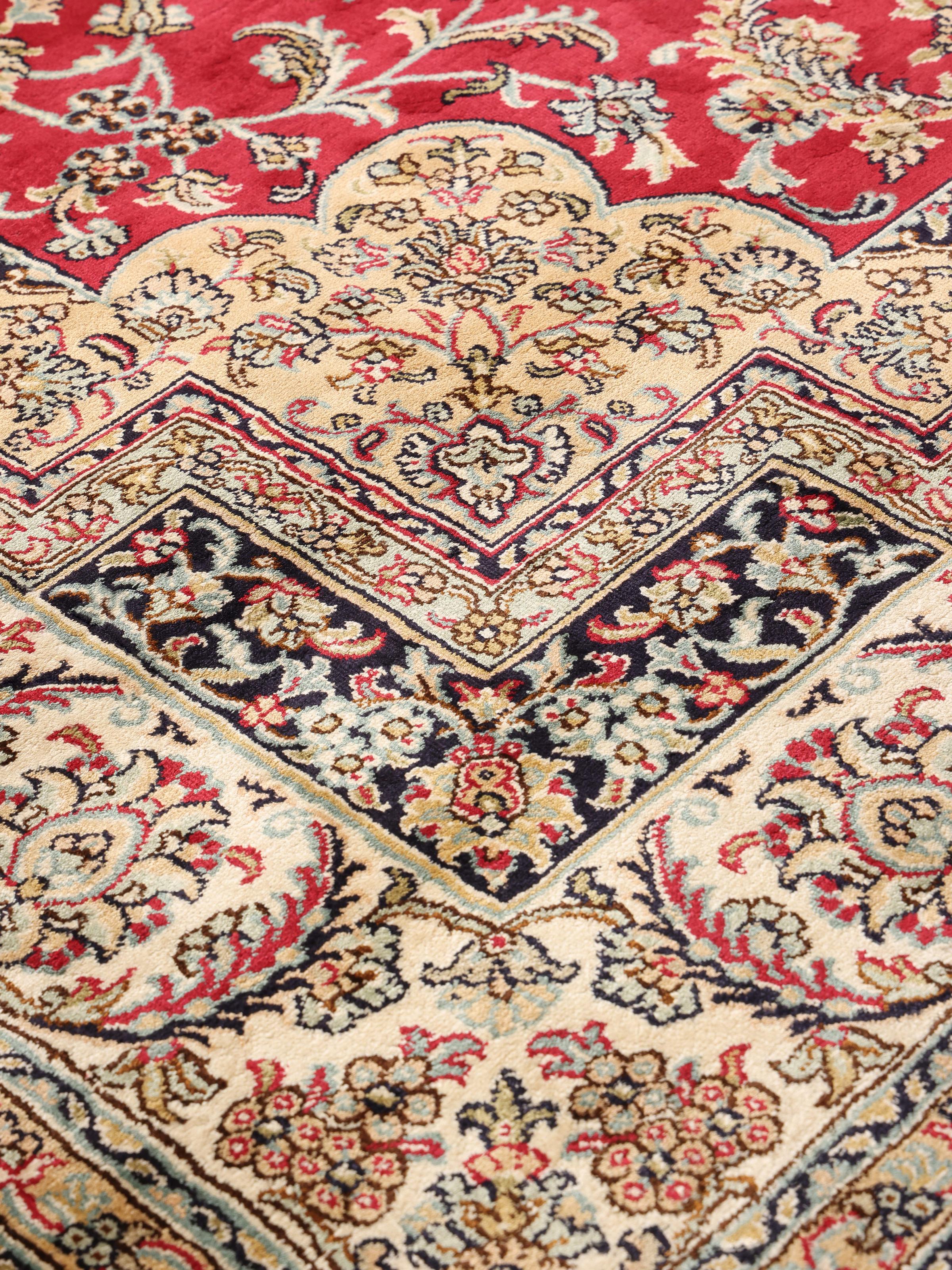
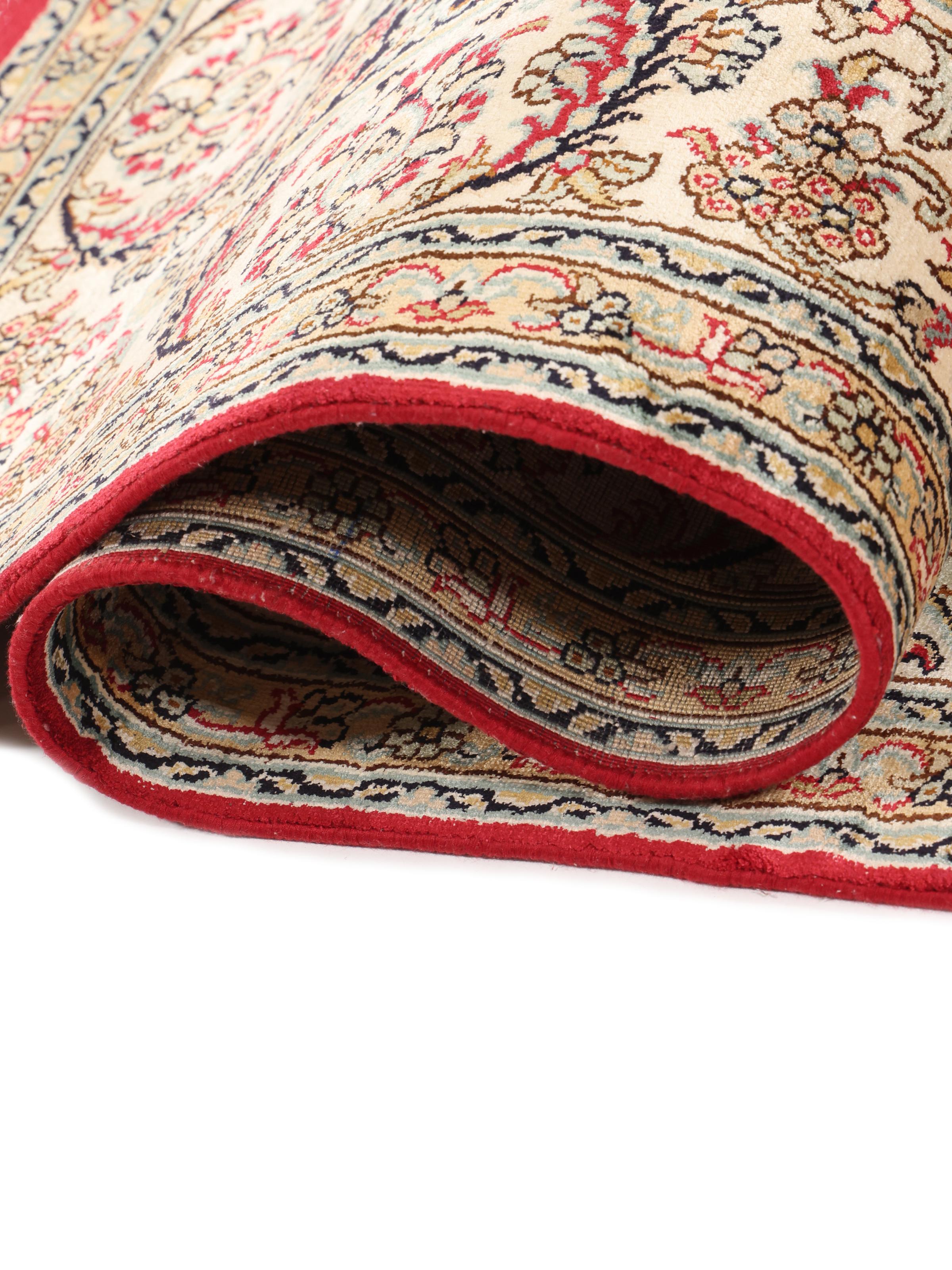
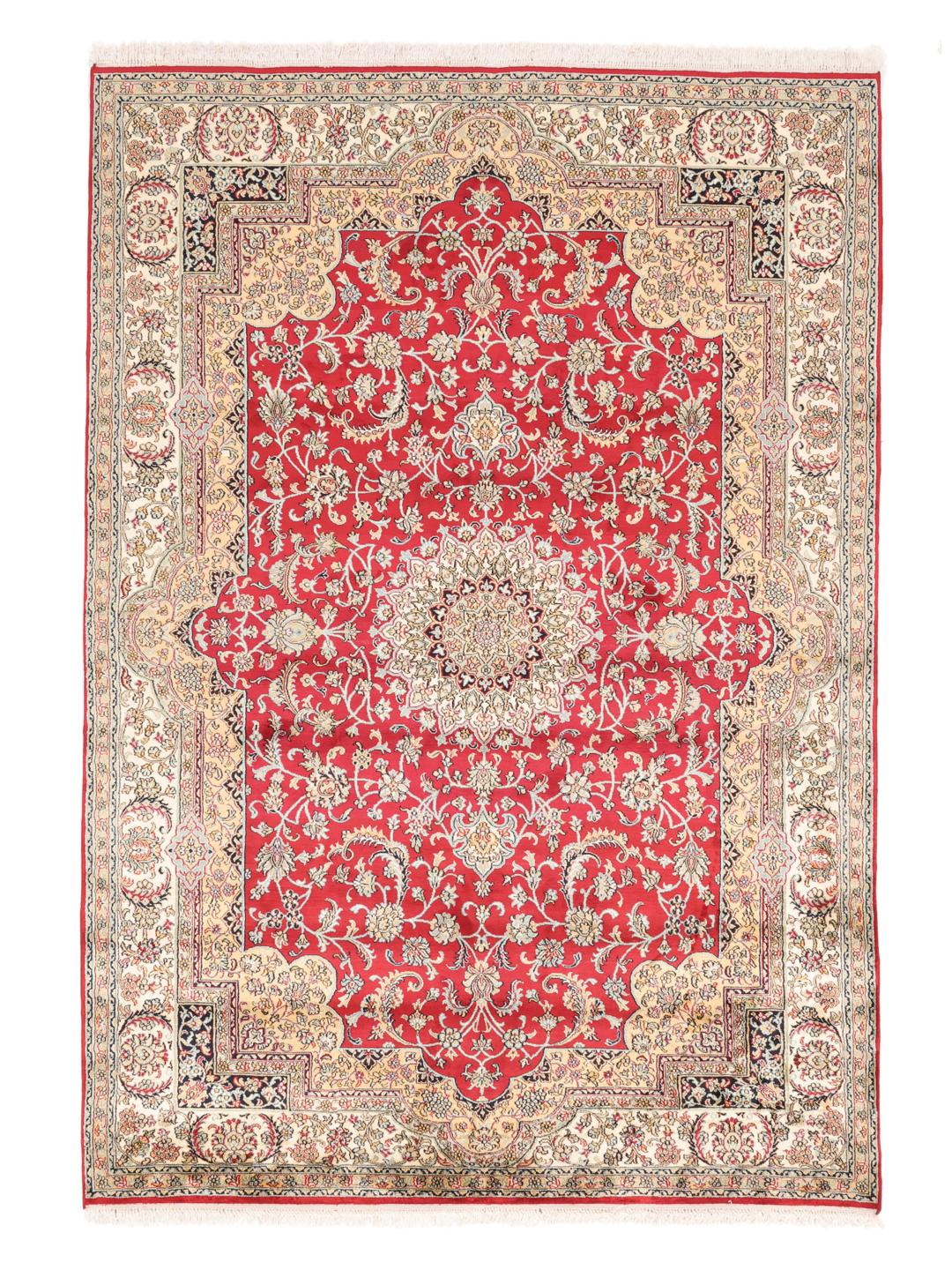
Kashmir silk rugs trace their origins to the 15th century, when the craft was introduced to the Kashmir Valley in India. Influenced by the rich artistic traditions of the Middle East, the region developed its own distinct style that blends local floral motifs with classical patterns, resulting in rugs that are celebrated for their intricate detail and luminous appearance.
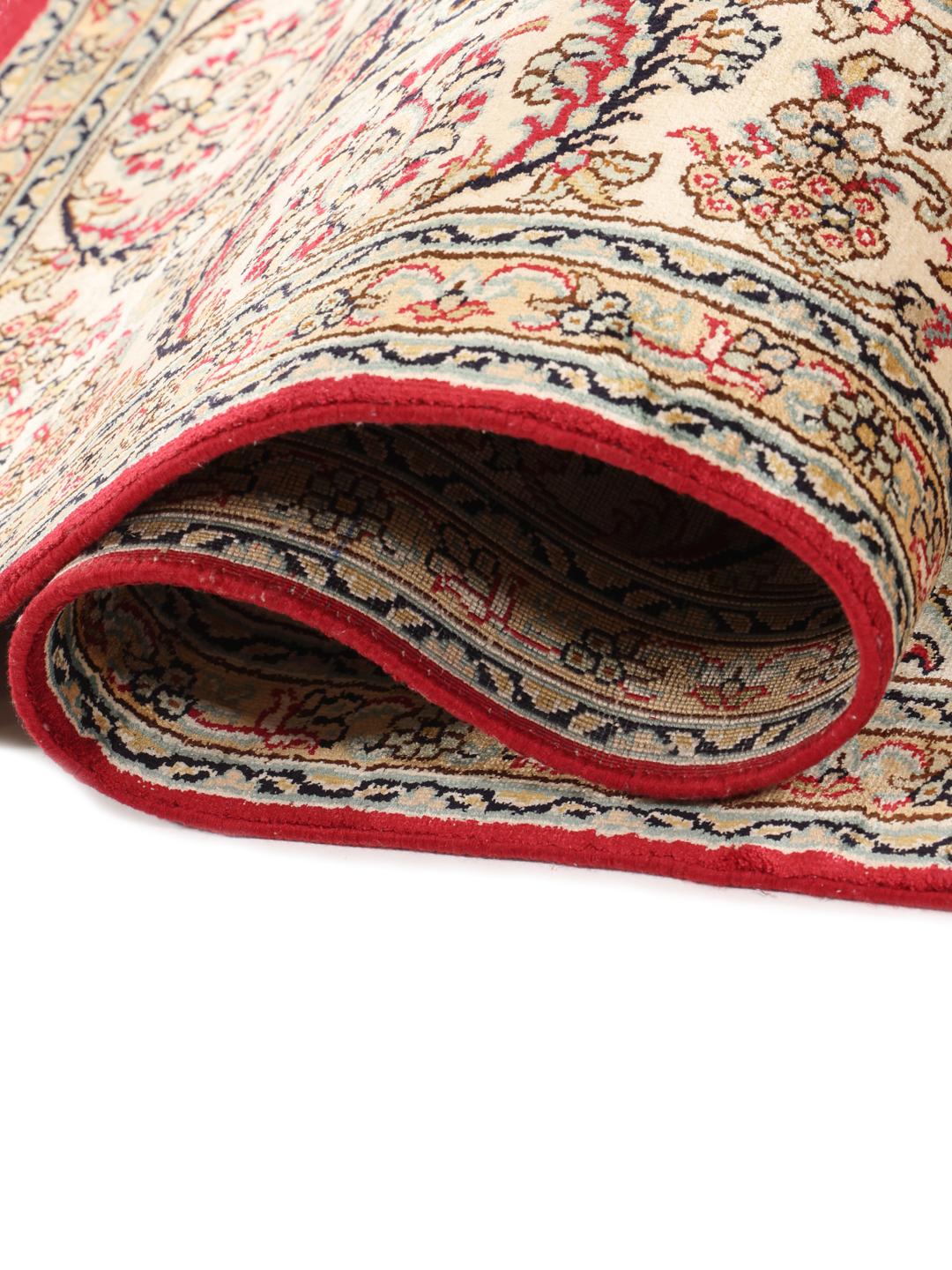
The term 'silk' in this context refers to the use of high-quality, long-staple fibres that are spun to create a pile with a natural, light-reflecting sheen. This material is prized for its strength and ability to hold fine, vibrant dyes, allowing the weaver to create highly complex, painterly designs that remain sharp and vivid over many years.
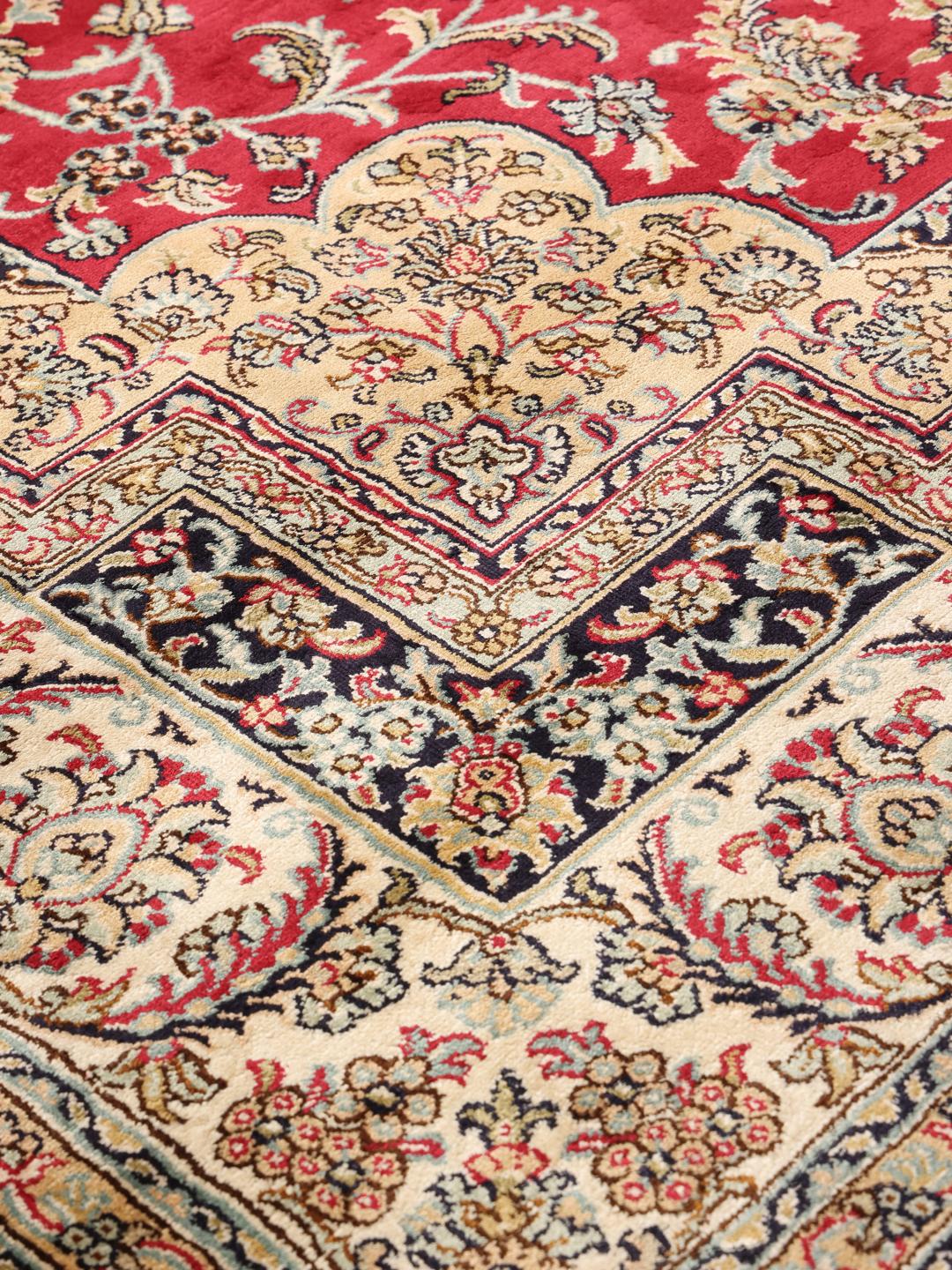
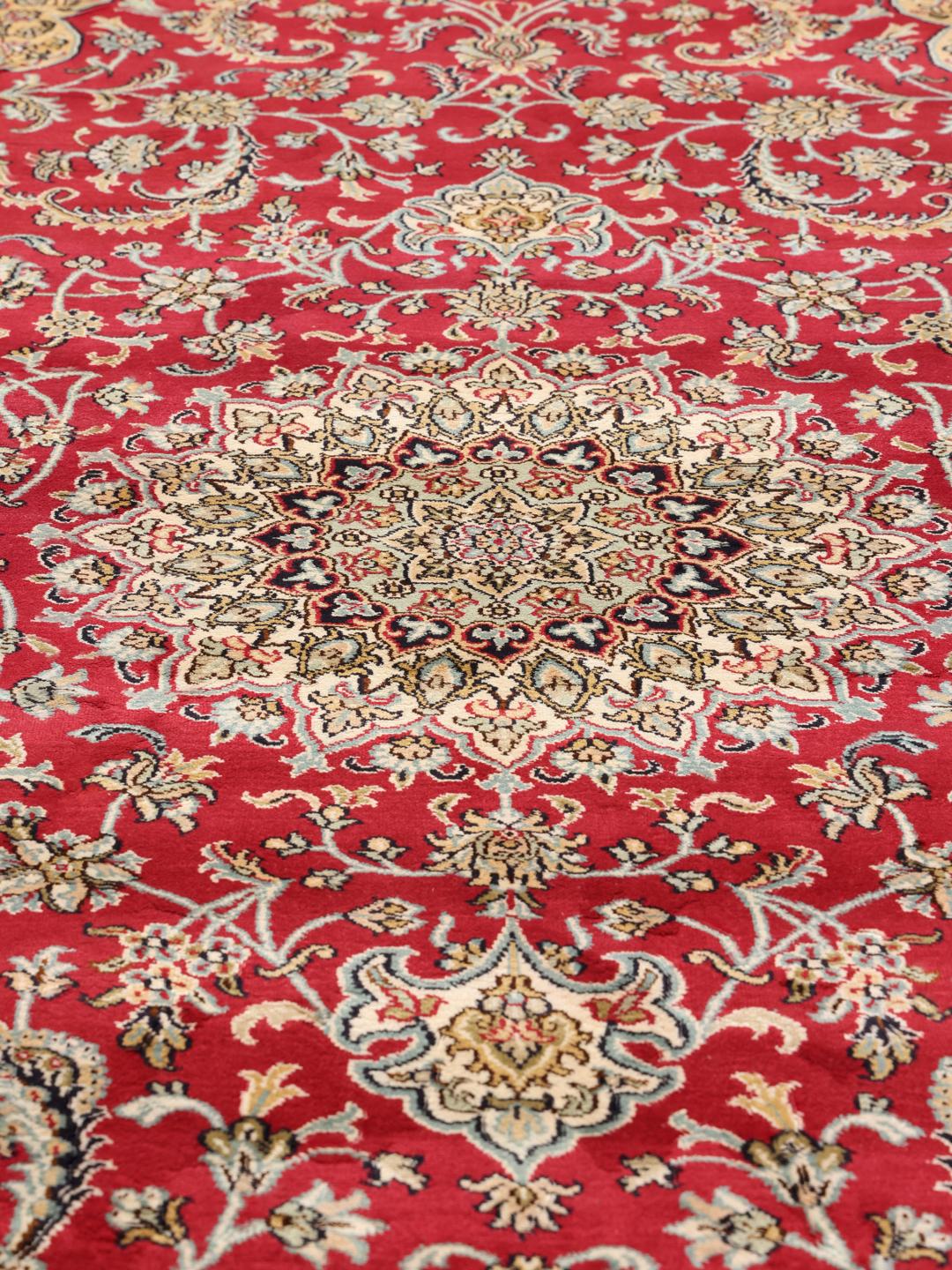
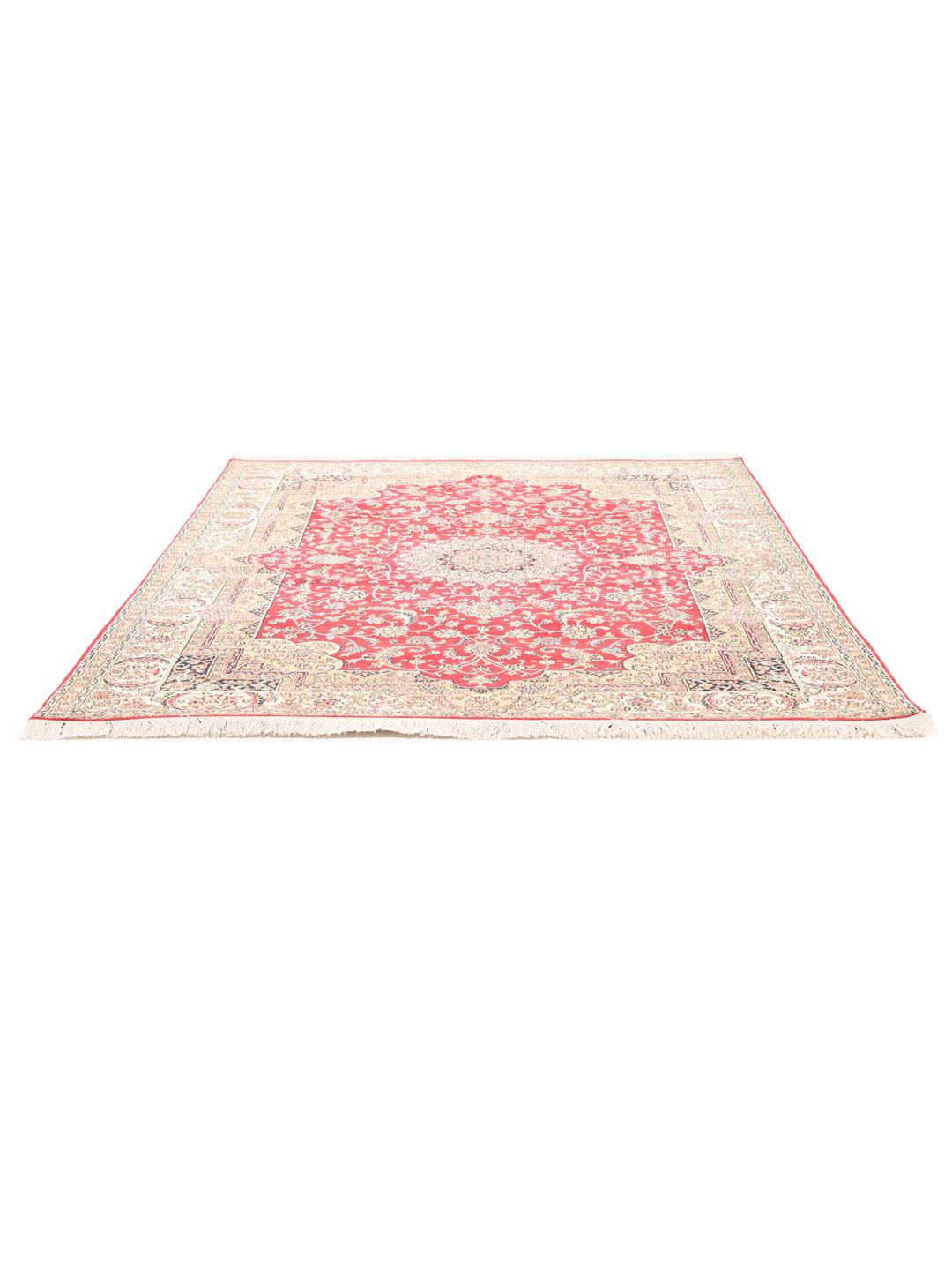
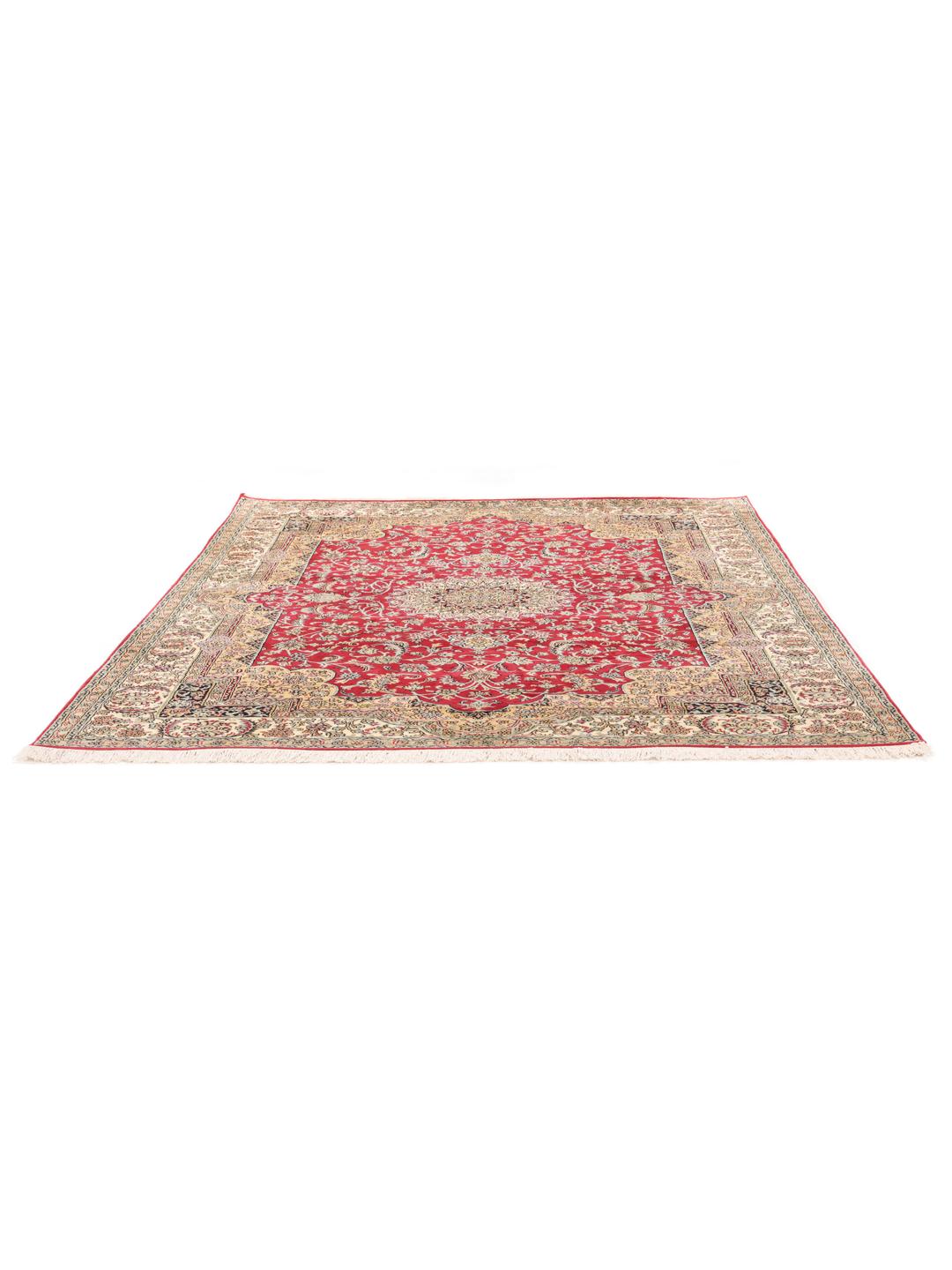
The signature design of these rugs often features a central medallion, which acts as the anchor for a field filled with interconnected floral sprays, vines, and leaves. This formal composition is usually enclosed by a series of detailed borders that frame the central motif, showcasing a balance of colour and symmetry that is characteristic of the finest Indian weaving traditions.
These rugs are highly sought after by collectors for their cultural significance and the extreme skill required to produce them. Owning a Kashmir silk rug is a testament to an appreciation for heritage and refined craft, as each piece represents a continuation of an ancient tradition that has been passed down through generations of artisans.