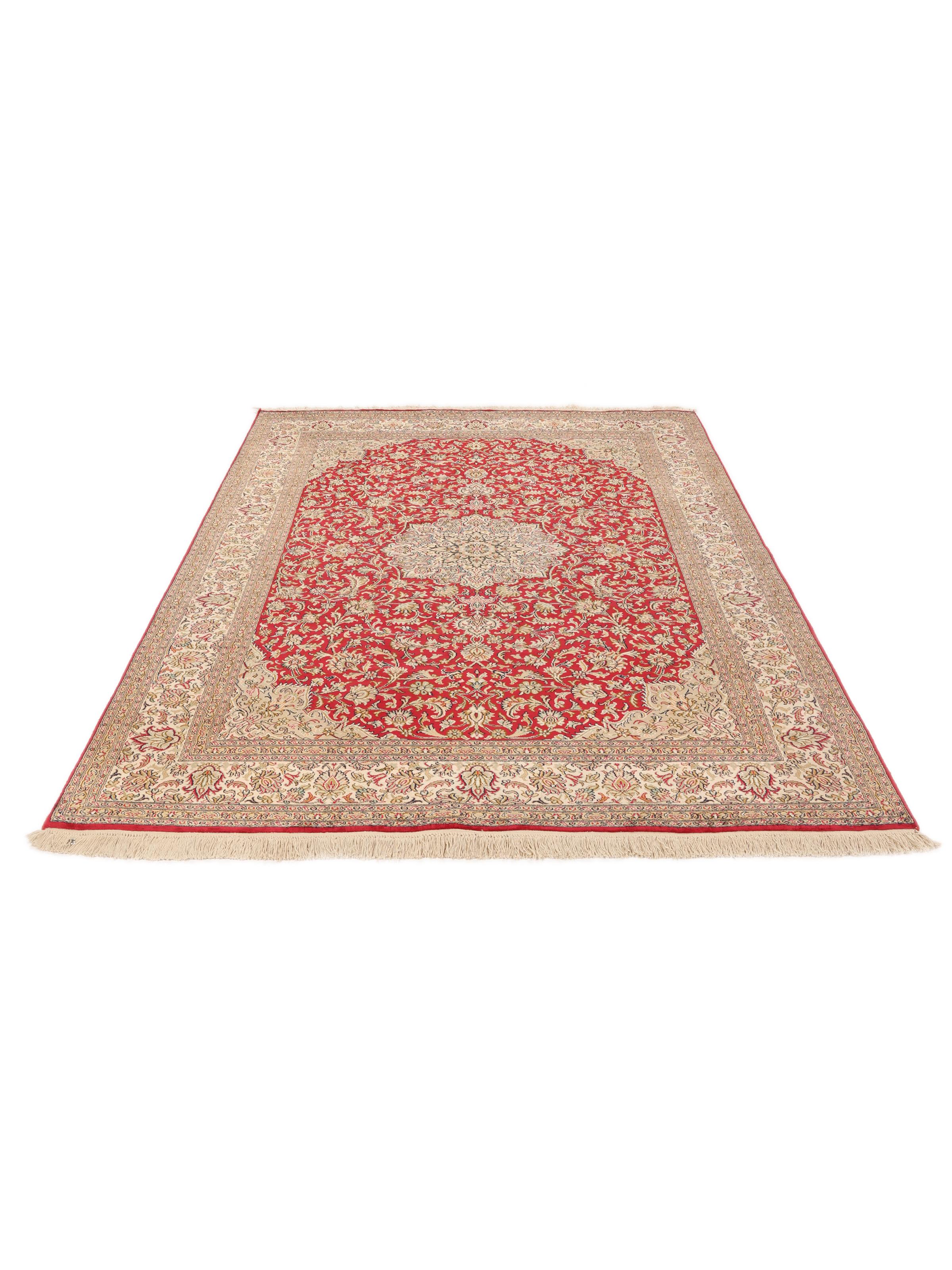
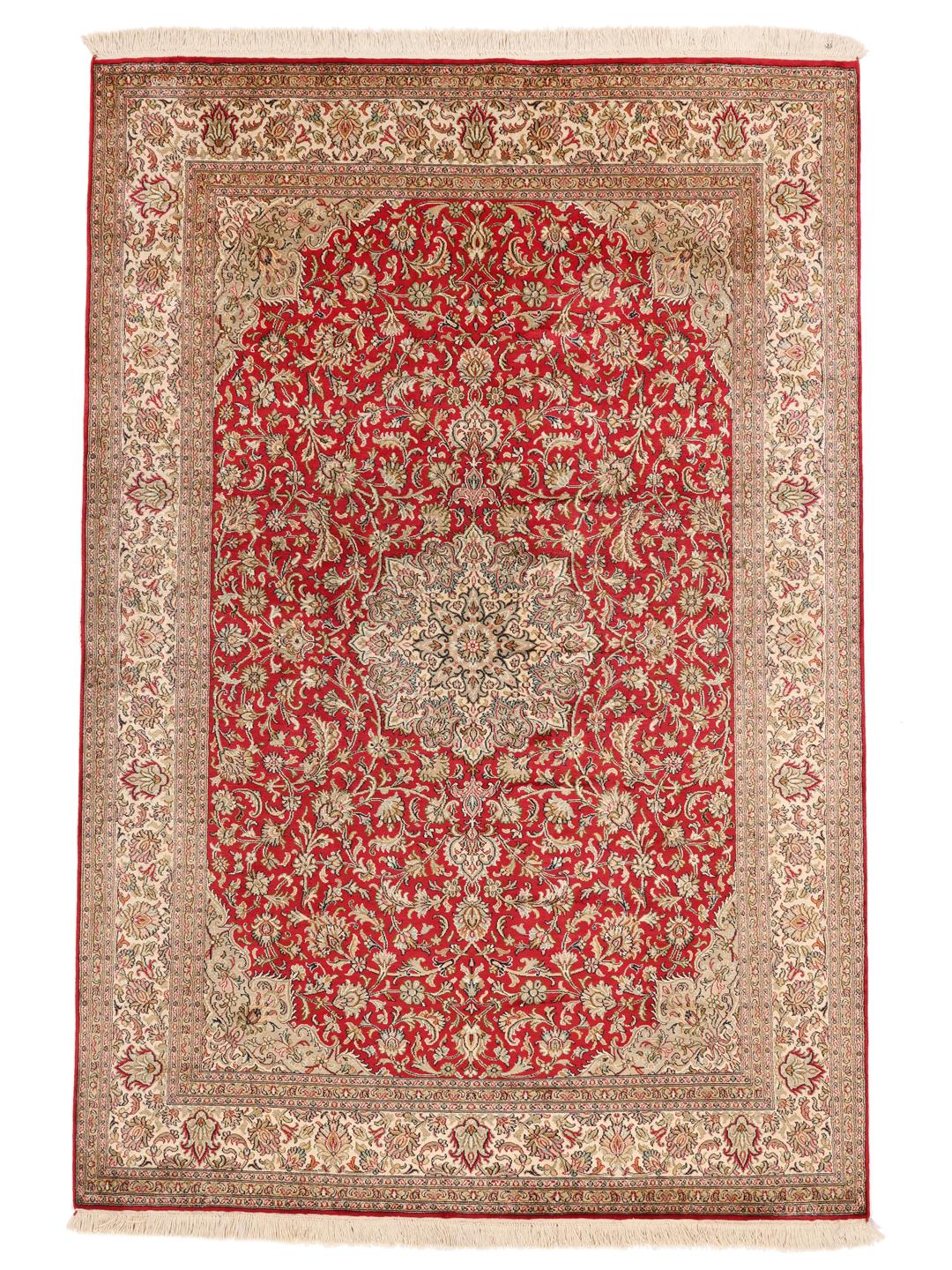
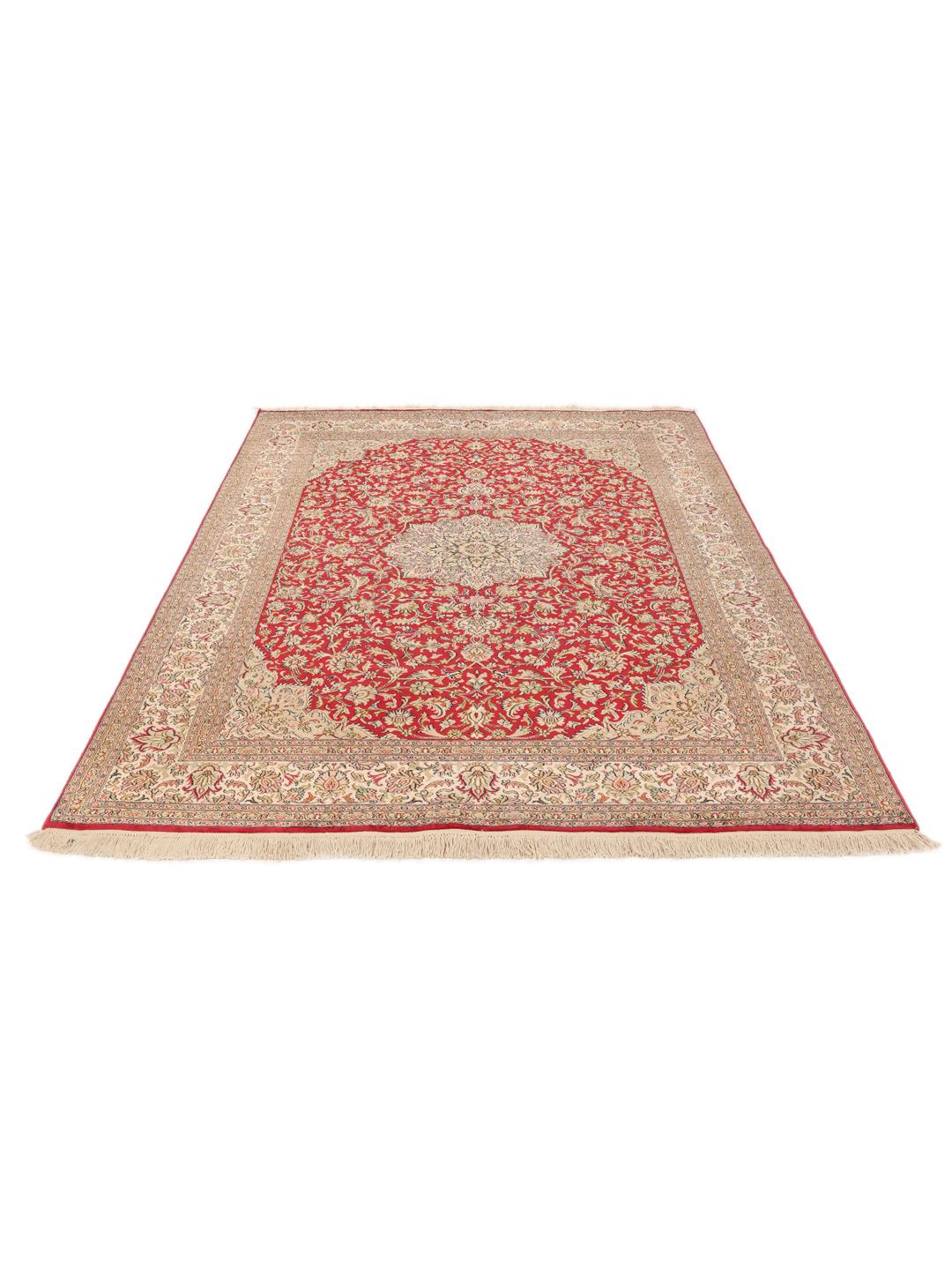
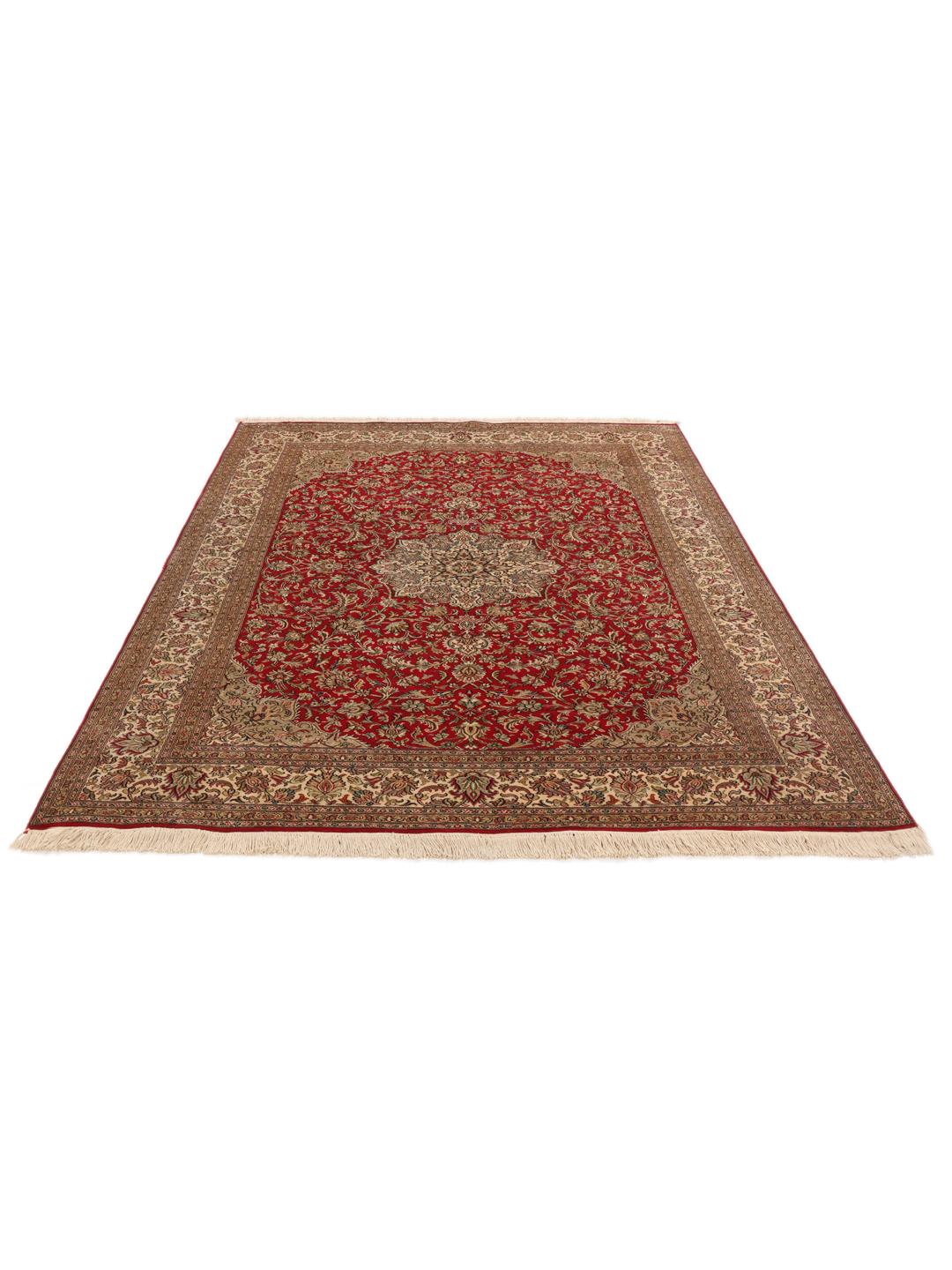
The tradition of weaving silk rugs in the Kashmir region of India is a legacy that dates back centuries, deeply influenced by the artistic exchange along the historical trade routes of Central Asia. These rugs are celebrated for their connection to the natural beauty of the Himalayan valleys, where the floral and paisley motifs often reflect the lush landscapes and local garden traditions of the area.
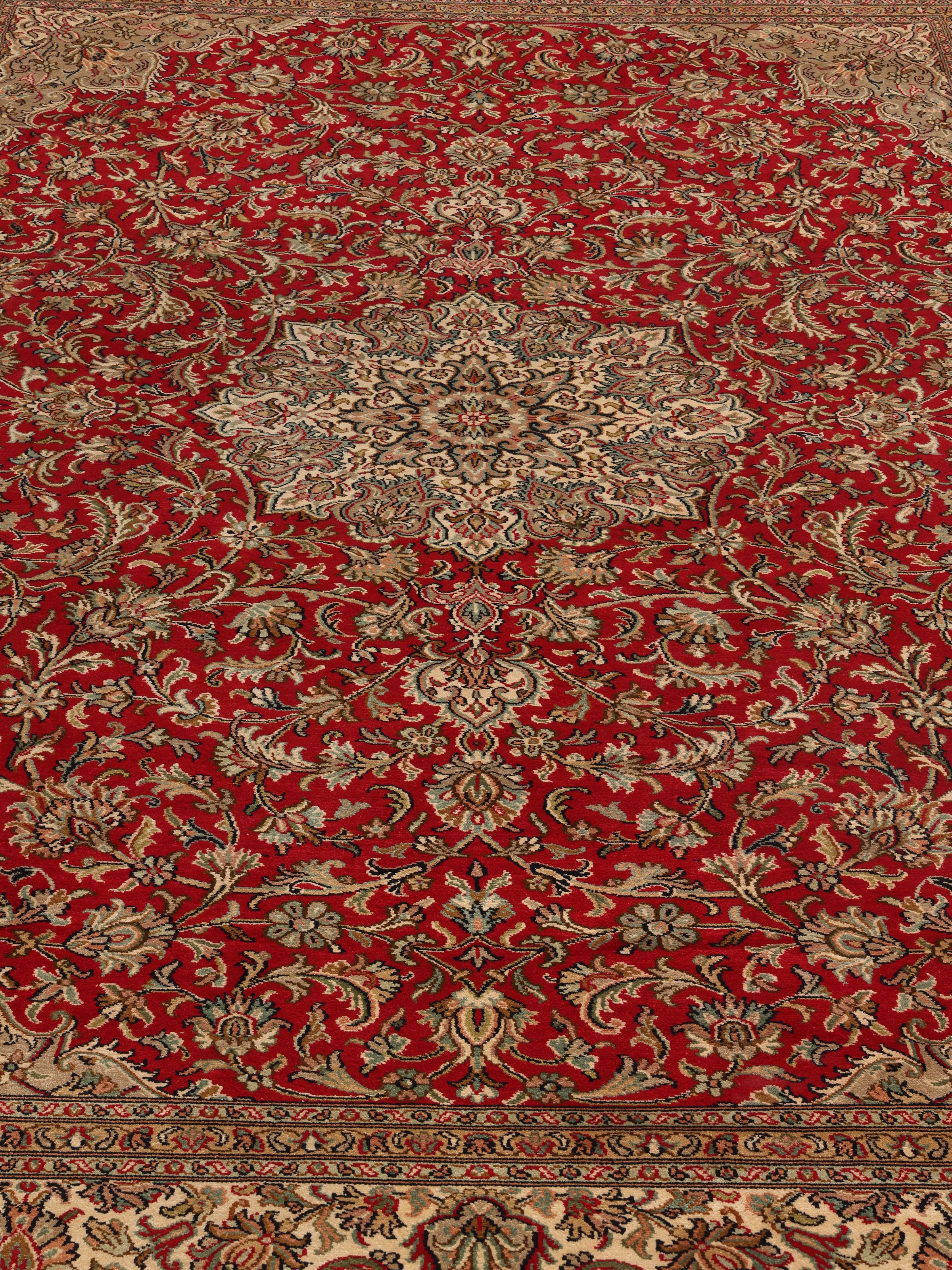
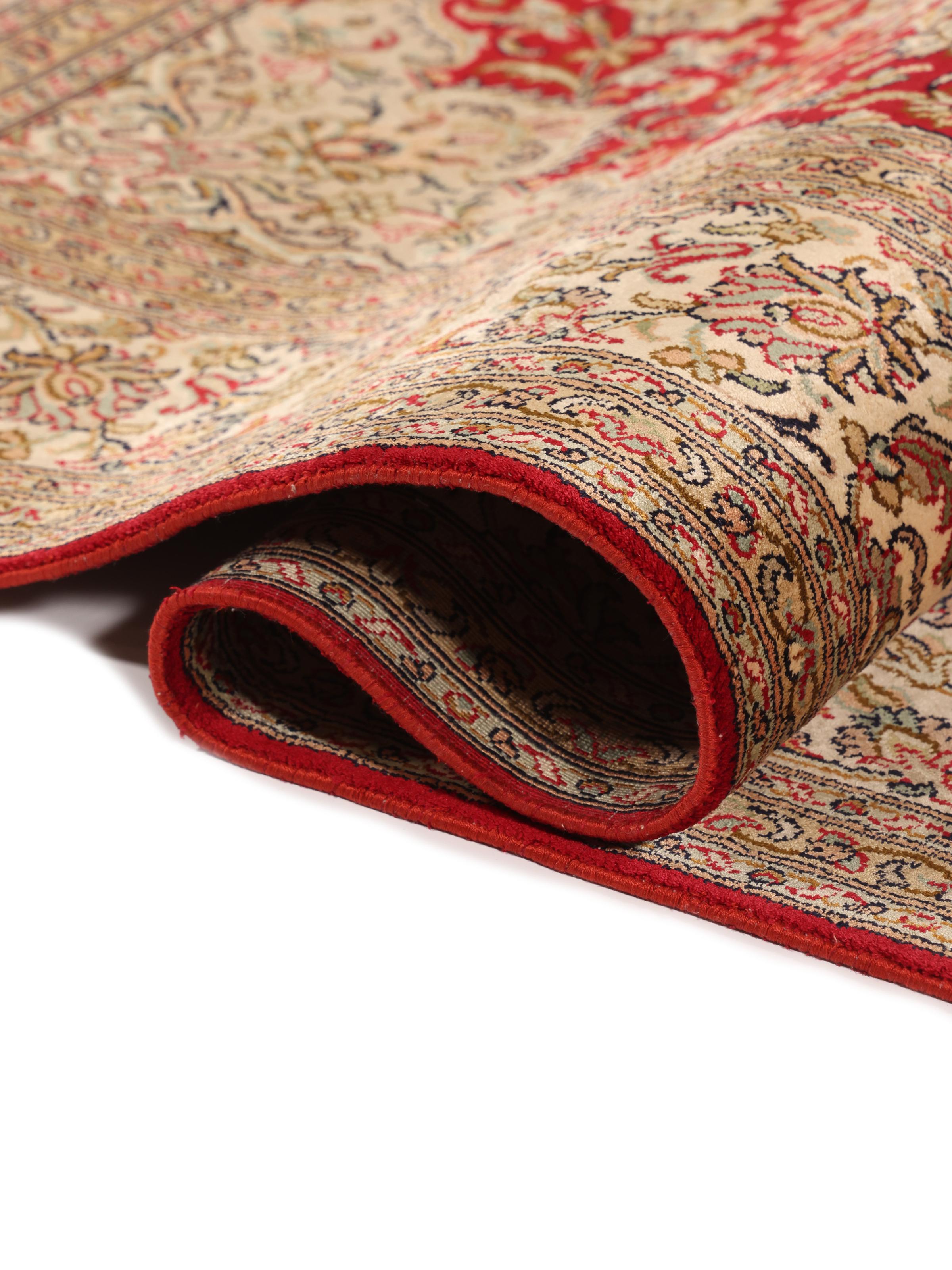
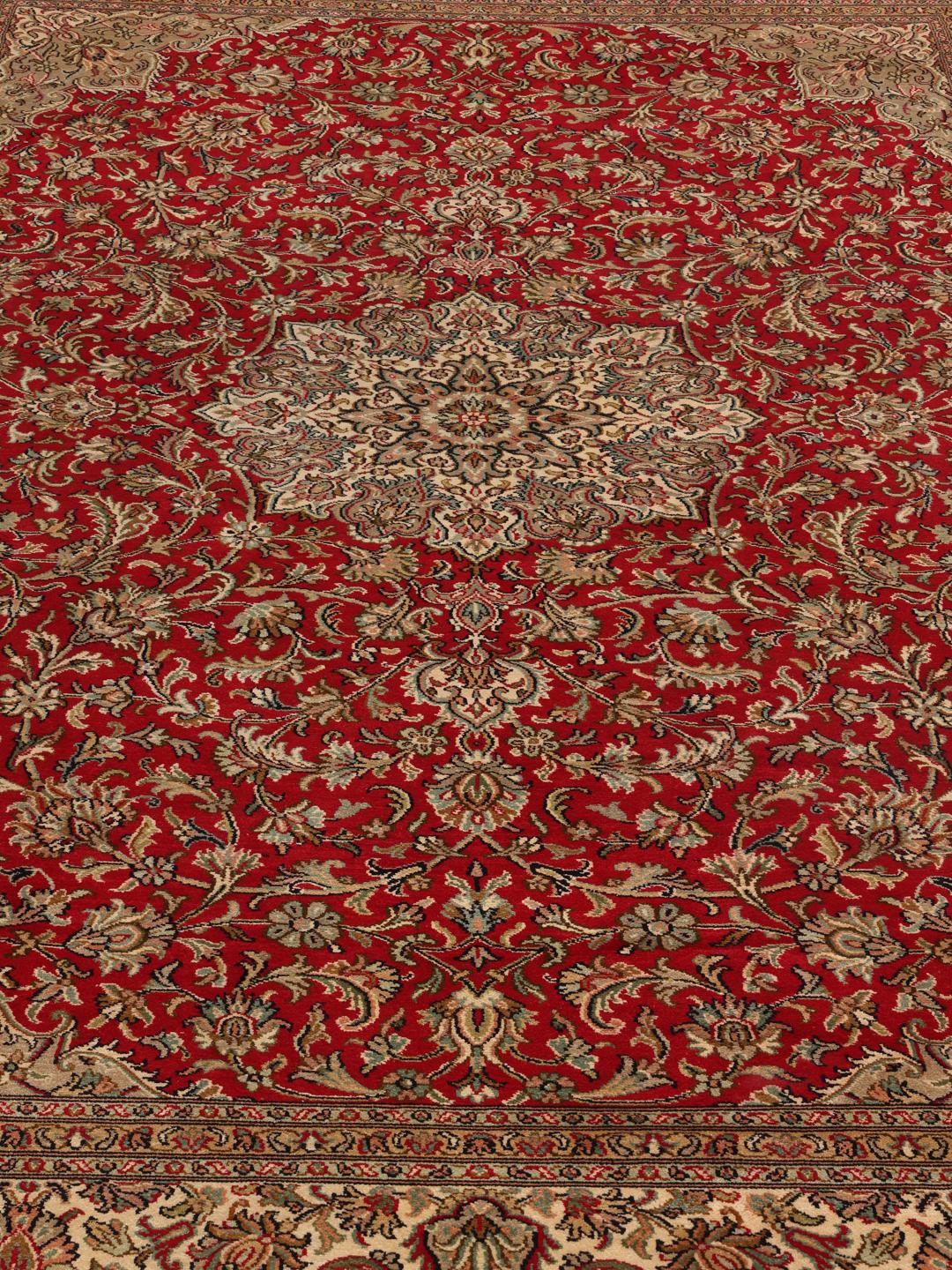
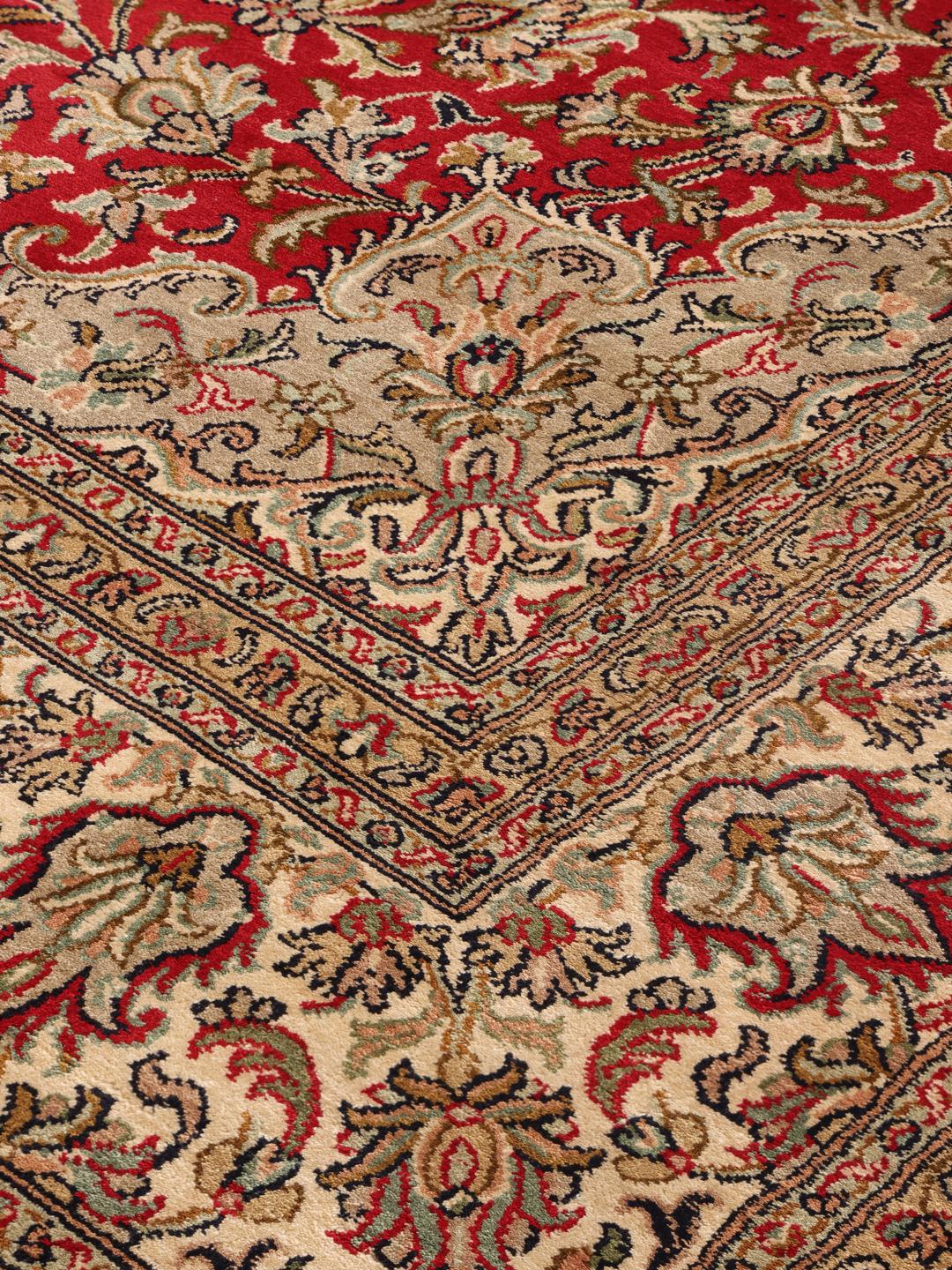
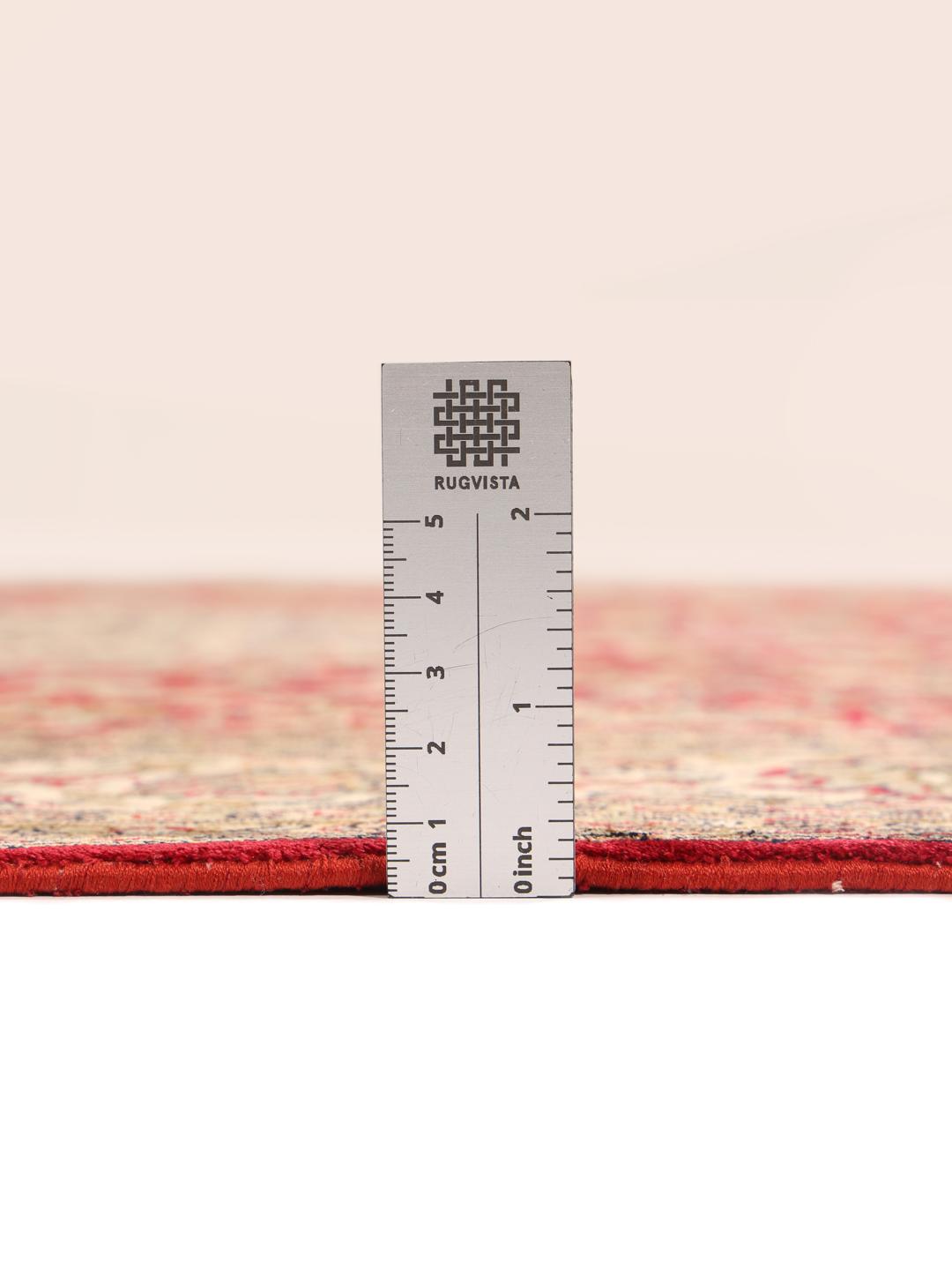
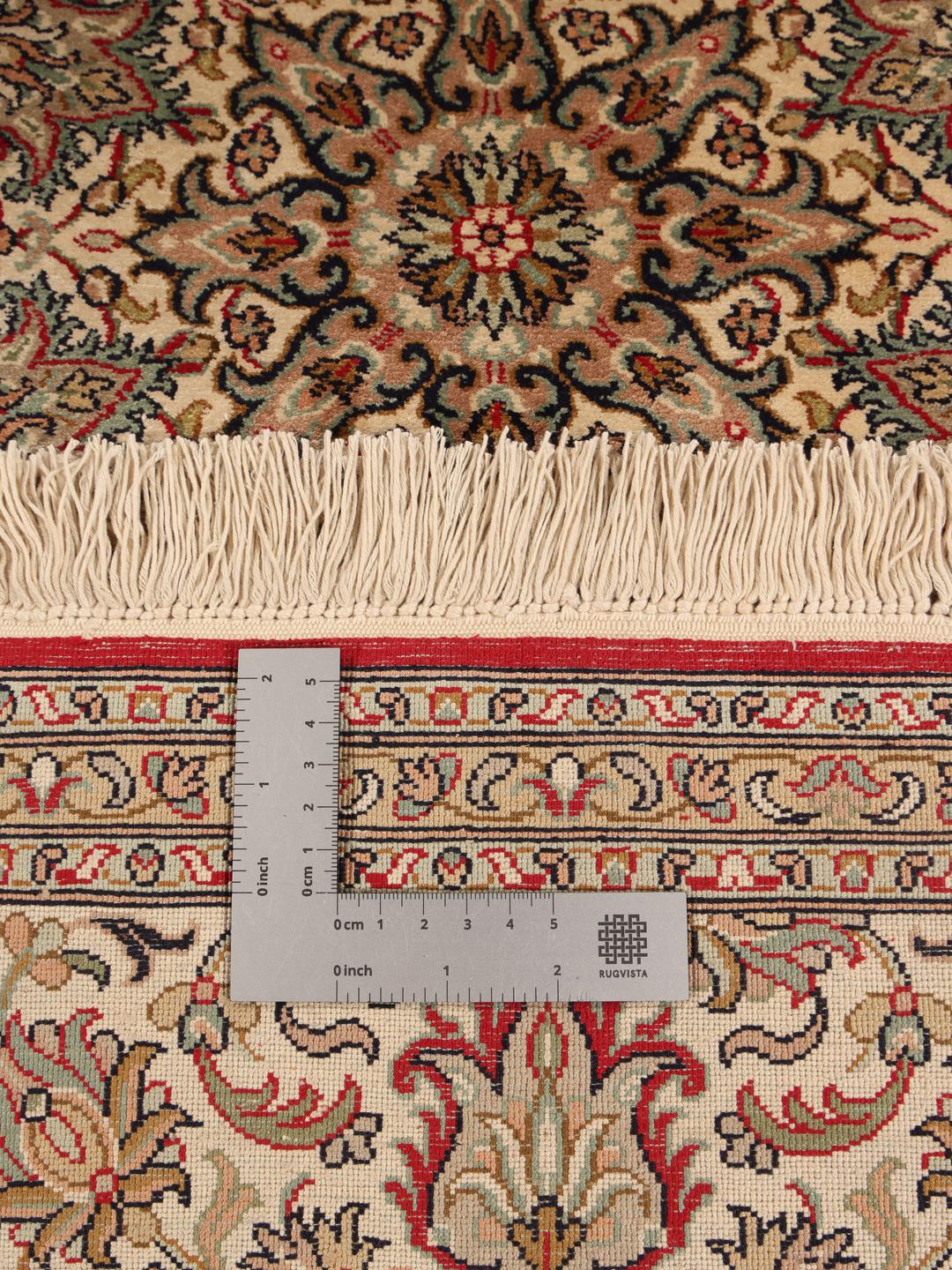
The term 24/24 quality refers to a specific technical standard of knotting, indicating a precise ratio of knots that determines the fineness of the weave. This high-density construction is vital for silk rugs, as it allows for the intricate, curvilinear patterns that define the style. A tighter weave ensures that the silk fibres remain upright and durable, preventing premature wear while enhancing the light-reflecting properties of the material.
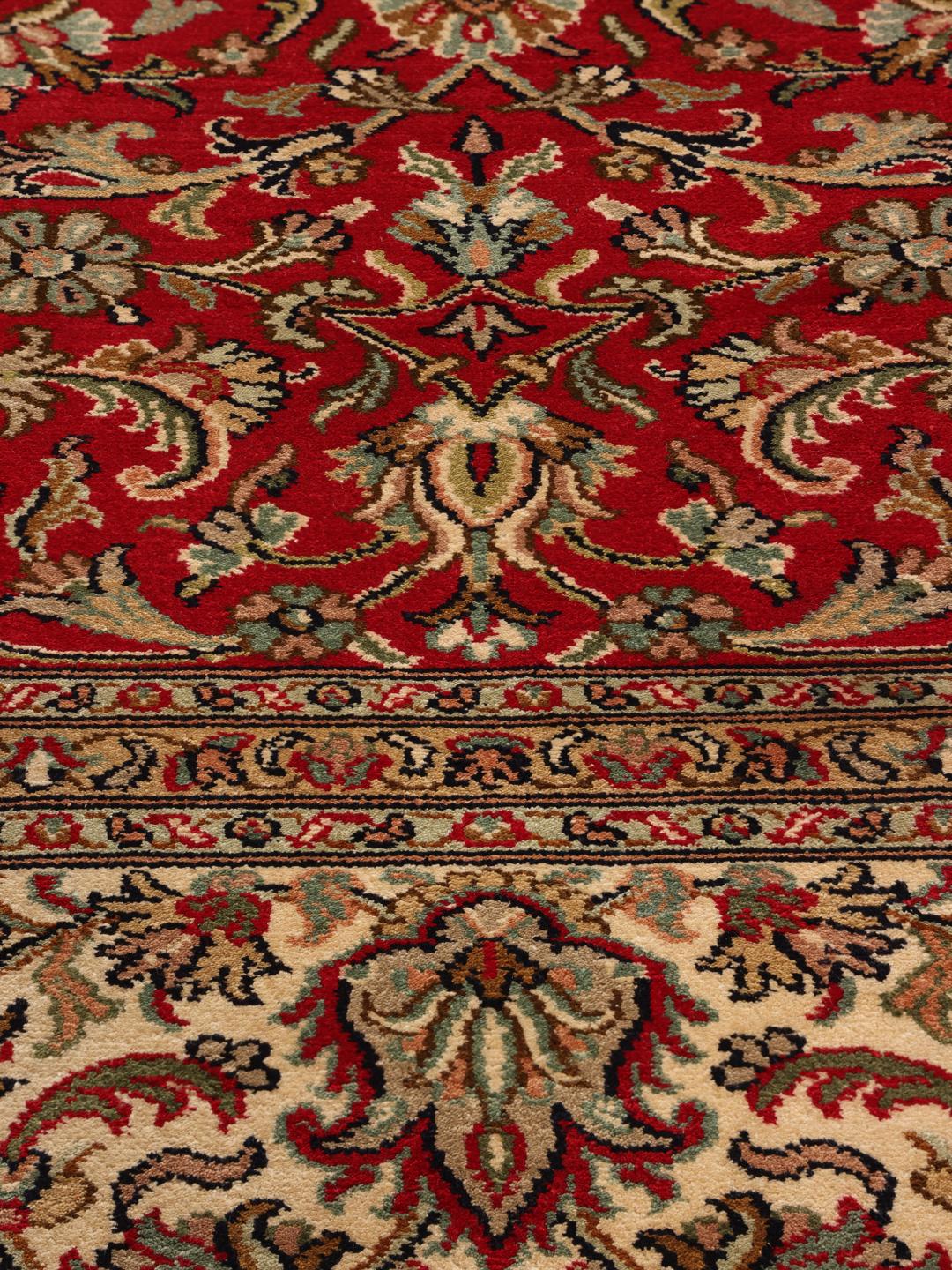
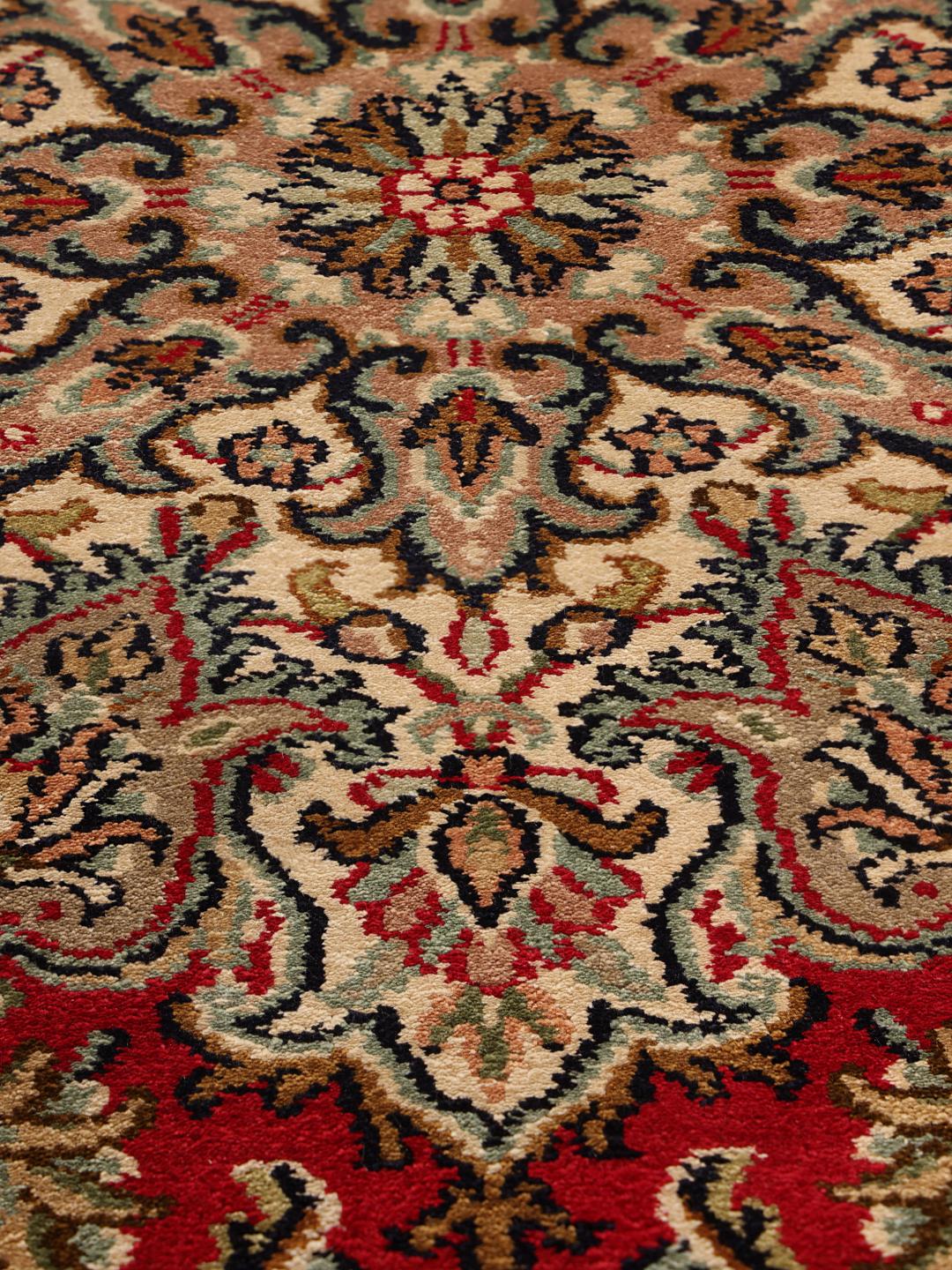
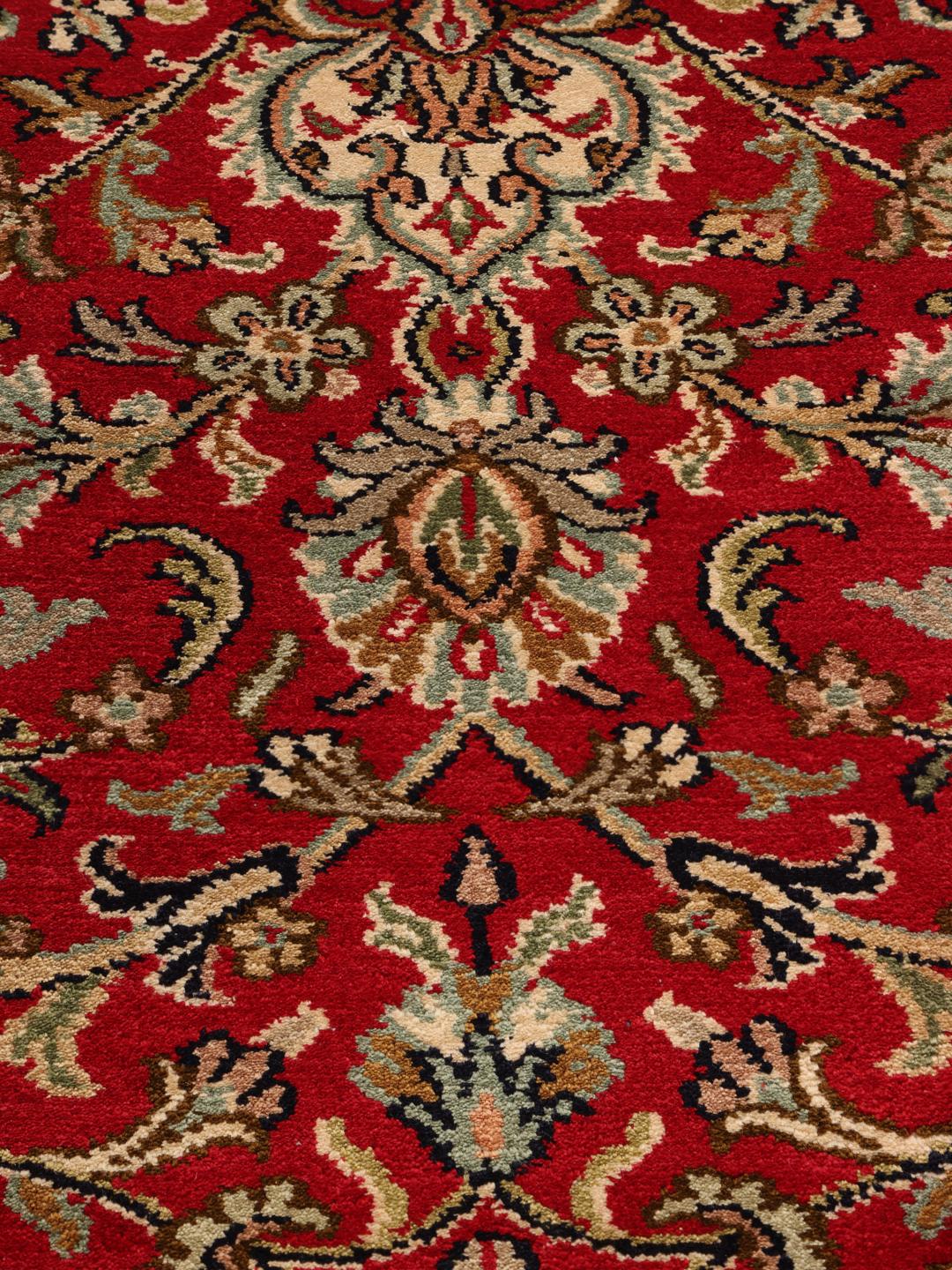
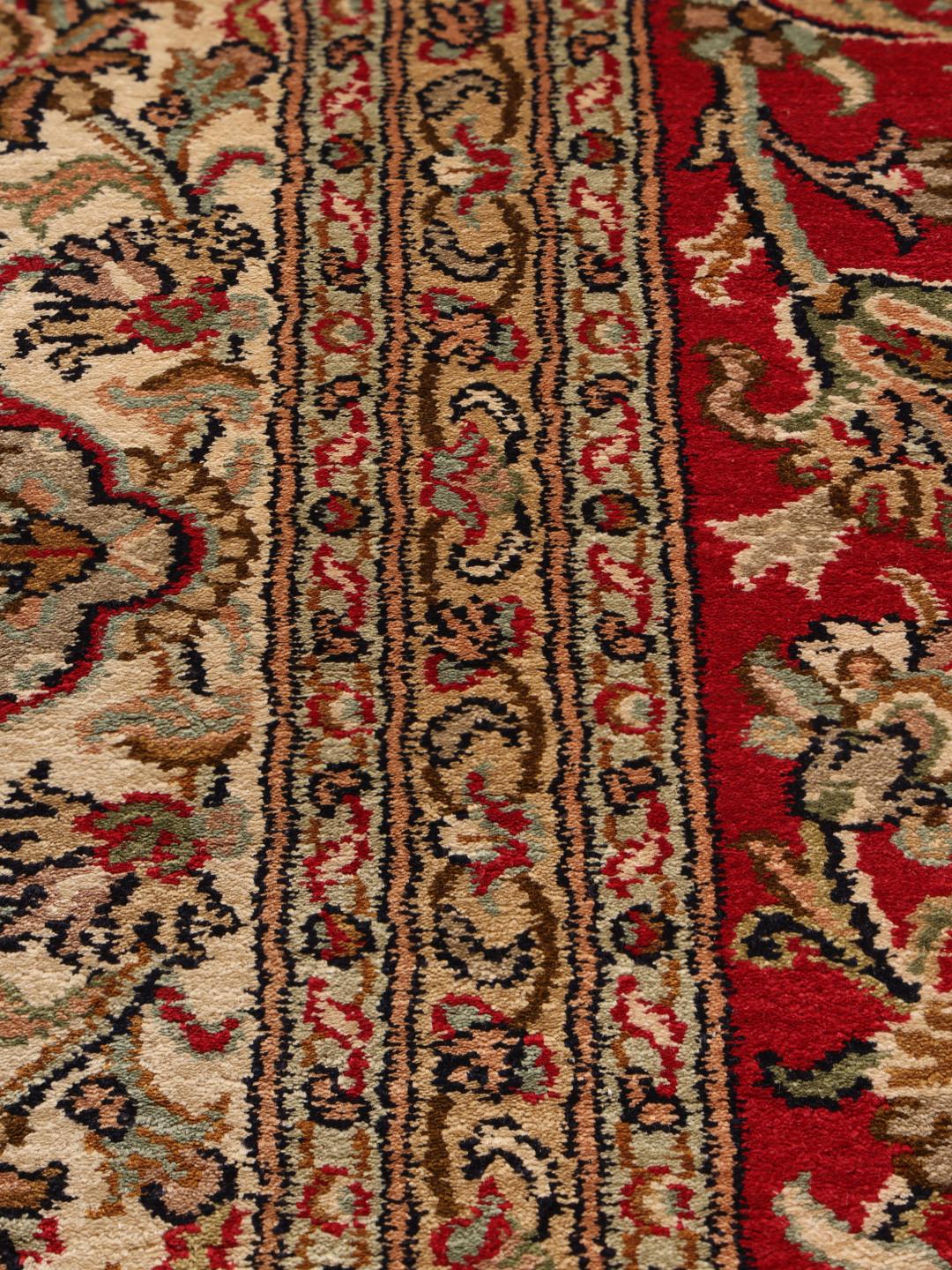
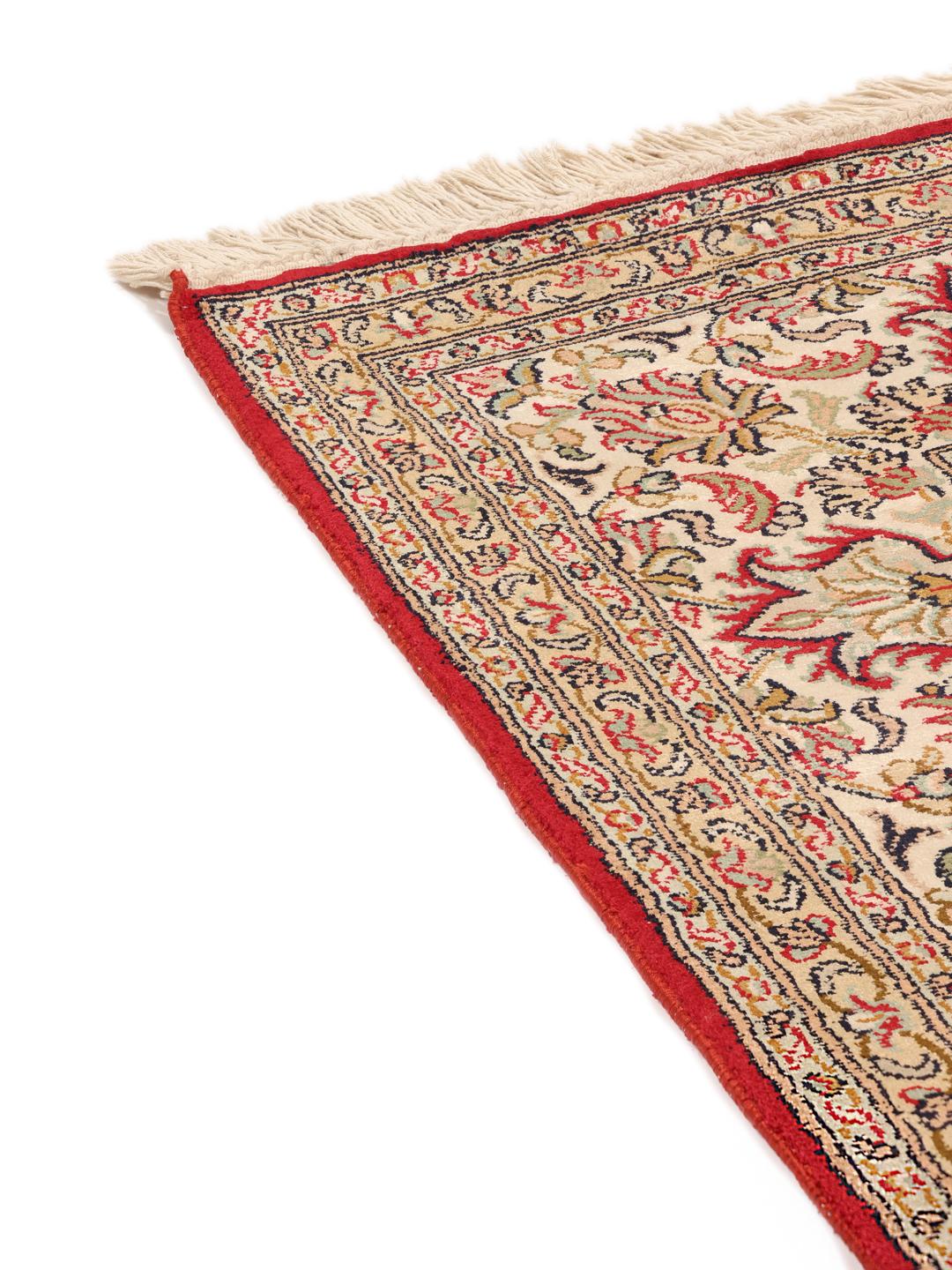
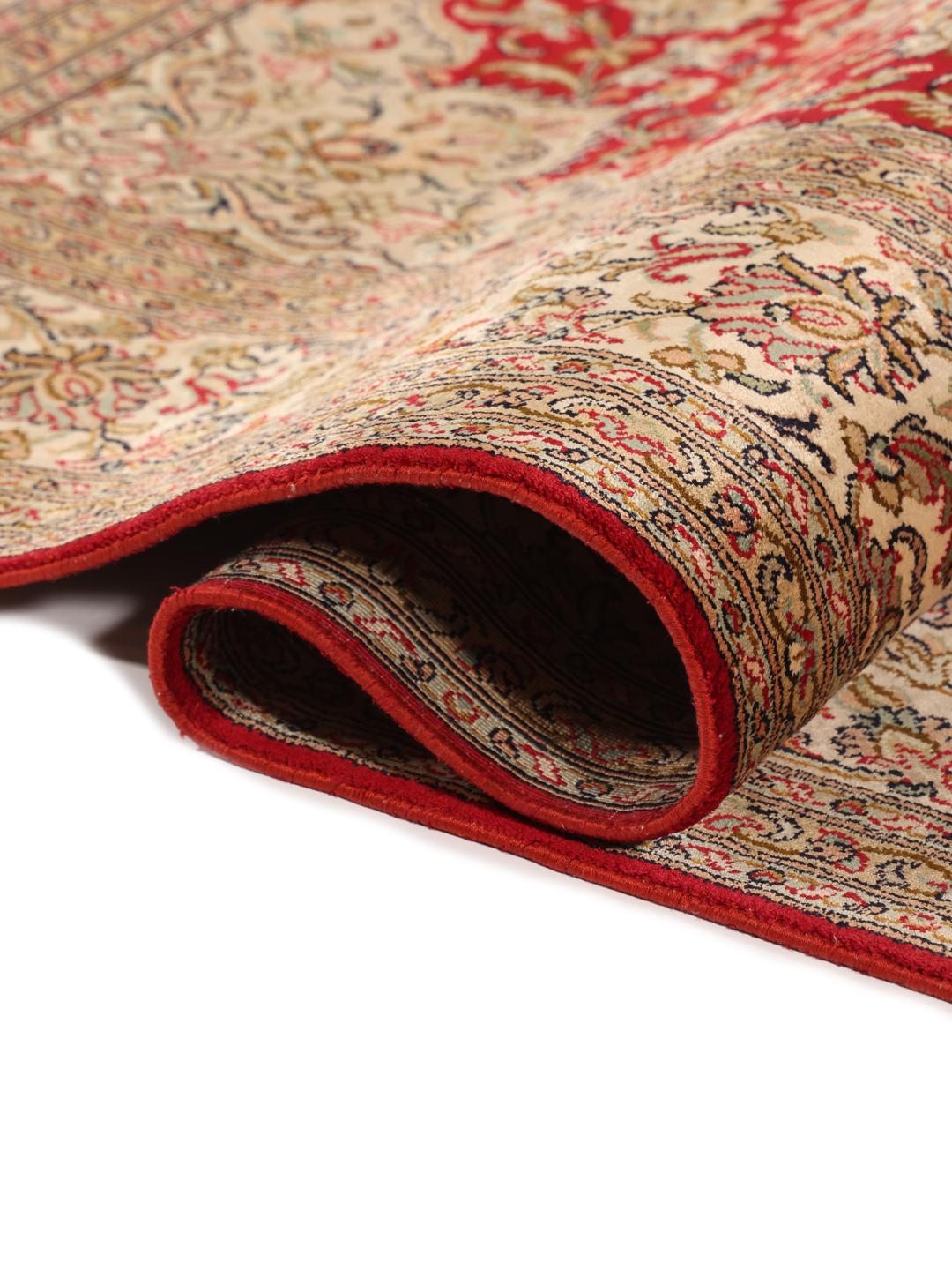
Visually, these rugs are defined by their sophisticated colour palettes and elaborate border systems, which often frame a grand central medallion. The floral patterns are rarely static; they are designed with a sense of movement, utilising flowing vines and rhythmic blossoms that create a sense of harmony. The use of vibrant red fields, as seen here, is a hallmark of the tradition, symbolising warmth and vitality.
Owning a Kashmir silk rug is widely considered an acquisition of cultural heritage. Because of the extreme skill required to work with silk, these pieces are highly prized by collectors for their lustre and longevity. By bringing one into your home, you are not just adding a decorative element but supporting a long-standing craft tradition that emphasises human precision and artistic narrative.