Isfahan rugs represent one of the most celebrated weaving traditions in the Middle East, tracing their roots back to the golden age of the Safavid dynasty. The city of Isfahan became a major hub of art and architecture, where court designers collaborated with weavers to create highly sophisticated patterns that mirrored the intricate tilework of local mosques.
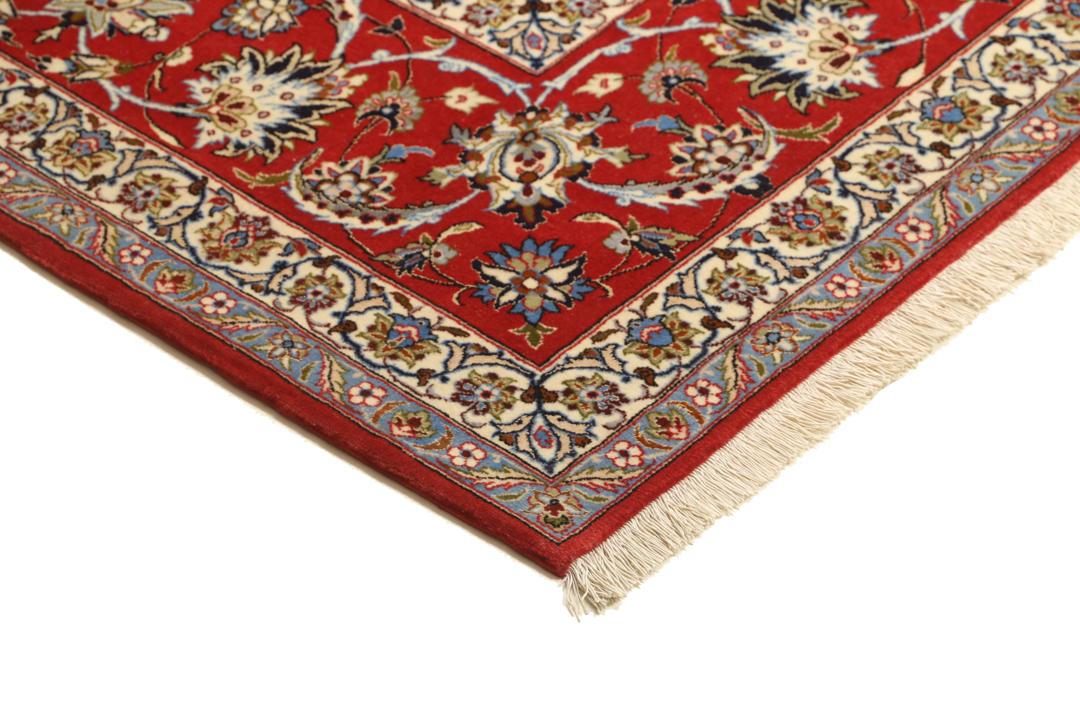
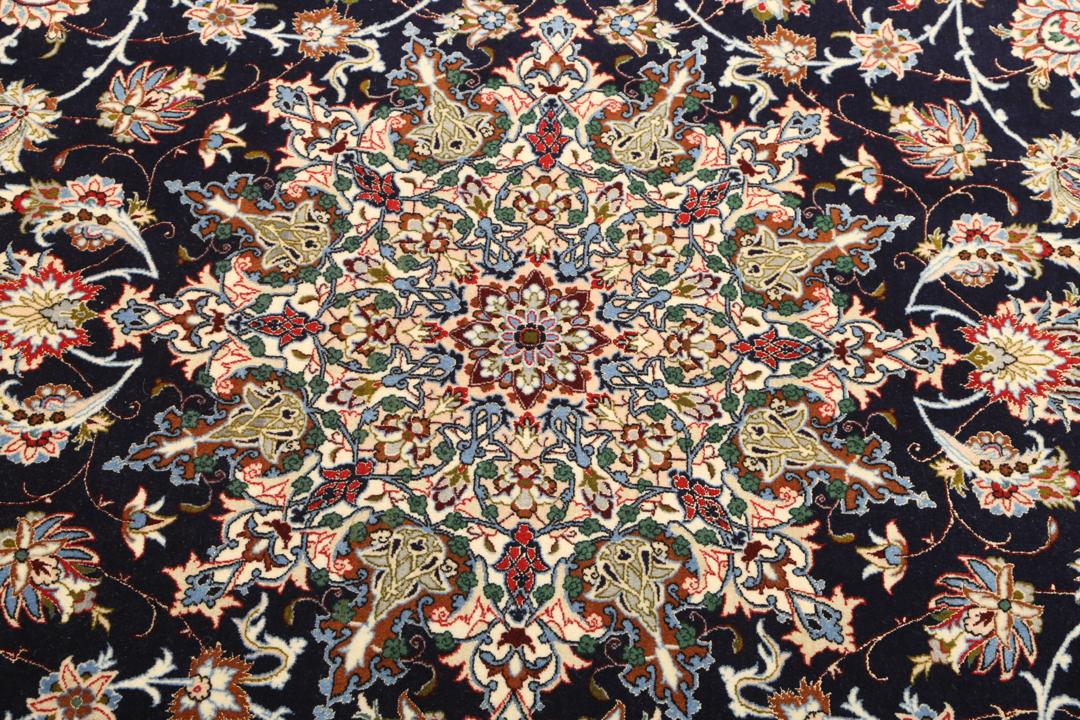
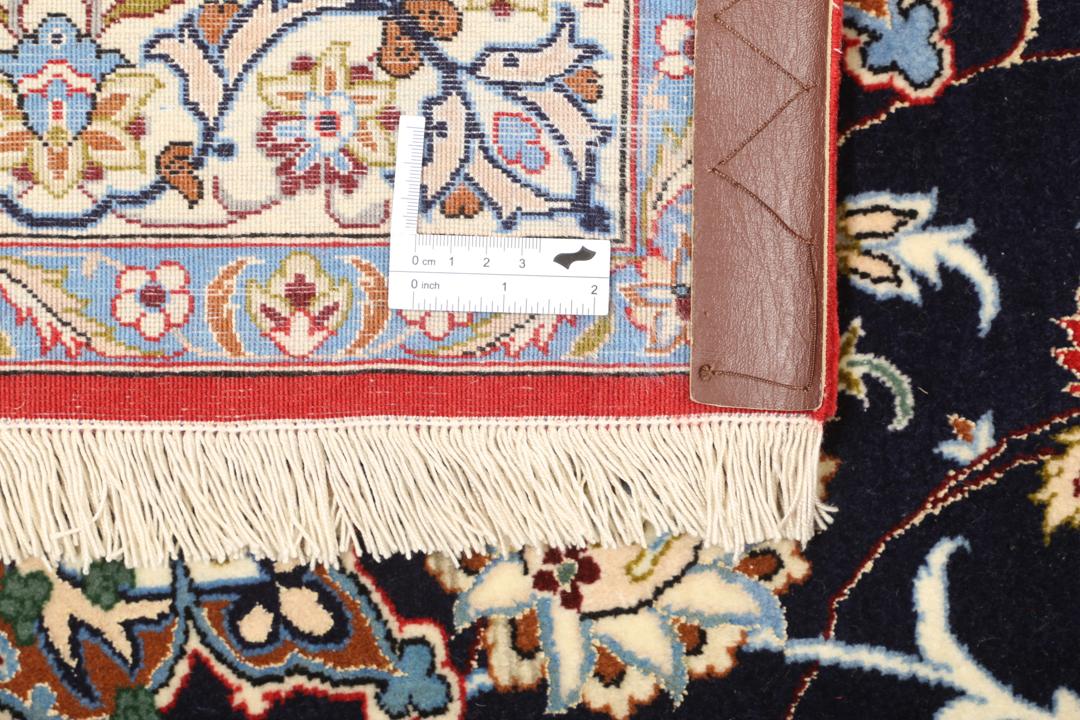
The craftsmanship of this region is defined by an extraordinary level of precision and detail. Weavers in Isfahan traditionally use fine materials to produce thin, highly detailed piles that allow for incredibly complex patterns, resulting in rugs that are both structurally durable and visually refined.
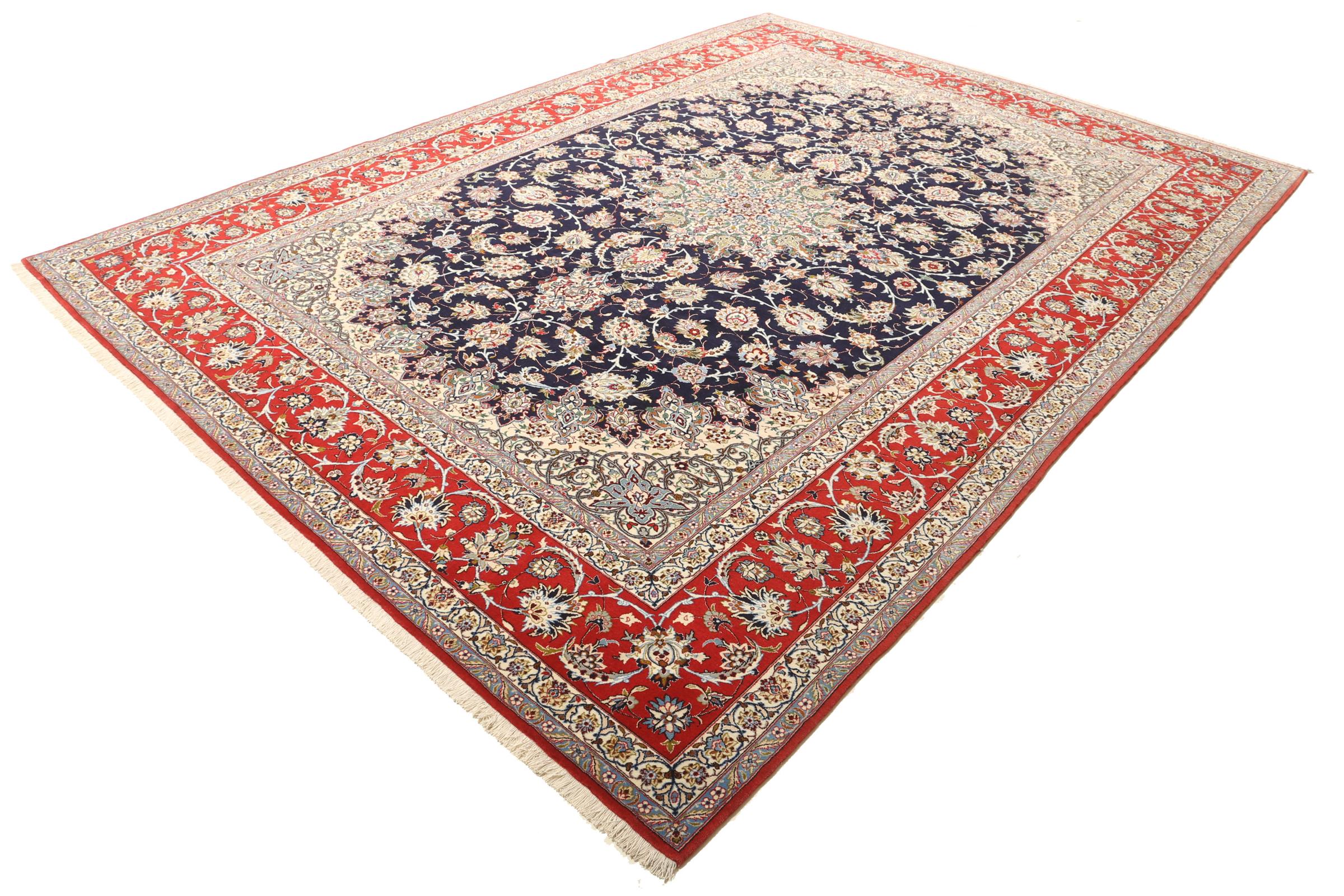
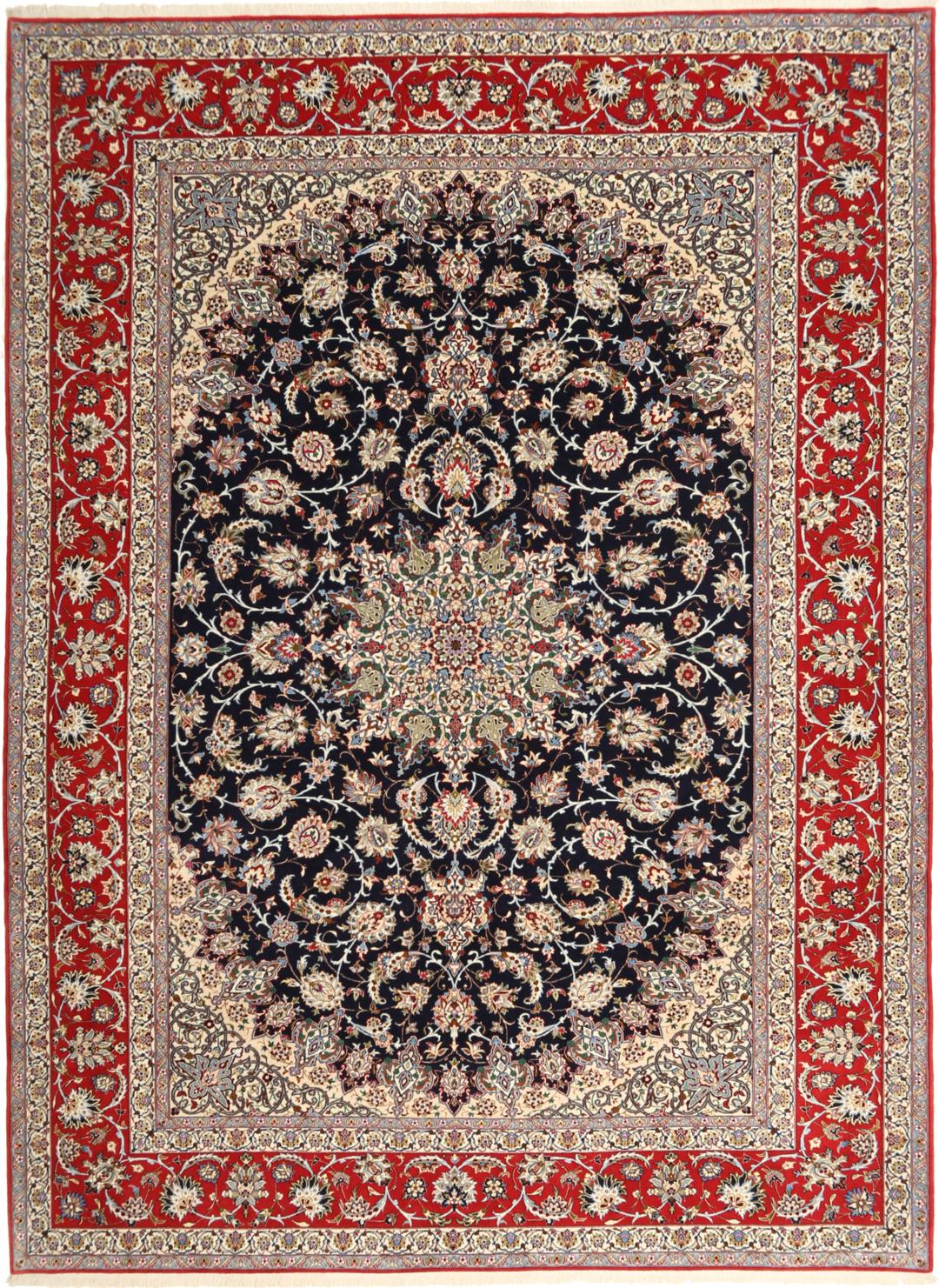
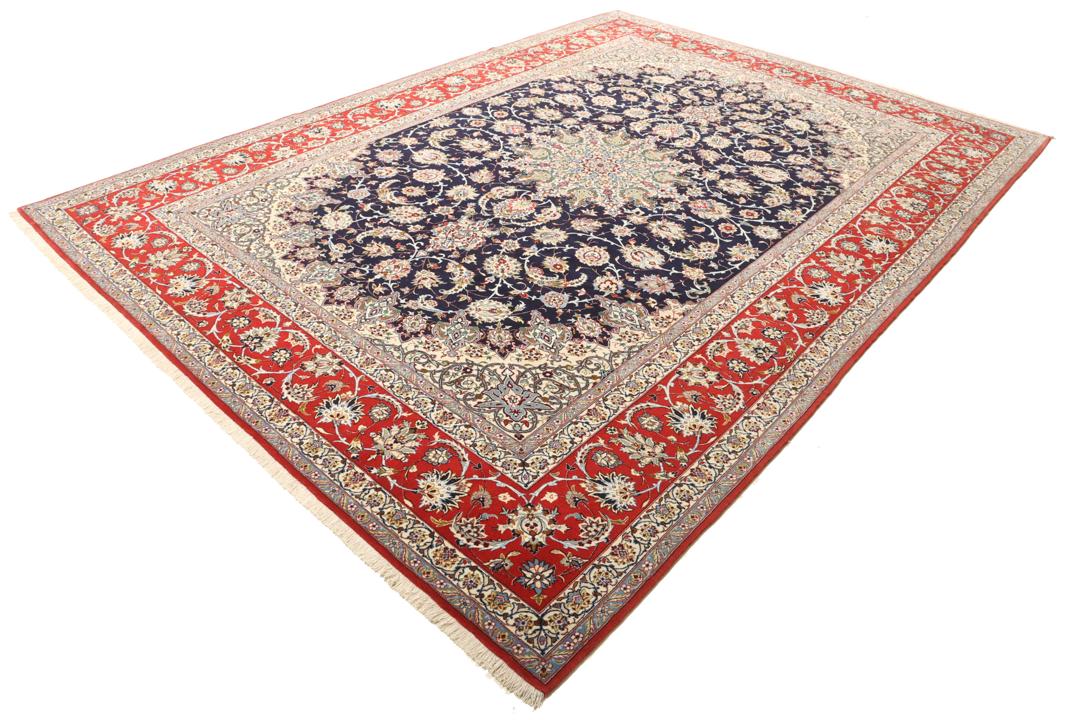
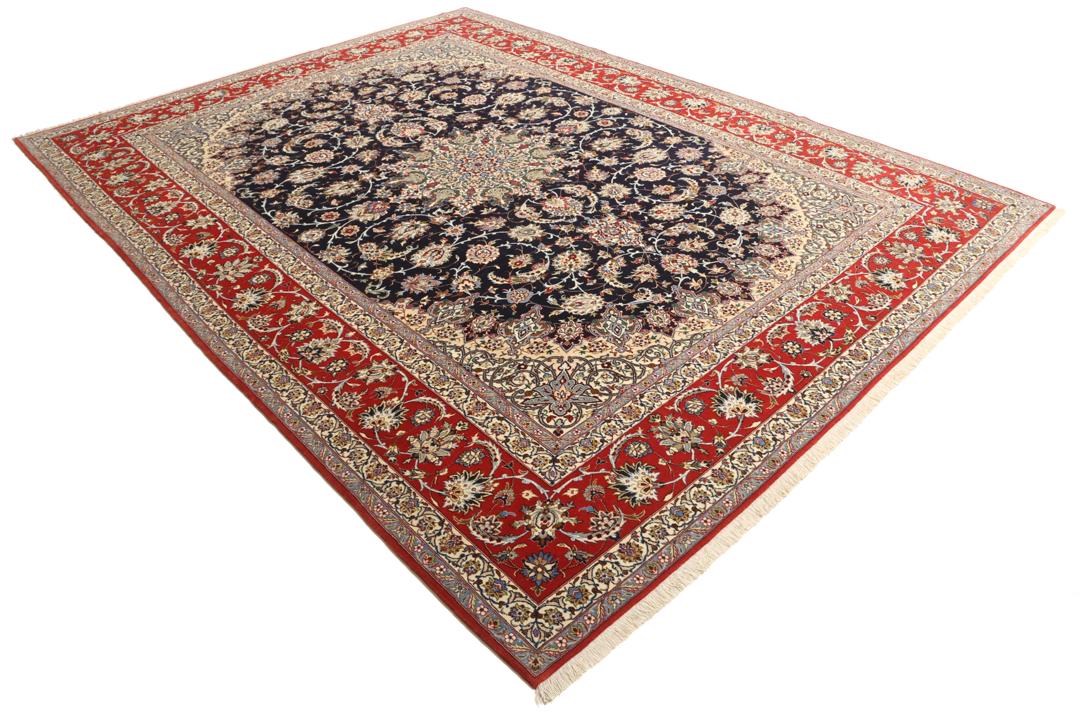
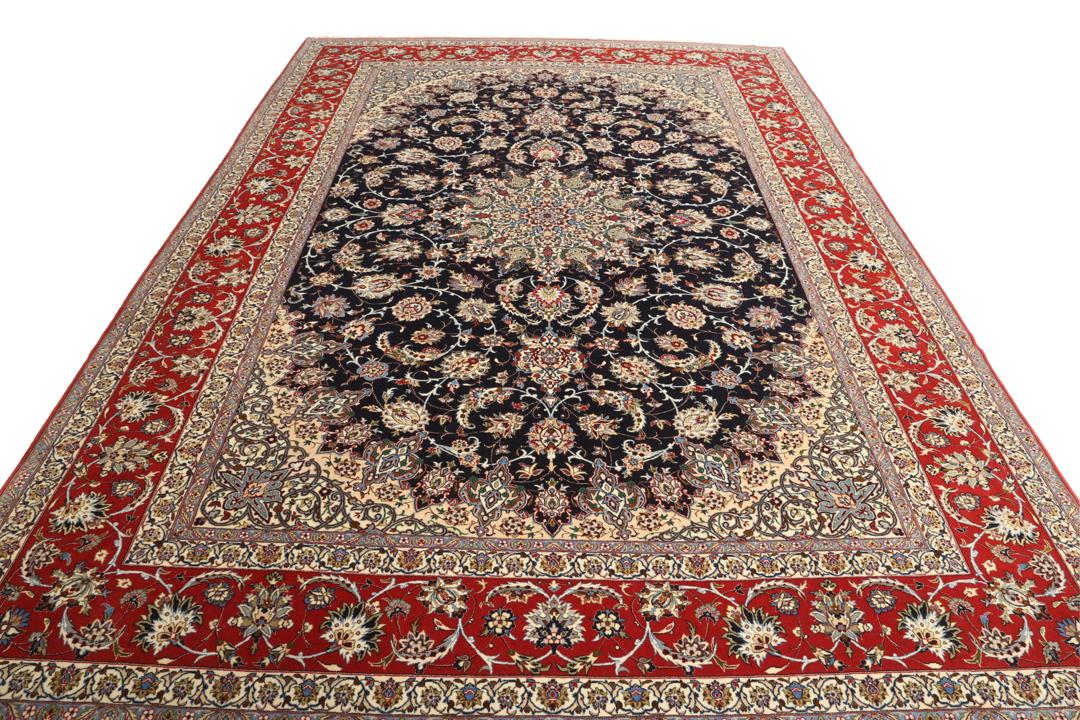
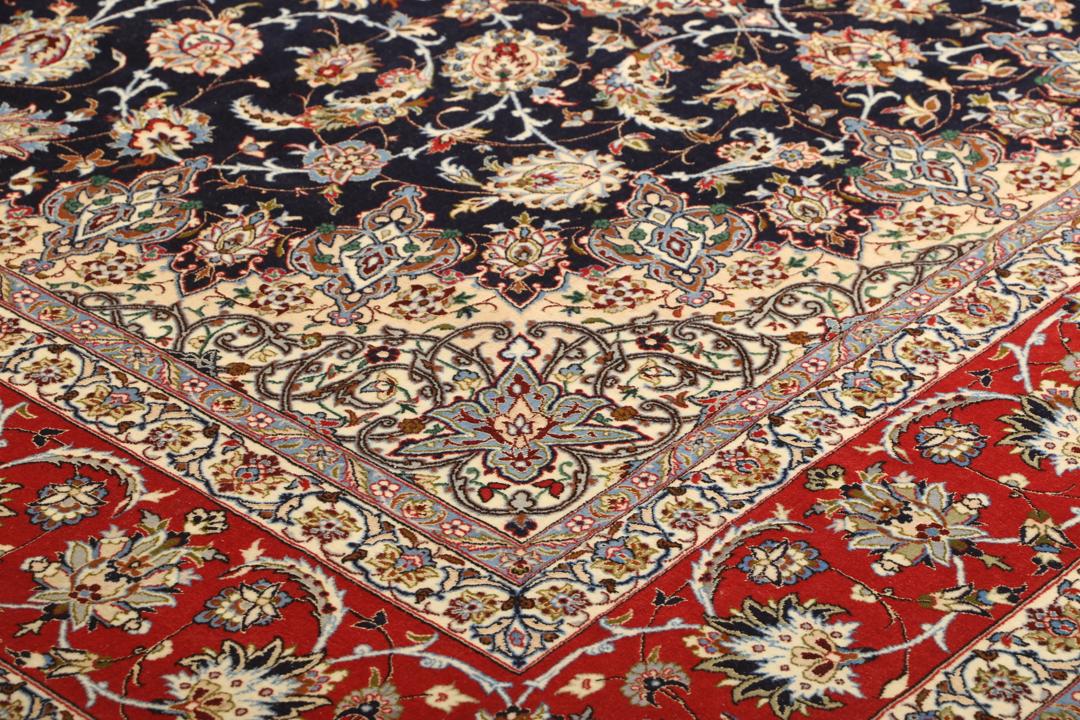
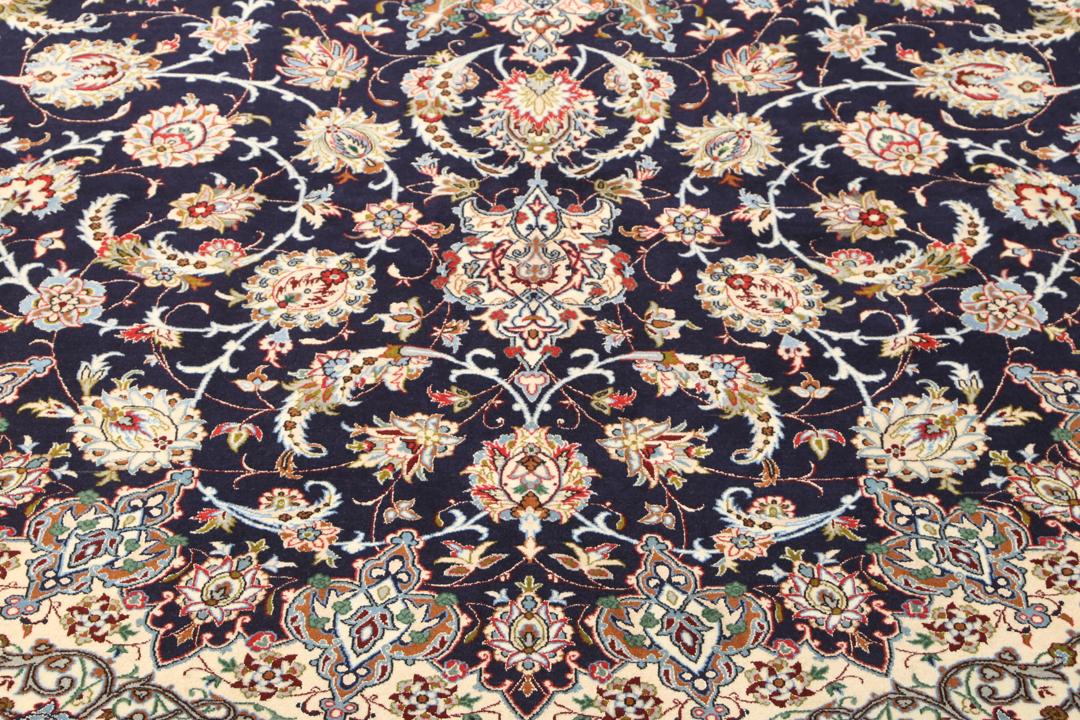
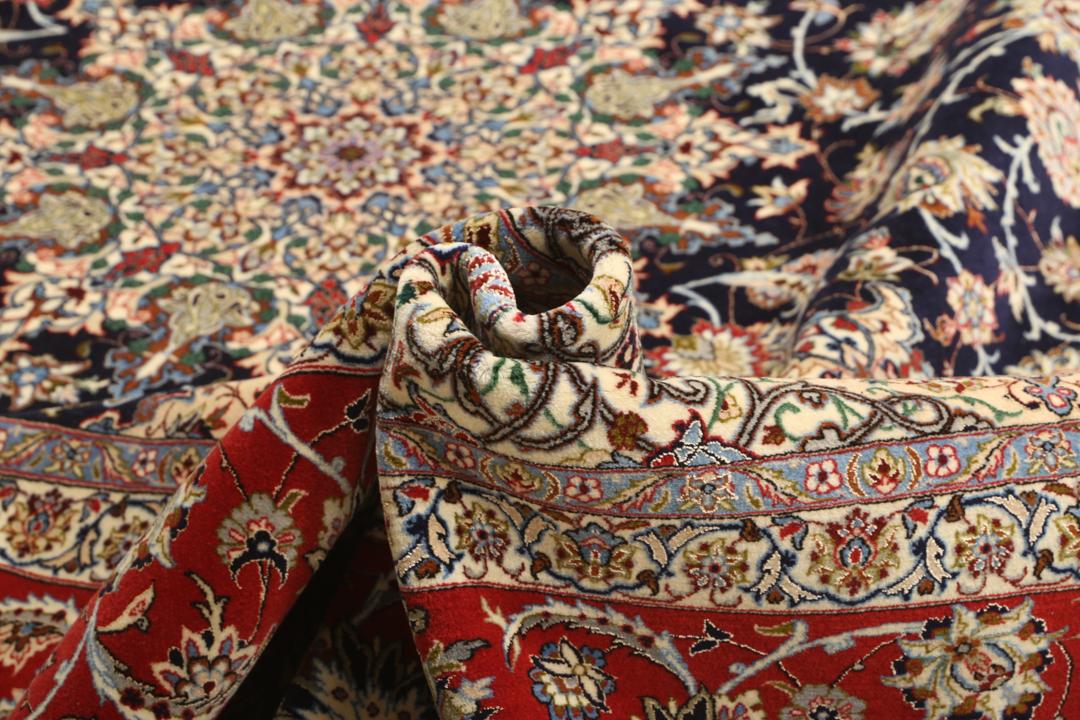
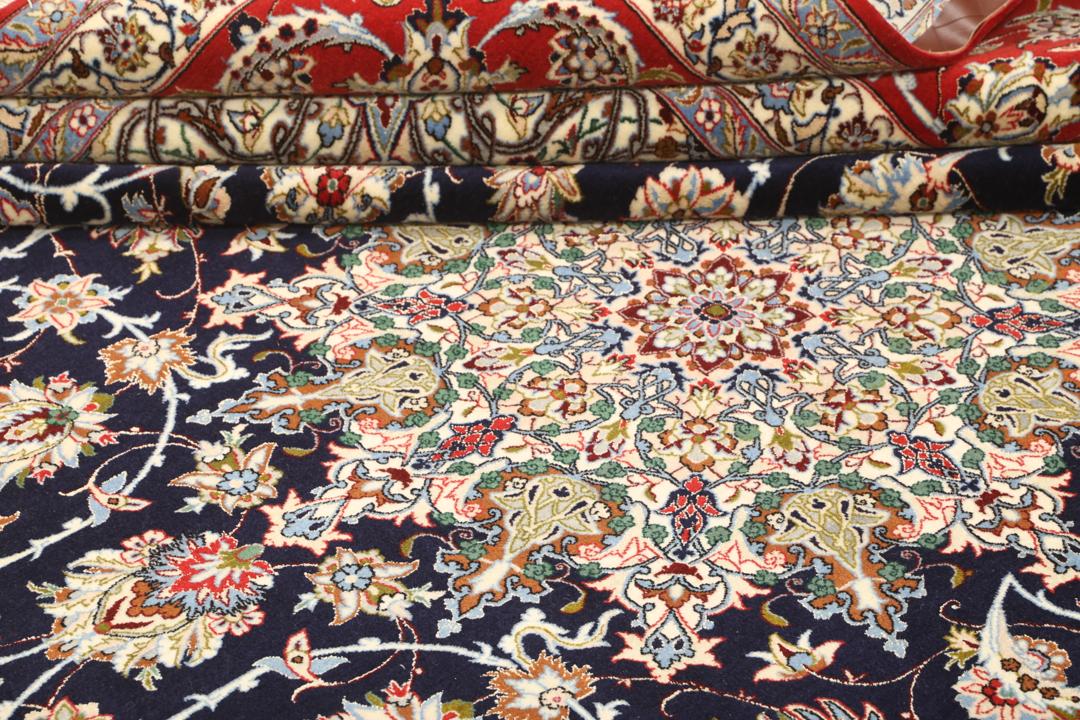
The visual language of an Isfahan rug is instantly recognisable, often featuring a central medallion surrounded by a dense field of scrolling vines, palmettes, and delicate floral motifs. This particular piece showcases a classic contrast of deep blue and rich red tones, framed by a highly detailed decorative border that balances the central composition.
For collectors and design enthusiasts, owning an Isfahan rug is akin to possessing a piece of living history. These rugs are highly valued for their balanced proportions, harmonious colour palettes, and the exceptional skill required to execute such demanding designs, making them treasured heirlooms.