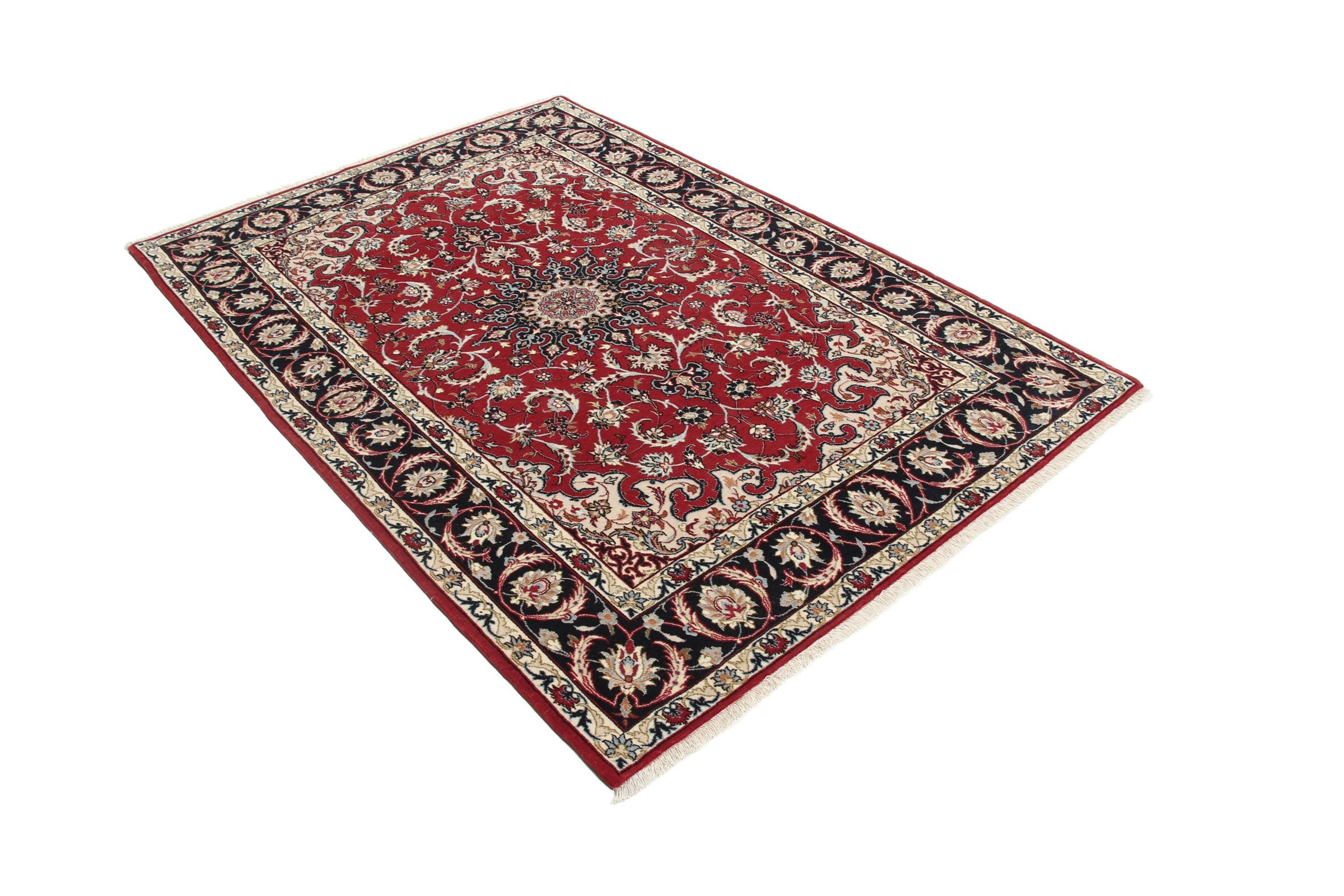
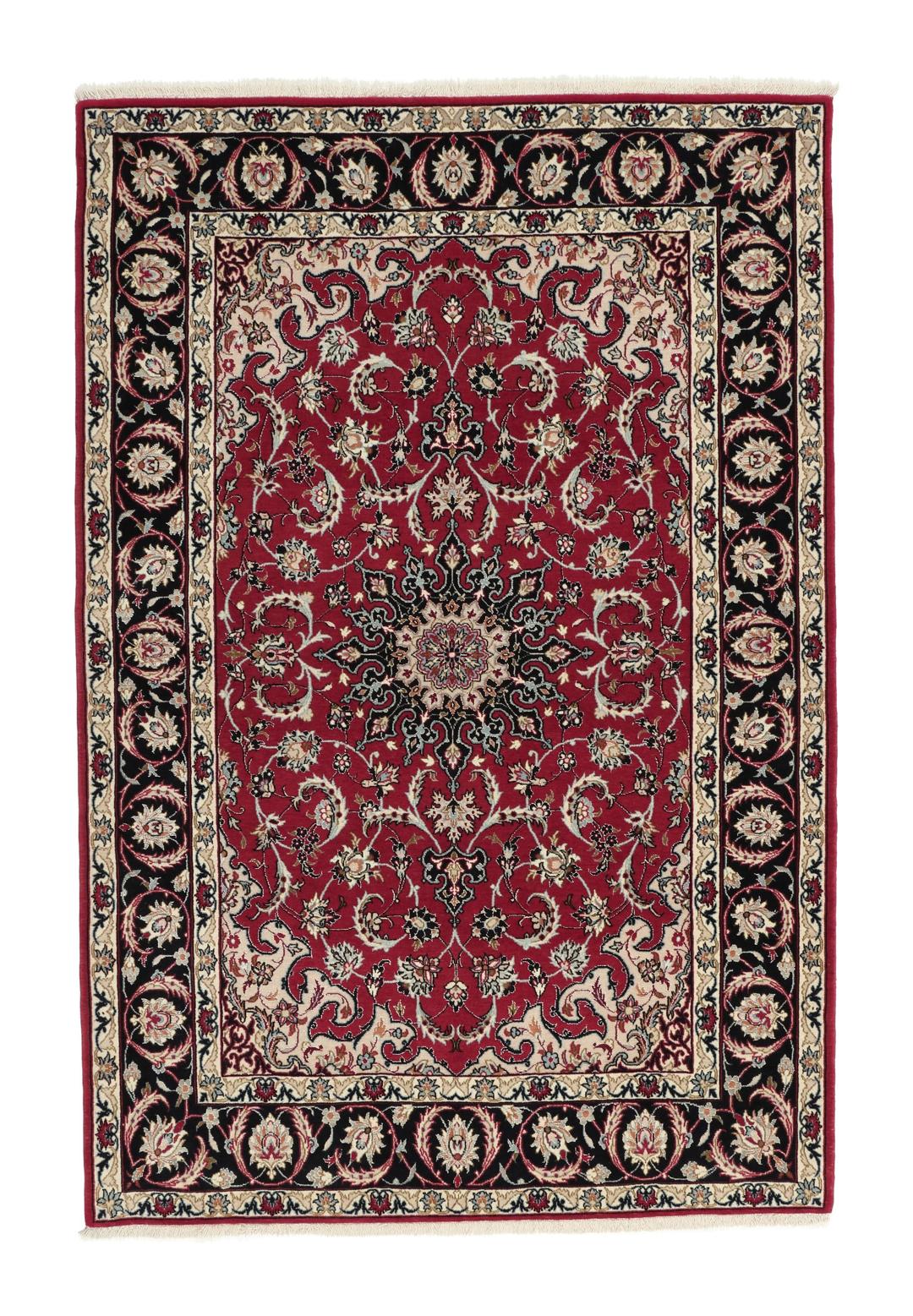
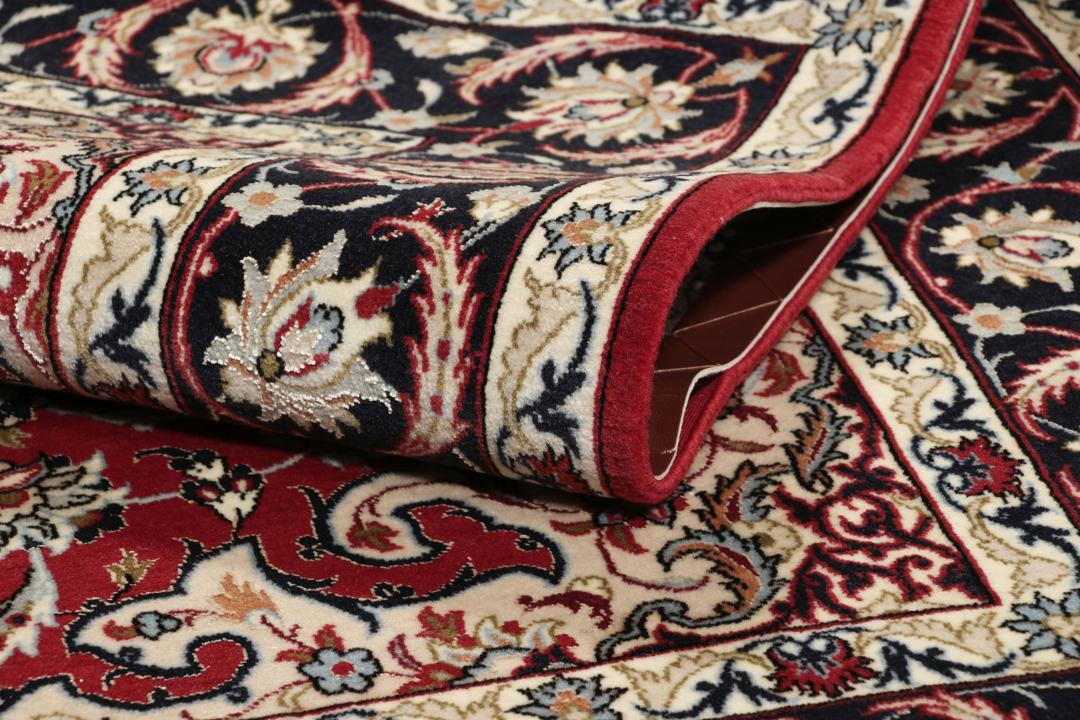
Isfahan rugs are celebrated globally as some of the most sophisticated examples of Middle Eastern weaving. The city of Isfahan has historically served as a centre for the arts, with its rug-making tradition reaching a peak of refinement that mirrors the intricate tile work and architecture found in its famous mosques and palaces.
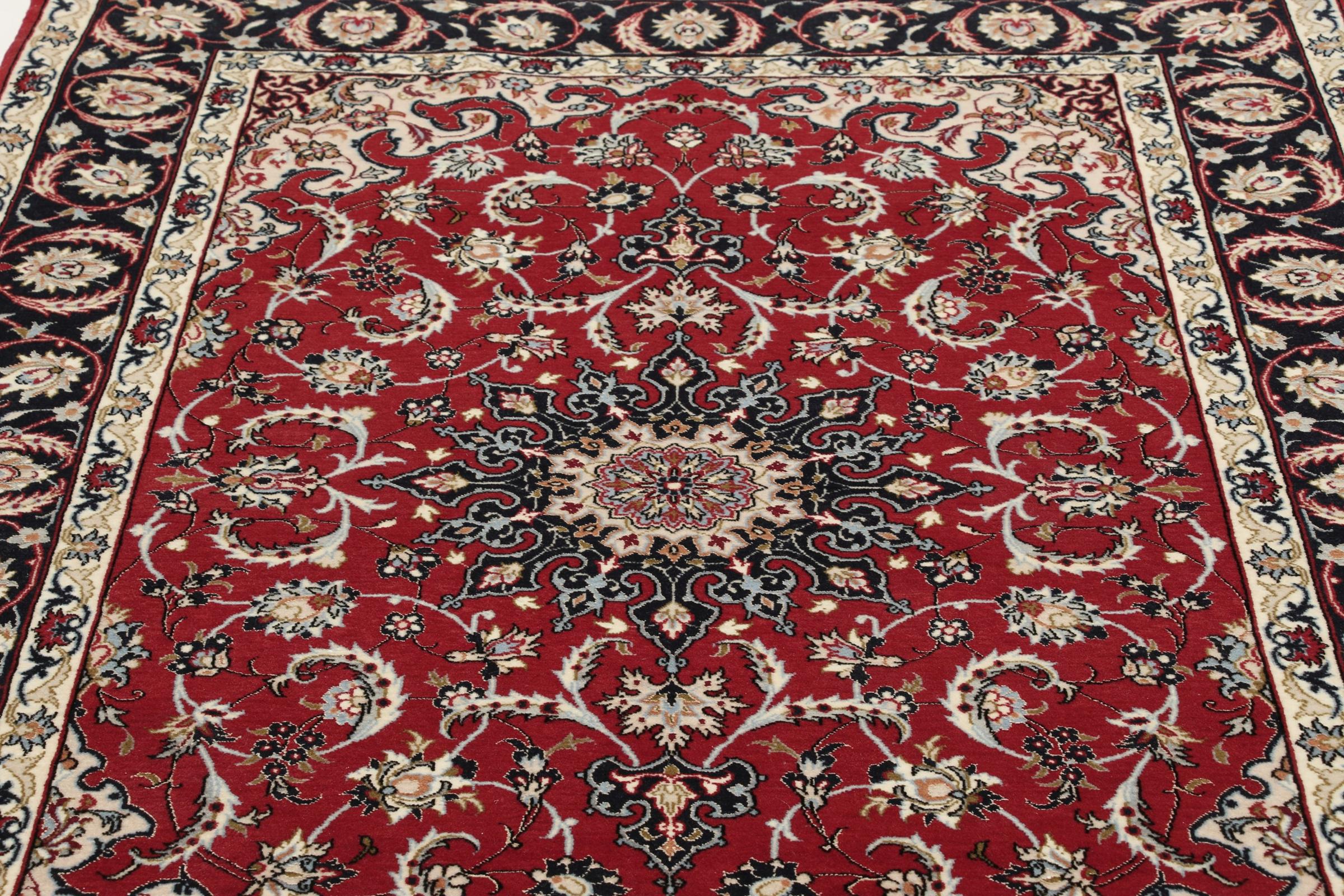
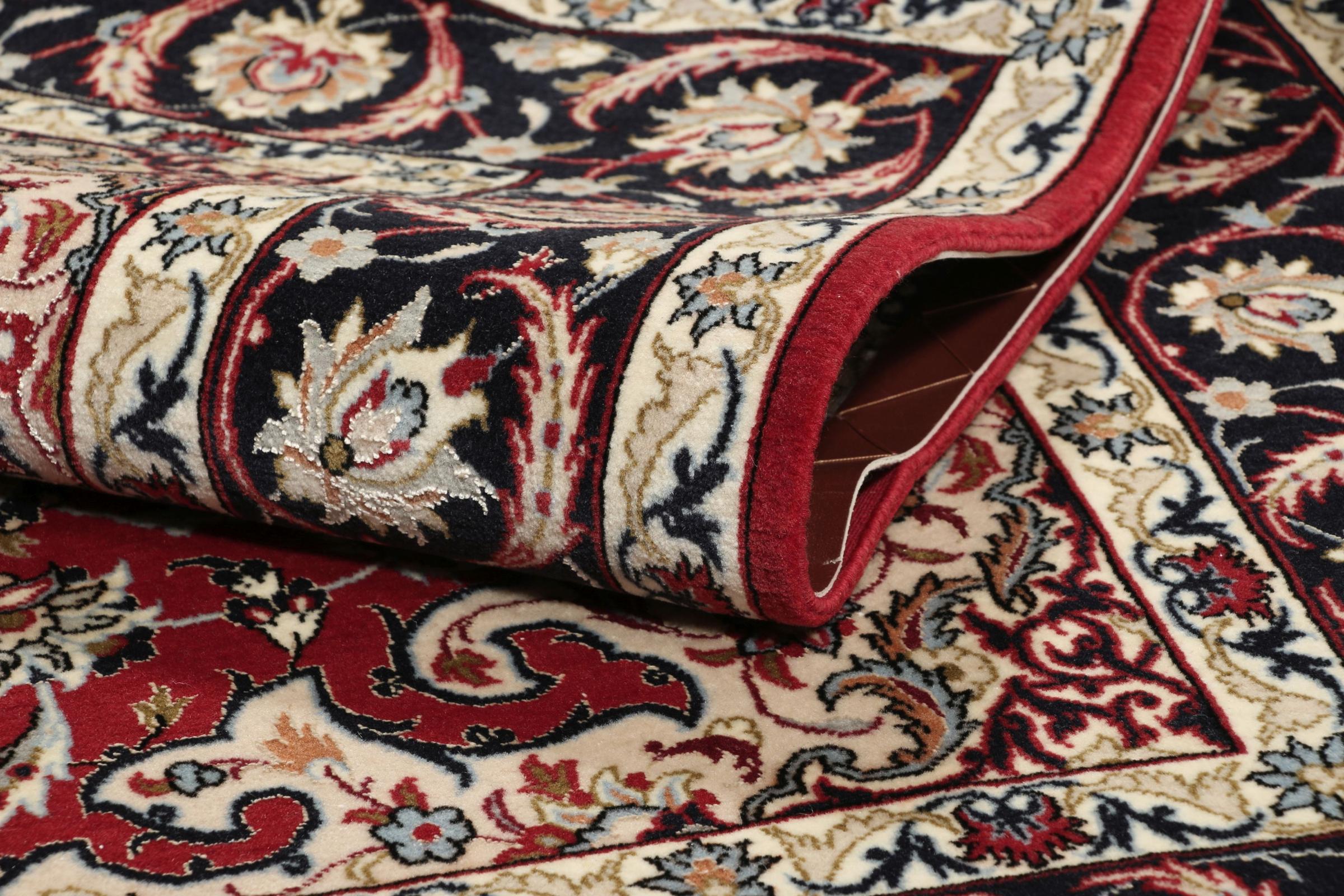
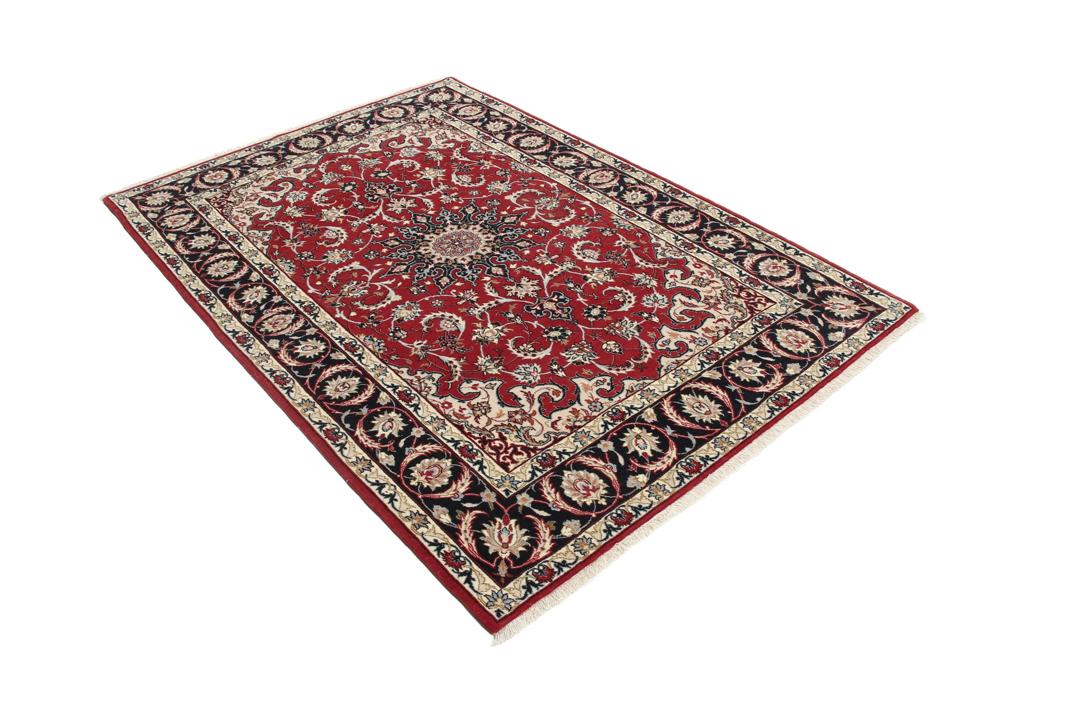
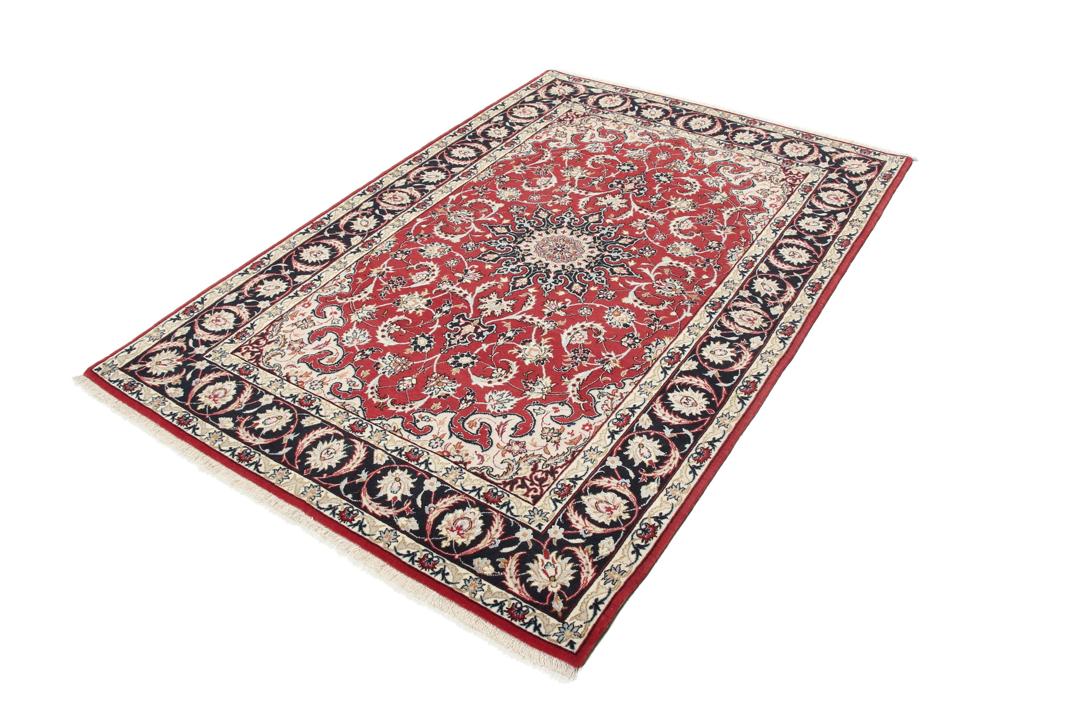
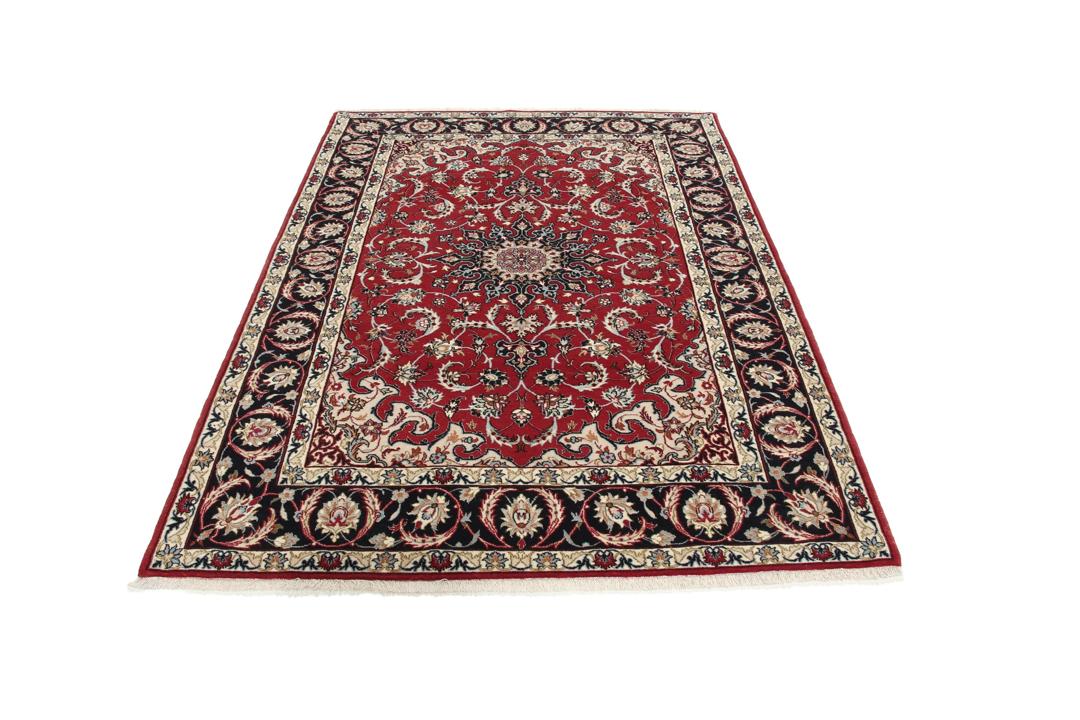
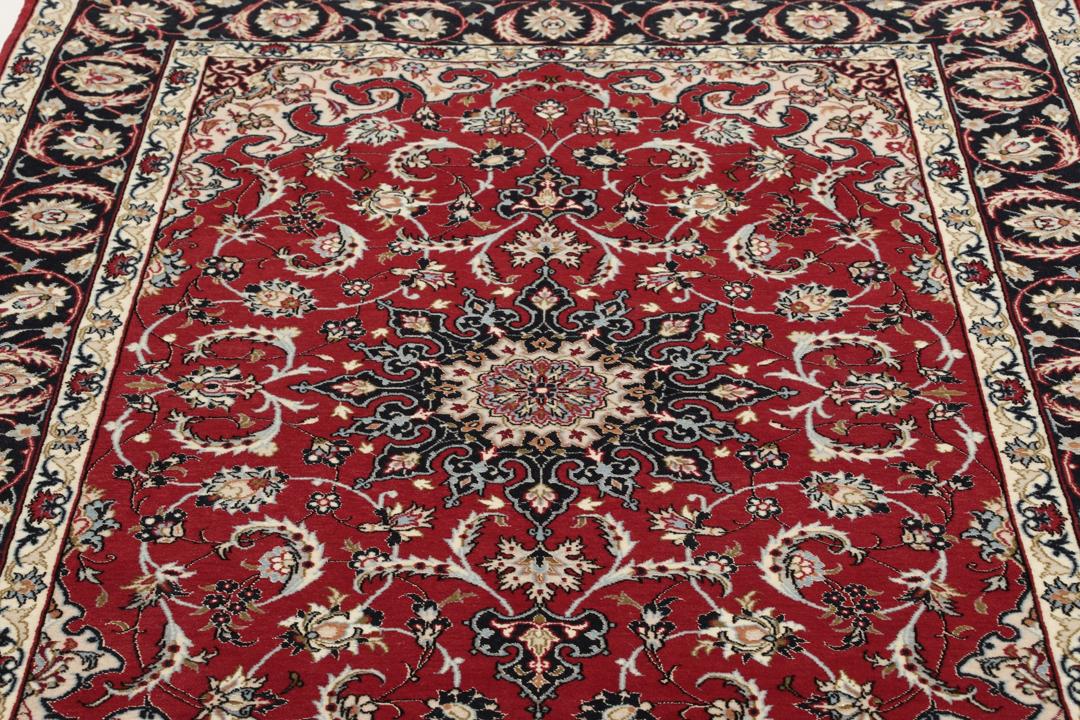
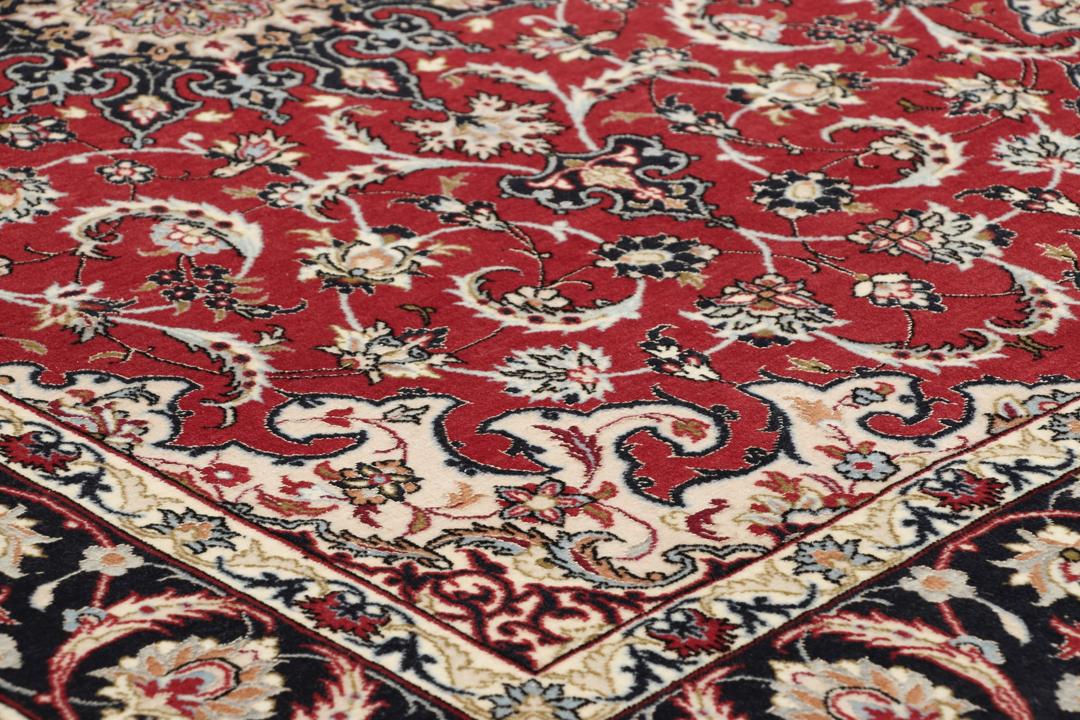
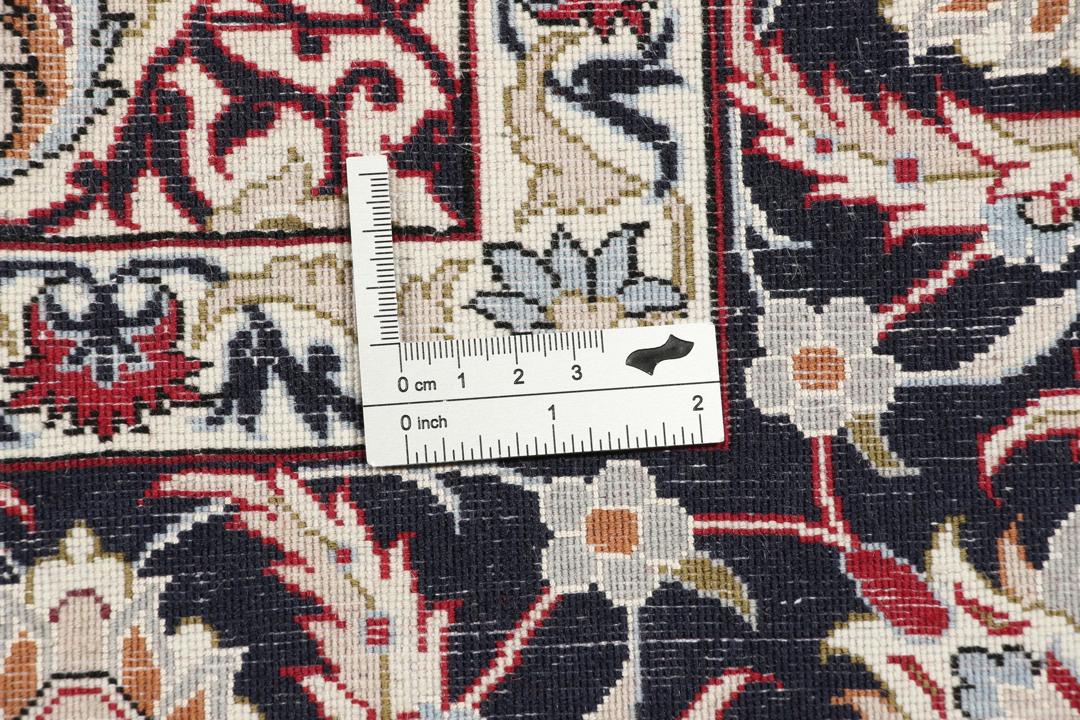
The technical mastery required to produce an Isfahan rug is immense. These pieces are known for their high knot density, which allows weavers to execute incredibly complex, curvilinear patterns that appear almost like paintings. The use of a silk foundation, as seen in this piece, is a hallmark of the finest workshops, providing a sturdy yet elegant structure that supports the delicate work of the wool pile.
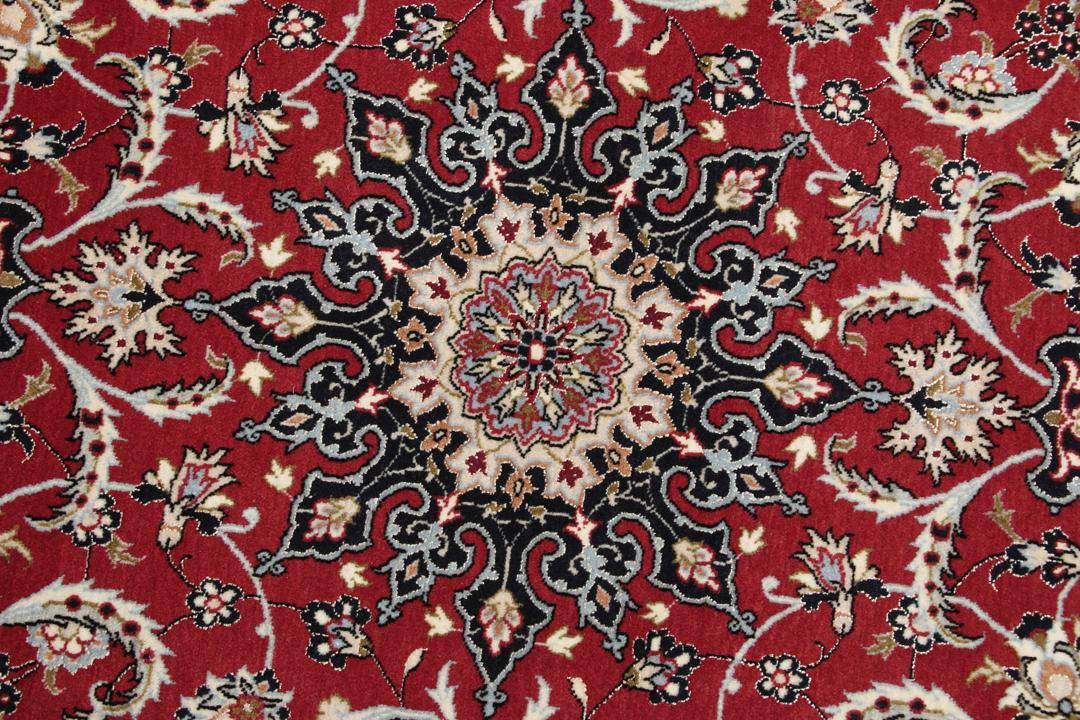
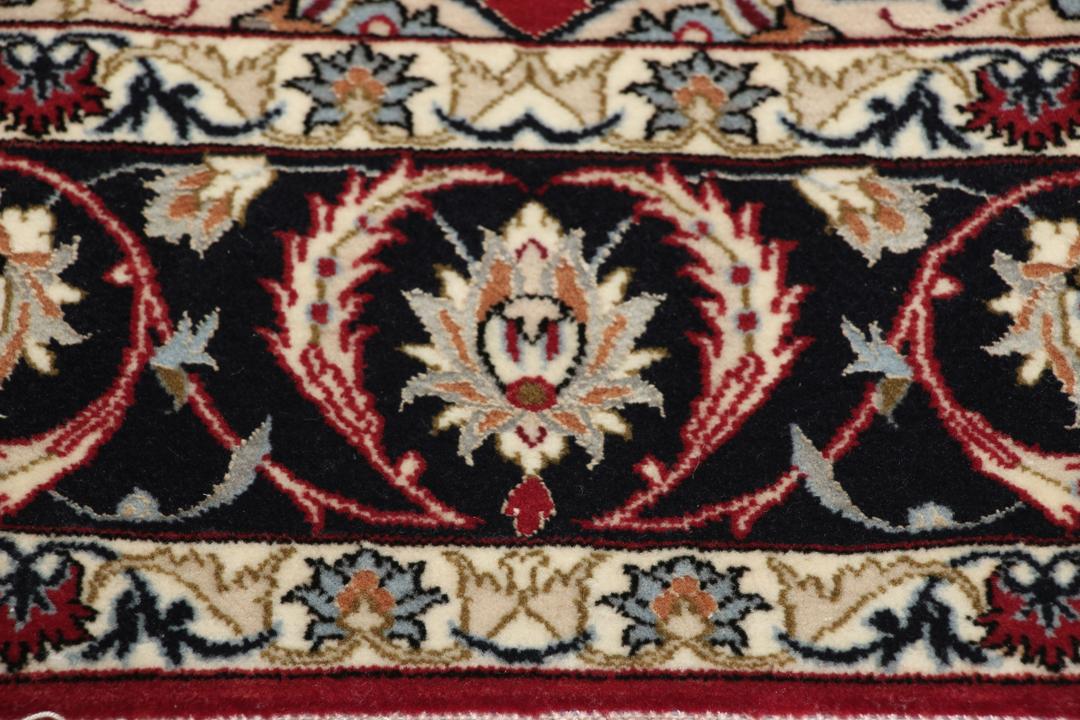
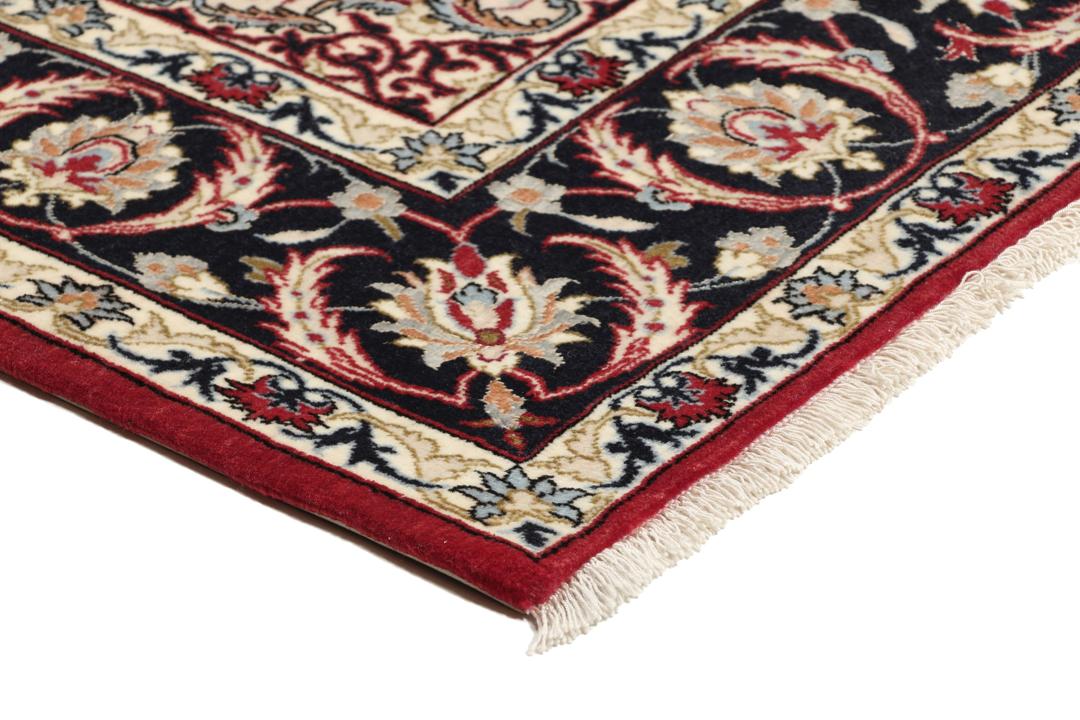
The signature design language of Isfahan often centres on a prominent medallion, surrounded by a complex 'Shah Abbasi' floral pattern, which includes palmettes, vines, and leaves. These motifs are deeply rooted in the region's artistic history, reflecting a style that is formal, balanced, and highly symmetrical. The inclusion of a dark, contrasting border further emphasises the central field, a classic layout that has been perfected over centuries.
Owning an Isfahan rug is a connection to a long-standing tradition of luxury and artistic expression. These rugs are highly sought after by collectors who value the intersection of historical design and technical precision. By welcoming such a piece into your home, you are preserving a legacy of skill and cultural heritage that remains as relevant today as it was in the royal workshops of the past.