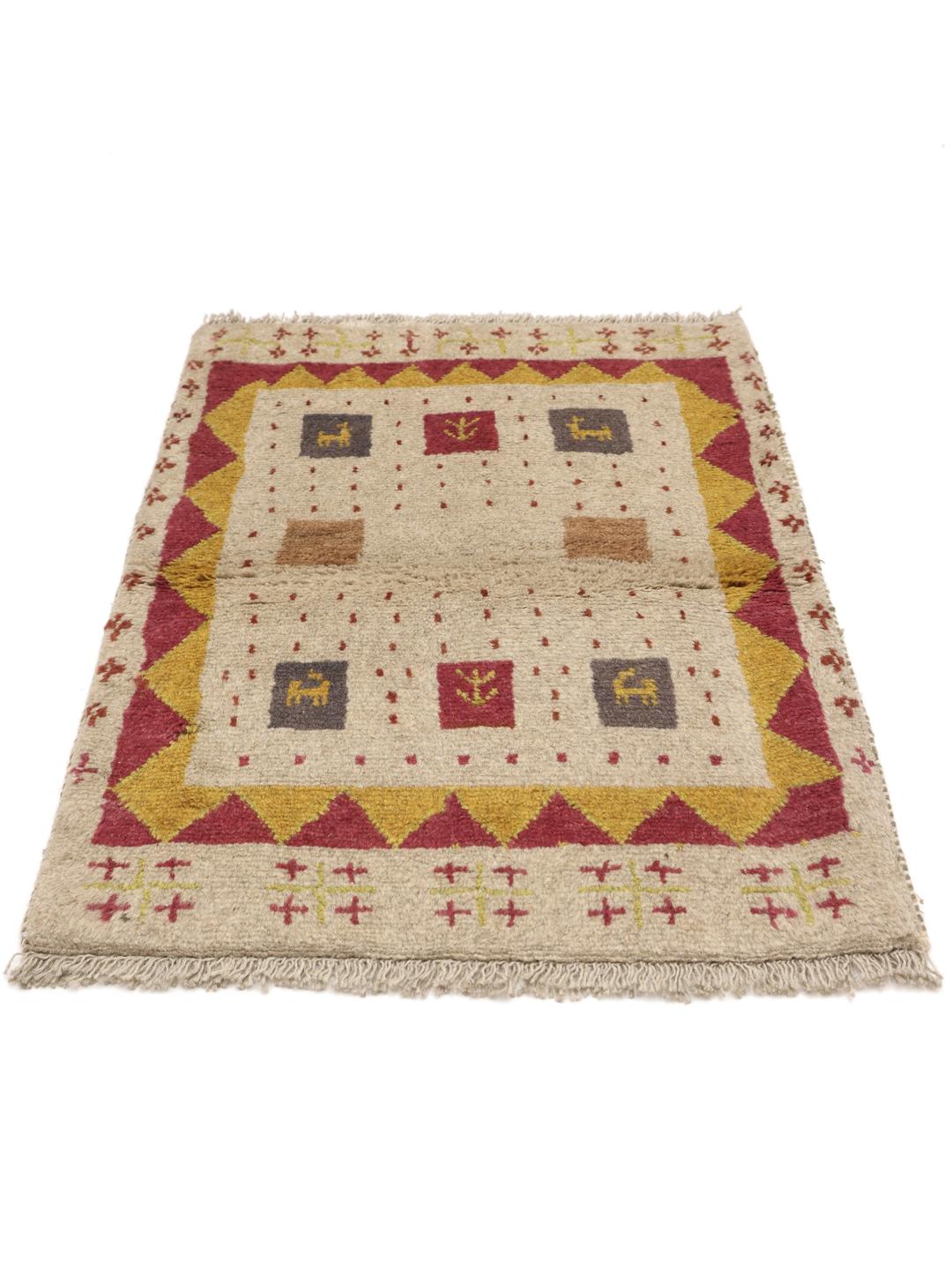
Gabbeh rugs are renowned for their connection to the nomadic tribes of the Middle East. Historically, these rugs were woven by tribal women primarily for their own family use rather than for trade, which allowed for a high degree of creative freedom. This tradition is reflected in the spontaneous, often abstract designs that prioritise personal expression and storytelling over rigid, formal patterns.
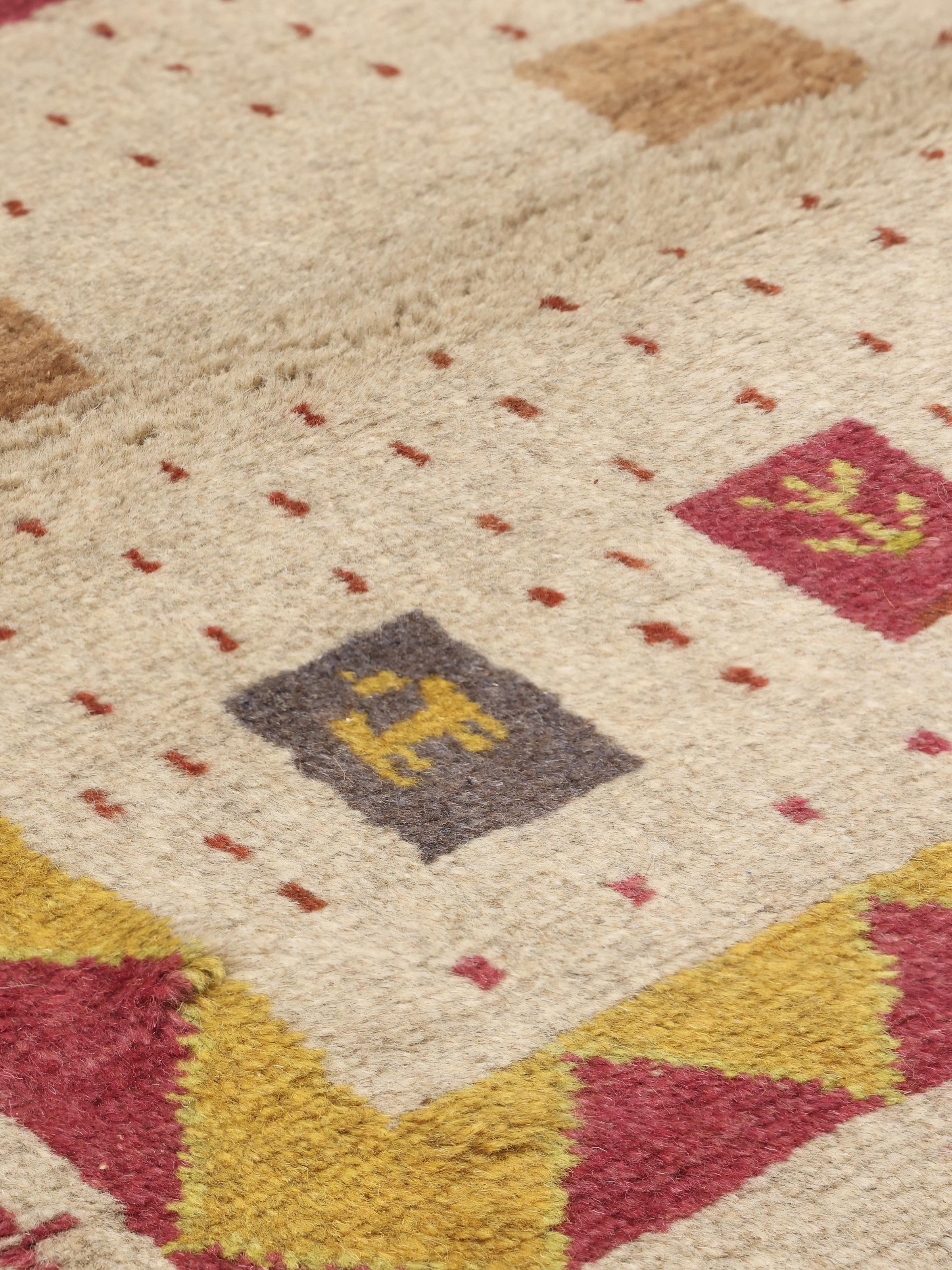
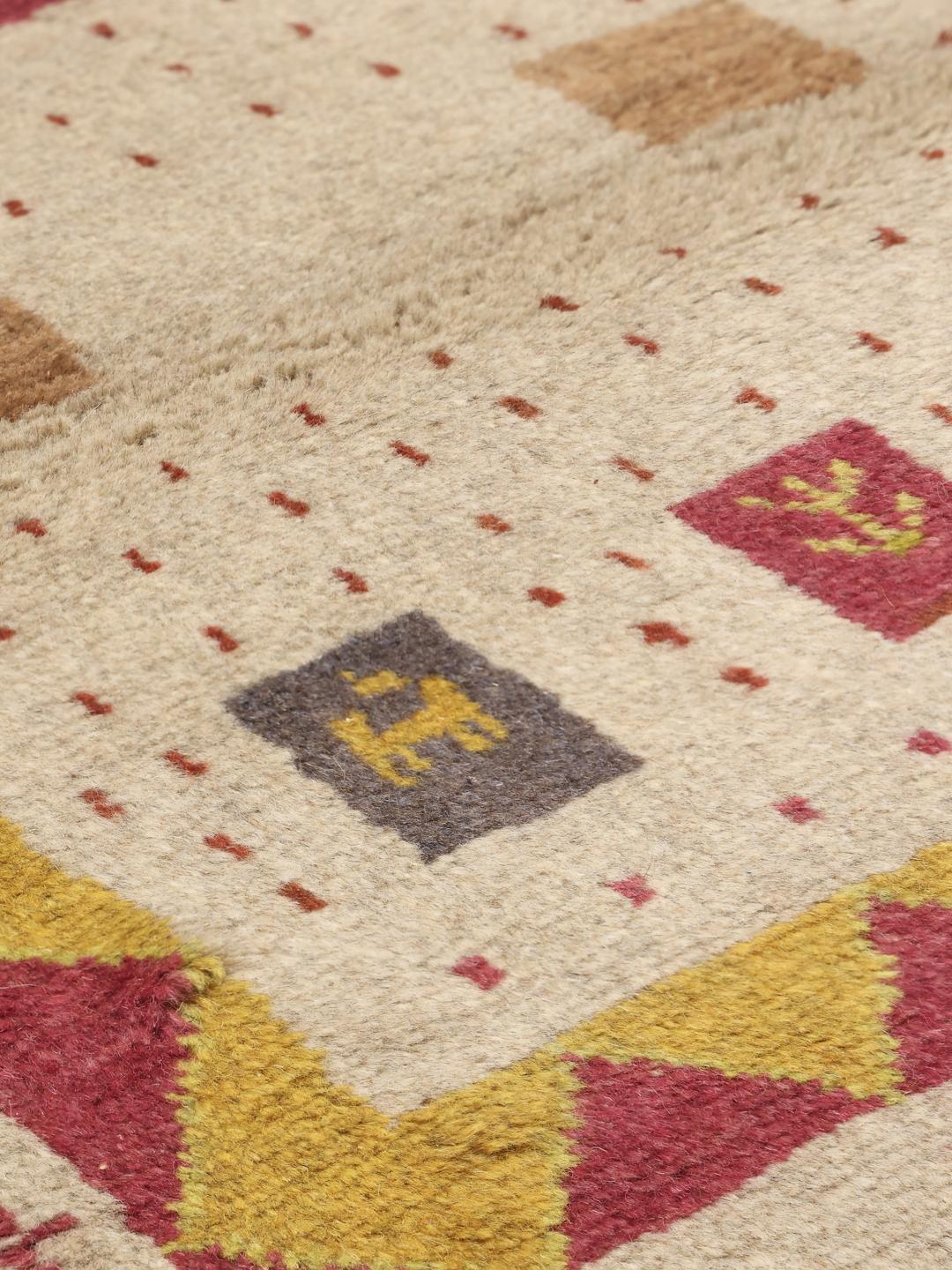
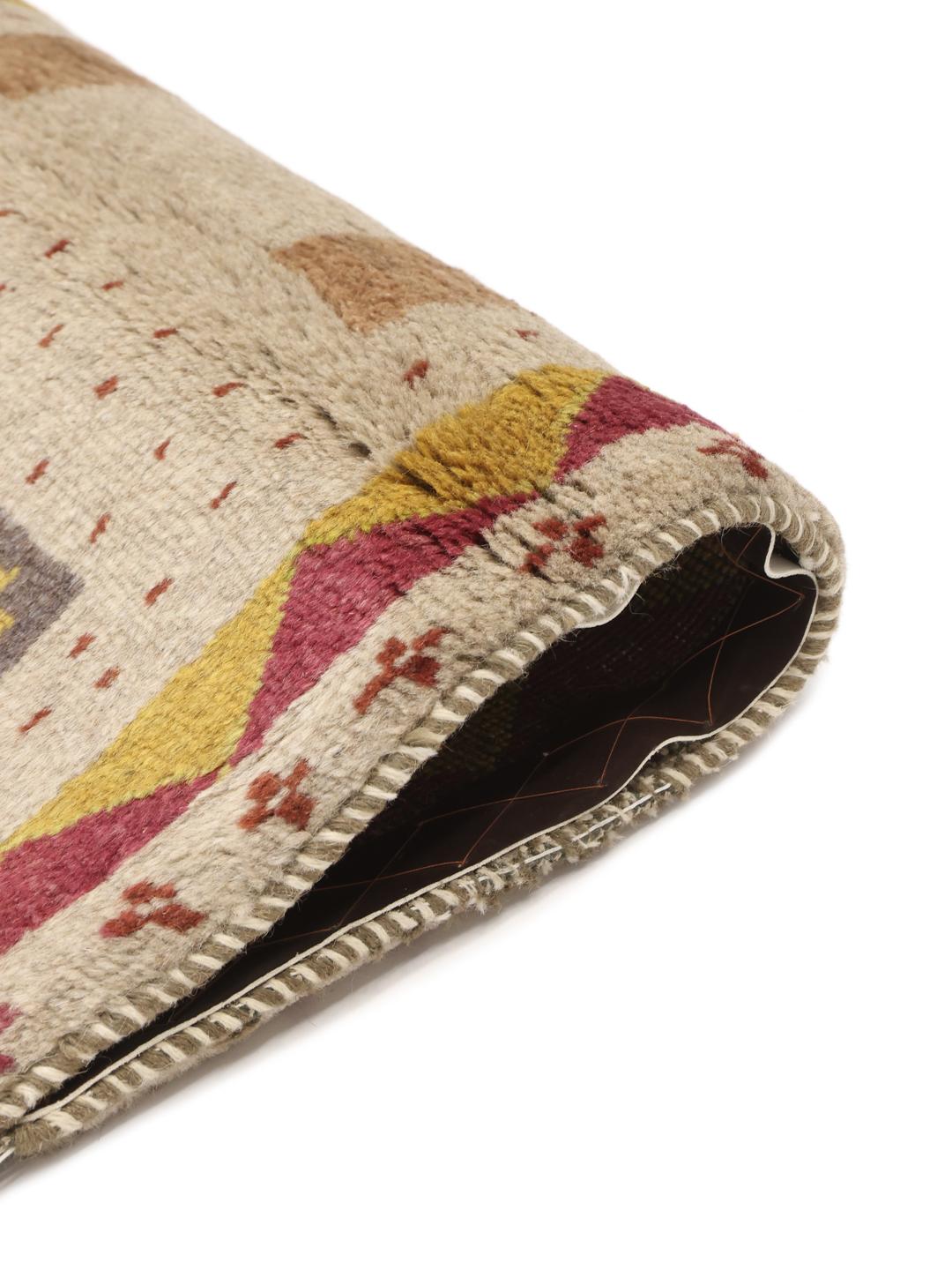
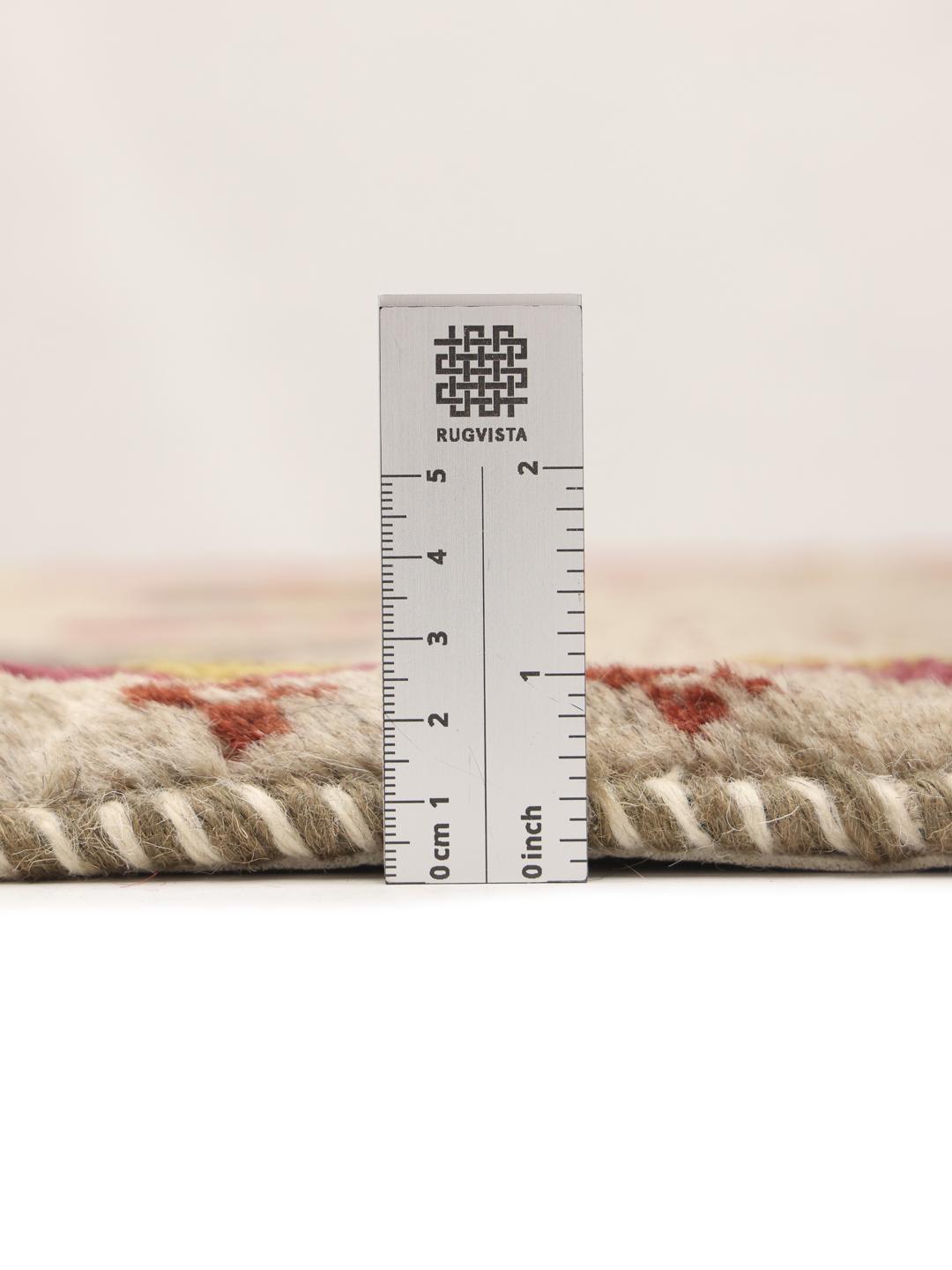
The term Gabbeh refers to a specific style of hand-knotted rug that typically features a thicker, coarser pile compared to more formal city rugs. This construction method uses hand-spun wool, which is known for its natural lanolin content, making the final piece incredibly durable and soft. The thicker pile is not just a stylistic choice but a functional one, providing essential warmth and comfort for life in a tent or a drafty home.
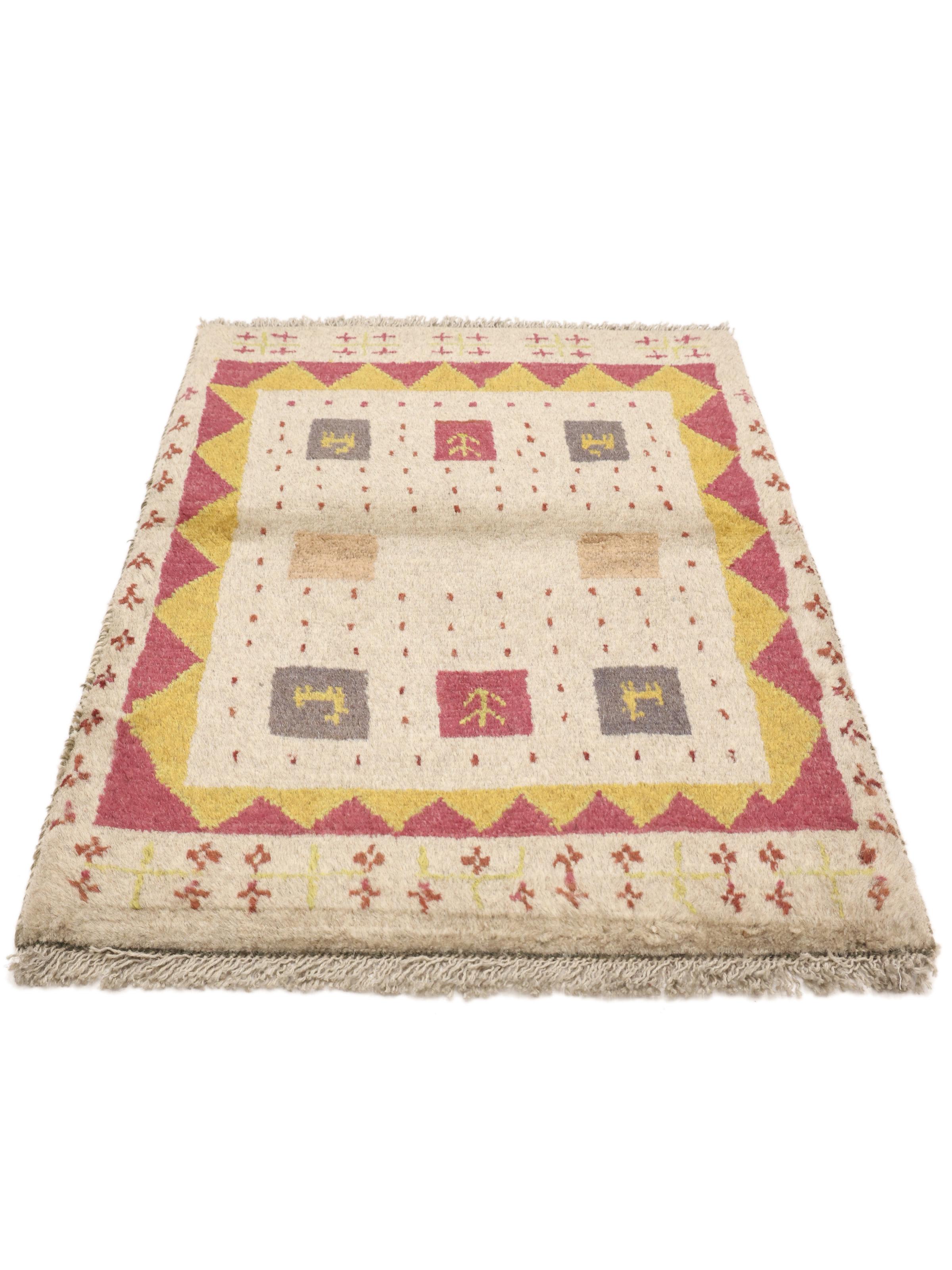
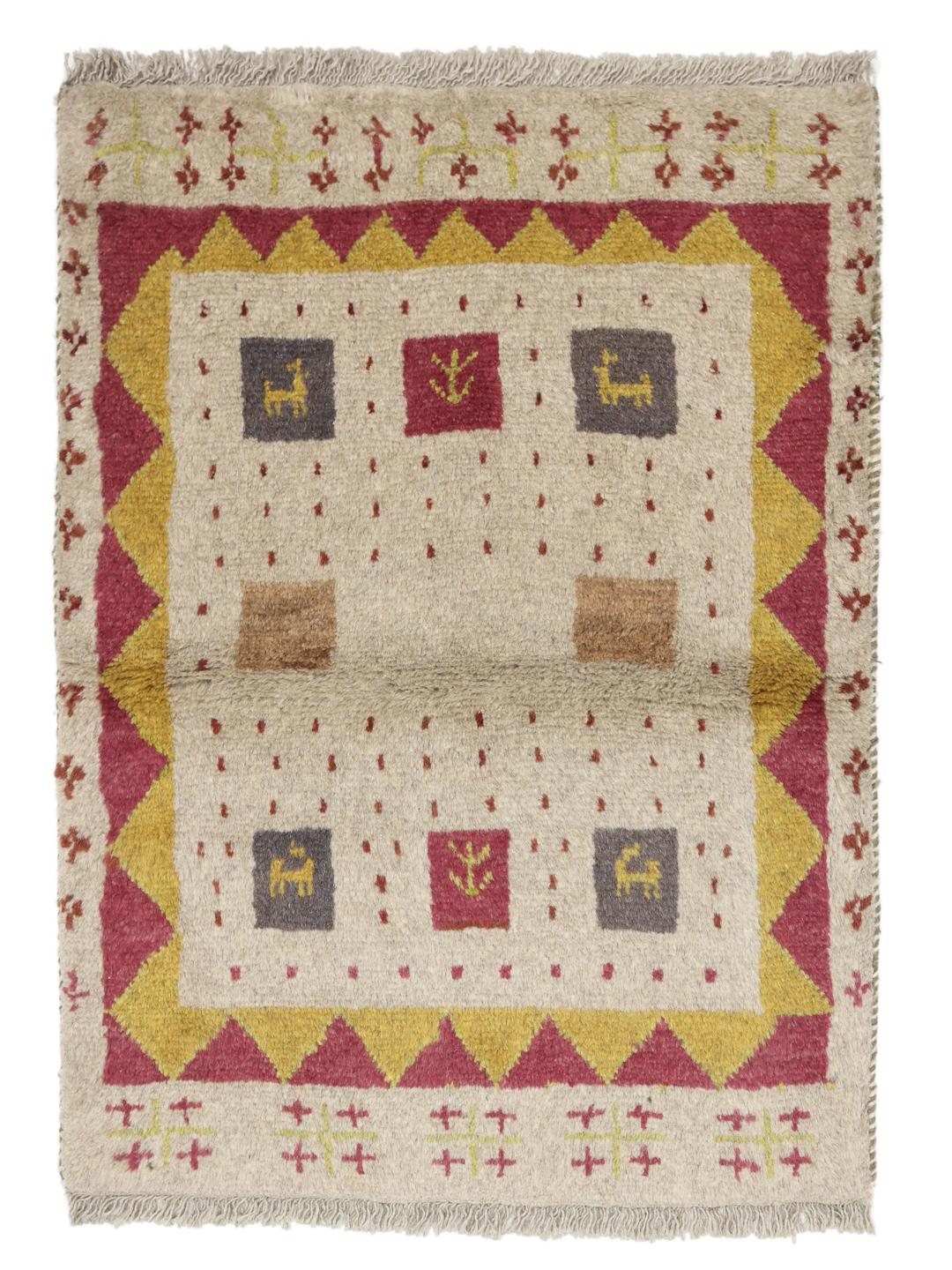
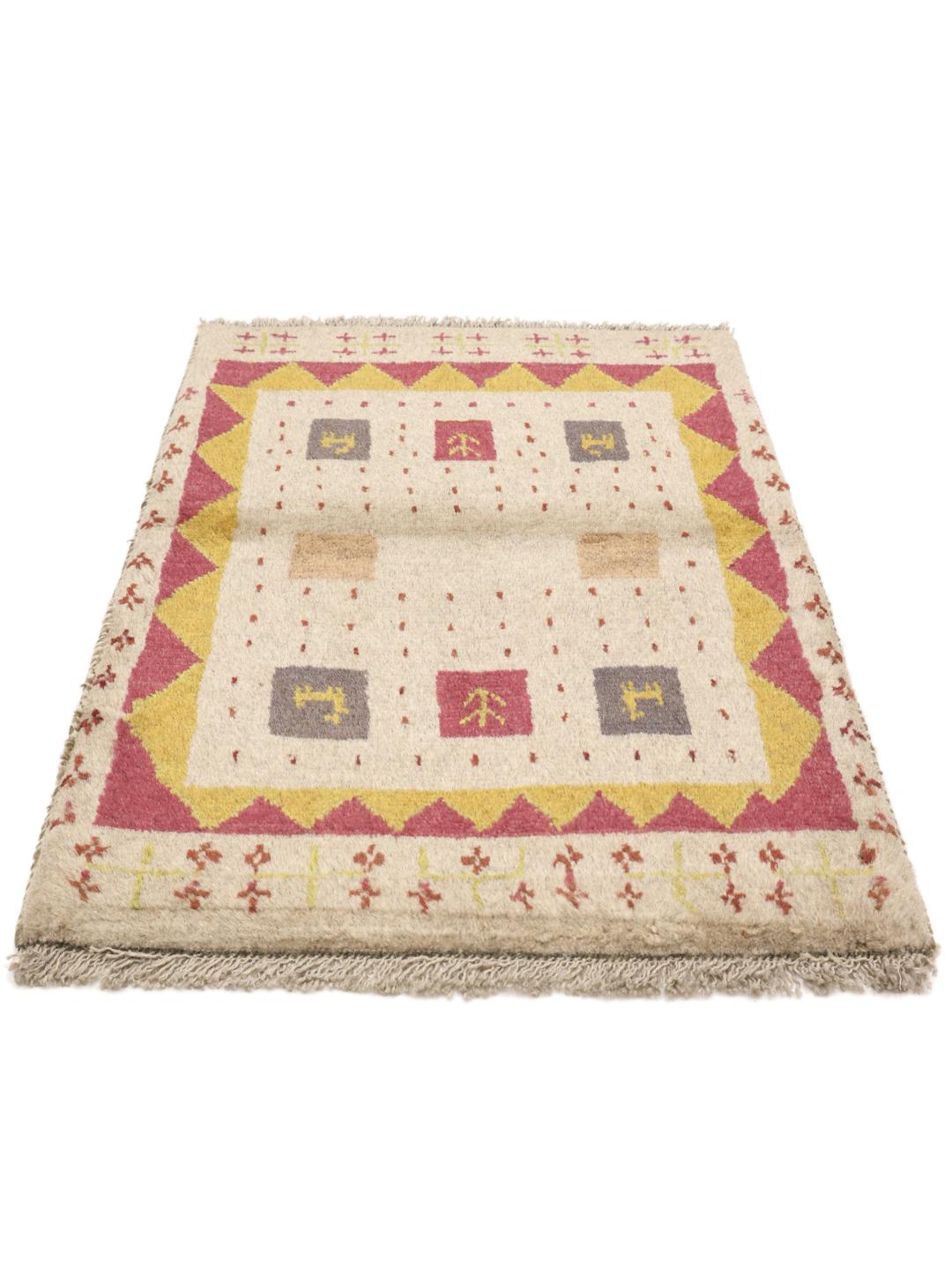
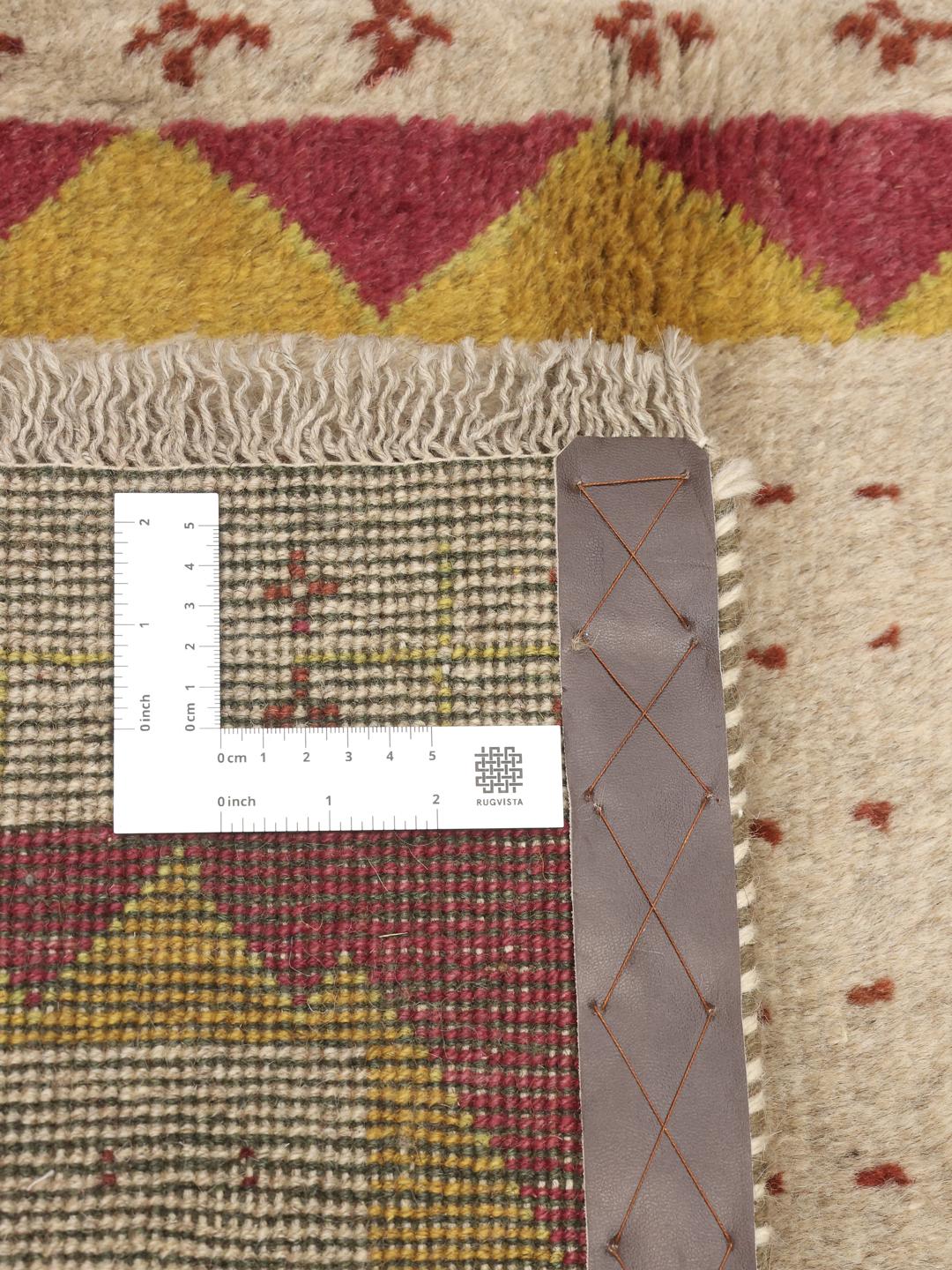
Visually, these rugs are defined by their bold, minimalist motifs that often depict animals, plants, or abstract symbols of daily life. The use of natural, hand-dyed wool often results in subtle colour variations known as abrash, which add depth and character to the rug. This specific piece showcases a charming combination of traditional motifs that highlight the playful side of the Gabbeh aesthetic.
Collecting a Gabbeh rug is a way of preserving a vanishing art form. As nomadic lifestyles evolve, the authentic, hand-woven pieces that come from these tribal traditions are becoming increasingly rare. Owning one is a testament to the skill of the artisan and a celebration of a cultural heritage that values individual creativity and the connection between the weaver and their environment.