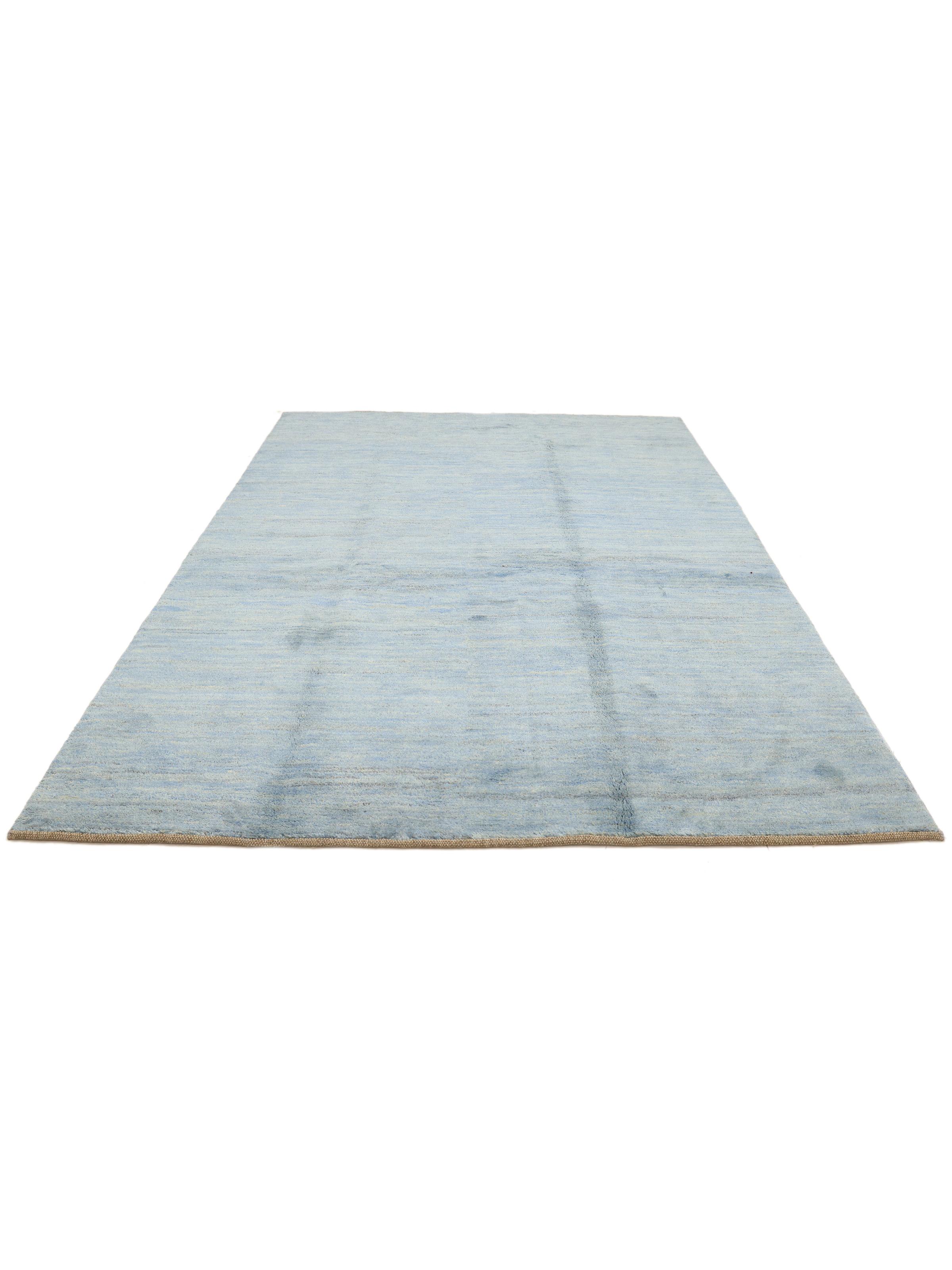
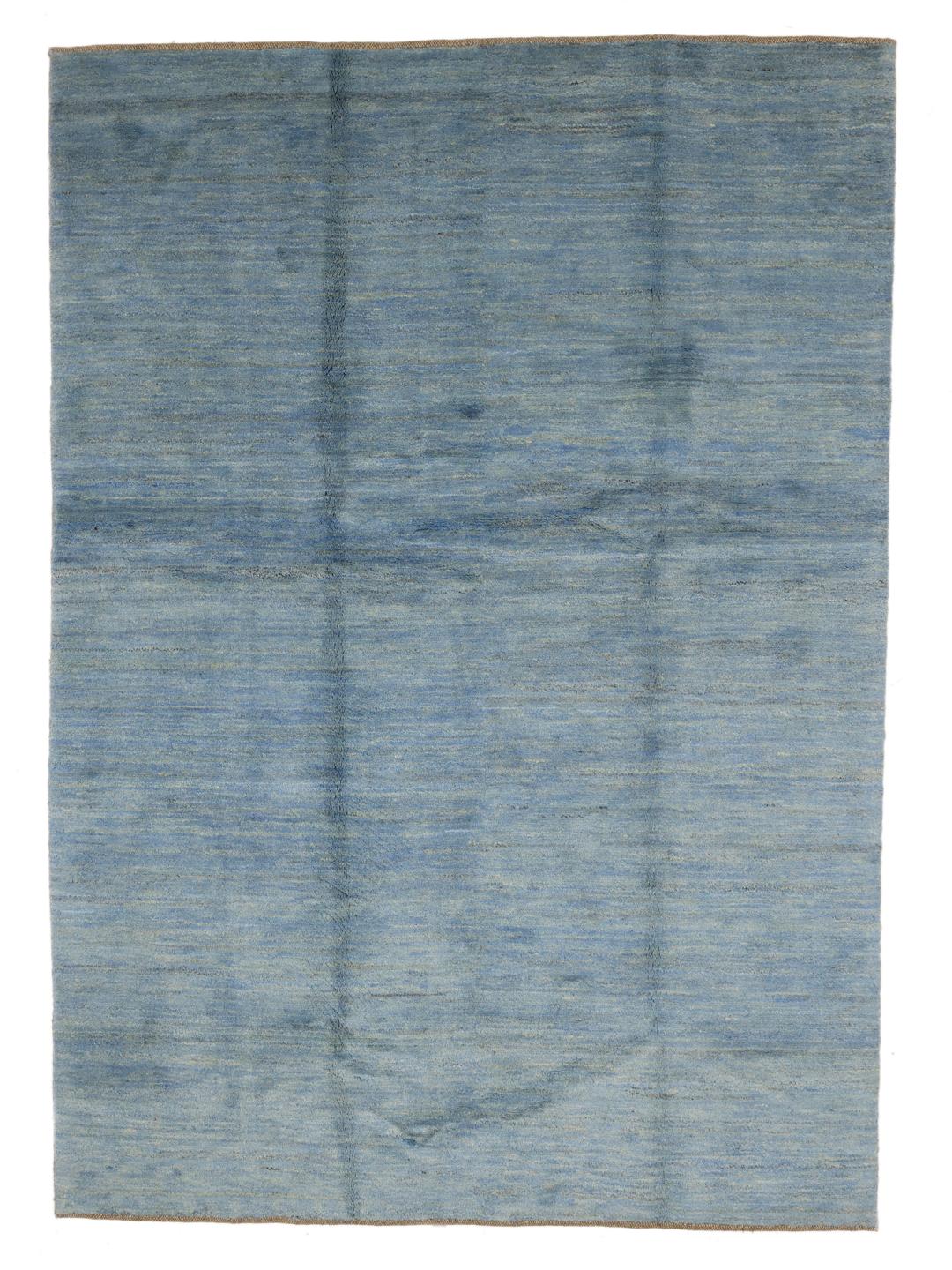
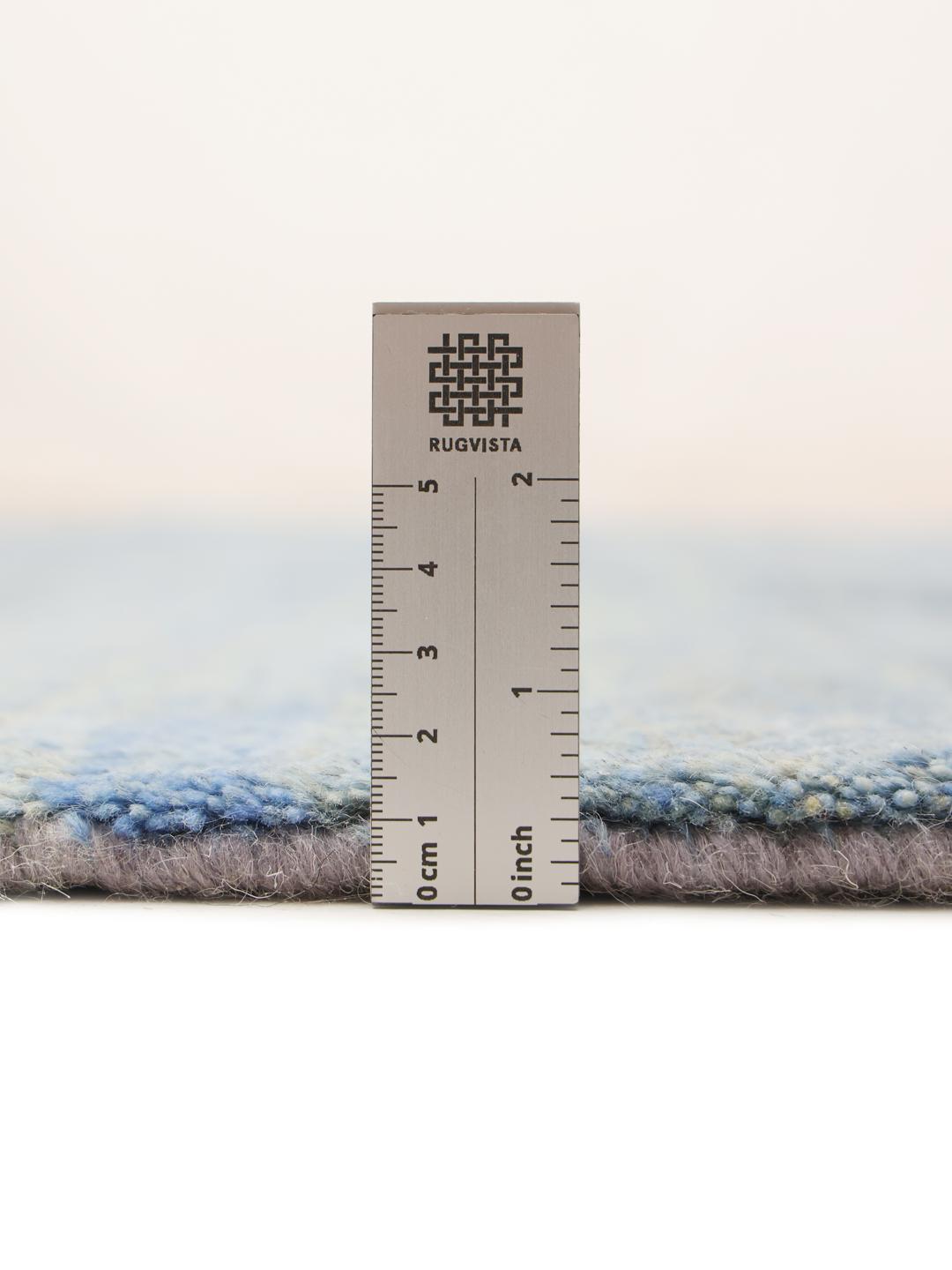
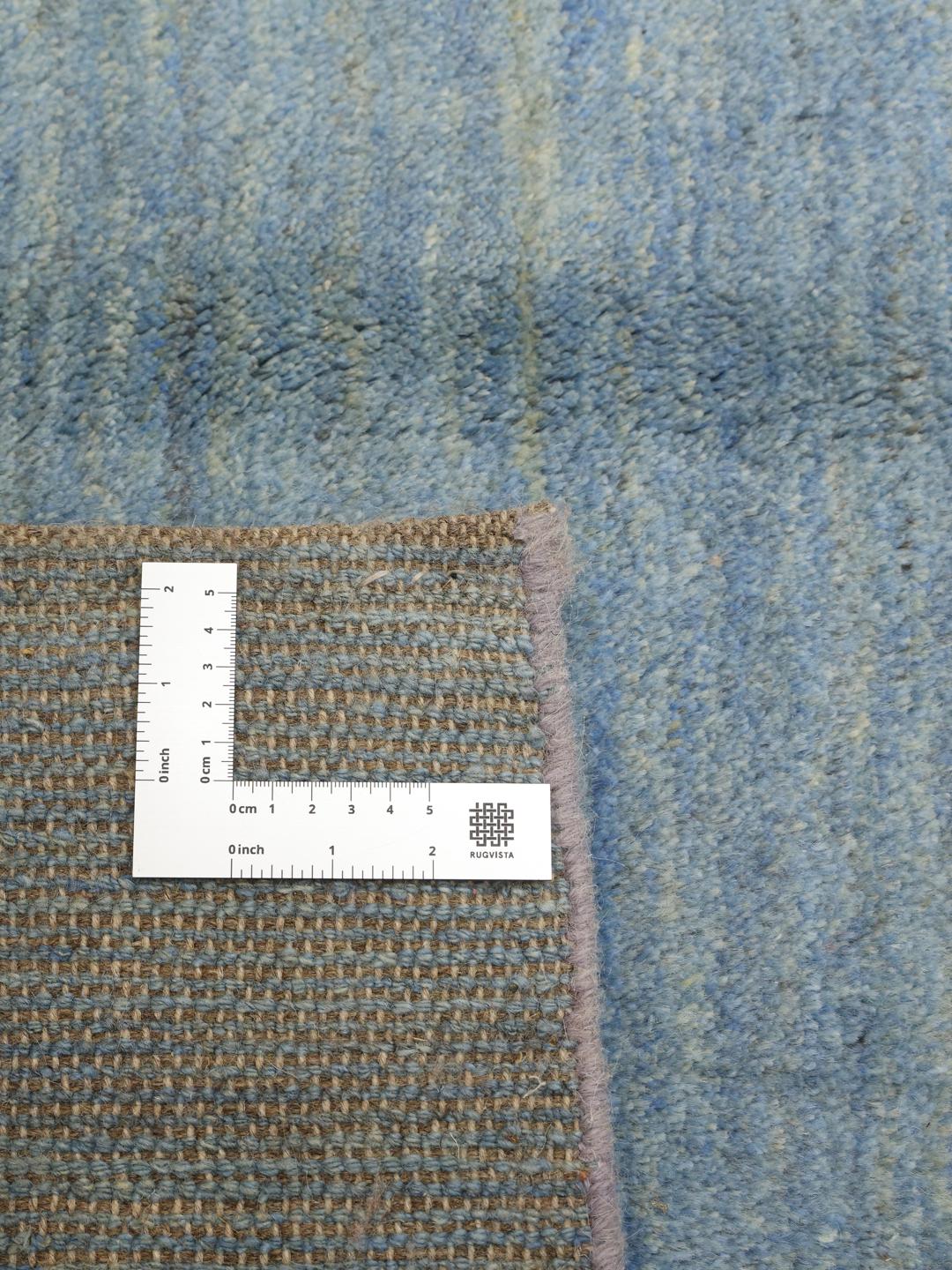
The Gabbeh tradition finds its roots in the nomadic cultures of the Middle East. Historically, these rugs were woven by tribal women for their own personal use, serving as thick, protective floor coverings that provided insulation against the harsh conditions of mountain life.
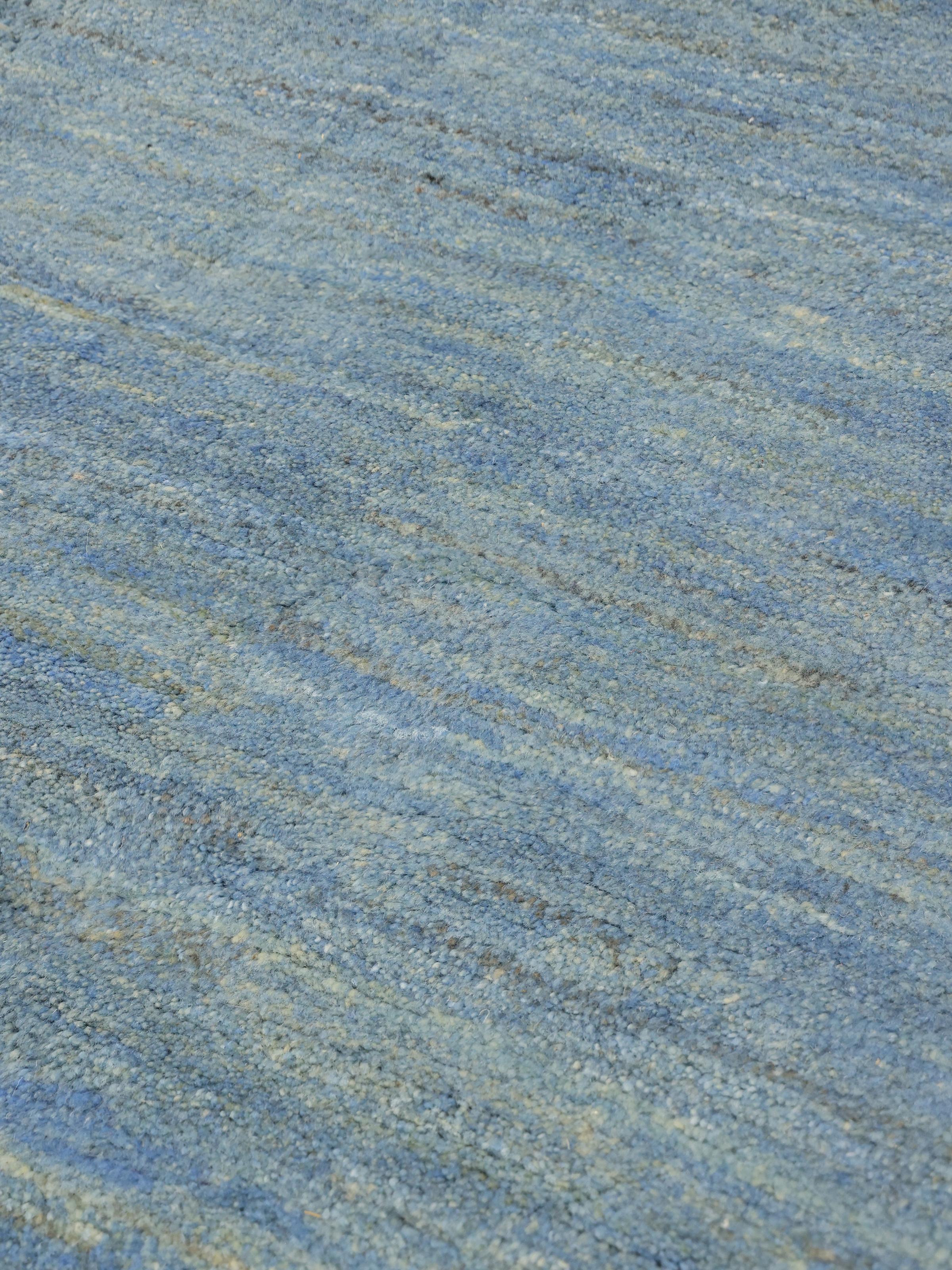
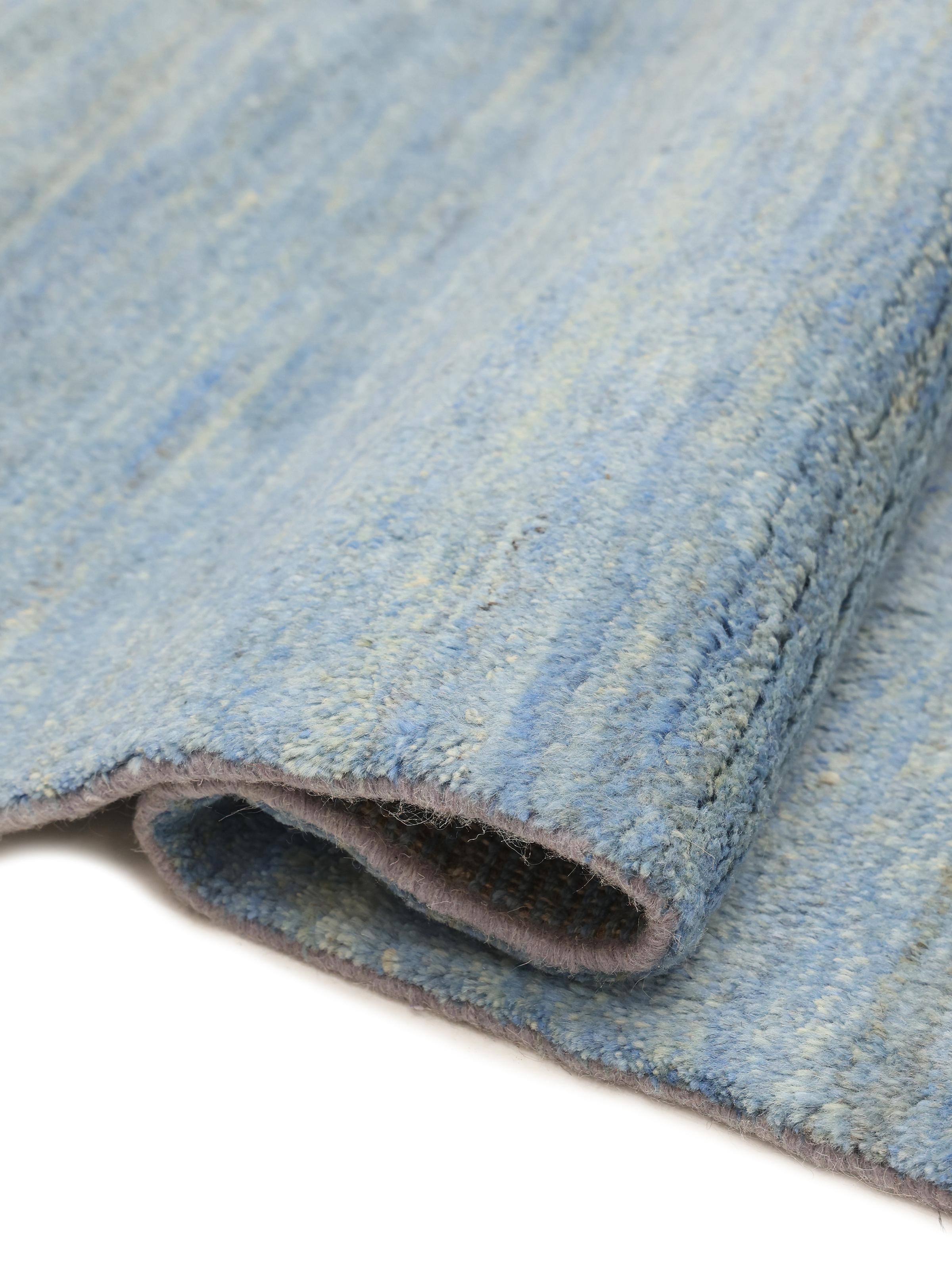
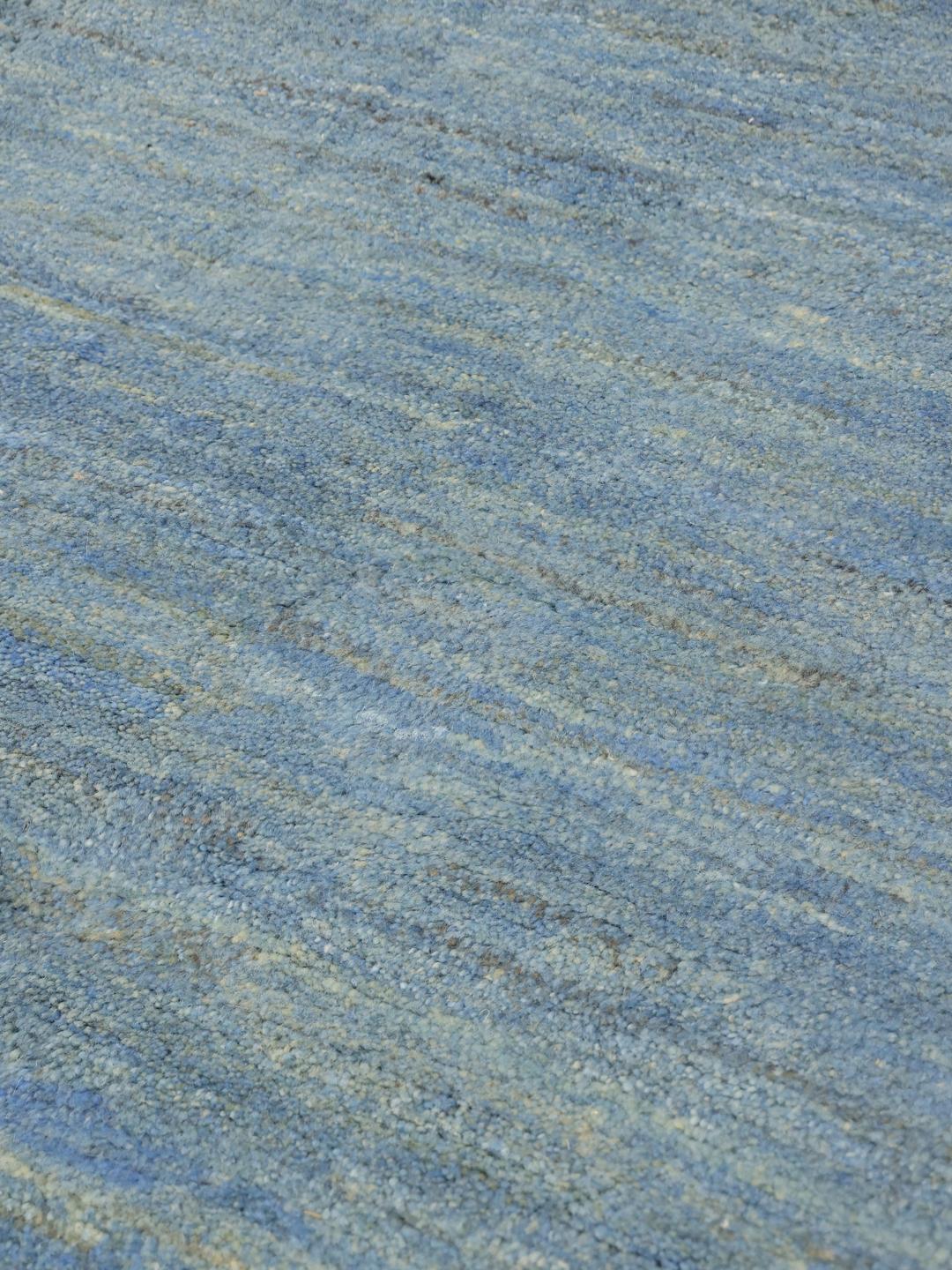
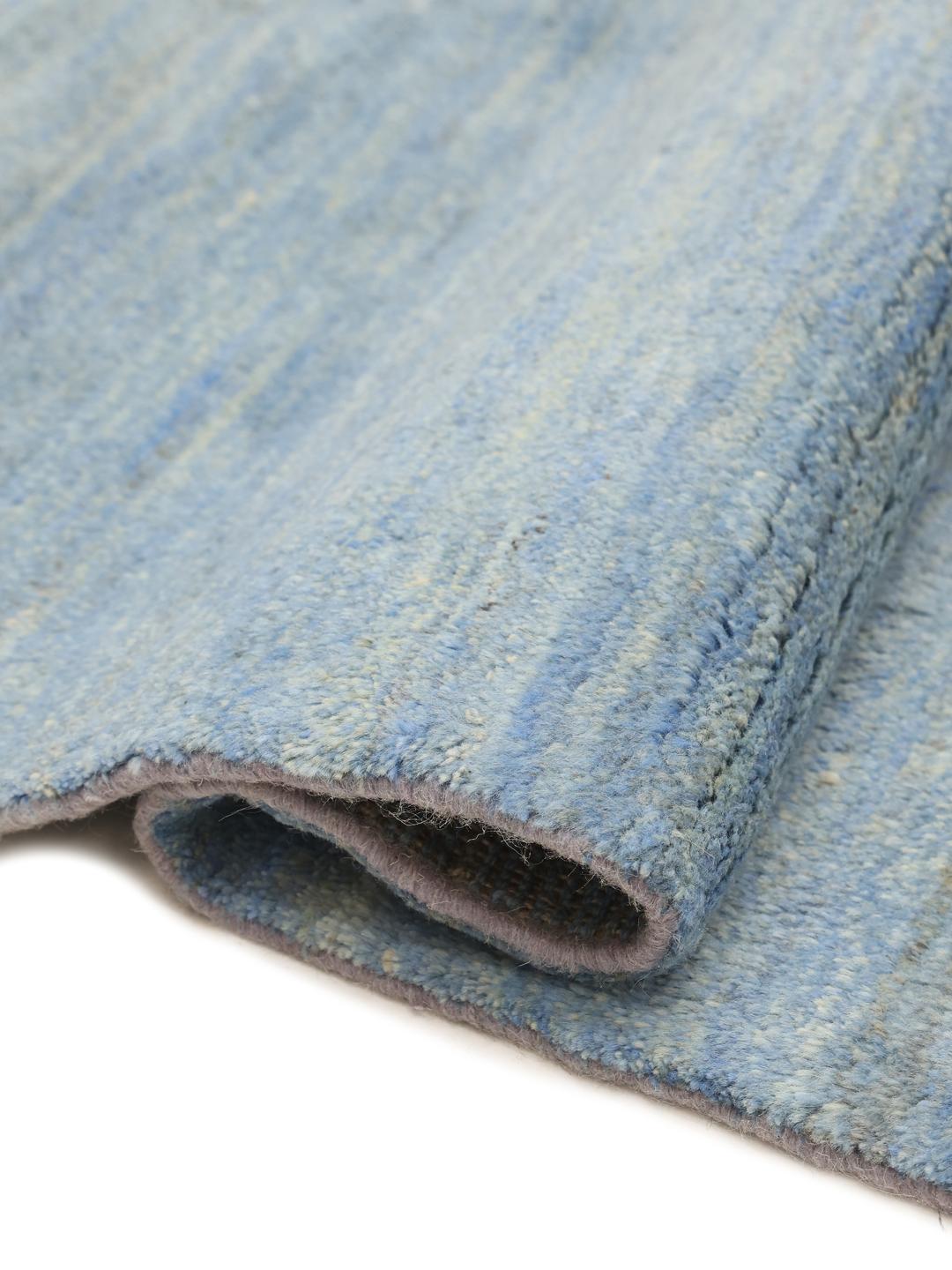
The term Gabbeh itself implies something raw, natural, or unclipped, which perfectly describes the aesthetic of these rugs. Unlike more formal, structured styles, traditional Gabbeh weaving prioritises a thicker, longer pile and a more relaxed approach to design, resulting in a look that feels both primitive and sophisticated.
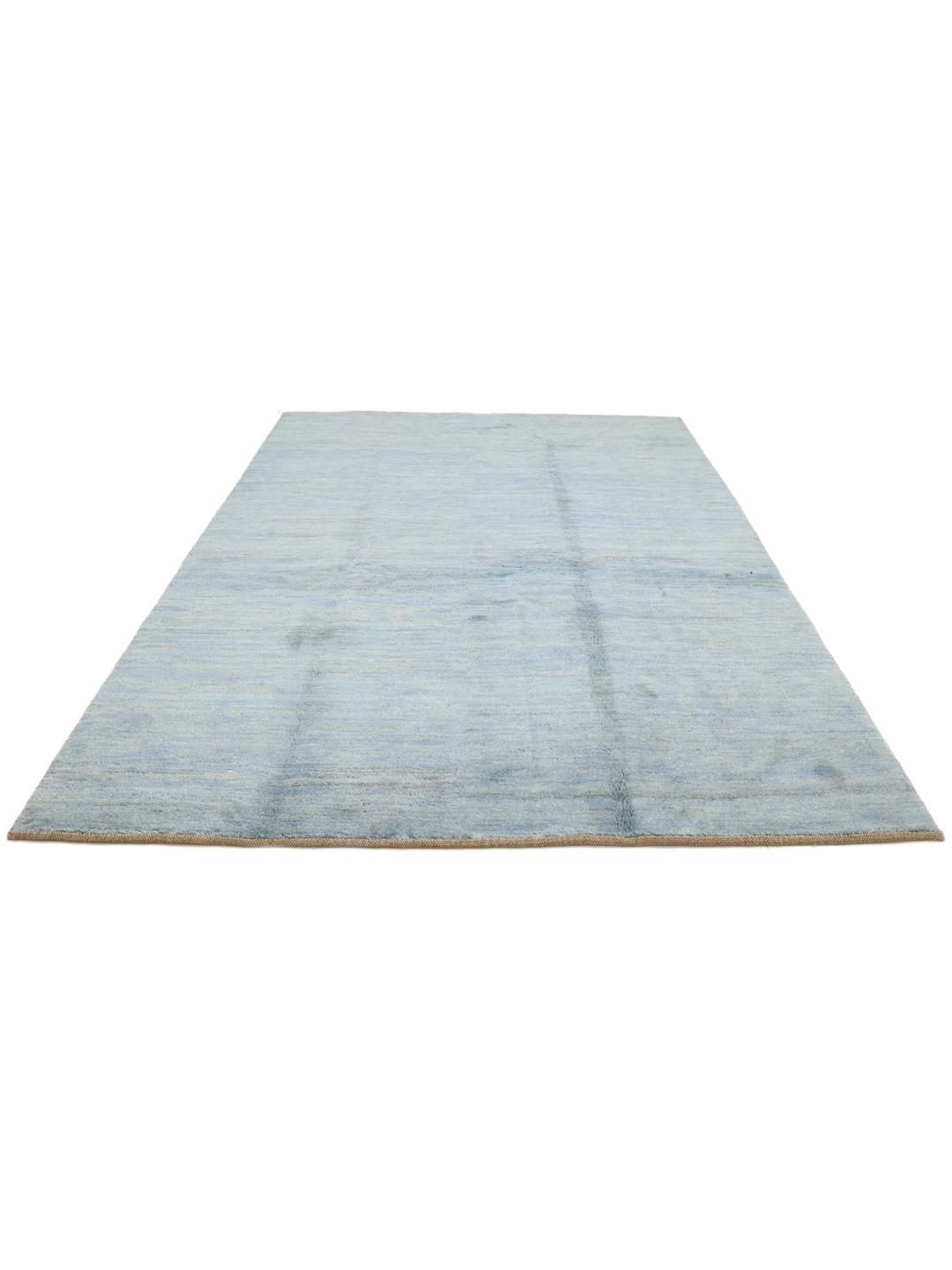
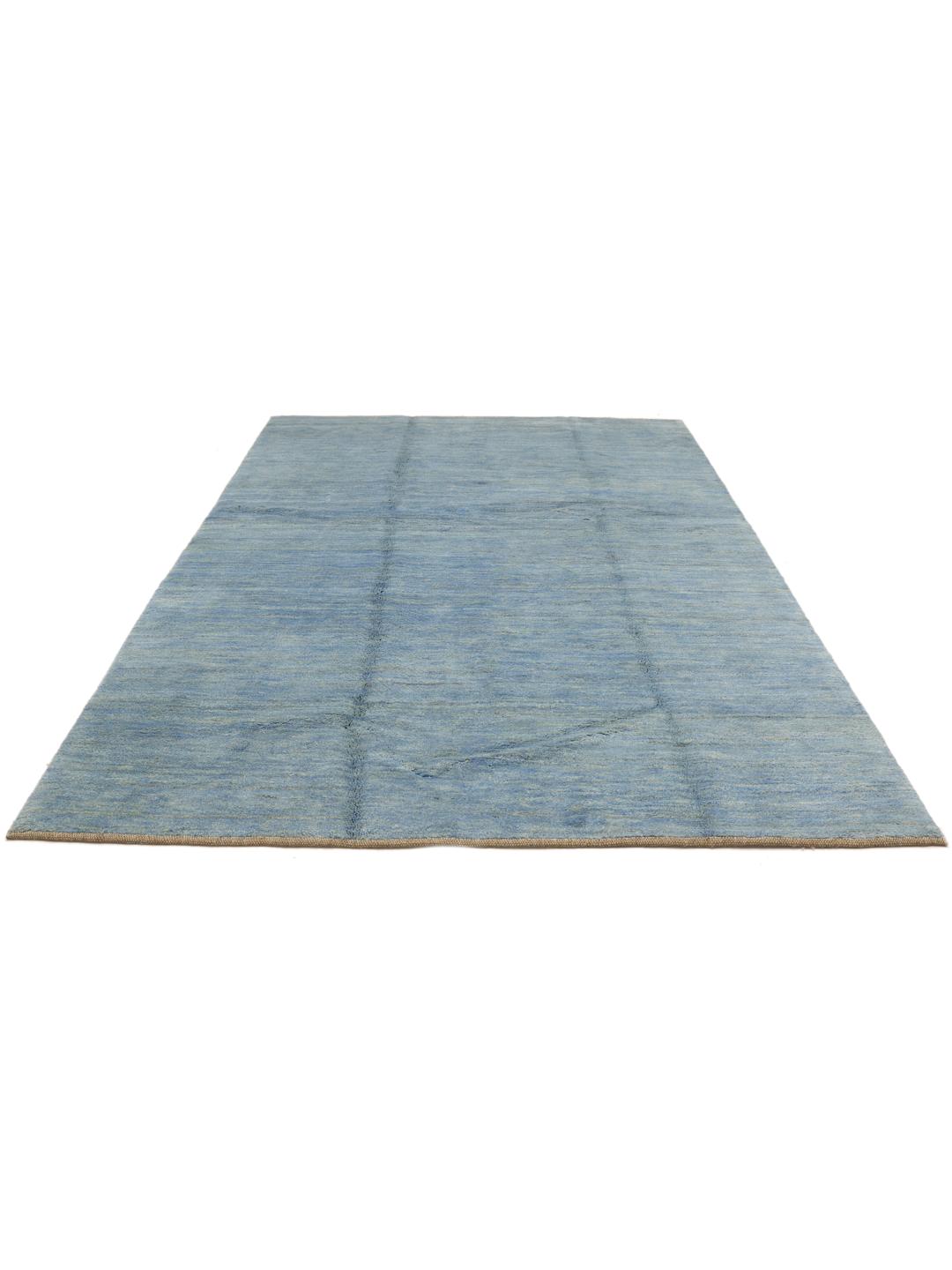
Visually, these pieces are often defined by their bold, minimalist approach to colour and motif. While they can feature simple geometric shapes or subtle colour shifts, the focus remains on the beauty of the raw material and the natural dyes used. The blue hues seen here reflect a deep connection to regional landscapes and traditional dyeing practices.
Owning a Gabbeh is an opportunity to connect with a centuries-old craft that prizes individual expression over mass production. Collectors value these rugs for their authenticity and the way they bridge the gap between functional household utility and genuine folk art, making them a meaningful addition to any modern home.