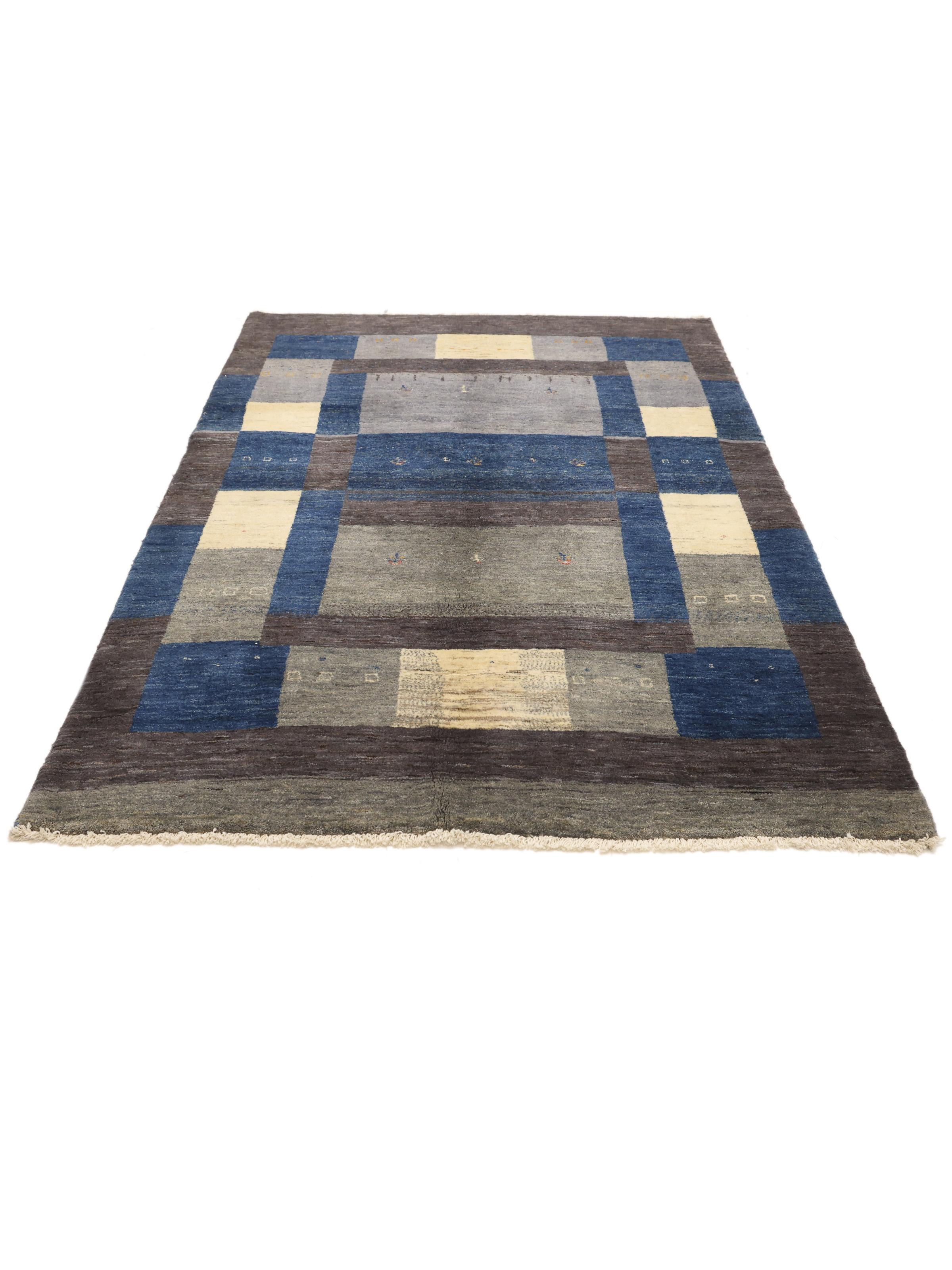
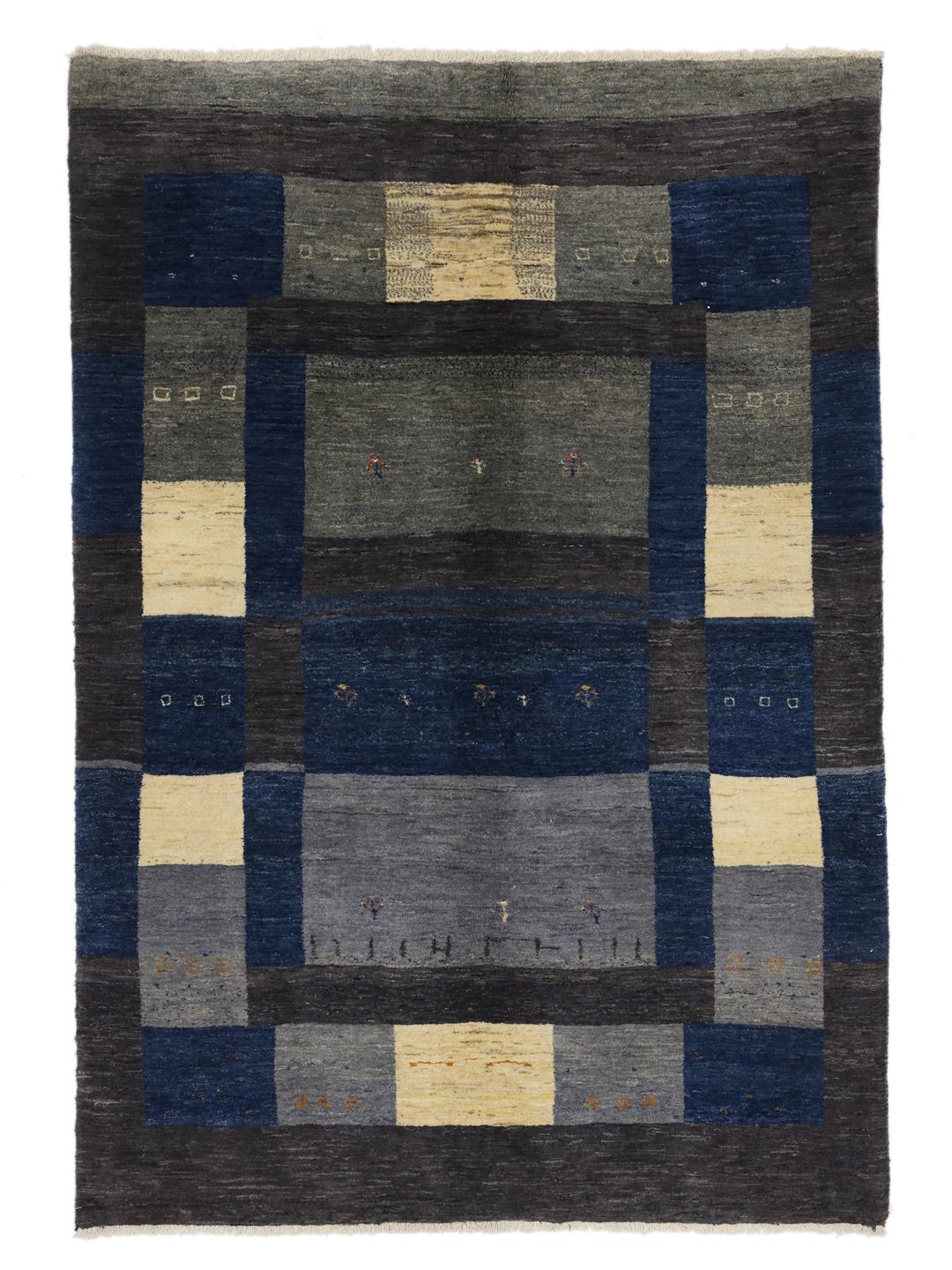
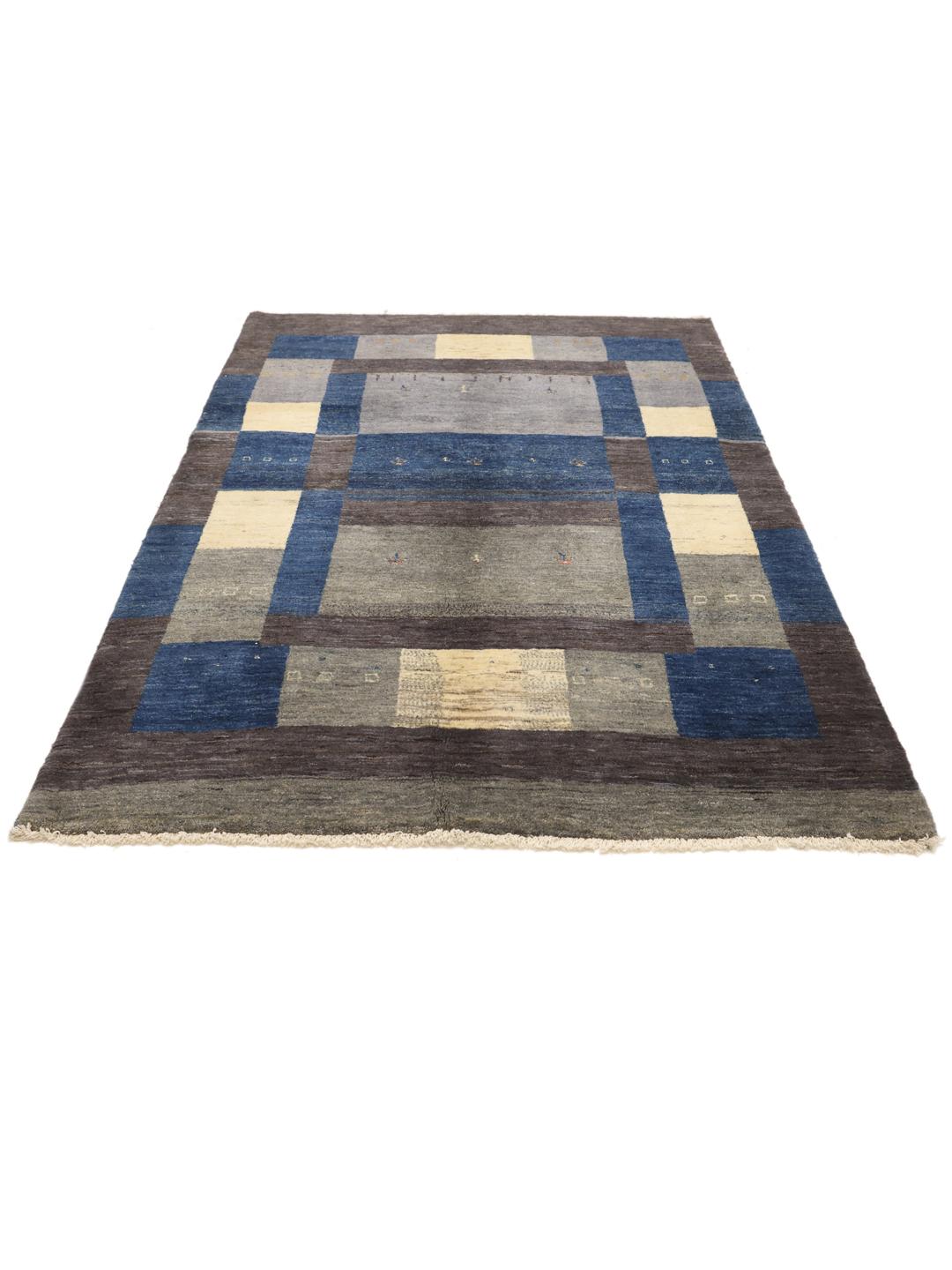
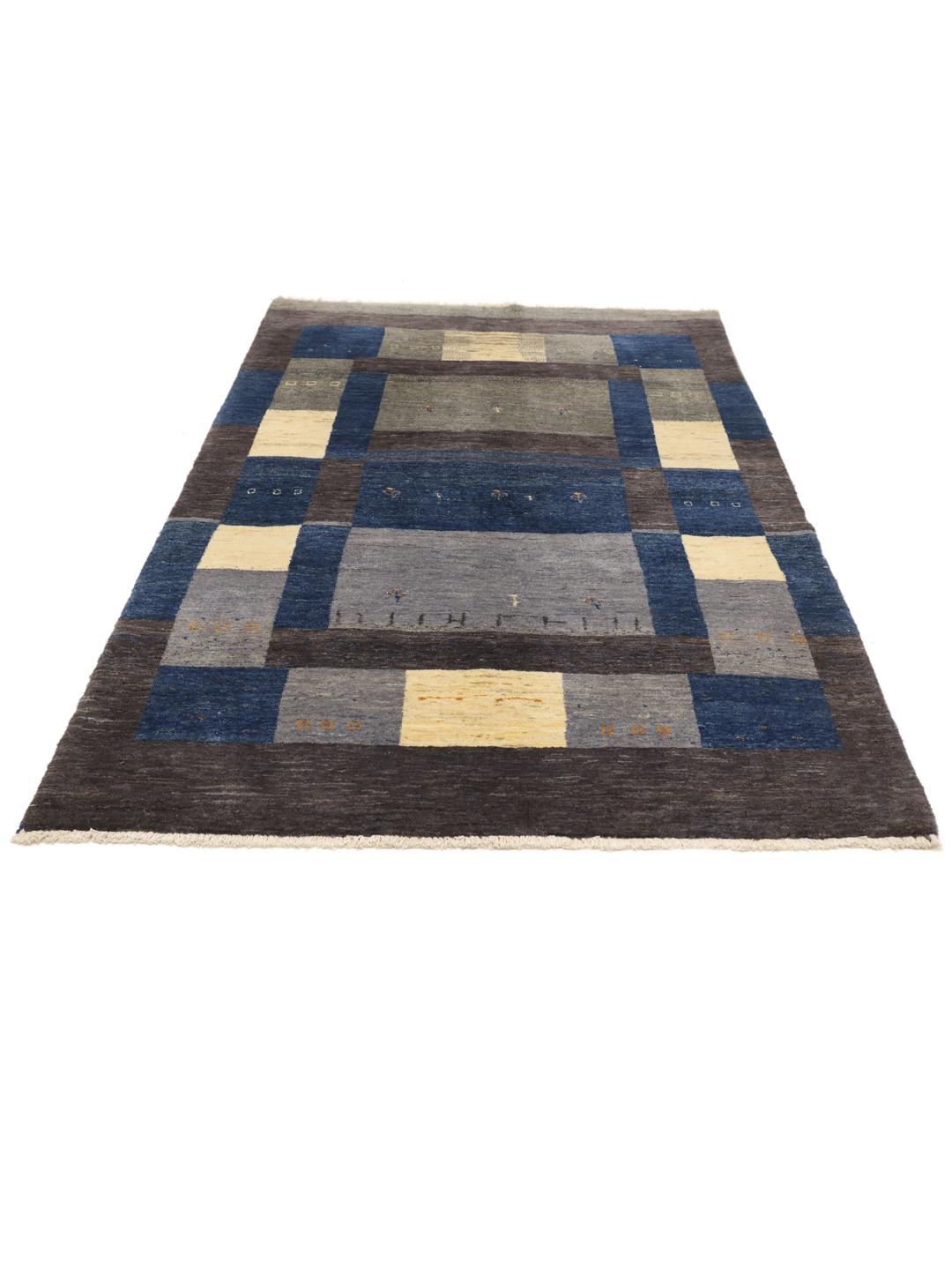
The Gabbeh tradition finds its roots in the nomadic cultures of the Middle East, where weavers historically created these rugs for their own daily use rather than for trade. Unlike formal, highly structured carpets, traditional Gabbeh rugs were designed to be functional, warm, and expressive, often reflecting the personal stories and surroundings of the weaver.
The term 'Shabargan' refers to a specific regional influence in the production of these rugs, known for a unique approach to geometric composition and colour blending. This style often employs a more modern, minimalist aesthetic compared to traditional tribal patterns, while still honouring the deep-seated craft techniques passed down through generations.
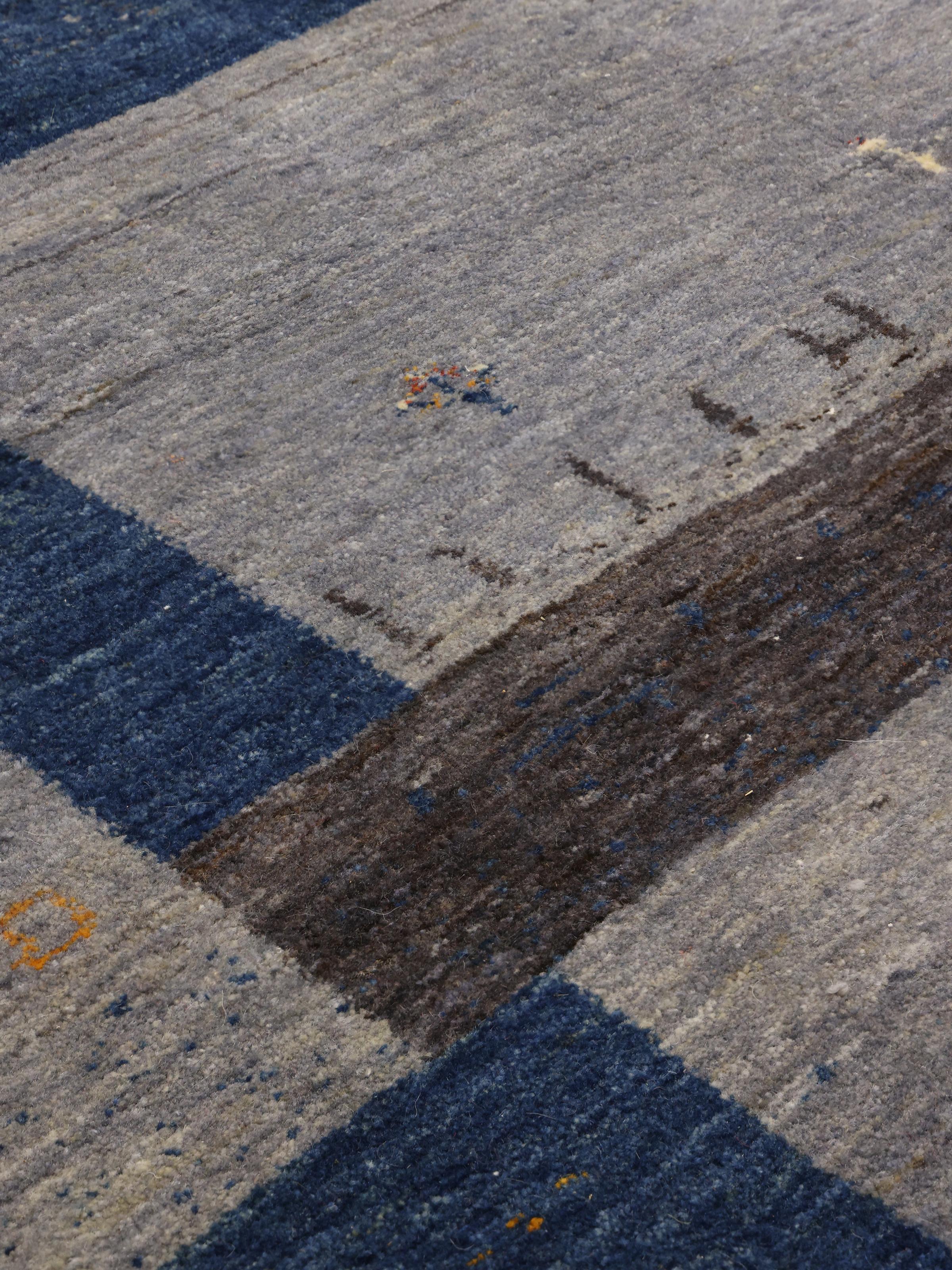
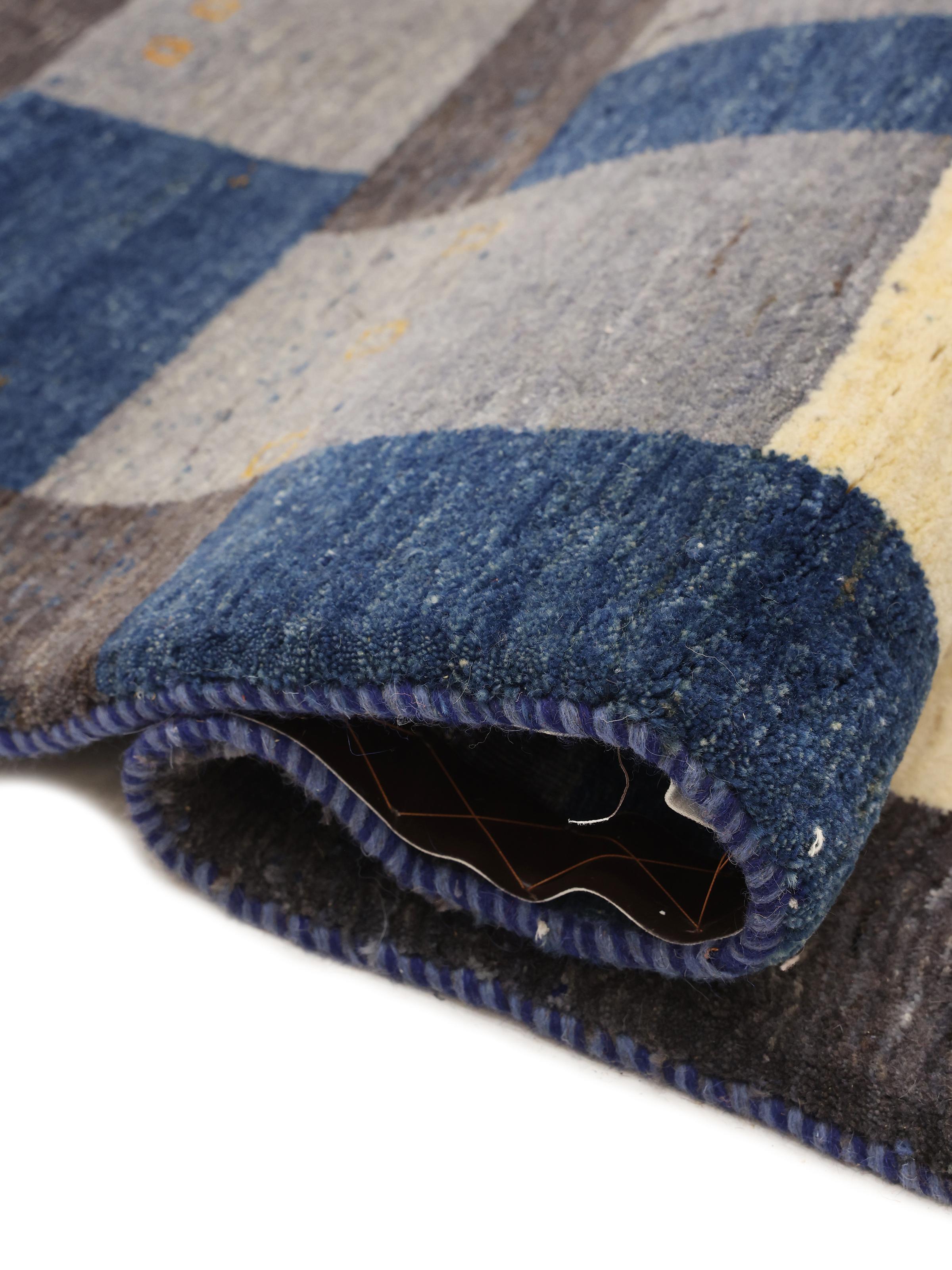
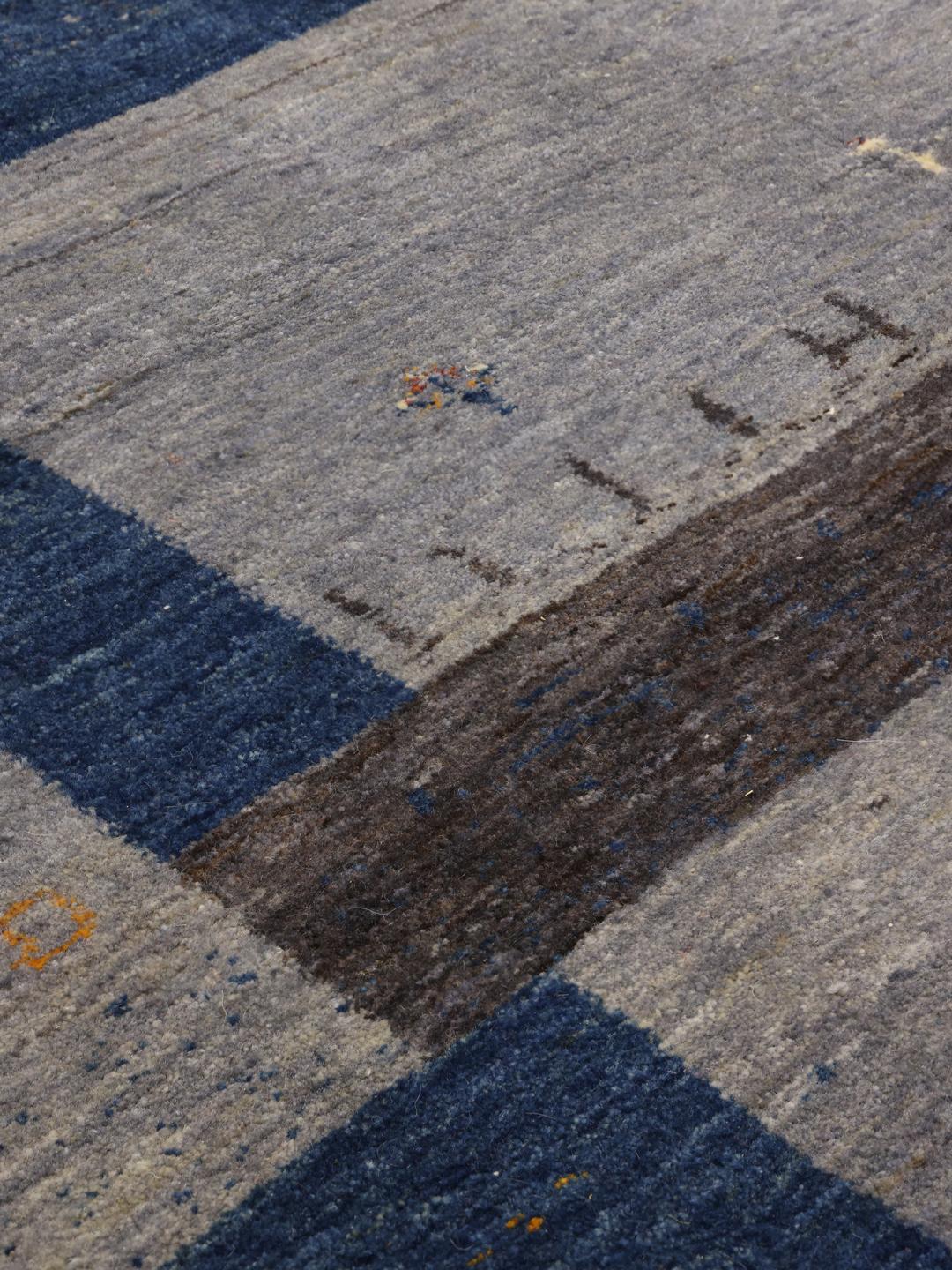
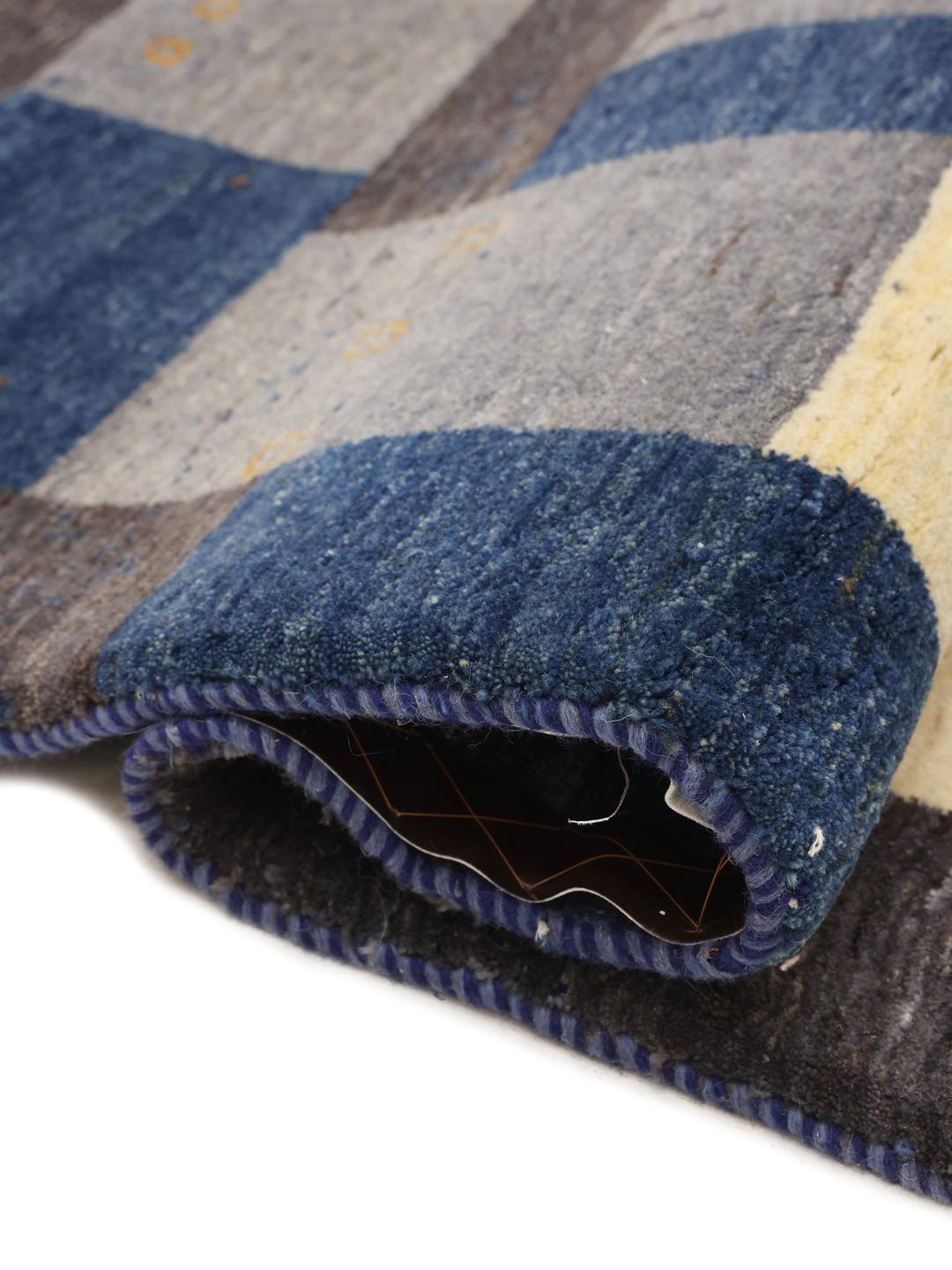
Visually, these rugs are defined by their open, artistic fields and bold use of colour. While traditional designs often featured simple animal or plant motifs, the modern evolution of the style has embraced a more abstract, painterly approach. The deliberate simplicity allows the texture of the Wool and the depth of the natural dyes to take centre stage, creating a look that feels both ancient and contemporary.
Collectors value these rugs for their authenticity and the human element present in every stitch. Owning a piece from this tradition is an investment in human skill and cultural history. It represents a commitment to supporting traditional craft, ensuring that these artistic practices continue to thrive in an increasingly automated world.