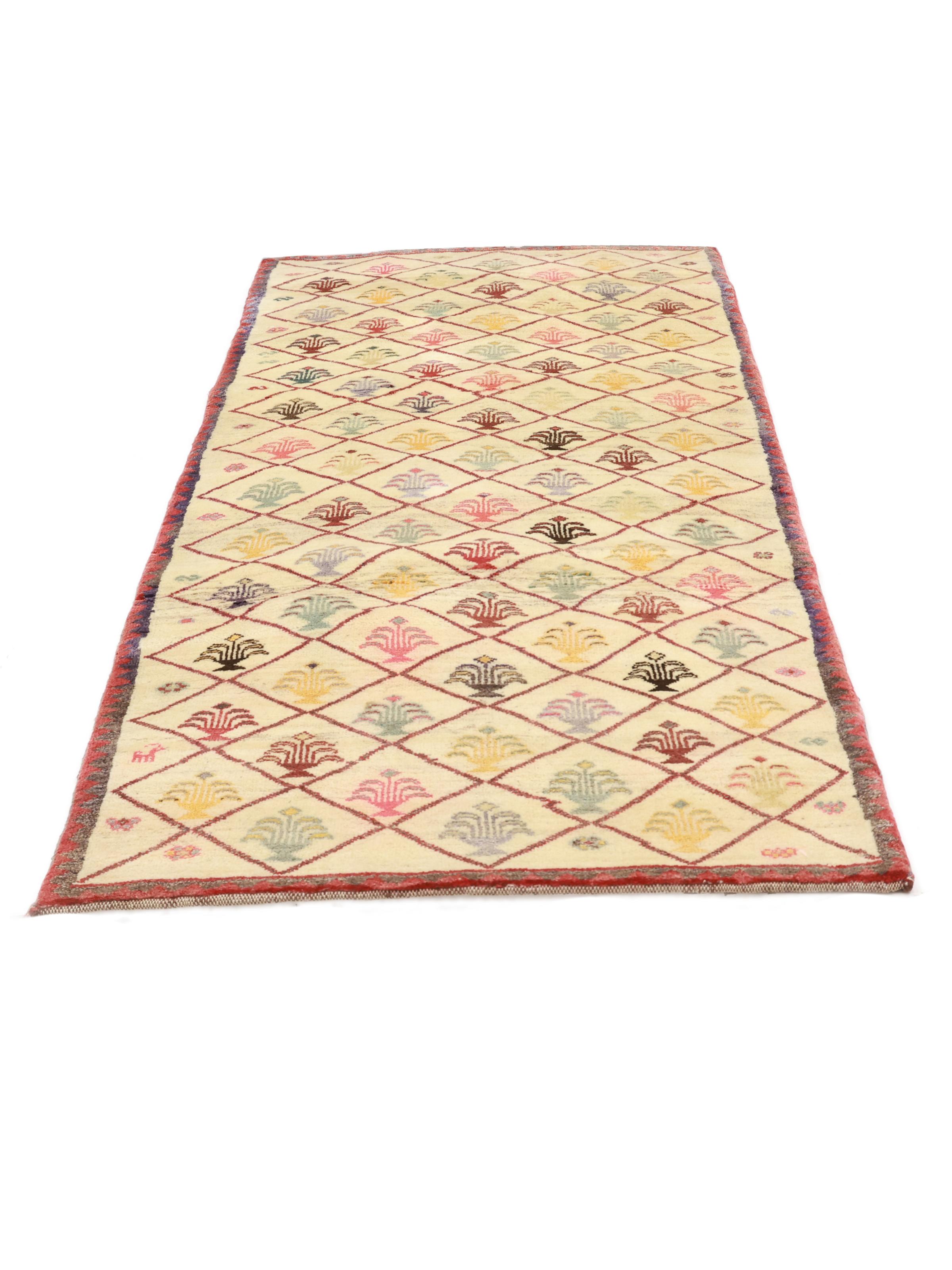
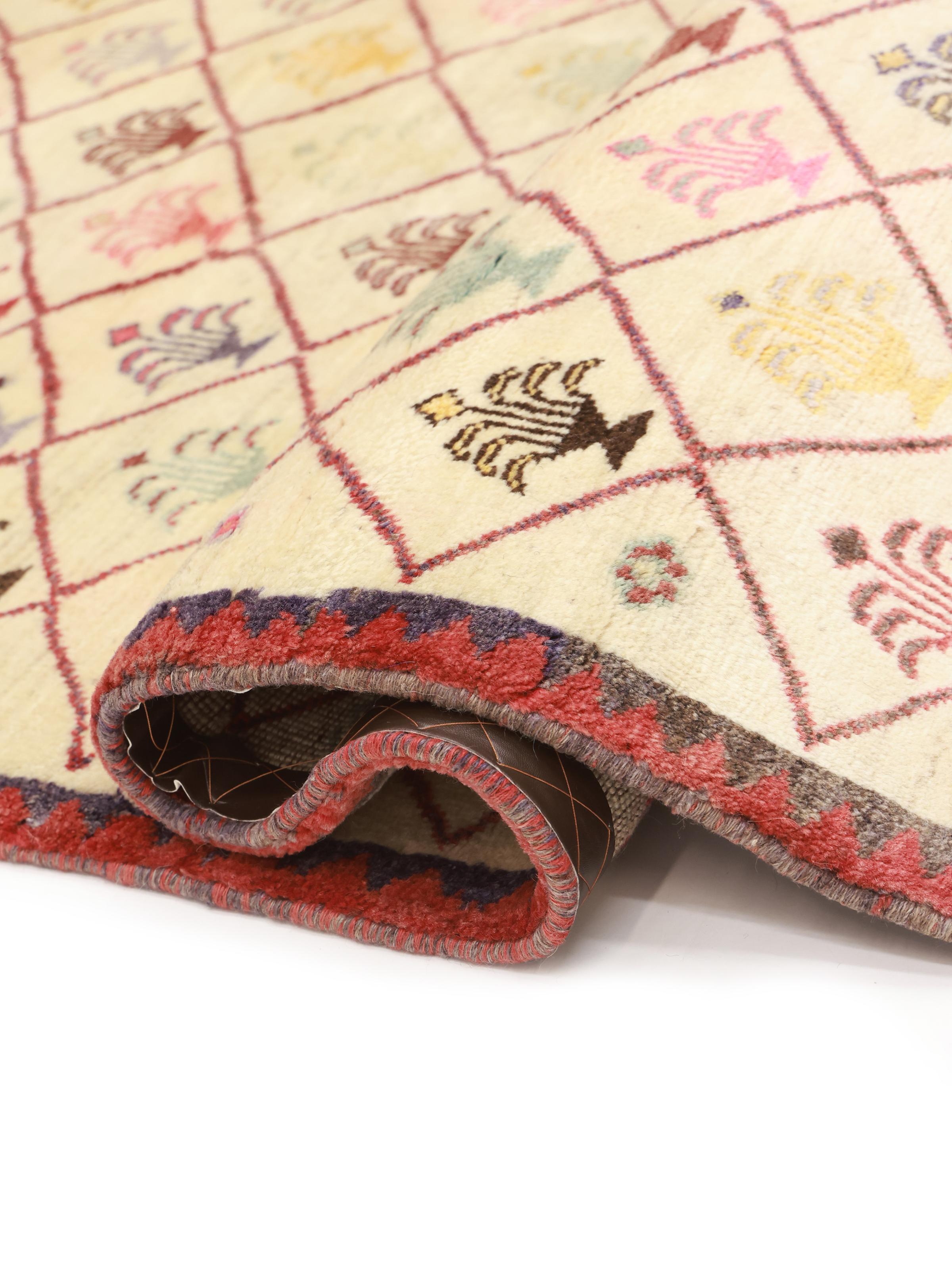
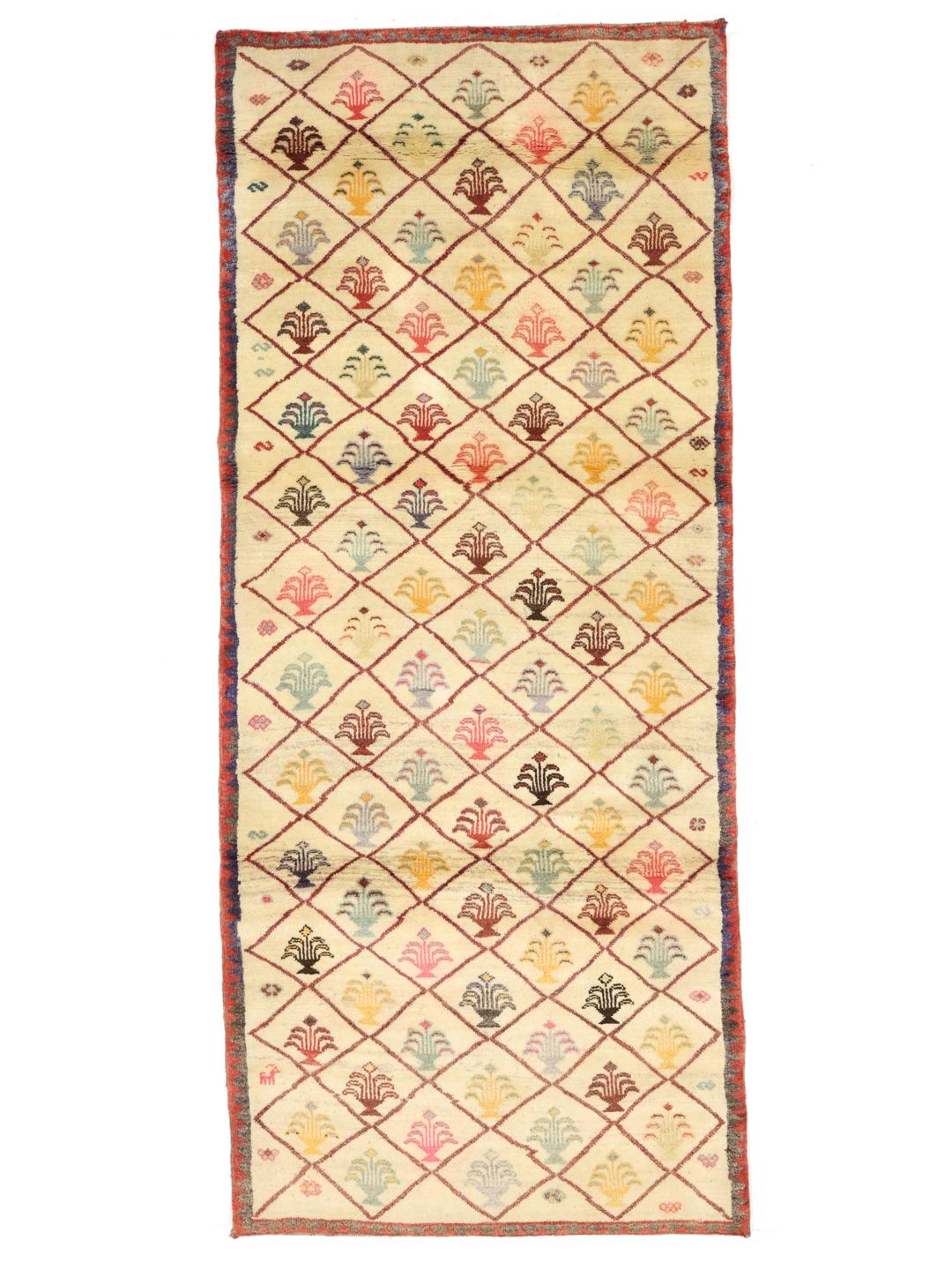
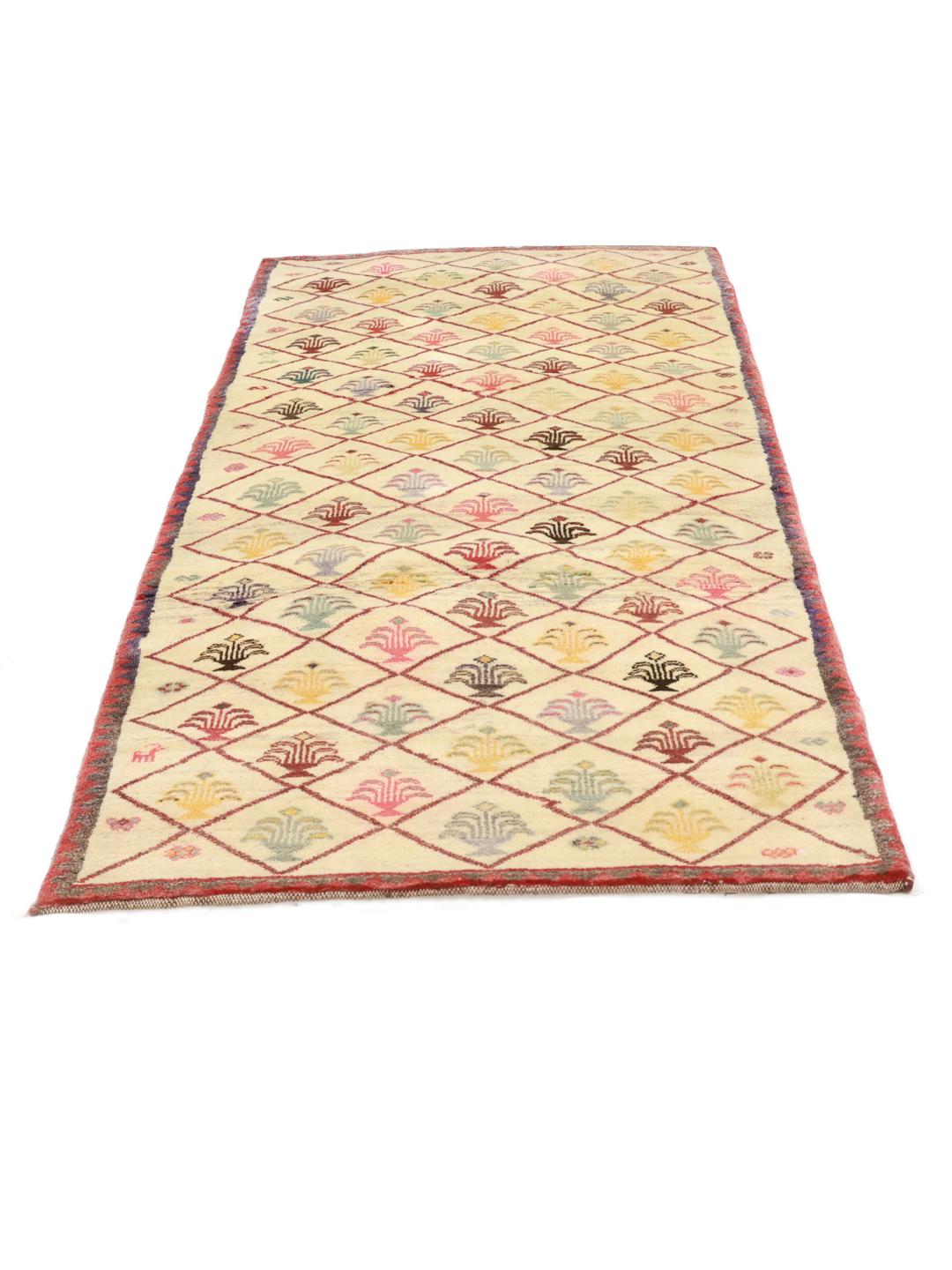
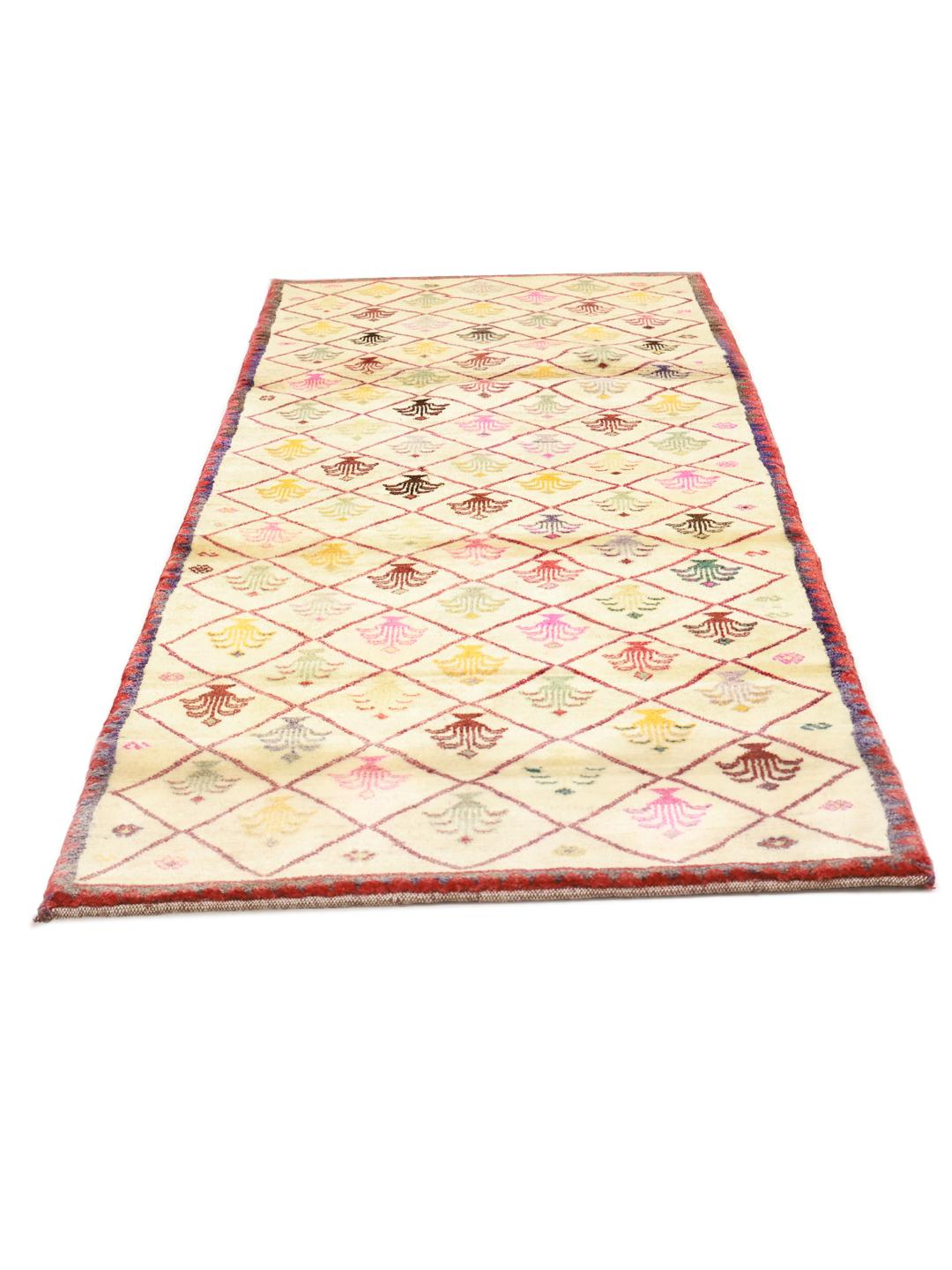
Gabbeh rugs originate from the nomadic tribes of the Middle East, primarily woven by the Qashqai and Luri peoples. Traditionally, these rugs were created for personal use within the family tent, serving as essential bedding and floor coverings that provided insulation against the cold ground.
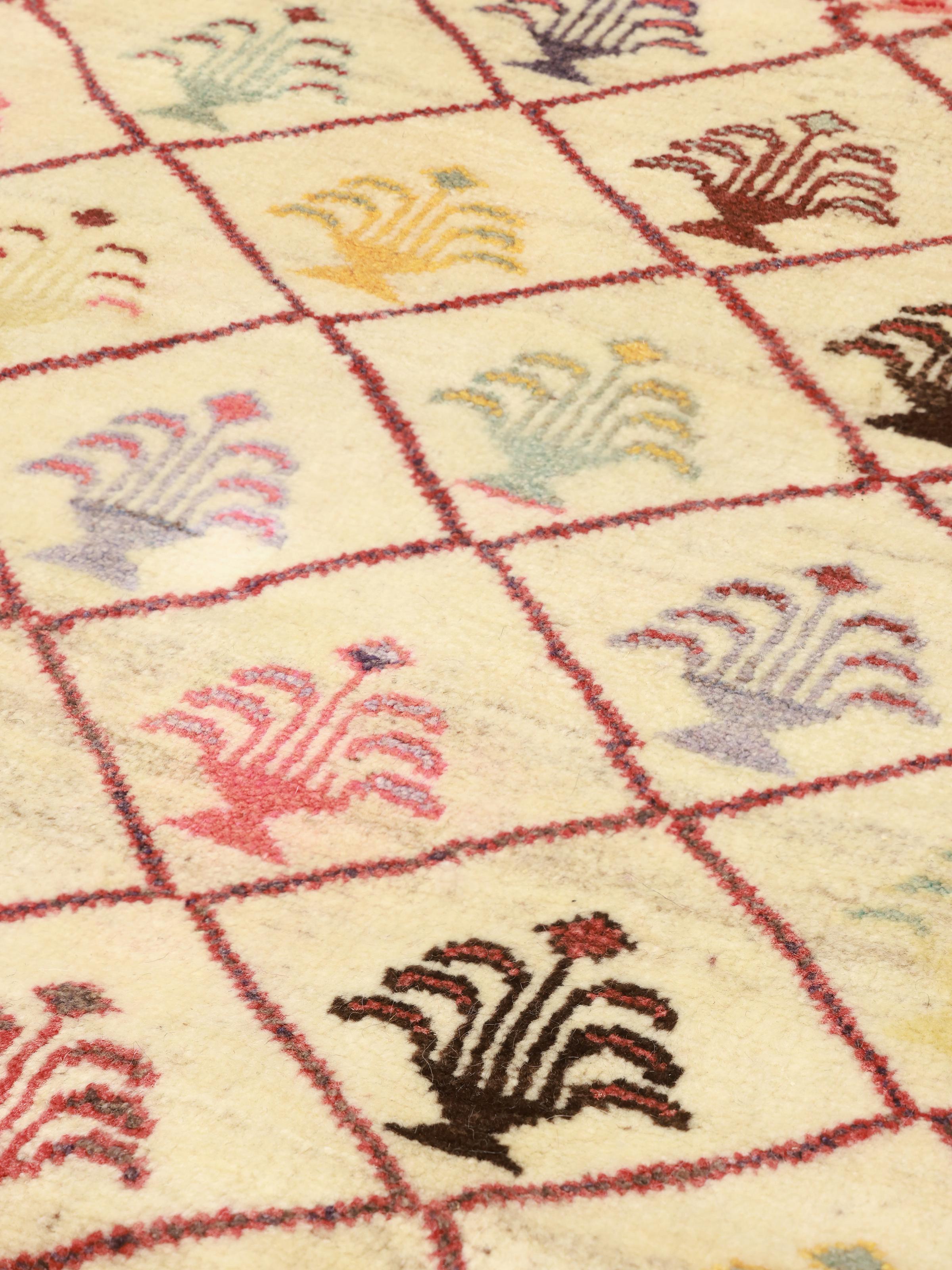
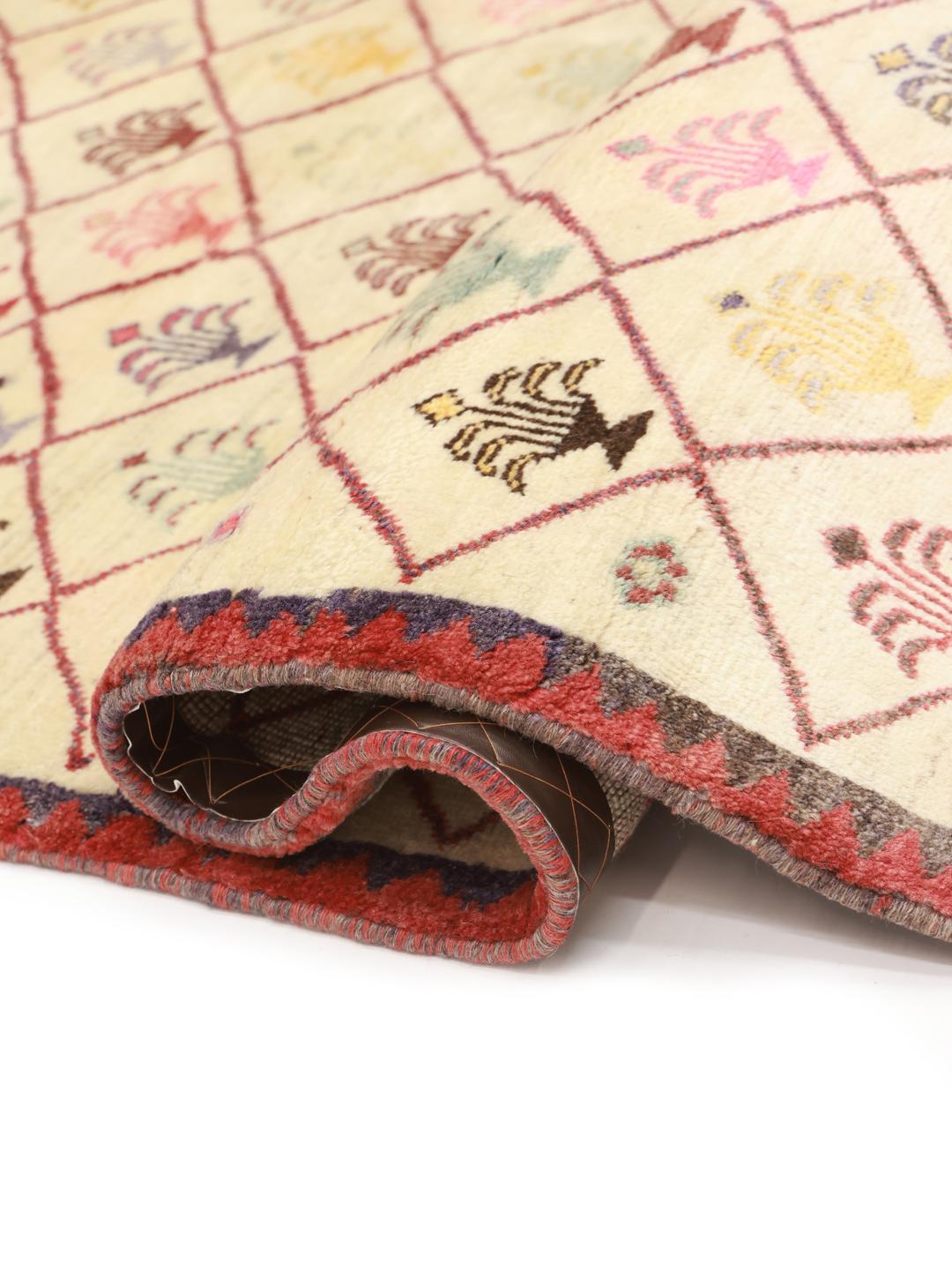
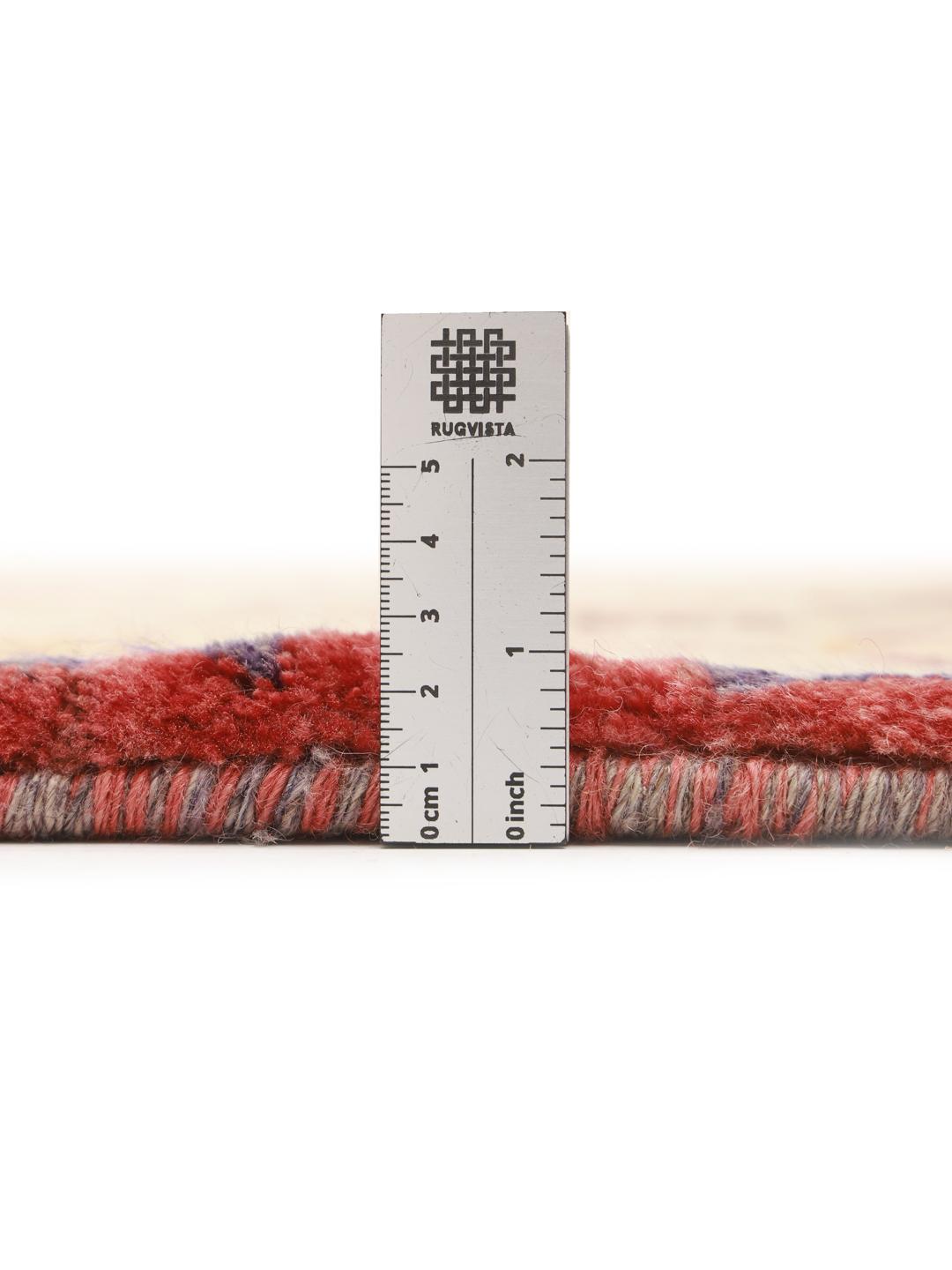
The term Gabbeh itself refers to a 'raw' or 'natural' style, which is reflected in their characteristically thicker pile and simpler, more abstract designs compared to formal city rugs. This style celebrates the freedom of the weaver, who often drew inspiration from their immediate surroundings, memories, and cultural folklore rather than following a strict, pre-drawn cartoon.
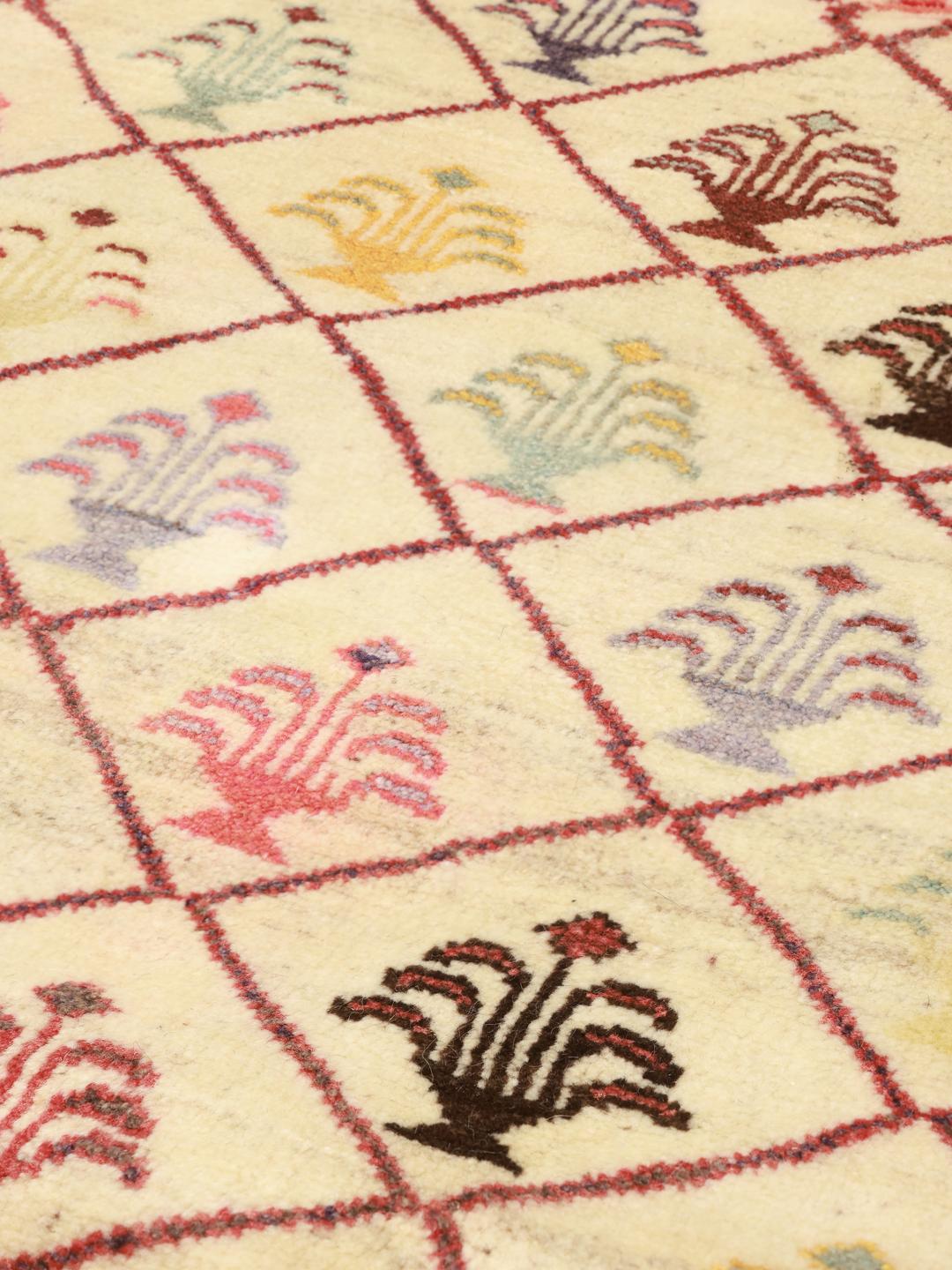
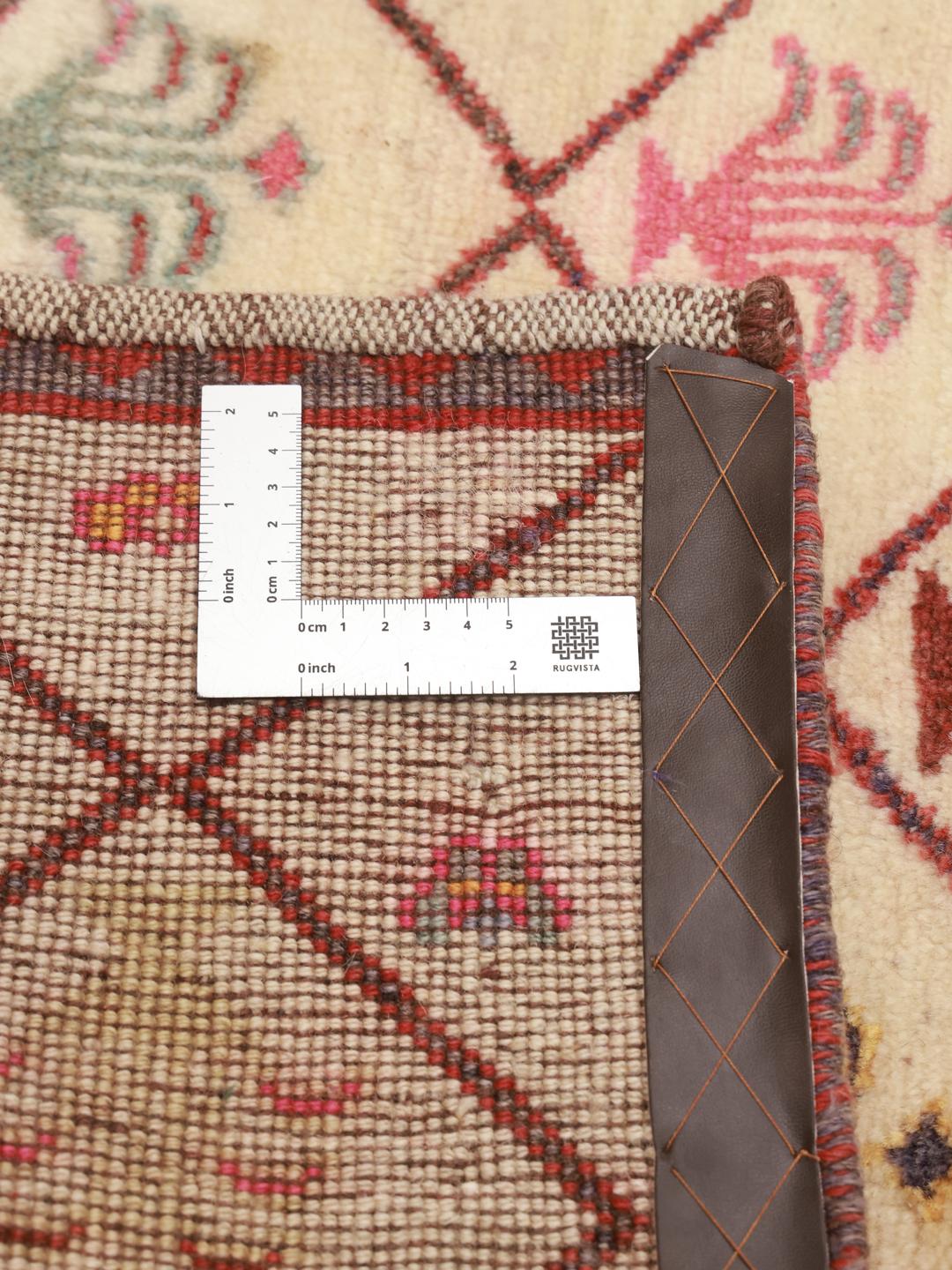
Signature elements of these rugs often include bold, geometric shapes and stylised nature motifs, such as the floral elements seen here. The colours are traditionally derived from natural dyes, which develop a beautiful, mellow patina over time, making each piece a living record of the environment from which it emerged.
Owning a Gabbeh is a connection to a long-standing tradition of tribal artistry and self-expression. These rugs are highly valued by collectors for their honest, unpretentious beauty and the immense skill required to produce them without the aid of modern templates, representing a genuine piece of cultural heritage.