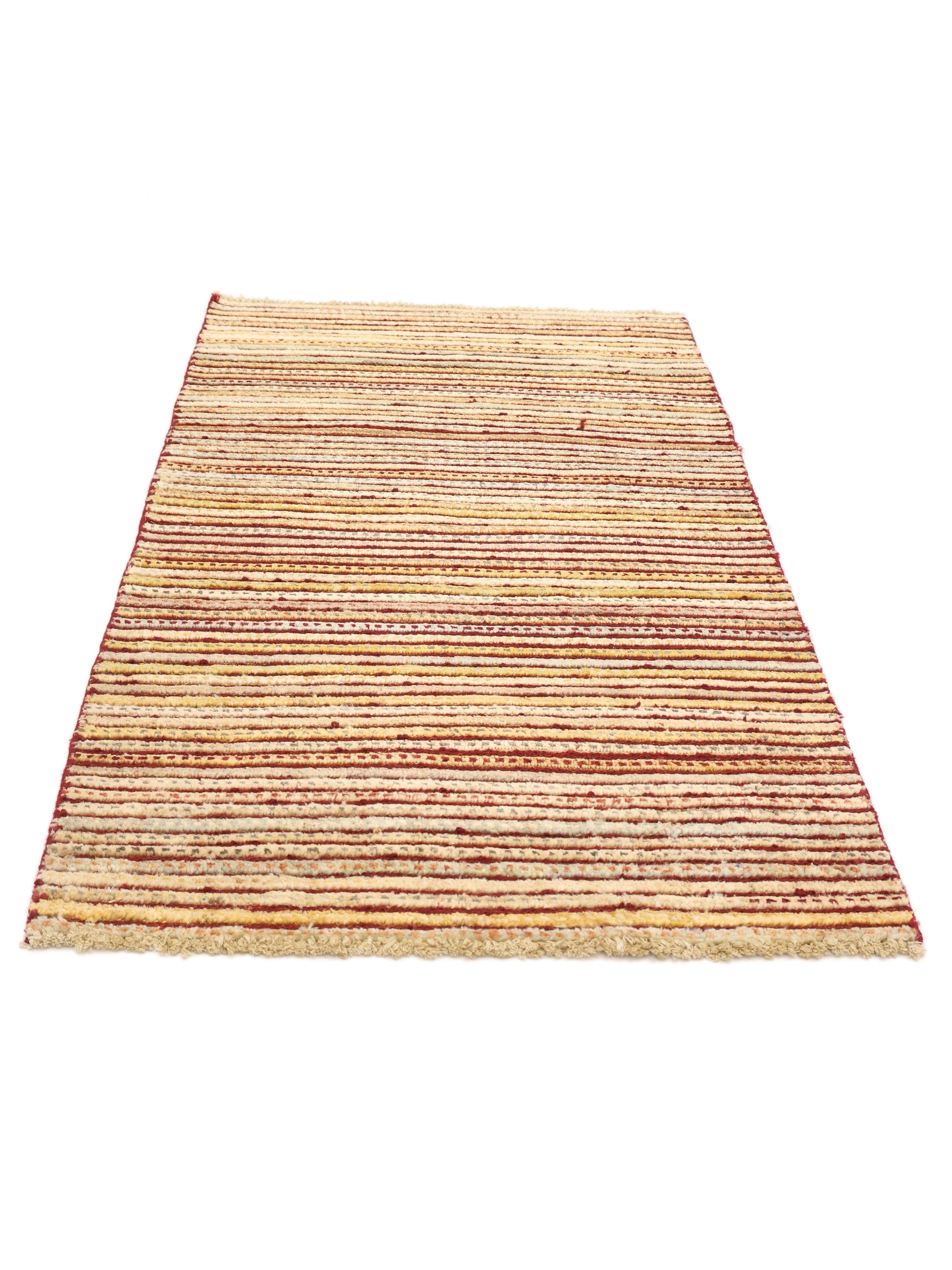
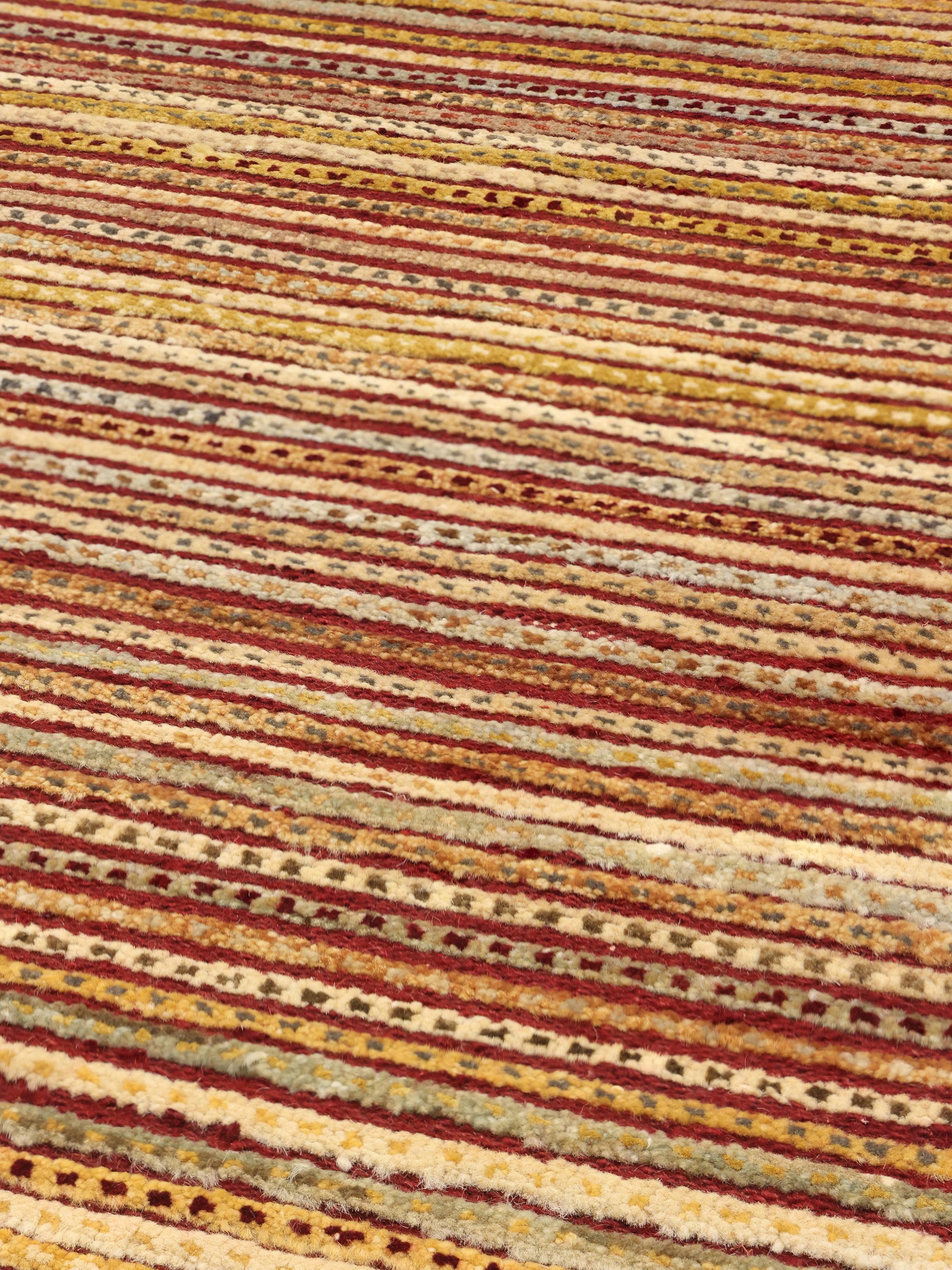
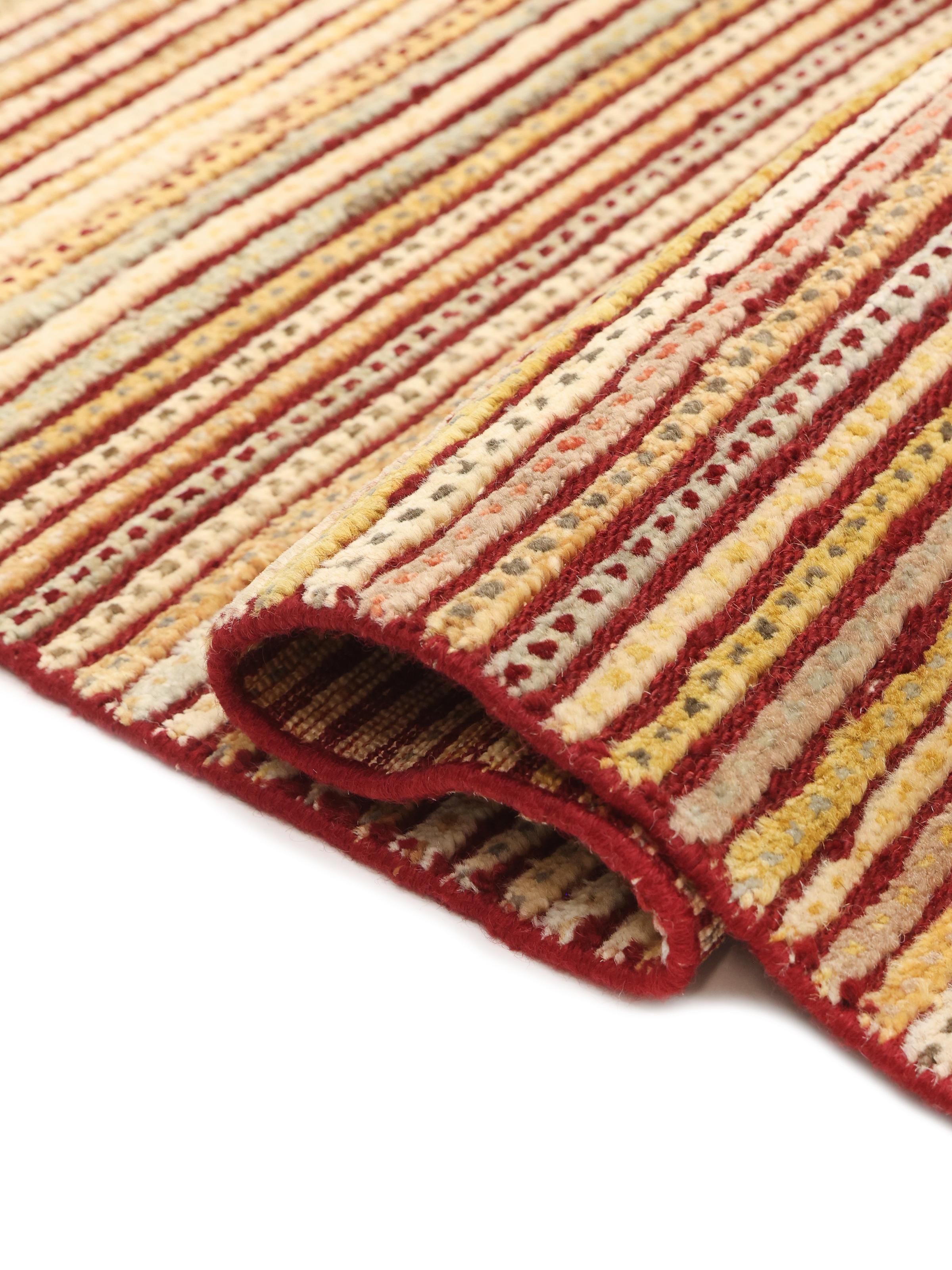
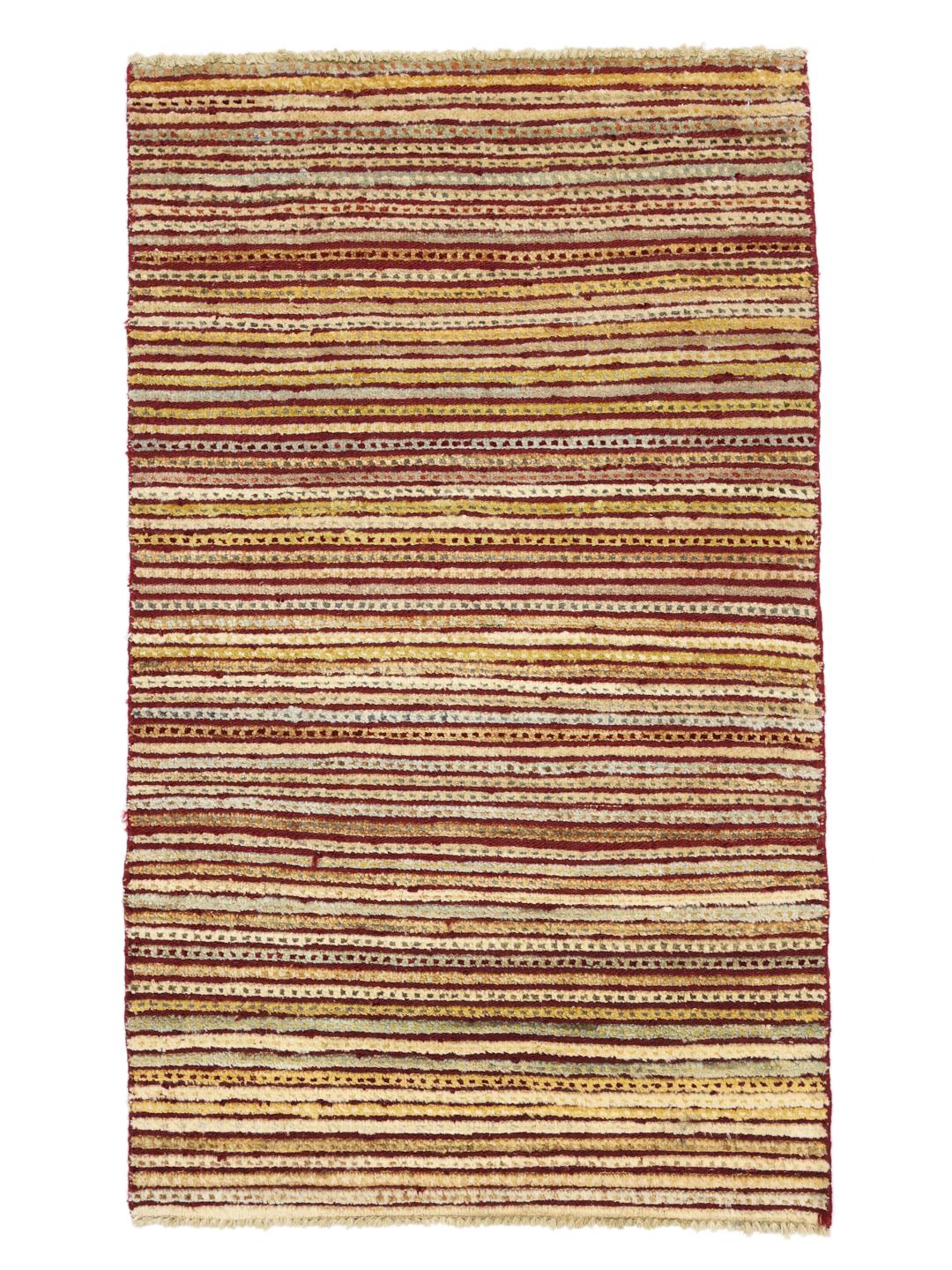
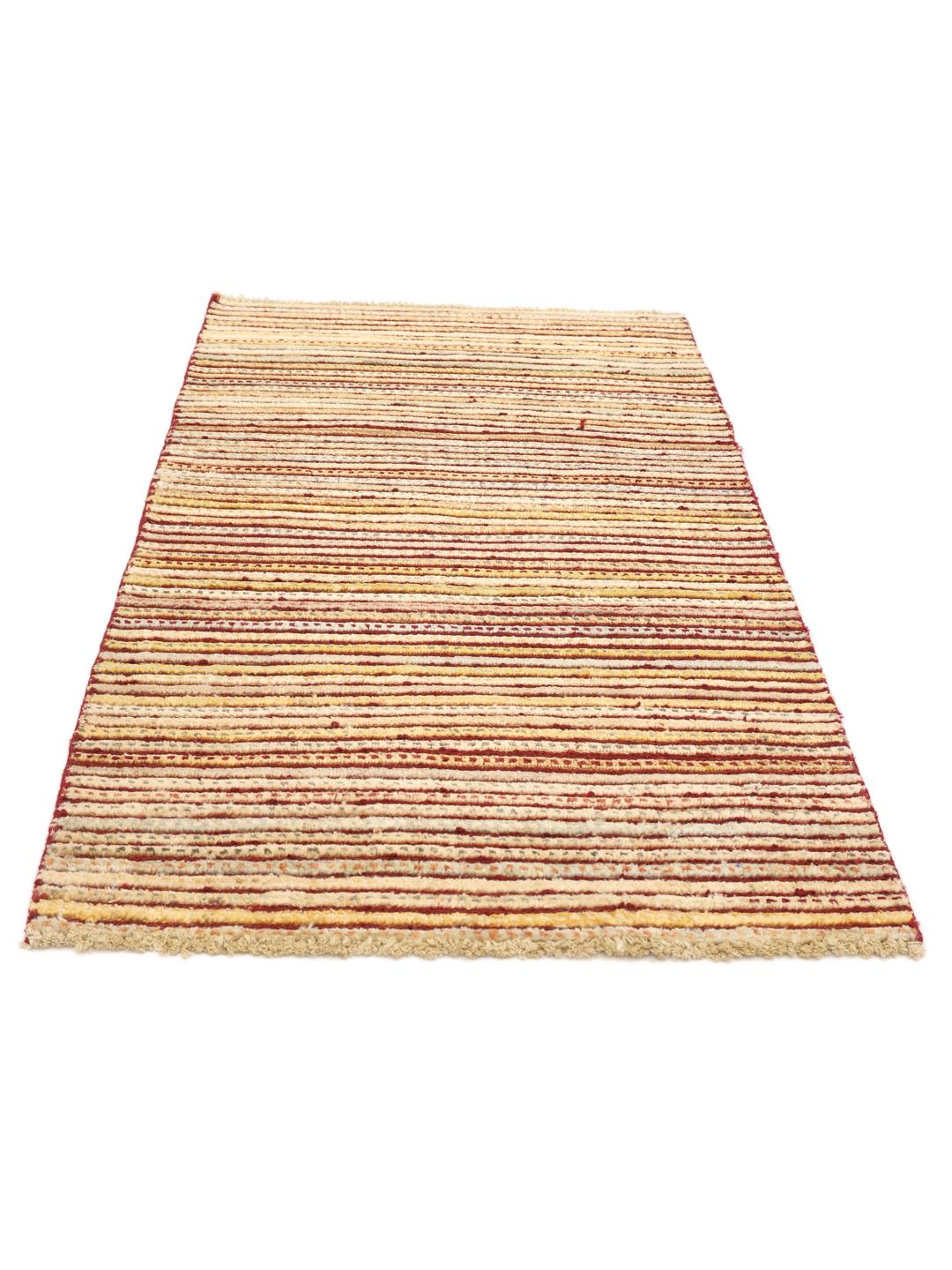
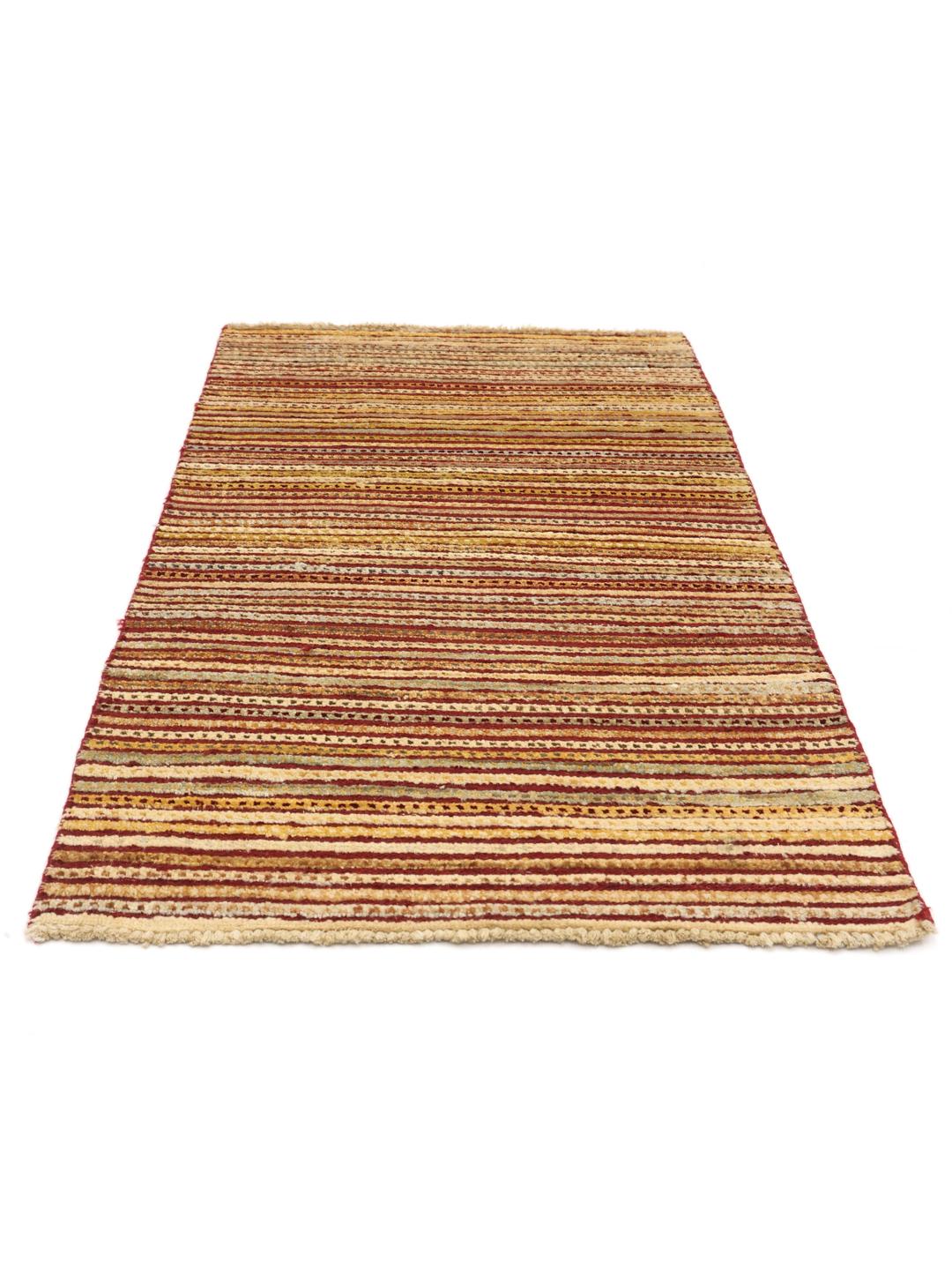
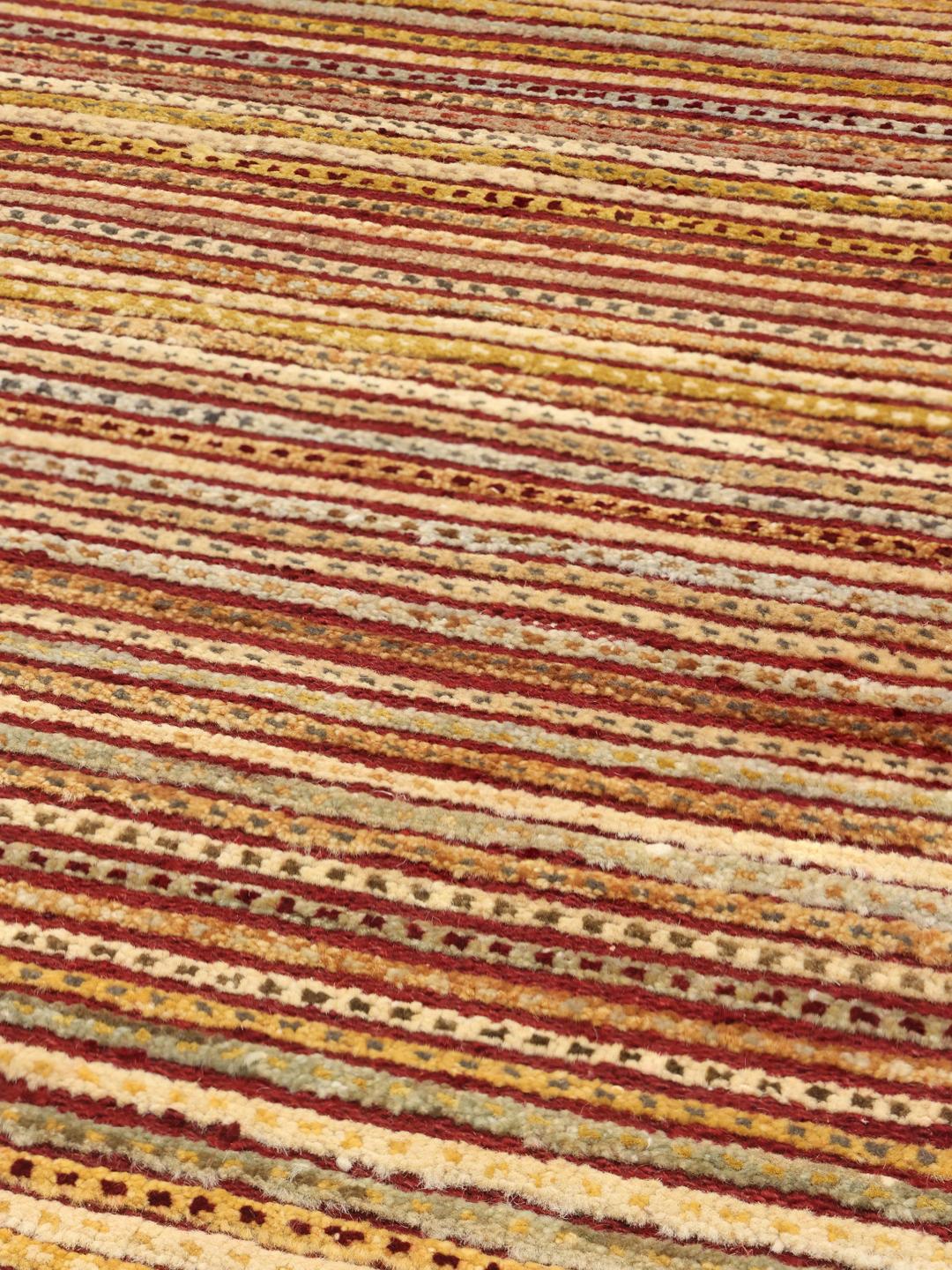
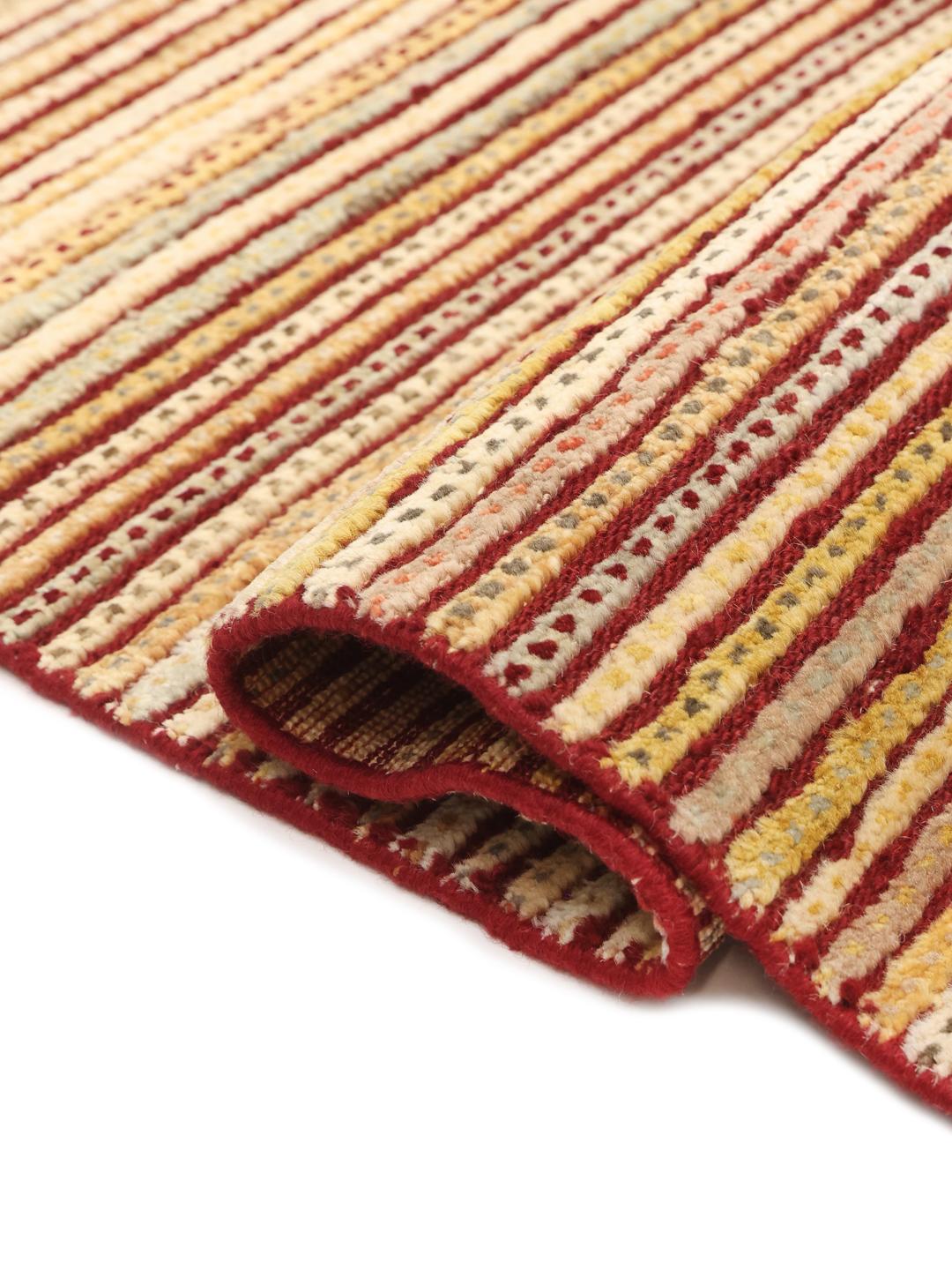
Gabbeh rugs trace their roots to the nomadic tribes of the Middle East, particularly the Qashqai and related groups who wove them primarily for their own practical use.
Unlike formal workshop carpets, traditional Gabbehs were created as heavy, warm sleeping blankets and floor coverings for tribal tents, featuring minimalist designs inspired by daily life and the surrounding natural landscape.
The word Gabbeh translates roughly to raw, natural, or uncut, which speaks to the straightforward and unpretentious nature of these traditional textiles.
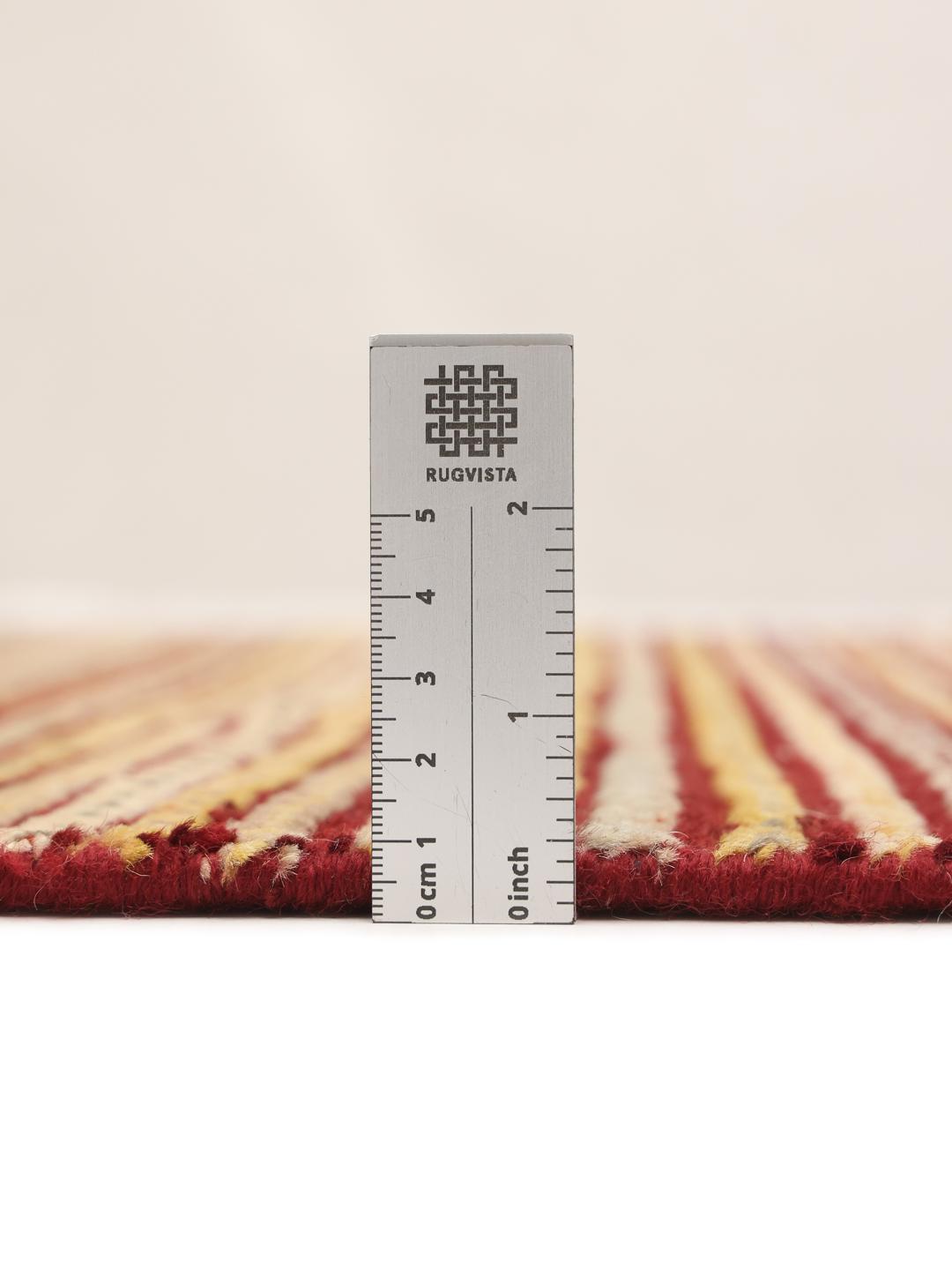
Over generations, this tribal craft evolved into the Gabbeh Modern style, blending ancient weaving techniques with contemporary aesthetic sensibilities while preserving the thick, luxurious pile that defines the tradition.
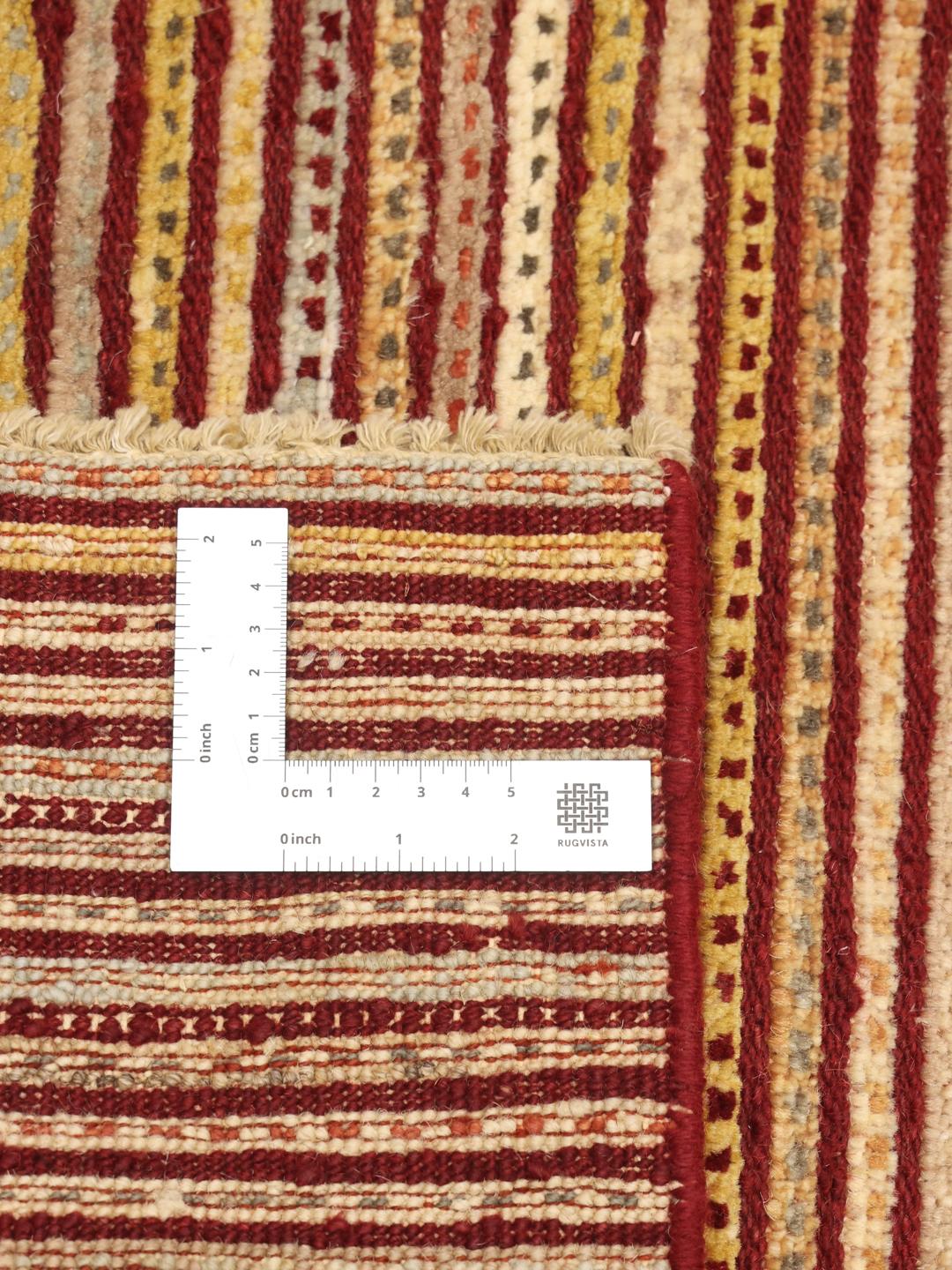
The visual language of Gabbehs is traditionally characterised by open fields of colour and simple geometric motifs rather than elaborate medallions.
Artisans often hand-spun their wool and used natural dyes extracted from local plants and roots, creating subtle tonal variations known as abrage that give the surface a living, watercolour-like depth.
Owning a Gabbeh today connects you to a rich lineage of tribal craftsmanship and independent artistry.
Each rug serves as a testament to the weaver's personal expression, capturing a unique story in wool and knot that cannot be mass-produced.