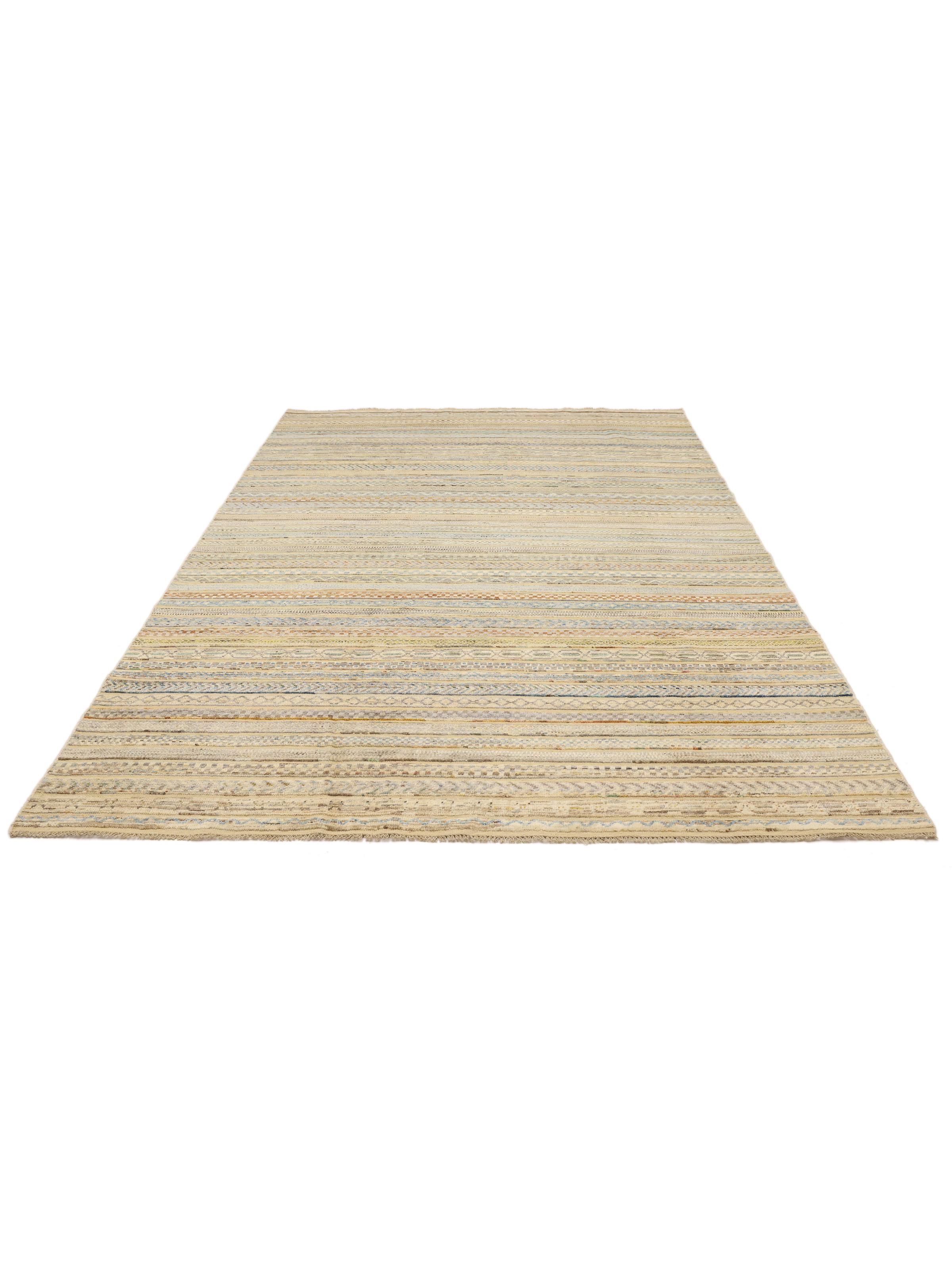
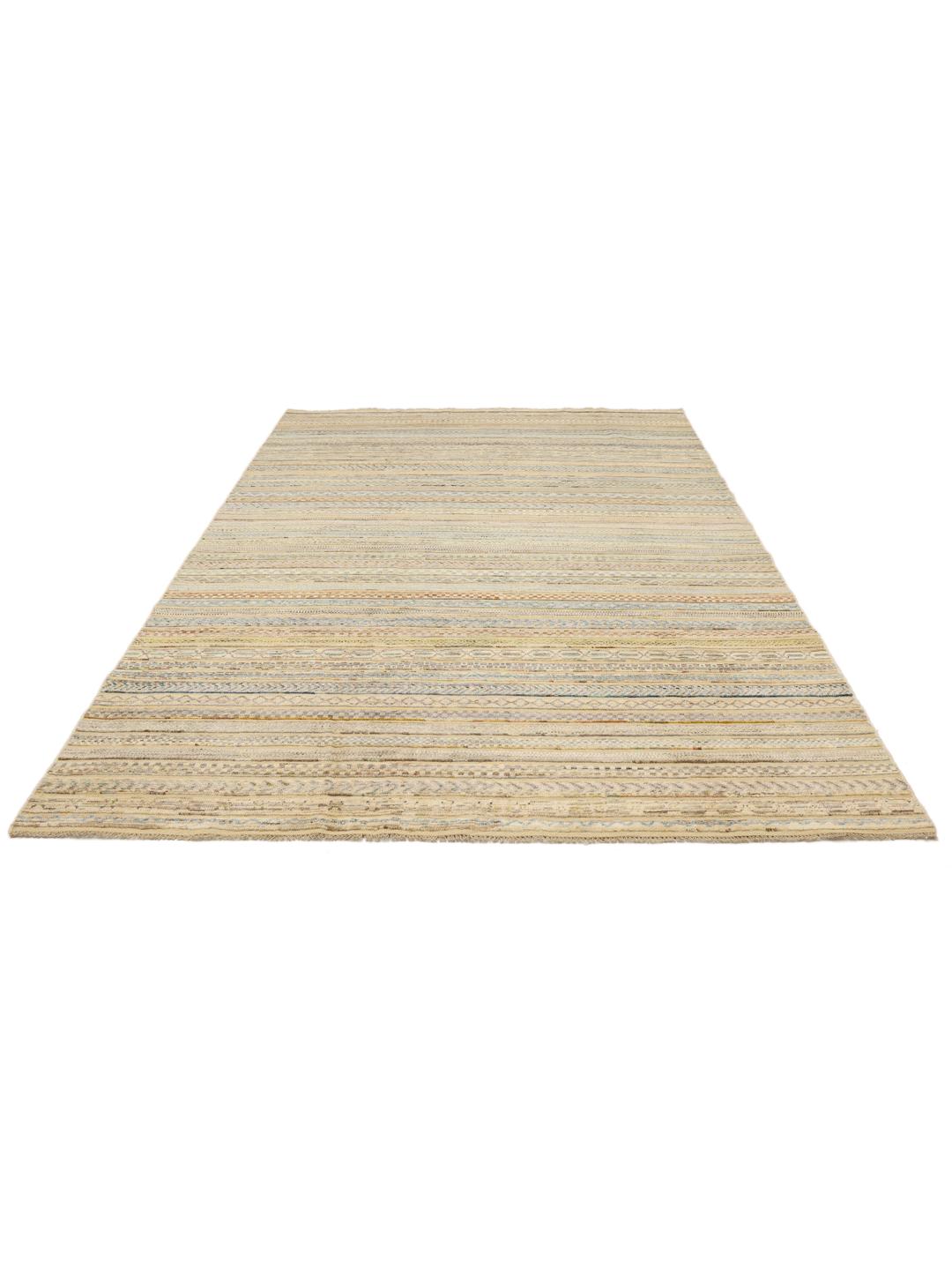
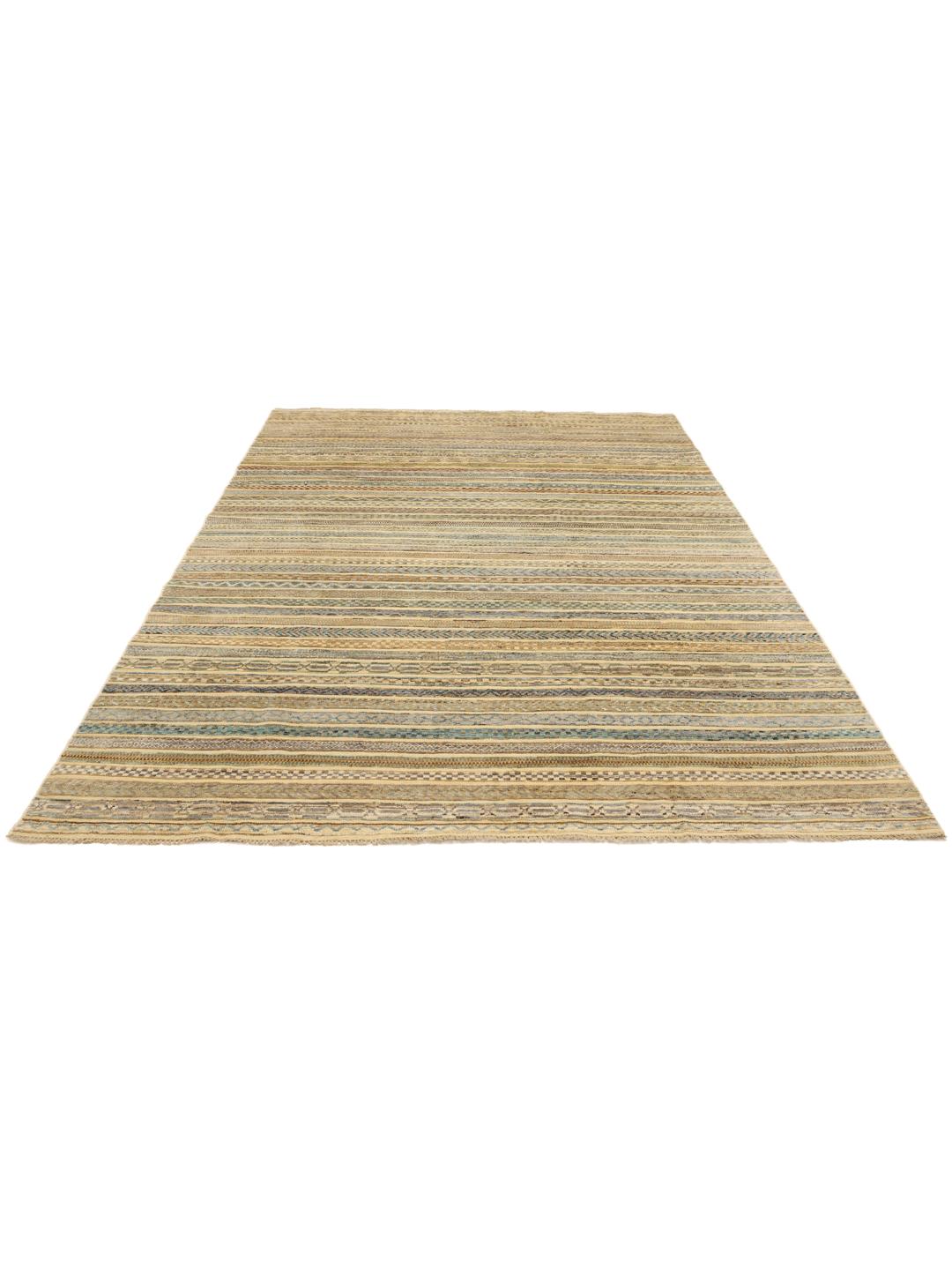
Gabbeh rugs have a long and storied history within the nomadic cultures of the Middle East, traditionally woven by tribal women who used them for their own practical needs. Unlike more formal, city-made rugs, these pieces were originally created as thick, heavy floor coverings designed to protect against the cold ground of tents and mountain dwellings.
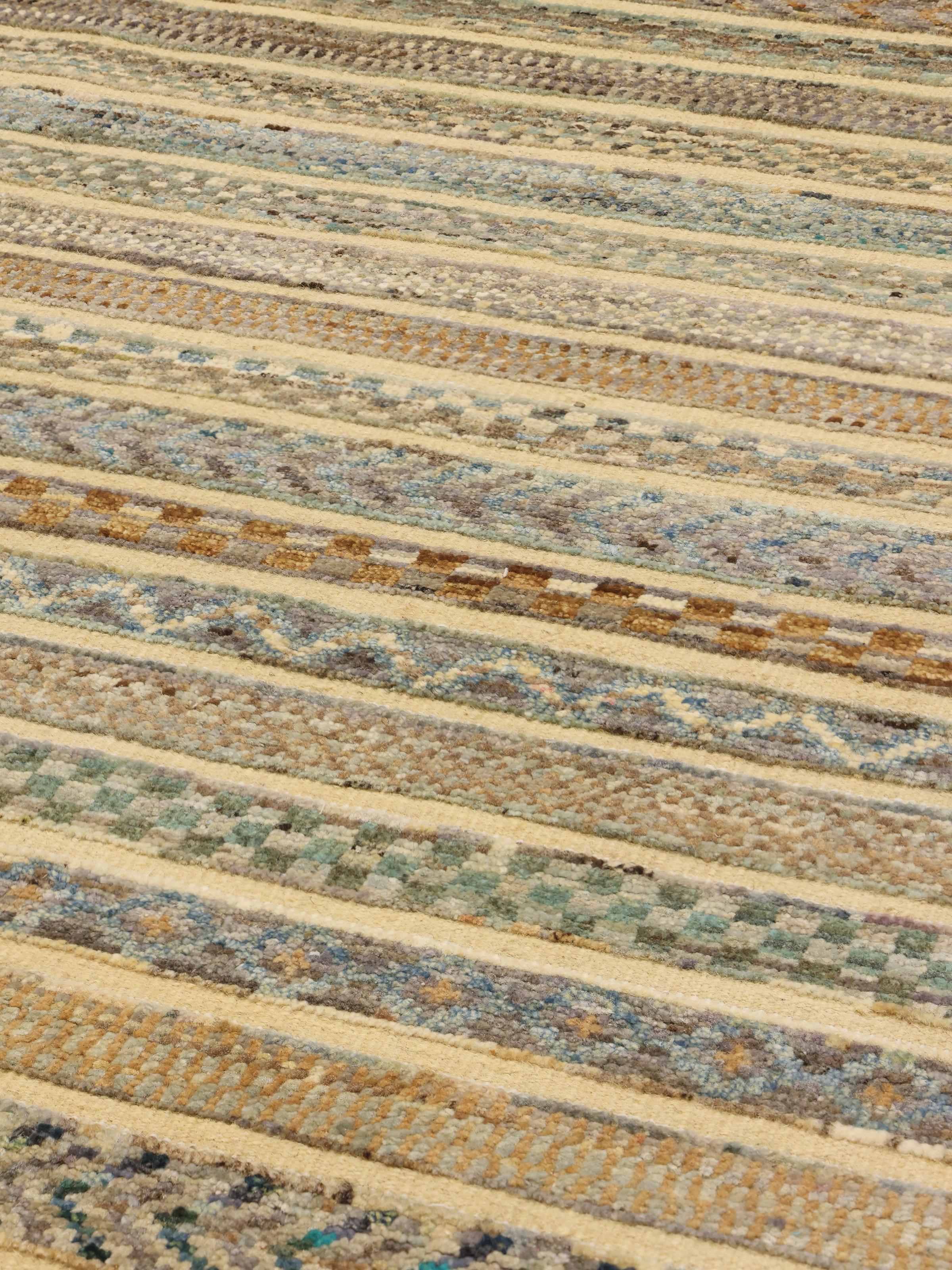
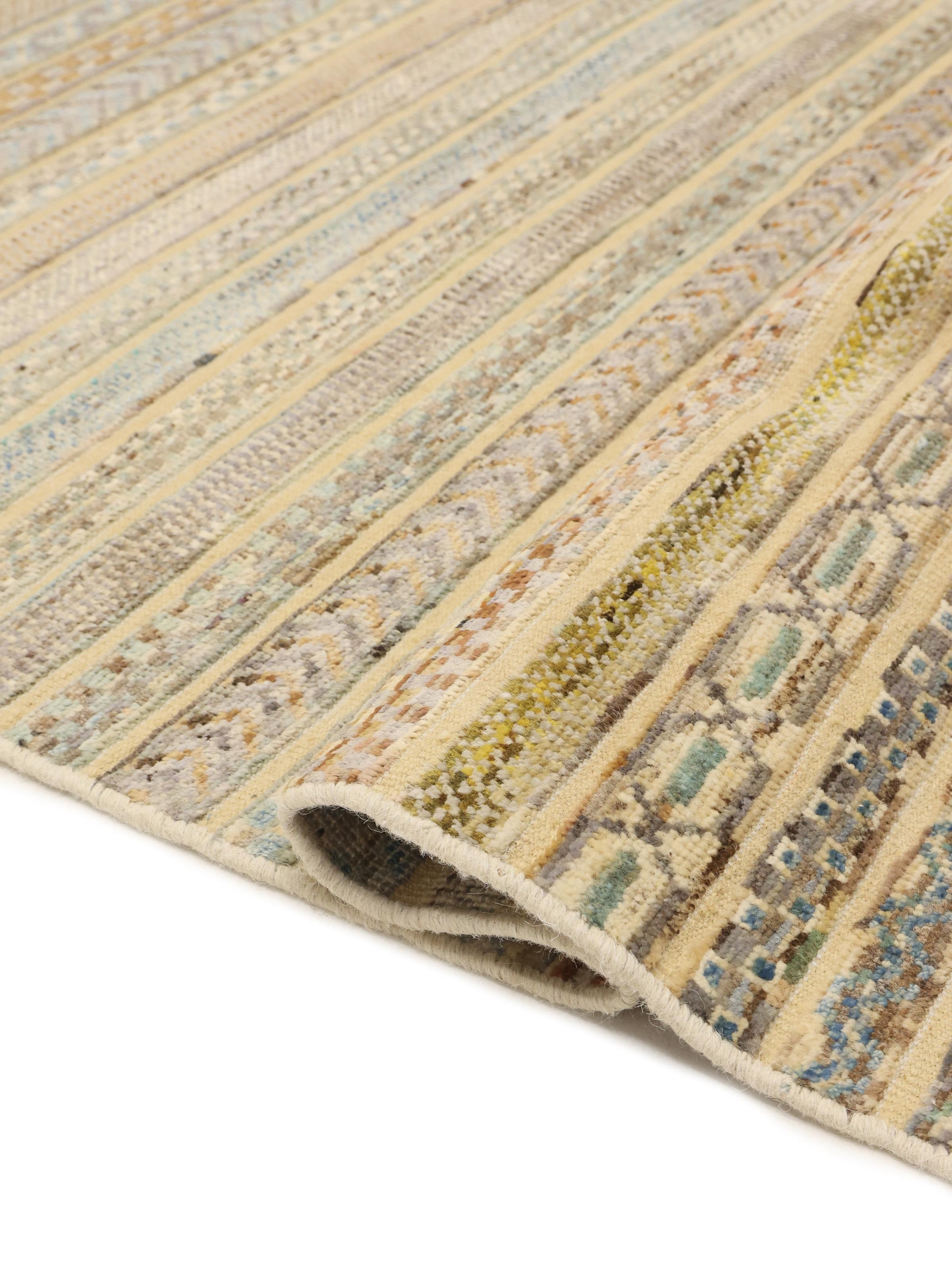
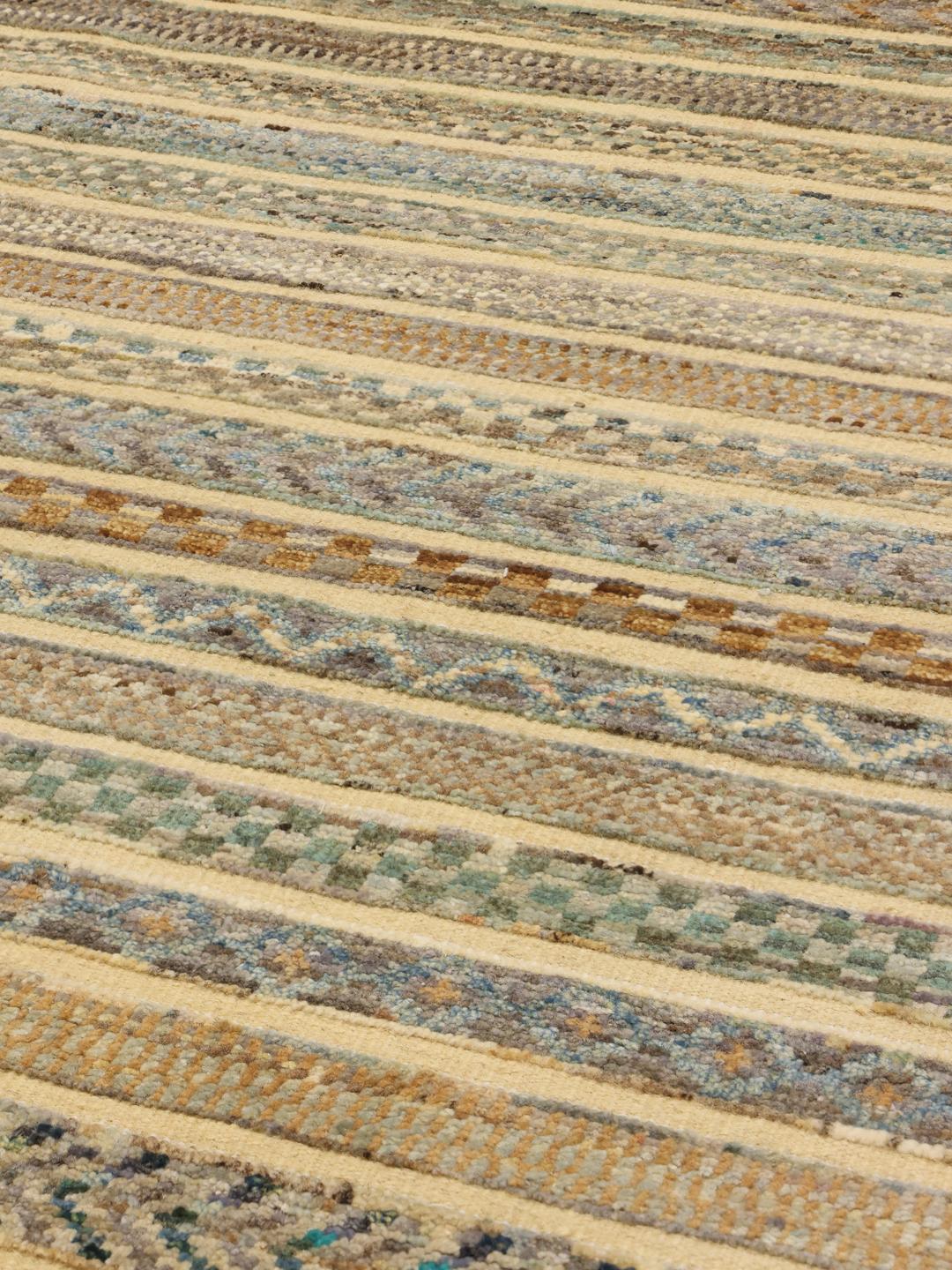
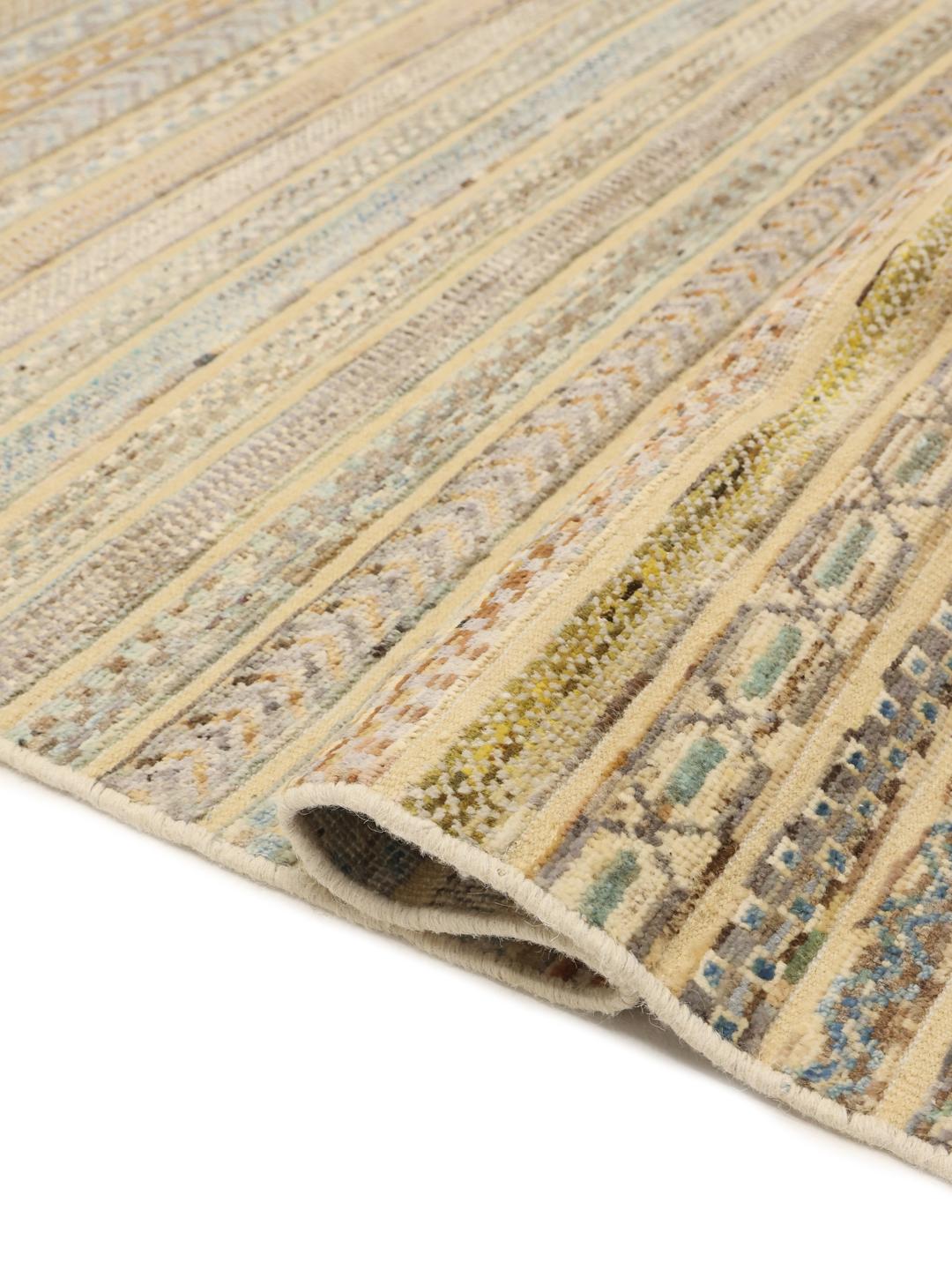
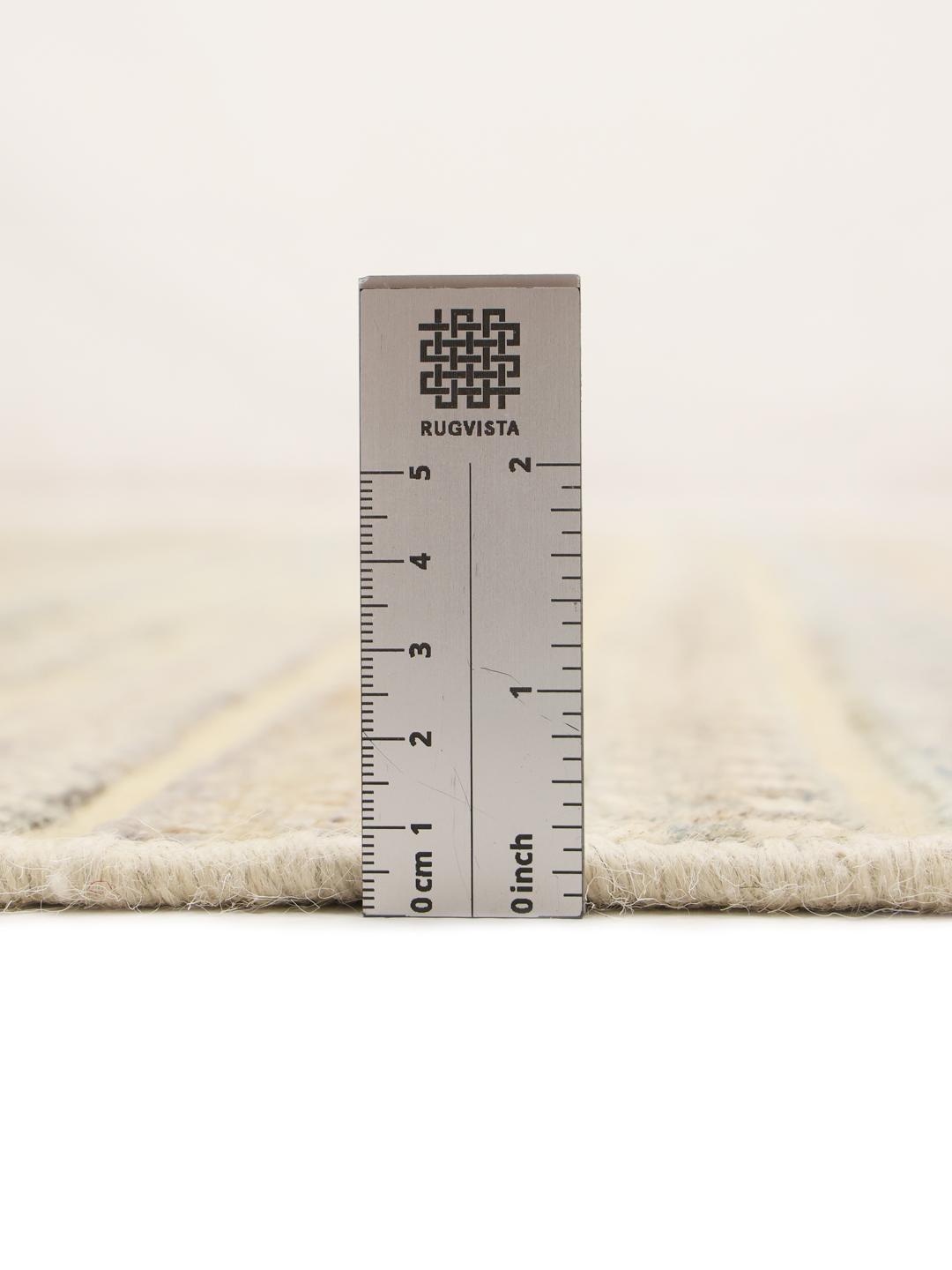
The term Gabbeh essentially means raw or natural, reflecting the unpretentious and honest nature of these rugs. Historically, they were known for their thicker, coarser pile compared to more decorative urban rugs. This construction choice was deliberate, prioritising warmth, insulation, and durability in harsh environments, which makes them exceptionally comfortable in a modern domestic setting today.
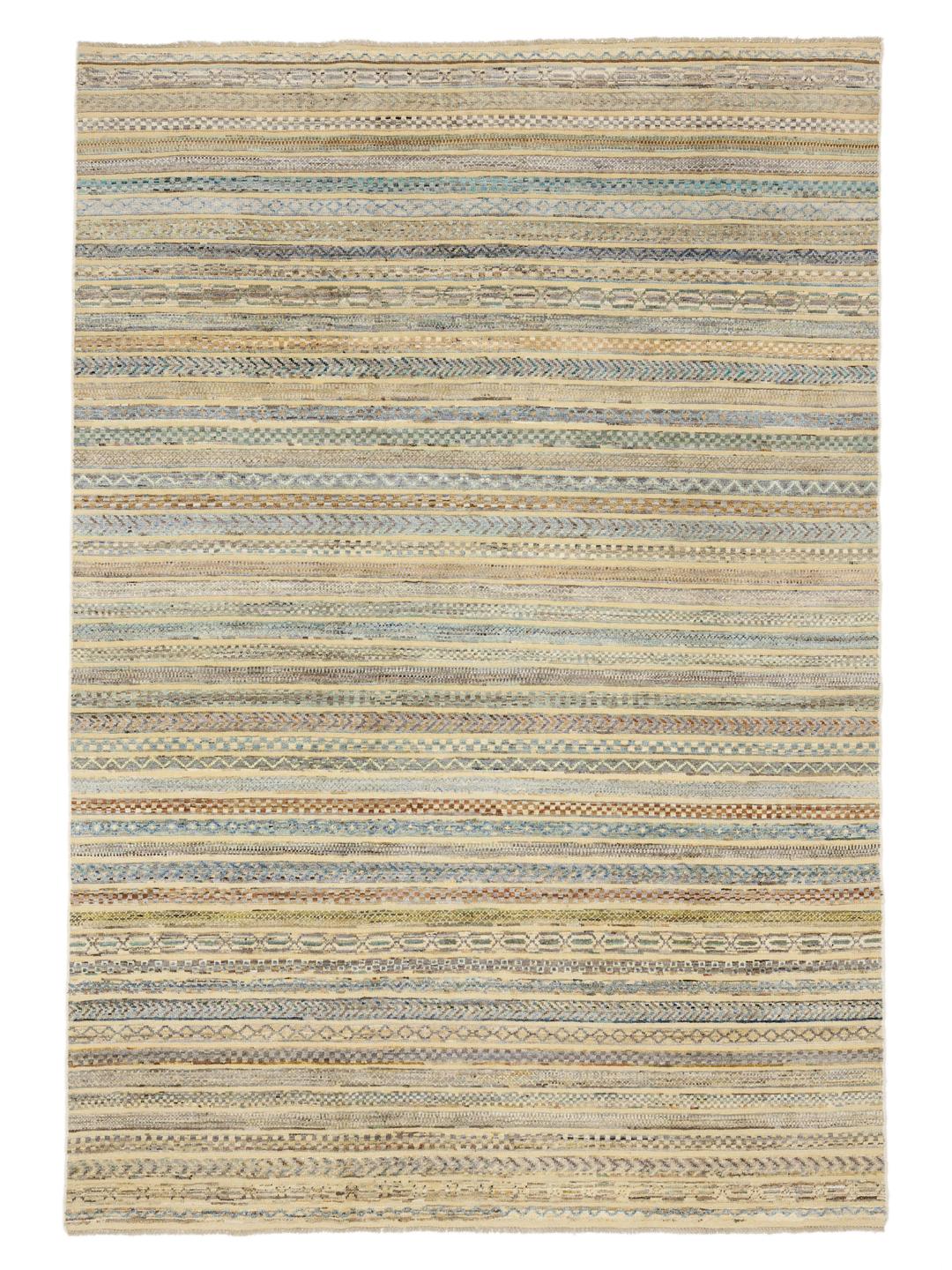
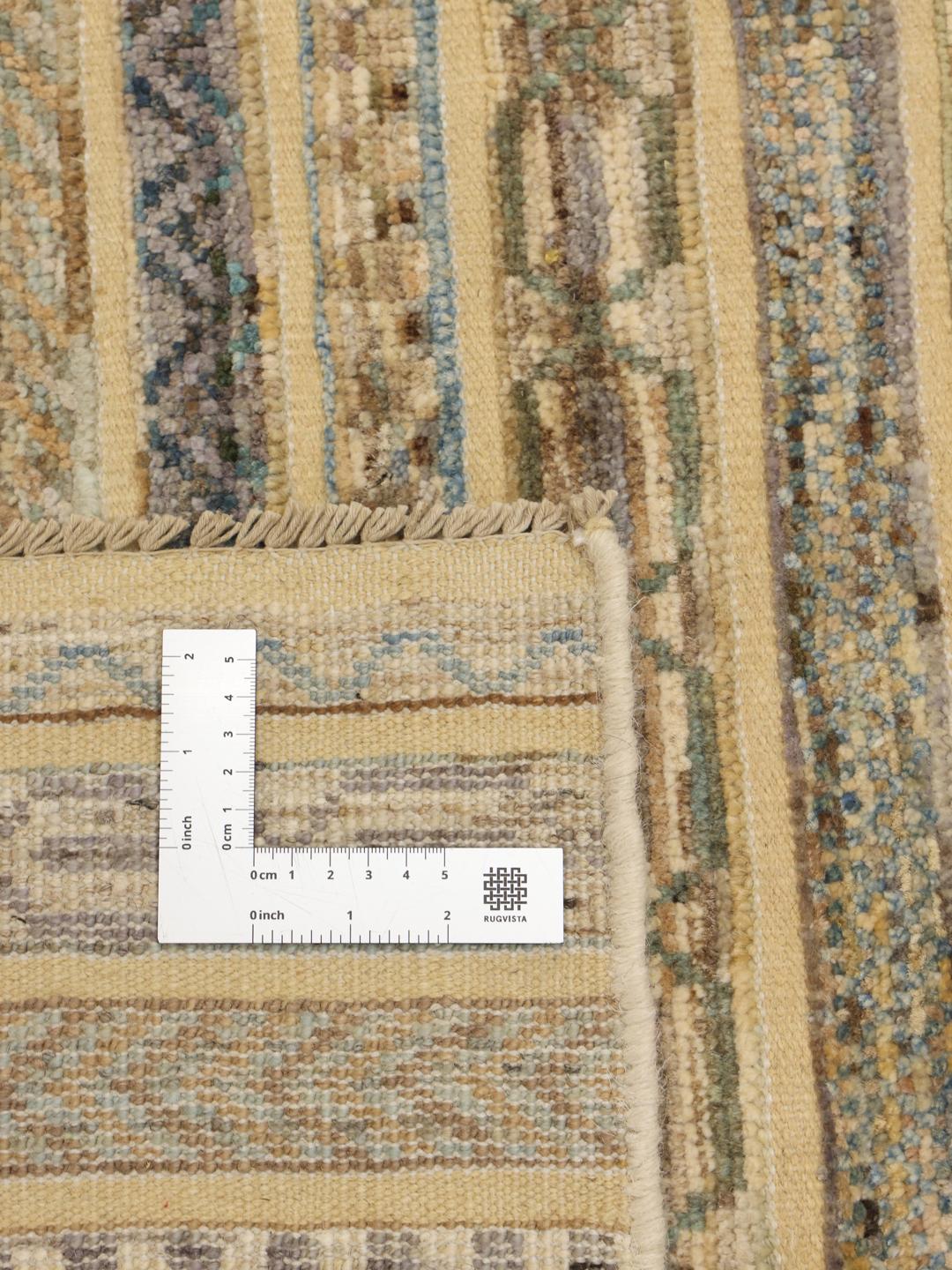
While traditional Gabbehs were once defined by simple, sparse geometric shapes and bold fields of colour, the modern iteration seen here has evolved to incorporate more sophisticated striped motifs and a refined colour palette. These contemporary designs maintain the soul of the original tradition while adapting to the aesthetic preferences of current homes, bridging the gap between ancient tribal utility and modern interior design.
Collecting a Gabbeh today is an act of preserving a rich cultural narrative. These rugs are valued not only for their heavy, comforting pile but for the personal expression of the weaver. Owning such a piece connects your home to a long lineage of craft, where skill and tradition are woven directly into the fabric of the rug, creating a lasting legacy of comfort and artistic integrity.