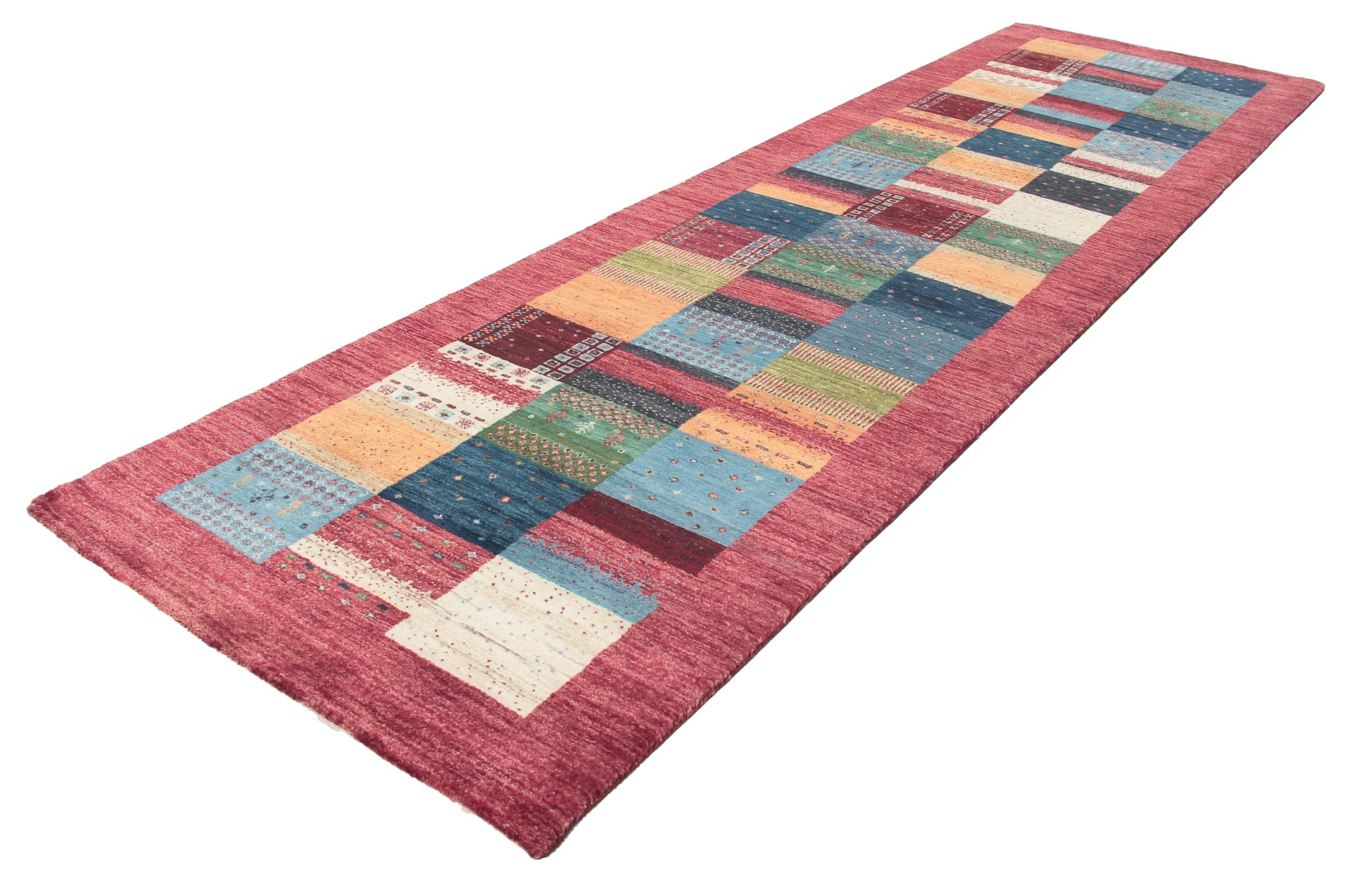
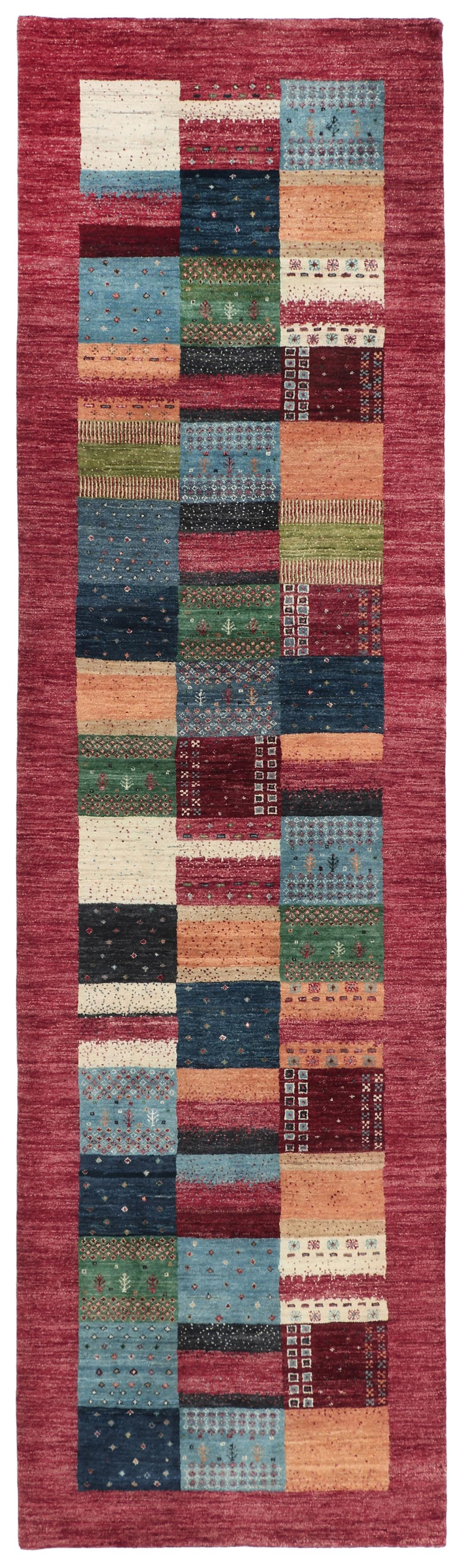
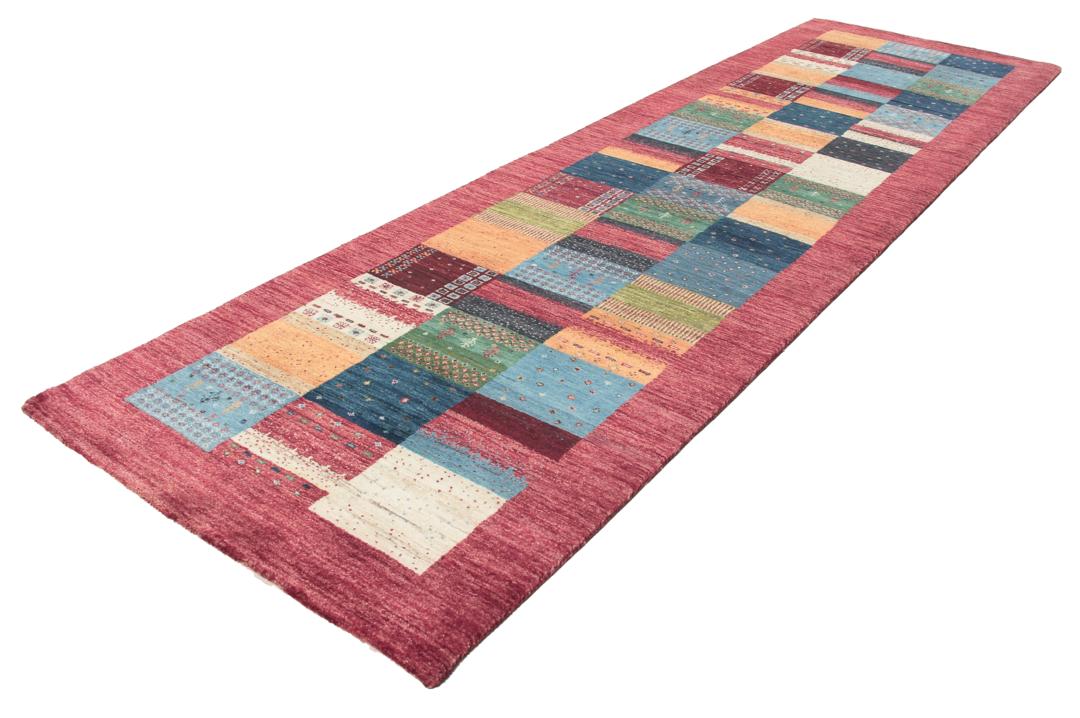
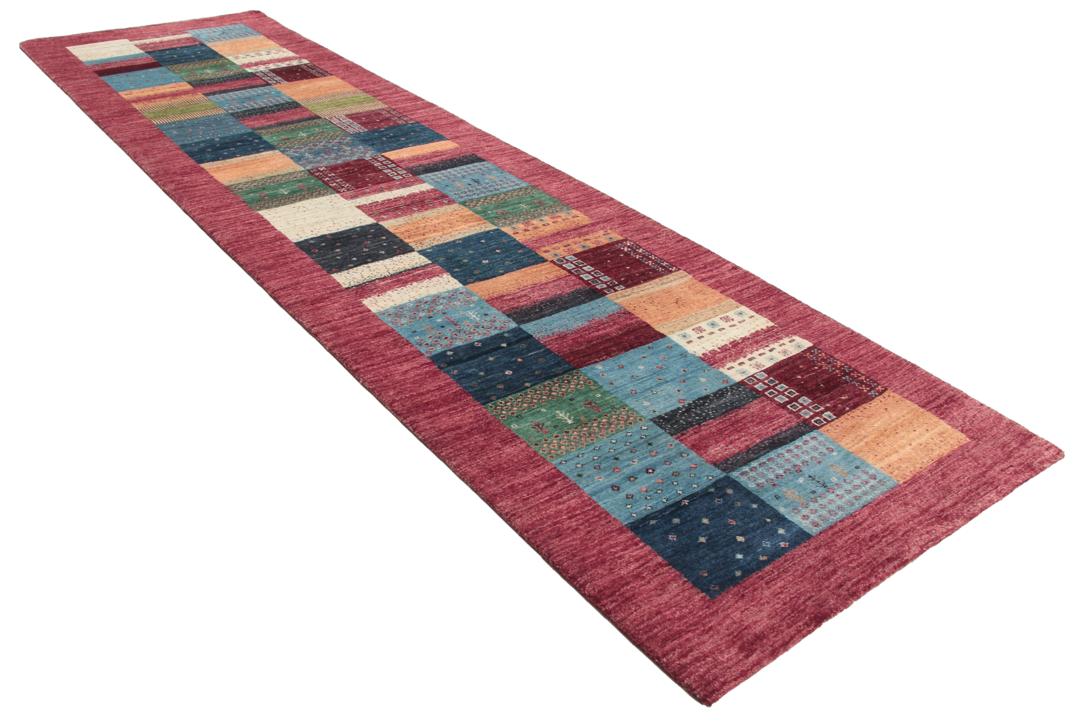
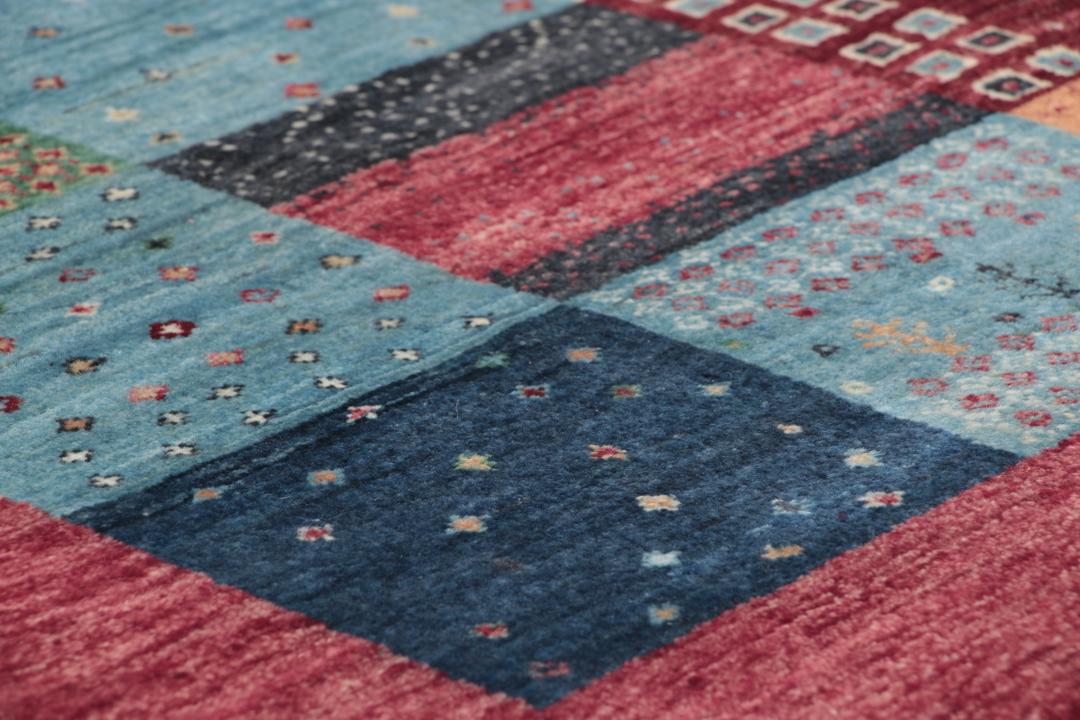
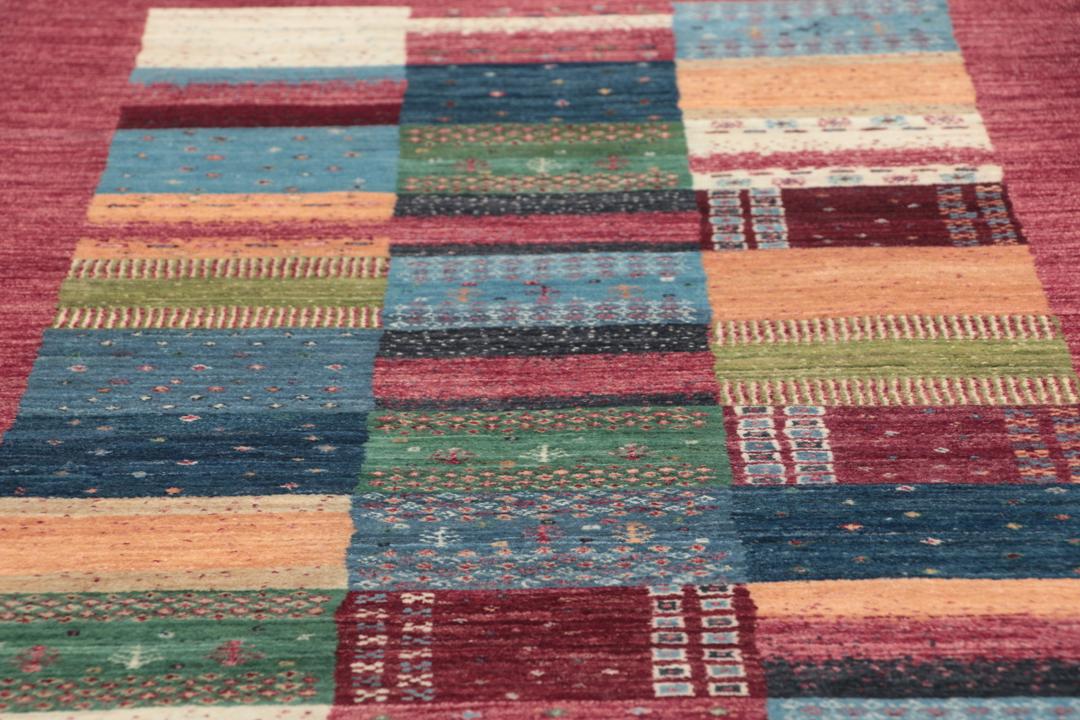
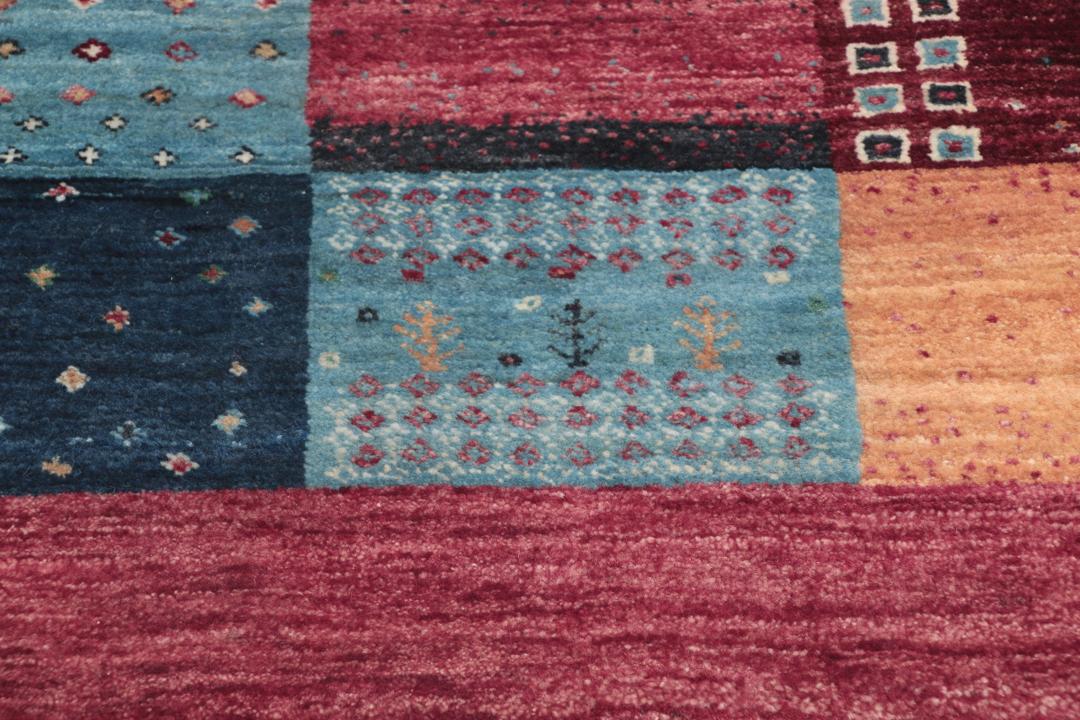
The Gabbeh tradition traces its roots to the nomadic tribes of the Middle East, where weavers created these rugs for personal use and comfort. Unlike more formal, city-made rugs, these pieces were designed with a focus on simplicity, natural beauty, and the weaver’s own creative expression. Over time, the style evolved and found a new home in the weaving centres of India, where artisans continue to honour these ancient techniques while infusing them with contemporary sensibilities.
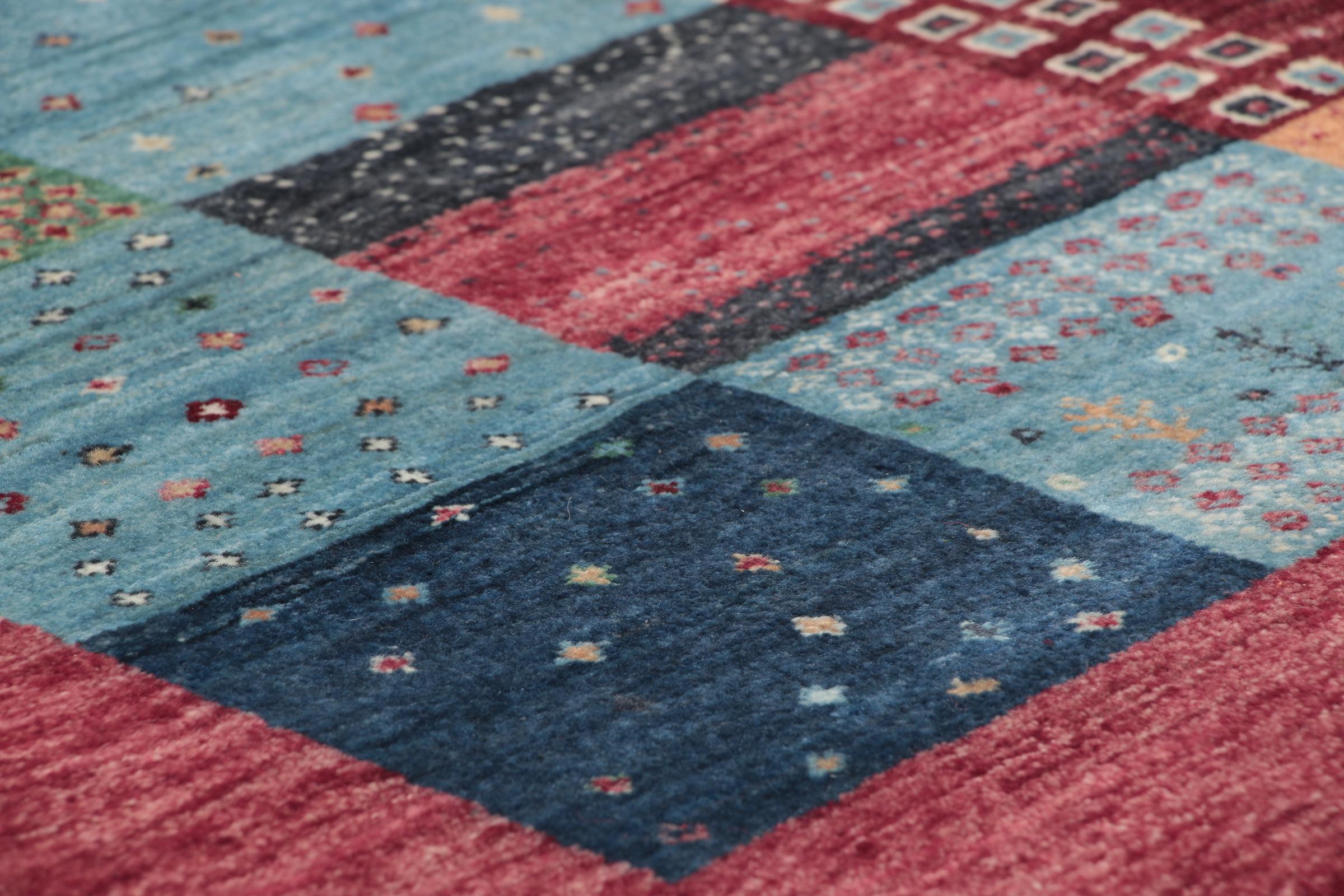
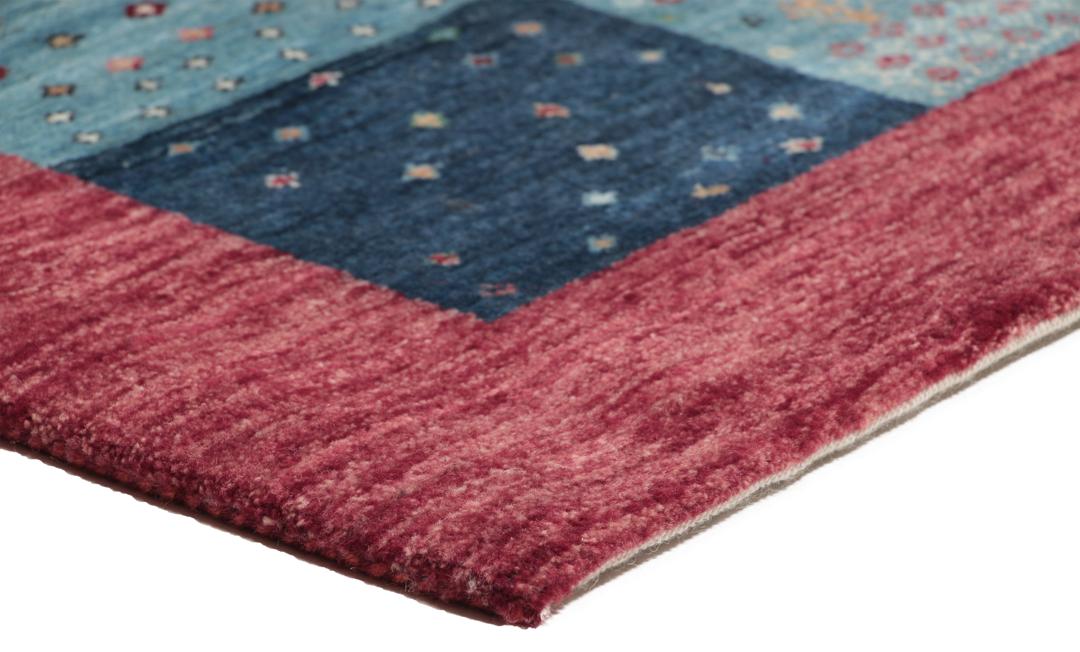
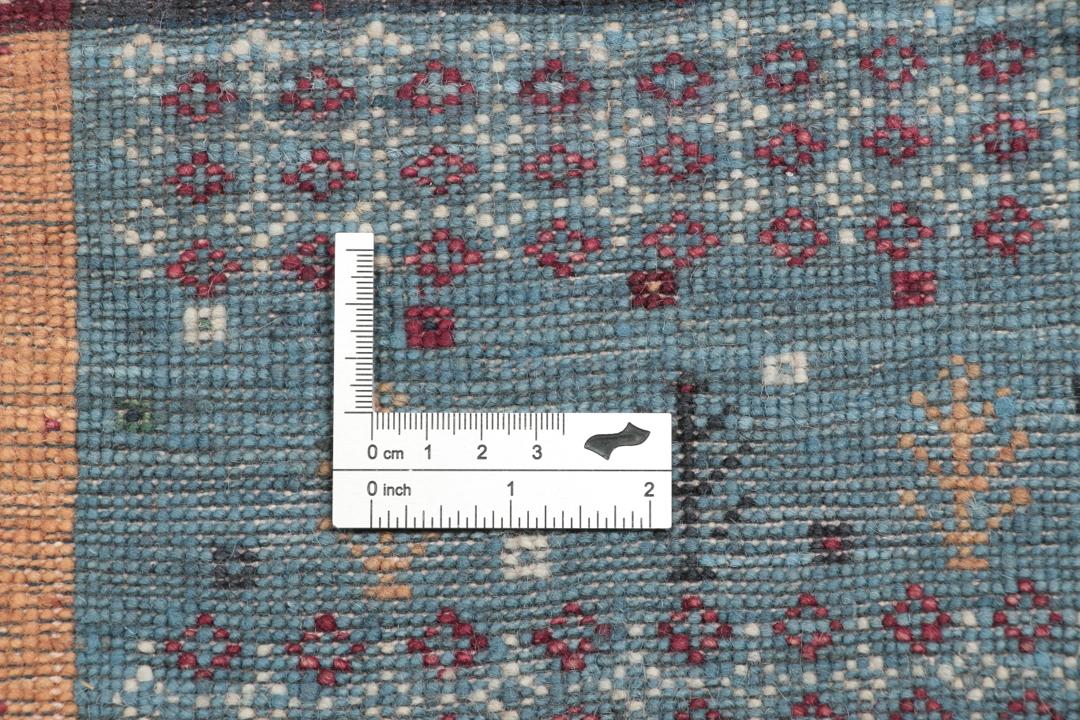
The term 'Loribaft' refers to a specific, high-quality style of Gabbeh weaving known for its finer knotting and incredibly soft, dense Wool. By utilising superior Wool and a more refined knotting technique, these rugs achieve a luxurious, velvety texture that is highly prized by collectors. This level of craftsmanship elevates the rug from a simple functional item to a sophisticated piece of textile art that offers both longevity and unparalleled comfort.
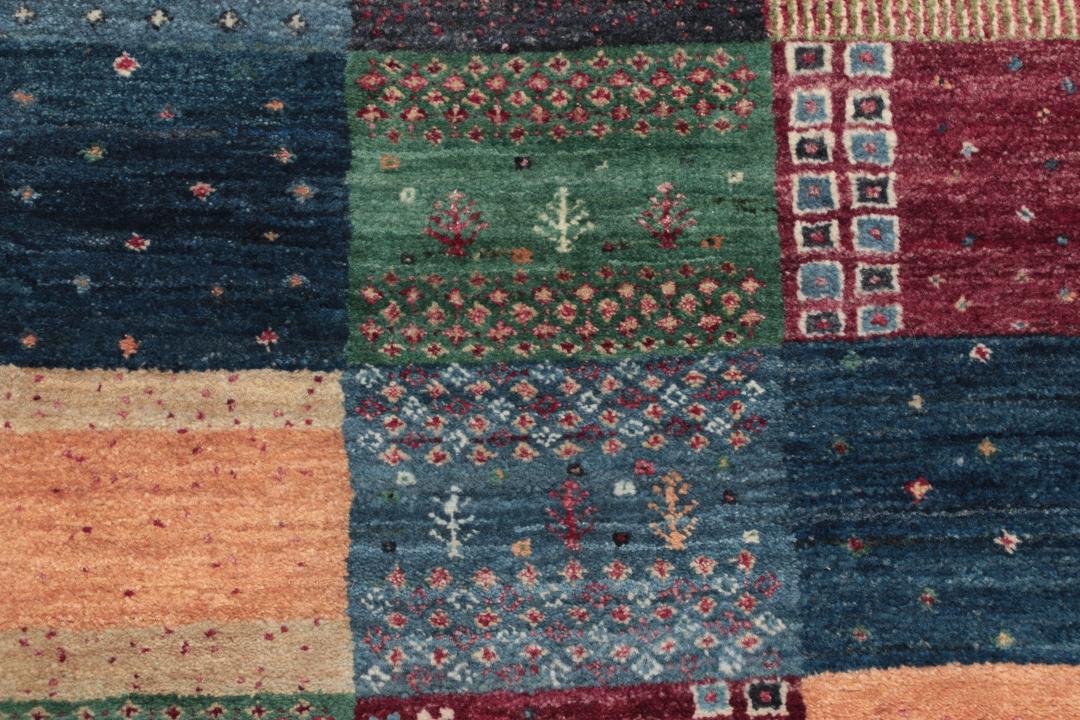
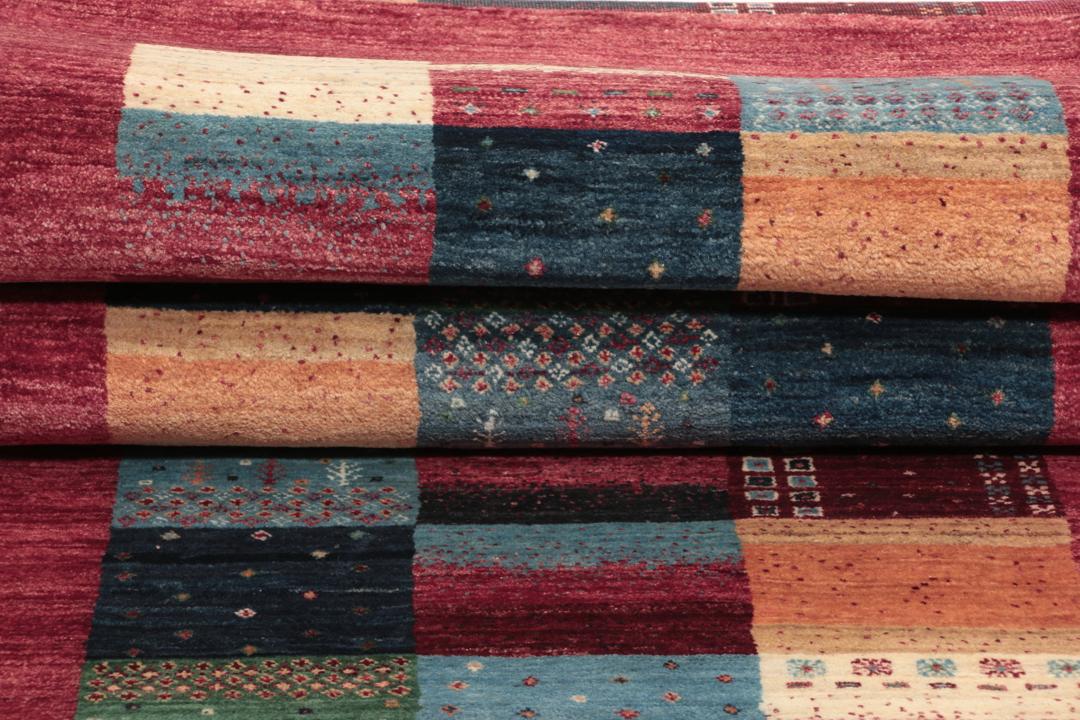
Visually, these rugs are defined by their use of bold, abstract motifs and a deep, saturated colour palette. While traditional Gabbeh rugs often feature simple, open fields, the Loribaft style frequently incorporates complex geometric arrangements and intricate borders. The use of vibrant, harmonious colours is a hallmark of this tradition, designed to capture light and add warmth to any room, reflecting a deep connection to the natural environment of their origin.
Owning a piece from this tradition is an opportunity to connect with a legacy of artistry and skill. These rugs are valued not only for their striking aesthetic but also for the human story behind each knot. By choosing a hand-crafted piece, you are supporting a tradition that prioritises quality, patience, and the preservation of craft, ensuring that these beautiful, storied textiles continue to enrich homes for generations.