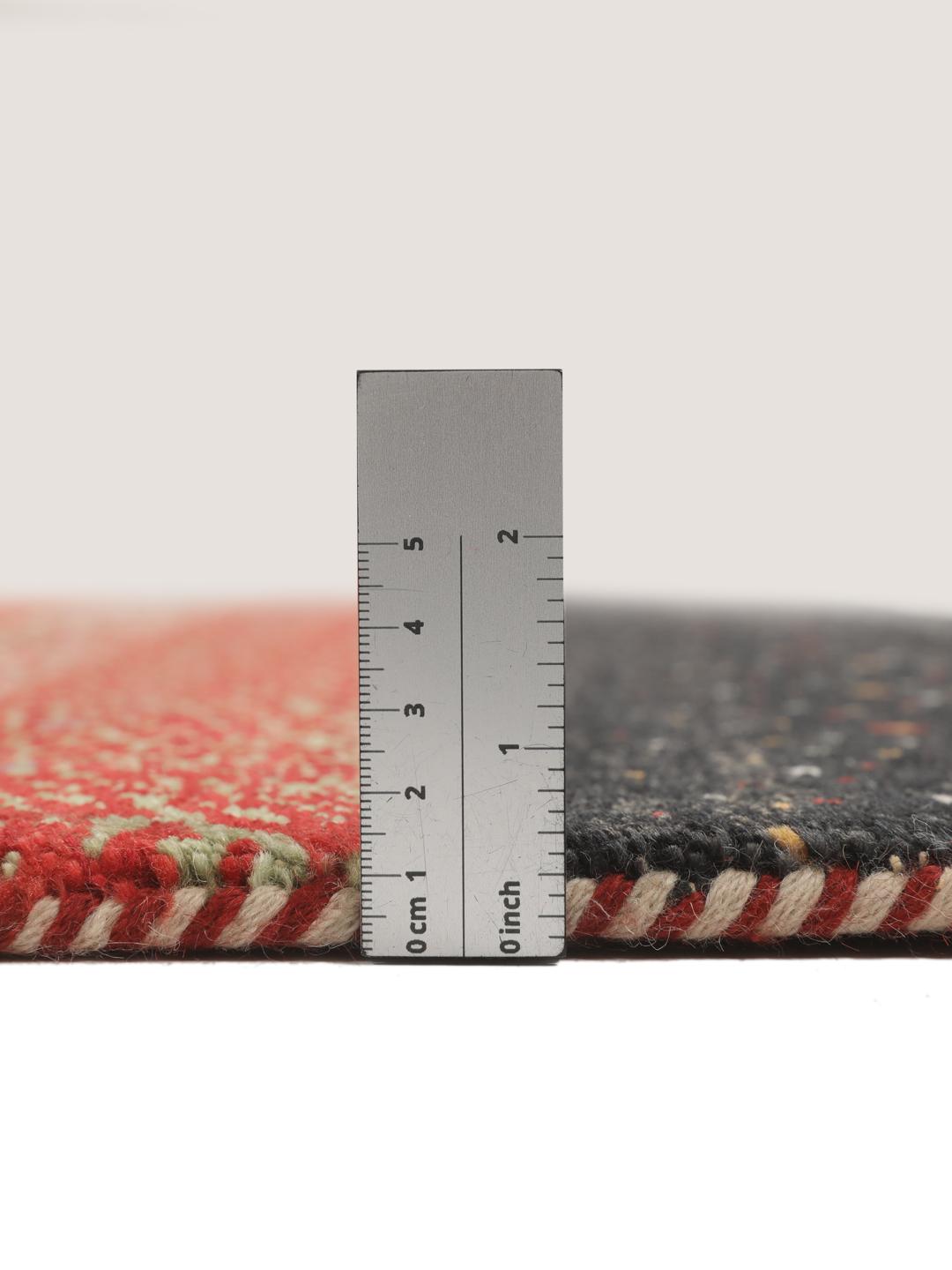
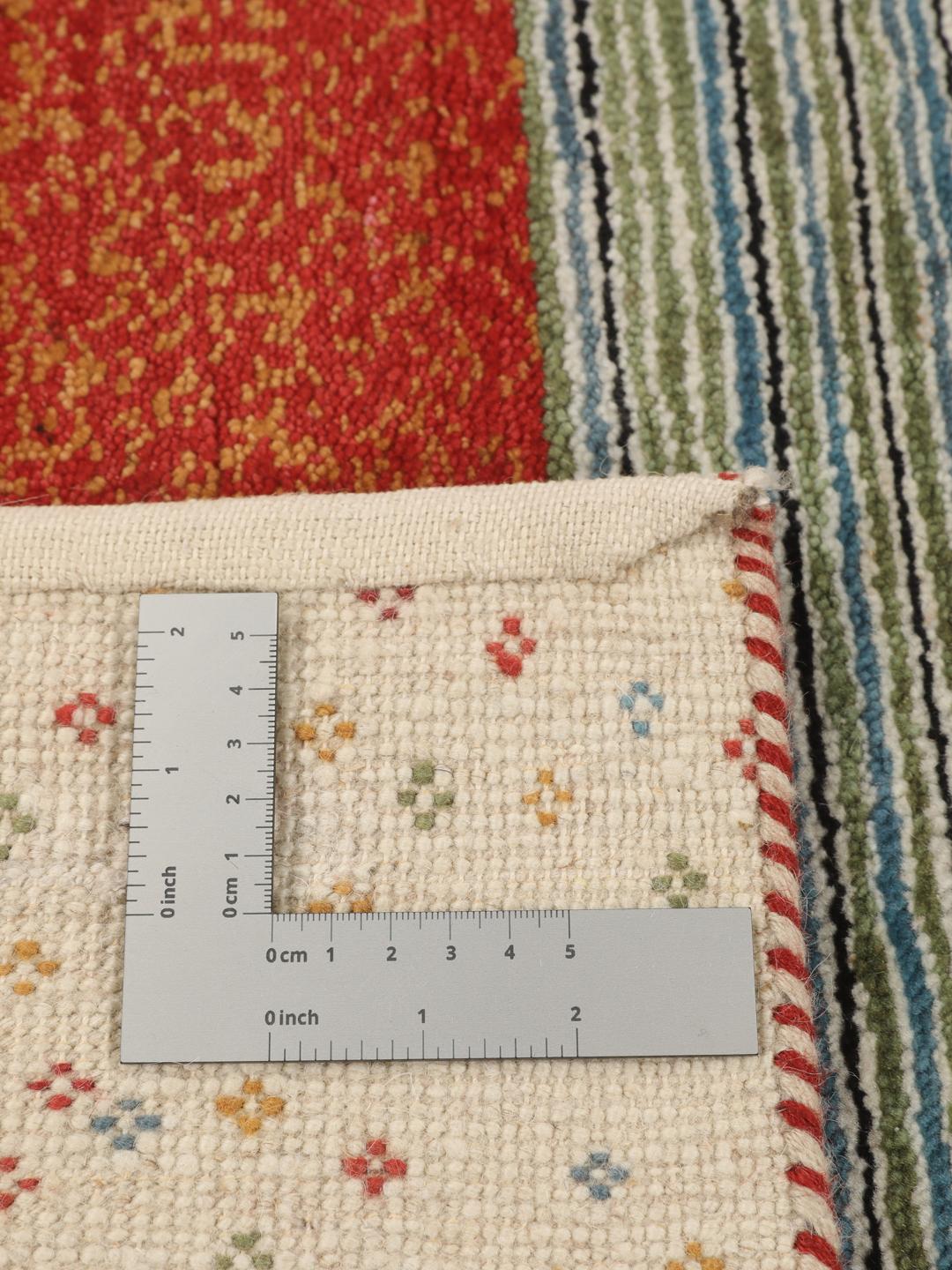
The Loribaft tradition finds its roots in the nomadic weaving heritage of the Middle East, specifically among the Luri tribes. These weavers are renowned for their ability to create rugs that are as functional as they are expressive, often using wool sourced directly from their own flocks. Over time, these weaving techniques migrated and evolved, with India becoming a prominent centre for the production of high-quality Loribaft and Kashkooli rugs that honour these ancestral methods.
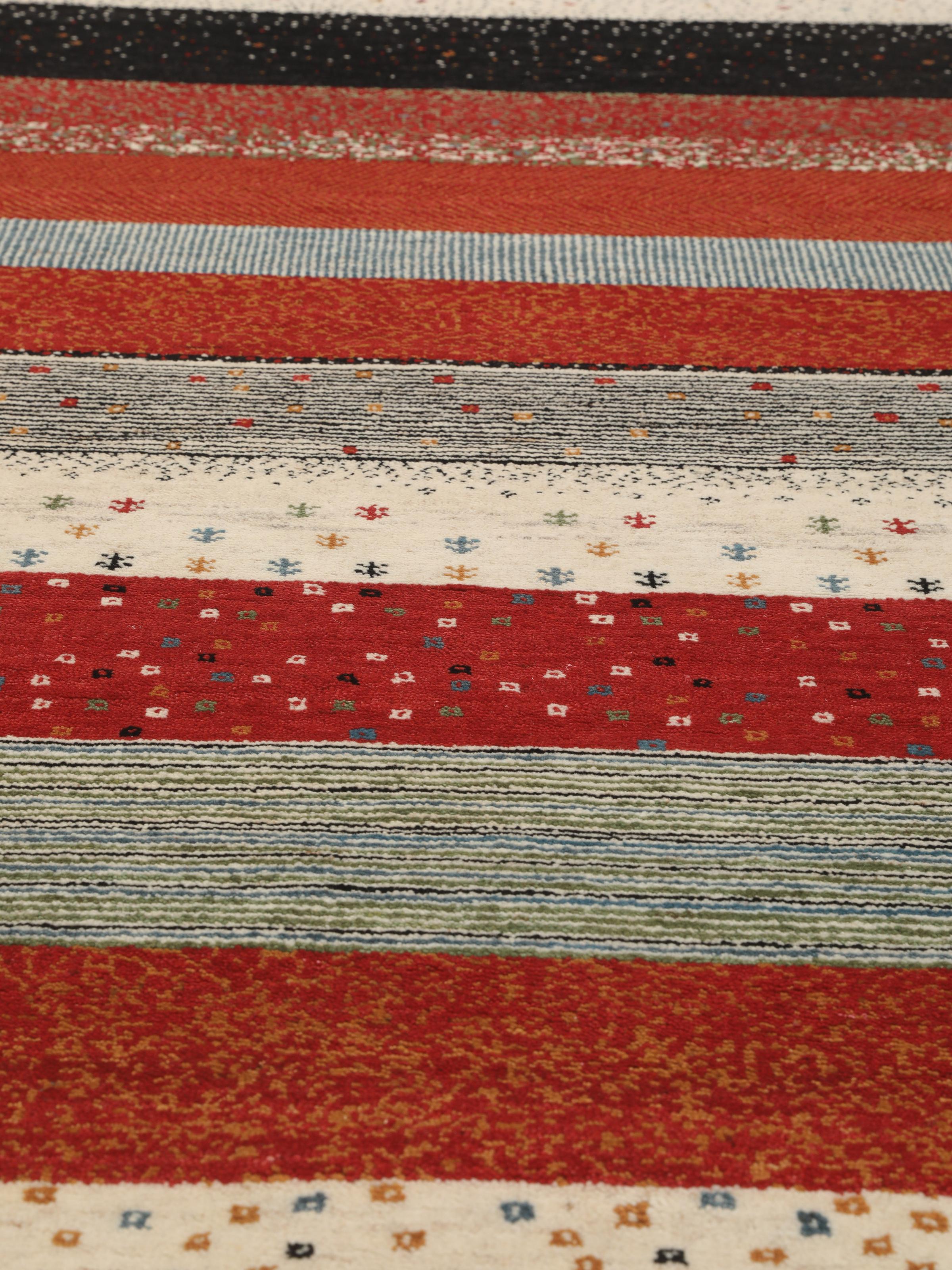
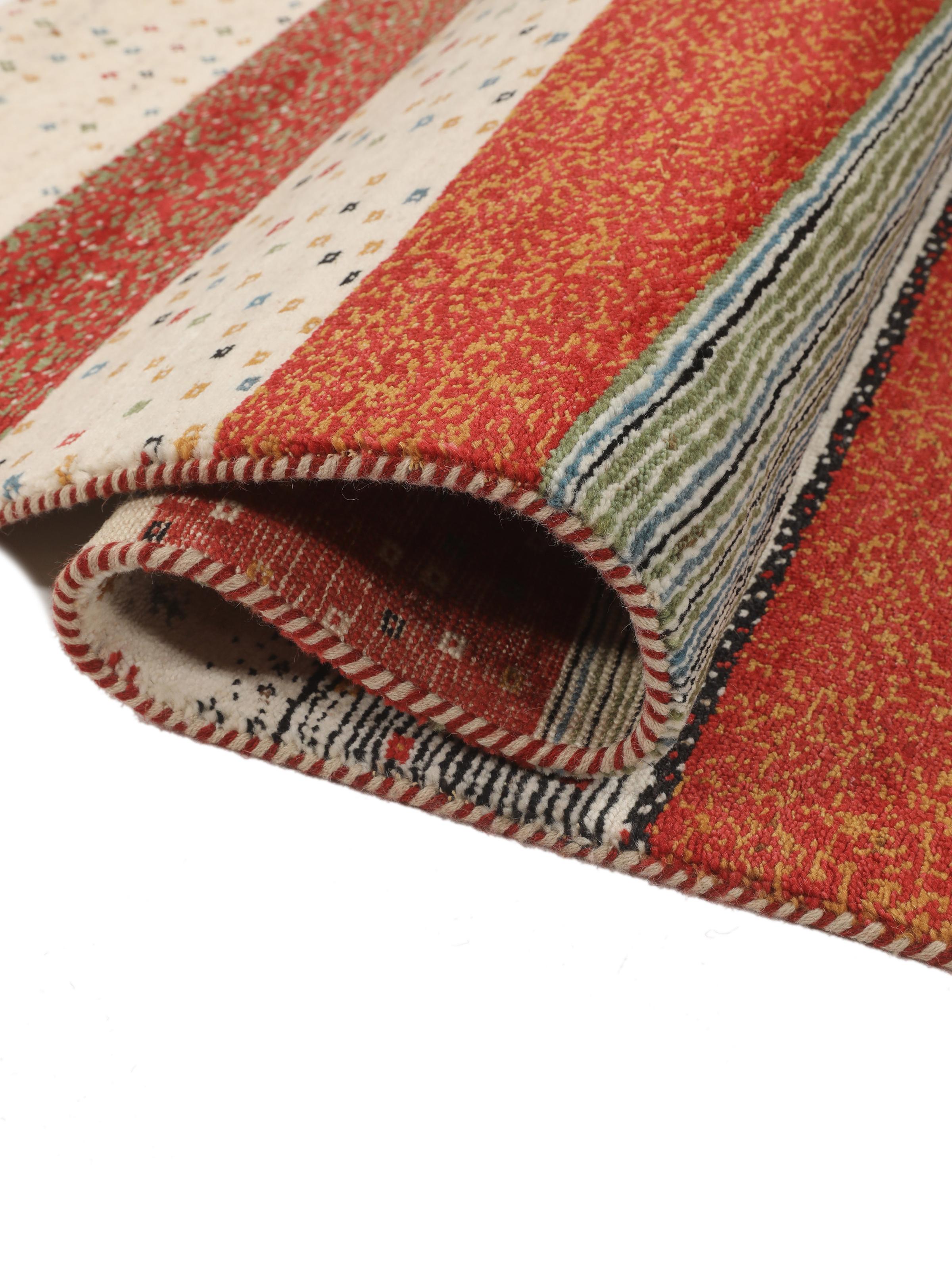
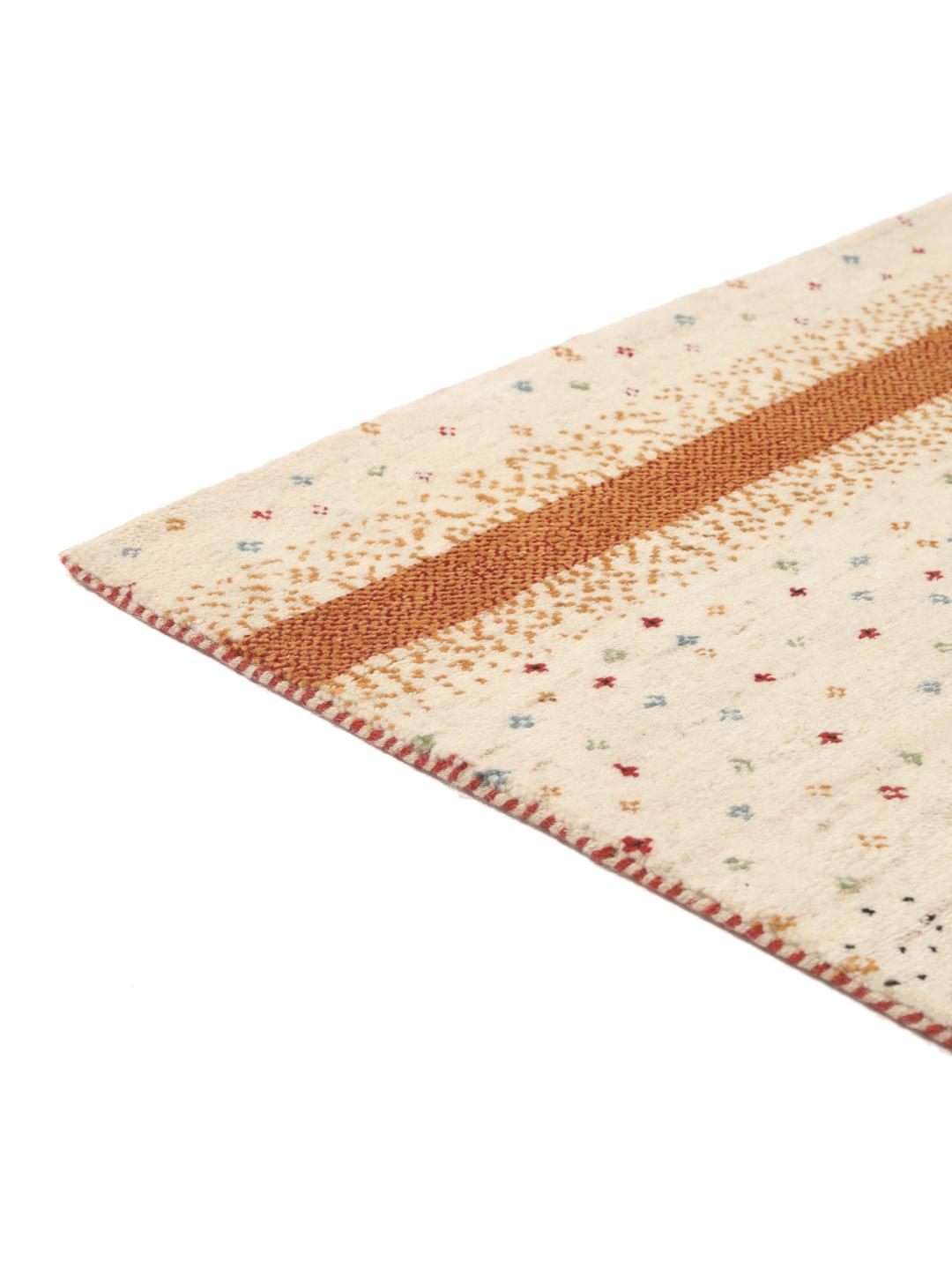
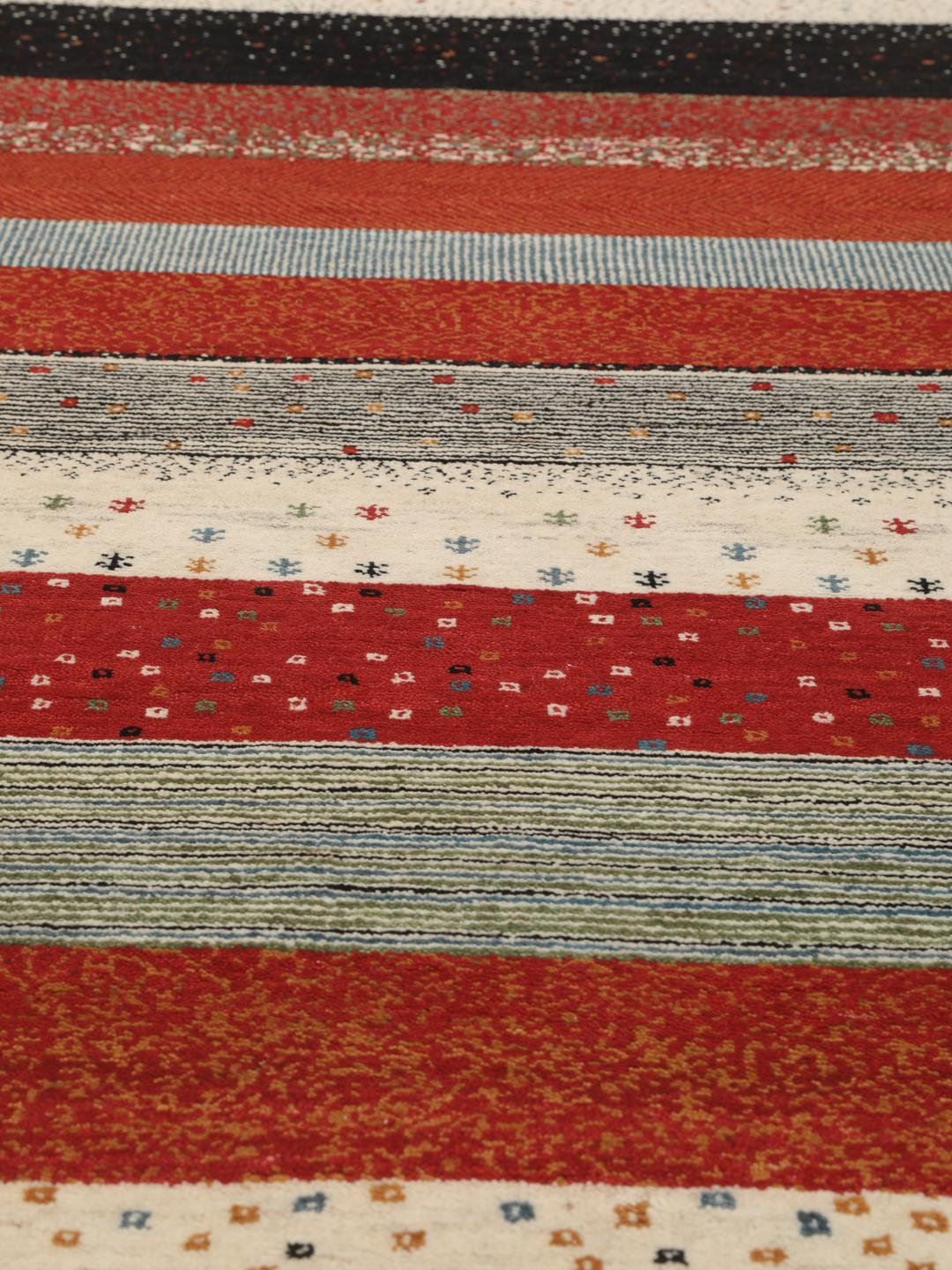
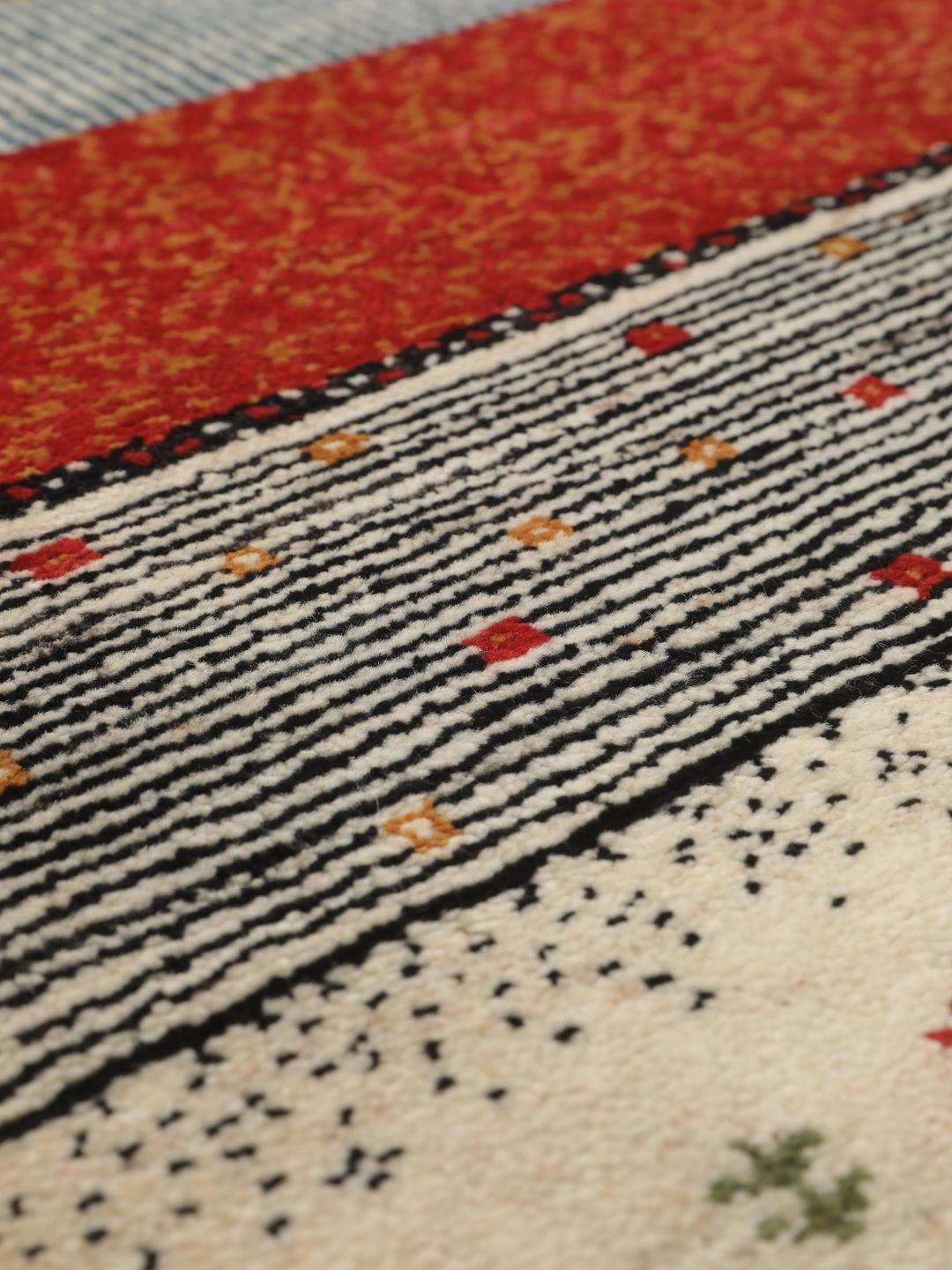
The term 'Loribaft' refers to a specific style of weaving characterised by a higher knot density than traditional Gabbeh rugs, resulting in a cleaner, more refined finish. This increased density allows for more intricate pattern work and a smoother pile, making the rugs both more durable and visually polished. The craft is defined by the use of hand-carded, hand-spun wool, which retains its natural oils and provides a depth of colour that is difficult to achieve with modern industrial processes.
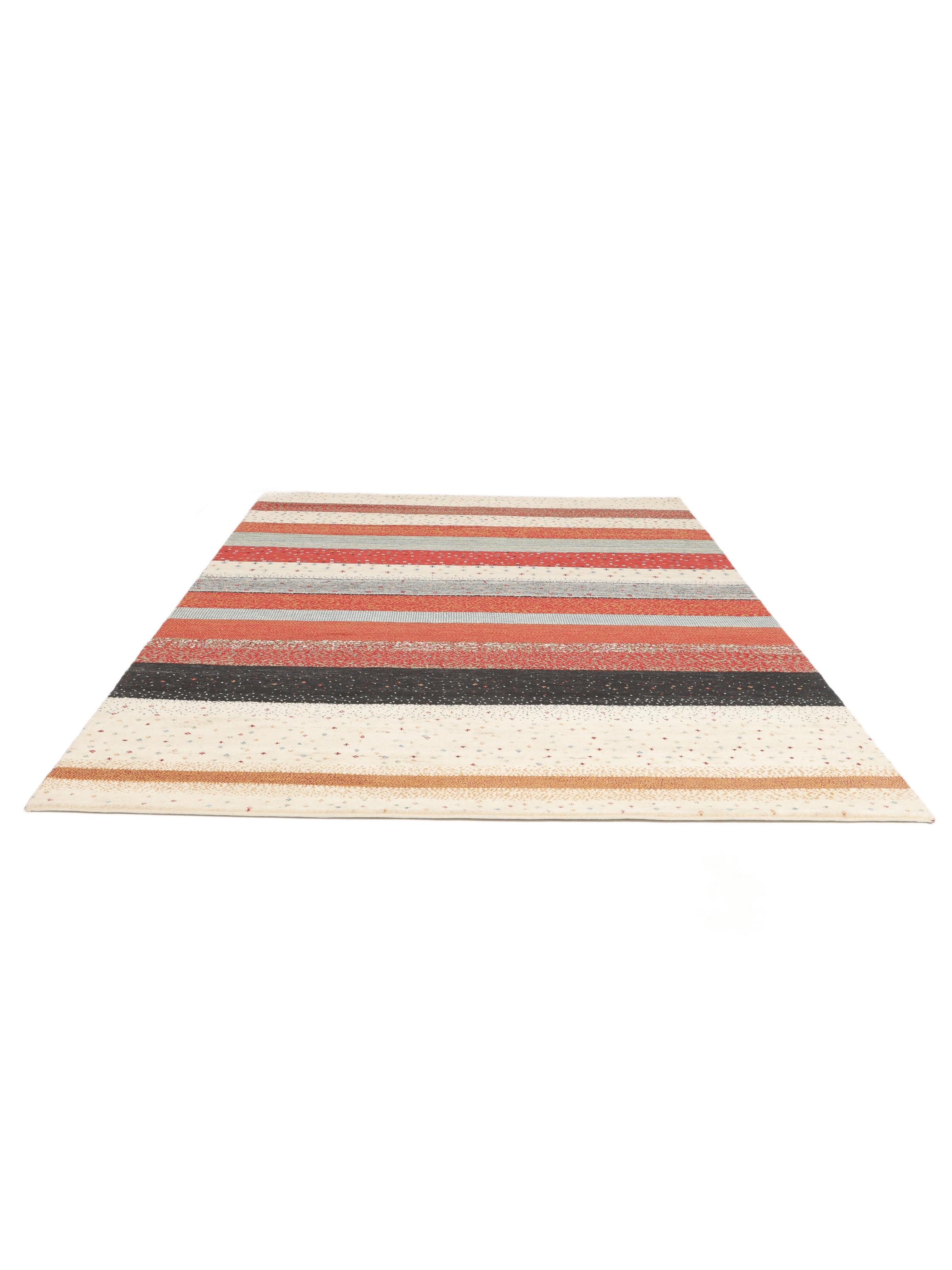
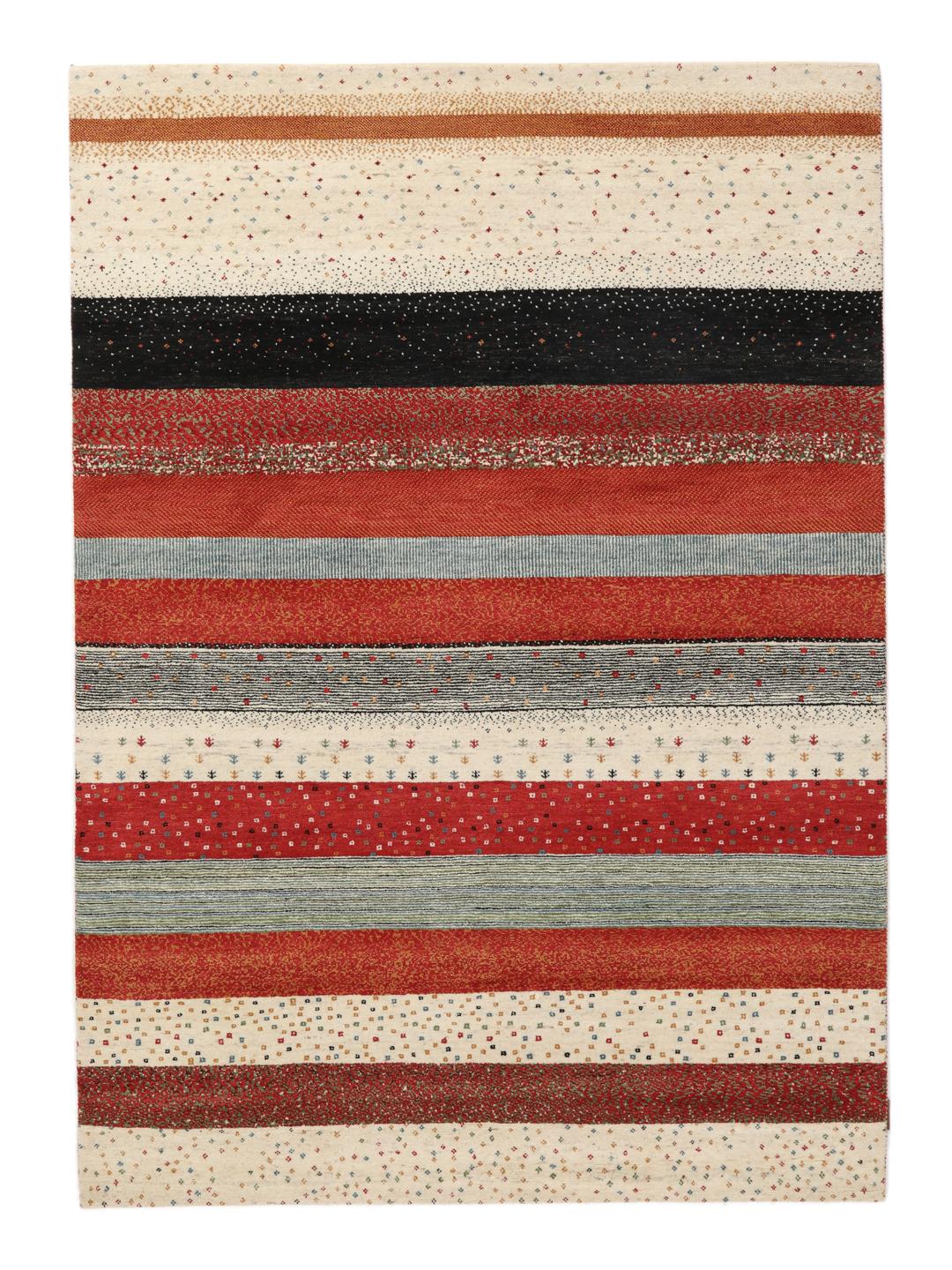
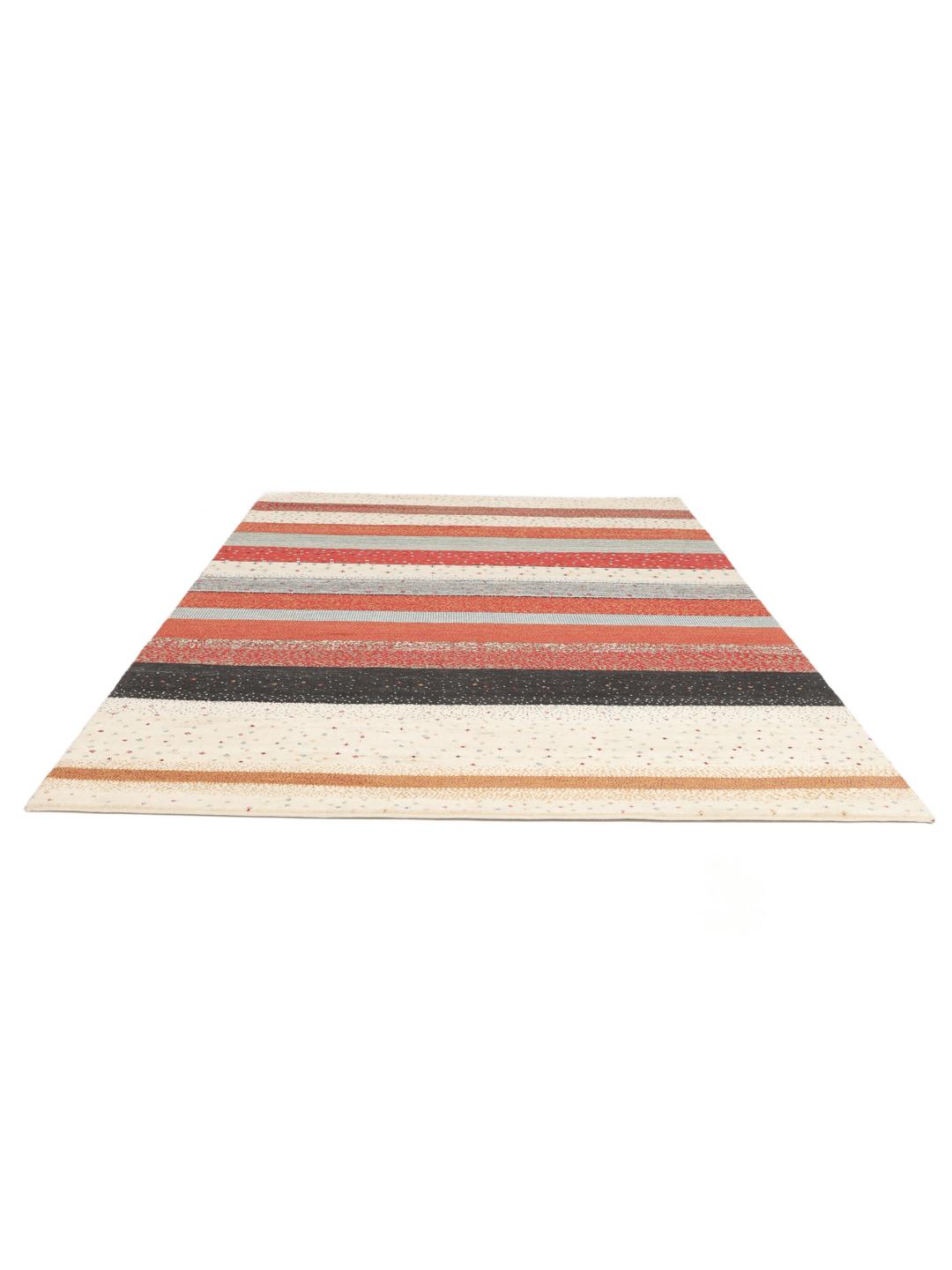
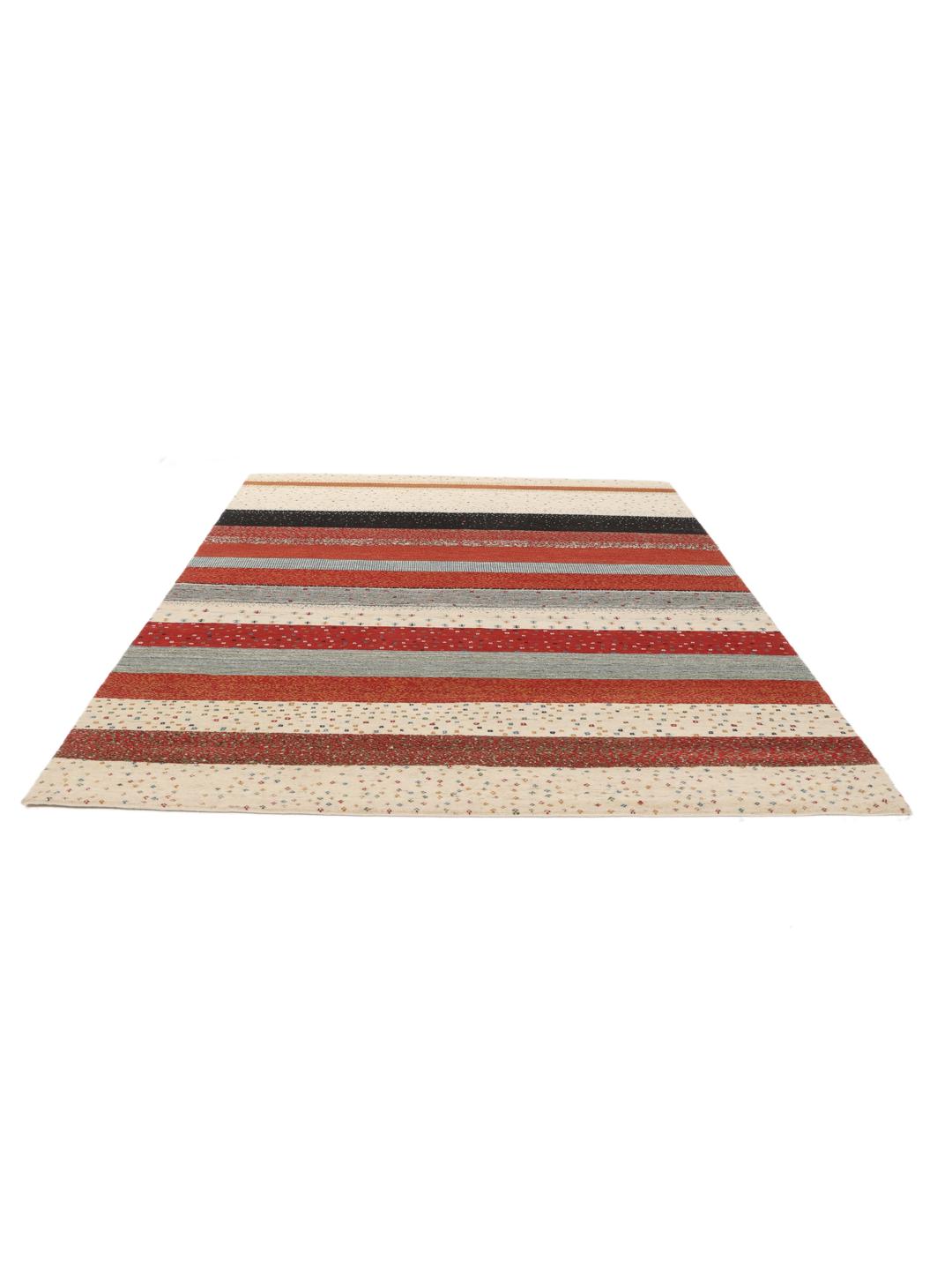
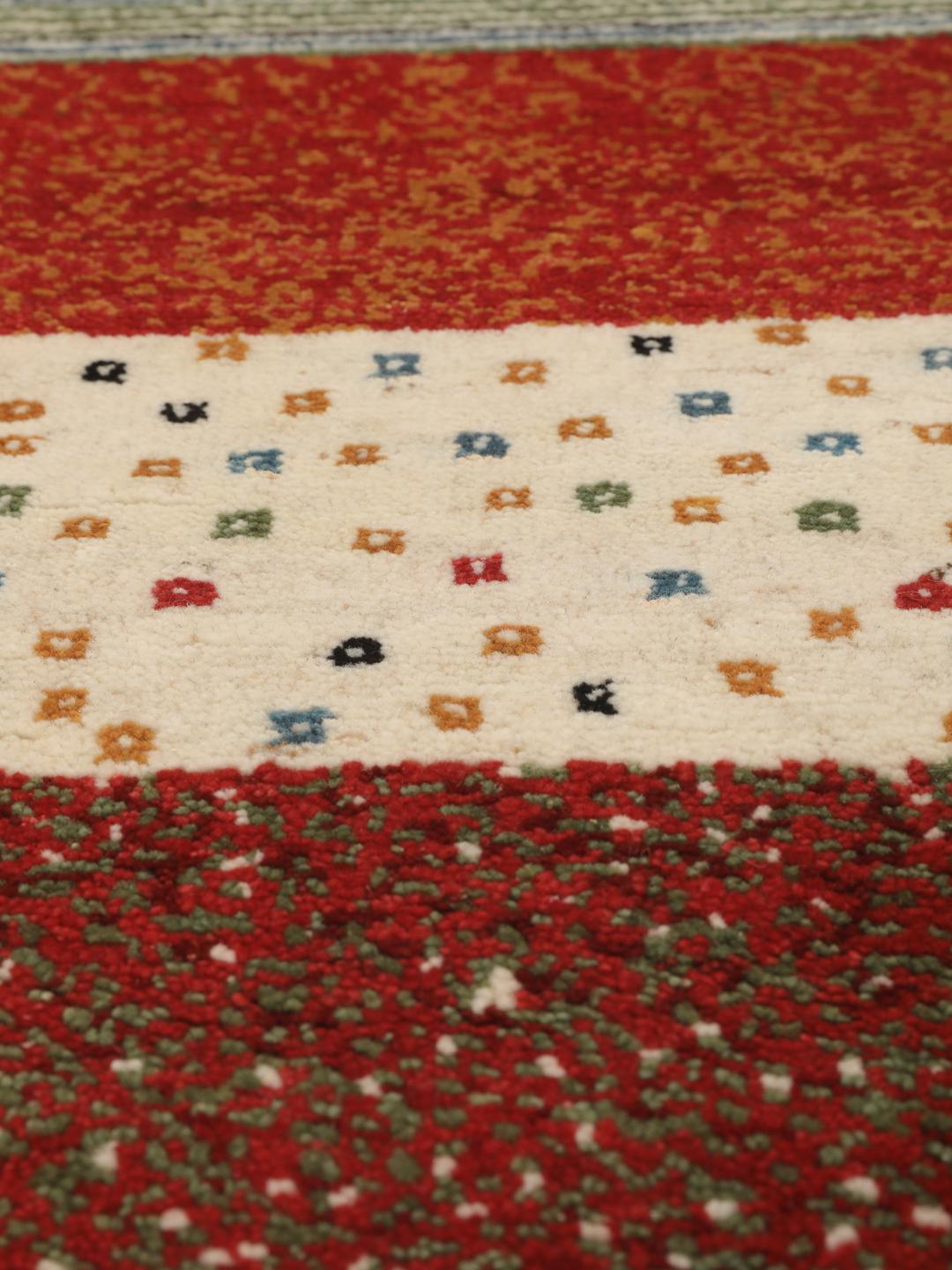
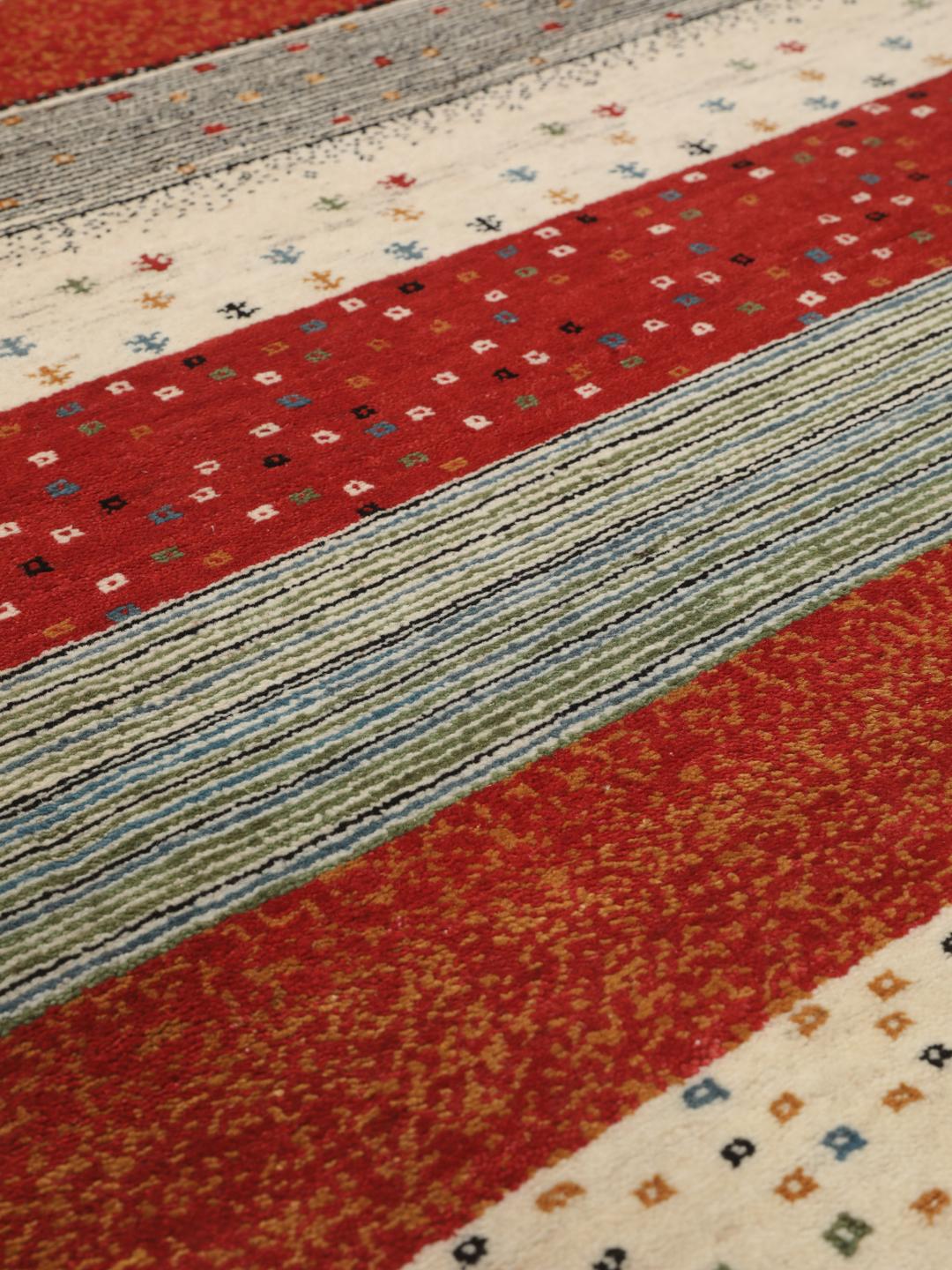
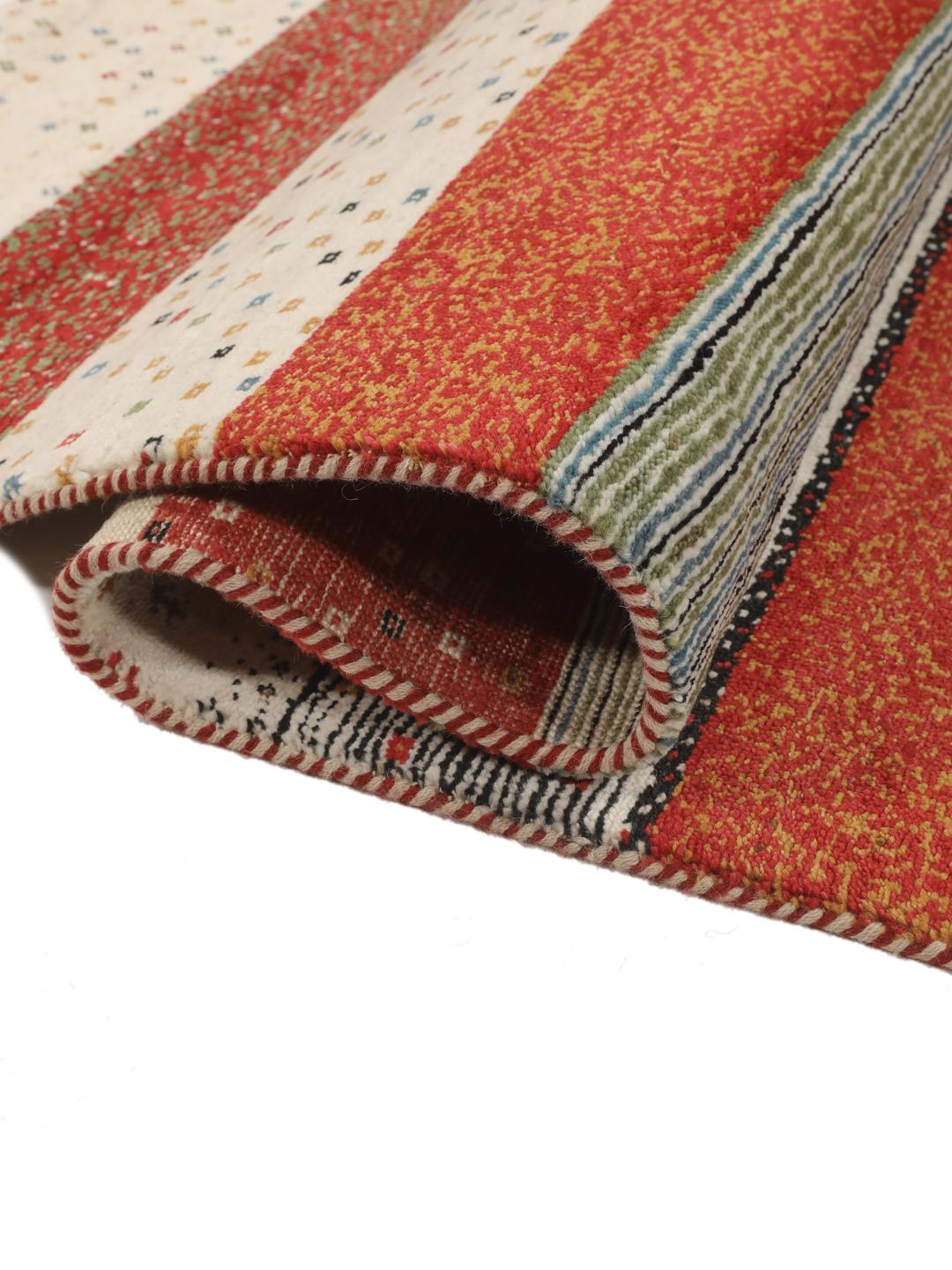
Visually, these rugs are defined by their bold use of space and colour. While traditional Gabbeh rugs are often known for their minimalist, open fields, the Loribaft style frequently incorporates geometric stripes, tribal motifs, and symbolic representations of the weaver's environment. This particular rug stands out for its rhythmic arrangement of stripes and dotted textures, showcasing a harmonious balance between structured design and free-form creativity.
Collecting a Loribaft rug is an investment in human skill and cultural history. These pieces are valued not only for their aesthetic beauty but for the narrative they carry, representing a bridge between ancient nomadic traditions and contemporary home decor. By choosing such a piece, you are preserving the legacy of master weavers who have perfected their craft over generations, ensuring that these traditions remain a vibrant part of the modern home.