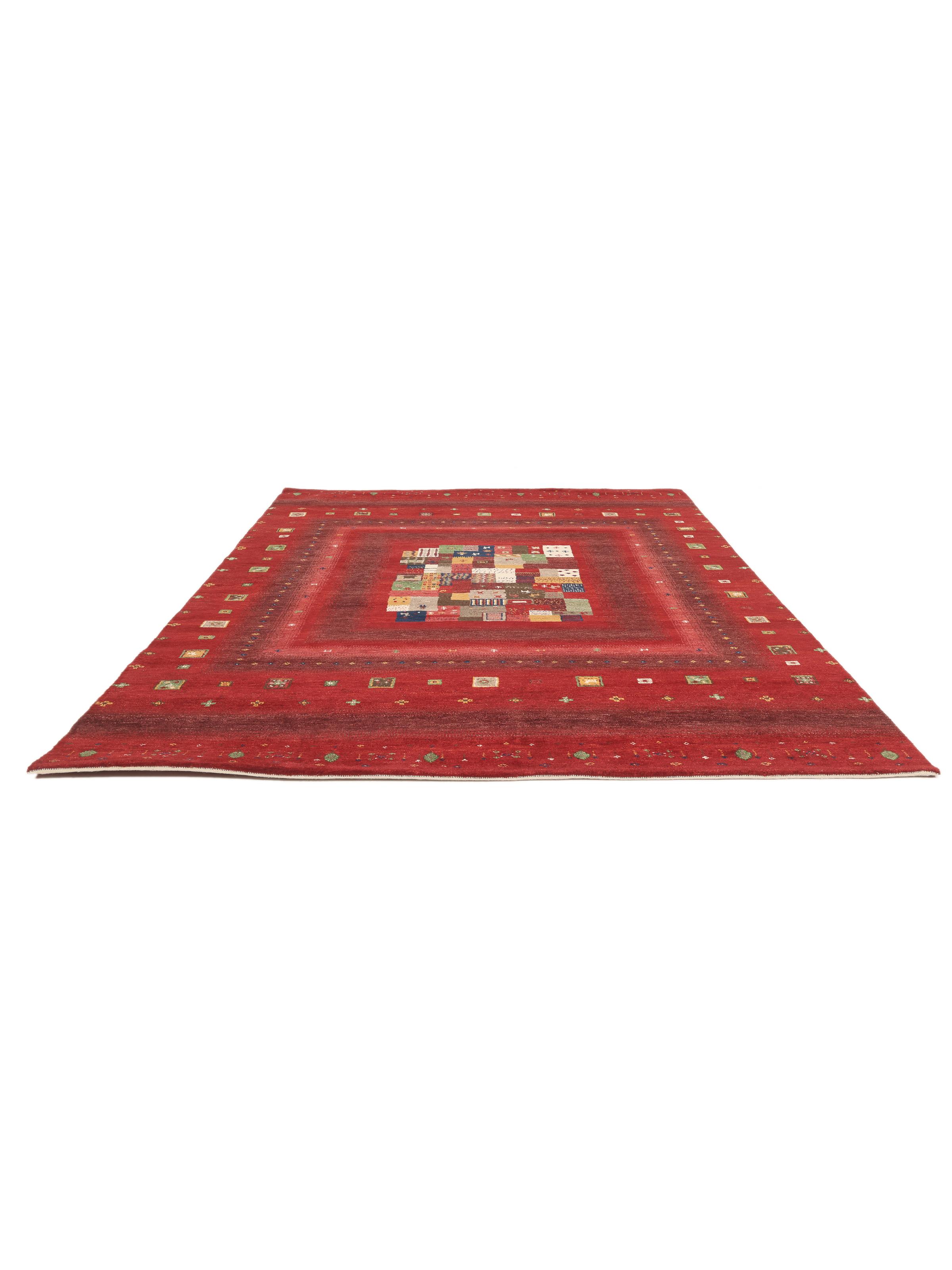
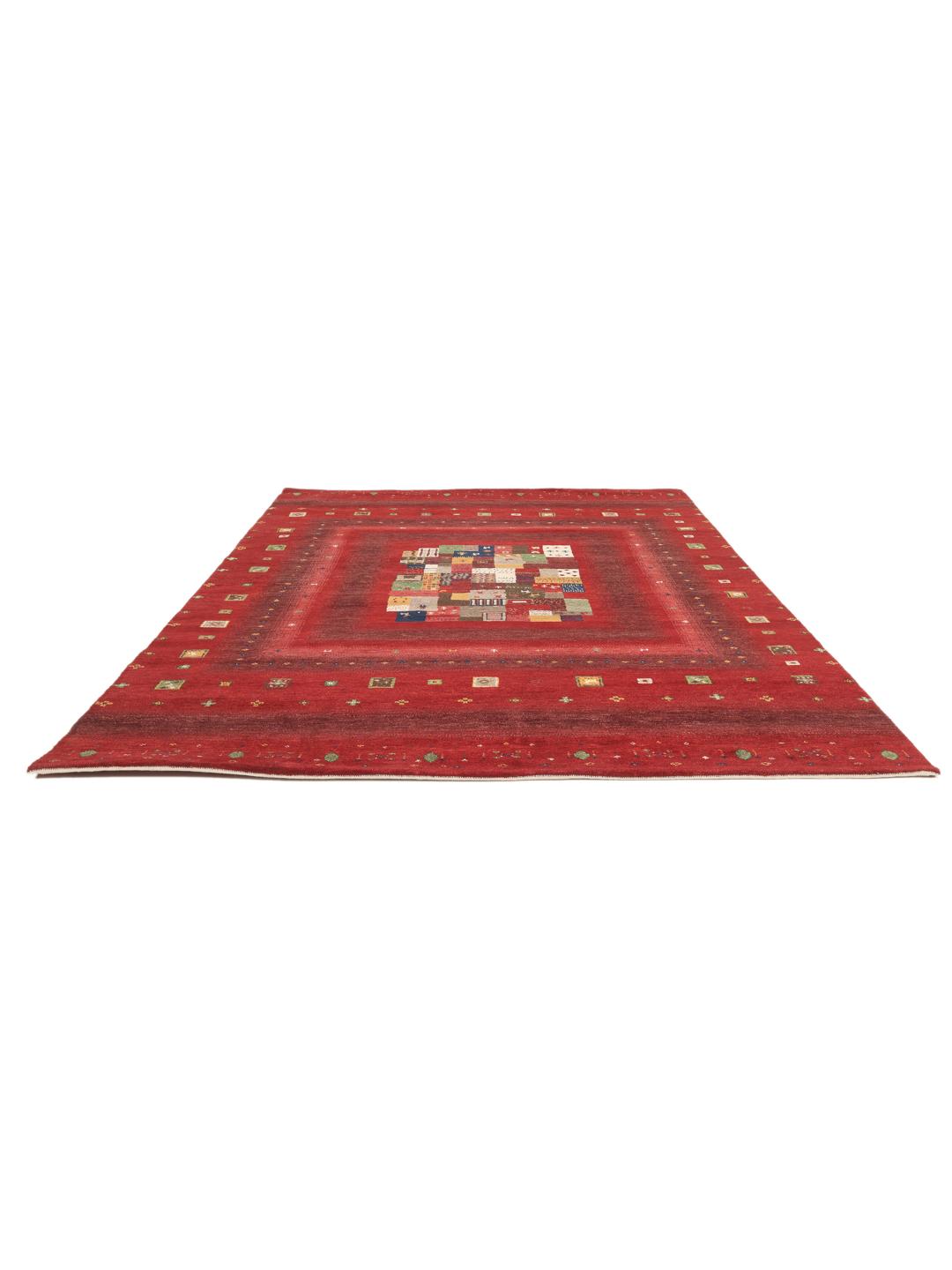
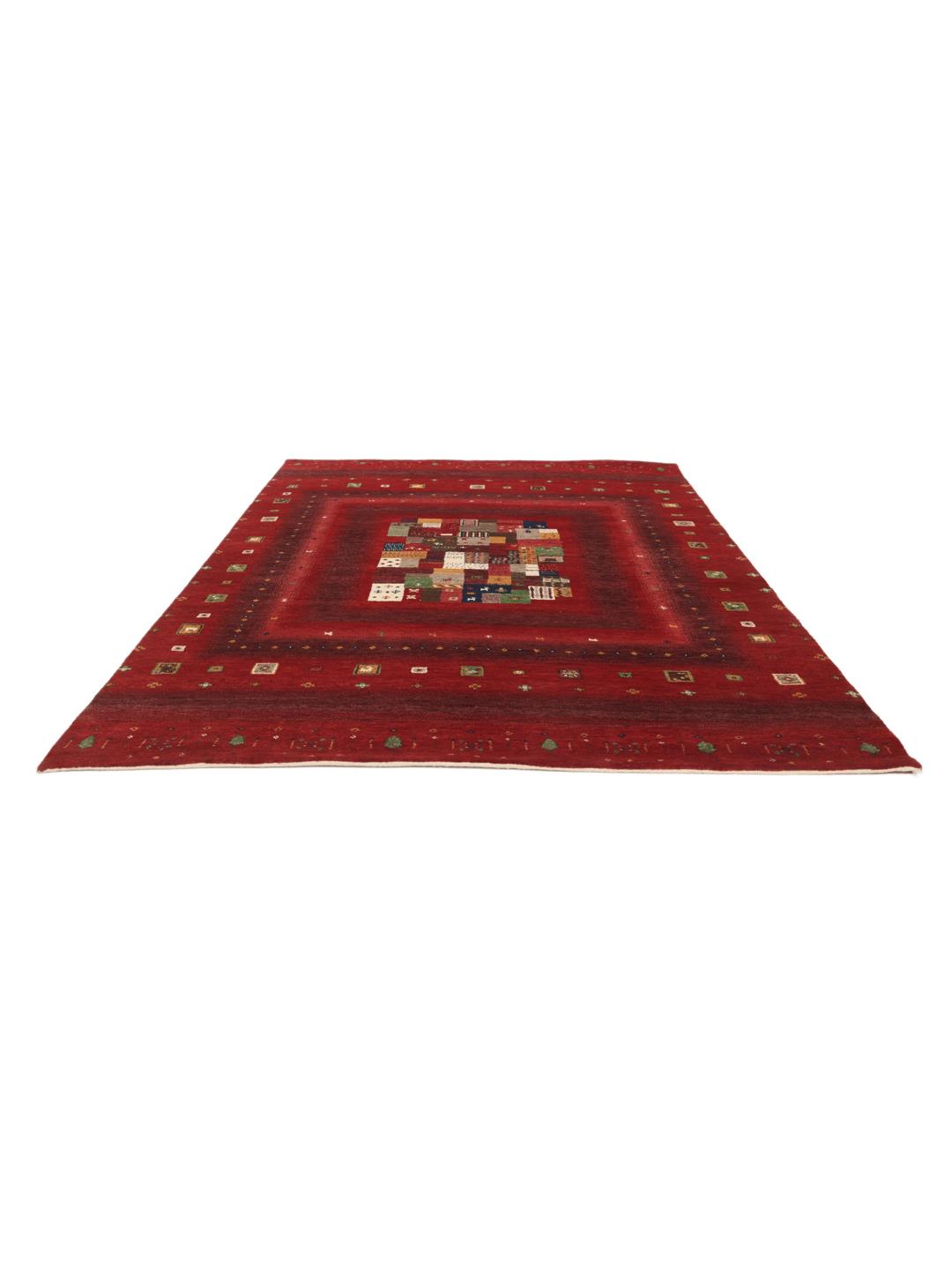
The Gabbeh style originates from the nomadic tribes of the Middle East, where weavers created these rugs for their own daily use rather than for commercial trade. These pieces were traditionally thick and simple, designed to provide warmth and comfort in harsh environments. Today, the tradition has evolved, with the finest modern interpretations being crafted in India, where the rich history of the style is preserved and refined.
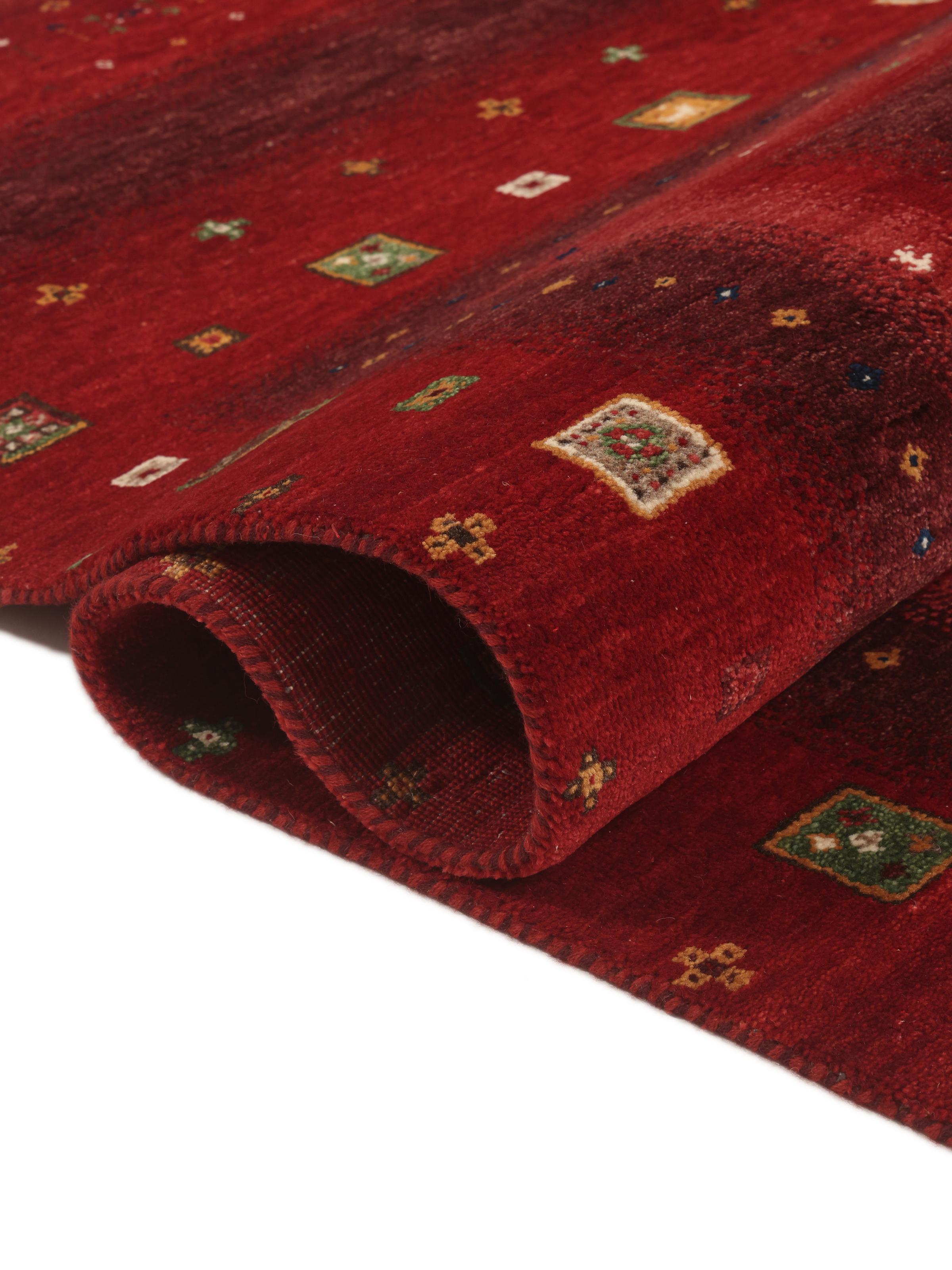
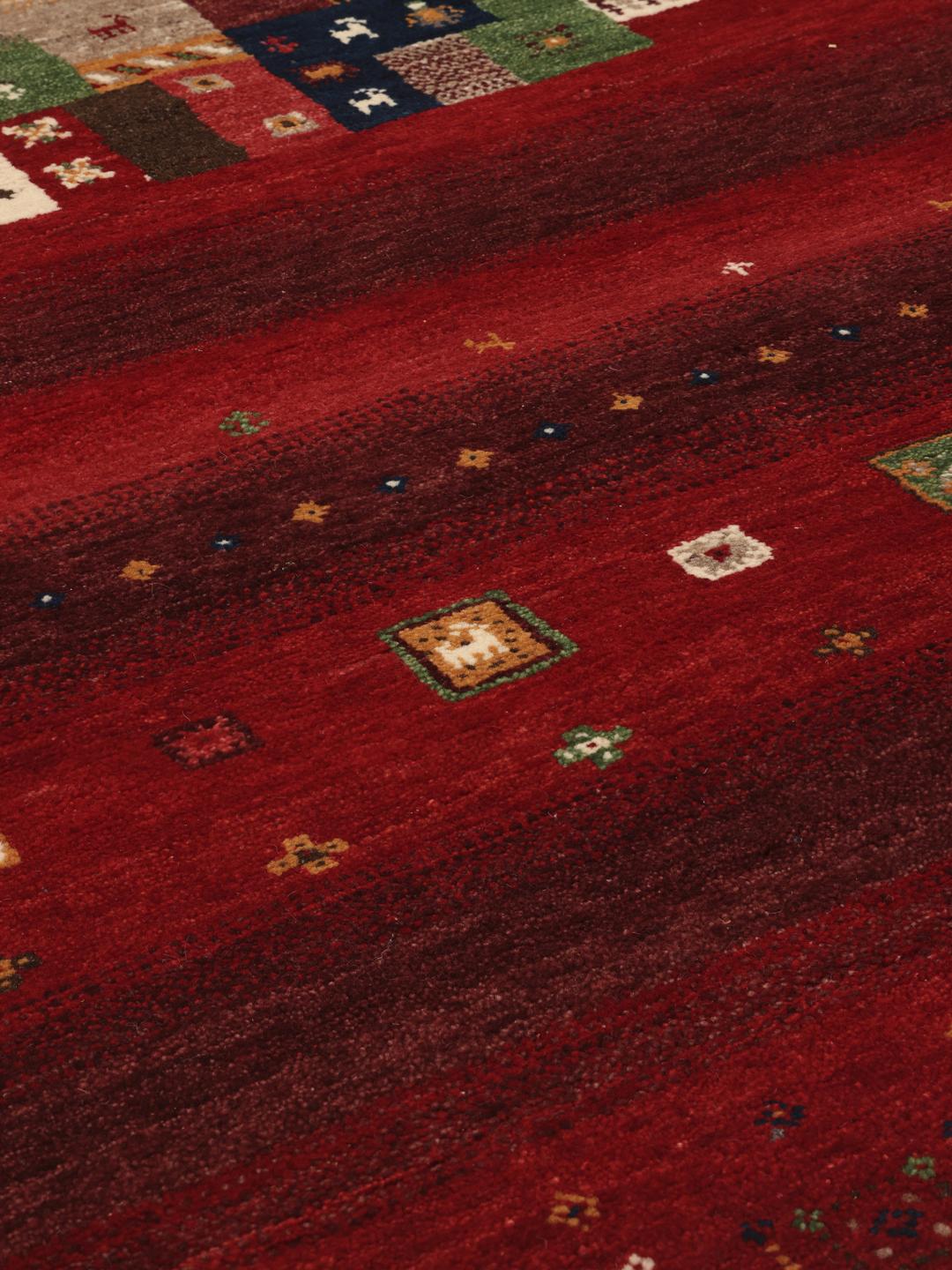
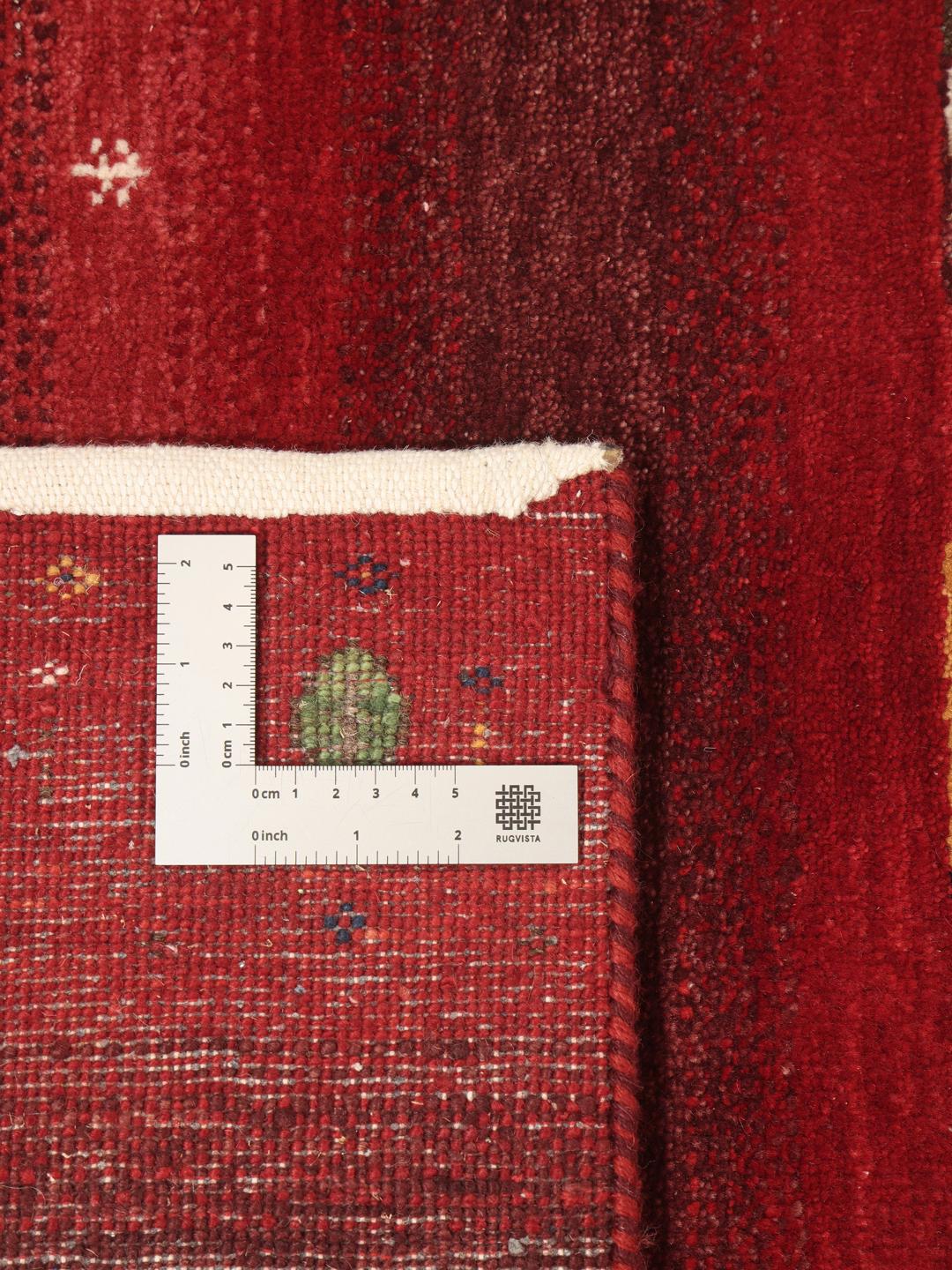
The term Loribaft refers to a specific, high-quality variation of the traditional Gabbeh, characterised by a denser knotting style and a more refined finish. By using a tighter weave, the artisans create a smoother, more detailed surface that elevates the rustic charm of the original nomadic designs while maintaining the authenticity of the craft.
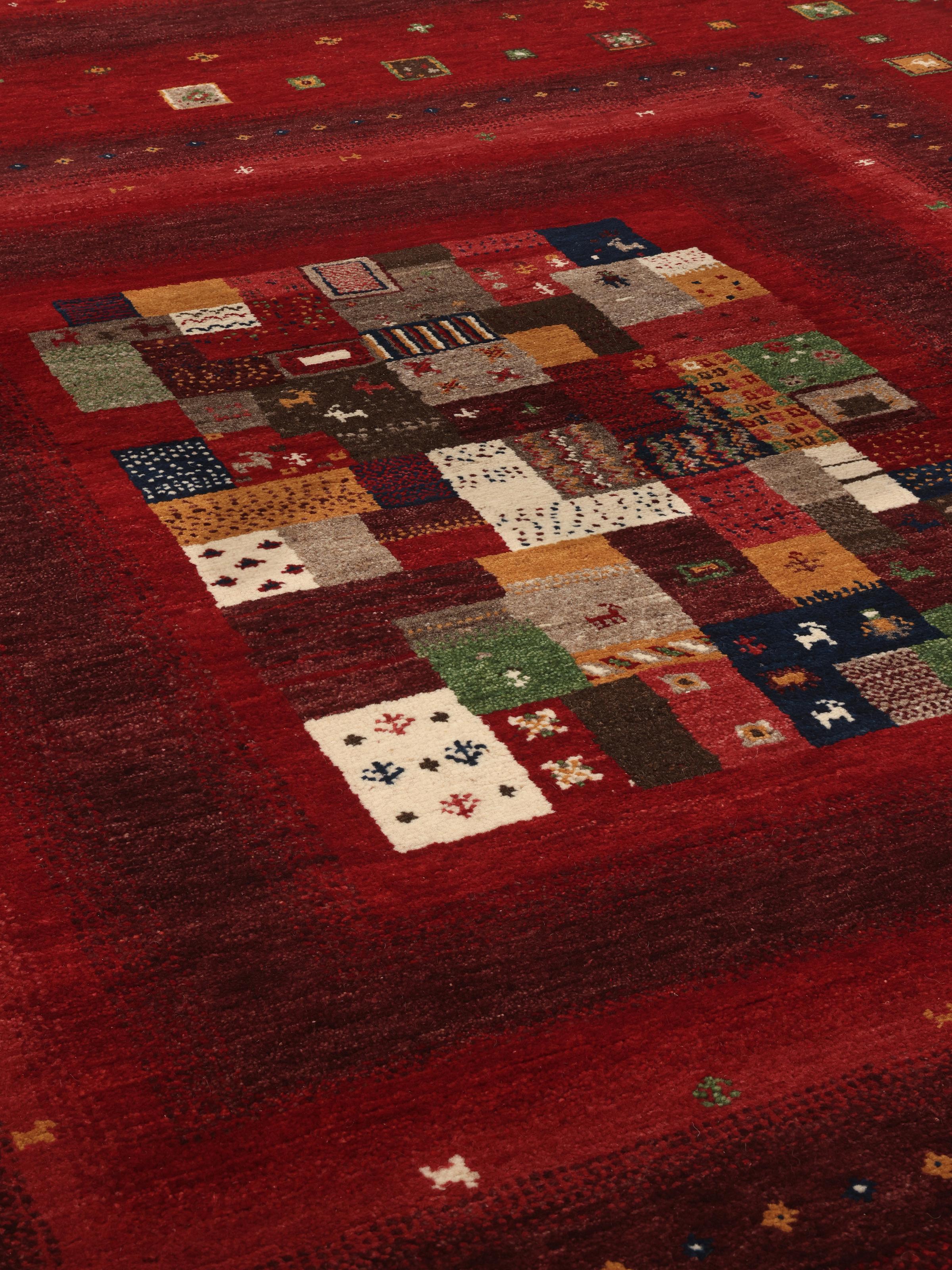
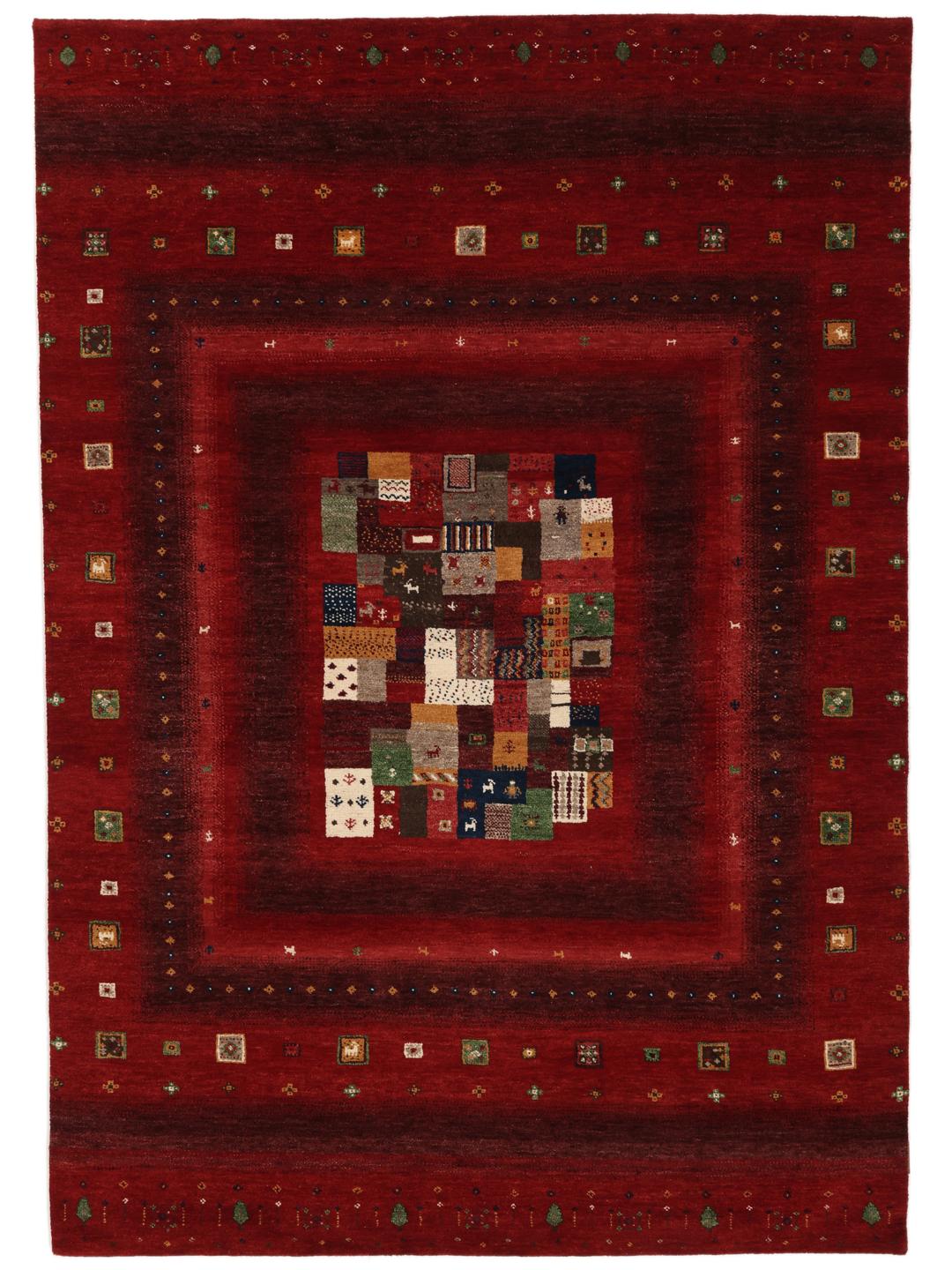
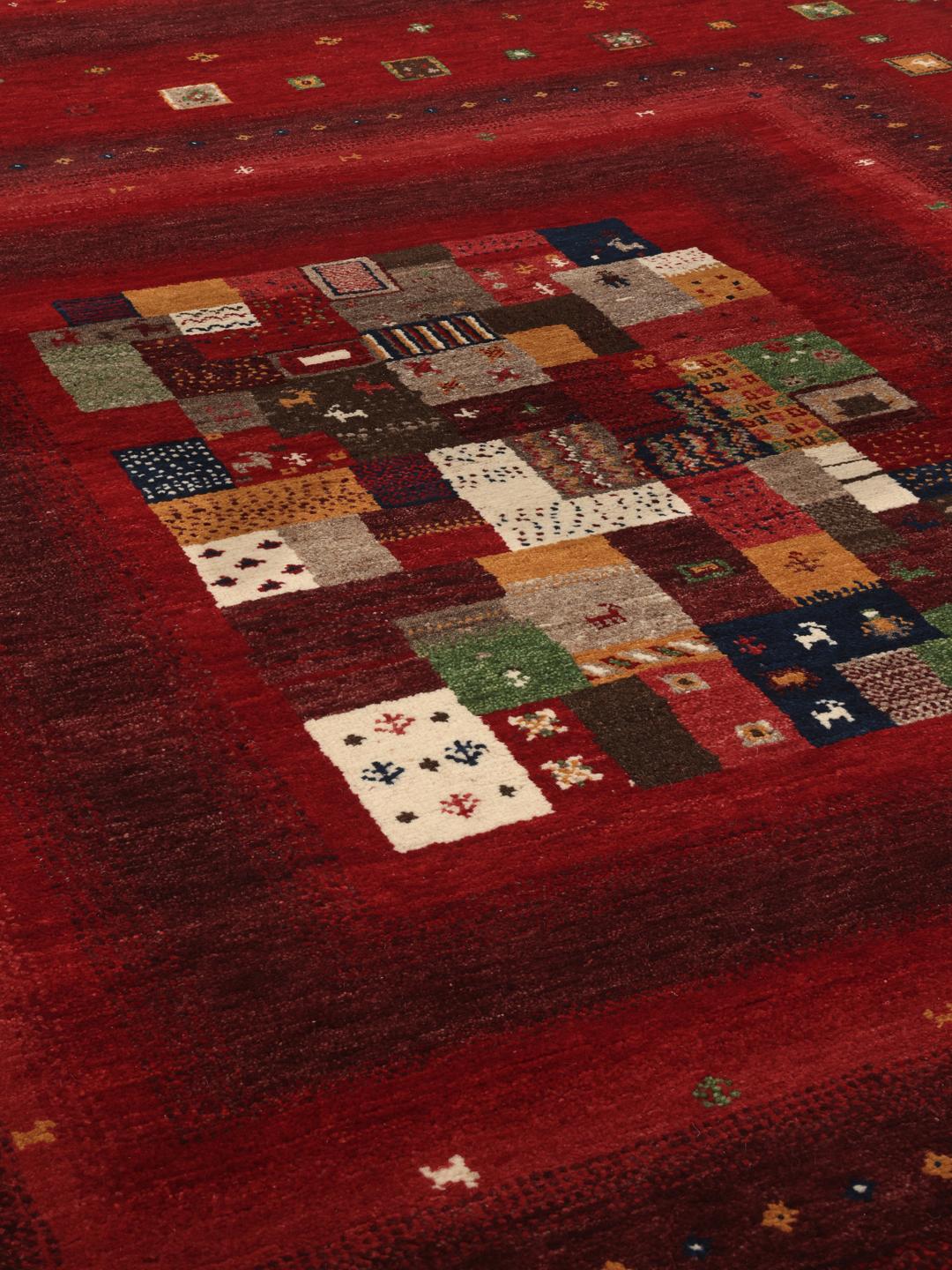
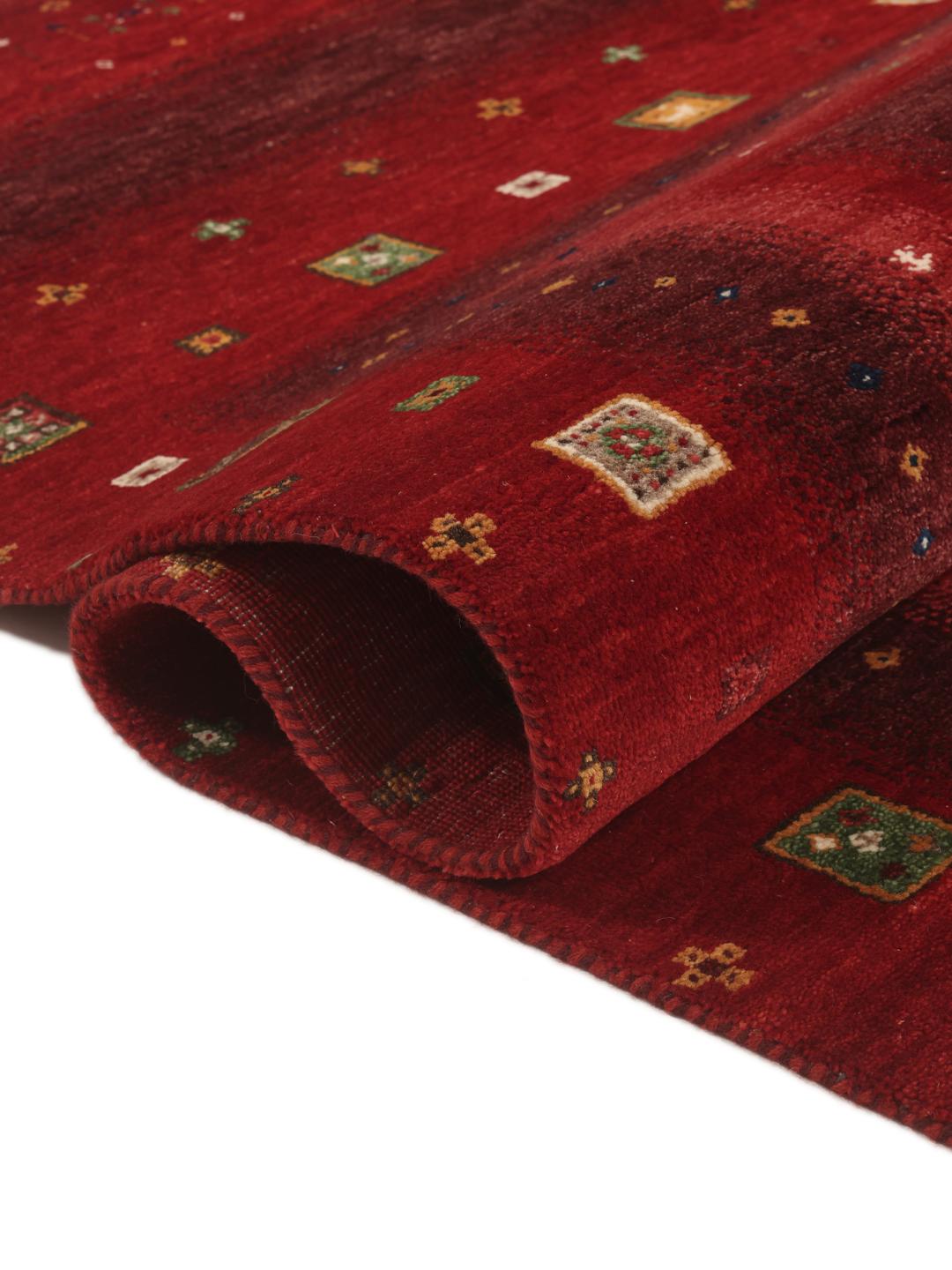
Visually, these rugs are defined by their use of open, evocative fields and symbolic motifs. While traditional Gabbehs often featured minimalist landscapes or animal forms, the Loribaft style frequently incorporates more complex patterns and vibrant, saturated colours. The deep red tones seen here are a classic hallmark of the tradition, symbolising energy and life, while the central mosaic reflects the weaver's personal storytelling.
Owning a piece from this tradition is an investment in cultural heritage. Collectors value these rugs for their departure from the rigid, formal patterns found in many other weaving traditions, favouring instead the spontaneous, creative spirit of the artisan. Each rug serves as a tangible connection to a long-standing practice of functional art, meant to be cherished for generations.