Gabbeh rugs trace their roots to the nomadic tribes of the Middle East, where they were originally woven for personal use rather than for trade. Unlike formal, city-made rugs that often rely on strict geometric or floral patterns, the Gabbeh tradition is celebrated for its spontaneity and creative freedom. These rugs were designed to serve as warm, durable sleeping mats and floor coverings, often reflecting the immediate environment and personal stories of the weaver.
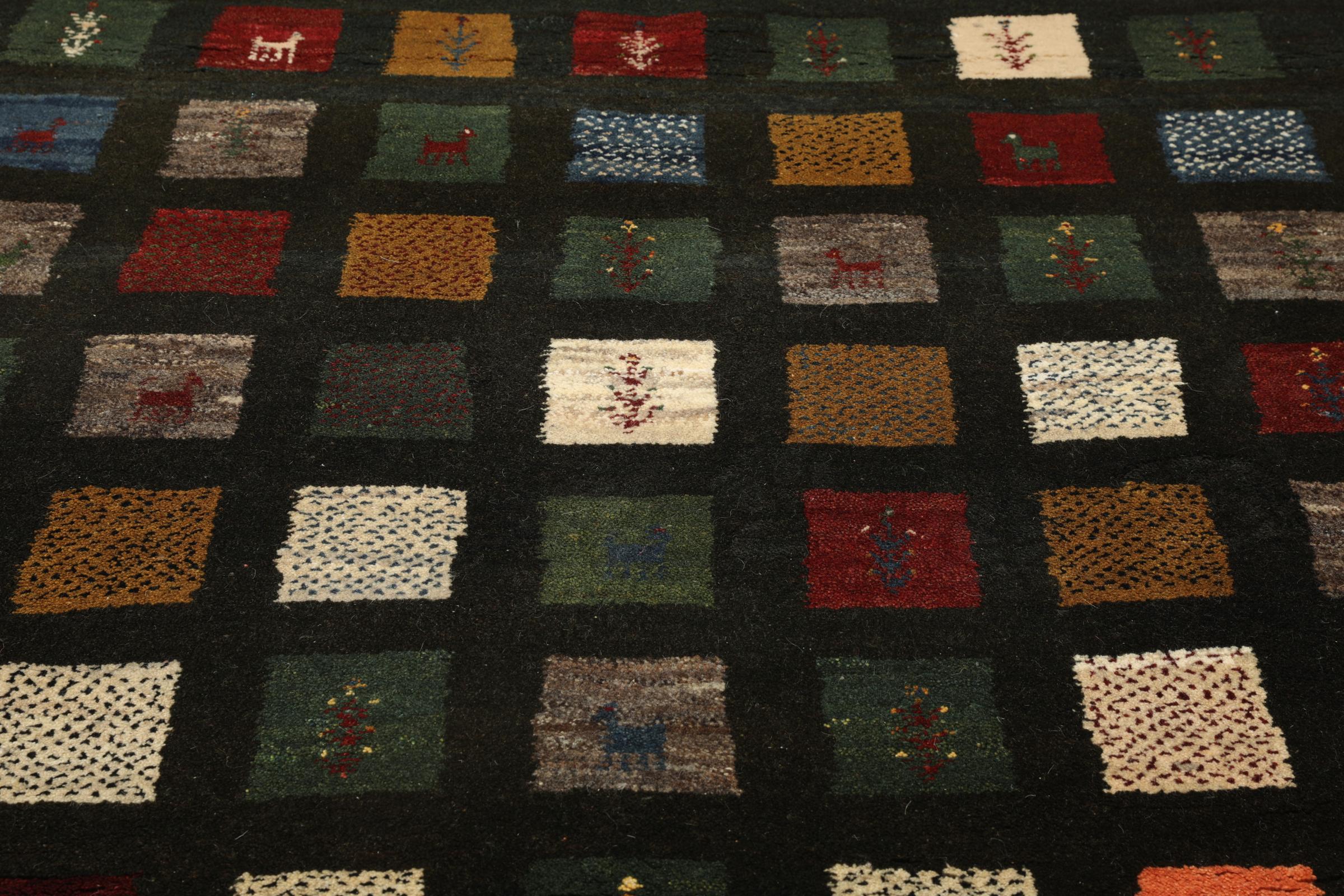
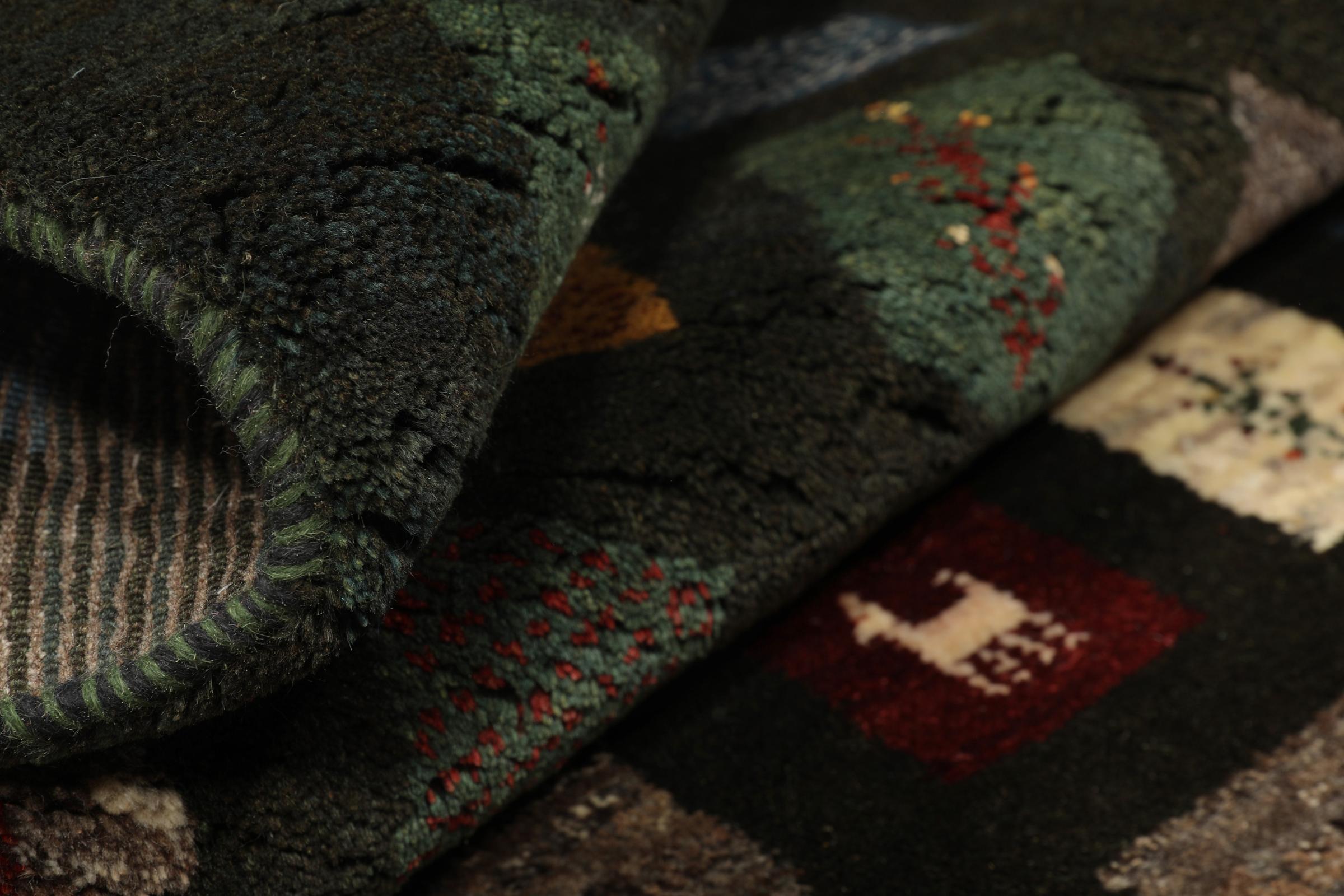
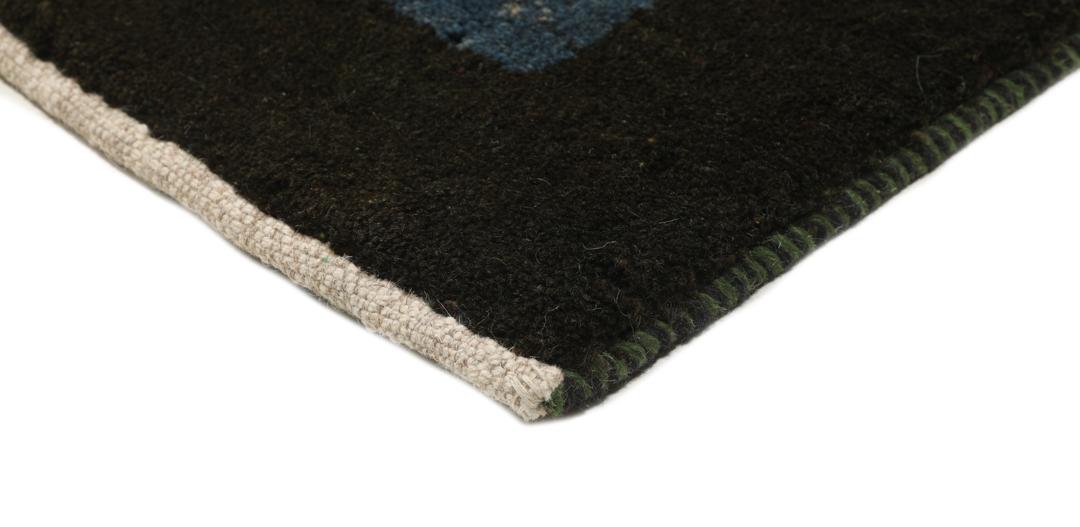
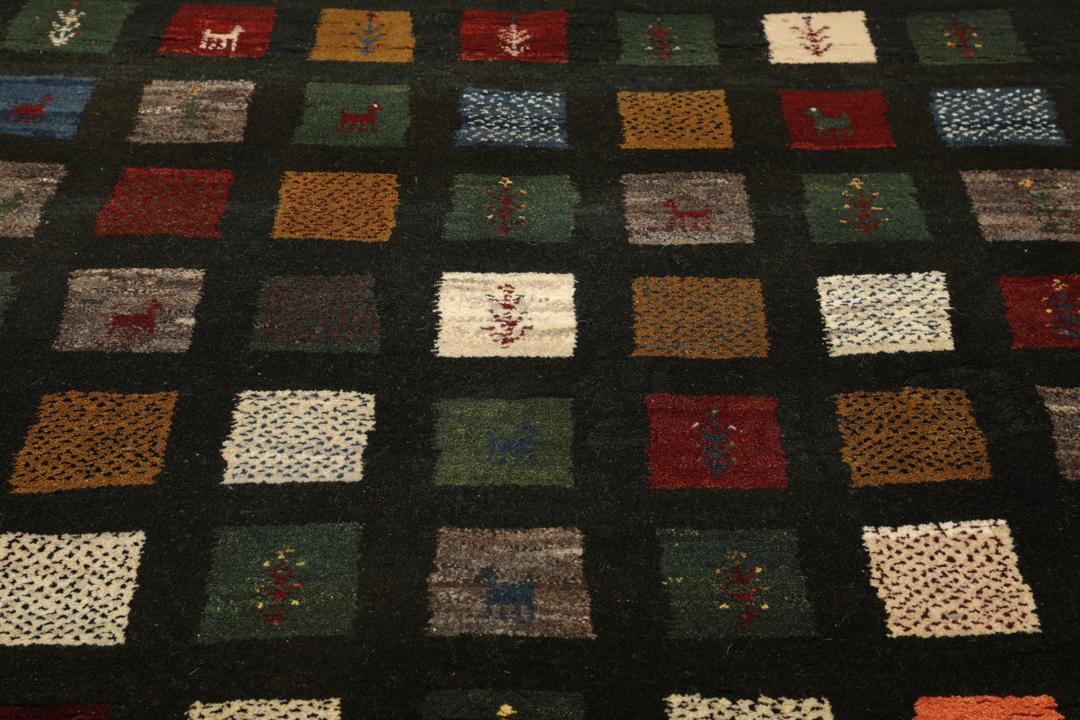
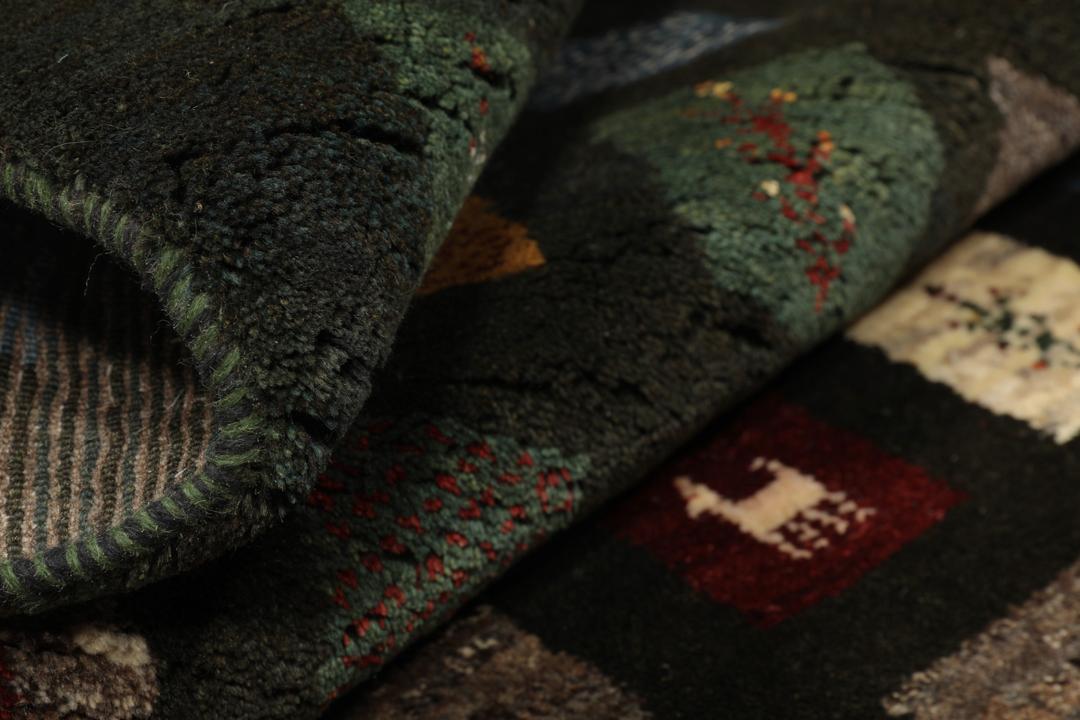
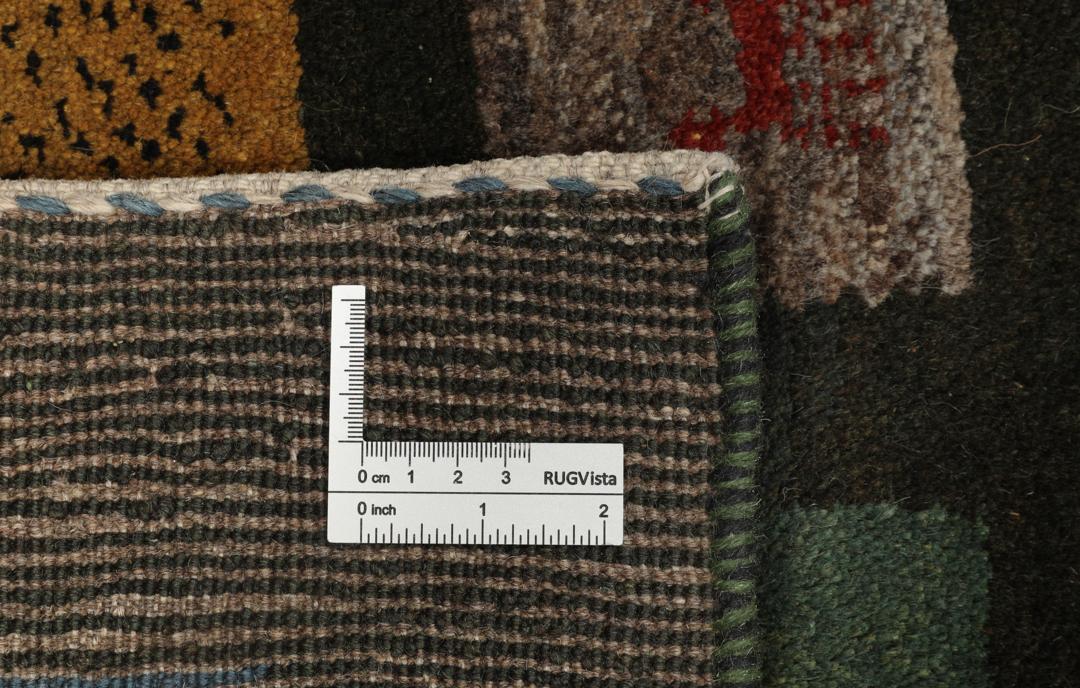
The term Gabbeh itself refers to a 'natural' or 'raw' aesthetic, characterised by a thicker, longer pile and a simpler, more rustic construction compared to other regional styles. The use of hand-spun wool is a defining feature, which naturally varies in texture and colour absorption. This creates a subtle, organic variation in the surface of the rug, a quality that is highly prized by collectors for the depth and life it brings to the finished piece.
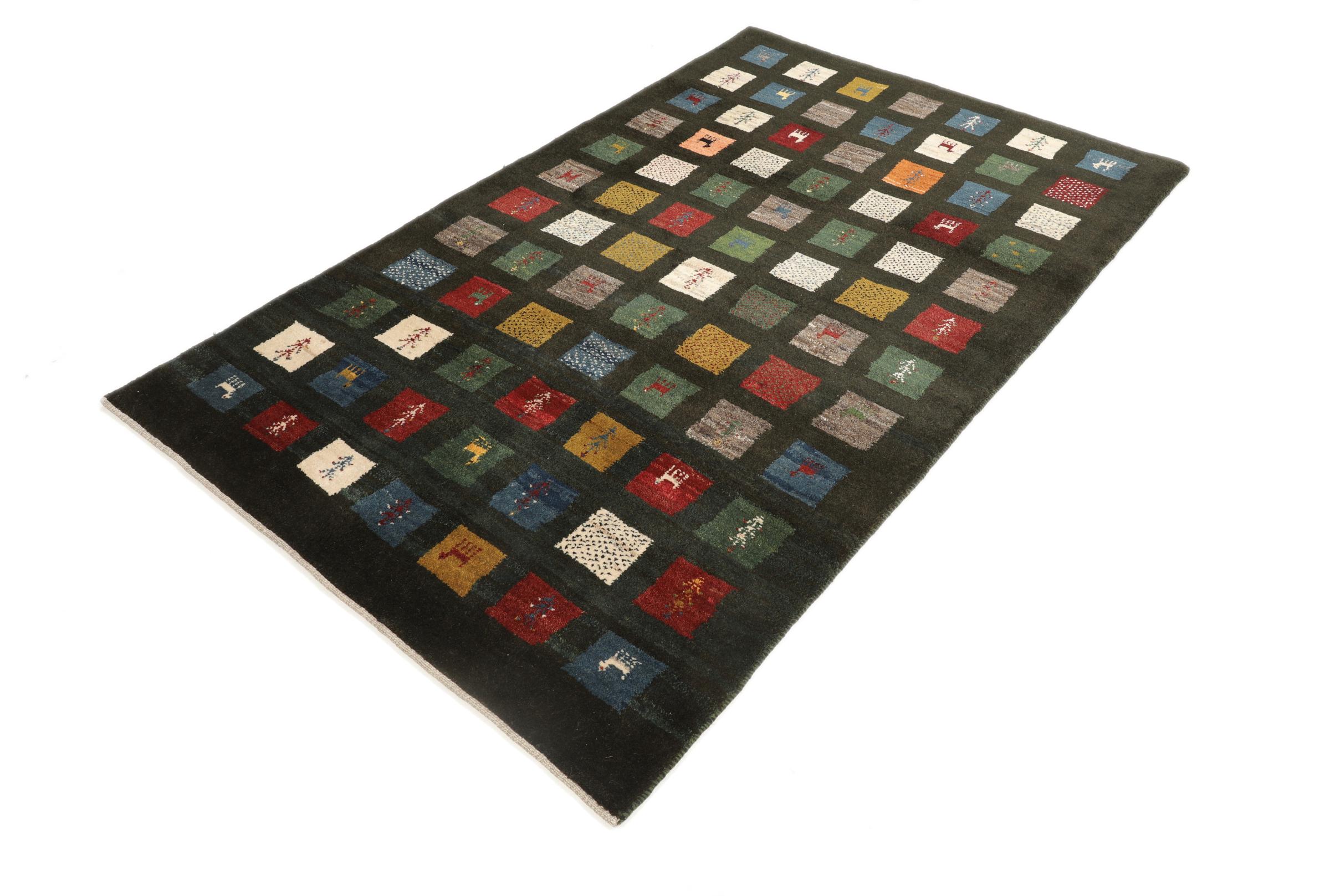
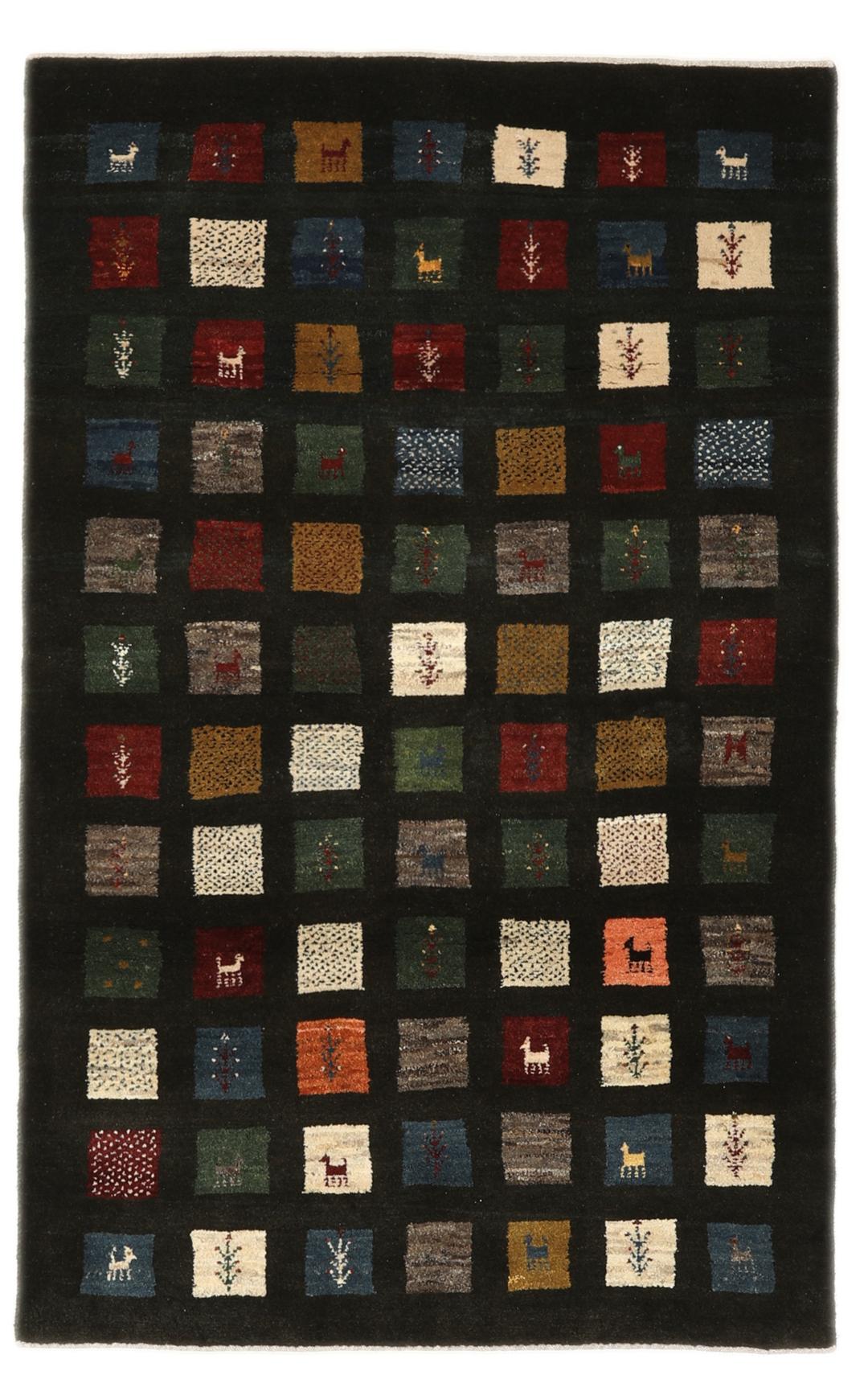
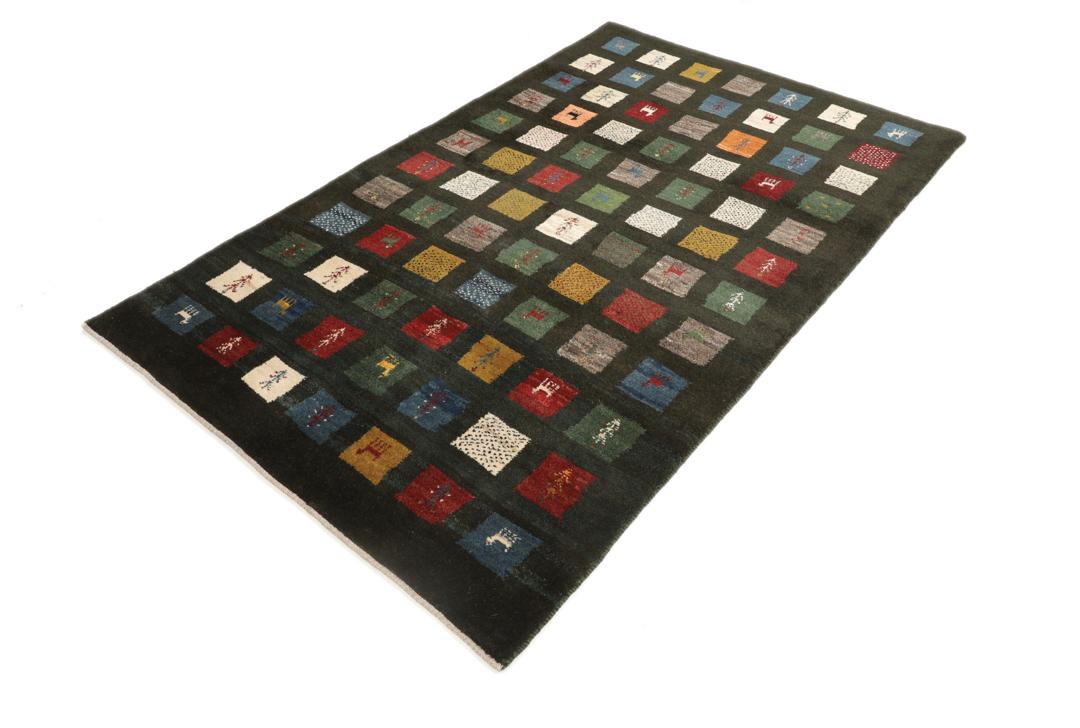
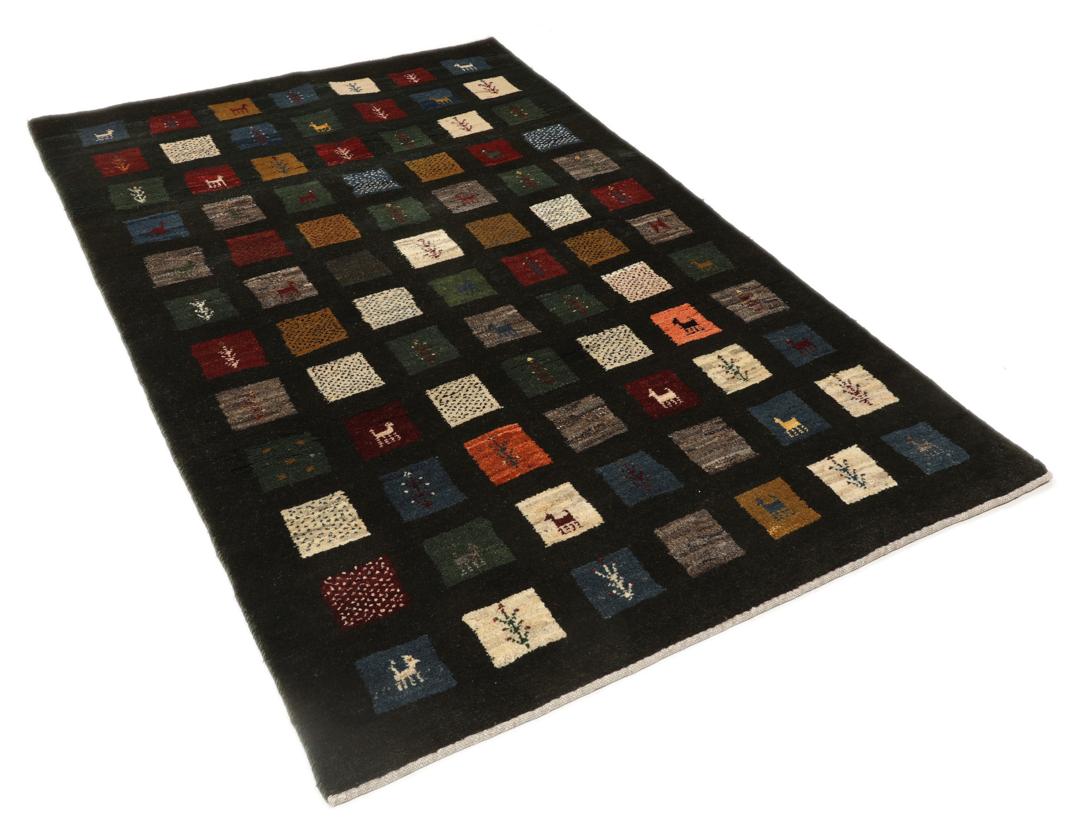
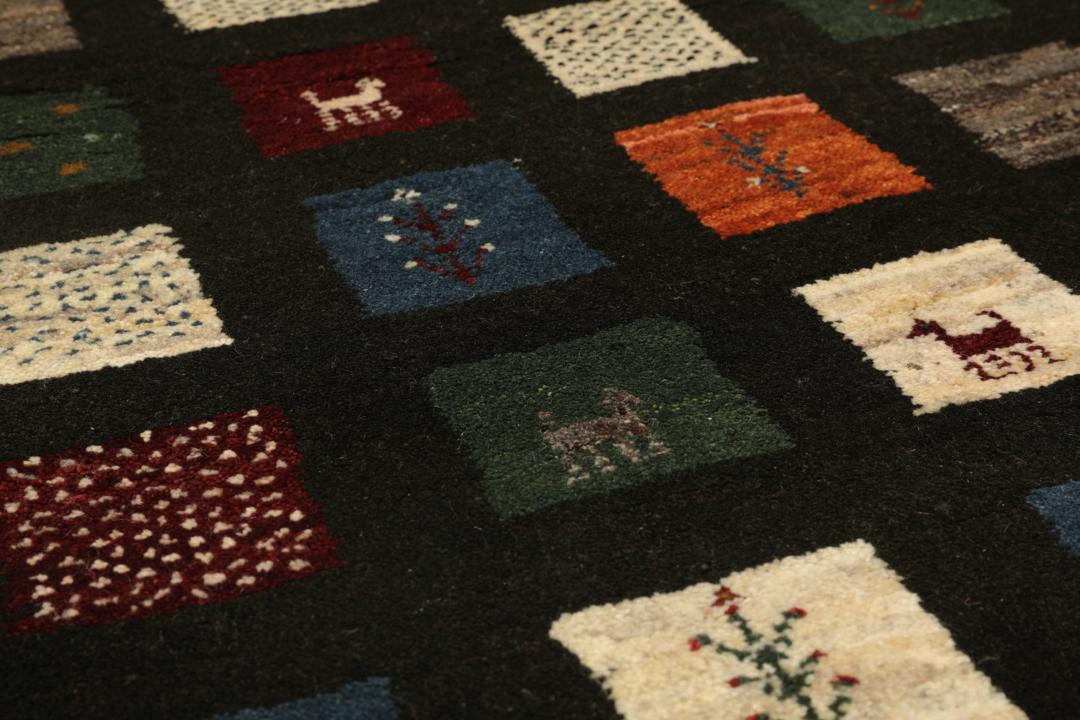
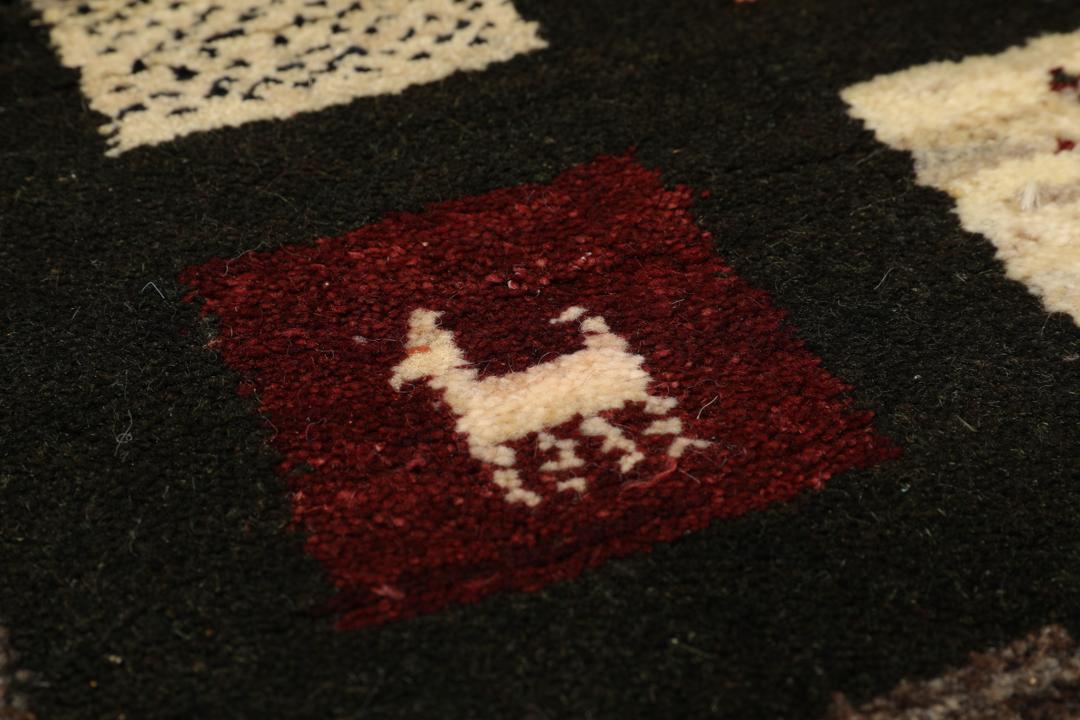
Visually, these rugs often feature bold, simplified motifs that carry symbolic meaning, ranging from stylised animals to common plants and geometric shapes. In this specific piece, the grid layout provides a structured frame for these playful, often whimsical icons. The contrast between the bold, dark field and the vibrant, varied colours of the squares is a hallmark of the Gabbeh tradition, representing a balance between disciplined composition and artistic expression.
Collecting a Gabbeh rug is a way to connect with a centuries-old tradition of ingenuity and craft. These pieces are valued not only for their aesthetic appeal but for the genuine human connection they represent. Because they were historically made by individual weavers without a pre-drawn pattern, every rug serves as a unique record of the weaver's imagination, making them highly sought after by those who value authenticity and cultural heritage in their home furnishings.