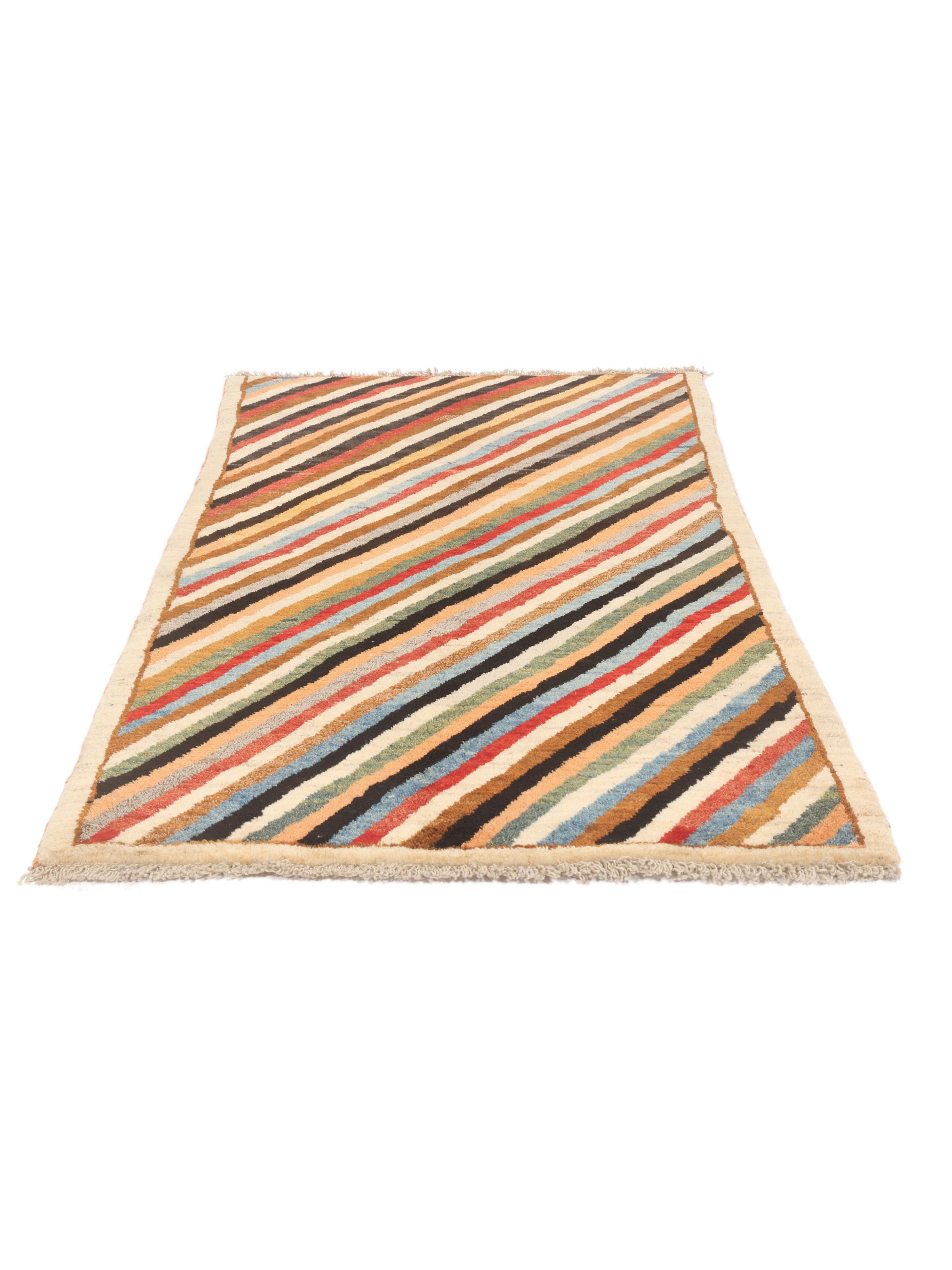
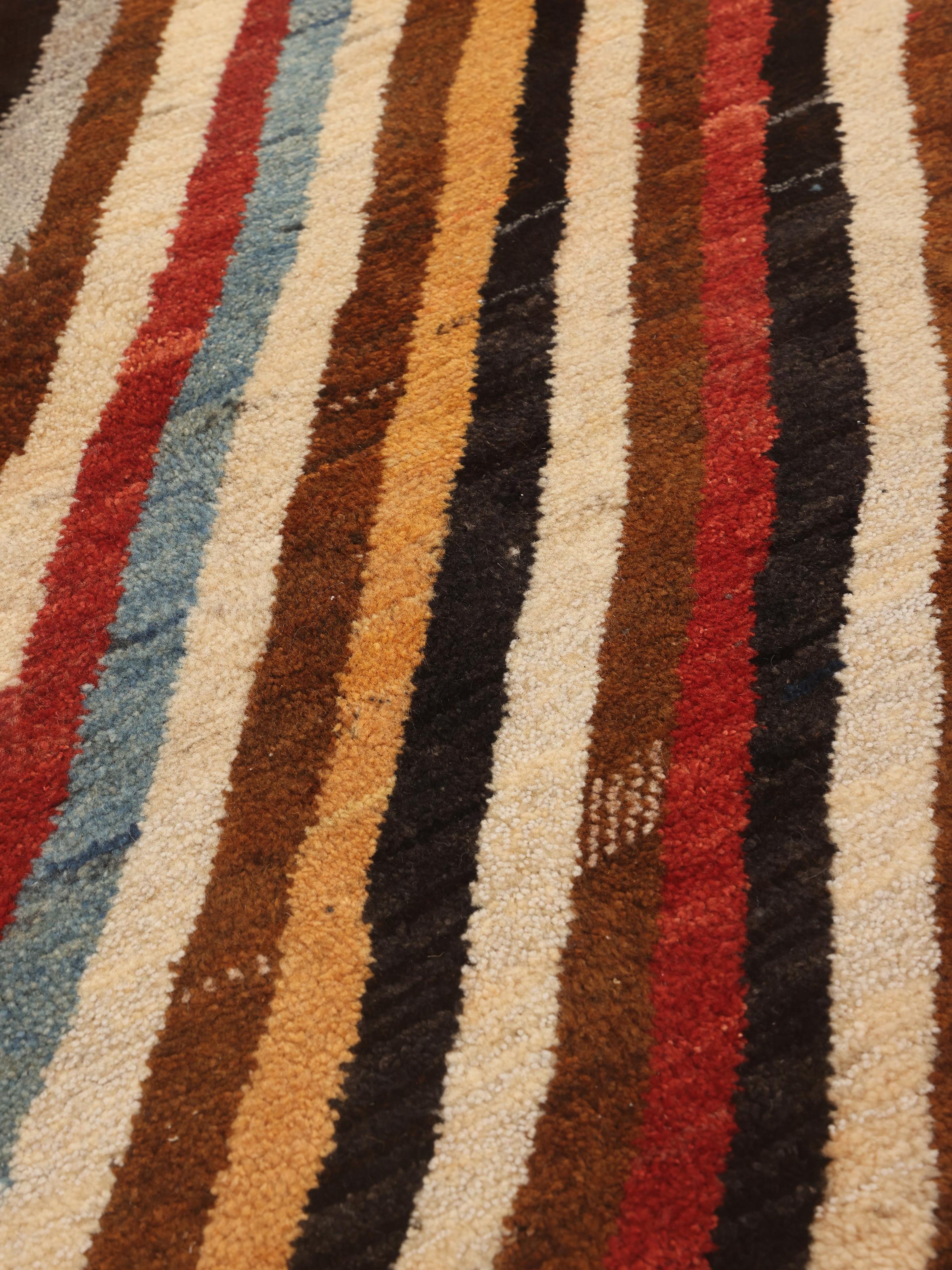
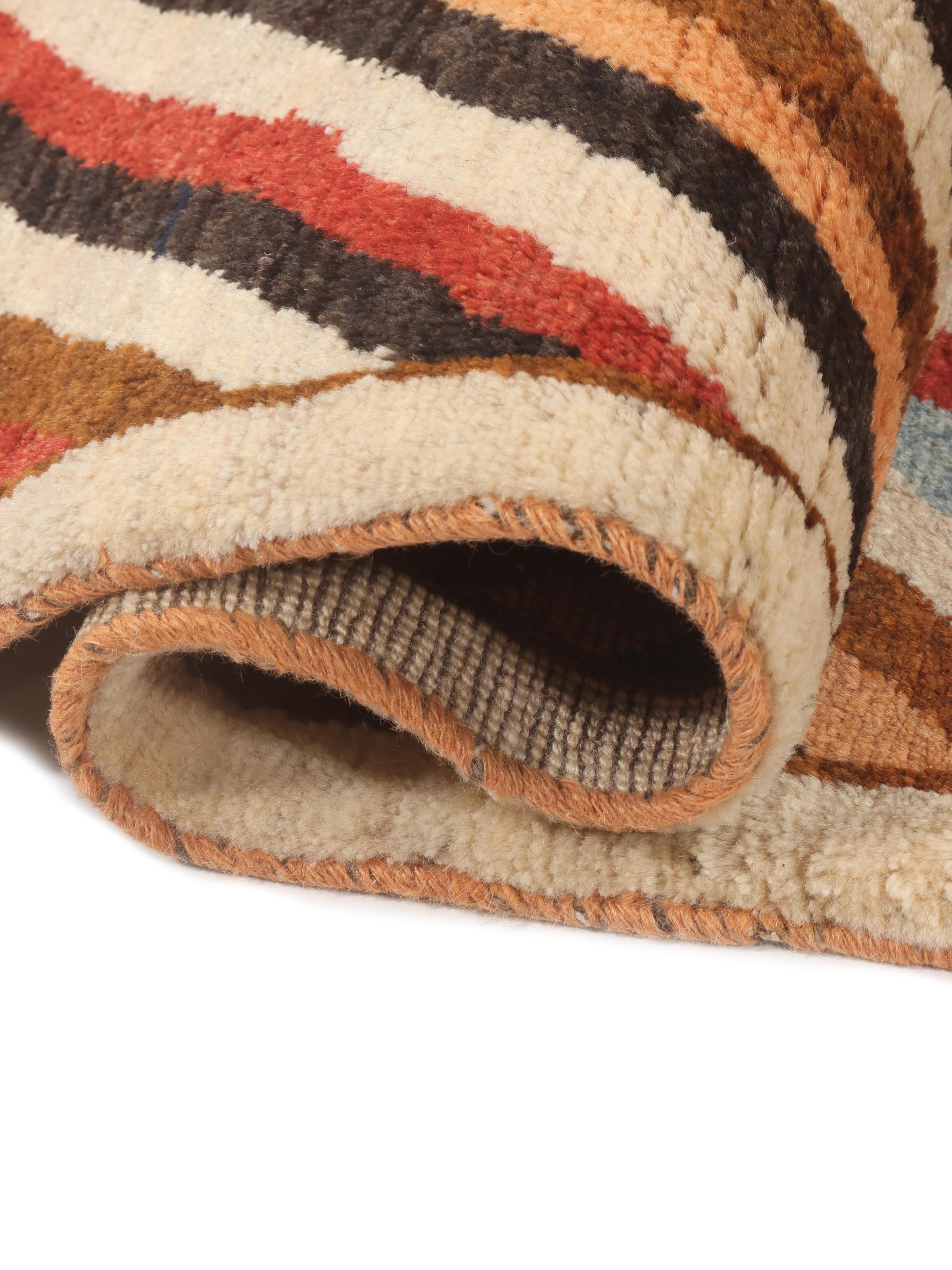
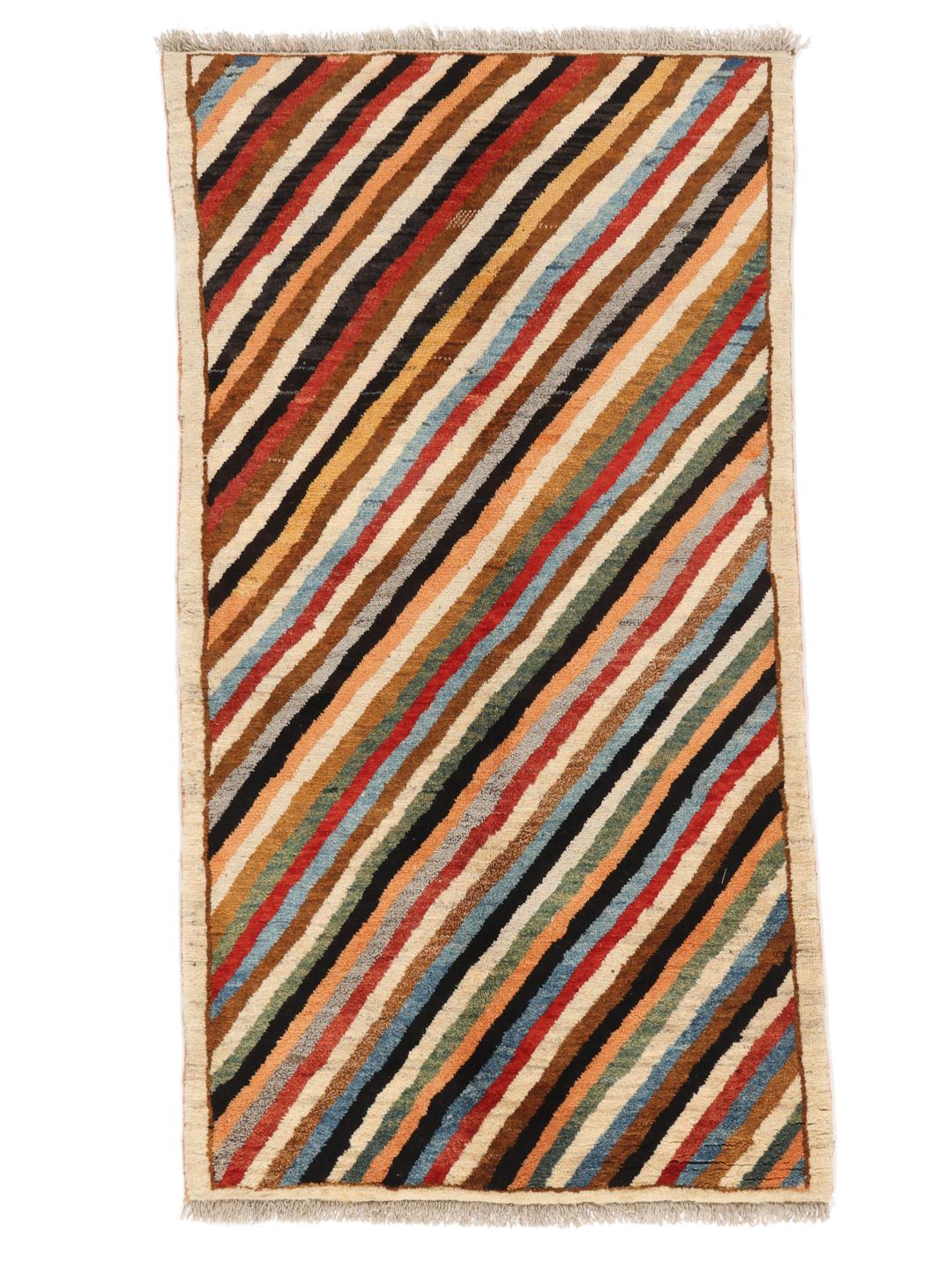
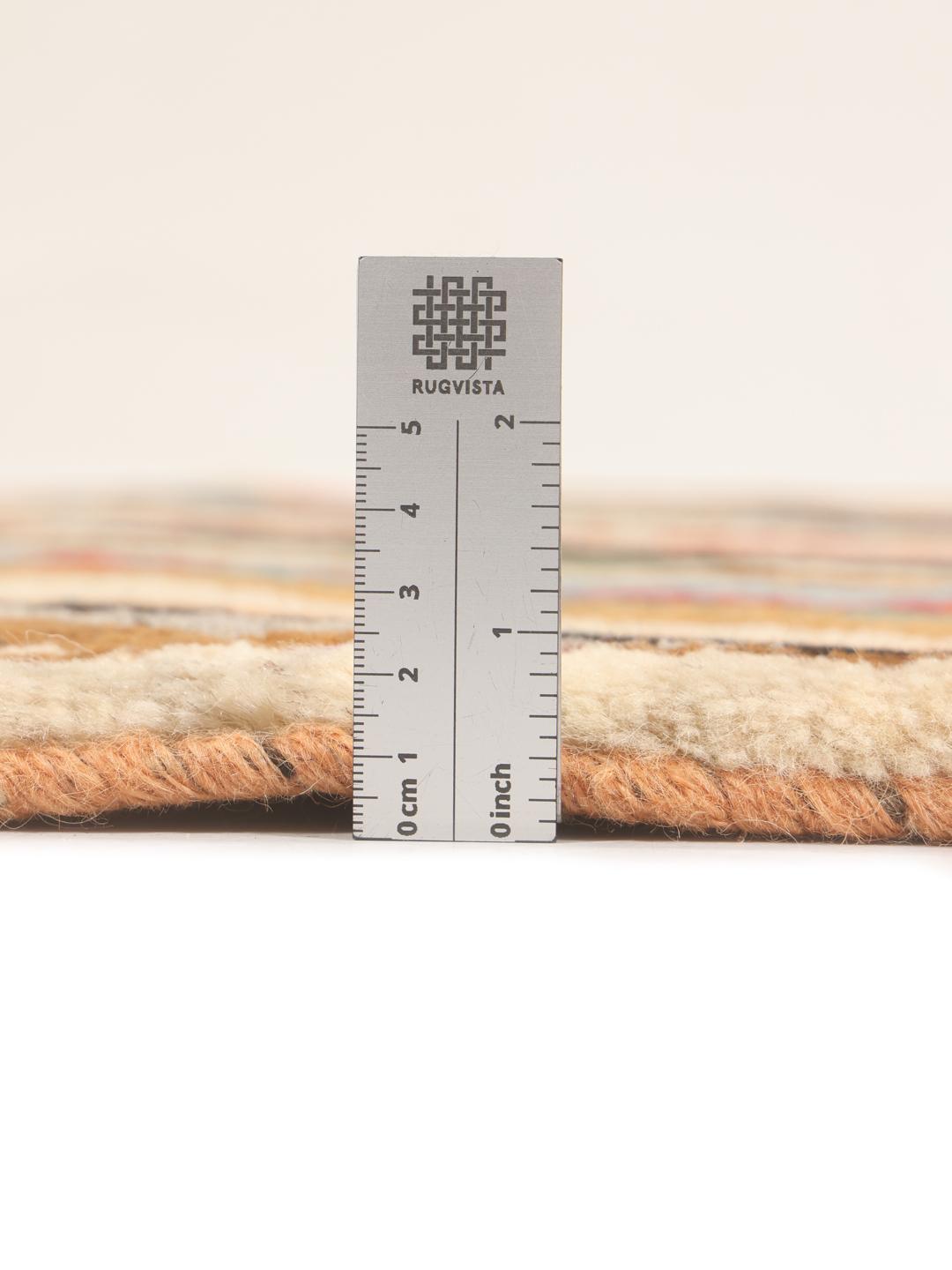
Gabbeh rugs trace their origins back to the nomadic tribes of the Middle East, who created these pieces primarily for their own use rather than for trade. Historically, they served as heavy, protective floor coverings in tents, designed to provide insulation against the harsh climate of the region.
The term Gabbeh itself refers to a rug that is thick and coarse, characterised by a more spontaneous, artistic approach to design. Unlike formal city rugs that follow rigid, pre-planned patterns, these pieces were often woven from memory, allowing the weaver to express their own stories and environment through simple, bold forms.
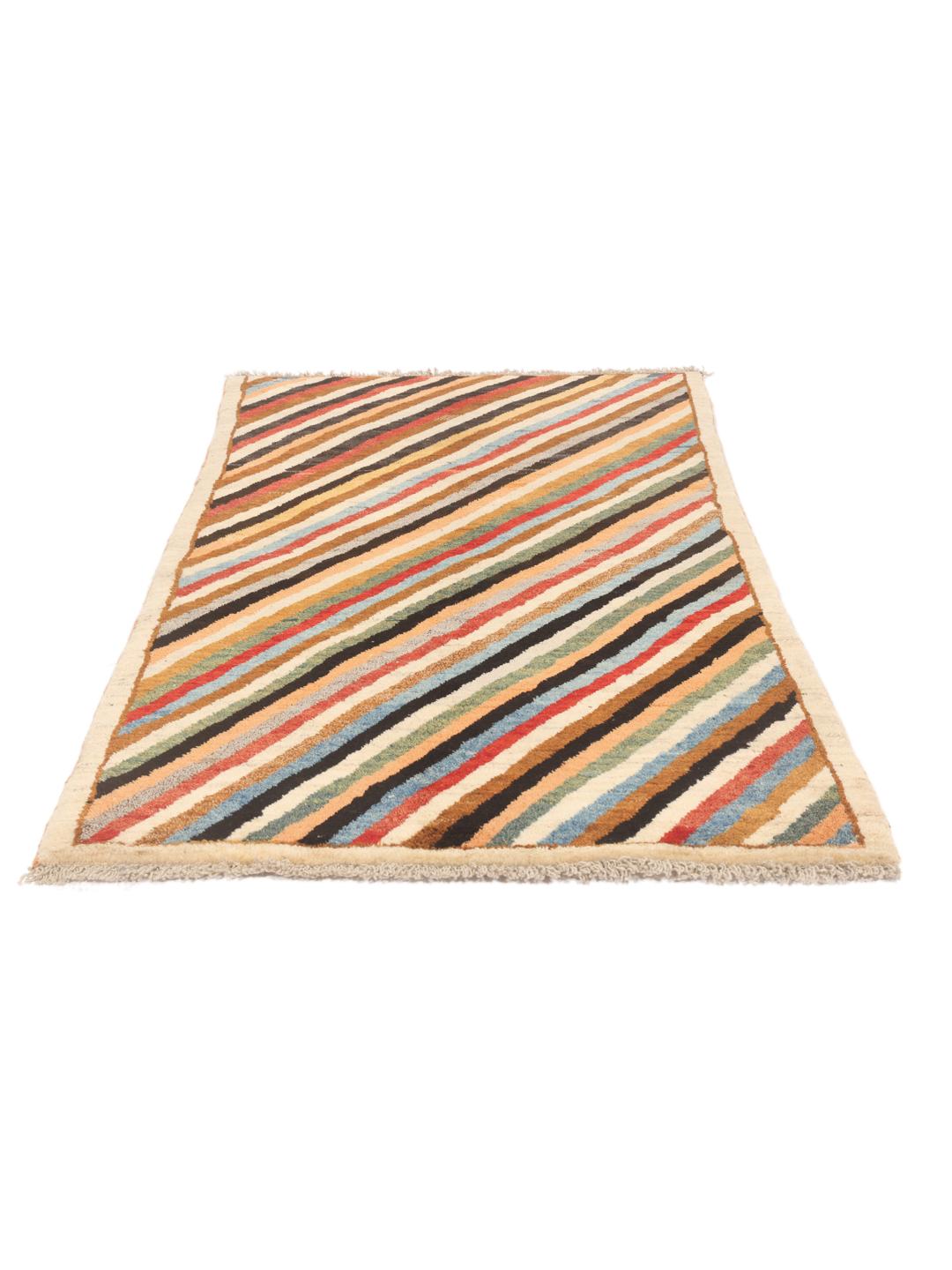
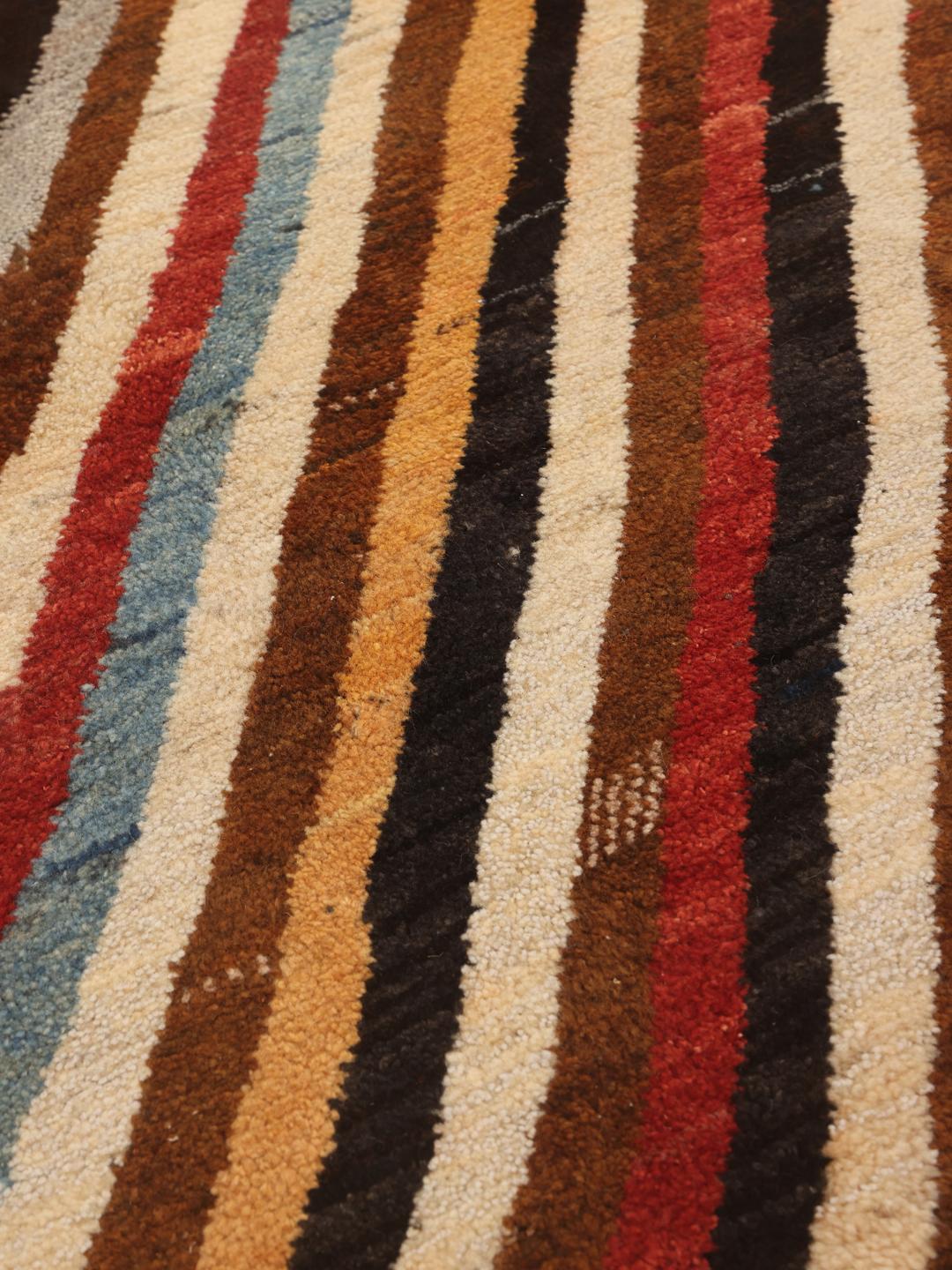
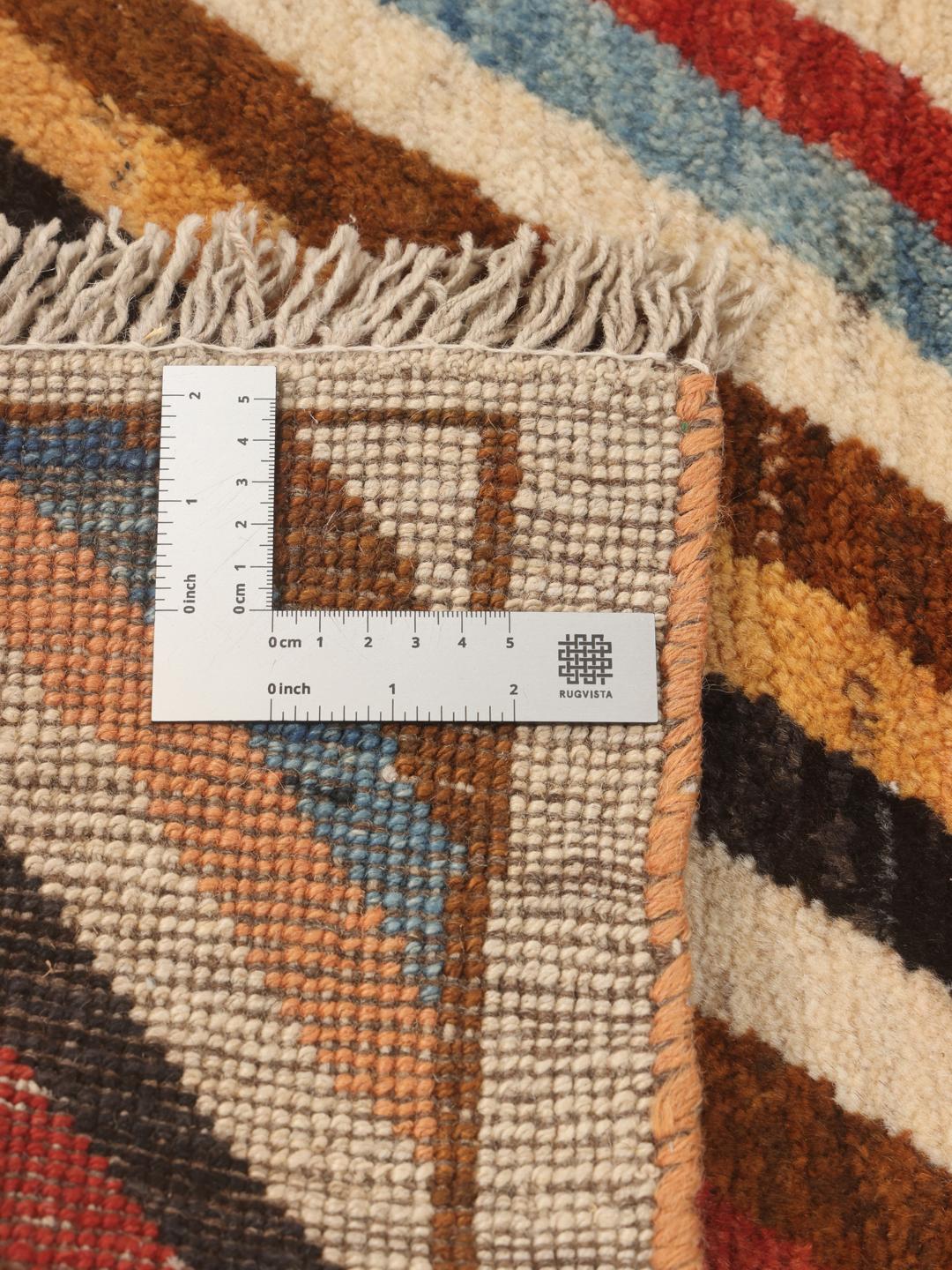
The signature design language of these rugs often features large, open fields and geometric motifs, though modern variations like the Gabbeh Fine incorporate more complex patterns and tighter weaves. The use of natural dyes and bold, contrasting colours has remained a constant, reflecting the landscape and cultural identity of the tribal communities that sustain this craft.
Today, these rugs are highly valued by collectors who appreciate their authenticity and the direct link they provide to a nomadic heritage. Owning one is an investment in a living tradition, representing a rare blend of functional utility and raw, uninhibited creative expression that is becoming increasingly scarce in the modern world.