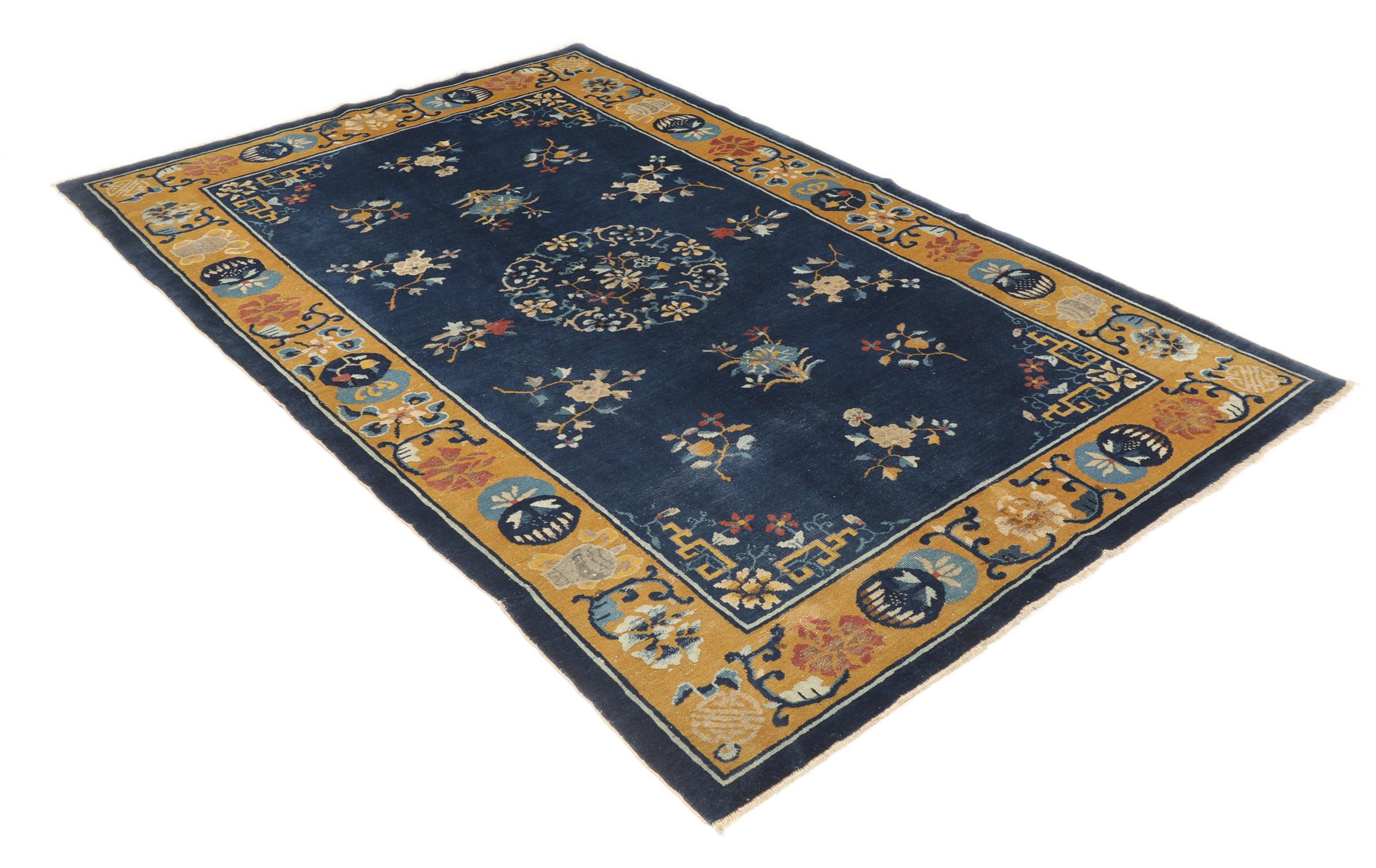
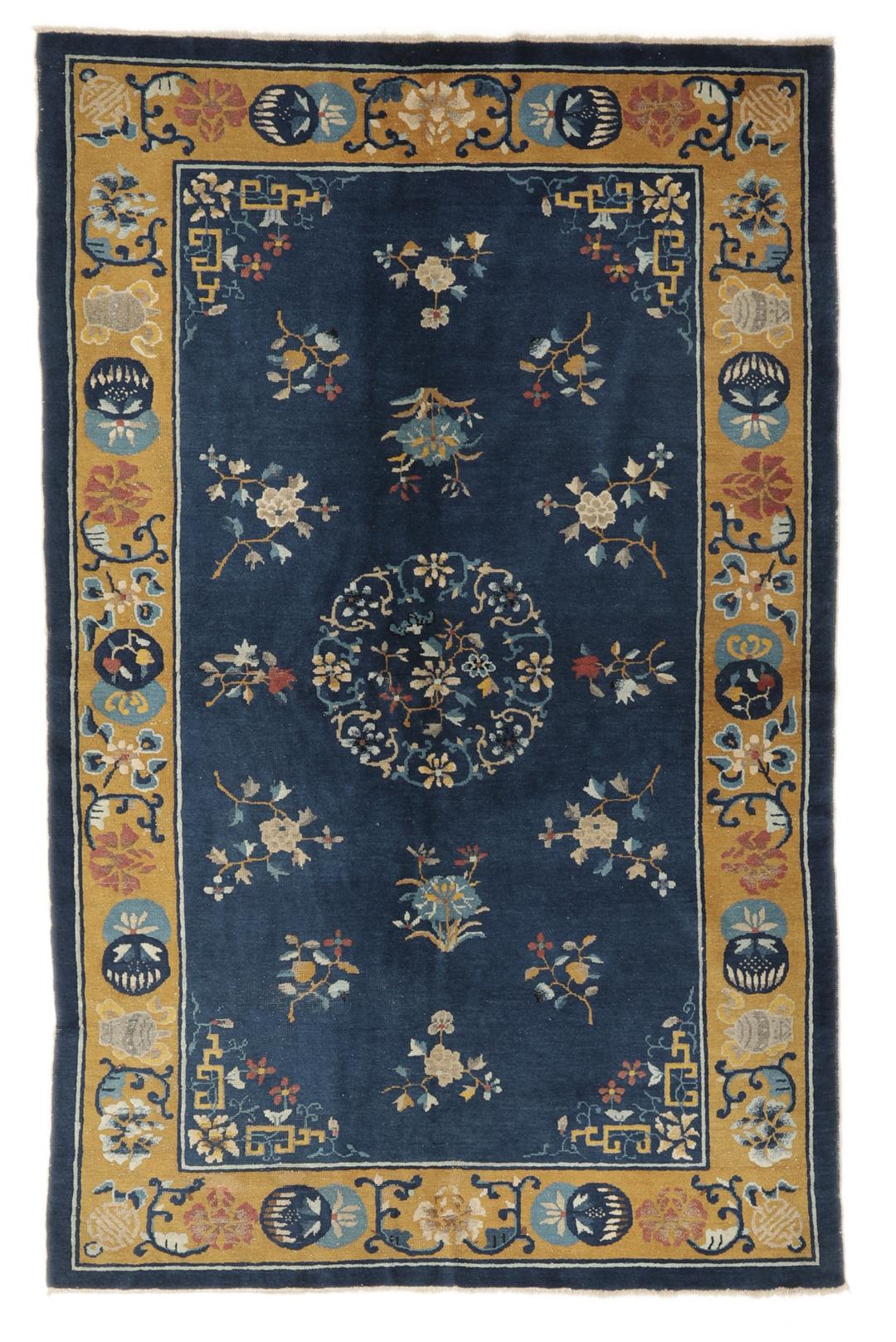
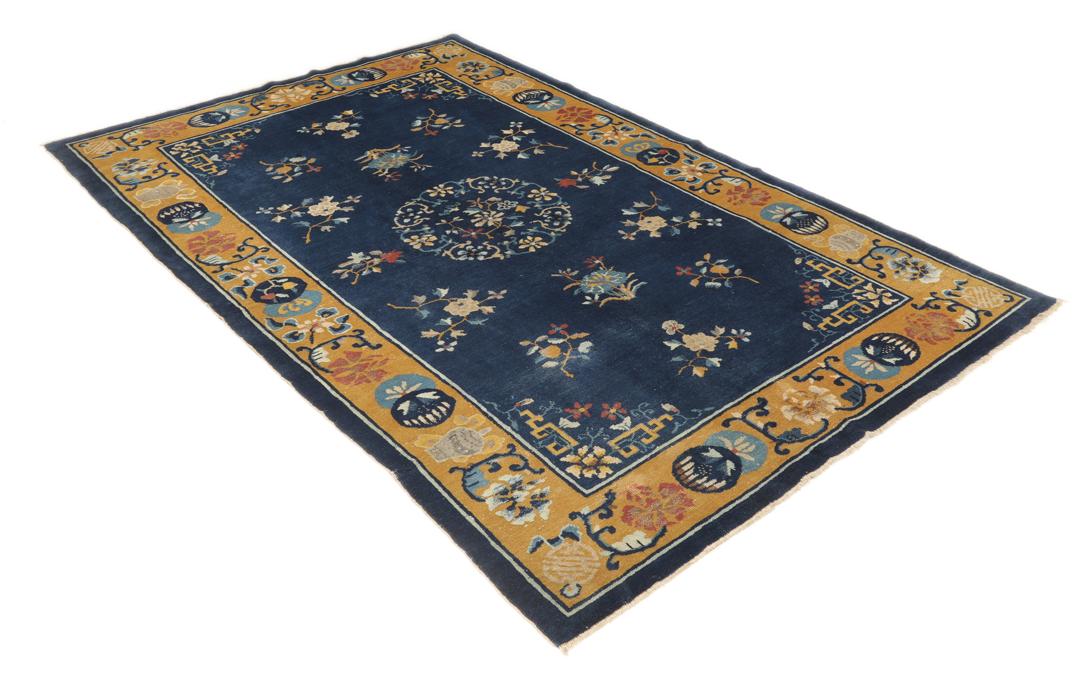
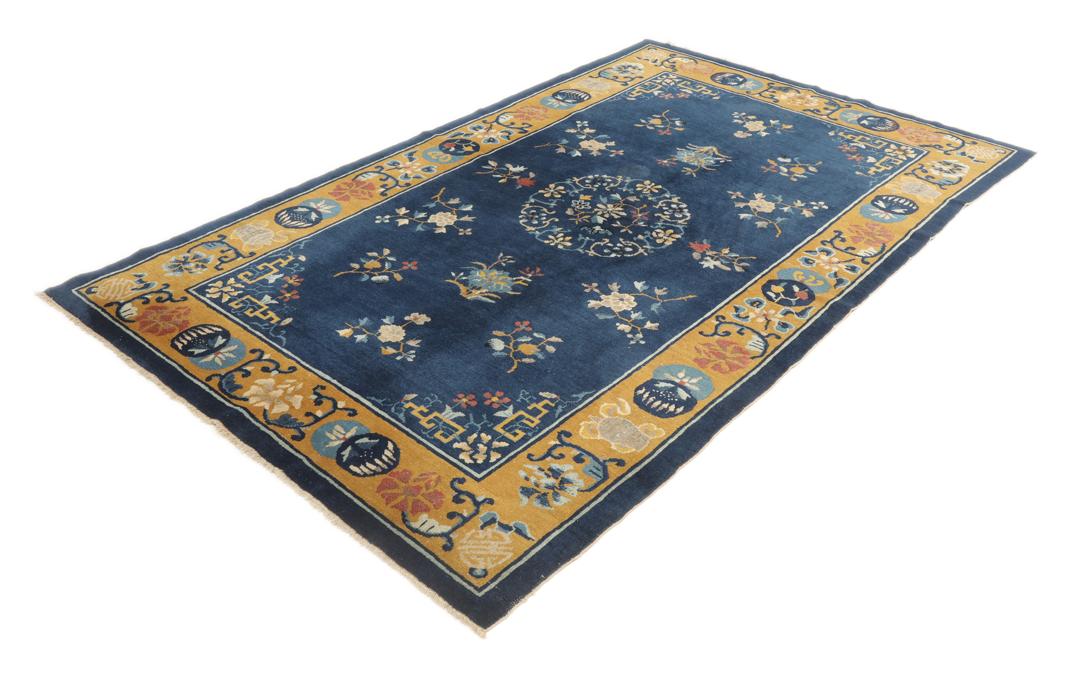
The Peking rug tradition represents one of the most sophisticated chapters in Chinese textile history. Emerging from the refined workshops of Beijing in the early 20th century, these rugs were often commissioned by the elite or for export to the West, where they were prized for their artistic departure from the busier, more crowded designs of other regions. They are celebrated for their open, spacious fields and their use of negative space, which allows each floral motif to stand out with clarity.
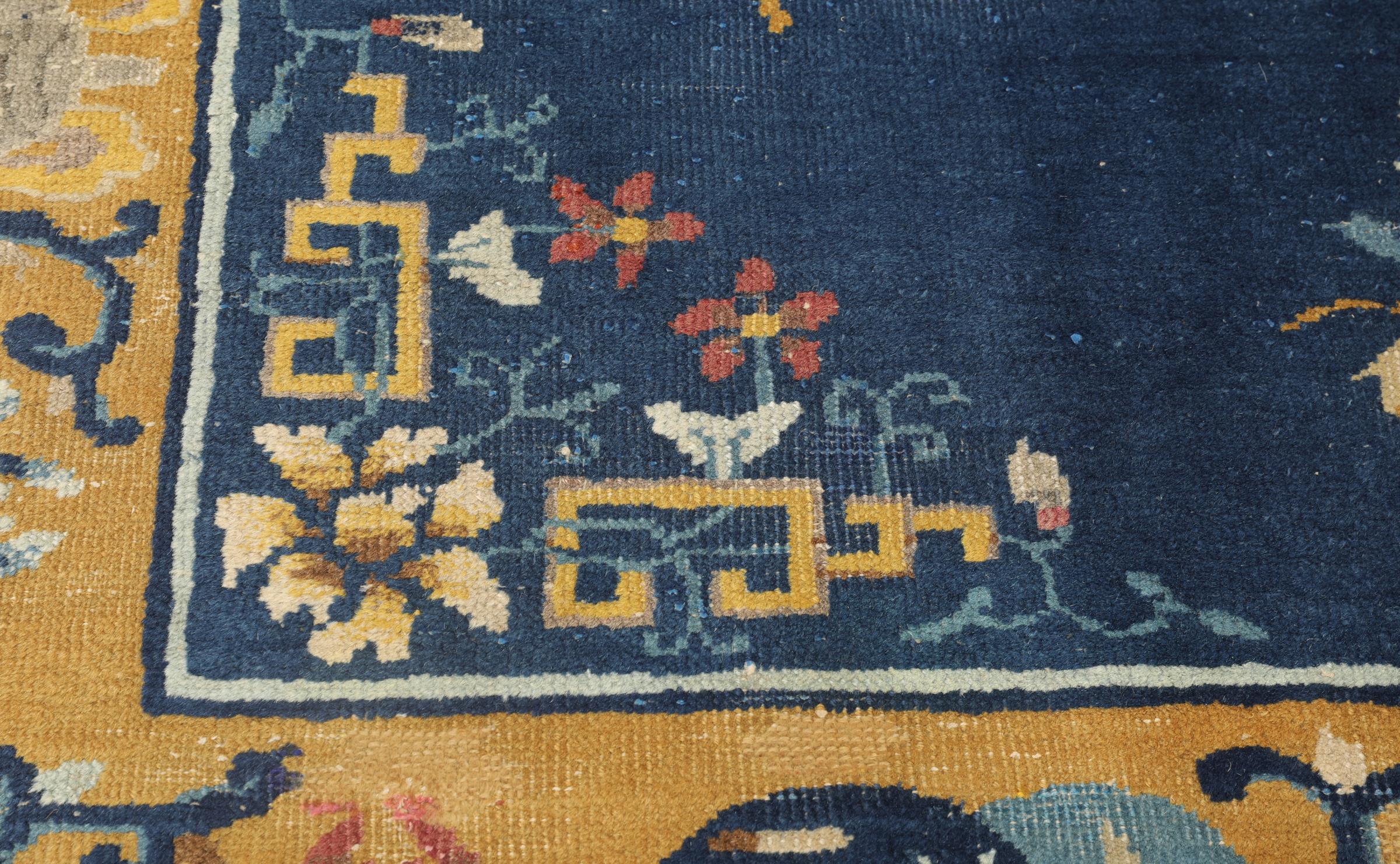
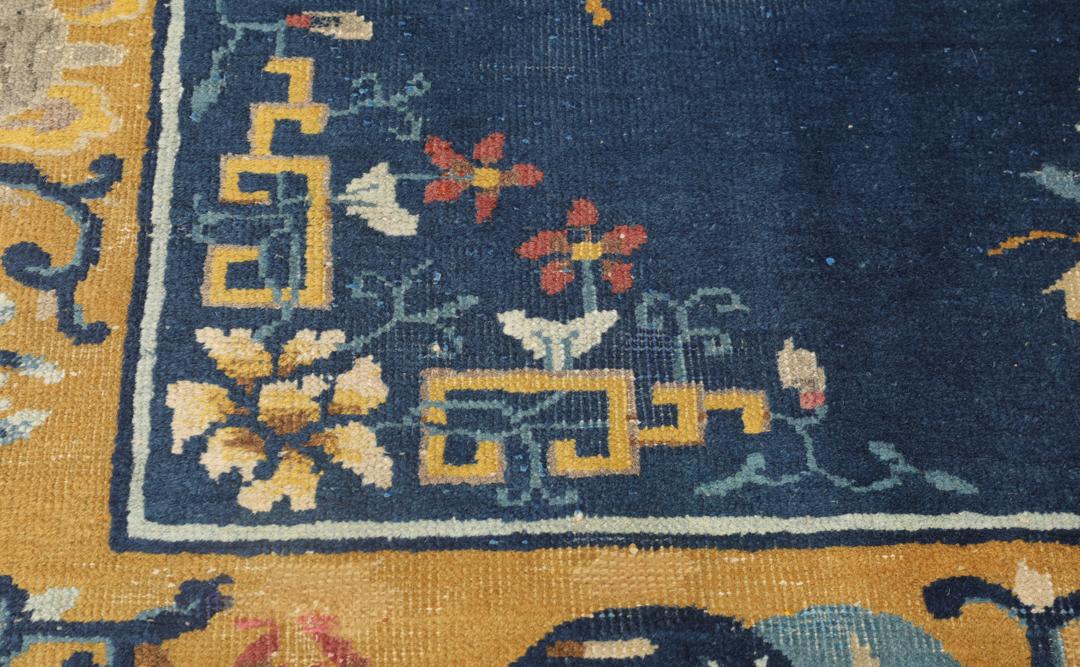
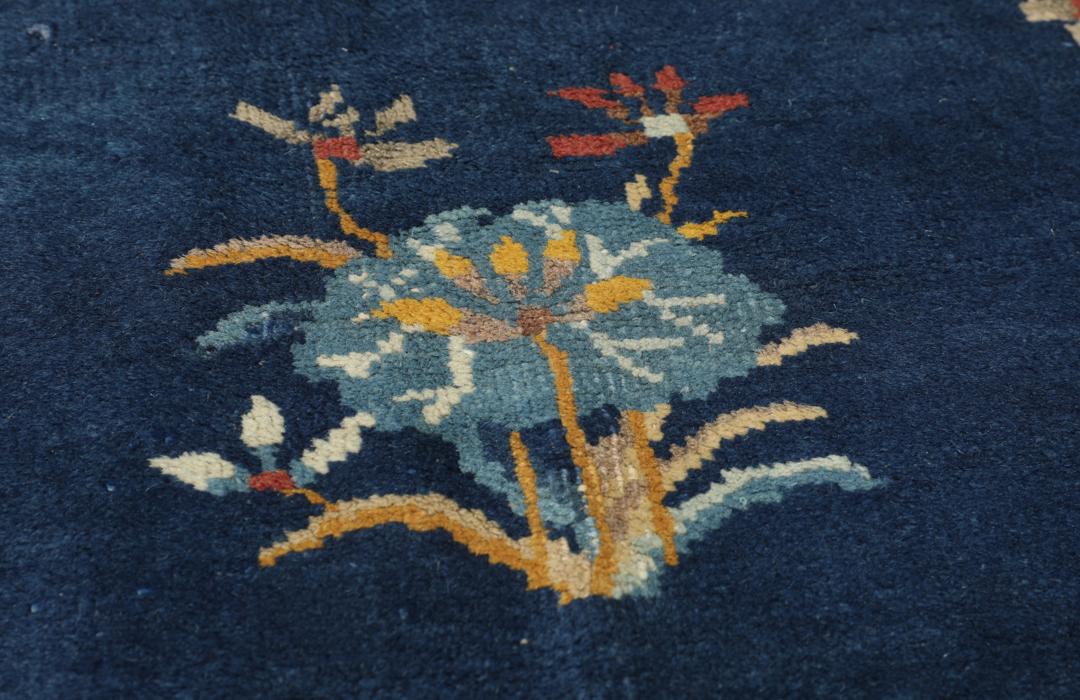
The term Peking refers not just to the origin city, but to a specific aesthetic movement that favoured subtle, elegant colour palettes and distinctively Chinese symbols. These designs often incorporated Buddhist or Taoist imagery, such as stylized lotus blossoms or geometric fretwork borders, which were rendered with a precision that demanded high levels of skill from the artisans who produced them.
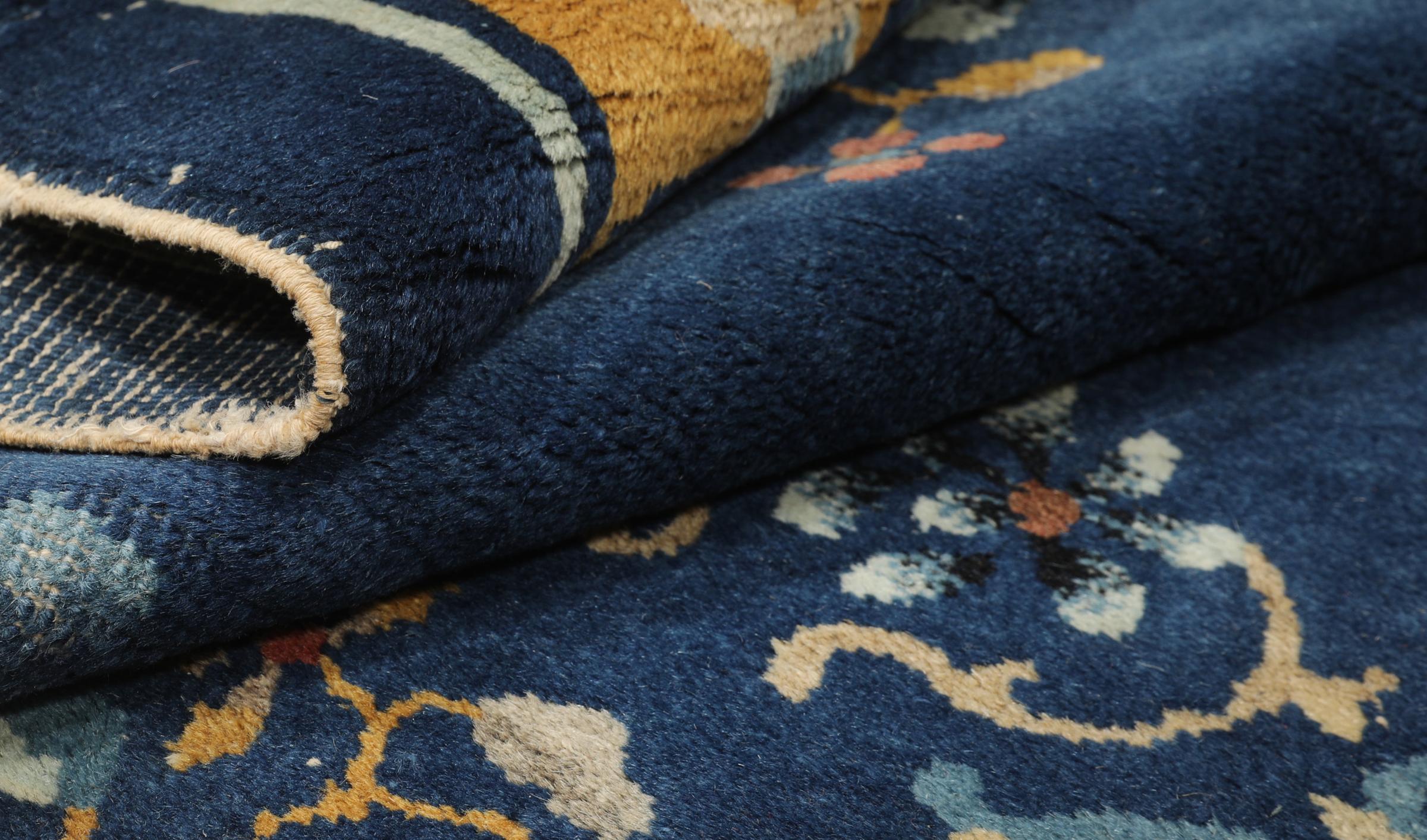
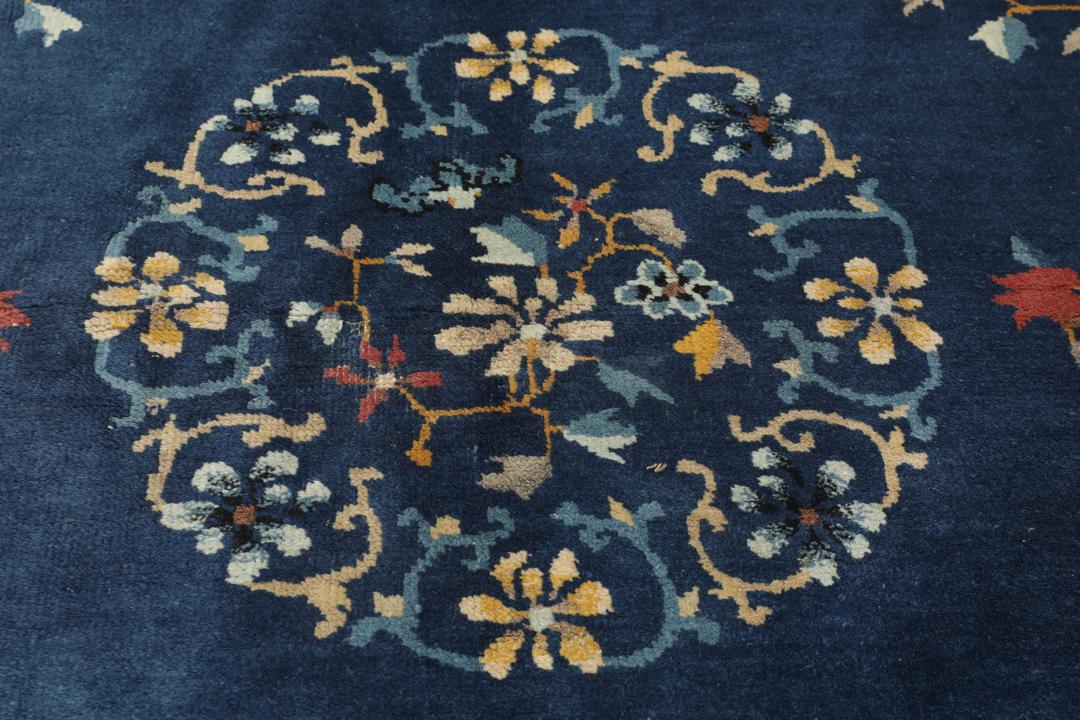
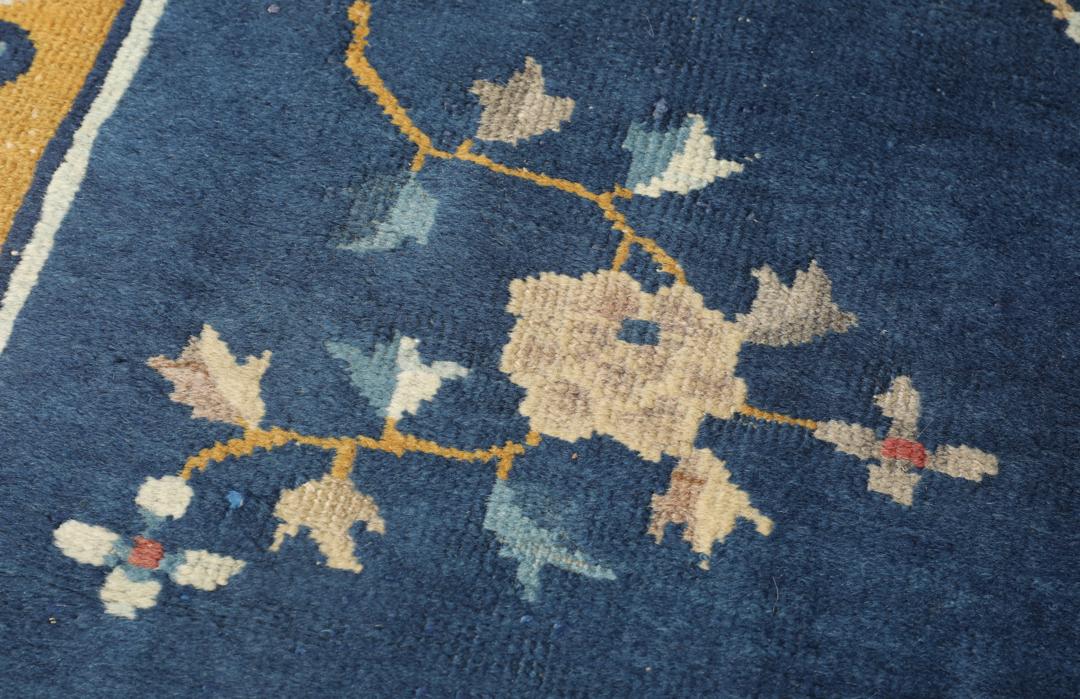
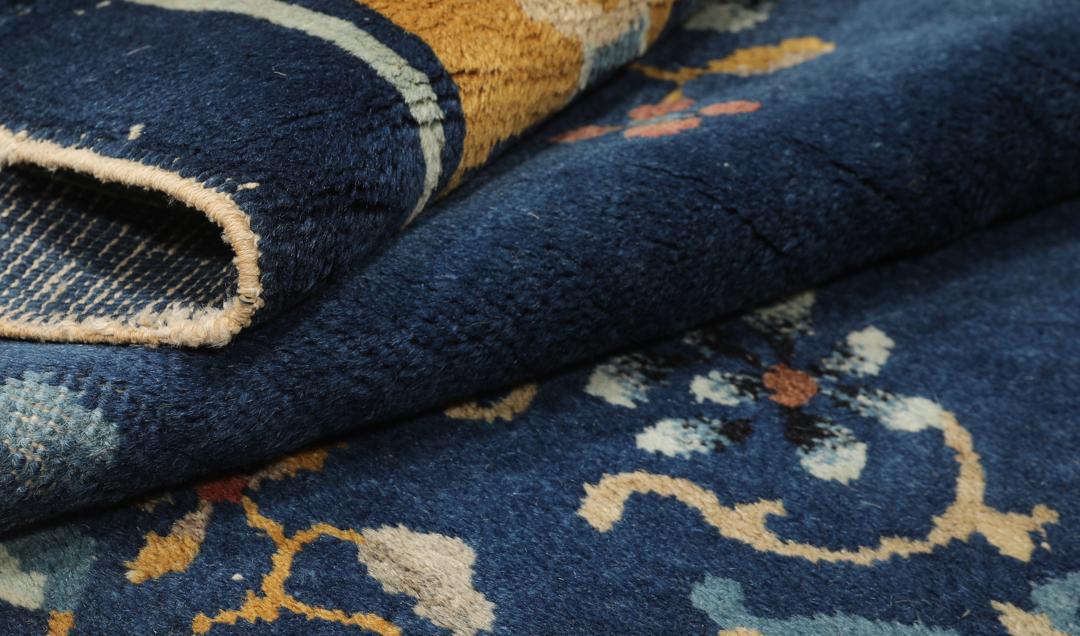
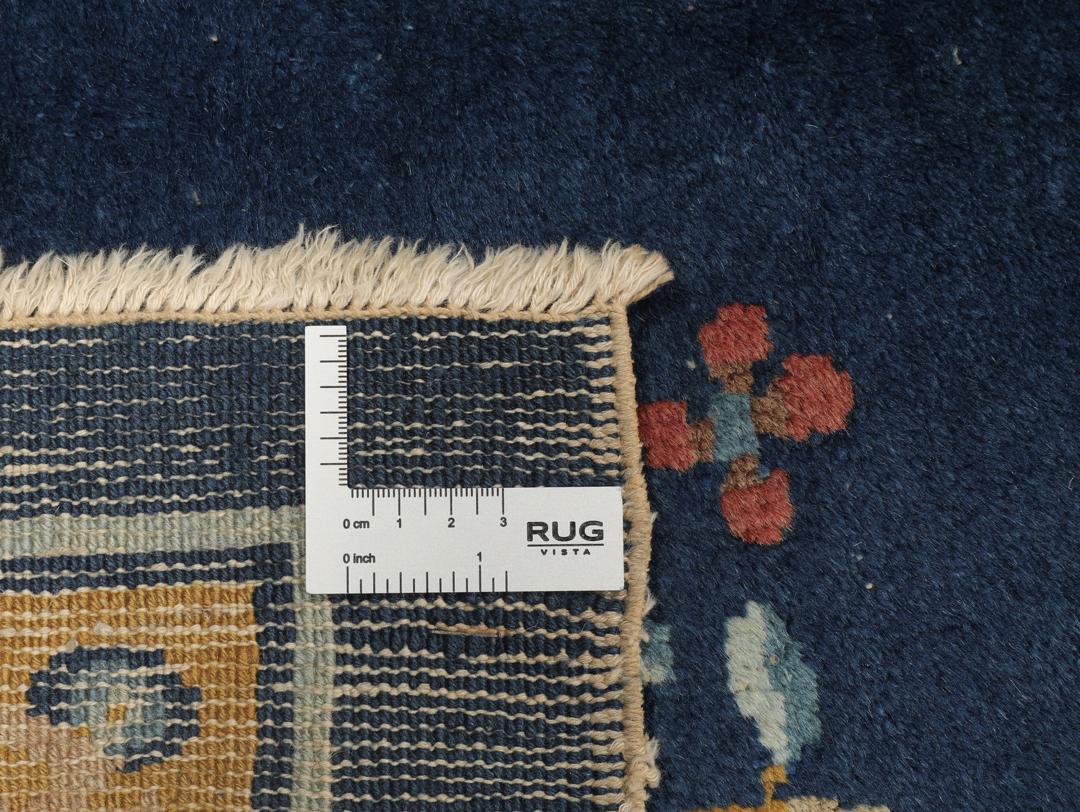
Visually, these rugs are characterised by their restrained use of colour and their focus on balance. Unlike many other traditions that fill every corner of the rug with intricate patterns, the Peking style embraces simplicity. The floral compositions are often sparse, emphasising the beauty of the individual bloom or branch. This particular piece displays the hallmark blue field and warm, earthy border tones that define the most iconic examples of the period.
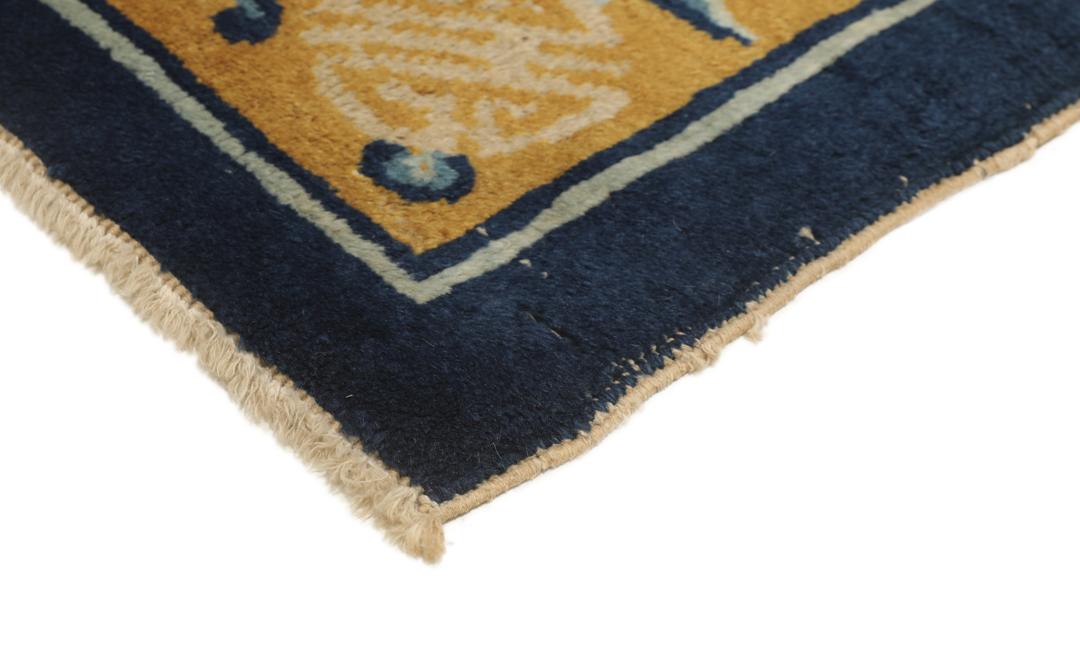
Collecting antique Peking rugs is a way to preserve a specific cultural moment. As these pieces grow older, their value lies in their survival and the rarity of their original designs. To own one is to act as a steward of a tradition that prioritised artistic expression and technical mastery, ensuring that these beautiful objects continue to be appreciated by future generations.