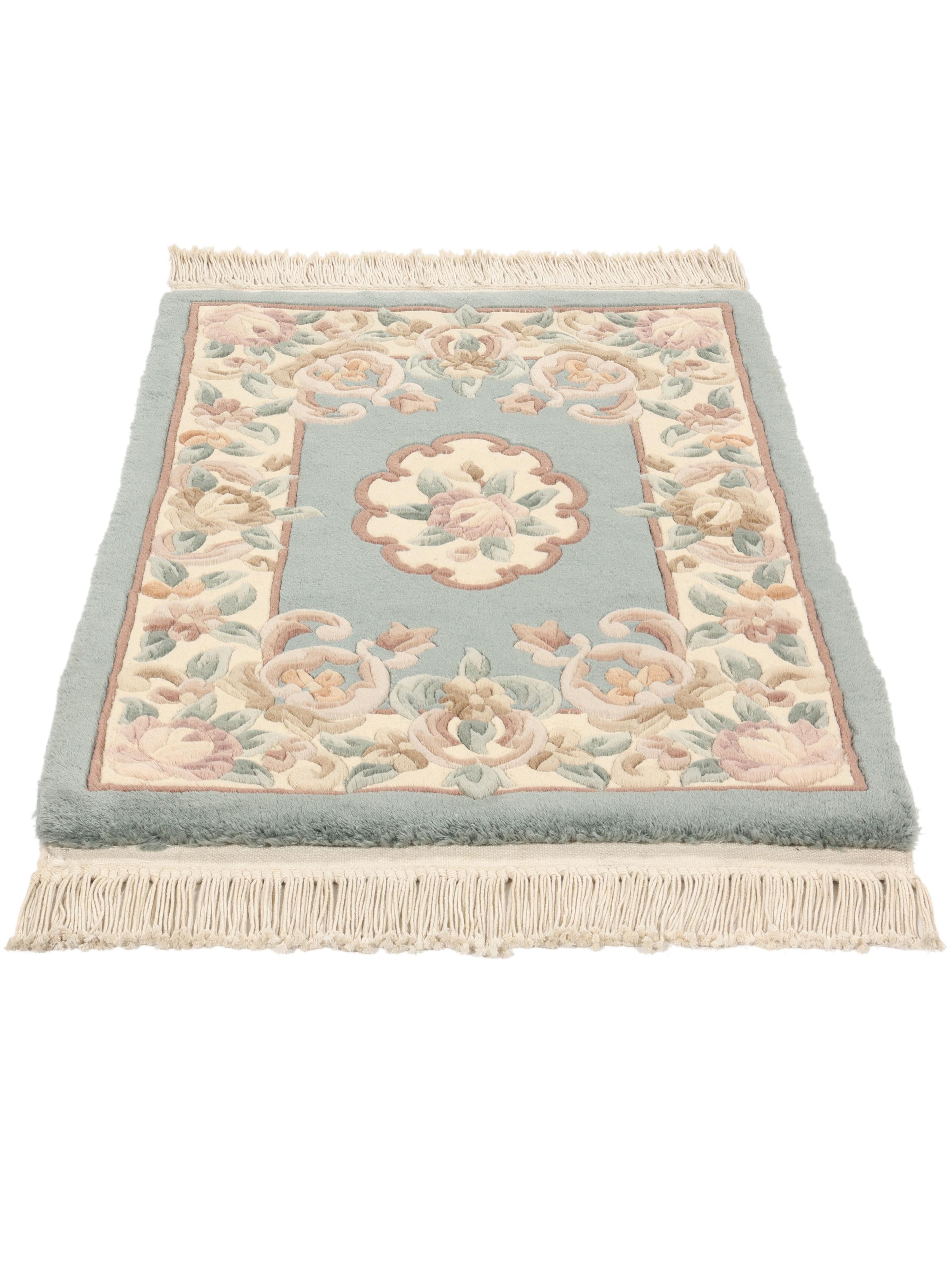
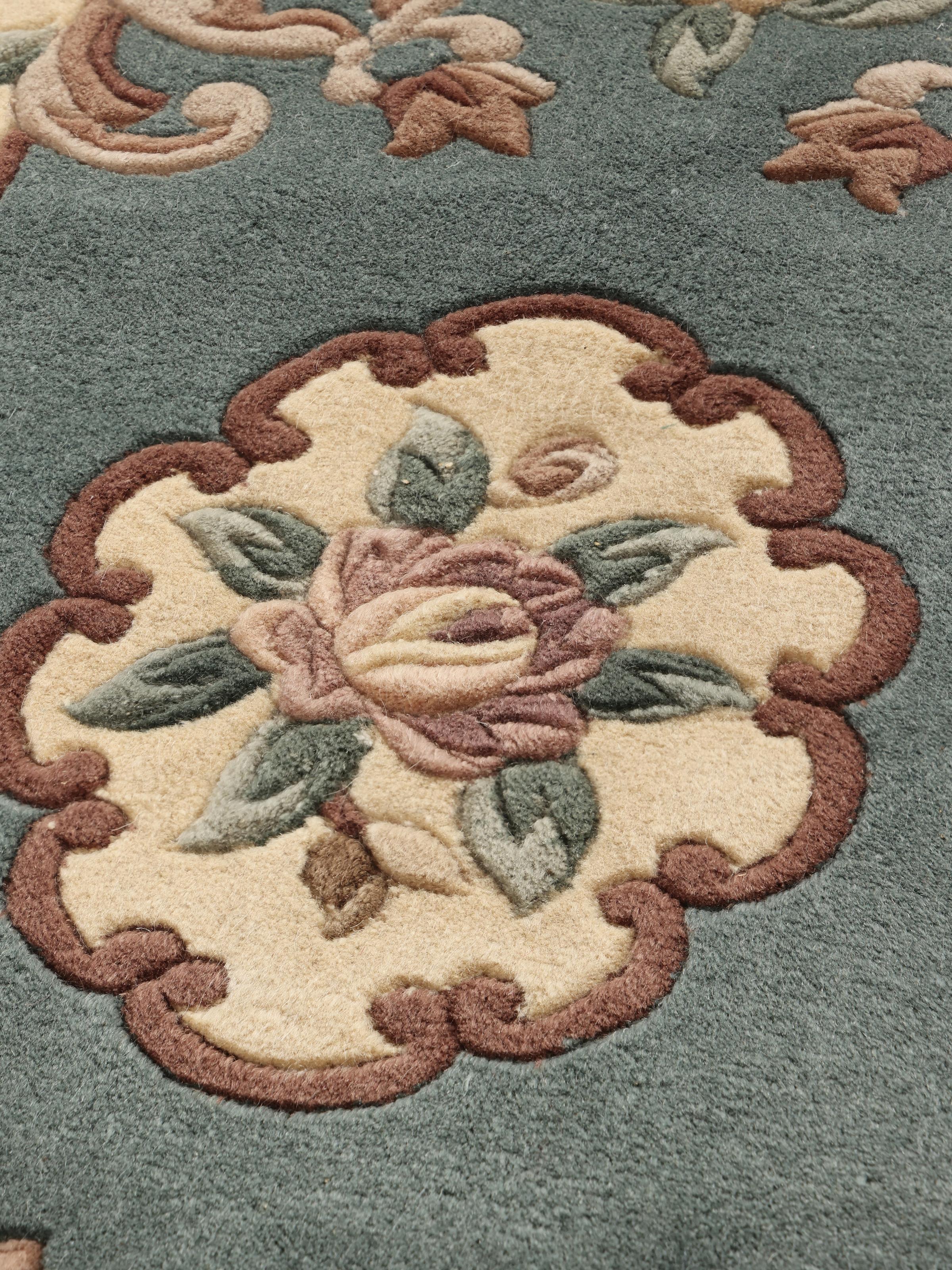
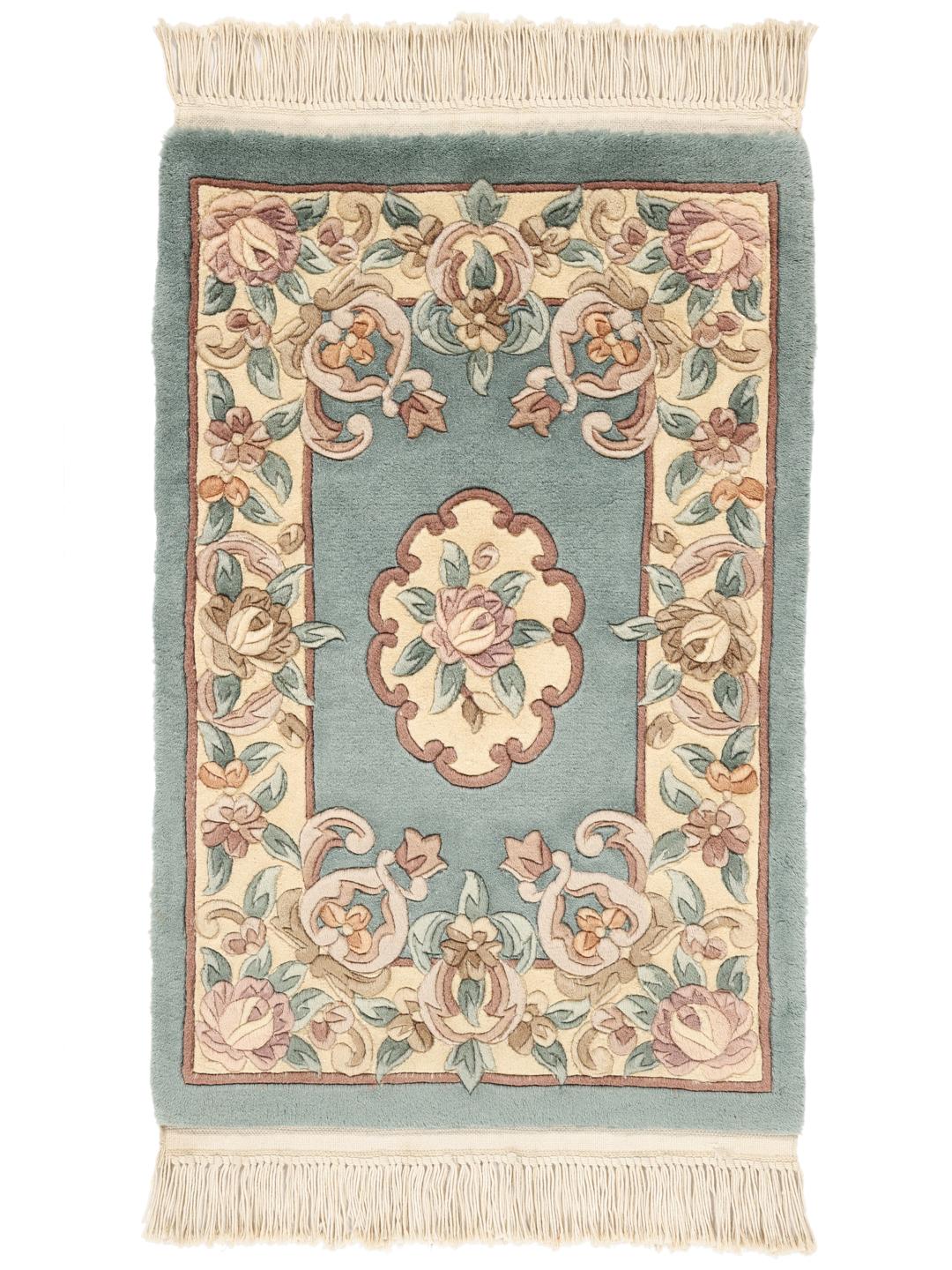
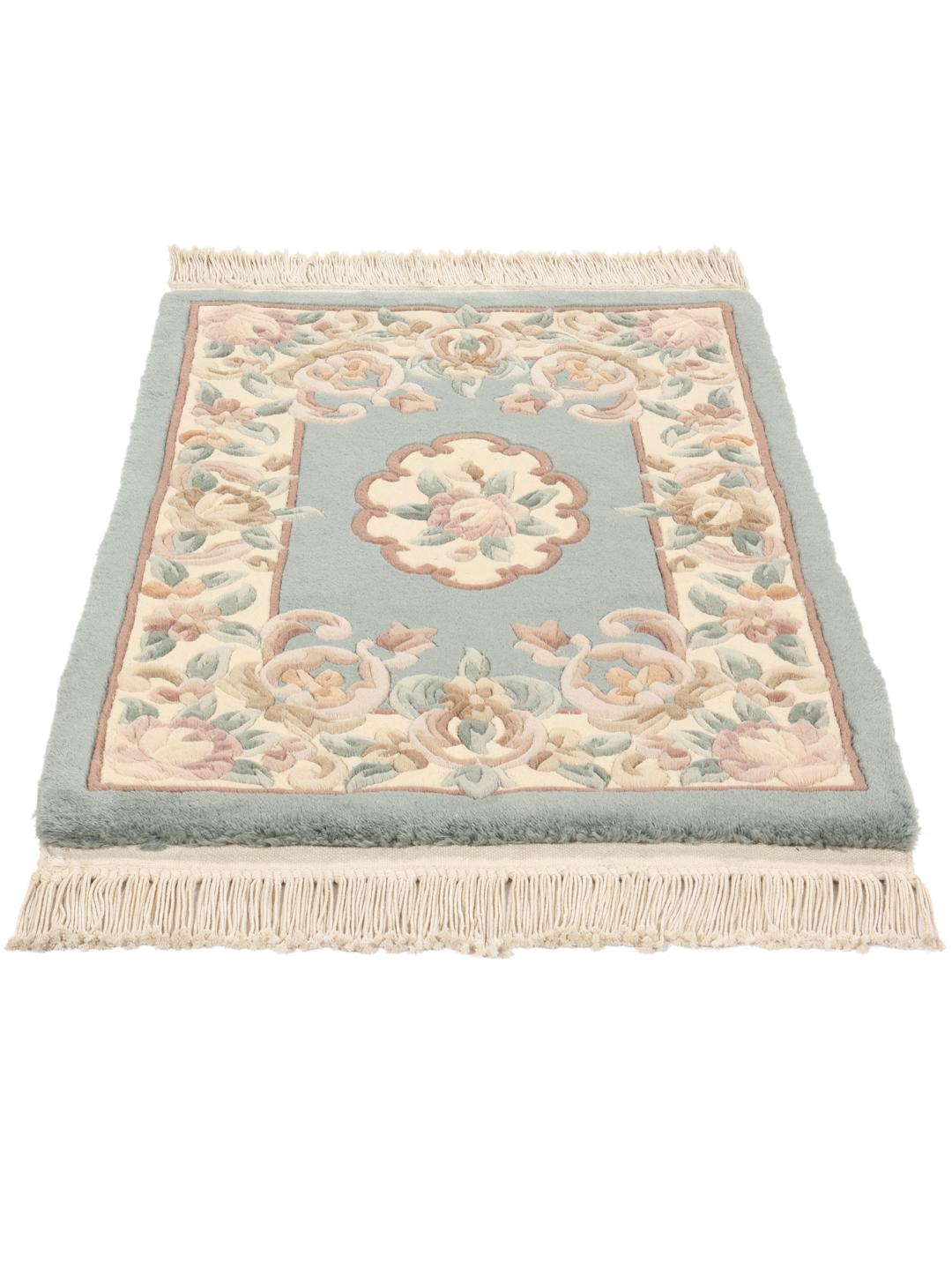
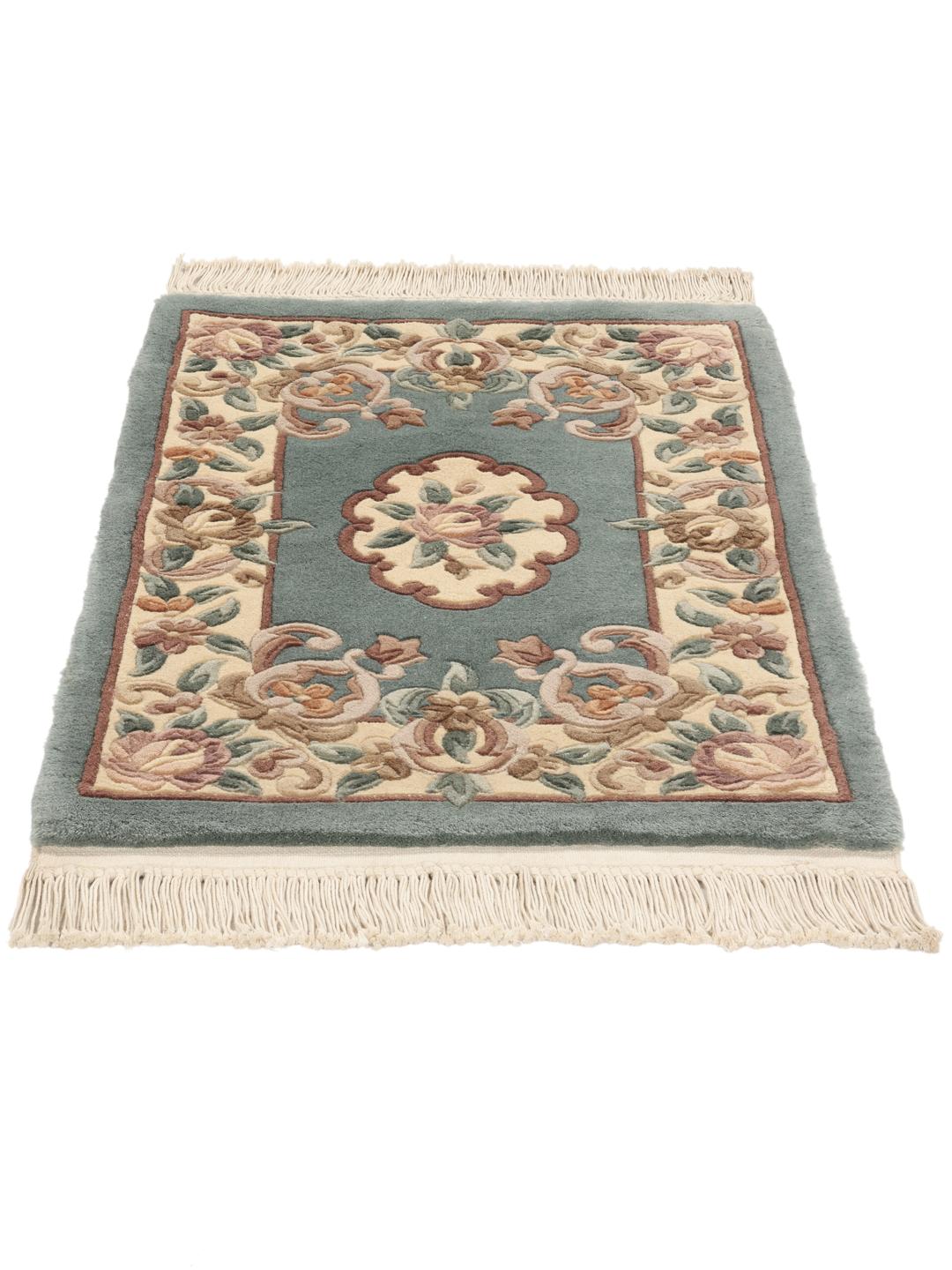
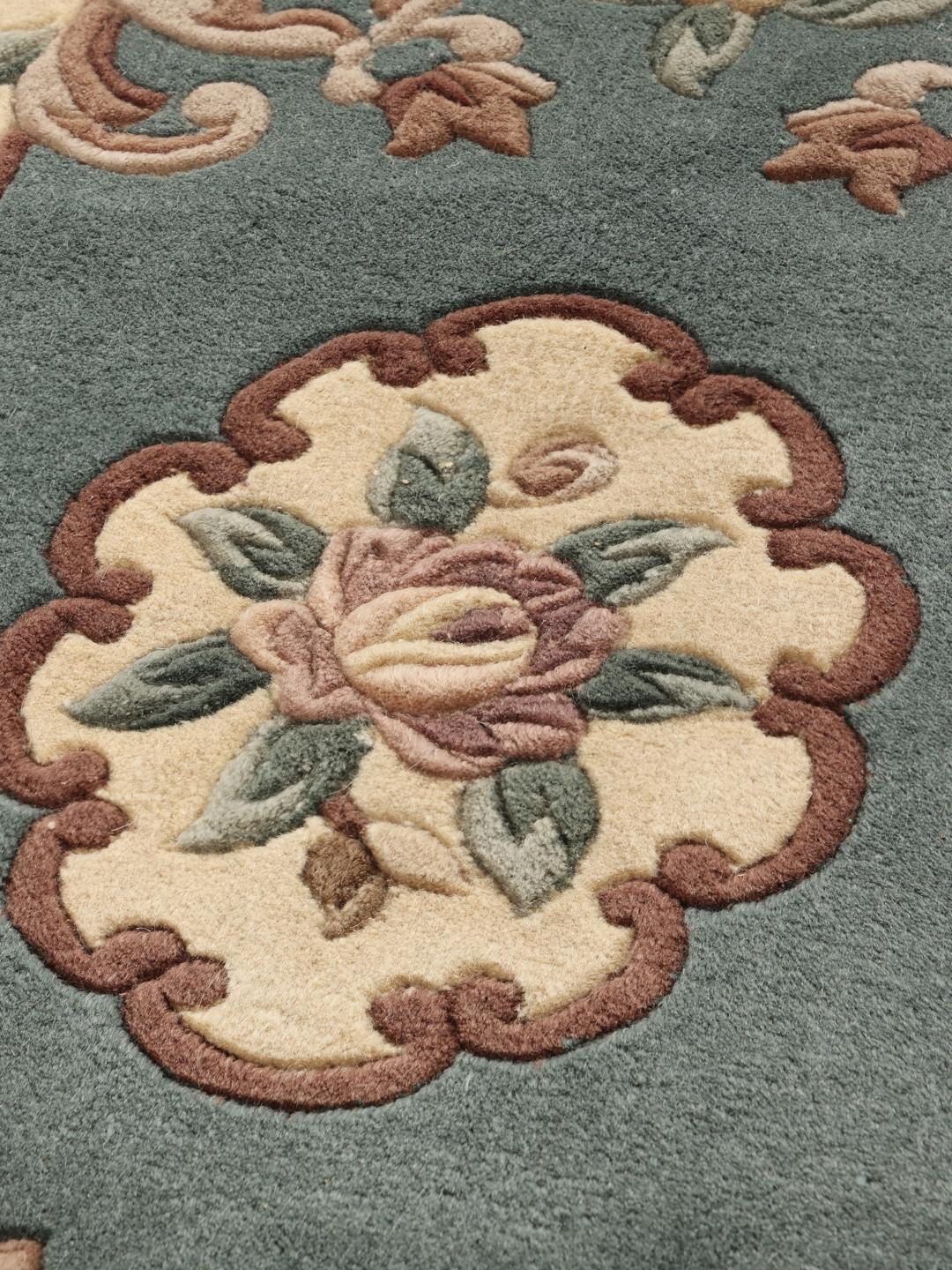
The tradition of rug-making in China is an ancient craft that has evolved over centuries, blending local artistic expressions with refined weaving techniques. While historically influenced by the broader Silk Road trade routes, Chinese rugs developed a distinct identity characterised by refined floral motifs, balanced compositions, and a unique approach to sculptural pile carving.
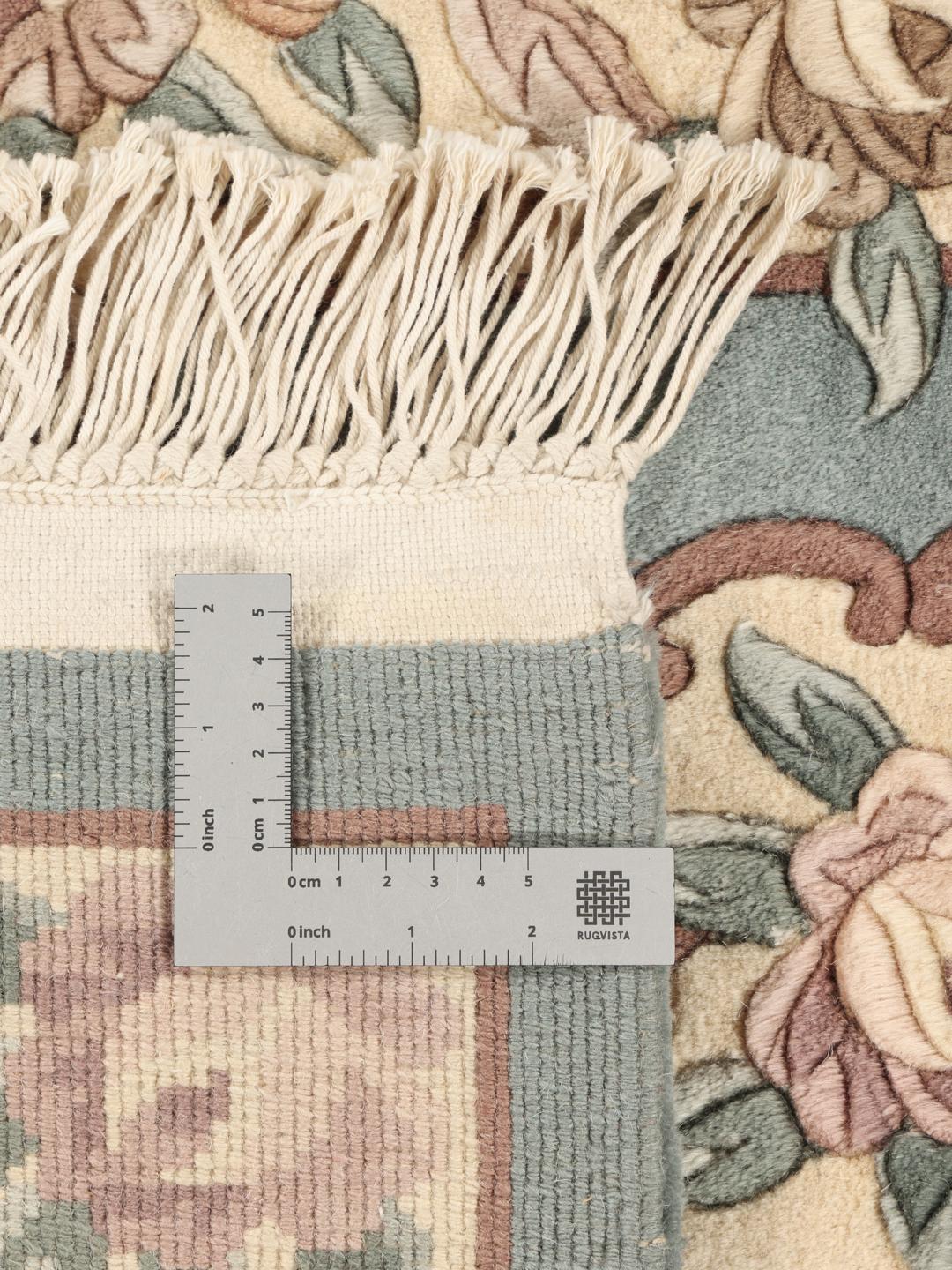
The 90-line classification refers to the density of the weave, a technical standard that dictates the sharpness and clarity of the pattern. In the context of Chinese rug-making, a 90-line count provides a fine, smooth surface that allows for the graceful, rounded lines of floral motifs to stand out clearly. This density is a marker of quality, ensuring a stable foundation that resists wear while maintaining a soft, luxurious hand.
Signature design elements in this tradition often include naturalistic floral sprays and elegant borders, frequently rendered in calming, harmonious colours. The use of negative space around a central medallion or floral cluster is a hallmark of this style, creating a sense of openness and tranquillity that makes these rugs particularly popular for creating serene living environments.
Collecting these rugs is an appreciation of a heritage that values both aesthetic beauty and structural longevity. They are prized not just for their visual elegance, but for the depth of skill required to translate complex floral patterns into a durable, hand-knotted format. When you choose a piece from this tradition, you are continuing a legacy of artistry that has been passed down through generations.