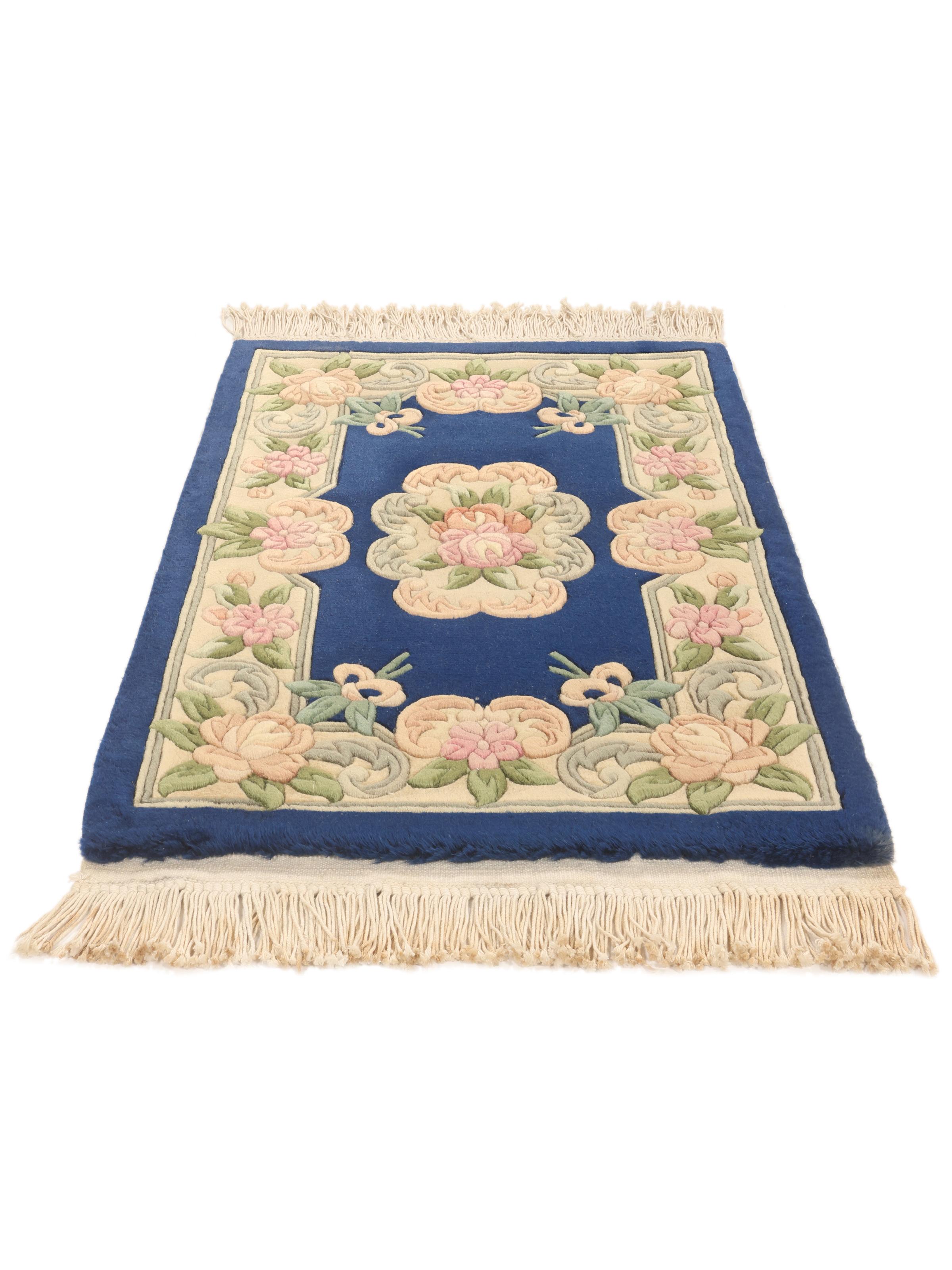
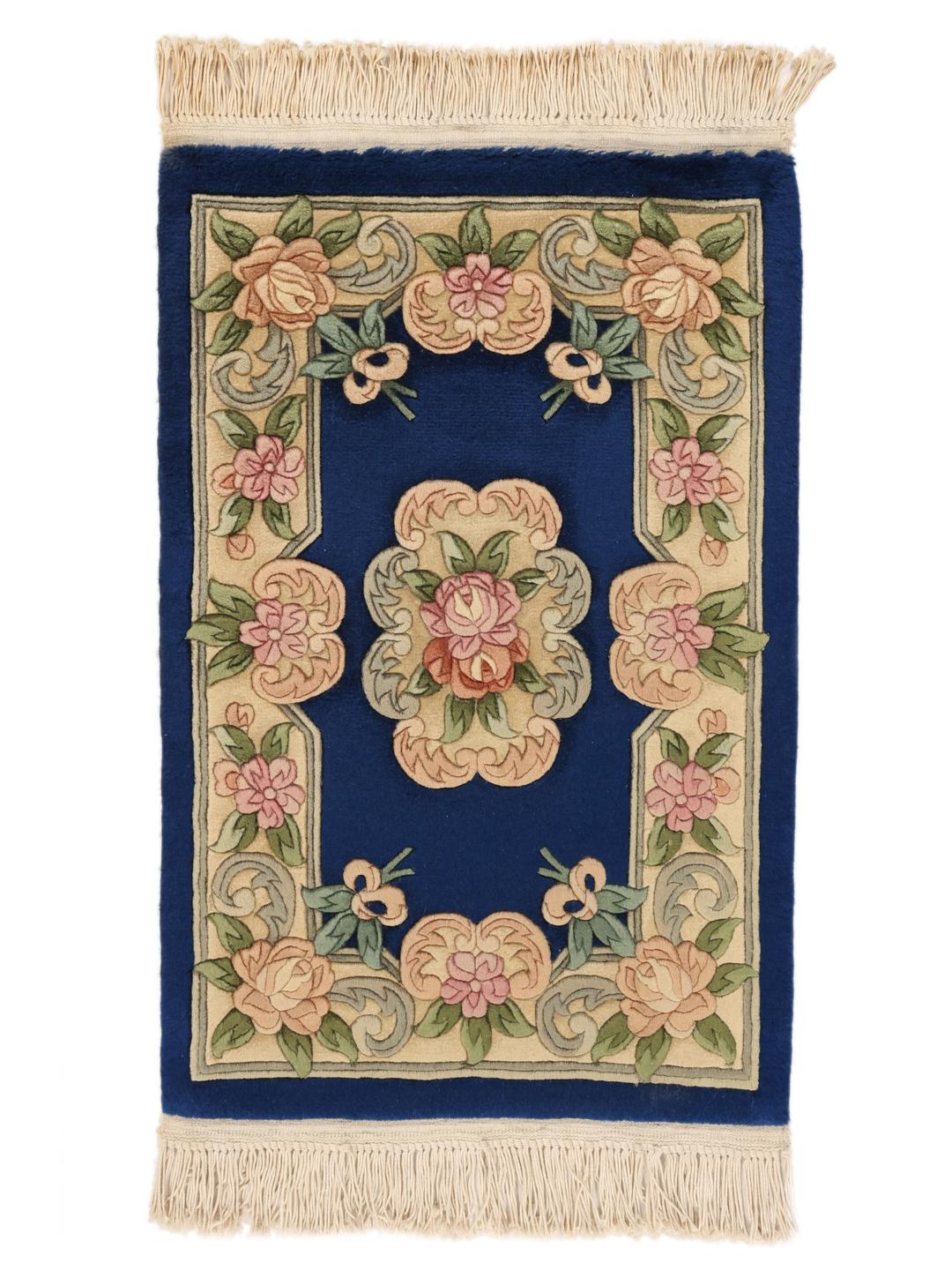
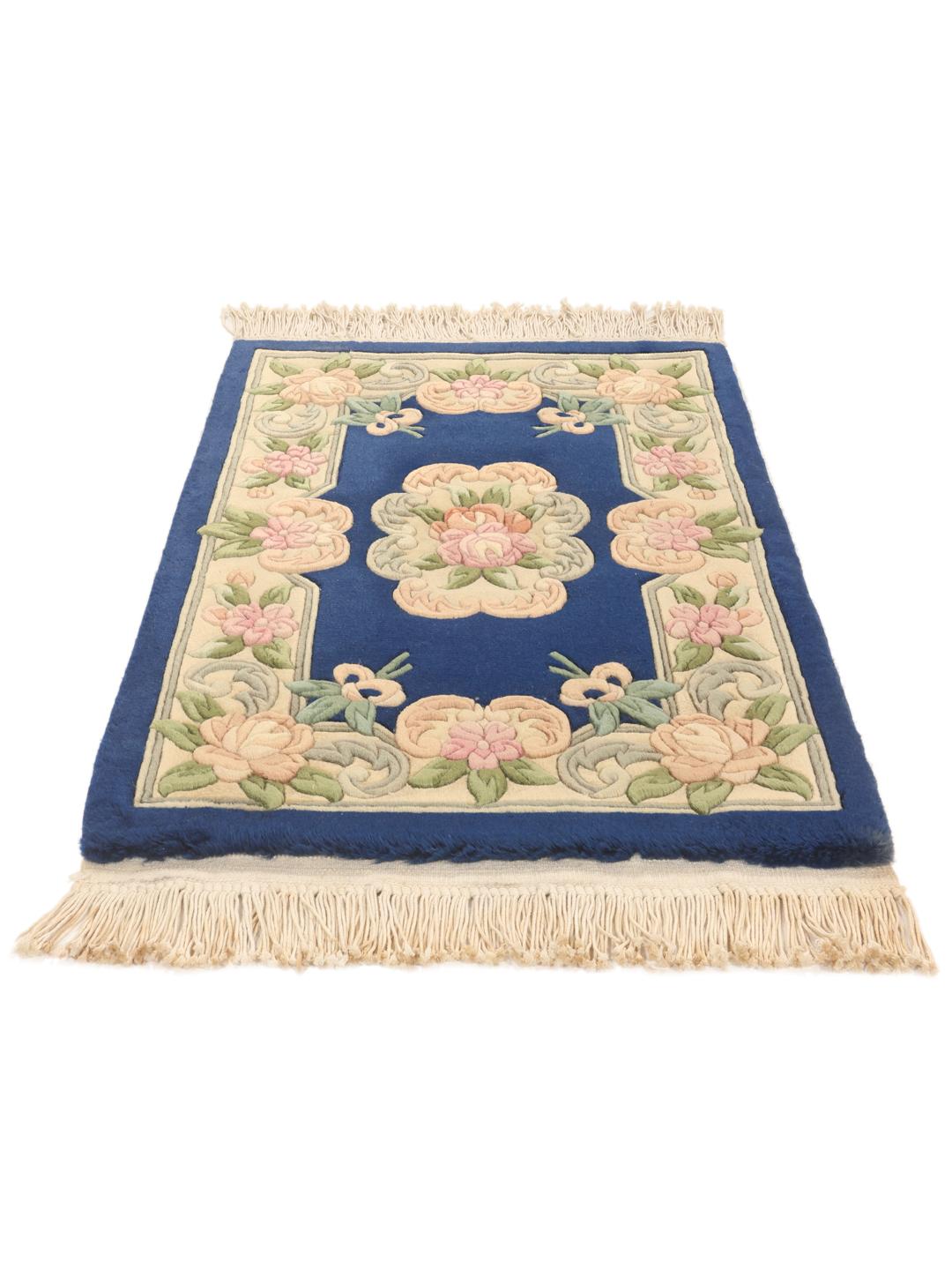
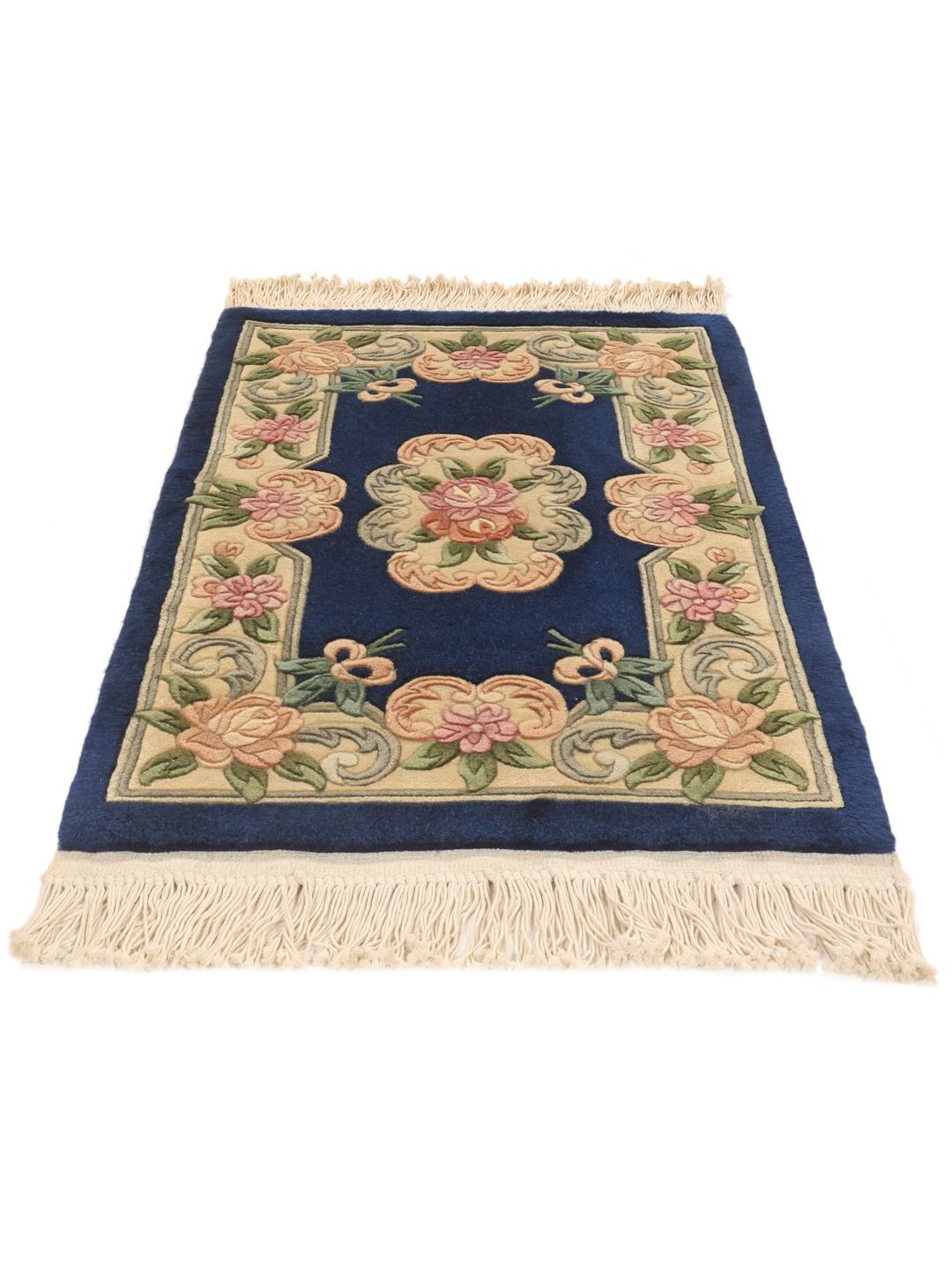
The tradition of Chinese rug weaving is centuries old, deeply rooted in a culture that prizes both functionality and symbolic beauty. Historically, these rugs were created for imperial palaces and high-ranking officials, often featuring motifs borrowed from porcelain, silk textiles, and traditional Chinese ink paintings.
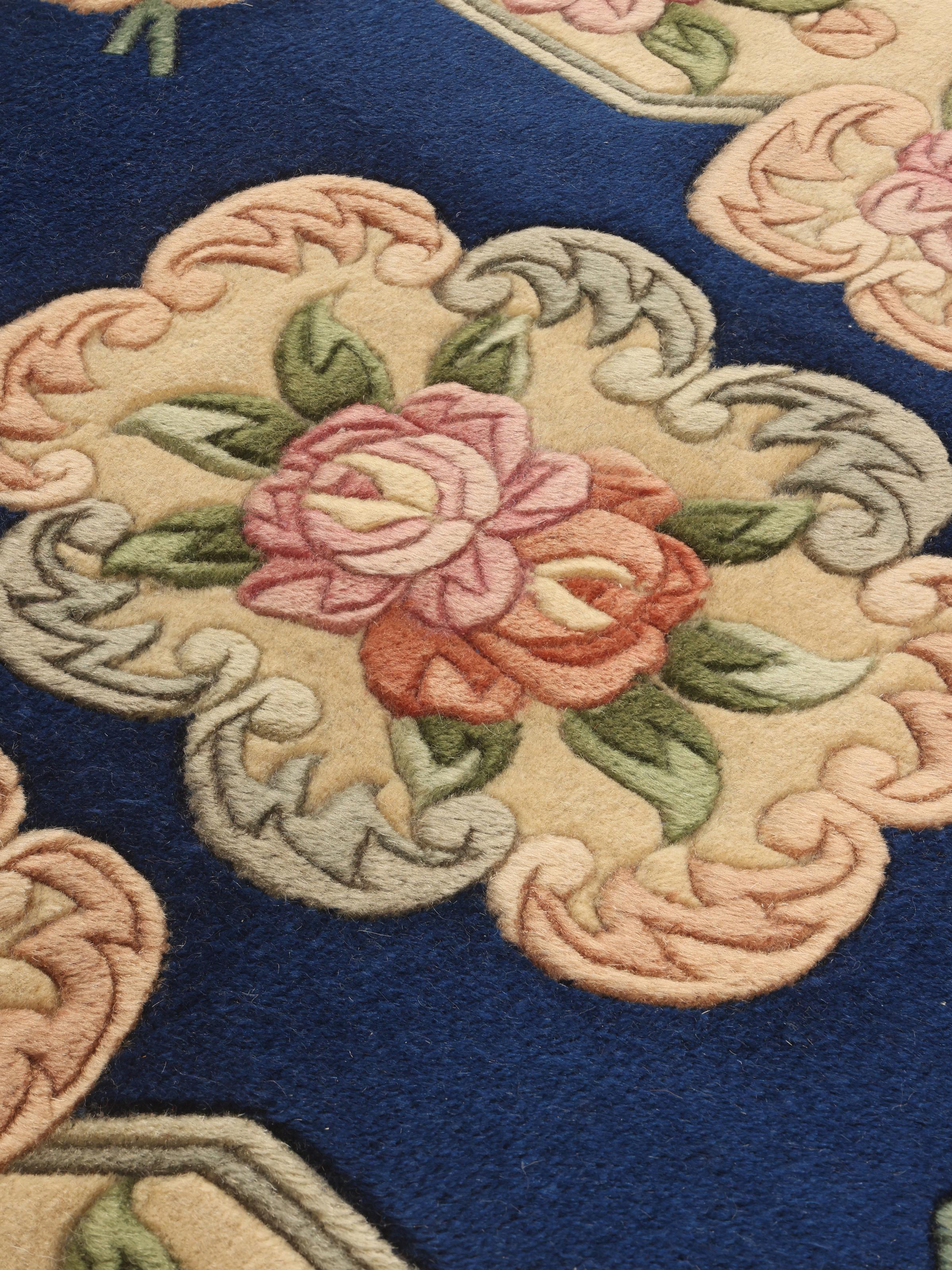
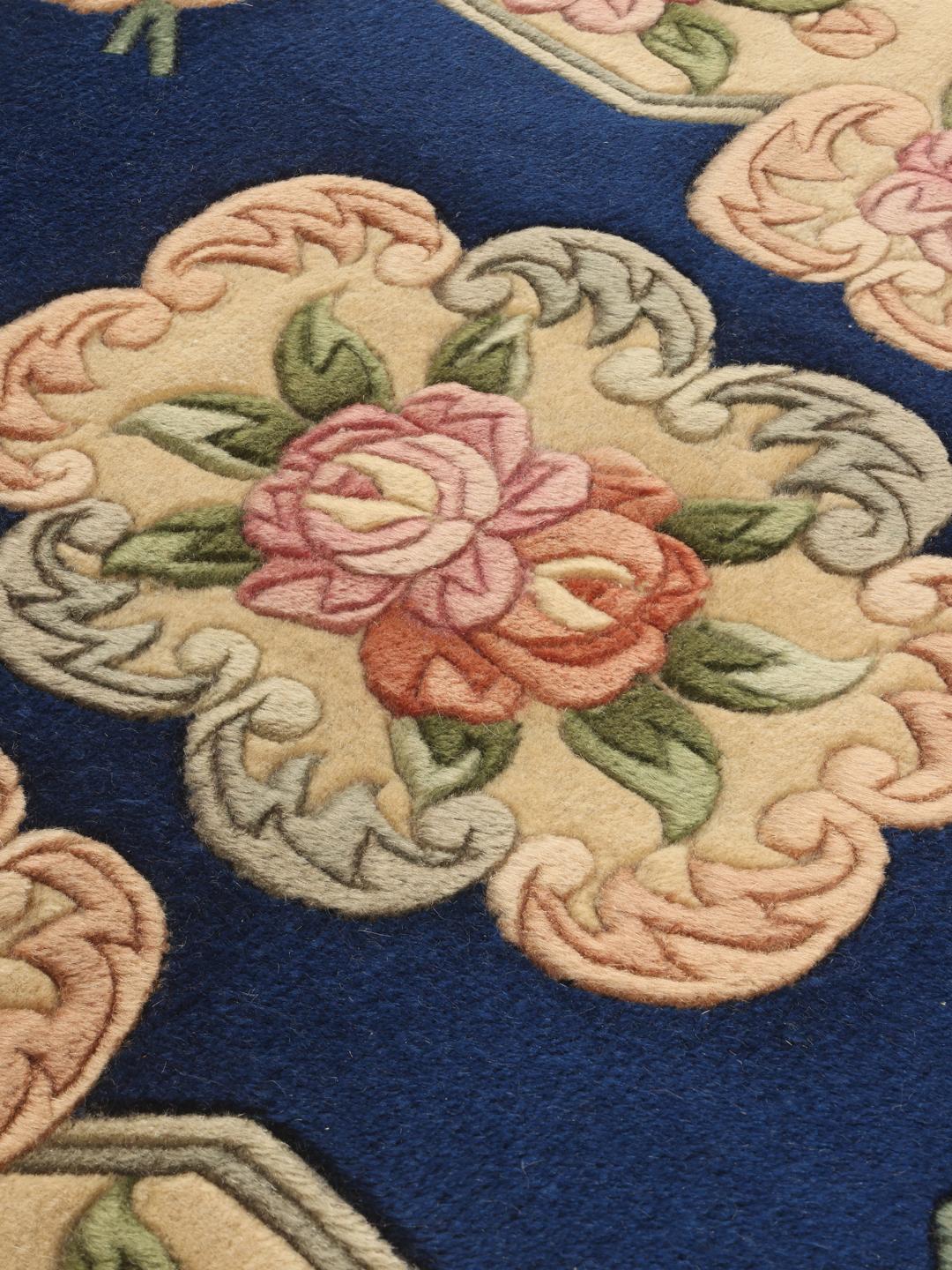
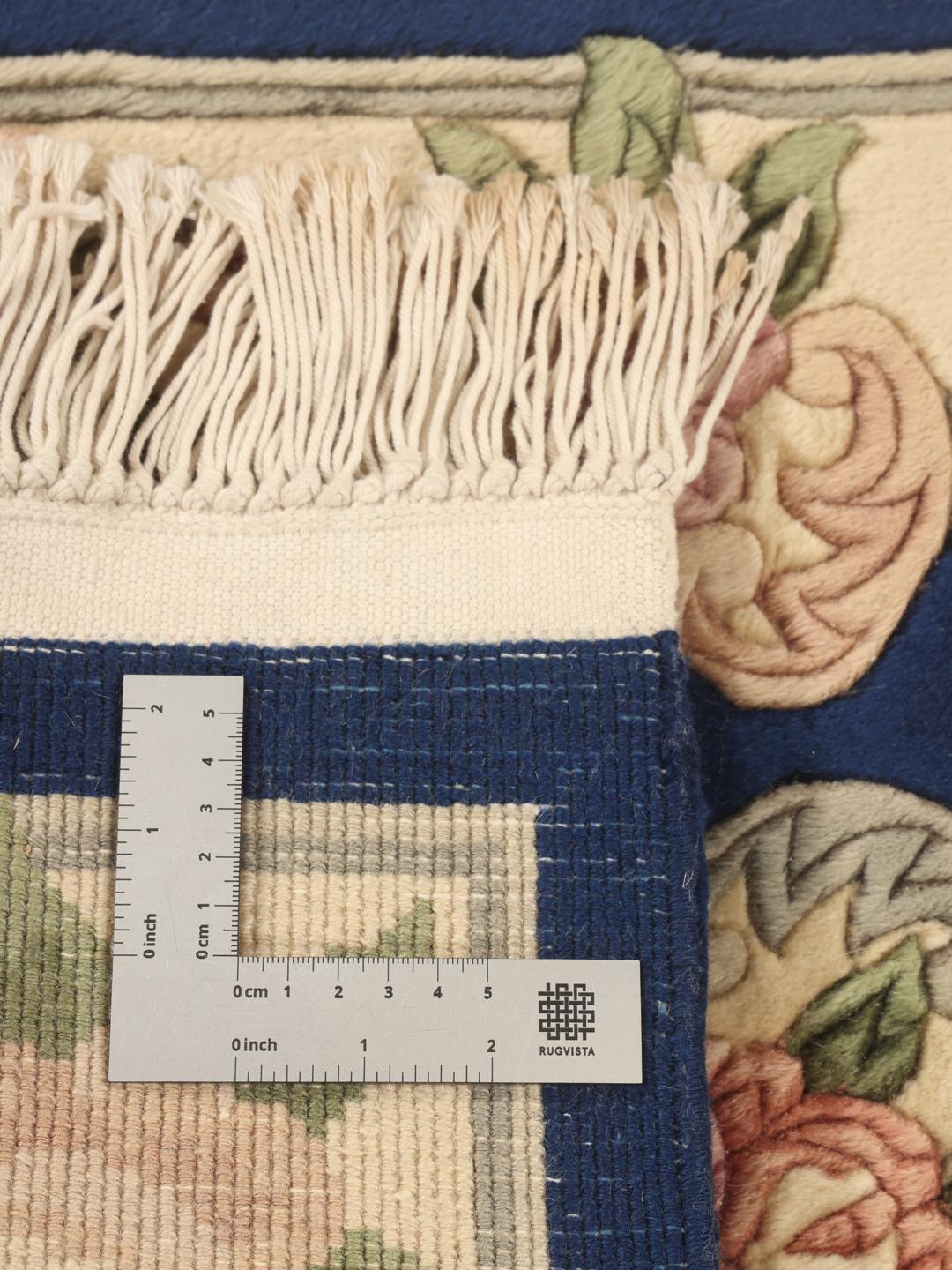
The term '90 line' refers to a specific technical standard in Chinese rug production, indicating the number of knots per linear foot. This specific density is chosen to provide the perfect balance between the softness of the pile and the ability to carve intricate, sculptural details into the design, which is a signature of this regional style.
Visually, Chinese rugs are known for their use of negative space and balanced, often asymmetrical arrangements of floral elements. The classic 'medallion and corner' layout seen here is a sophisticated evolution of these traditions, where the central floral bouquet acts as an anchor for the surrounding botanical flourishes.
Collecting these pieces is an investment in cultural heritage and skilled artistry. Owning a hand-knotted rug from this region is a way to connect with a long history of craft, where every choice—from the specific blue dye to the arrangement of each flower—is a testament to the artisan's eye for beauty and balance.