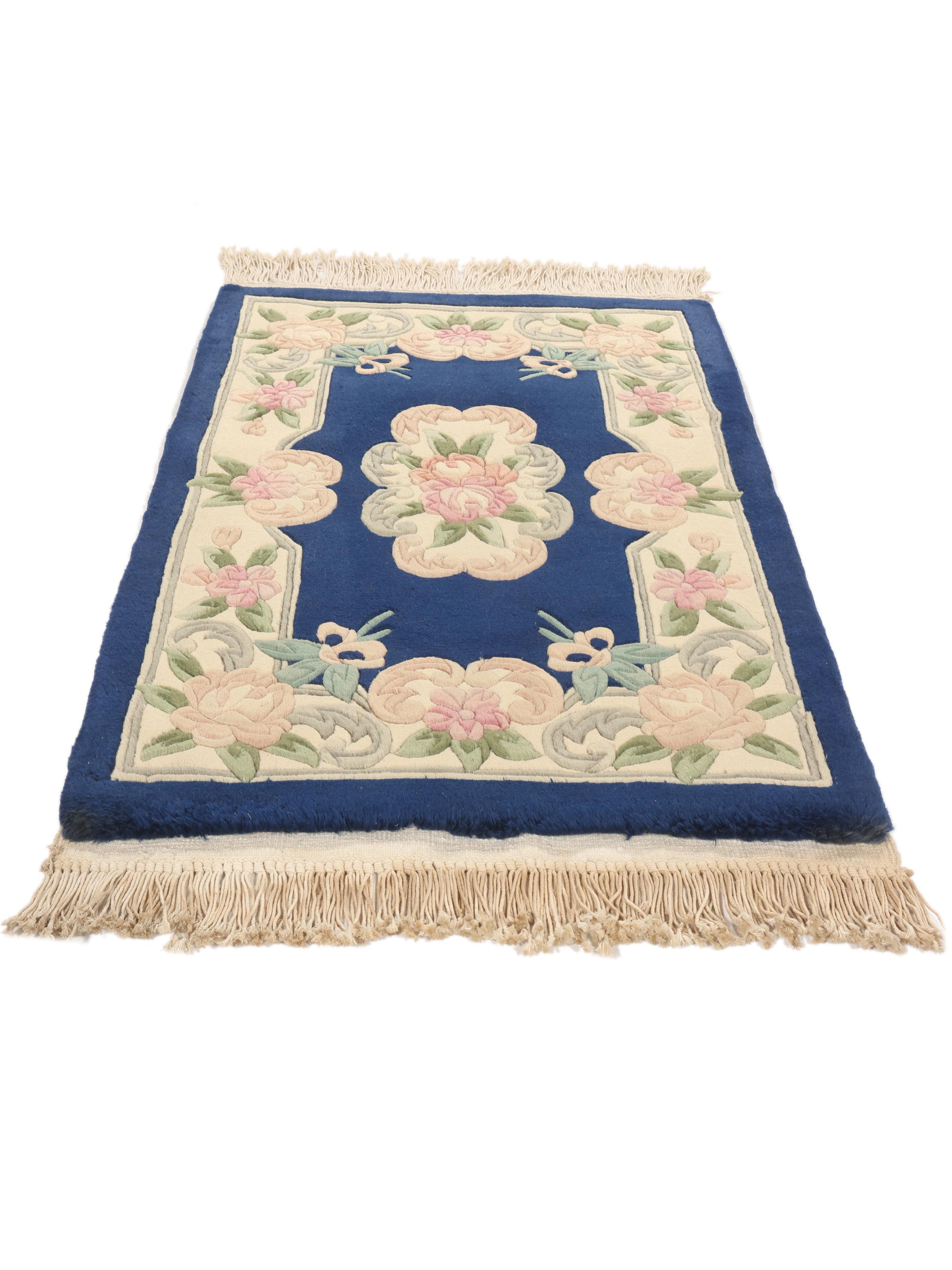
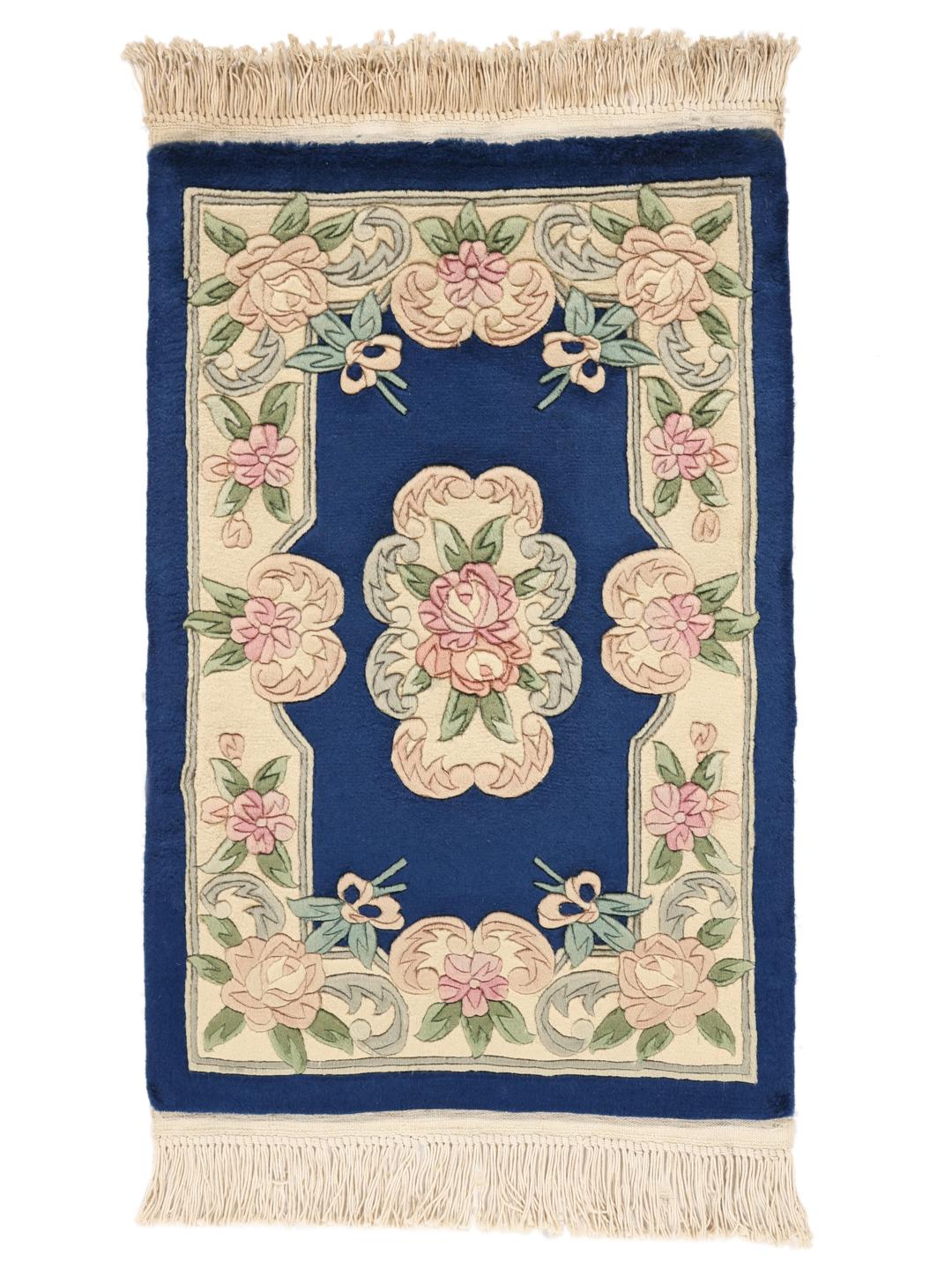
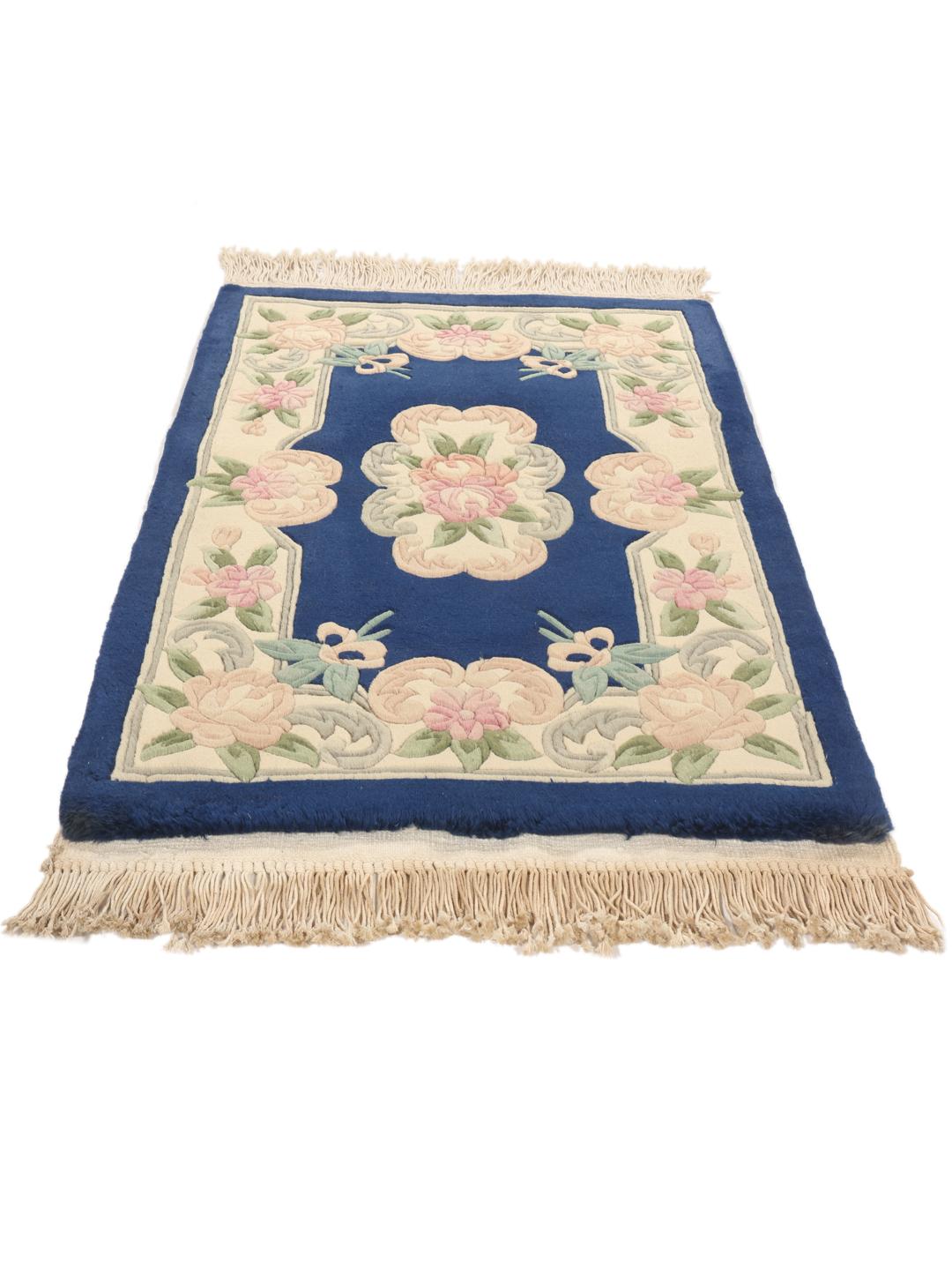
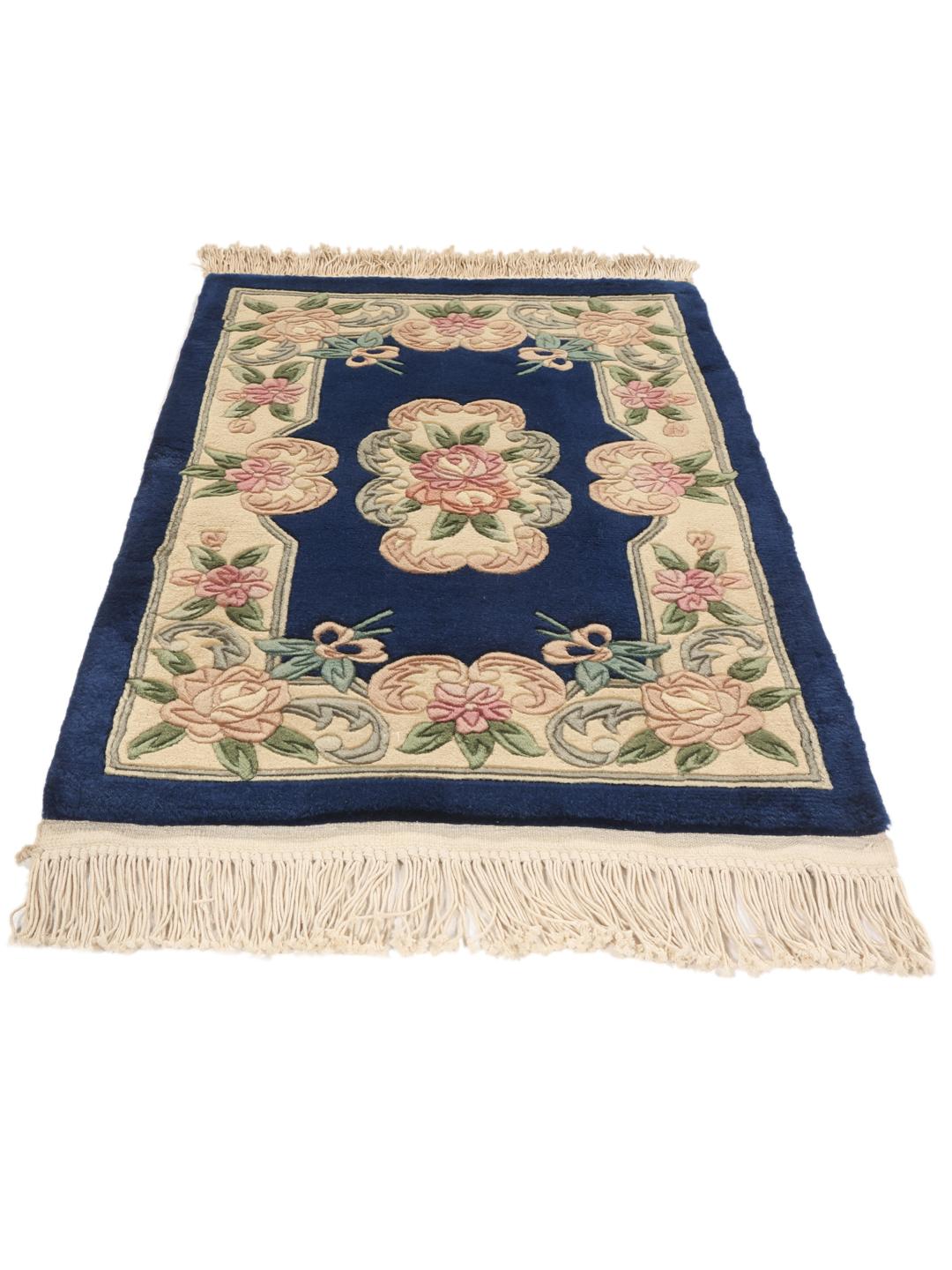
Chinese rug traditions are celebrated for their distinctive aesthetic, which often draws inspiration from classical art, botany, and symbolism. Historically, these rugs were created for imperial palaces and high-ranking officials, reflecting a long-standing commitment to refinement and technical excellence.
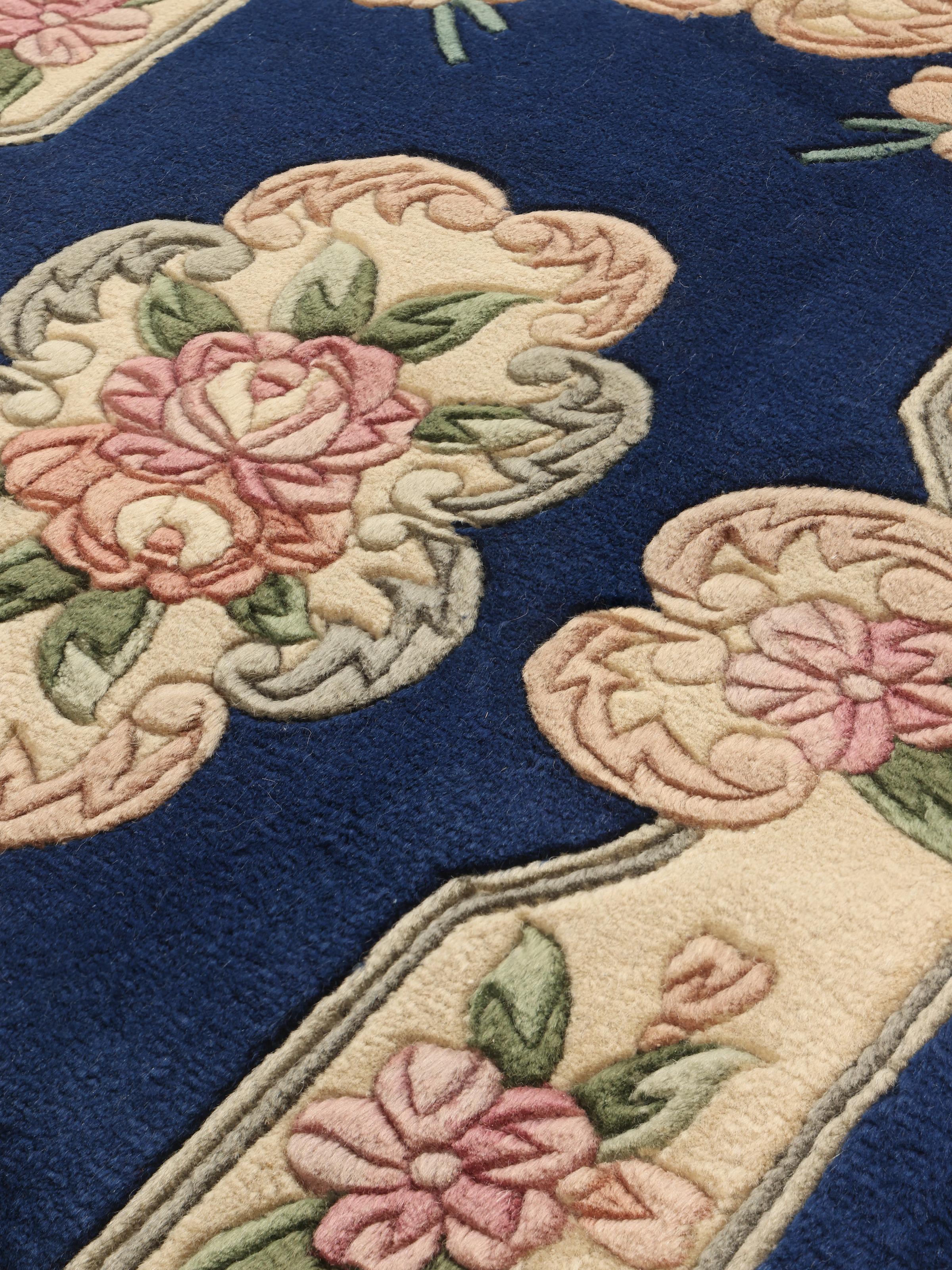
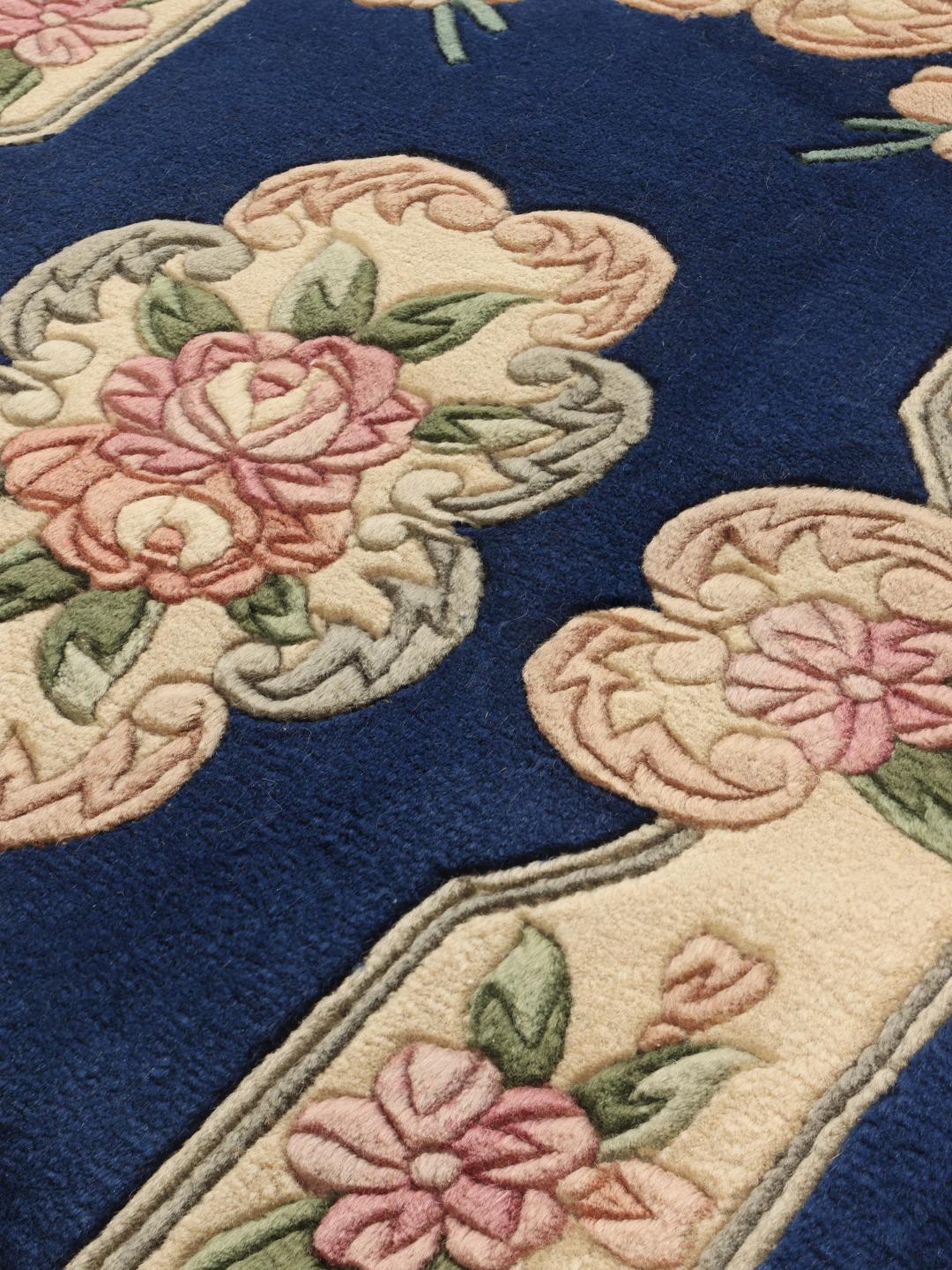
The 90 line classification refers to a traditional method of measuring density based on the number of knots per foot across the width of the rug. This specific craftsmanship ensures a consistent, balanced pile that is both durable and soft, a hallmark of the high-quality weaving traditions found in China.
Floral motifs are central to this design language, often representing prosperity and seasonal beauty. The use of a deep blue field is a sophisticated choice that creates a striking contrast with the softer pastel tones of the flowers, a style that has been perfected over generations of master weavers.
Collecting a hand-knotted rug from this tradition is an investment in cultural heritage. These pieces are valued not only for their durability but for the skill and patience required to bring such complex, elegant patterns to life, making them cherished items for those who appreciate fine craftsmanship.