The history of Chinese rug making is a vast and storied tradition that spans centuries, evolving from functional utilitarian mats to highly artistic, decorative pieces. Historically, these rugs were often inspired by the artistic motifs found in fine silks, ceramics, and traditional ink paintings, reflecting a deep cultural appreciation for nature and balance.
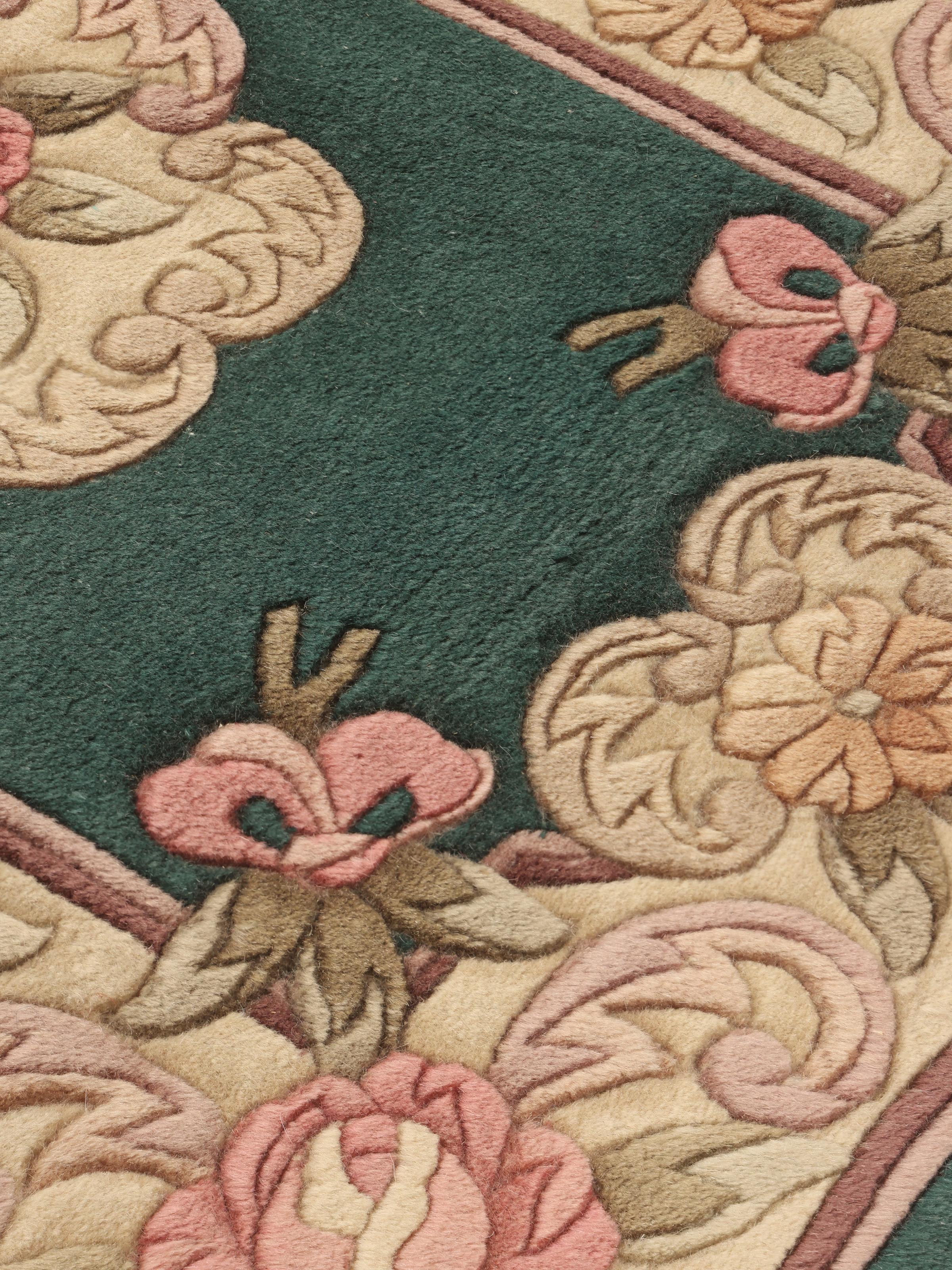
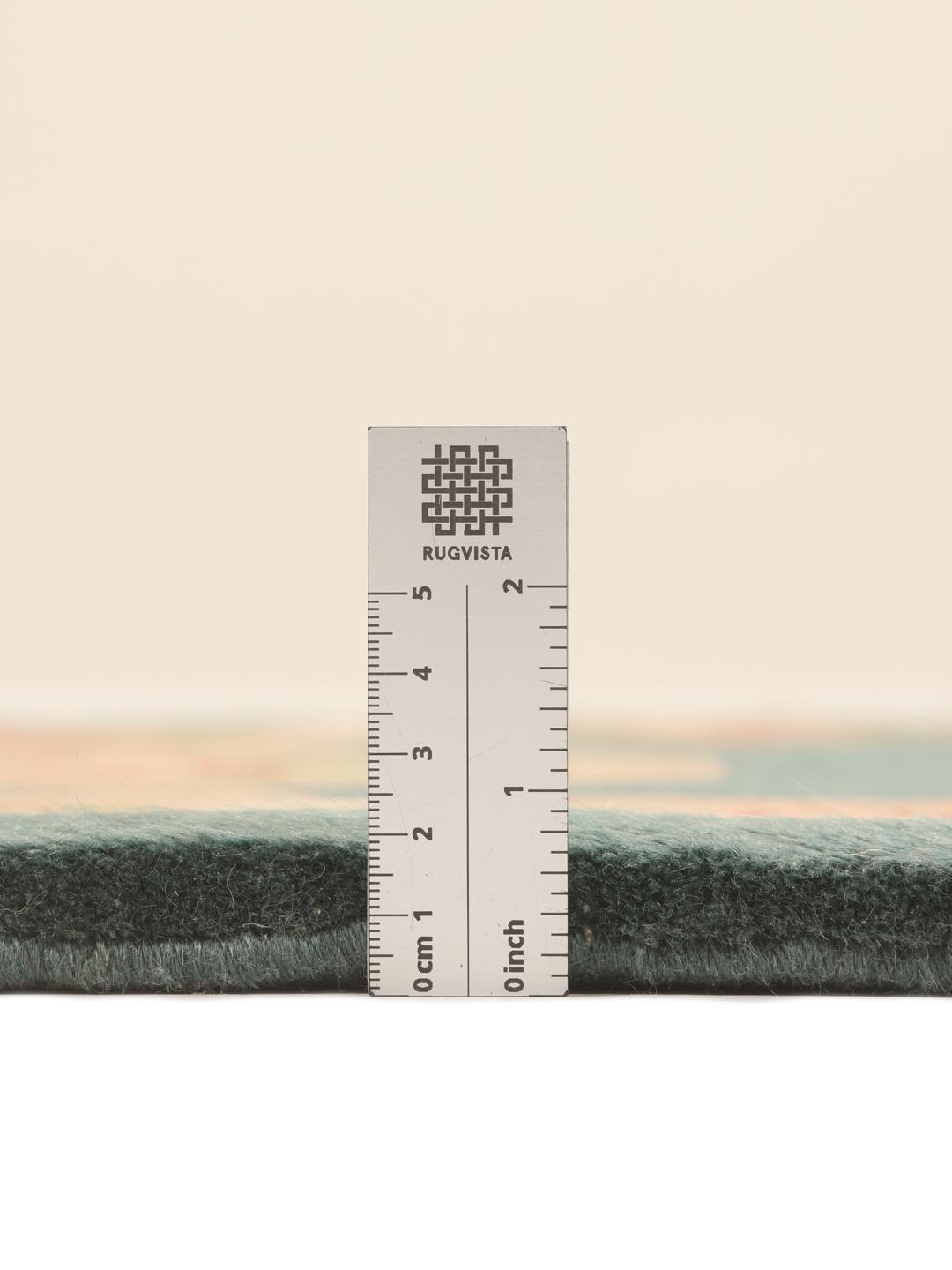
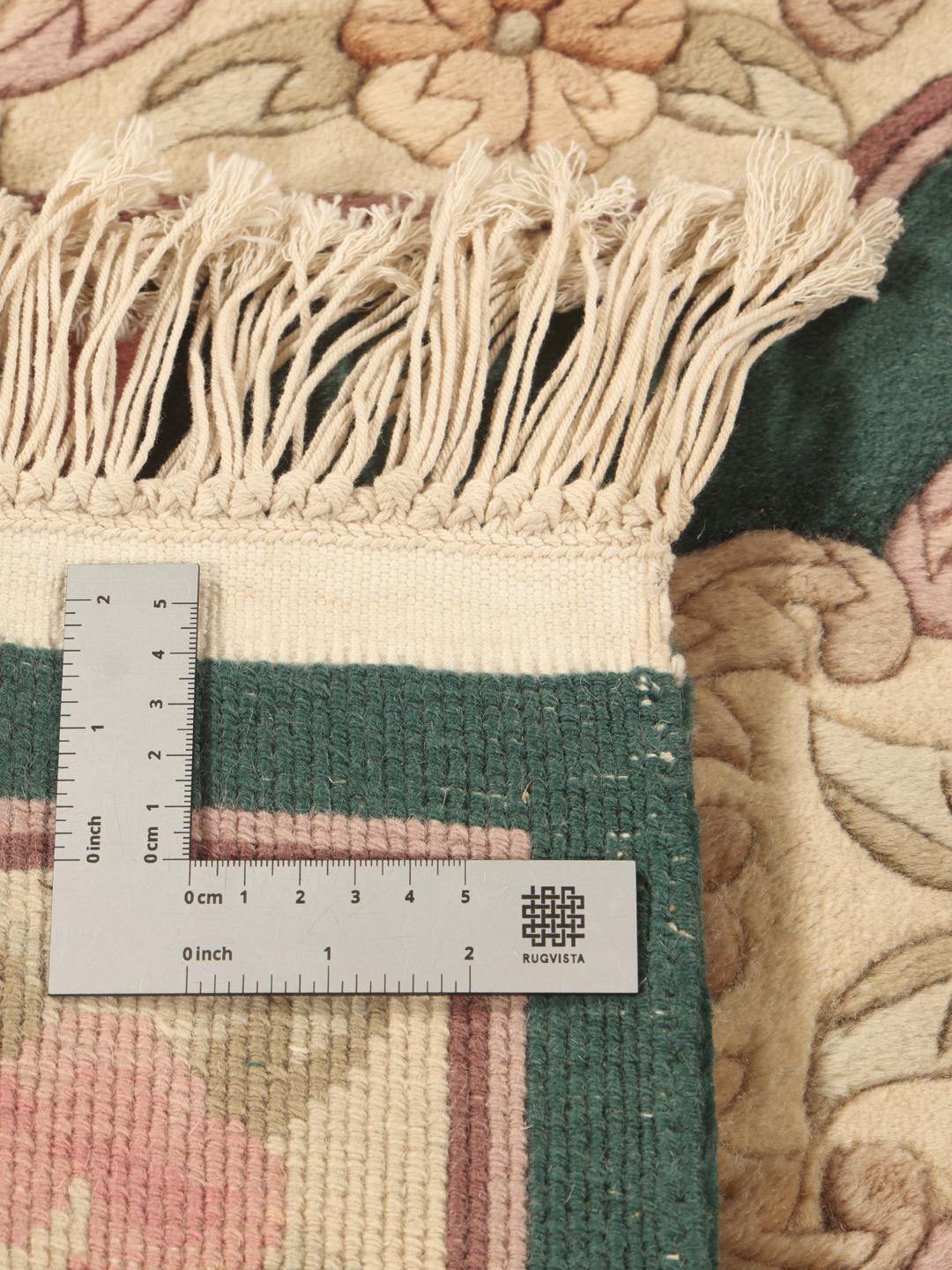
The designation of '90 line' refers to a traditional system of measuring the quality and fineness of the weave. This technical term indicates the number of knots per linear foot, which directly influences the rug's density and the clarity of its design. For the owner, this means a more robust and longer-lasting product, as the higher density of knots provides a firmer structure that resists wear and maintains its soft, plush pile.
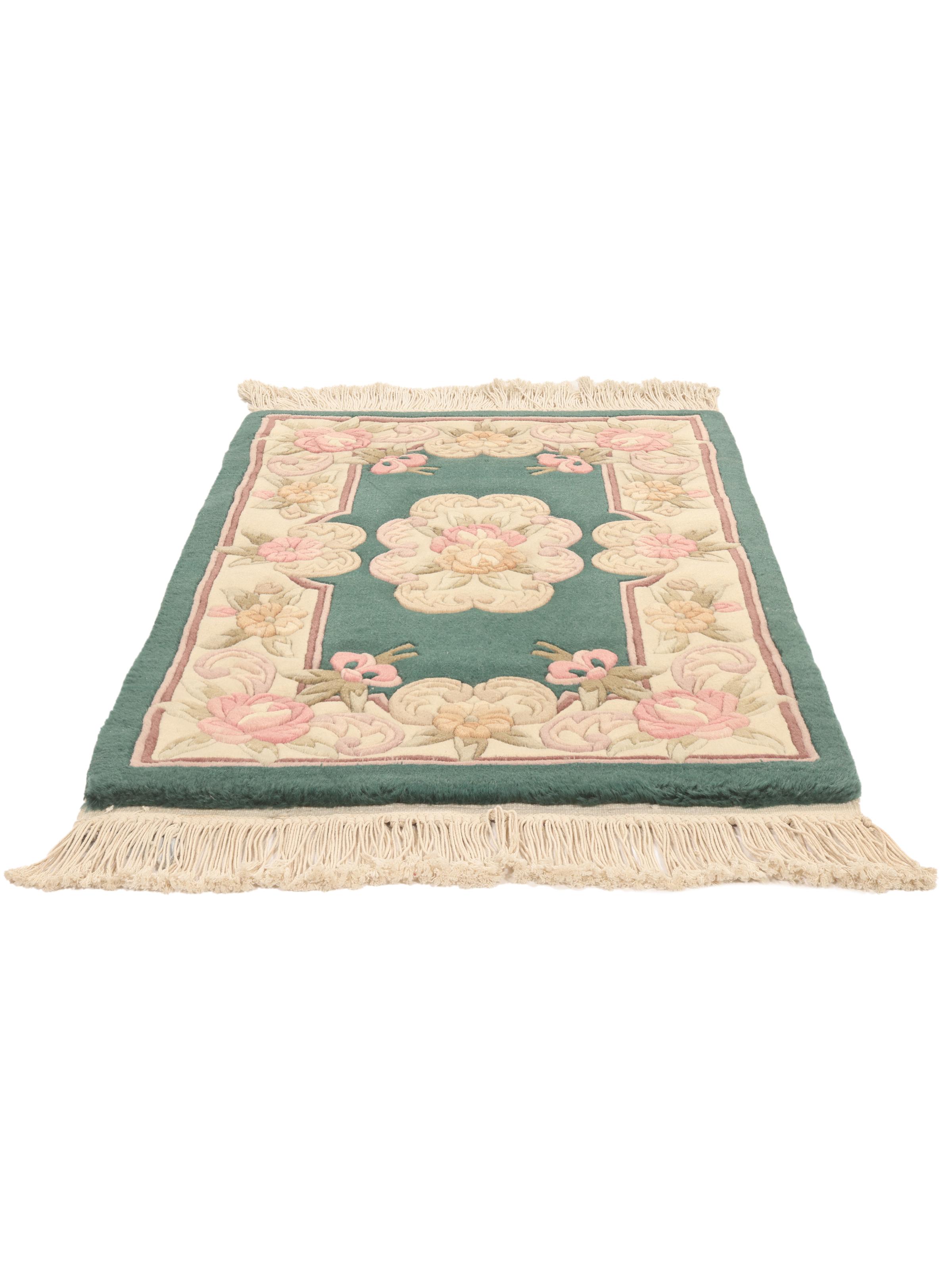
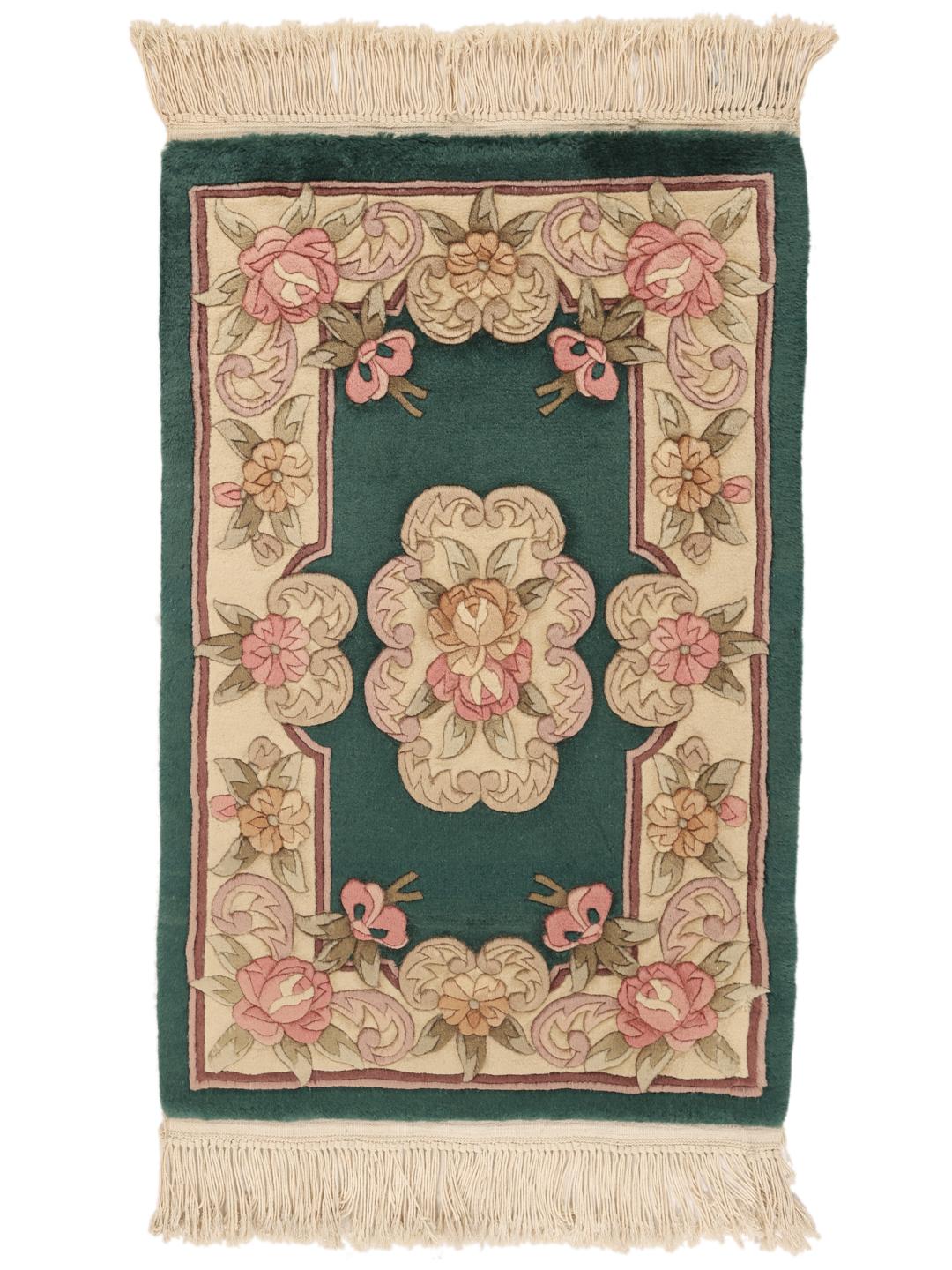
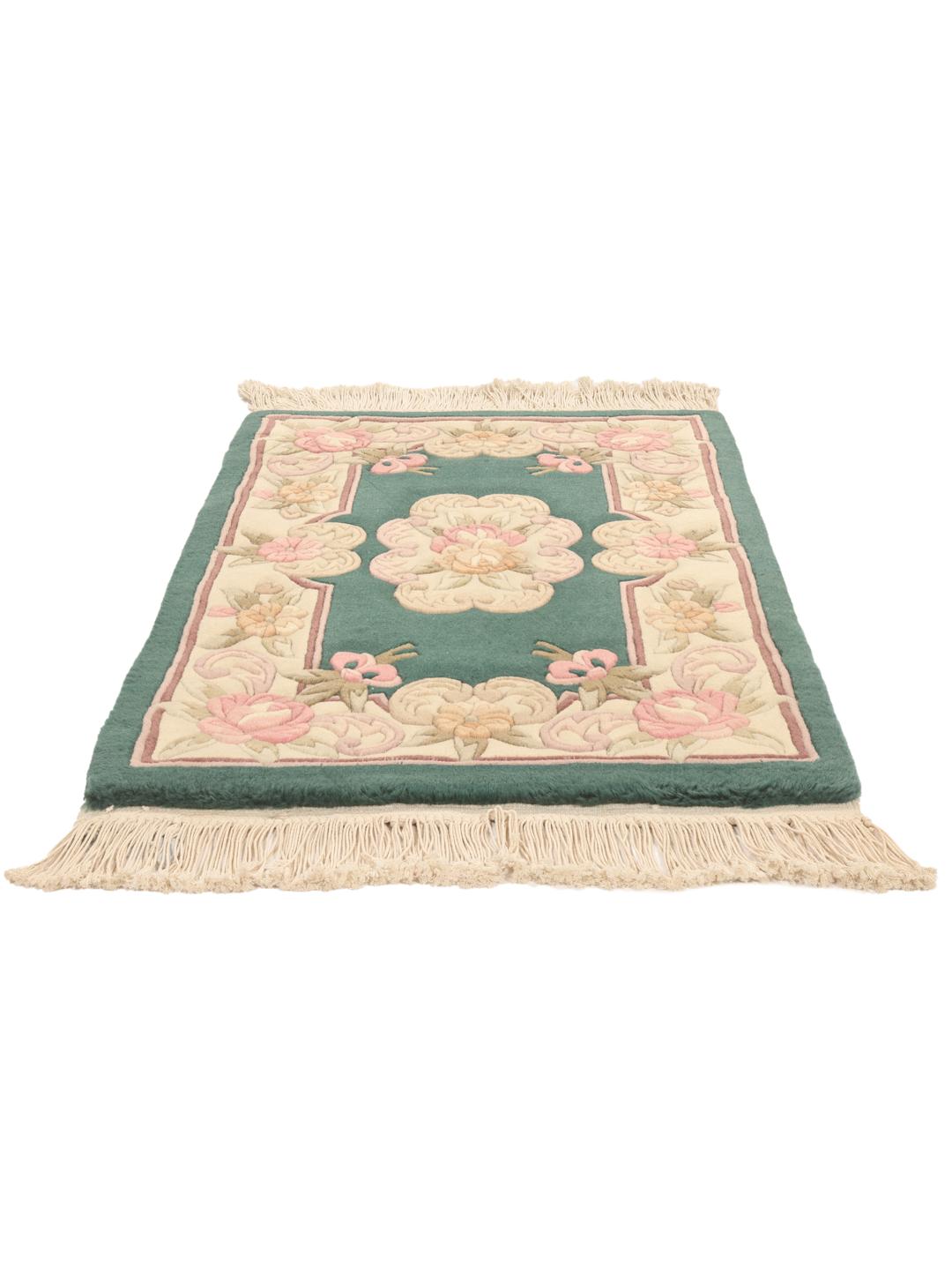
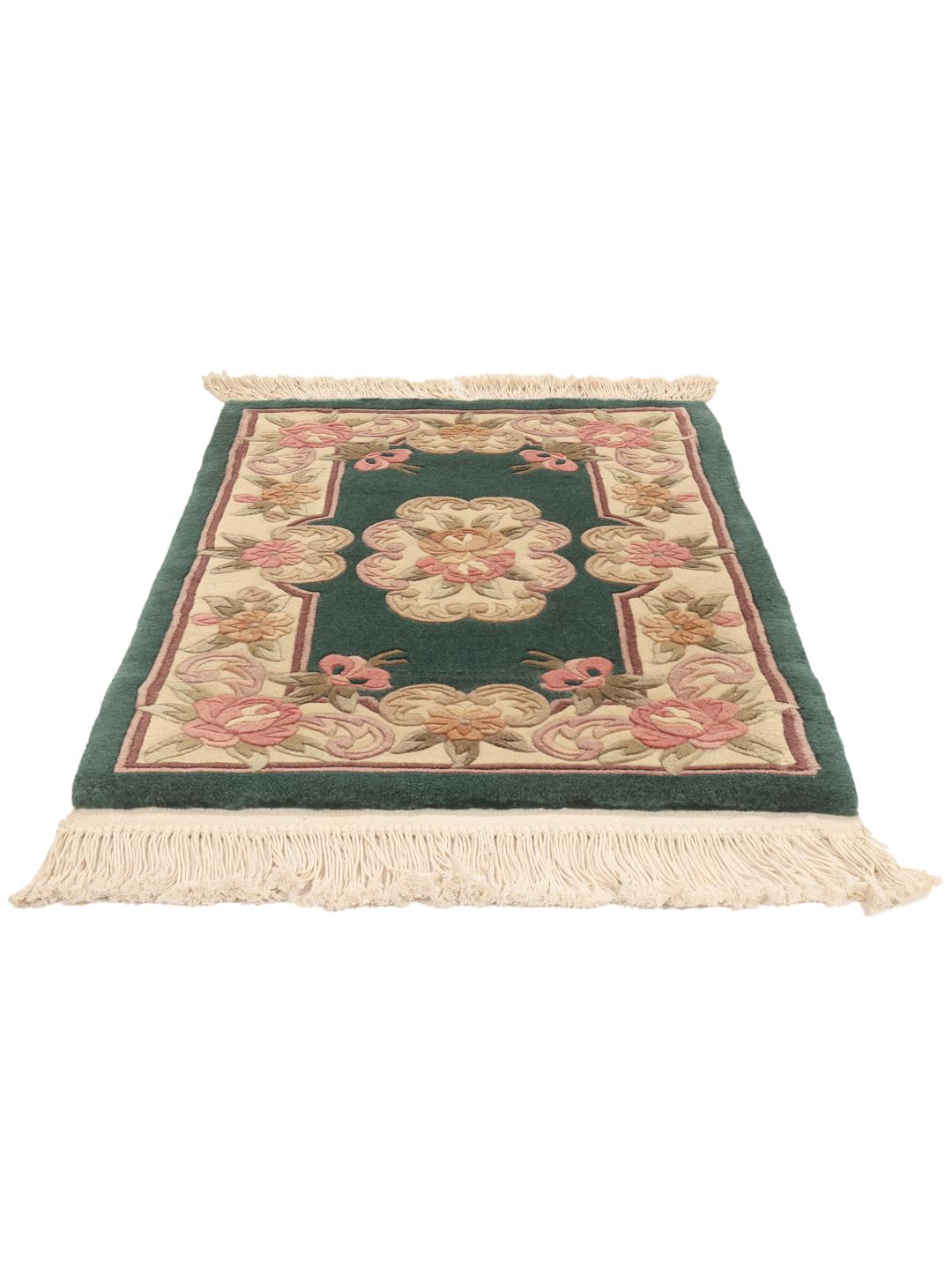
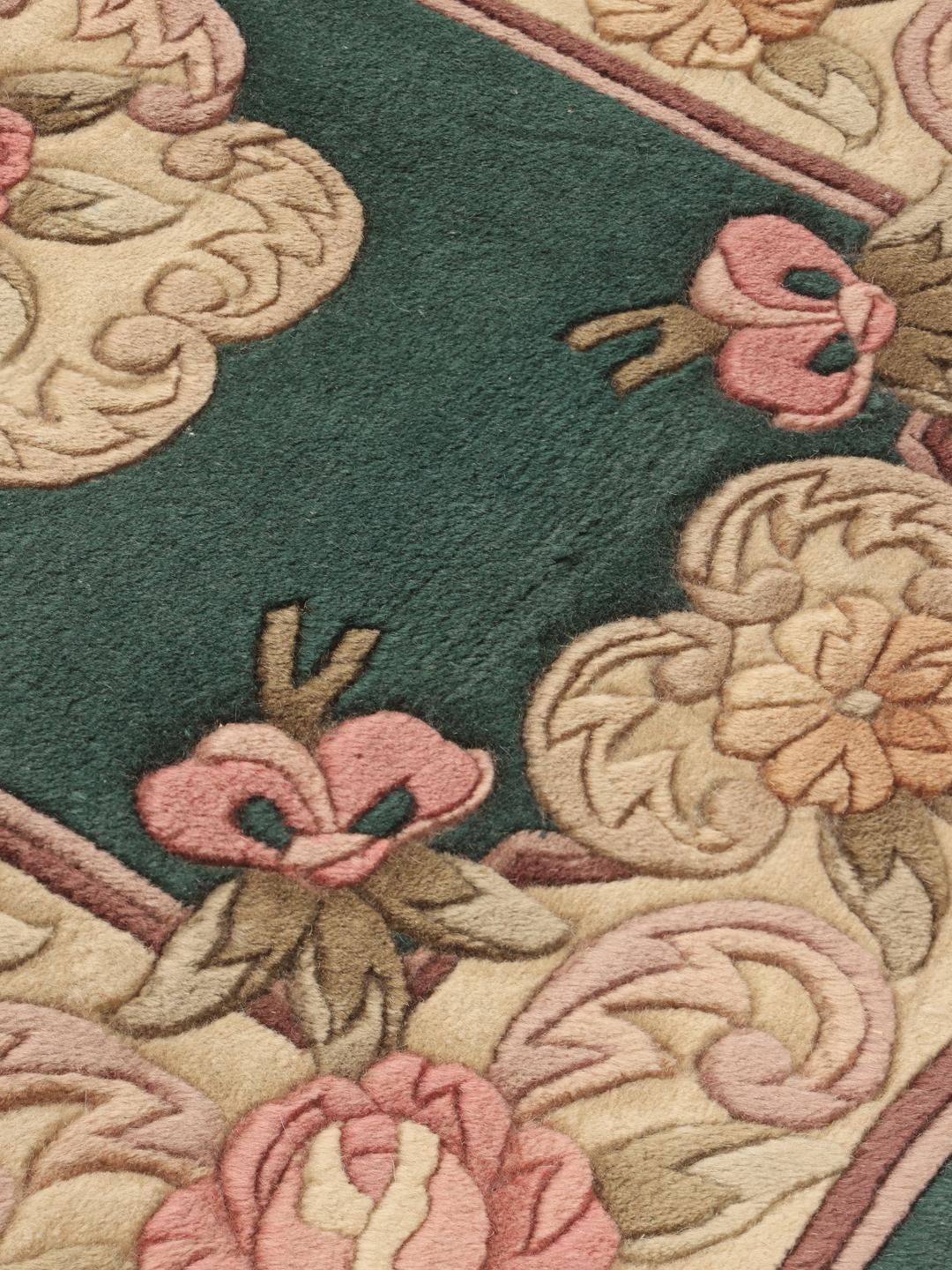
Floral motifs are a hallmark of this tradition, frequently featuring stylised roses, peonies, and lotus flowers that symbolise prosperity and beauty. These designs are often framed by elegant, decorative borders that anchor the composition. The use of a deep green field paired with lighter cream accents is a classic combination that highlights the intricate relief of the floral patterns, creating a sophisticated visual depth.
Collecting these rugs is an investment in cultural heritage and skilled craftsmanship. Each piece represents a connection to a long lineage of artisans who have refined their techniques over generations. Owning such a rug is not just about floor coverage but about preserving a specific style and level of effort that remains a testament to the enduring value of handmade textiles.