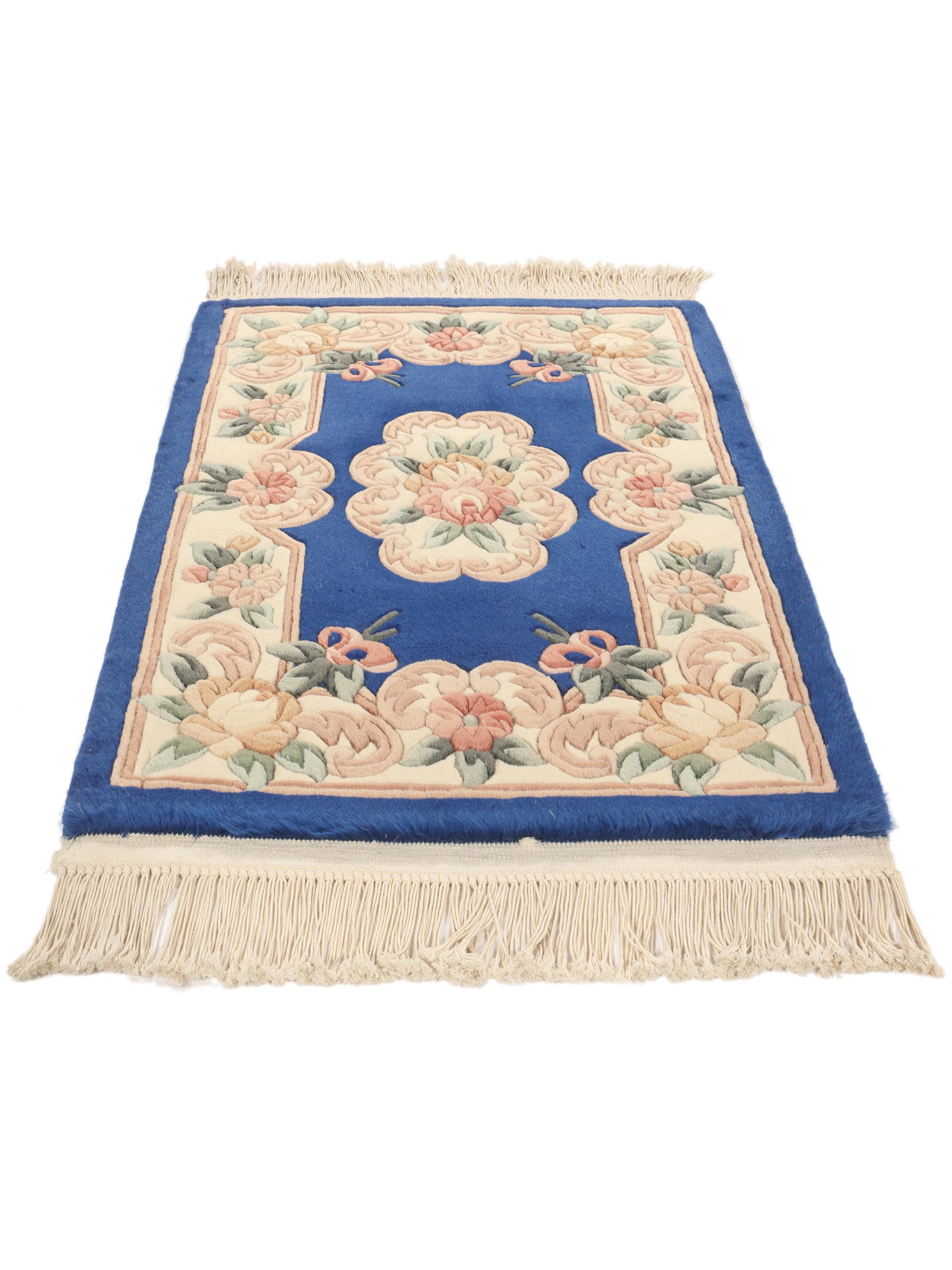
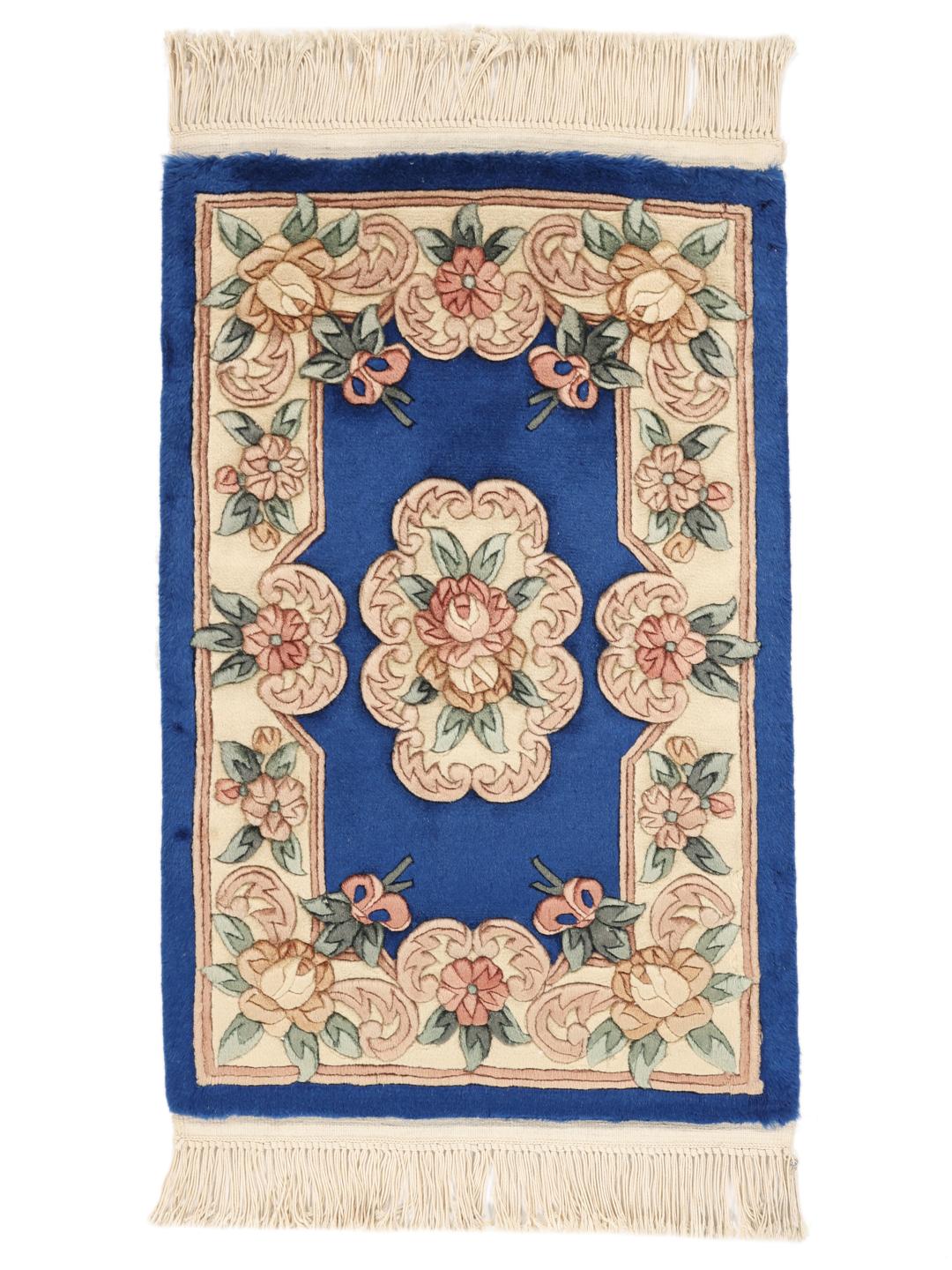
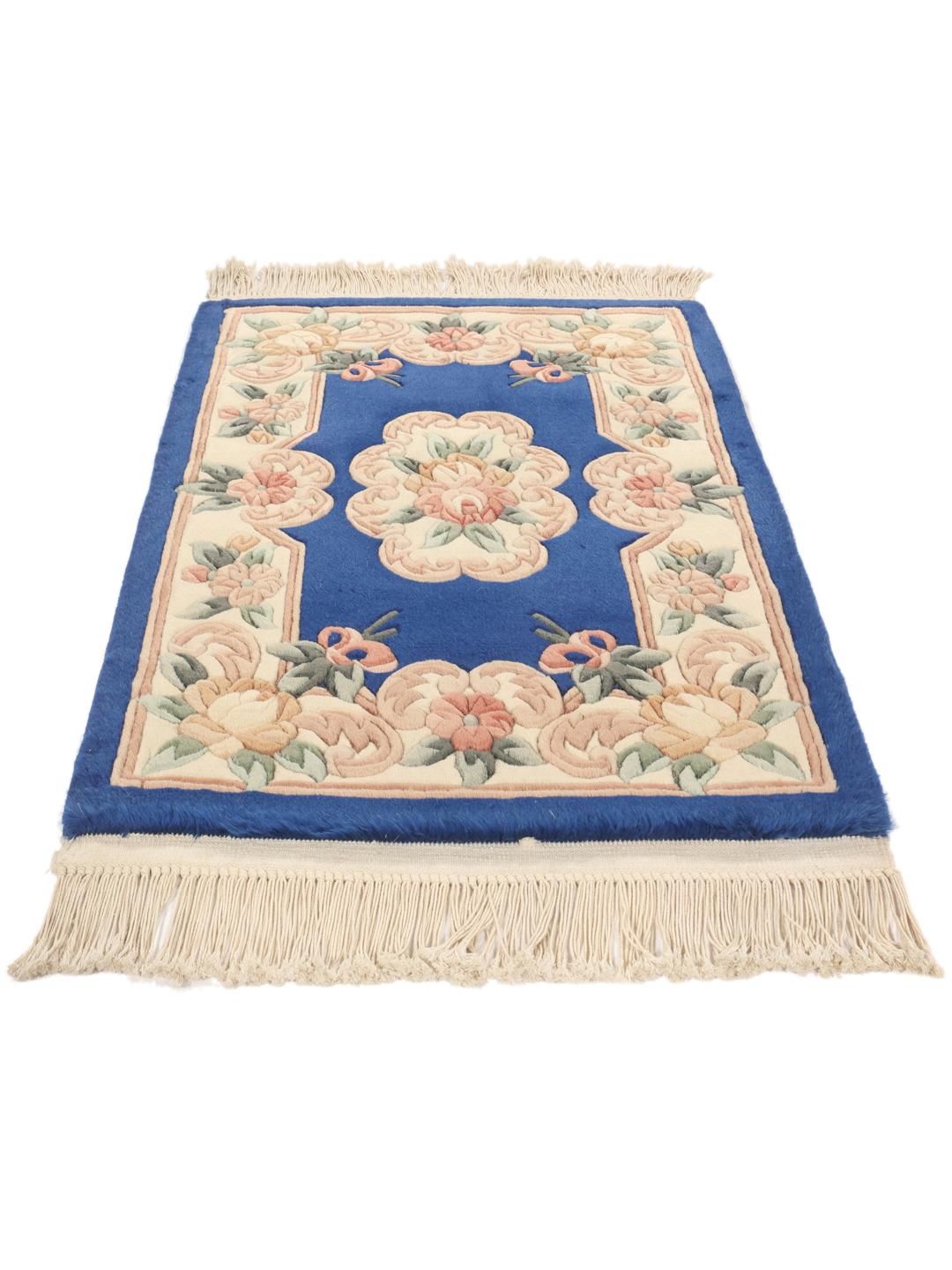
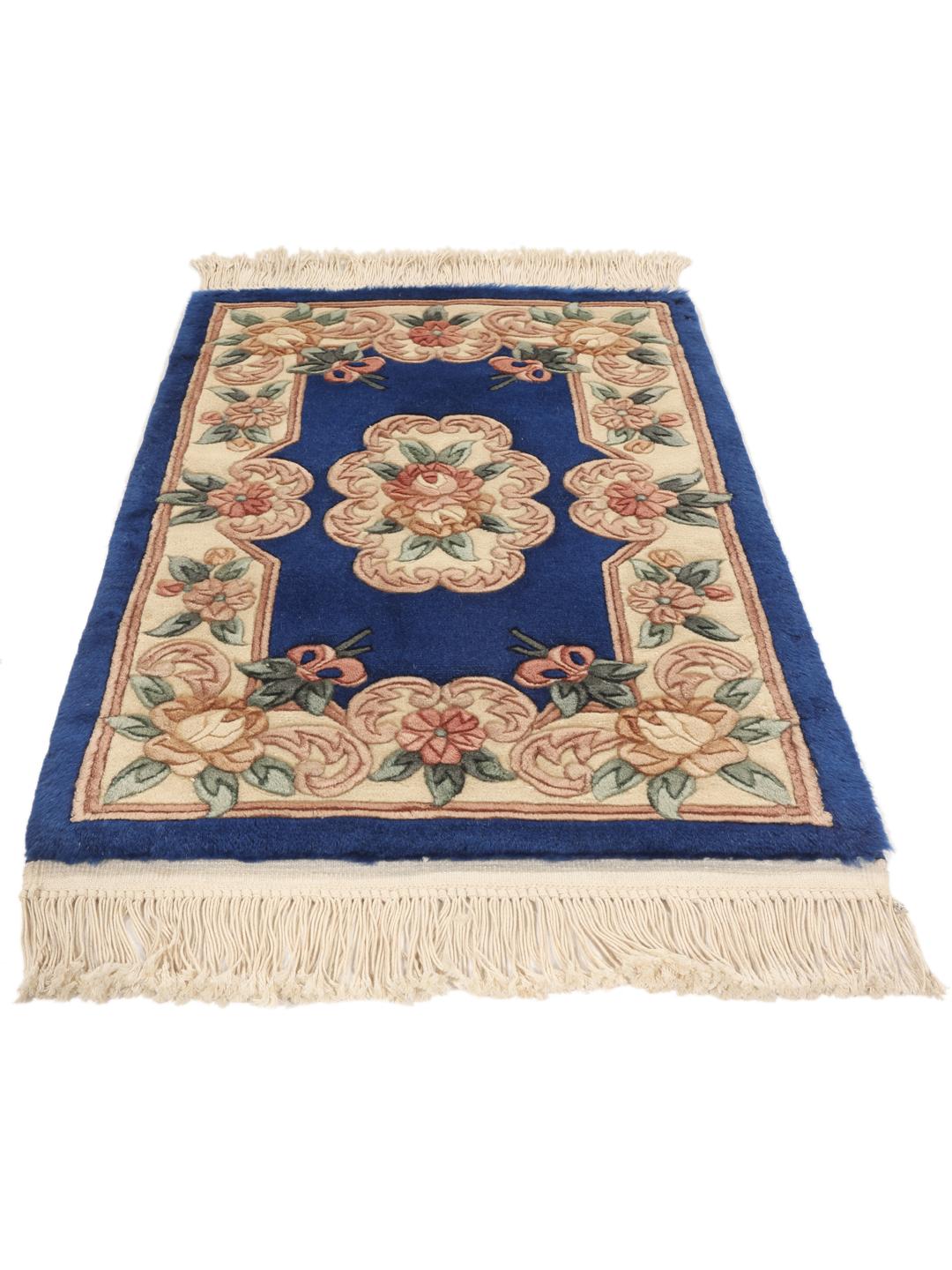
The tradition of Chinese rug weaving is deeply rooted in a culture that has valued textile arts for centuries. Historically, these rugs were often commissioned for imperial palaces or temples, featuring symbolic motifs that represented longevity, prosperity, and natural beauty. Over time, these techniques evolved to incorporate sophisticated floral arrangements, often influenced by wider Asian artistic movements.
The term '90 Line' refers to a traditional measurement of quality in Chinese rug production, indicating the number of knots per linear foot. This specific density is a hallmark of the craft, balancing the need for intricate pattern detail with a plush, durable pile. It ensures that the rug remains both a visual delight and a resilient floor covering for daily use.
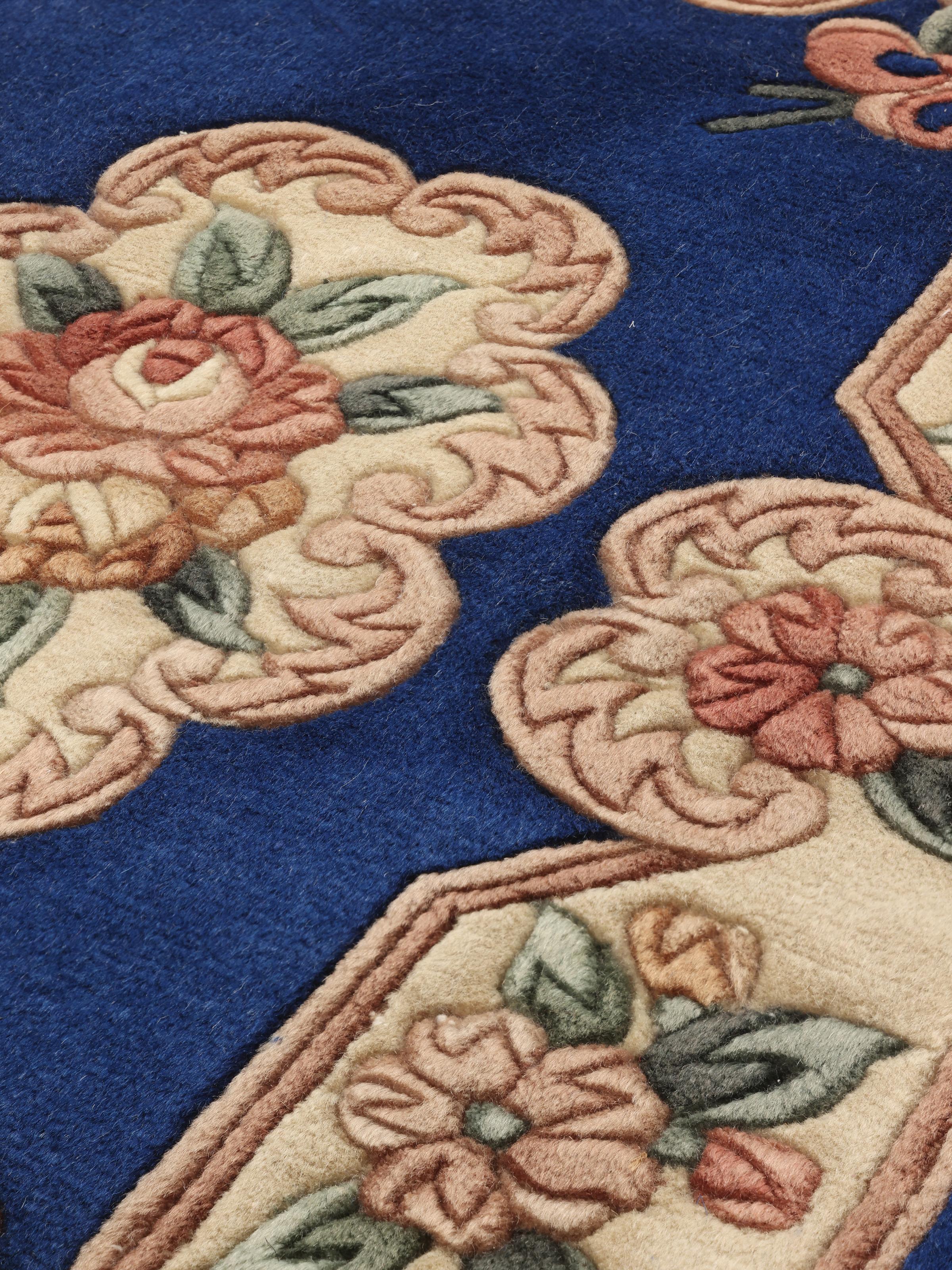
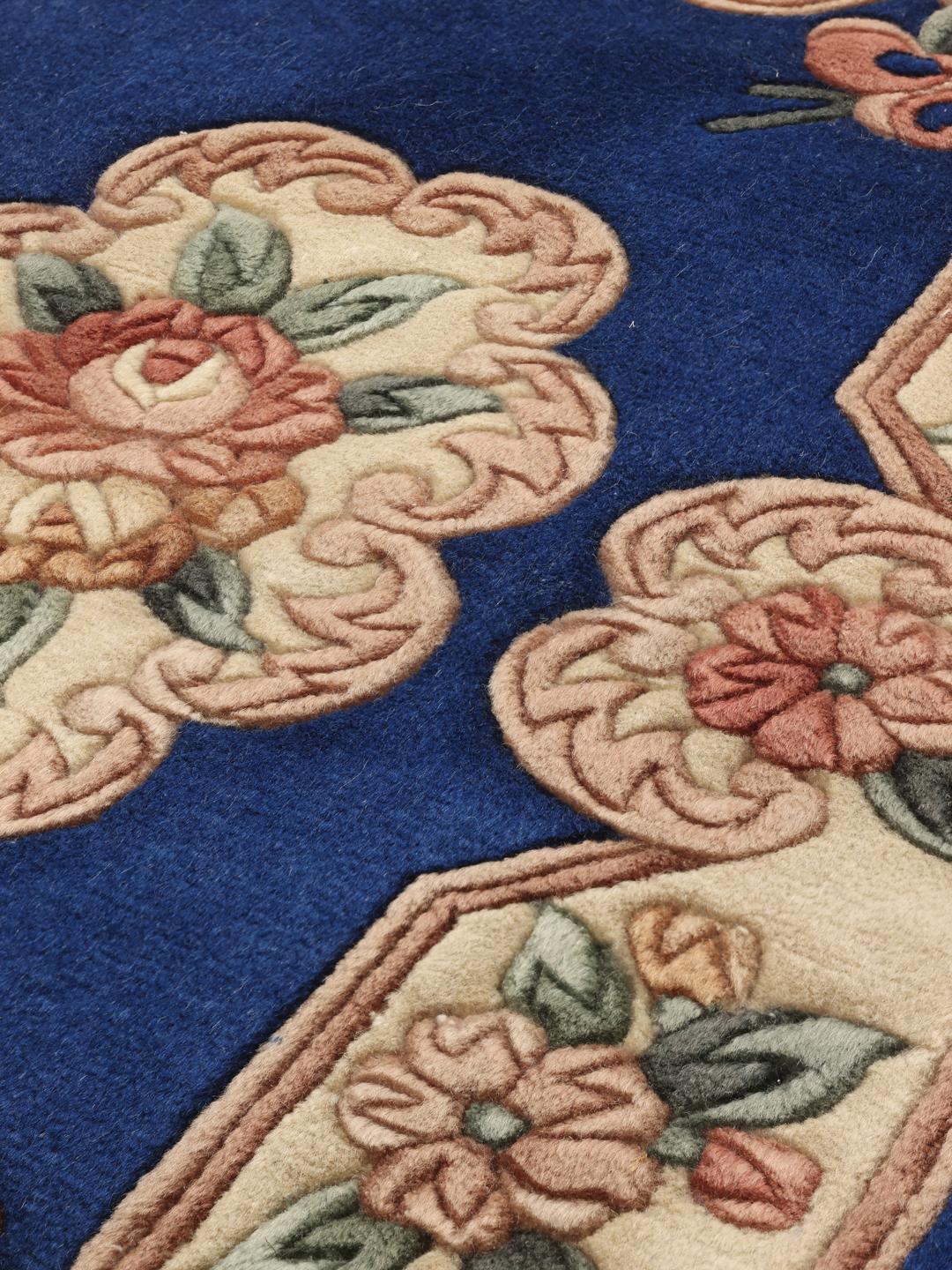
Design elements in this style are characterised by a harmonious balance between the field and the border. The floral motifs are typically rendered with a sense of depth, often using a technique that creates a slight relief effect. The use of bold blue backgrounds paired with softer, natural tones is a classic aesthetic that highlights the mastery of colour and composition within this tradition.
Owning a hand-knotted rug from China is an investment in cultural heritage and skilled artistry. Collectors value these pieces not only for their aesthetic appeal but for the immense effort and patience required to create them. By choosing this rug, you are acquiring a piece of history that reflects a long-standing commitment to quality and artistic expression.