The tradition of rug weaving in China is deeply rooted in a history that stretches back centuries, evolving from the creation of functional seating mats for imperial palaces to the sophisticated art form seen today. These rugs are renowned for their distinct aesthetic, which often incorporates traditional motifs like flowers and scrolling vines, reflecting a heritage of patience and refinement.
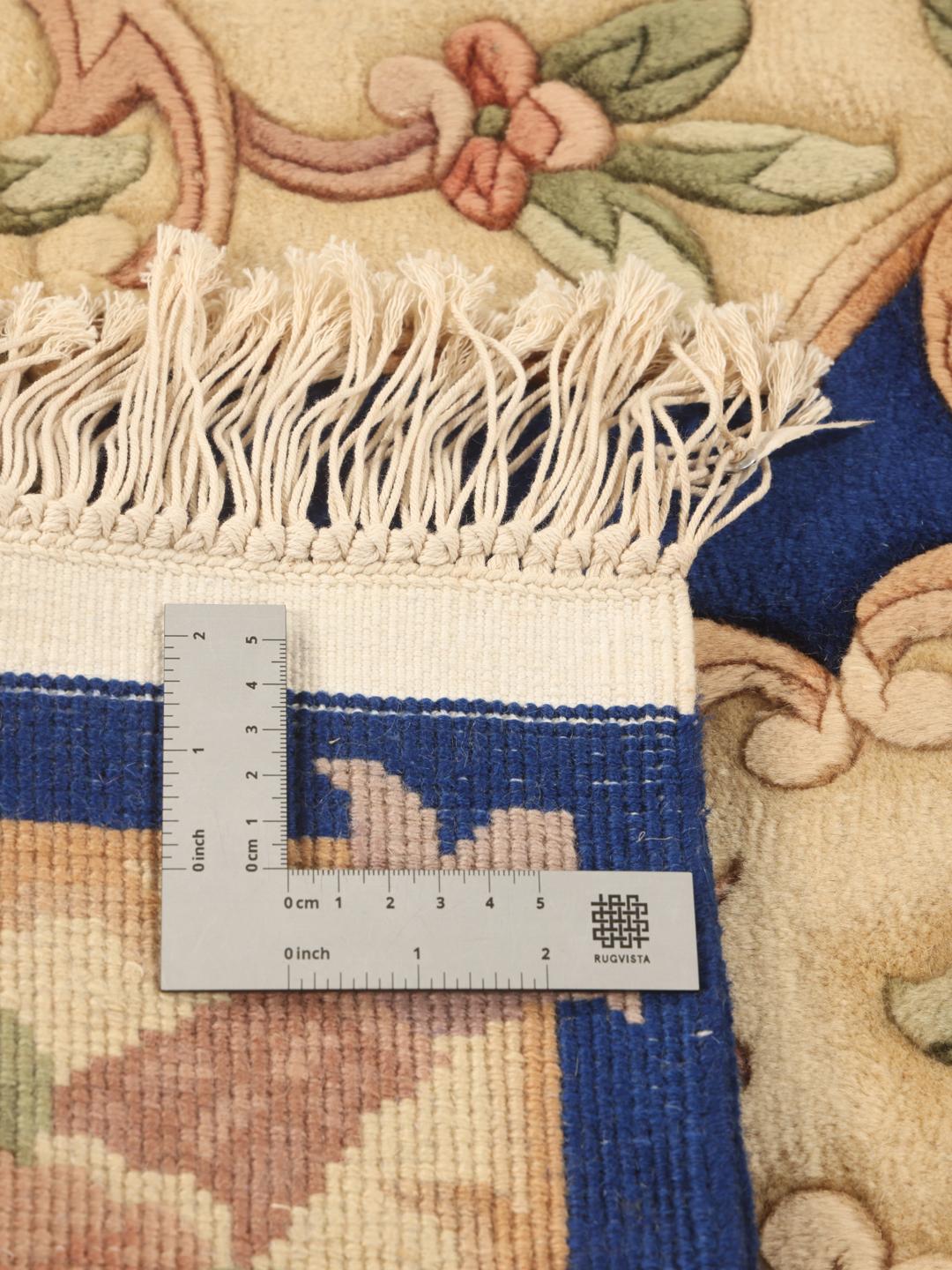
The term '90 line' refers to a traditional measurement system used in Chinese rug production to describe the density of the weave. This method of gauging the fineness of the knotting has been a hallmark of Chinese craftsmanship, ensuring that the finished product has a consistent, uniform pile that is both dense and highly durable.
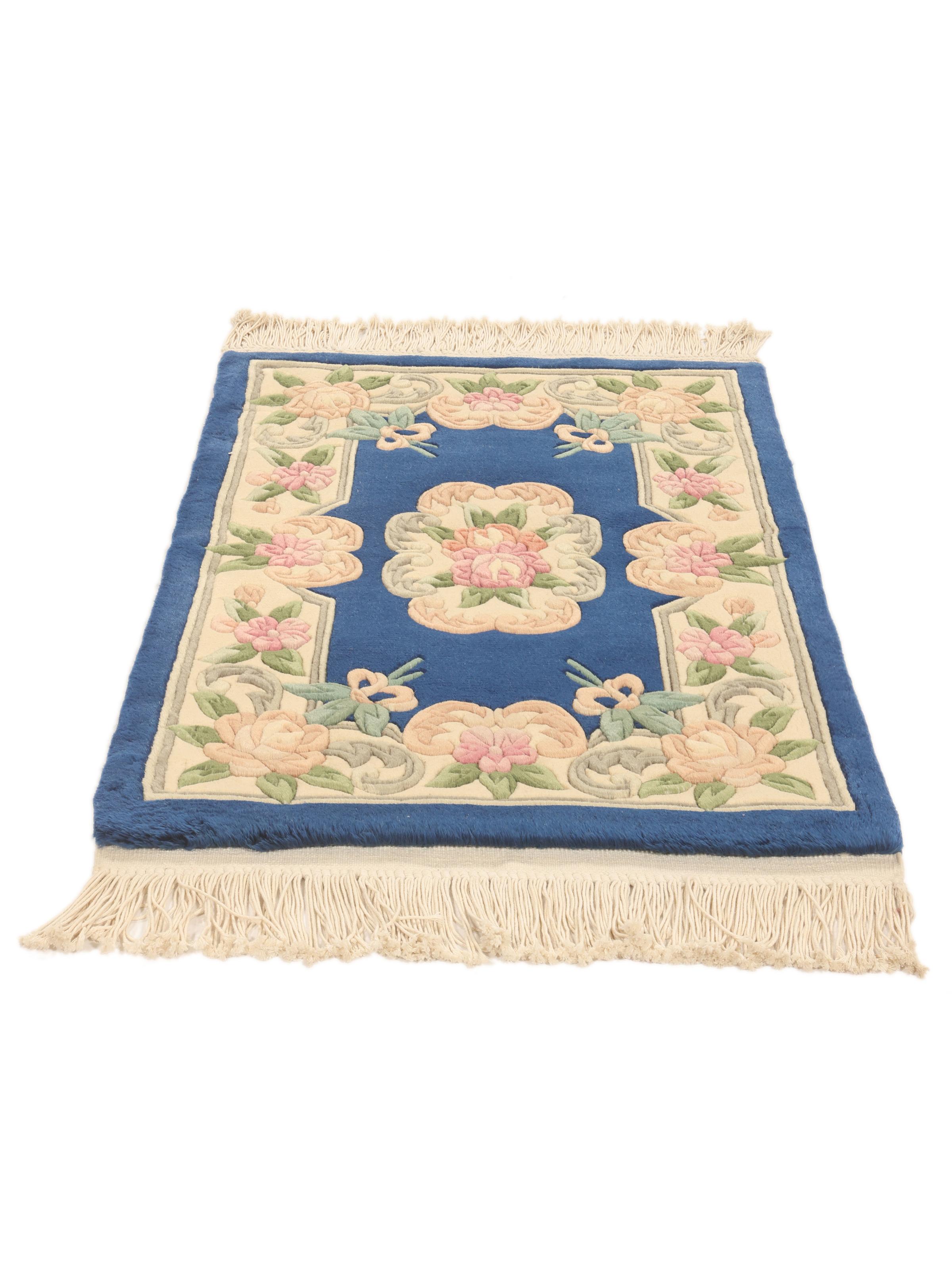
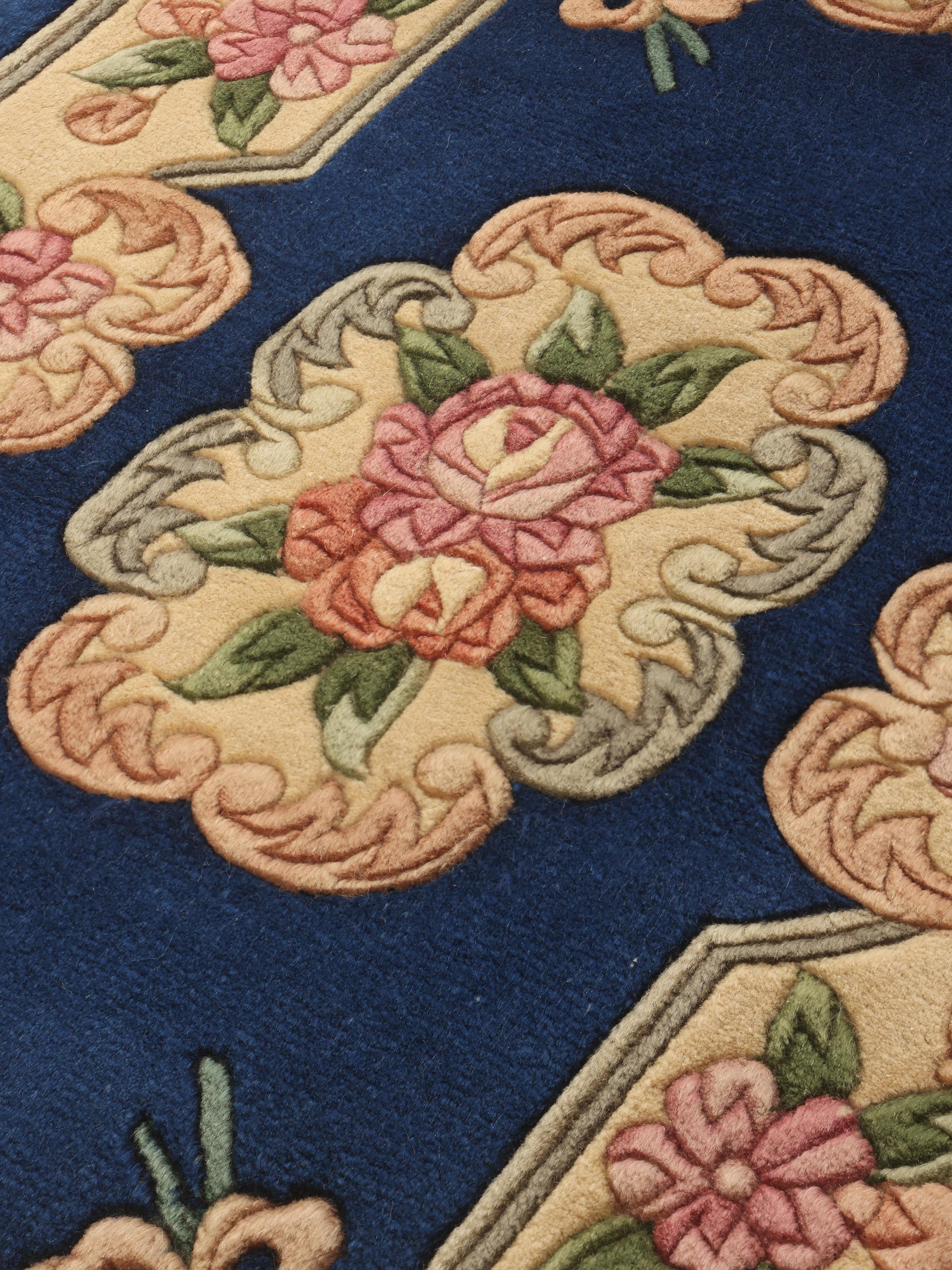
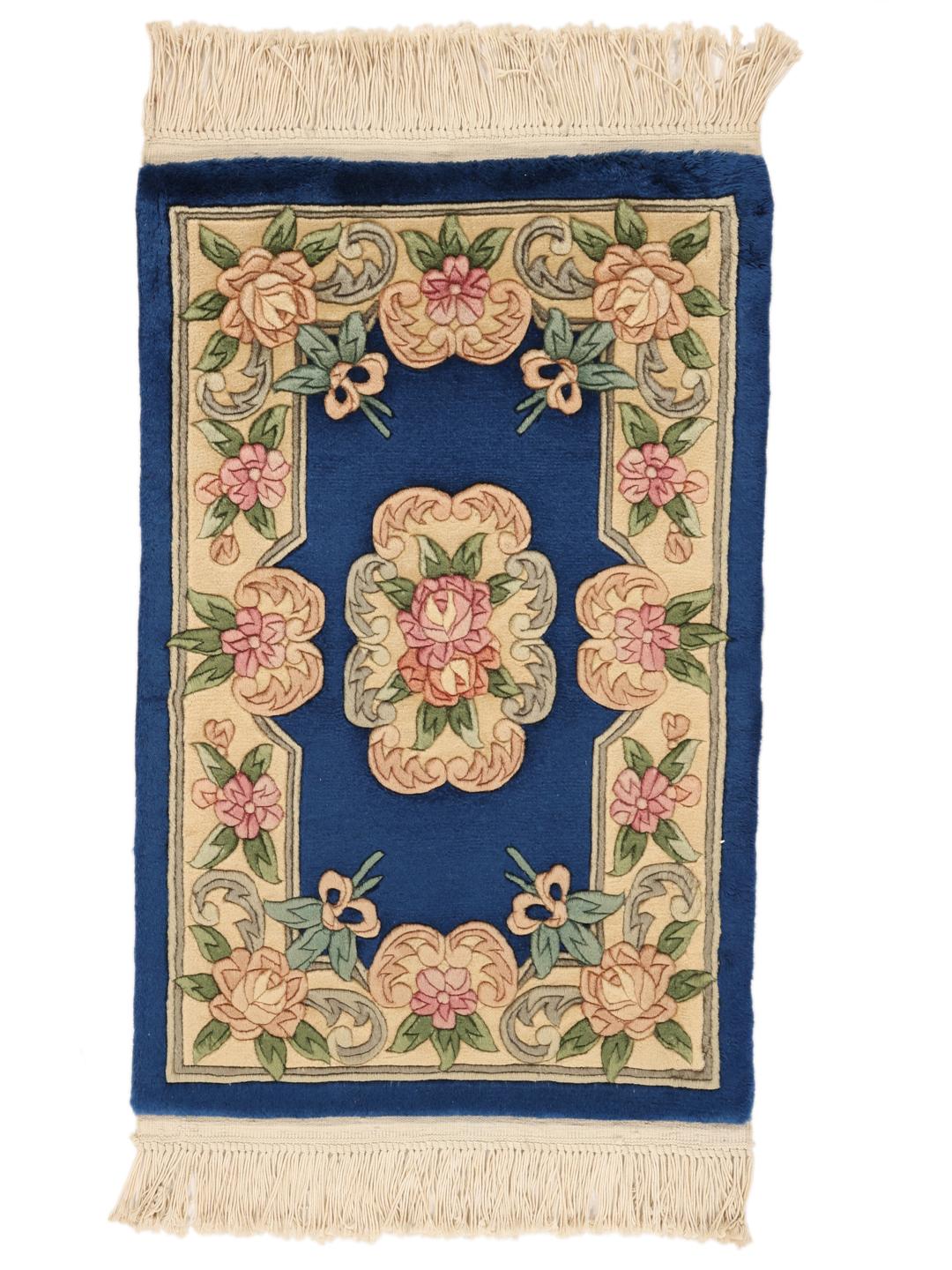
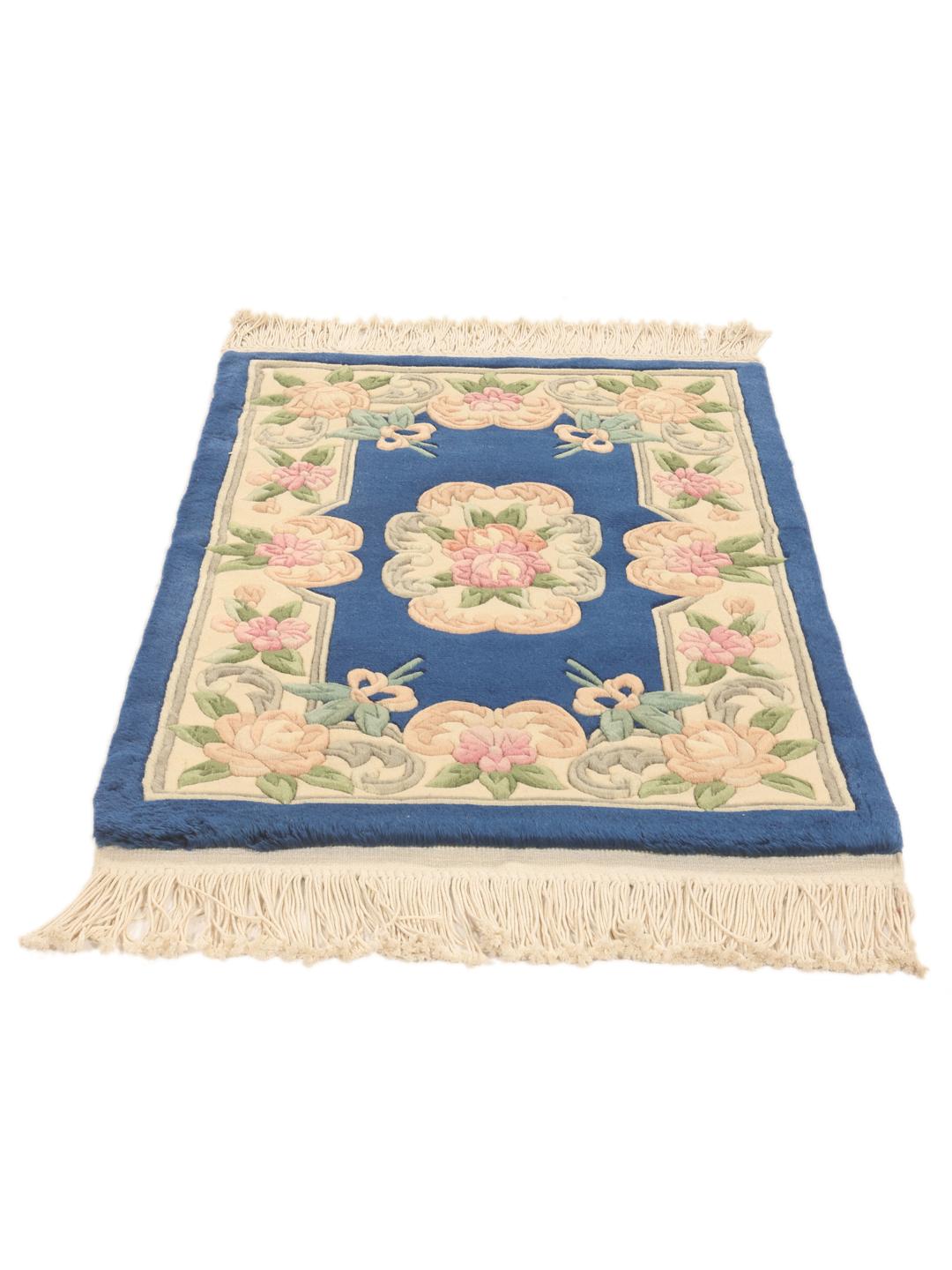
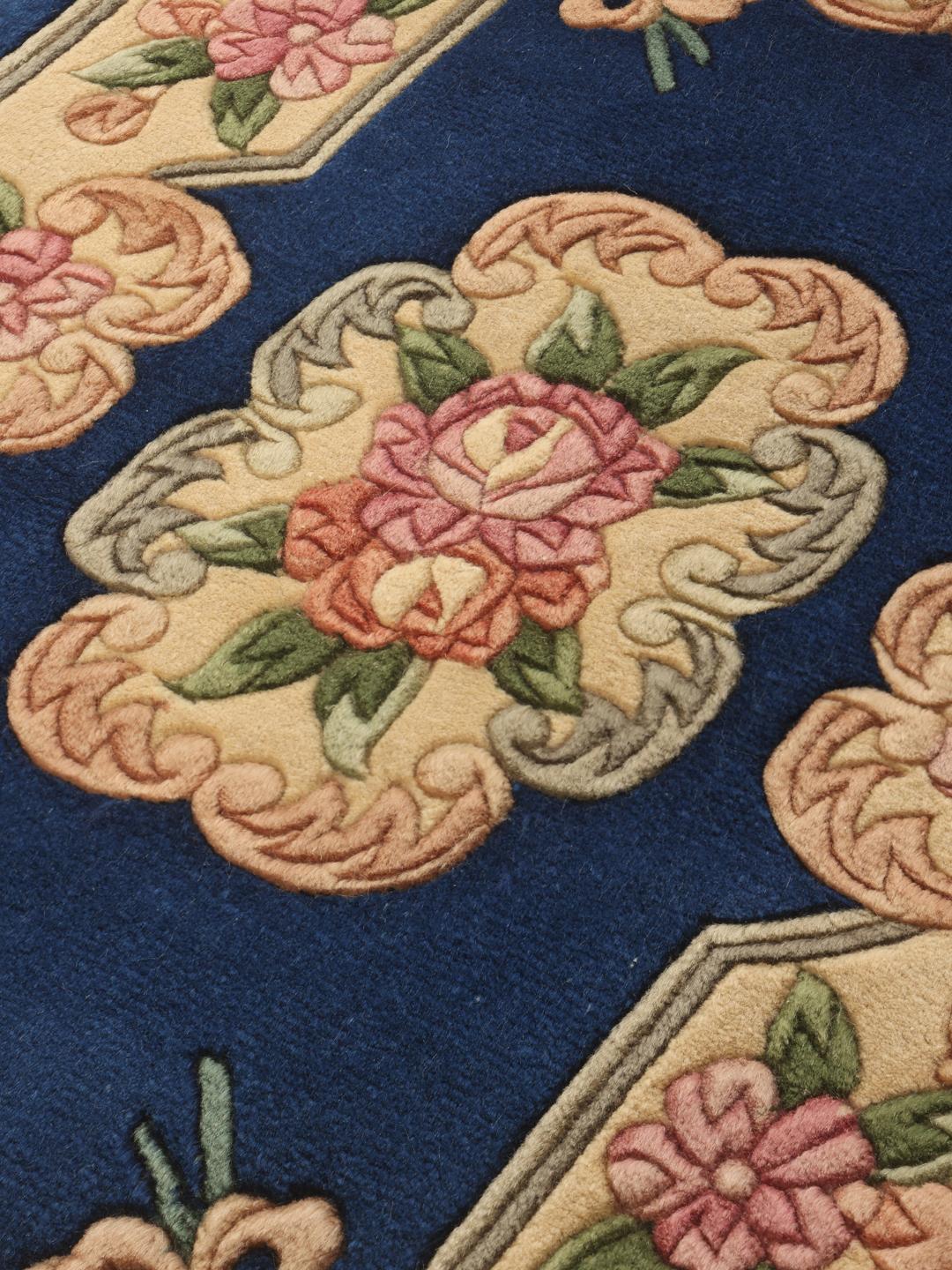
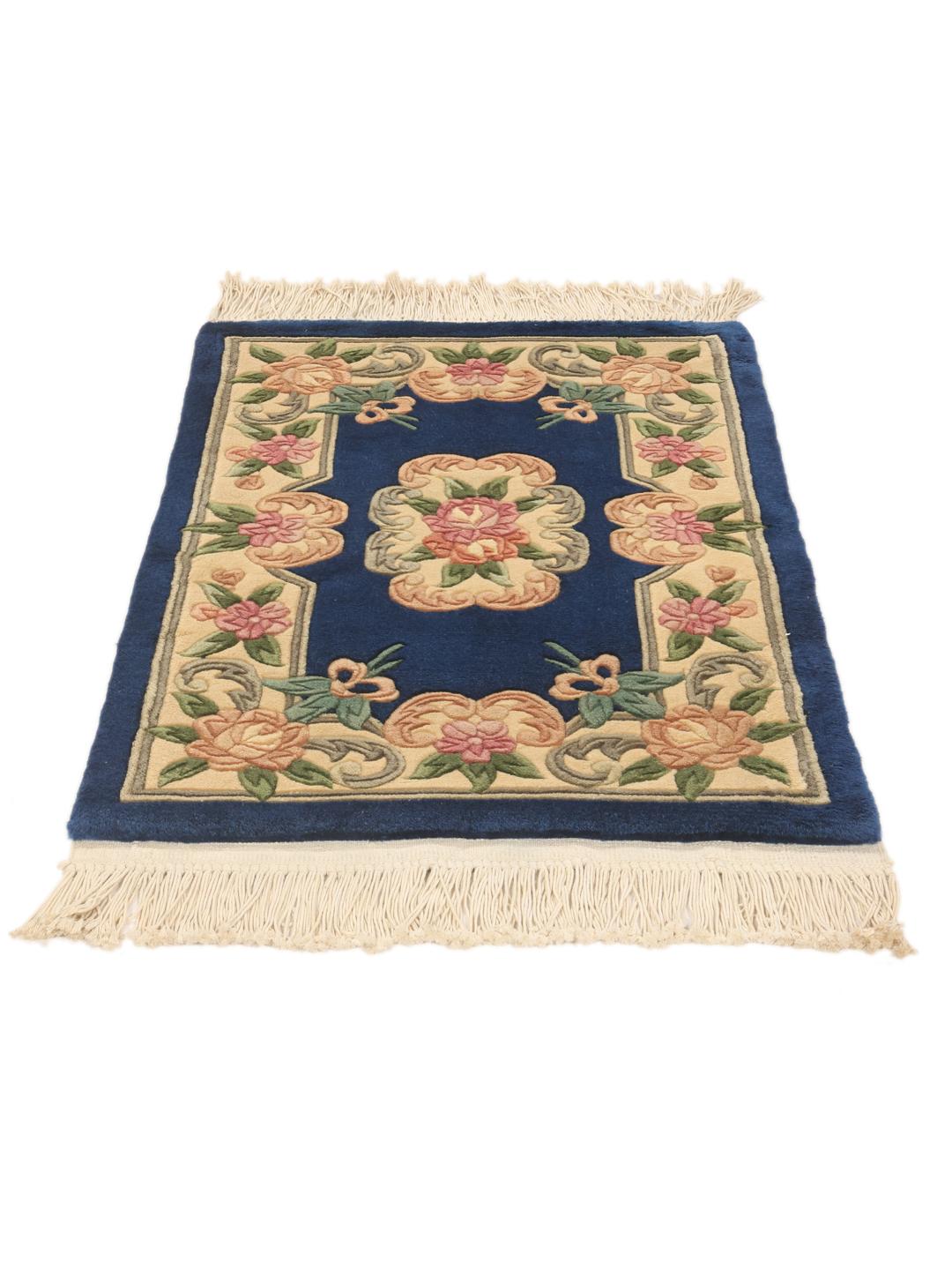
Visually, Chinese rugs are celebrated for their clarity of design and the deliberate use of space. The floral patterns, often rendered with soft curves and balanced symmetry, are designed to create a sense of harmony and calm. The use of a deep blue field against lighter floral accents is a classic technique that highlights the intricacy of the motifs while maintaining an elegant, understated presence.
Owning a hand-knotted Chinese rug is an investment in a storied craft tradition. These pieces are collected not just for their beauty, but for the skill and cultural history they represent. They serve as a tangible link to a long lineage of artisans who have perfected the art of transforming raw materials into lasting, functional decor.