Chinese rug making is an ancient craft with a history that spans thousands of years, originally evolving from the need for practical floor coverings in imperial palaces and temples. Over centuries, these rugs became celebrated for their artistic complexity and the use of symbolic motifs drawn from nature, philosophy, and traditional folklore.
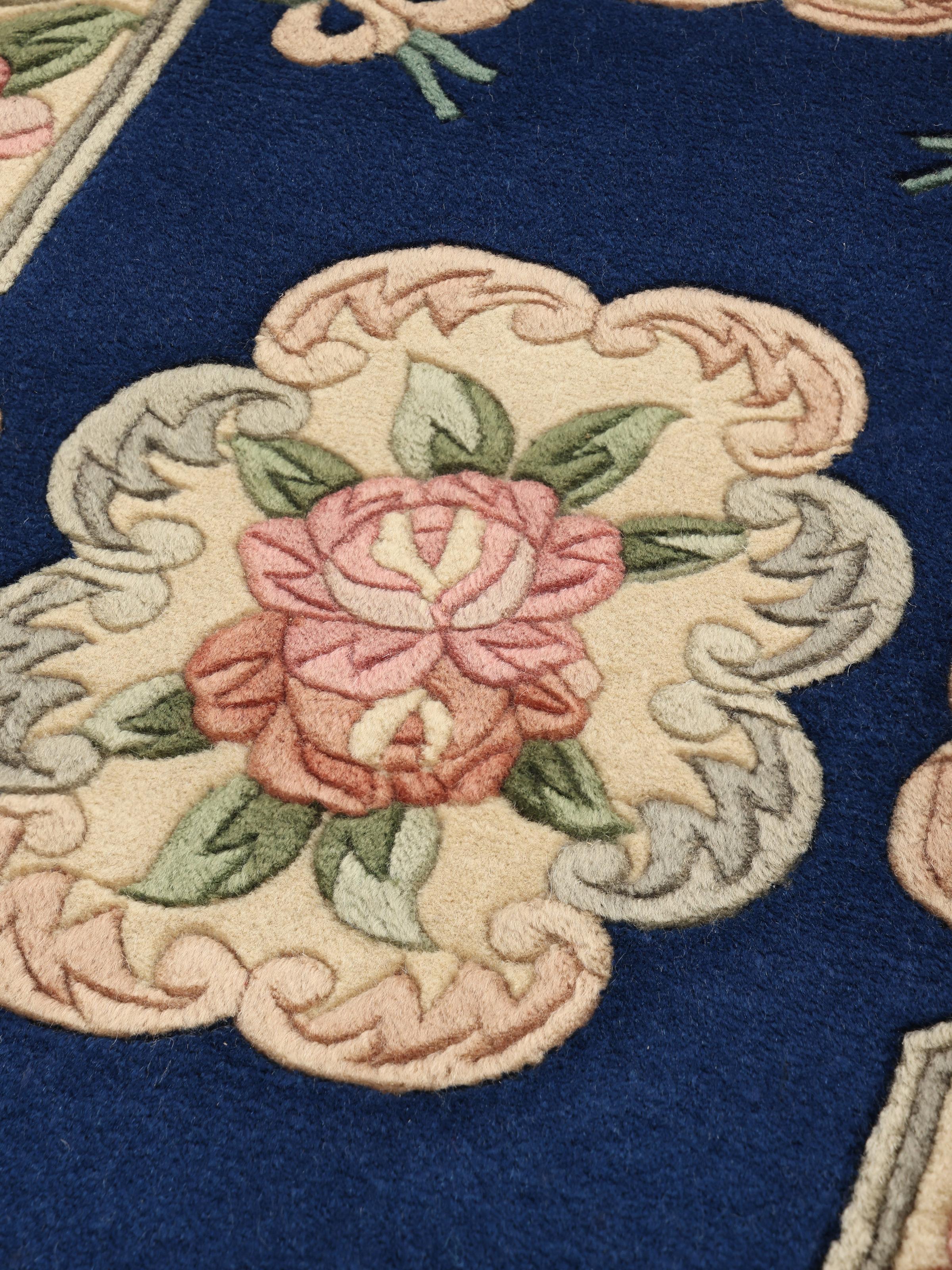
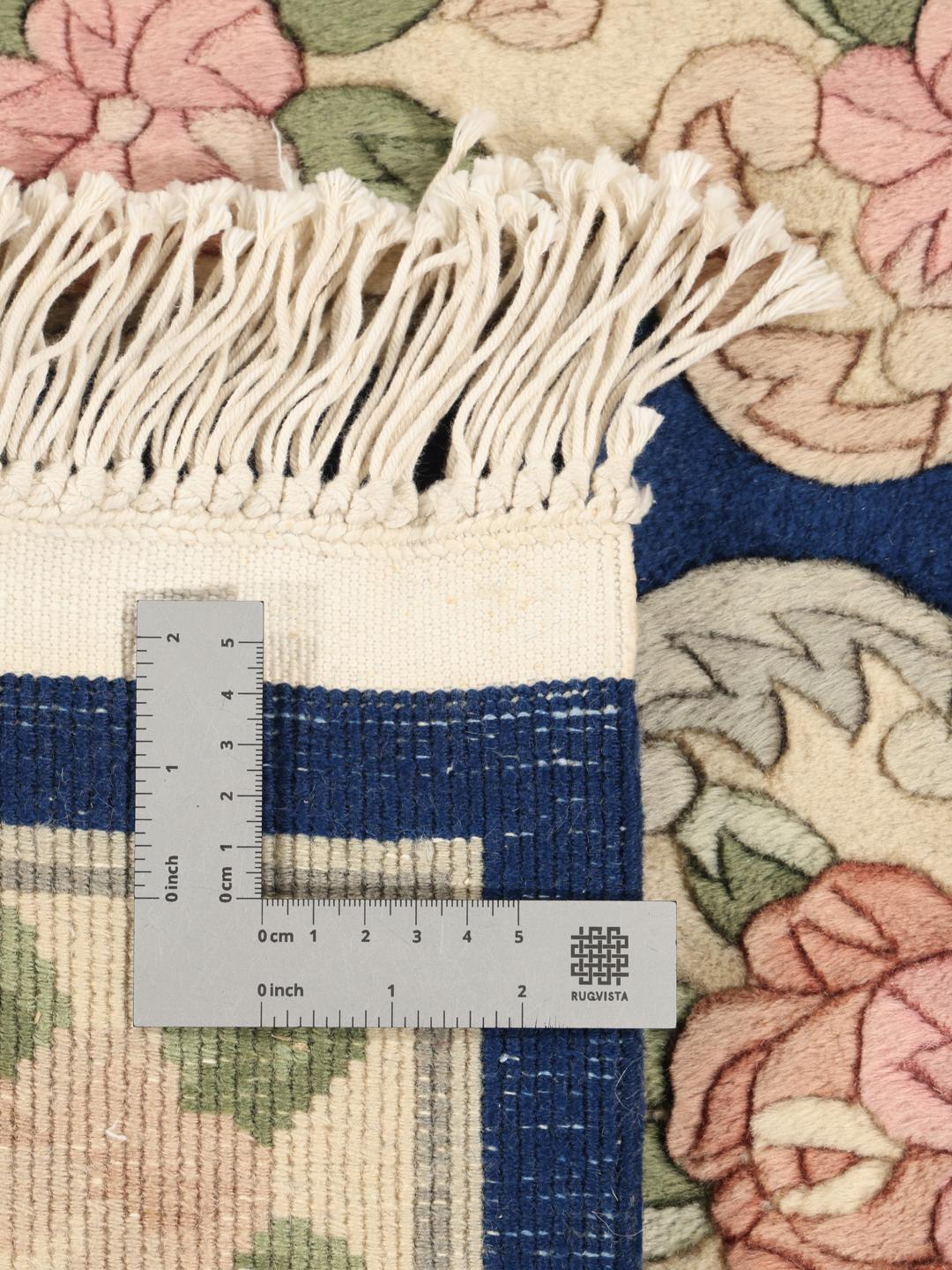
The term '90 Line' refers to a specific, traditional measurement of knot density used in Chinese rug production. This method calculates how many knots are present across a defined width, which directly dictates the clarity of the pattern. A higher line count allows for more sophisticated, flowing designs and a denser, more resilient pile that provides a superior tactile experience.
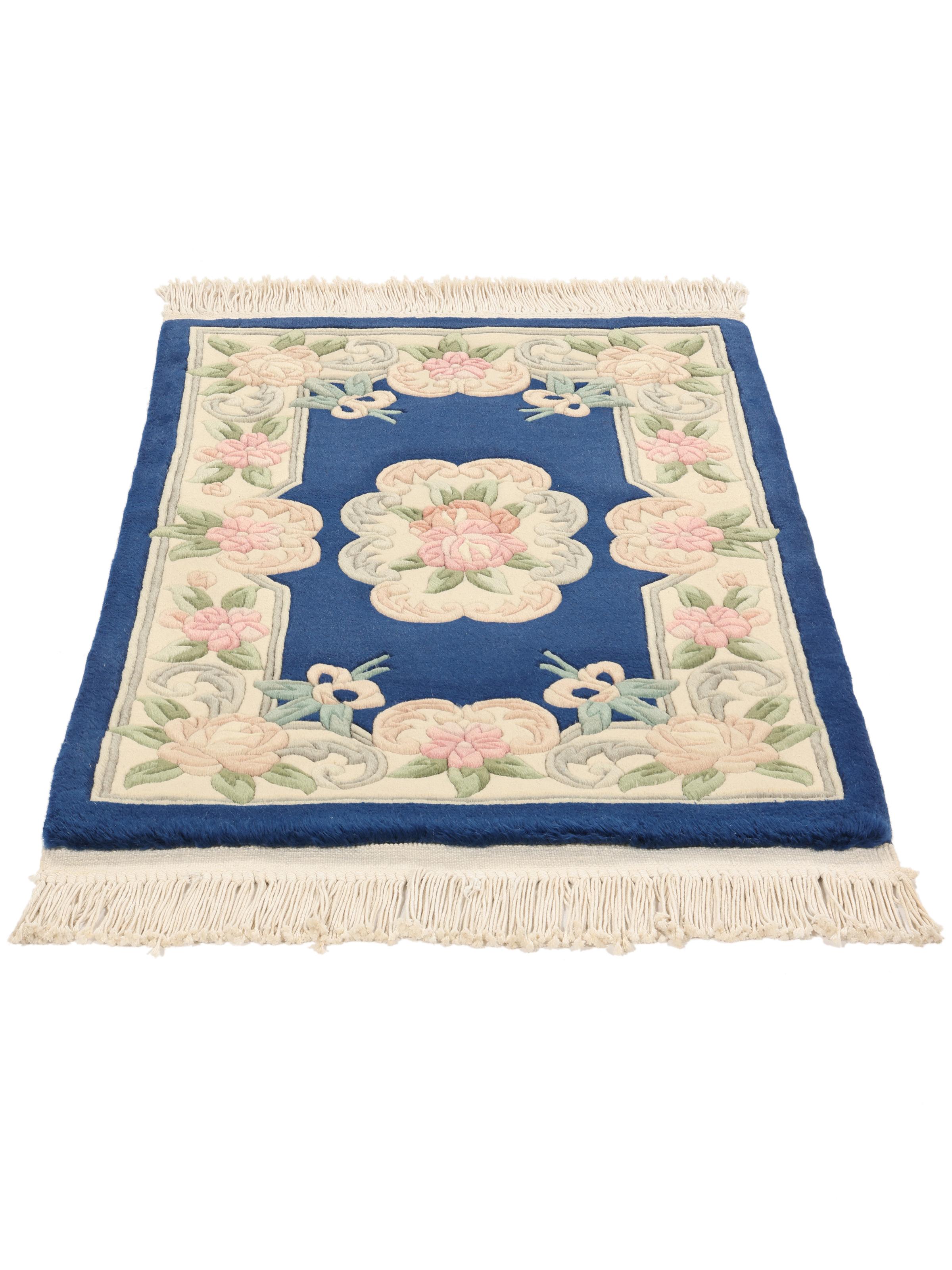
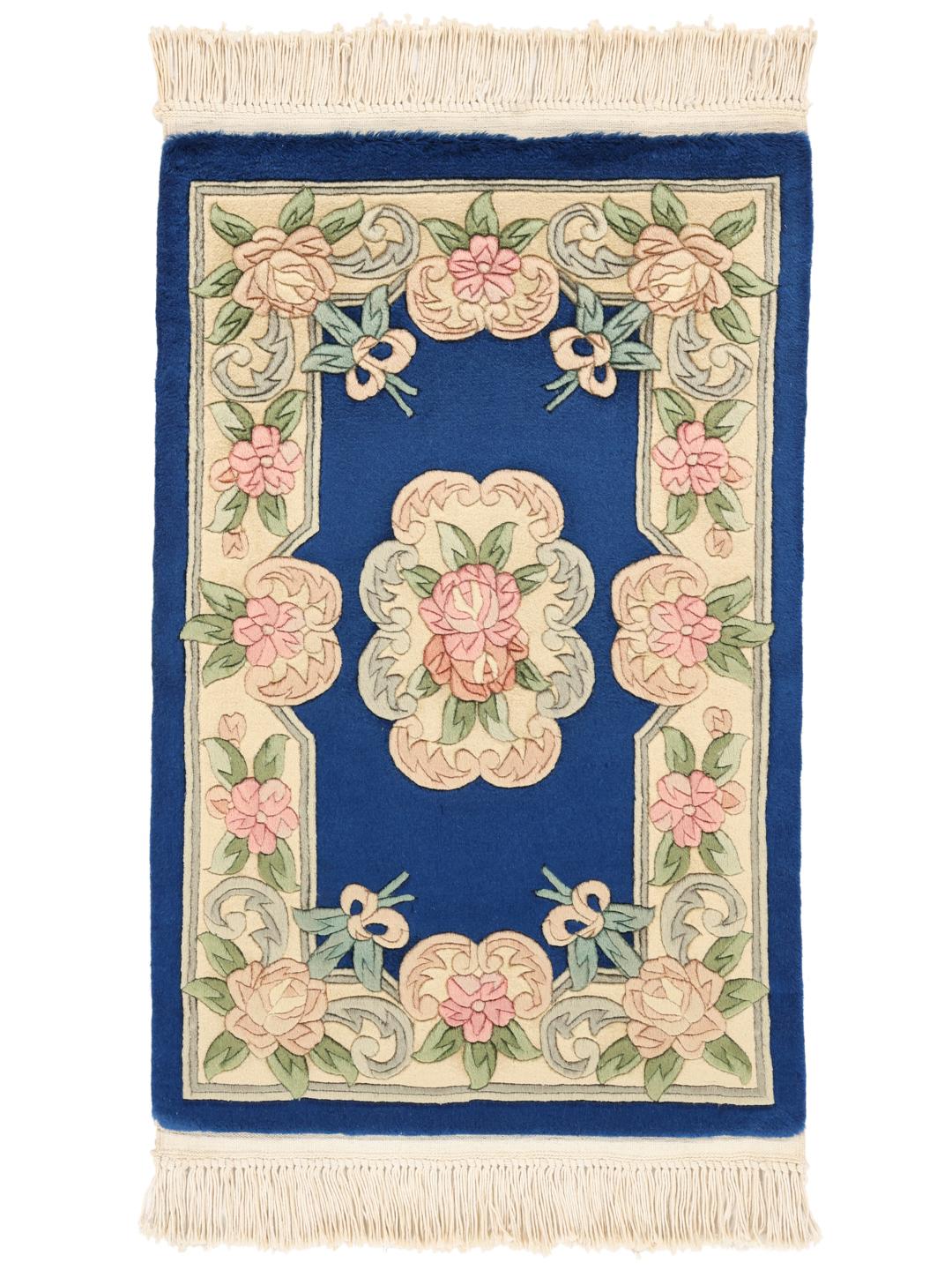
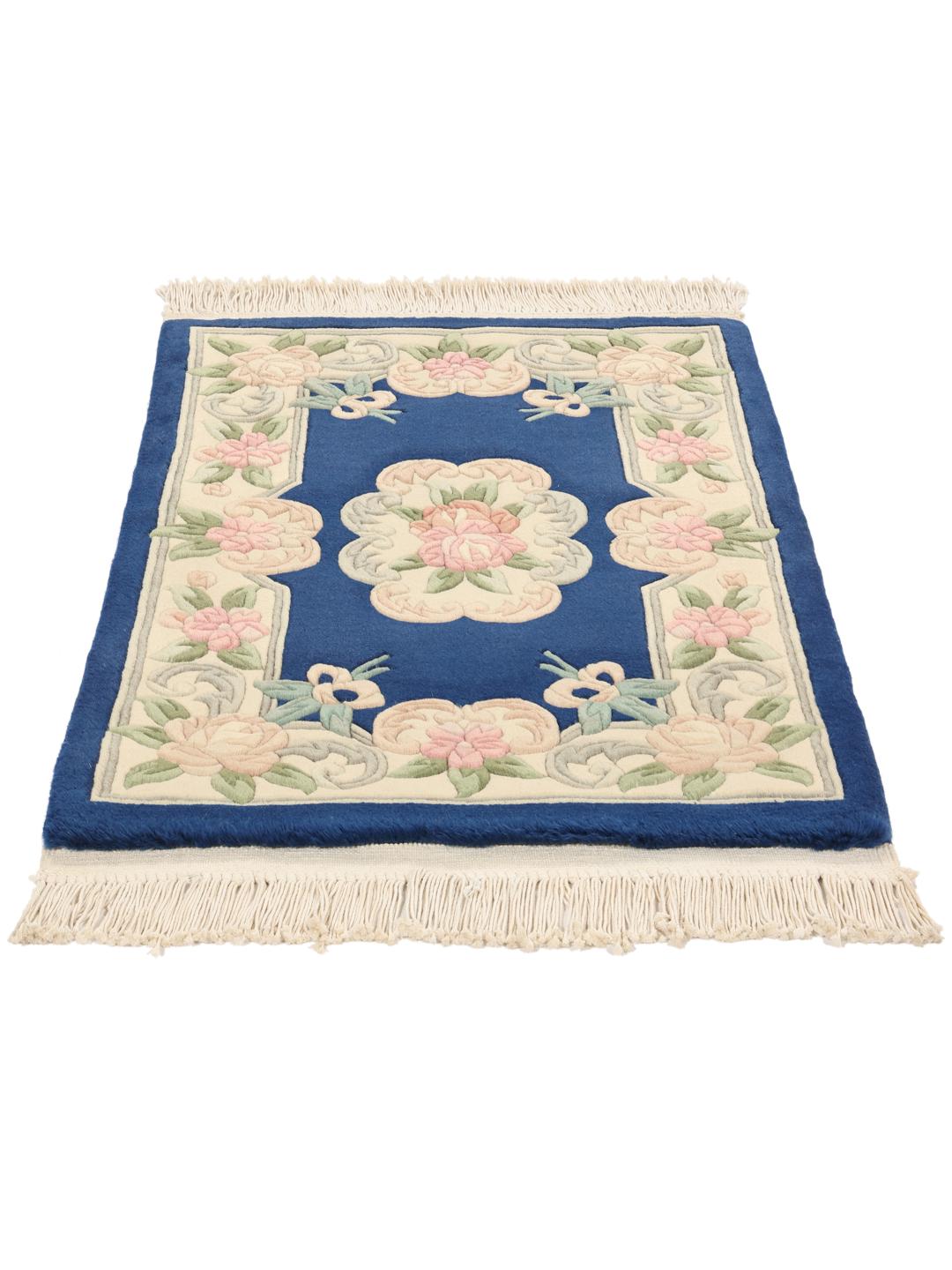
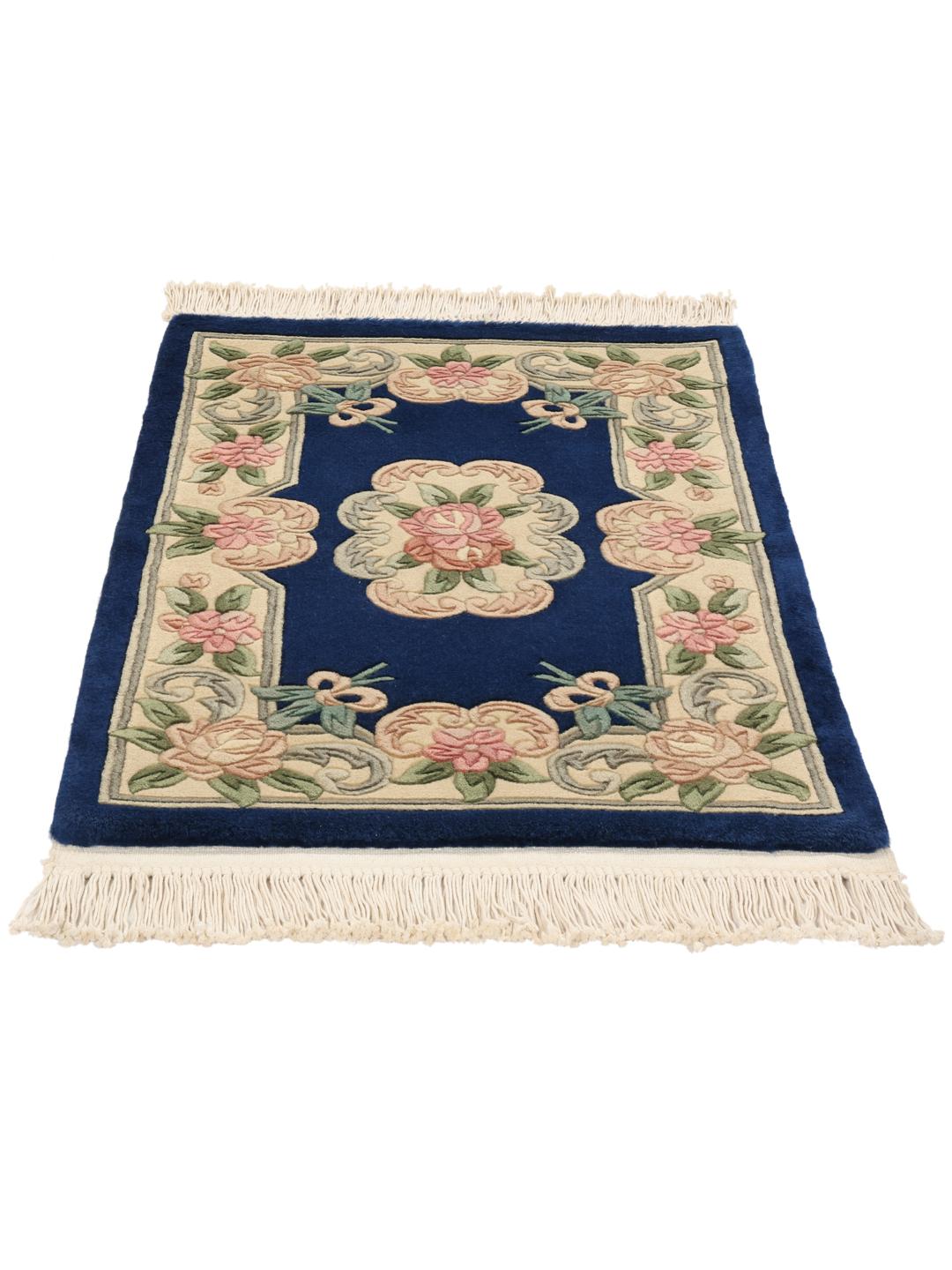
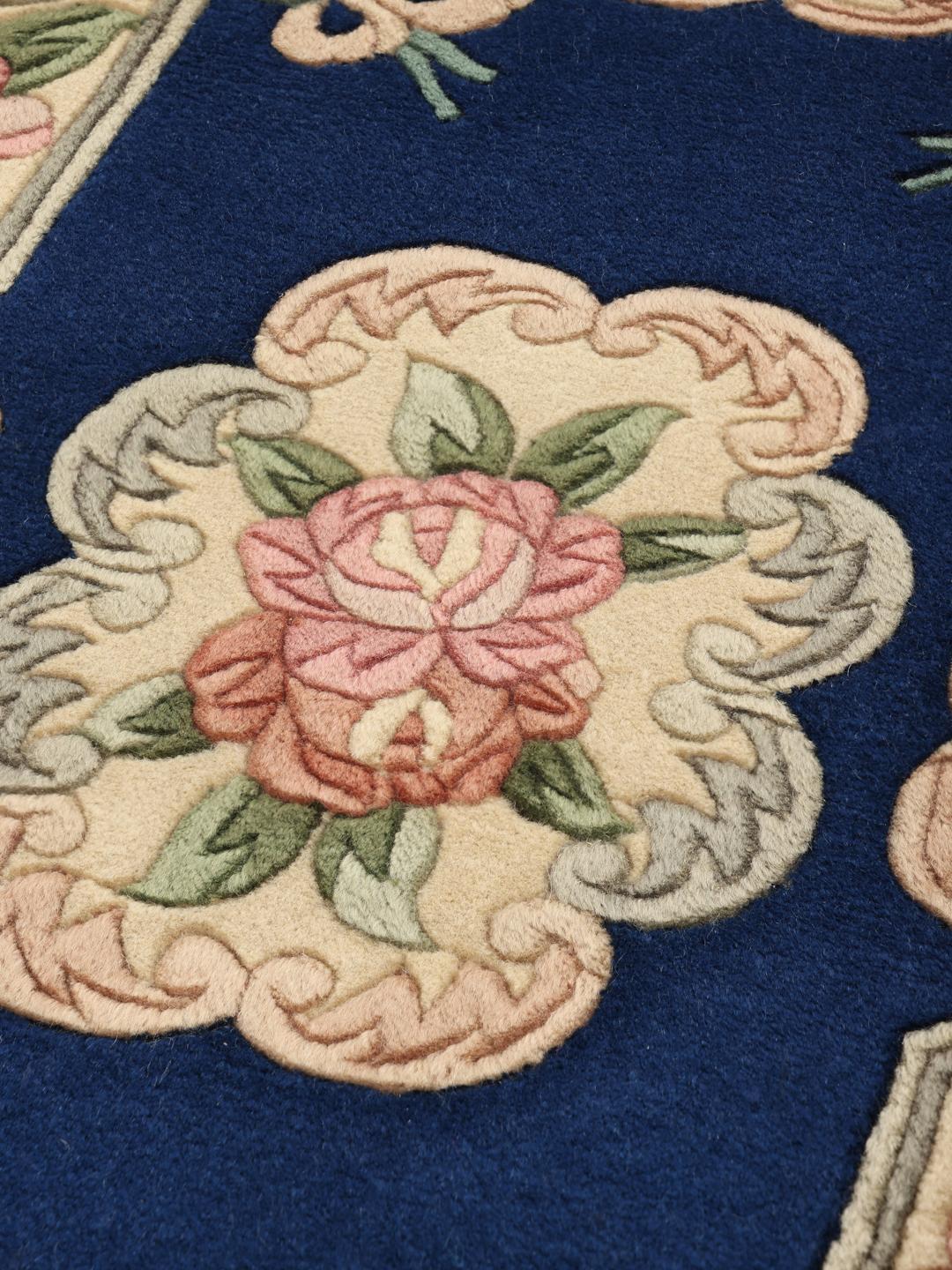
The signature design elements of this tradition often feature a central medallion surrounded by floral sprays, such as peonies or lotus blossoms, which hold deep cultural significance. The use of a deep blue field is a classic choice in Chinese weaving, providing a striking contrast to the softer, natural tones of the floral details, creating a harmonious and balanced visual effect.
Collecting rugs from this tradition is a way of preserving a piece of cultural heritage that prizes both aesthetic beauty and structural integrity. These rugs are valued not only for their visual appeal but for the immense skill required to produce them, making them a meaningful investment for anyone who appreciates the intersection of history and interior design.