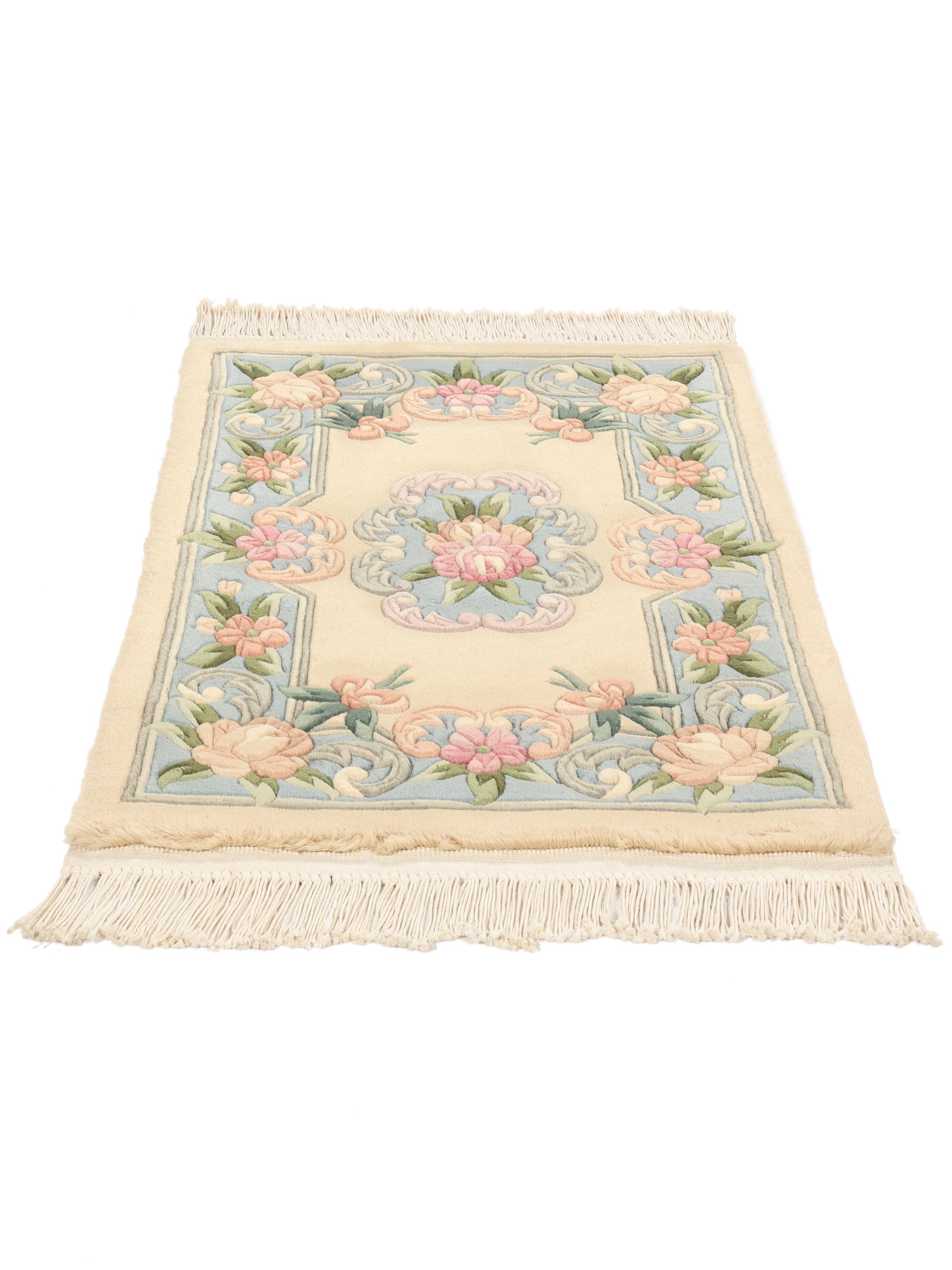
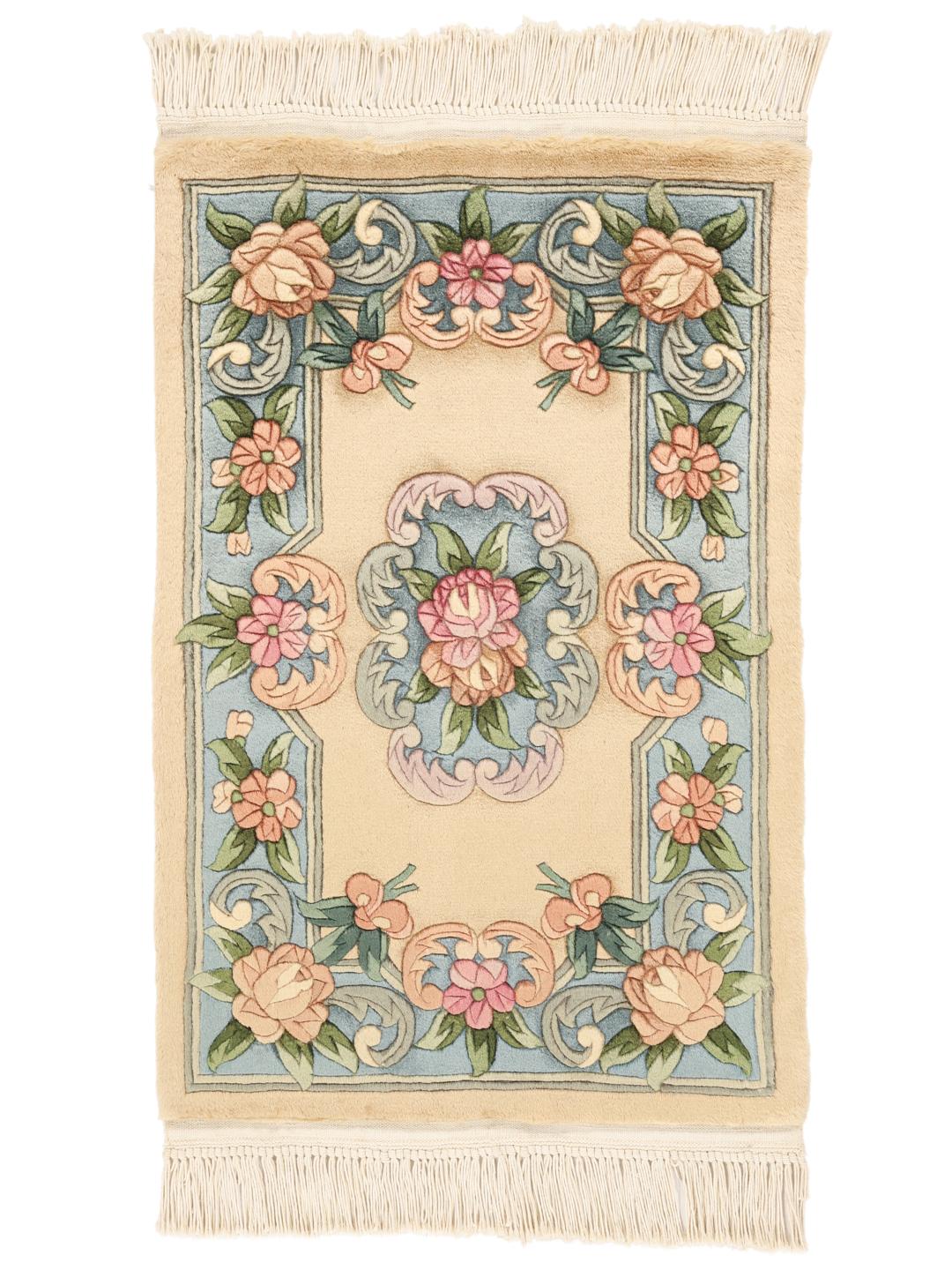
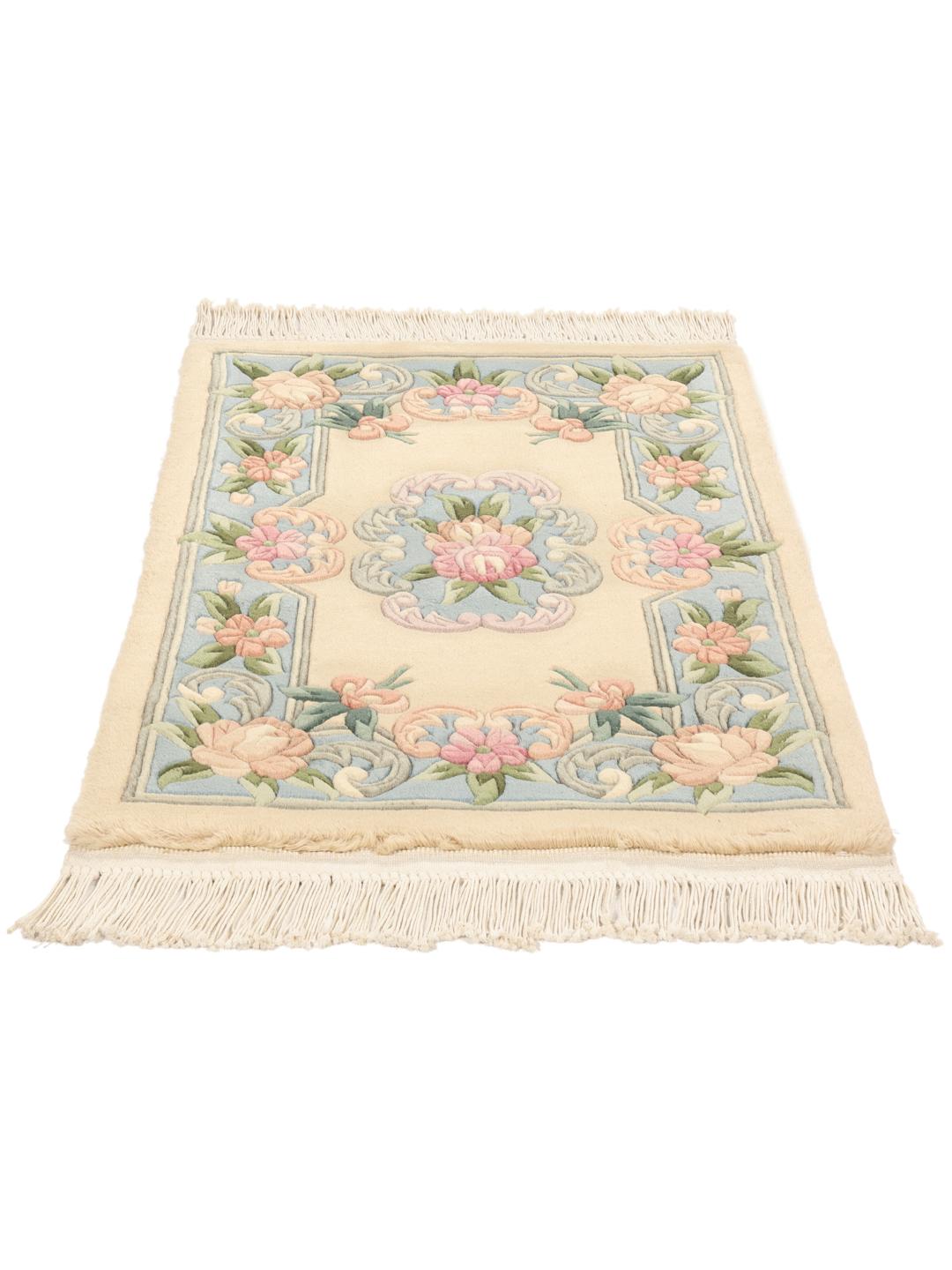
The tradition of rug weaving in China is a centuries-old craft that has evolved from creating functional coverings for the imperial court to becoming a globally recognised art form. Chinese rugs are historically distinguished by their unique aesthetic, often drawing inspiration from nature, silk embroidery, and classical landscape painting.
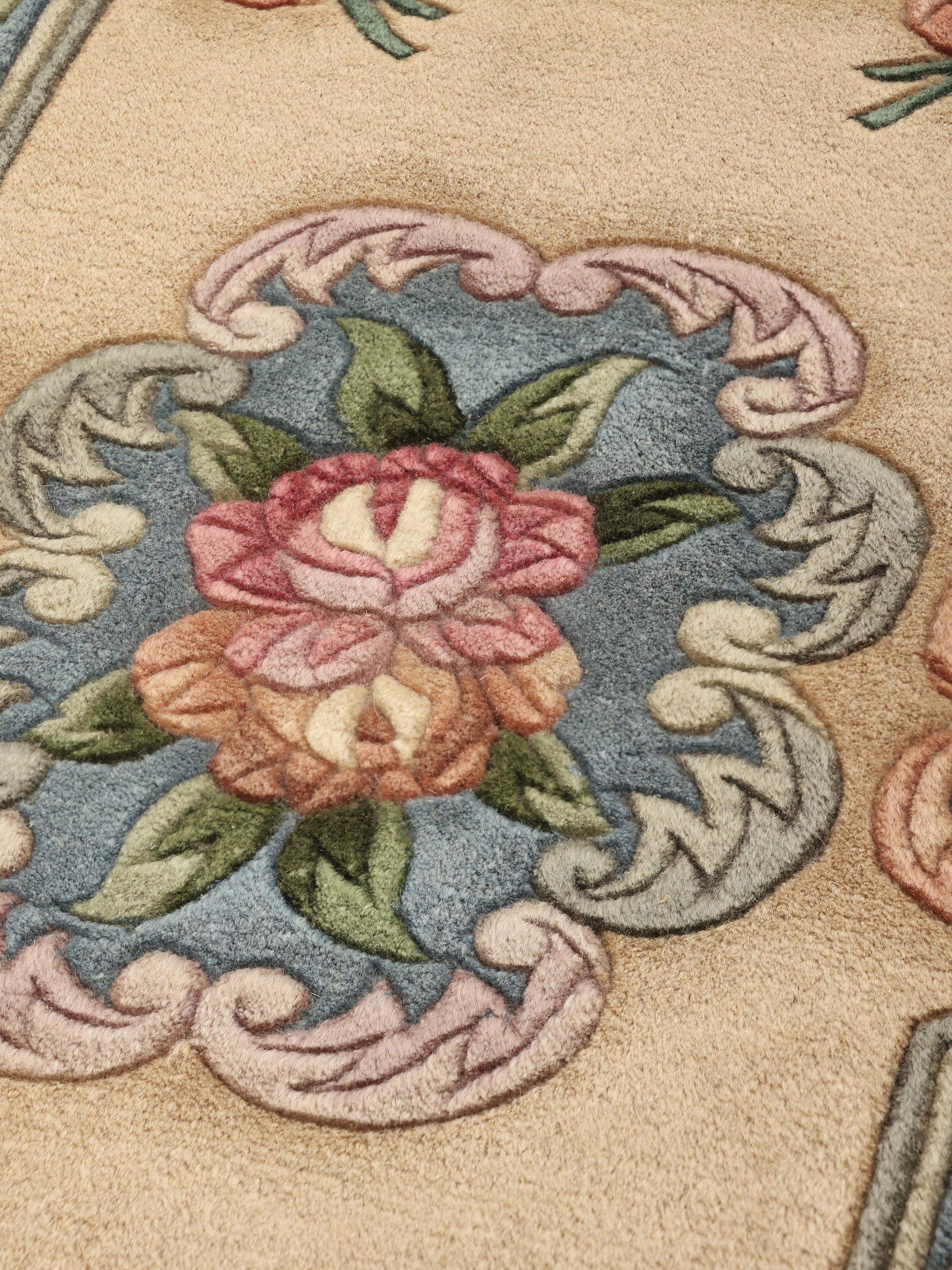
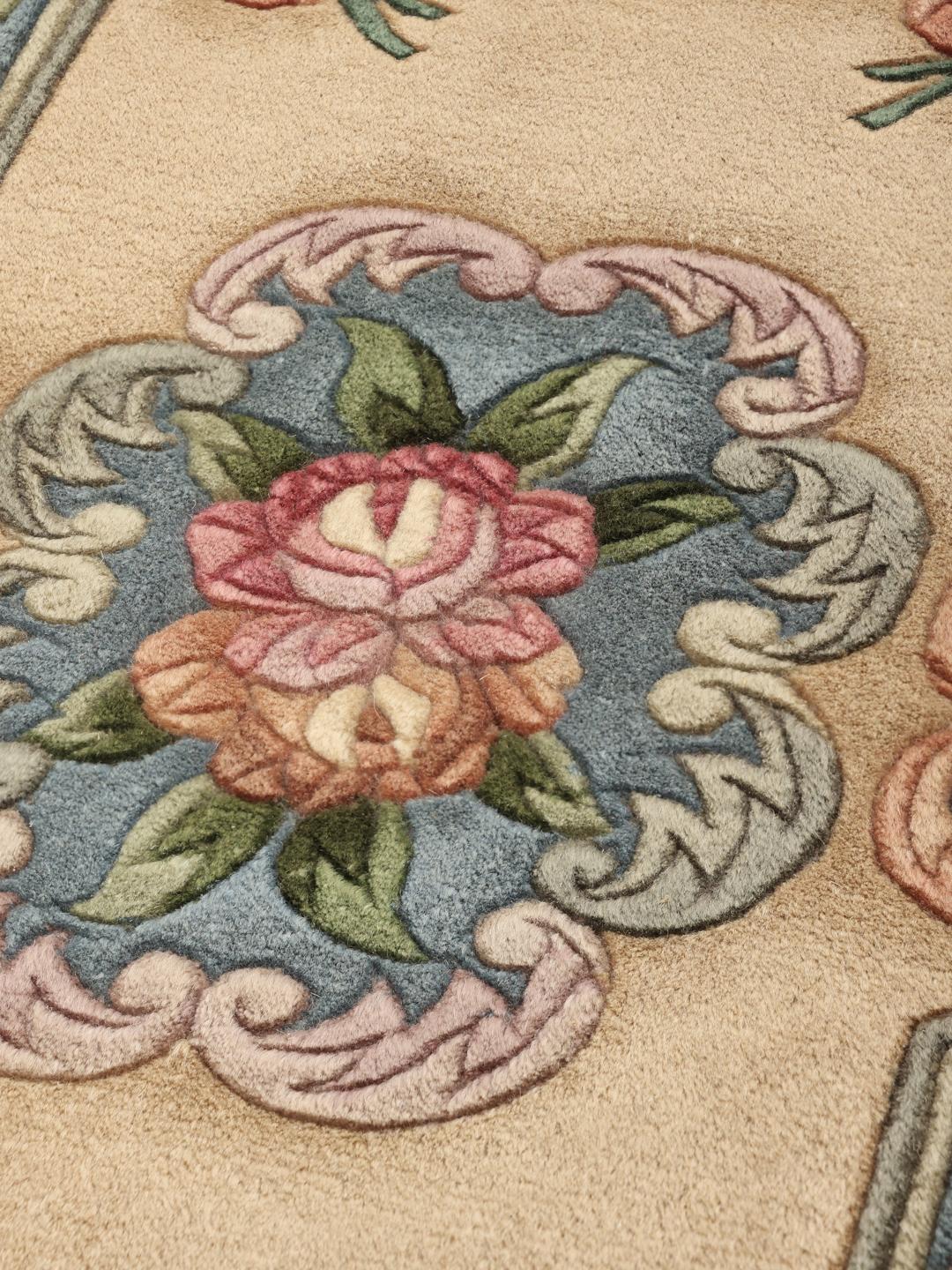
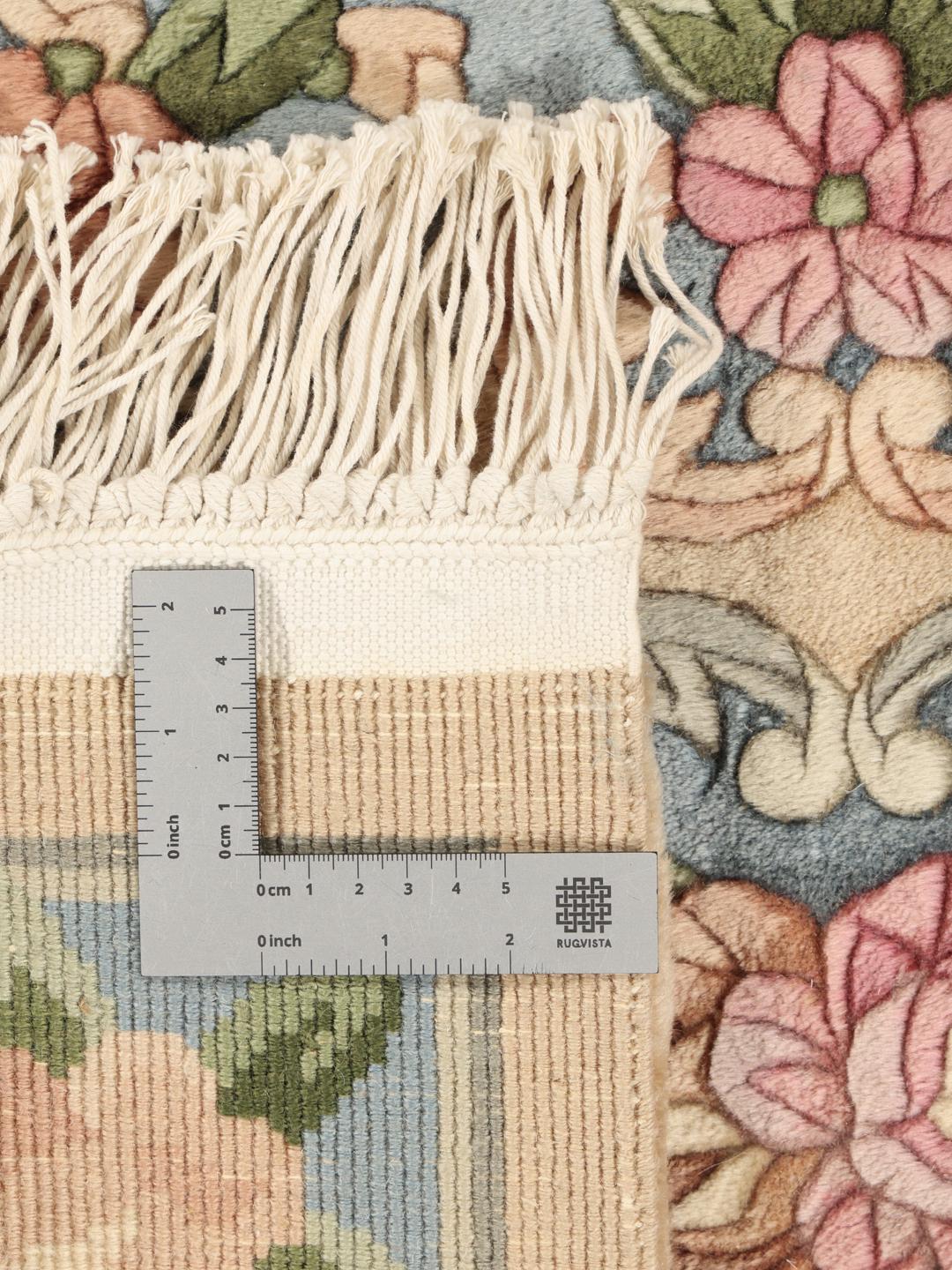
The 90 Line designation refers to a traditional method of measuring the density of the knots, which essentially dictates the sharpness and complexity of the design. A higher line count allows artisans to create more intricate, flowing floral patterns and smooth curves that are hallmarks of this specific regional style.
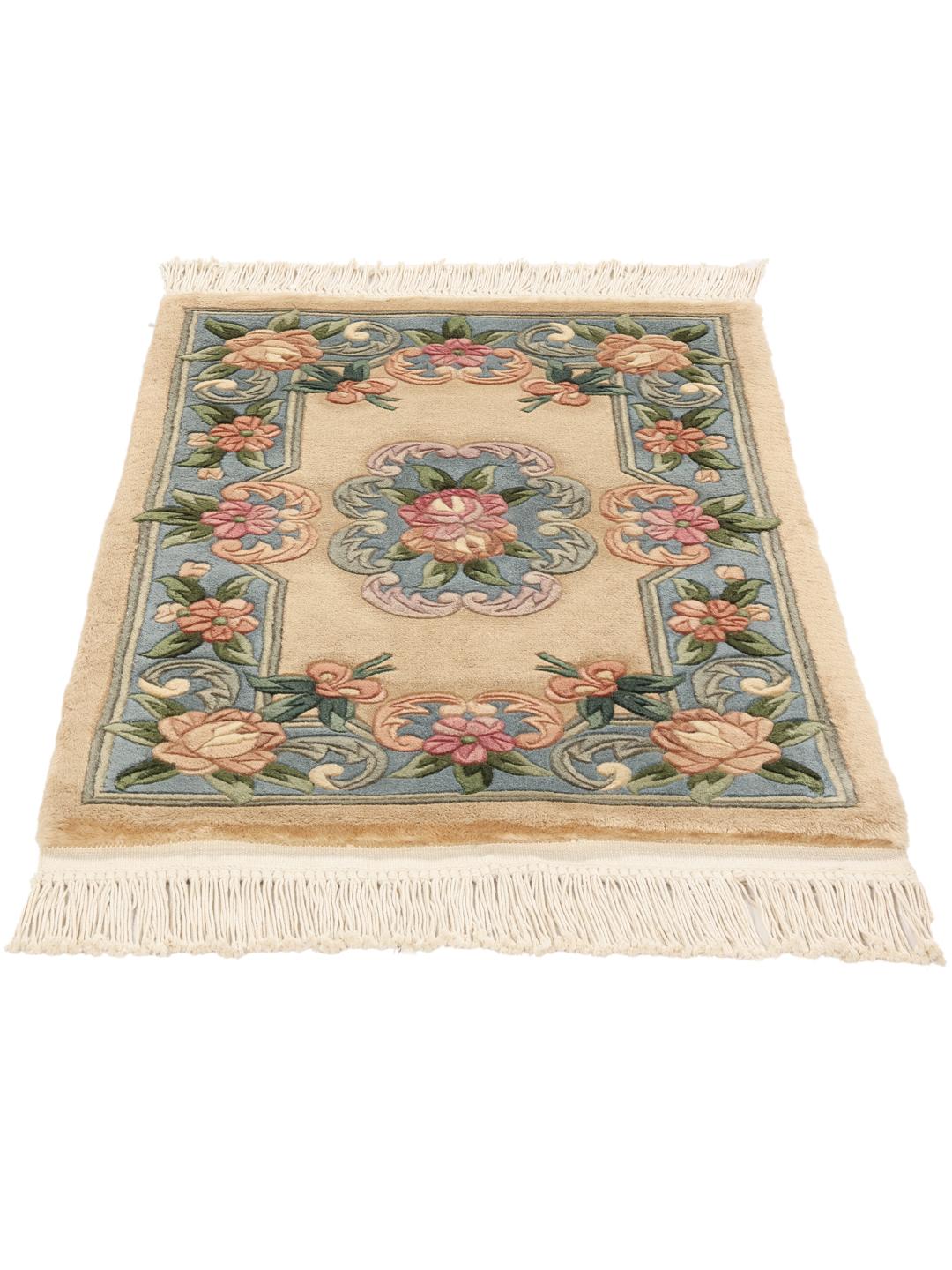
The motifs found in these rugs, such as the floral arrangements seen here, are deeply rooted in cultural symbolism. Flowers have long been used in Chinese artistry to represent beauty, seasons, and prosperity, with each element carefully balanced to create a sense of harmony and equilibrium within the composition.
Owning a hand-knotted rug from this tradition is a way to connect with a rich history of craftsmanship. These pieces are valued by collectors and homeowners alike for their ability to blend delicate, artistic beauty with the practical, enduring quality that only handmade, natural-material construction can provide.