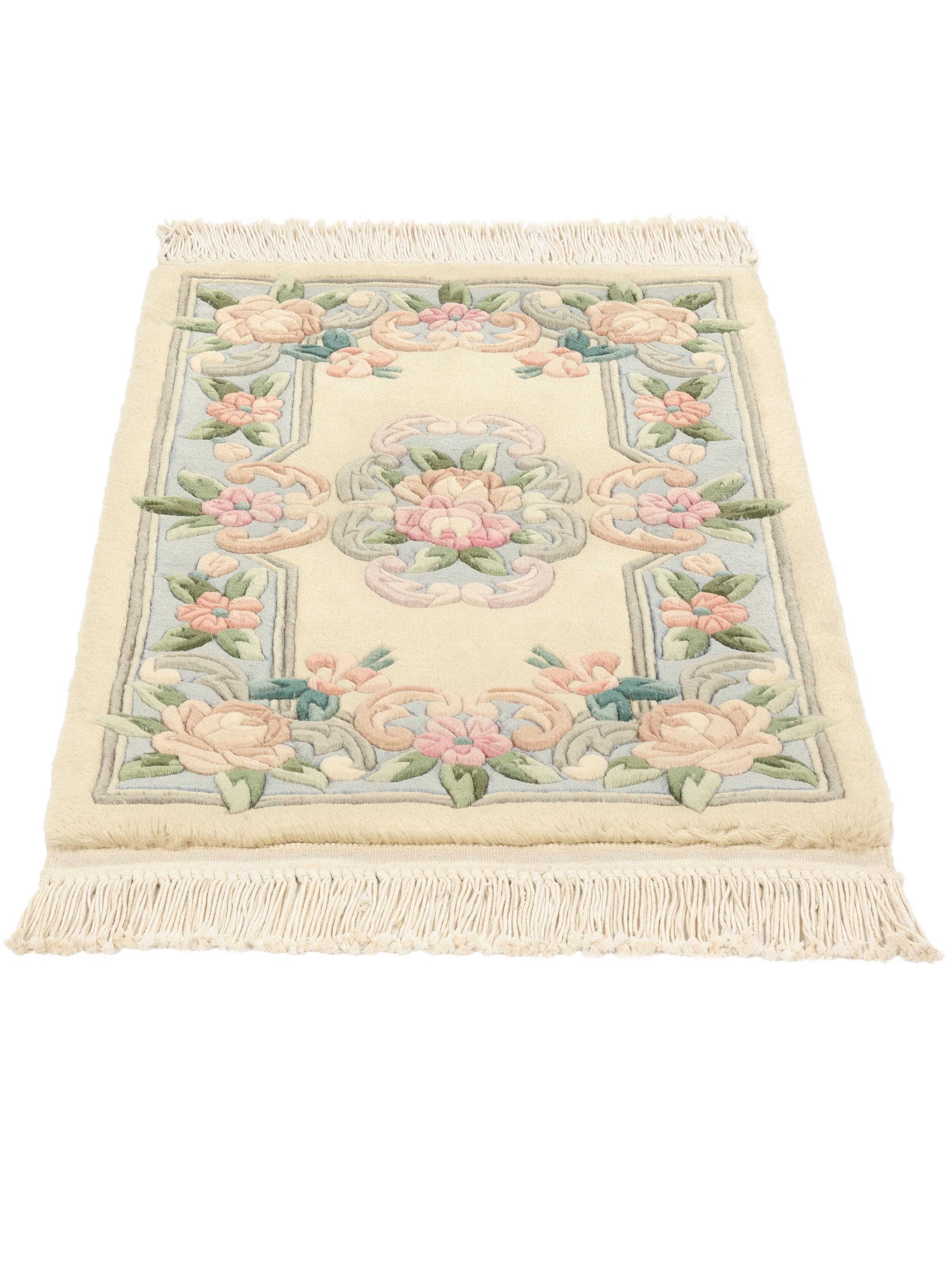
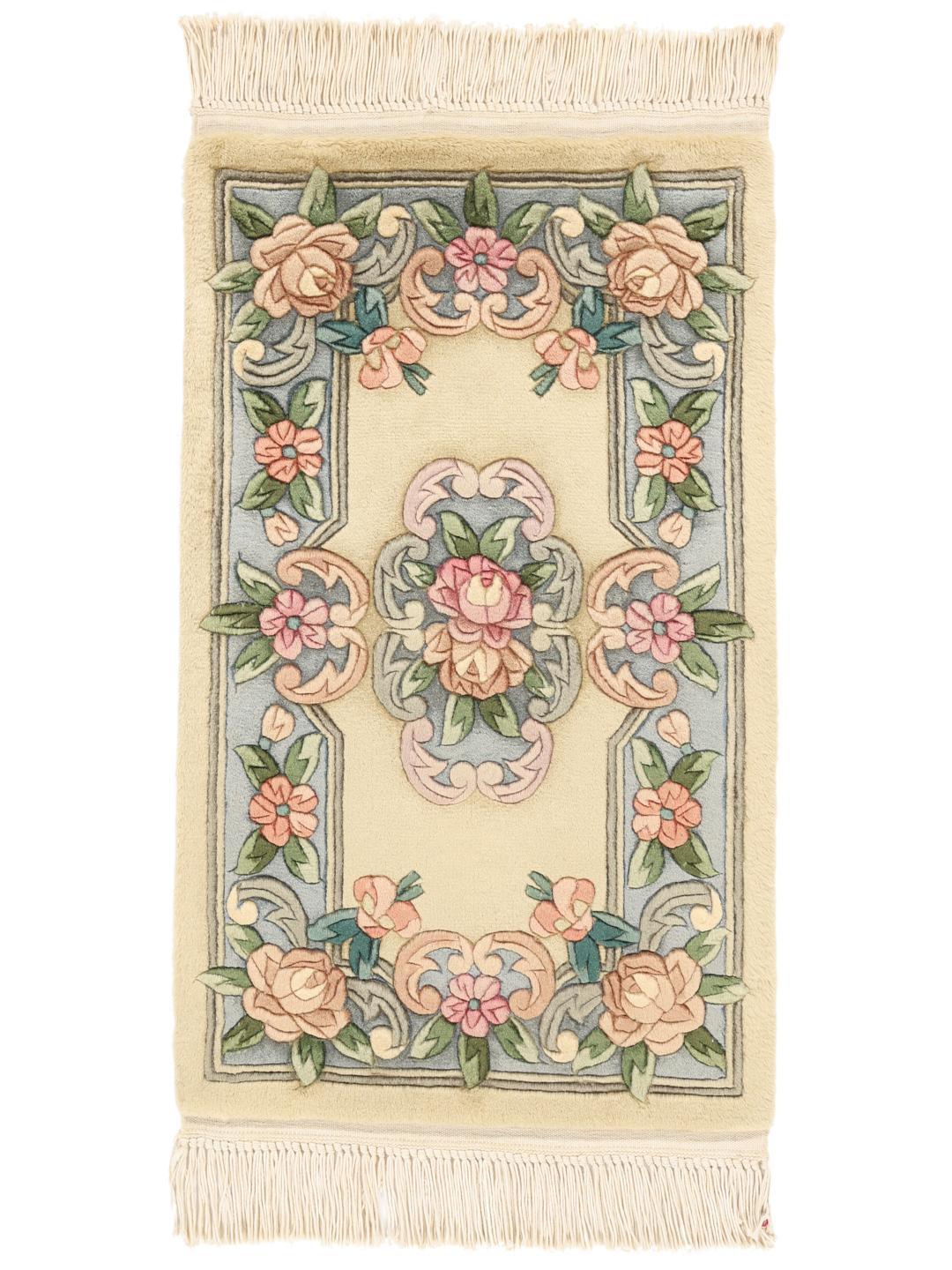
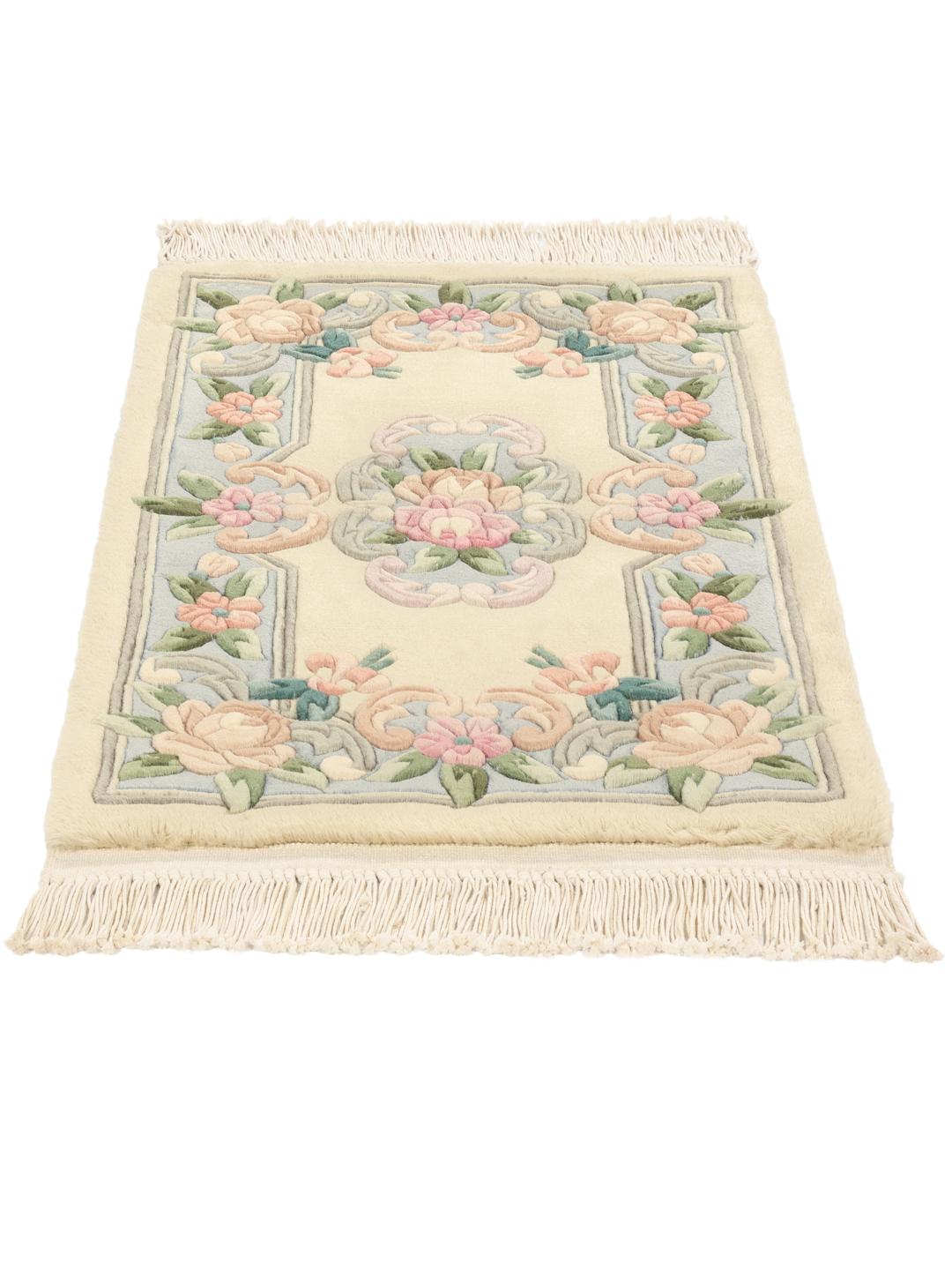
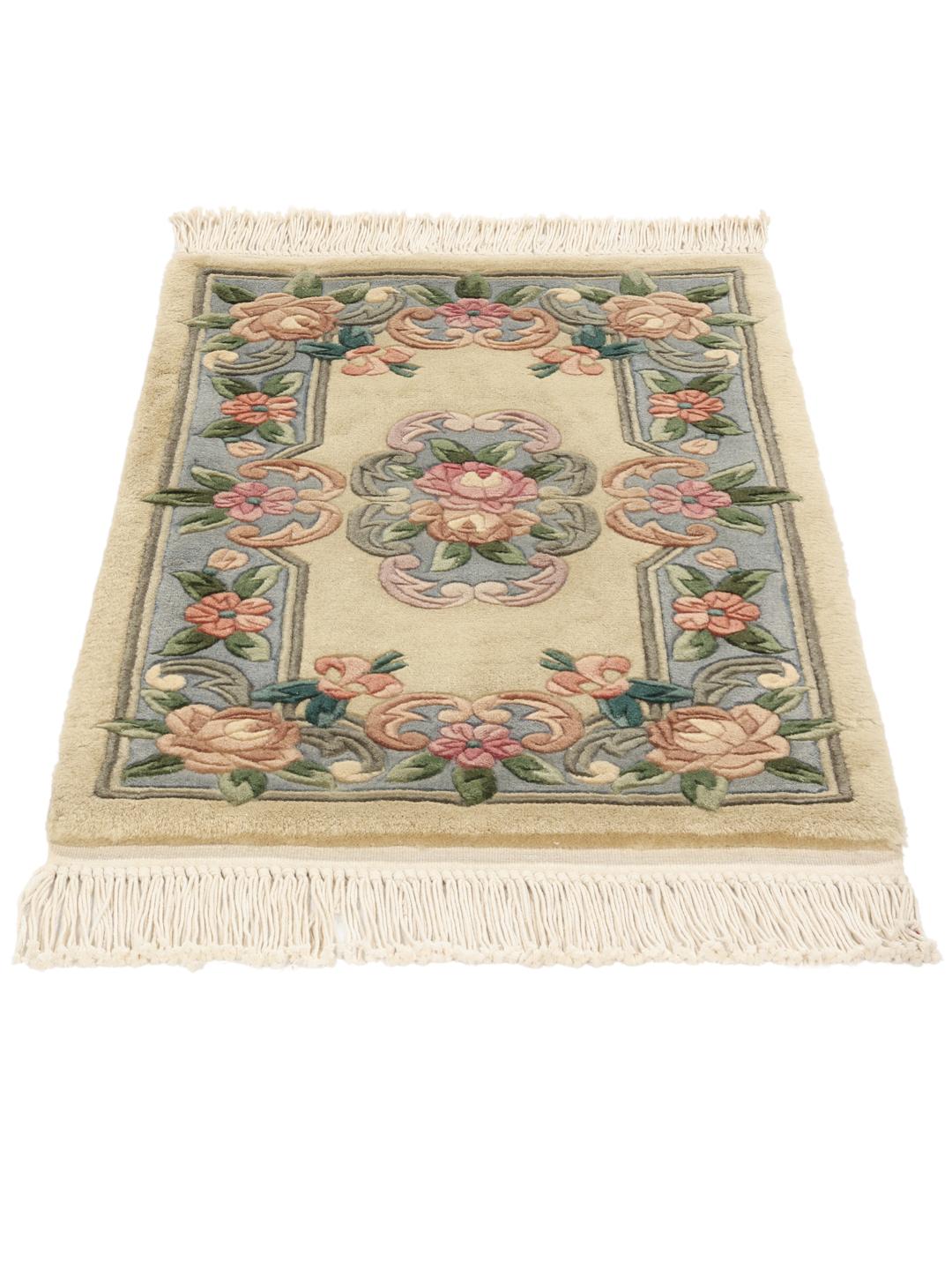
Chinese rug weaving has a long and storied tradition that stretches back centuries, evolving from functional floor coverings to highly regarded works of art. The region is famous for its distinct aesthetic, which often integrates symbolic motifs and nature-inspired themes into a balanced, harmonious composition.
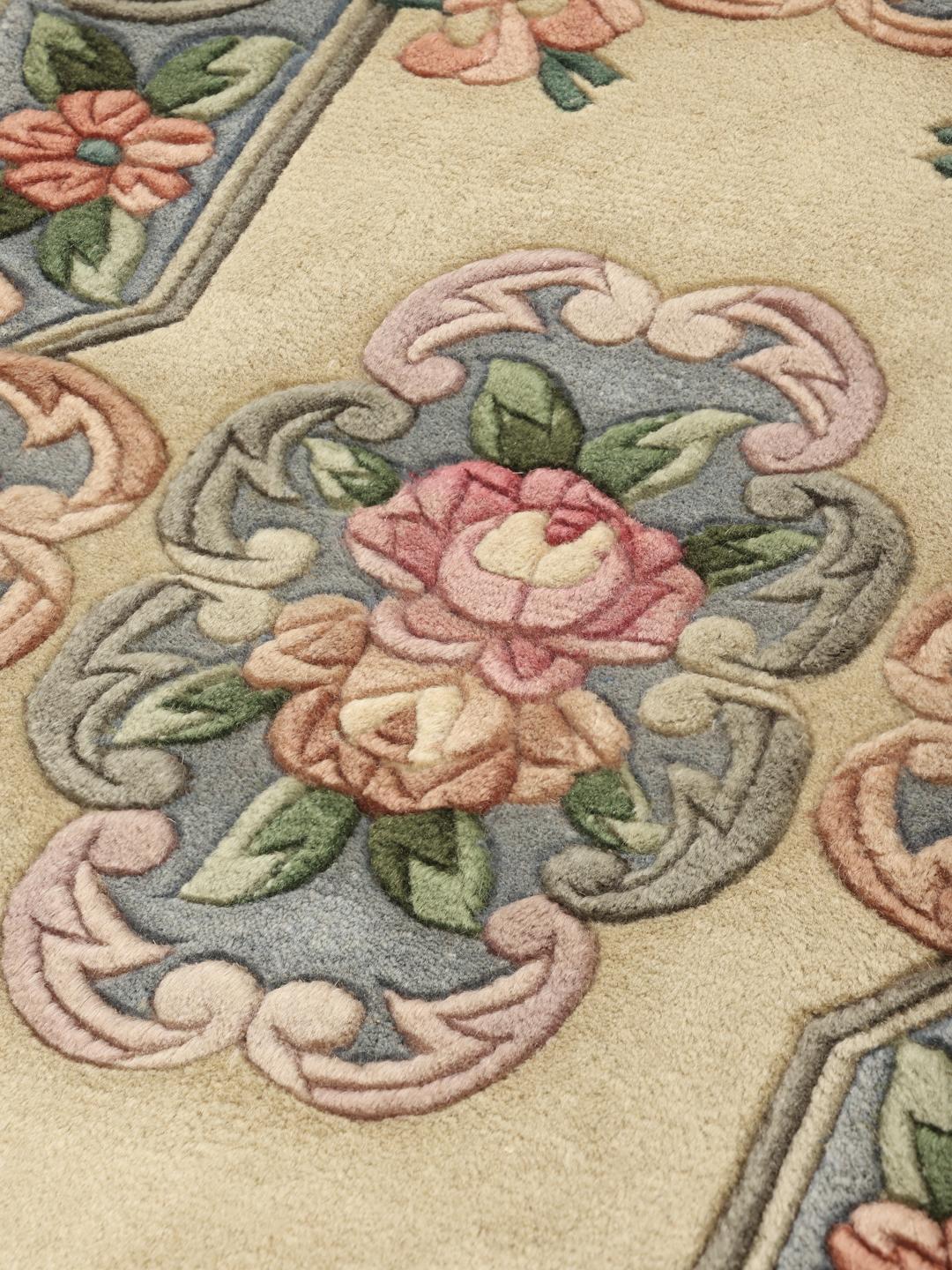
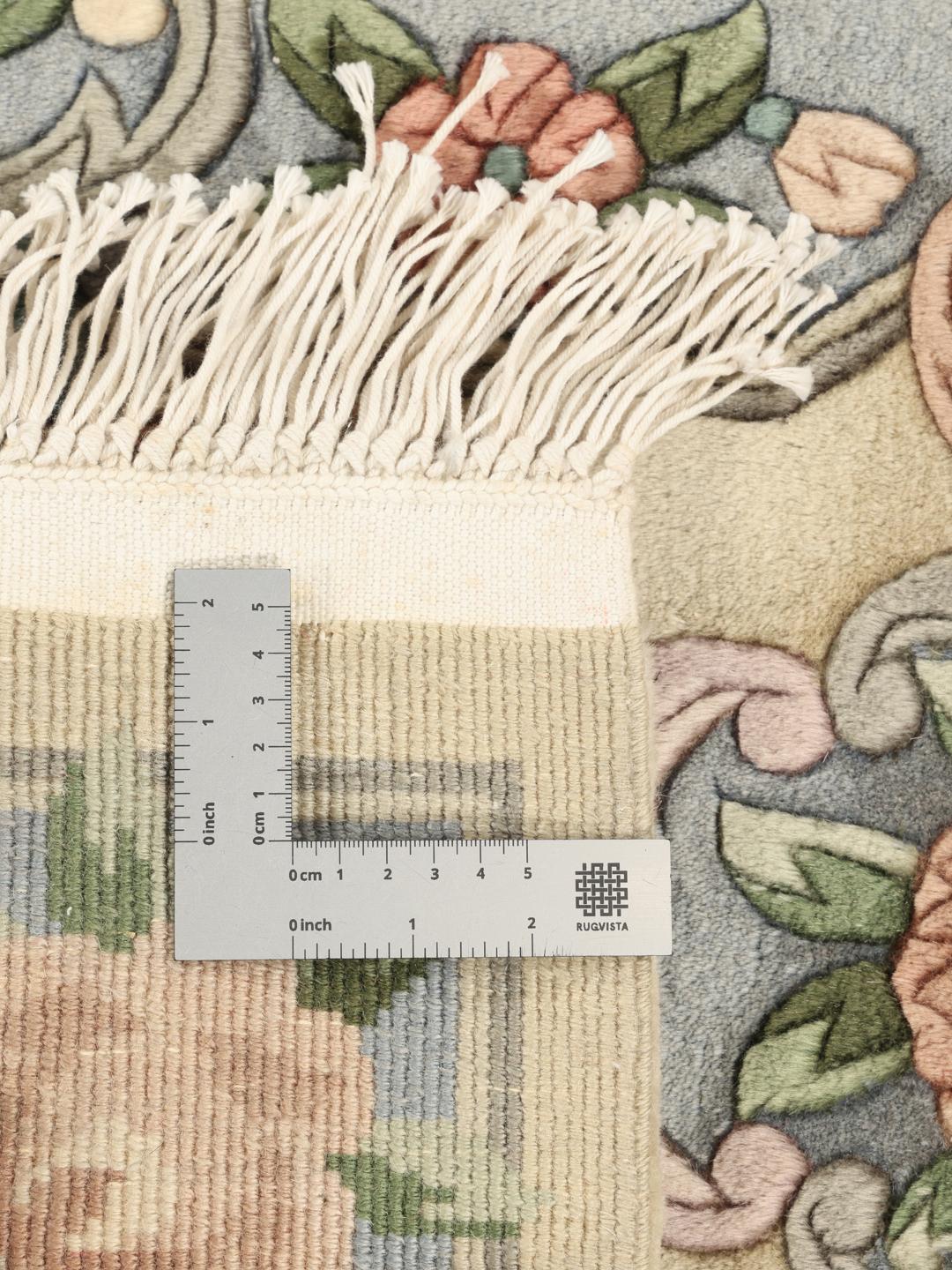
The term 90 line refers to a traditional method of measuring the density of the rug, specifically how many knots are present across a certain width. This system has been used for generations to ensure consistent quality, resulting in a pile that is not only dense and luxurious but also capable of holding intricate, sculpted details that define the Chinese style.
Signature elements of this tradition often include ornate floral arrangements, such as the roses seen here, which are frequently rendered in soft, muted tones. These designs are meant to evoke feelings of peace and balance, reflecting the cultural appreciation for nature and the pursuit of an orderly, beautiful living environment.
Today, these rugs are highly sought after by collectors and homeowners alike for their blend of historical technique and timeless design. Owning such a piece is an investment in a craft that has been passed down through families, representing a legacy of skill that remains deeply relevant in modern home decor.