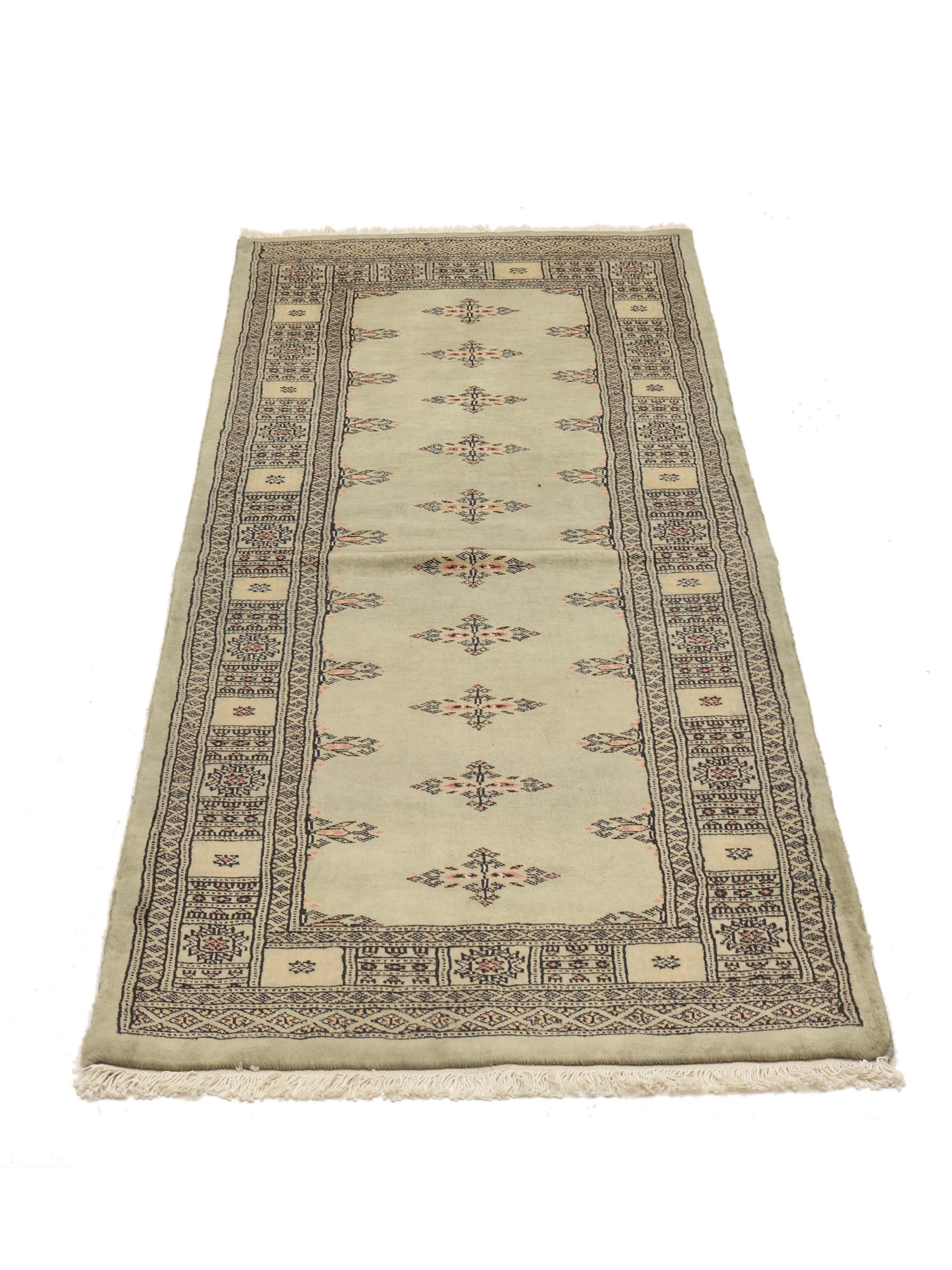
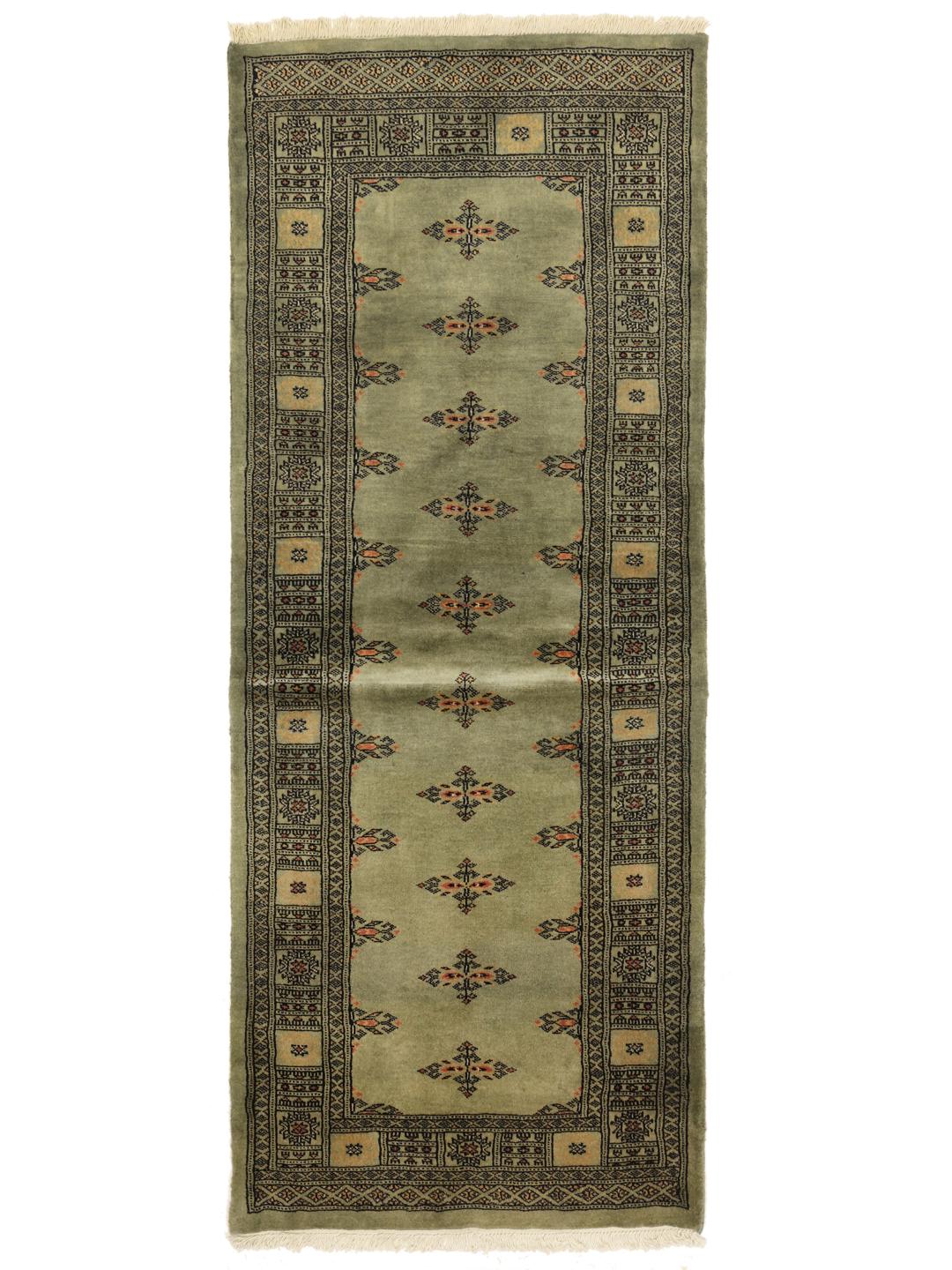
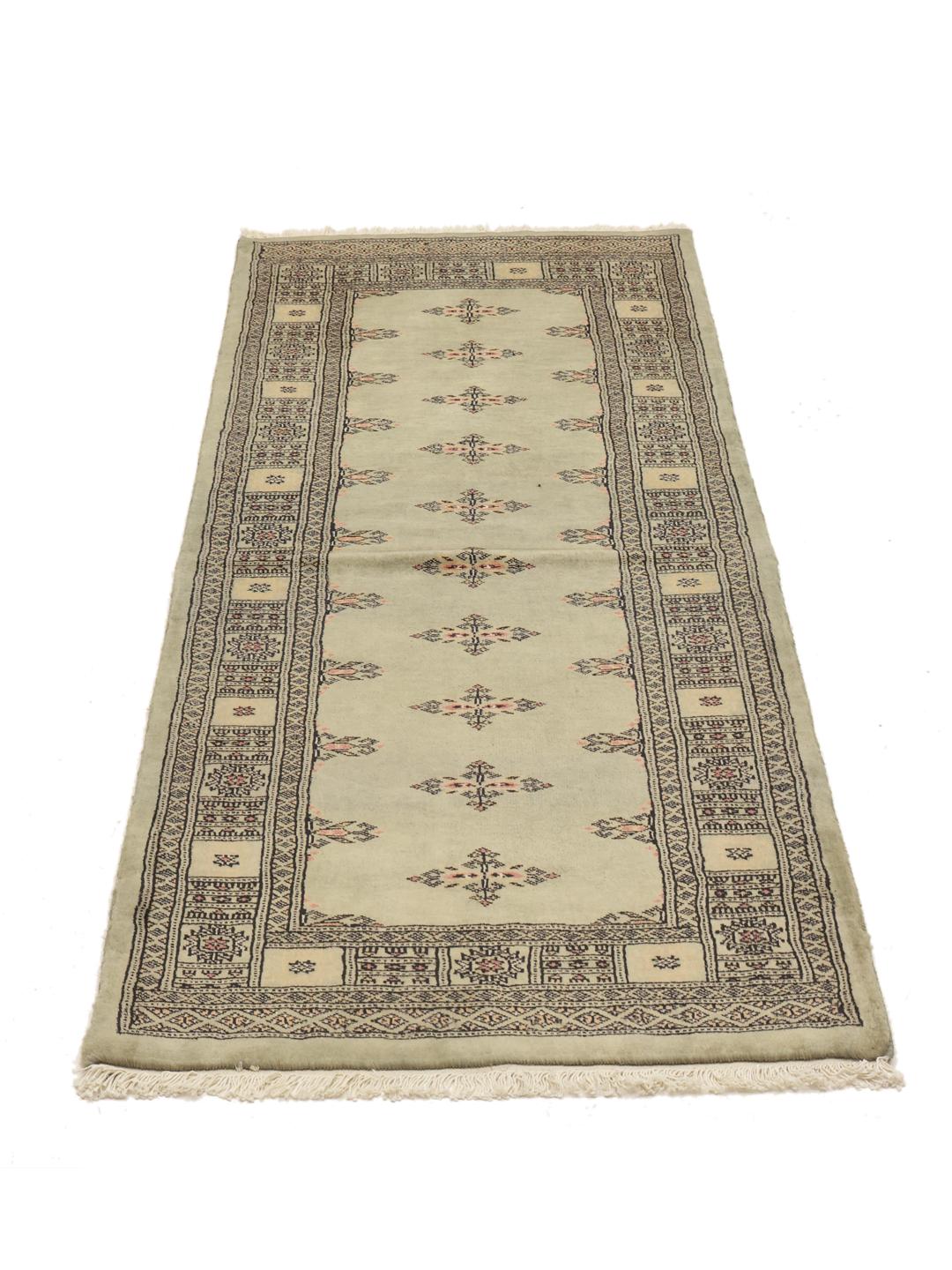
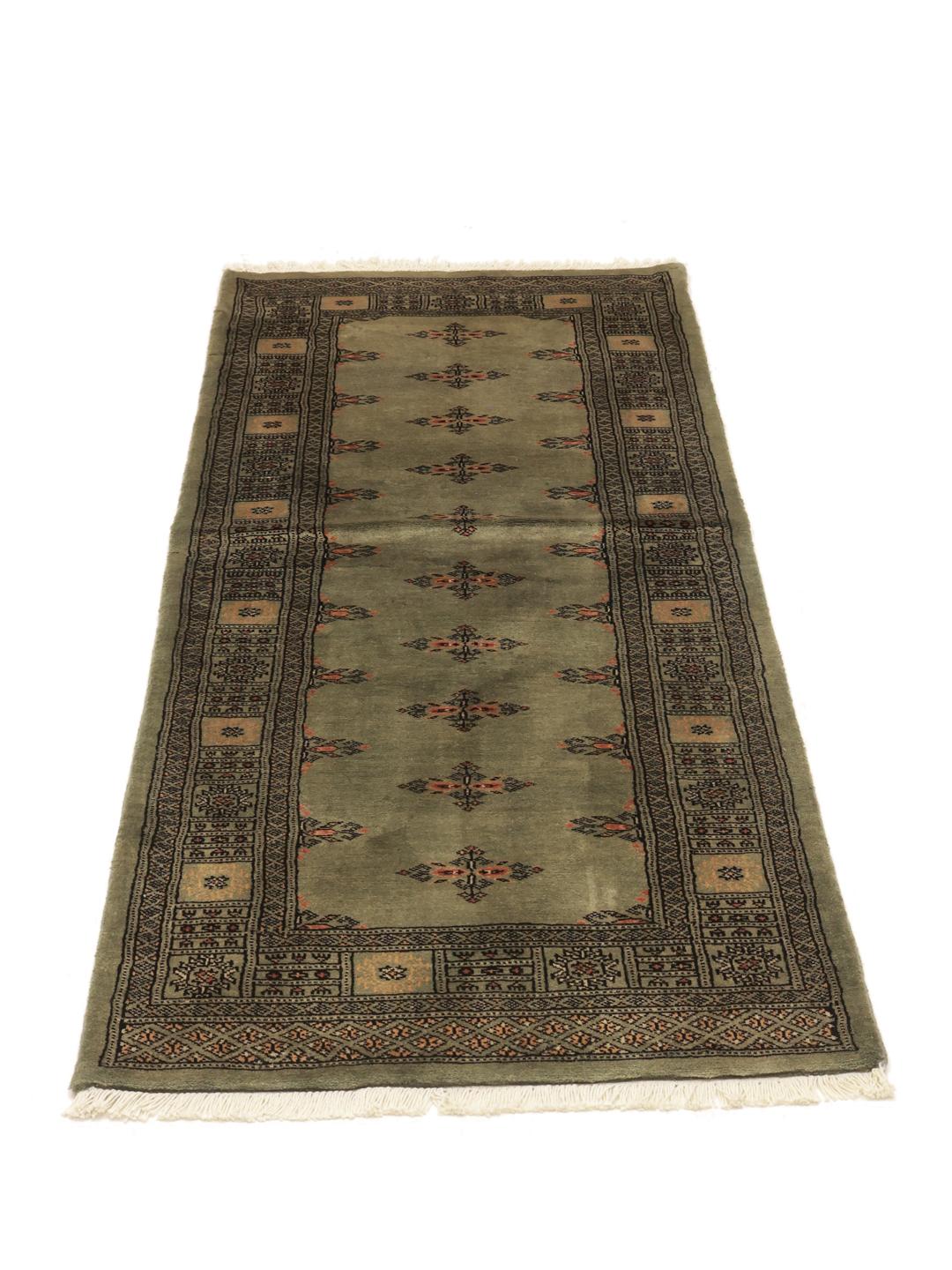
Bokhara rugs take their storied name from the ancient Silk Road trading hub of Bukhara in Central Asia, where nomadic tribes traditionally crafted textiles for daily use and trade. Over generations, the distinct design traditions migrated southward, and today some of the finest examples are carefully woven in Pakistan by skilled artisans keeping these heritage techniques alive.
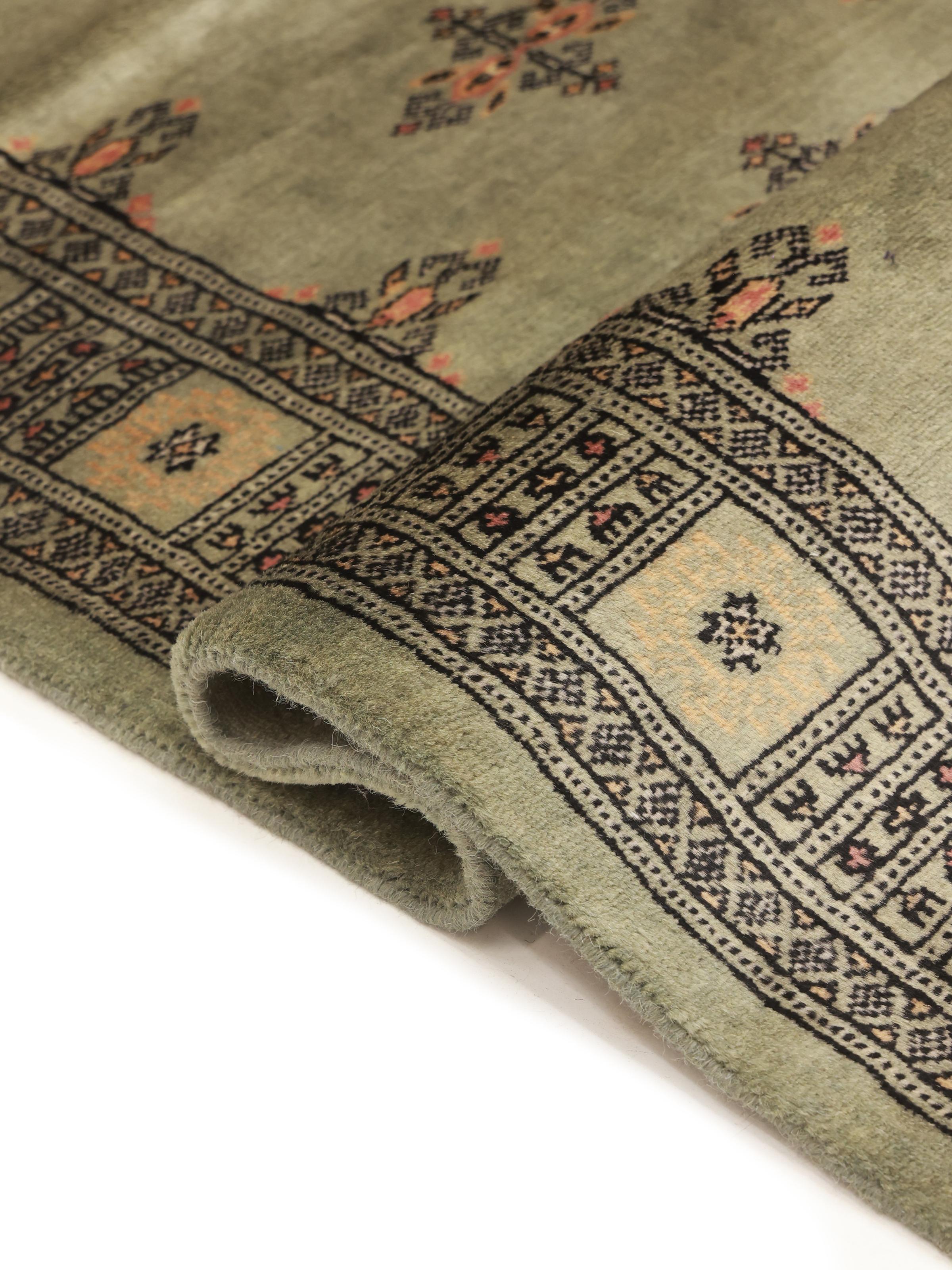
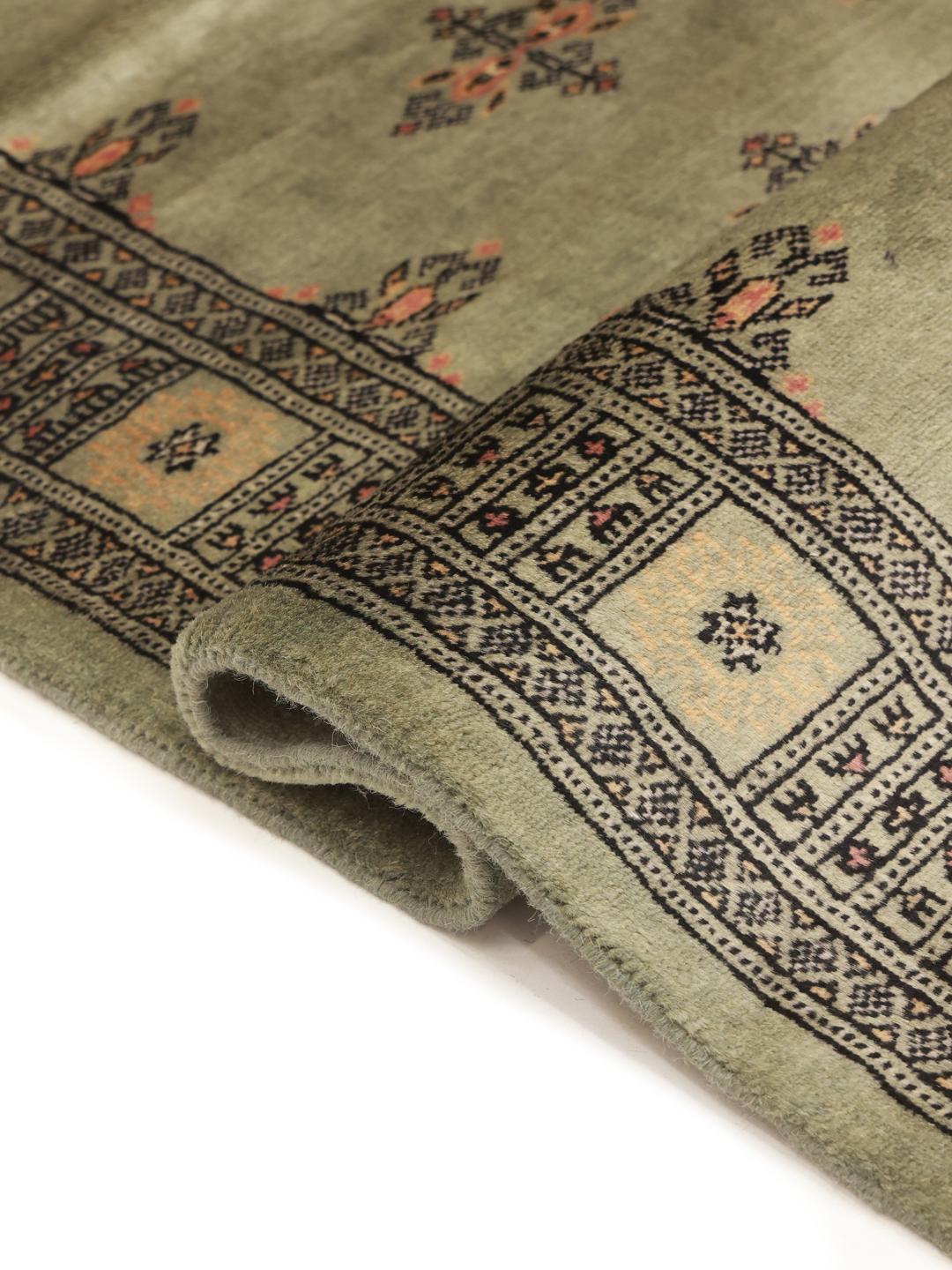
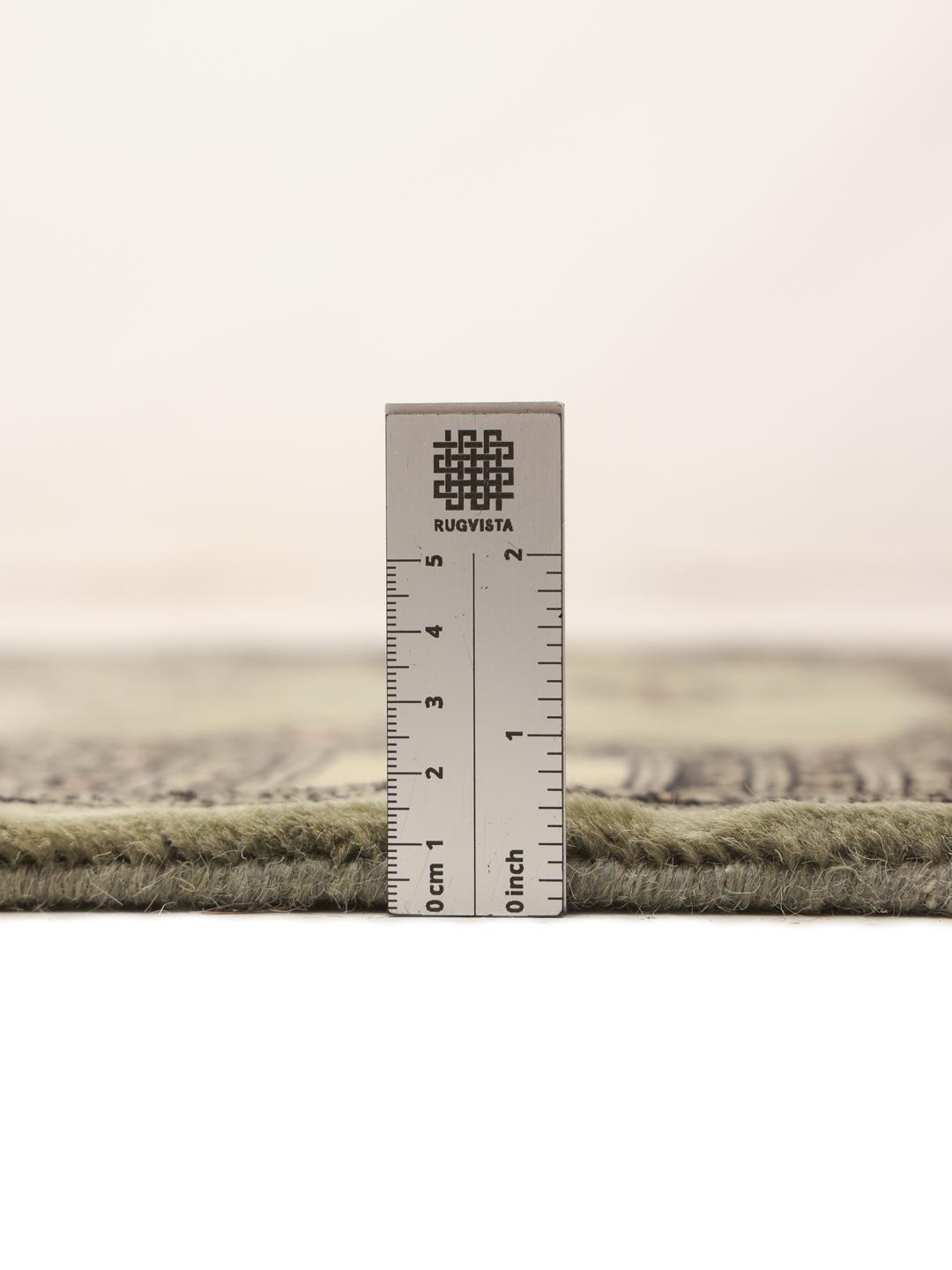
The designation 3ply refers to the construction of the pile, where three individual strands of wool are twisted together before being knotted. This multi-strand approach produces a thicker, heavier, and more lustrous pile compared to simpler single-strand alternatives, resulting in improved durability and a richer surface texture for everyday living.
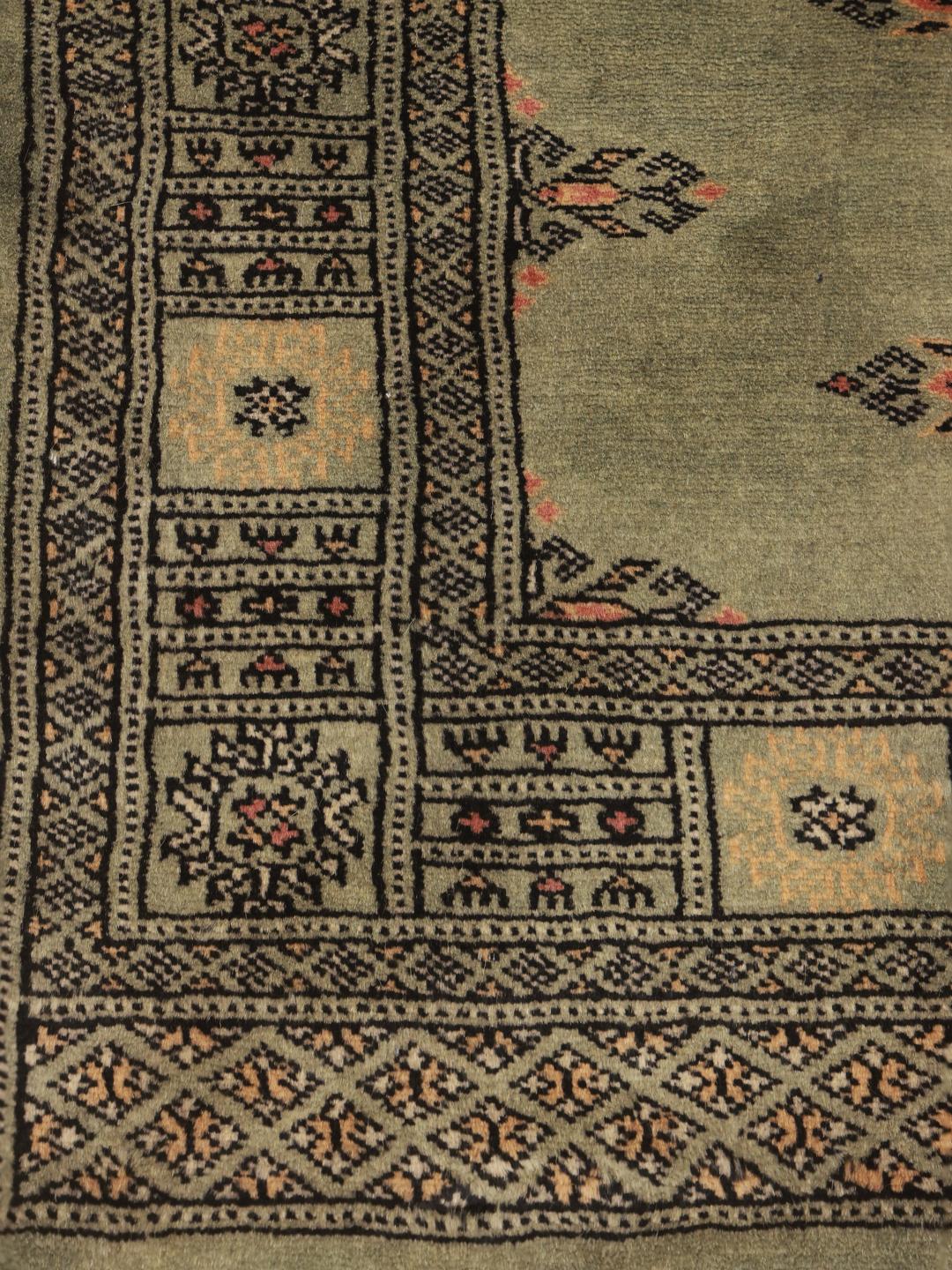
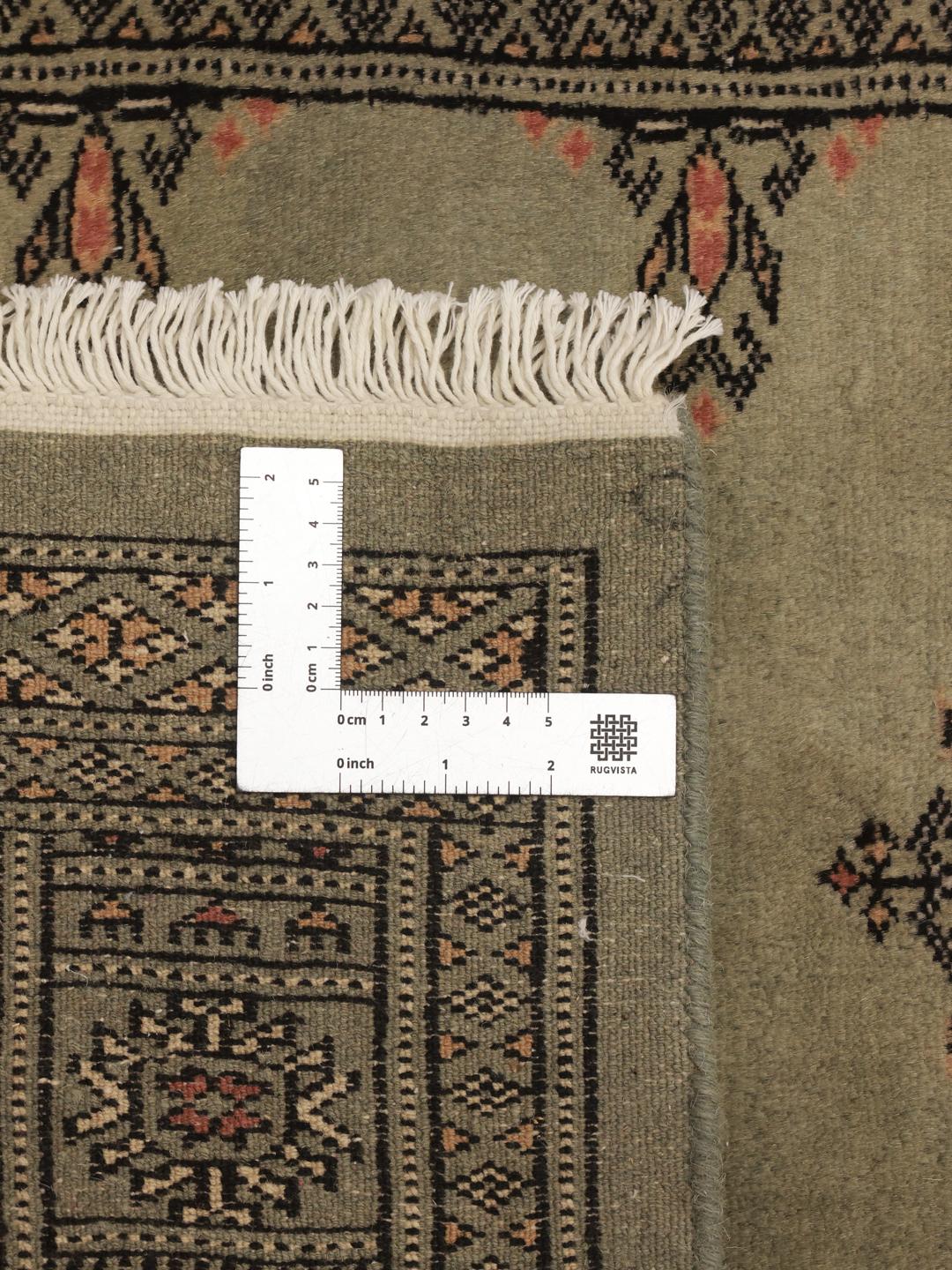
Visually, traditional Bokhara rugs are celebrated for their repeating gul motifs, which are stylised octagonal medallions arranged in orderly rows across the field. While traditional palettes often lean towards deep reds, this distinctive piece reinterprets the classic geometry within a calm light-green field, framed by precise geometric borders that highlight the artisan's eye for detail.
Owning a hand-knotted rug from this esteemed tradition represents a connection to centuries of craft heritage and human artistry. These pieces are valued by collectors not merely as floor coverings, but as durable works of art that bring a genuine sense of history, culture, and enduring quality into a modern home.