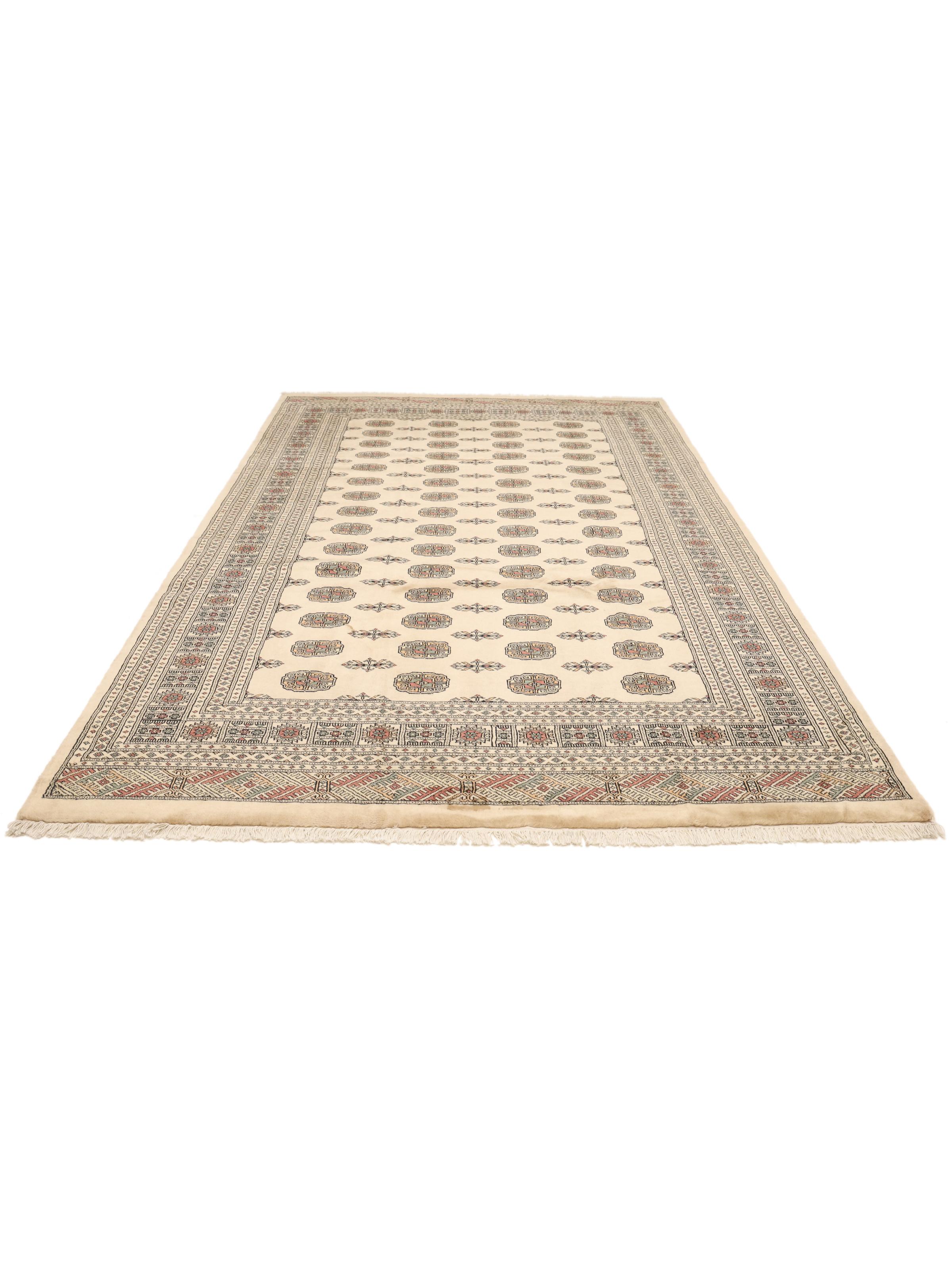
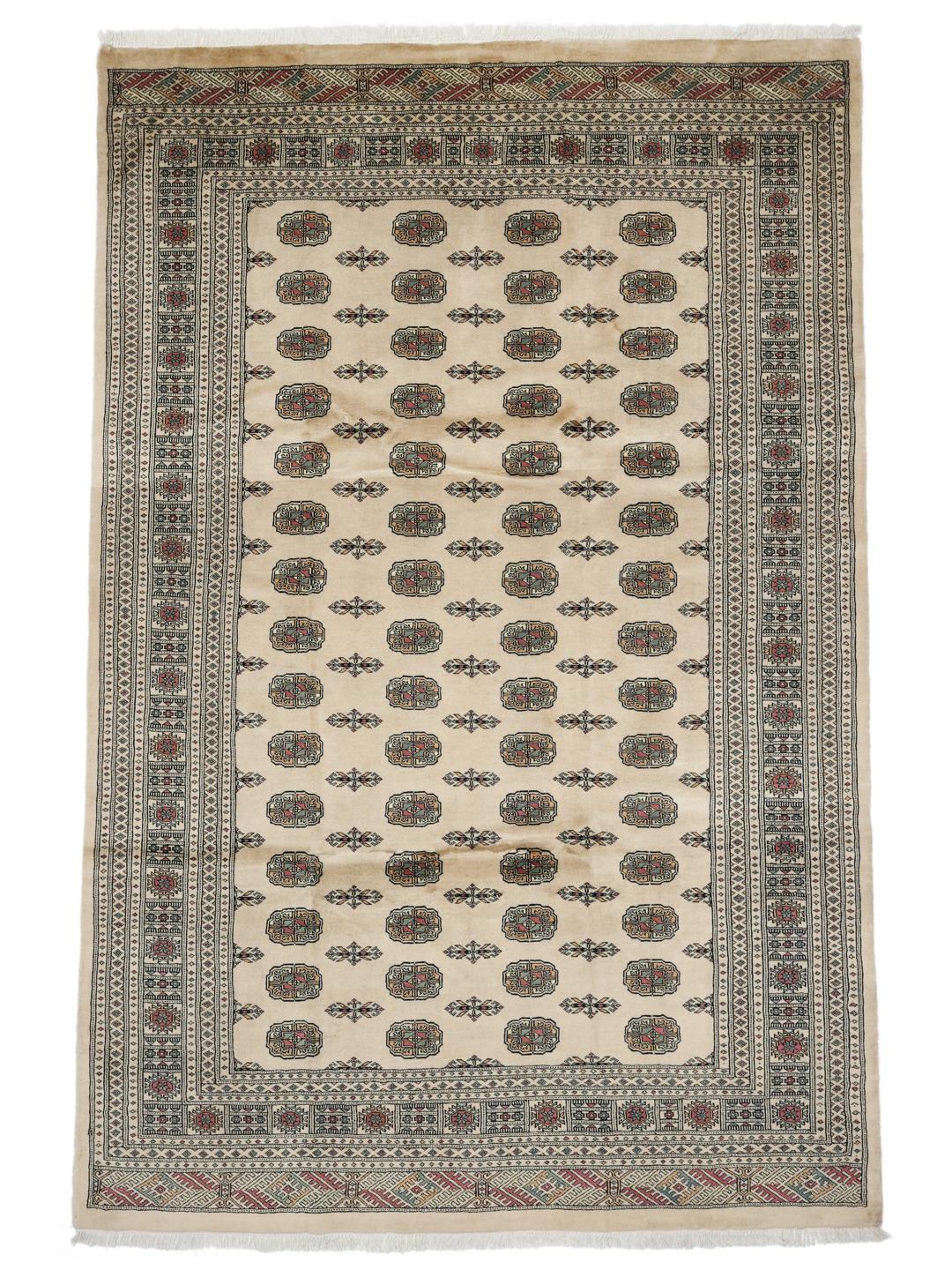
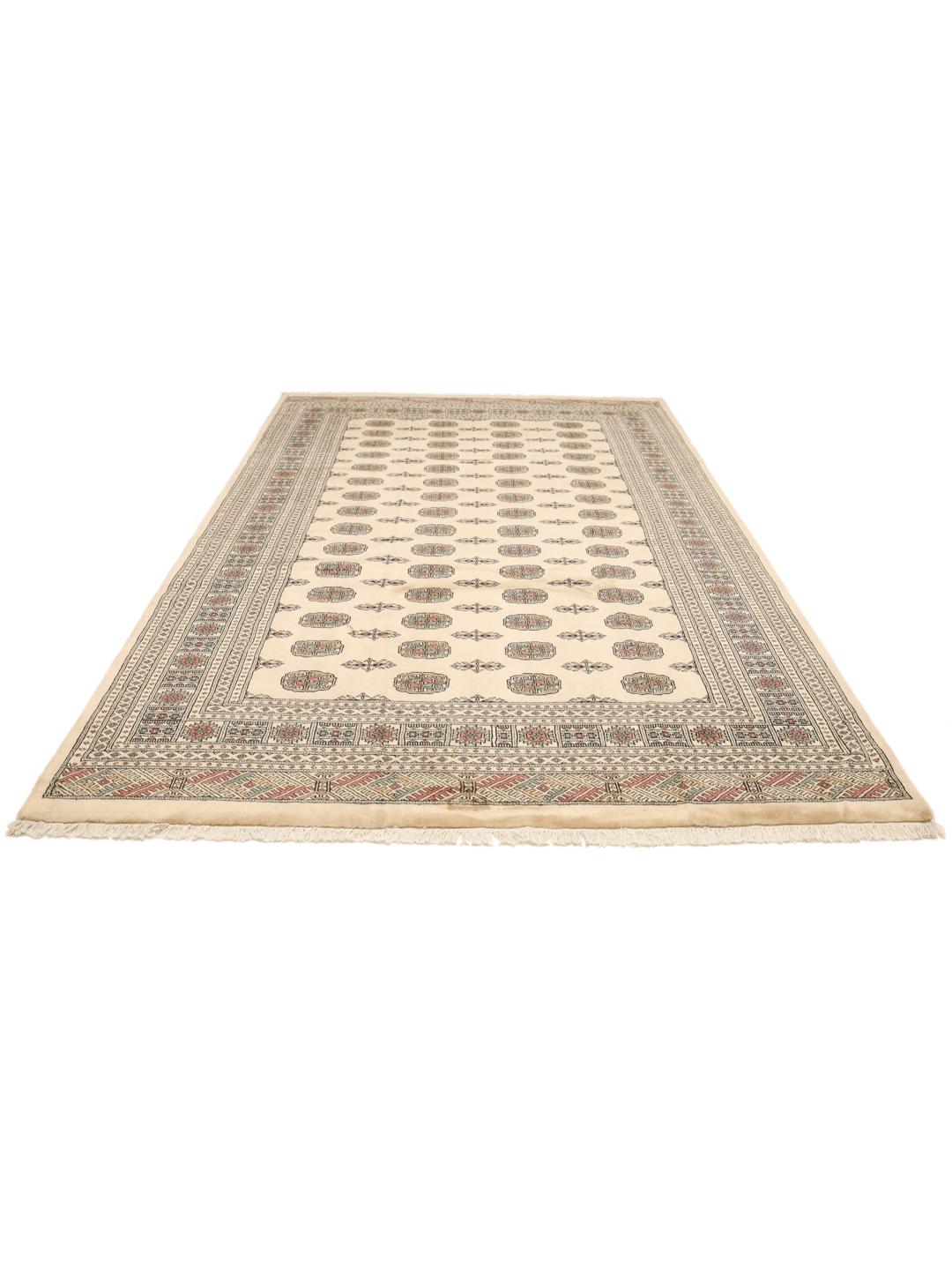
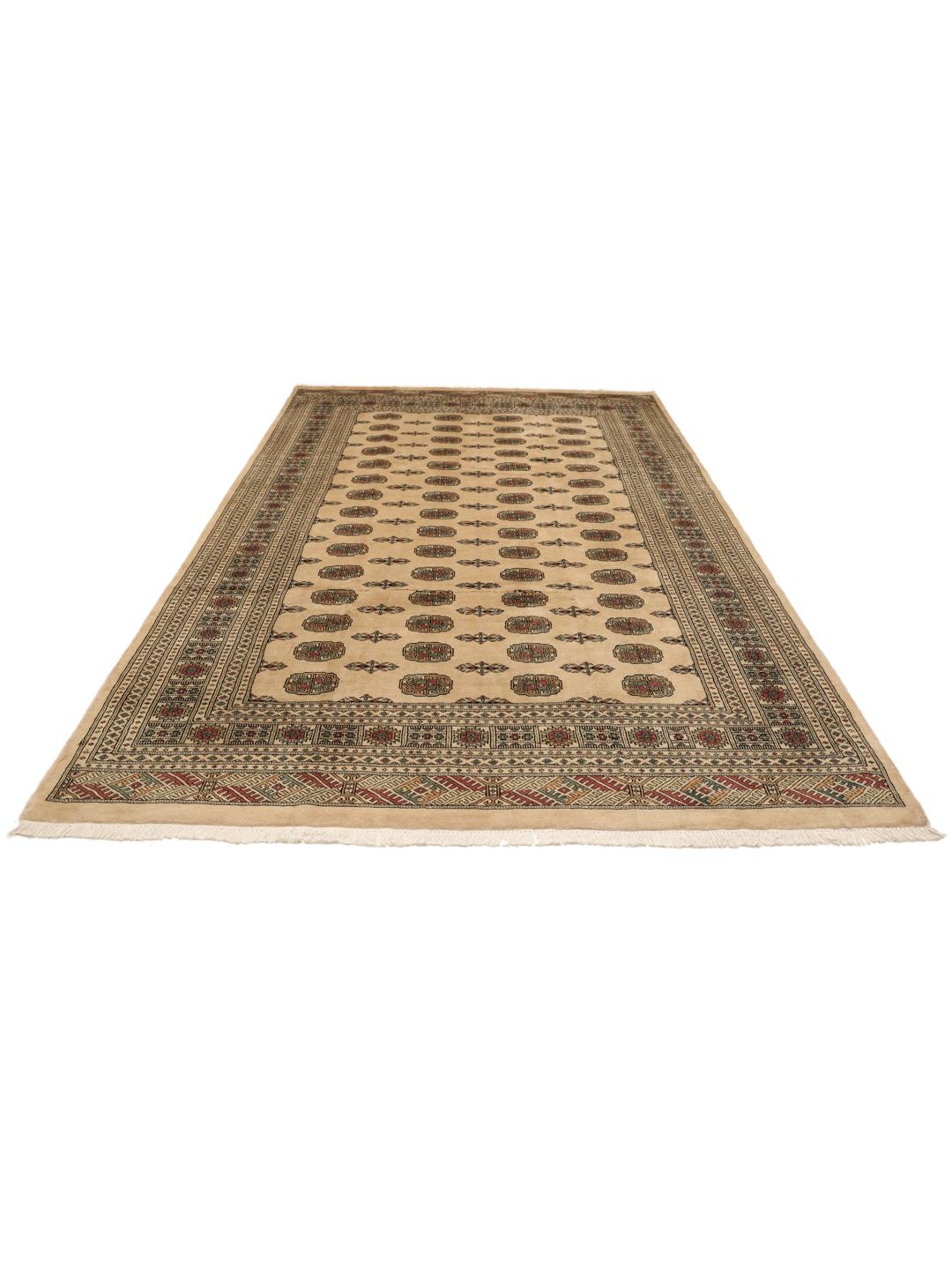
Bokhara rugs take their name from the ancient Silk Road city of Bukhara in Central Asia, a historic hub where nomadic weavers and traders exchanged stories, dyes, and techniques. Over generations, the distinct design traditions migrated southward, finding a vibrant and enduring home in Pakistan where master weavers refined the craft to remarkable levels.
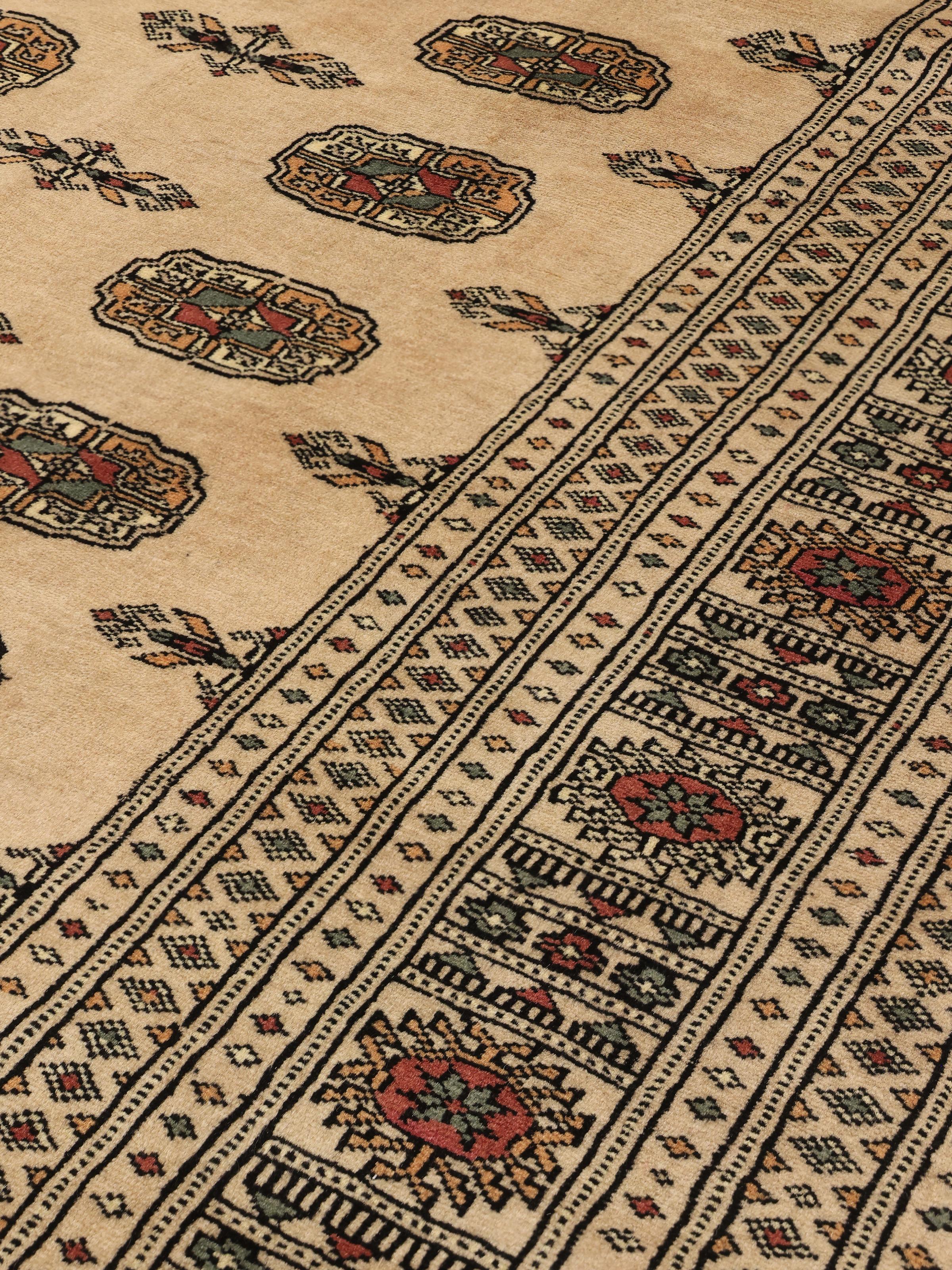
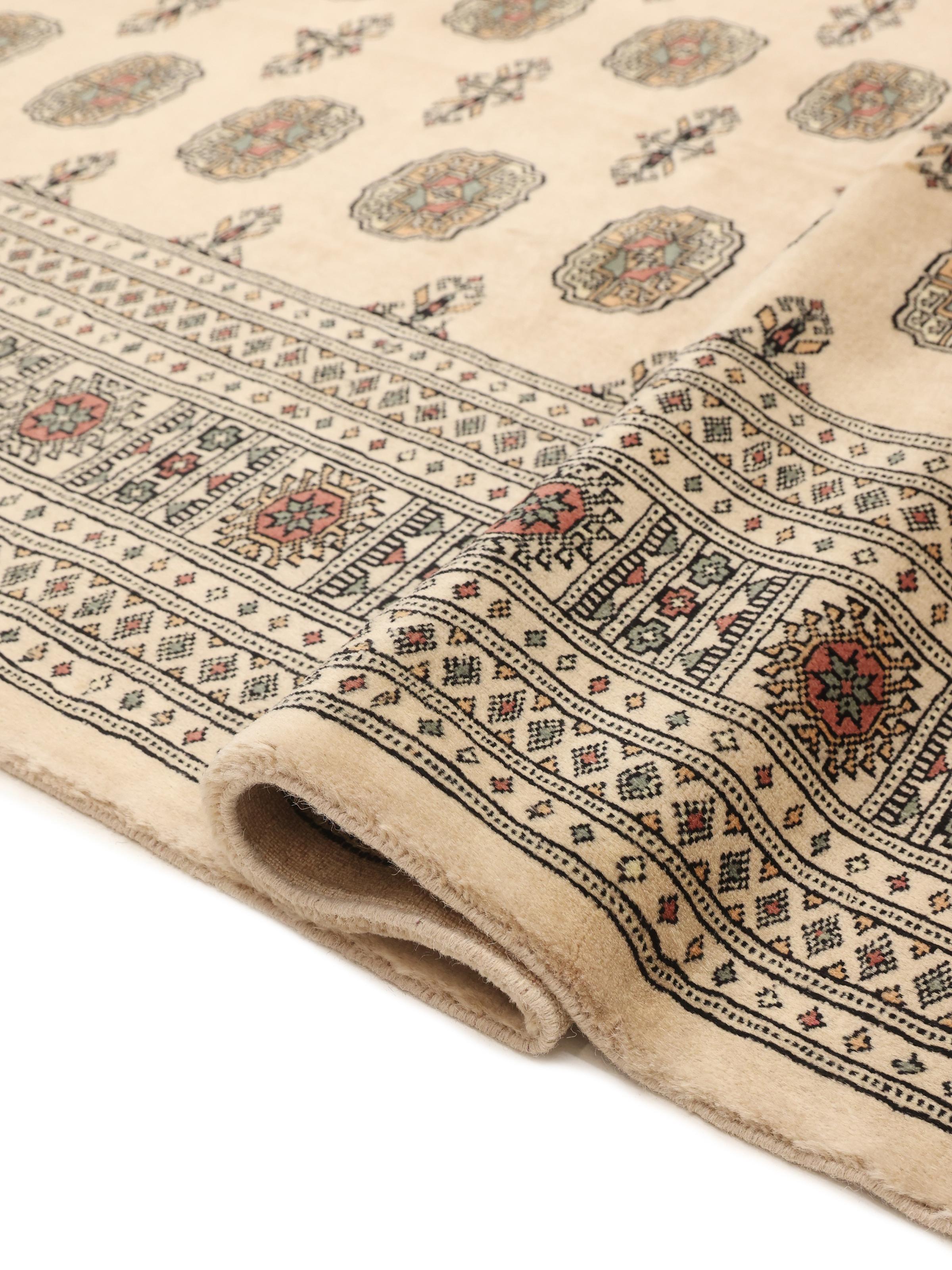
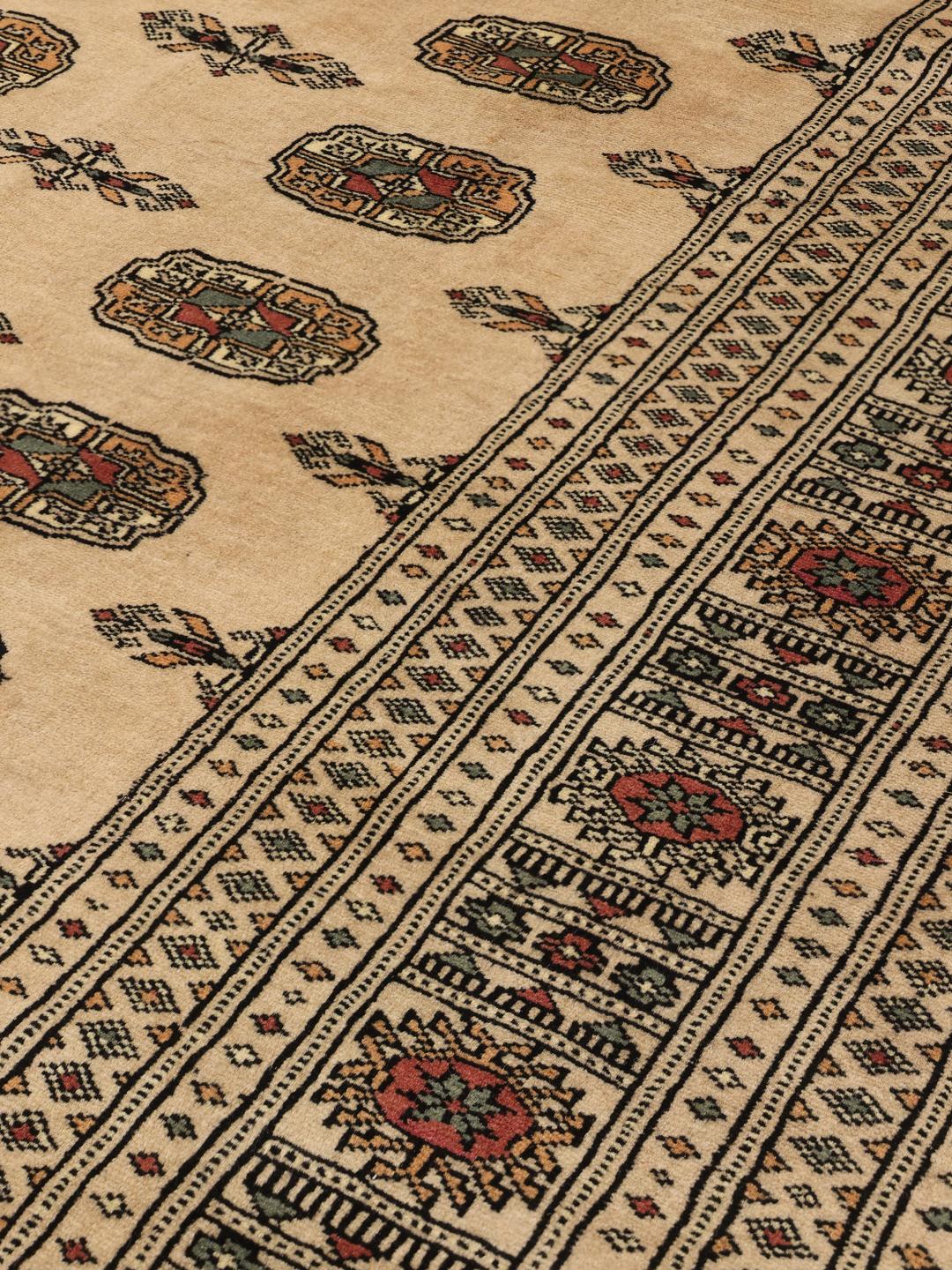
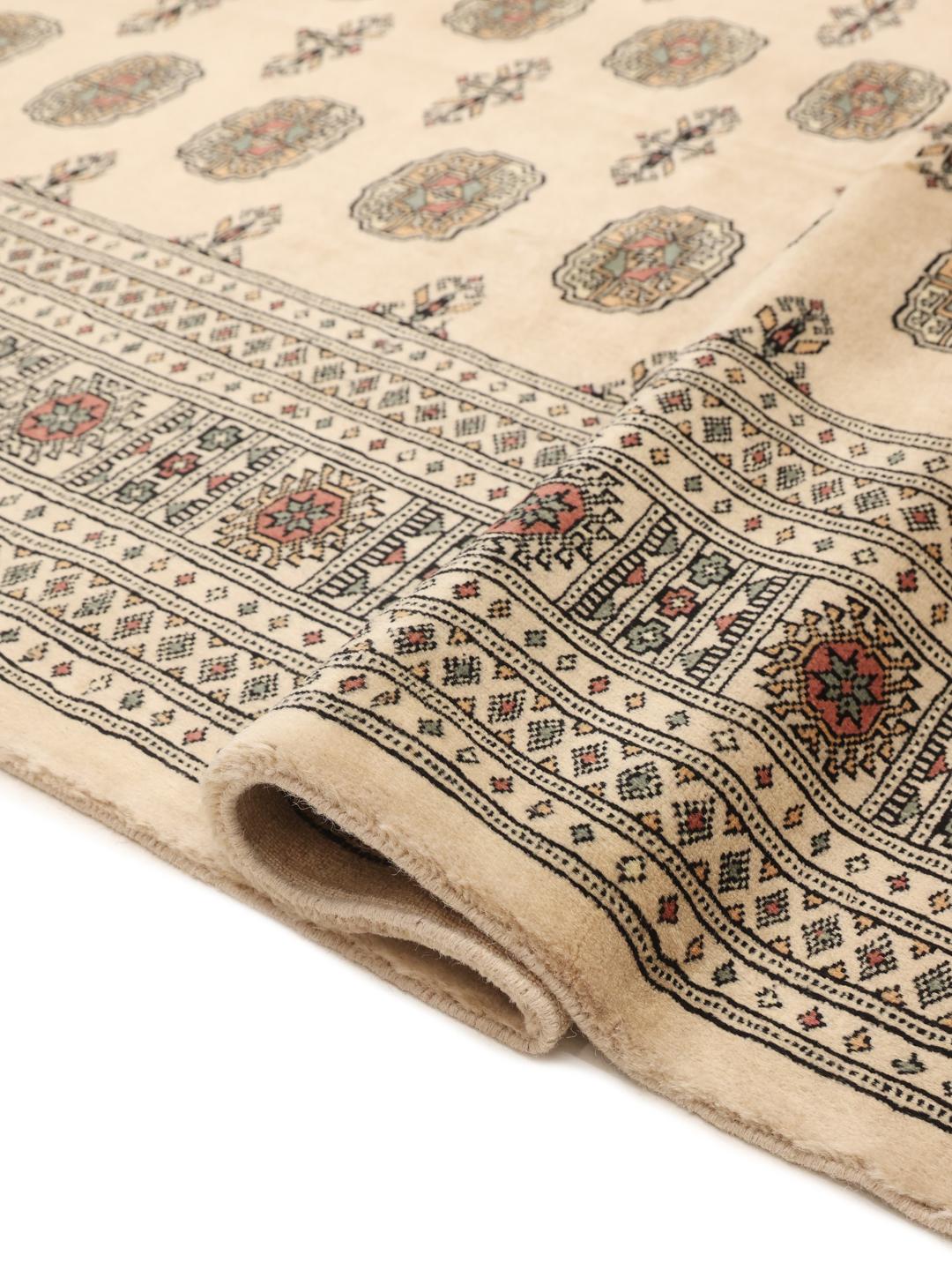
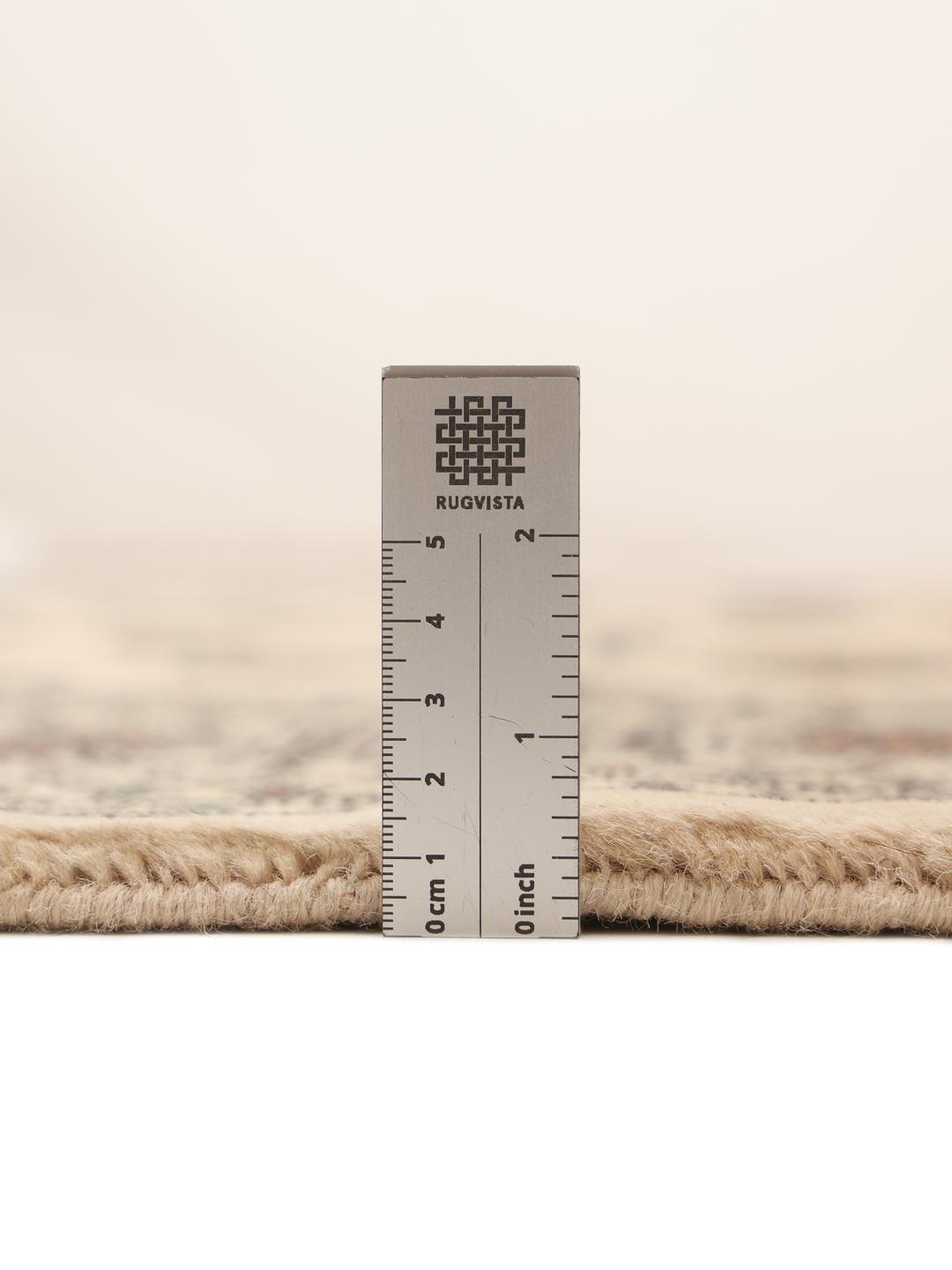
The 3ply designation in the construction refers to a pile woven using three strands of wool twisted together. This specialized technique produces a significantly denser, more lustrous, and longer-lasting pile compared to single-ply or two-ply alternatives, ensuring the rug handles daily life with ease.
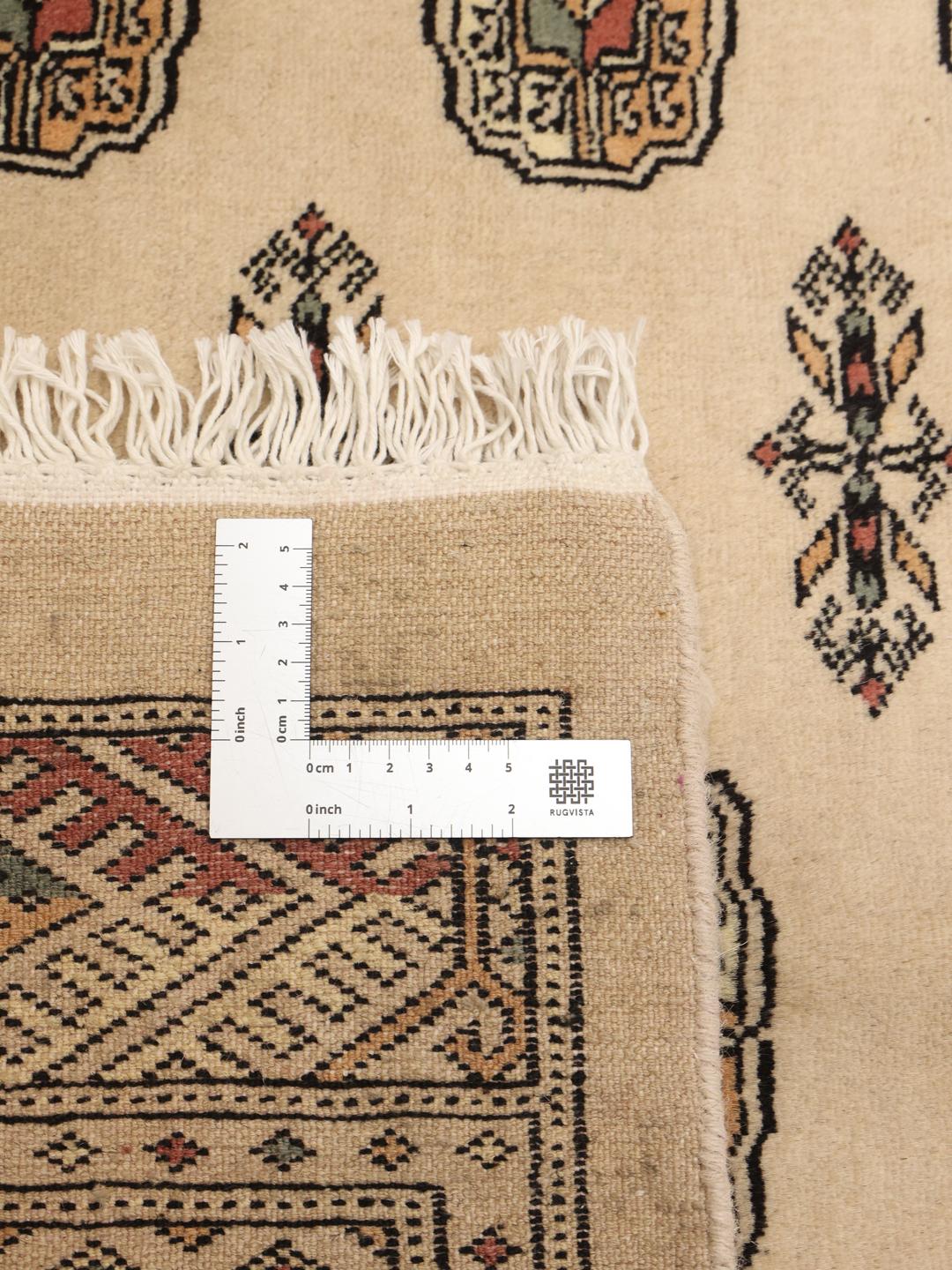
The visual language of this tradition is defined by repeating gul motifs, which are octagonal or elephant-foot shaped medallions arranged in precise rows across the field. Enclosed by a formal geometric border, these motifs carry centuries of symbolic meaning rooted in nomadic culture and tribal identity.
Collecting a Bokhara rug means acquiring a piece of living textile history that bridges nomadic heritage with enduring domestic comfort. Owning such a piece signifies an appreciation for genuine skill, cultural continuity, and timeless craftsmanship.