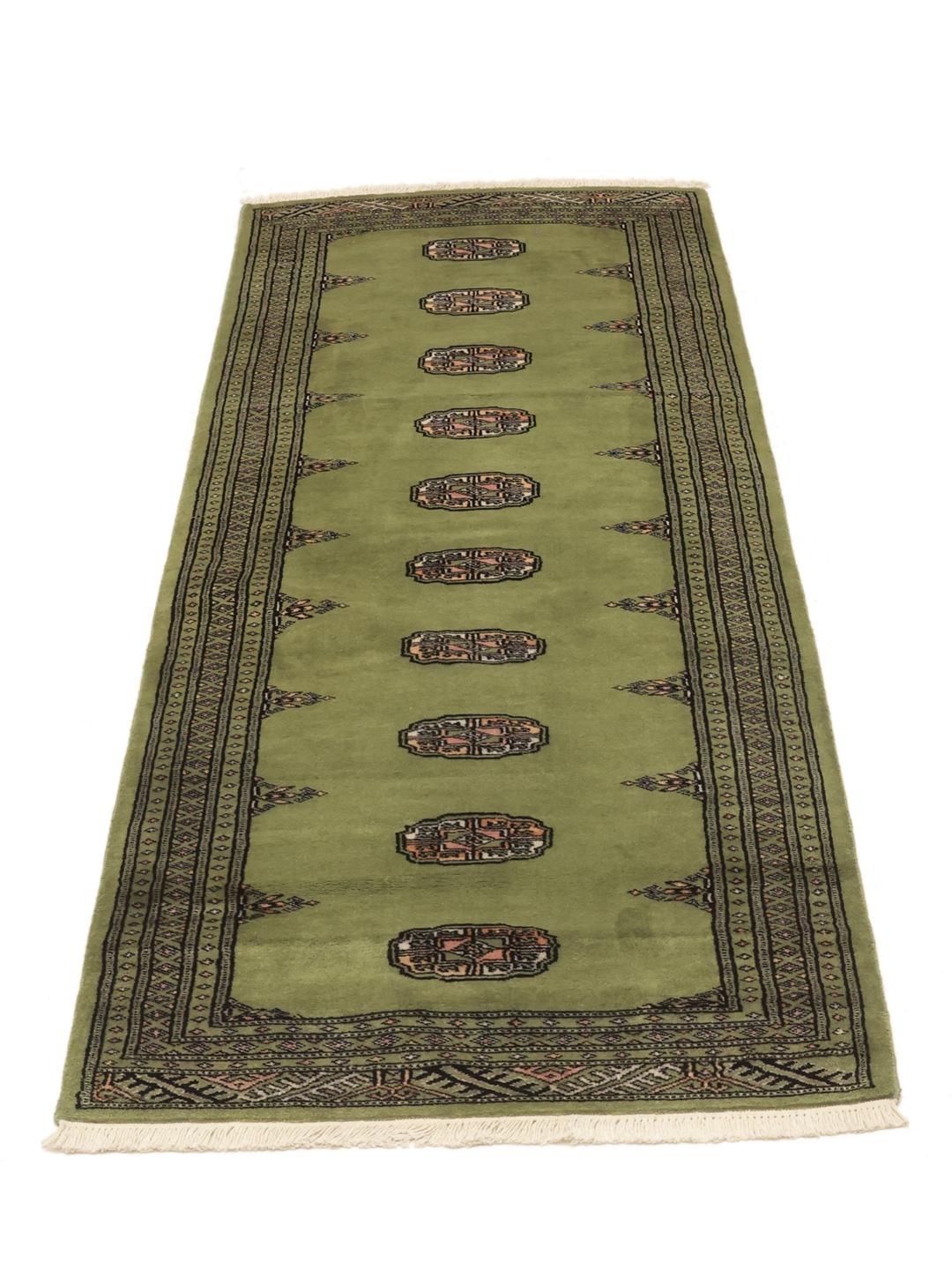
Bokhara rugs trace their design roots back to the ancient Silk Road city of Bukhara in Central Asia, where nomadic and village weavers developed distinct geometric medallion styles.
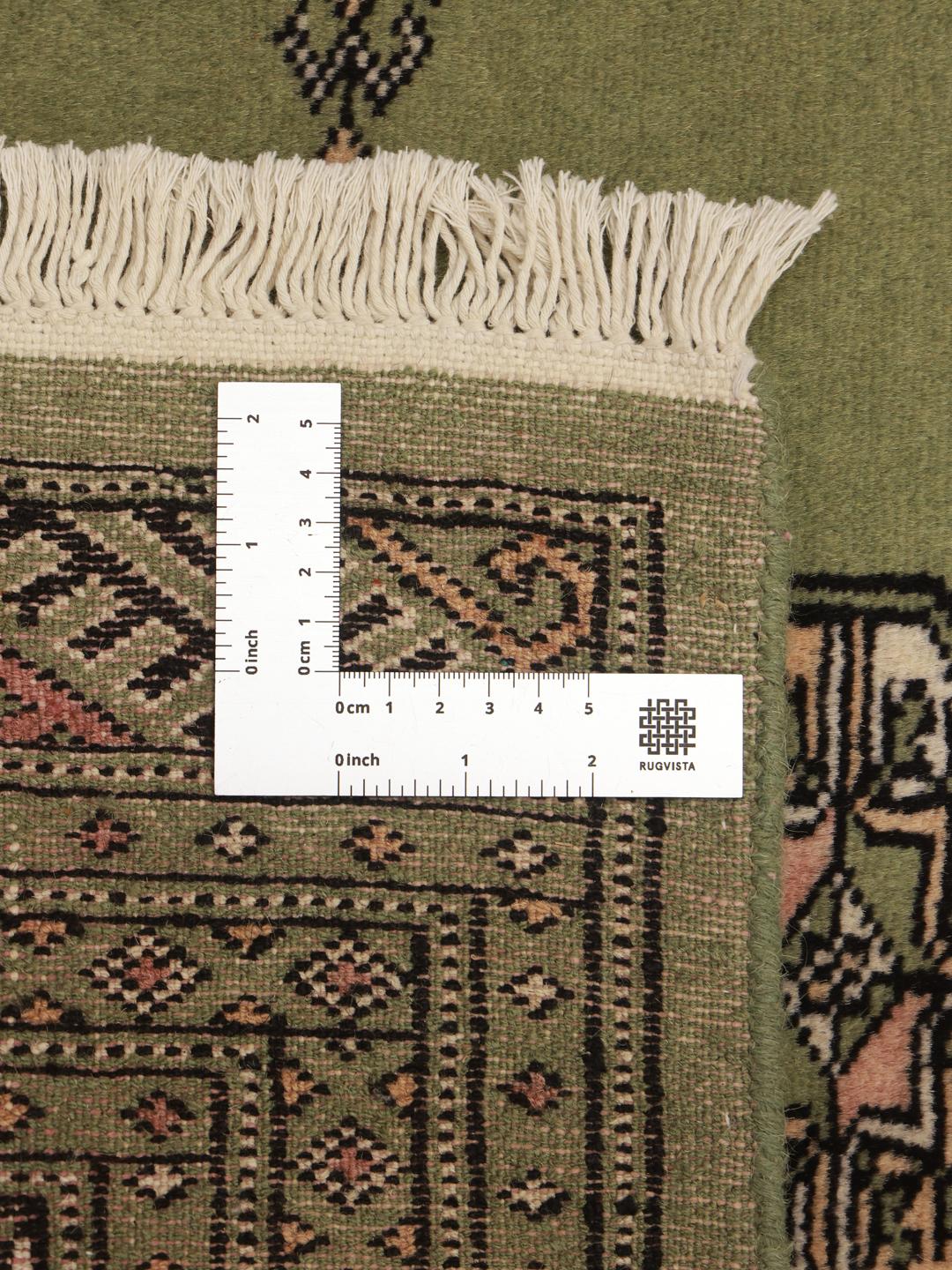
Over generations, the tradition migrated southward, and today some of the finest examples are meticulously crafted by skilled artisans in Pakistan, keeping these historic weaving techniques alive.
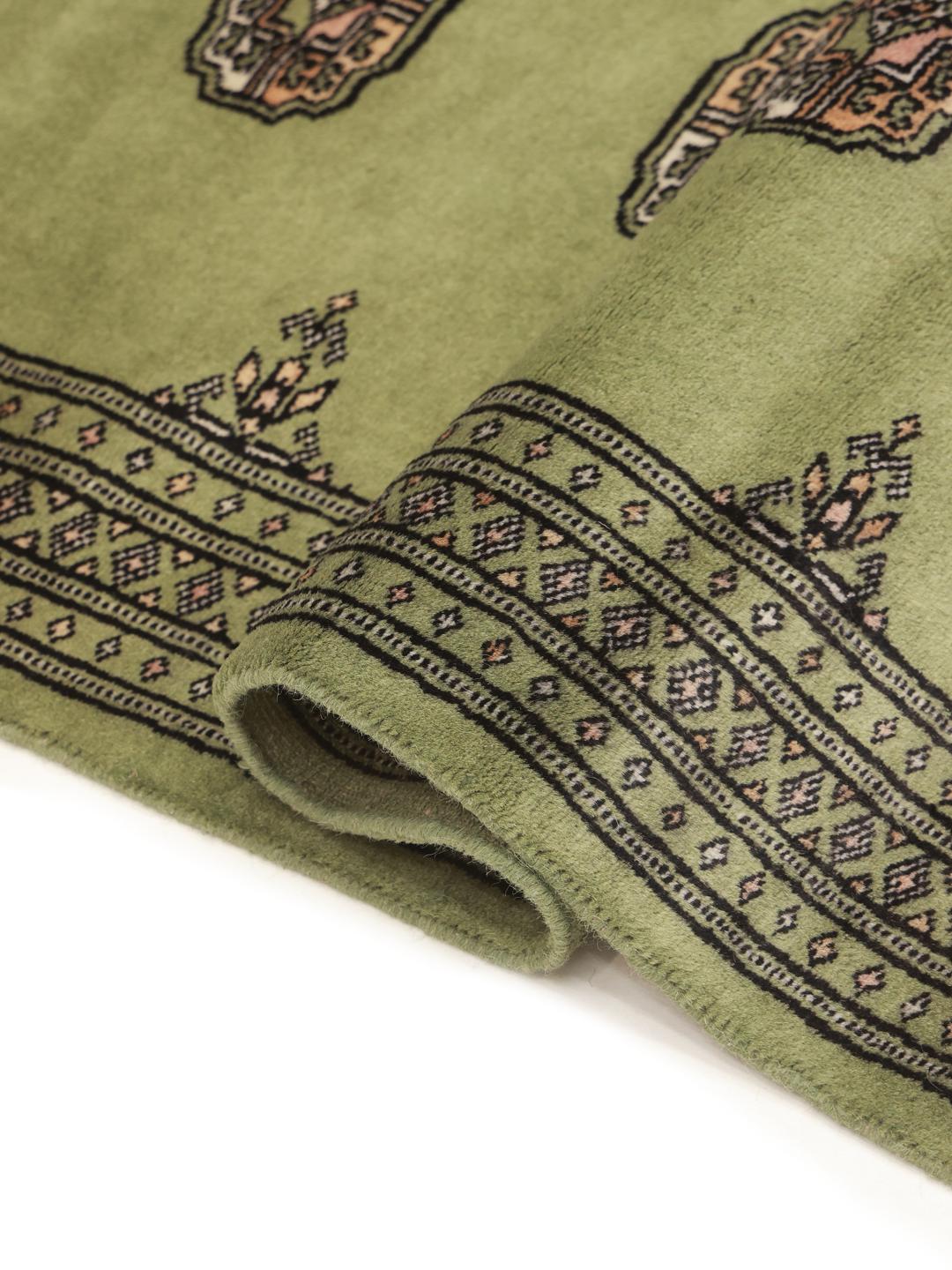
The 2ply designation in the name refers to the construction of the pile yarn, where two individual strands of wool are twisted together before knotting.
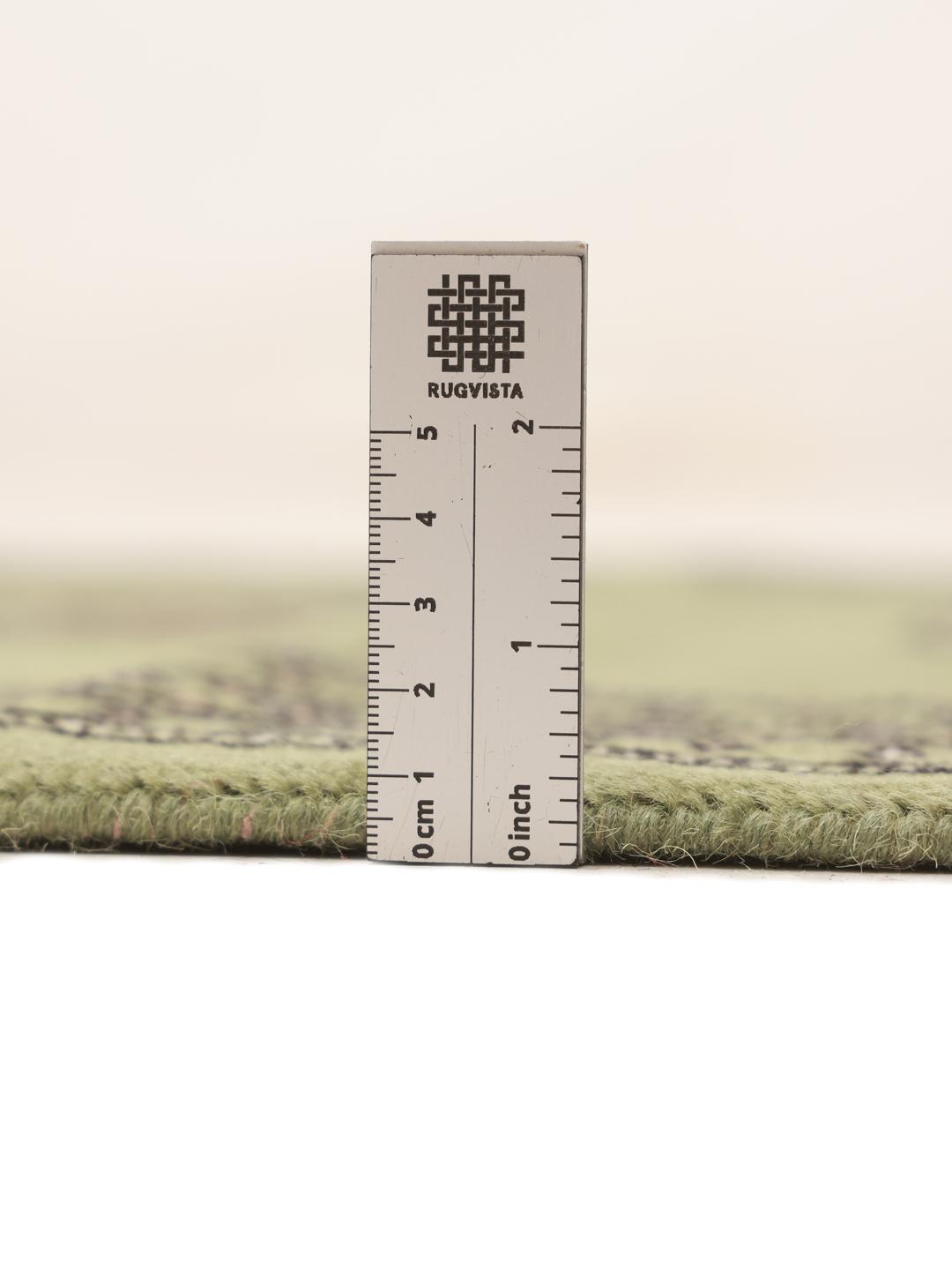
This technique produces a stronger, denser, and more lustrous pile compared to single-ply alternatives, ensuring the rug handles daily wear while maintaining a rich surface texture.
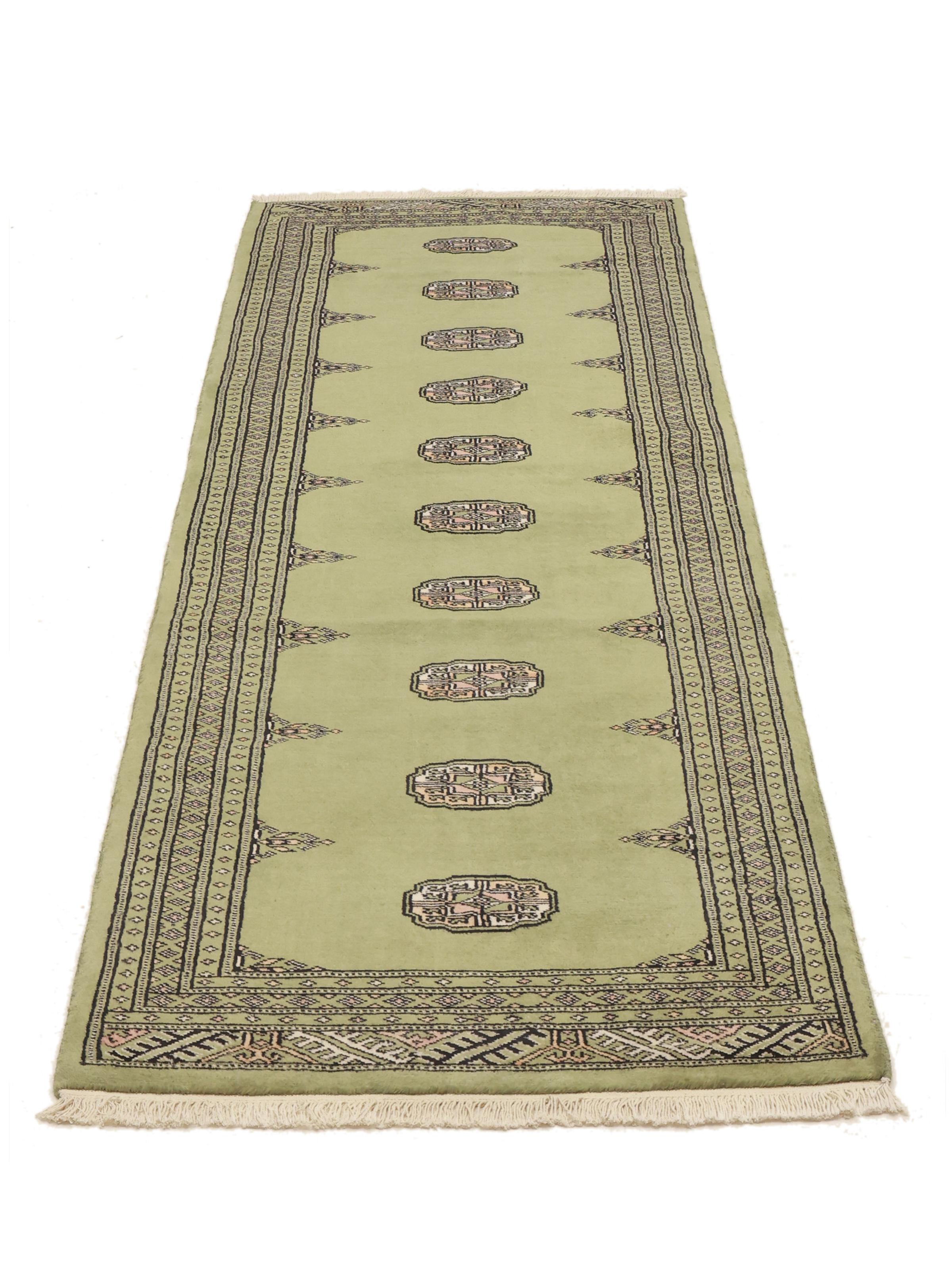
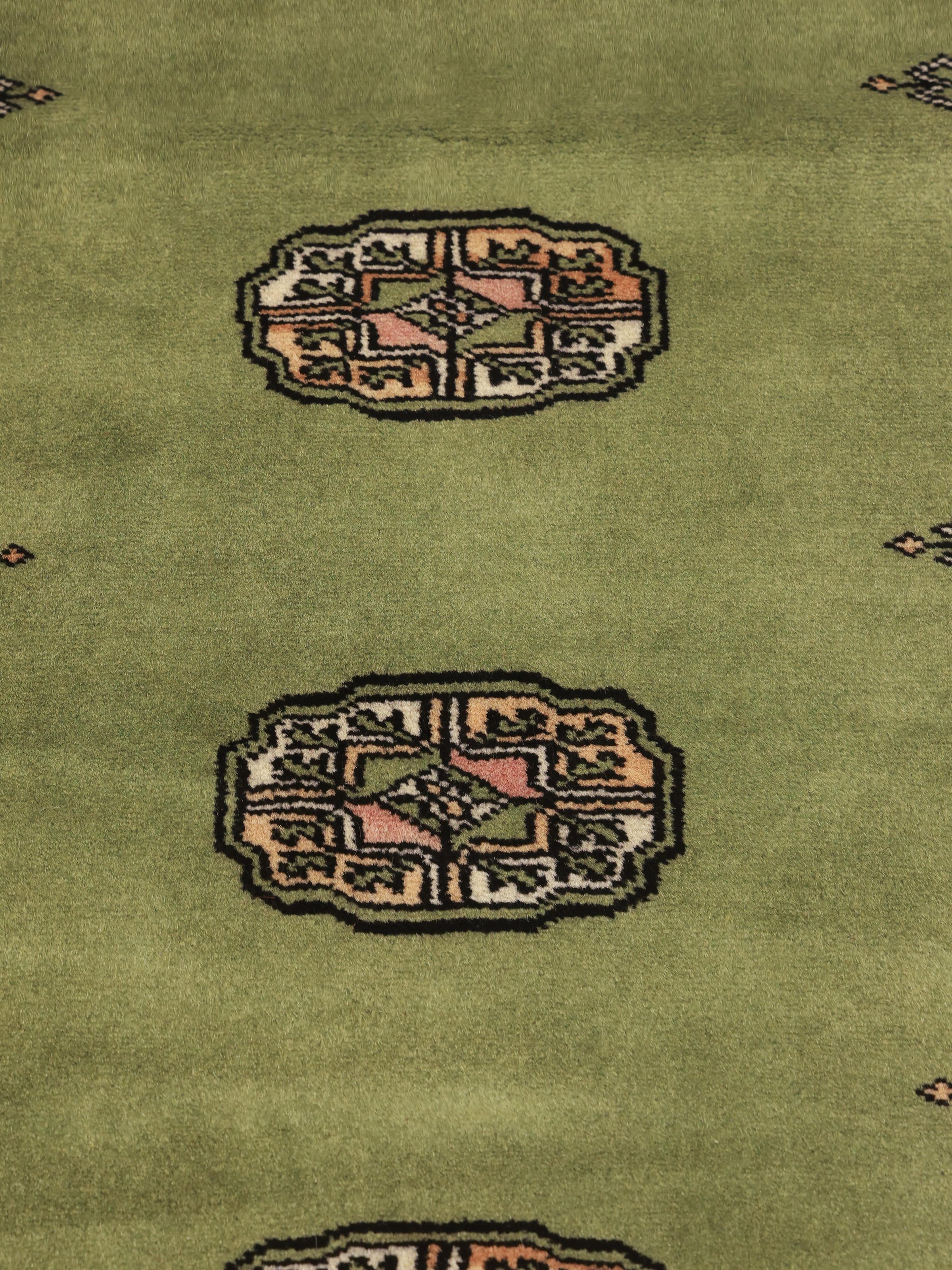
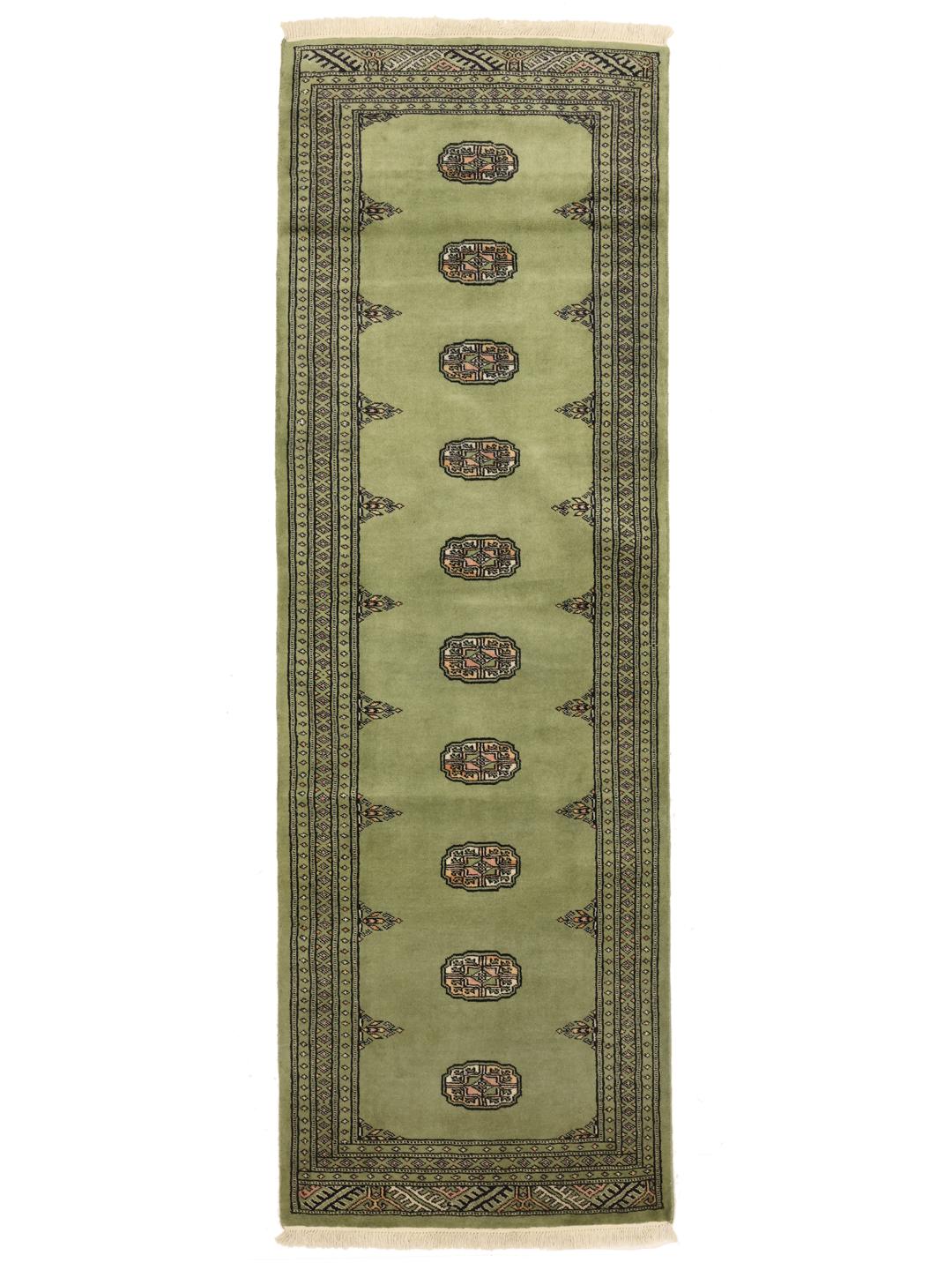
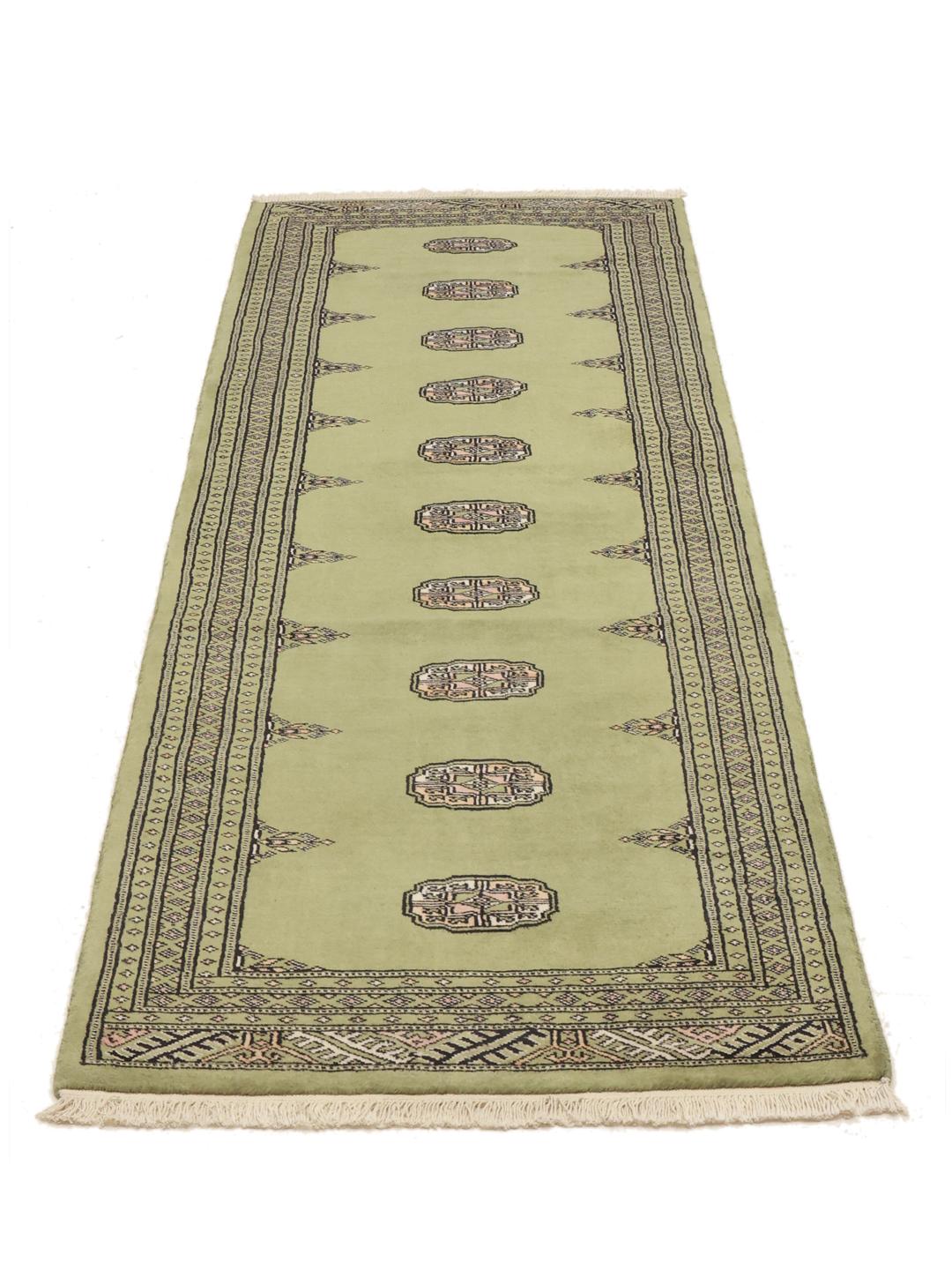
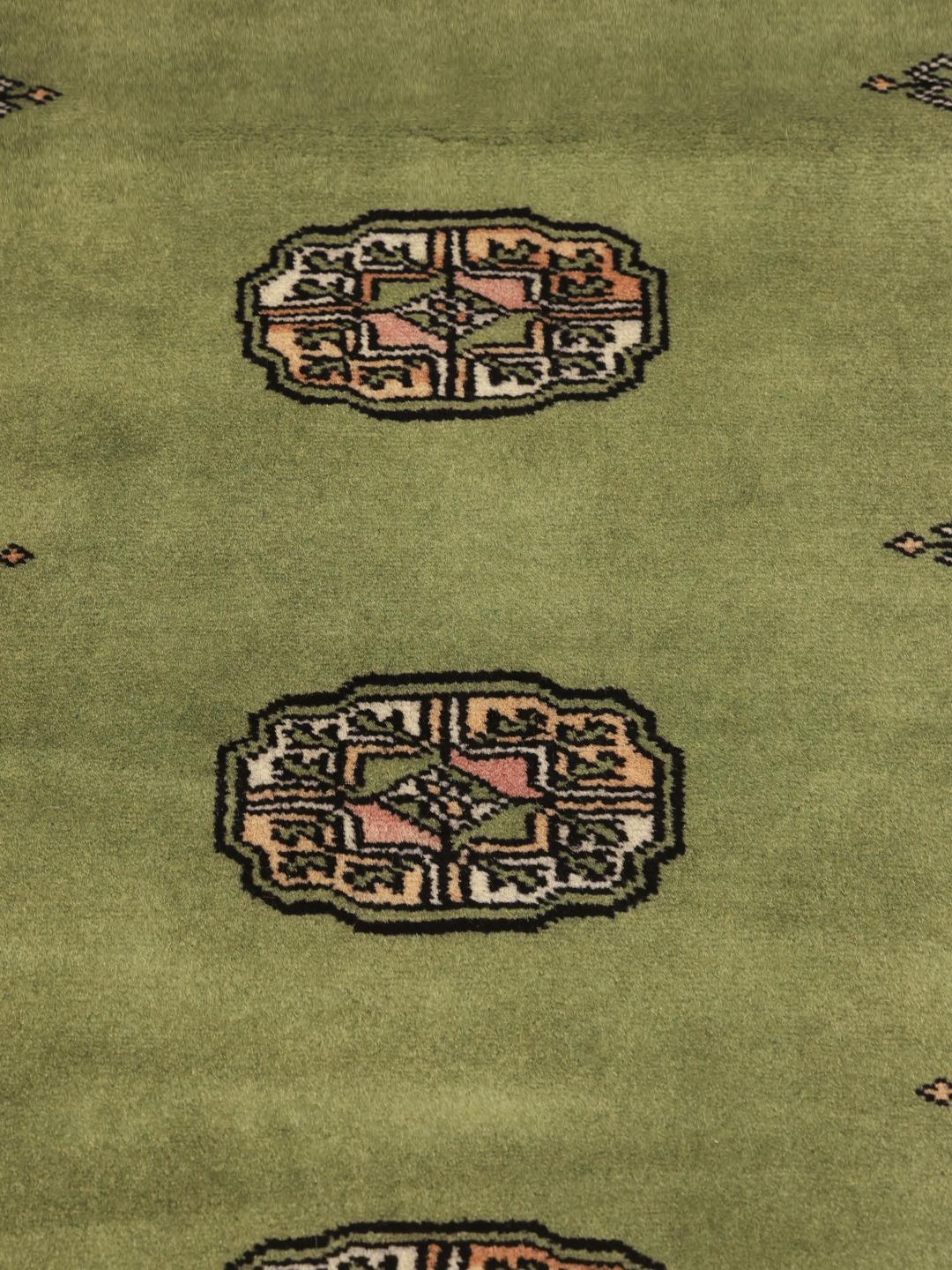
The visual signature of this tradition is the repeating gul motif, an octagonal or elephant-foot shaped medallion arranged in orderly rows across the field.
While these motifs are traditionally woven in deep reds, this specific piece features an unusual light green field, offering a refreshing and distinctive variation on a classic design language.
Owning a hand-knotted Pakistani Bokhara connects your home to centuries of textile heritage and human skill.
Each rug represents a living tradition of craftsmanship, offering collectors and homeowners alike a tangible piece of cultural history that rewards appreciation for authentic handmade artistry.