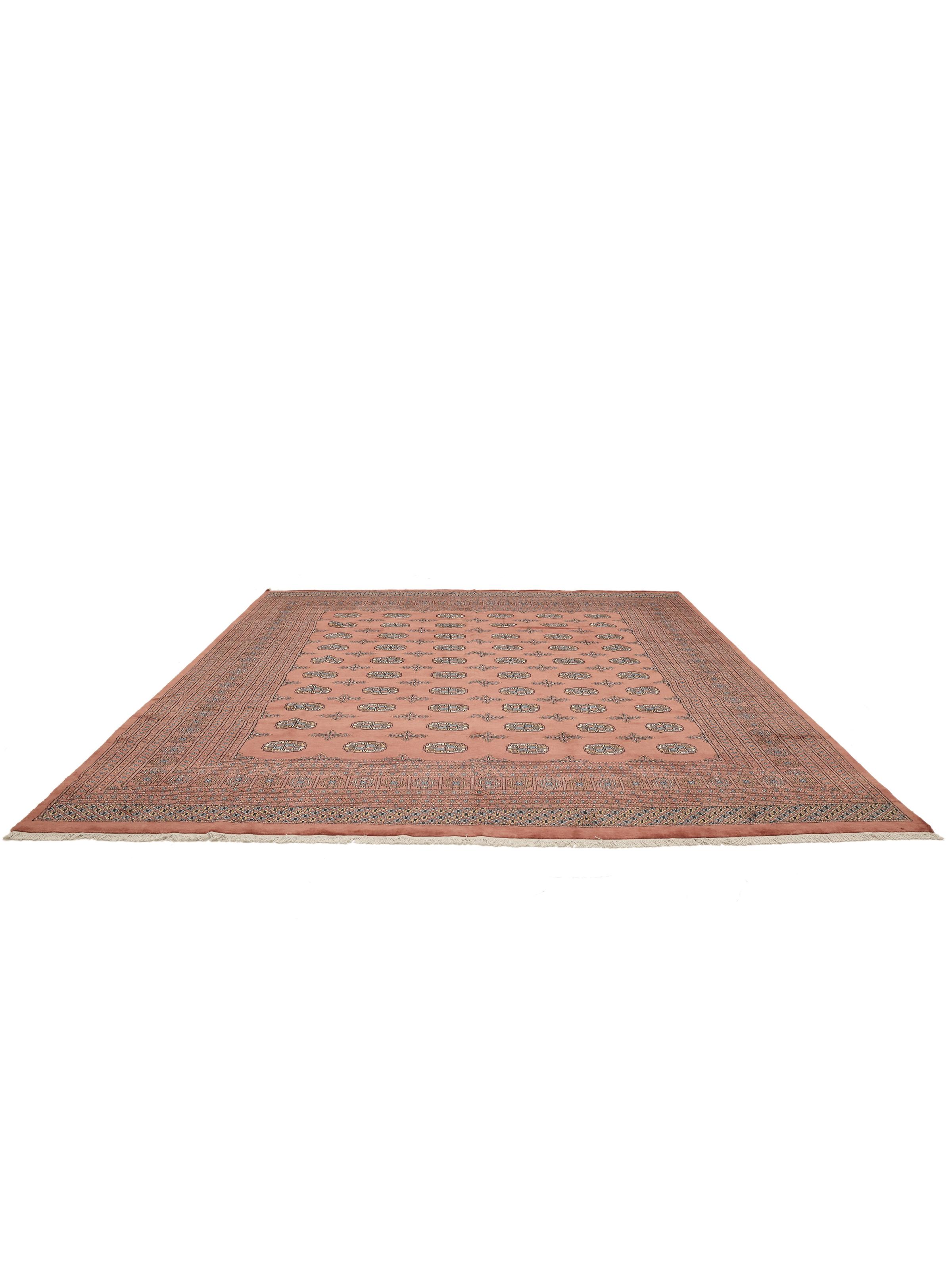
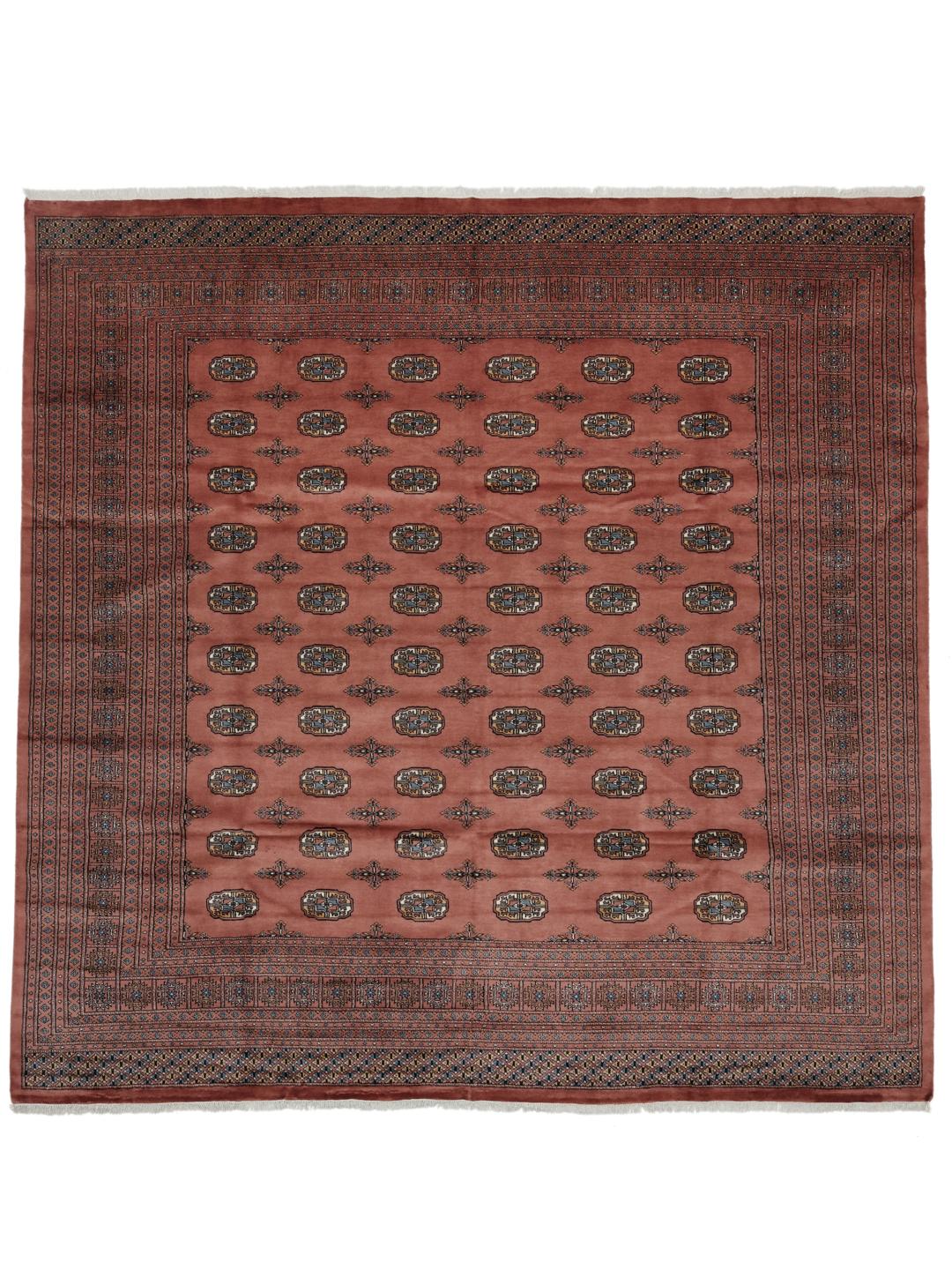
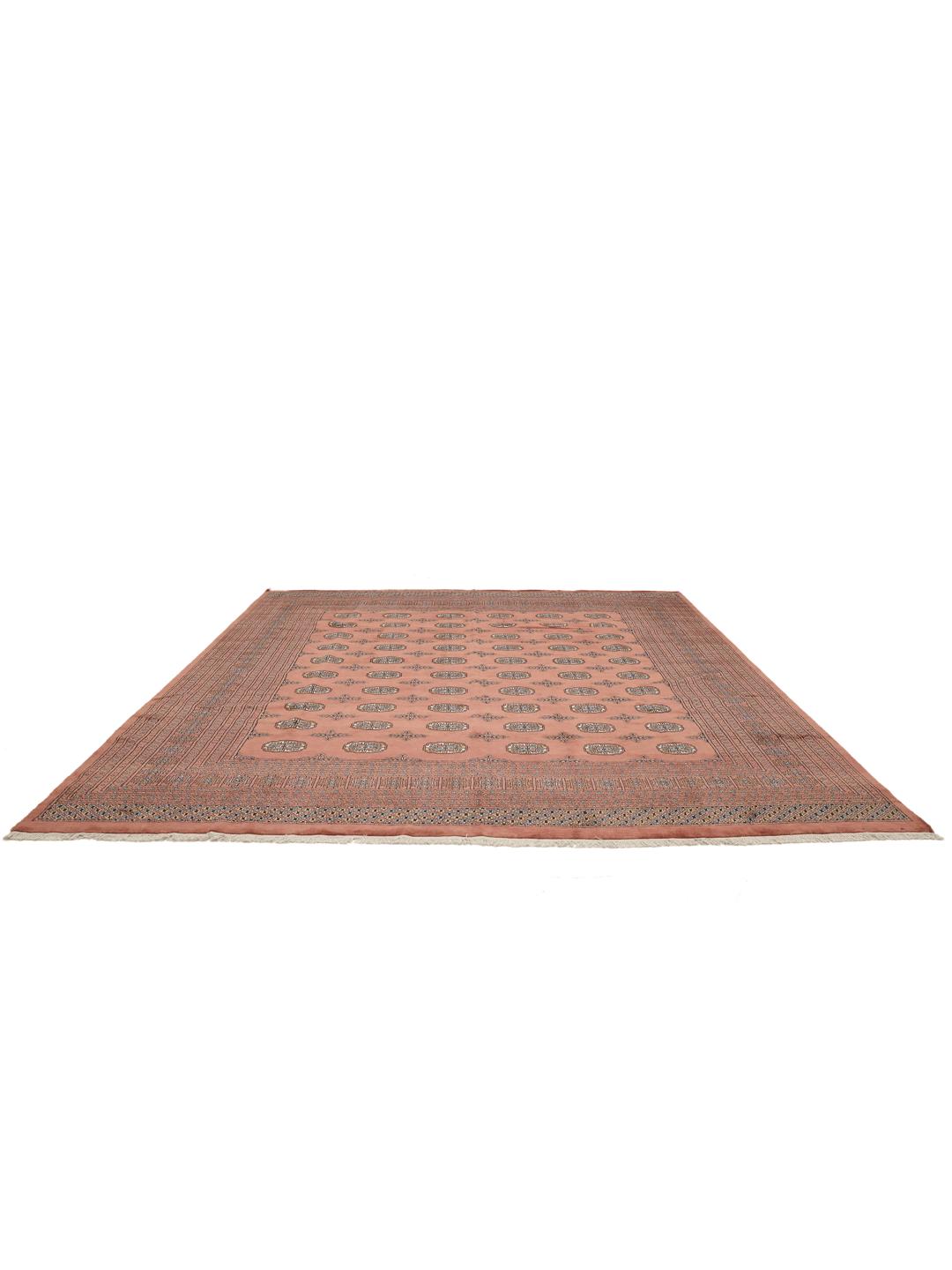
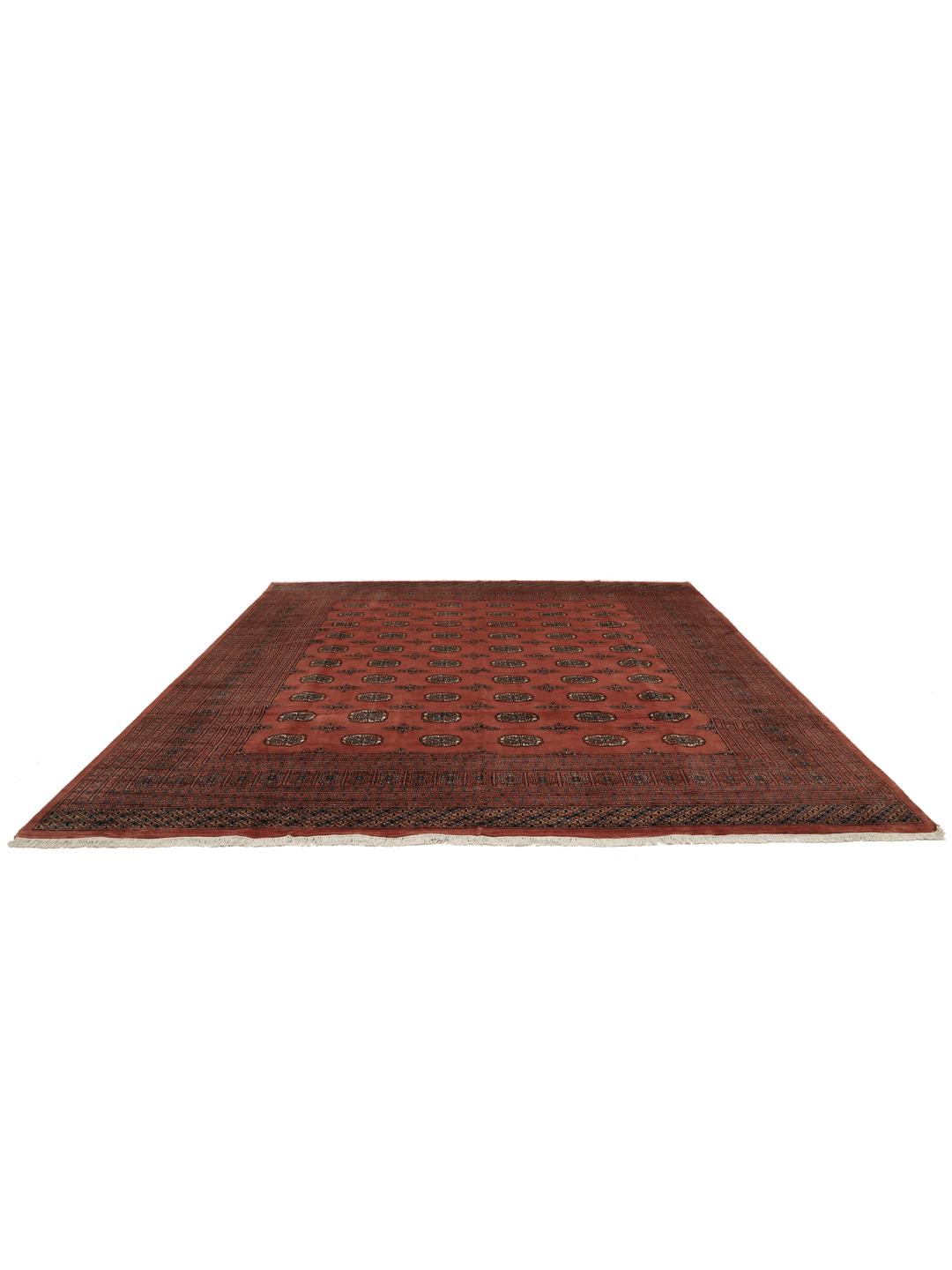
The Bokhara rug tradition is deeply rooted in the historical tapestry of Central Asia, taking its name from the ancient Silk Road city of Bukhara, which served as a vital hub for trade and cultural exchange. Over many generations, the techniques and designs associated with these rugs migrated into Pakistan, where they have been refined by local artisans into a celebrated craft tradition.
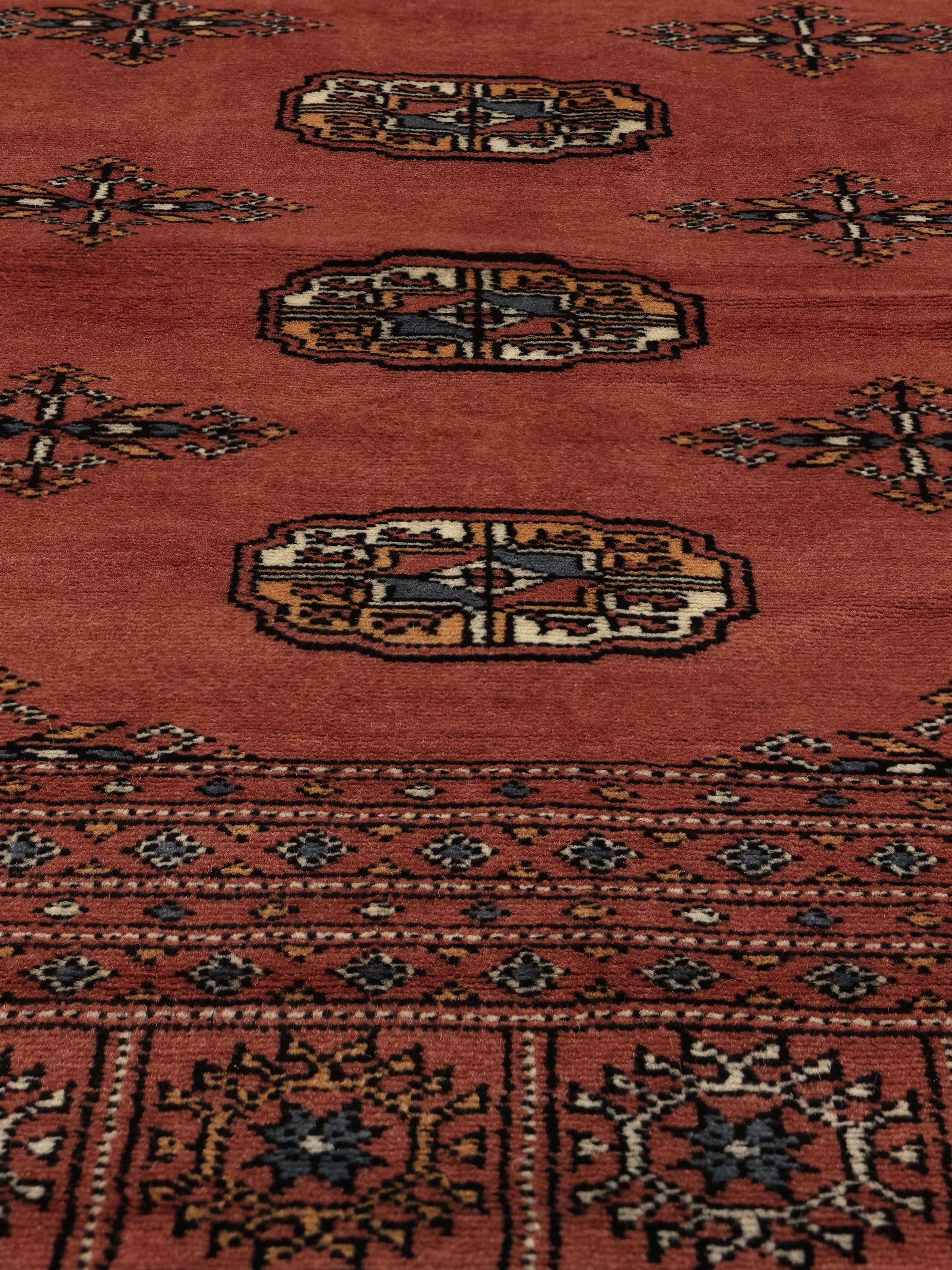
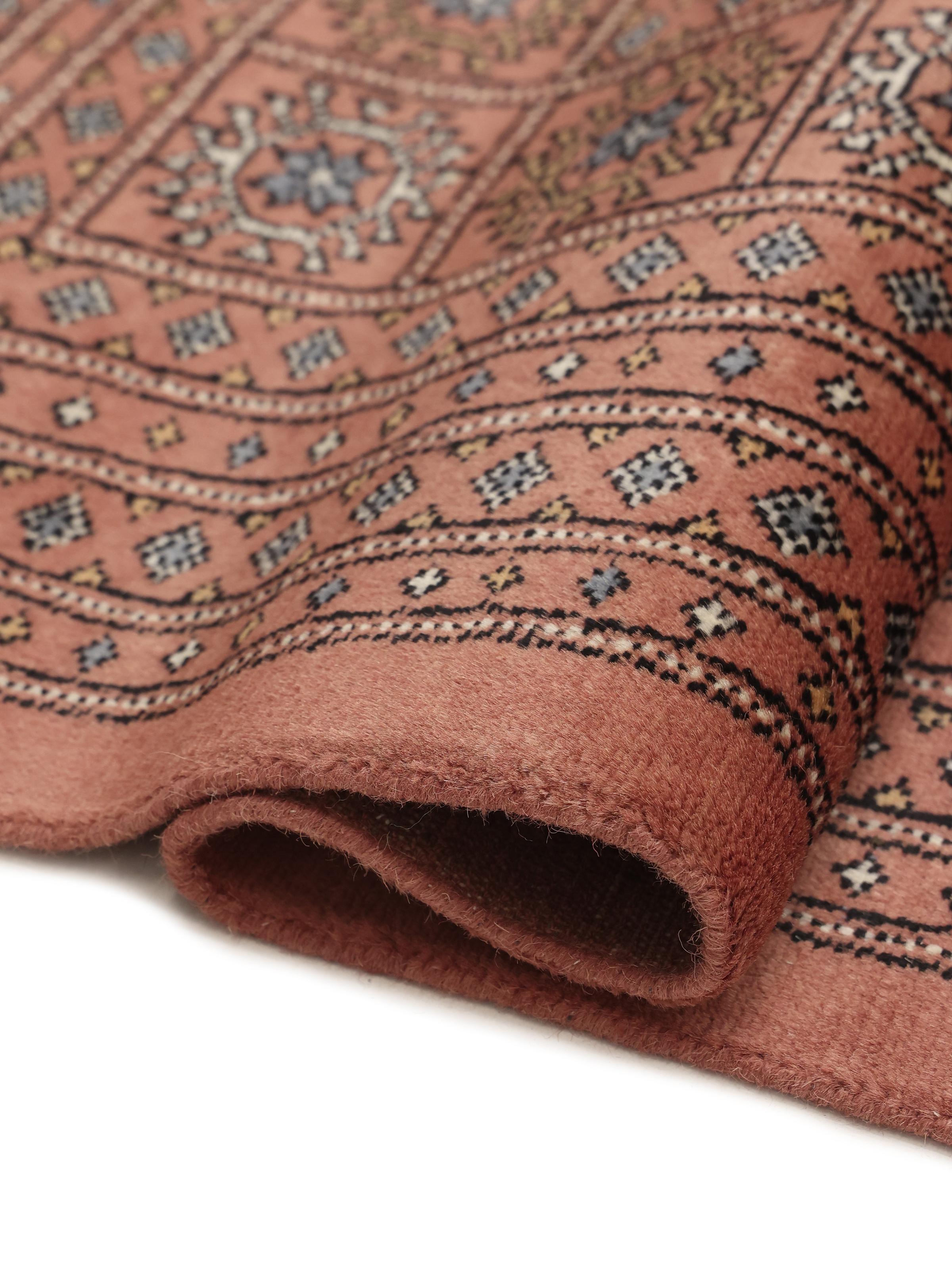
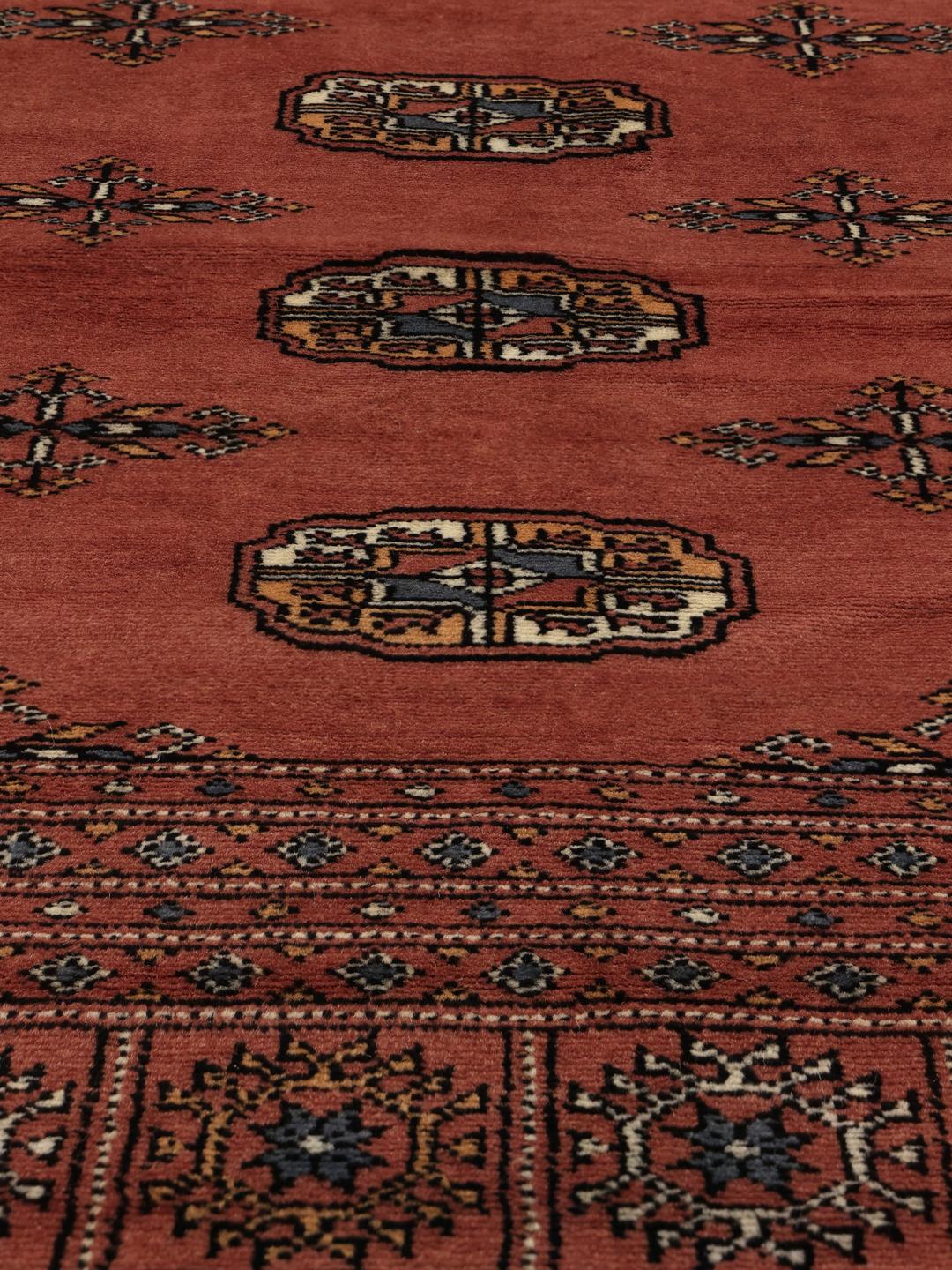
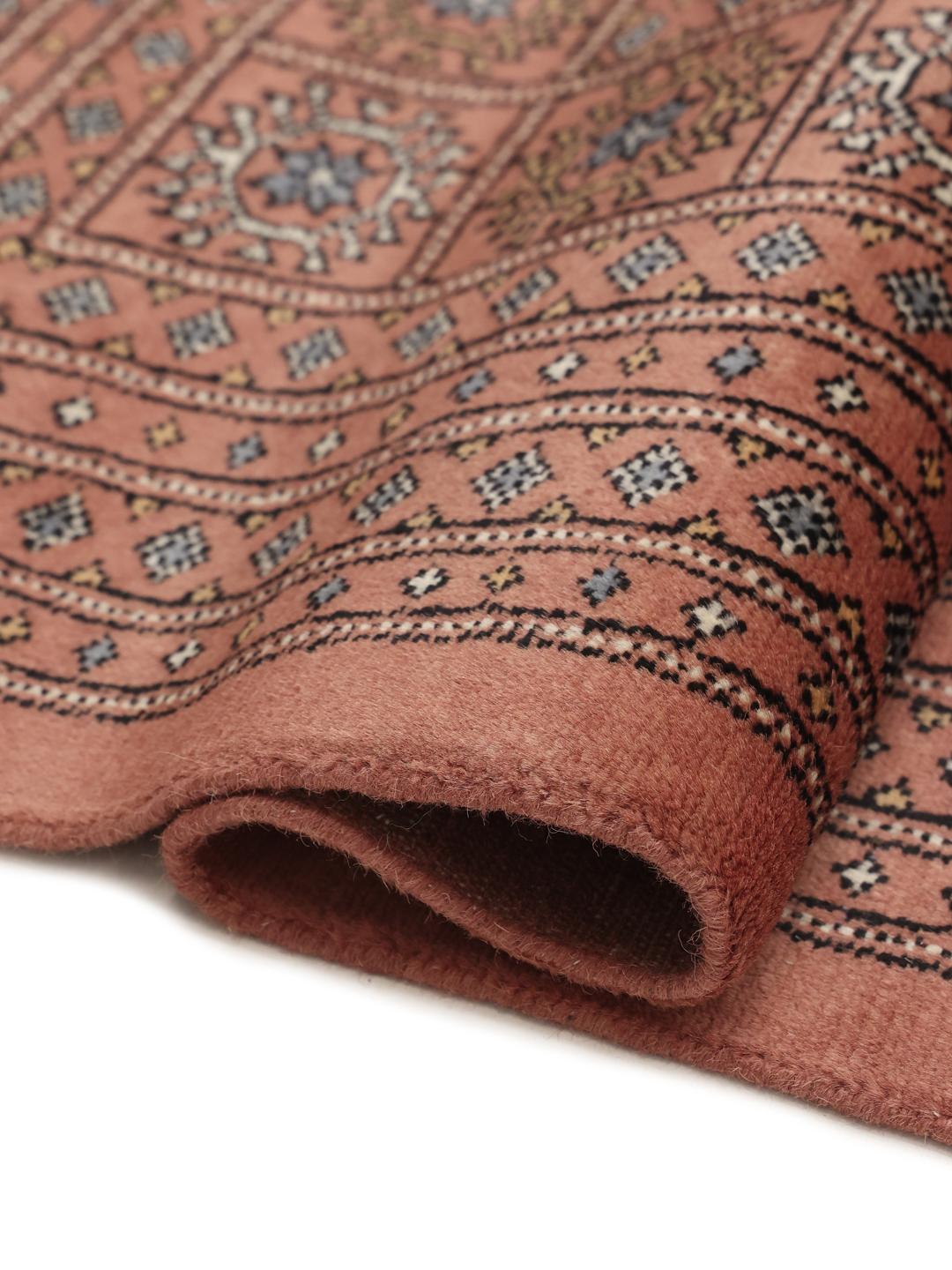
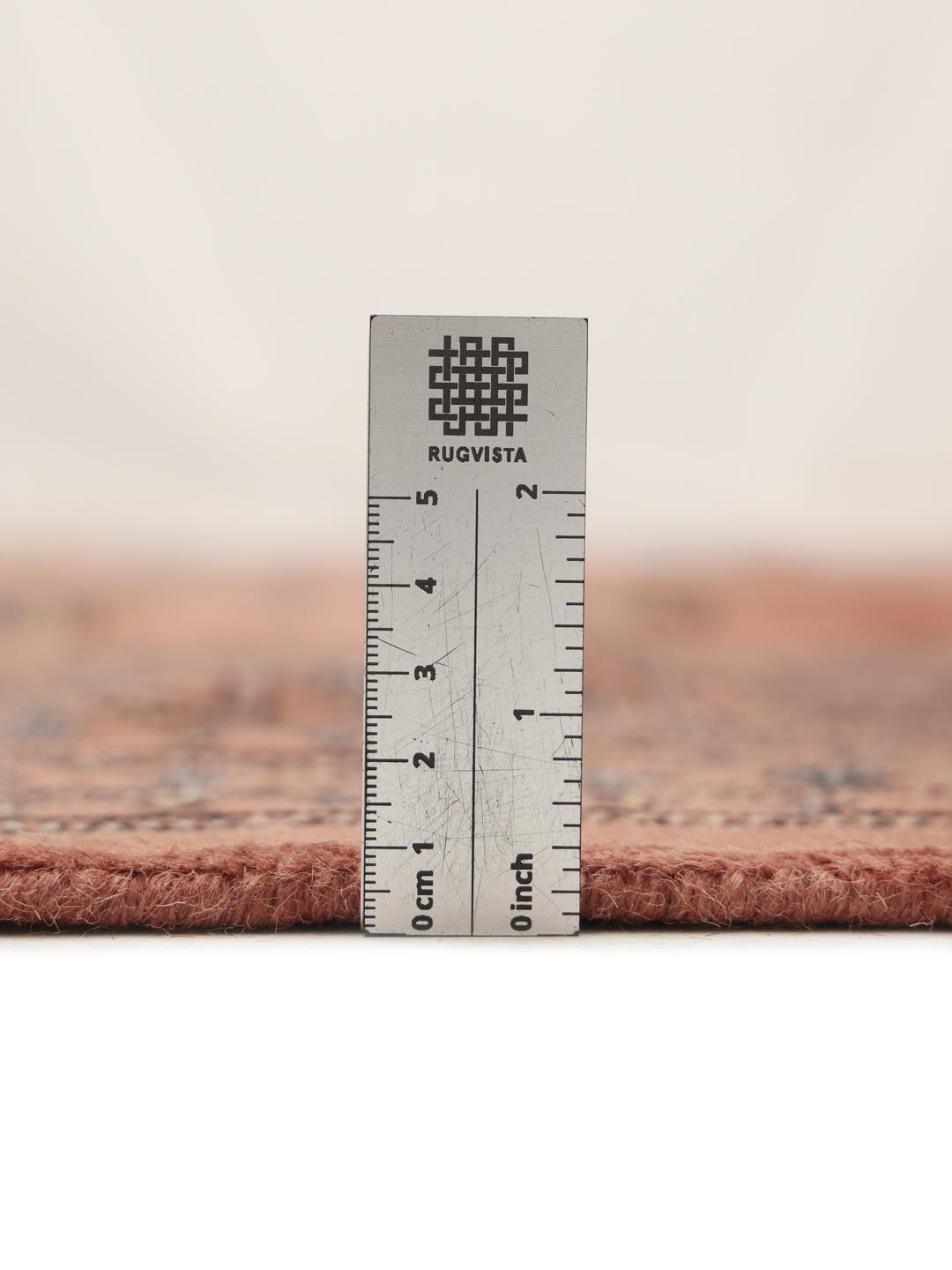
The term '2ply' refers to the specific way the wool is prepared for the loom. By twisting two strands of wool together before weaving, the artisan creates a yarn that is significantly more resilient and lustrous than single-ply alternatives. This technical choice is fundamental to the quality of the rug, as it results in a denser, more durable pile that better resists the wear of daily life.
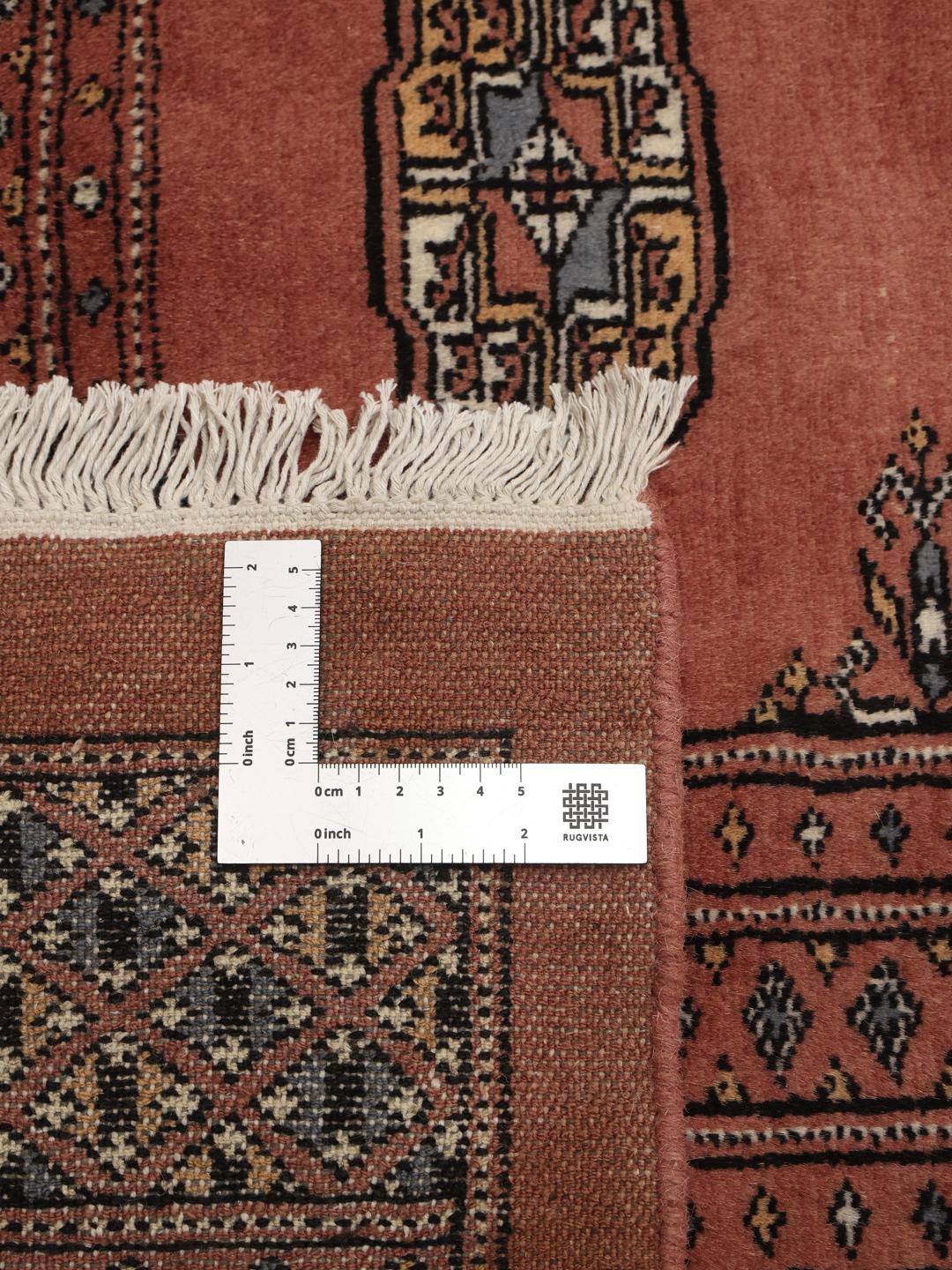
Visually, these rugs are recognised by their field of repeating 'gul' motifs, which are stylized, geometric medallions often resembling elephant footprints. The border is typically composed of multiple intricate bands that frame the central field, providing a sense of formal structure and balance. This particular rug honours those traditional visual standards while showcasing the unique, artisanal touch of its creator.
Collectors and enthusiasts value these rugs for their ability to synthesise centuries of cultural heritage with exceptional manual skill. Owning a piece from this tradition is more than just acquiring a floor covering; it is an investment in a legacy of craft that prioritises patience, precision, and an enduring commitment to quality that is increasingly rare in the modern world.