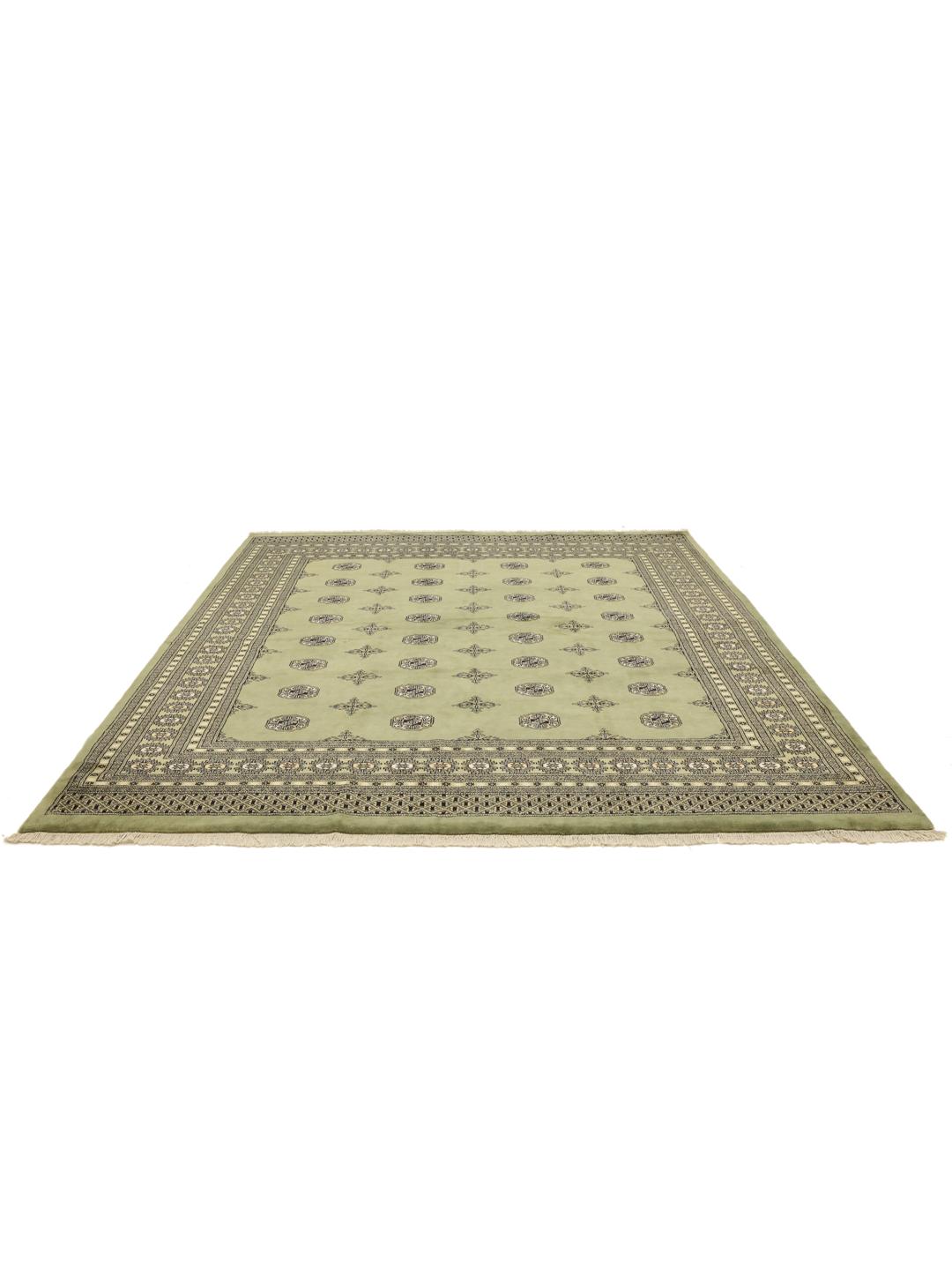
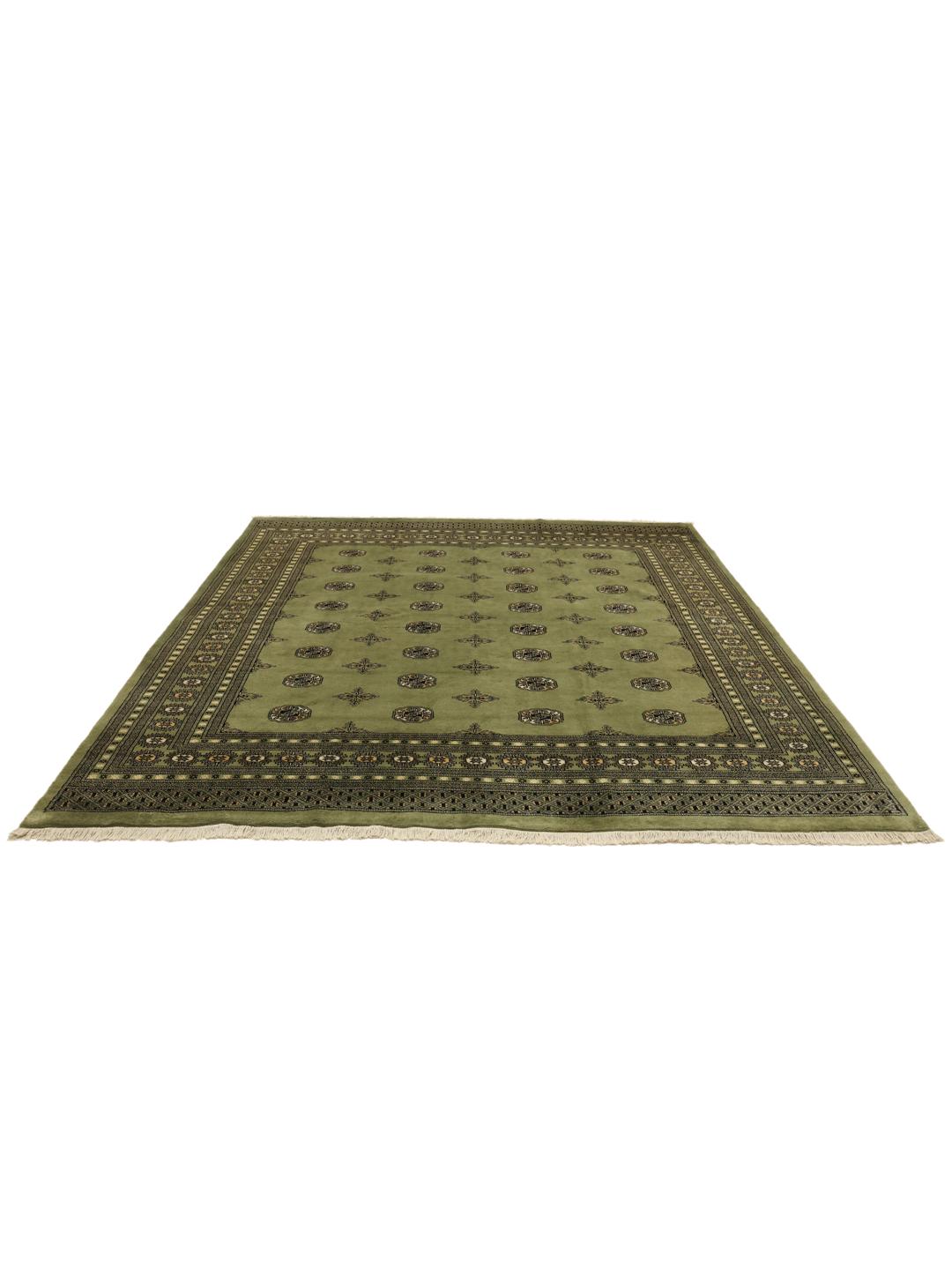
The Bokhara rug tradition is deeply rooted in the history of the ancient Silk Road, taking its name from the fabled city of Bukhara in Central Asia. Historically, these designs were developed by nomadic tribes who carried their weaving traditions with them, and today, the finest examples of these rugs are crafted in Pakistan, where the tradition has been refined to an exceptional level of artistry.
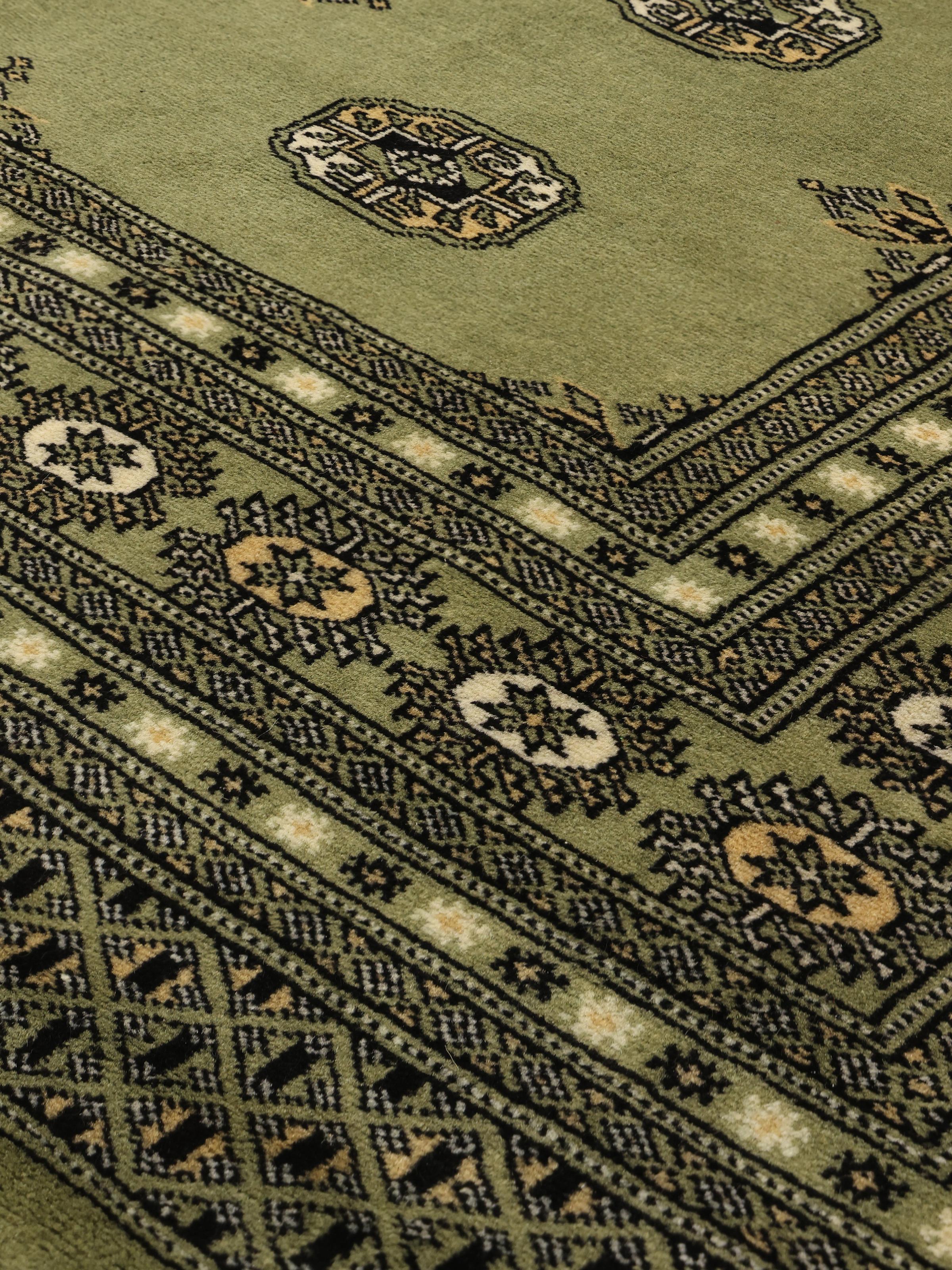
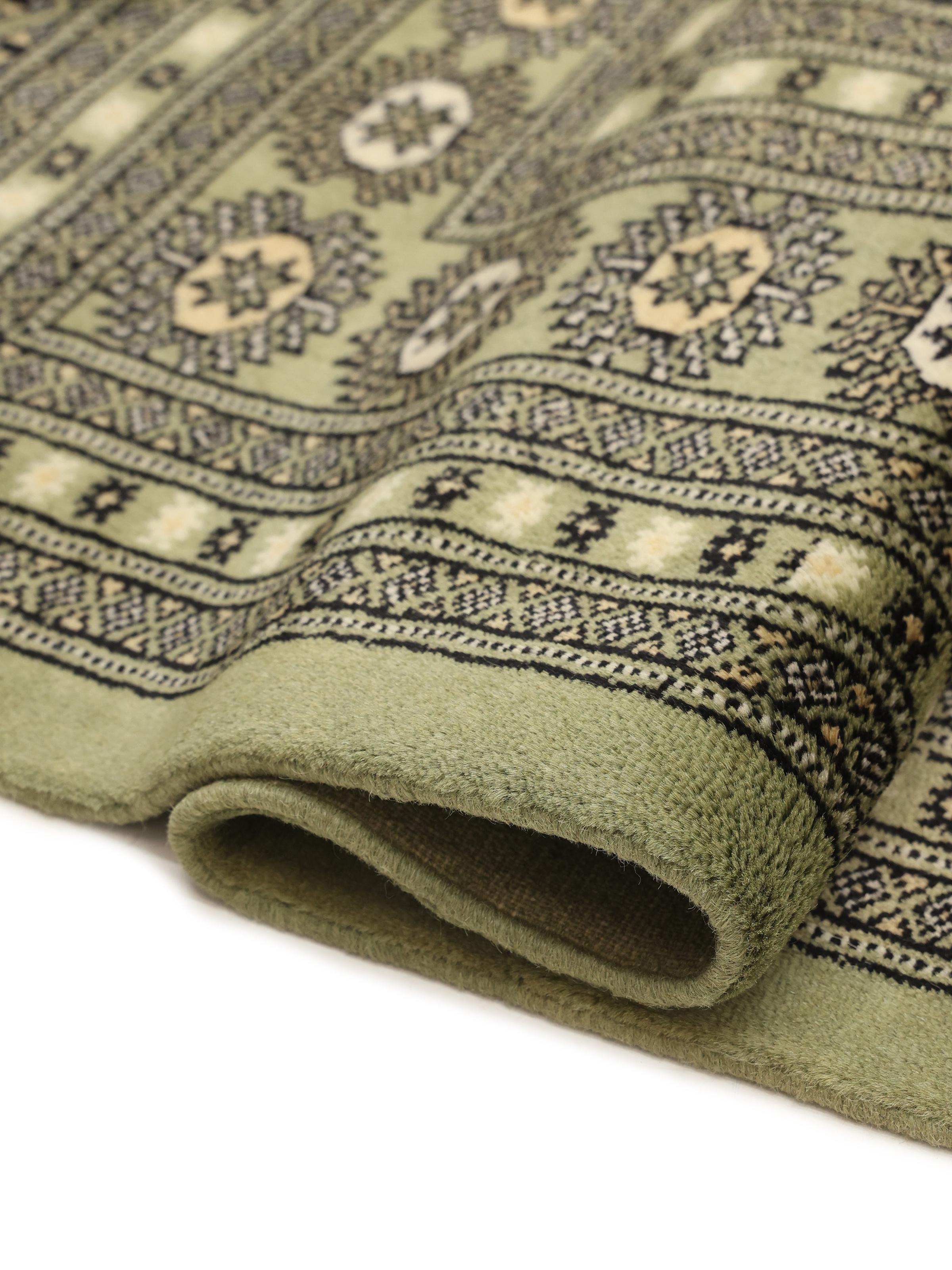
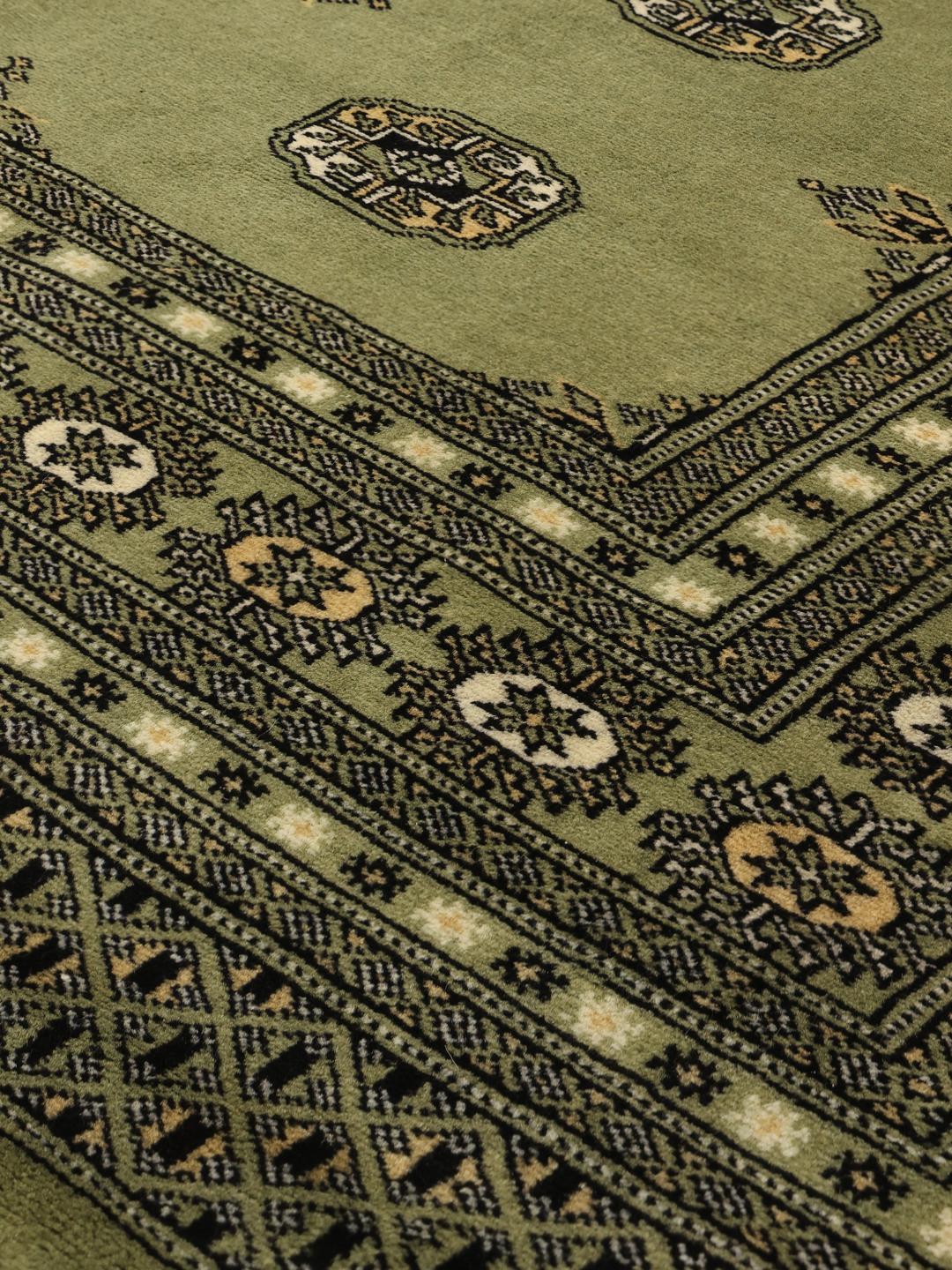
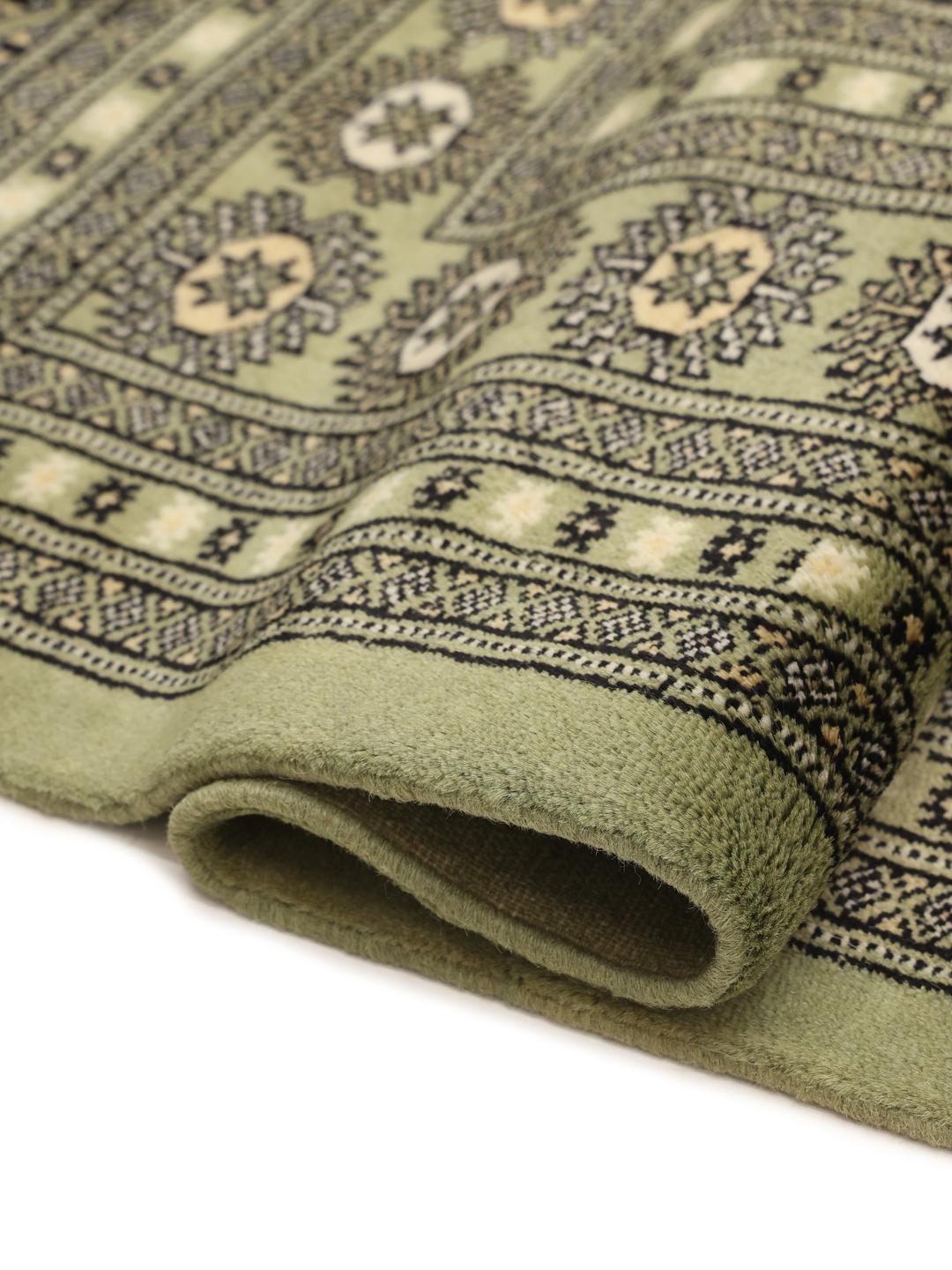
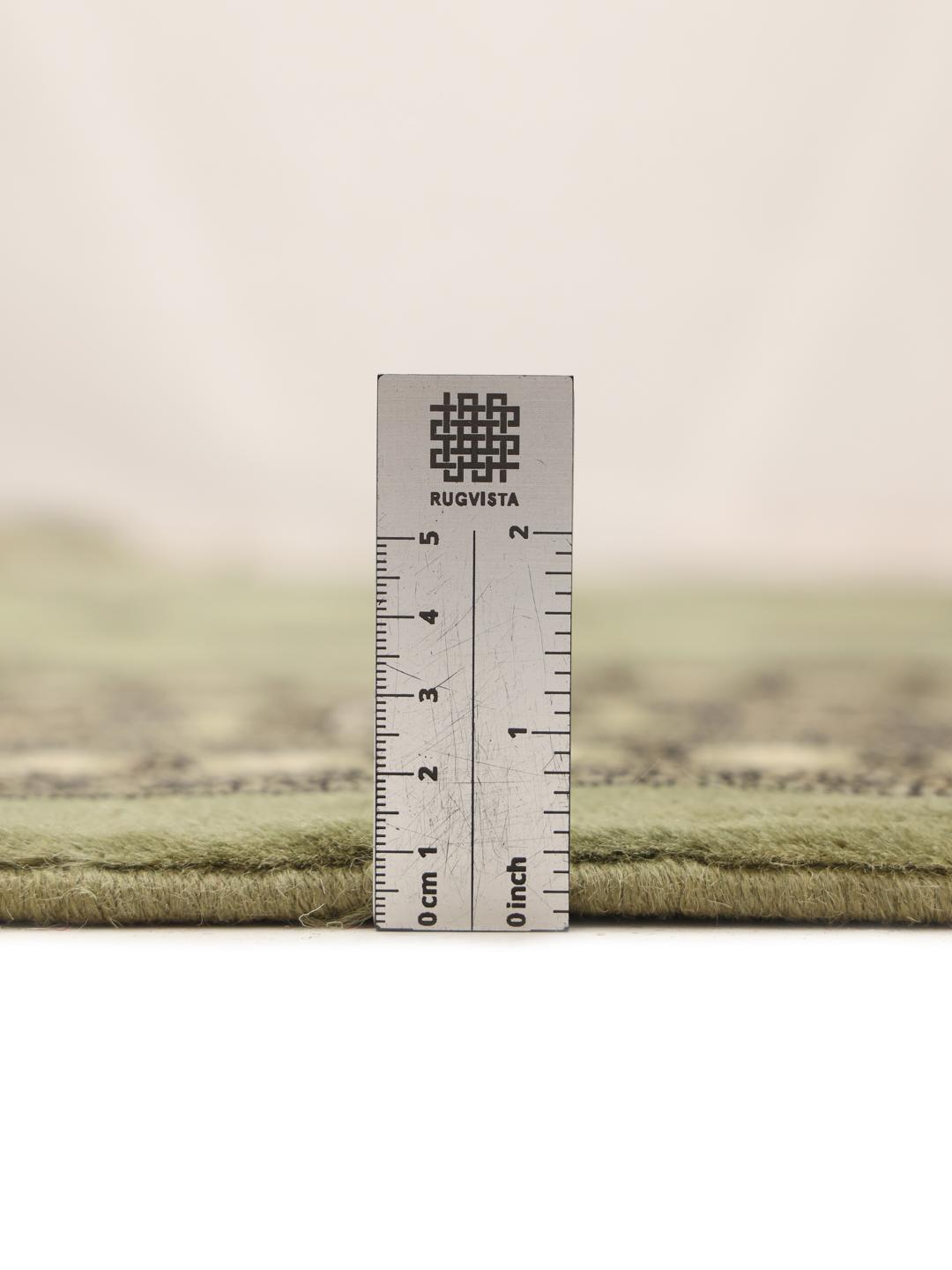
The term 2ply in the name refers to the specific way the wool is prepared before weaving. By twisting two strands of wool together, the artisan creates a pile that is stronger, more lustrous, and better able to resist wear over time. This technique is highly valued because it ensures the rug maintains its rich, velvety texture even in high-traffic areas of the home.
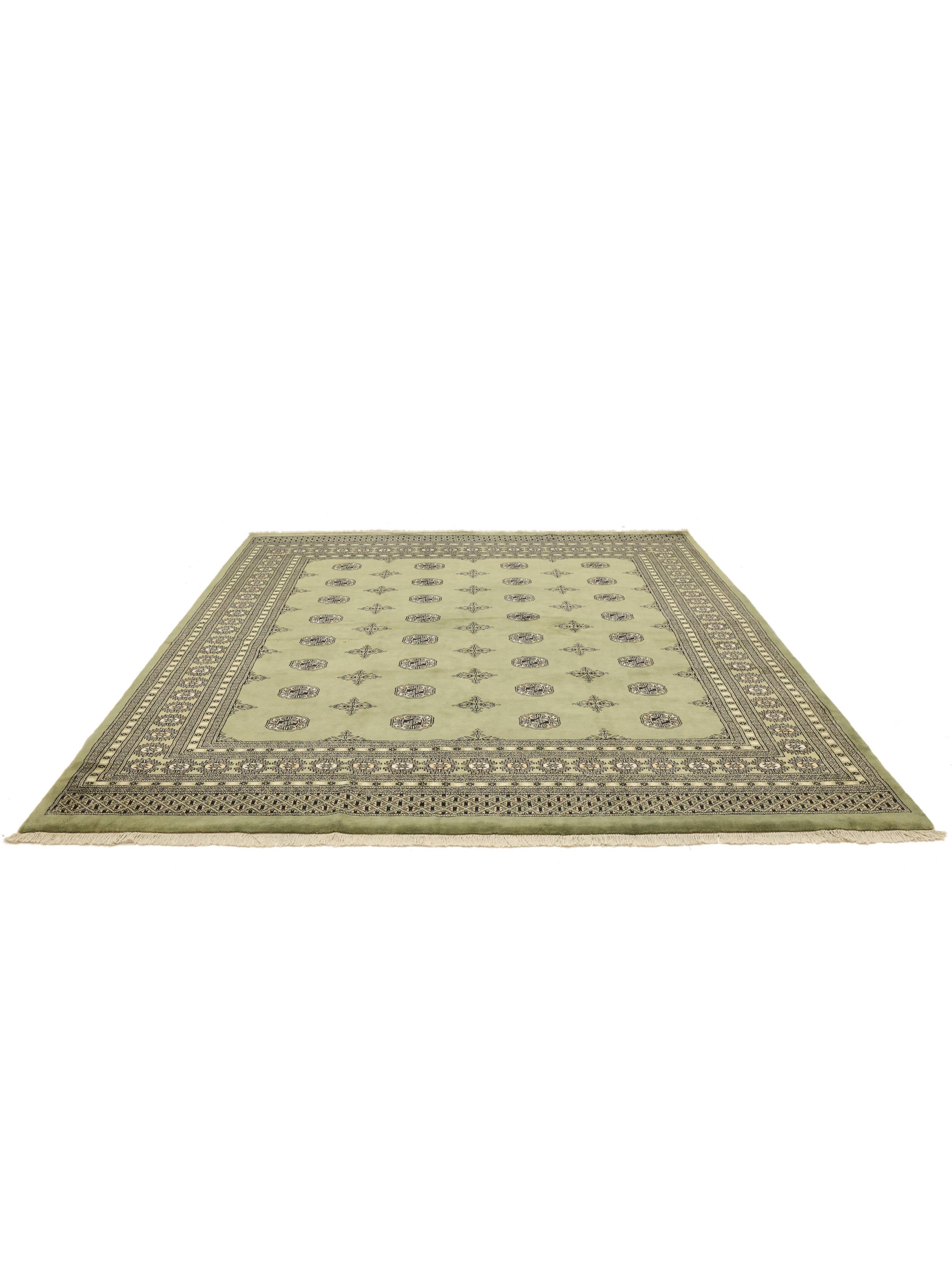
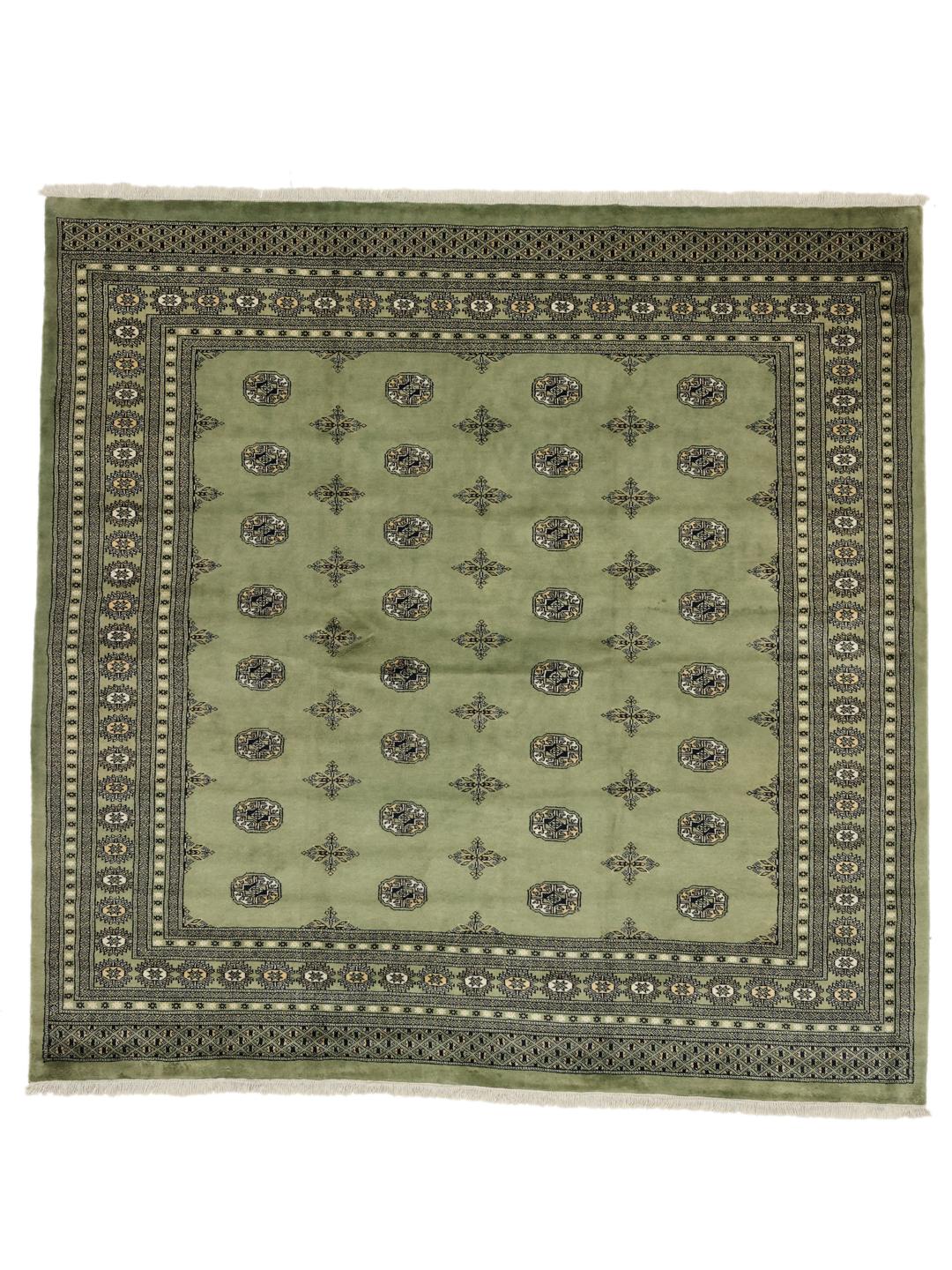
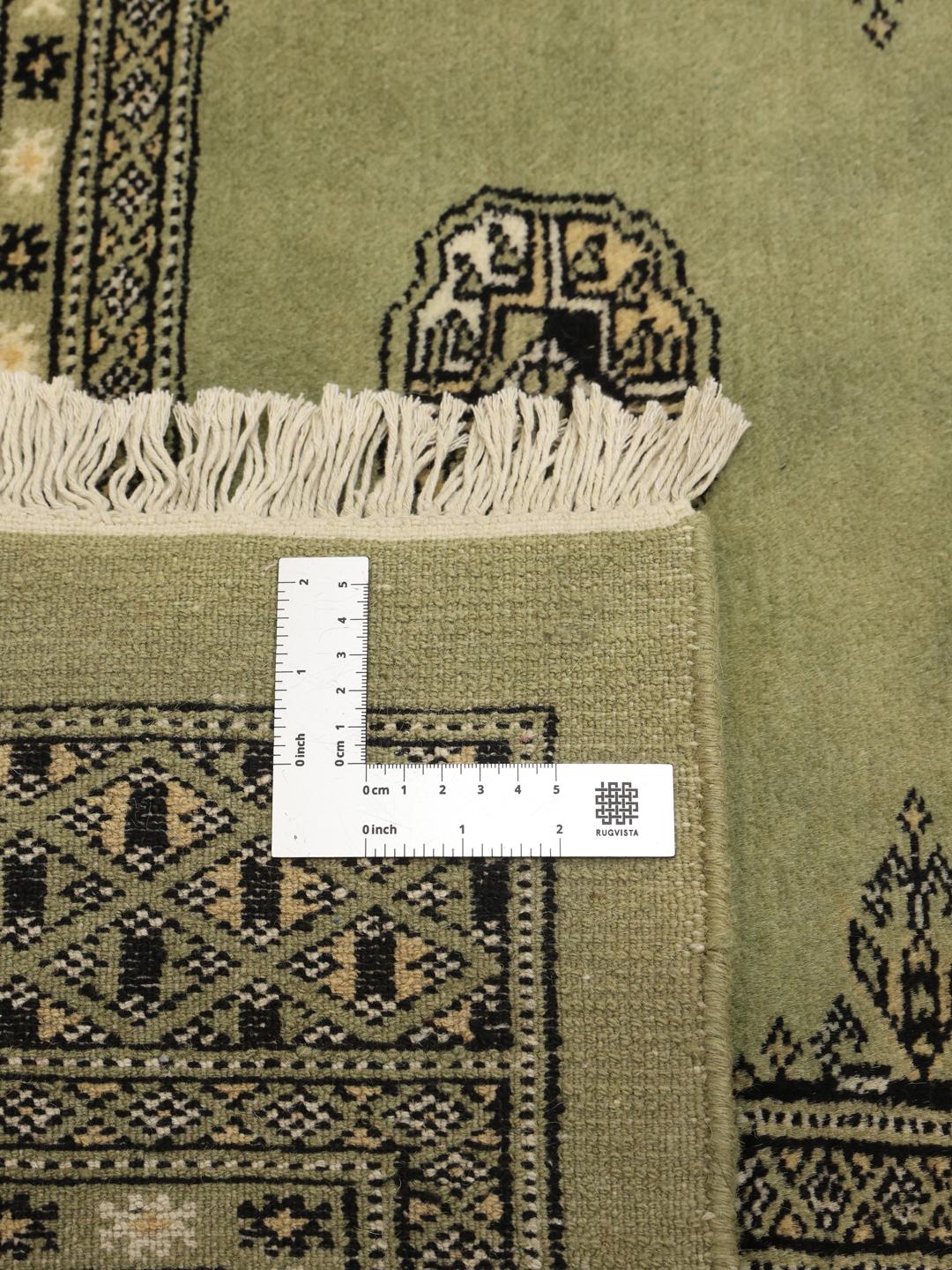
Visually, these rugs are defined by their iconic gul motifs, which are repeating octagonal or elephant-foot shaped medallions arranged in precise rows across the field. In this particular piece, the choice of a soft green field is a unique and refreshing departure from the more traditional red palettes, highlighting the versatility and artistic freedom found in modern Pakistani weaving.
Owning a hand-knotted piece from this tradition is about more than just floor decor, it is about connecting with a heritage of human skill and patience. Collectors value these rugs for their ability to blend formal design with a sense of warmth, representing a commitment to lasting quality that is increasingly rare in the modern world.