Bokhara rugs take their name from the ancient Silk Road city of Bukhara in Central Asia, a historic trading hub where nomadic and town traditions converged. Over generations, the weavers of this style migrated and established thriving craft communities in Pakistan, where they preserved and refined the intricate techniques of their ancestors. This rich migration of skill ensures that every Pakistan Bokhara carries forward centuries of weaving heritage.
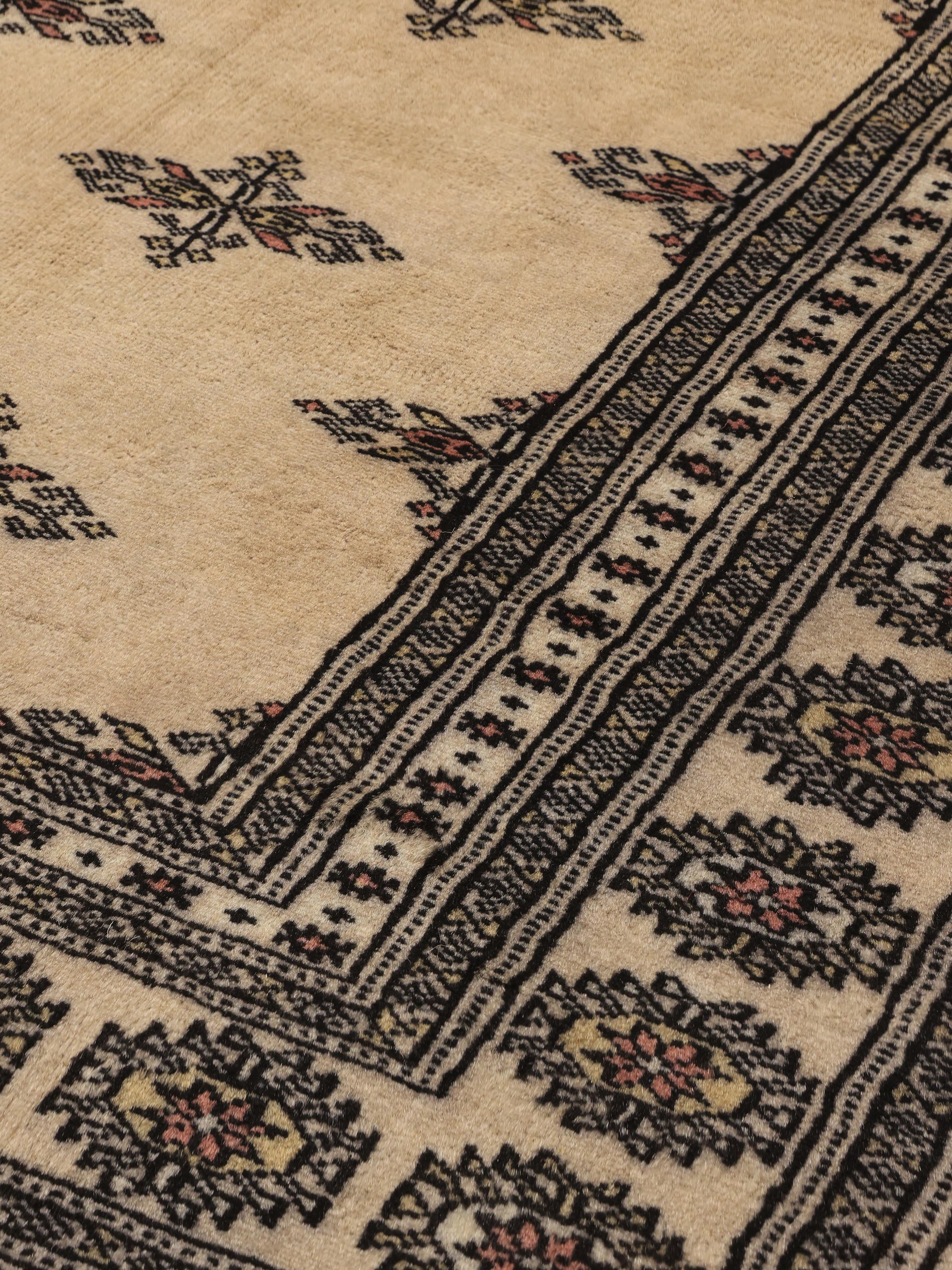
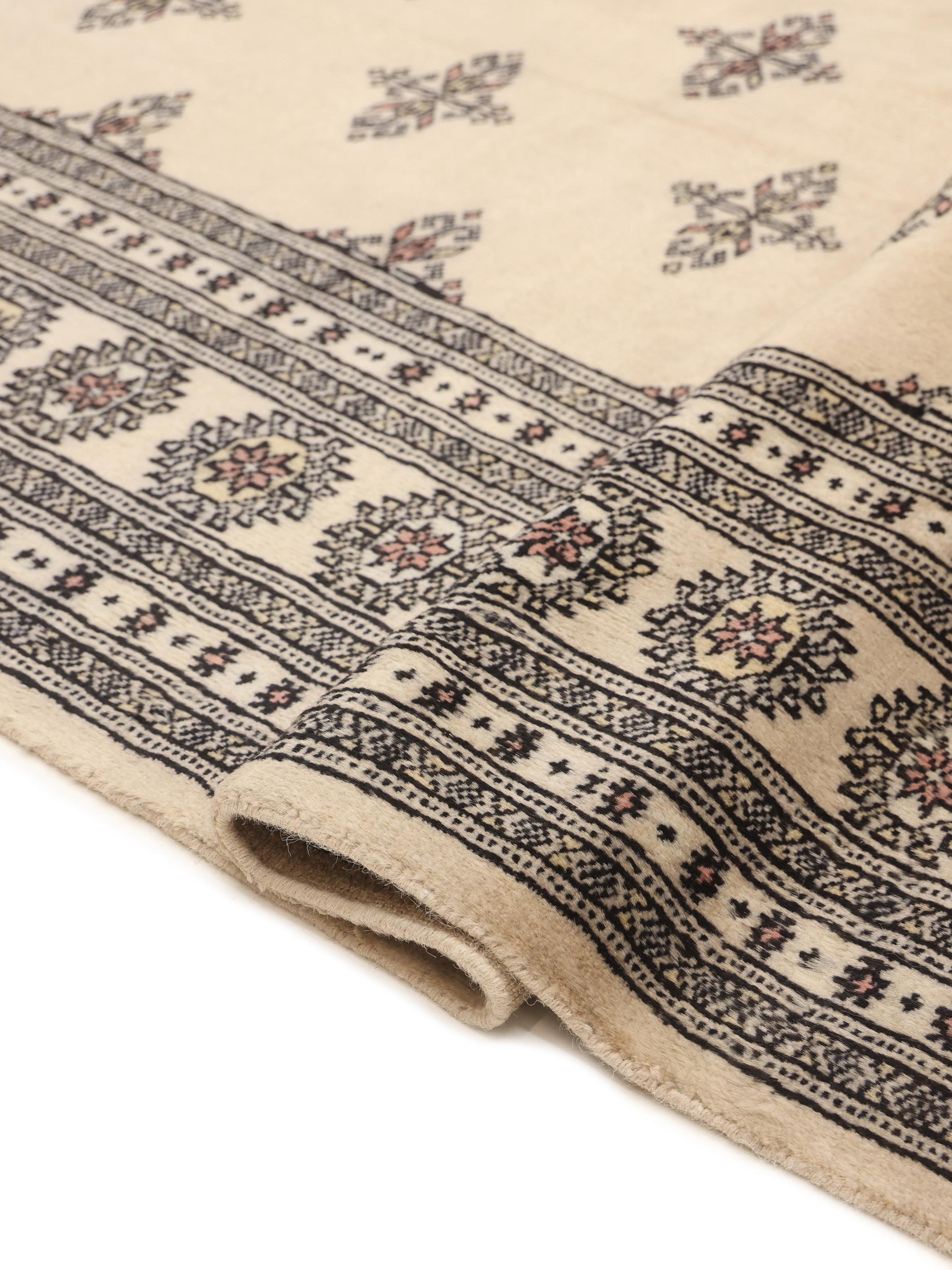
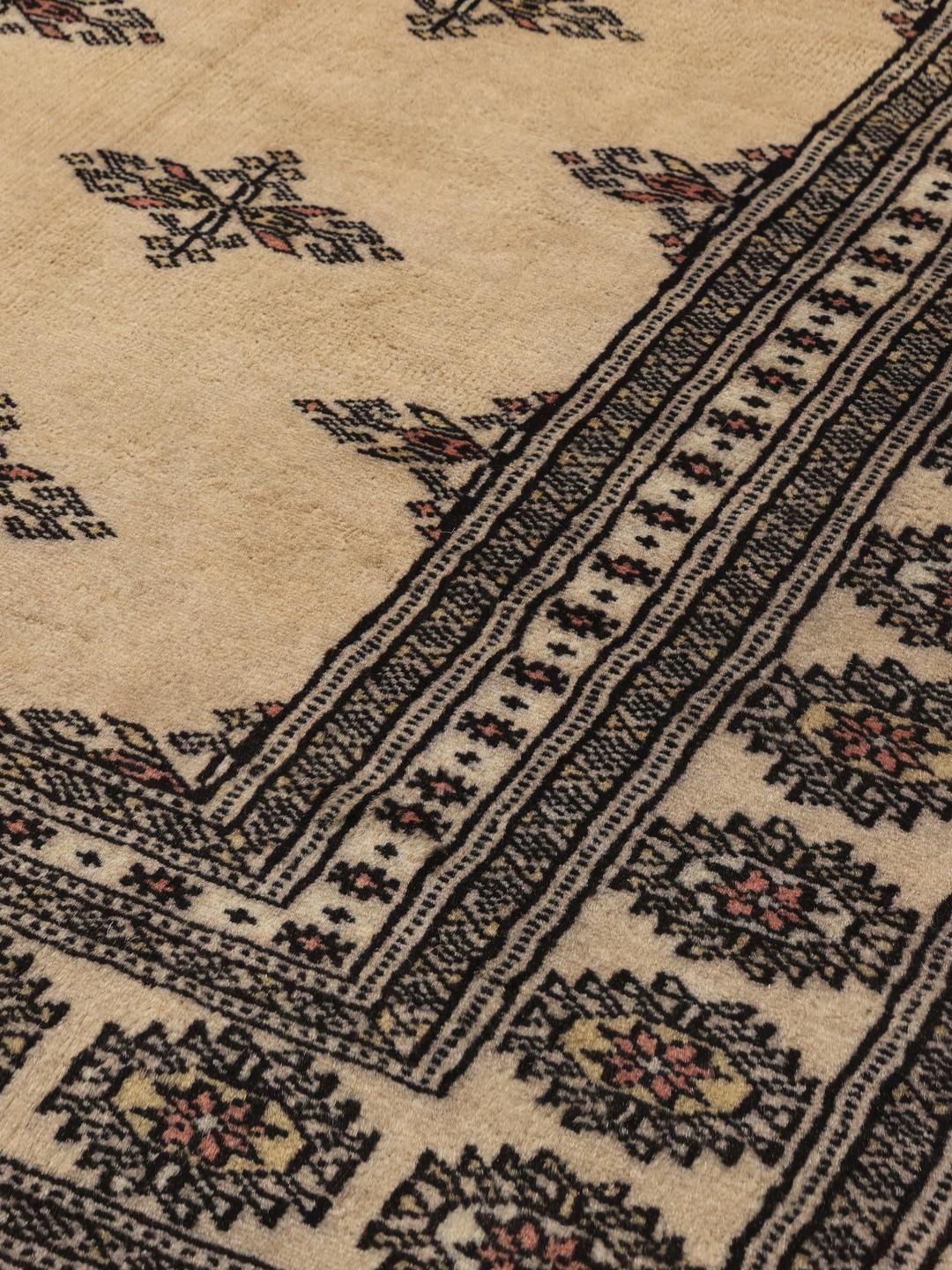
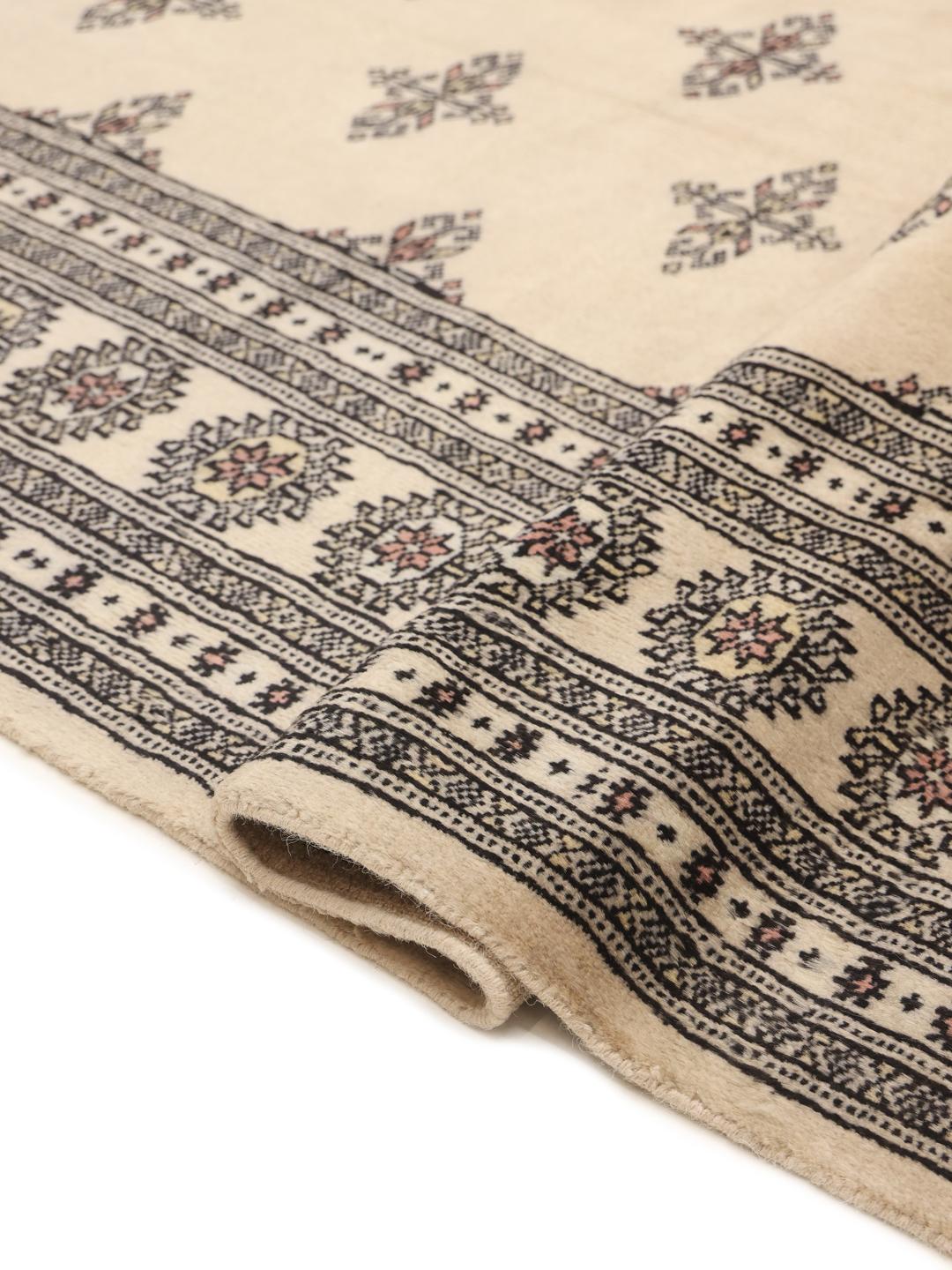
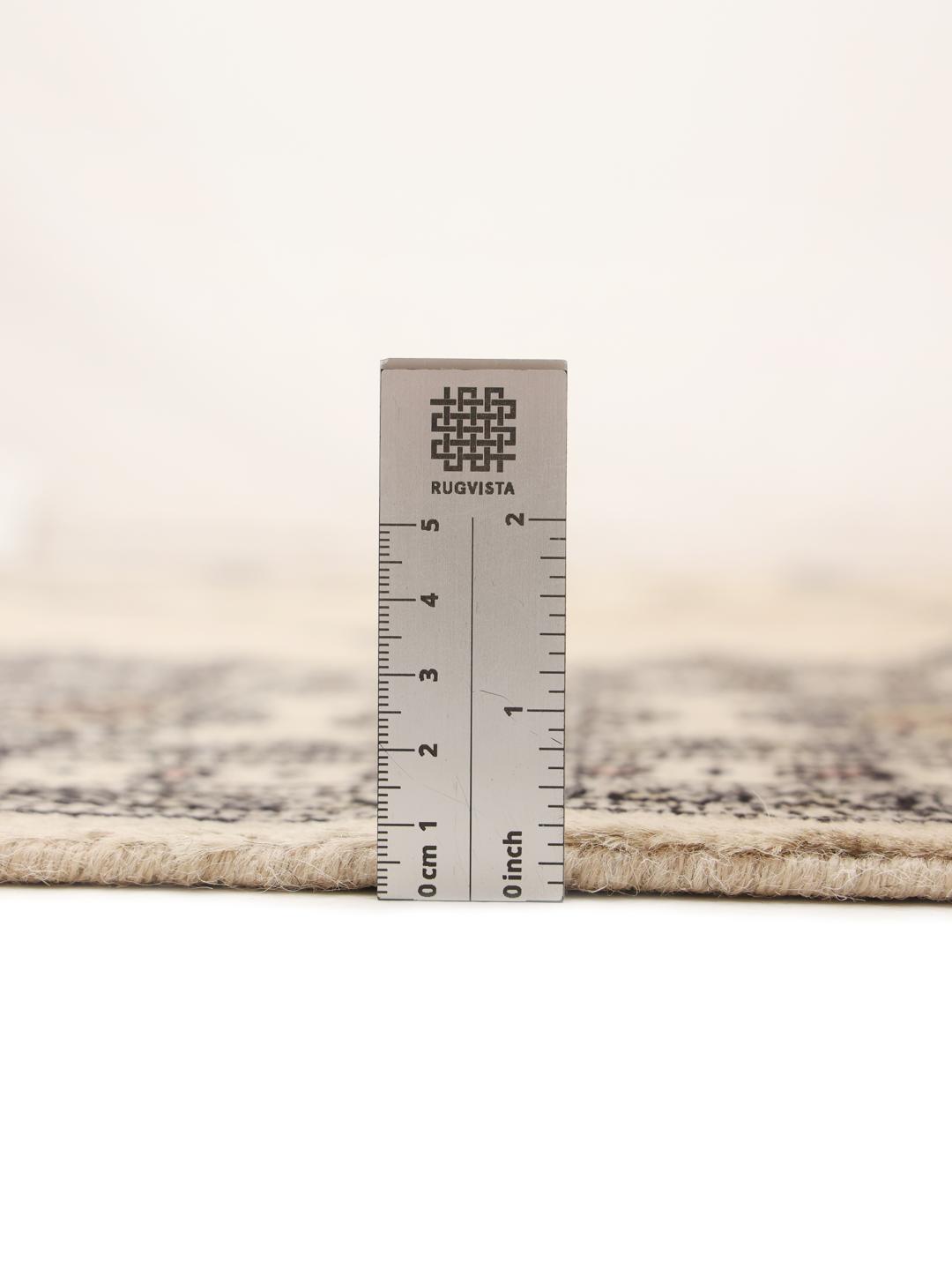
The 2ply designation in this rug refers to a specific construction method where the pile is woven using two strands of wool twisted together before knotting. This technique produces a denser, heavier, and more resilient pile compared to single-ply alternatives. For the customer, this means a rug with greater structural integrity, enhanced resistance to everyday wear, and a deeper, more lustrous surface appearance.
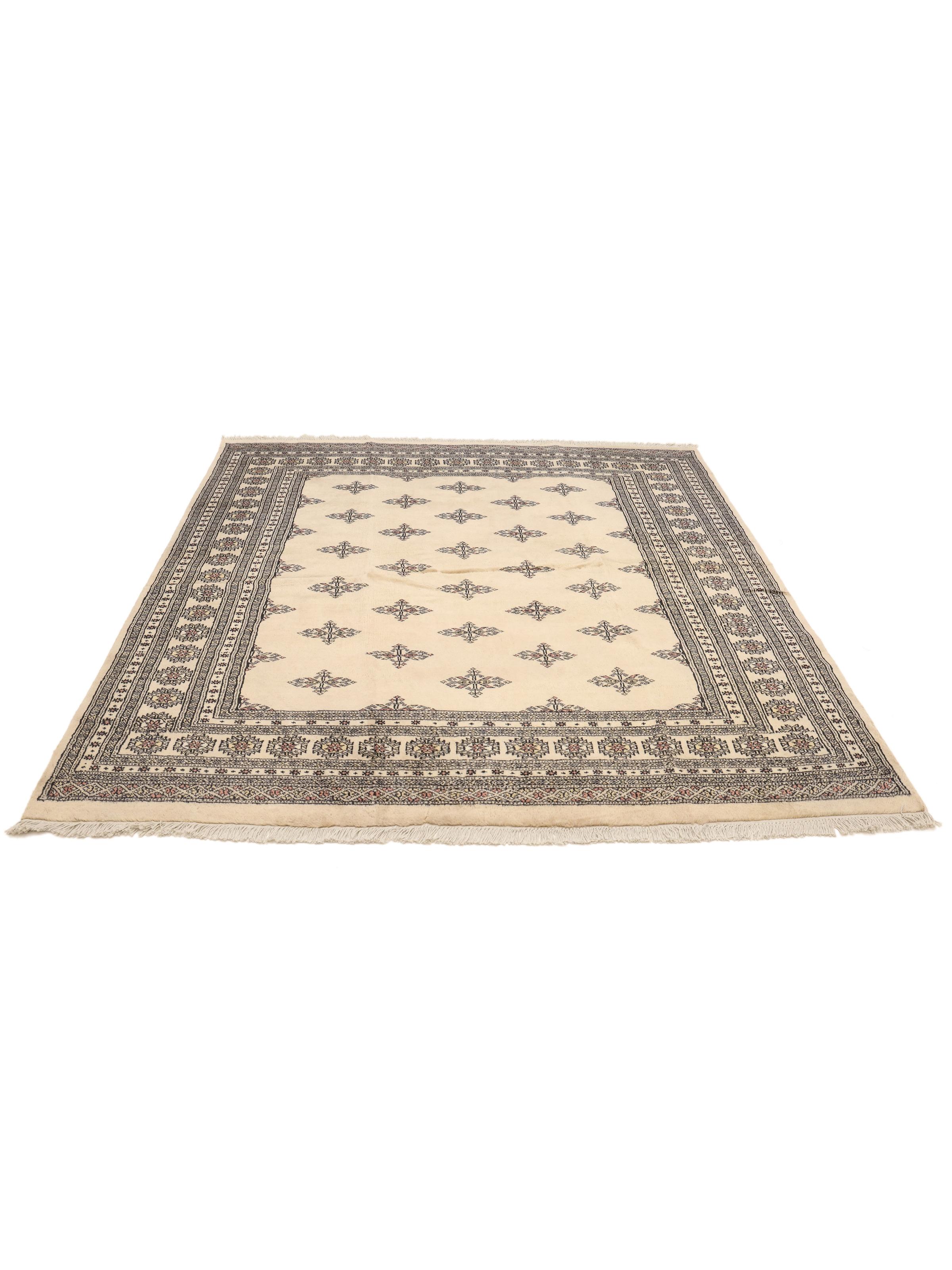
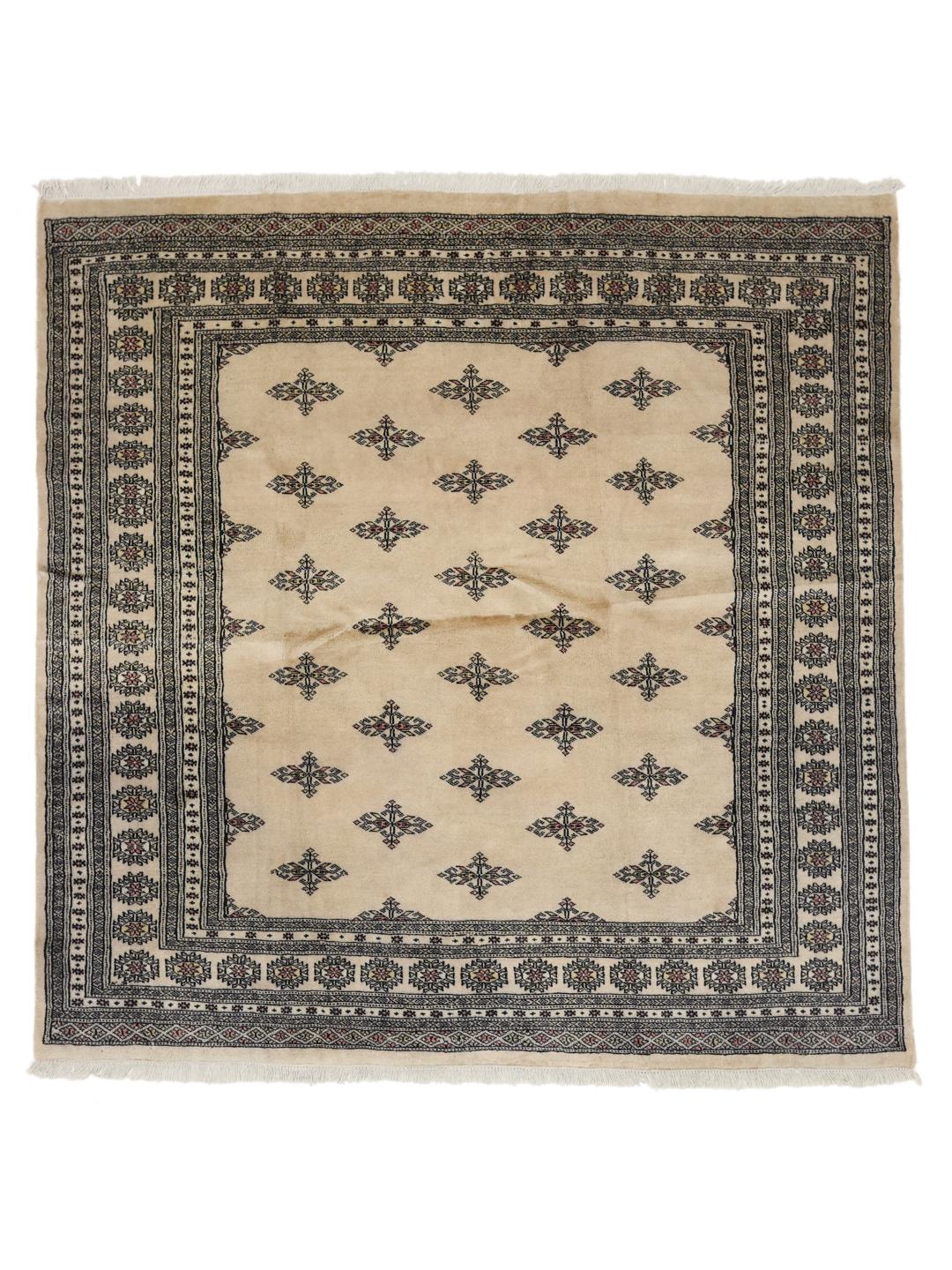
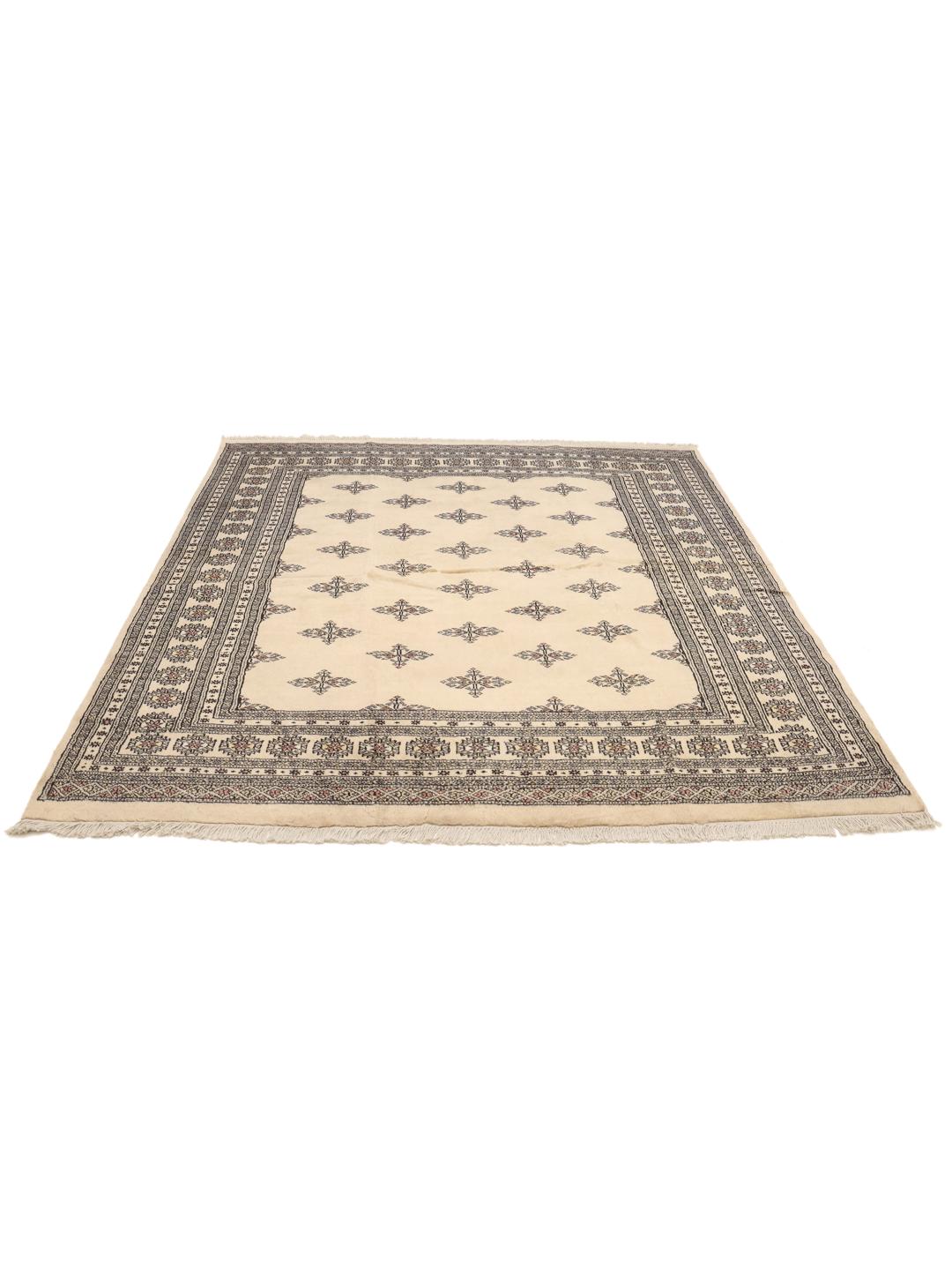
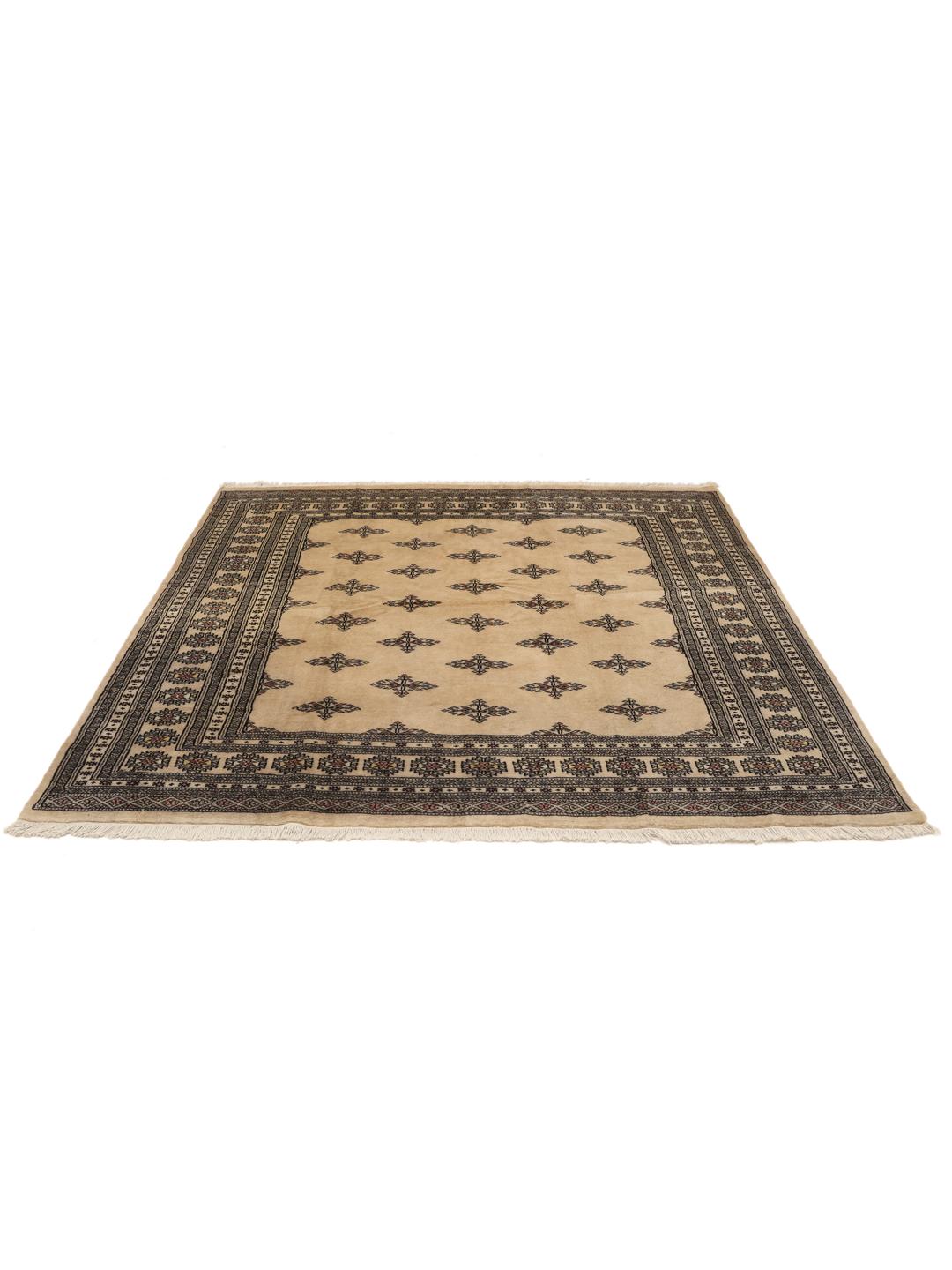
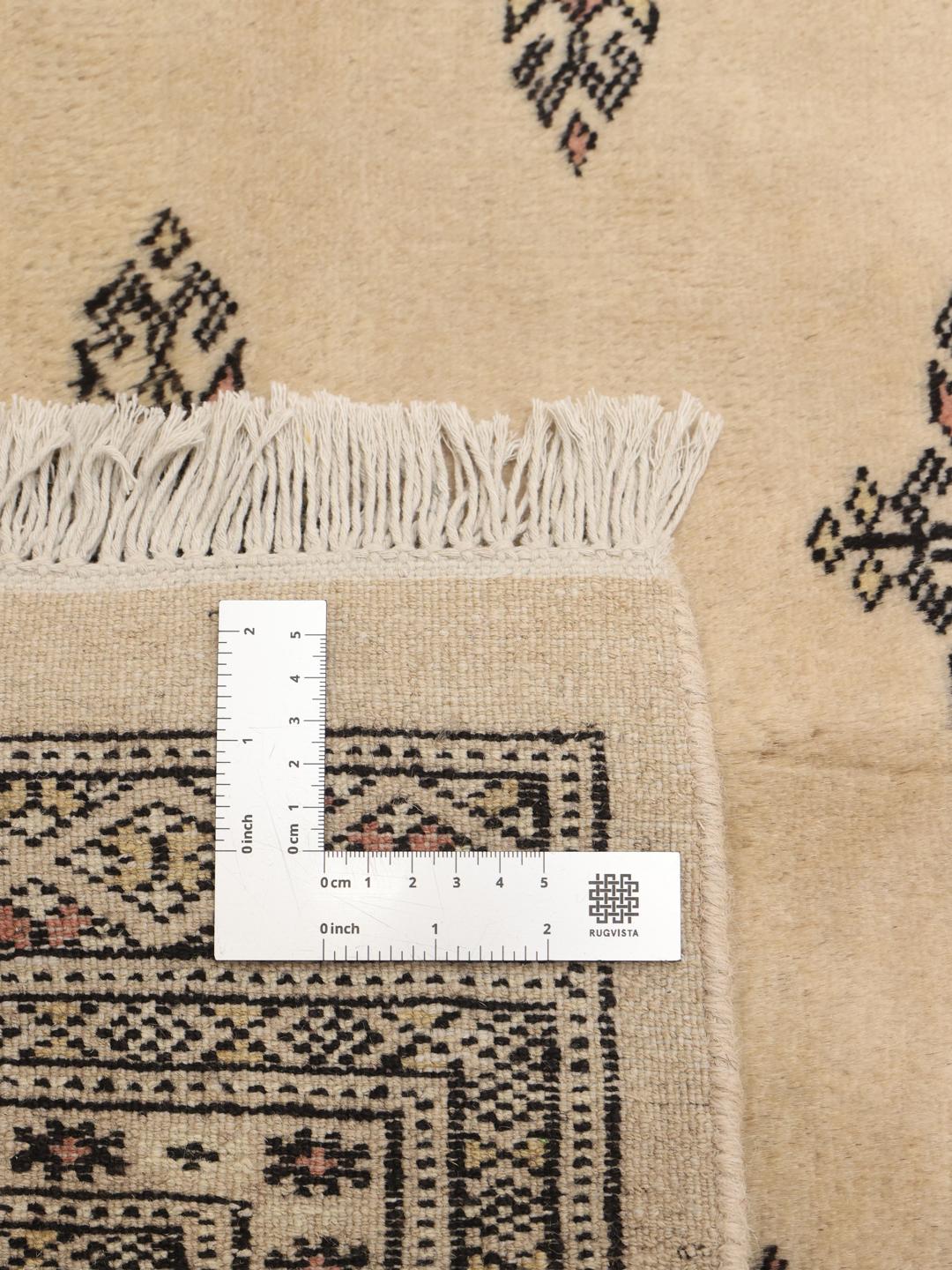
Visually, Bokhara rugs are defined by their repeating gul motifs, which are octagonal or elephant-foot shaped medallions arranged in precise rows across the field. These central elements are typically framed by orderly geometric borders that create a balanced, harmonious composition. The soft beige background of this particular piece offers a gentle variation from the more common deep reds, providing a versatile canvas for traditional patterns.
Collecting rugs from this tradition is a way to honor a living craft that bridges cultures and generations. Owning a piece of this scale and heritage means acquiring more than a simple floor covering, it represents a connection to human skill, cultural storytelling, and enduring artistic expression that stands apart from mass-produced alternatives.