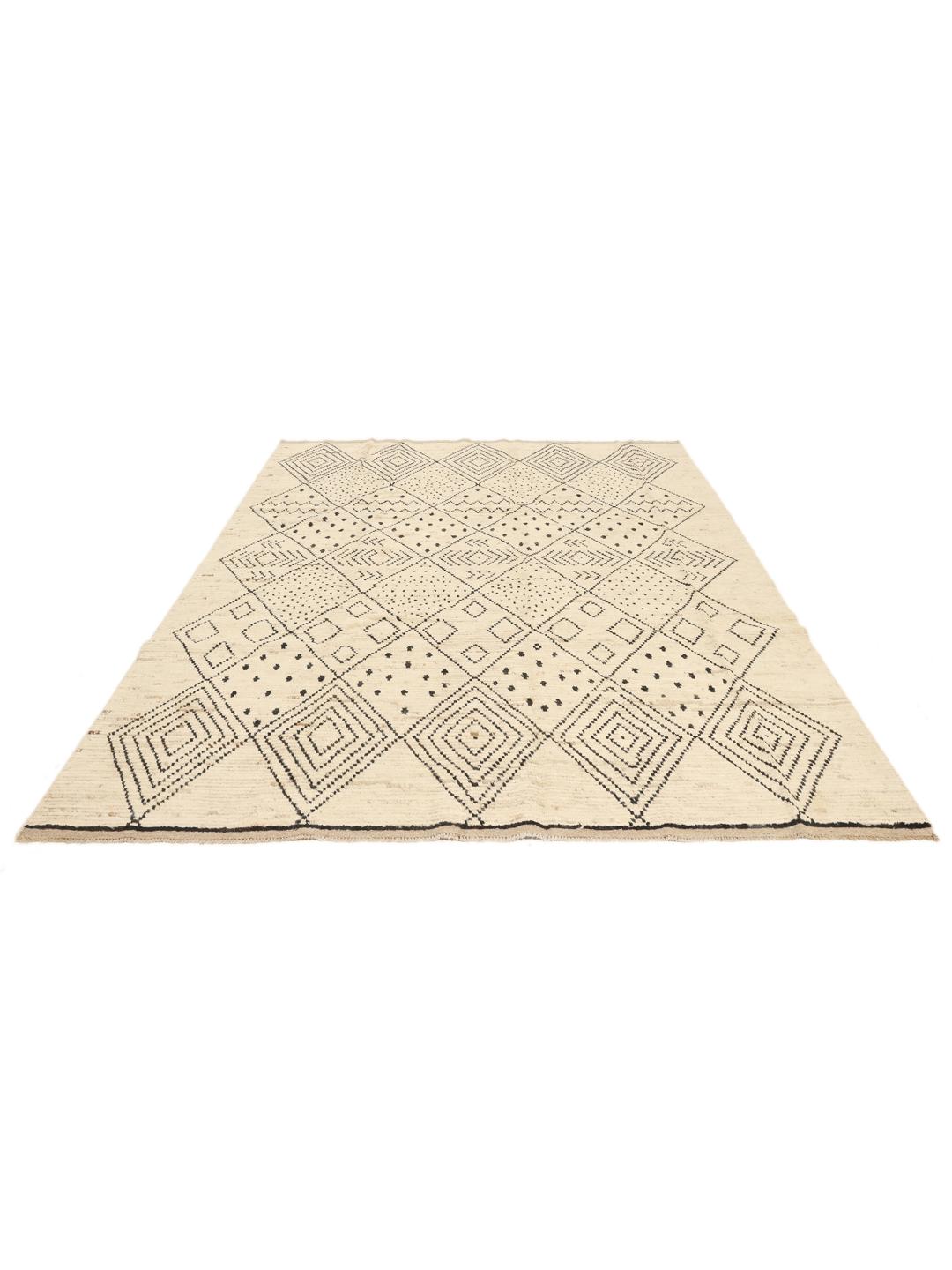
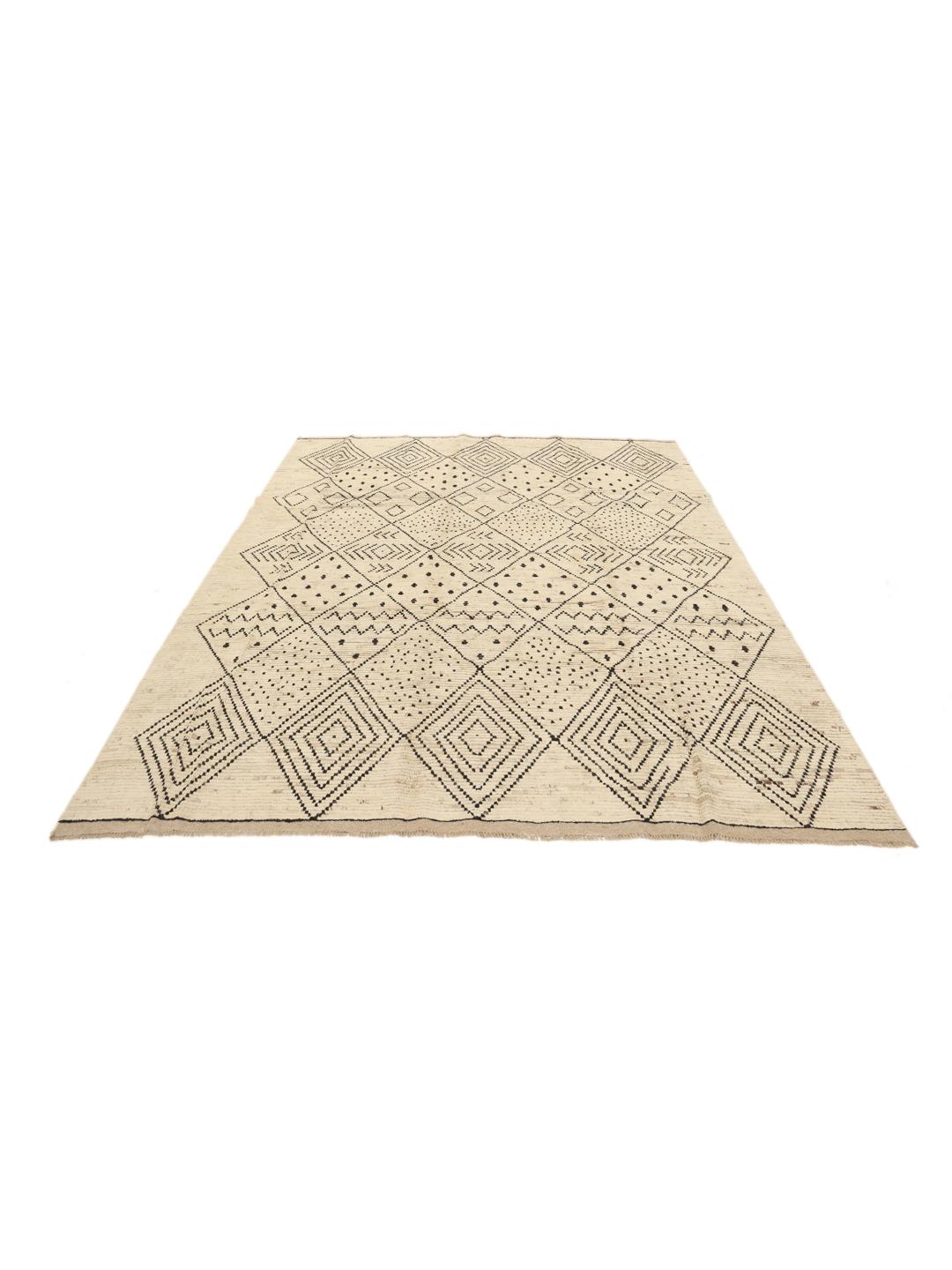
Berber rugs are rooted in the ancient traditions of nomadic cultures, primarily associated with the Berber tribes of North Africa. Over centuries, these weaving styles have migrated and been interpreted by artisans across the Middle East, including Afghanistan, where they have been adapted to local aesthetics while maintaining their signature spirit of bold, geometric storytelling.
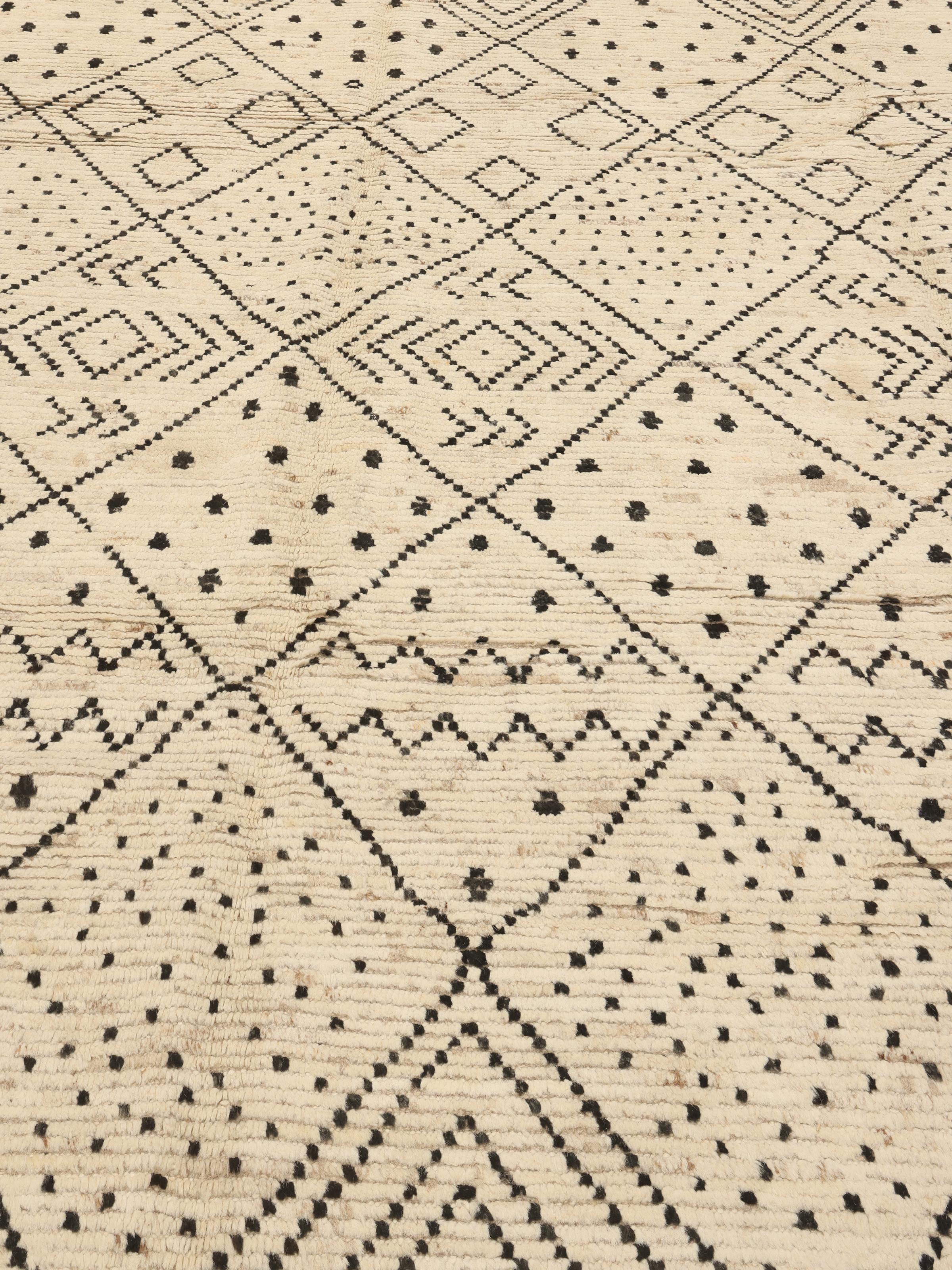
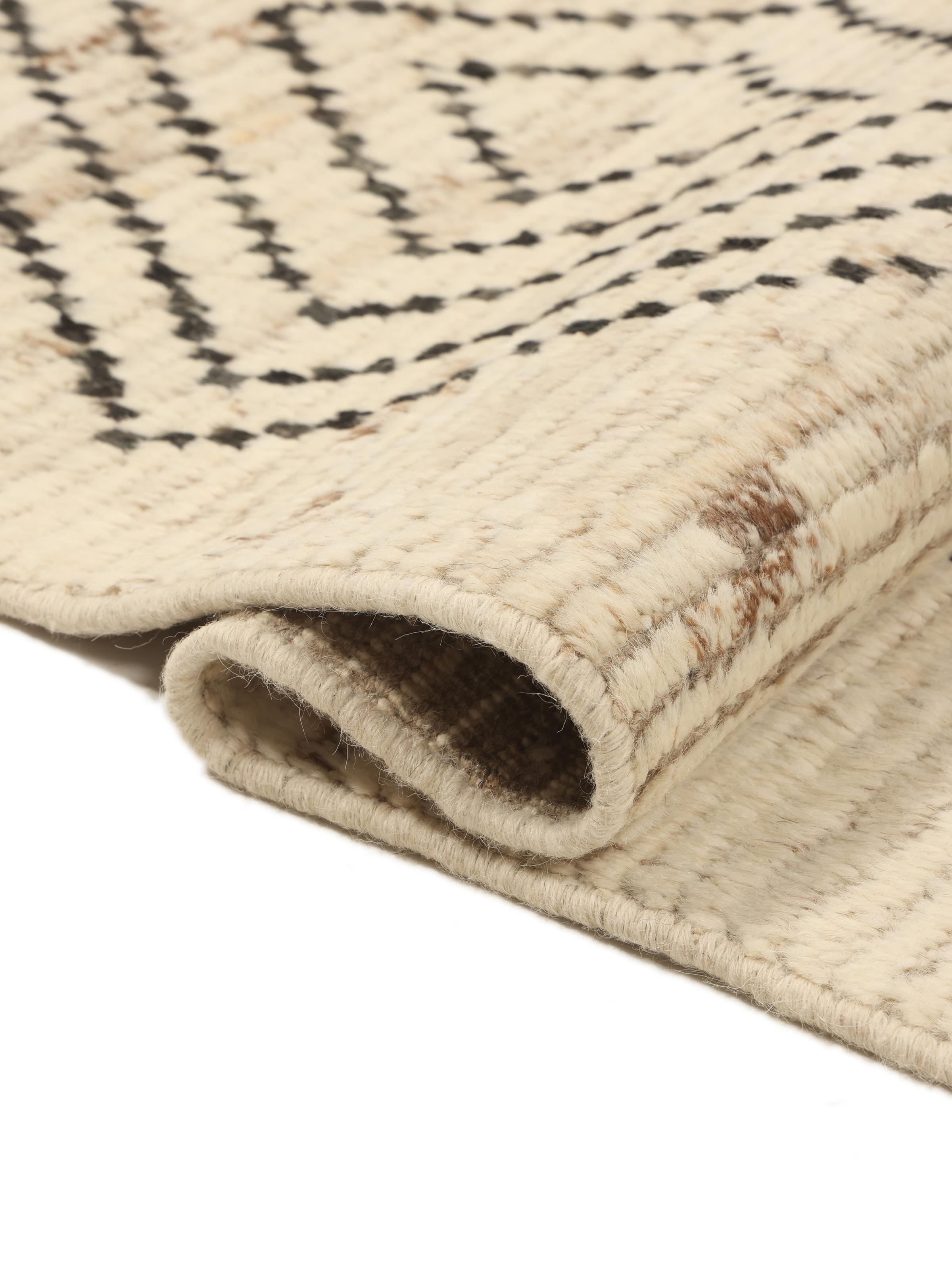
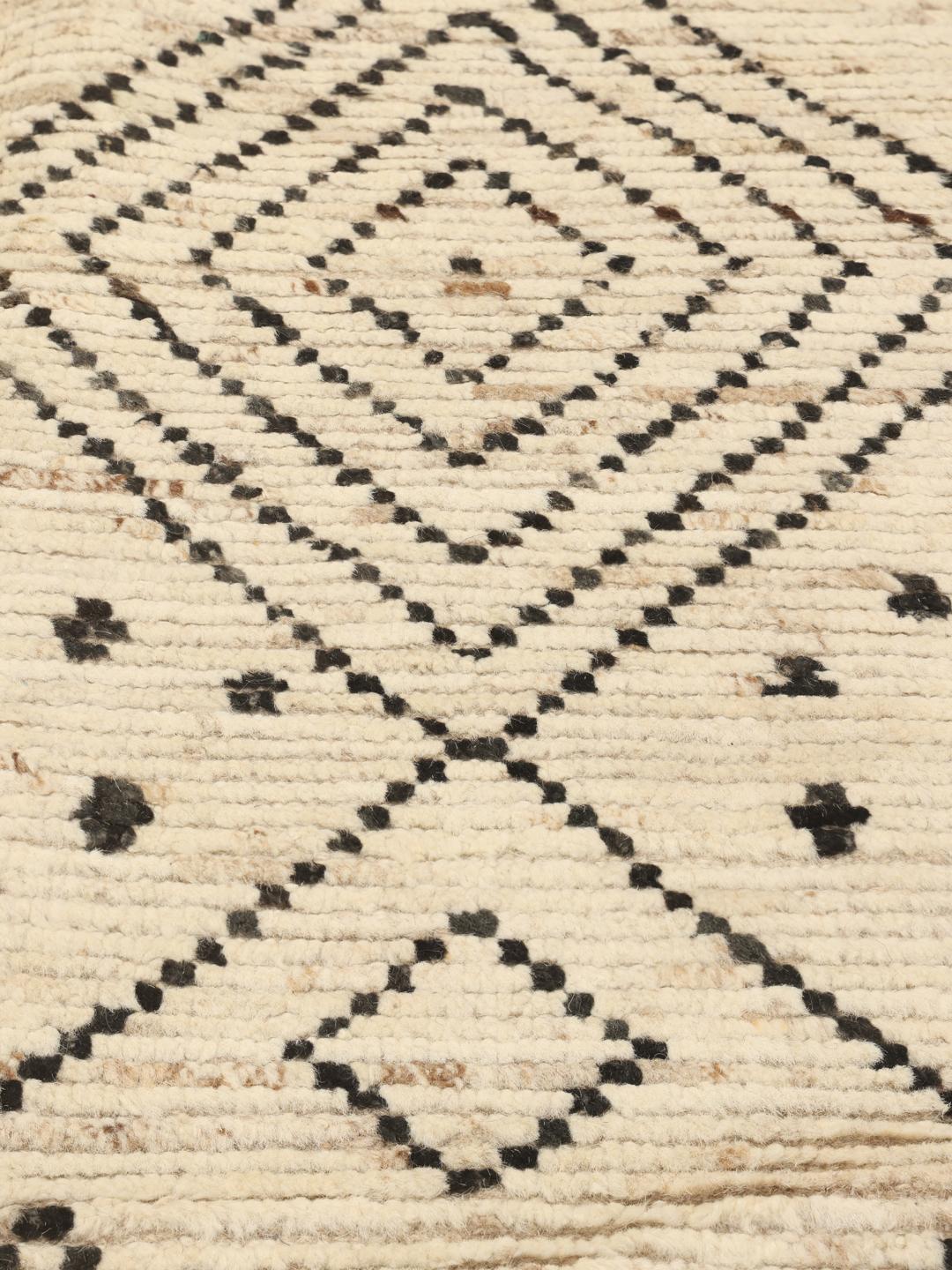
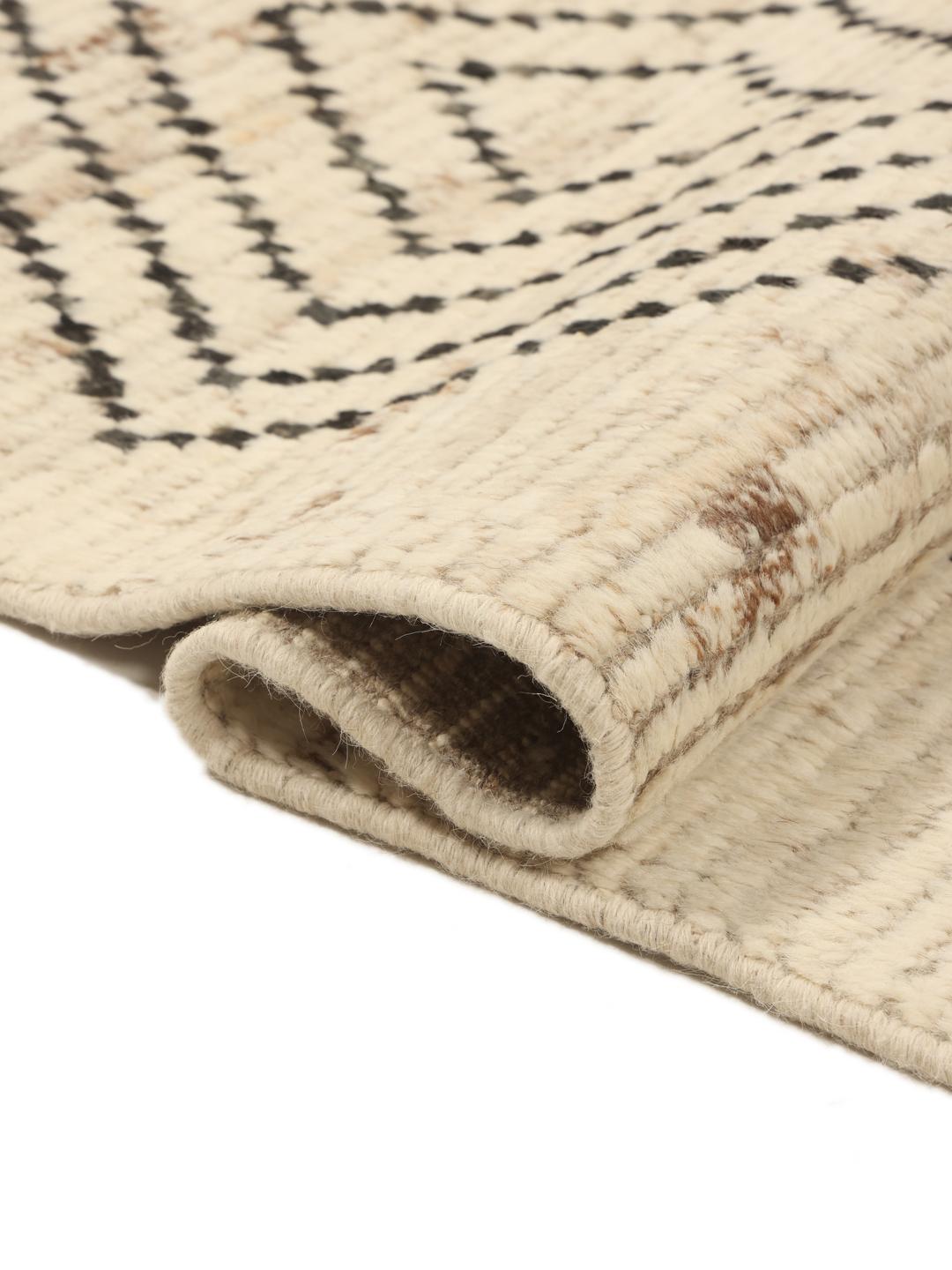
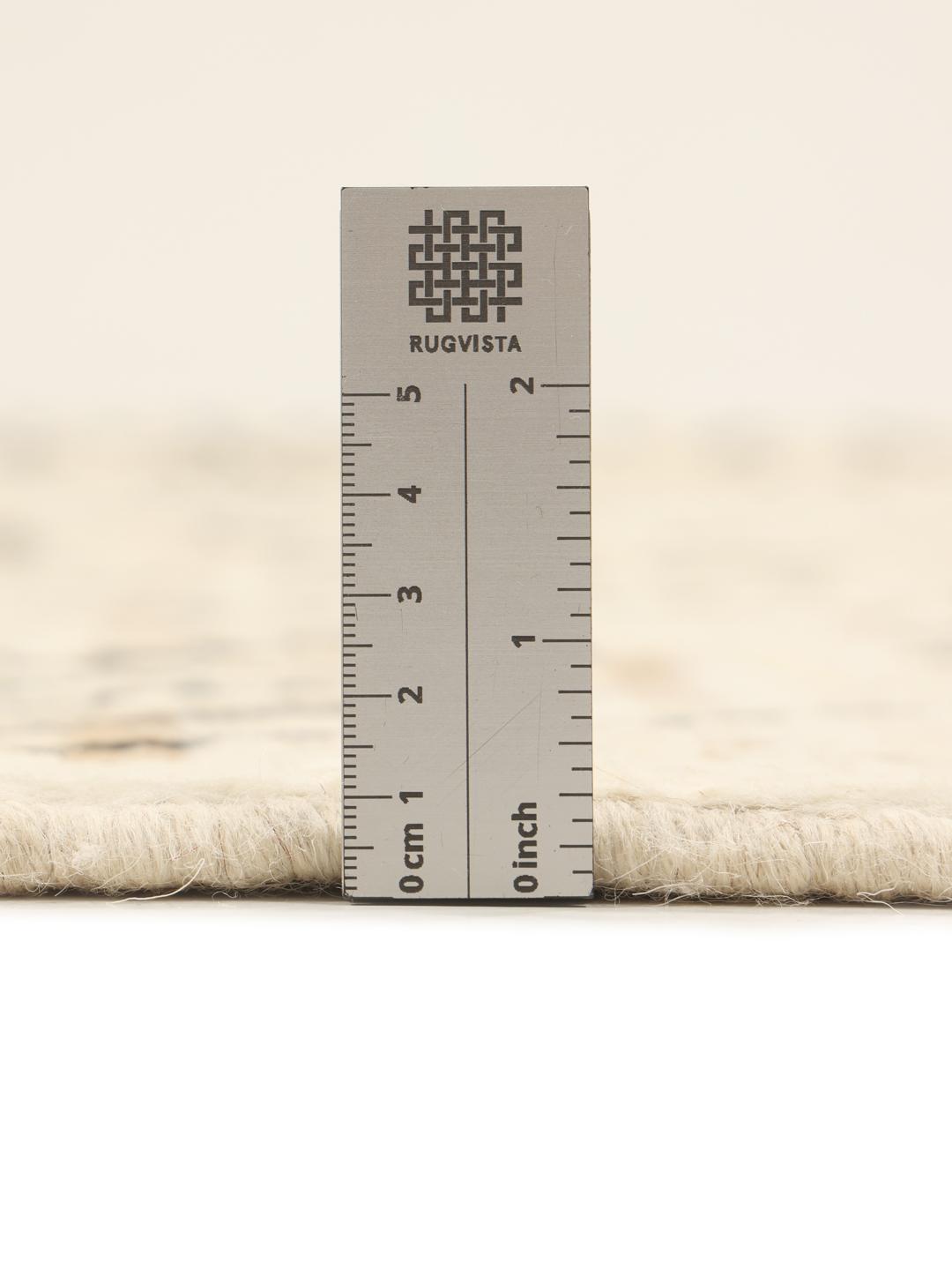
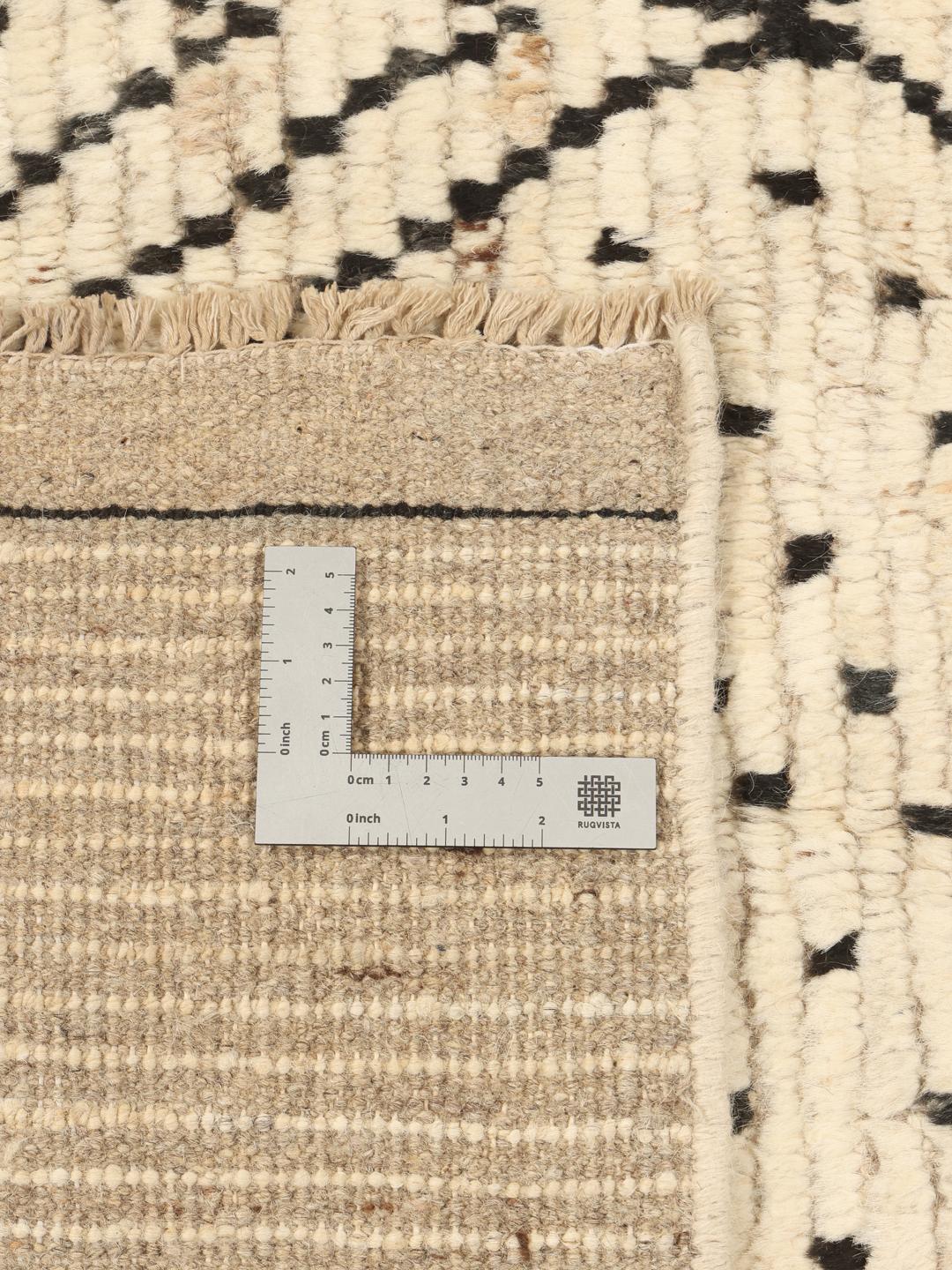
The technique of hand-knotting is a cornerstone of this category. By using a double-knot or single-knot method to secure the wool to the foundation, weavers create a pile that is dense, lustrous, and remarkably resilient. This structural approach is what gives these rugs their famous longevity, as the tightly packed knots prevent the pile from flattening and protect the foundation from wear.
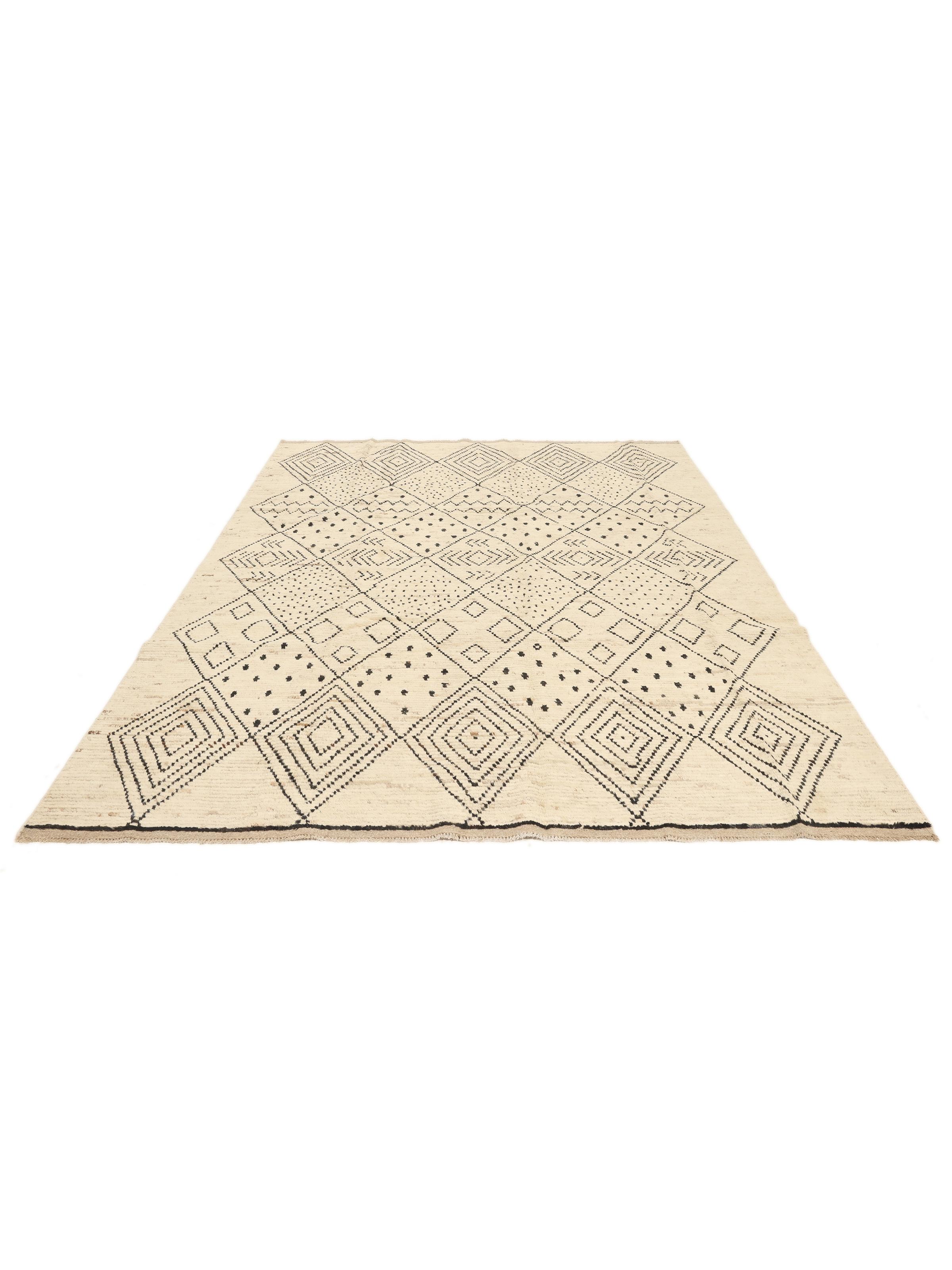
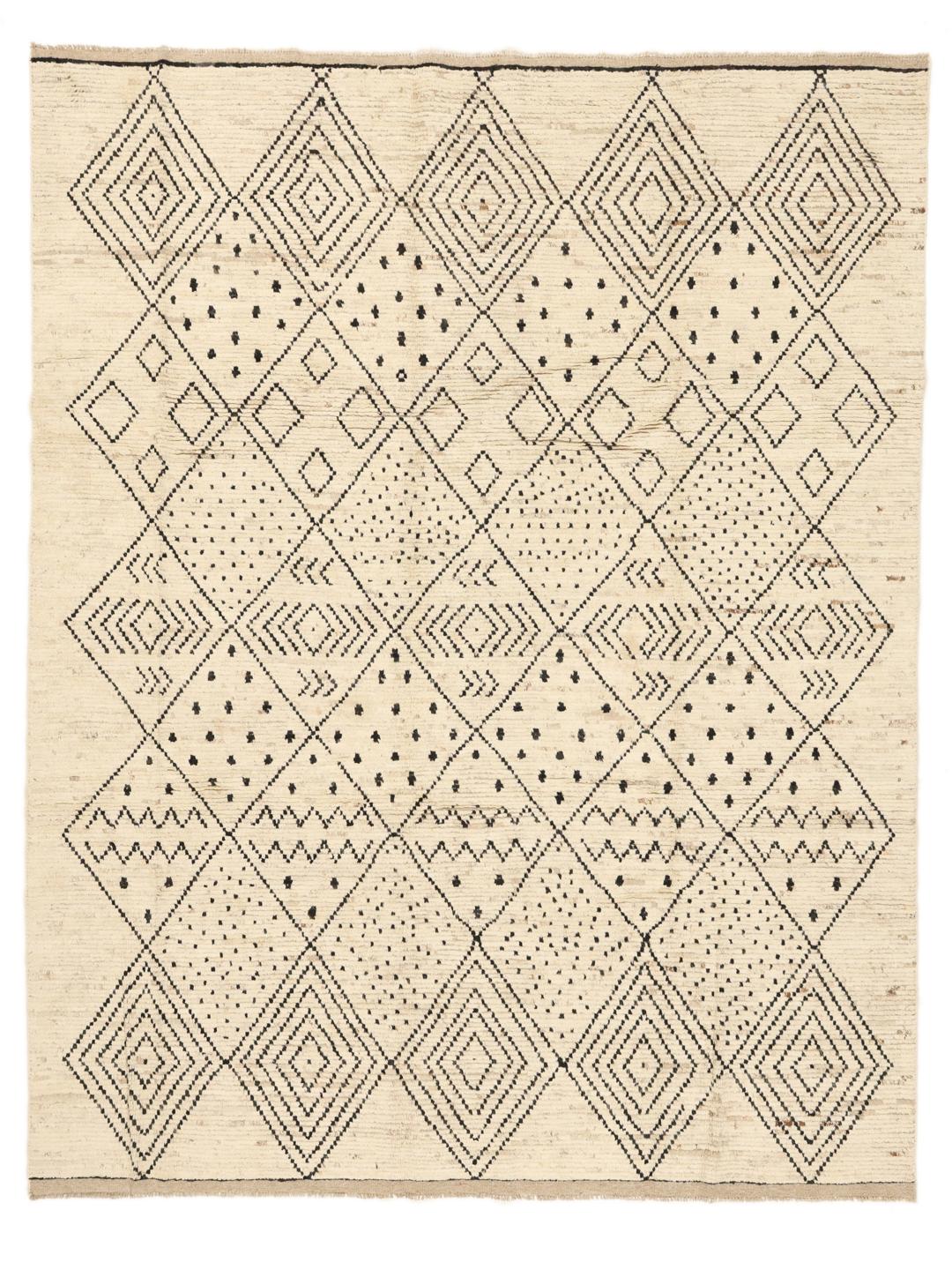
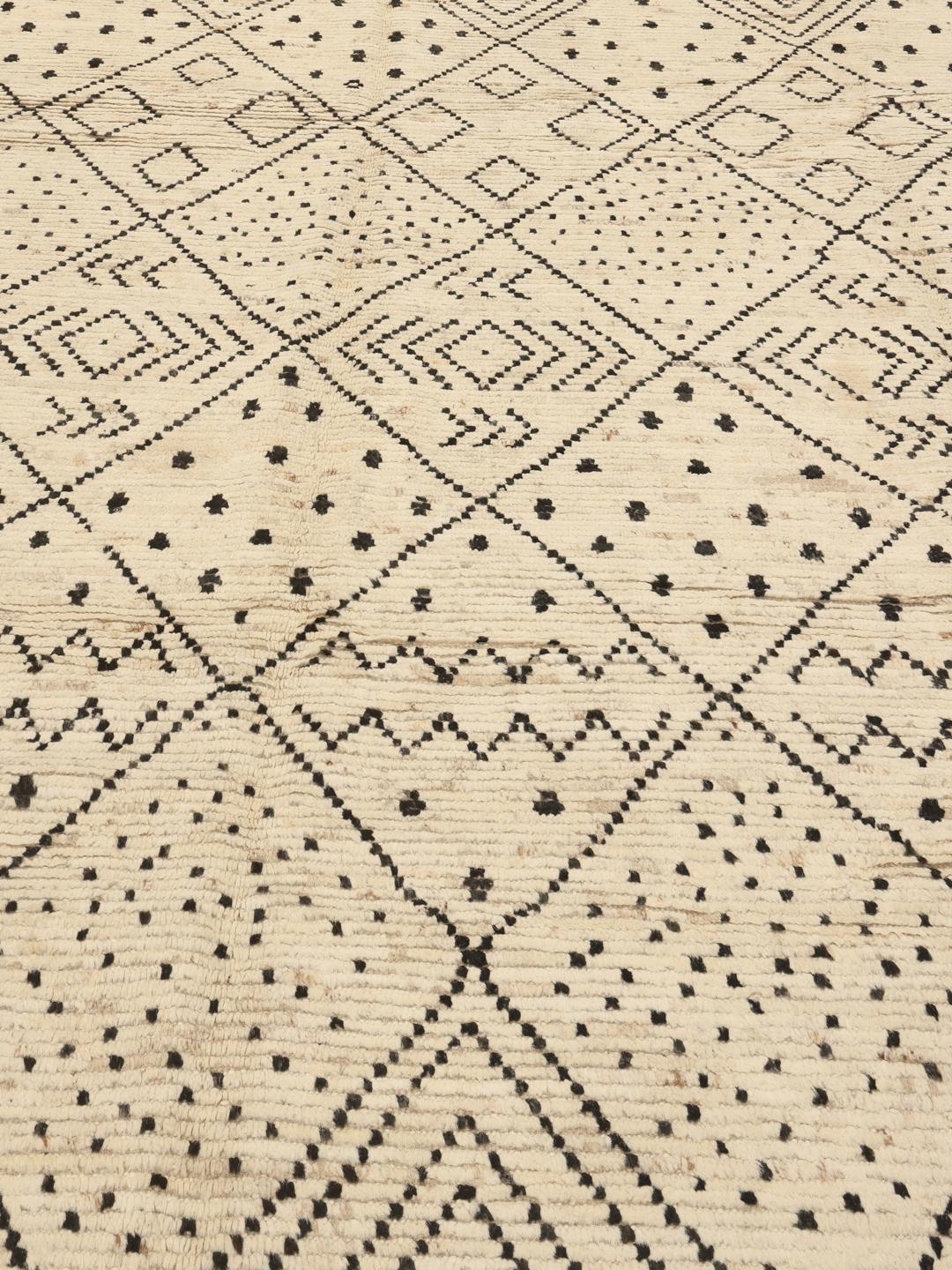
Visually, these rugs are defined by their minimalist yet powerful use of symbols. The diamond motif, often seen in various scales, is a traditional emblem of protection and fertility. In this piece, the combination of clean lines and repeating shapes creates a balanced, modern look that honours the heritage of the original tribal designs while fitting seamlessly into contemporary homes.
Collecting a rug from this tradition is an investment in human history. These pieces are valued not only for their aesthetic appeal but for the way they preserve ancient weaving techniques in an increasingly industrialised world. When you choose a rug like this, you are supporting a lineage of craft that values individual expression and the slow, deliberate creation of beauty over mass production.