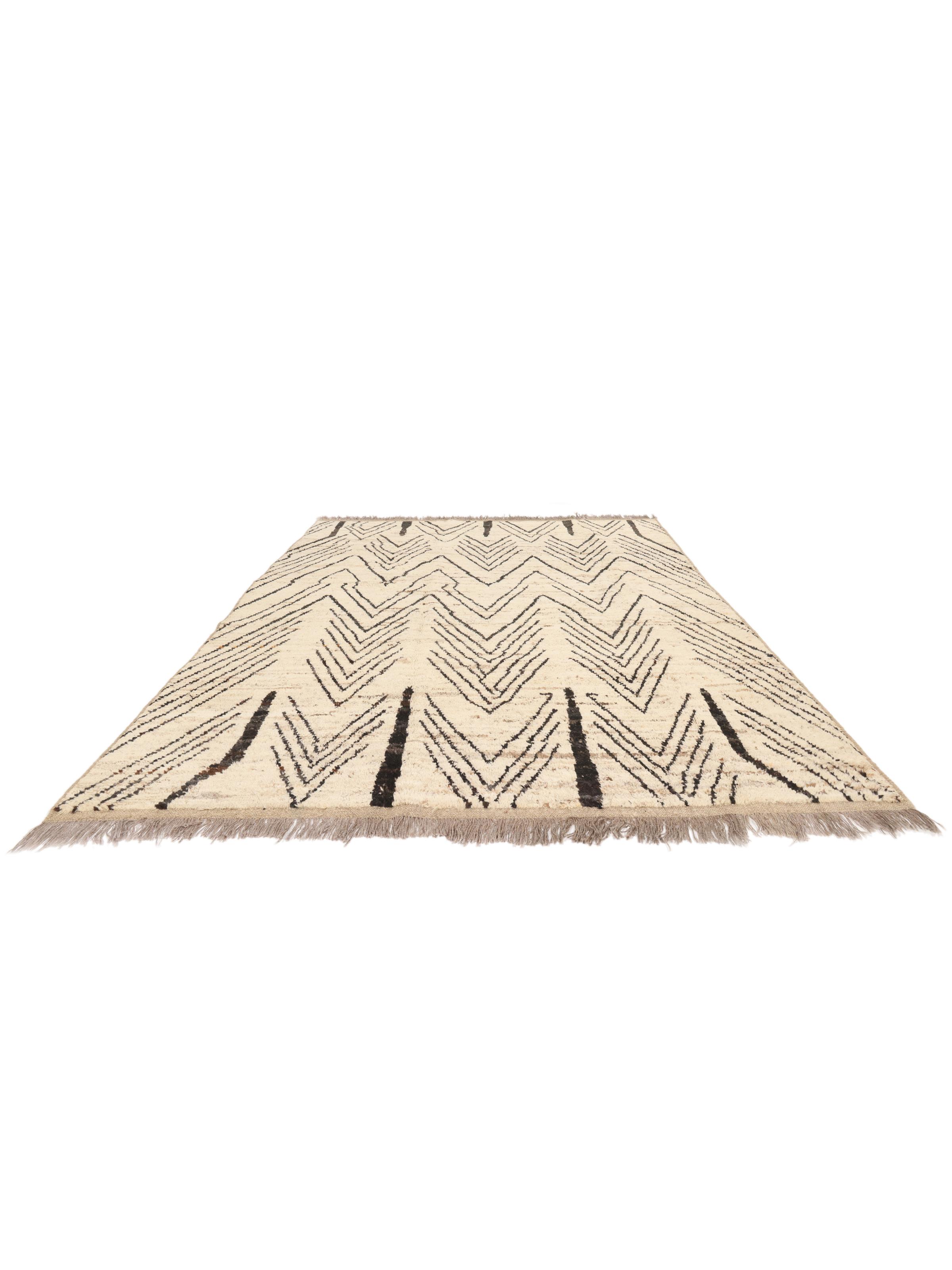
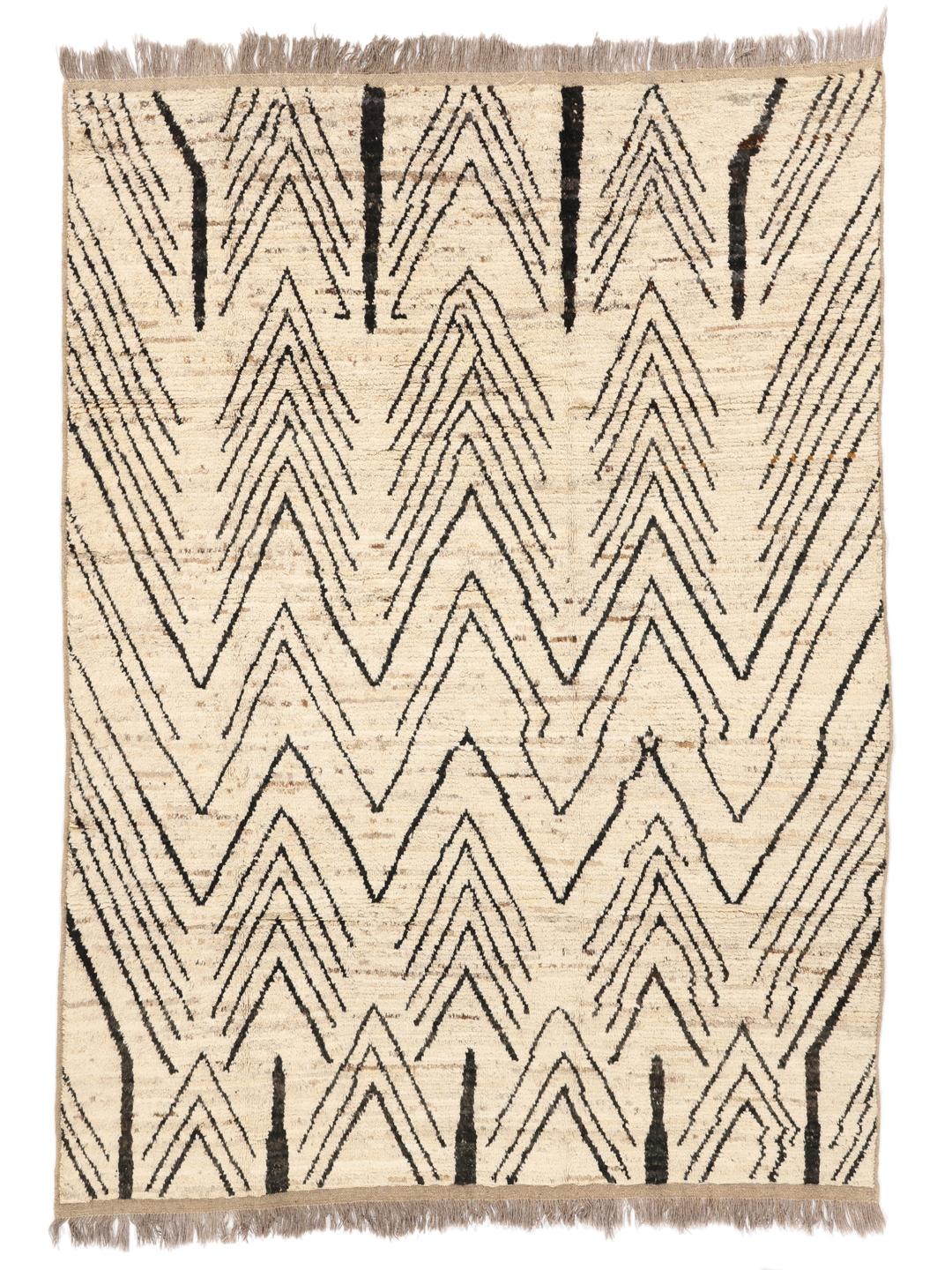
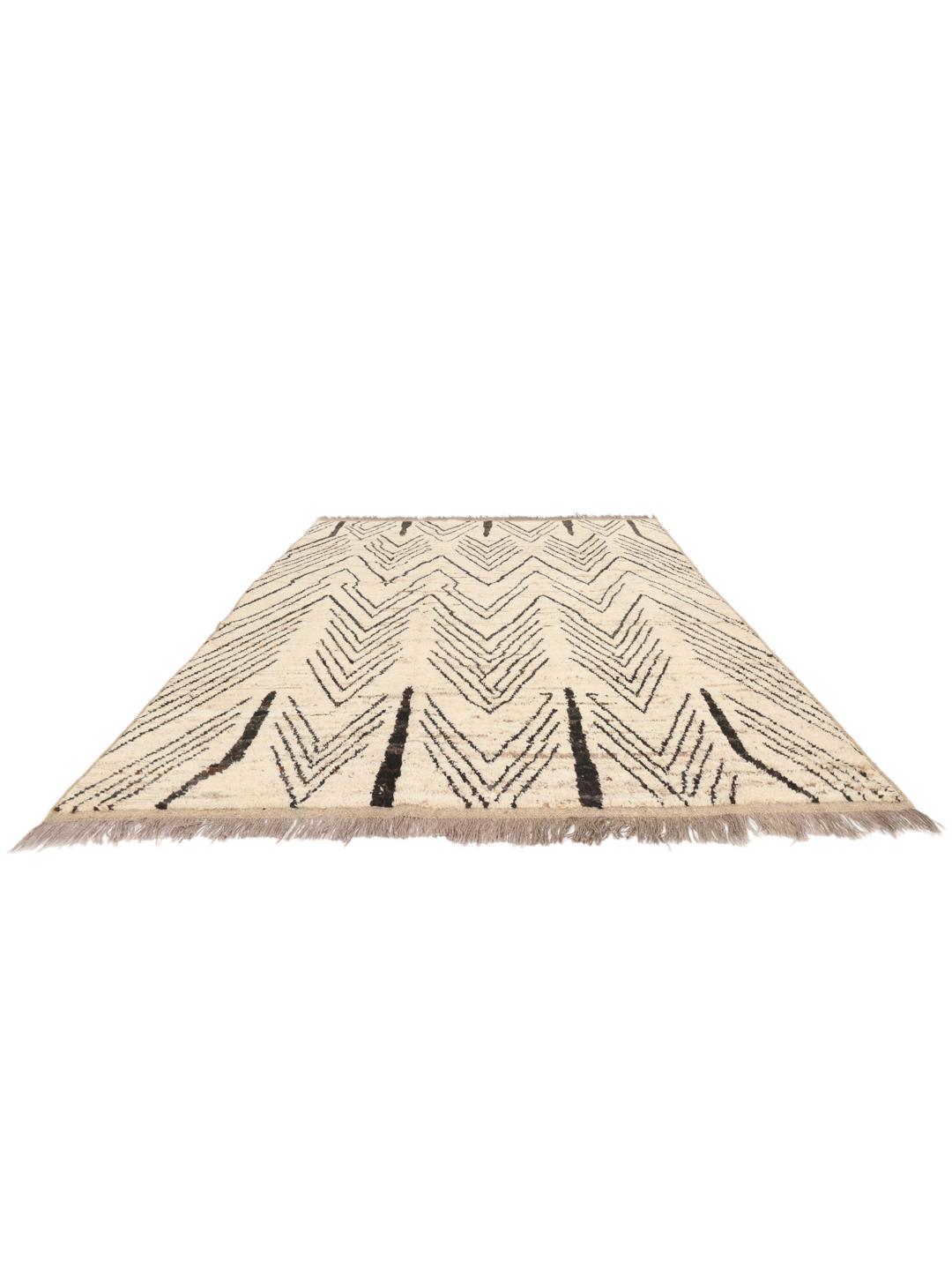
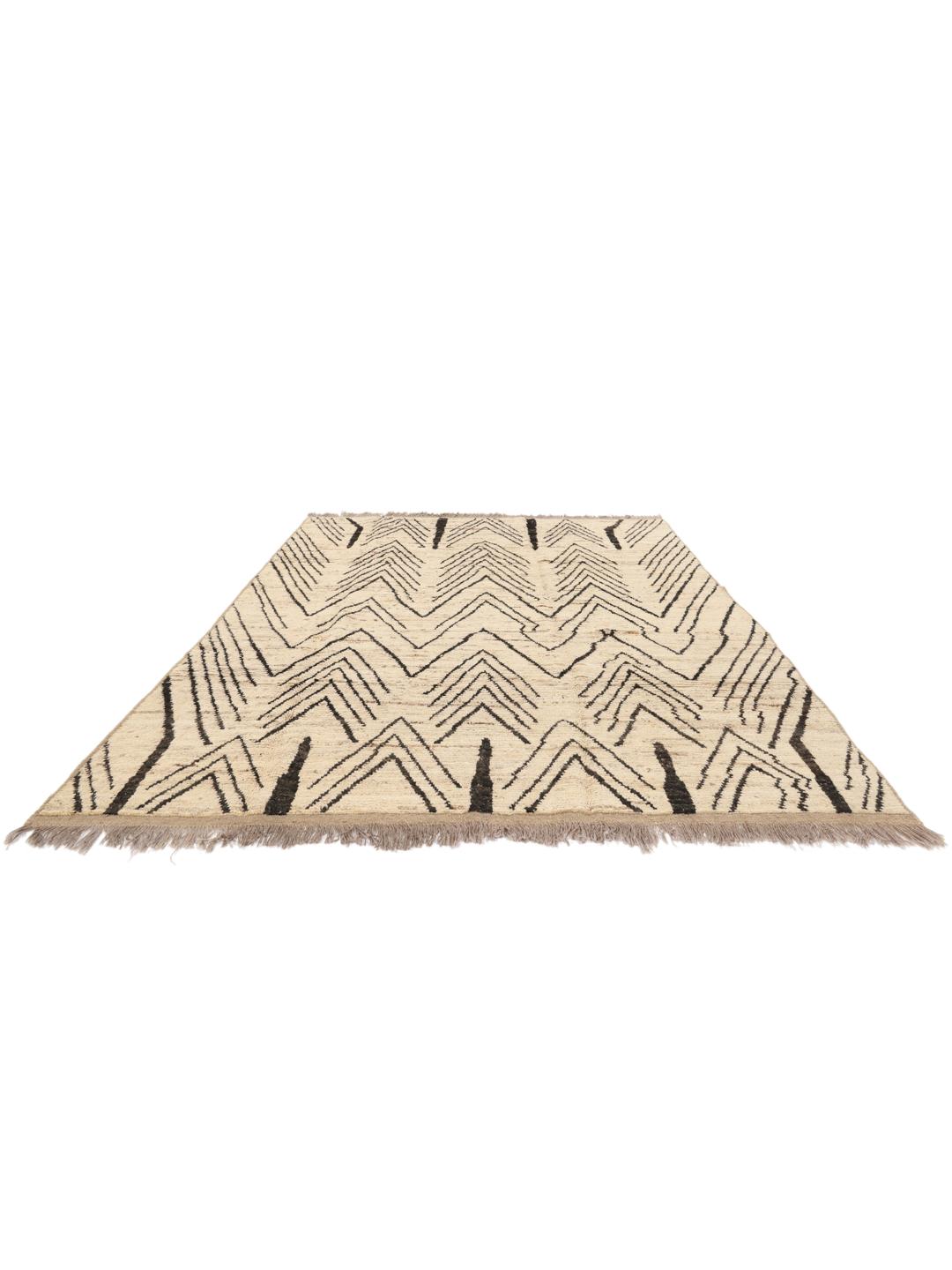
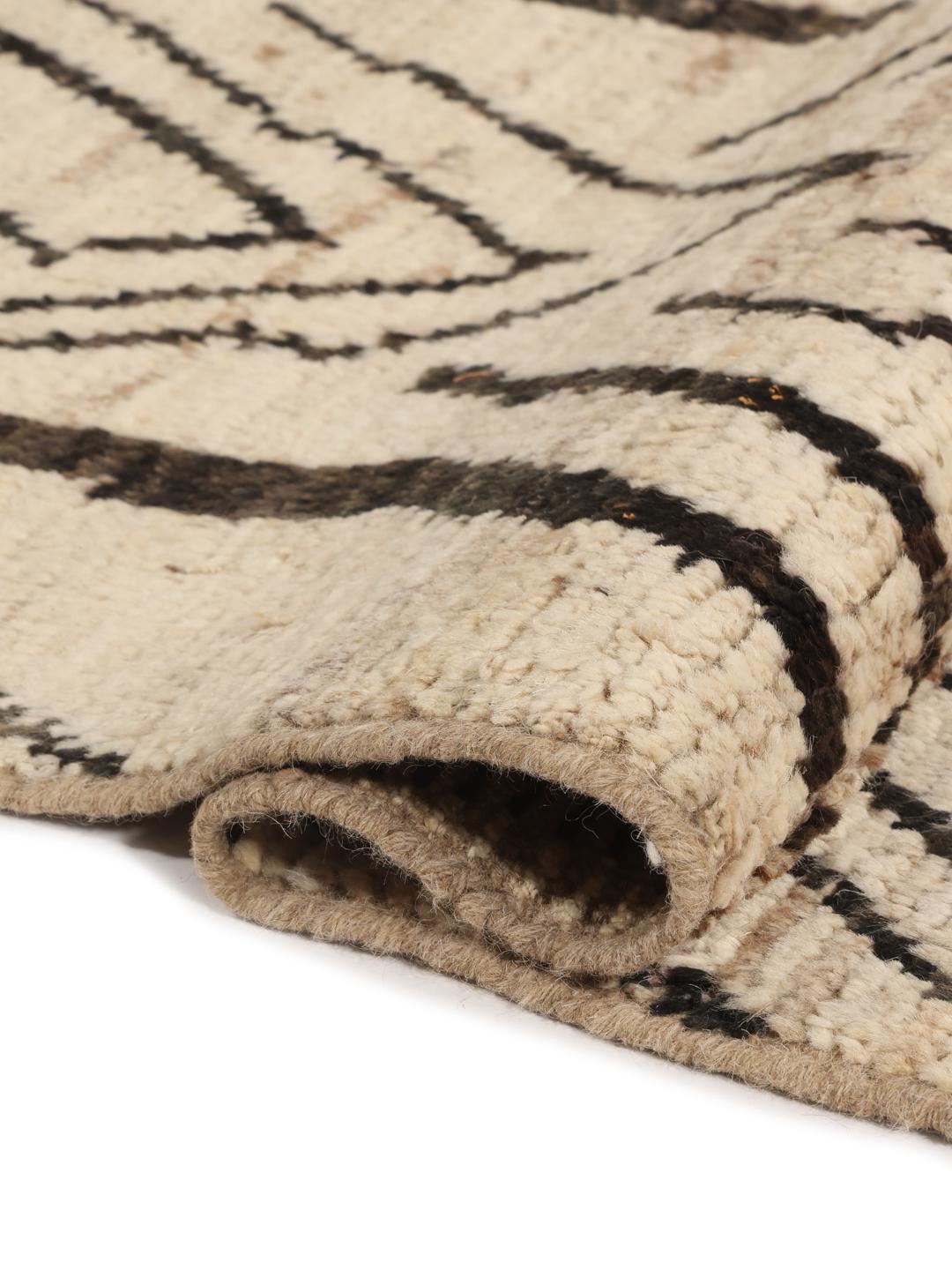
The Berber style, while traditionally associated with the nomadic tribes of North Africa, has inspired weavers across the globe. In the Middle East, master artisans have embraced these minimalist, tribal aesthetics, reinterpreting them through their own regional lens. This cultural exchange has resulted in a unique evolution of design where ancient techniques meet new artistic expressions.
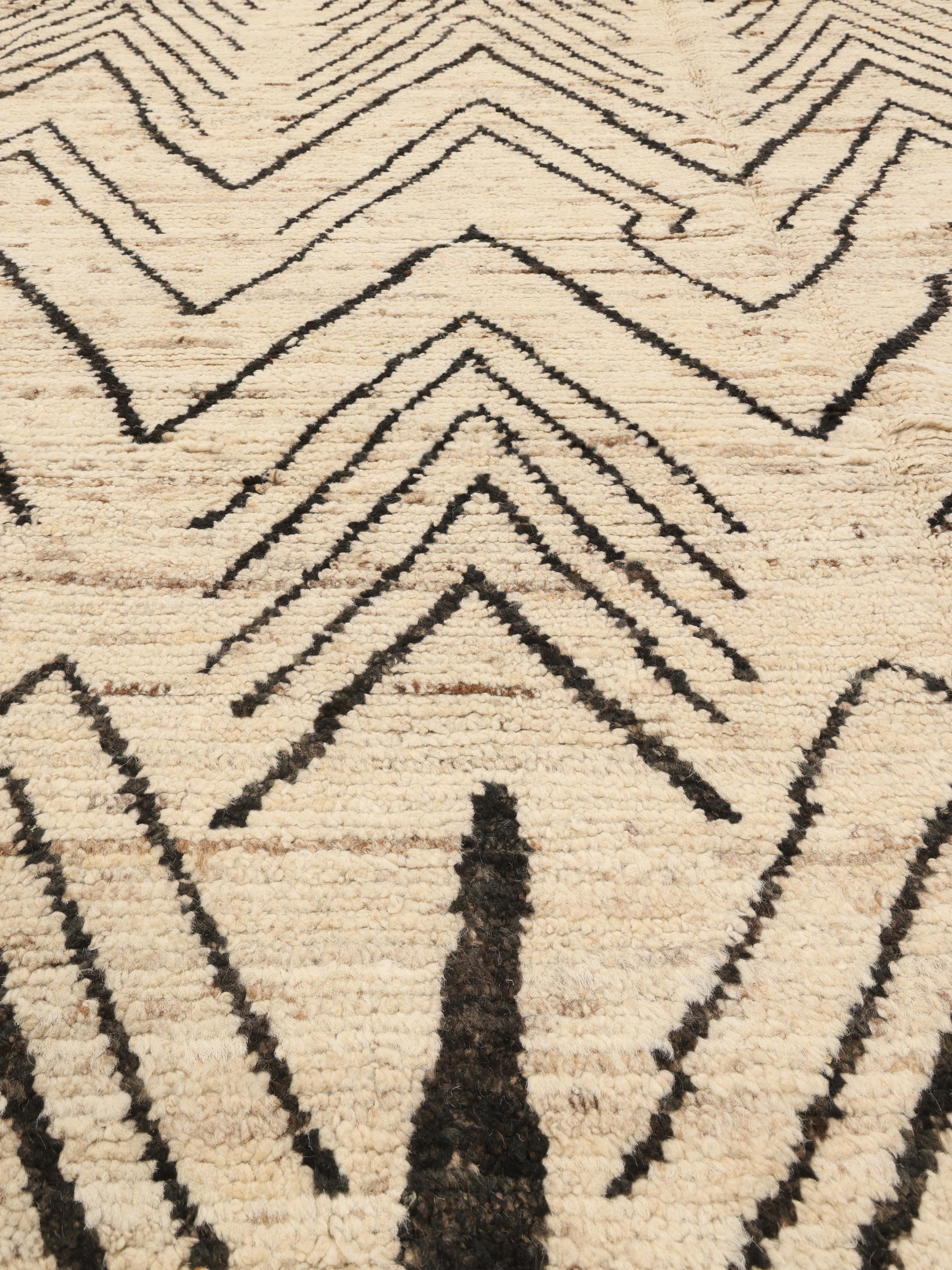
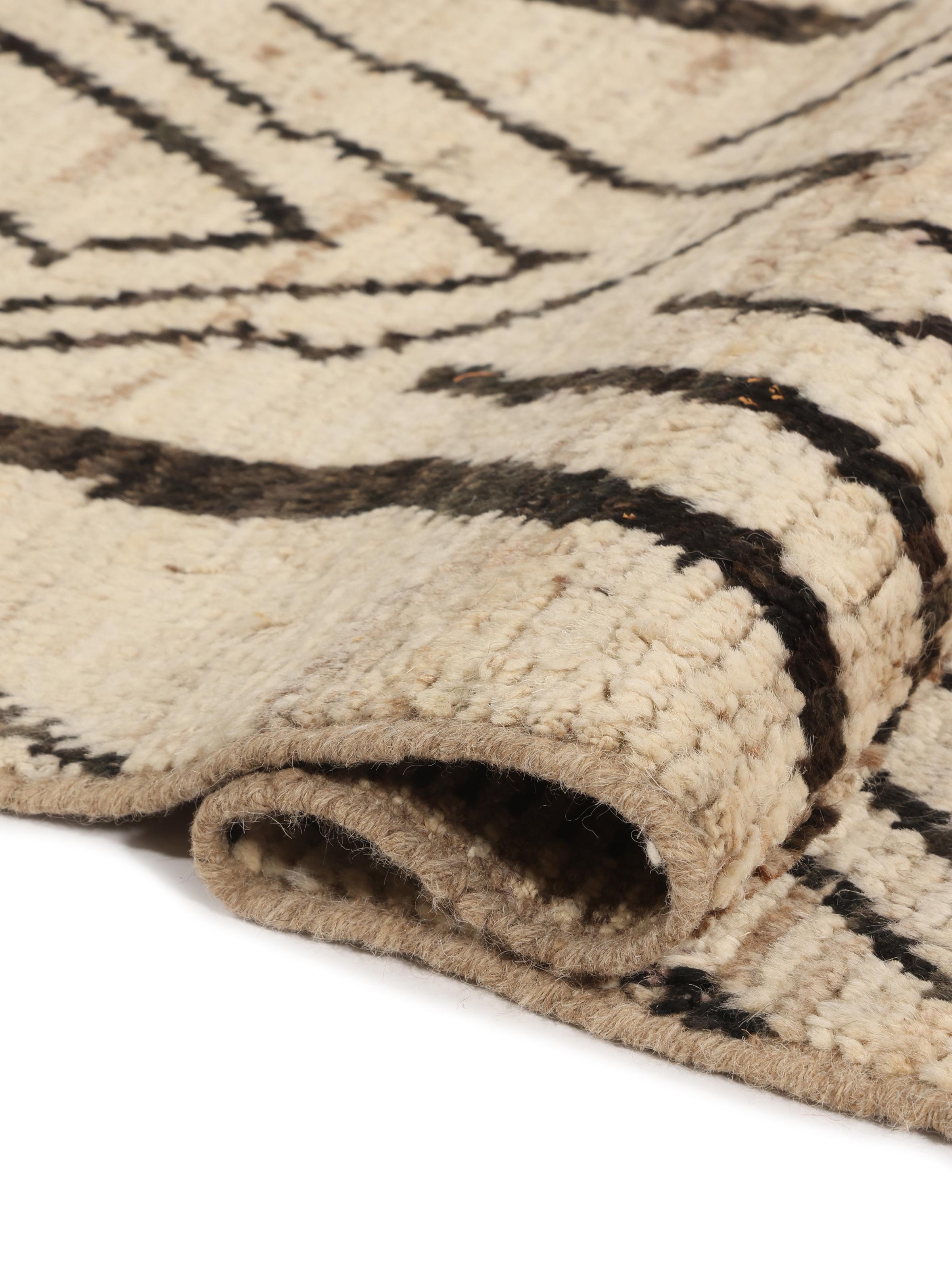
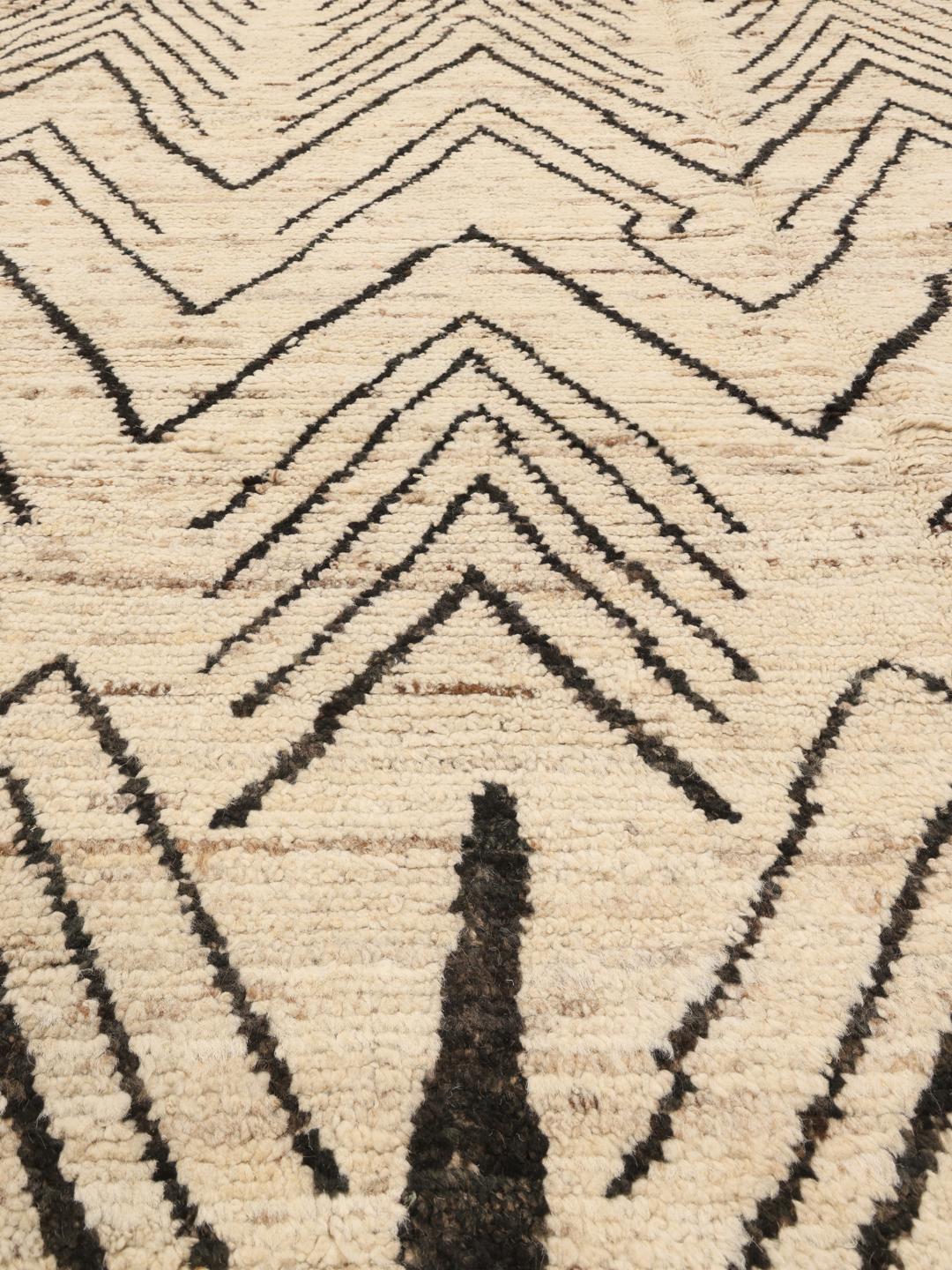
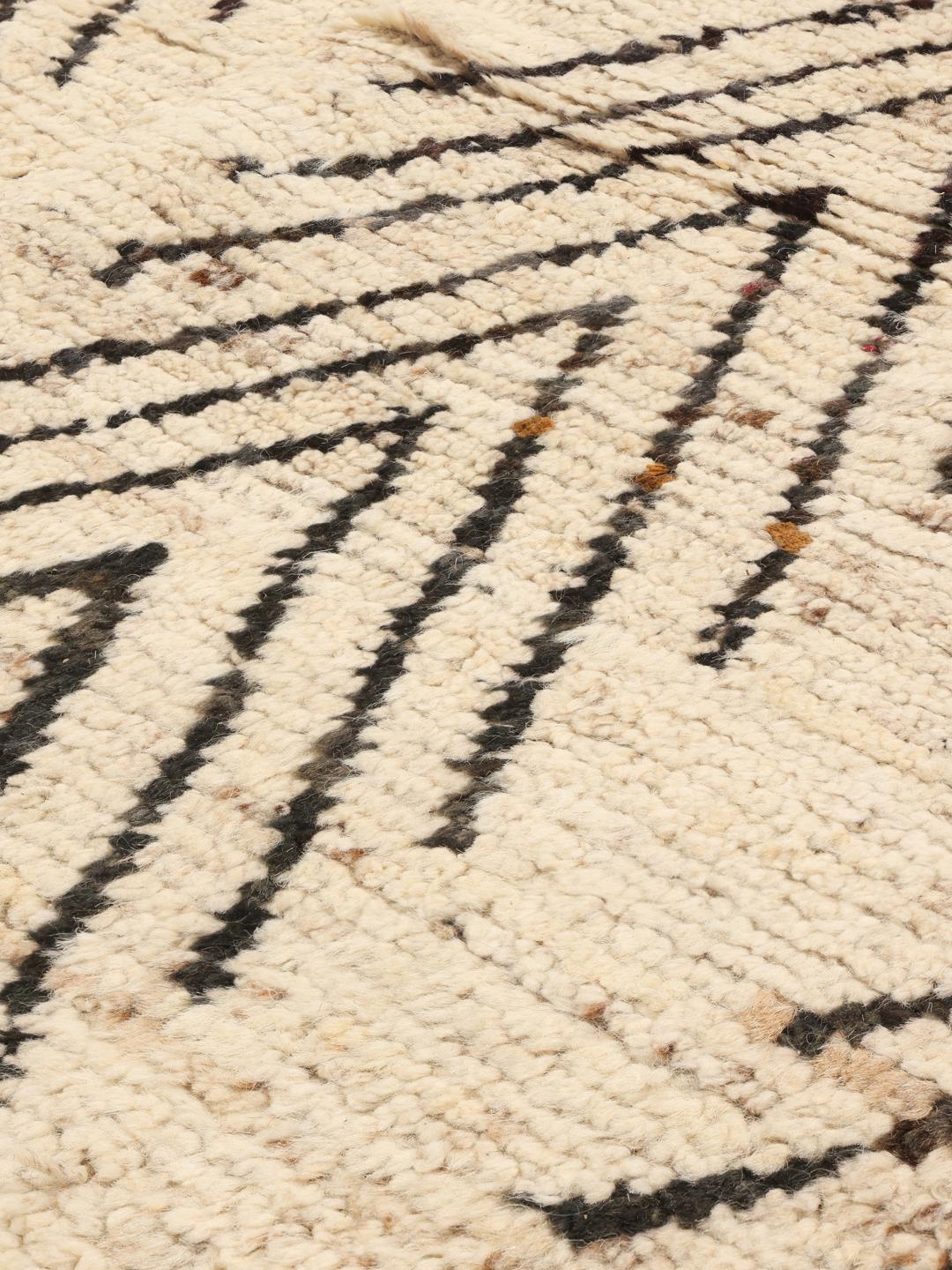
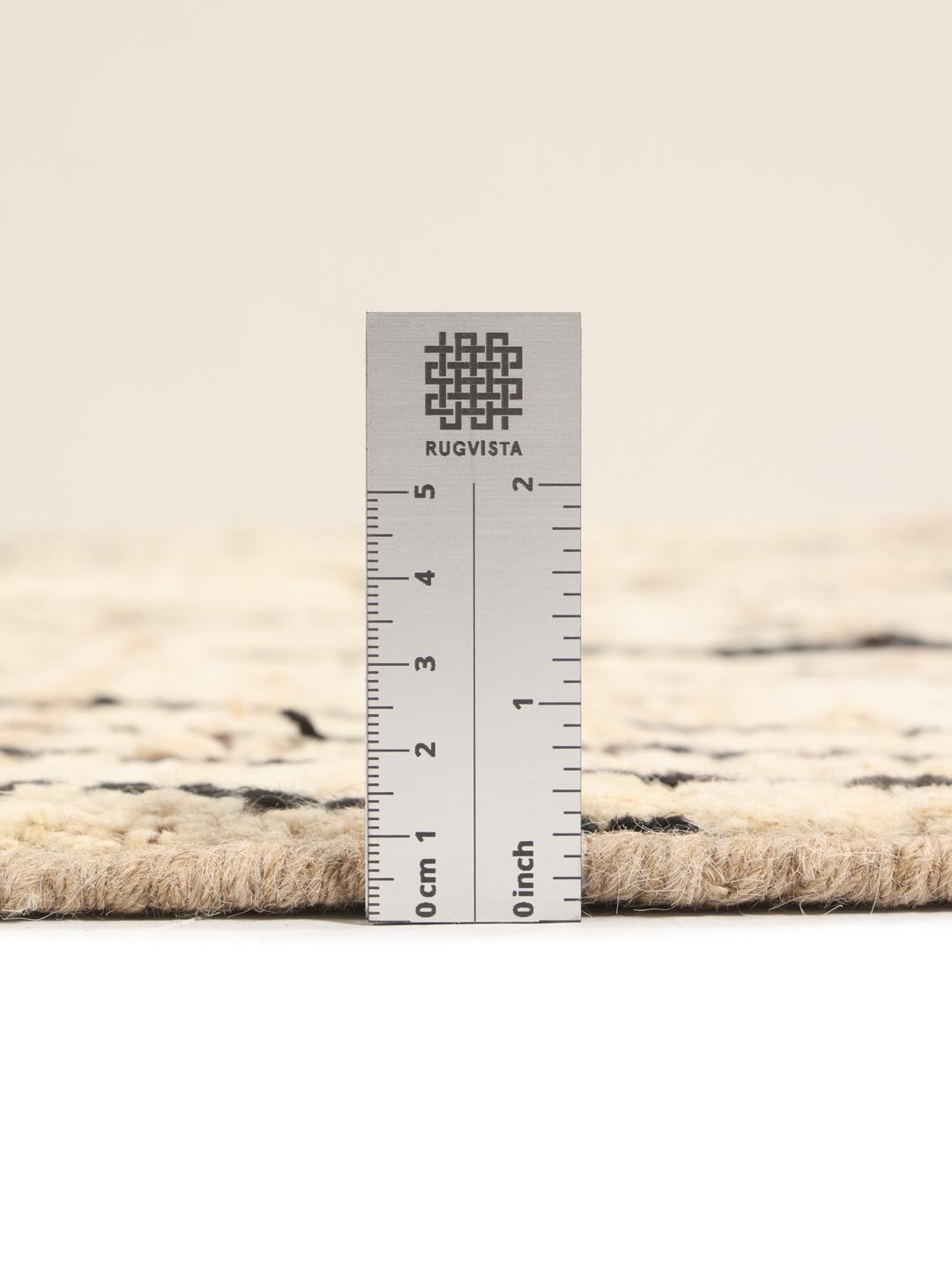
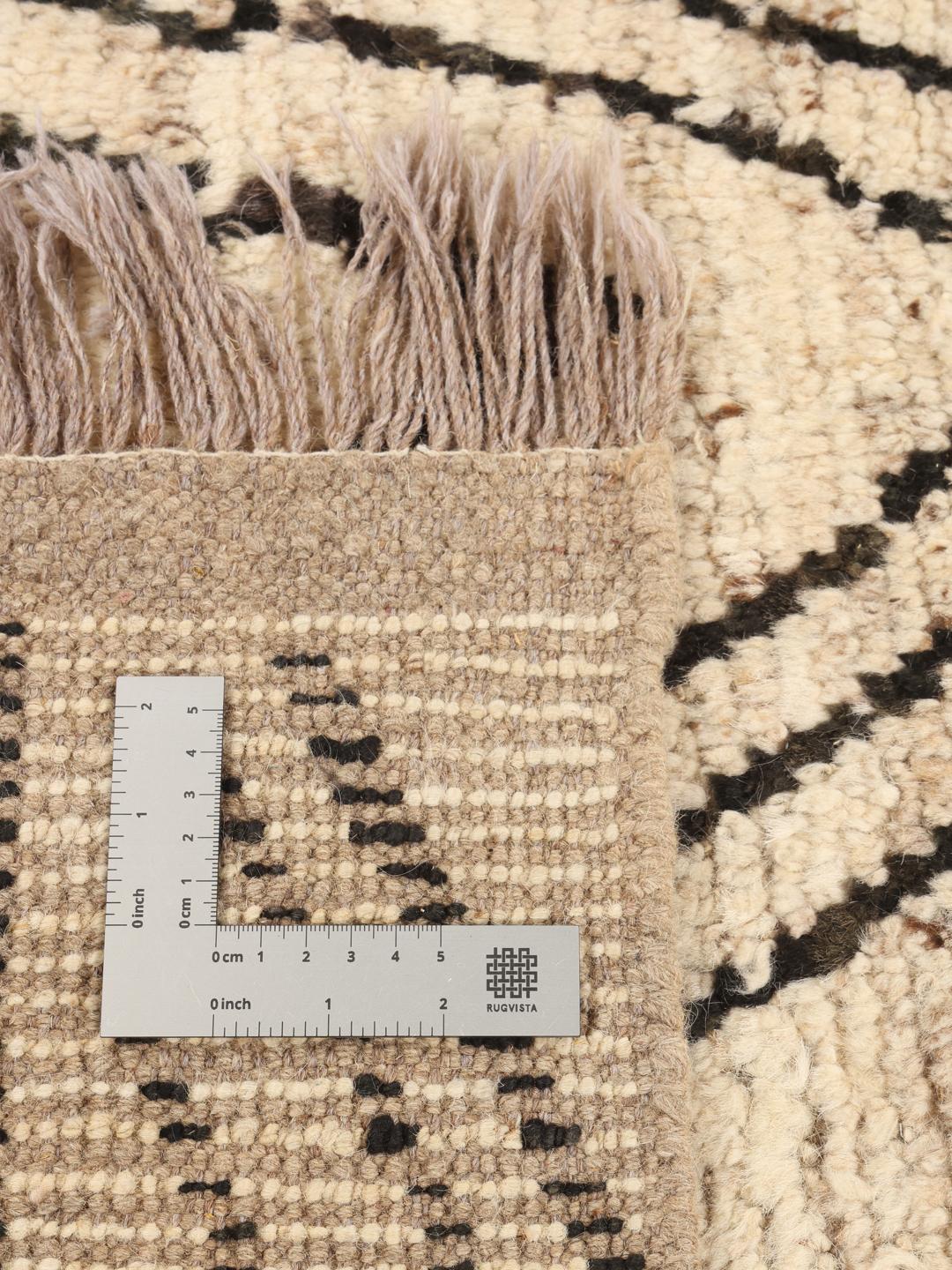
The term 'hand-knotted' refers to the traditional method of building a rug knot by knot on a vertical loom. This technique is the hallmark of premium quality in the world of rug making. Each knot is tied by hand, which not only dictates the density and durability of the pile but also allows for the intricate, sharp detailing seen in the patterns.
The visual language of this piece is defined by its bold, rhythmic geometric motifs. These patterns often draw inspiration from the natural world and tribal symbols, arranged in a way that creates a sense of movement and balance. The contrast between the neutral background and the stark, dark lines is a classic hallmark of the Berber aesthetic, offering a clean yet deeply textured look.
Collecting a rug from this tradition is about more than just floor covering; it is about valuing the human connection to craft. These rugs are highly regarded for their ability to bridge the gap between traditional heritage and modern living, providing a sense of cultural weight and authenticity that mass-produced items cannot replicate.