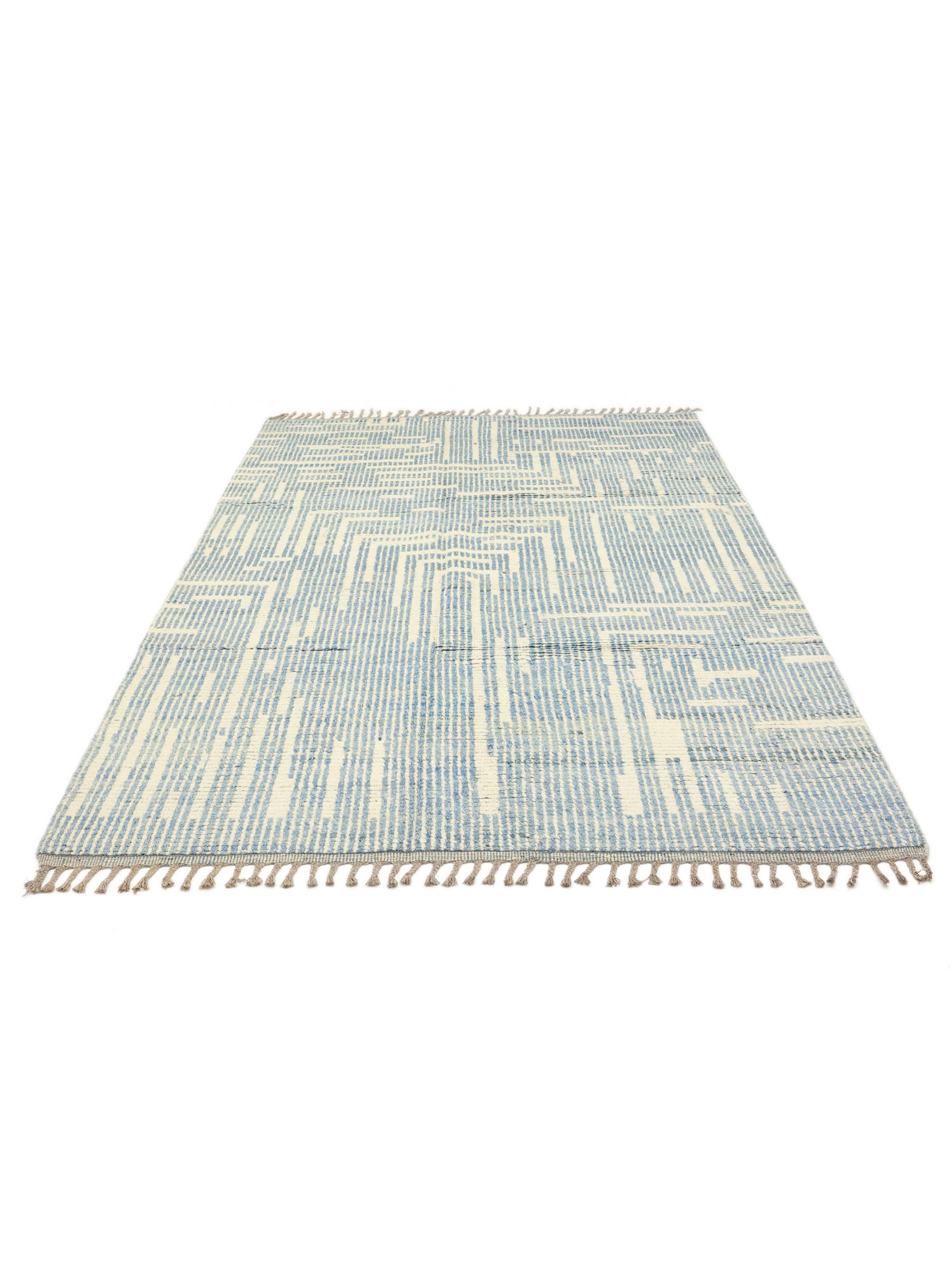
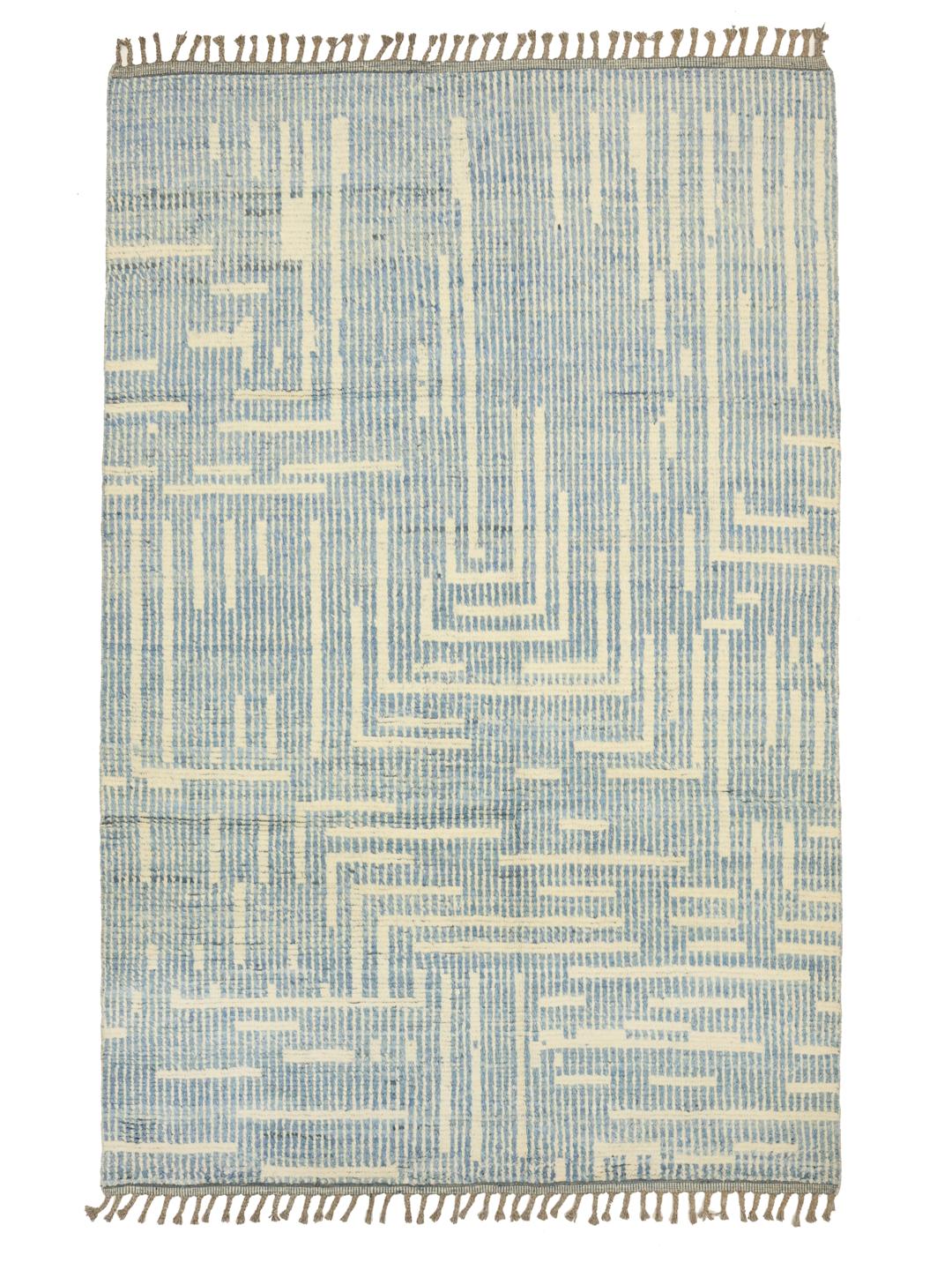
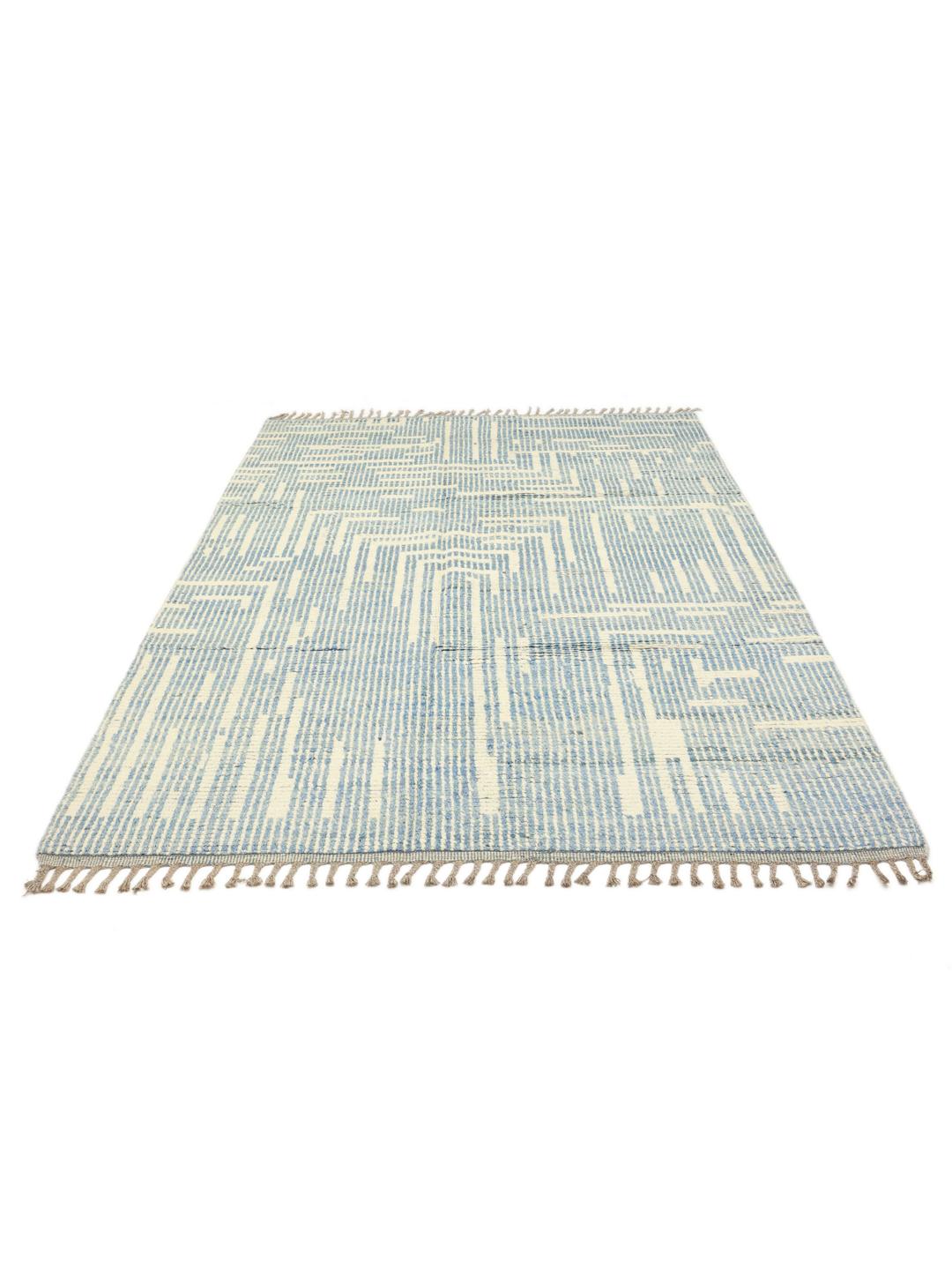
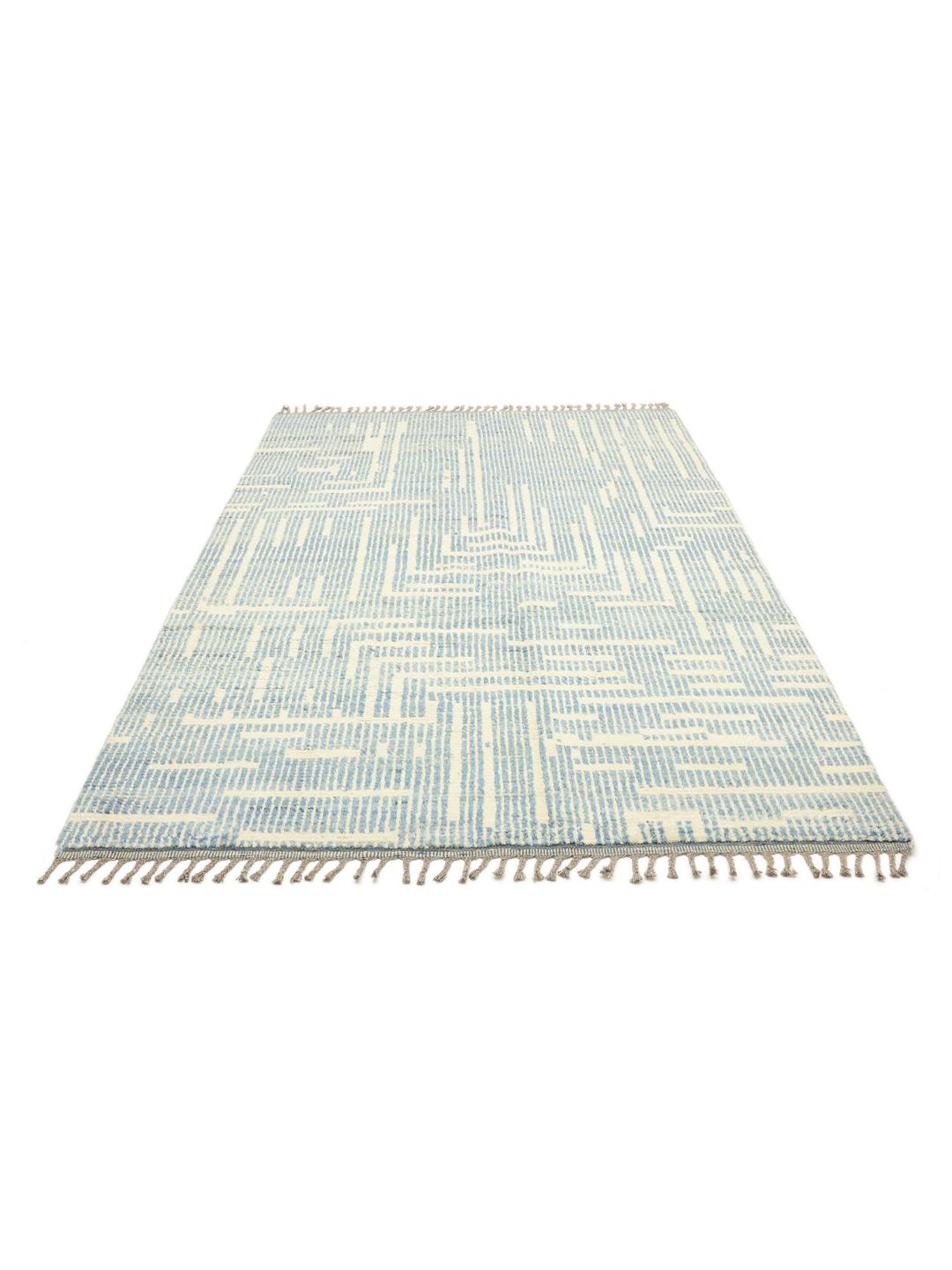
The Berber tradition is synonymous with the nomadic heritage of North Africa, yet its influence has travelled far beyond its origins. Today, the aesthetic has been embraced by artisans in Afghanistan, who interpret these classic, raw, and expressive designs through their own local weaving techniques, creating a fascinating bridge between different cultural histories.
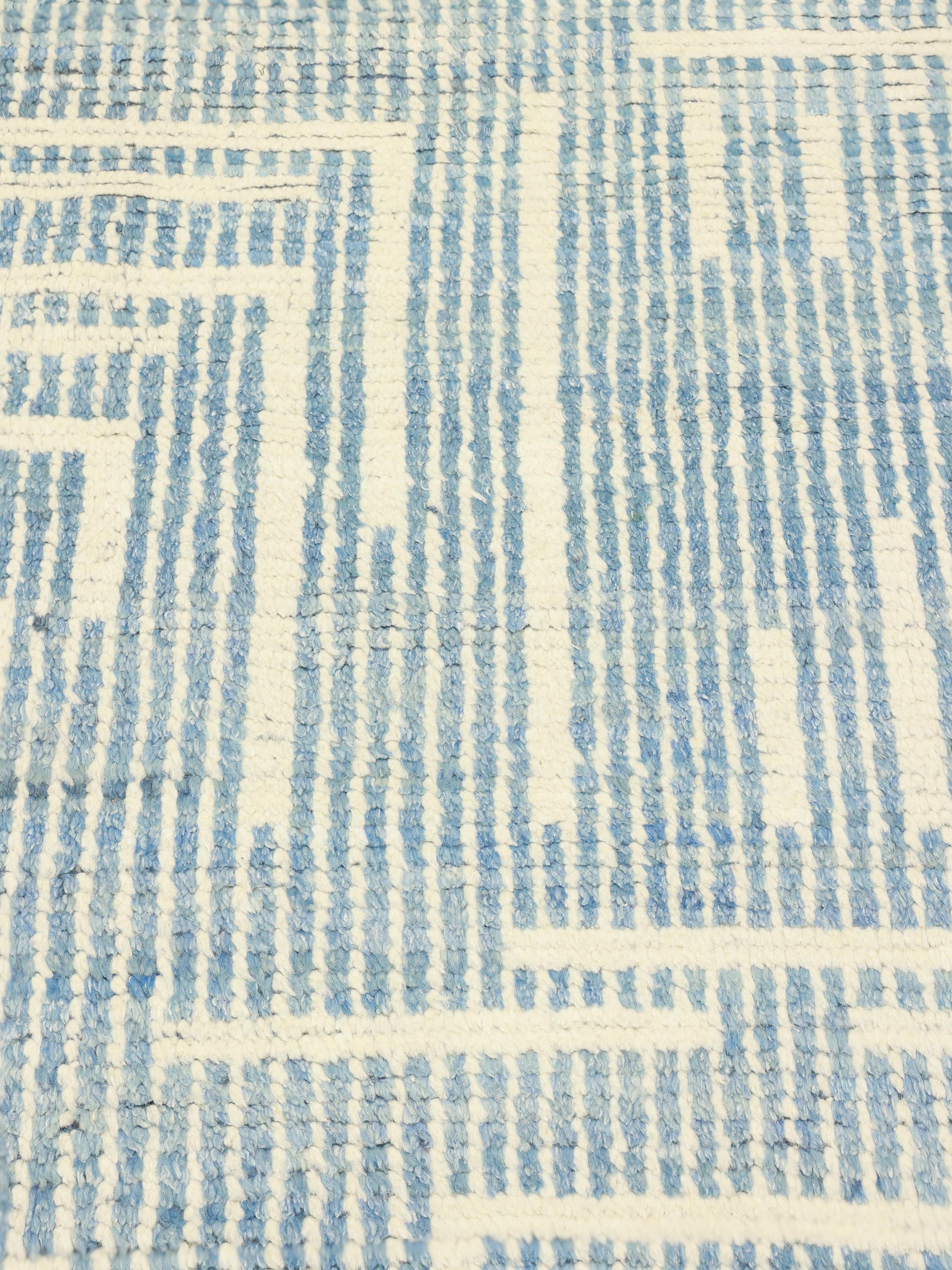
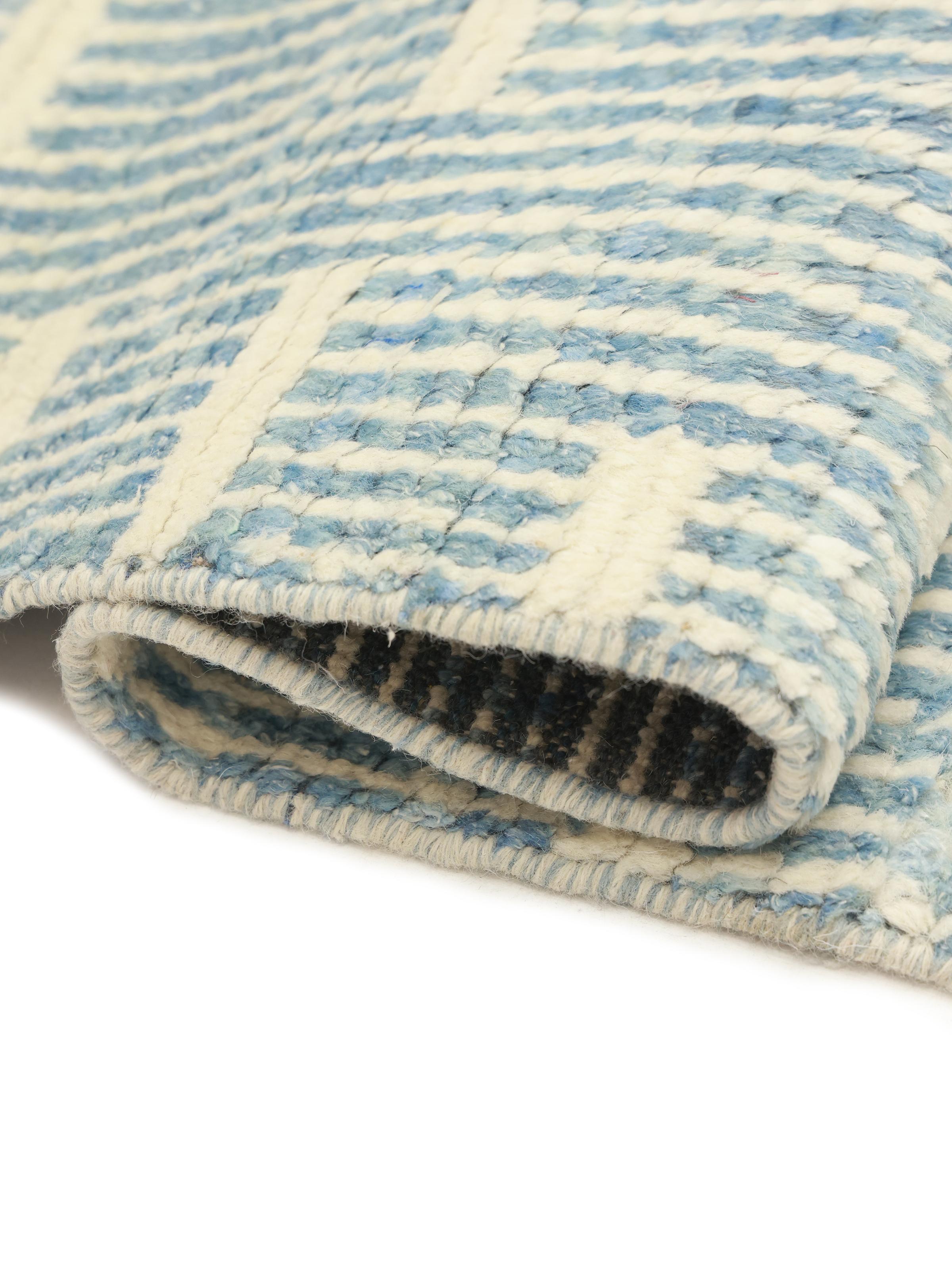
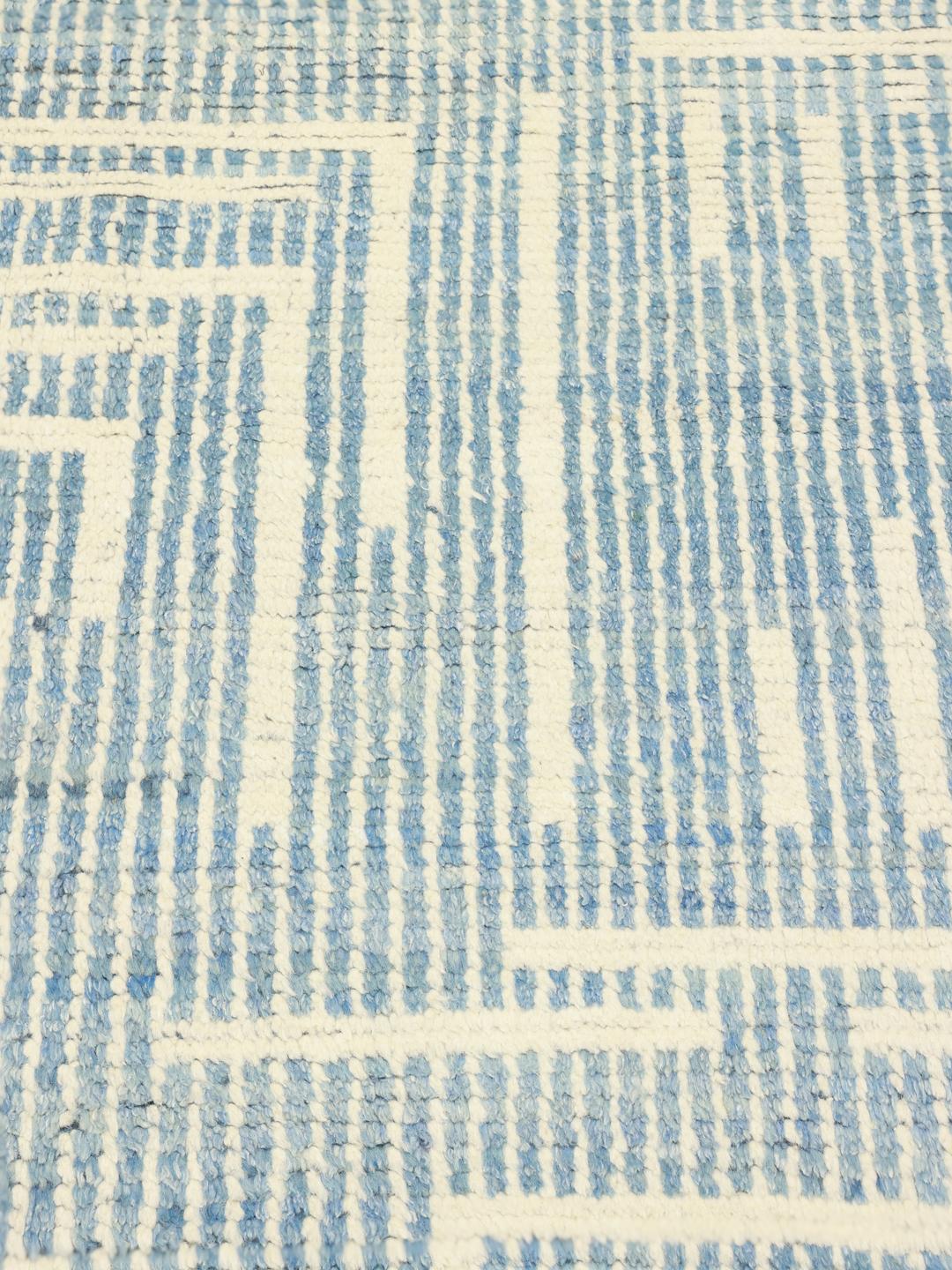
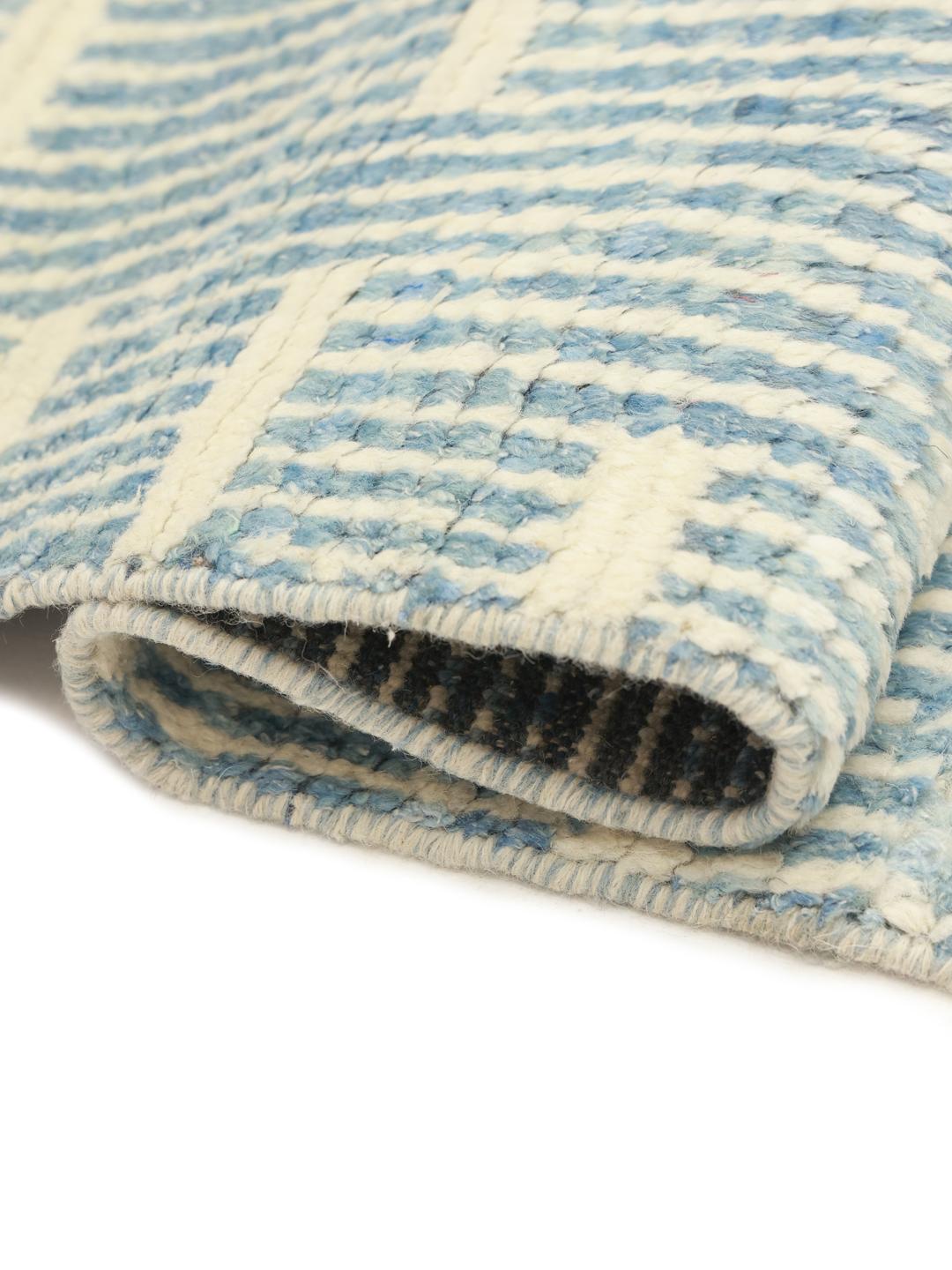
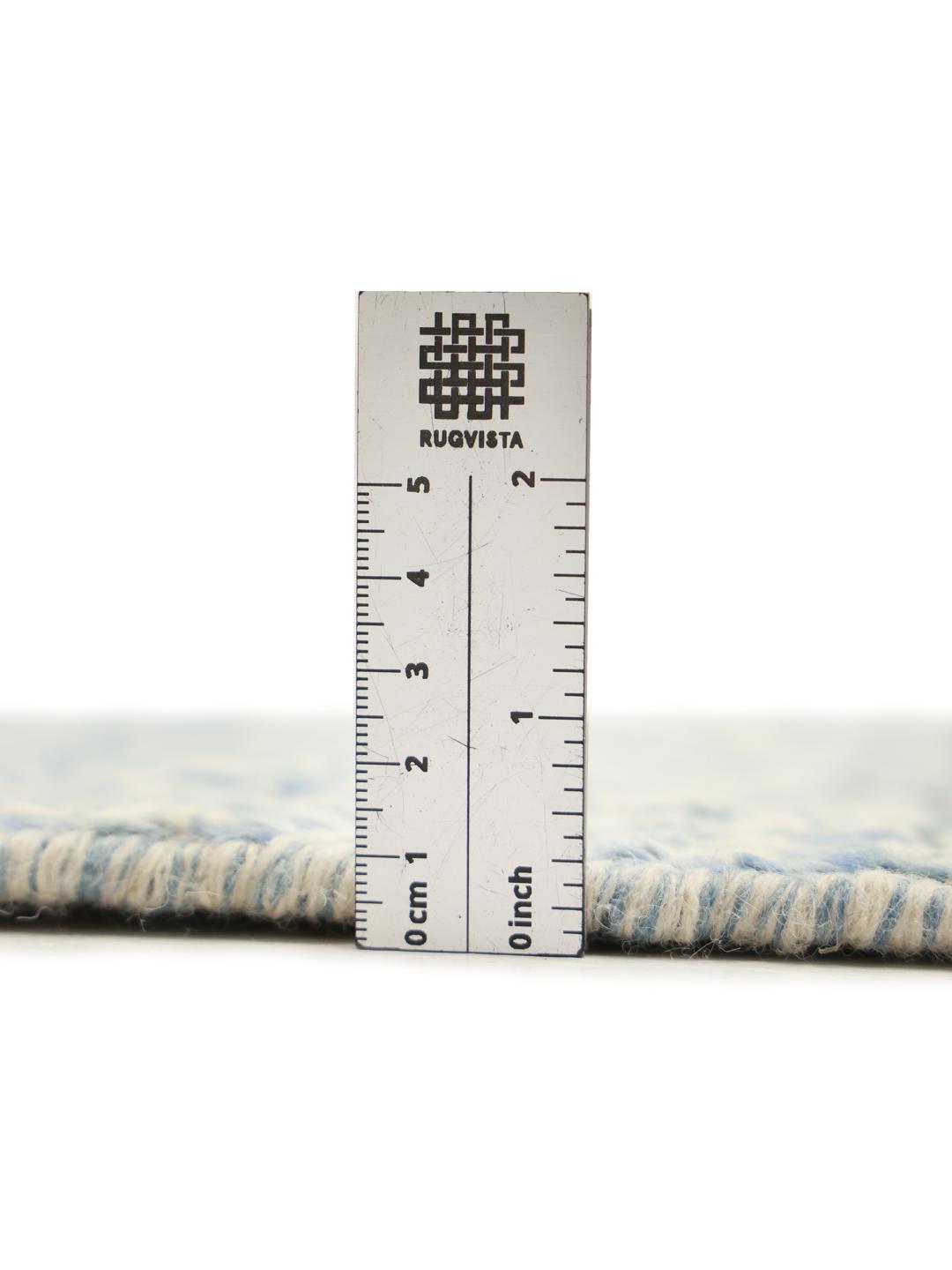
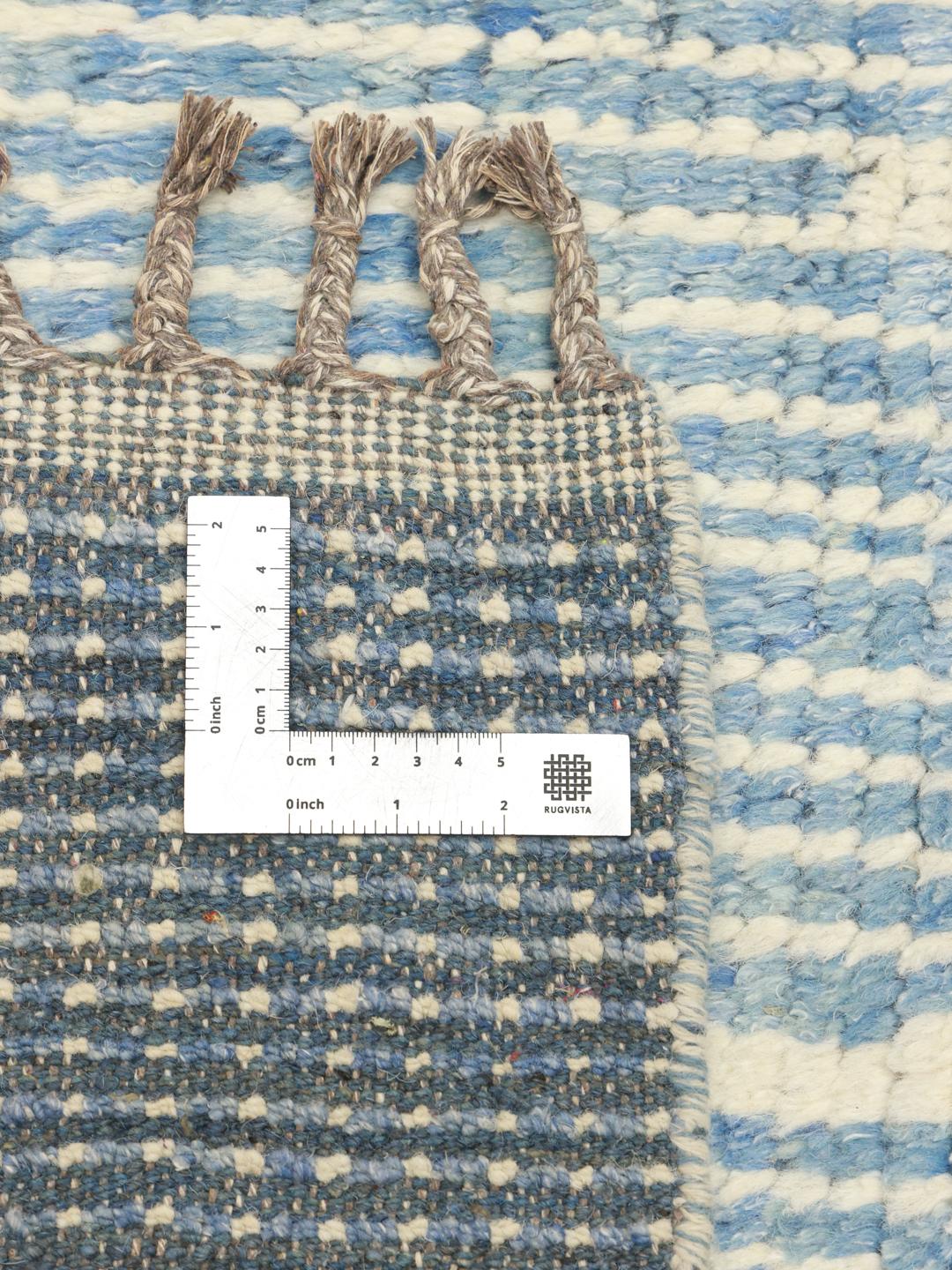
When we speak of hand-knotted construction, we are referring to a method where every single tuft of material is tied by hand to the foundation. This requires a level of skill passed down through generations. It matters because it creates a pile that is far more durable and lustrous than anything made by a machine, ensuring that the rug retains its character as it ages.
The design of this piece leans into the geometric language that is a hallmark of Berber-inspired art. Rather than complex floral motifs, these rugs often feature bold, minimalist lines that mimic the landscape and traditional symbols. The use of a simple, two-tone colour palette here highlights the clarity of these lines, making the pattern feel both ancient and contemporary.
Owning a hand-knotted rug from this tradition is an investment in human skill and history. It is a rejection of the disposable culture of modern interiors, opting instead for a piece that carries the weight of craft and tradition. Collectors value these rugs not only for their visual impact but for the tangible connection they provide to the artisans who shaped them.