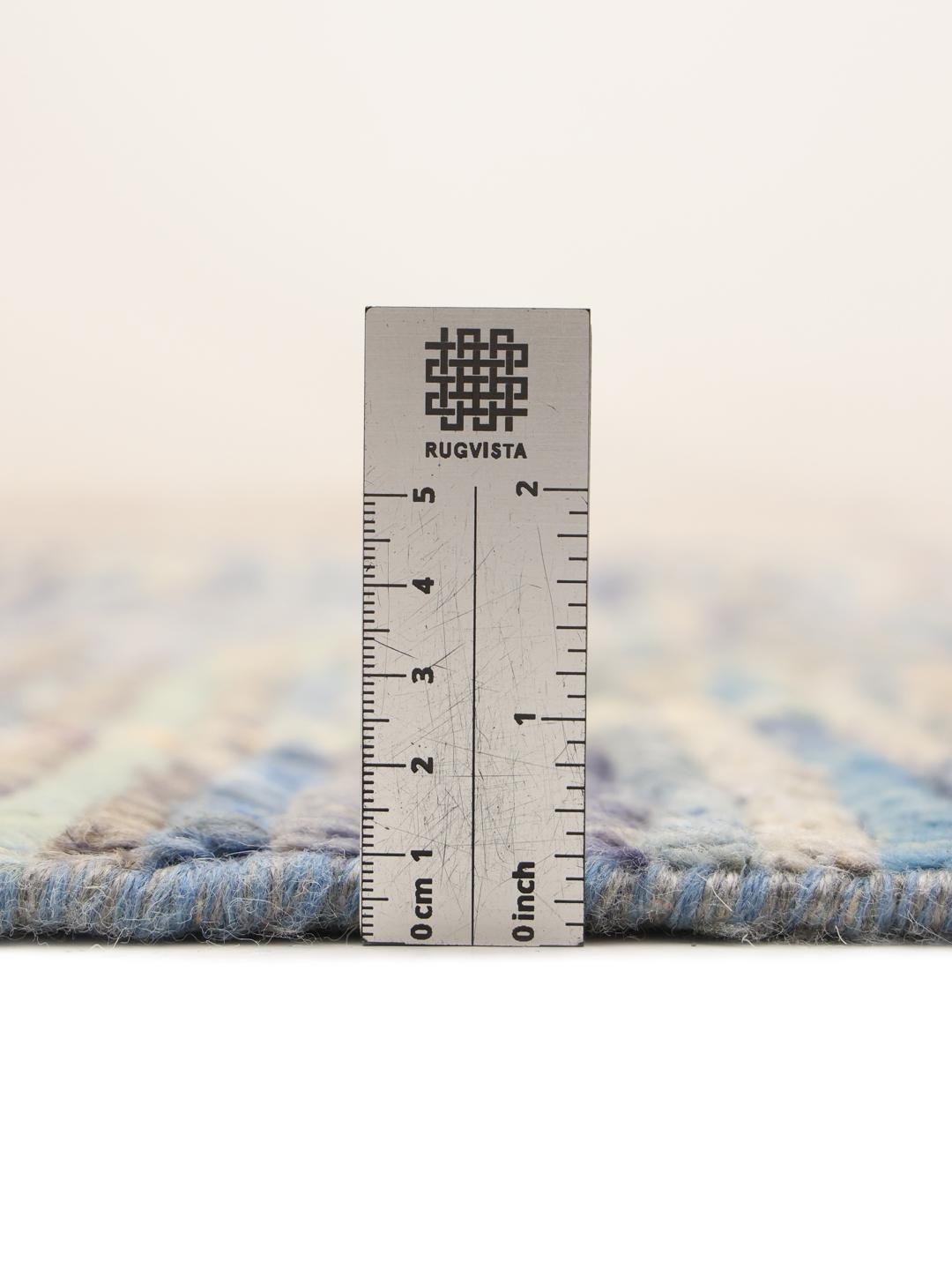
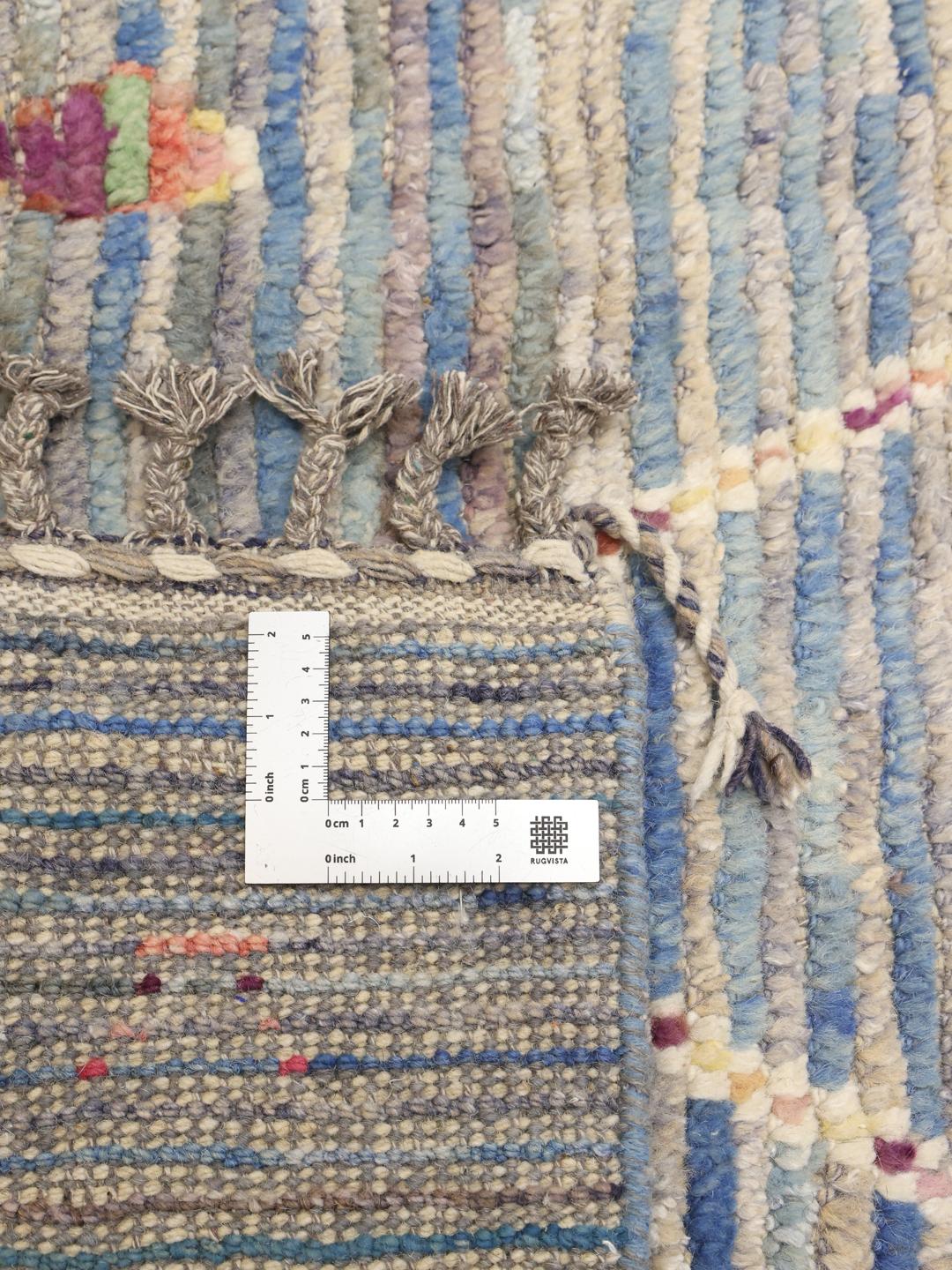
The Berber style tradition finds its roots in the nomadic cultures of North Africa, known for their iconic, shaggy, and often minimalist designs. Over time, these aesthetic principles have travelled and been reinterpreted by skilled artisans across the globe, including in Afghanistan, where weavers have embraced these patterns to create rugs that blend ancient regional techniques with a familiar, global design language.
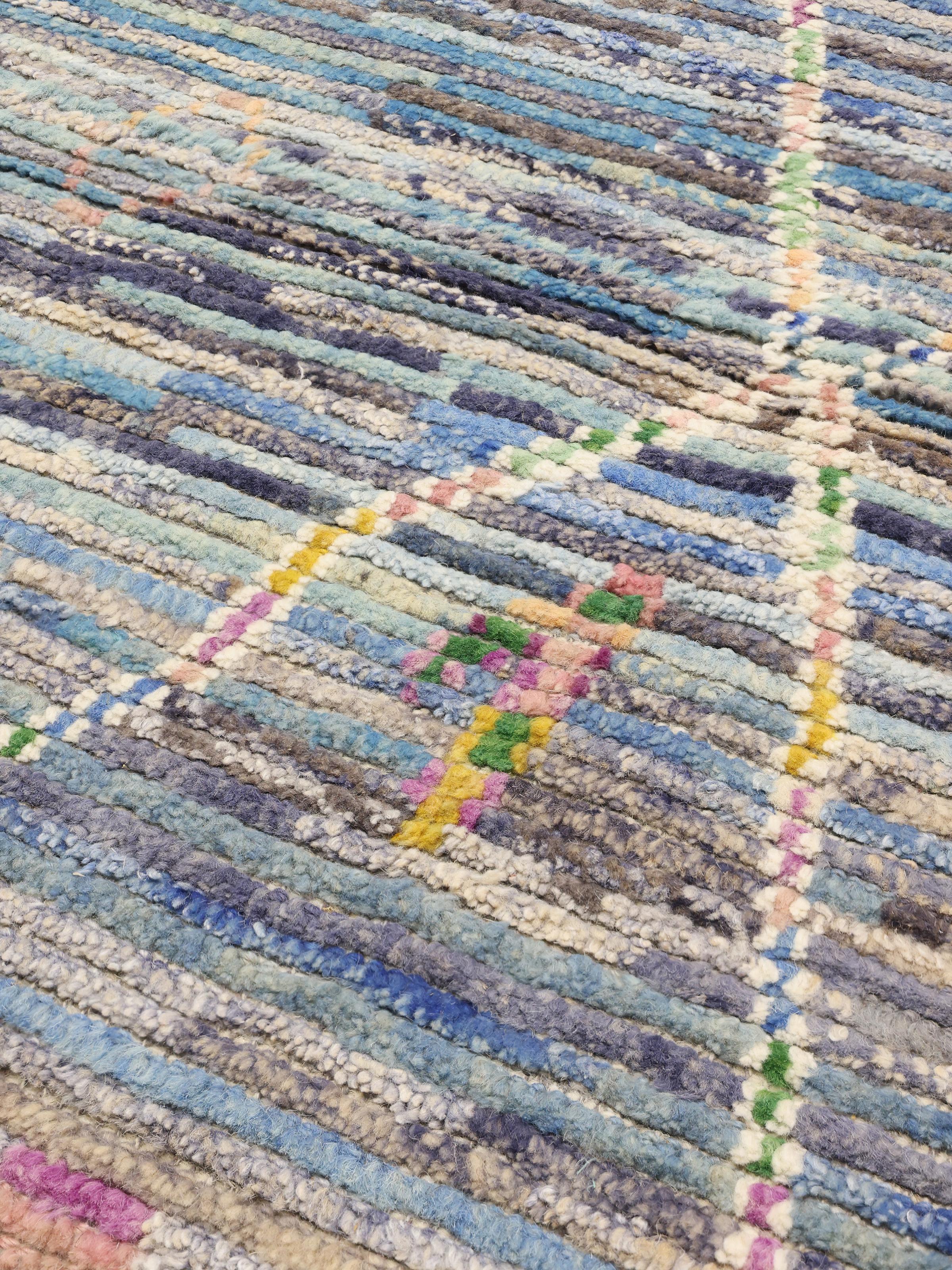
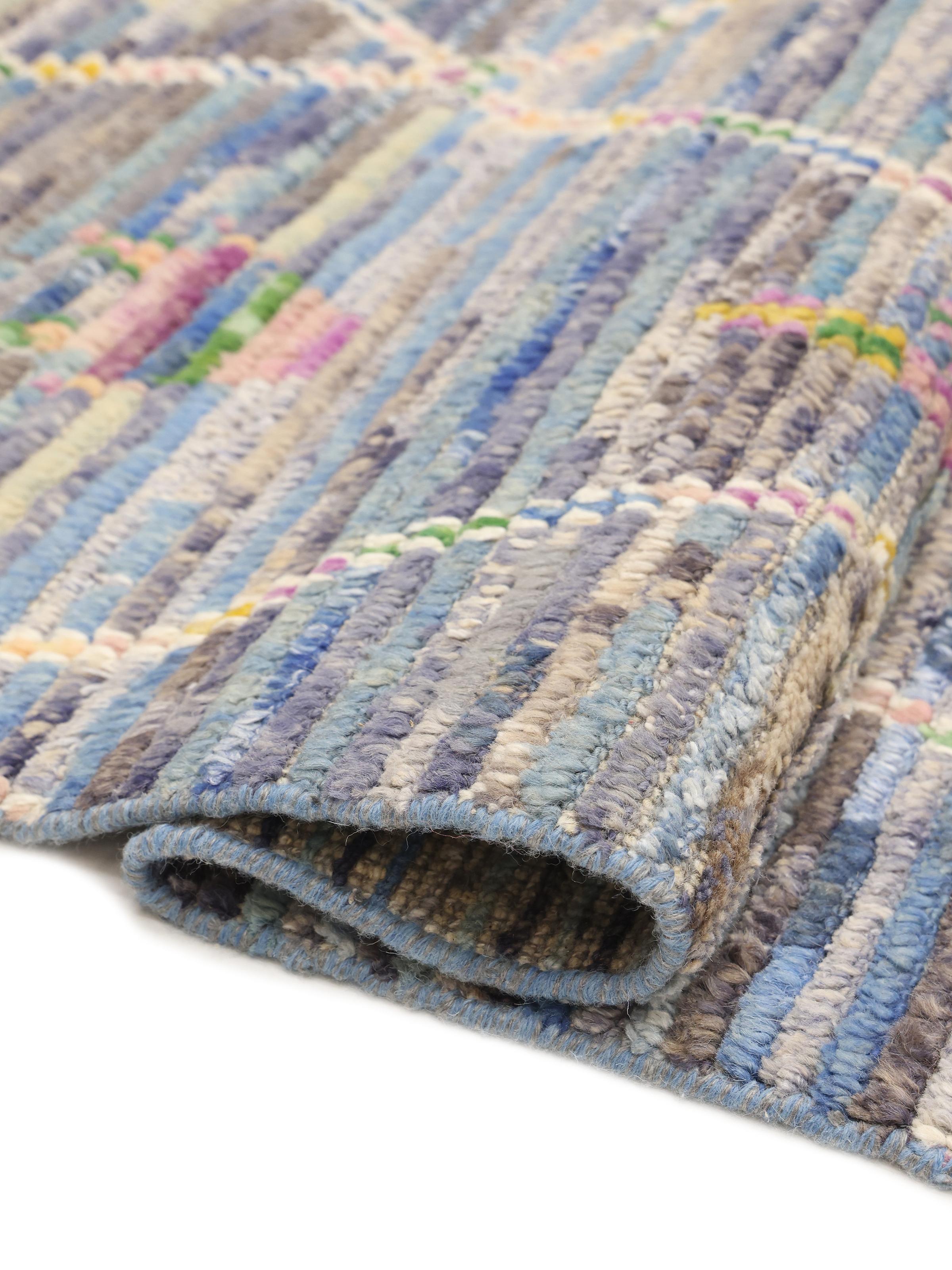
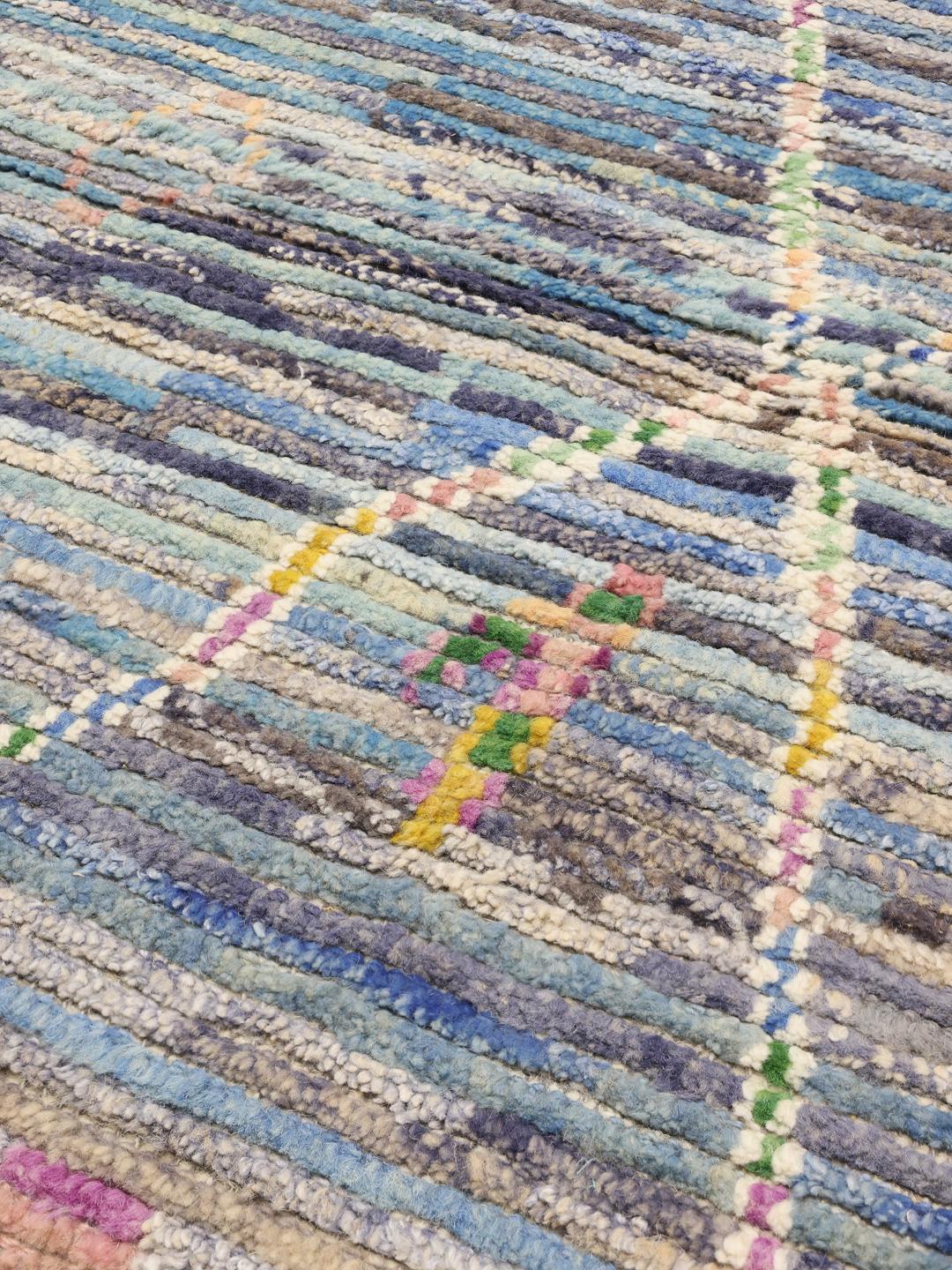
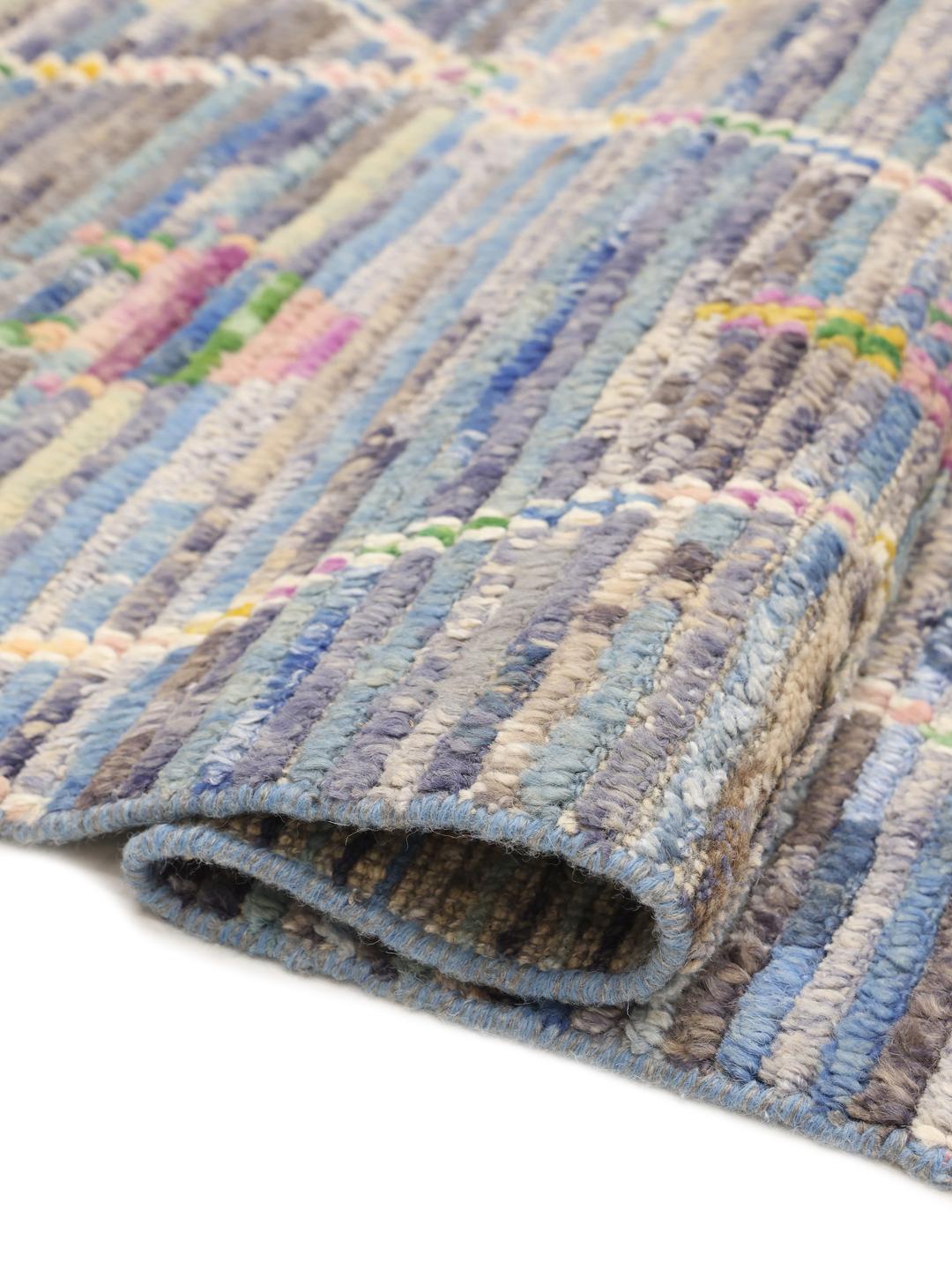
Hand-knotted construction is the hallmark of this tradition, where each strand of Wool is carefully secured to the foundation by hand. This method is far superior to machine-made alternatives, as it creates a much stronger, more flexible, and more lustrous pile. The complexity of the knotting process ensures that the rug is not only a visual piece but a structural one, built to maintain its integrity over generations of use.
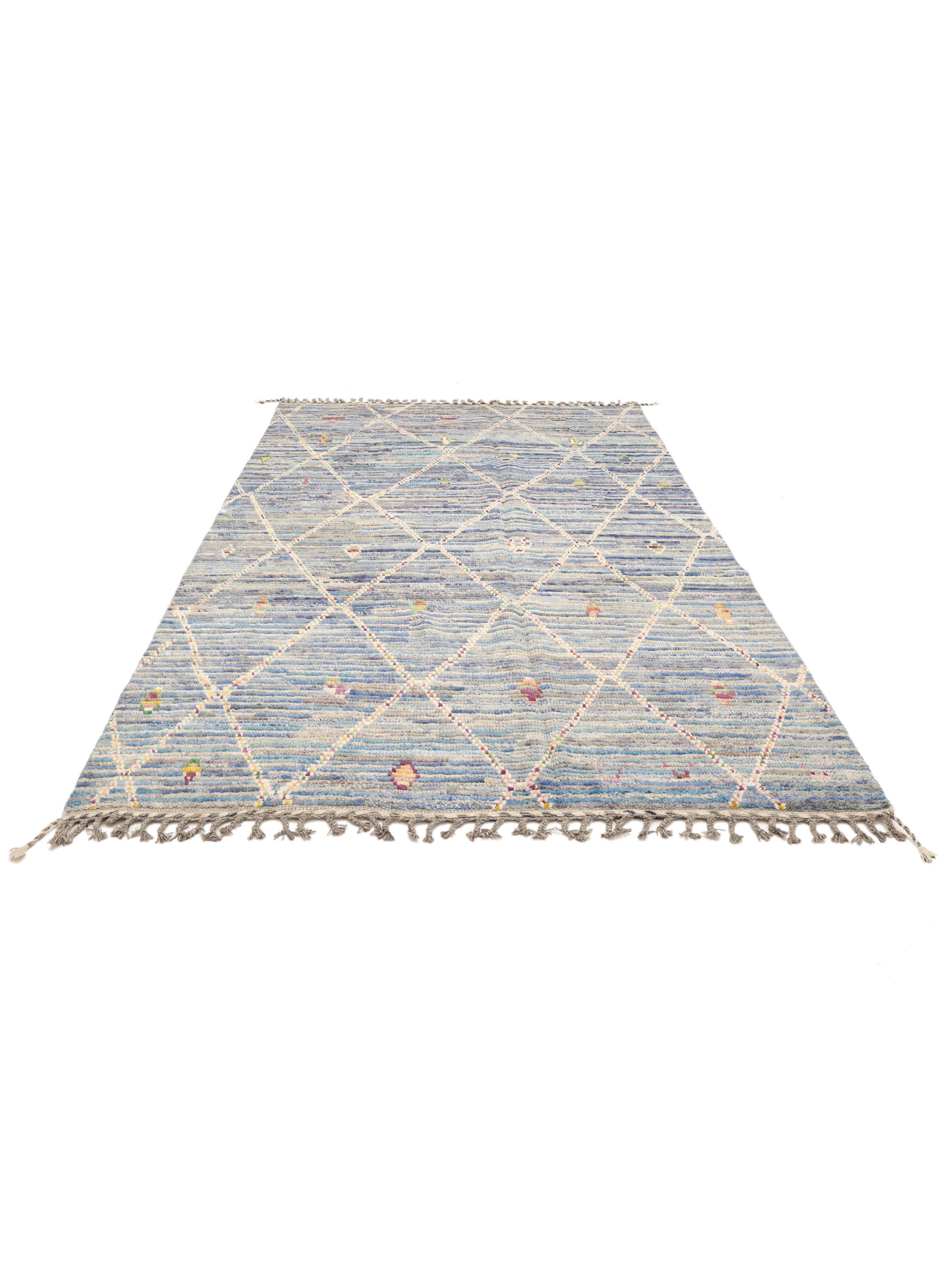
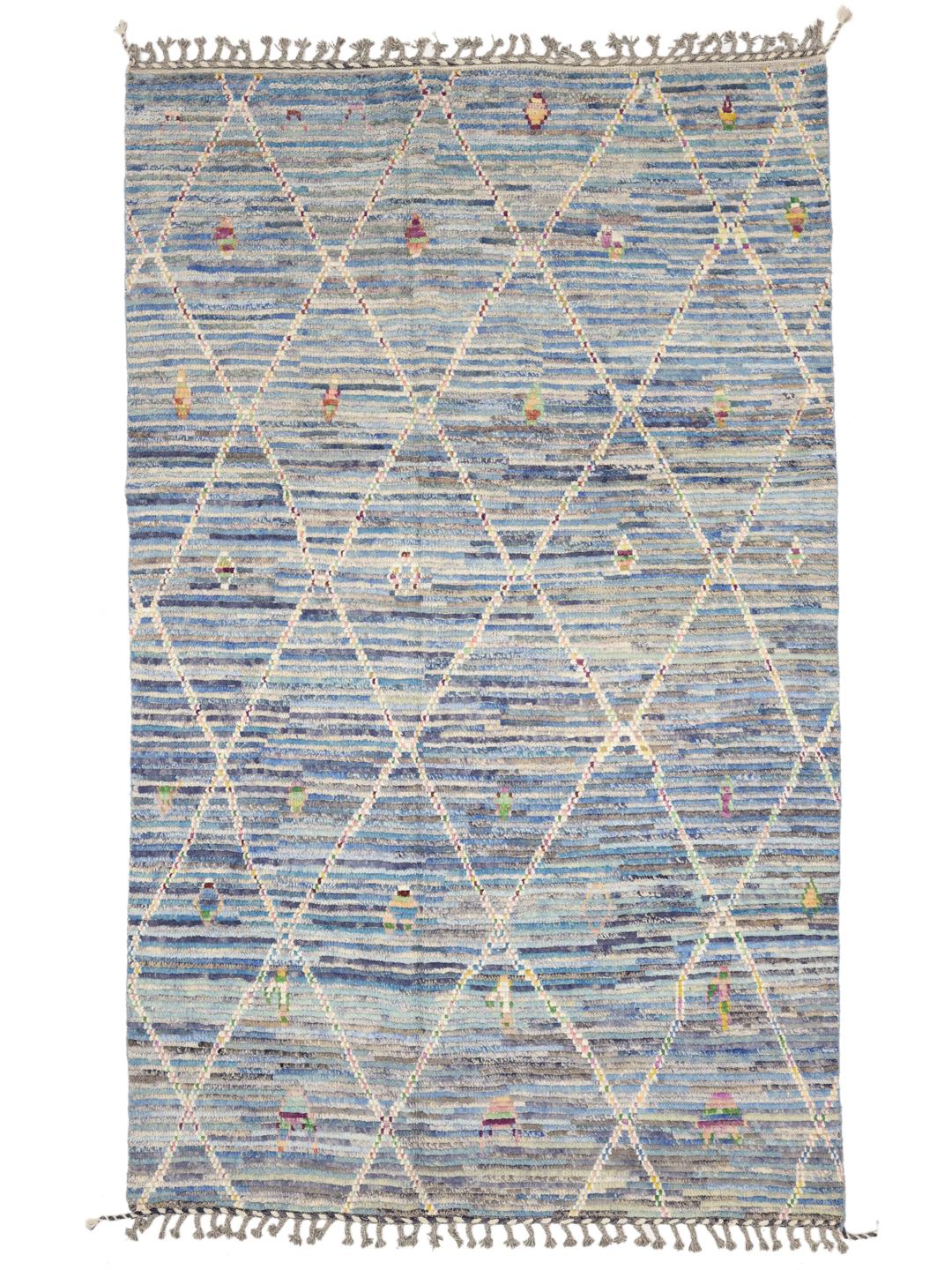
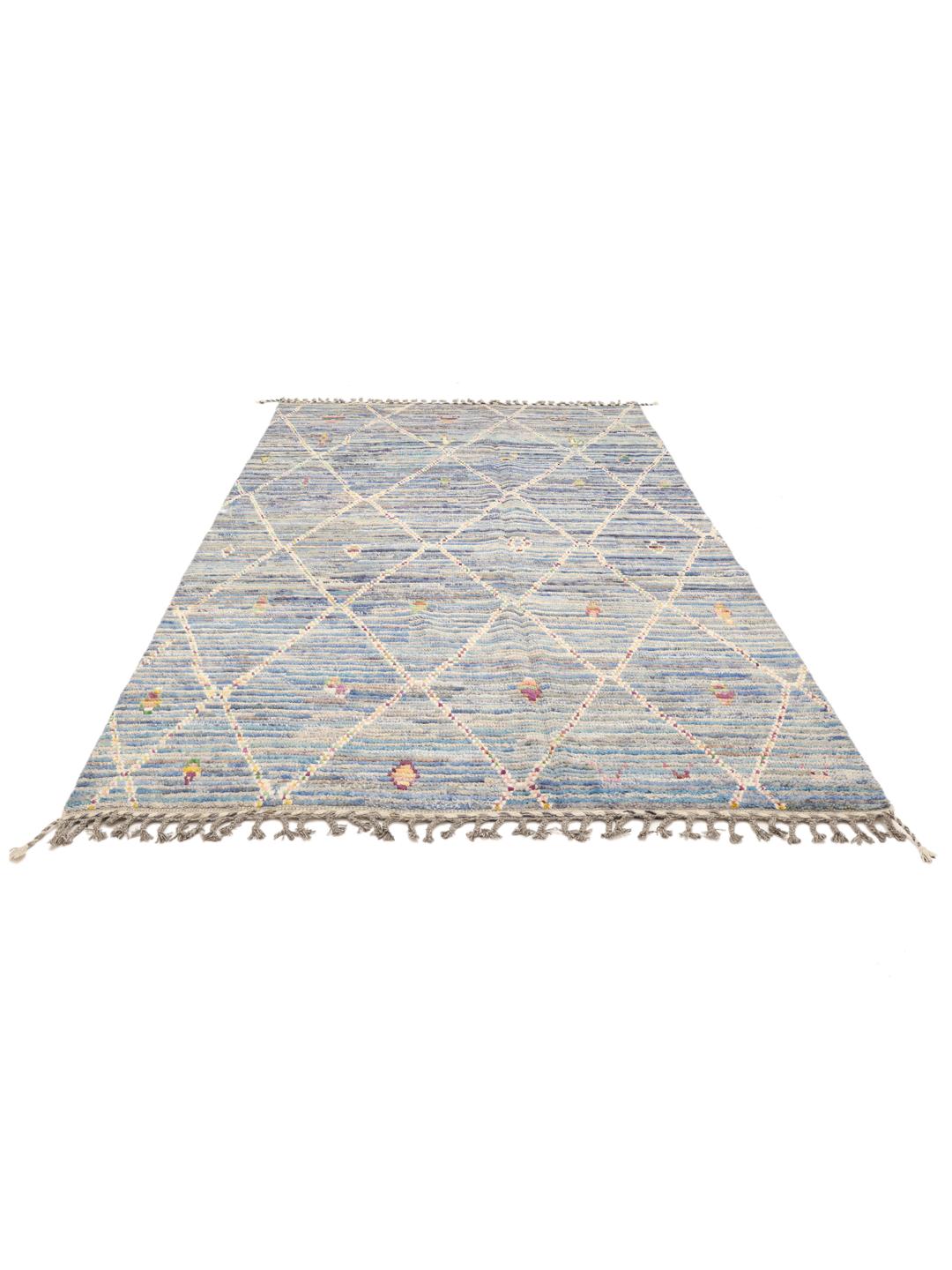
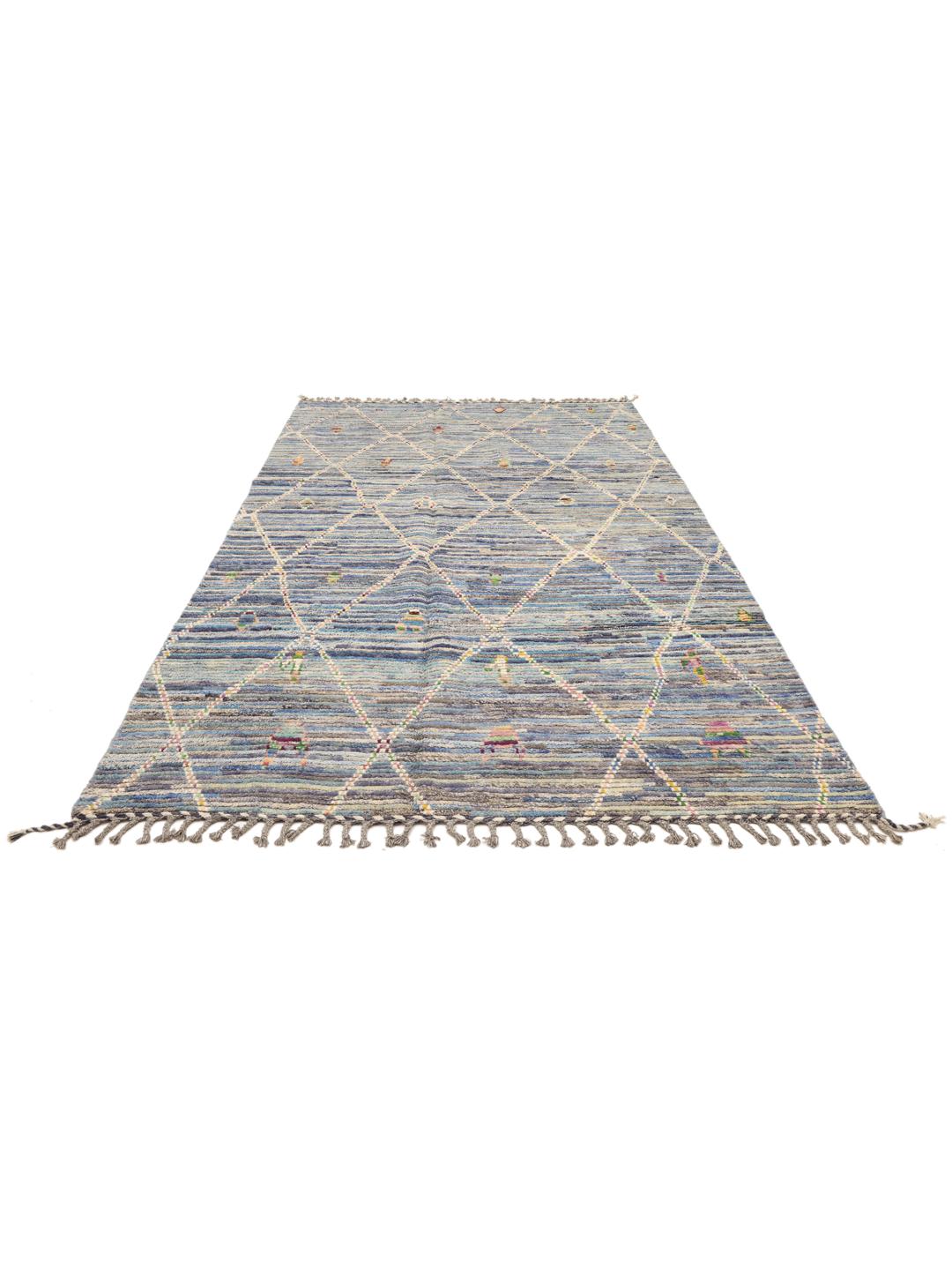
Visually, these rugs are defined by their expressive use of geometric motifs, often featuring diamonds or lattice patterns that flow across the field. While traditional Berber designs often lean toward neutral palettes, this particular piece incorporates a vibrant blue base with colourful accents, offering a creative take on the classic diamond layout. This balance of structured geometry and spontaneous artistic flair is what makes these rugs so sought after by those who appreciate character in their decor.
Collectors value these rugs for their authenticity and the deep cultural narrative they carry. Owning one is more than just a decor choice; it is an appreciation of the skill involved in translating ancestral patterns into contemporary living spaces. By choosing this rug, you are preserving a craft that relies on human intuition and traditional tools, ensuring that the legacy of these weaving communities continues to thrive in modern homes.