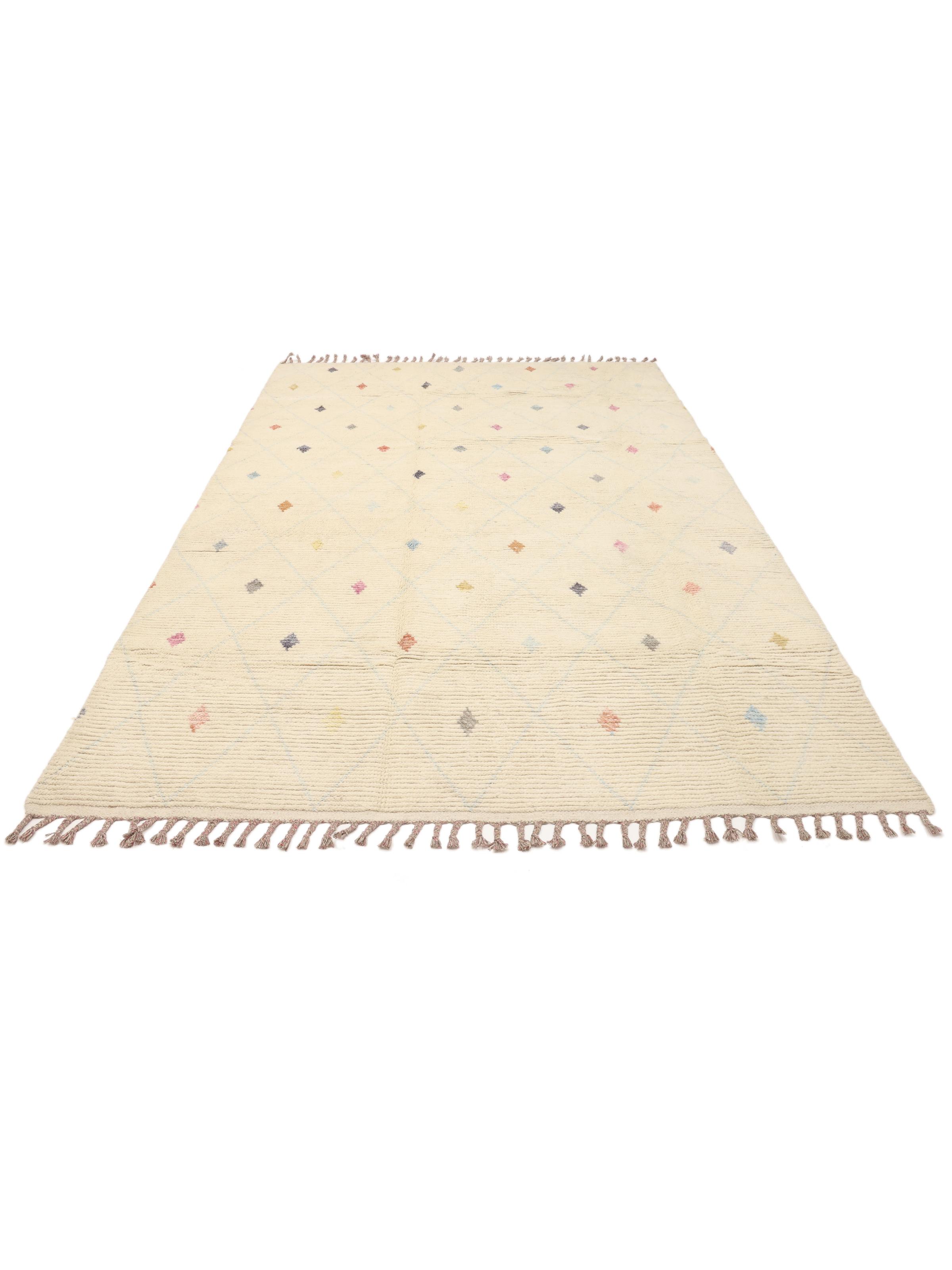
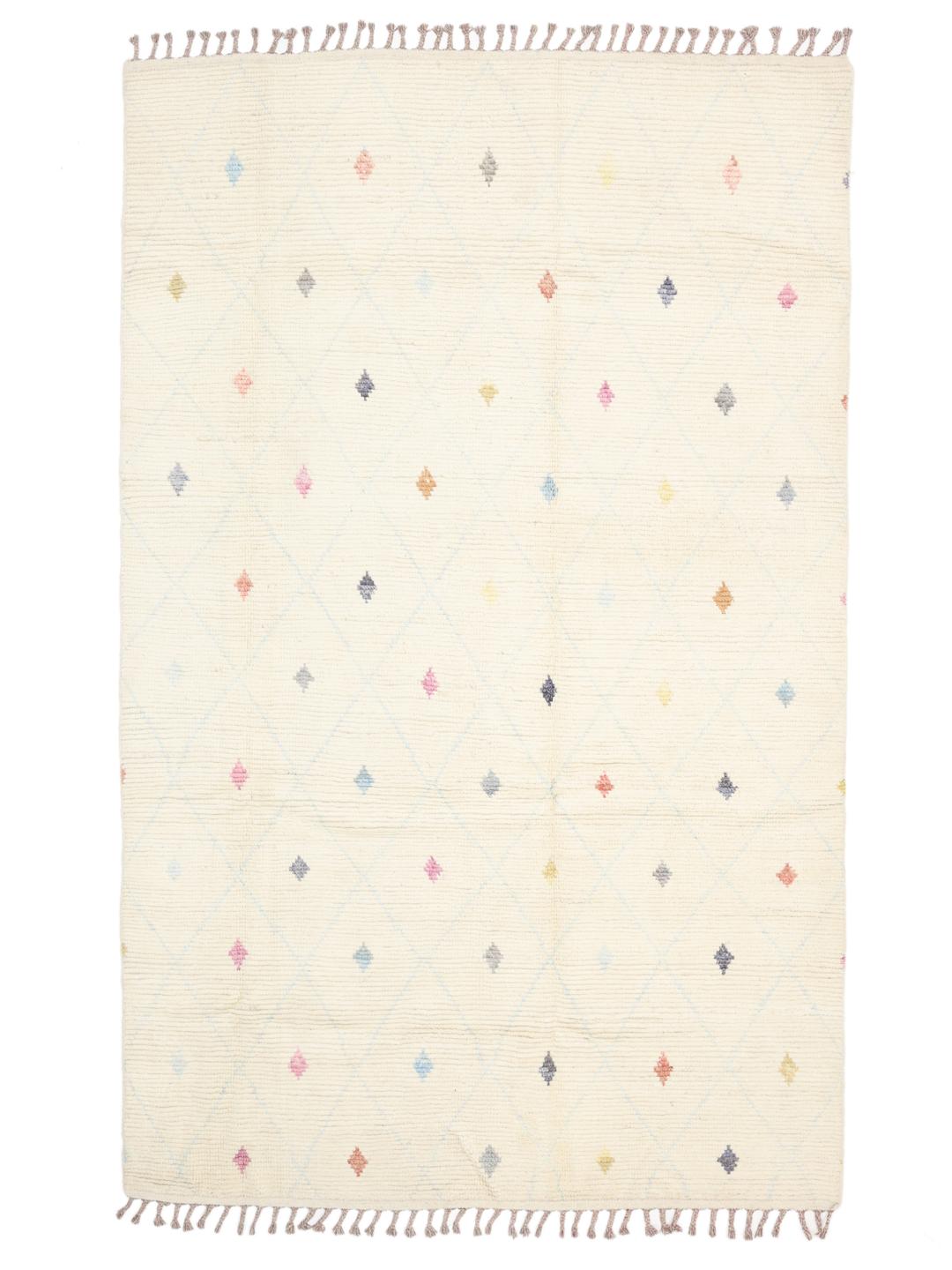
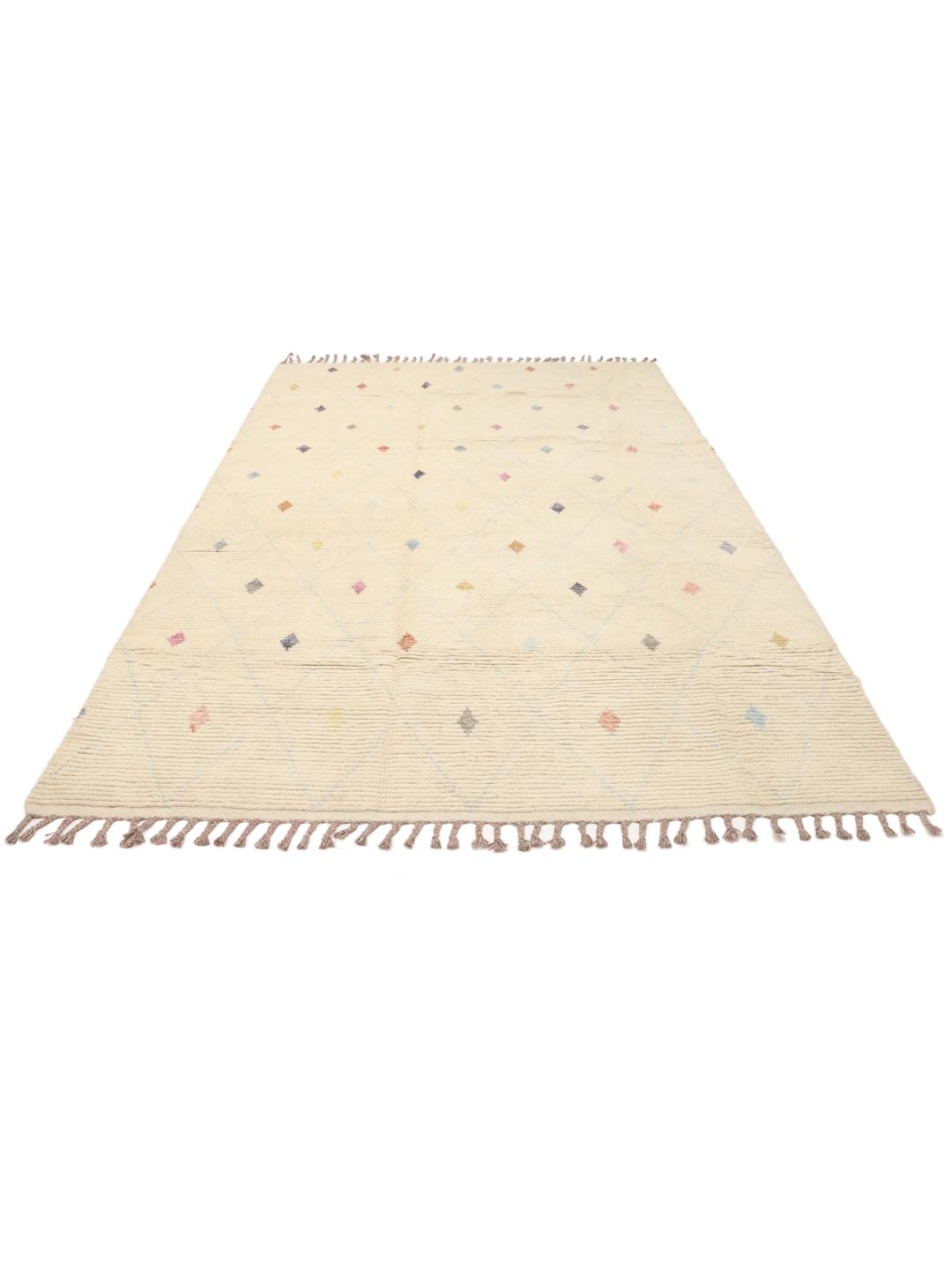
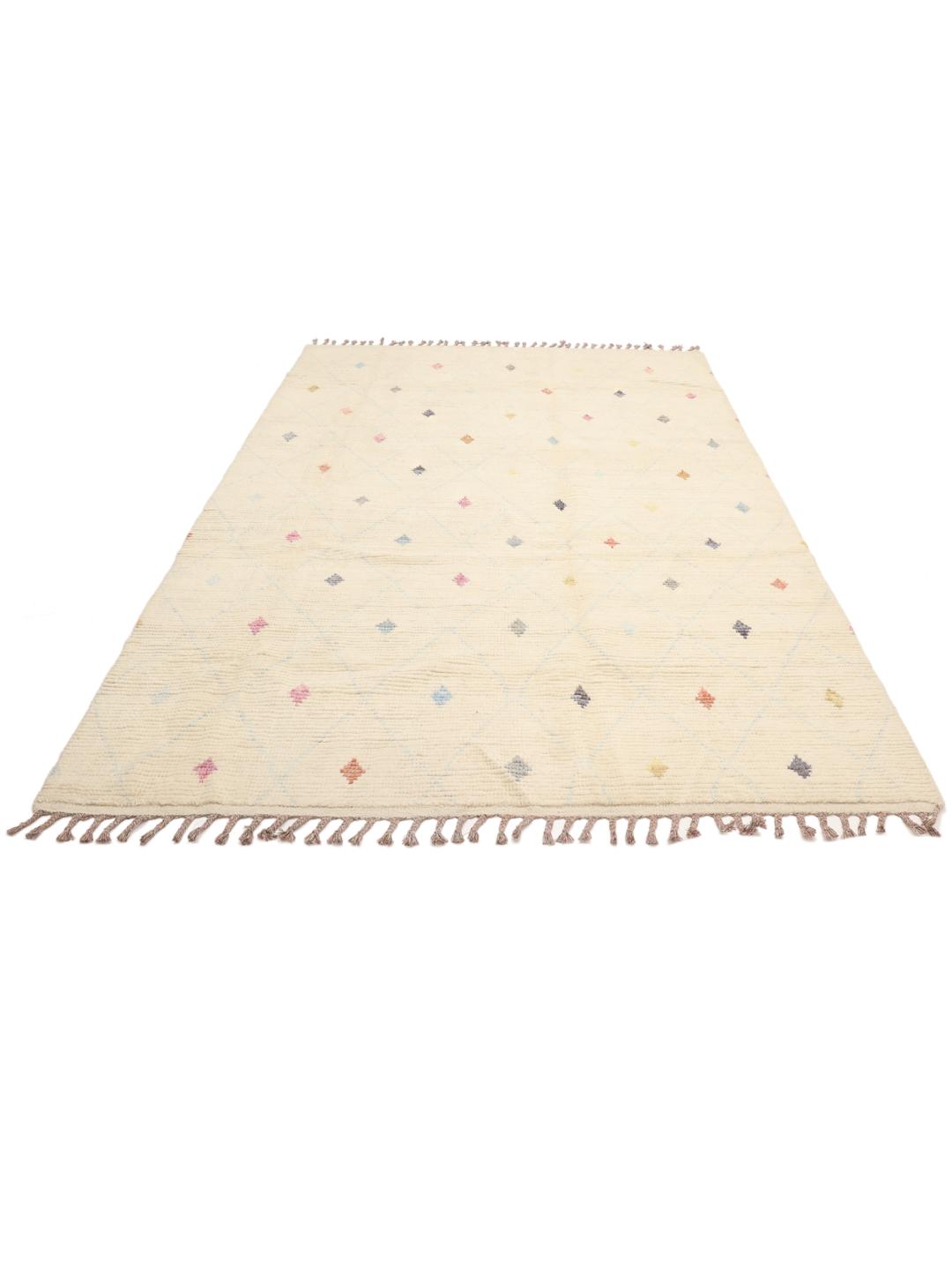
The Berber style of rug-making has its roots in the mountainous regions of North Africa, where nomadic tribes traditionally wove these pieces for protection and warmth. Over time, the aesthetic has evolved and travelled, inspiring weavers across various regions, including Afghanistan, to adopt these iconic designs while infusing them with their own local techniques and materials.
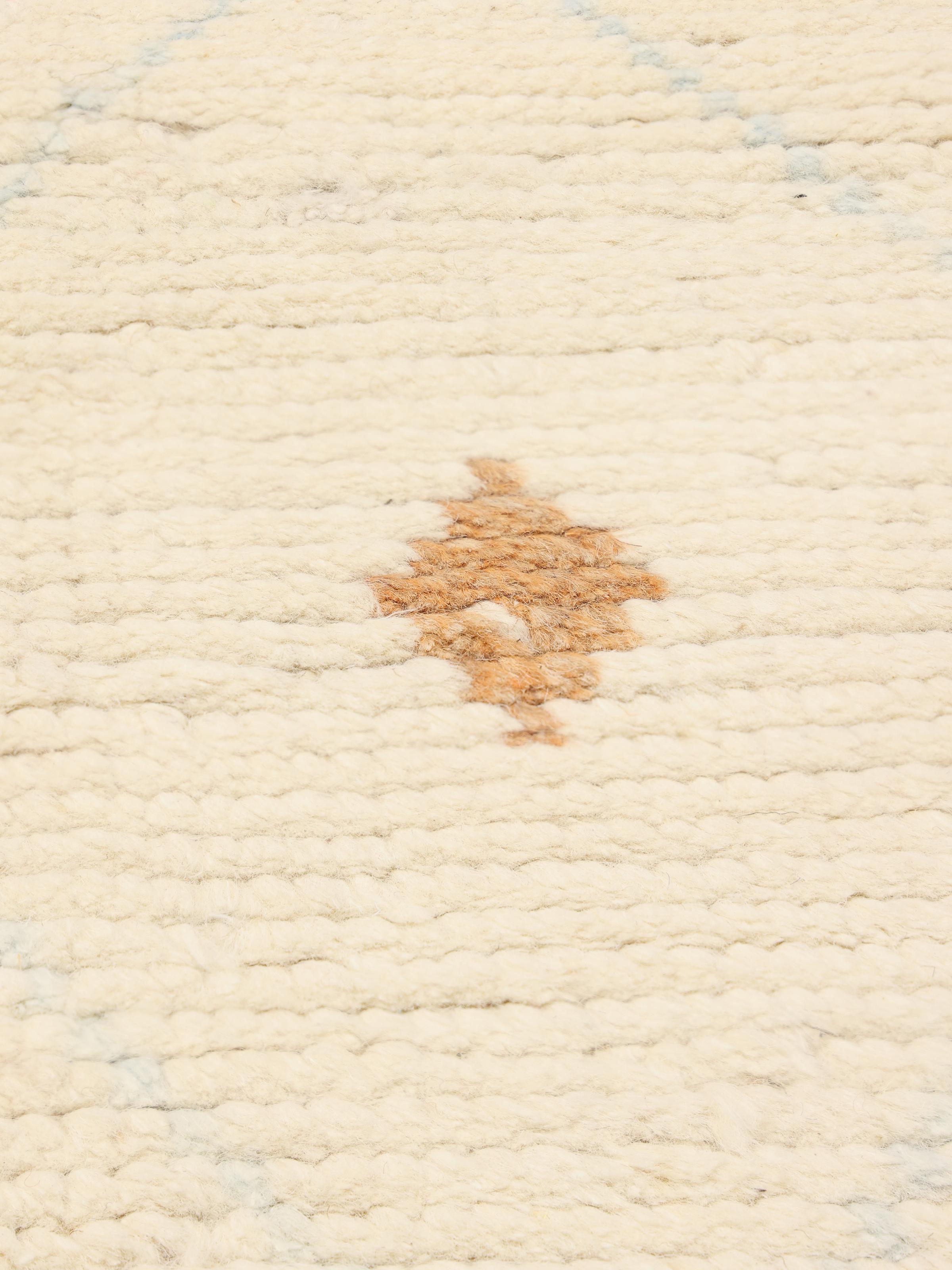
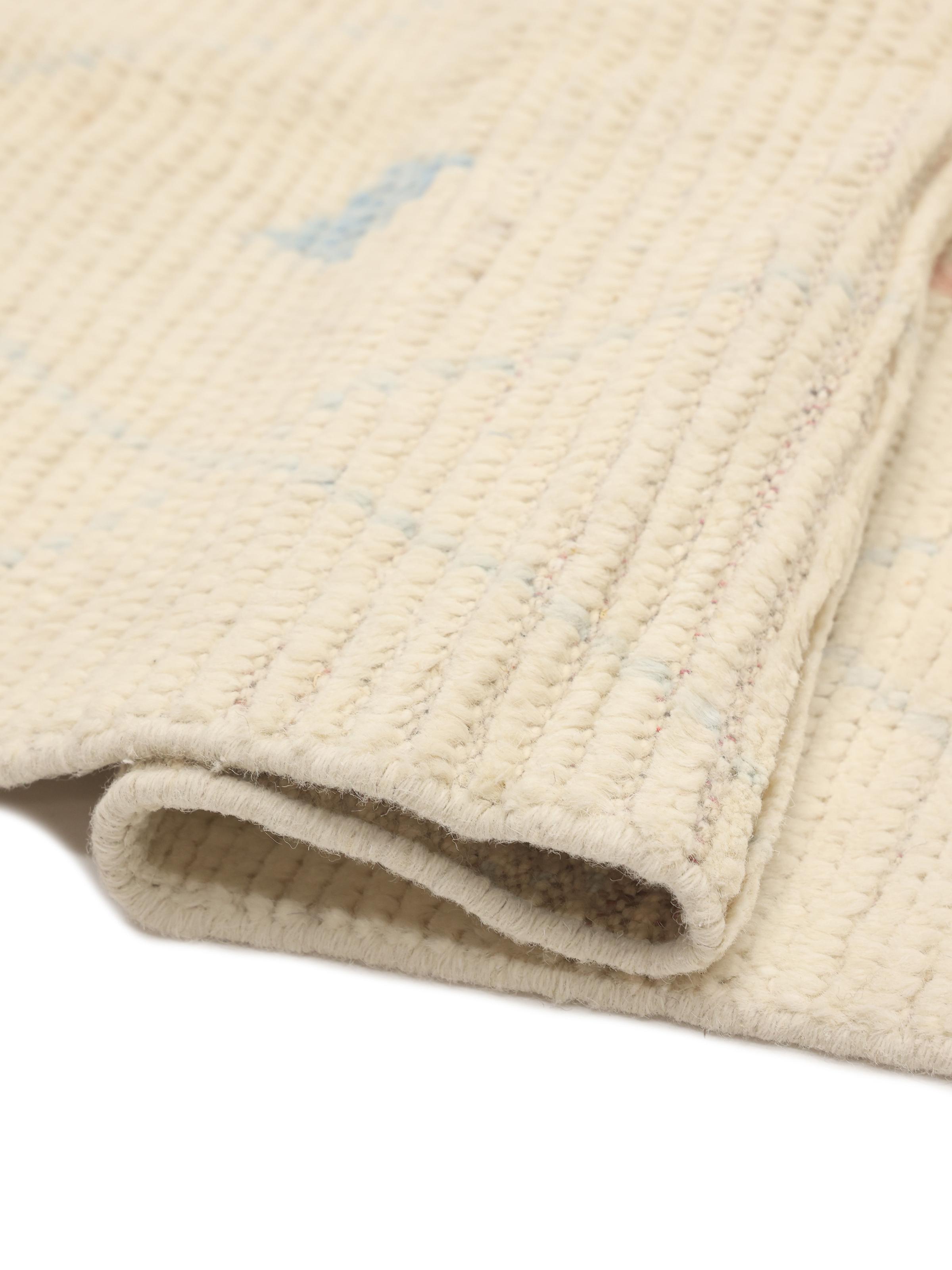
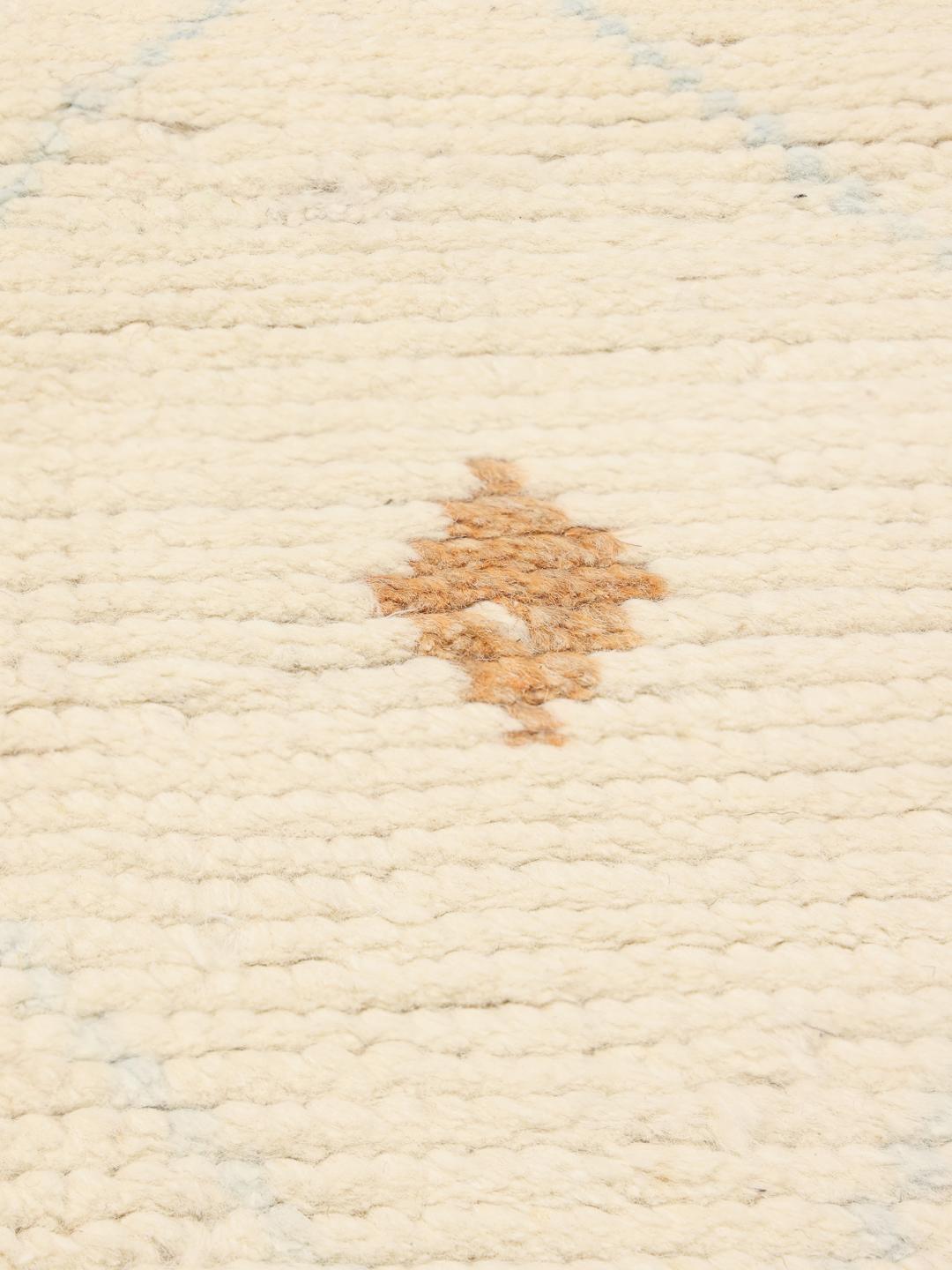
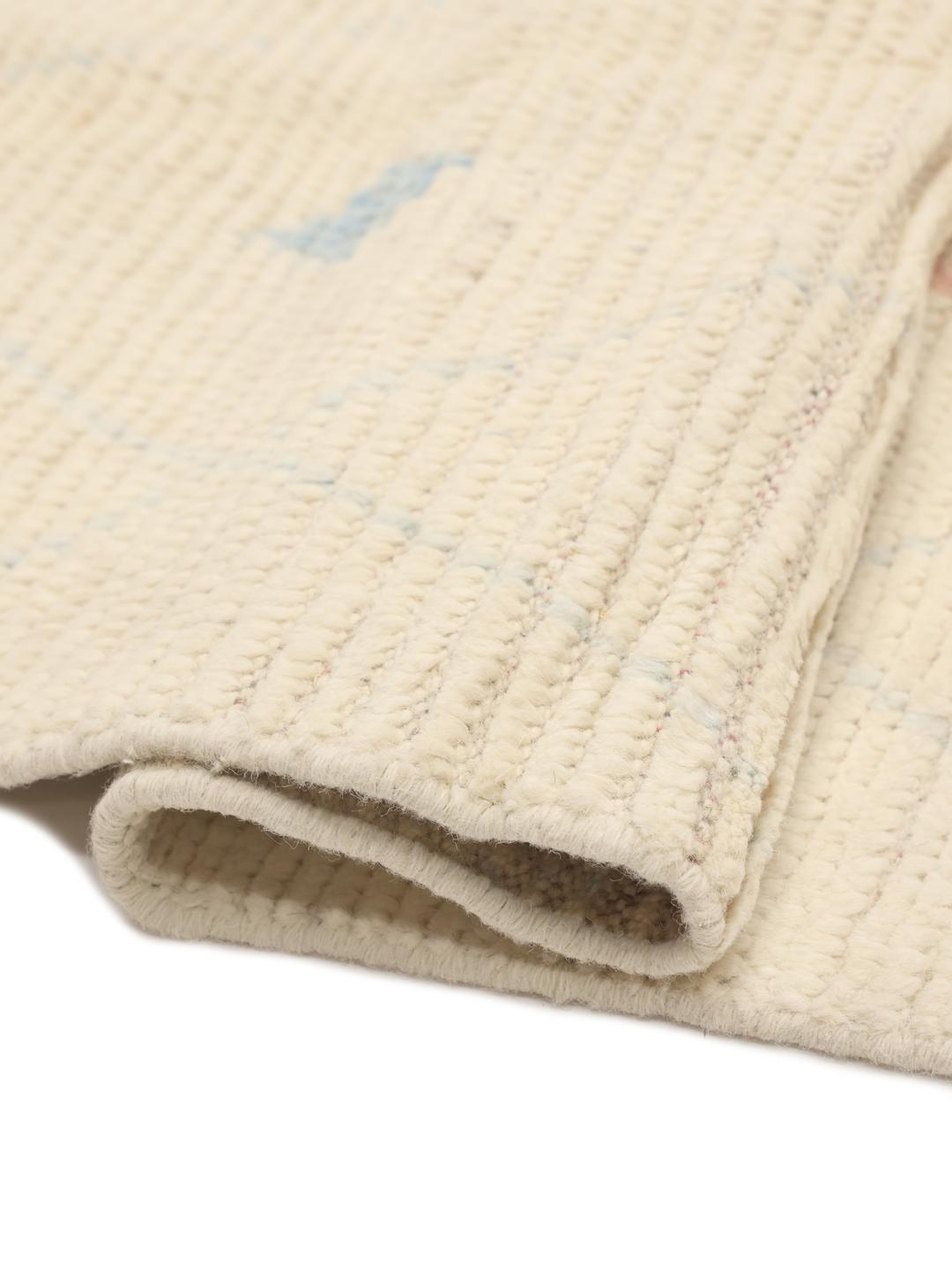
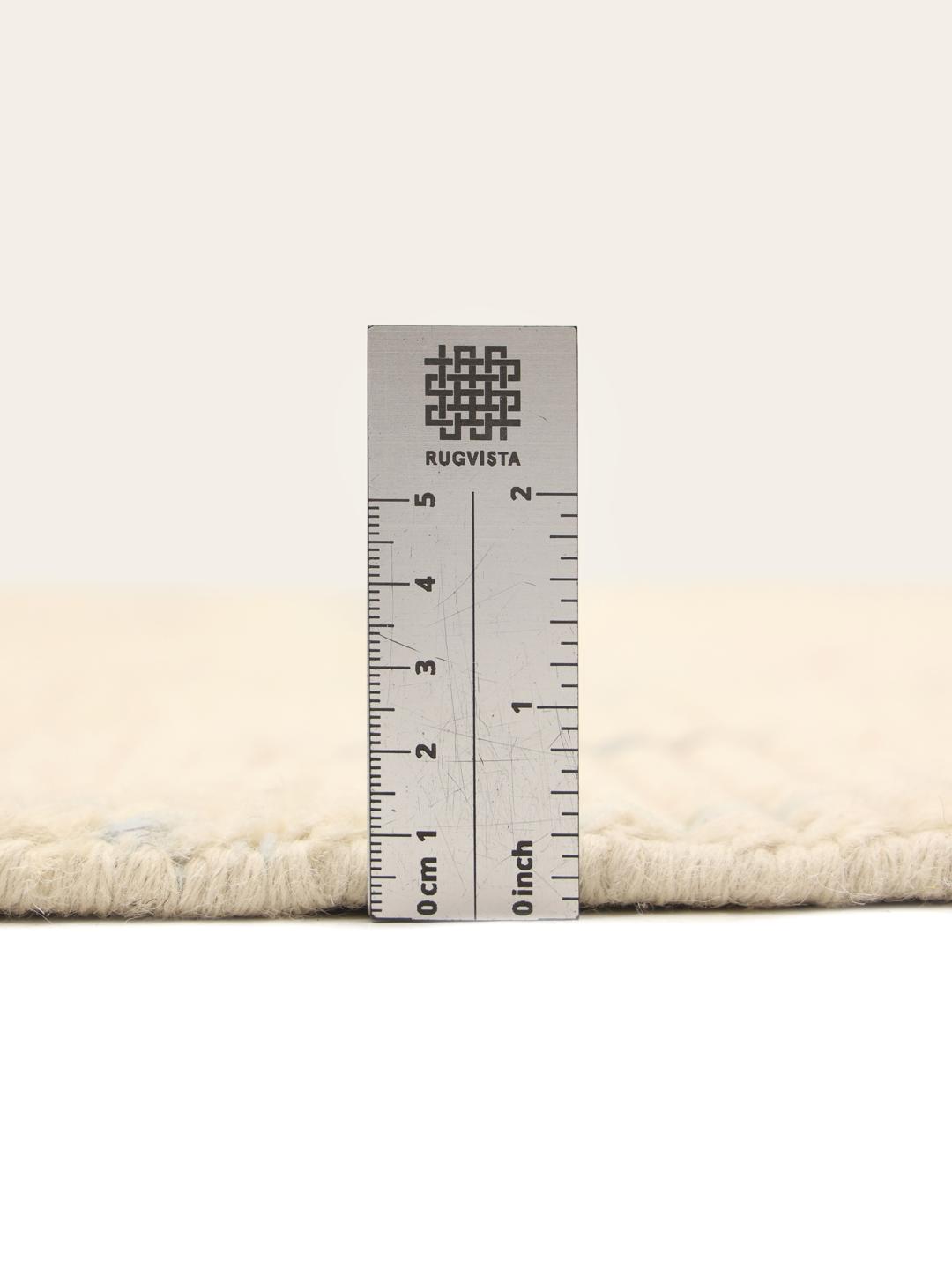
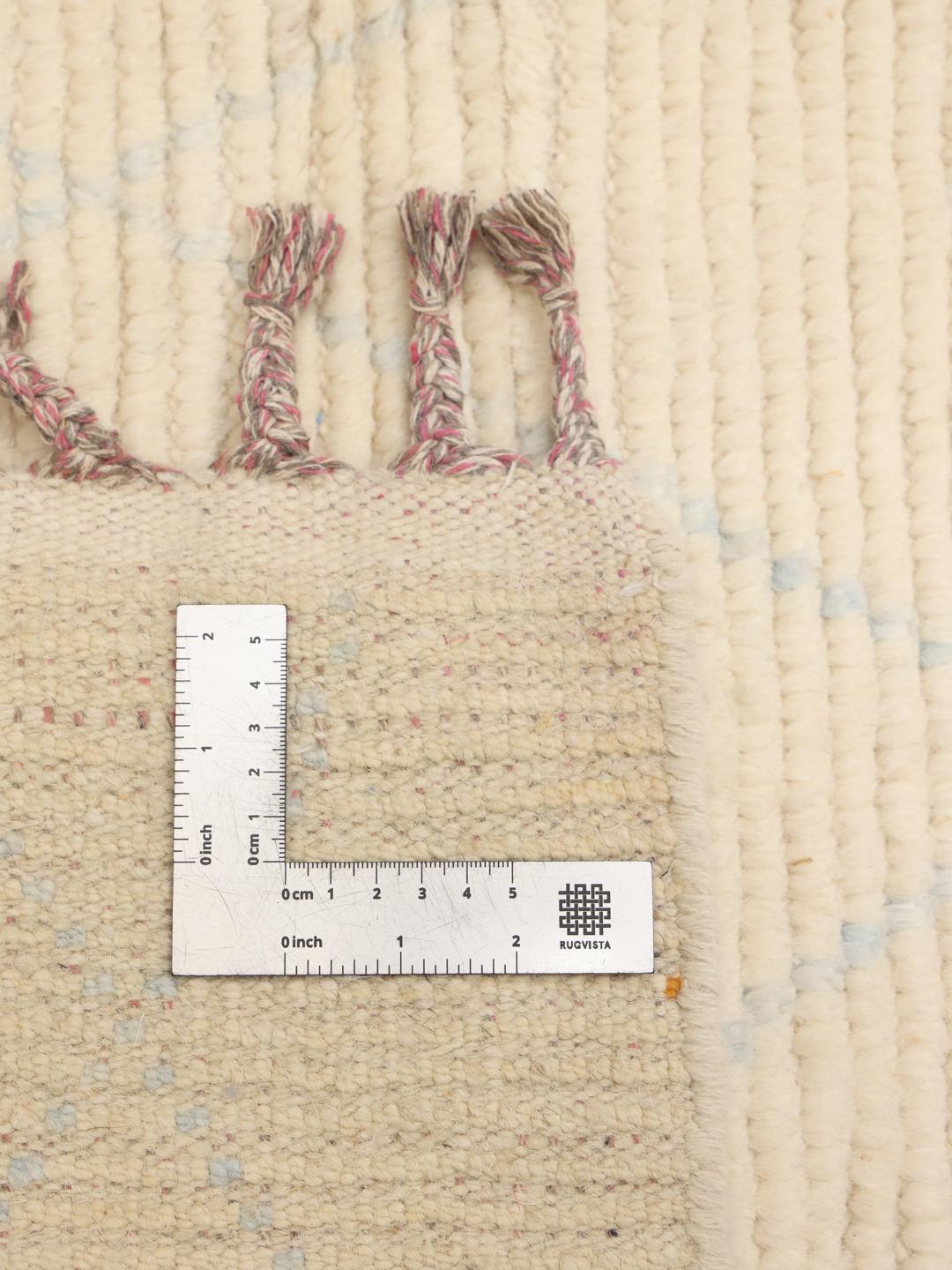
The term hand-knotted refers to the laborious method of tying individual strands of Wool onto a foundation. This technique is essential for achieving the dense, plush pile that characterises these rugs. By using high-quality Wool, the weavers create a surface that is naturally resilient and soft, providing a level of comfort that machine-made alternatives simply cannot match.
Visually, these rugs are defined by their minimalist yet expressive language. The use of a neutral, natural-toned field serves as a canvas for simple geometric motifs, such as the diamond shapes seen here. This design approach is meant to bring a sense of balance and calm to an interior, with the occasional pop of colour adding a playful, organic energy to the overall composition.
Collecting a rug from this tradition is about more than just decor; it is about honouring a history of human expression and skill. These pieces are valued for their ability to bridge the gap between ancient craft and modern living, making them an essential choice for those who appreciate authentic heritage and the enduring quality of hand-crafted objects.