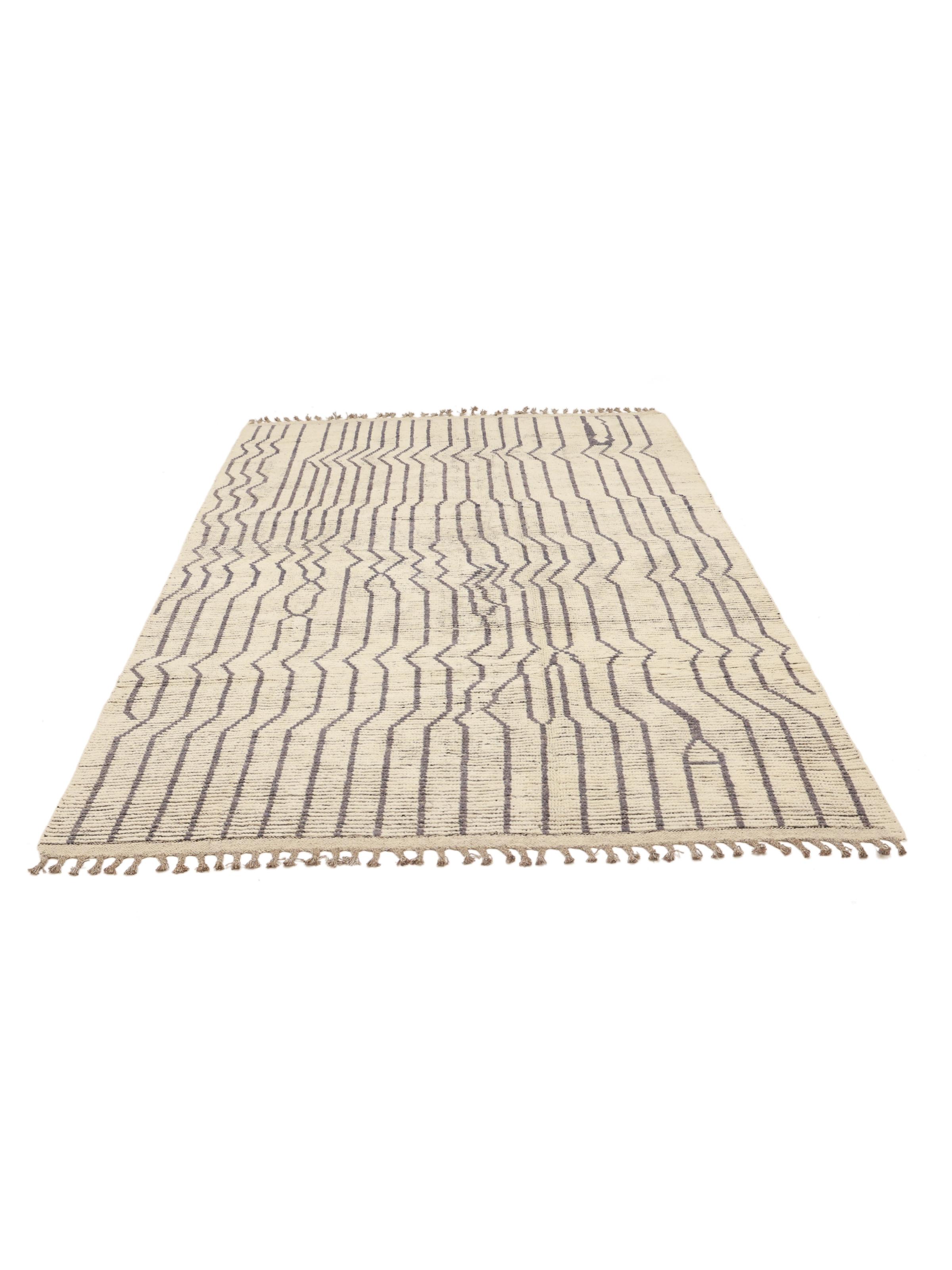
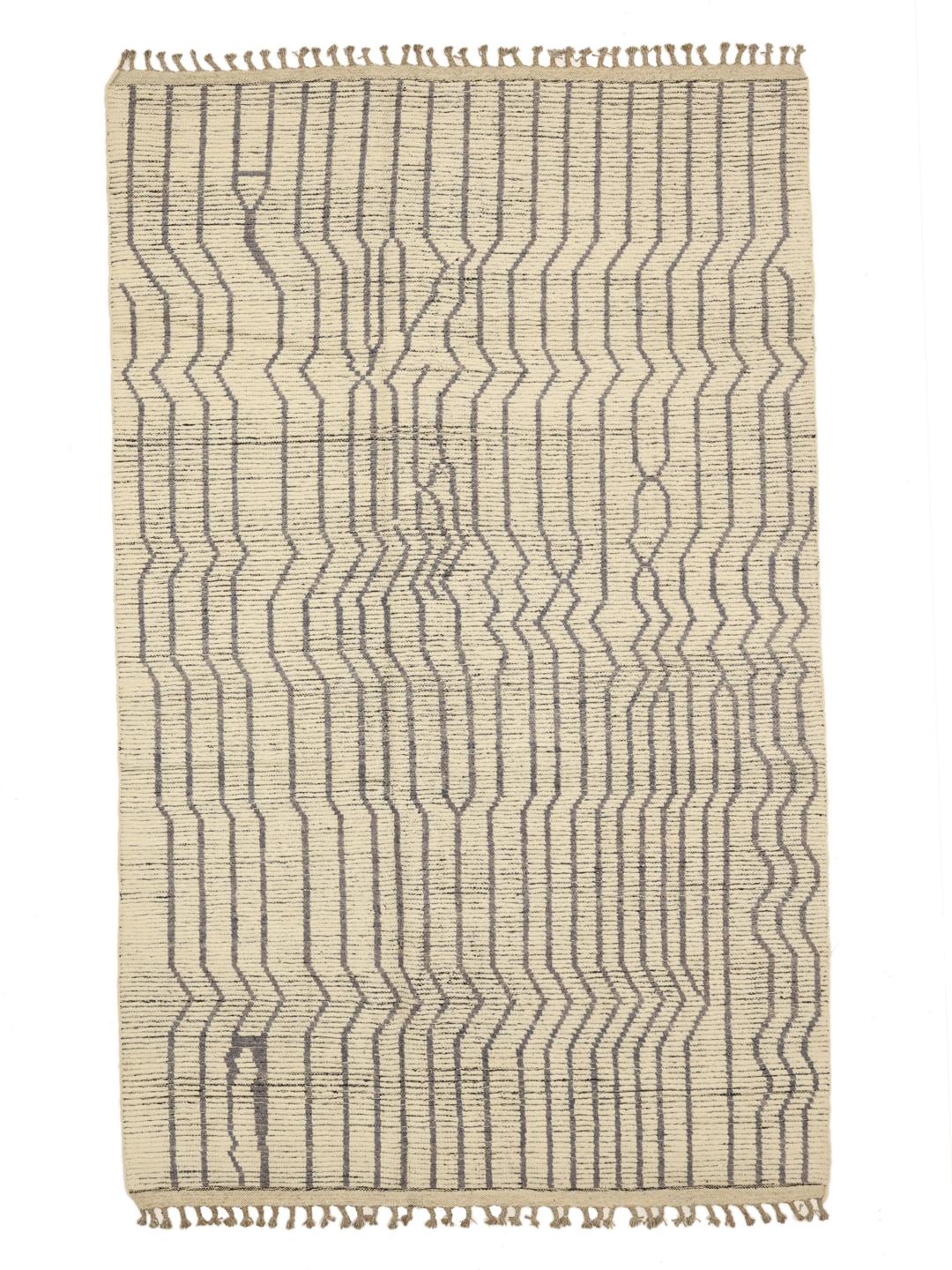
The Berber style, while historically rooted in the nomadic traditions of North Africa, has evolved into a global design language that emphasises natural materials and simple, impactful patterns. Today, skilled artisans in regions like Afghanistan have adopted these traditions, blending their own regional weaving techniques with the iconic, minimalist aesthetic that defines the Berber look.
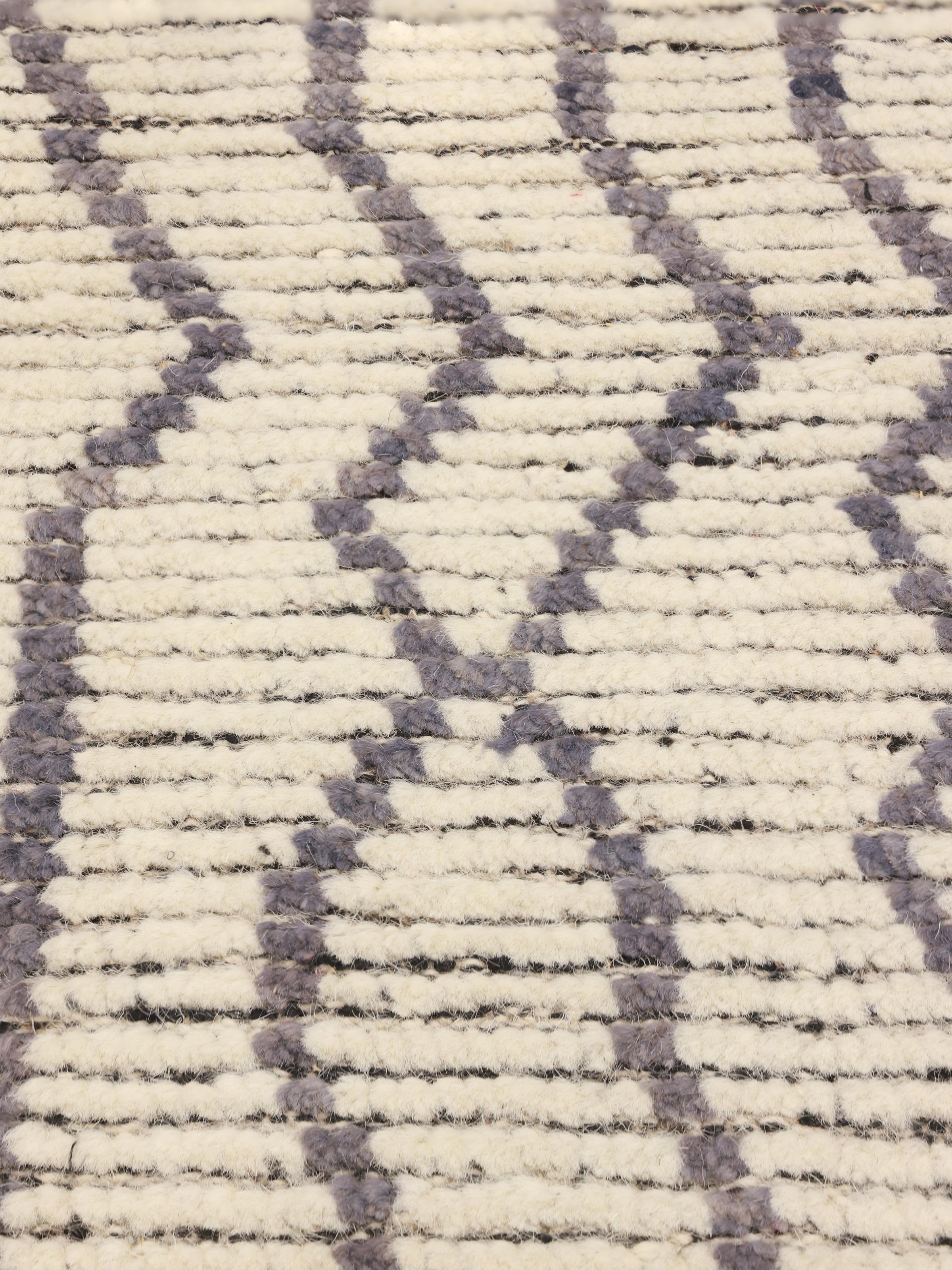
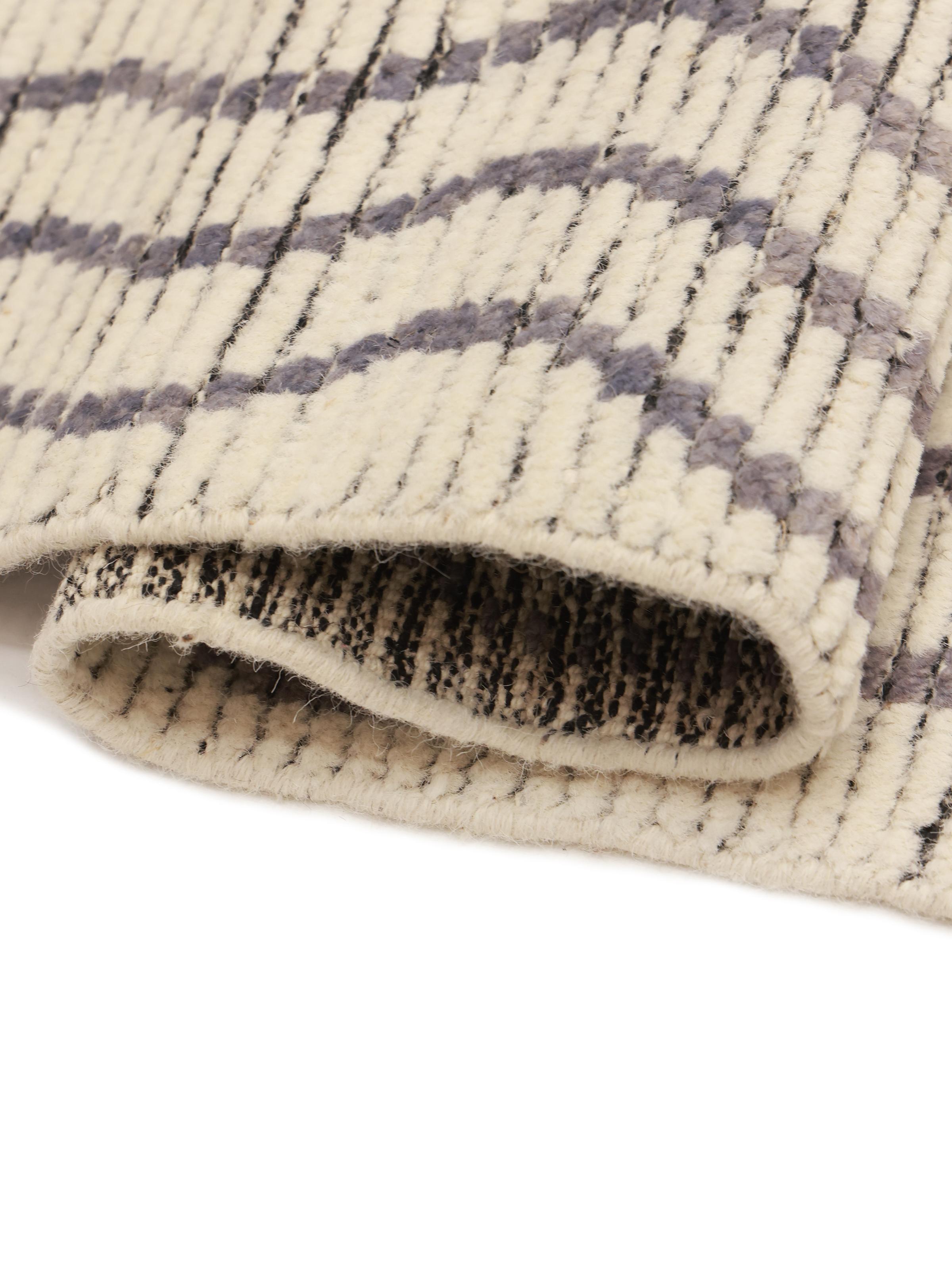
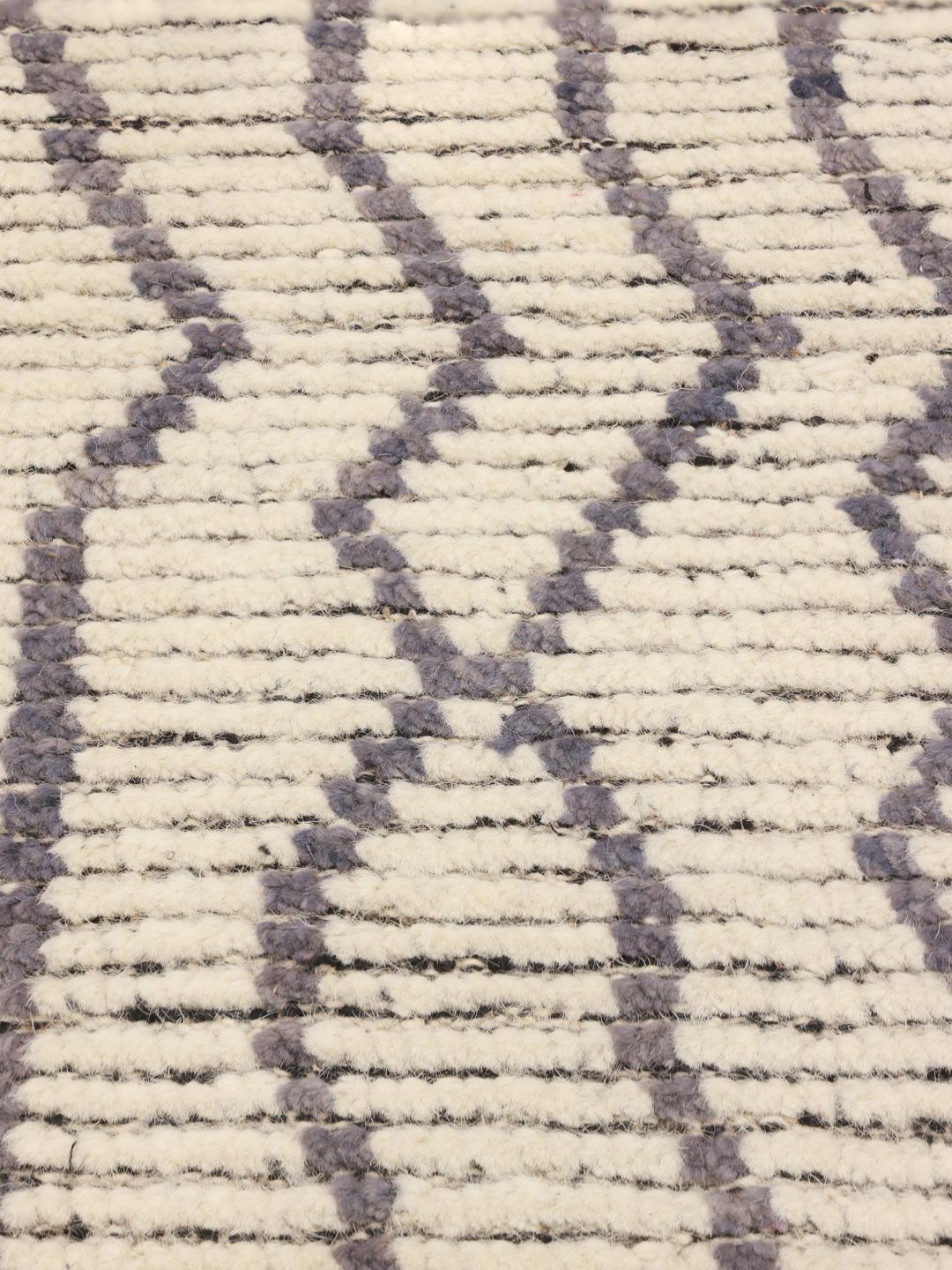
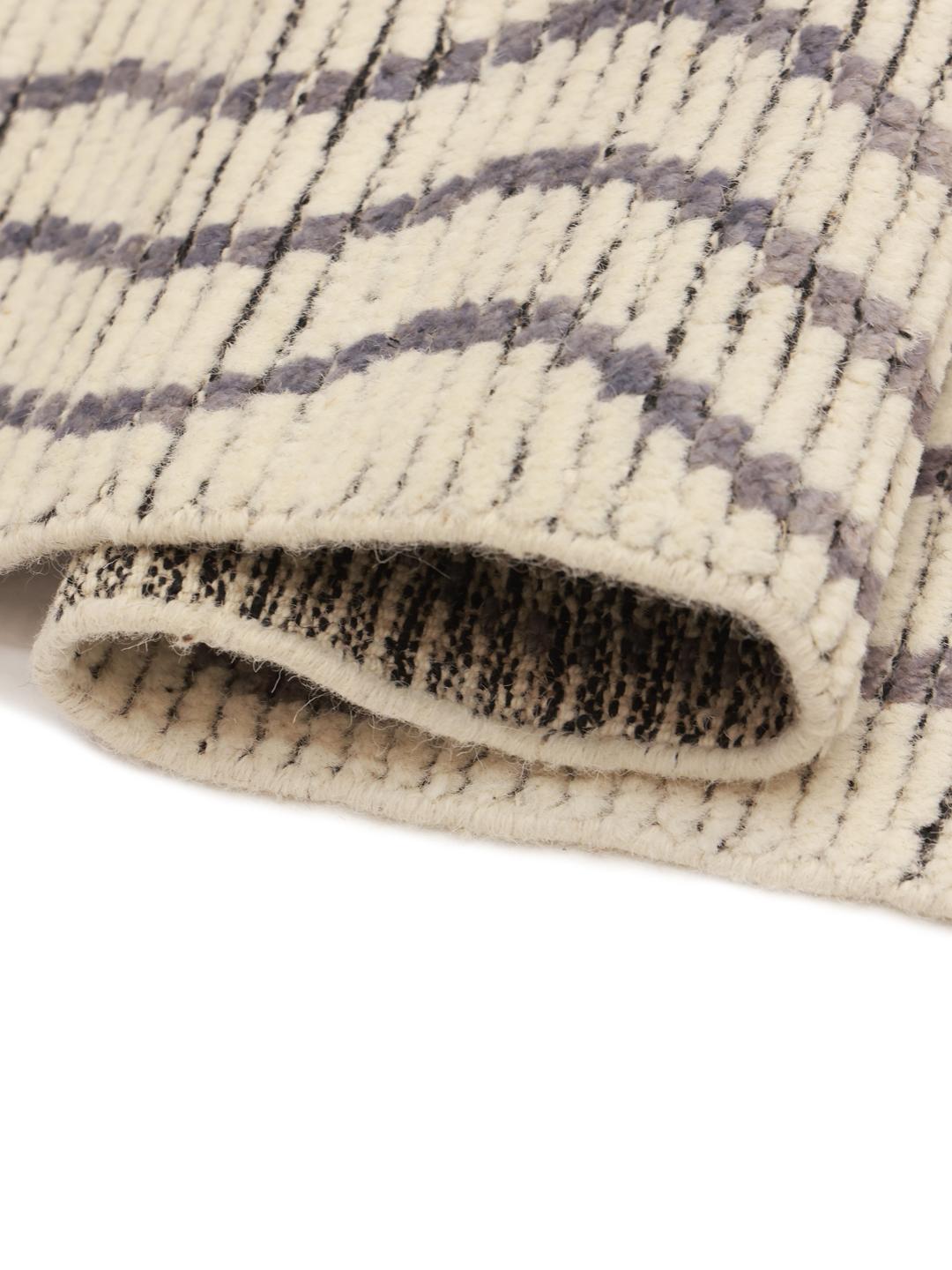
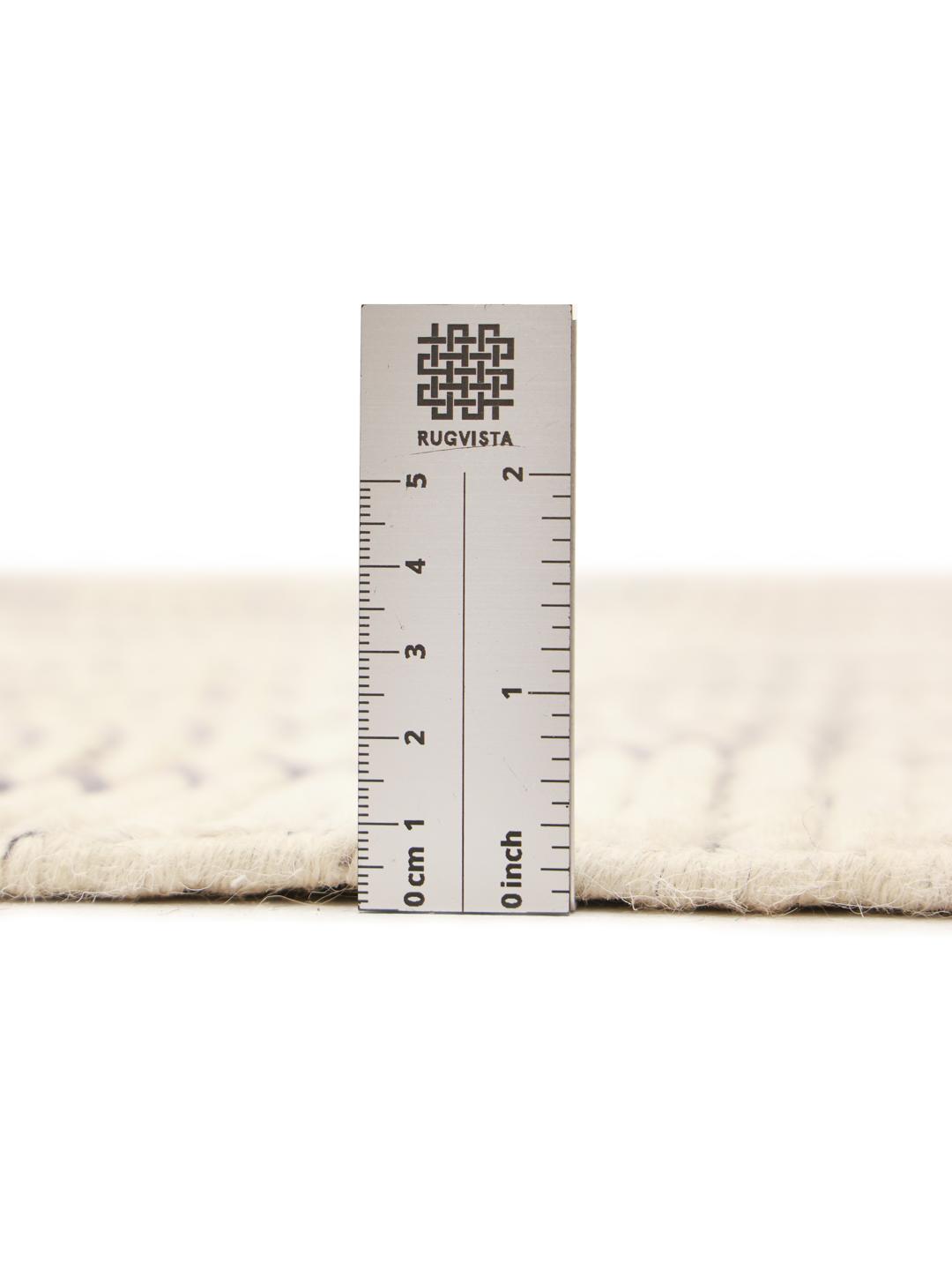
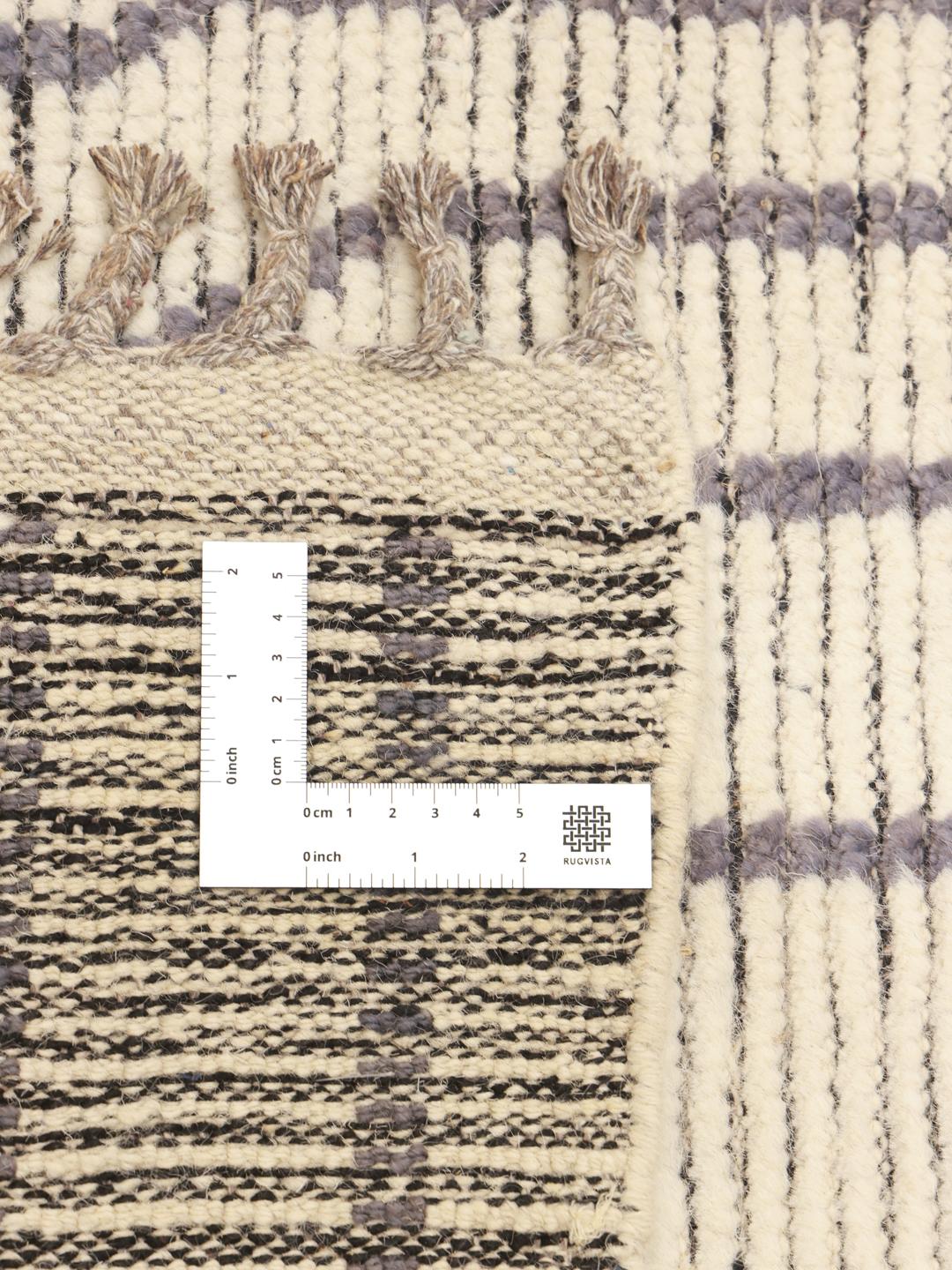
The term hand-knotted refers to the traditional method of construction where individual strands of wool are tied around the foundation threads. This creates a highly durable and dense pile that is far more resilient than tufted or machine-made alternatives. The quality of this construction ensures that the rug maintains its shape and texture even with daily use, making it a practical choice for a busy home.
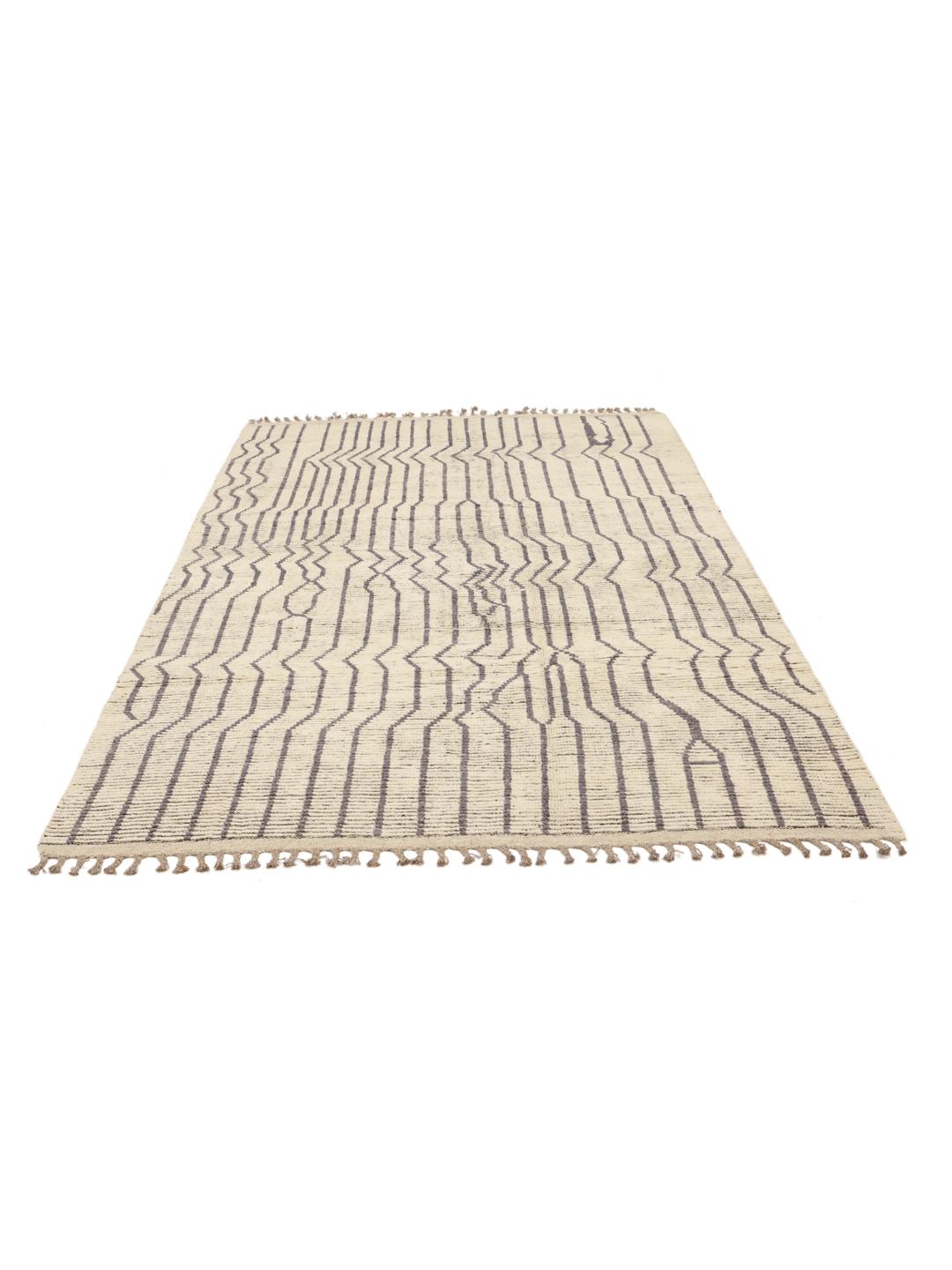
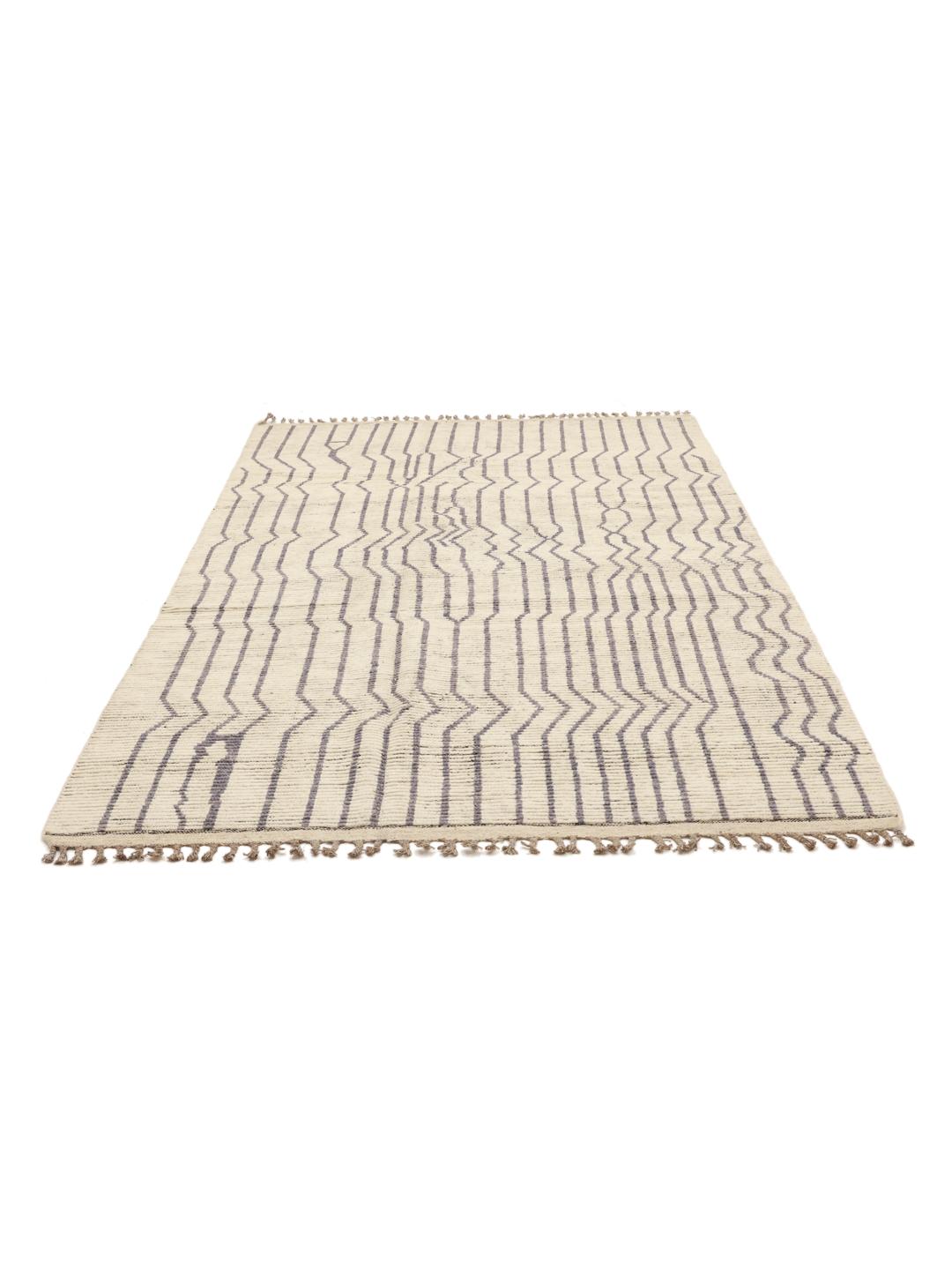
Visually, this rug follows the classic Berber tradition of using a light, neutral field contrasted by bold, graphic lines. These patterns were historically symbolic, often representing stories, tribal identities, or elements of the natural world. The rhythmic, somewhat irregular lines seen here are a hallmark of the style, lending a sense of organic movement and human touch to the design.
Collecting rugs from this lineage is a way to connect with a history of human creativity that spans generations. These pieces are valued not just for their visual appeal but for the skill and patience required to bring them to life. Owning one is a testament to the enduring appeal of hand-made goods in a modern world, grounding your home in a tradition of quality and cultural significance.