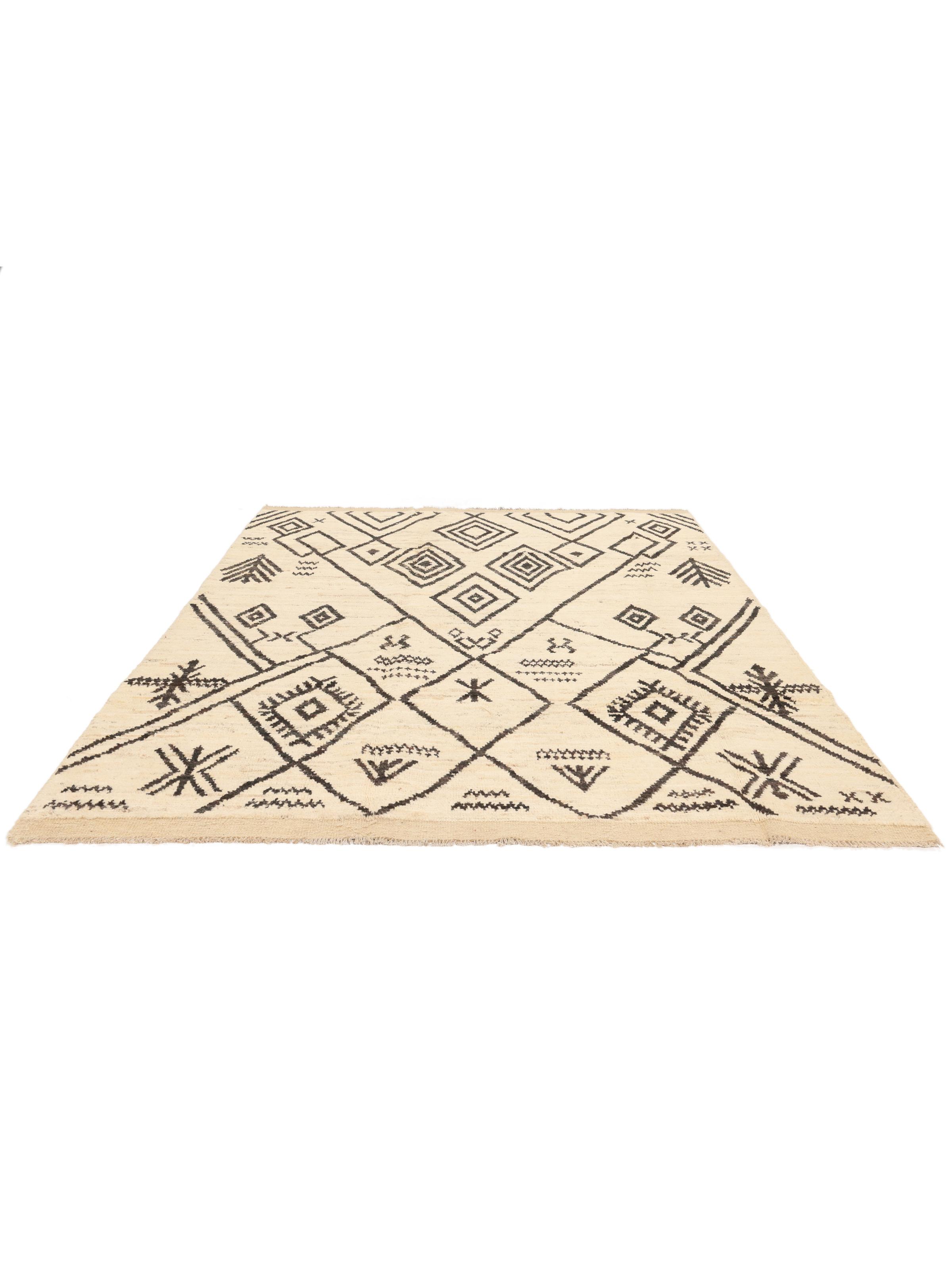
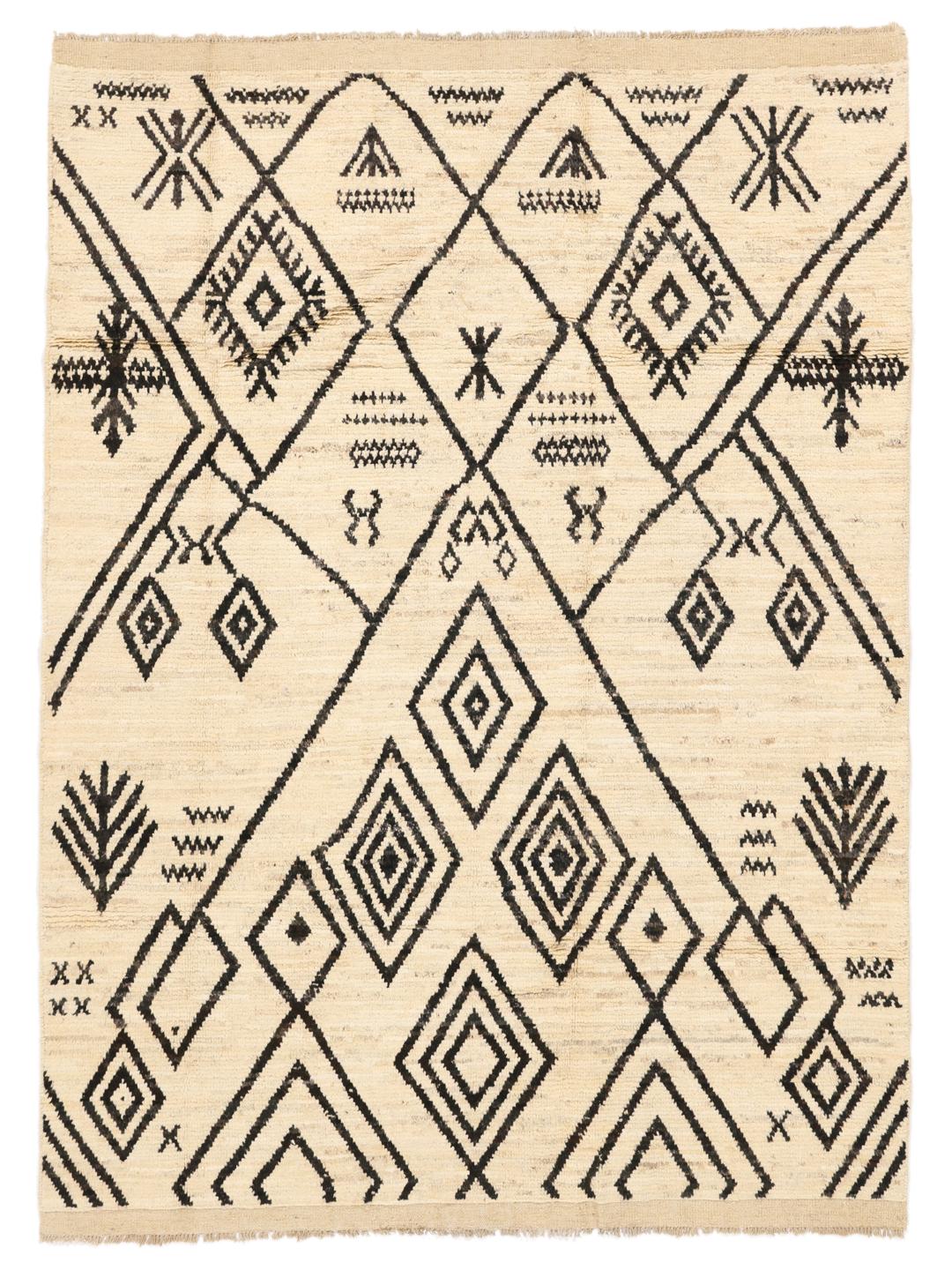
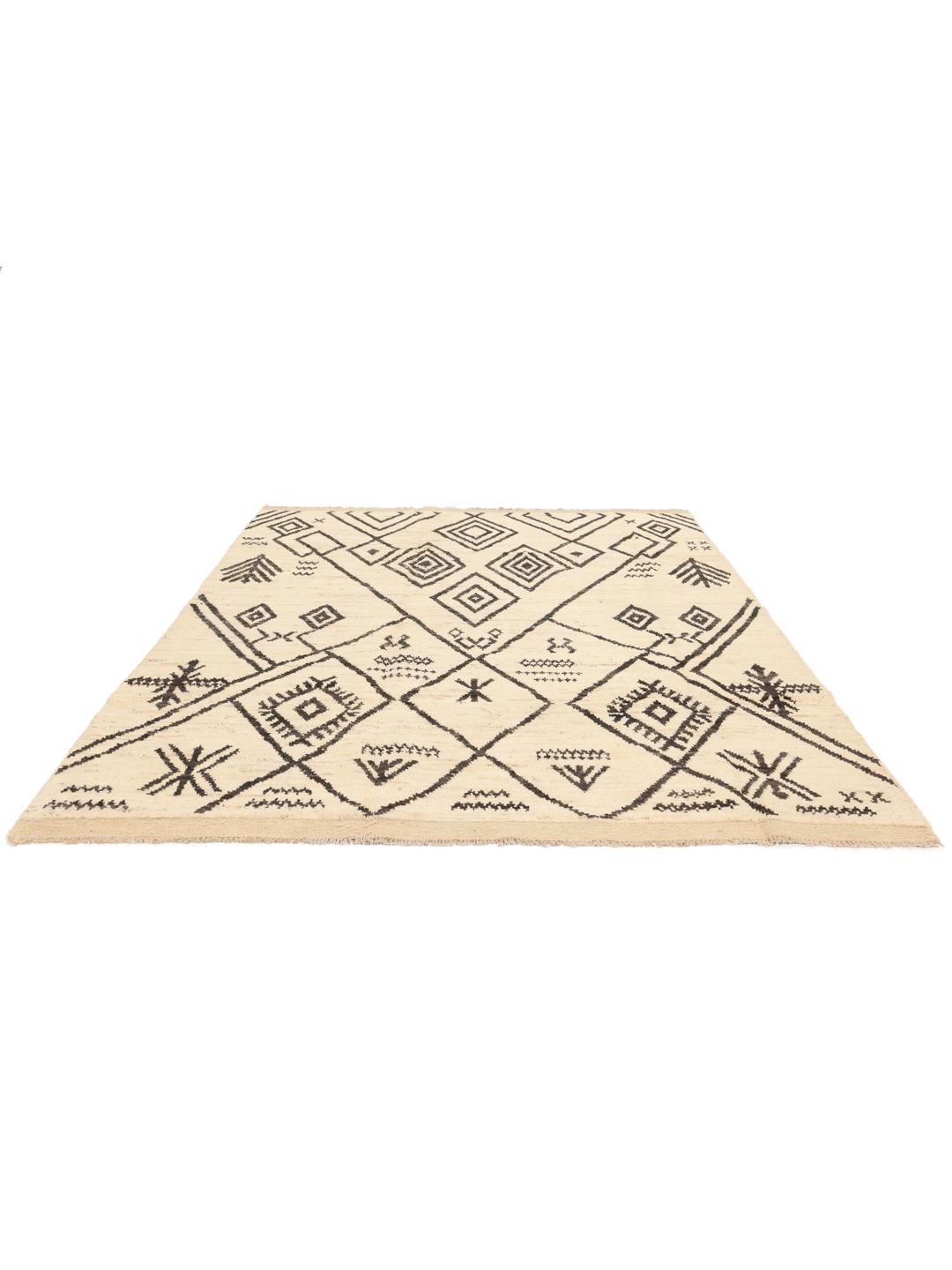
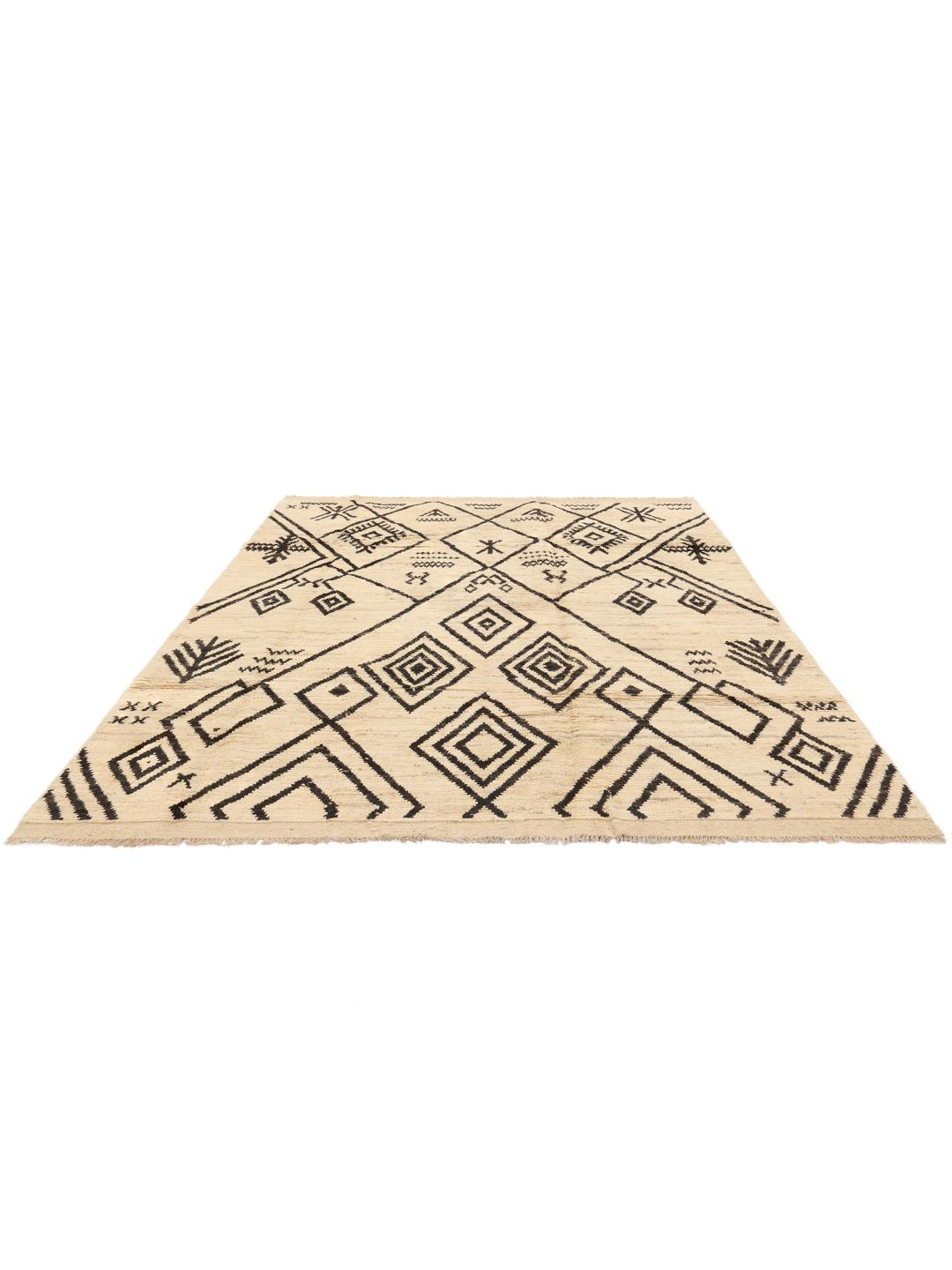
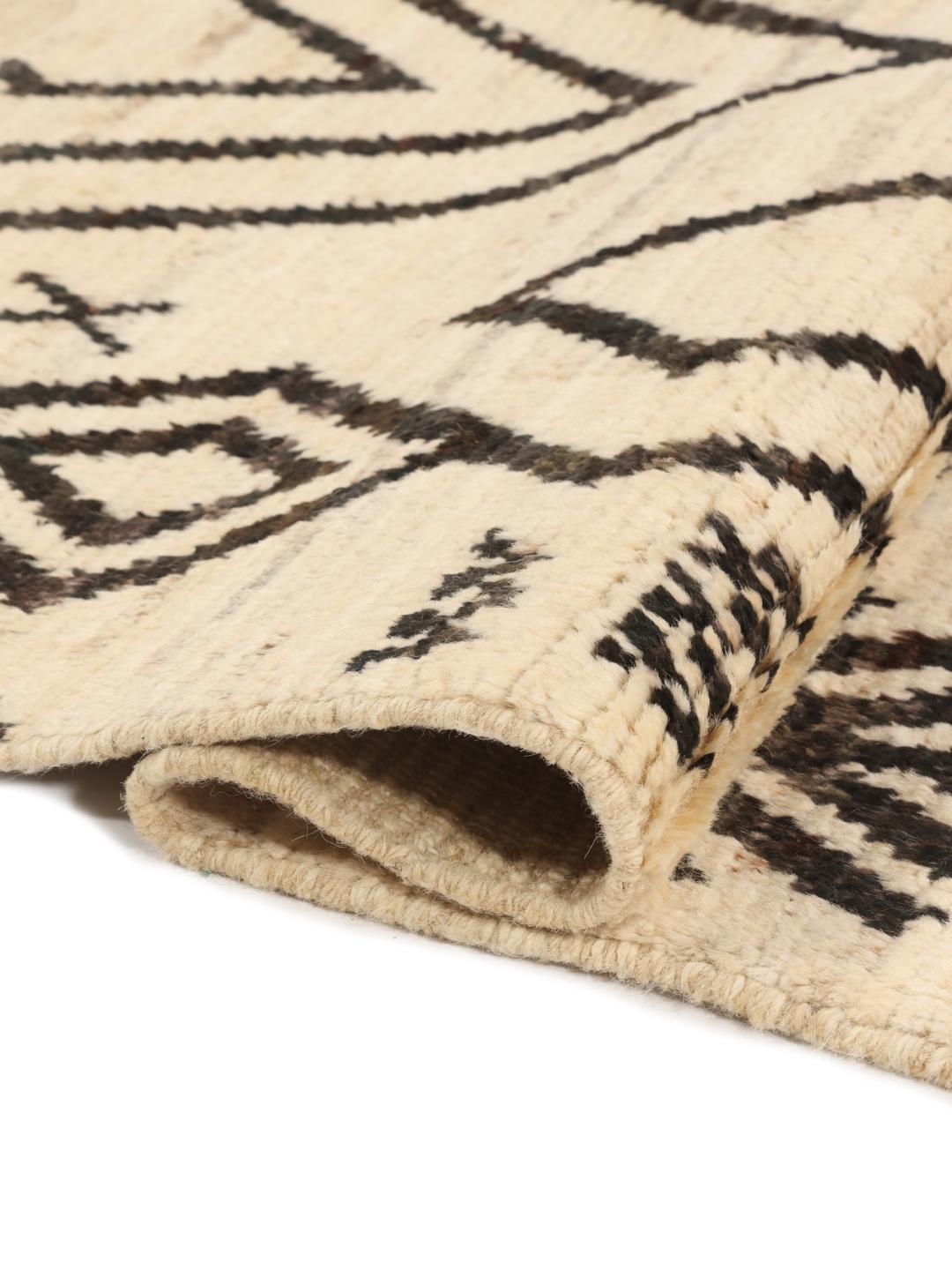
The rug tradition in the Middle East has deep roots, evolving over centuries to blend local nomadic influences with sophisticated weaving techniques. While the style often draws inspiration from the minimalist and tribal aesthetics of North African Berber traditions, weavers have infused these designs with their own unique regional flair and cultural narrative.
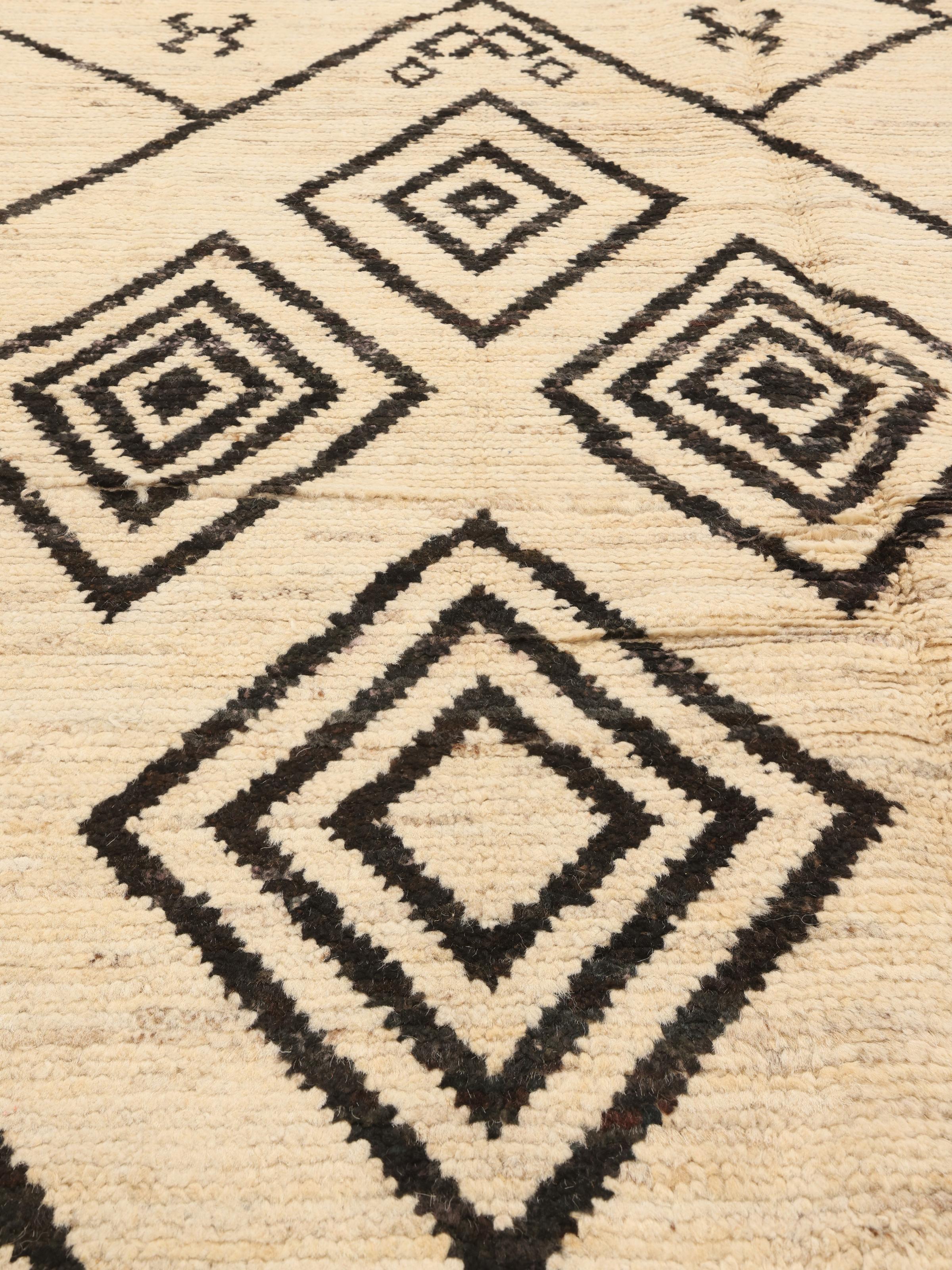
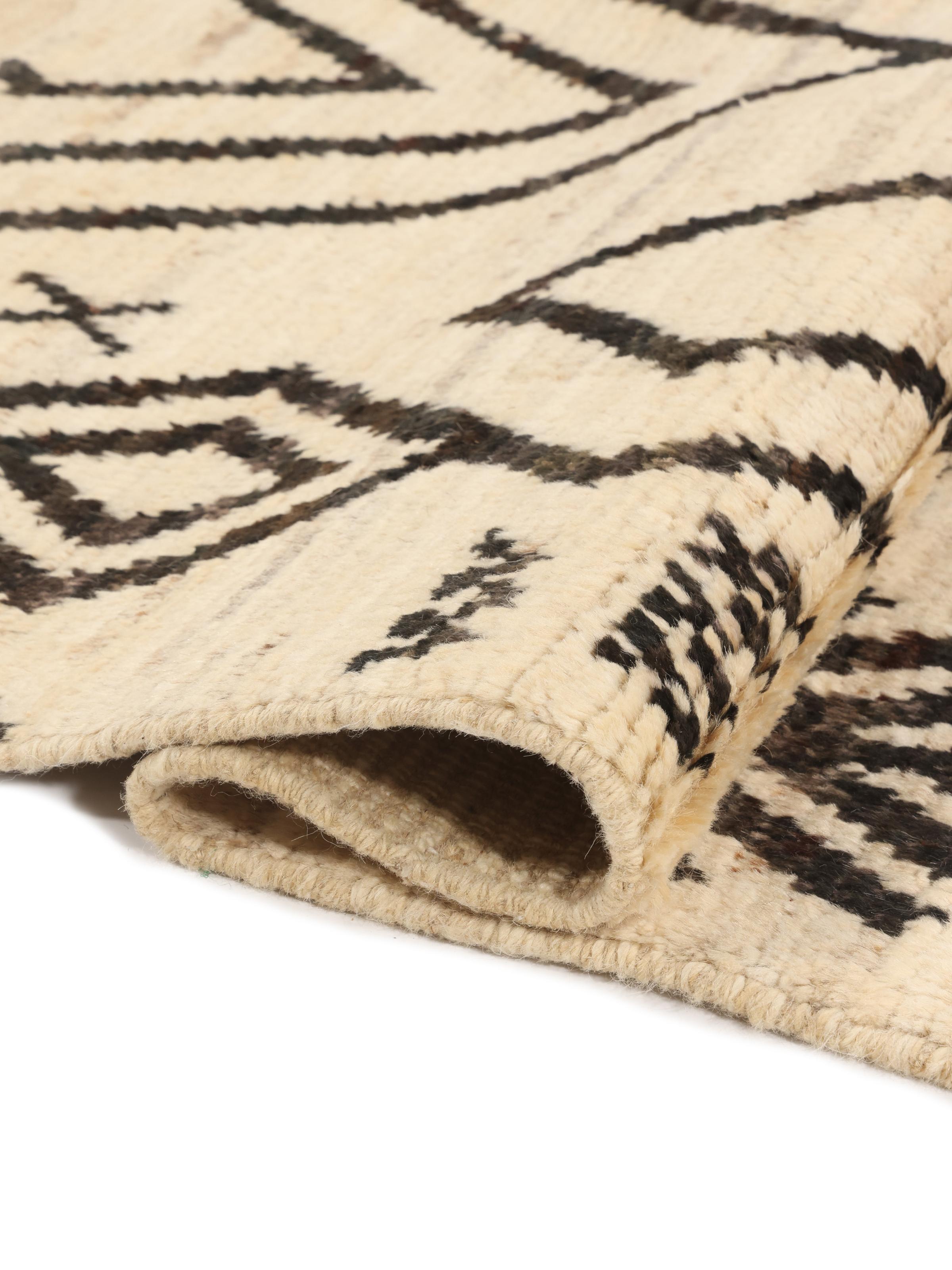
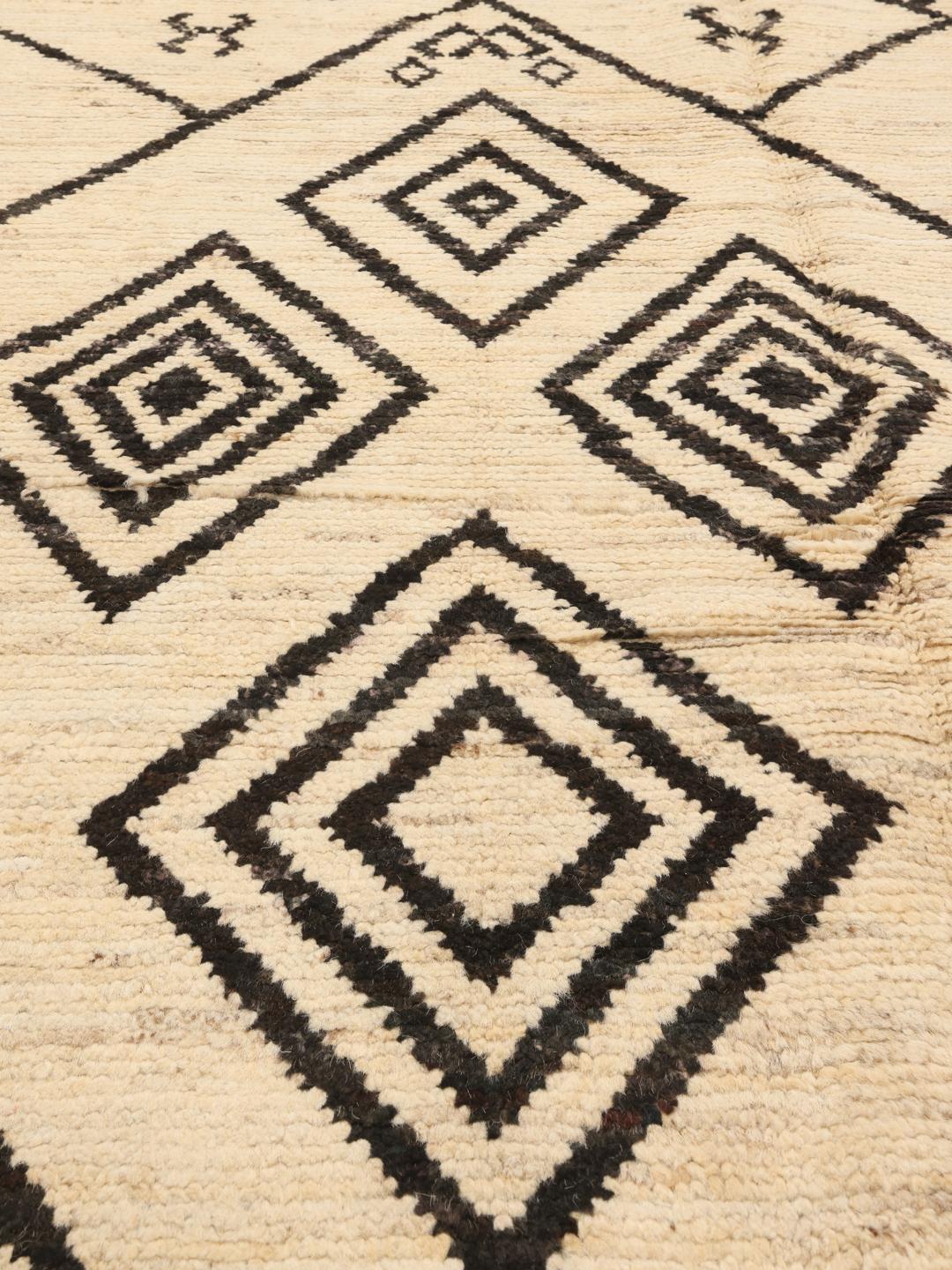
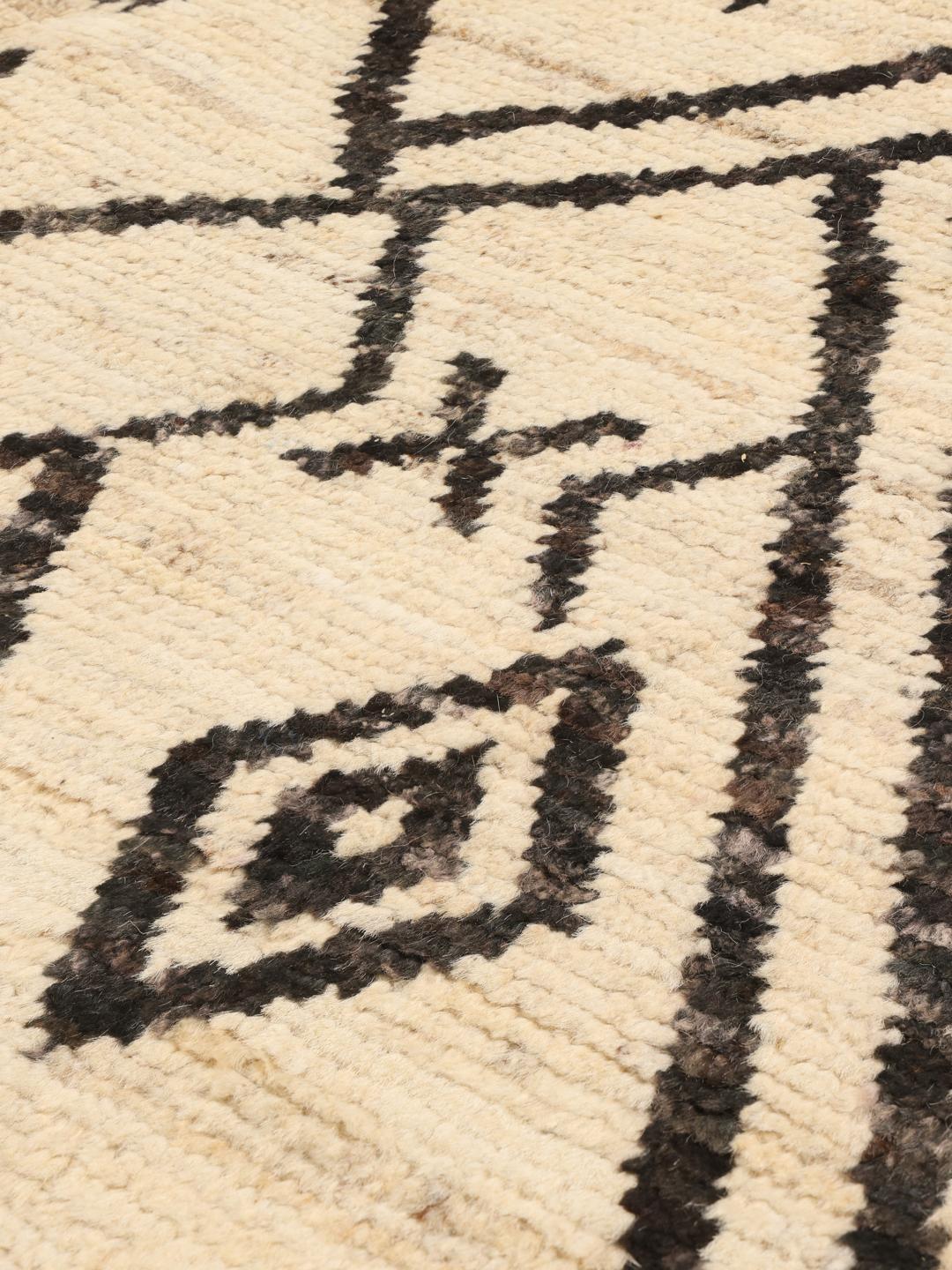
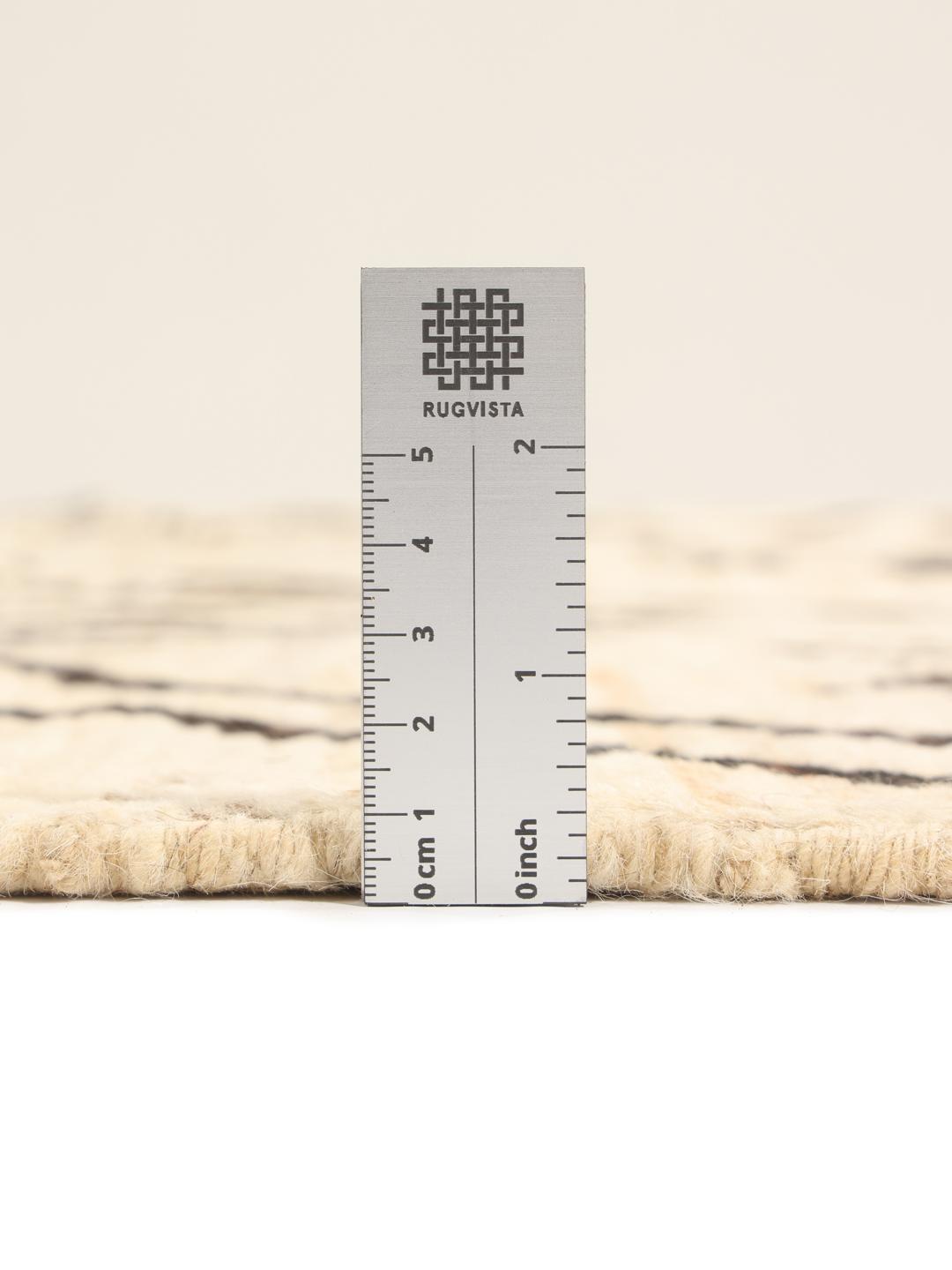
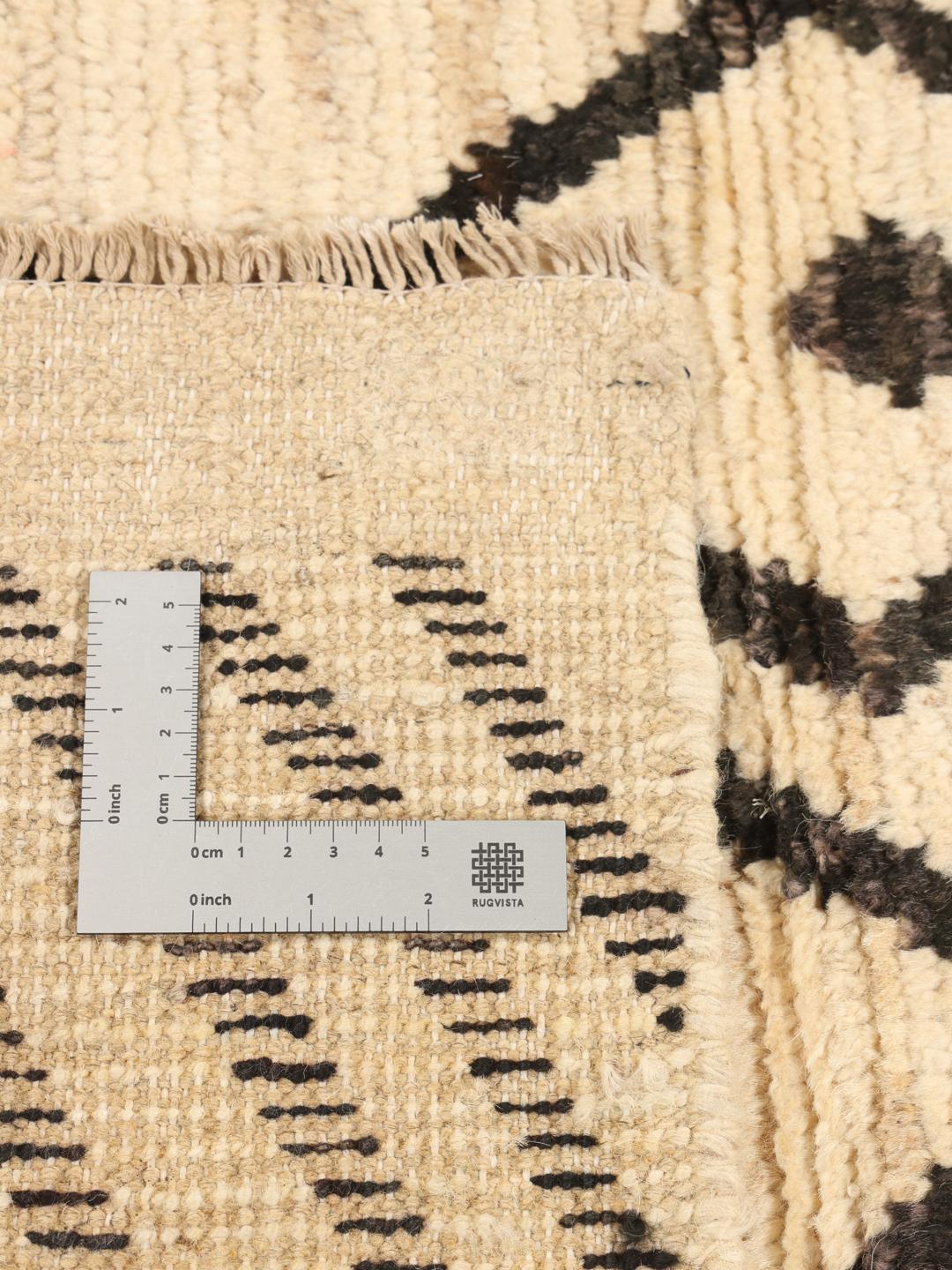
The term hand-knotted refers to the traditional method where individual strands of wool are tied onto a foundation of cotton. This technique is essential for creating the durable, high-density pile that makes these rugs so sought after. The complexity of the knotting process allows for the intricate geometric patterns to be rendered with precision, resulting in a finished product that is as sturdy as it is beautiful.
The signature design elements of this tradition often centre on geometric abstraction, including diamonds, chevrons, and tribal motifs that have been passed down through generations. These symbols are more than just decoration; they reflect a long history of storytelling and regional identity. The contrast between the dark, bold motifs and the neutral, natural-toned wool field is a hallmark of this style, offering a modern, clean look that fits seamlessly into contemporary homes.
Collecting a rug from this heritage is an investment in human skill and cultural longevity. These pieces are valued for their ability to bring warmth and a sense of history into a space, acting as both a functional floor covering and a work of art. By choosing a hand-knotted piece, you are supporting a craft that prioritises patience and quality over mass production, ensuring you own something with real depth and substance.