Berber rugs originate from the indigenous tribes of Morocco, particularly those residing in the rugged Middle Atlas Mountains. For generations, these rugs have served as functional necessities in nomadic and semi-nomadic life, providing insulation against cold mountain winters and acting as versatile floor coverings, blankets, or even sleeping mats.
The production of these rugs is a deeply cultural practice often passed down through generations of women. The terms used to describe them, such as Beni Ourain, refer to specific tribal lineages, but the broader tradition encompasses a variety of weaving styles. The focus on wool ensures that the finished product is naturally resilient and capable of withstanding the harsh conditions of its origin.
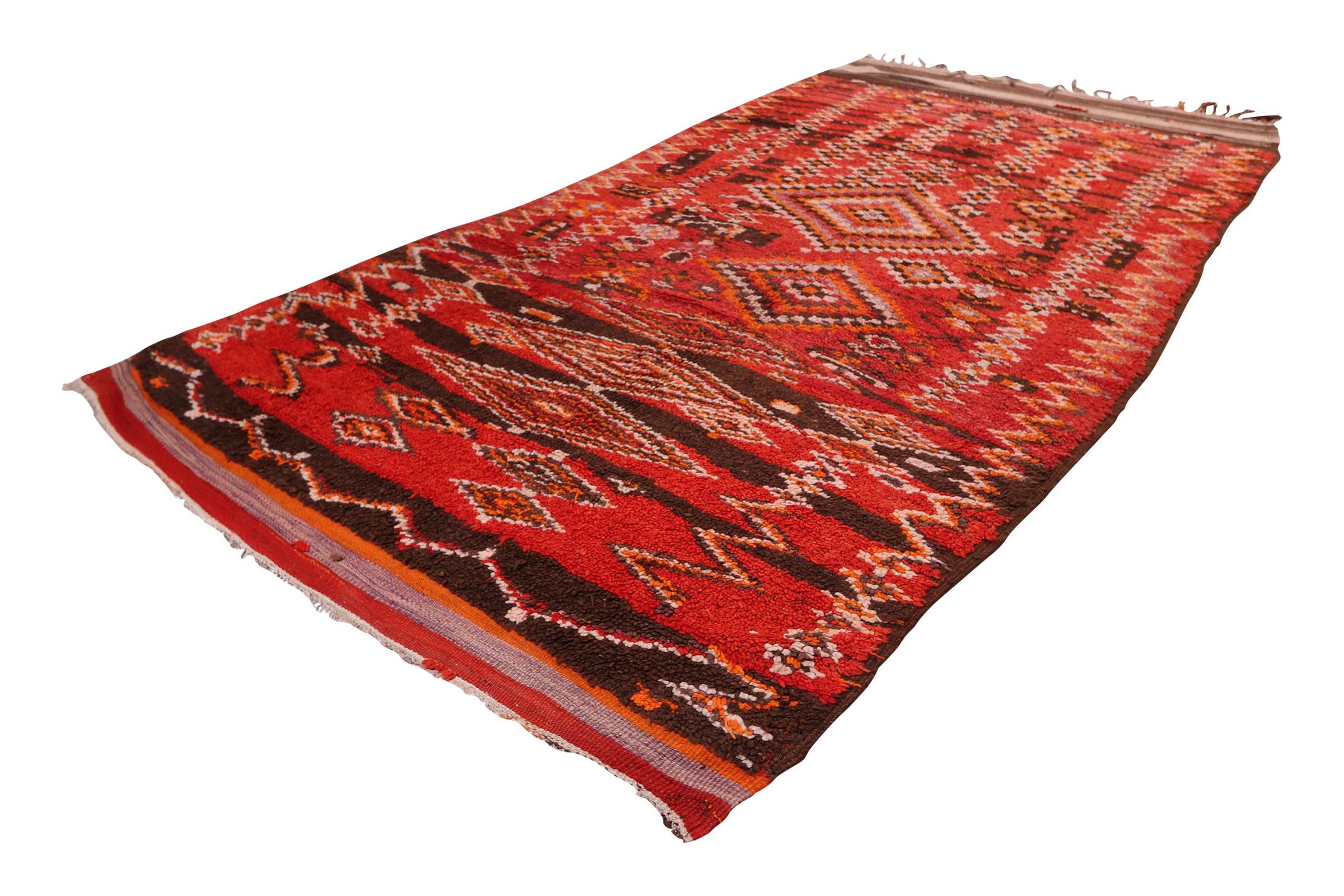
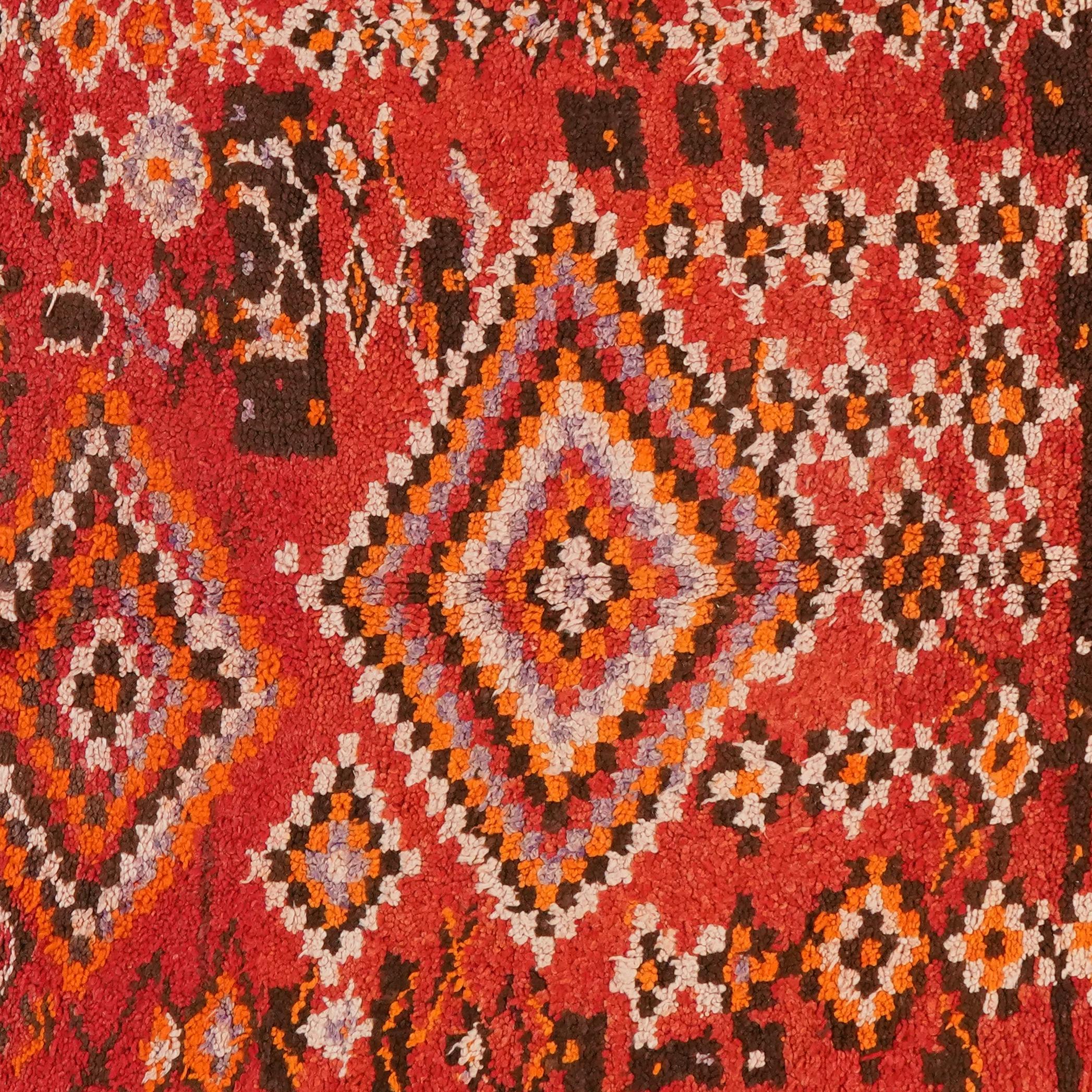
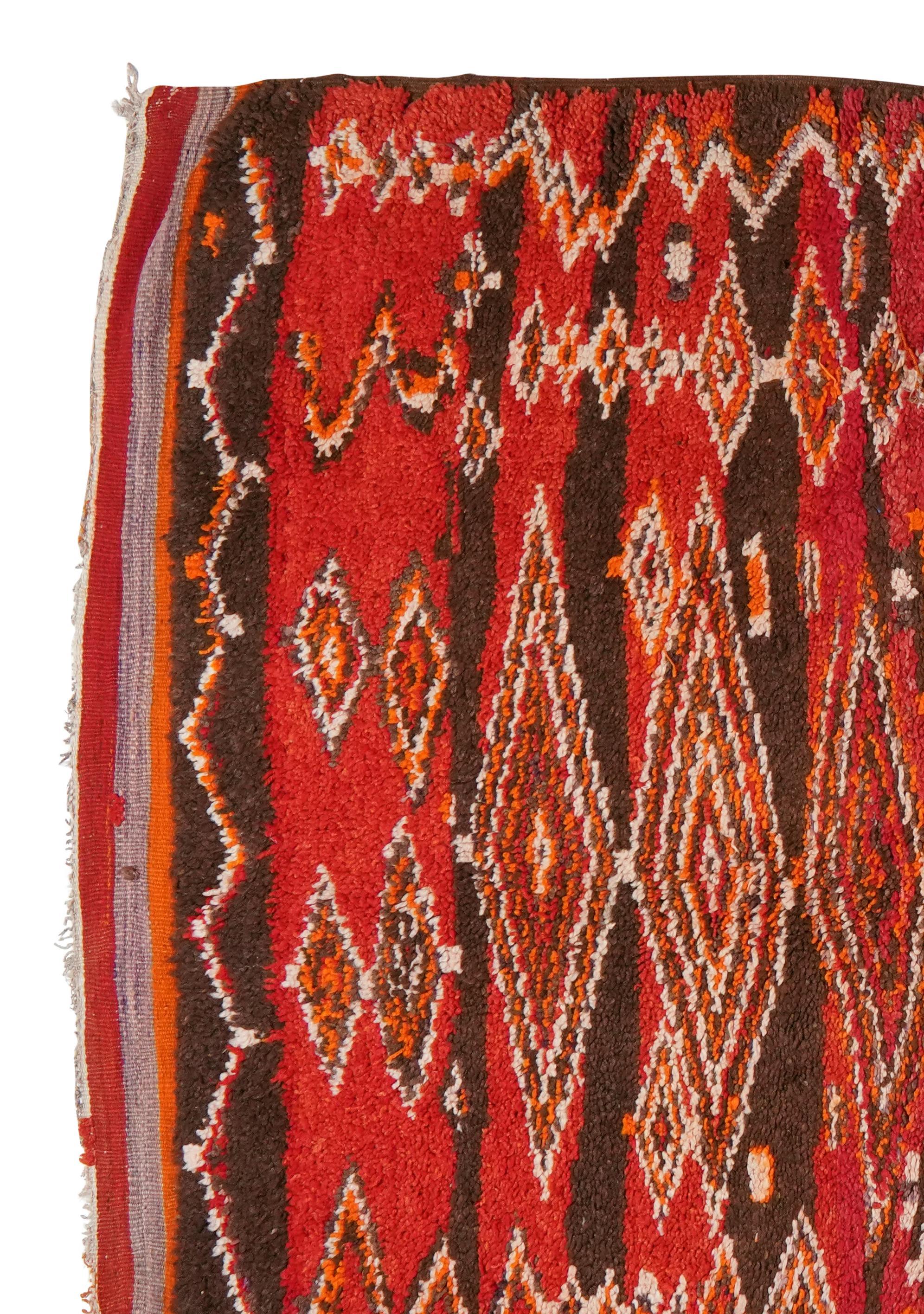
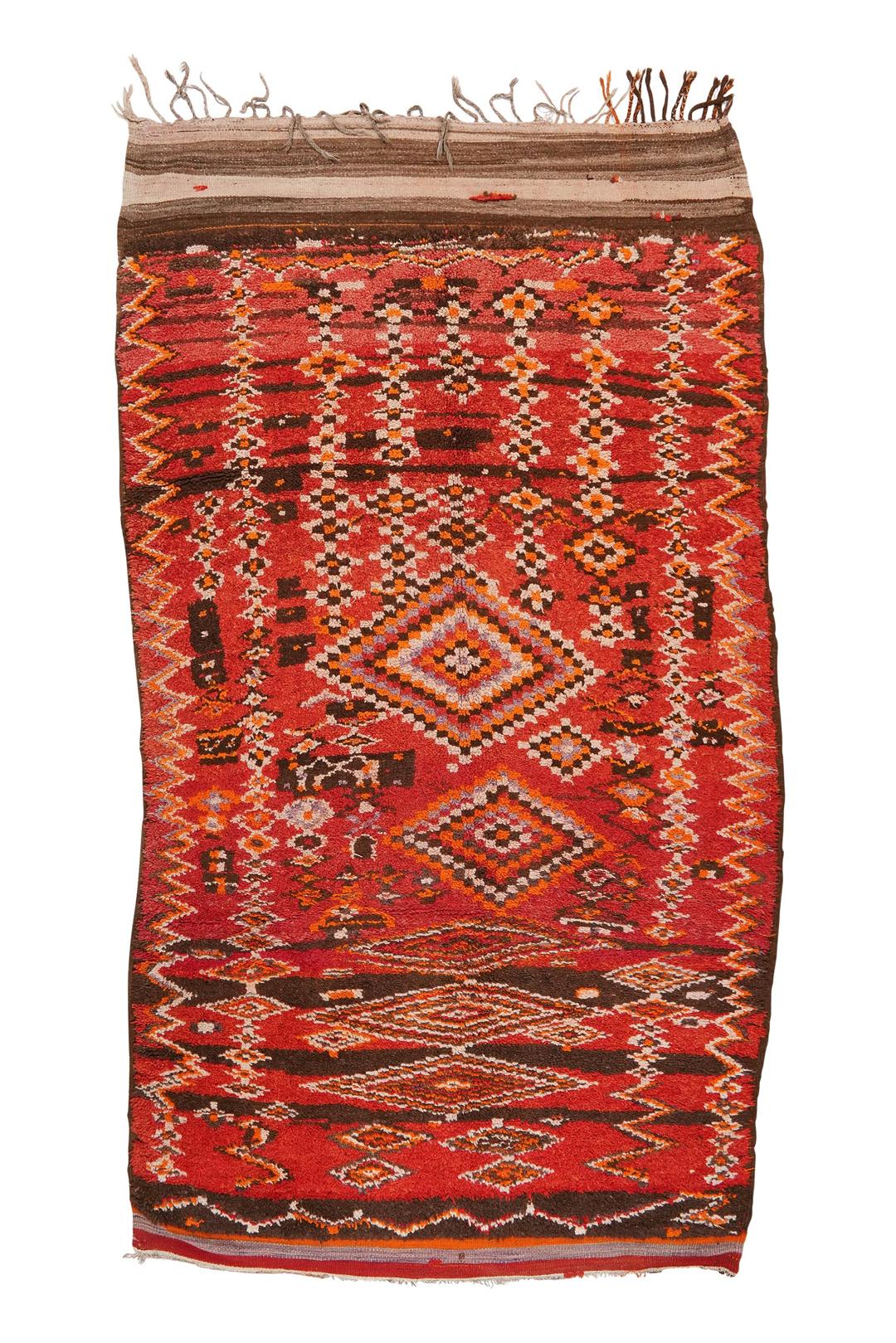
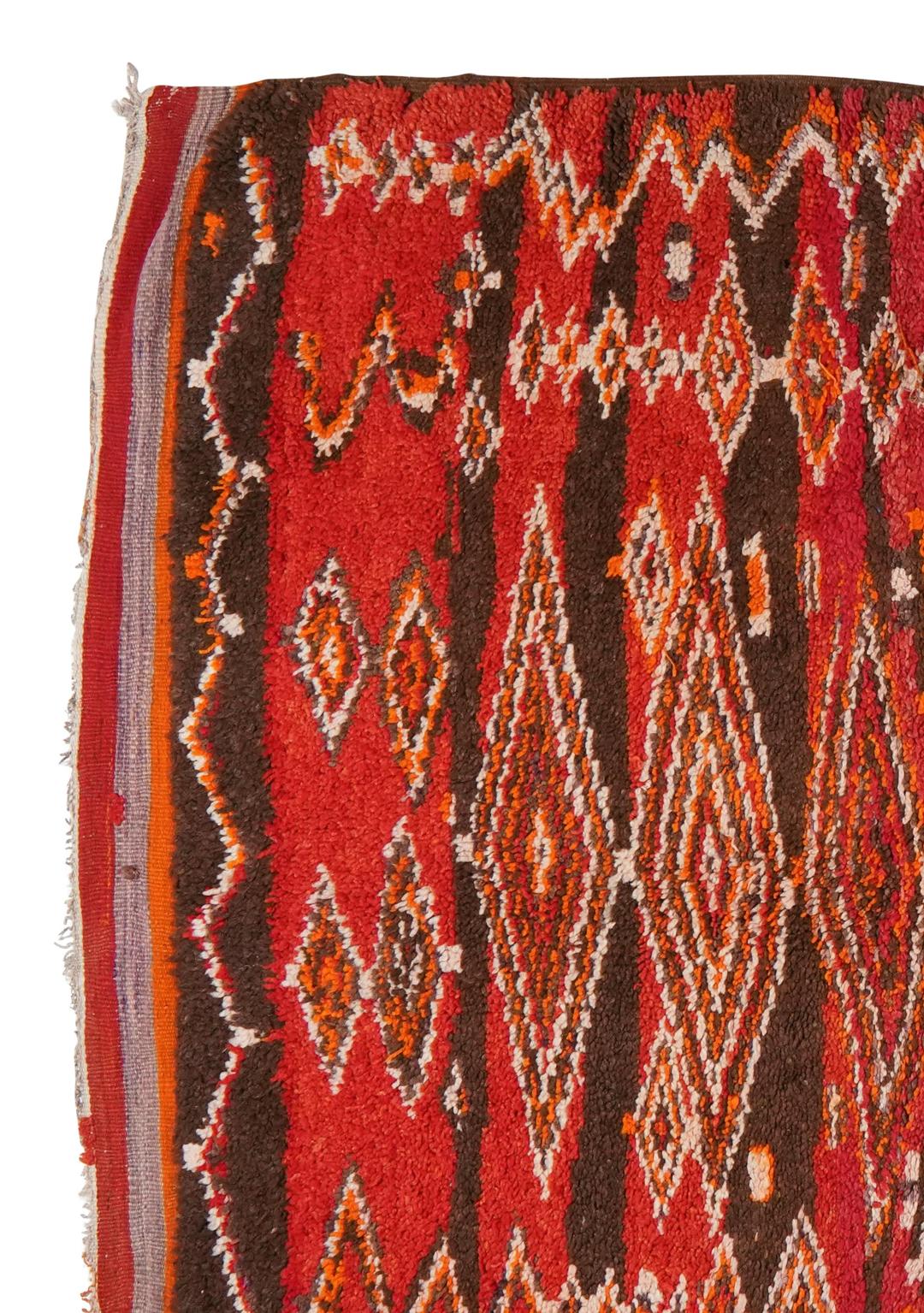
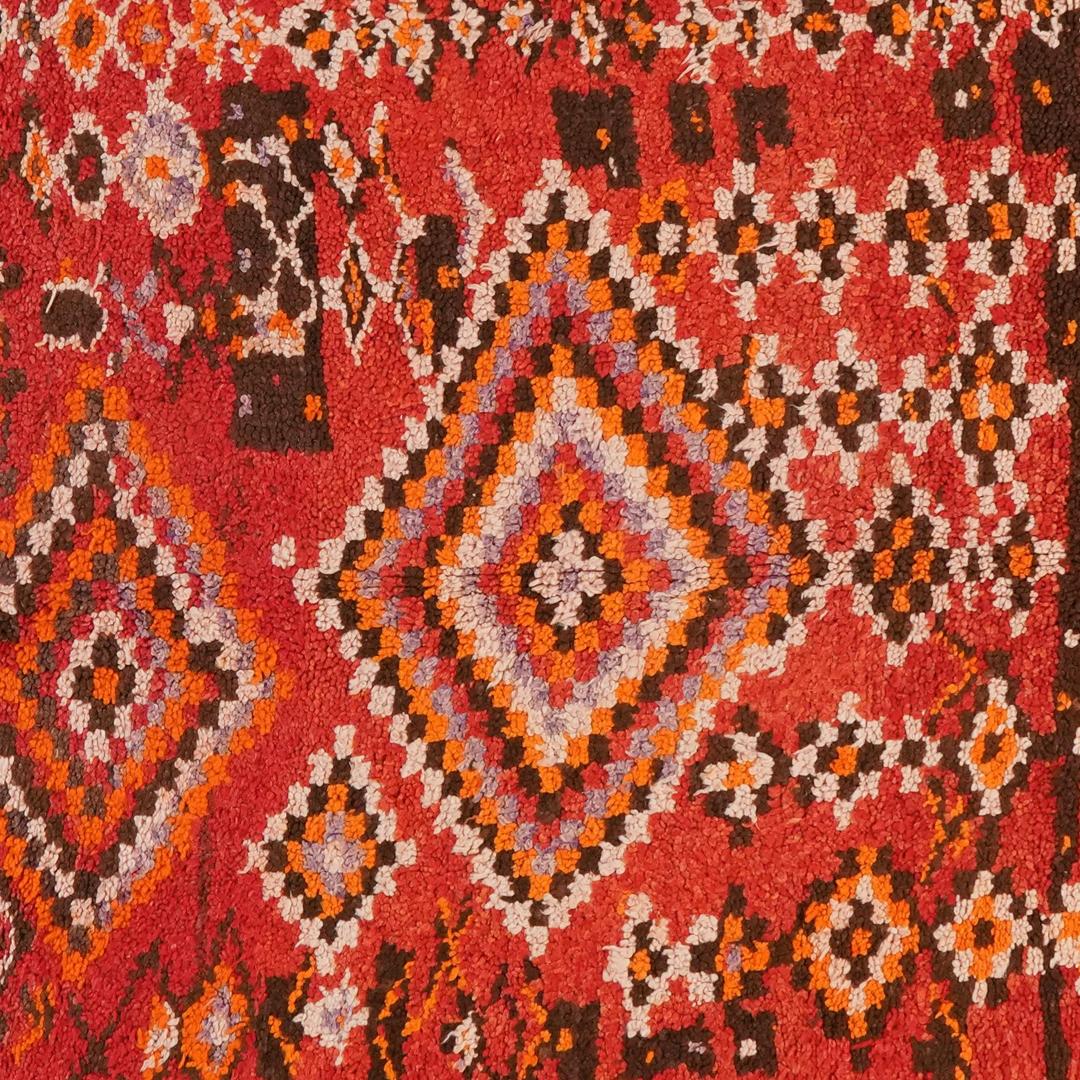
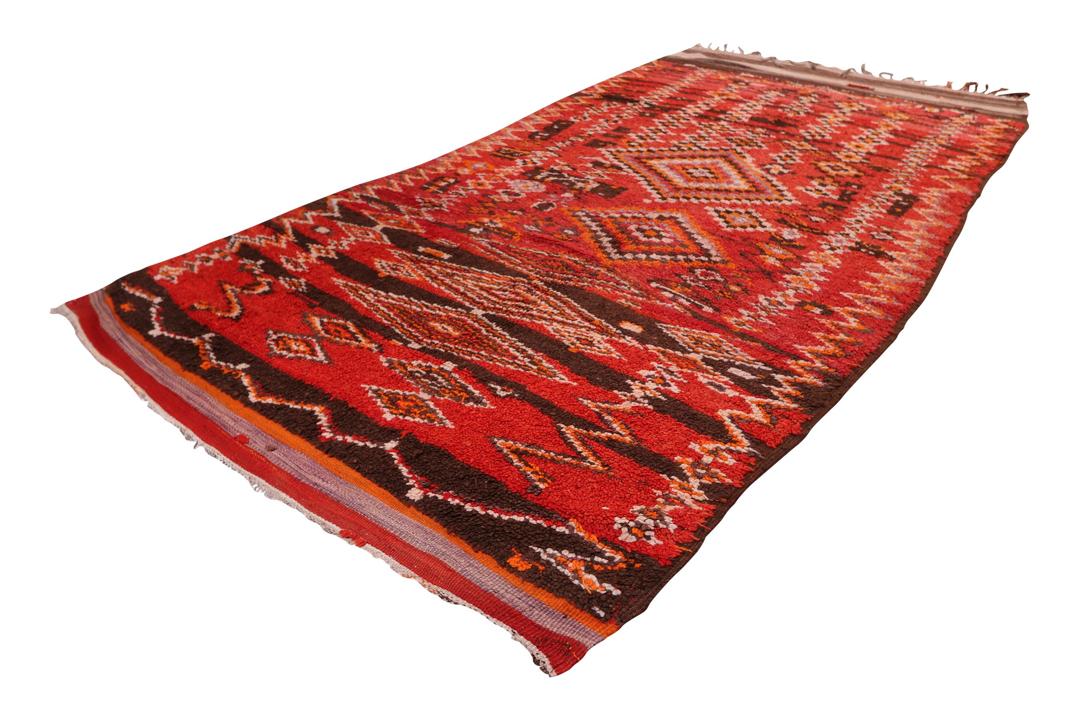
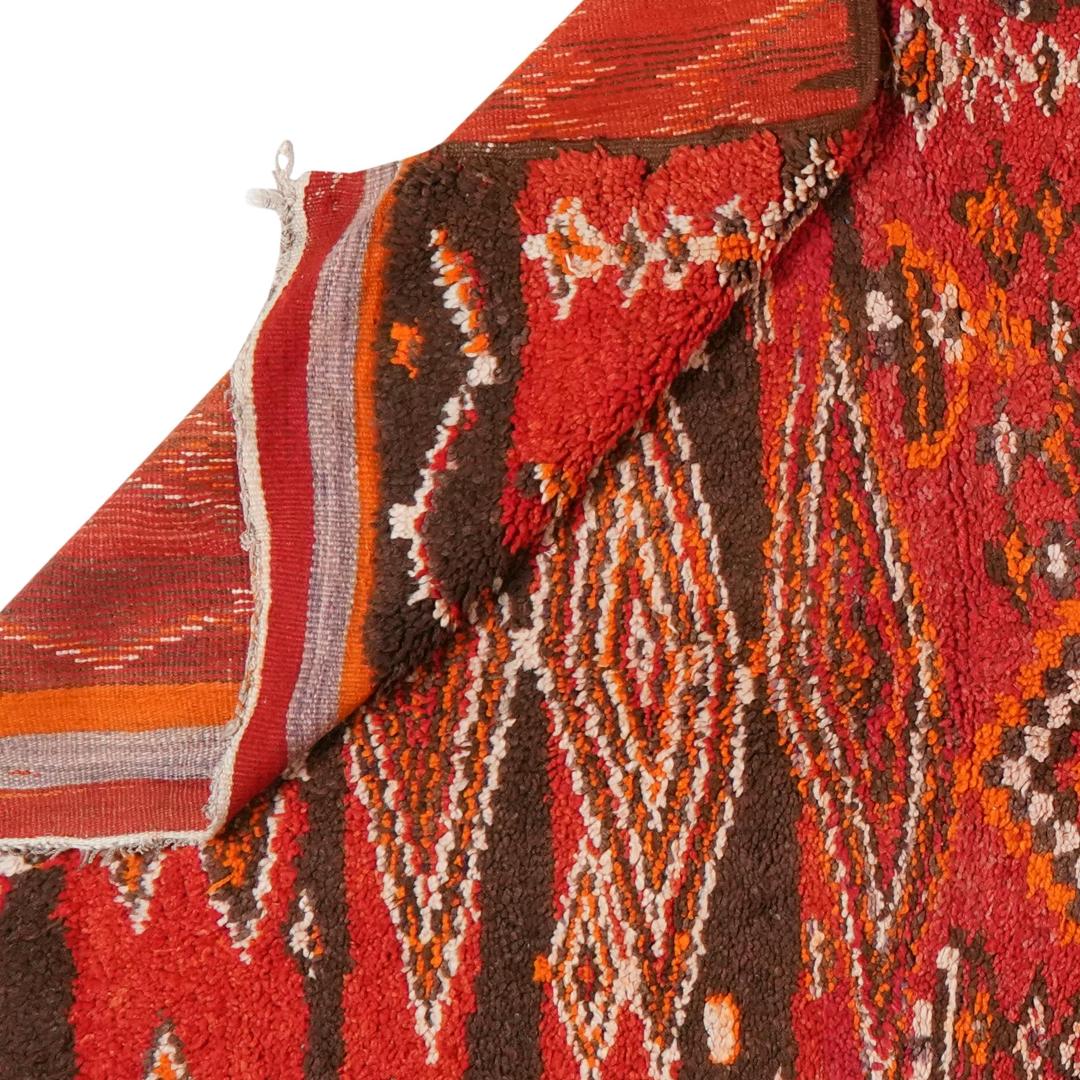
Signature design elements often include symbolic geometric motifs, such as diamonds, triangles, and zig-zags, which are believed to offer protection or tell stories of tribal life. While some traditions favour neutral, cream-coloured wool, pieces from the Middle Atlas often exhibit bolder, more vibrant colour palettes, using natural dyes to create the deep reds and browns seen in this particular example.
Collecting these rugs is an investment in human heritage. They are valued not just for their aesthetic appeal, but for the skill and cultural narrative woven into every thread. Owning such a piece allows you to preserve a fragment of history, celebrating the enduring legacy of Berber craftsmanship in a modern home.