Beni Ourain rugs originate from the Atlas Mountains of Morocco, where they have been crafted for centuries by Berber tribes. Traditionally, these rugs served as essential bedding and floor coverings for the nomadic and semi-nomadic peoples, designed to provide warmth during the cold mountain winters. The tradition is deeply rooted in the cultural identity of the Berber people, with each tribe having its own distinct weaving characteristics and design language.
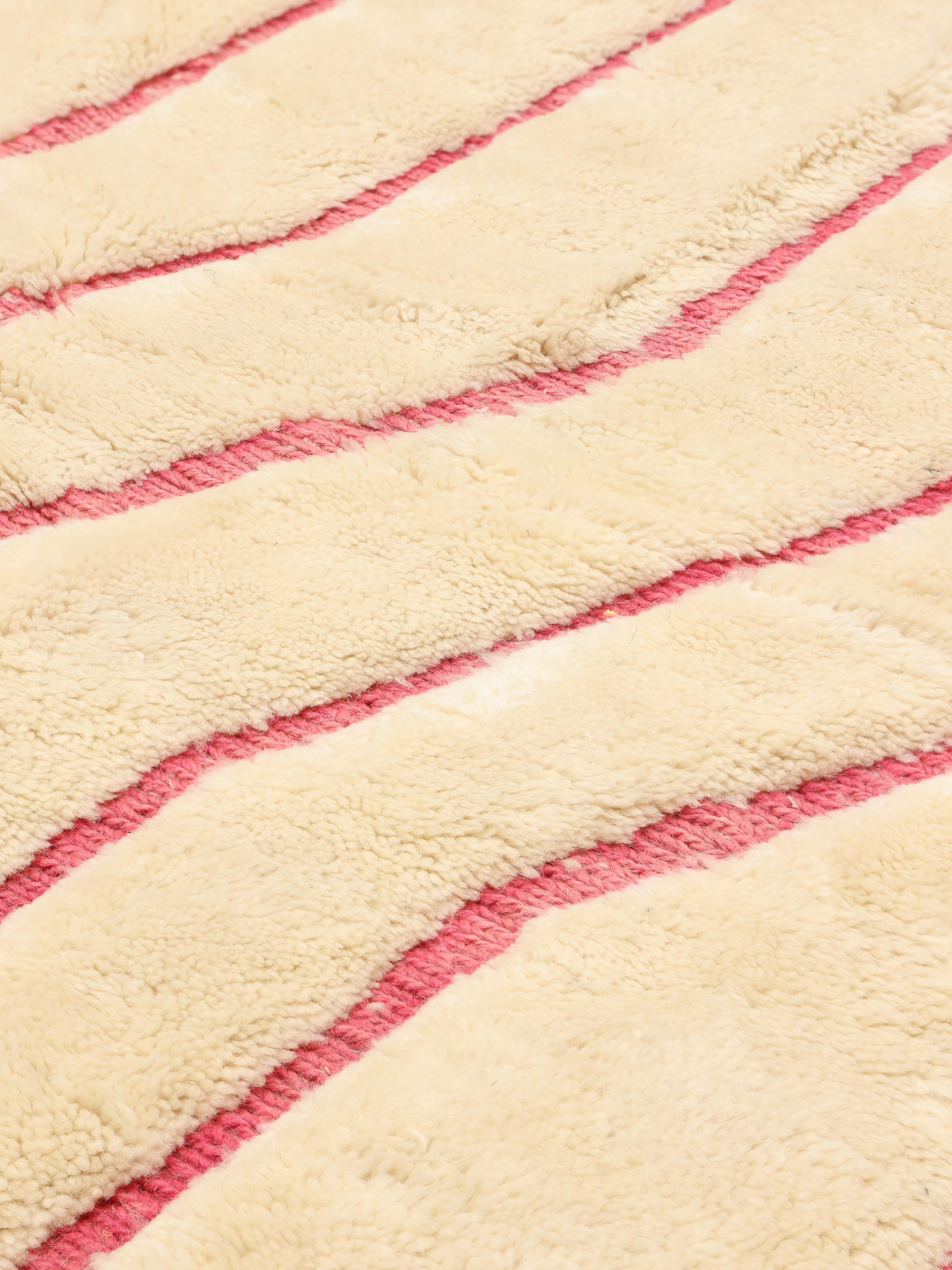
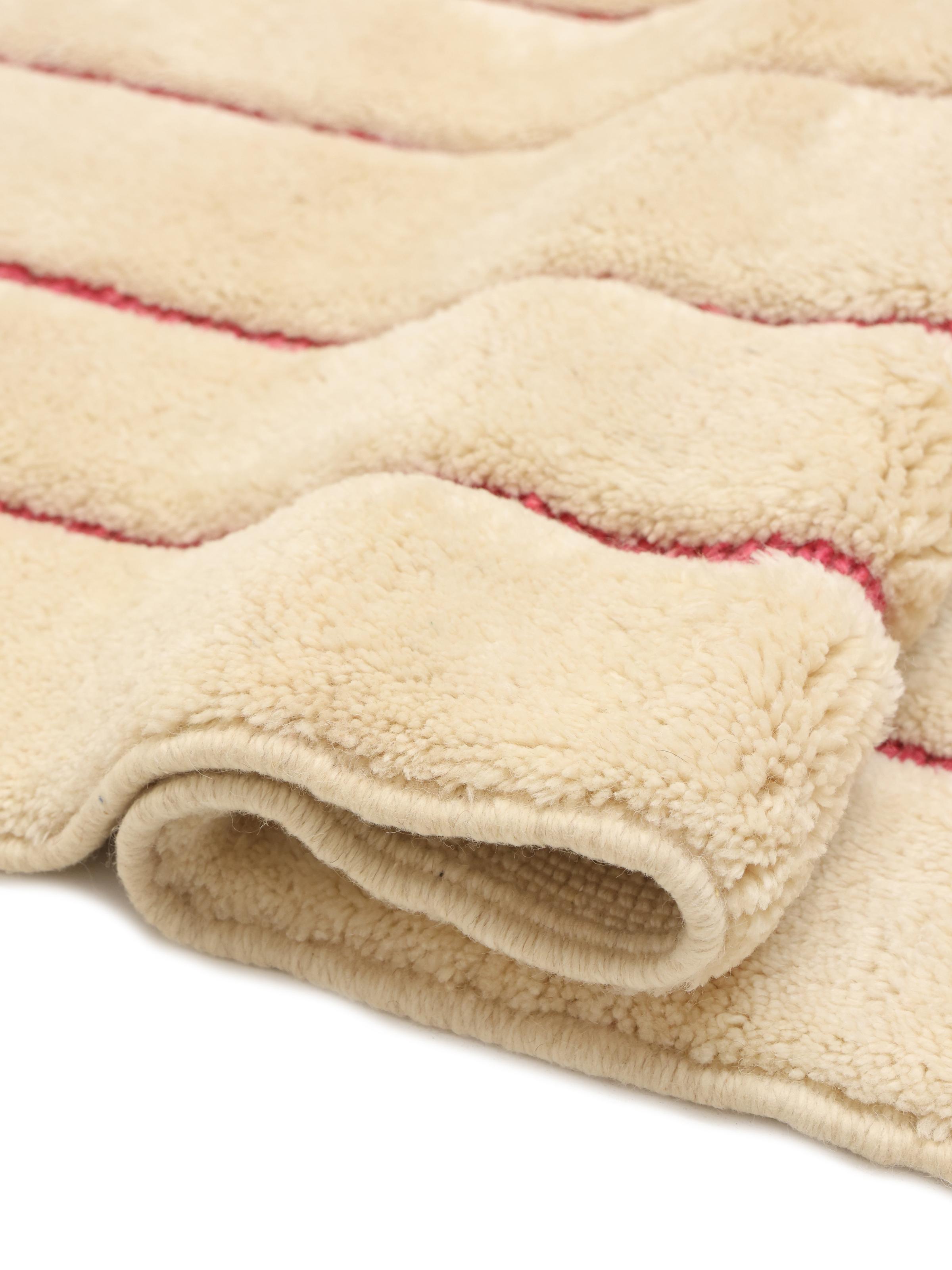
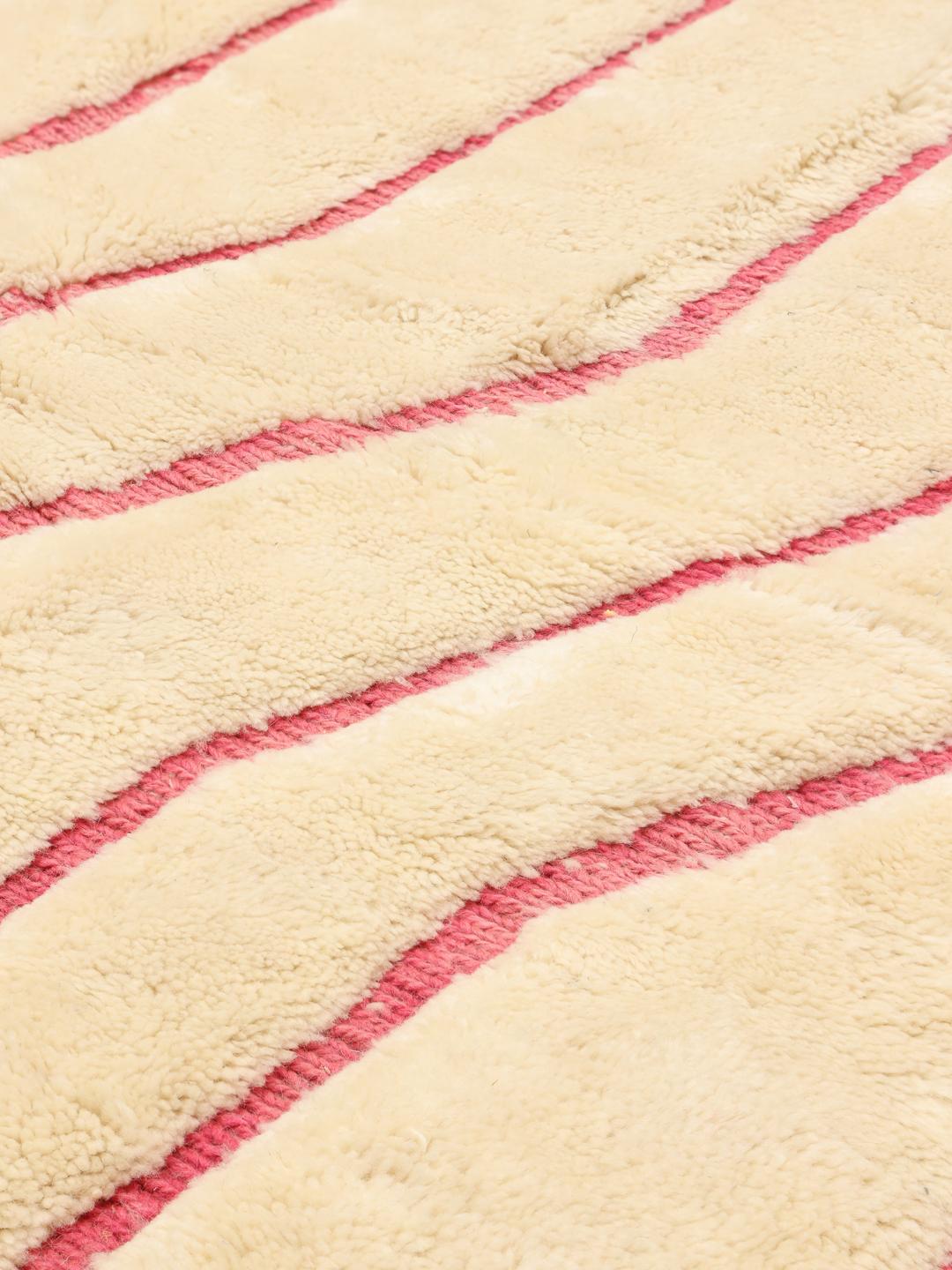
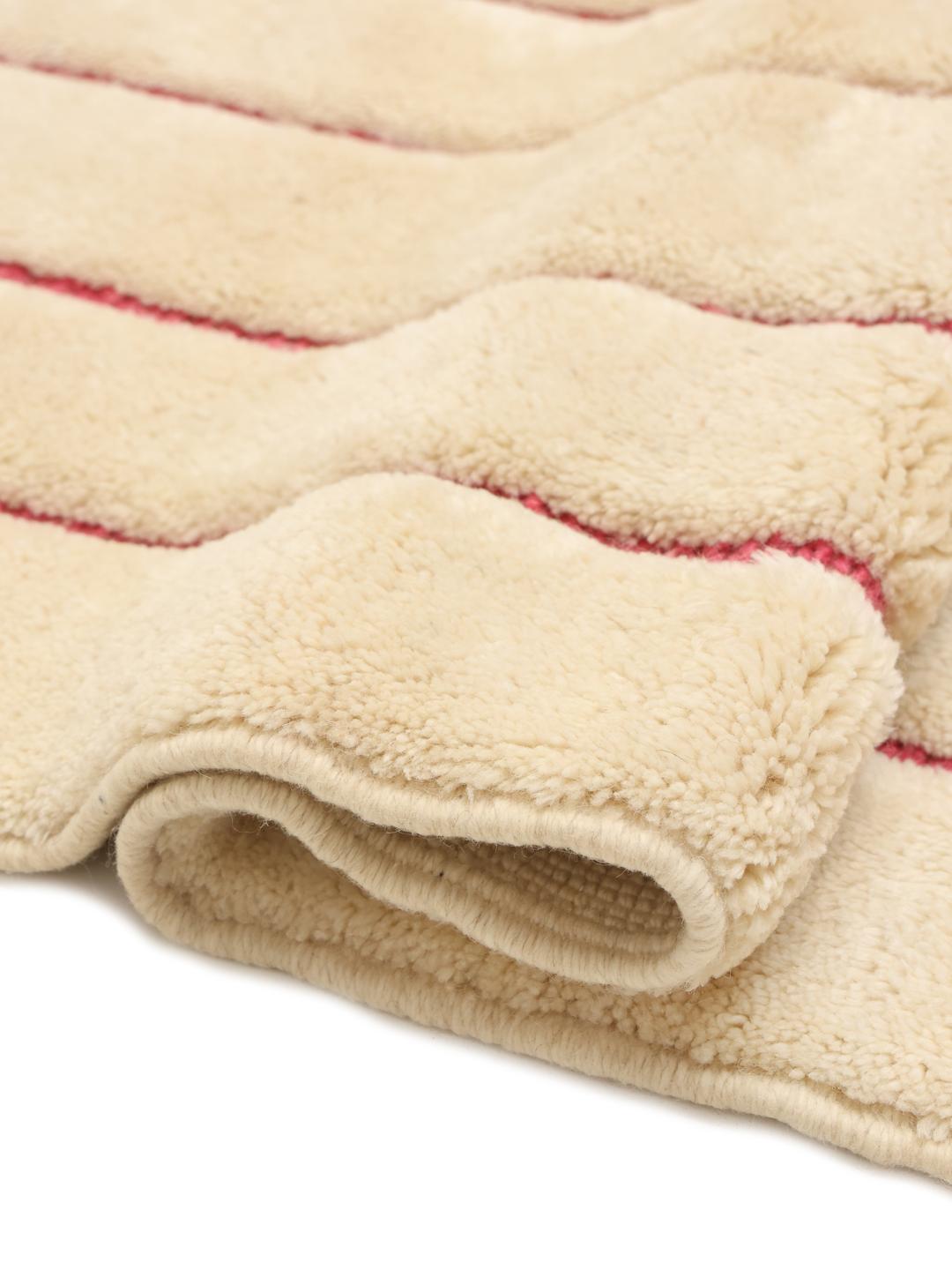
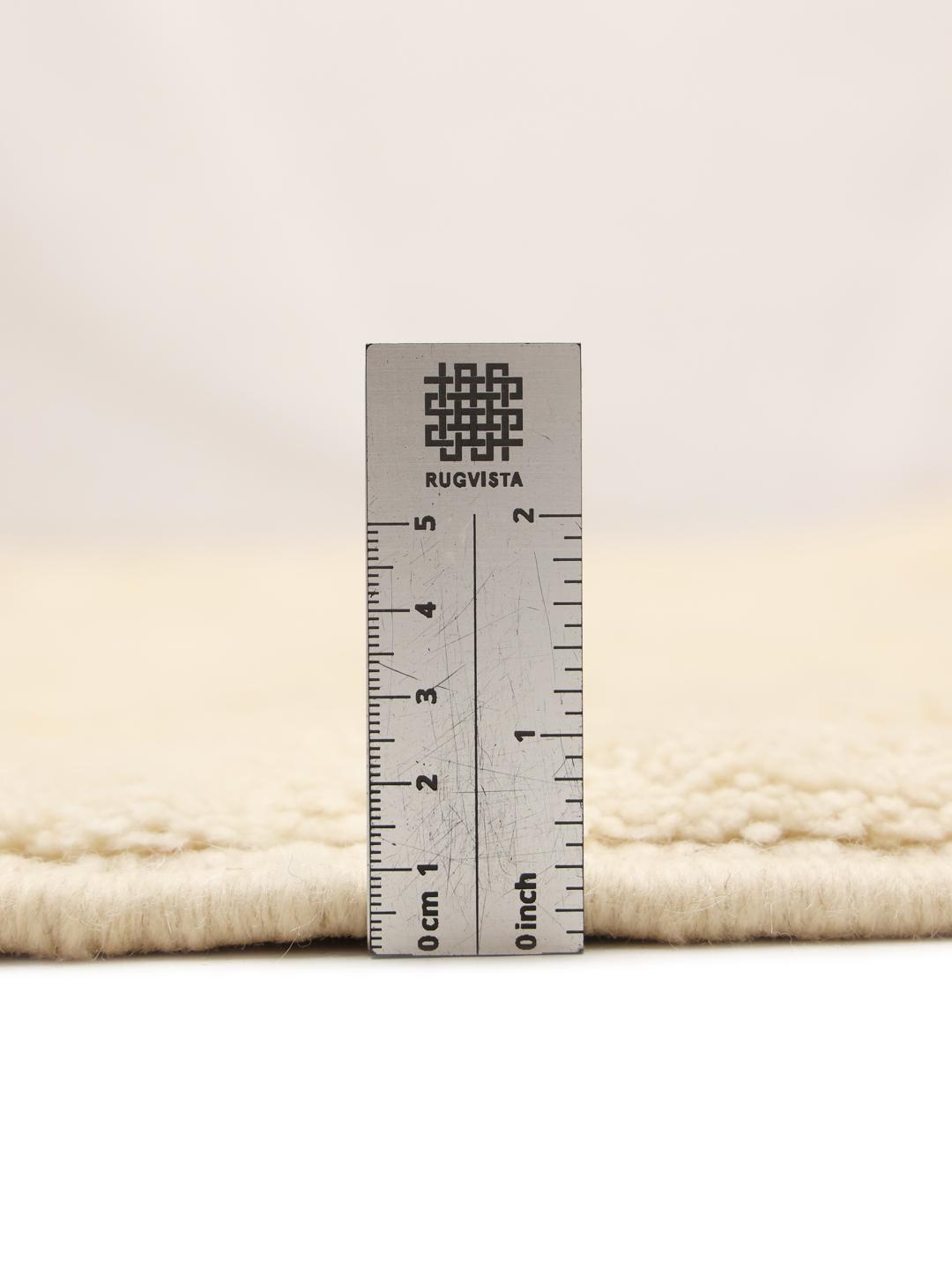
The term 'Berber' refers to the indigenous peoples of North Africa, whose weaving traditions are among the oldest and most respected in the world. These rugs are typically characterised by a high-pile construction that is incredibly soft and insulating. The craftsmanship involves a process of spinning wool by hand and then securing it to a foundation, a skill passed down through families, ensuring that the techniques remain as vibrant today as they were in the past.
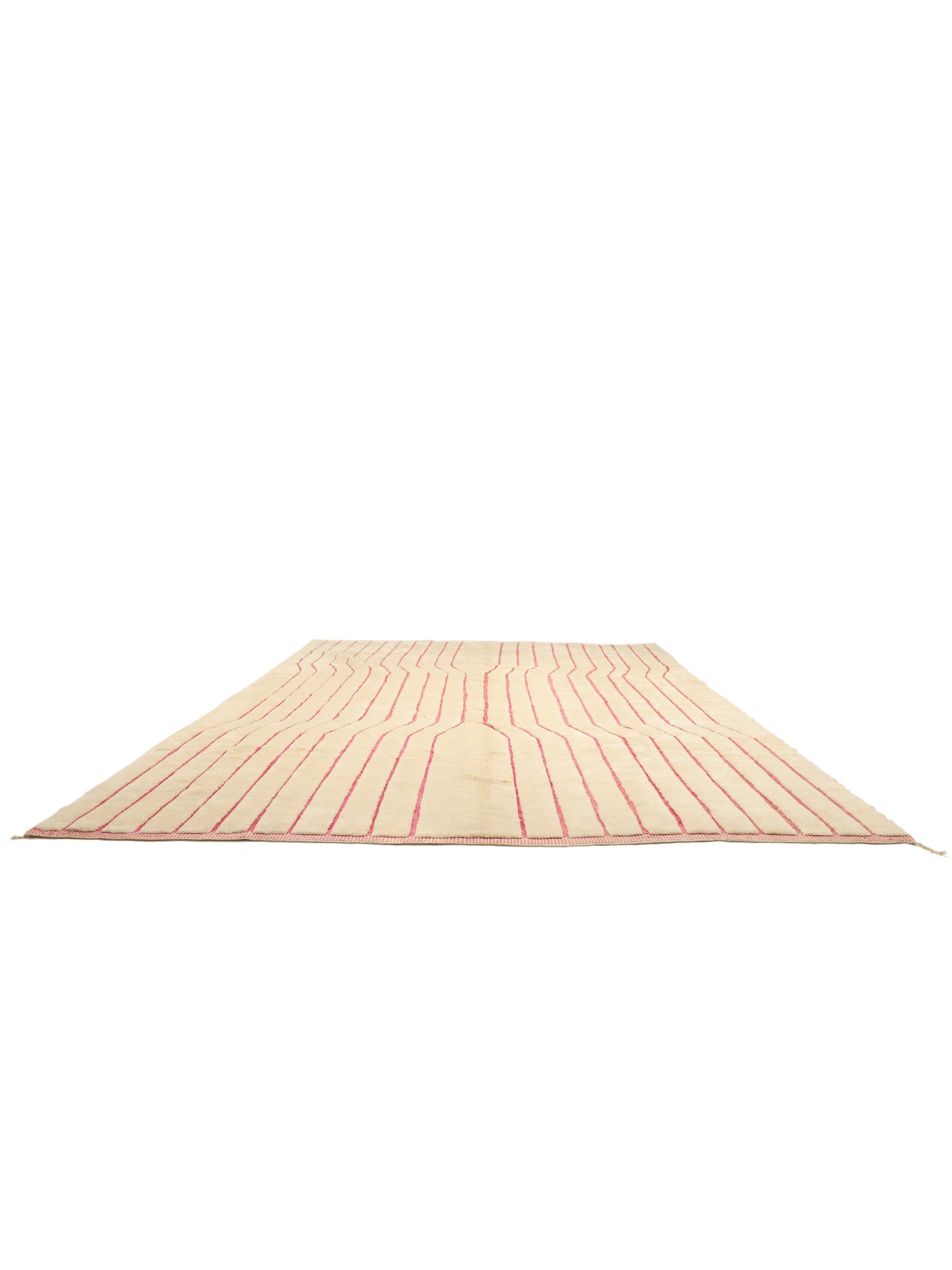
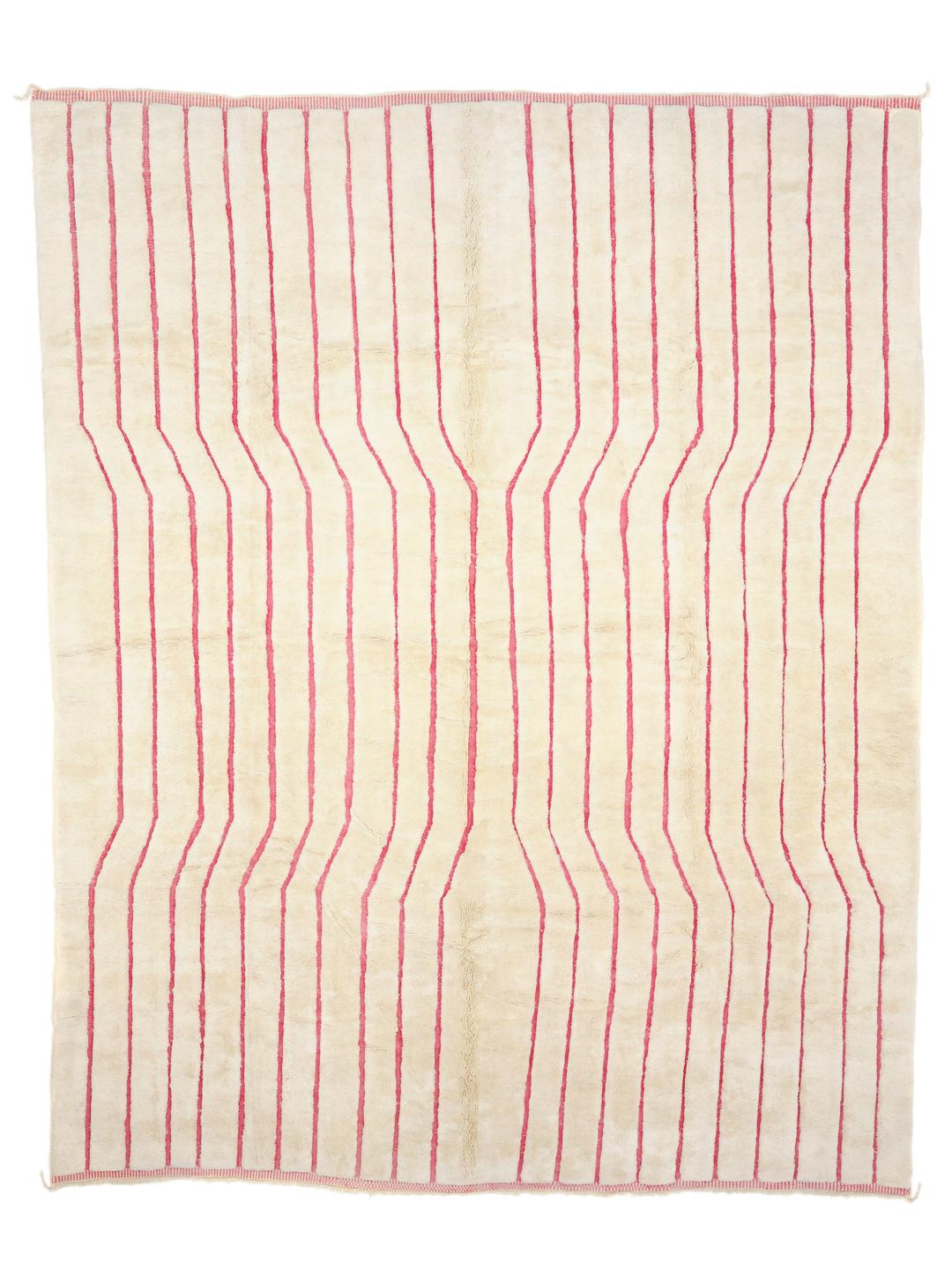
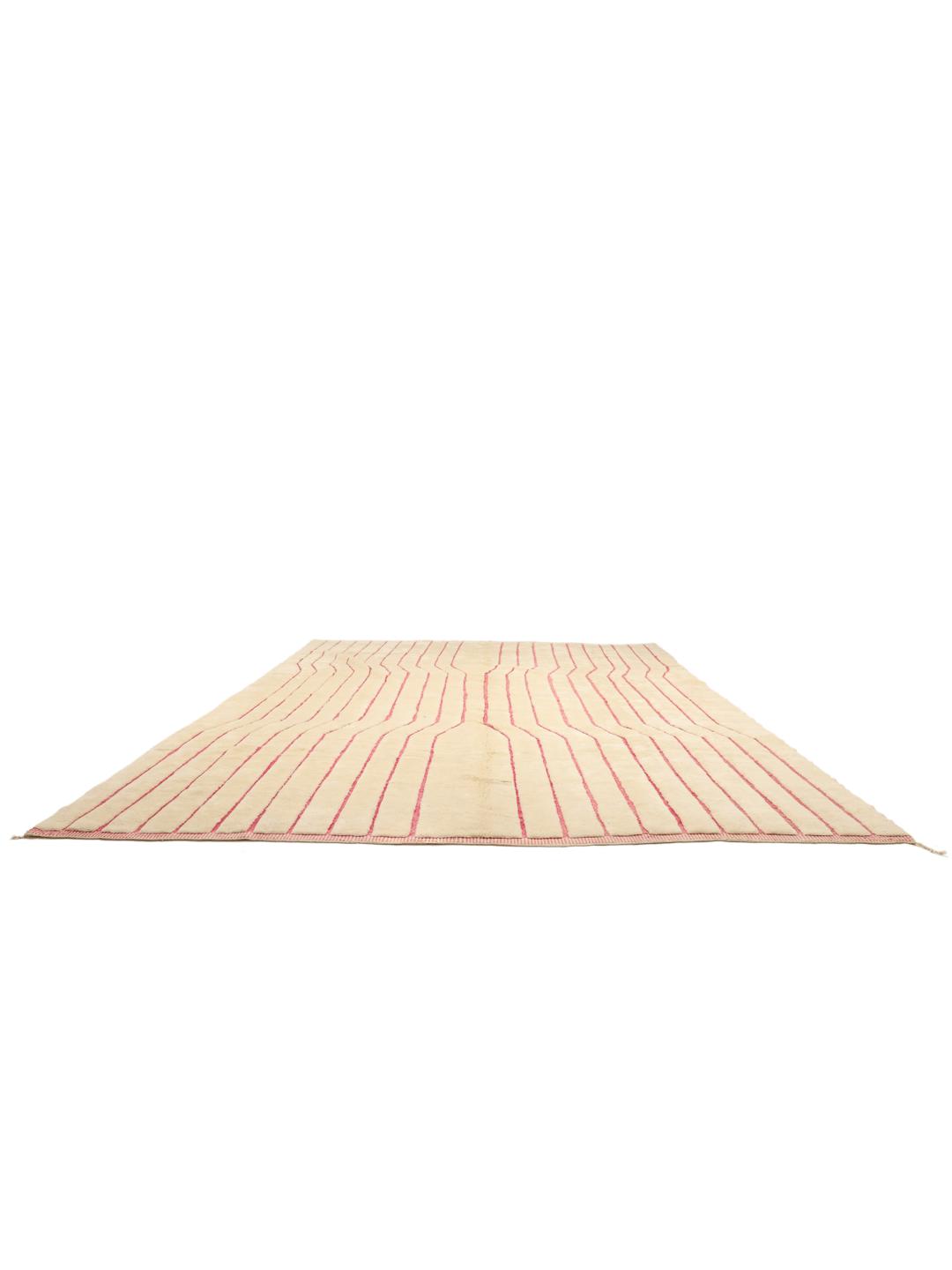
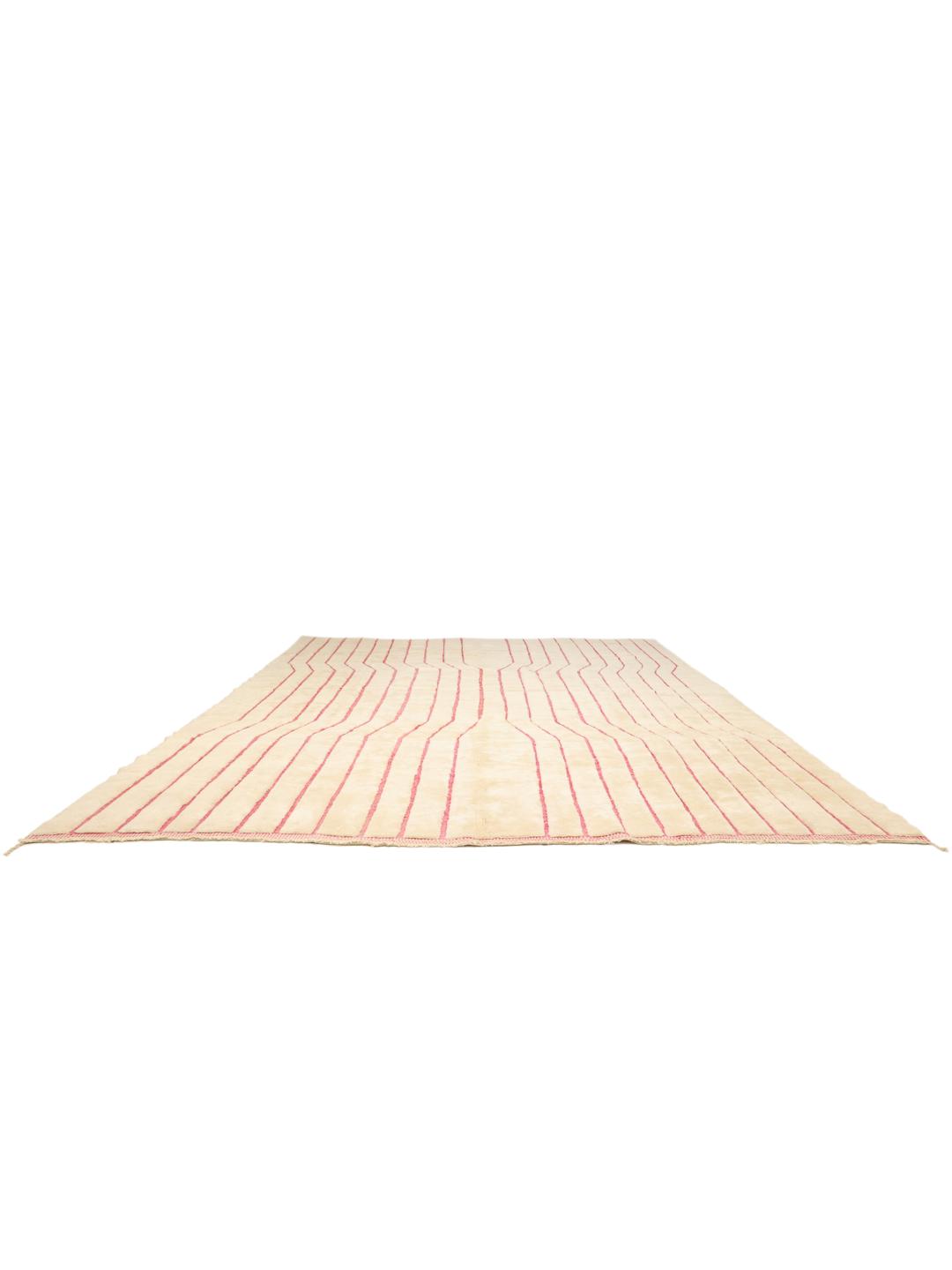
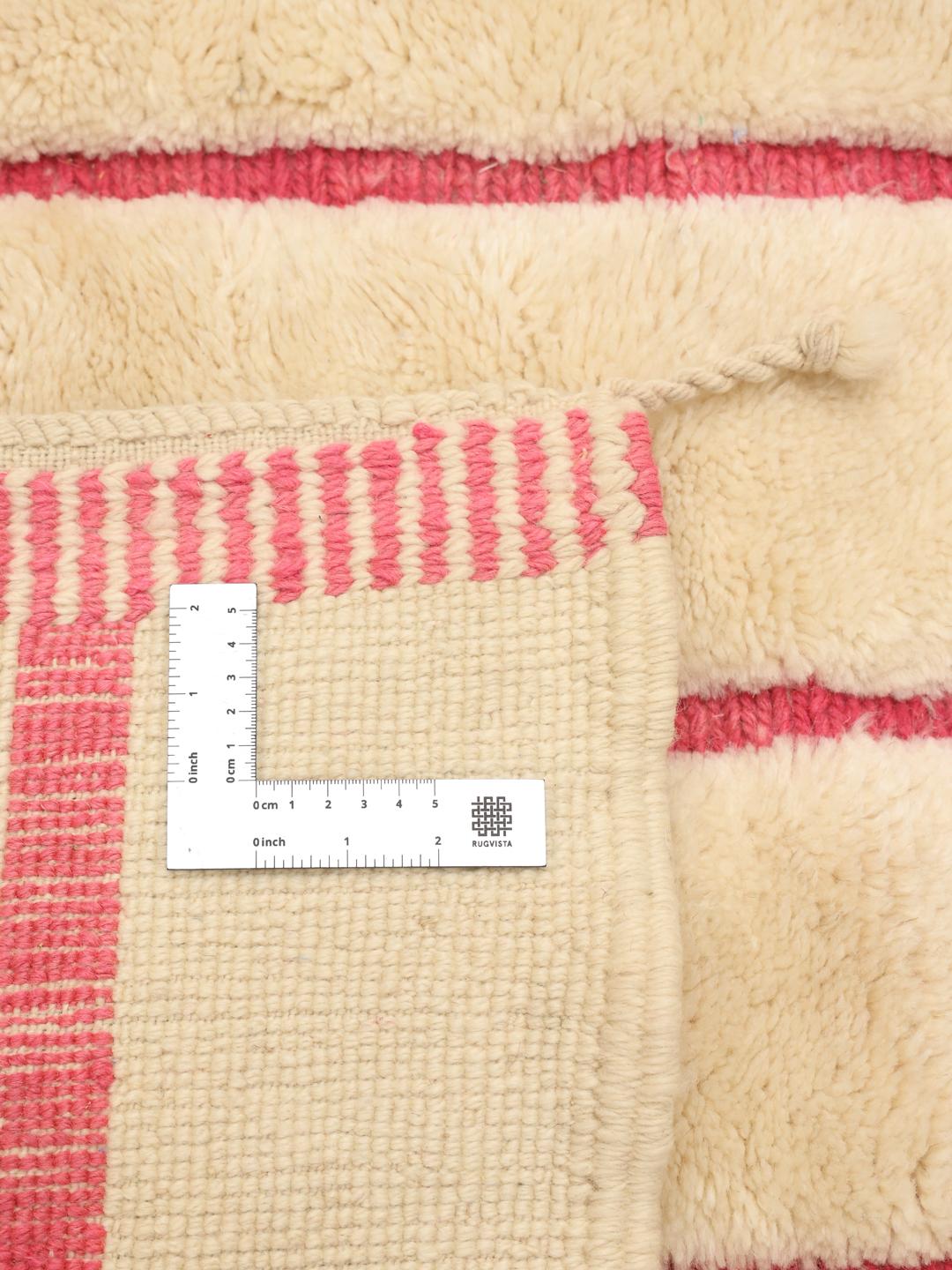
Visually, Beni Ourain rugs are often recognised for their minimalist aesthetic, typically featuring a cream or ivory field decorated with geometric motifs or, as seen here, bold linear patterns. The use of natural, undyed wool is traditional, though contemporary pieces often incorporate subtle hues. These designs are not merely decorative but often tell stories or act as protective symbols for the households that produce them.
Today, these rugs are highly prized by collectors and interior designers alike for their ability to bring a sense of history and warmth to modern spaces. Owning a genuine Beni Ourain rug is an opportunity to connect with a living tradition that values slow, careful production over mass manufacture. It is a piece of cultural heritage that brings both beauty and a sense of calm to any home.