Berber rugs, particularly those from the Beni Ourain tradition, originate from the Middle Atlas Mountains of Morocco. These rugs have been created for centuries by the indigenous Berber tribes, who lived a semi-nomadic lifestyle in the high-altitude regions. Historically, these pieces were crafted as functional items for warmth and comfort, used as bedding or blankets to protect against the harsh mountain winters, rather than simply as decorative floor coverings.
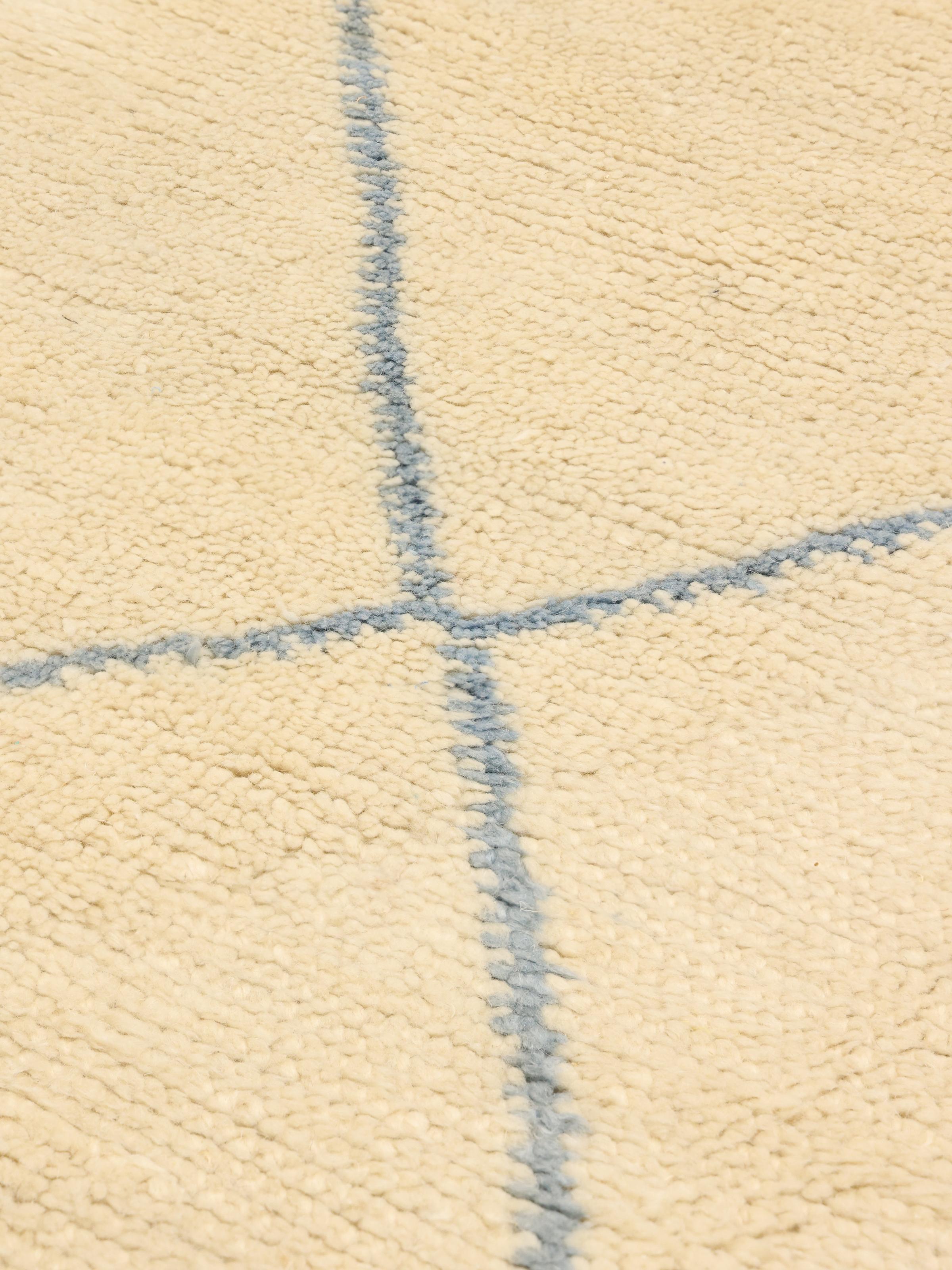
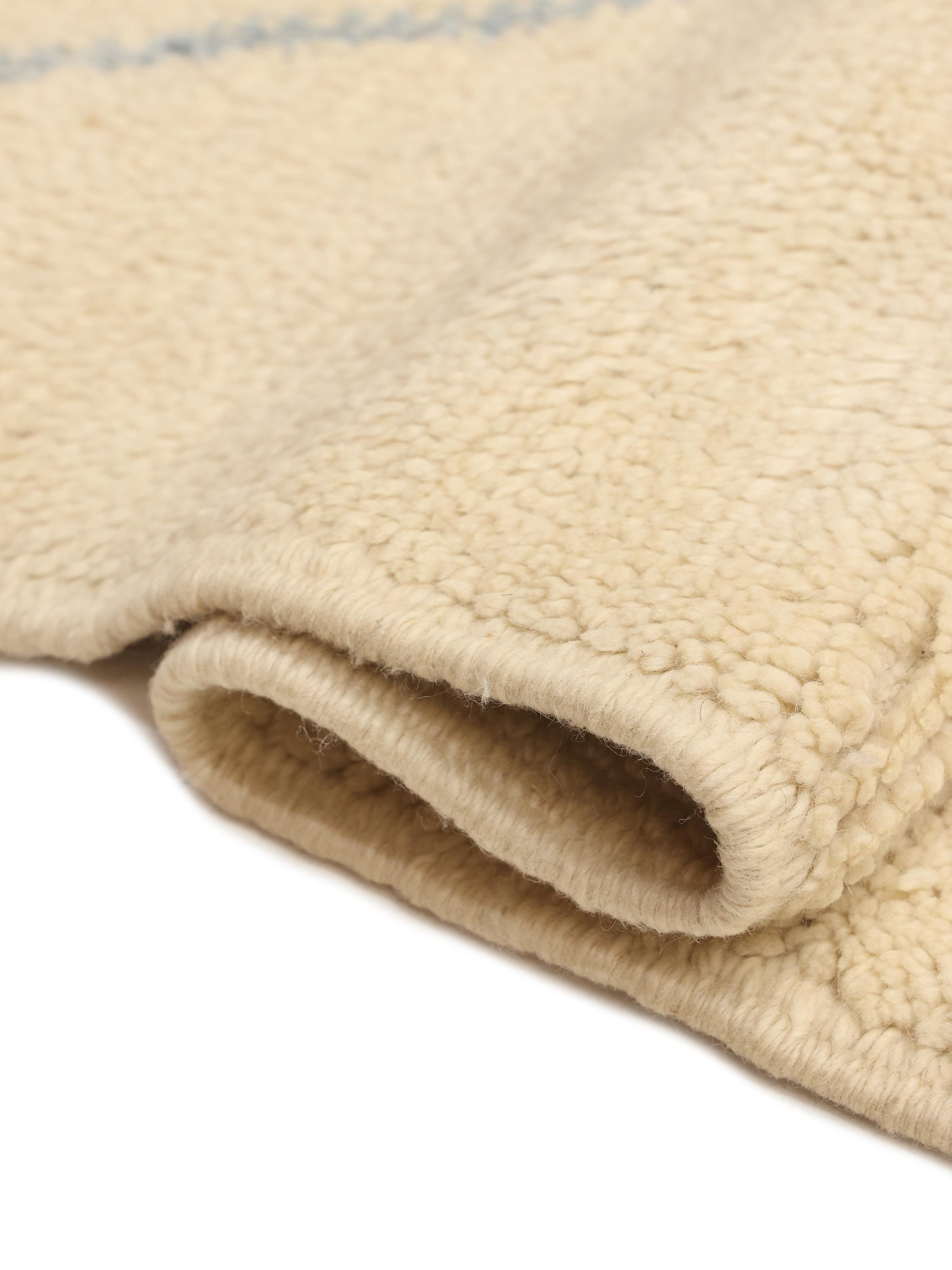
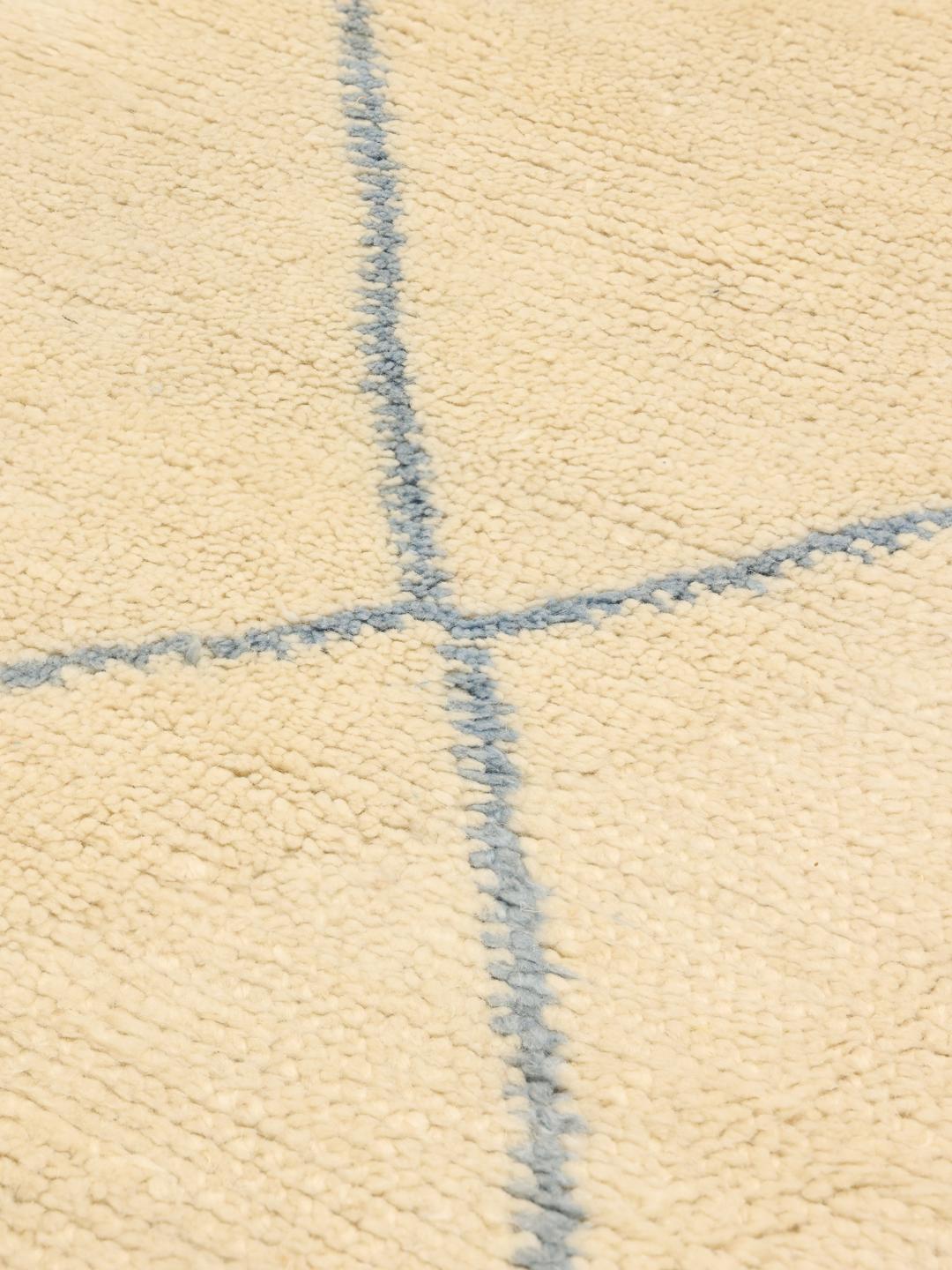
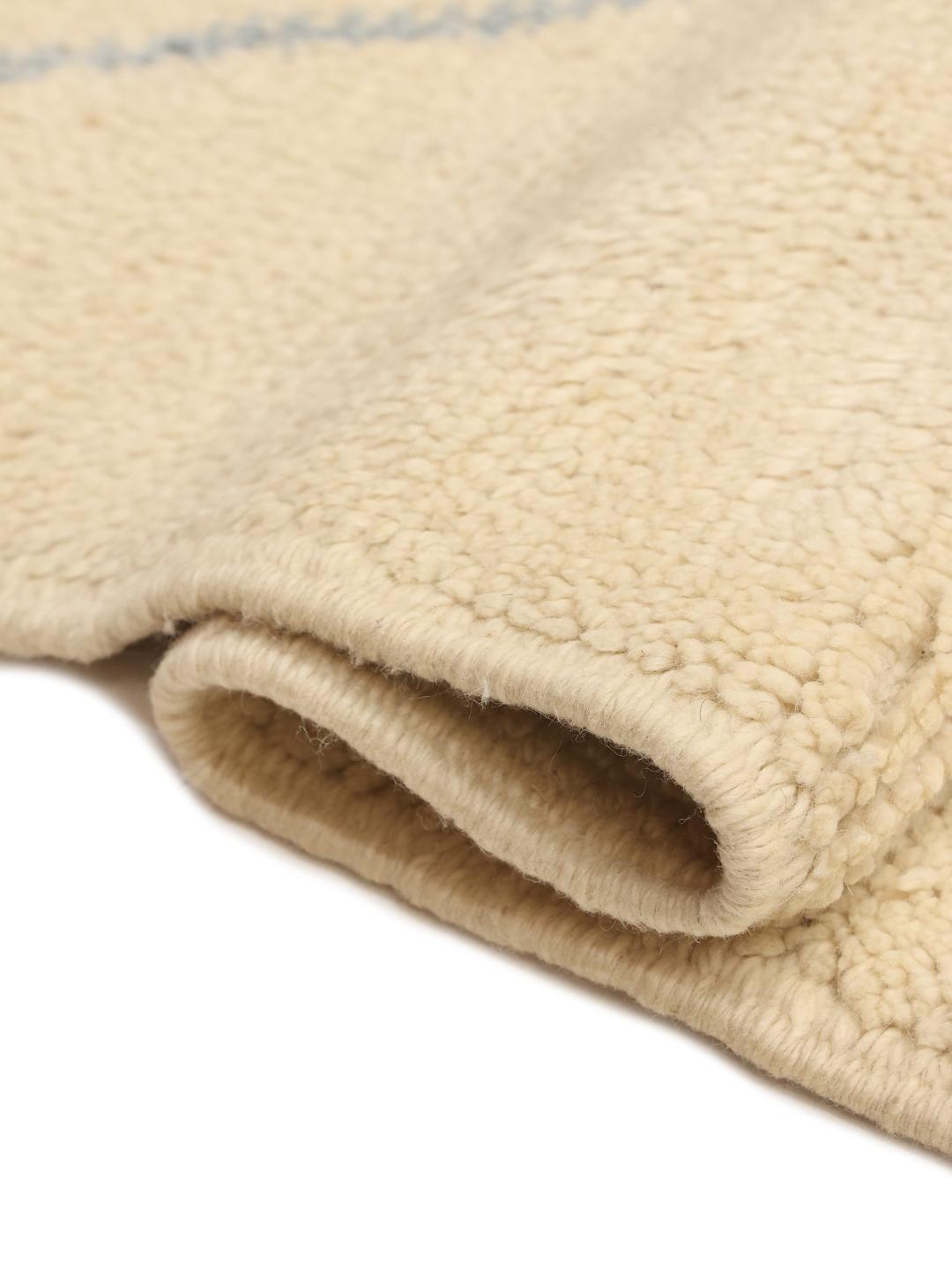
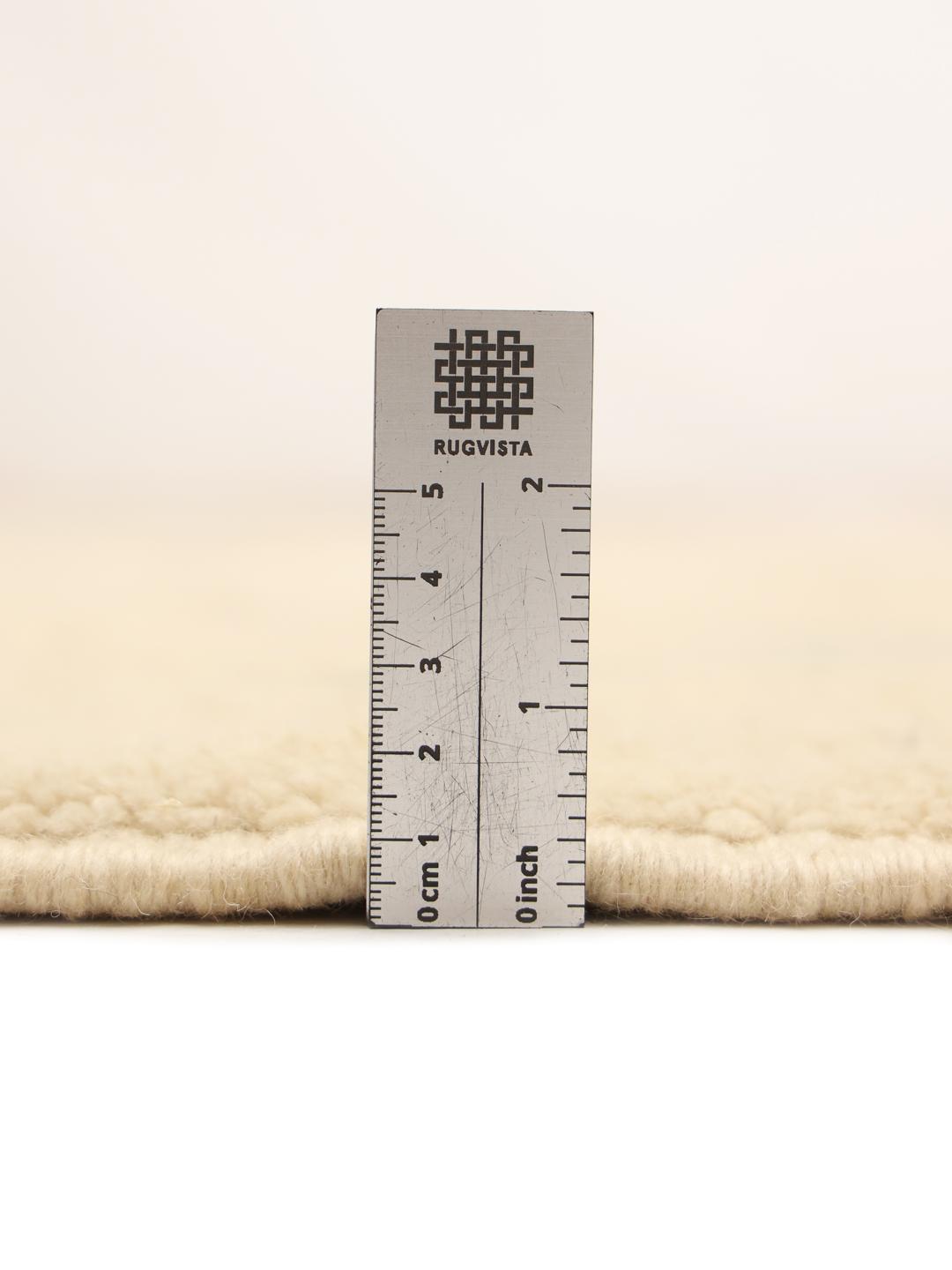
The terminology surrounding these rugs often refers to the specific tribal groups or the regions from which they hail. The Beni Ourain, for instance, are known for their thick, high-pile Wool construction. This traditional method of weaving uses high-quality, long-staple Wool, which results in a dense and exceptionally soft pile. Understanding these regional distinctions helps one appreciate the quality and the specific tactile experience that defines authentic Berber craftsmanship.
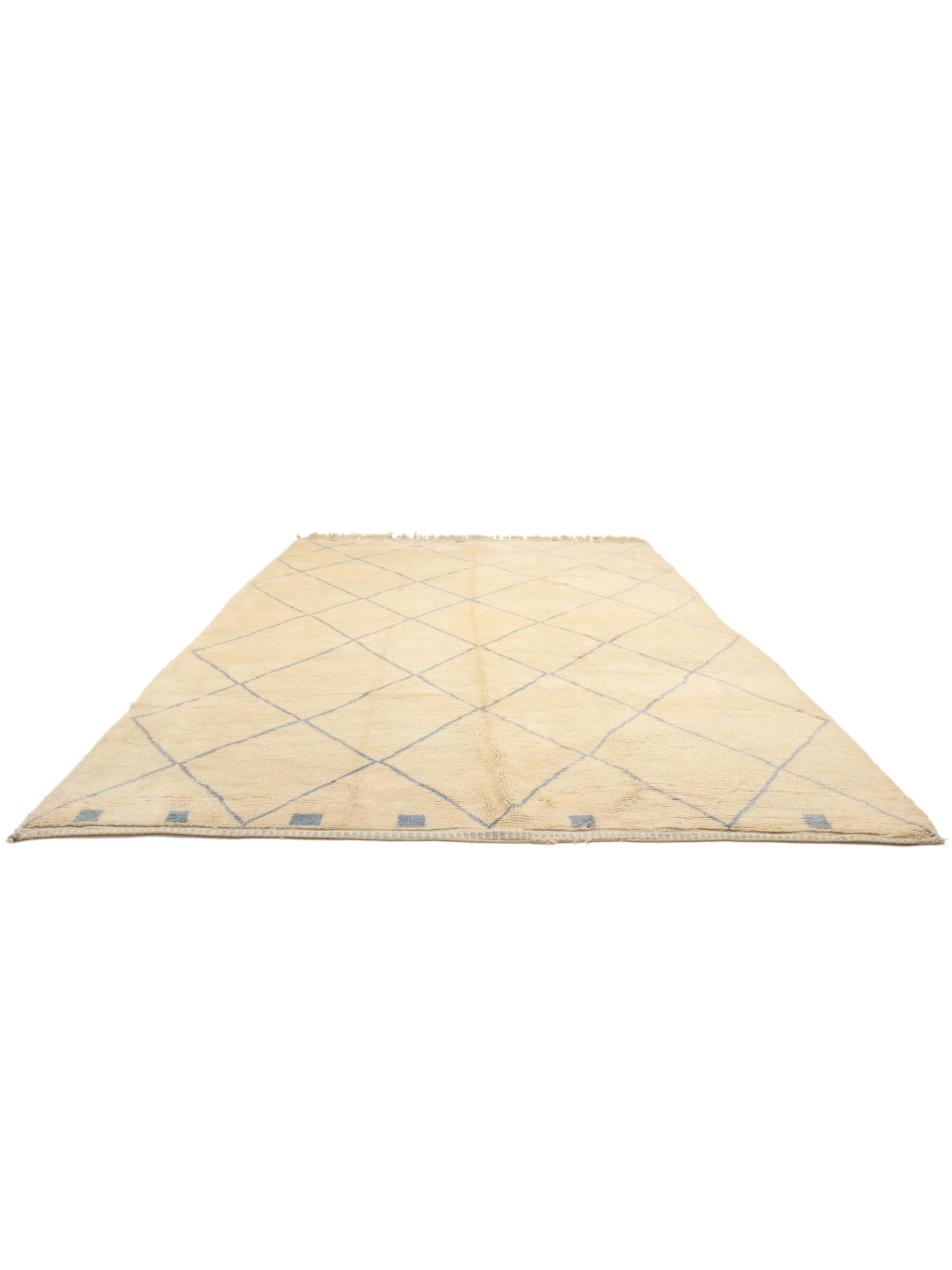
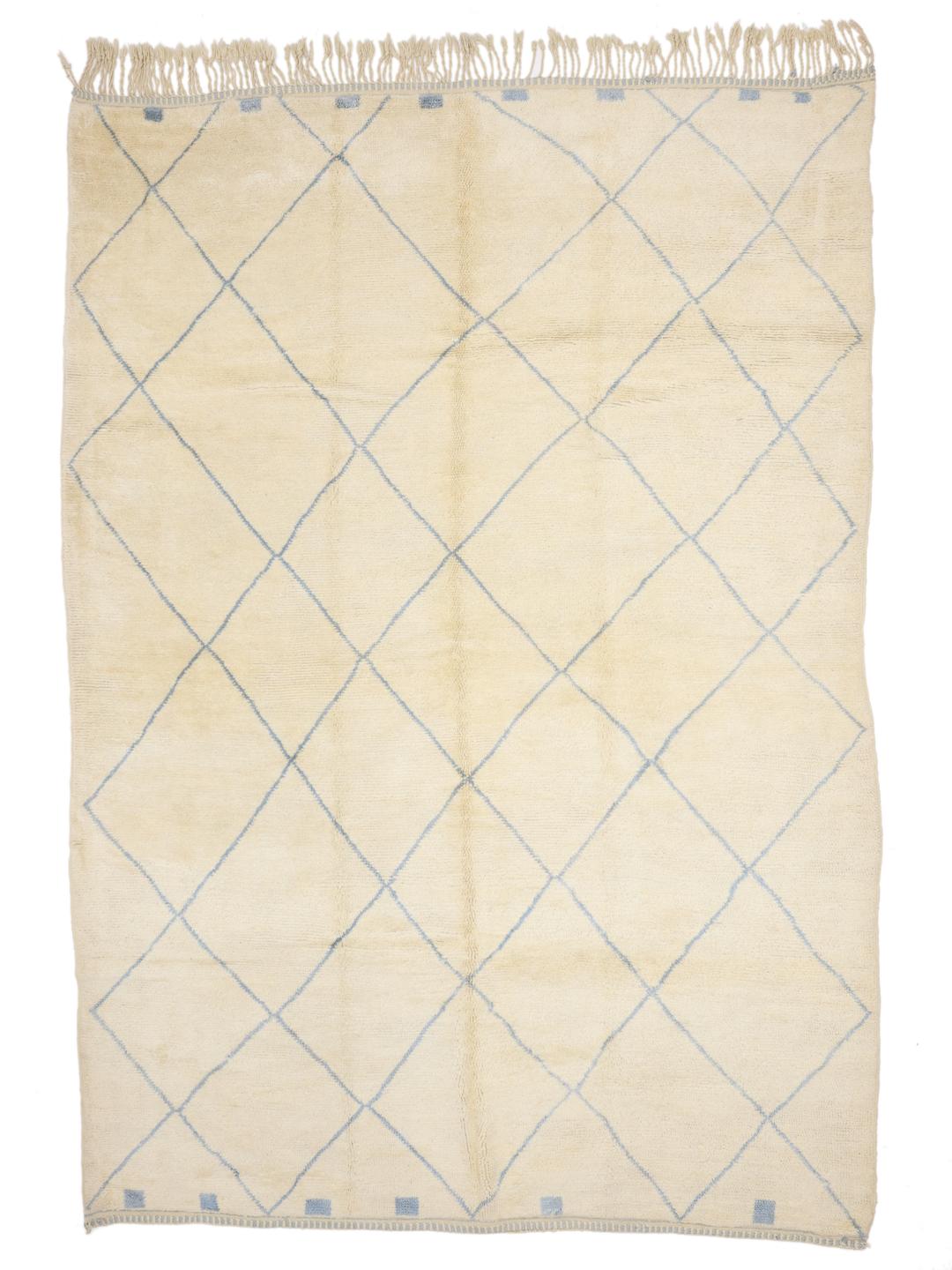
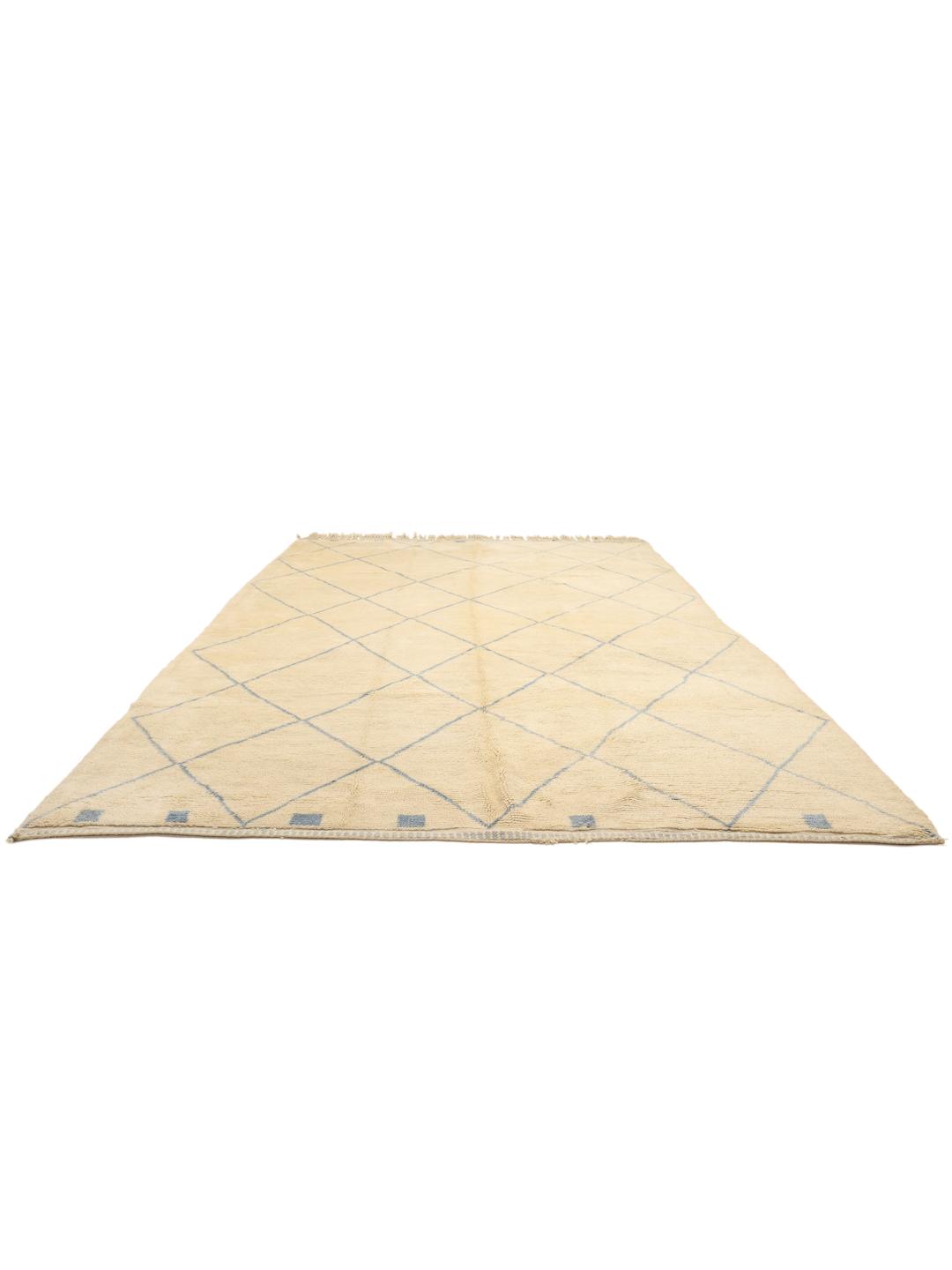
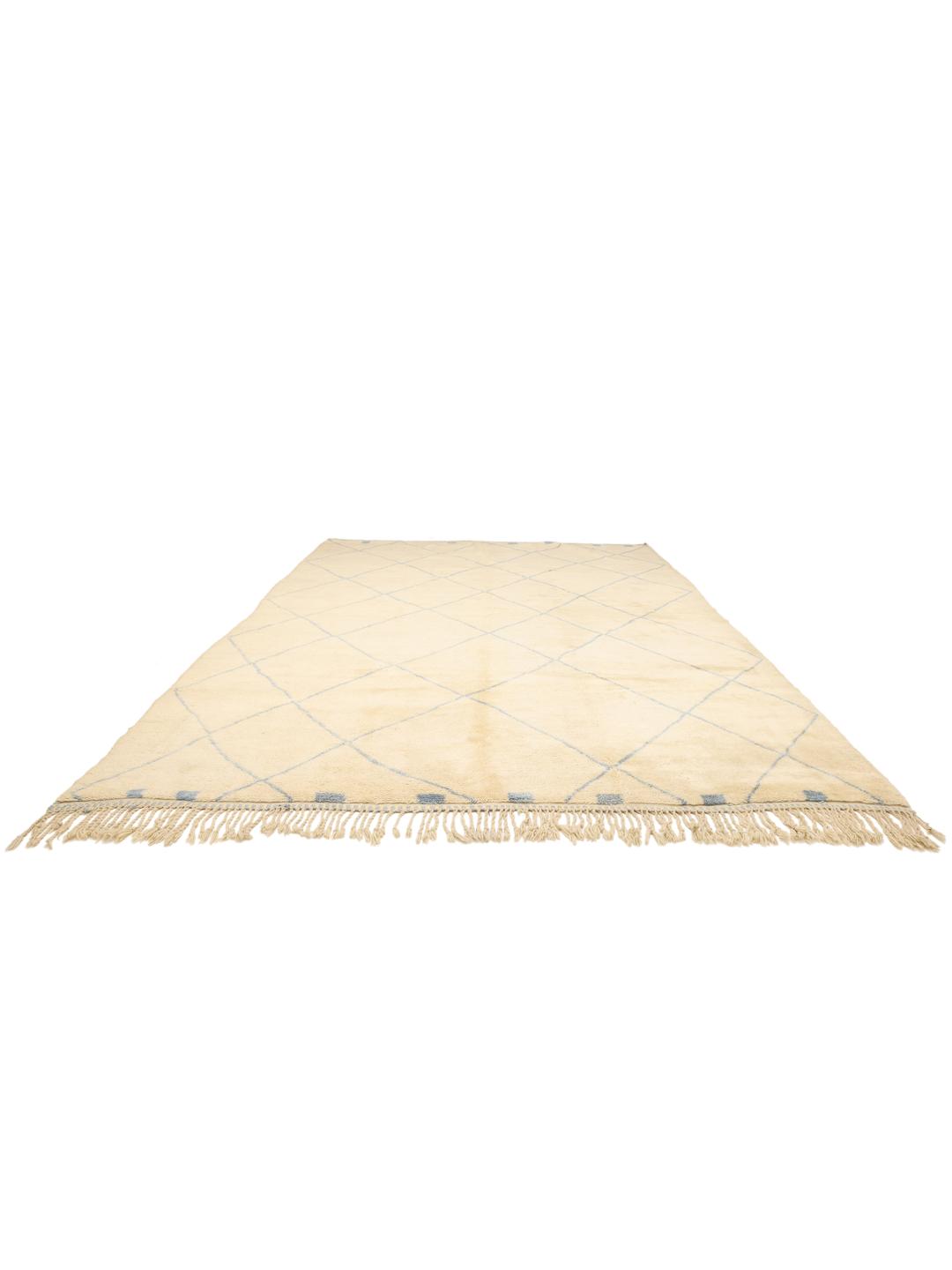
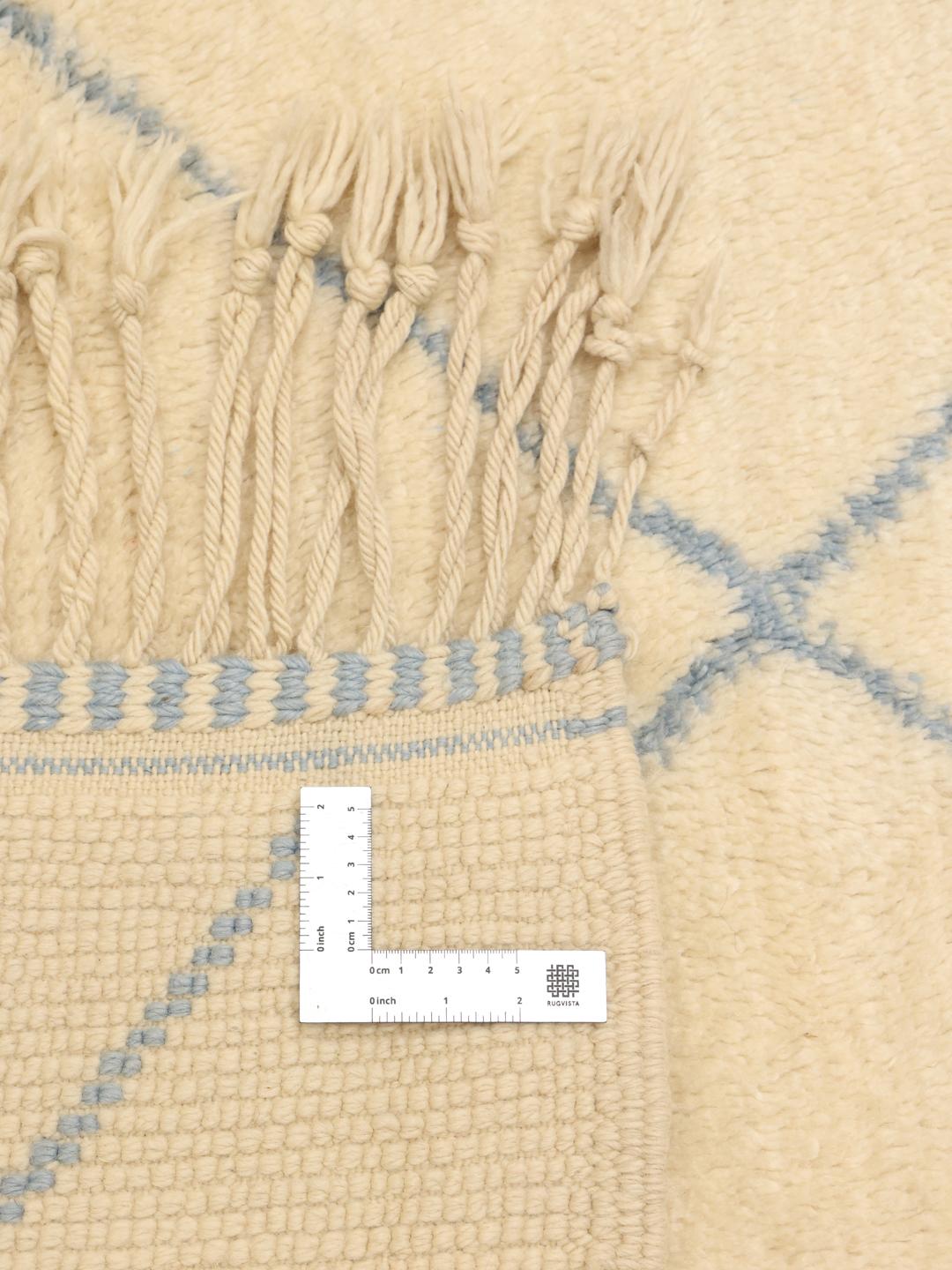
Visually, these rugs are celebrated for their minimalist design language. They often feature simple geometric motifs, such as diamonds or zig-zags, rendered in natural, un-dyed Wool colours like ivory or cream. The use of simple patterns is a hallmark of the tradition, with each weaver often improvising the design based on their own personal stories, symbols of fertility, or the natural landscape. This piece, with its delicate blue diamond pattern, is a classic example of this refined and understated aesthetic.
Today, these rugs are highly sought after by collectors for their cultural weight and the skill required to produce them. Owning a Beni Ourain rug is an opportunity to connect with a living tradition that has remained largely unchanged for generations. It represents a commitment to preserving cultural heritage and supporting the artisans who keep these ancient techniques alive, ensuring that the legacy of Moroccan weaving continues to thrive in modern homes.