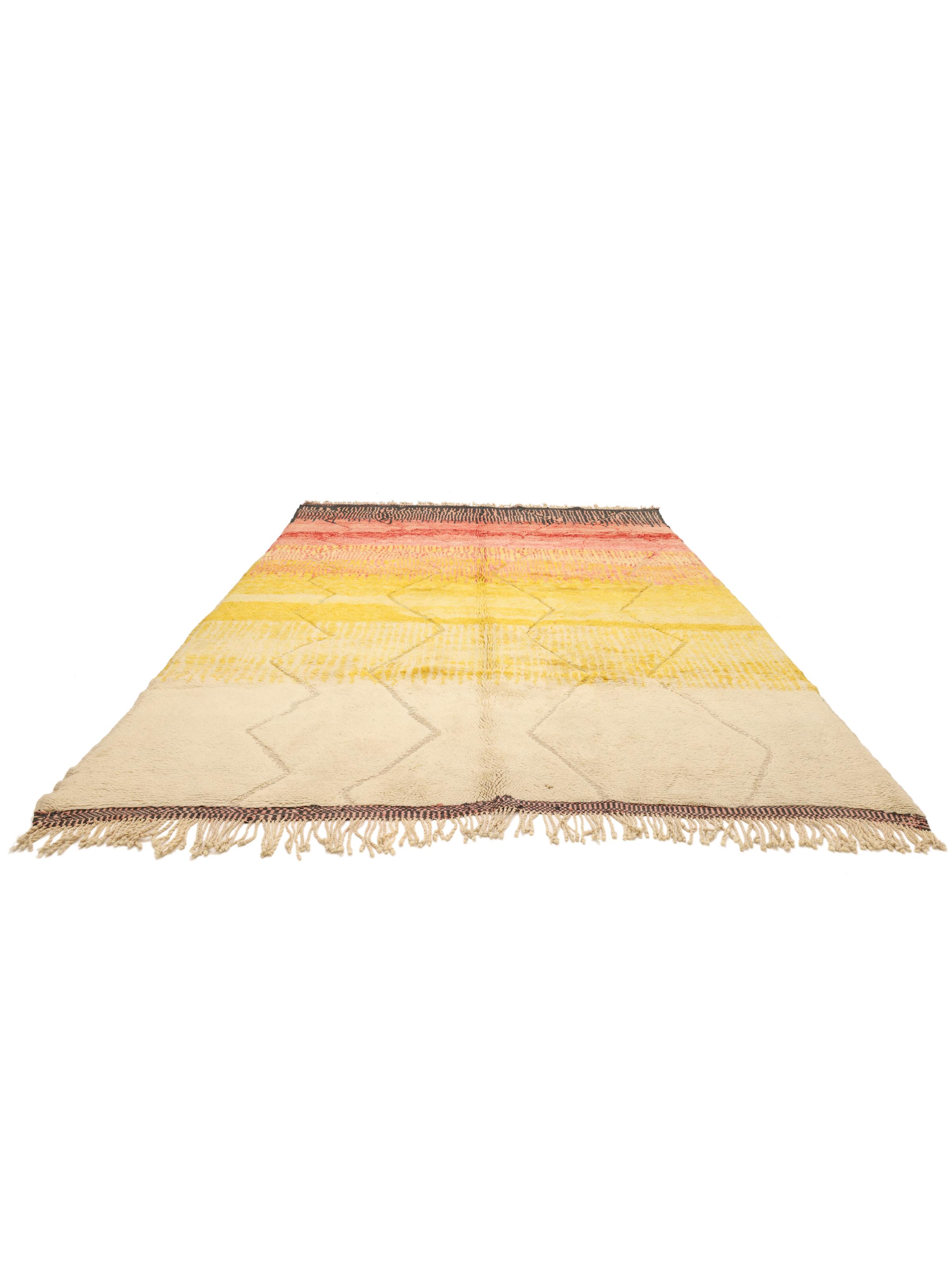
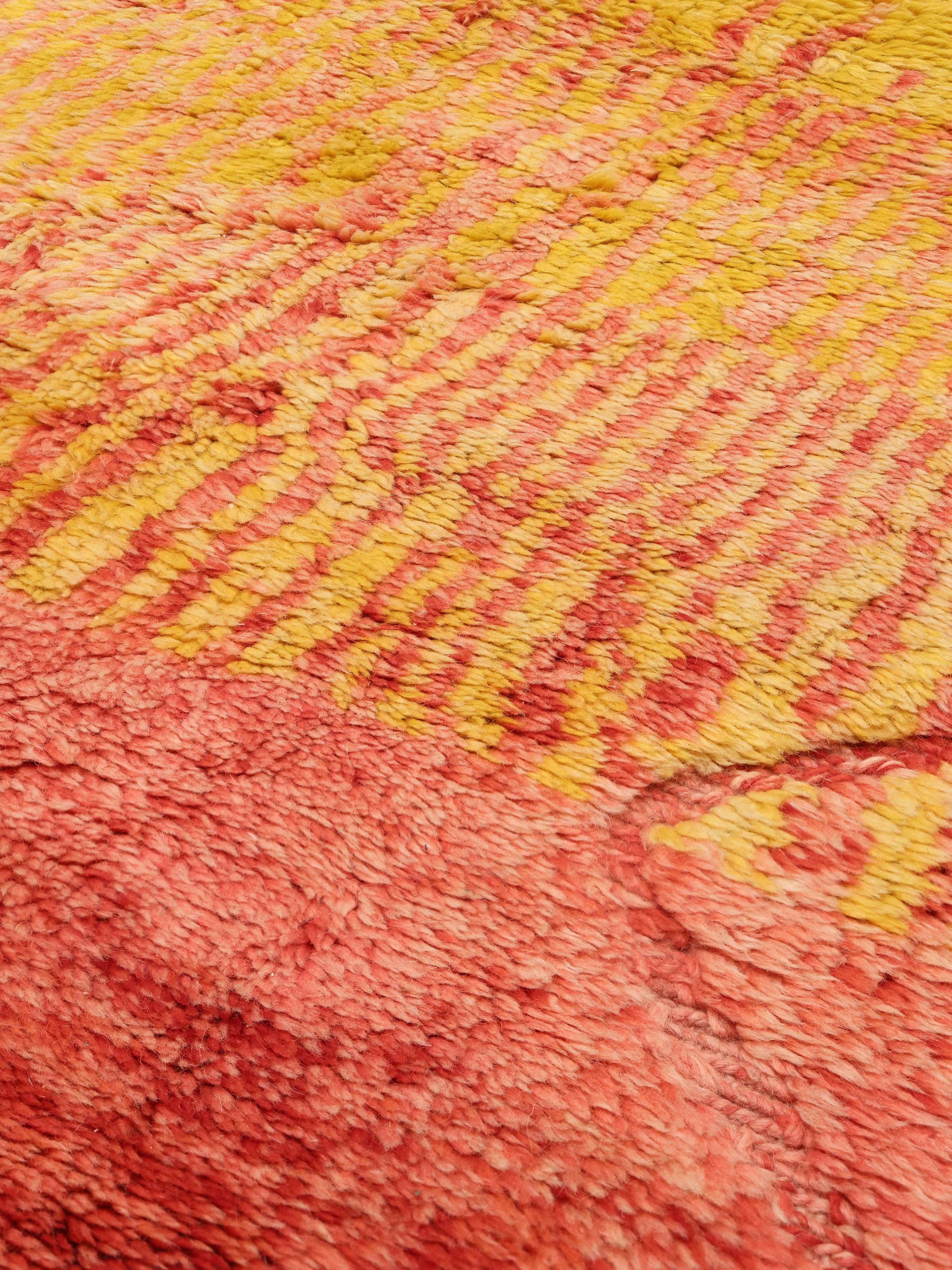
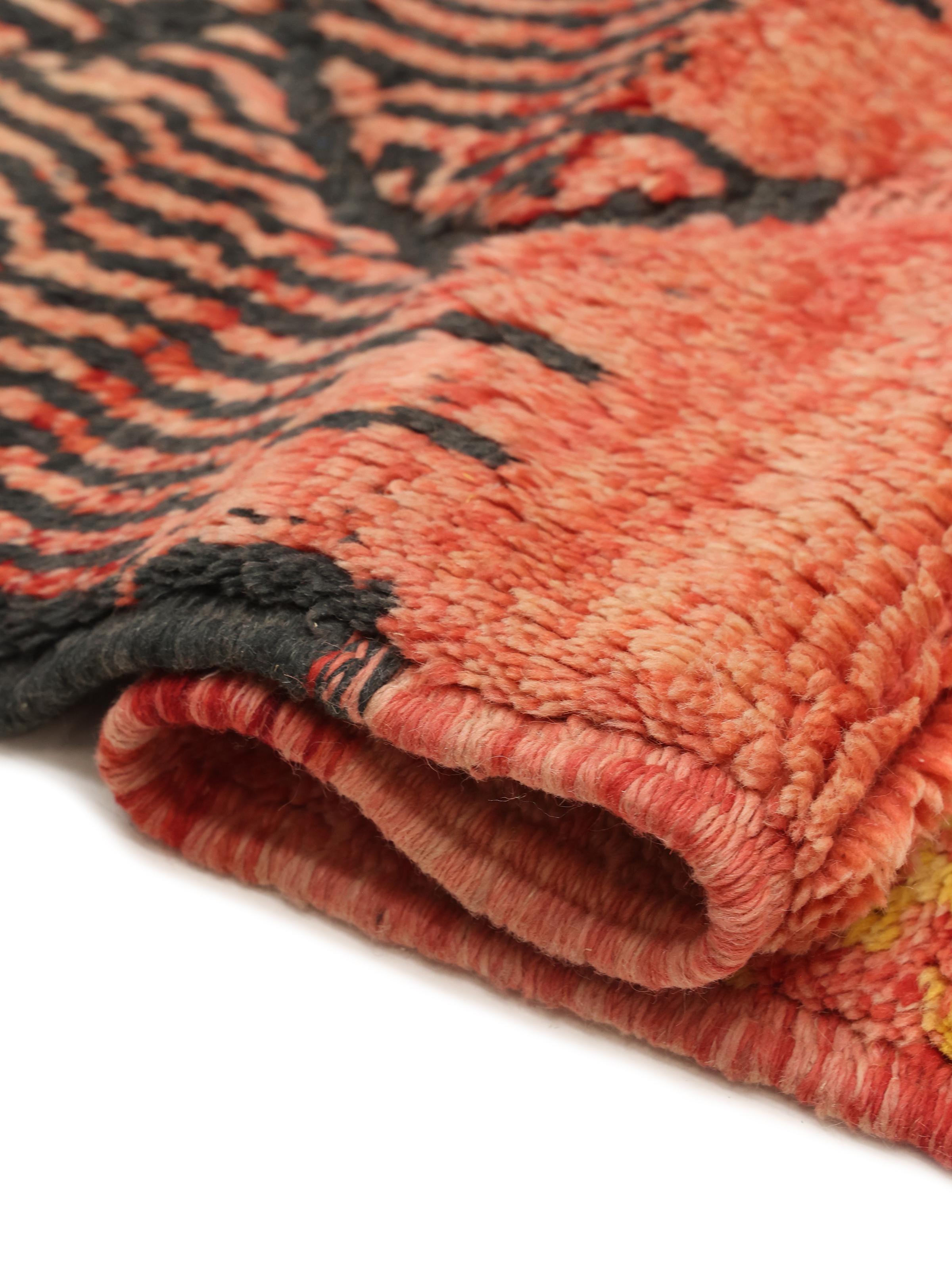
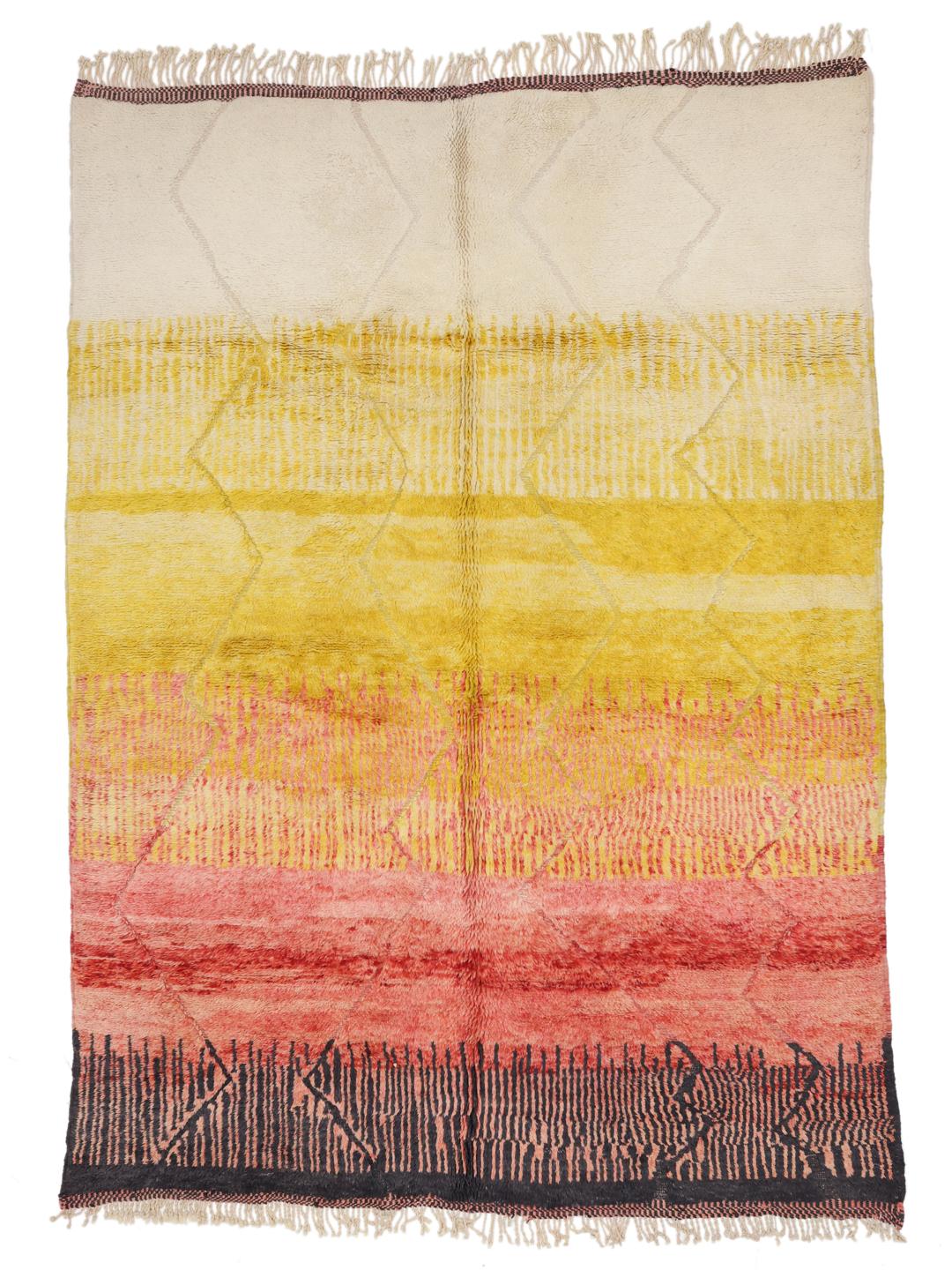
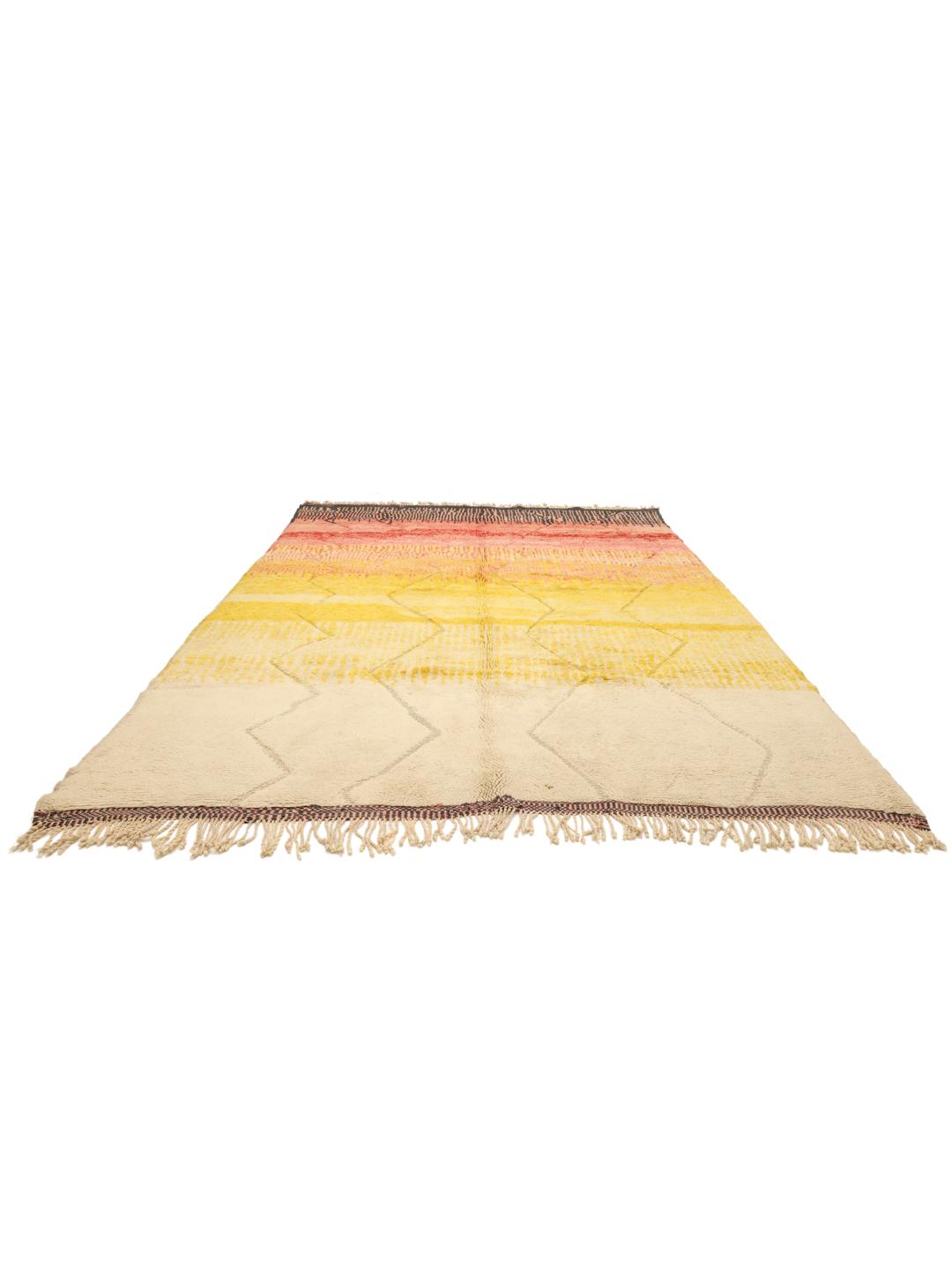
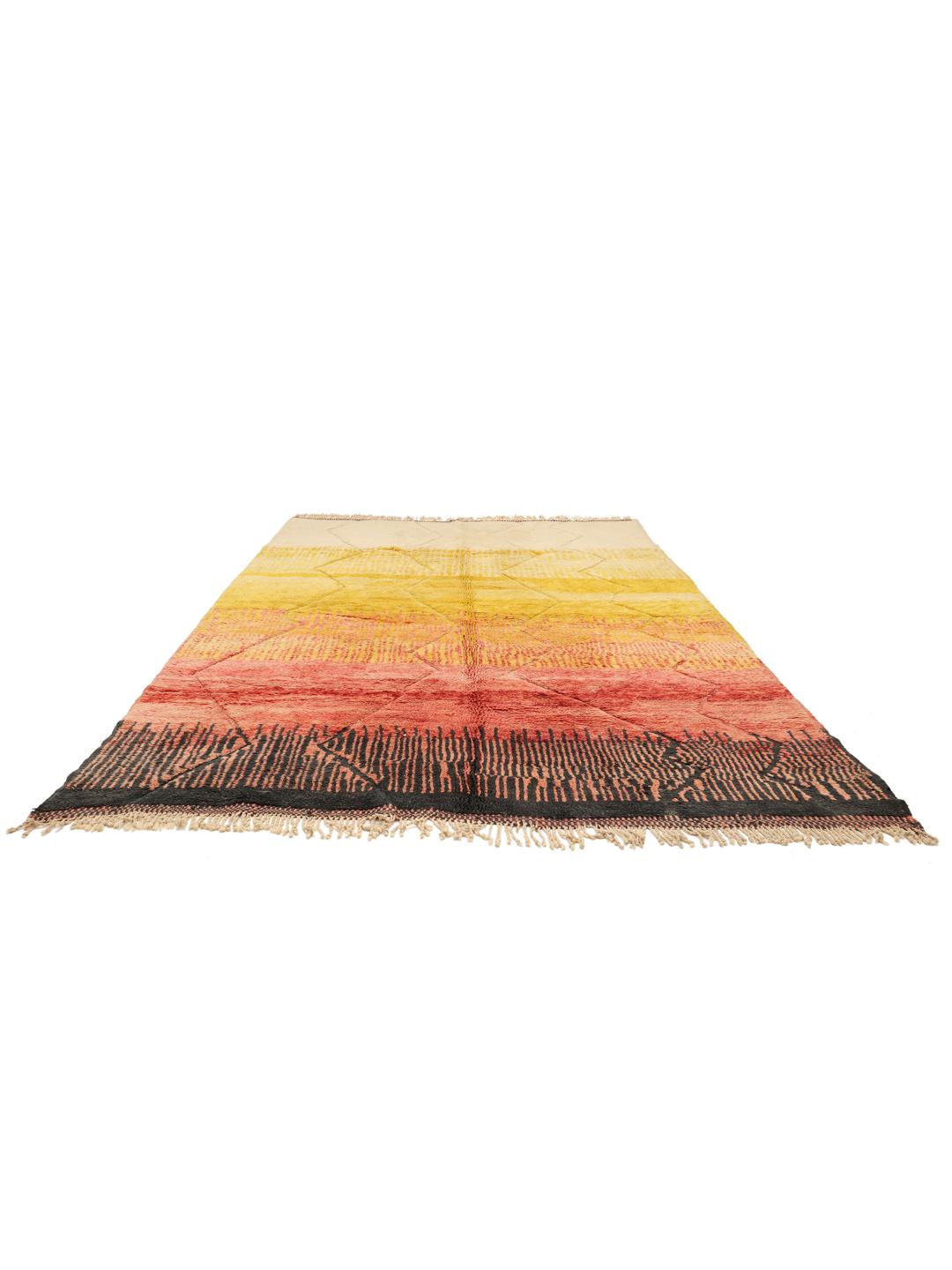
The Berber Beni Ourain rugs originate from the high Atlas Mountains of Morocco, where they have been woven for centuries by the indigenous Berber tribes. Traditionally, these rugs were created as essential, functional items for mountain life, serving as warm bedding and floor coverings to protect against the harsh, cold climates of the high altitudes. The designs were deeply personal, often reflecting the lives, beliefs, and environments of the weavers themselves.
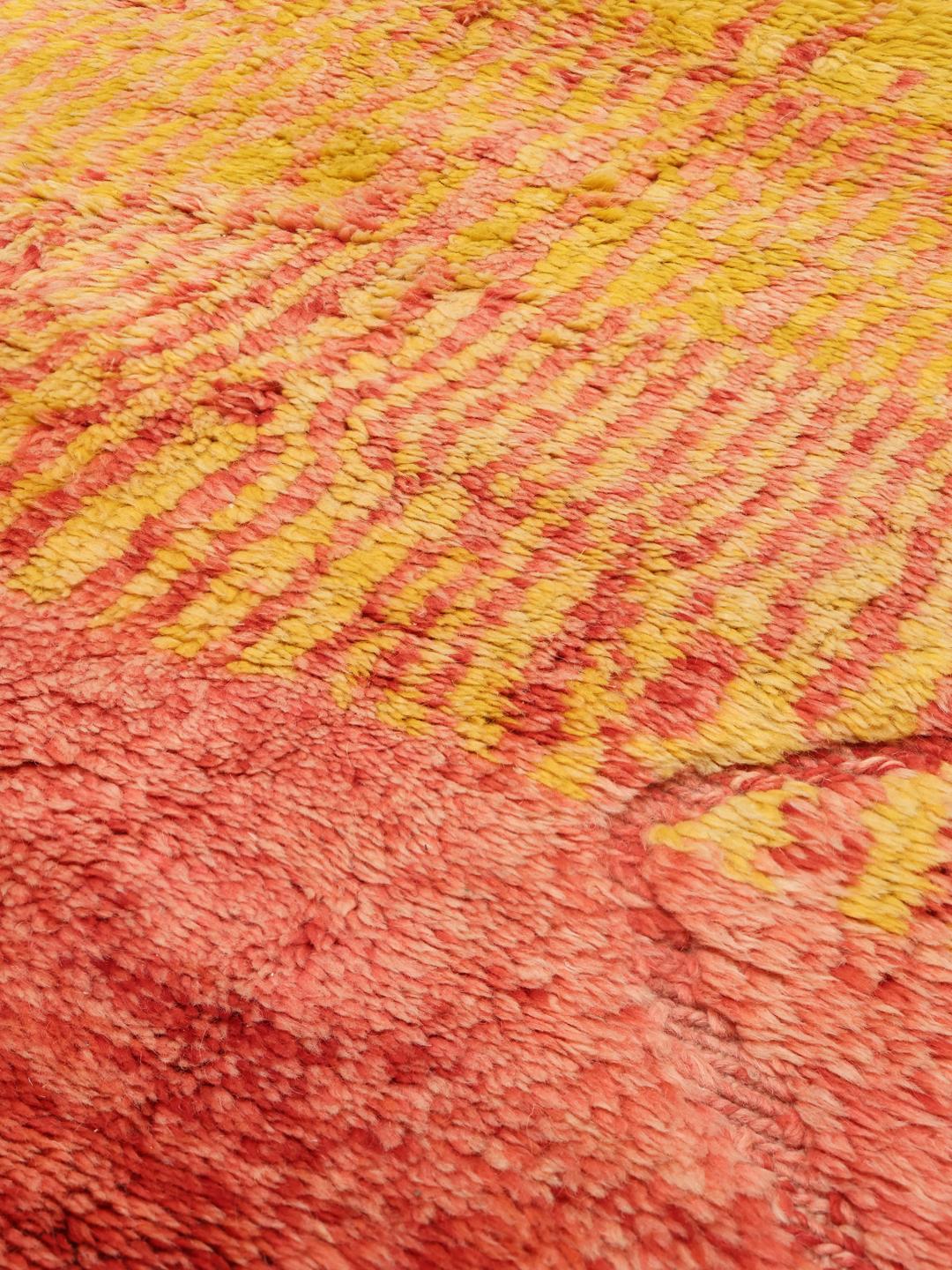
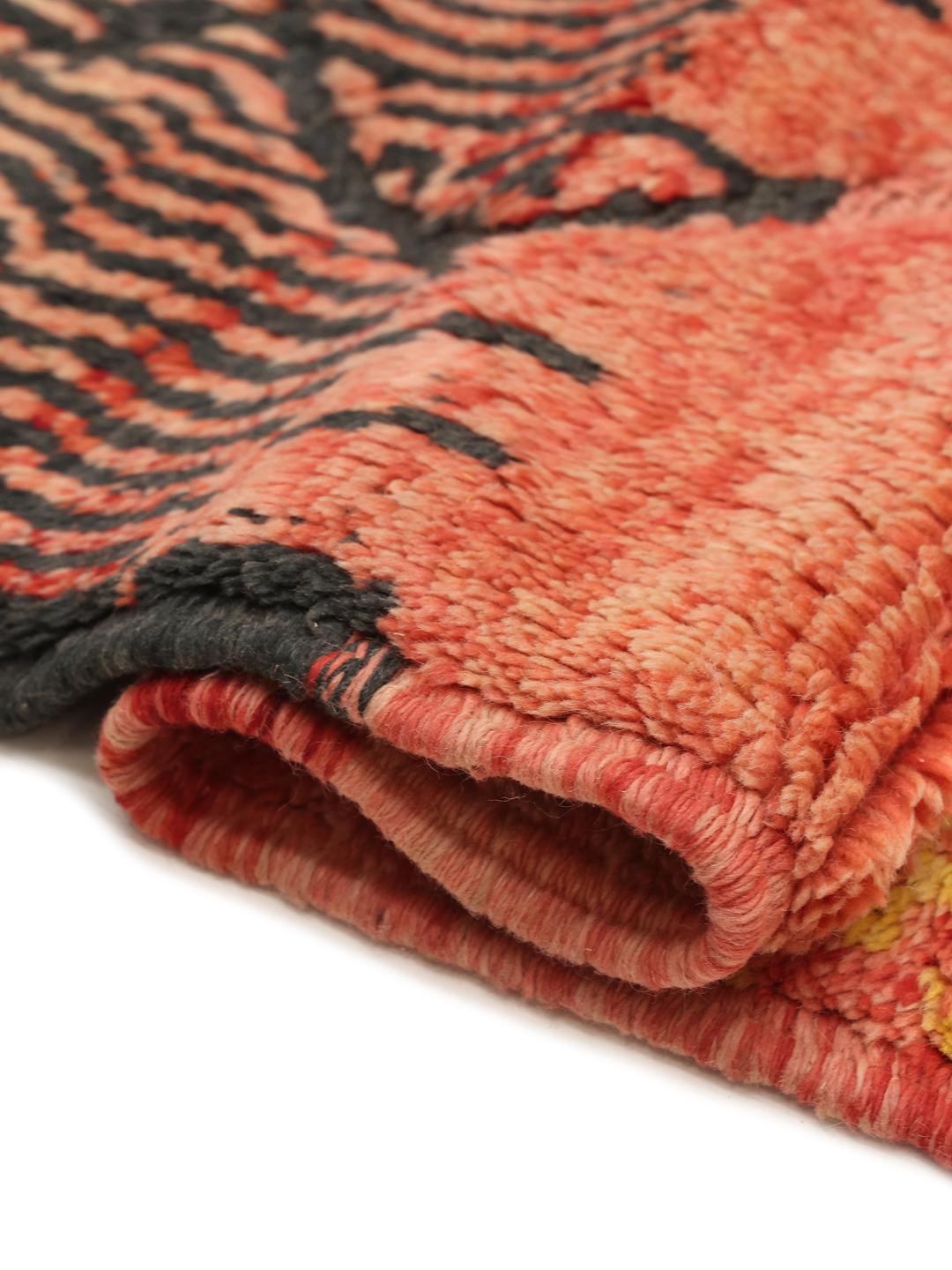
The term Beni Ourain refers to the confederation of tribes who have preserved this specific style of weaving. These rugs are known for their minimalist yet bold aesthetic, often featuring simple, hand-drawn geometric motifs that contrast beautifully against a natural wool background. The craft is passed down through generations, with techniques remaining largely unchanged, ensuring that the authentic character of the tradition is preserved in every piece.
What makes these rugs particularly collectible is their raw, artistic honesty. Unlike more formal, symmetrical traditions, the Beni Ourain style embraces subtle imperfections and spontaneous design choices. The weavers do not rely on pre-drawn templates, allowing each rug to serve as a narrative of the weaver's own artistic intuition. This freedom of expression results in a visual language that is both ancient and remarkably modern in its appeal.
Today, these rugs are celebrated globally for their ability to bring warmth and cultural heritage into contemporary homes. Owning a Beni Ourain piece is seen as a sign of appreciation for traditional craftsmanship and the enduring beauty of natural materials. They are more than just home accessories; they are tangible links to a rich, nomadic history and a testament to the skill of the artisans who continue to keep this vibrant craft tradition alive.