The tradition of Moroccan rug weaving is deeply tied to the history of the Berber tribes in the Atlas Mountains. For centuries, these rugs have been crafted not merely as floor coverings, but as essential household items that reflect the daily lives, beliefs, and artistic expressions of the weavers. Each region and tribe has developed its own distinctive visual language, often passed down through generations of women who master the craft from a young age.
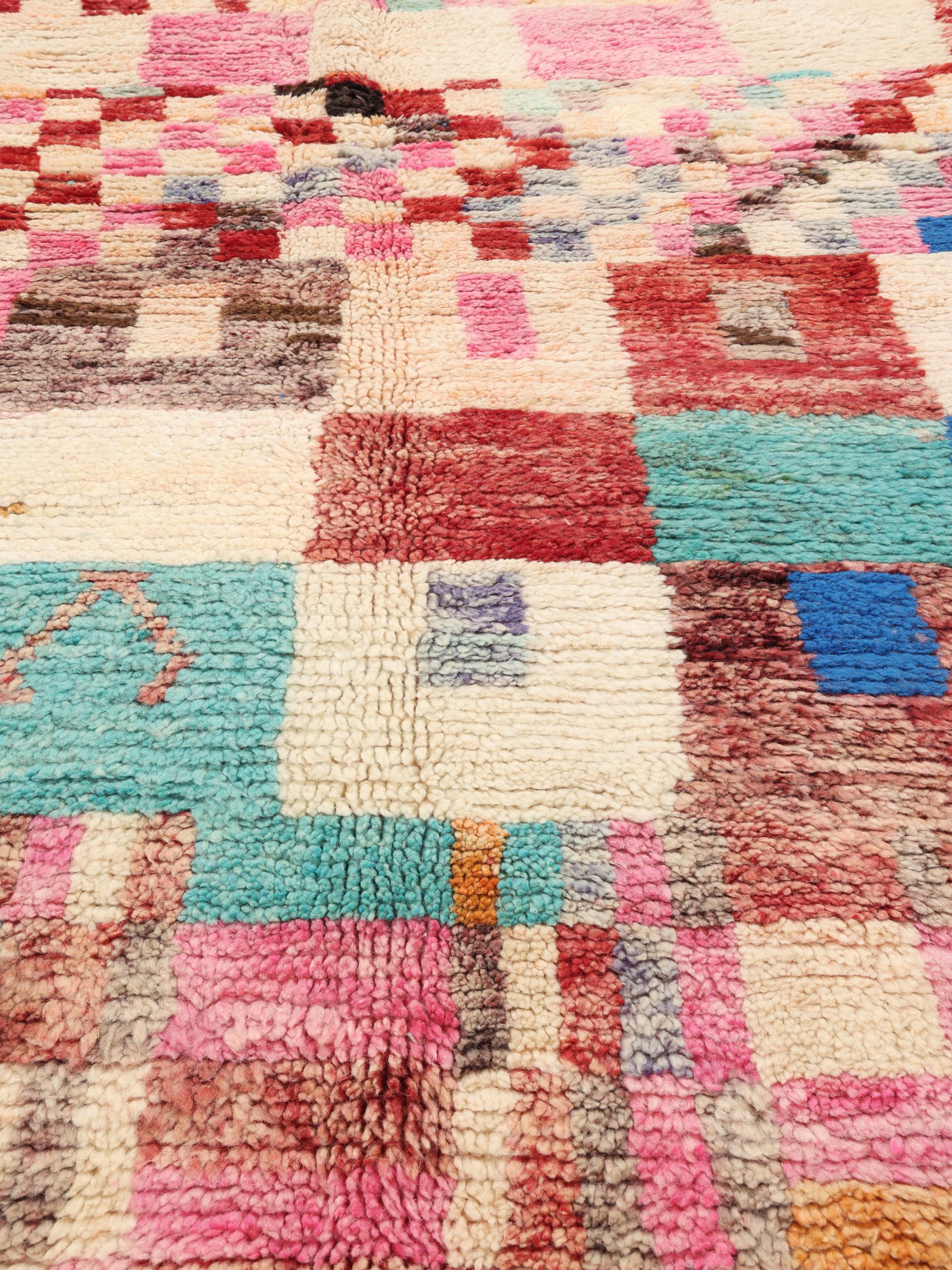
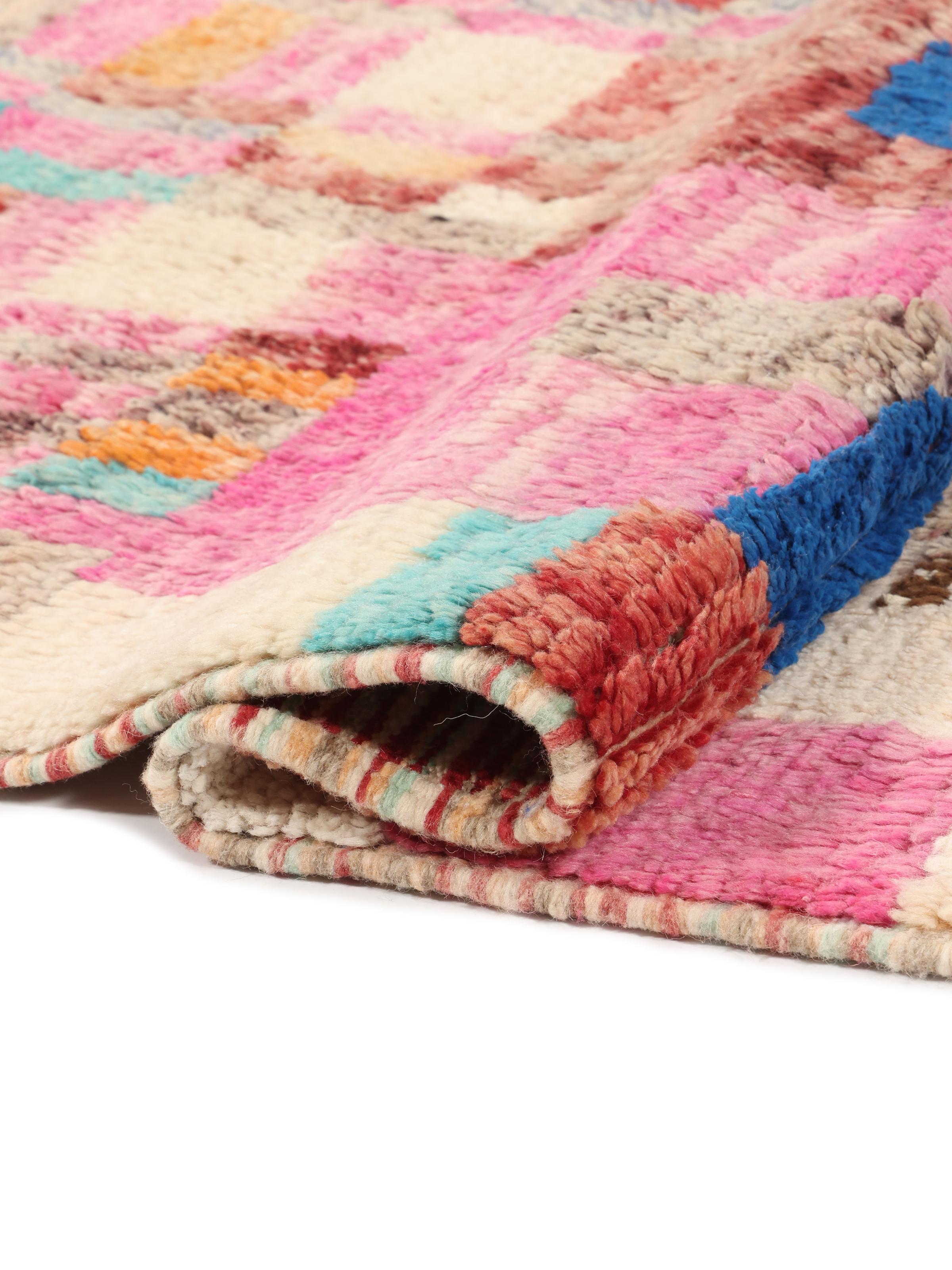
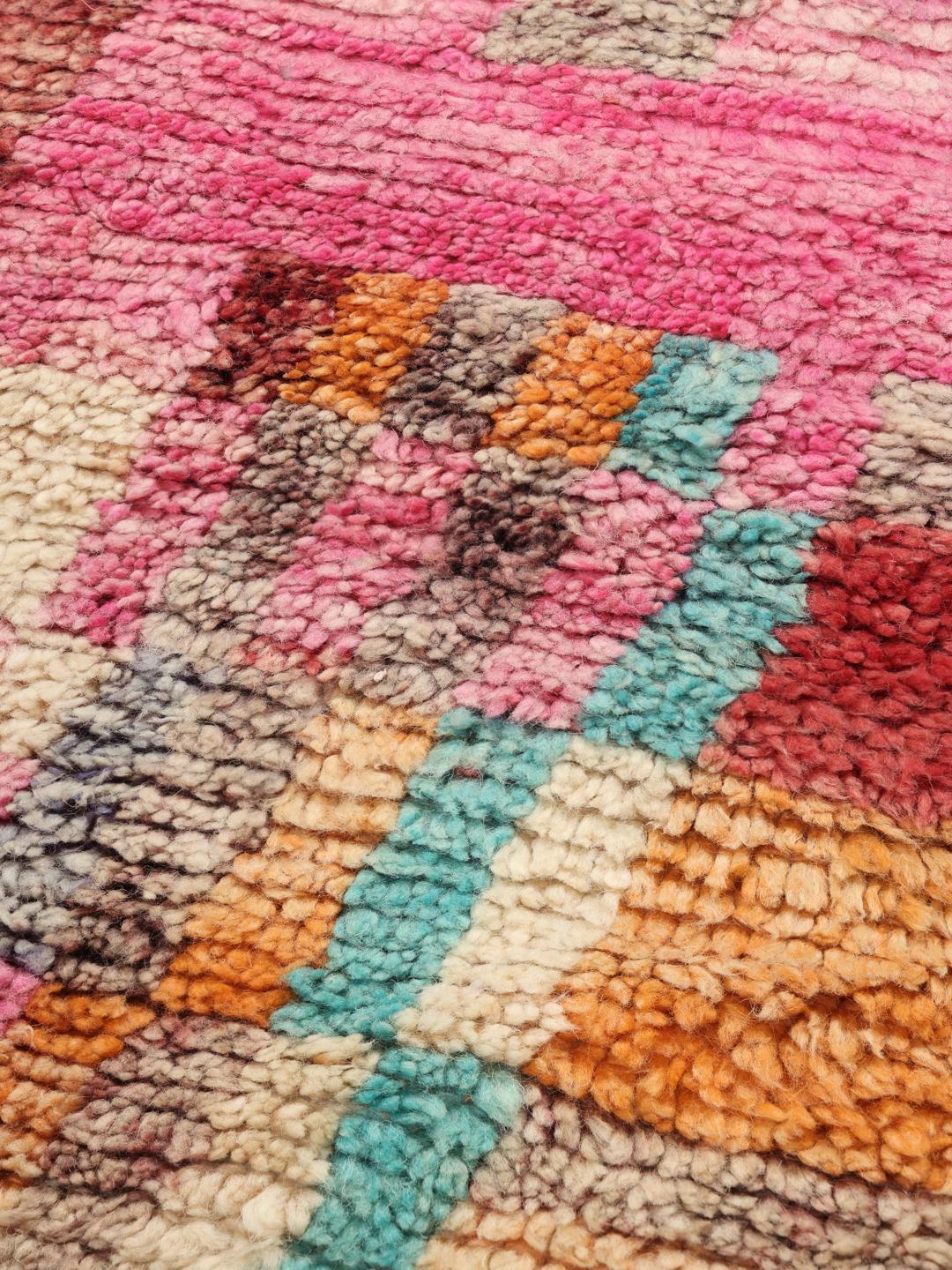
The term Beni Ourain refers to a specific, highly regarded style originating from the Middle Atlas region. These rugs are famously made from the high-quality wool of local sheep, which is known for its durability and soft, lustrous feel. Historically, the patterns were often minimalist or geometric, serving as a canvas for the weaver to express abstract stories or symbols of protection and fertility, though modern interpretations frequently incorporate a wider, bolder palette.
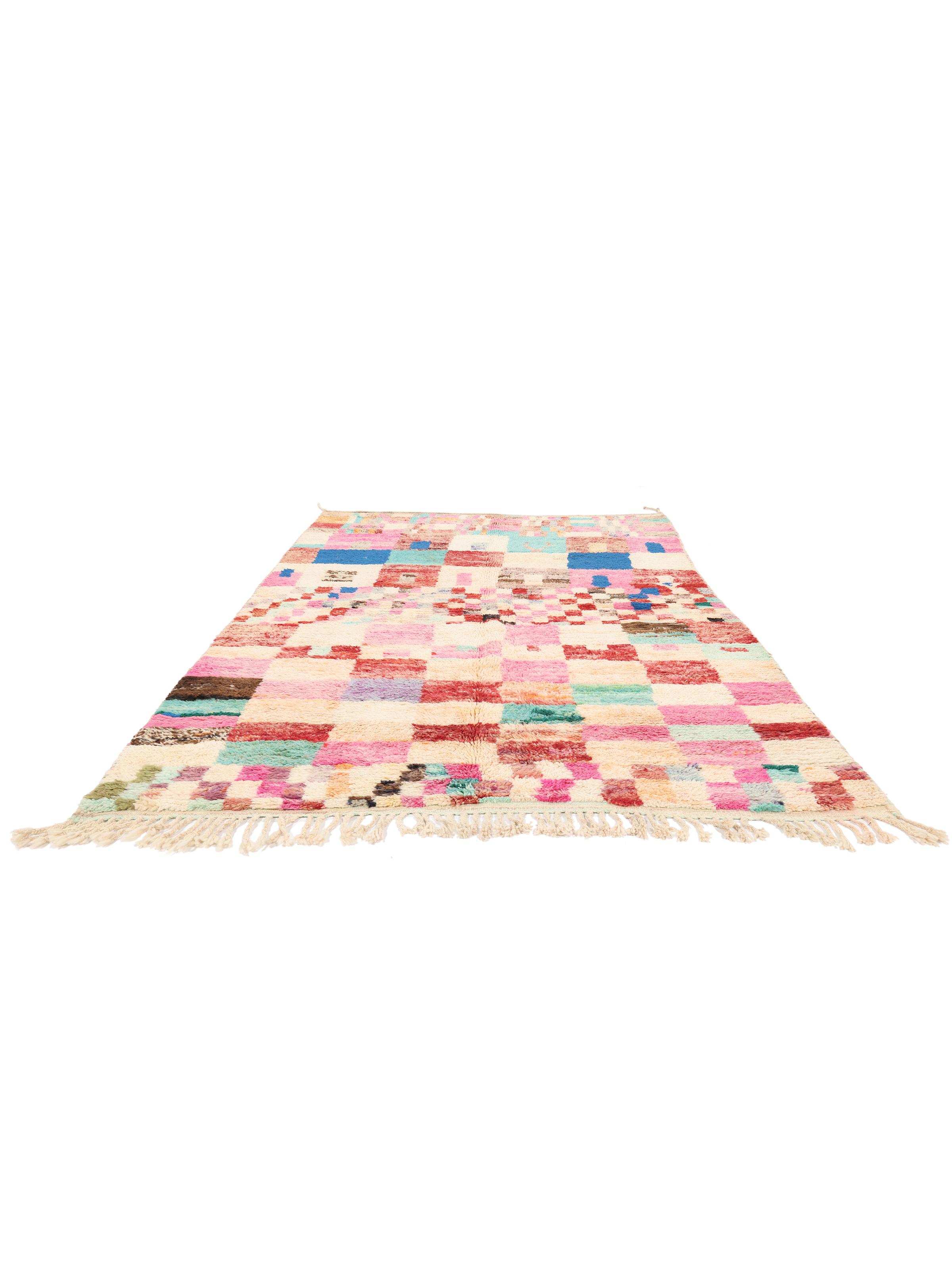
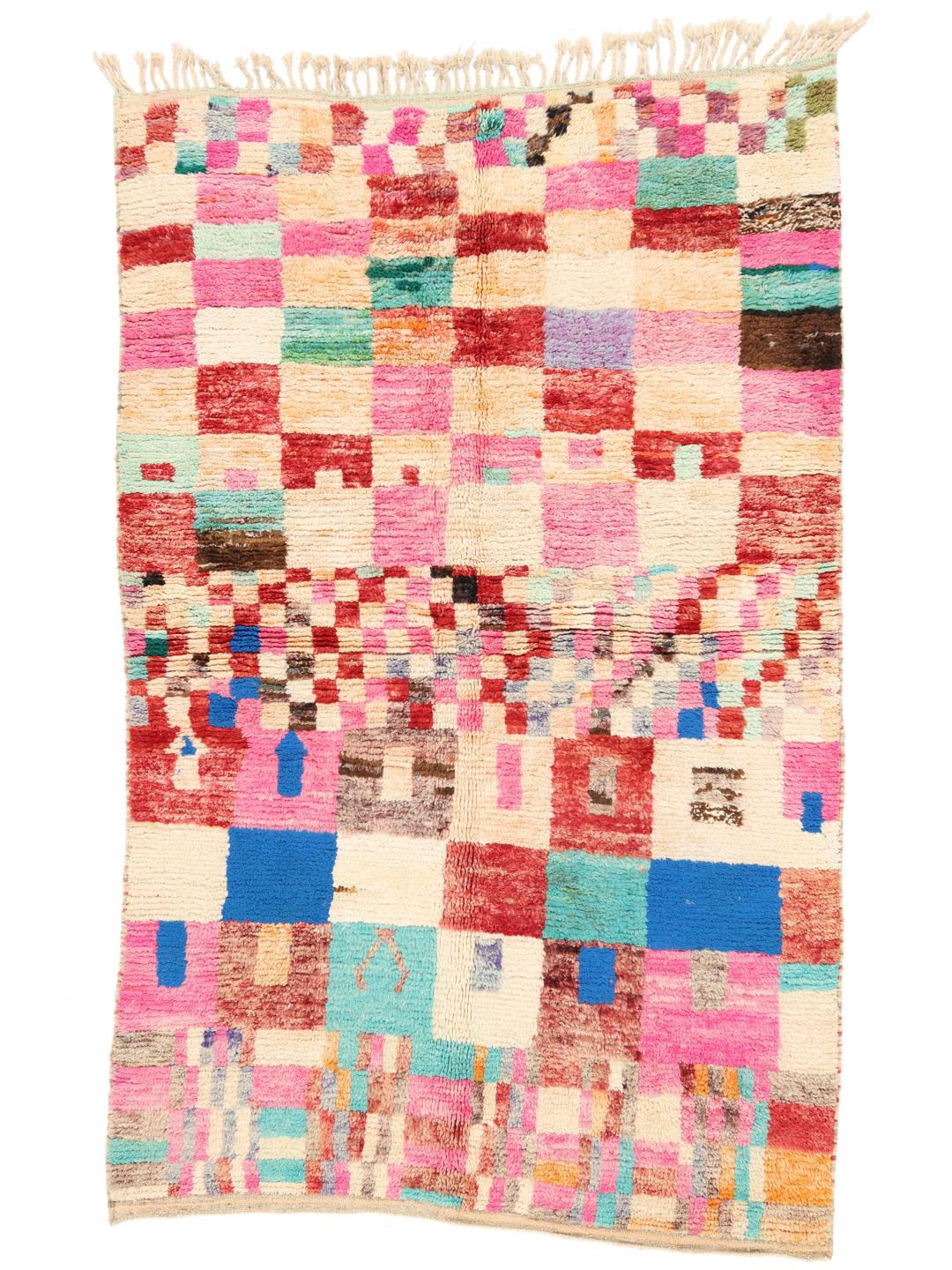
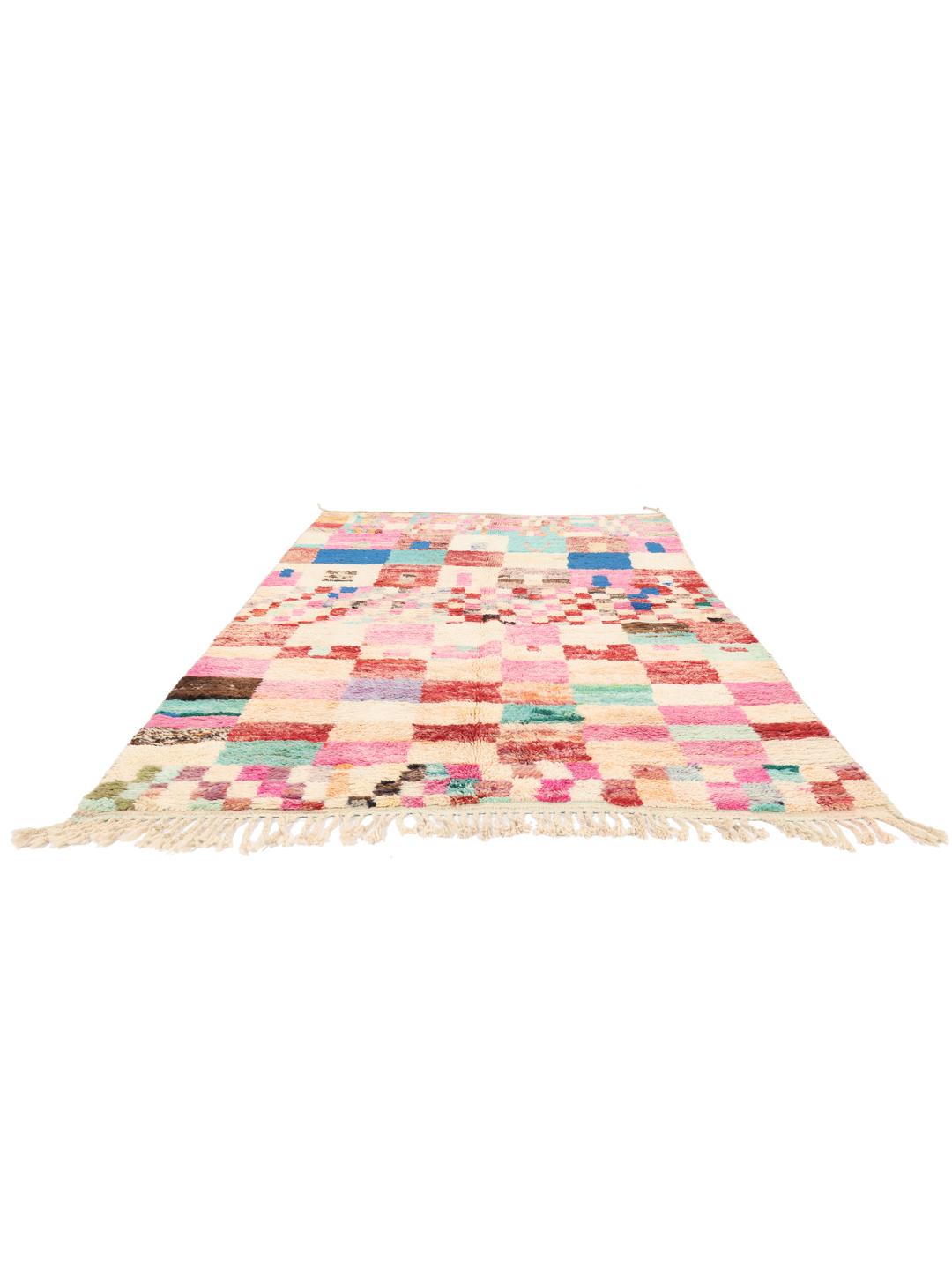
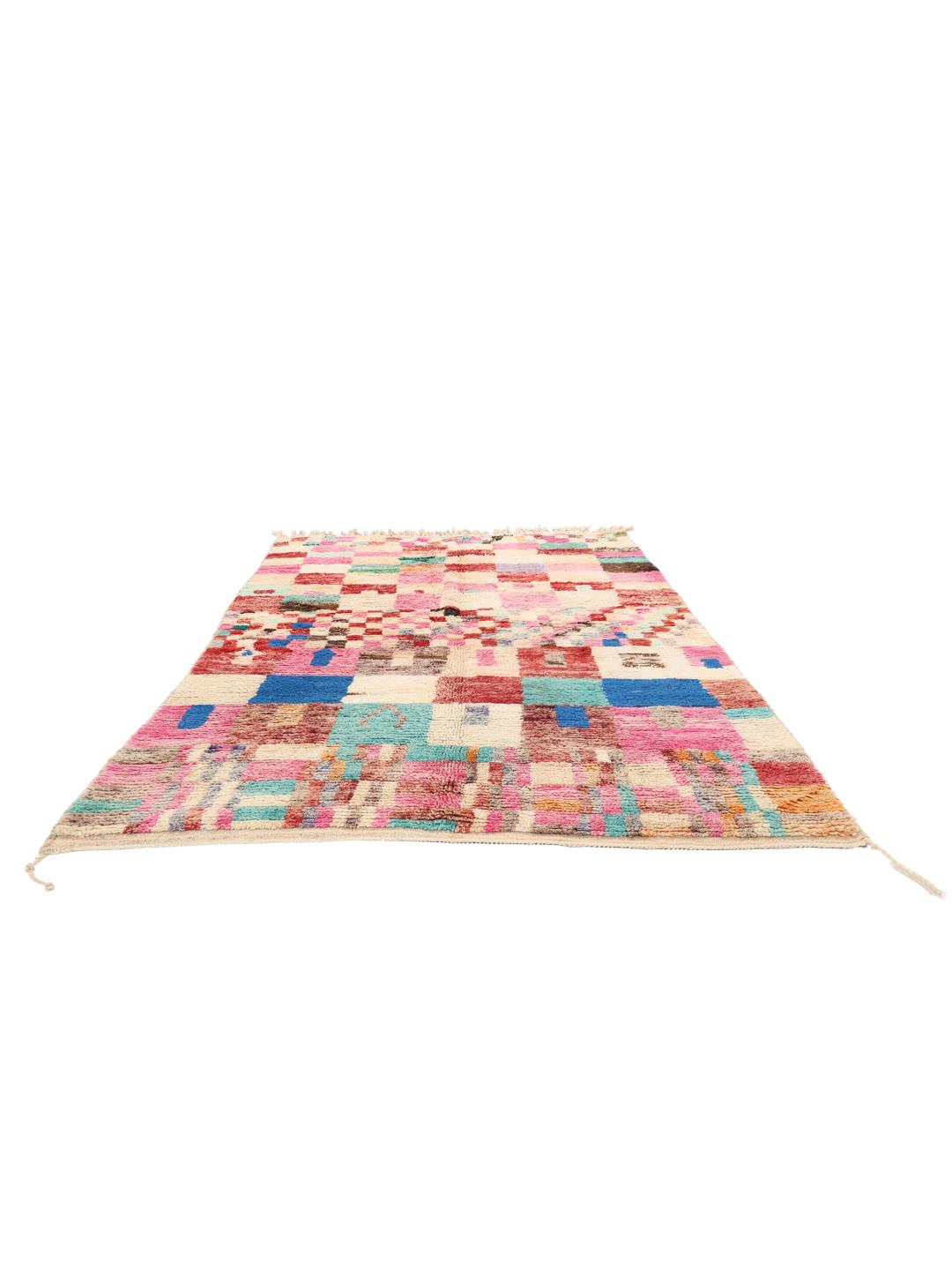
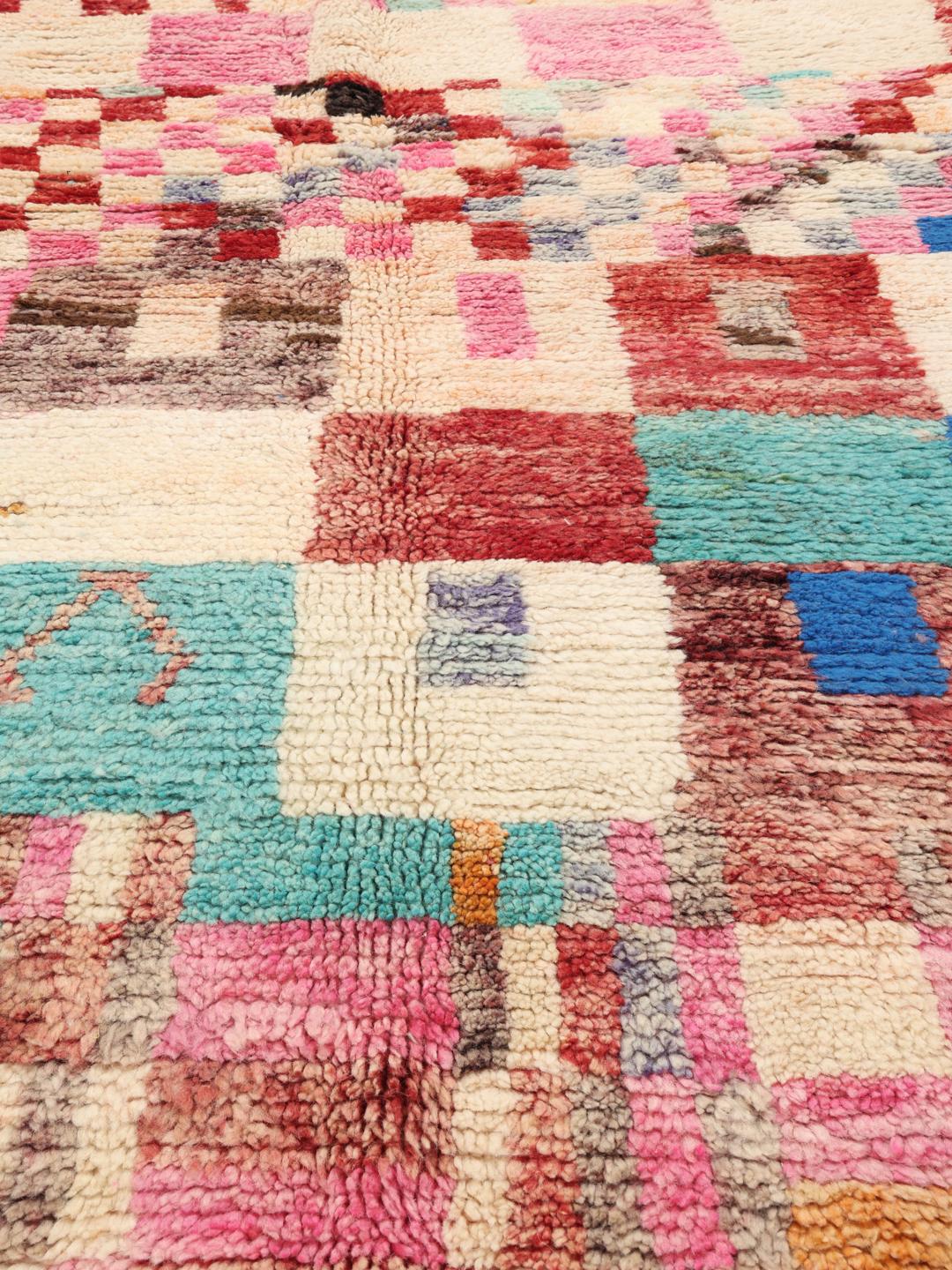
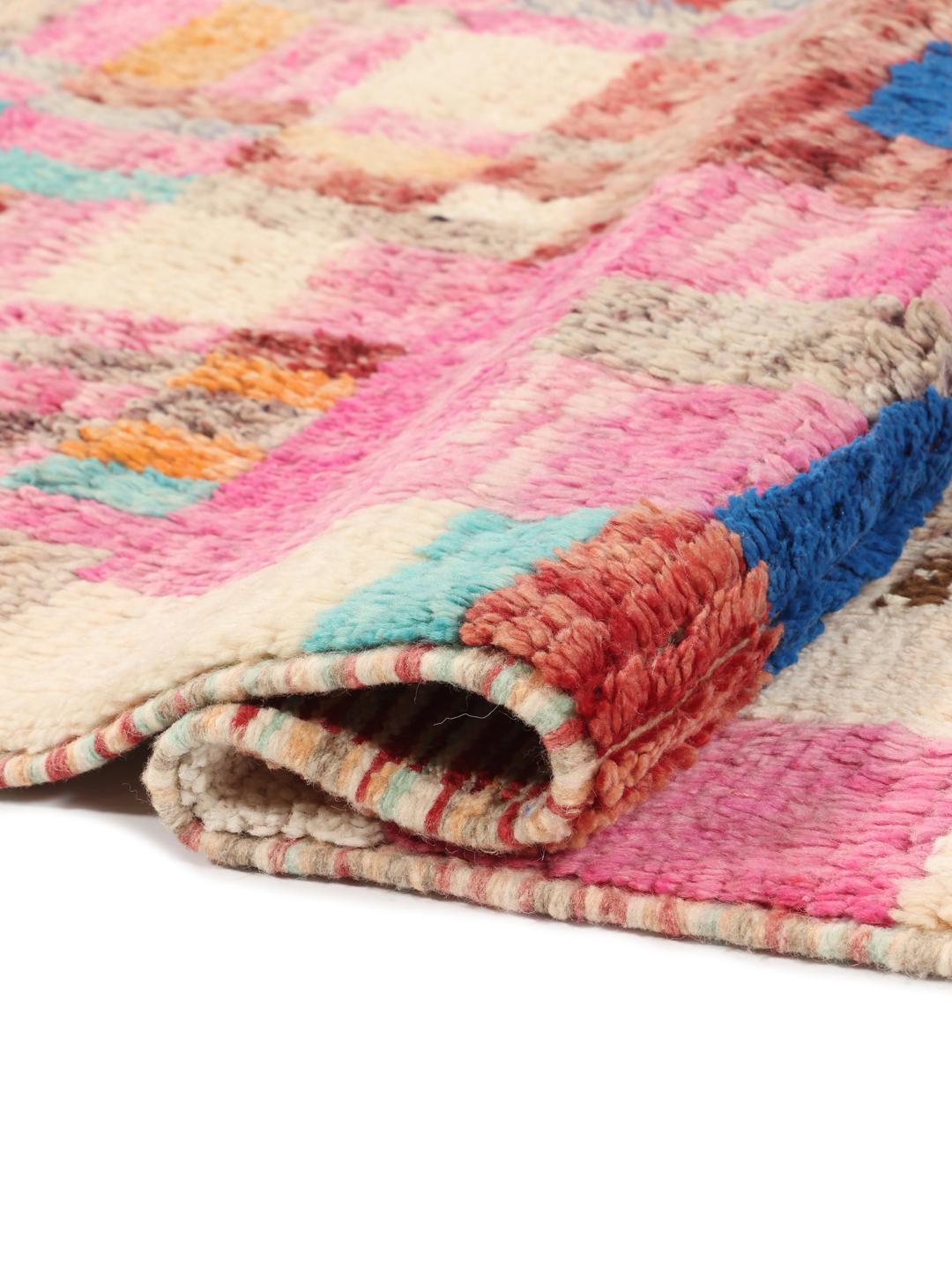
Signature design elements of these rugs often include bold geometric motifs, such as diamonds, lines, or, as seen here, creative checkered blocks. While the classic Beni Ourain palette is traditionally more neutral, the evolution of the craft has seen the introduction of vibrant, naturally derived dyes that allow for more playful and contemporary expressions. This rug honours that history while embracing a more expressive, colourful aesthetic that feels both fresh and timeless.
Owning a Berber rug is an invitation to connect with a long-standing heritage of nomadic art. These pieces are highly sought after by collectors and interior enthusiasts alike, not just for their striking visual impact, but for the skill and cultural weight they carry. By bringing this rug into your home, you are preserving a craft tradition that celebrates the beauty of human ingenuity and the enduring quality of natural materials.