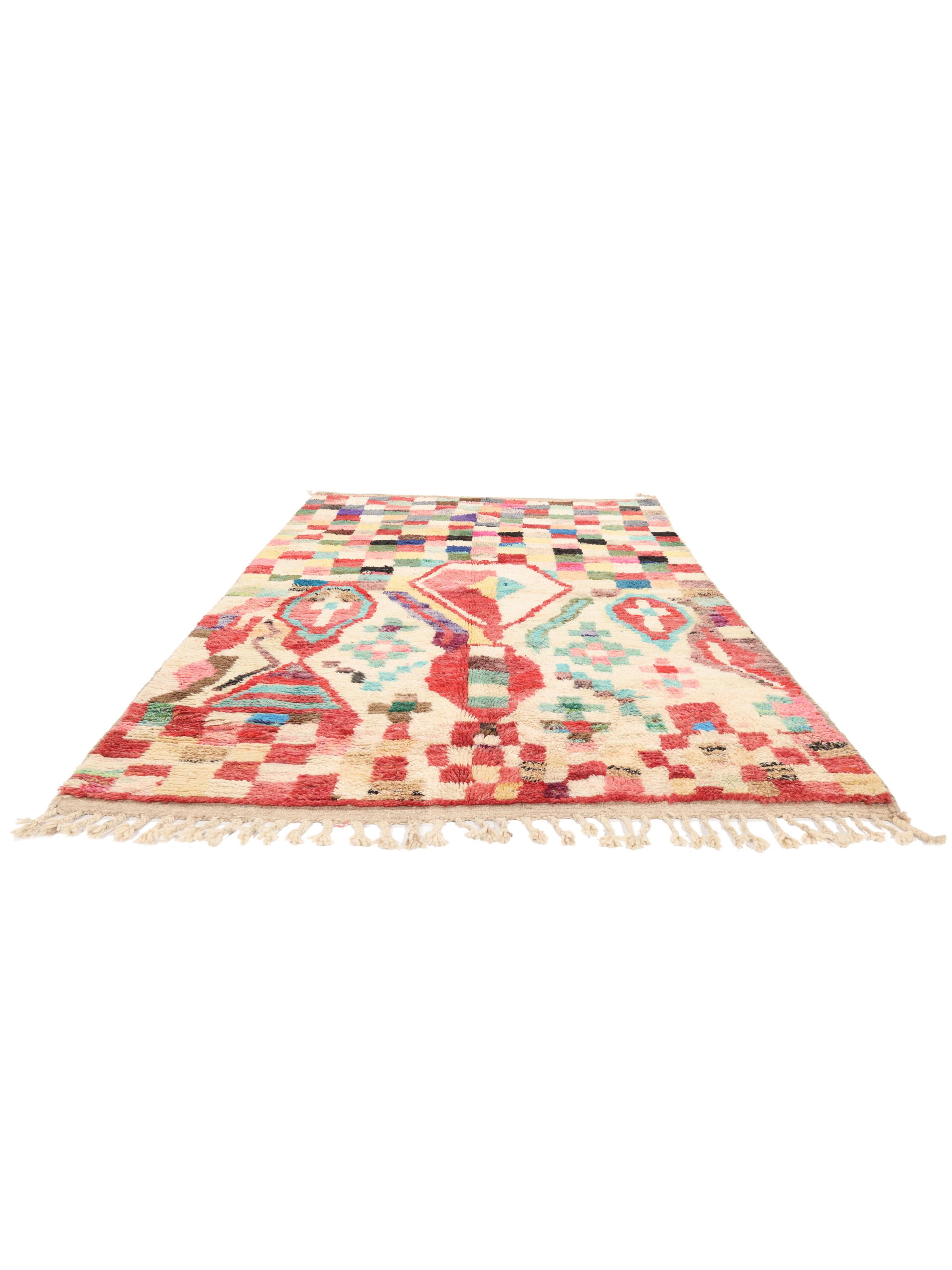
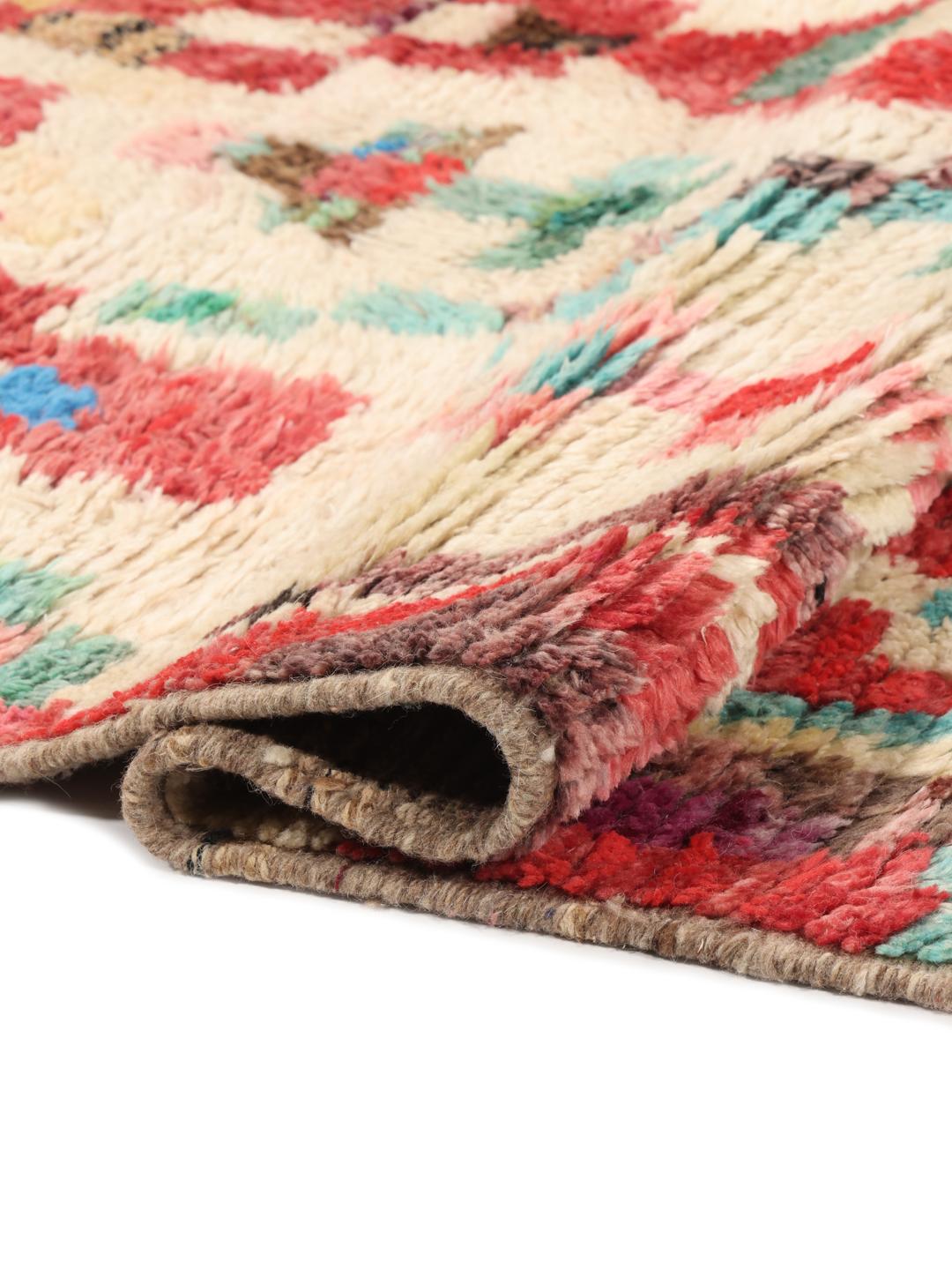
The Berber rugs of the Middle Atlas are celebrated for their raw, expressive beauty and deep connection to the nomadic and semi-nomadic tribes of Morocco. For centuries, these rugs have served as essential household items, doubling as warm bedding and floor coverings within the harsh, mountainous climate of the Atlas range. The tradition is deeply rooted in the cultural identity of the Berber people, where weaving is a communal skill passed down through generations of women.
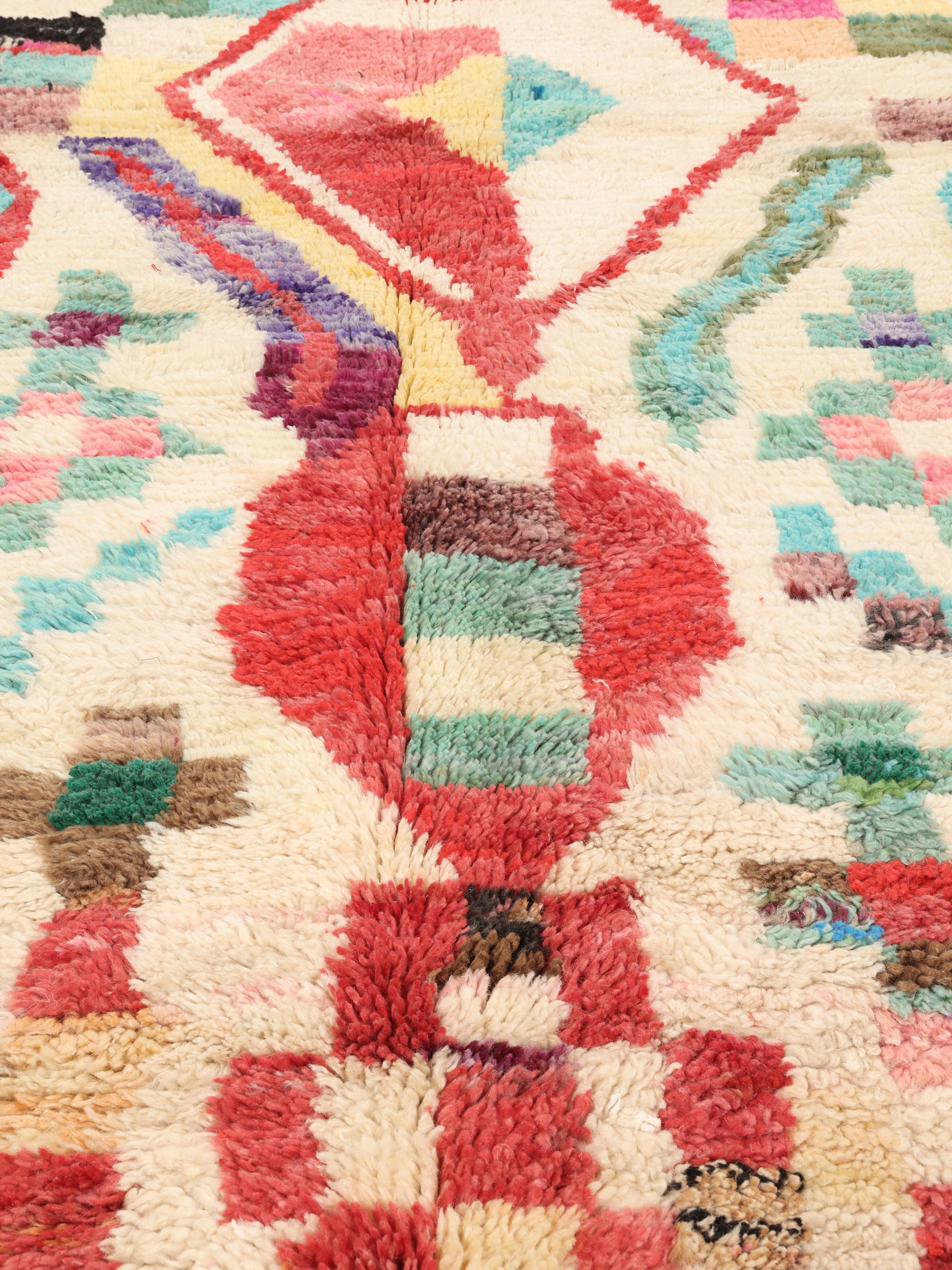
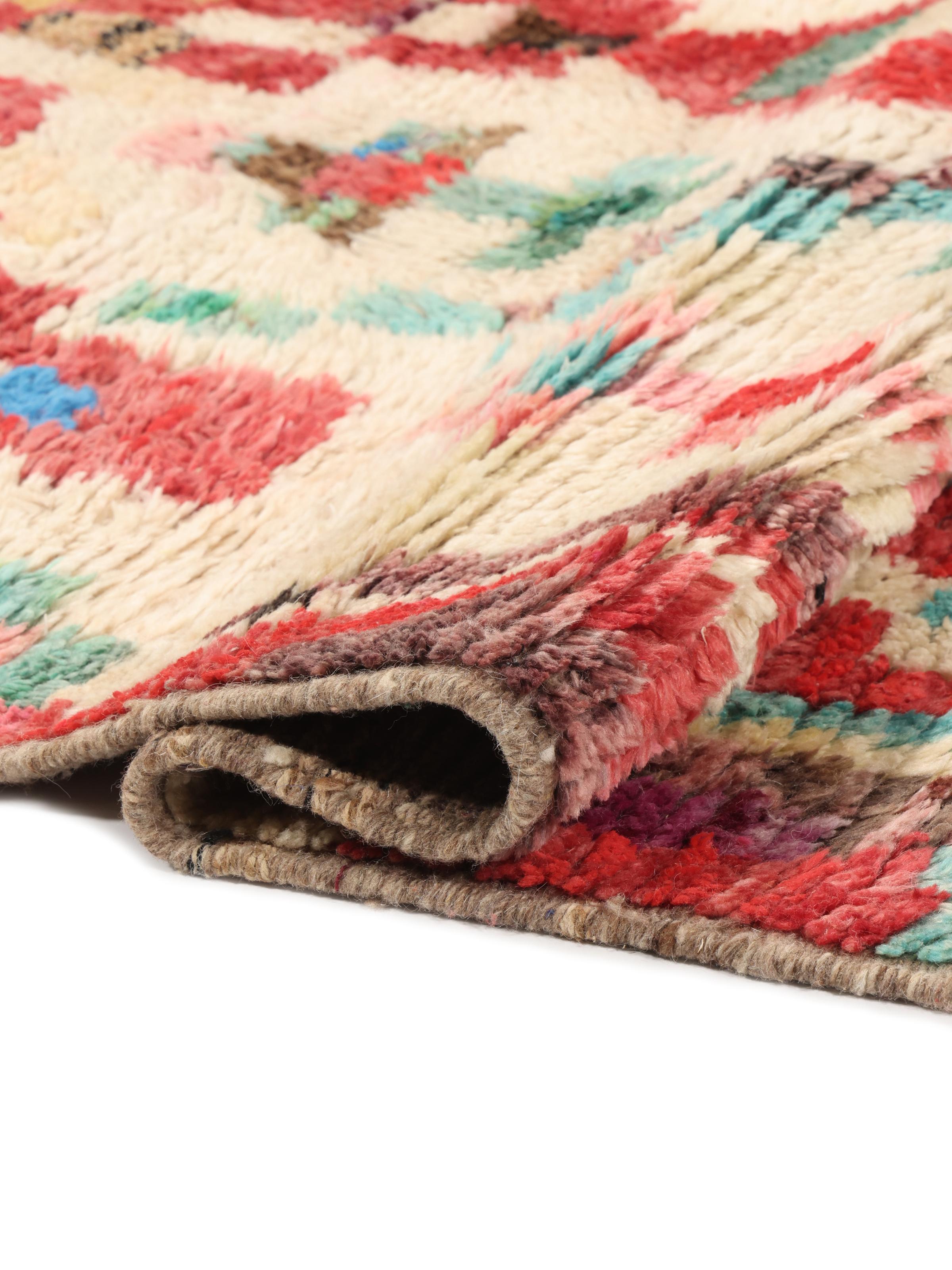
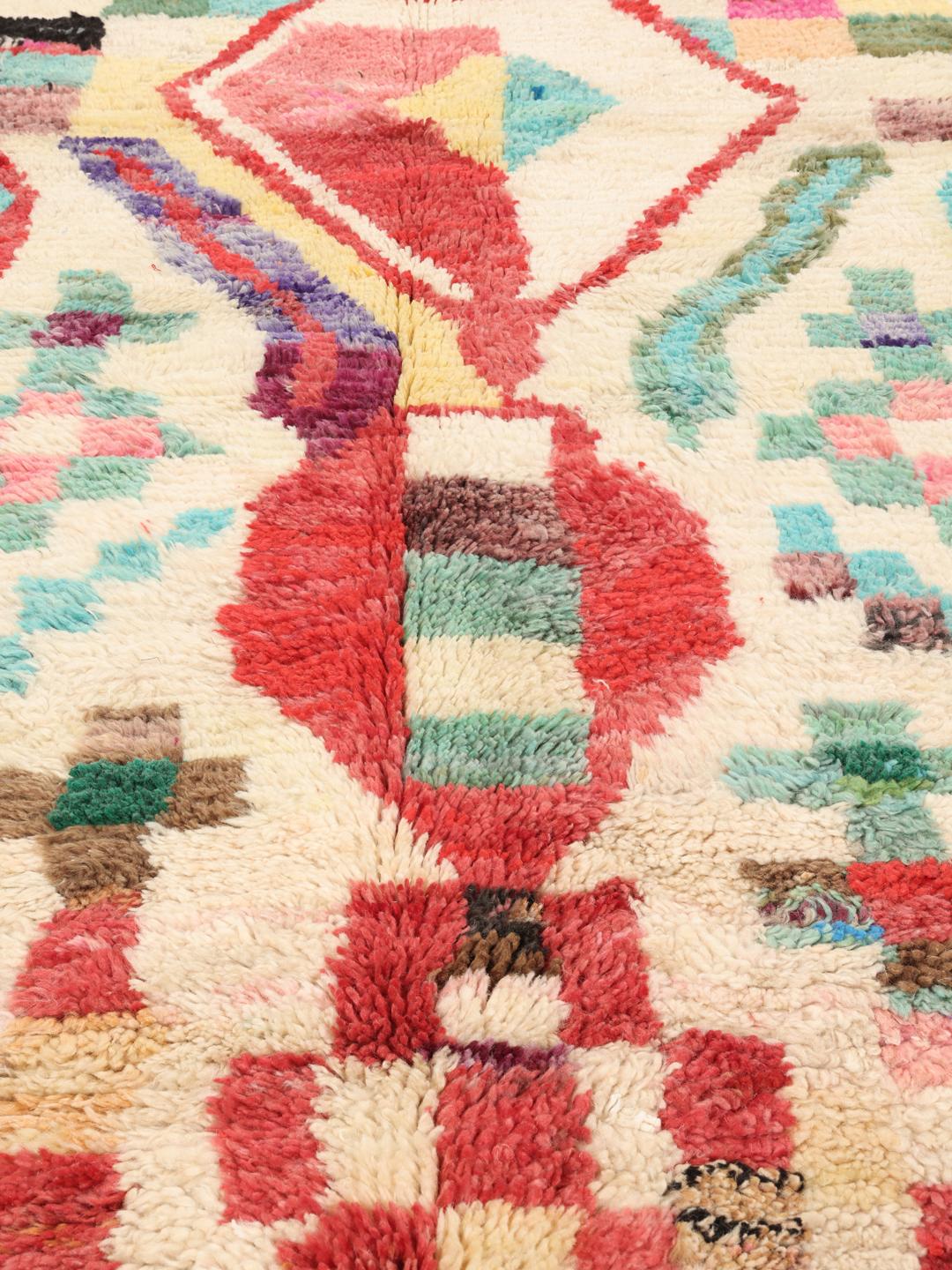
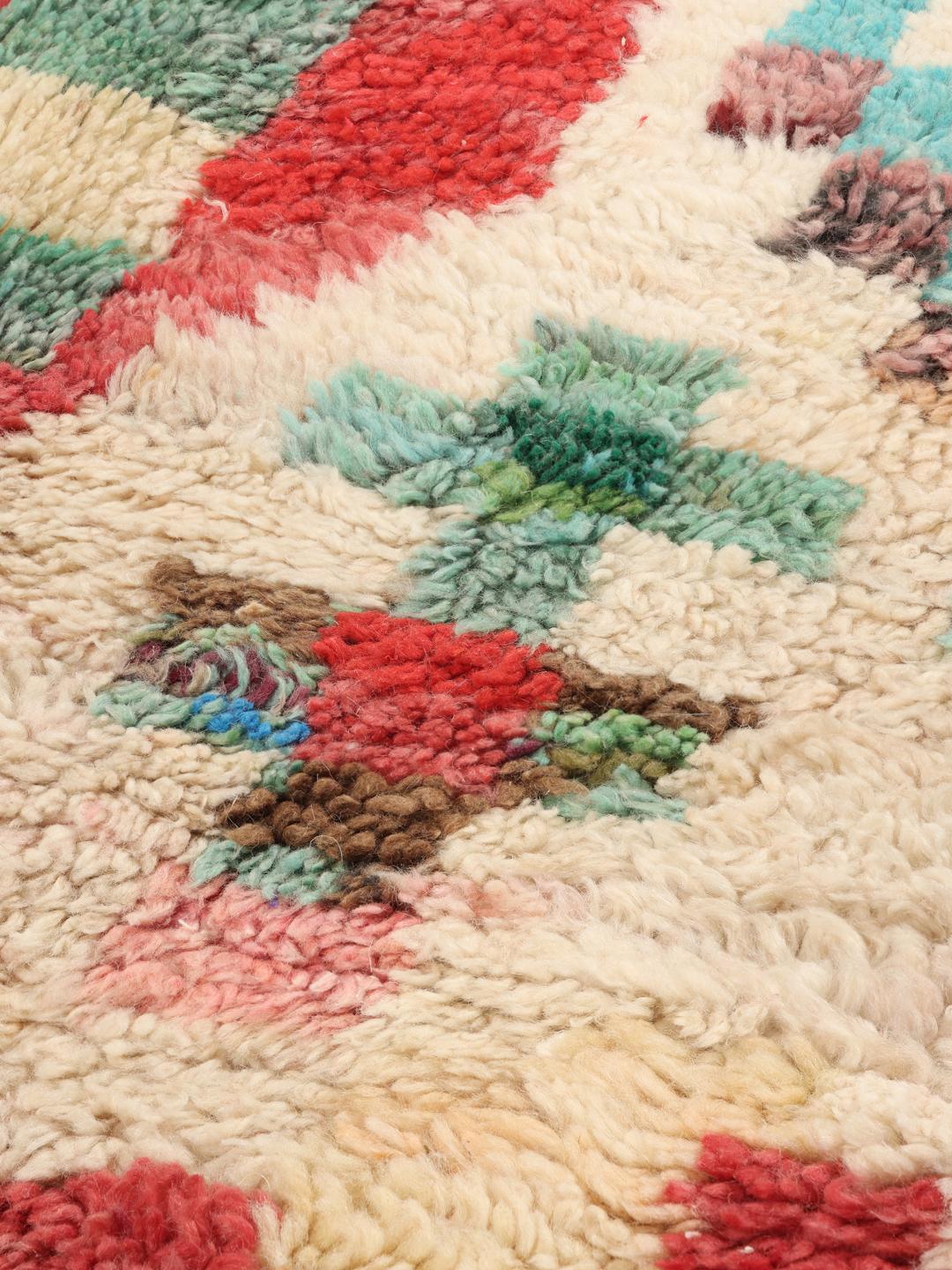
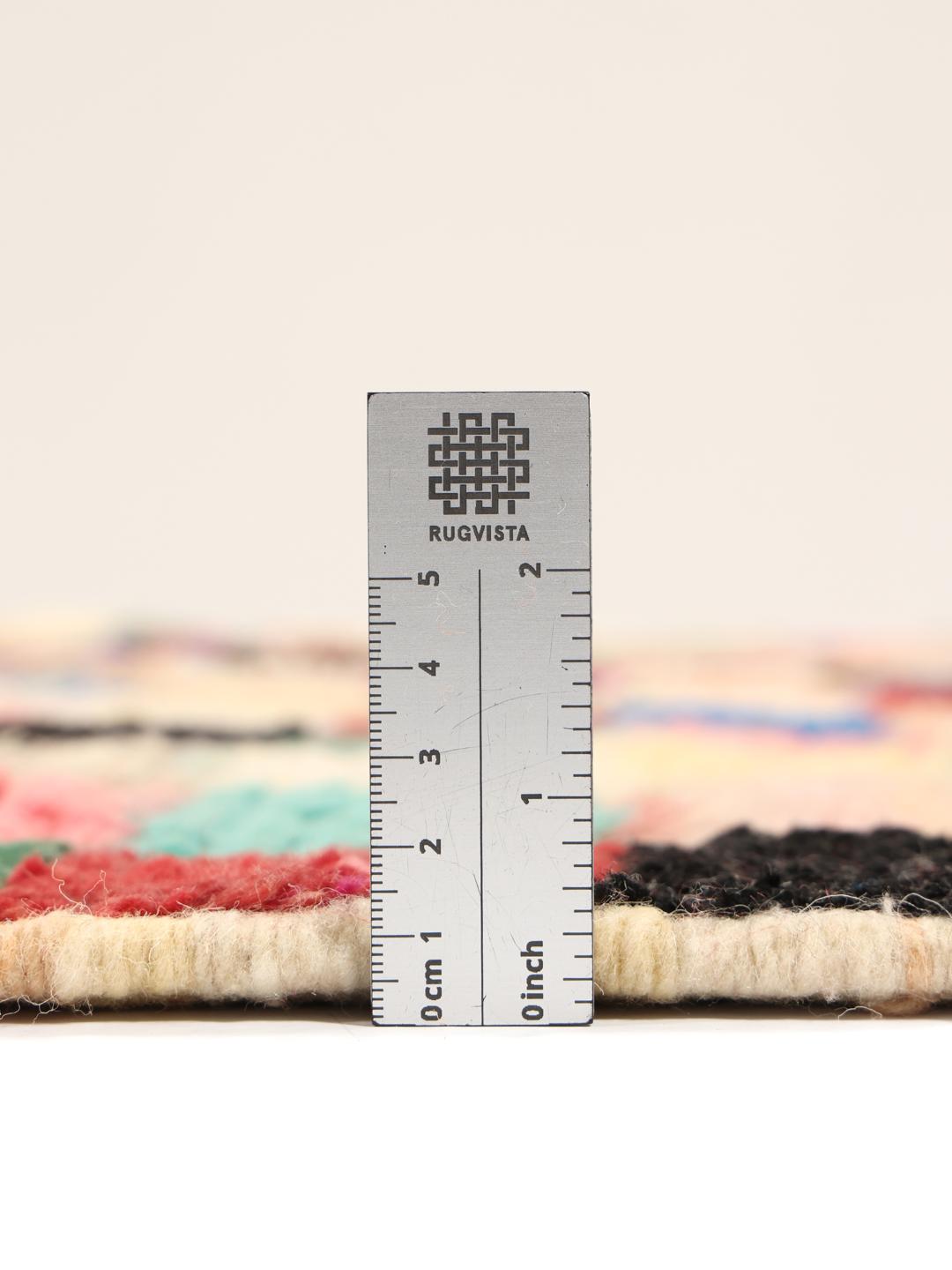
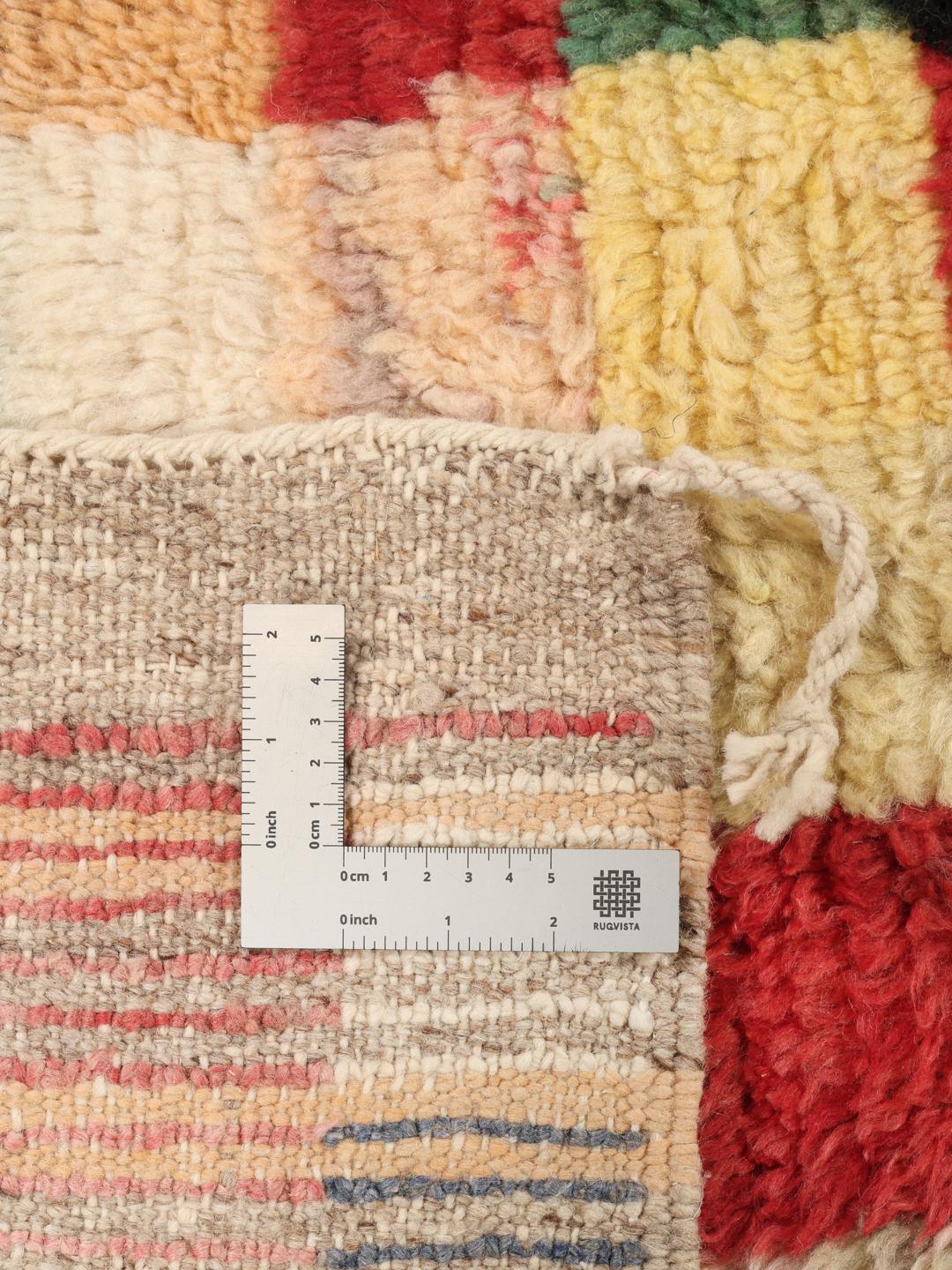
Technical excellence in this tradition is defined by the use of hand-spun wool, which retains its natural lanolin. This creates a lustrous, water-resistant, and incredibly durable pile that feels soft and substantial. The construction methods favour a sturdy foundation, ensuring that the finished product can withstand generations of use while maintaining the vibrant integrity of the natural dyes traditionally employed in the region.
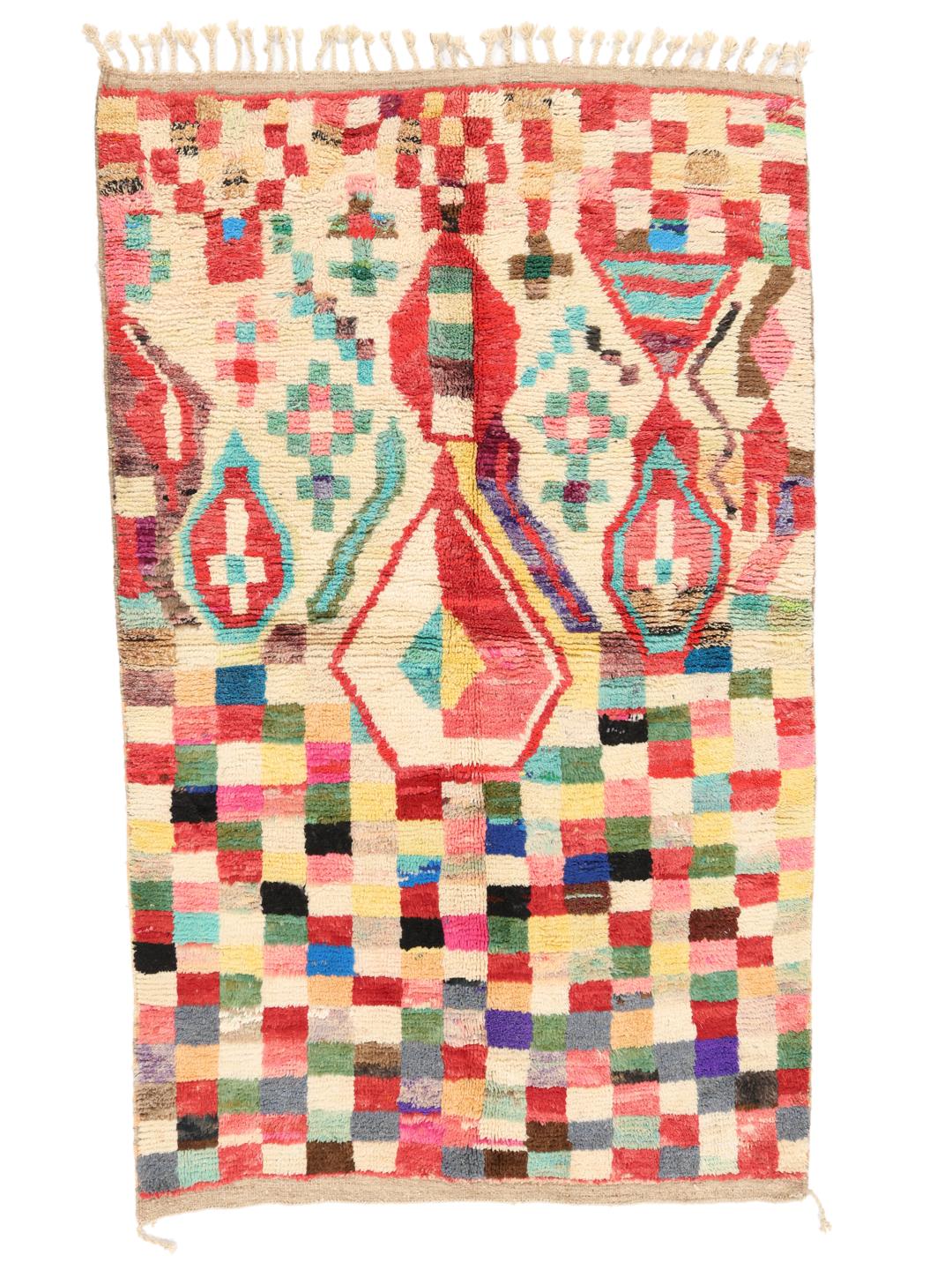
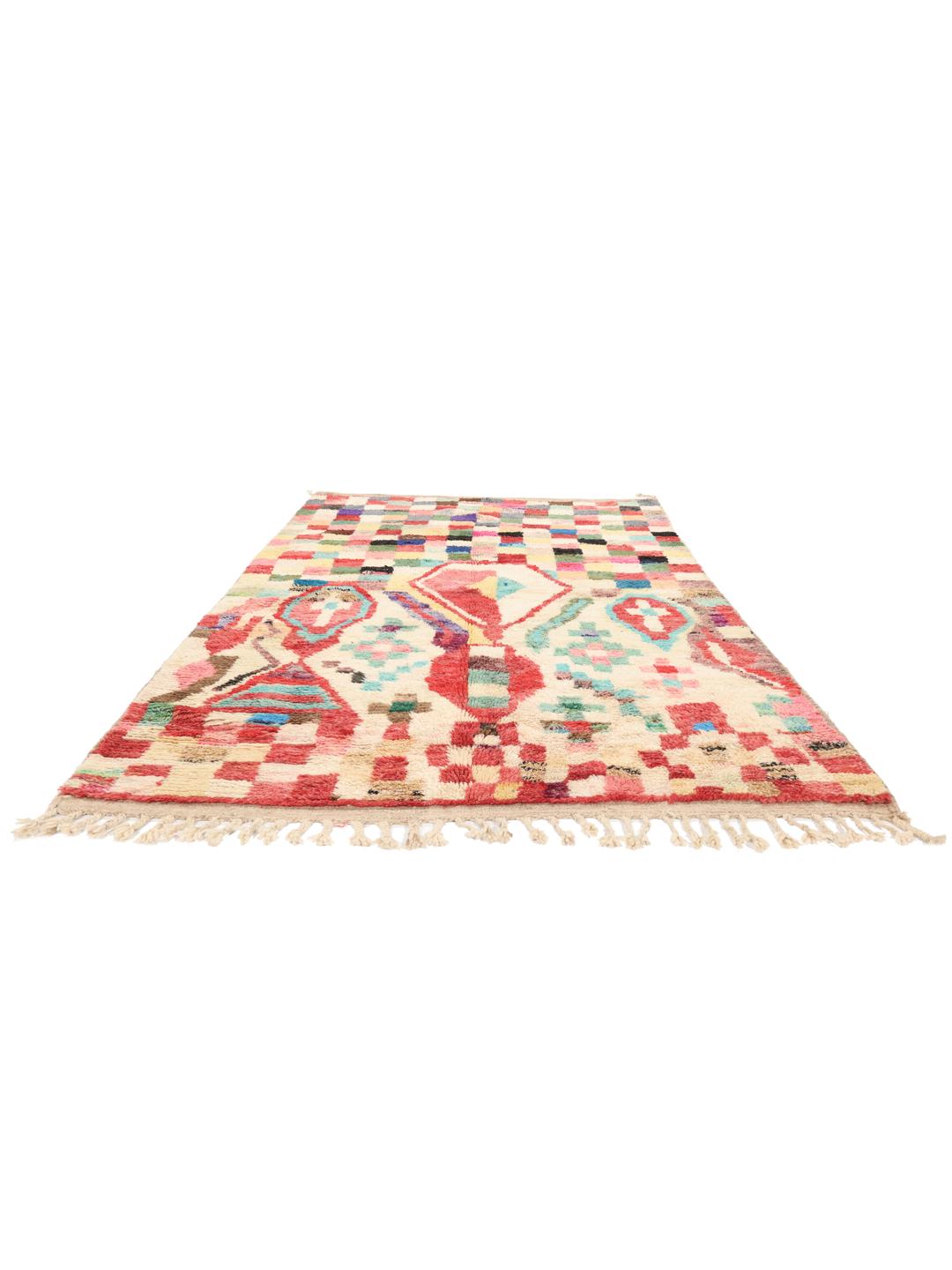
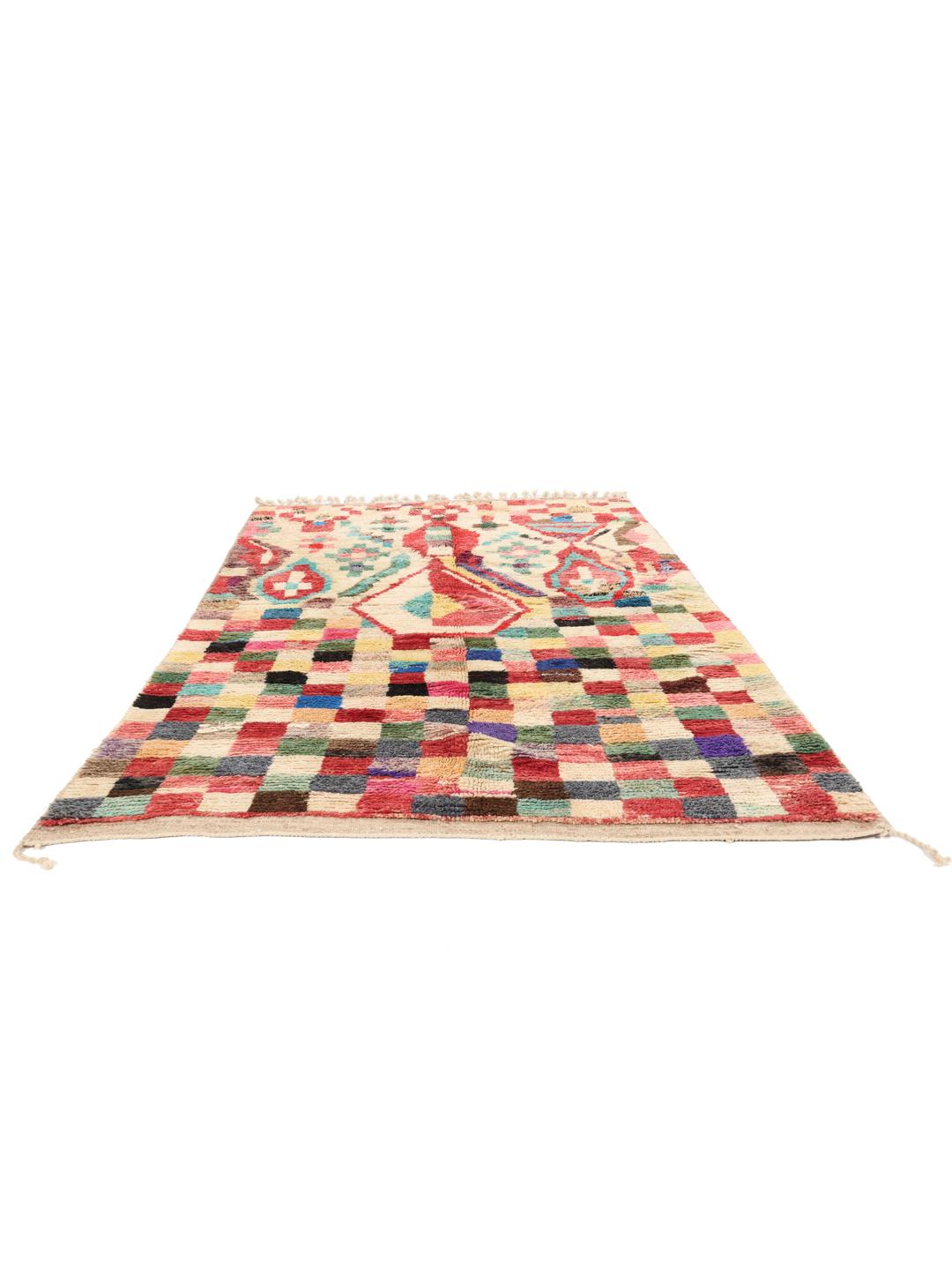
Visually, these rugs are defined by a language of symbols and colours that often reflect the weaver's personal experiences, surroundings, and beliefs. While many rugs from this region are known for their minimalist diamond patterns, this particular piece showcases a more eclectic, vibrant aesthetic with a multi-coloured, checkered field and bold geometric motifs. This departure from the standard is a hallmark of the creativity found in the Middle Atlas, where weavers are encouraged to improvise and innovate within their tribal frameworks.
Owning a rug from the Middle Atlas is an invitation to participate in a living history. These pieces are highly valued by collectors not only for their aesthetic appeal but for the genuine, unscripted human effort they represent. Because each rug is a reflection of a single weaver's vision, acquiring one means bringing a piece of Moroccan cultural heritage into your home—a testament to skill, resilience, and the enduring power of traditional craft.